Si deseas distinguir tus productos, servicios o ambos de los de otra empresa, es posible que necesites una marca o nombre comercial. Descubre qué son, en qué consiste su procedimiento de registro y qué implica.

Información sobre los plazos de presentación de solicitudes de transformación de marcas de la Unión Europea en marca nacional española. Más información


Si tienes un nuevo dispositivo, producto o procedimiento que resuelva un problema técnico o tenga una ventaja práctica, existen distintas formas de protegerlo en España y en otros países. Descubre cómo hacerlo.

¿Tu innovación reside en la estética, la ornamentación o la apariencia de tu producto? Protégela mediante un diseño industrial. Descubre qué derechos confiere el registro y cómo realizar la tramitación.

Las indicaciones geográficas protegen el nombre de un producto originario de una zona geográfica, a la cual le debe una determinada calidad, reputación u otra característica. Descubre qué son, en qué consiste su procedimiento de registro y qué beneficios conceden.

Las patentes publicadas en todo el mundo son una valiosa fuente de información científica, técnica y comercial.

Si eres emprendedor/a o una empresa y quieres potenciar y mejorar la rentabilidad de tu negocio protegiendo de forma adecuada los activos intangibles de tu organización, en este espacio encontrarás lo necesario.


 568
resultados
568
resultados
 Última actualización
17/10/2026 [07:24:00]
Última actualización
17/10/2026 [07:24:00]


 Resultados 300 a 325 de 568

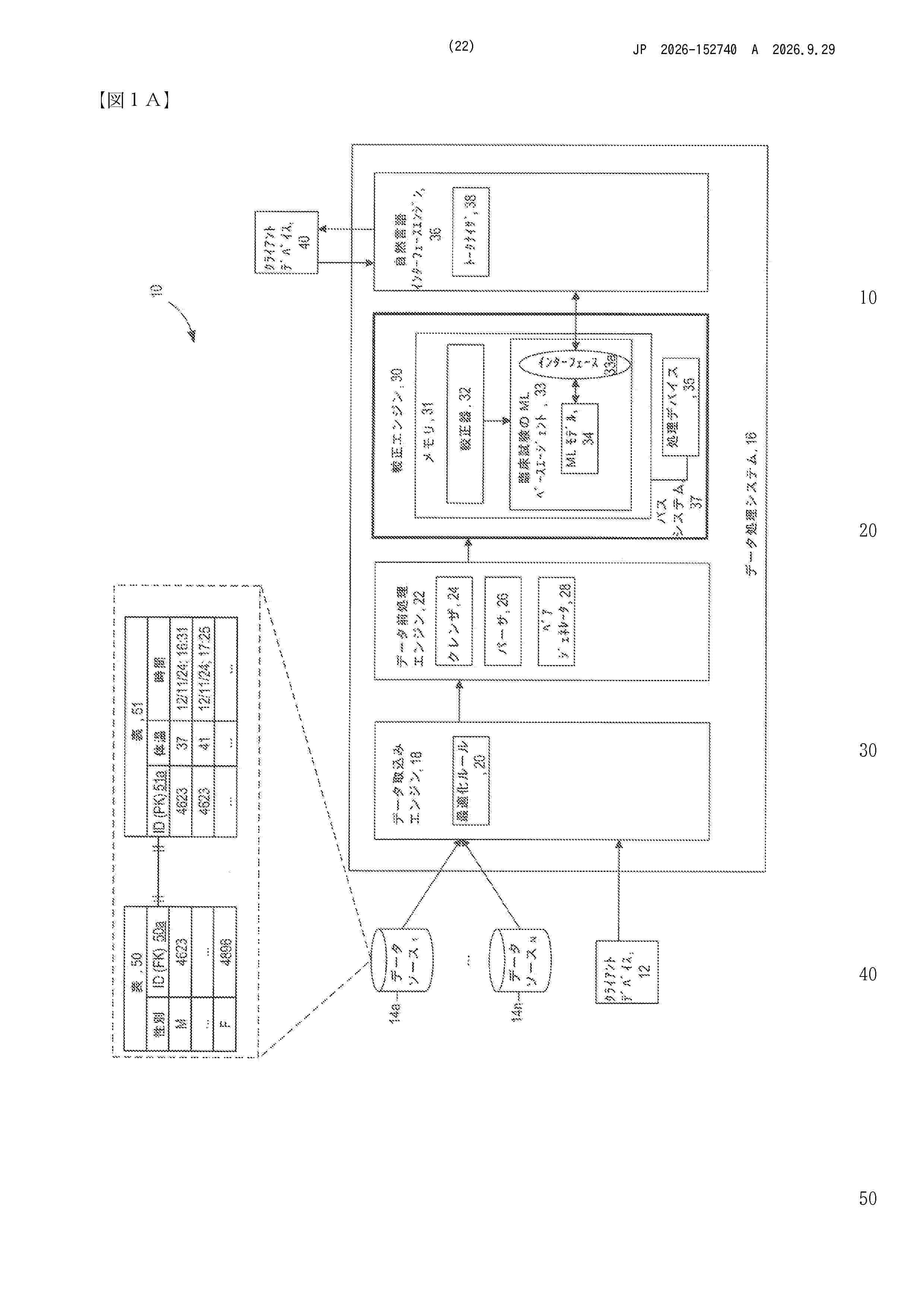
Resumen de: EP4807753A1
0001 A method implemented by a data processing system for calibrating an artificial intelligence model to provide near real-time outputs during a clinical trial study, comprising: detecting that the one or more attributes for which the one or more values are modified are of a specified type for which an artificial intelligence (AI) model is calibrated; responsive to the detecting, generating a set of input and output data for calibrating the AI model; inputting the set of input and output data into the AI model; calibrating the AI model for the clinical trial study to provide one or more outputs that account in near real-time for the one or more modifications to the one or more values of the clinical trial study; and causing rendering of a graphical user interface with an input portion for inputting a query related to the clinical trial study.

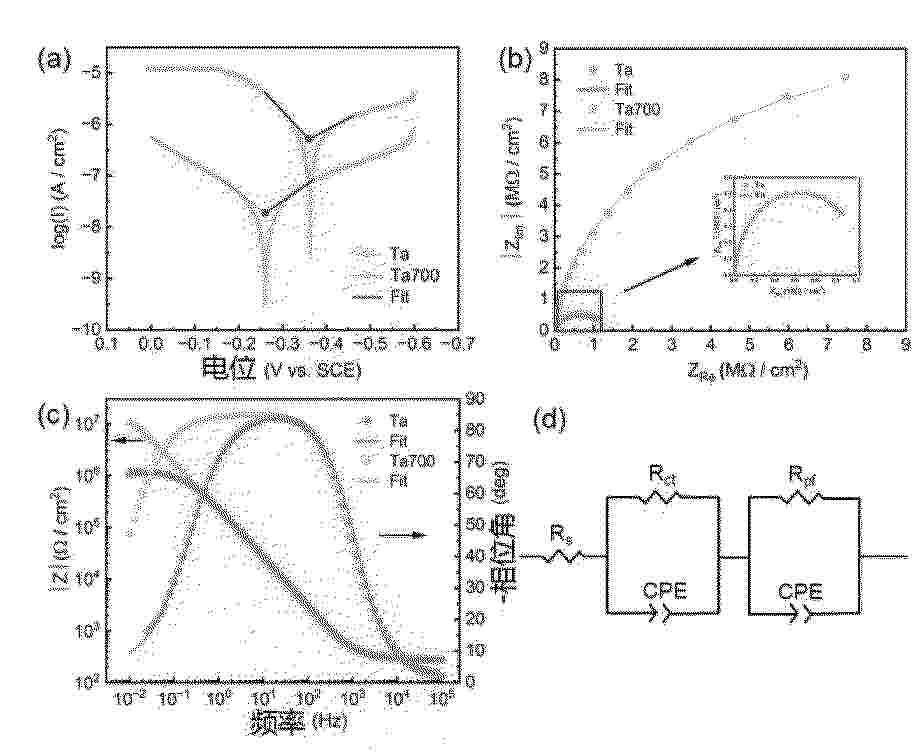
Resumen de: CN122833409A
本发明涉及金属植入物材料技术领域,具体涉及一种抗电化学腐蚀的间隙氧金属材料及制备方法和应用。本发明将金属基材置于含氧混合气流中,在氧分压为100Pa~200Pa,温度为500℃~1000℃下进行热处理,使间隙氧原子通过晶格间隙扩散并原位固溶于金属基材表层,形成间隙氧梯度过渡层,随炉冷却,得到梯度间隙氧金属材料;所述金属基材的材料为钽或其合金。本发明通过采用间隙氧原子引入方式,调控氧分压和热处理条件,使间隙氧原子通过晶格间隙扩散并原位固溶于金属基材表层,形成间隙氧梯度过渡层,避免传统工艺所形成的较厚氧化层的形成,从根本上解决了覆层剥离问题,也避免了涂层剥落产生的磨屑颗粒诱发炎症的风险。
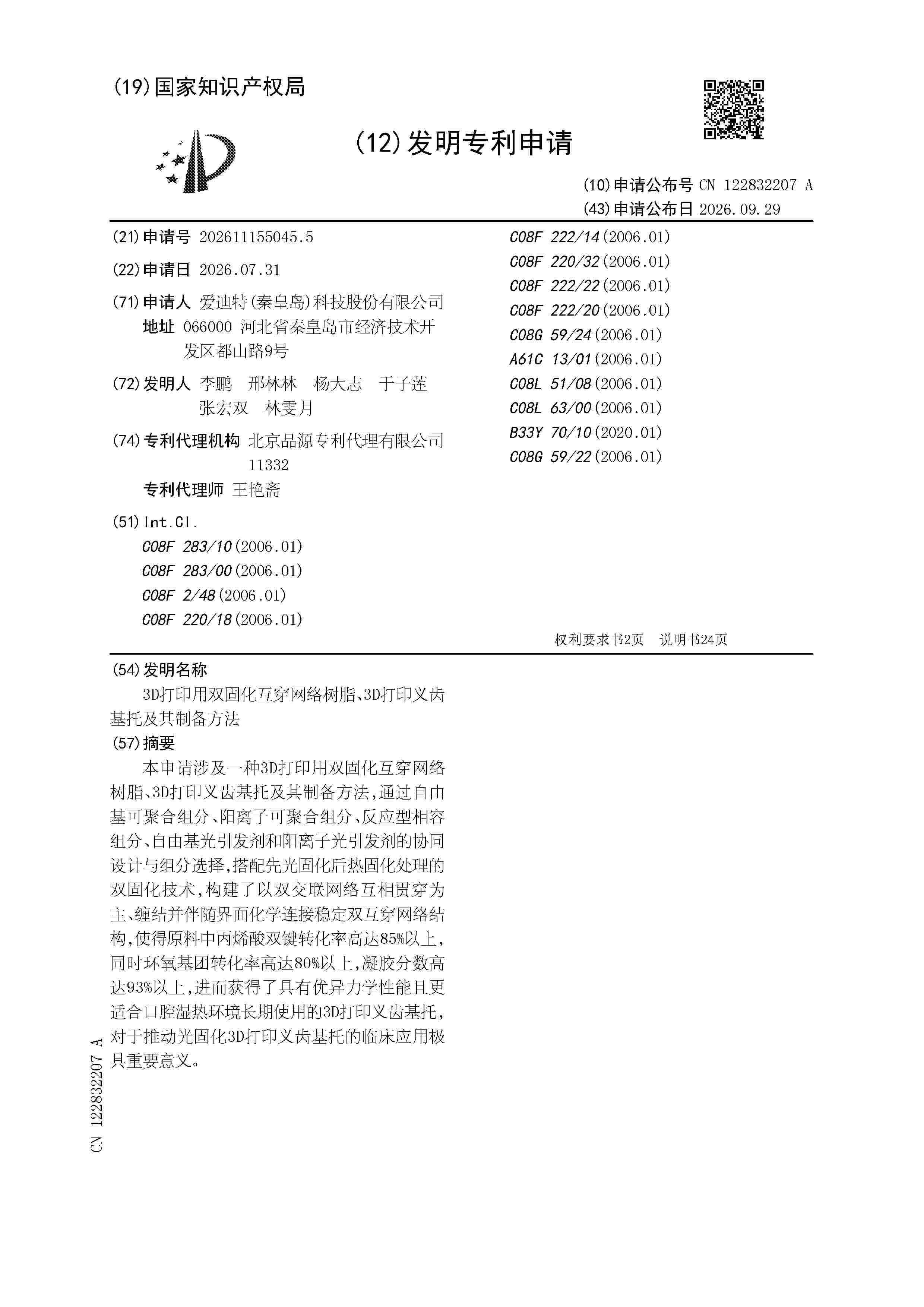
Resumen de: CN122832207A
本申请涉及一种3D打印用双固化互穿网络树脂、3D打印义齿基托及其制备方法,通过自由基可聚合组分、阳离子可聚合组分、反应型相容组分、自由基光引发剂和阳离子光引发剂的协同设计与组分选择,搭配先光固化后热固化处理的双固化技术,构建了以双交联网络互相贯穿为主、缠结并伴随界面化学连接稳定双互穿网络结构,使得原料中丙烯酸双键转化率高达85%以上,同时环氧基团转化率高达80%以上,凝胶分数高达93%以上,进而获得了具有优异力学性能且更适合口腔湿热环境长期使用的3D打印义齿基托,对于推动光固化3D打印义齿基托的临床应用极具重要意义。
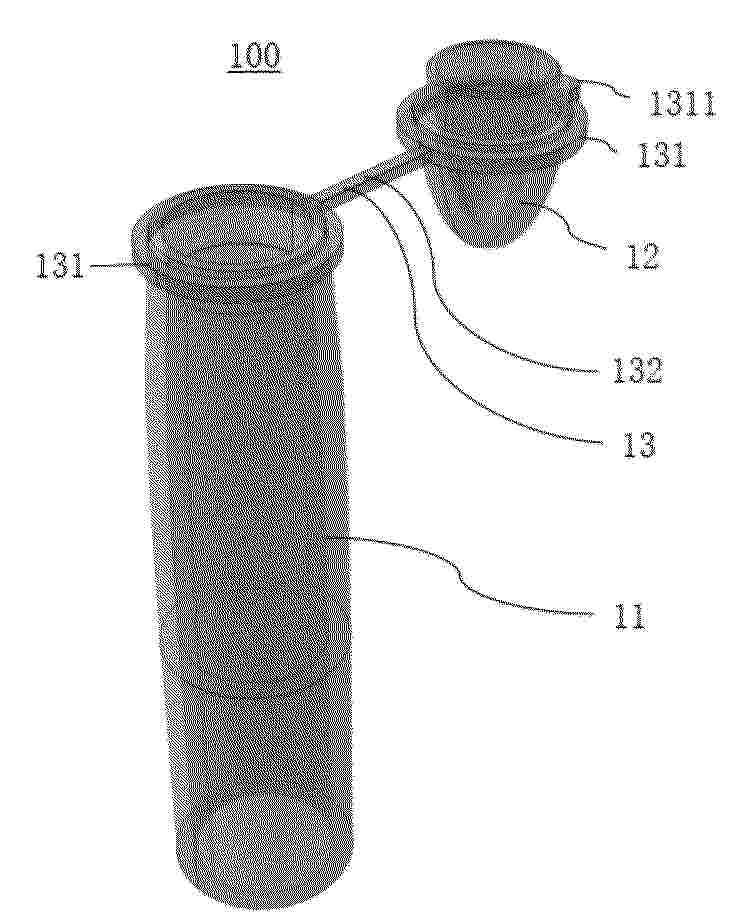
Resumen de: CN122827690A
本发明公开了一种矩阵式多通道电极笔的保护笔帽,包括套筒、末端盖和连接件。套筒用于紧密贴合地套设在矩阵式多通道电极笔的主体前部上并使主体前部的末端伸出;末端盖用于适配地套盖在主体前部的末端并与套筒对接;连接件连接于套筒和末端盖且允许末端盖套盖在主体前部的末端以及从主体前部的末端取下。本发明能够有效保护矩阵式多通道电极笔,延长矩阵式多通道电极笔使用寿命,提高实验检测数据的精确度,并且不影响保护矩阵式多通道电极笔正常操作,同时,使用便捷,具有较好的经济性。
Resumen de: JP2018171485A
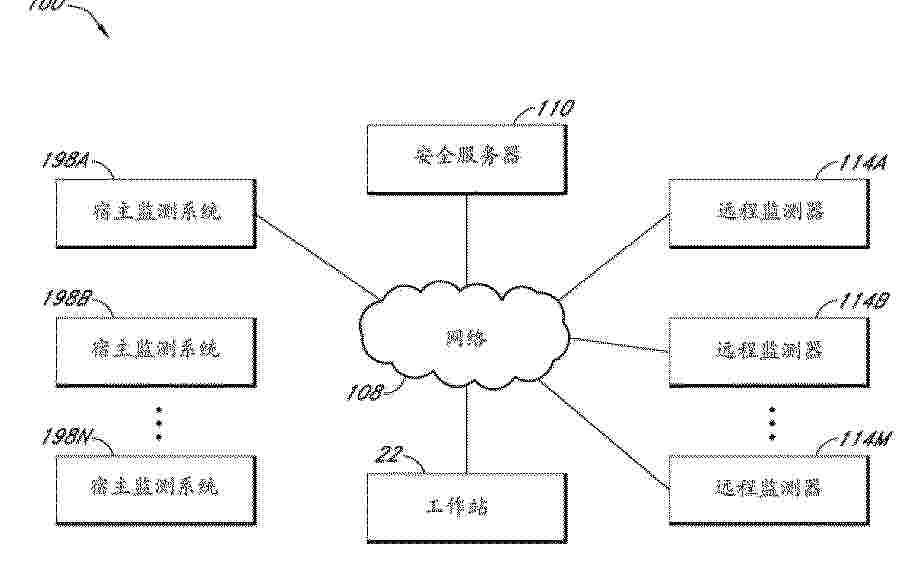
PROBLEM TO BE SOLVED: To provide methods and apparatuses, including computer program products, for remote monitoring.SOLUTION: A method is provided in some example implementations. The method may include: receiving, at a remote monitor, a notification message representing an event detected by a server, from analyte sensor data obtained from a receiver monitoring an analyte state of a host; presenting, at the remote monitor, the notification message to activate the remote monitor, the remote monitor being configured by the server to receive the notification message to augment the receiver monitoring the analyte state of the host; accessing, by the remote monitor, the server in response to the presenting of the notification message; and receiving, in response to the accessing, information including at least the analyte sensor data. Related systems, methods, and articles of manufacture are also disclosed.SELECTED DRAWING: Figure 1
Resumen de: EP4809934A1
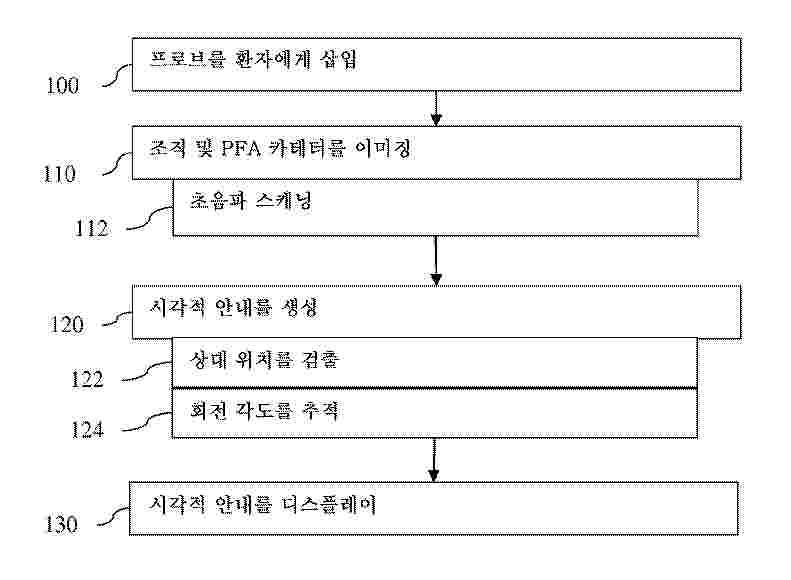
Pulse field ablation (PFA) guidance is generated from intracardiac echocardiogram (ICE) imaging. The relative position of the PFA device (450) and the tissue is determined. The treatment placement with respect to the tissue for repetitive application is detected. By finding the relative position and/or treatment placement over time, ICE imaging in combination with image processing may provide visual guidance rather than just imaging or just catheter tracking for PFA. The resulting PFA procedure may be more likely complete and/or optimized.
Resumen de: US20240306891A1
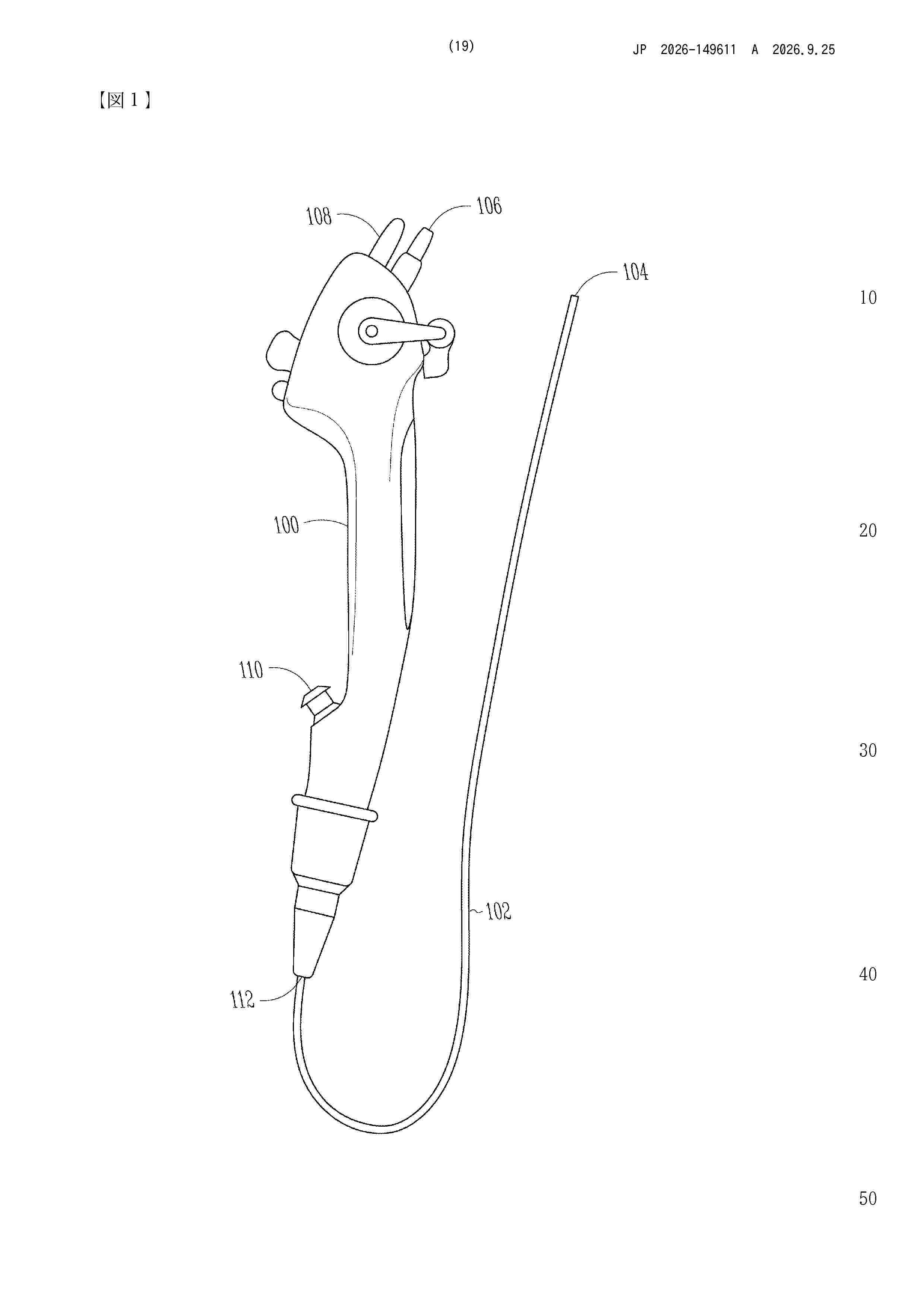
0000 A system can automatically regulate irrigation, suction, or both, such as during a lithotripsy procedure. The system can include one or more sensors. Processing circuitry can be configured to generate an indication of a level of turbidity of a solution at or near a distal tip of a flexible scope, such as based on one or more signals from the one or more sensors. A control signal can be used to adjust an irrigation flow rate and/or a suction rate at the distal tip of the flexible scope. The level of turbidity can be determined using a sensor to measure electrolytic conductivity of the solution, a sensor to measure electromagnetic induction across a coil at the distal tip of the flexible scope and/or a measure of back reflected light or a measure of absorbed light emitted into the solution by a light source and measured by a light sensor.
Resumen de: LU605609B1
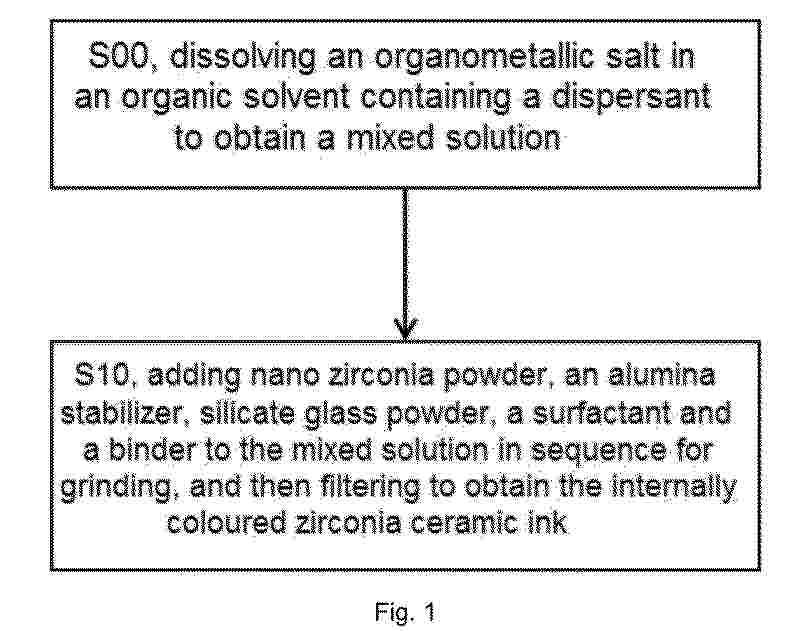
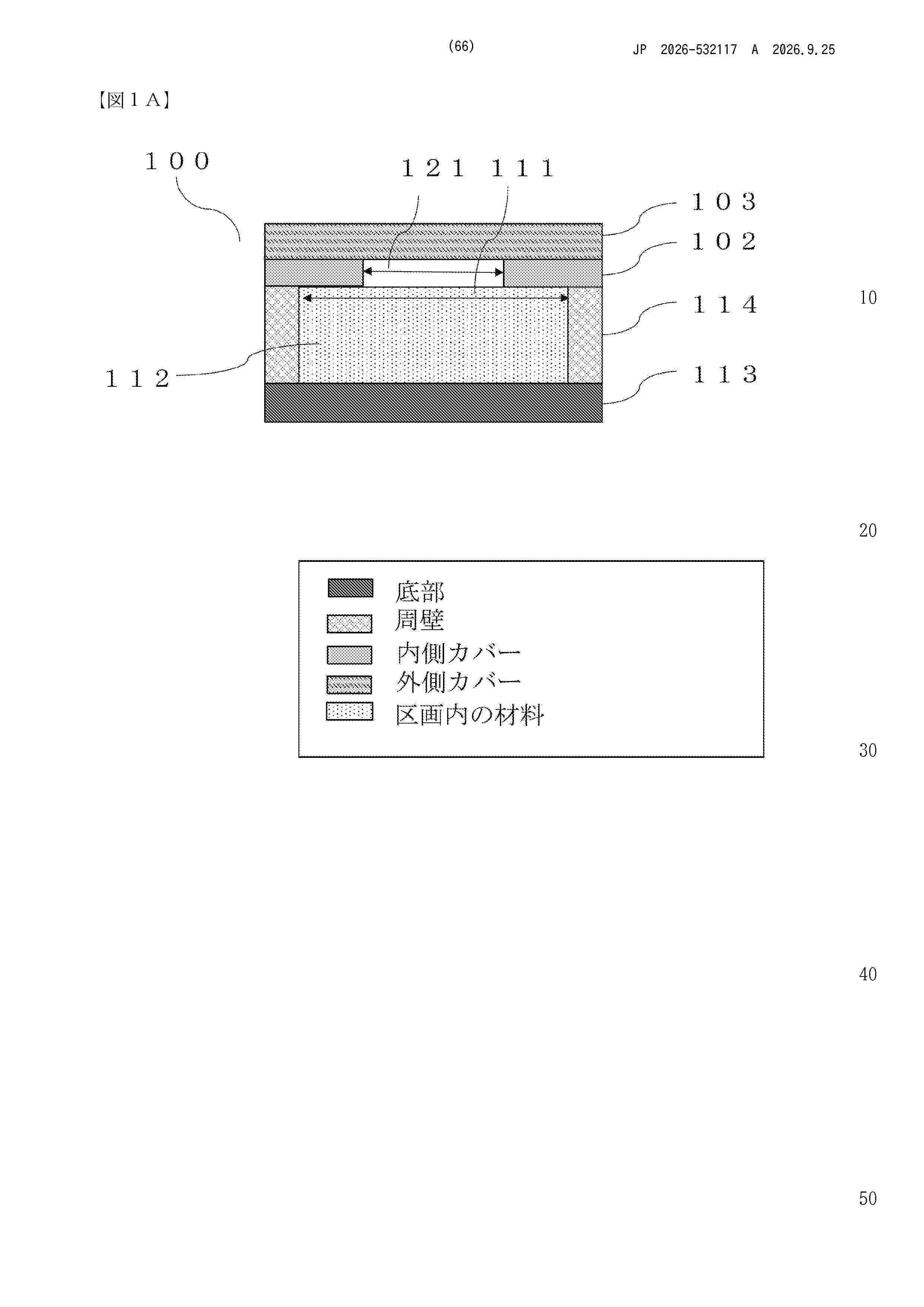
The application relates to an internally coloured nano ceramic ink for high- performance dental inkjet 3D printing and a preparation method thereof. The ink of the application has simple components, realizes stable and uniform colouration by adding organometallic salt, and simultaneously introduces an alumina stabilizer and silicate glass powder, so that the dental zirconia ceramic prepared by inkjet 3D printing has an aesthetic effect on the basis of improving the mechanical properties and thermal expansion matching of the ceramic.
Resumen de: WO2025055893A1
Provided herein are a pharmaceutical dosage form and a method for preparing thereof, such as a pharmaceutical dosage form prepared by a three-dimensional printing method. Pharmaceutical dosage forms loaded with liquid or semi-solid materials, and pharmaceutical dosage forms loaded with solid material are both provided.
Resumen de: AU2024328750A1
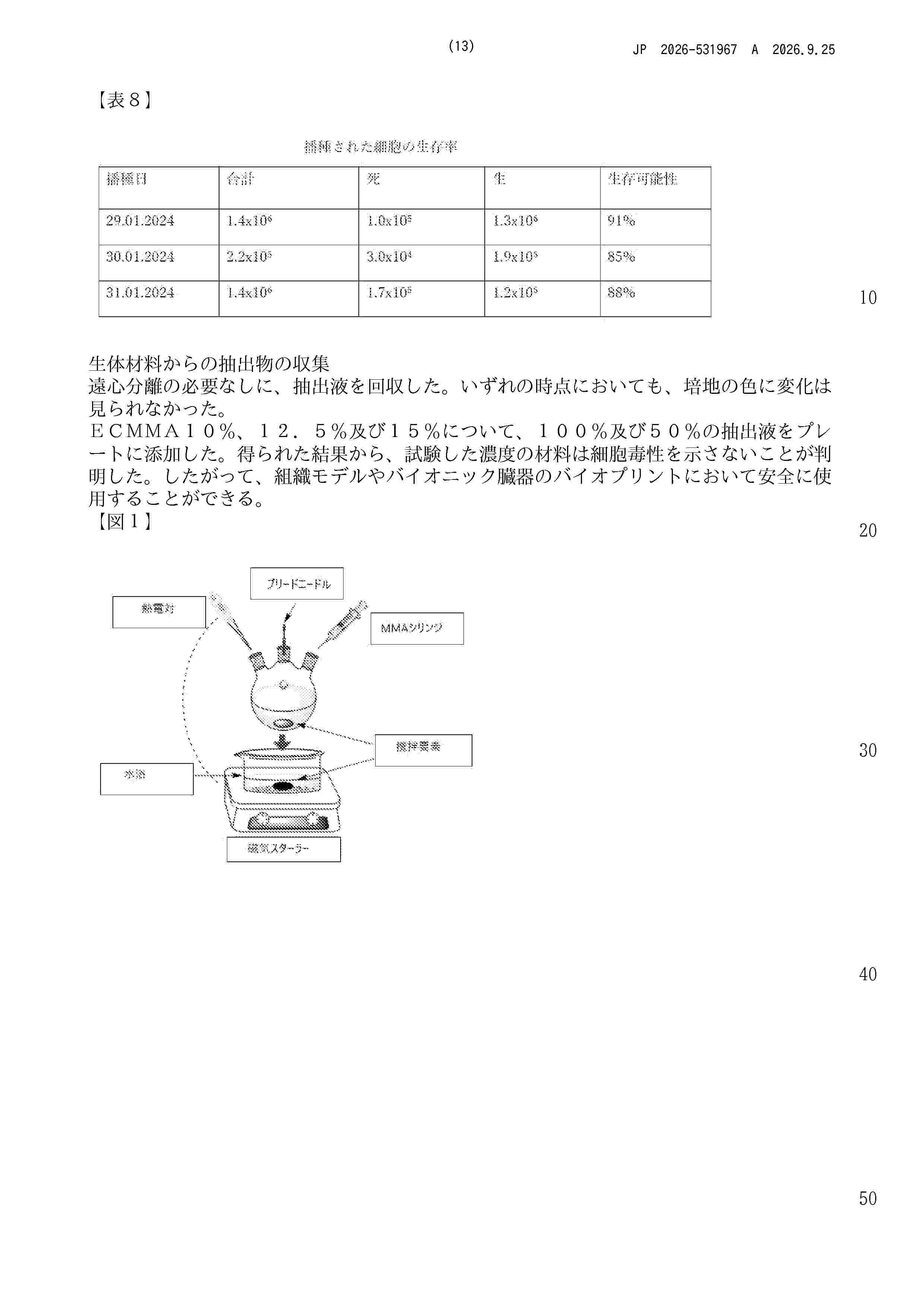
Process for methacrylation of dECM comprising placing a carbonate buffer with a concentration of 1M in the reaction vessel and heating to a temperature of 50 °C, adding dECM to the carbonate buffer to obtain a dECM solution with a concentration of 4% (w/v), sterilizing this solution by irradiation with radiation UV for 15 minutes, adding methacrylic anhydride in an amount of 0.5 mL/1g dECM and reacting at 50 °C for 1 h, then adding a phosphate-buffered saline solution to obtain a 5-fold dilution of the mixture, placing the obtained solution in dialysis tube, and then placing the dialysis tube in deionized water, this stage is carried out at a temperature of 40 °C for no longer than 4 days, after completing this stage, the solution contained in the dialysis tubes is transferred to aluminum trays and then placed at a temperature -80 °C for at least 3 hours, then the frozen solution is freeze-dried under the following conditions: shelf temperature 10 °C, pressure 0.1 mba, freeze-drying time 48 hours. The invention also relates to methacrylated dECM obtained by the above method and to the use of methacrylated dECM obtained by the above method in the bioprinting process.
Resumen de: WO2025043269A1
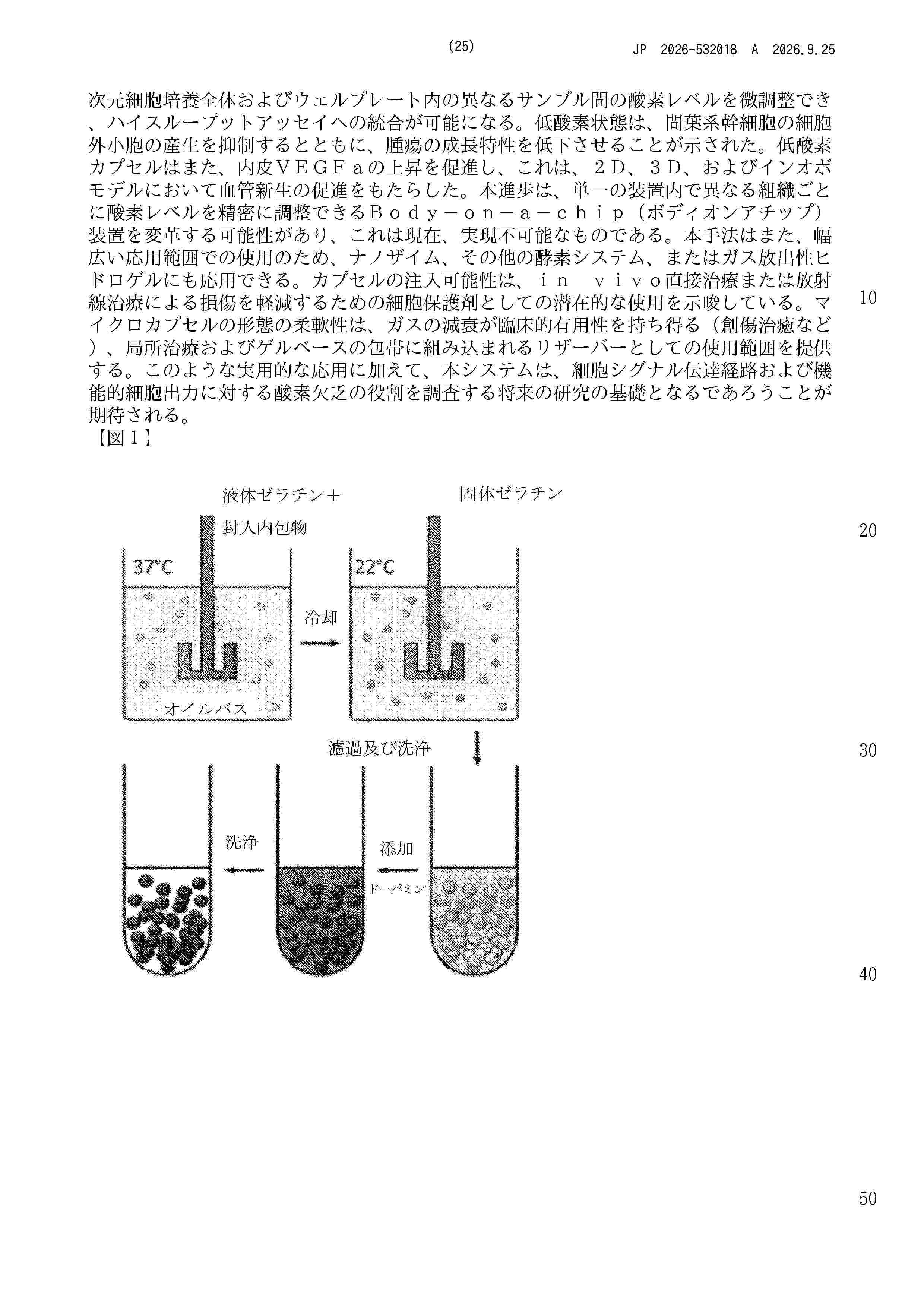
This invention describes microcapsule compositions and methods to encapsulate gas modulating enzymes or nanozymes at unprecedented concentrations and stability, that can be used to regulate the local gas concentrations. Microcapsules can be comprised of gelatin with a polydopamine coating. This system can replace expensive incubators/chambers and is the first system that can create spatiotemporal gradients of gases within a finite volume. The microcapsules have a broad range of applications in tissue culture, bioprinting, in vivo, and industrial uses.
Resumen de: US2022257371A1
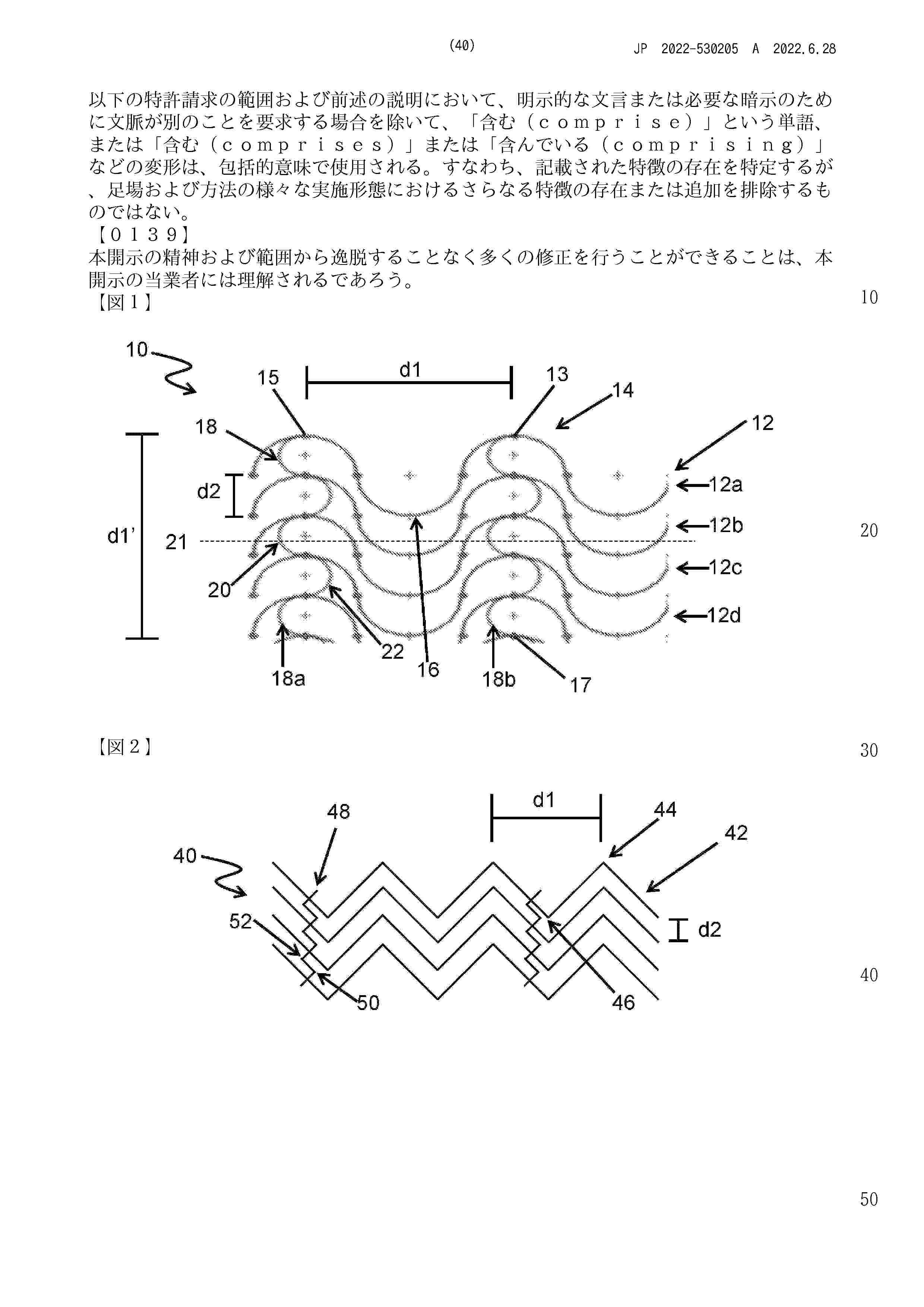
0001 The disclosure relates to a melt electrowritten soft tissue scaffold and methods of making the same. The scaffold has a body having a first region comprising a first set of fibres and a second set of fibres, the first region being anisotropic. The first set of fibres are arranged approximately parallel relative to one another, each fibre of the first set of fibres has a serpentine arrangement forming peaks and troughs, the first set of fibres has a first Young's modulus. The second set of fibres are arranged approximately parallel relative to one another, the second set of fibres being arranged transversely relative to the first set of fibres, each fibre of the second set of fibres has a serpentine arrangement forming peaks and troughs, the second set of fibres has a second Young's modulus. The first Young's modulus is unequal to the second Young's modulus. In some embodiments the body further comprises a second region extending from the first region. The second region supports the first region.
Resumen de: CA3030472A1
0001 Methods and systems are disclosed for obtaining a first image of a tray, determining a presence or absence of one or more first patterns in the first image, determining a rotation of each the one or more first patterns in the first image, and performing an action based on the presence or absence and the rotation of the one or more first patterns in the first image. 0002 L'invention concerne des procédés et des systèmes permettant d'obtenir une première image d'un plateau, de déterminer la présence ou l'absence d'un ou de plusieurs premiers motifs dans la première image, déterminer une rotation de chacun des un ou plusieurs premiers motifs dans la première image, et à effectuer une action sur la base de la présence ou de l'absence et de la rotation du ou des premiers motifs dans la première image.
Resumen de: CN122805942A
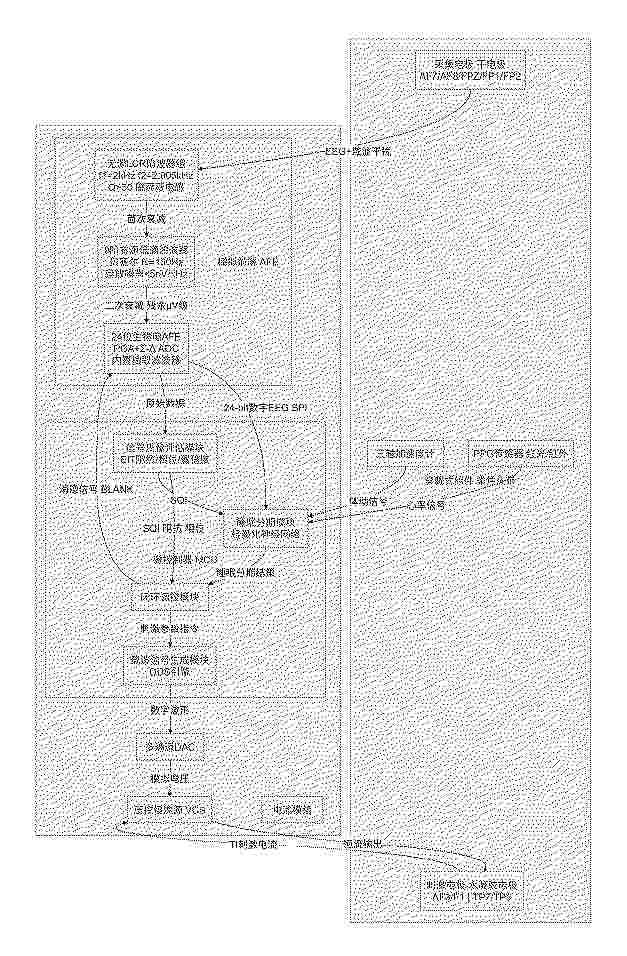
本专利涉及生物医学工程技术领域,具体涉及一种睡眠改善电刺激方法、系统和计算机程序产品。方法包括:生成用于电刺激的至少两路中频载波信号;施加电刺激,并通过电极同步采集叠加有所述中频载波信号的脑电图信号;使所述脑电图信号通过一混合模拟滤波网络,以在模拟域对叠加的所述中频载波信号进行物理衰减;对所述脑电图信号进行模数转换;基于经过所述物理衰减和模数转换后的信号,识别当前睡眠所在时期;根据所述睡眠时期的识别结果,调控所述电刺激参数。通过在模数转换之前于模拟域对干扰信号实施物理衰减,从根源上解决了强载波干扰导致后级模数转换器饱和的物理瓶颈,确保了微弱脑电信号能够被高保真地同步采集。
Resumen de: CN122822233A
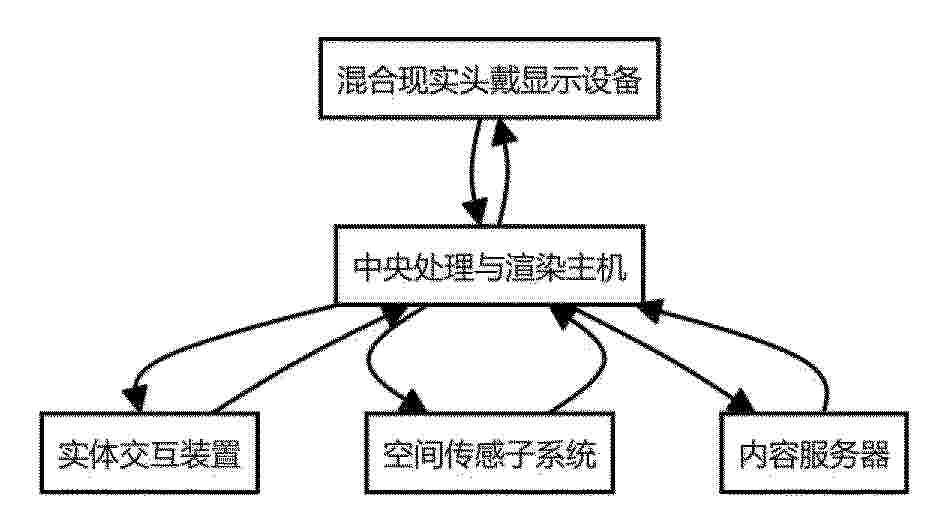
0001 本申请涉及计算机技术领域,公开了一种基于混合现实的ADHD支持者情感疗愈方法及系统,旨在解决现有管理导向干预难以在支持者日常空间中建立情感锚点,无法实质性缓解情感耗竭的问题。该方法包括:部署实体装置并叠加虚拟元素,构建物理锚定与数字引导的治疗空间;引导支持者通过音频指令在混合现实环境中建立安全感并激活情感;进入叙事探索阶段,触发中心虚拟对象分解为匿名叙事单元供聆听;播放将情感转化为动态视觉隐喻的视听组合,并融入群体韧性语音进行价值引导;执行程序化收束并提供反思手册。本申请通过实体装置提供触觉安全的物理锚定,融合数字引导完成情感外化与价值重建,有效缓解支持者情感耗竭与孤立感。
Resumen de: CN122820921A
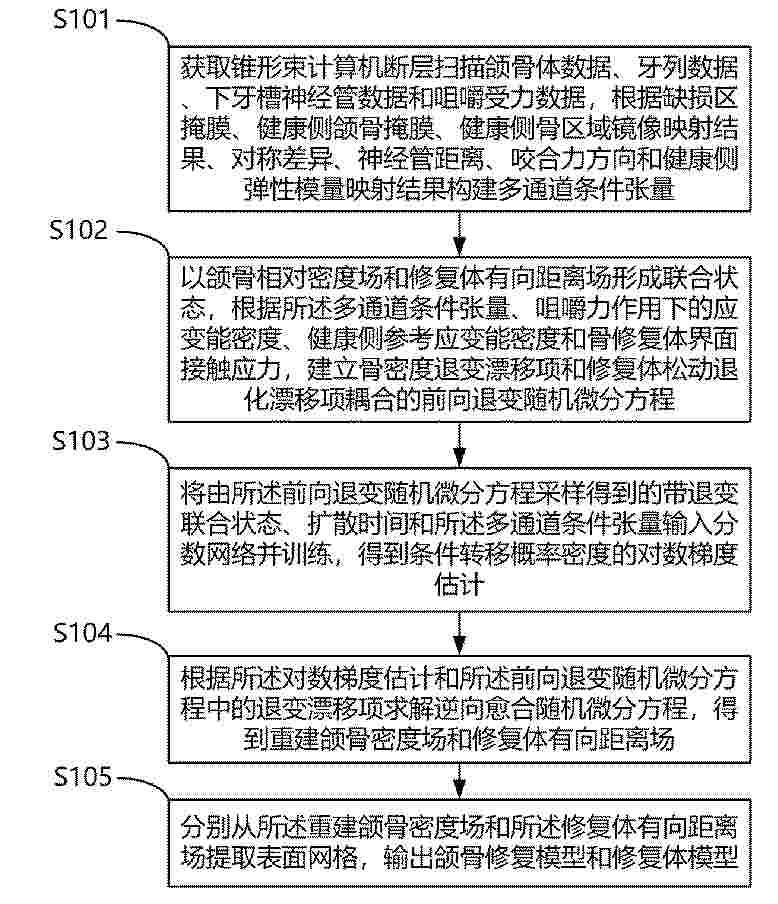
本发明属于医学图像处理设计领域,具体涉及了基于扩散概率模型的颌骨缺损虚拟重建与修复体建模方法及系统,包括根据颌骨解剖与力学数据构建多通道条件张量;以颌骨密度场和修复体有向距离场形成联合状态,建立骨密度退变与修复体松动耦合的前向退变随机微分方程;训练基于分数网络的条件对数梯度估计器,计算物理一致性损失与神经管避让损失;求解逆向愈合随机微分方程,获得重建颌骨密度场和修复体有向距离场;提取表面网格输出模型。本发明能在统一扩散概率框架下协同生成颌骨修复模型和修复体模型,兼顾形态、力学及神经管约束。
Resumen de: CN122826594A
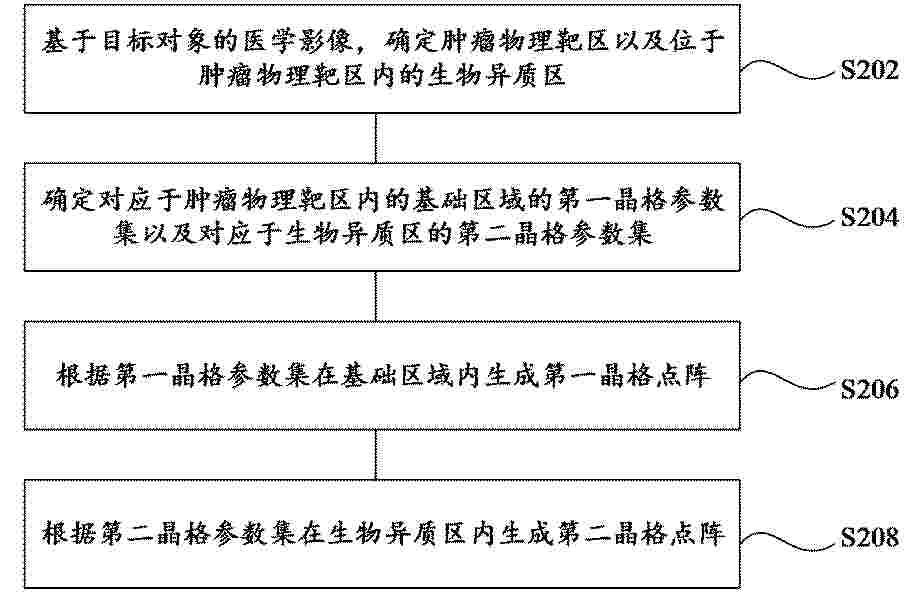
本公开提供了一种空间分割放疗的晶格点阵生成方法、装置、设备及介质,该方法包括基于目标对象的医学影像,确定肿瘤靶区以及位于肿瘤靶区内的生物异质区;确定对应于肿瘤靶区内的基础区域的第一晶格参数集以及对应于生物异质区的第二晶格参数集,基础区域为在肿瘤靶区内除去生物异质区之外的区域,第二晶格参数集中至少存在一个参数数值与第一晶格参数集中对应的参数数值是不同的,以增大所述生物异质区内的晶格体积占比;根据第一晶格参数集在基础区域内生成第一晶格点阵;根据第二晶格参数集在生物异质区内生成第二晶格点阵。
Resumen de: CN122822280A
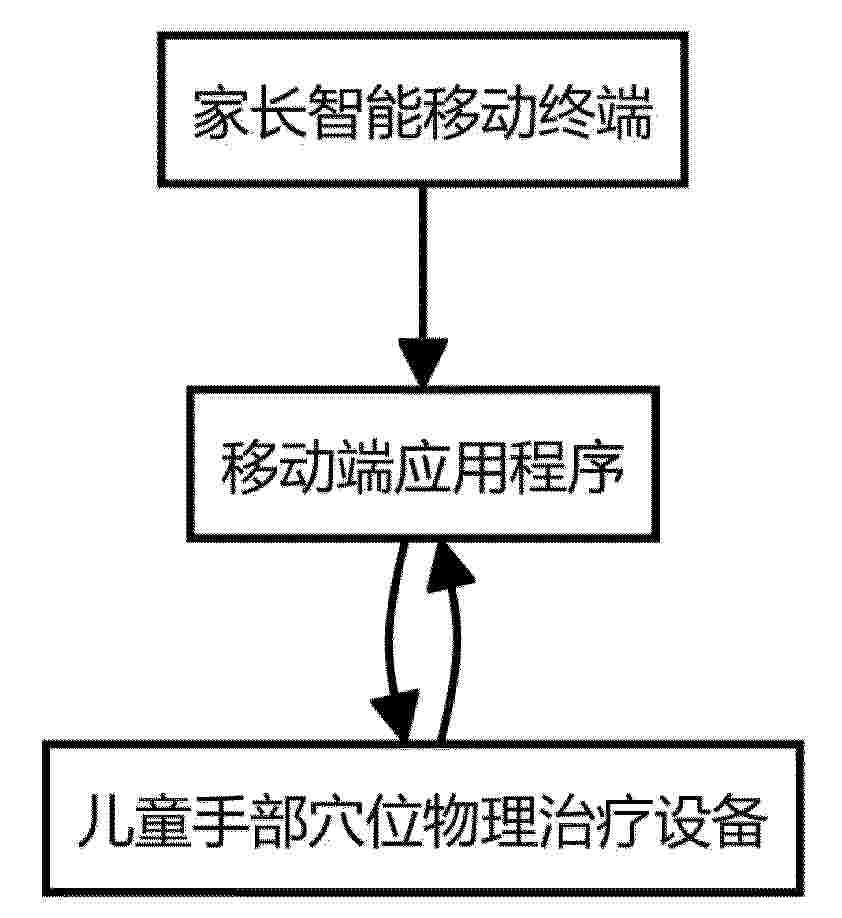
0001 本申请涉及智能医疗设备技术领域,公开了一种结合AI智能问诊的儿童穴位物理治疗设备及方法,旨在解决通用型按摩触头无法精准匹配儿童手部穴位,导致力学刺激失焦且易引起儿童抗拒的问题。该方法包括:构建具有柔性仿生手型按摩内芯和气压驱动的物理治疗设备;通过移动端应用程序的症状‑穴位‑按摩方案映射算法,生成并输出穴位治疗方案;驱动气压组件进行充放气,带动按摩触头对特定穴位执行仿生按摩;利用压力传感器与主控电路模块形成闭环控制,自适应调节按摩力度。本申请通过采用上述技术方案,能够实现针对合谷、板门等关键穴位的定向力学刺激,在保障安全性的同时提升穴位物理干预的疗效确定性和儿童的治疗依从性。
Resumen de: CN122805370A
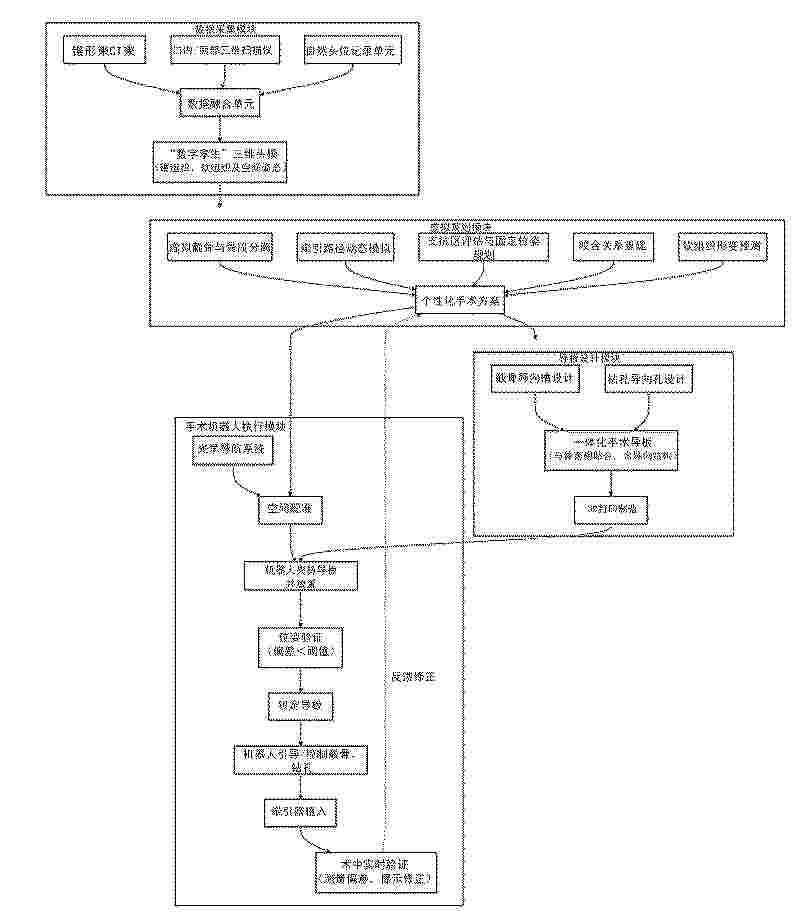
本发明涉及一种用于上颌内置式牵引器植入的手术规划、导板设计及机器人系统,包括:数据采集模块,用于获取患者颅颌面的多模态影像数据,并构建包含硬组织、软组织及空间姿态的数字孪生三维头模;虚拟规划模块,用于在所述数字孪生三维头模的基础上生成患者的个性化手术方案;导板设计模块,用于根据所述个性化手术方案,设计并制造适配于患者的个性化手术导板;以及手术机器人执行模块,其通过光学导航系统验证导板的实际位姿与规划位姿之间的偏差,当偏差小于预设阈值时锁定所述手术导板,并依据所述个性化手术方案和所述个性化手术导板完成截骨、钻孔及牵引器植入操作。
Resumen de: CN122805272A
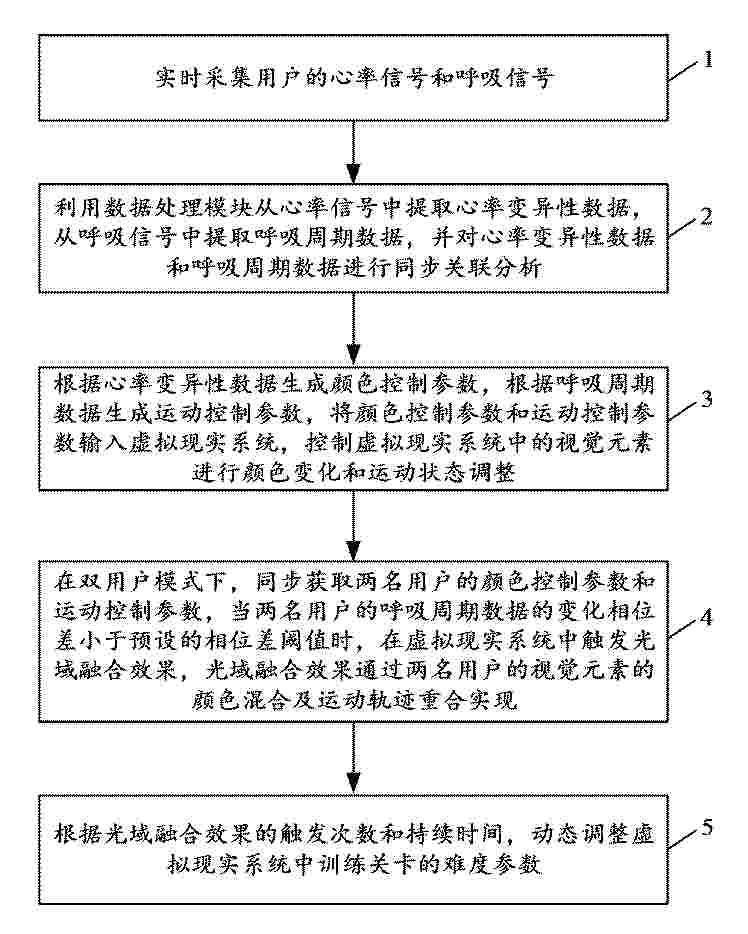
0001 本发明提出一种基于心率和呼吸的心理压力分析方法及系统,涉及精神医疗技术领域。该方法通过实时采集用户呼吸信号与心率信号,提取呼吸周期数据及心率变异性数据并进行同步关联分析,揭示自主神经系统与呼吸节律的相互作用。系统将心率变异性数据映射为虚拟现实环境中的颜色控制参数,呼吸周期数据映射为运动控制参数,形成多感官生物反馈。在双用户模式下,通过监测呼吸相位差及动作轨迹重合度触发光域融合效果,实现颜色混合与运动轨迹协同,并结合触发次数动态调整训练关卡难度。本发明解决了单一信号割裂、缺乏社交互动及动态适配能力不足的问题,提升乳腺癌患者康复训练的沉浸感、依从性及个性化适配能力。
Resumen de: CN122805214A
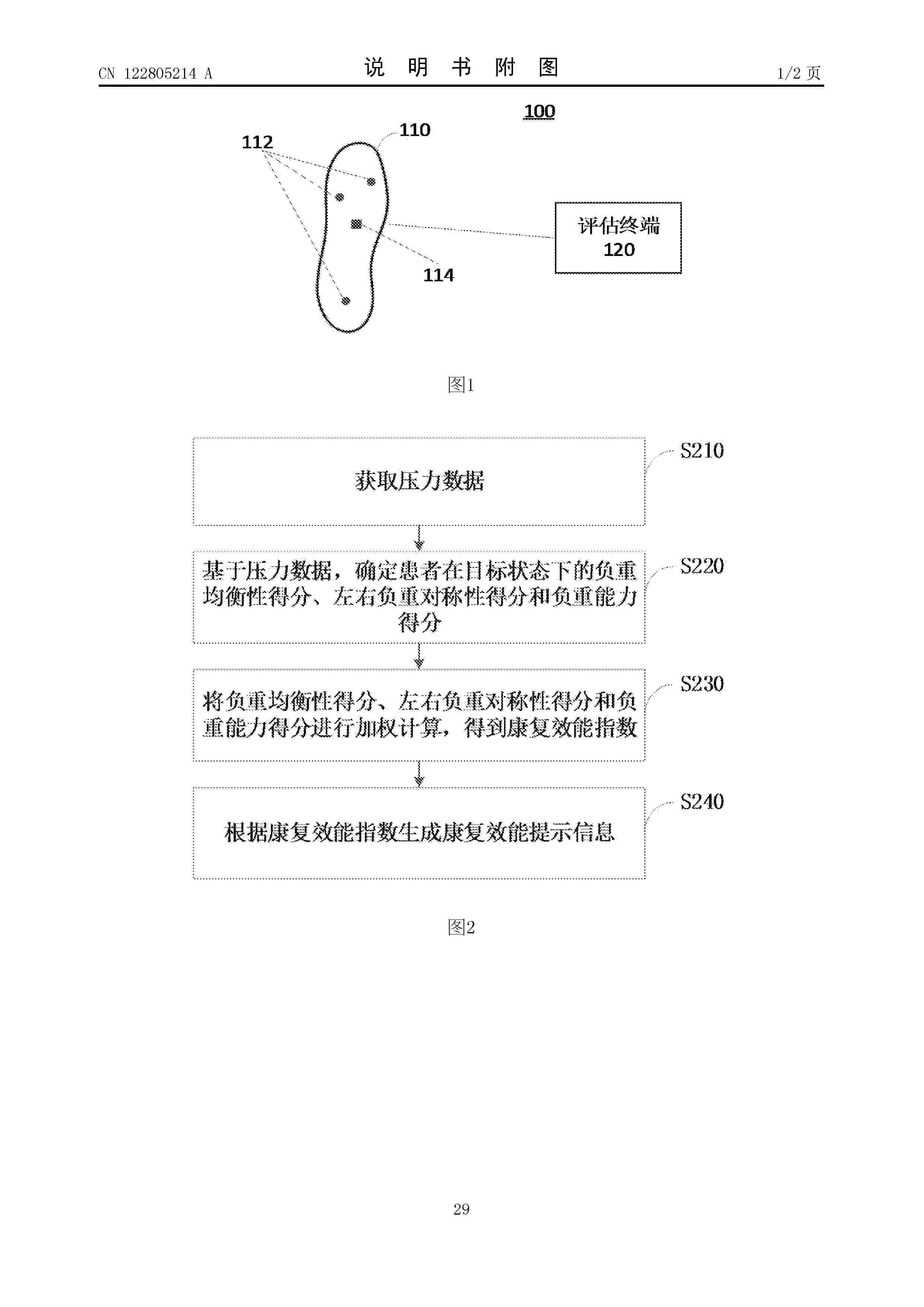
本申请提供一种踝关节康复效能评估方法、系统、评估终端及存储介质,涉及医疗技术领域。通过将权重分配问题建模为序贯决策模型,以当前各维度得分及其变化趋势作为状态输入,以最大化未来一段时间内康复效能指数的累积提升量为优化目标,通过策略梯度算法训练出的策略网络能够根据患者当下的康复态势智能地调整权重分配,使三个维度的权重能够根据患者当前的康复状态及其变化趋势进行自适应调整,实现了评估重点与患者实际薄弱环节的动态对齐。基于三个维度综合确定康复效能指数,为踝关节康复提供了一种多维度量化评估手段,最终生成直观的康复效能提示信息,实现了对踝关节康复进程的客观量化与可视化反馈。
Resumen de: US20260096746A1
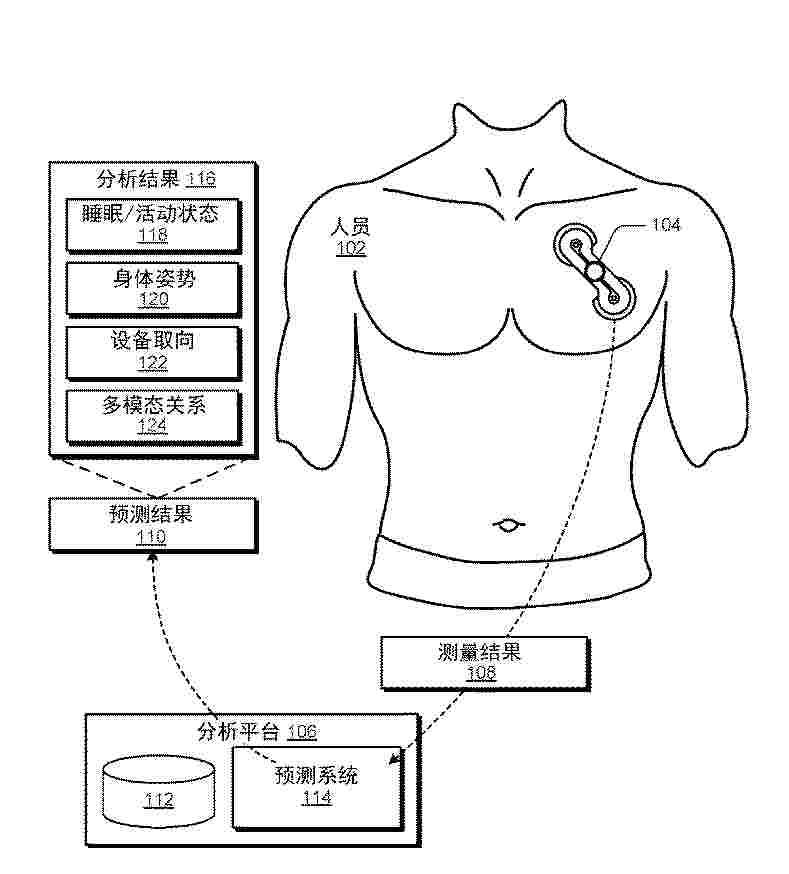
0000 Techniques for physiological monitoring using low sample rate accelerometer data are described and are implementable to generate insights related to user states during extended wear periods. In an example, low sample rate accelerometer data having a sample rate that is below a sample rate threshold is received from a wearable device mounted on a skin surface of a chest region of a user during a wear period. The low sample rate accelerometer data is processed to extract one or more motion-derived parameters that characterize temporal movement patterns of the user during the wear period. An insight for presentation related to a user state during the wear period is generated based on the one or more motion-derived parameters. The insights can include but are not limited to predictions of sleep states, active states, and inactive states, body angle and position determinations, and detection of device inversion events.
Resumen de: CN122805416A
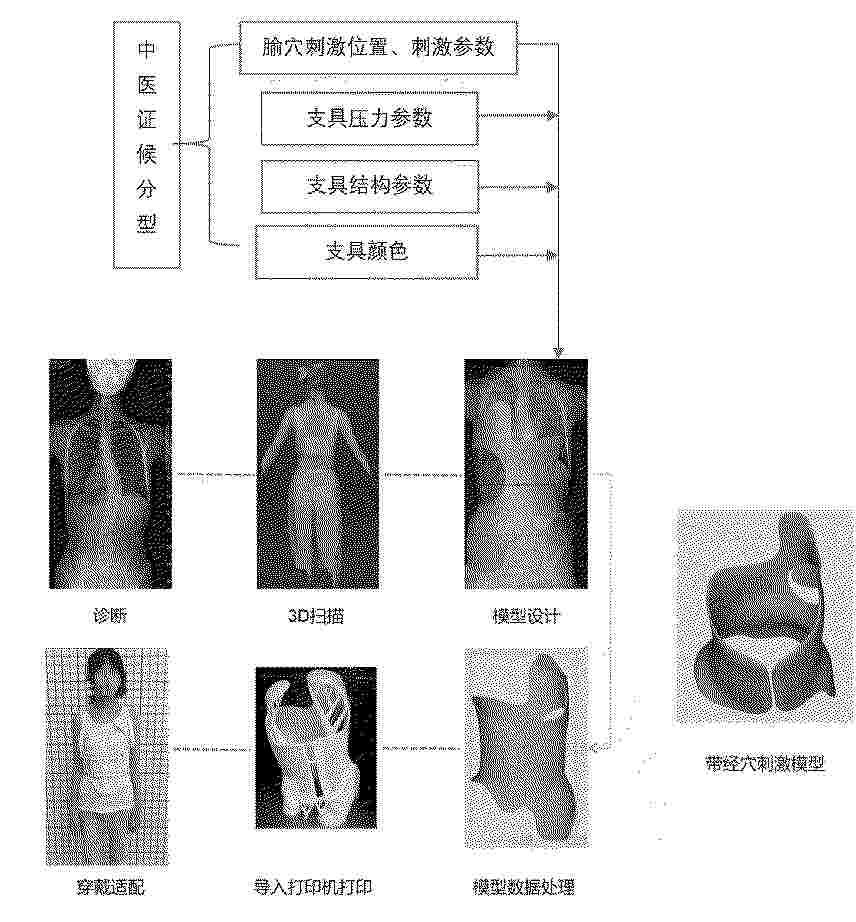
本发明涉及一种中医辨证个性化3D打印支具及制作方法,包括:获取患者脊柱侧弯的三维扫描数据和医学影像数据,建立脊柱三维模型;获取患者中医证型信息,确定支具中经络腧穴刺激区的位置、数量和刺激参数,以及支具结构参数、支具压力参数和支具颜色参数;根据脊柱三维模型和确定的参数,建立支具三维模型并进行3D打印,得到支具实体;配置刺激模块并安装;优势:将中医辨证分型信息融入支具设计制造全流程,以辨证结论为统一依据,贯通支具的力学矫正参数、腧穴刺激参数、结构适配参数和外观色彩参数的个性化配置,打破了现有支具单一力学矫正且各模块参数彼此割裂的技术局限,真正实现了辨证施具、因人制宜。
Resumen de: CN122805893A
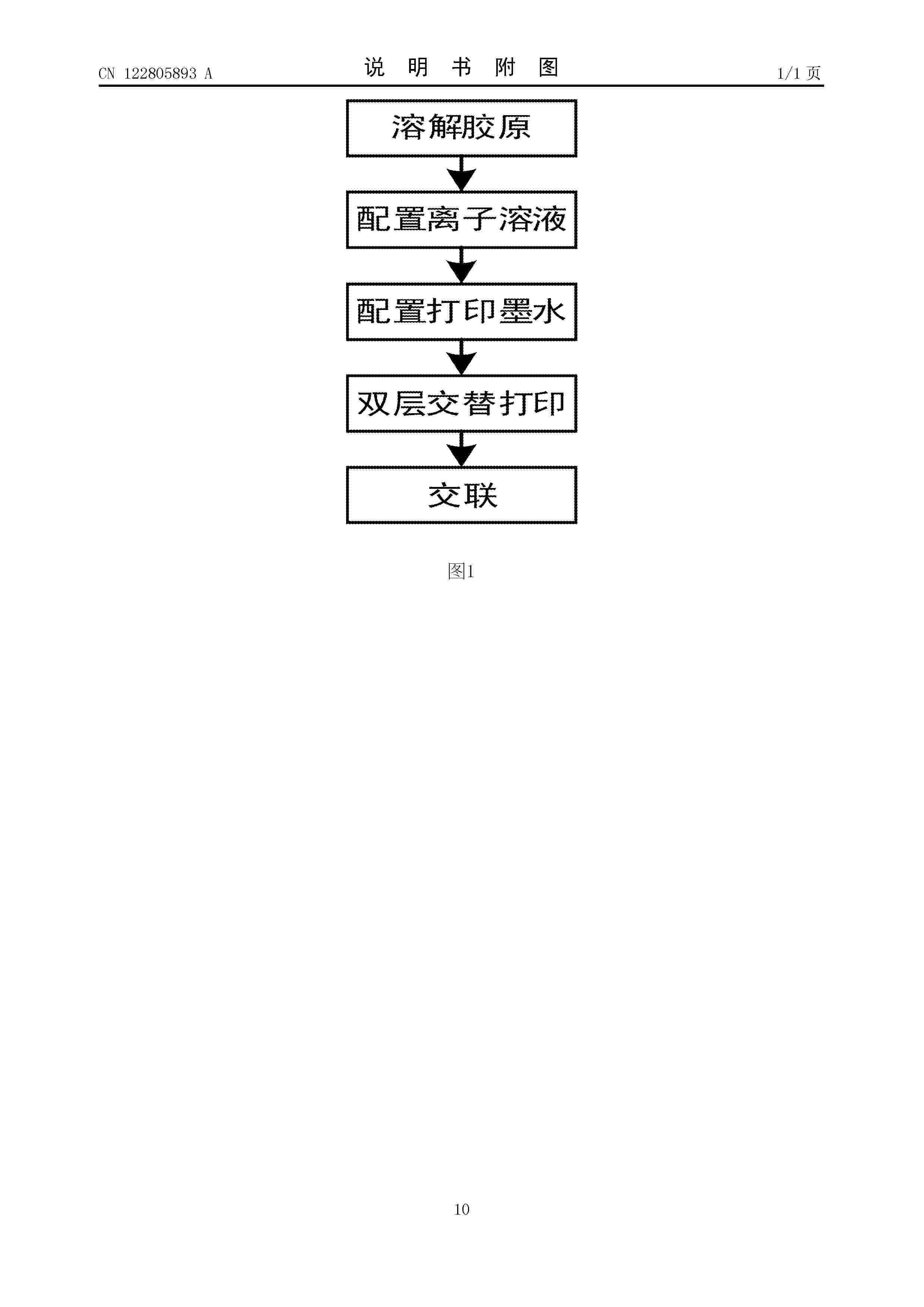
本申请公开了一种基于3D打印技术的原位矿化胶原支架材料及其制备方法,包括如下步骤:S1:使用有机溶剂溶解胶原,配置成预设浓度的胶原溶液;S2:使用纯化水分别配置预设浓度的钙离子溶液与磷酸根离子溶液;S3:在胶原溶液中分别加入钙离子溶液与磷酸根离子溶液,配置为两种含有不同矿物离子的原位矿化3D打印墨水;S4:装入到不同打印料筒中进行打印,打印结束后将支架置于干燥皿中干燥预设时间;S5:配置预设浓度的交联溶液,将支架浸泡,得到的支架用纯化水洗涤,干燥得到原位矿化胶原支架材料。属于骨植入物技术领域,该结构能够解决现有可降解人工骨材料一般强度较低且没有合适的孔径及孔隙率满足骨细胞爬行替代的问题。
Nº publicación: CN122805879A 25/09/2026
Solicitante:
中国人民解放军陆军特色医学中心
Resumen de: CN122805879A
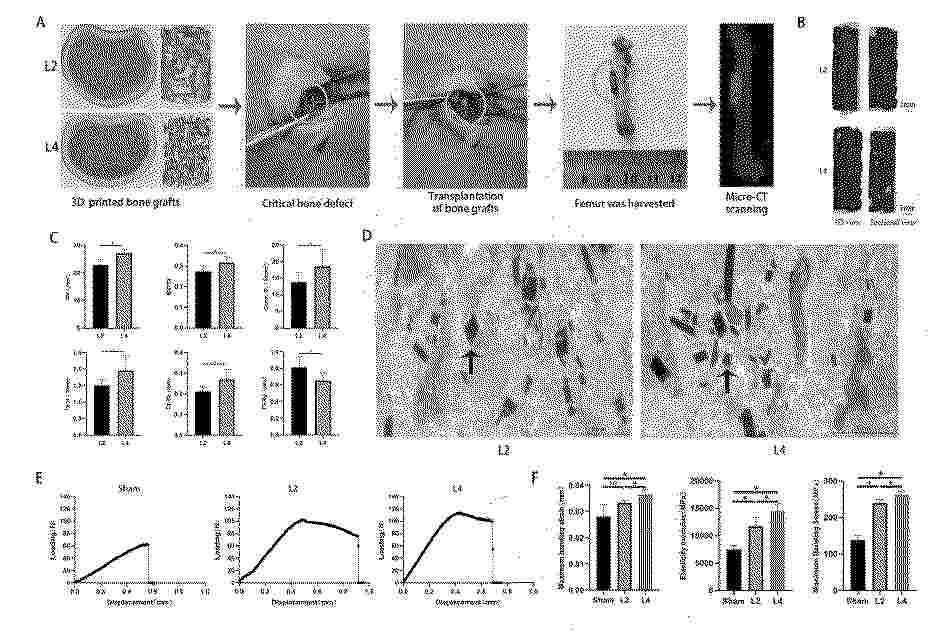
本发明公开了一种促成骨分化的3D打印钛合金多孔仿生人工骨、制备方法及应用,属于生物医用材料领域。该人工骨由钛金属骨架构成,内部具有相互连通的多孔网状结构;多孔网状结构模仿人体第四腰椎松质骨的三维微观结构设计而来,其平均孔径为60.3‑73.9μm,孔隙率为67.9%‑80.5%。制备方法为获取骨密度恢复较快的第四腰椎断层图像,提取松质骨结构进行三维重建,经选区激光熔化技术打印成型。本发明的特定物理拓扑结构能有效激活骨髓间充质干细胞的Notch2信号通路,诱导成骨分化。应用于临界骨缺损修复时,可增加缺损部位的新骨生成量,提升愈合区域的弹性模量与最大弯曲应力,实现良好的骨整合。
 BOPI
BOPI
 Sede Electrónica