Si deseas distinguir tus productos, servicios o ambos de los de otra empresa, es posible que necesites una marca o nombre comercial. Descubre qué son, en qué consiste su procedimiento de registro y qué implica.

Información sobre los plazos de presentación de solicitudes de transformación de marcas de la Unión Europea en marca nacional española. Más información


Si tienes un nuevo dispositivo, producto o procedimiento que resuelva un problema técnico o tenga una ventaja práctica, existen distintas formas de protegerlo en España y en otros países. Descubre cómo hacerlo.

¿Tu innovación reside en la estética, la ornamentación o la apariencia de tu producto? Protégela mediante un diseño industrial. Descubre qué derechos confiere el registro y cómo realizar la tramitación.

Las indicaciones geográficas protegen el nombre de un producto originario de una zona geográfica, a la cual le debe una determinada calidad, reputación u otra característica. Descubre qué son, en qué consiste su procedimiento de registro y qué beneficios conceden.

Las patentes publicadas en todo el mundo son una valiosa fuente de información científica, técnica y comercial.

Si eres emprendedor/a o una empresa y quieres potenciar y mejorar la rentabilidad de tu negocio protegiendo de forma adecuada los activos intangibles de tu organización, en este espacio encontrarás lo necesario.


 789
resultados
789
resultados
 Última actualización
15/09/2026 [08:08:00]
Última actualización
15/09/2026 [08:08:00]


 Resultados 600 a 625 de 789

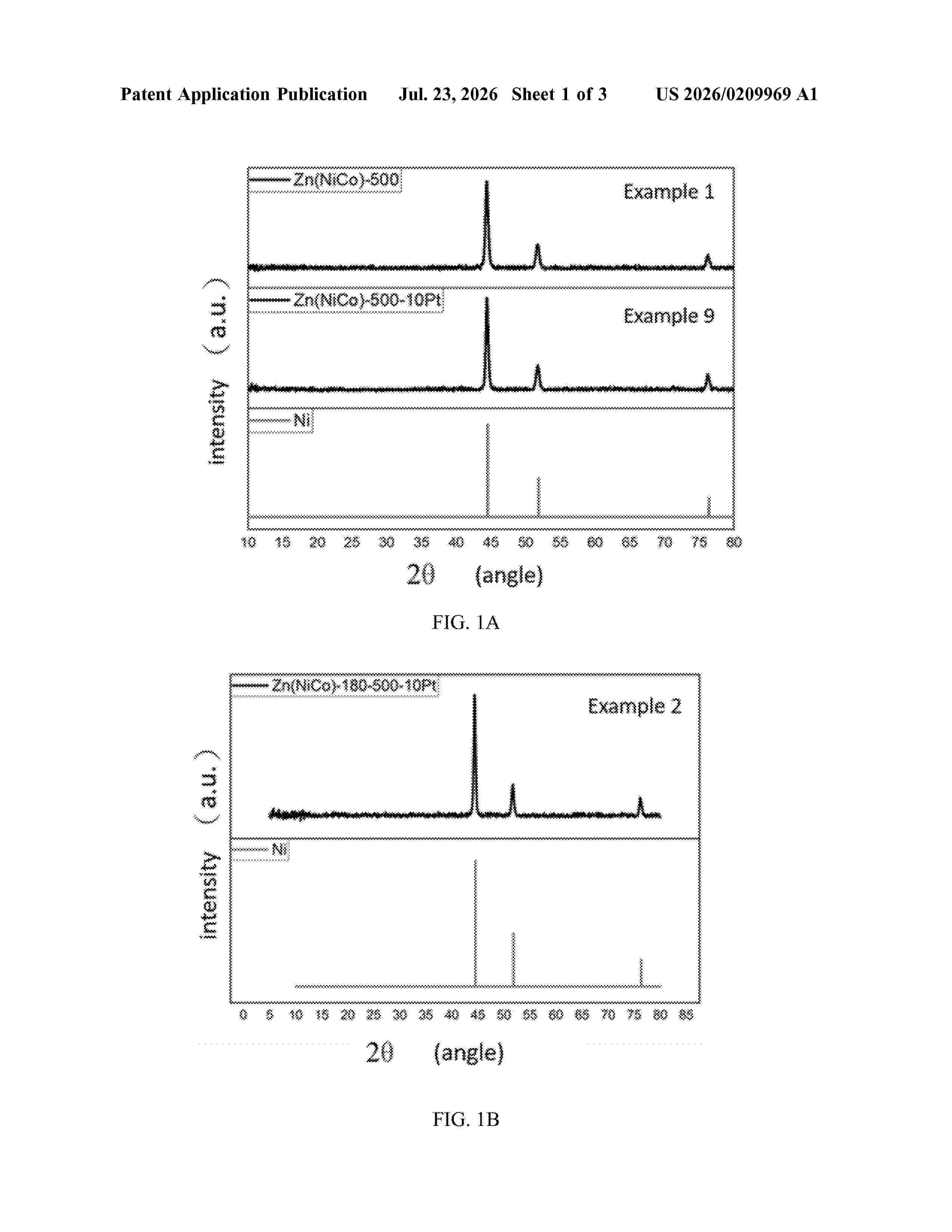
Resumen de: US20260209969A1
0000 An alloy catalyst, comprising 0.01 wt % to 30.0 wt % of Zn, 50.0 wt % to 99.9 wt % of other metals, and 0.0 wt % to 20.0 wt % of noble metals, wherein the other metals comprise at least one metal selected from a group consisting of Ni, Fe, Mo, and Co. The alloy catalyst features a porous structure formed through dealloying. The alloy catalyst of the present disclosure exhibits low overpotential, low Tafel slope, and high stability.

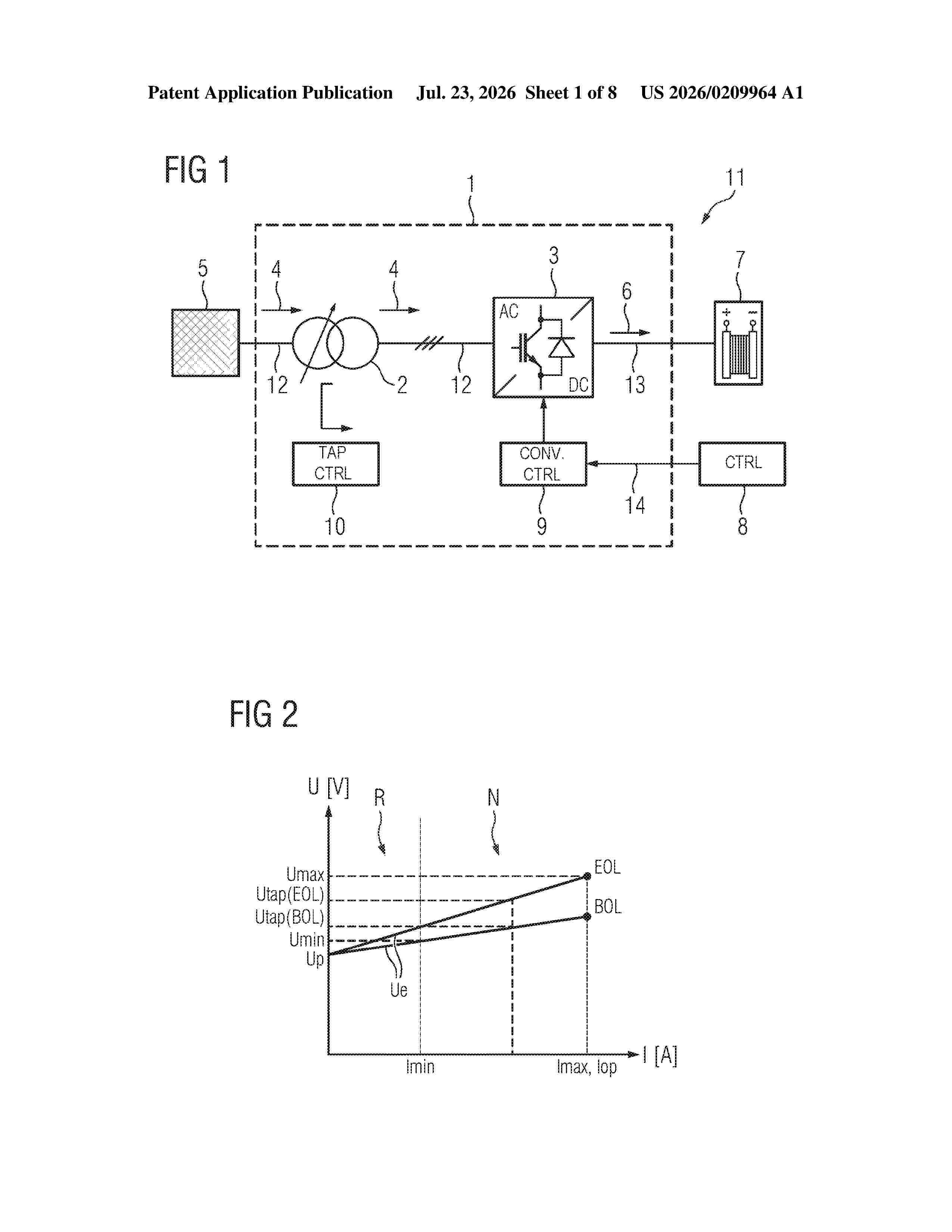
Resumen de: US20260209964A1
An electrolysis system has an electrolyzer, an on-load tap changing transformer, and at least two line-commutated converters, preferably IGBT converters. The on-load tap changing transformer receives an electrical power from an electrical power source and provides an electrical power output to the line-commutated converters. The line-commutated converters are electrically connected in parallel between the on-load tap changing transformer on a AC side and an electrolyzer on a DC side and convert the electrical power output into an electrical power input for the electrolyzer. The converters are connected to the same transformer AC bus. In a ramping phase of the electrolyzer a voltage of the power input is adjusted by only one of the parallel-connected converters to a tap changing voltage and the other converter stays in a stand-by mode. There are also described power supply, a controller, computer program and a related electrolyzer system.
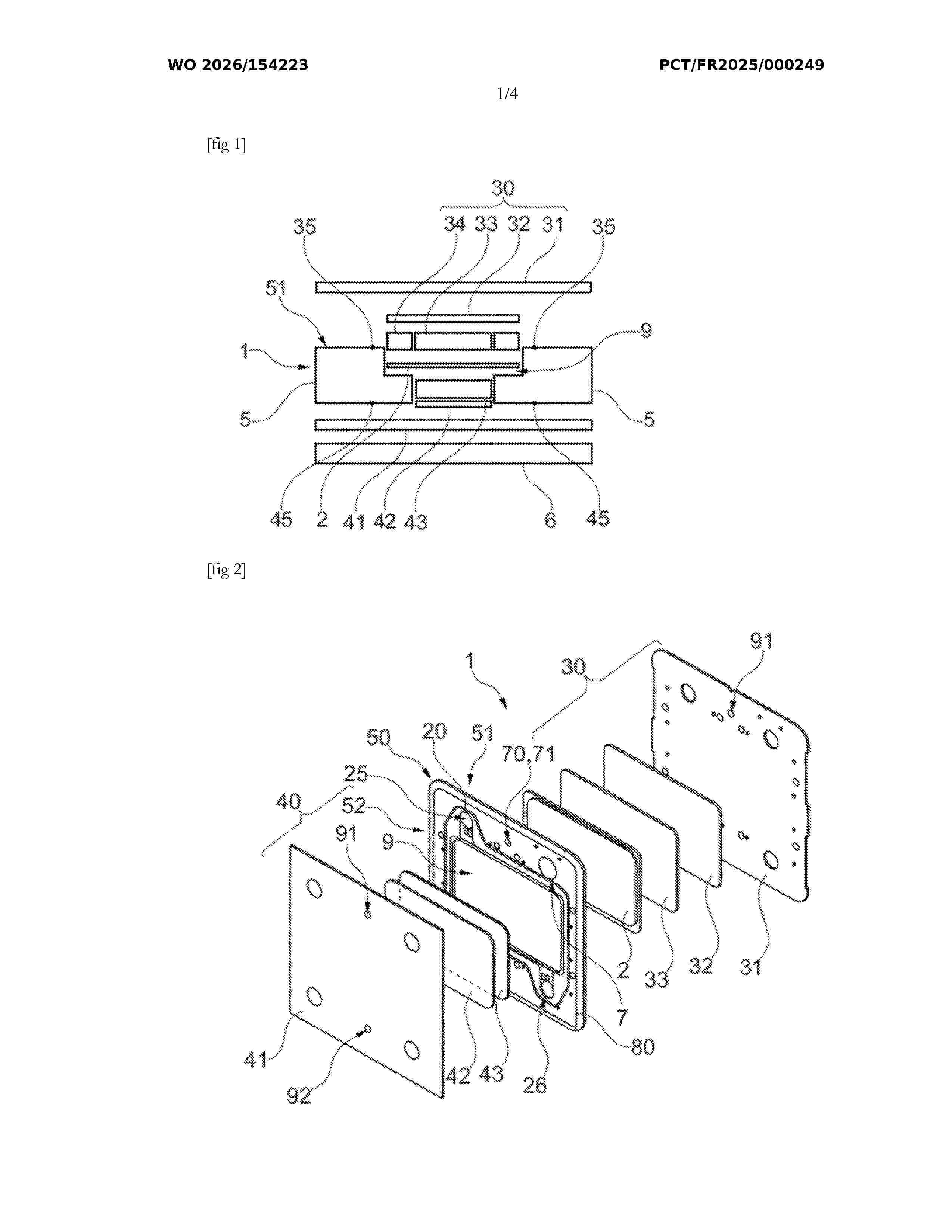
Resumen de: WO2026154223A1
The invention relates to an electrolysis cell, which includes a spacer (50) that is configured to support a separator, extends between a first and a second face (51, 52), and comprises: an inlet (7) and an outlet (8) configured to allow water to circulate within the electrolysis cell; a recess (9) which is intended to be occupied by the separator and is in fluid communication with the inlet and the outlet; a first primary groove (10) which is formed in a thickness of the spacer, opens onto the first face and extends around the recess, the inlet, and the outlet, to accommodate a first sealing member; a first secondary groove (60) which is formed in a thickness of the spacer, opens onto the first face and extends around the first primary groove to accommodate a first sealing device; and a through-hole (70) between the first and the second face, which through-hole is arranged between the first primary and secondary grooves.
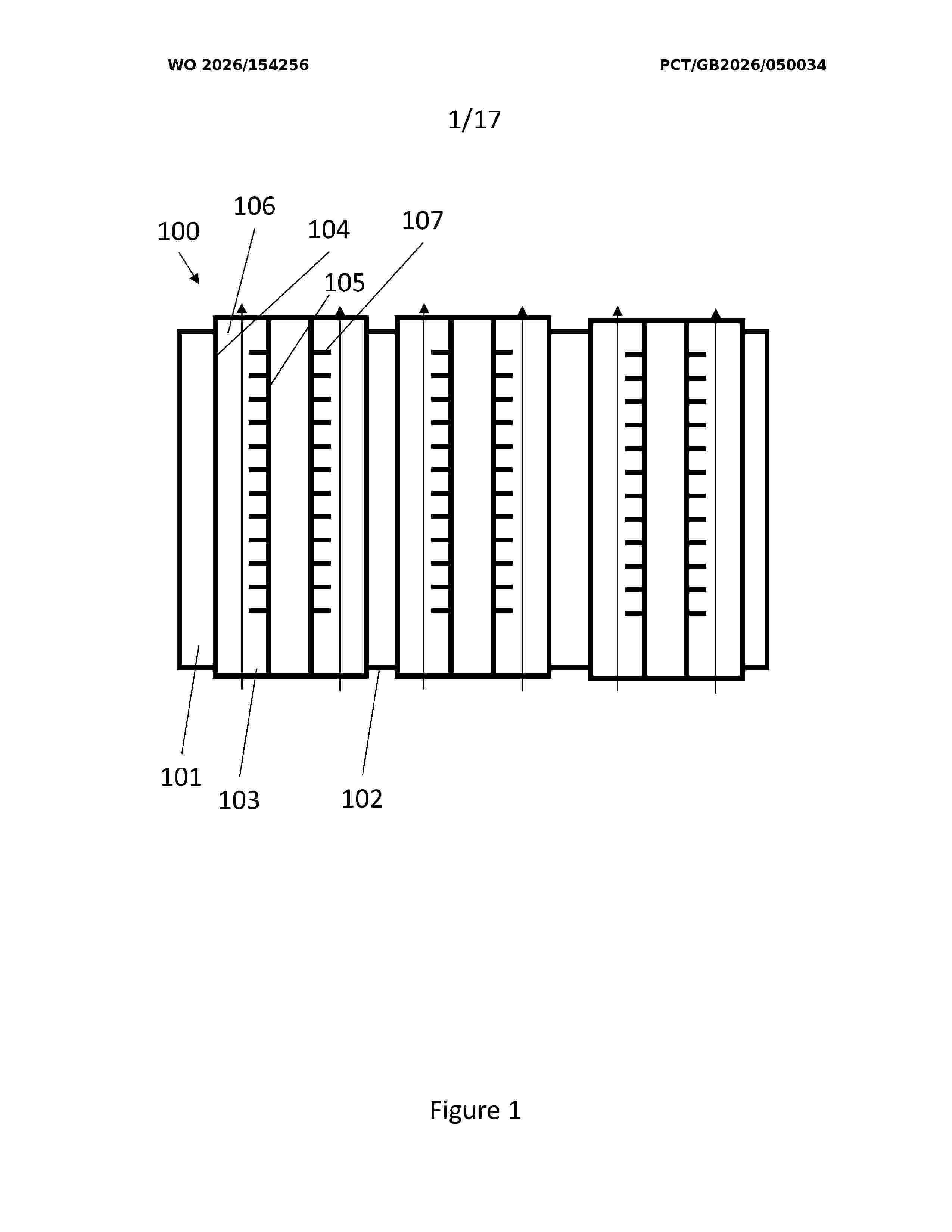
Resumen de: WO2026154256A1
The invention provides a hydrogen production device for producing hydrogen gas from ammonia, comprising: an outer chamber comprising an outer chamber wall, one or more inner chambers disposed at least partially within the outer chamber, each of the one or more inner chambers comprising a first inner chamber wall and a second inner chamber wall defining an inner subchamber having an inner subchamber internal volume, each second inner chamber wall comprising one or more fins extending therefrom into the inner subchamber, each inner subchamber comprising ammonia decomposition catalyst and having one or more ammonia gas inlets and one or more raw cracked gas outlets, wherein each of the one or more inner chambers has an internal surface area defined as the inner subchamber internal volume facing surface of the second inner chamber wall and the inner subchamber internal volume facing surface of each of the one or more fins; wherein the ratio of the internal surface area in mm2 to the inner subchamber internal volume in mm3 is between approximately 1:2 and 1:6. Also provided are systems comprising said device.
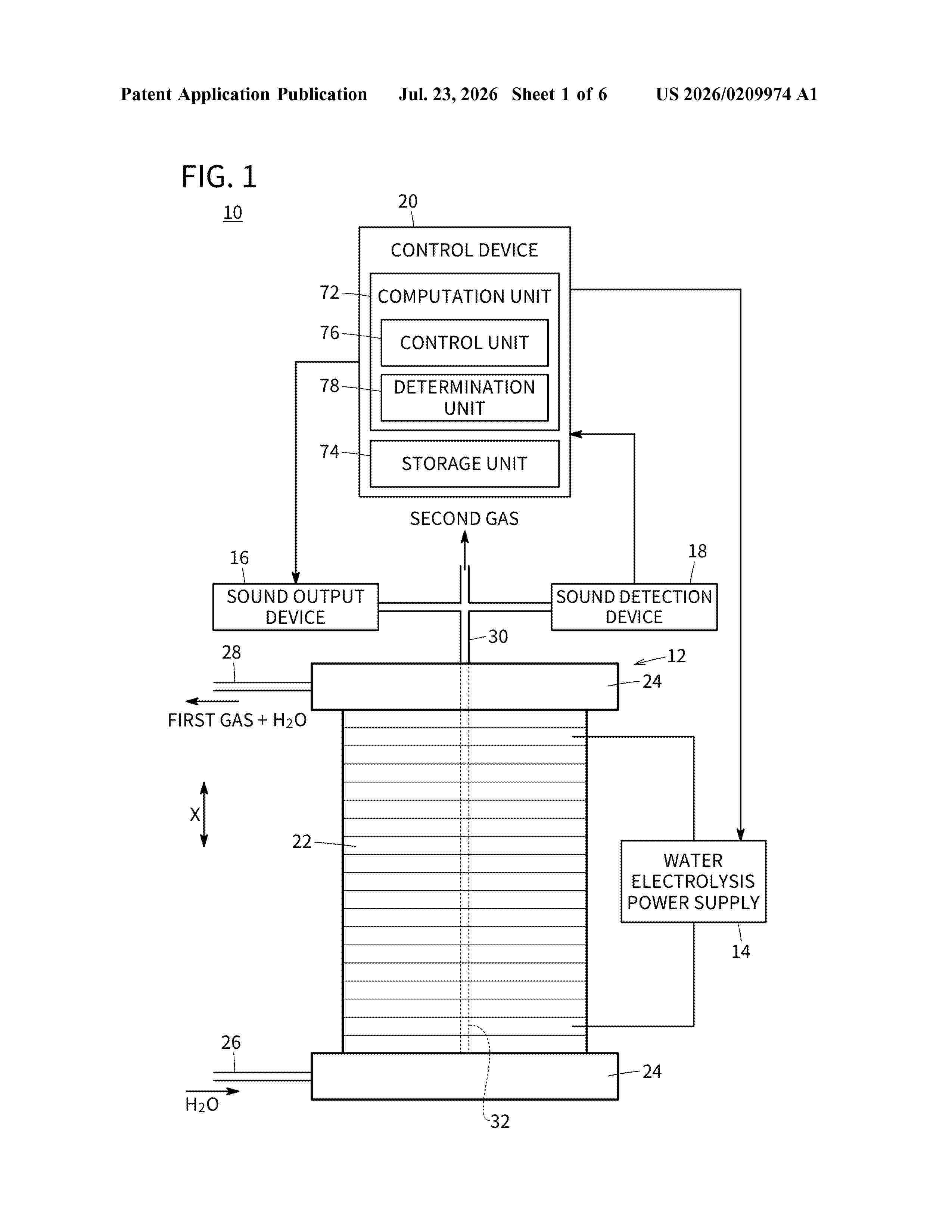
Resumen de: US20260209974A1
In a water electrolysis system, second current collectors of a plurality of water electrolysis cells each include a cut into which a gas generated in a second electrode catalyst layer flows and which communicates with a gas outlet path and canresonate a sound. The water electrolysis system includes a sound output device that outputs a sound to the gas outlet path, and a sound detection device that detects a resonant sound generated by resonation, in the cut, of the sound propagated from the sound output device to the cut via the gas outlet path. In the plurality of water electrolysis cells, the resonant frequencies of thesound in the cuts are different from each other.
Resumen de: KR20260114906A
본 발명은 암모니아 산화 분해용 촉매의 제조방법, 암모니아 산화 분해용 촉매 및 암모니아 산화 분해 공정에 관한 것으로, 본 발명에 따른 암모니아 산화 분해용 촉매의 제조방법은, 알루미나에 루테늄을 담지하여 담체를 획득하는 단계; 상기 담체를 건조하는 단계; 상기 건조한 담체를 열처리하는 단계; 상기 열처리한 담체에 지르코늄을 담지하여 혼합 담체를 획득하는 단계; 상기 혼합 담체를 건조하는 단계; 상기 건조한 혼합 담체를 열처리하는 단계; 및 상기 열처리한 혼합 담체를 환원하는 단계;를 포함한다.
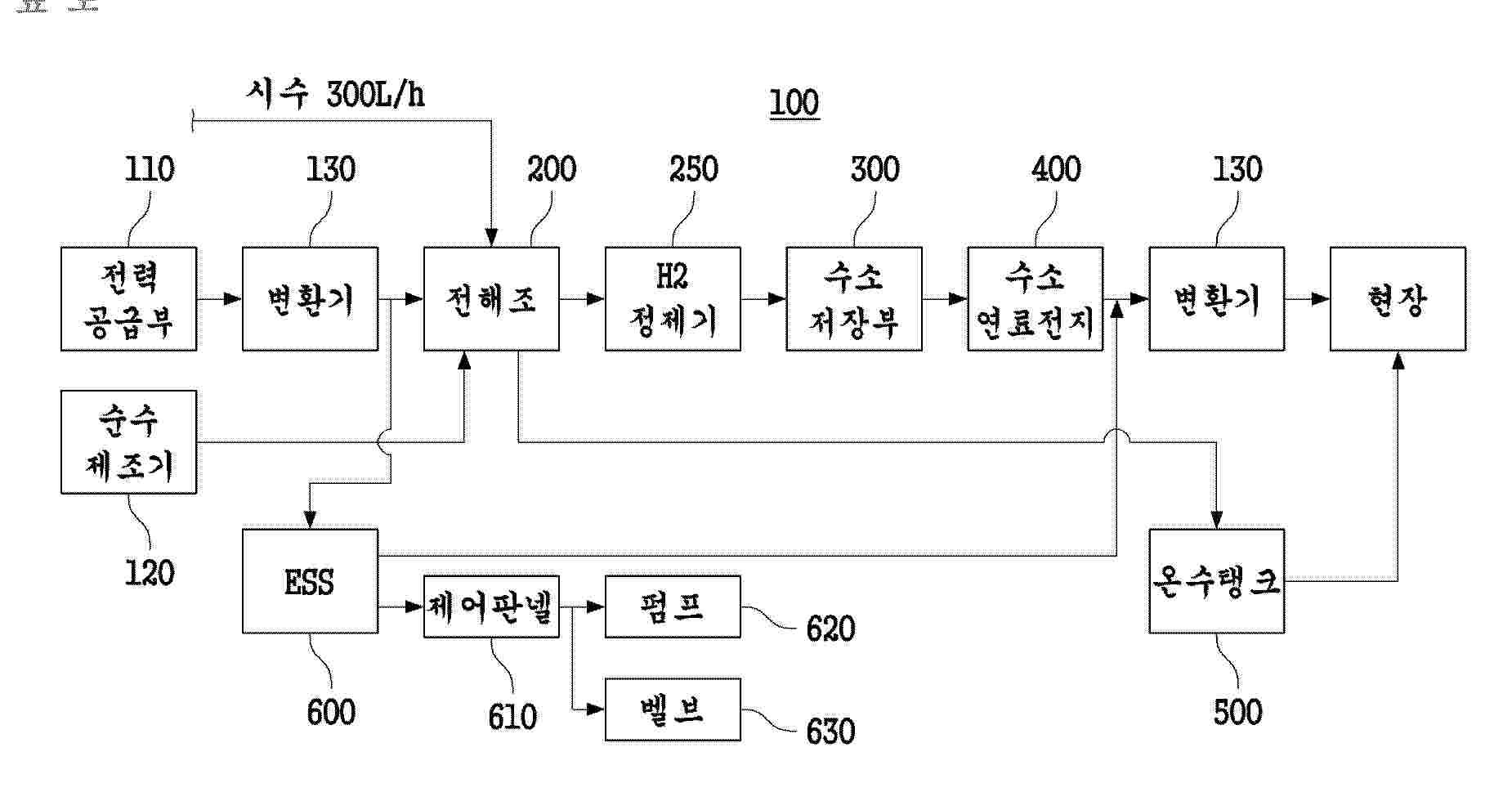
Resumen de: KR20260114651A
0001a 본 발명은, 전해조; 상기 전해조로부터 생성된 수소를 저장하는 수소 저장부; 상기 수소 저장부에 저장된 수소를 전달받아 전기 에너지를 발생 및 공급하는 수소 연료전지; 및 상기 전해조에서 사용된 물을 전달받아 외부로 공급하는 온수탱크;를 포함하며, 상기 전해조는, 수소발생량, 수소압력, 전류밀도, 반응면적, 셀수, 셀 간 거리는, 각각, 7Nm3/hr, 40barg, 2.0A/cm2, 1000cm2, 10cell, 10cm 인 고압 수전해 스택(stack)을 포함하는 것을 특징으로 한다.
Resumen de: KR20260114640A
0001a 본 발명은, 암모니아 분해 활성이 우수한 니켈 담지형 알루미나 촉매 및 이의 제조방법에 관한 것으로, 더욱 상세하게는 낮은 온도에서 암모니아를 수소와 질소로 분해가 우수한 암모니아 분해 활성이 우수한 니켈 담지형 알루미나 촉매 및 이의 제조방법에 관한 것이다.
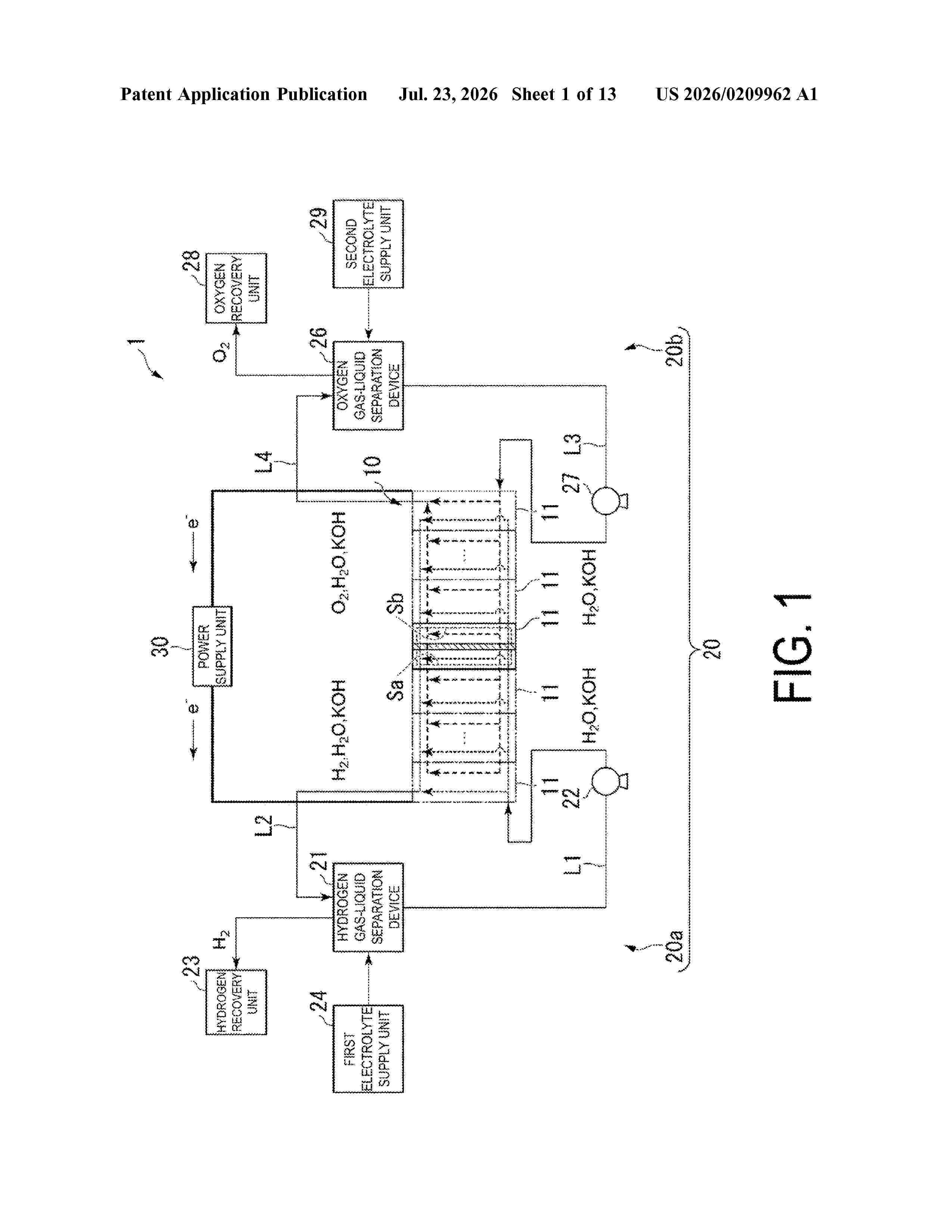
Resumen de: US20260209962A1
An electrolysis cell includes: a first separator including a first surface; a second separator including a second surface facing the first surface; an ion-exchange membrane; a first power feeder disposed between the first separator and the ion-exchange membrane; a first catalyst layer disposed between the first power feeder and the ion-exchange membrane; a second power feeder disposed between the second separator and the ion-exchange membrane; a second catalyst layer disposed between the second power feeder and the ion-exchange membrane; and a flow direction changing part provided as a part of the first separator or disposed between the first separator and the first power feeder, the flow direction changing part changing a flow direction of at least a portion of an electrolyte flowing along the first surface in a first direction to a second direction intersecting the first surface at each of a plurality of positions in the first direction.
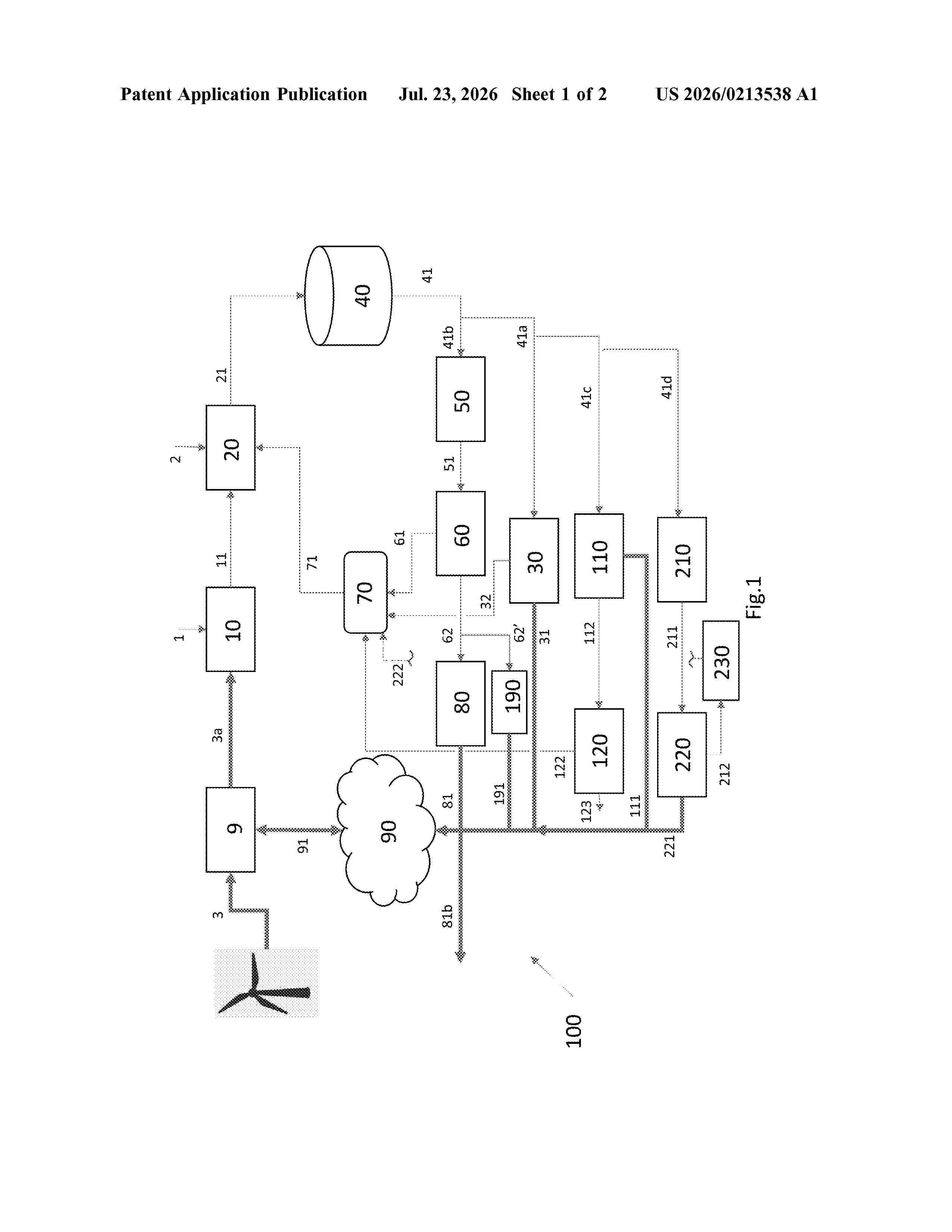
Resumen de: US20260213538A1
0000 A power balancing system and process is provided, in which a first electrolysis unit (10) outputs a first hydrogen rich stream (11), which is converted in a methanol synthesis plant (20) to a first methanol-rich stream (21). A methanol storage unit (40) receives and stores the first methanol-rich stream (21). When additional electrical power is required, methanol from the methanol storage unit (40) can be used for power generation. The system and process allow excess electrical power to be converted into and stored as methanol during periods of low demand, and used to generate electrical power when demand is higher.
Resumen de: US20260213228A1
0000 A Solid Oxide Cell stack has a combined flow distributor and contact enabler made of pressed metal foil with flow guides and contact areas located between an interconnect layer and a cell layer in the stack.
Resumen de: US20260209956A1
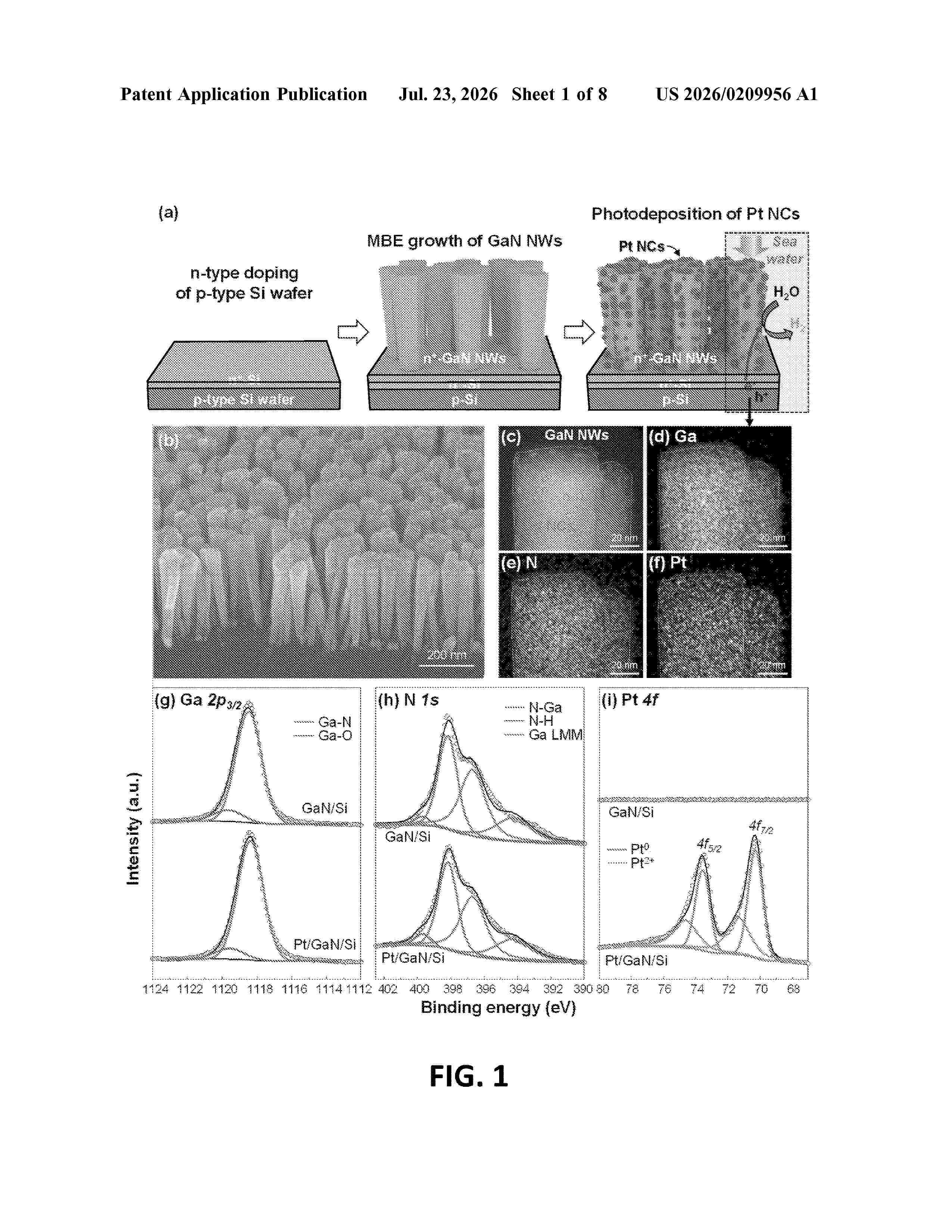
0000 A method of hydrogen production includes providing a solution and immersing a device in the solution. The device includes a substrate having a surface, an array of conductive projections supported by the substrate and extending outward from the surface of the substrate, and a plurality of catalyst nanoparticles disposed over the array of conductive projections. The solution includes dissolved sodium chloride (NaCl).
Resumen de: US20260209141A1
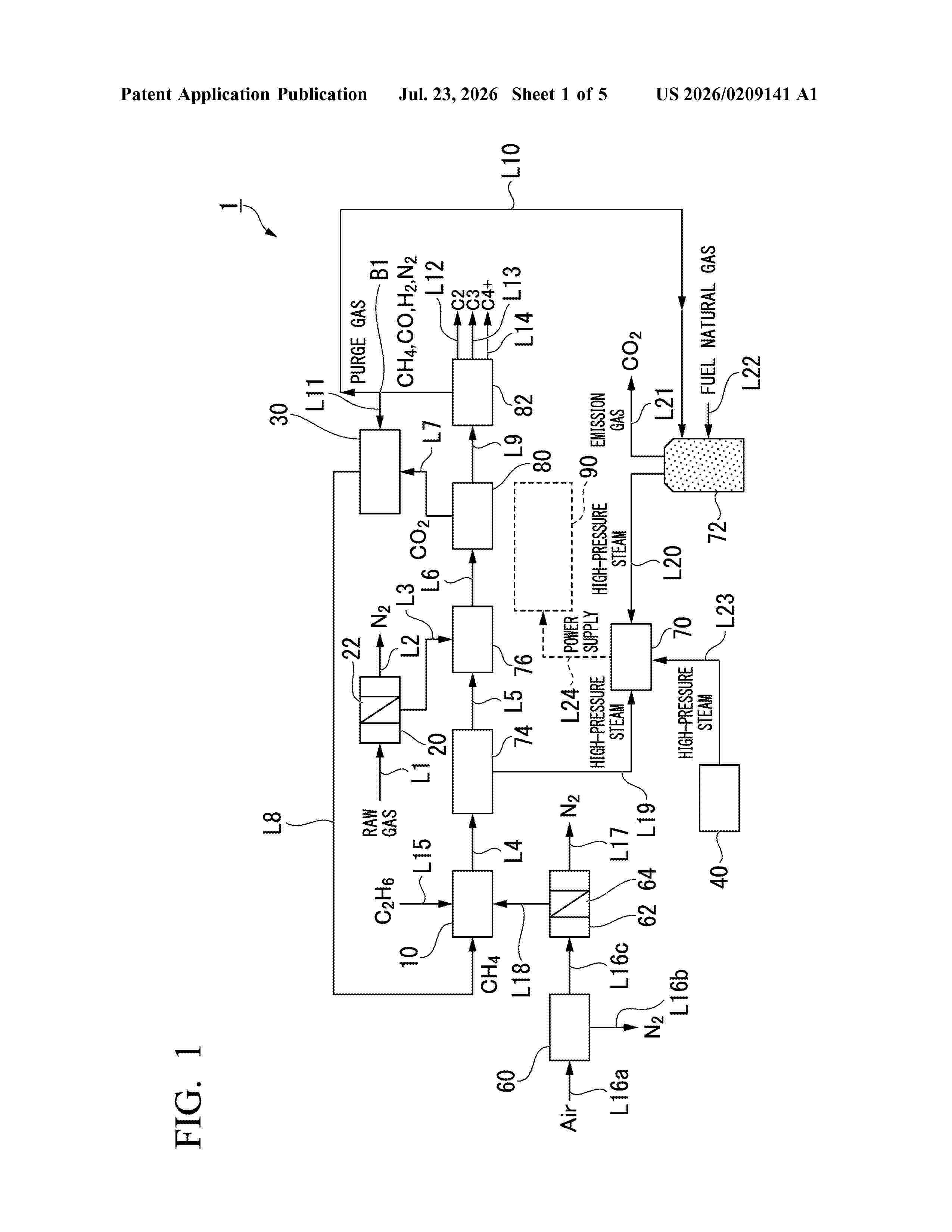
0000 A hydrocarbon production system that generates a hydrocarbon having two or more carbon atoms from methane by an oxidative coupling reaction of methane is a hydrocarbon production system including: an oxidative coupling reaction device configured to perform an oxidative coupling reaction between methane and oxygen; a raw gas separation device configured to separate an inert component from a raw gas containing the inert component; a carbon dioxide separation device configured to separate carbon dioxide contained in a generated gas generated in the oxidative coupling reaction device; and a methanation device configured to perform a methanation reaction between hydrogen and carbon dioxide.
Resumen de: US20260209953A1
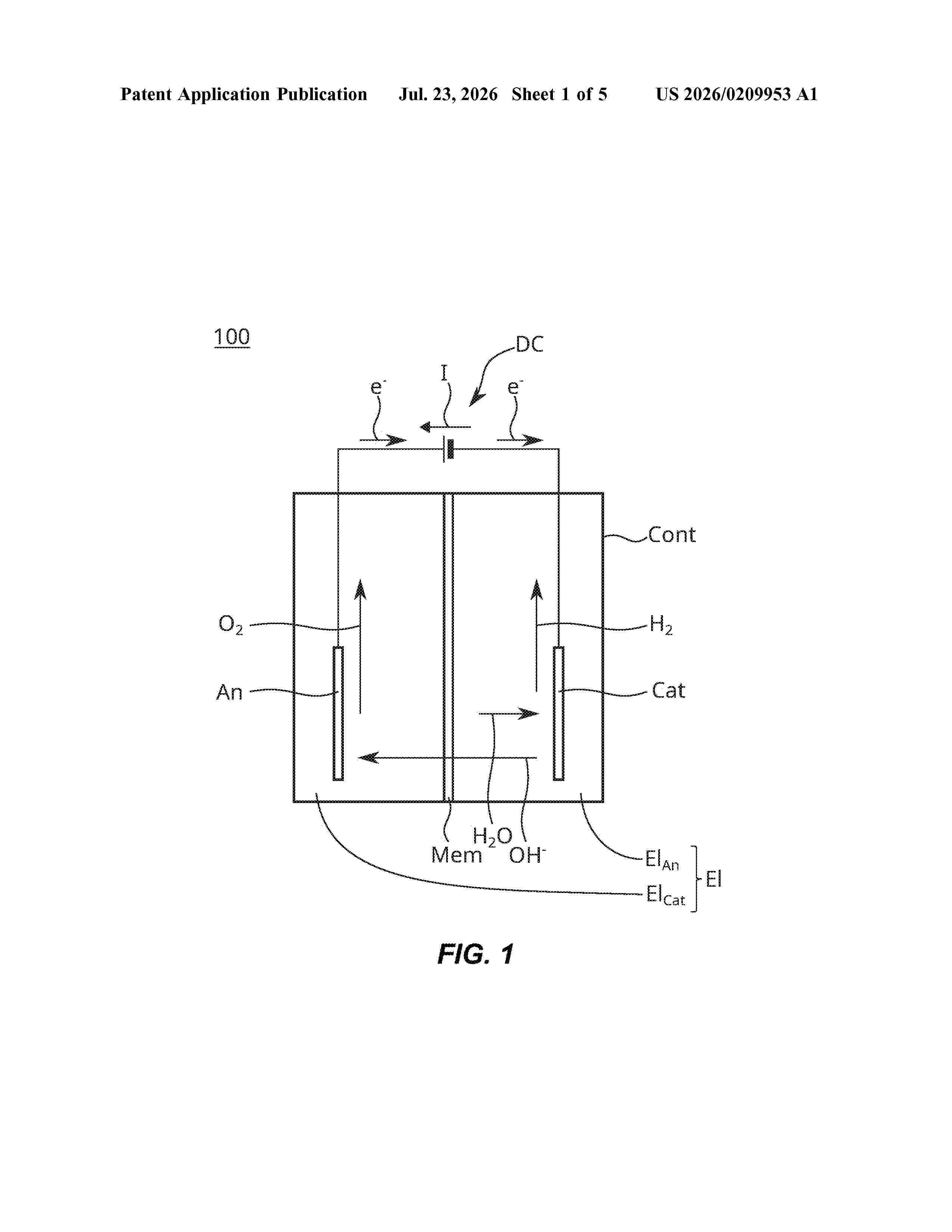
An alkaline water electrolyzer includes an electronic controller, a stack of electrolysis cells each comprising an anode and a cathode. The electrolyzer is configured to contain an electrolyte made of an anolyte and a catholyte. The electrolyzer also includes a system controlled by the electronic controller configured to maintain a concentration of an impurity in the electrolyte within a target range by measuring a characteristic representative of the concentration of the impurity in the electrolyte and, in response to the measured concentration of the impurity, add a quantity of the impurity into the electrolyte.
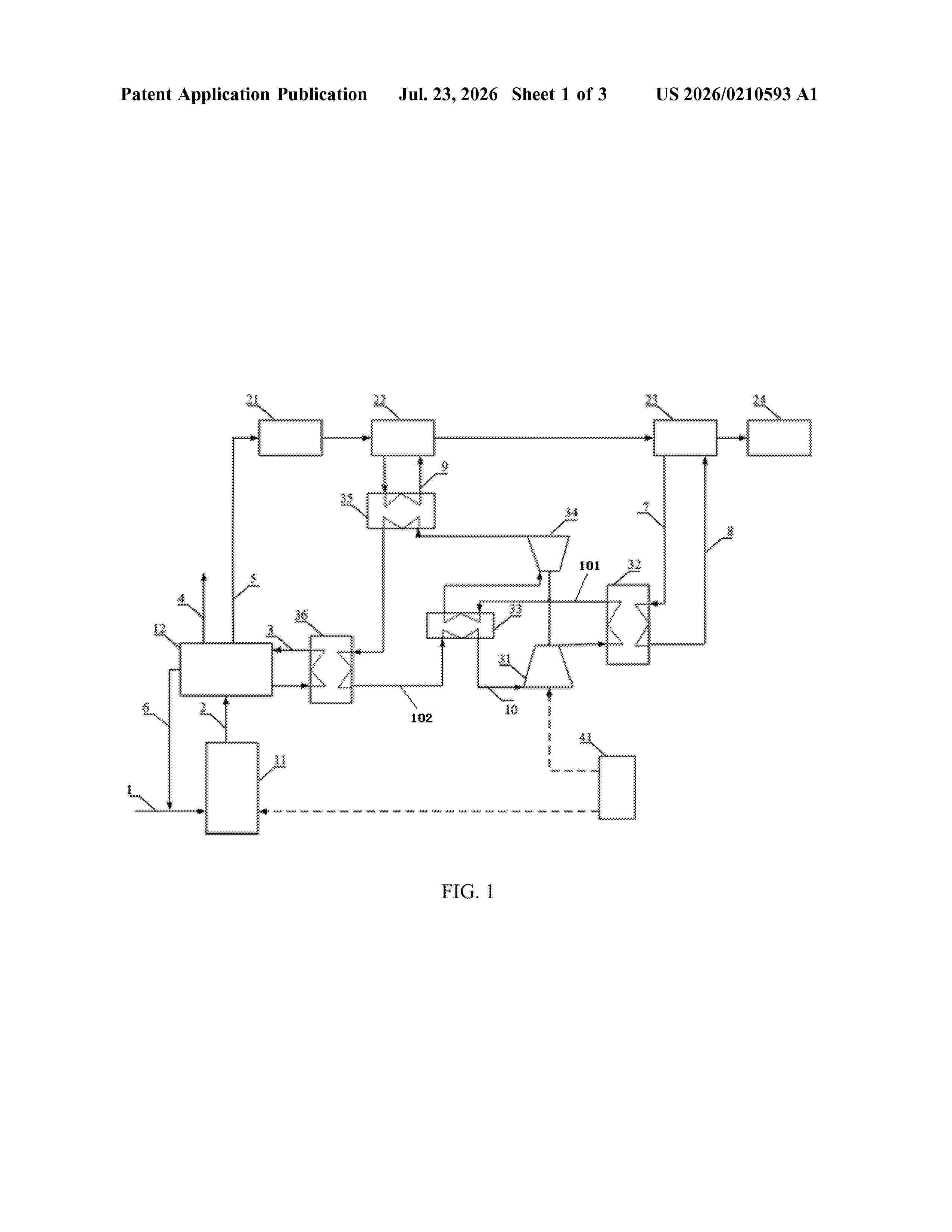
Resumen de: US20260210593A1
The present disclosure belongs to the technical field of hydrogen production by water electrolysis, and relates to an energy optimization heat pump system and method for hydrogen production by water electrolysis with low-pressure ratio. It includes a hydrogen oxygen gas-liquid separation unit, a heat pump compressor, and an expander. The hydrogen oxygen gas-liquid separation unit is connected to the hydrogen dryer through a hydrogen cooler. The hydrogen oxygen gas-liquid separation unit is connected to the heat pump absorber through a circulating cooling water pipeline, the hydrogen cooler is connected to the refrigerator through a refrigerant pipeline, and the hydrogen dryer is connected to the steam generator through a hot water pipeline and a steam pipeline respectively. The present disclosure is conducive to reducing the pressure ratio of the heat pump compressor, enriching the selection range of heat pump working fluids, and improving the energy utilization rate of the system.
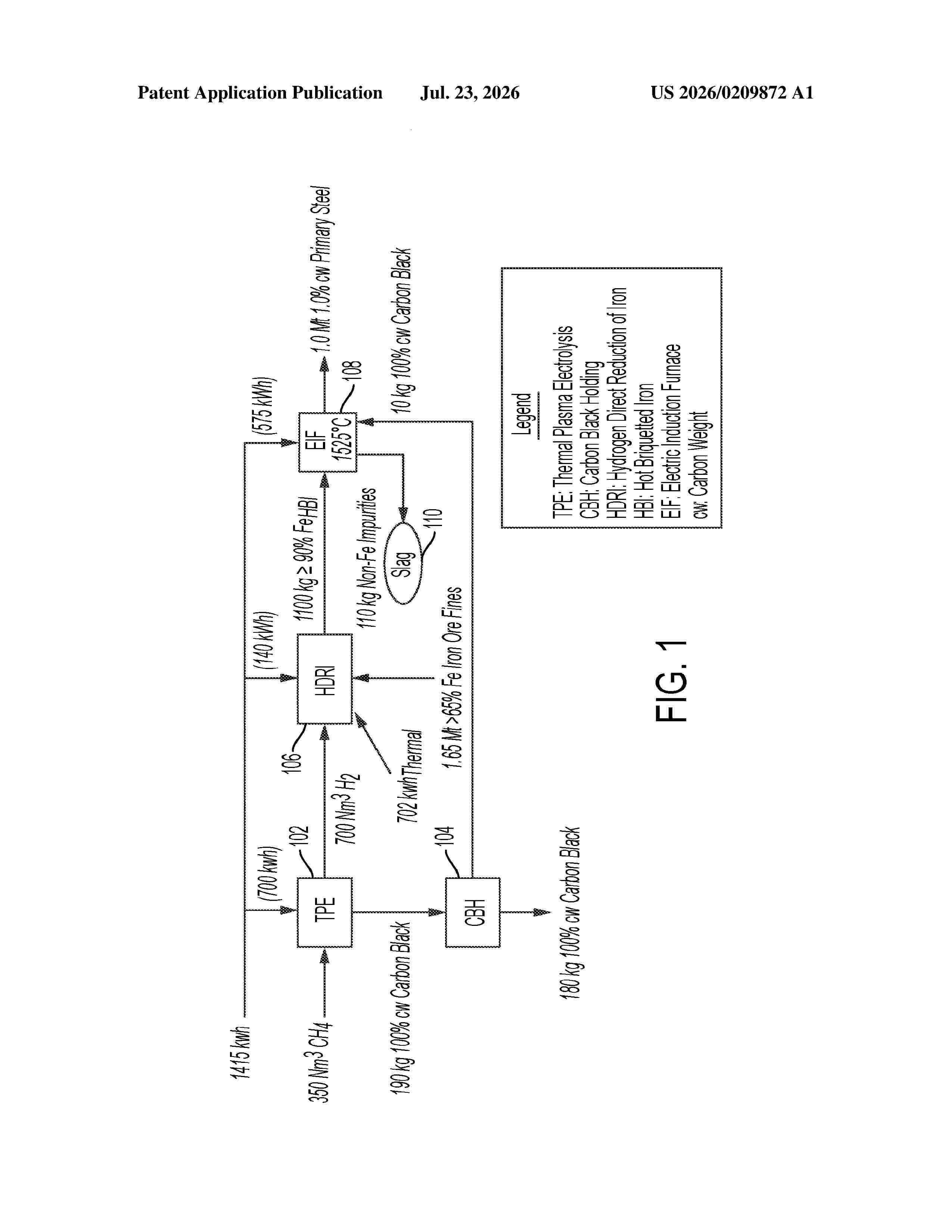
Resumen de: US20260209872A1
0000 The present disclosure relates, according to some embodiments to a method for steel production, the method comprising forming a hydrogen and a carbon from a natural gas using thermal plasma electrolysis; reducing iron ore fines with the H<2> to form an iron briquette; melting the briquette iron from the furnace to form a melted iron and melted non-metallic slag; separating the non-metallic slag from the melted iron in the furnace; combining the carbon and the melted iron in a furnace to form a carbon black and iron mixture; and alloying the melted iron with the carbon black to form a steel.
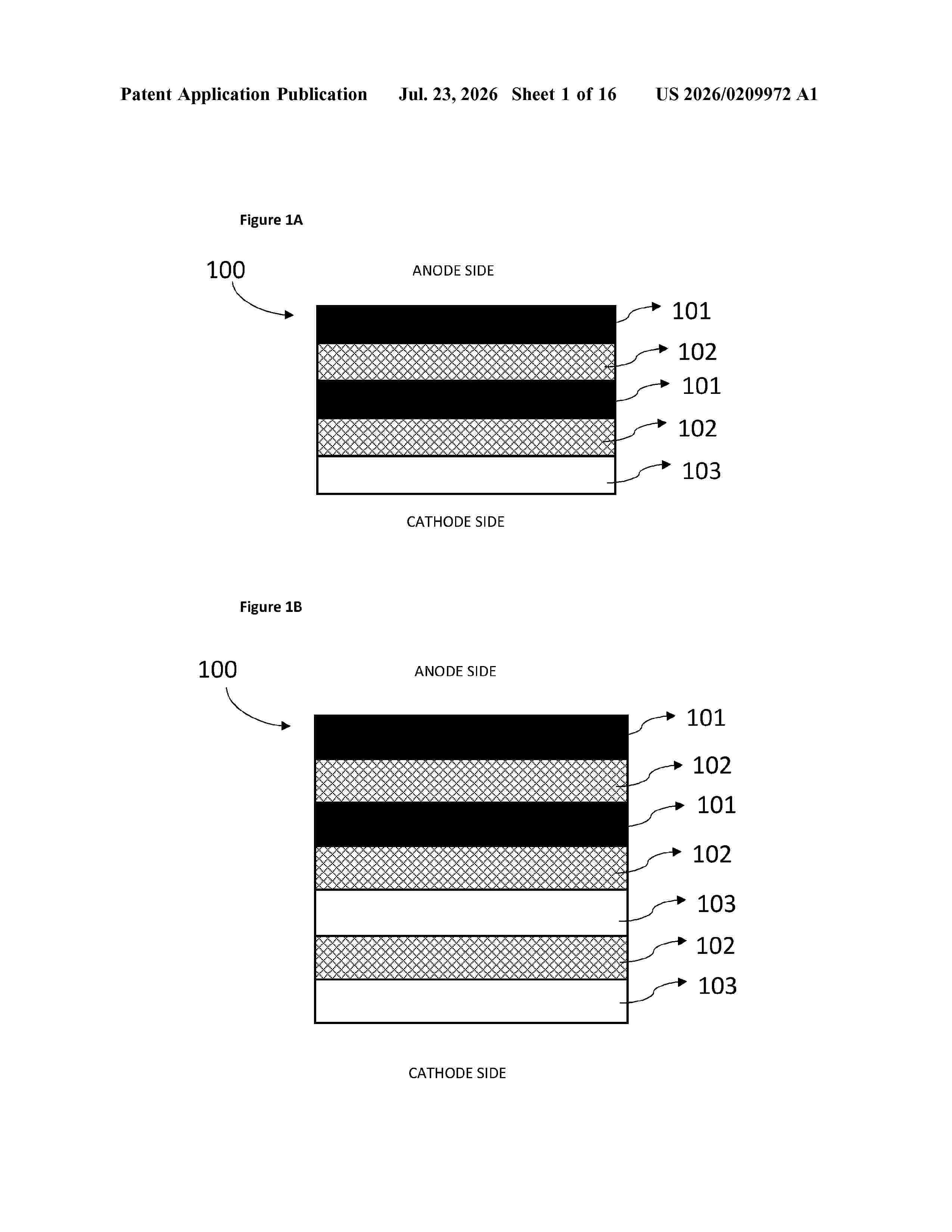
Resumen de: US20260209972A1
There is provided a multi-layered proton exchange membrane for water electrolysis, comprising: at least two recombination catalyst layers, each of the at least two recombination catalyst layers comprising a recombination catalyst and a first ion exchange material, wherein at least two recombination catalyst layers are separated by a region devoid of or substantially devoid of a recombination catalyst, and at least two reinforcing layers, each of the at least two reinforcing layers comprising a microporous polymer structure and a second ion exchange material which is at least partially imbibed within the microporous polymer structure.
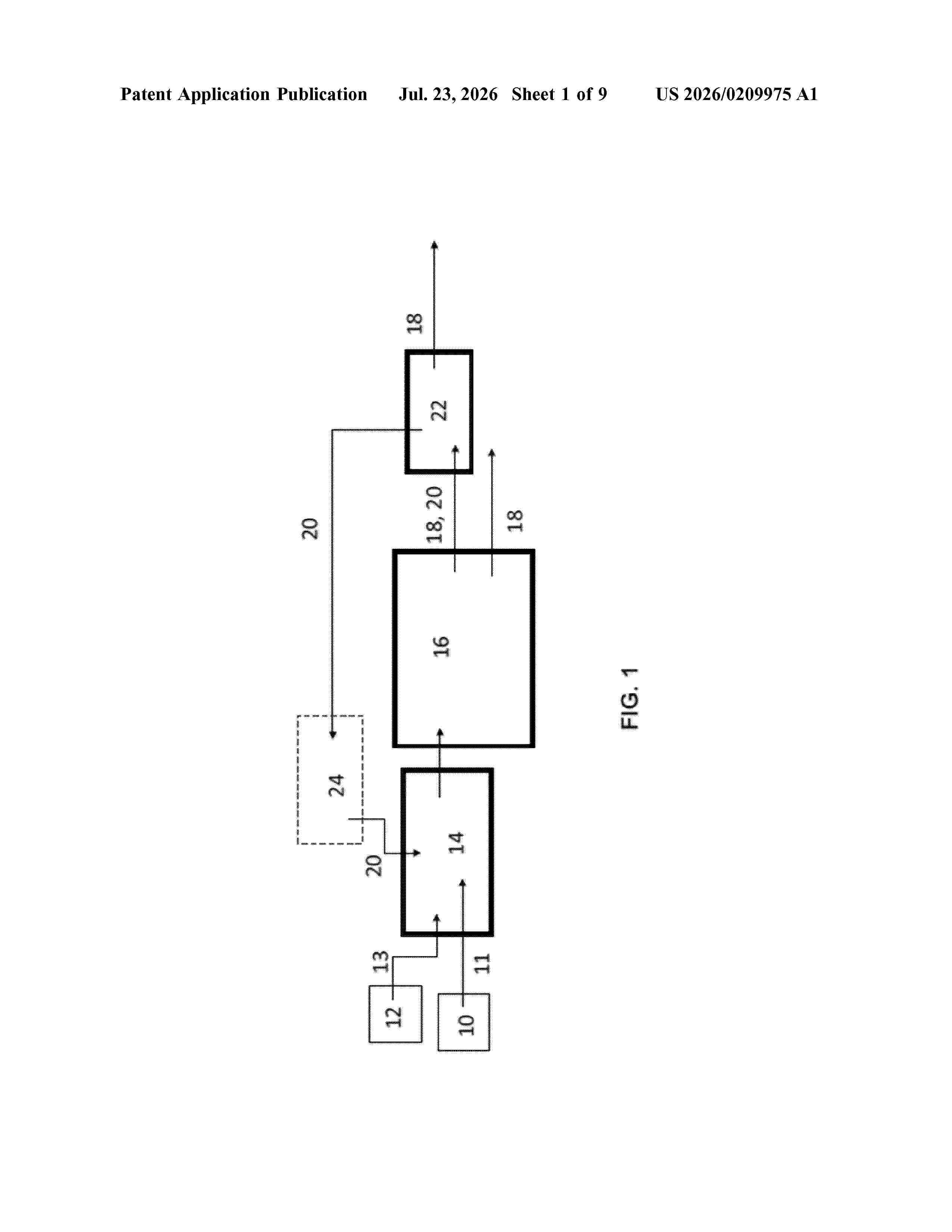
Resumen de: US20260209975A1
0000 The present invention provides a system and method for managing hydrogen storage and release, utilizing hydrogen carrier fluid (HCF) and undivided electrochemical reactors (i.e. not containing ion exchange membranes) to achieve hydrogenation/dehydrogenation of HCF.
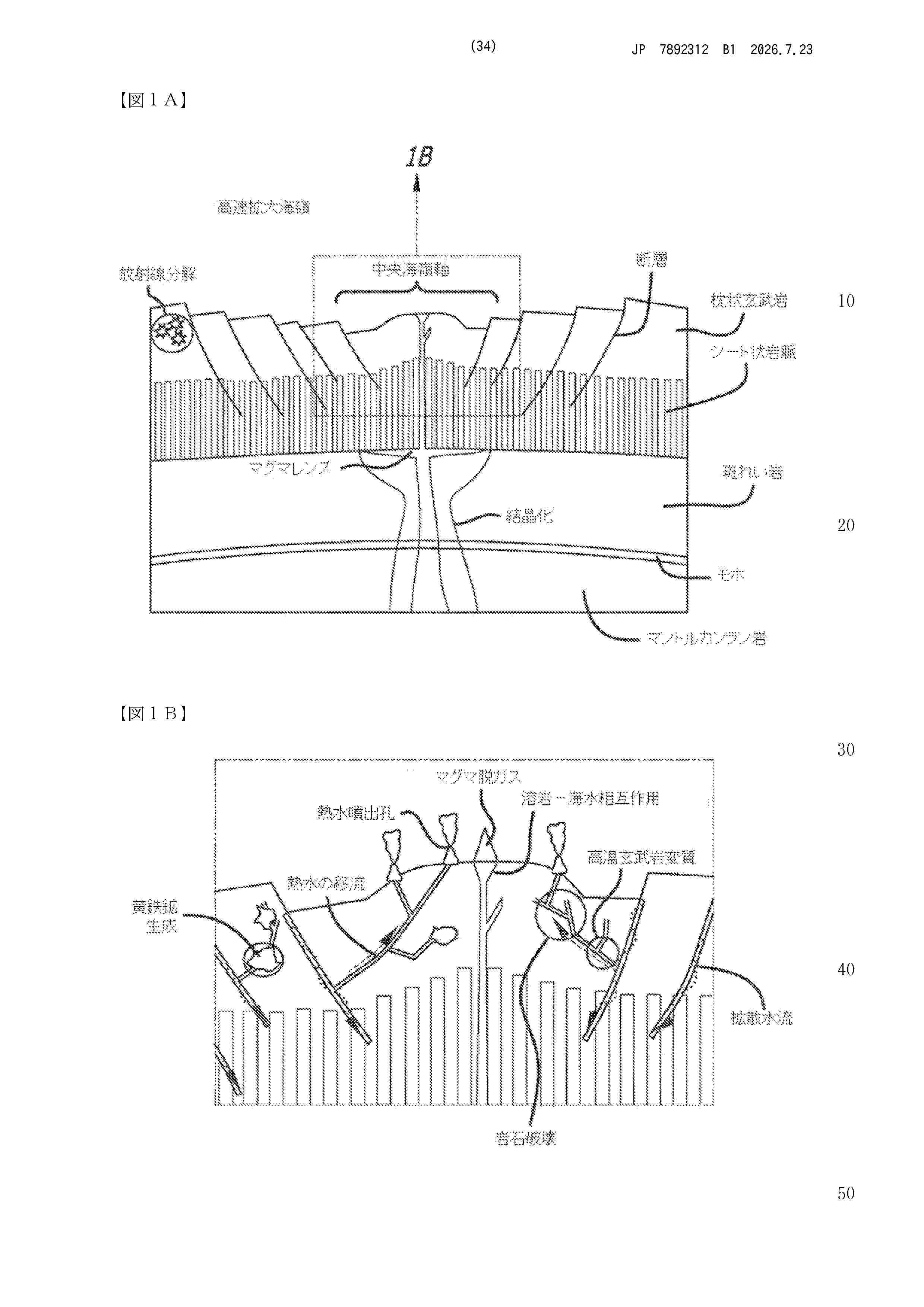
Resumen de: US2023102312A1
0000 Systems and methods for sequestering carbon, evolving hydrogen gas, producing iron oxide as magnetite, and producing magnesium carbonate as magnesite through sequential carbonation and serpentinization/hydration reactions involving processed olivine- and/or pyroxene-rich ores, as typically found in mafic and ultramafic igneous rock. Precious or scarce metals, such nickel, cobalt, chromium, rare earth elements, and others, may be concentrated in the remaining ore to facilitate their recovery from any gangue material.
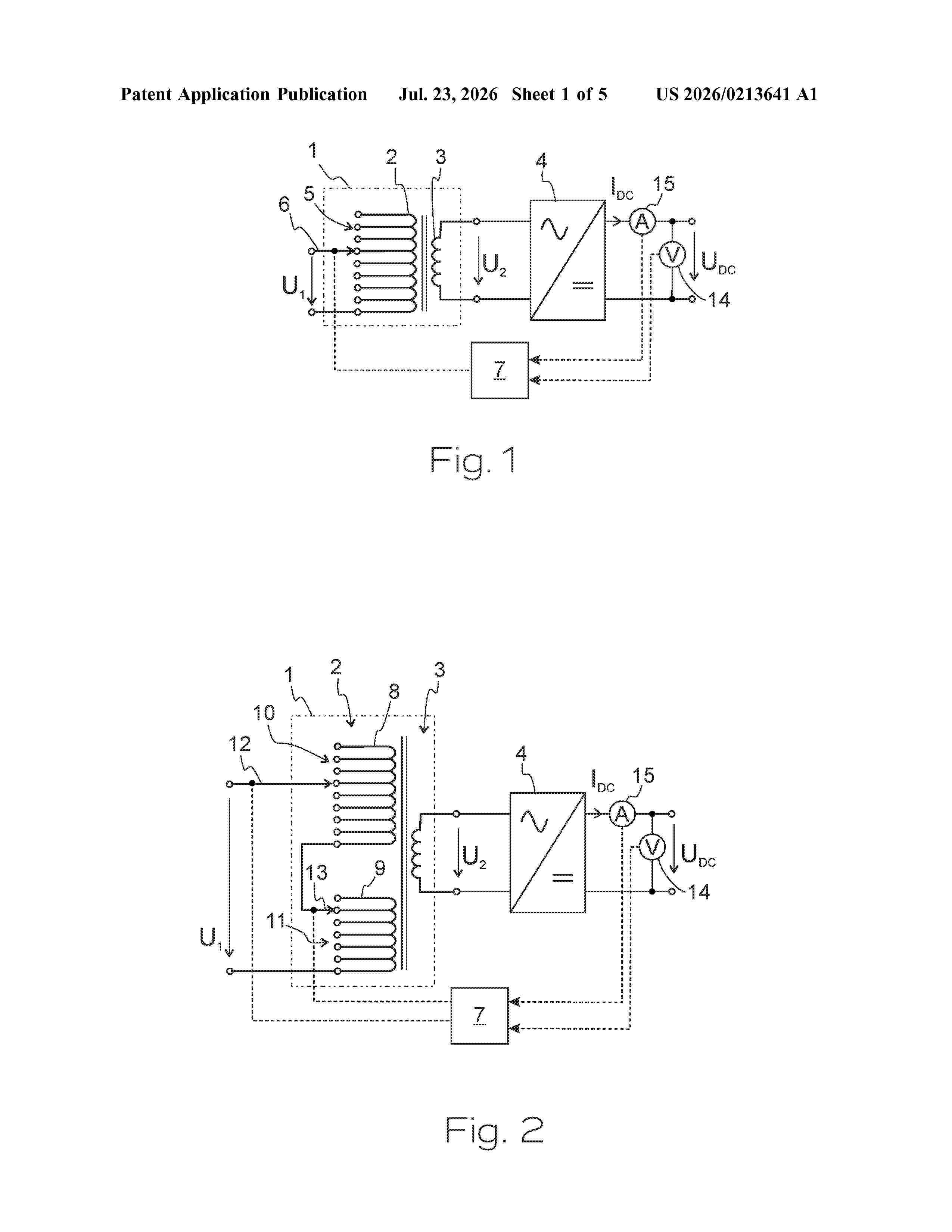
Resumen de: US20260213641A1
0000 The invention relates to a rectifier arrangement for hydrogen electrolysis, comprising a transformer (1) with a primary winding (2) for connecting an input alternating voltage and a secondary winding (3) for providing an output alternating voltage, and comprising a rectifier (4) connected to the secondary winding (3) for generating an output direct current IDC and an output direct voltage UDC, wherein at the primary winding (2) of the transformer (1) a number N>1 of winding taps (5) are provided, and a load stage switch (6) connected to a controller (7) is provided which is designed for switching the winding taps (5) without interruption such that the transformation ratio of the transformer (1) can be switched via the controller (7) in N stages.
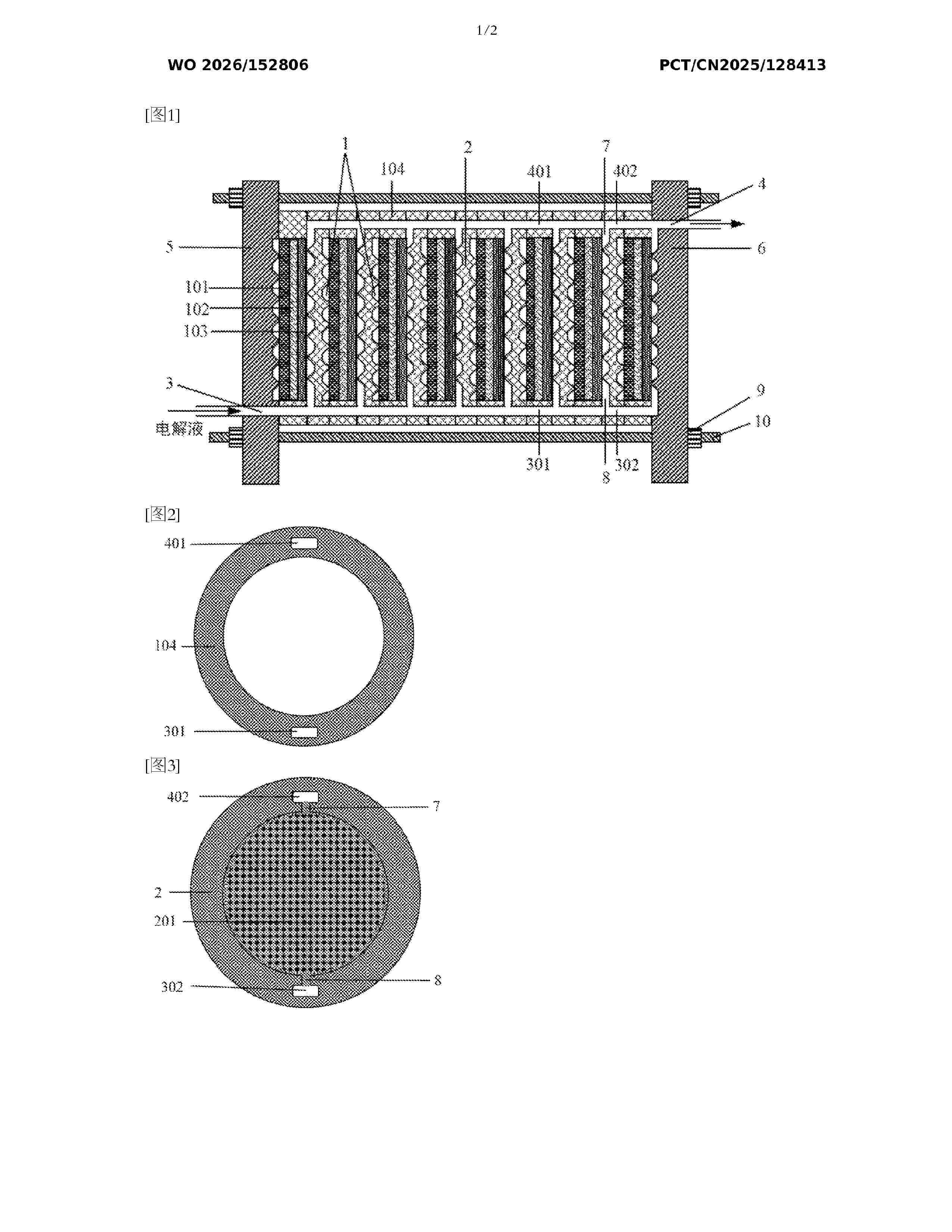
Resumen de: WO2026152806A1
A chemical looping cycle-based membrane-free water electrolyzer for hydrogen production, and an operating method thereof. The electrolyzer comprises a first end plate and a second end plate separately connected to an external power supply. At least one bipolar plate is arranged between the two end plates. Electrolysis chambers are formed between the two end plates and the bipolar plate and between every two adjacent bipolar plates. A functional assembly is provided in each electrolysis chamber. The functional assembly comprises a bifunctional electrode, a porous partition plate, and an oxygen carrier electrode which are sequentially attached. The bifunctional electrode and the oxygen carrier electrode are used in combination to implement hydrogen evolution and oxygen evolution under different working conditions, accommodating power fluctuations and intermittency of renewable energy and exhibiting the potential of application to off-grid hydrogen production. The operating method comprises implementing stepwise or continuous production of hydrogen and oxygen under different working conditions by means of synergistic energy supply of a temperature field and an electric field.
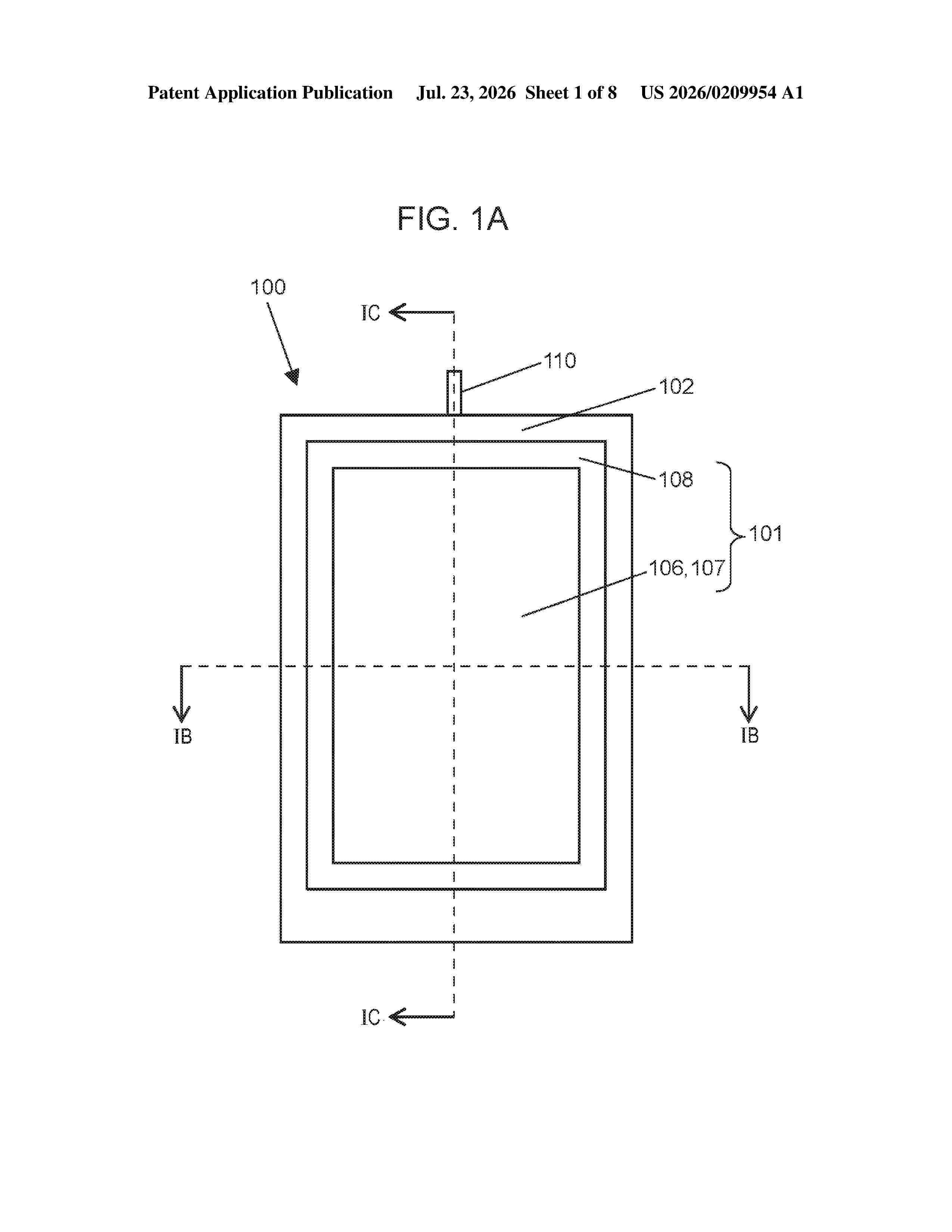
Resumen de: US20260209954A1
0000 A water electrolysis cell for use in a water electrolysis apparatus that electrolyzes water when irradiated with light to generate hydrogen includes a laminate including an anode electrode, a perovskite battery cell, and a cathode electrode laminated in this order, and an electrically insulating protective material that covers the outer periphery of the laminate.
Resumen de: AU2024424628A1
This titanium porous body is in the form of a sheet. In the titanium porous body, the maximum height Rz of at least one surface is 5 μm or less, the irreversible deformation amount during pressure application at 100 MPa is 0.2% or less, and the thickness is 500 μm or less.
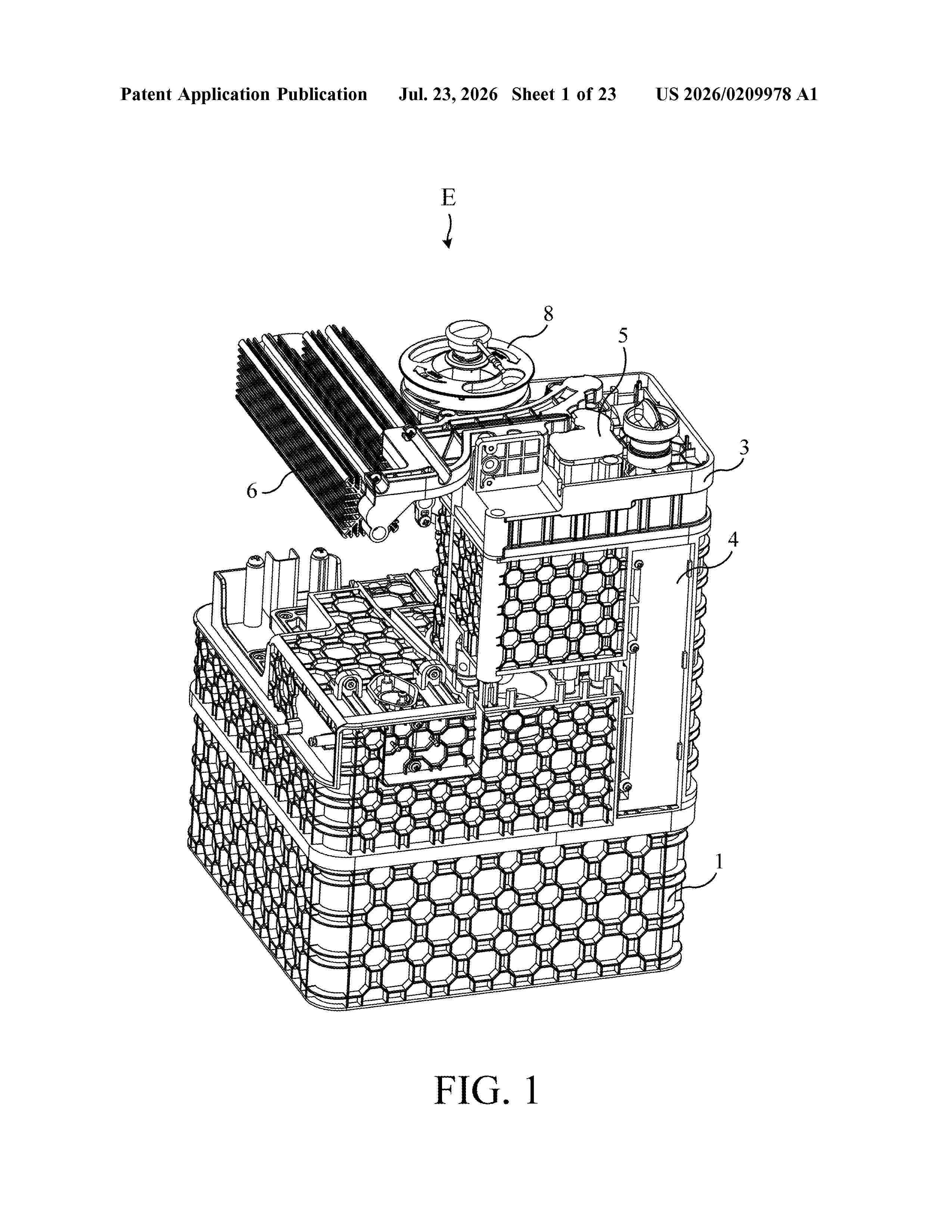
Resumen de: US20260209978A1
A hydrogen generator with detachable filter comprises a water tank, an electrolysis module configured in the water tank, a filter channel device coupled to the water tank, a humidifying module, vertically configured above the water tank, an integrated channel device vertically configured above the humidifying module, and a condenser configured on the integrated channel device. The electrolysis module is configured to electrolyze water contained in the water tank to generate gas comprising hydrogen. The humidifying module includes a humidifying chamber and a gas channel isolated from the humidifying chamber. The filtering device is arranged in the gas channel to receive and filter the gas comprising hydrogen generated by the electrolysis module. The condenser is configured to condense the gas comprising hydrogen outputted by the filtering device. The integrated channel device includes a gas input channel for guiding the gas comprising hydrogen outputted from the condenser into the humidifying chamber.
Nº publicación: US20260209038A1 23/07/2026
Solicitante:
CASALE SA [CH]
CASALE SA
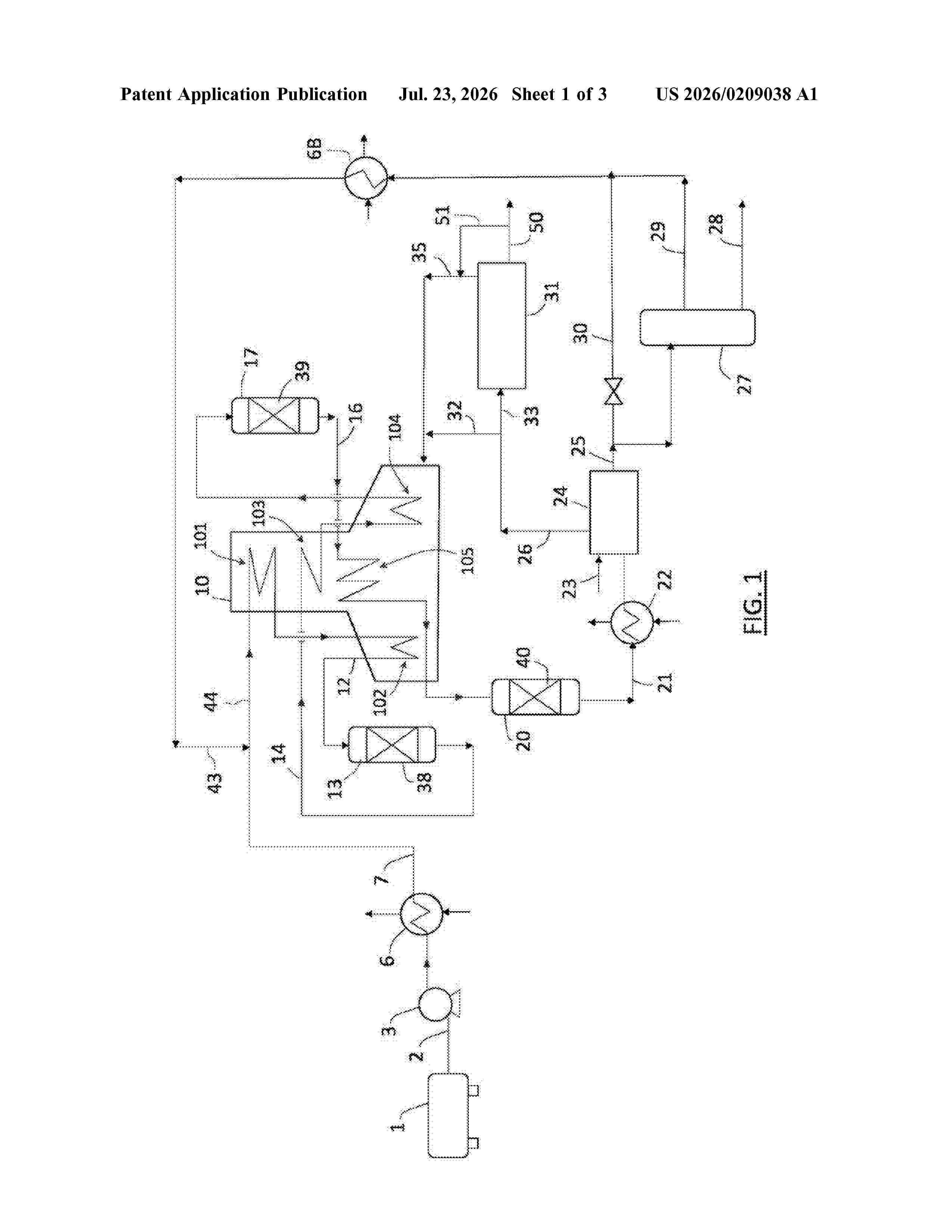
Resumen de: US20260209038A1
Process for production of hydrogen from ammonia, including ammonia cracking wherein ammonia is decomposed into hydrogen and nitrogen, wherein the ammonia cracking is performed in a sequence of cracking steps (13, 36, 17, 20) and a finally cracked stream (21) is obtained after a last cracking step (20), wherein the last ammonia cracking step (20) is performed adiabatically and/or the finally cracked stream (21) is quenched by direct mixing with water or steam after the last cracking step.
 BOPI
BOPI
 Sede Electrónica