Si deseas distinguir tus productos, servicios o ambos de los de otra empresa, es posible que necesites una marca o nombre comercial. Descubre qué son, en qué consiste su procedimiento de registro y qué implica.

Información sobre los plazos de presentación de solicitudes de transformación de marcas de la Unión Europea en marca nacional española. Más información


Si tienes un nuevo dispositivo, producto o procedimiento que resuelva un problema técnico o tenga una ventaja práctica, existen distintas formas de protegerlo en España y en otros países. Descubre cómo hacerlo.

¿Tu innovación reside en la estética, la ornamentación o la apariencia de tu producto? Protégela mediante un diseño industrial. Descubre qué derechos confiere el registro y cómo realizar la tramitación.

Las indicaciones geográficas protegen el nombre de un producto originario de una zona geográfica, a la cual le debe una determinada calidad, reputación u otra característica. Descubre qué son, en qué consiste su procedimiento de registro y qué beneficios conceden.

Las patentes publicadas en todo el mundo son una valiosa fuente de información científica, técnica y comercial.

Si eres emprendedor/a o una empresa y quieres potenciar y mejorar la rentabilidad de tu negocio protegiendo de forma adecuada los activos intangibles de tu organización, en este espacio encontrarás lo necesario.


 175
resultados
 Última actualización
22/10/2026 [09:51:00]


 Resultados 125 a 150 de 175

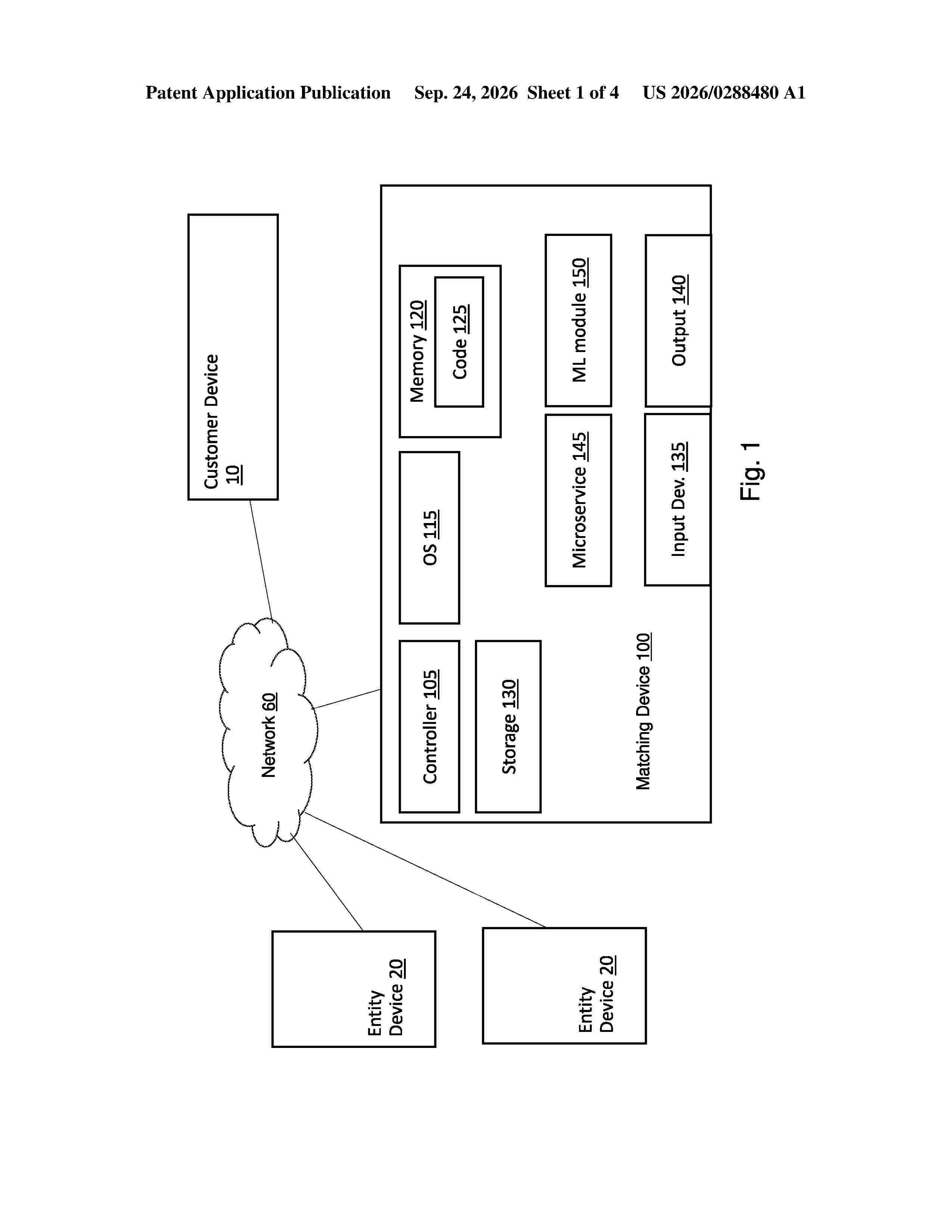
Resumen de: US20260288480A1
0000 A system and method may identify the best matching entities using artificial intelligence, by for example determining, from a set of features describing a number of entities, a subset of features which when input to a machine learning module allow the machine learning module to match a pair of entities based on the ability of the second entity in the pair to successfully take over responsibilities handled by the first entity in the pair; training a machine learning module using the determined features; and for a first entity described by the determined set of features, using the machine learning module to determine a list of entities matching the first entity, each entity in the list of entities associated with a matching score.

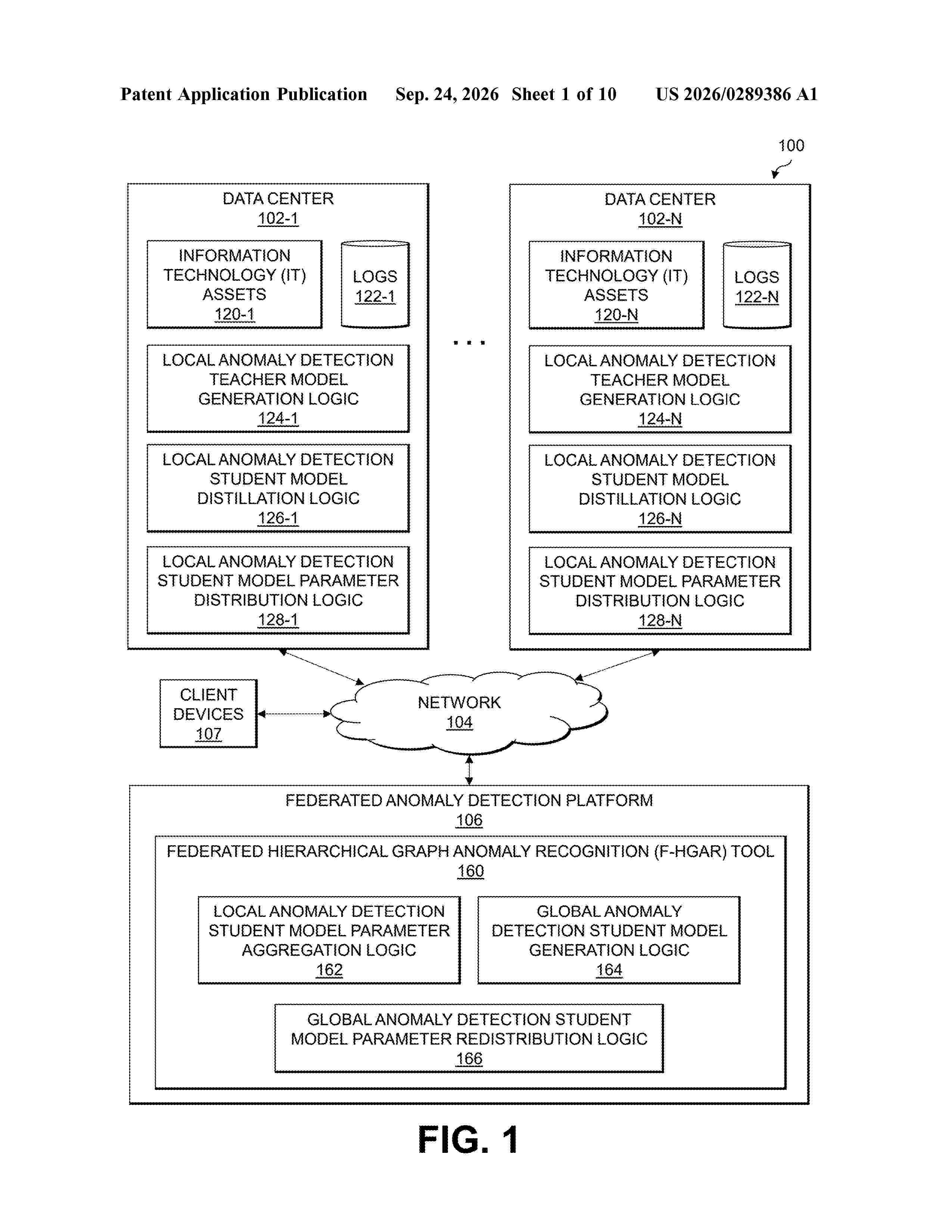
Resumen de: US20260289386A1
An apparatus comprises at least one processing device configured to generate graph structure representations of a first set of logs associated with information technology assets in a first data center, to train a first machine learning-based anomaly detection model utilizing the graph structure representations, to train a second machine learning-based anomaly detection model by distilling knowledge of the first machine learning-based anomaly detection model, and to update the second machine learning-based anomaly detection model based on an aggregation of parameters of the second machine learning-based anomaly detection model and additional parameters of additional machine learning-based anomaly detection models trained utilizing logs associated with information technology assets of additional data centers. The at least one processing device is also configured to perform anomaly detection on a second set of logs associated with the information technology assets in the first data center utilizing the updated second machine learning-based anomaly detection model.
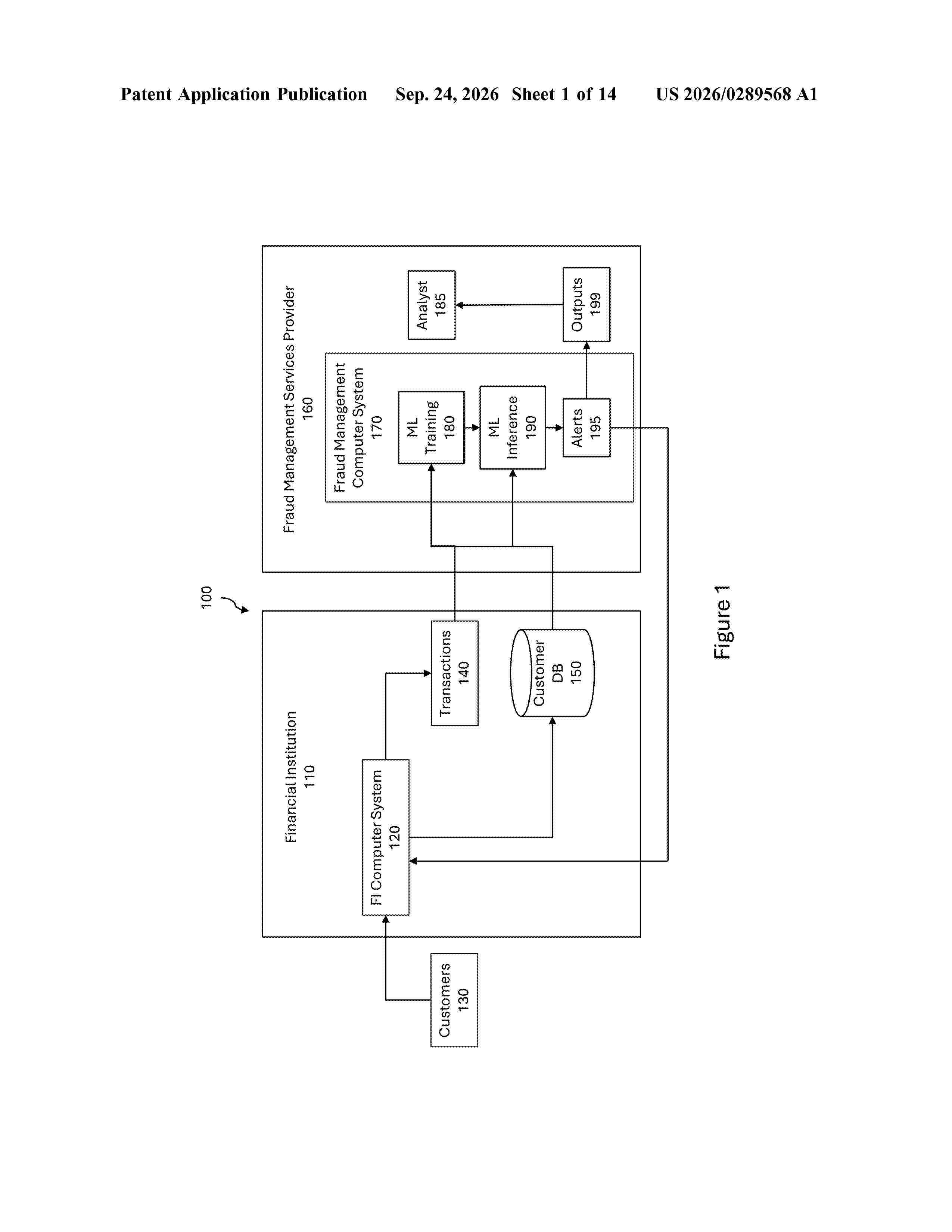
Resumen de: US20260289568A1
A system is adapted to automatically detect fraudulent transactions. The system includes a fraud management computer system programmed for: receiving a plurality of transactions, some legitimate and some fraudulent; with the transactions and a K-fold training module, training a heterogeneous group of machine learning models to classify the transactions as legitimate or fraudulent, where the K-fold training module generates, for each machine learning model, a mean and a standard deviation; with the means and standard deviations, determining a weight for each machine learning model; and, with the weights for each machine learning model, defining a meta machine learning model to classify the transactions as legitimate or fraudulent; receiving a real-time transaction and, with the trained machine learning models, generating determinations of whether it is legitimate or fraudulent; with the meta machine learning model and the determinations, classifying the real-time transaction as legitimate or fraudulent; and, if fraudulent, generating an alert.
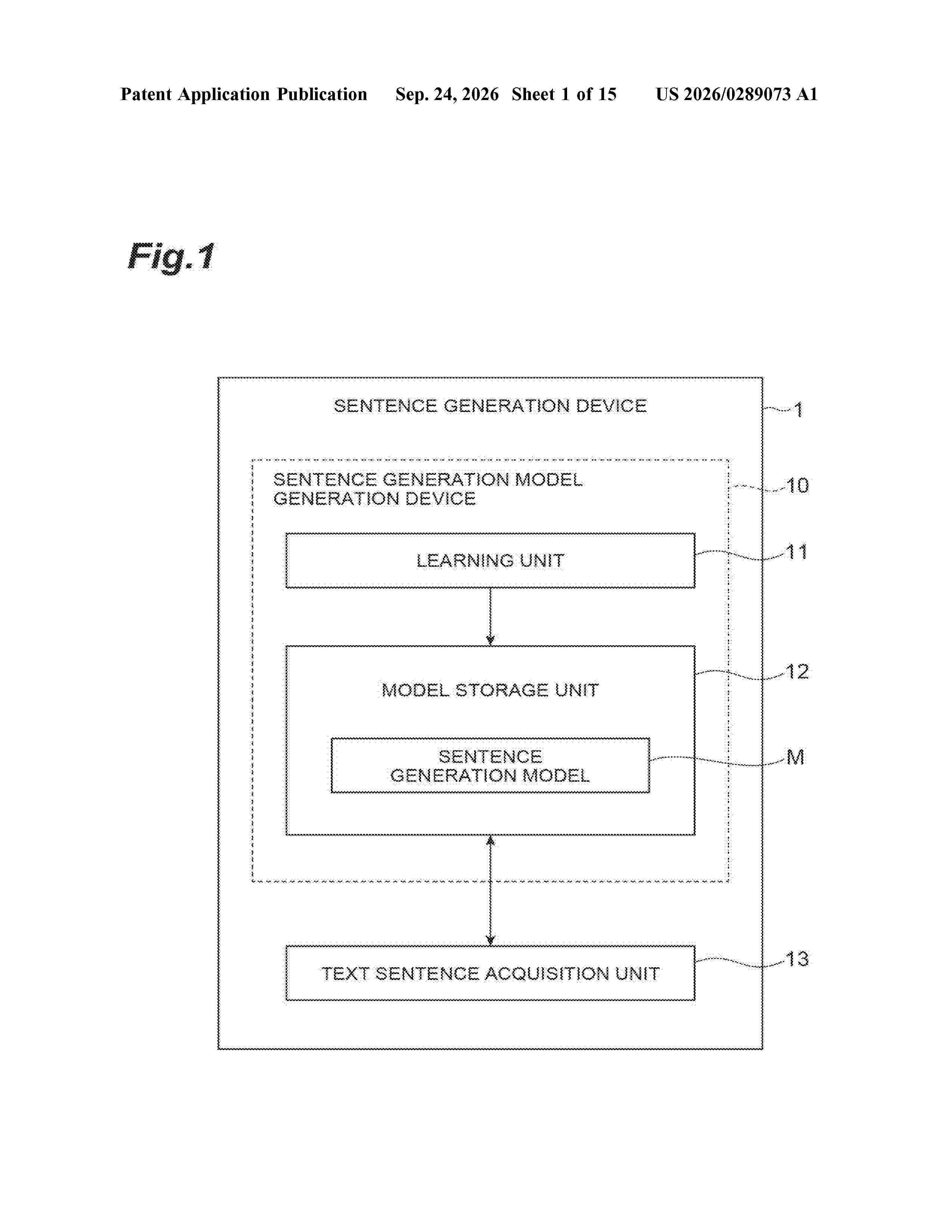
Resumen de: US20260289073A1
The sentence generation model generation device (10) includes a learning unit (11) configured to, in response to input of an input sentence, identify, from the input sentence, a claim and a premise that supports the claim from the same standpoint as the claim or from a different standpoint than the claim, perform at least one of labeling the claim and the premise and labeling a relation between the claim and the premise, and conduct machine learning using the input sentence as an explanatory variable and the text of the labeled portion as an objective variable, to perform training of a sentence generation model for generating and outputting a text sentence related to a structure of the input sentence and generate the sentence generation model.
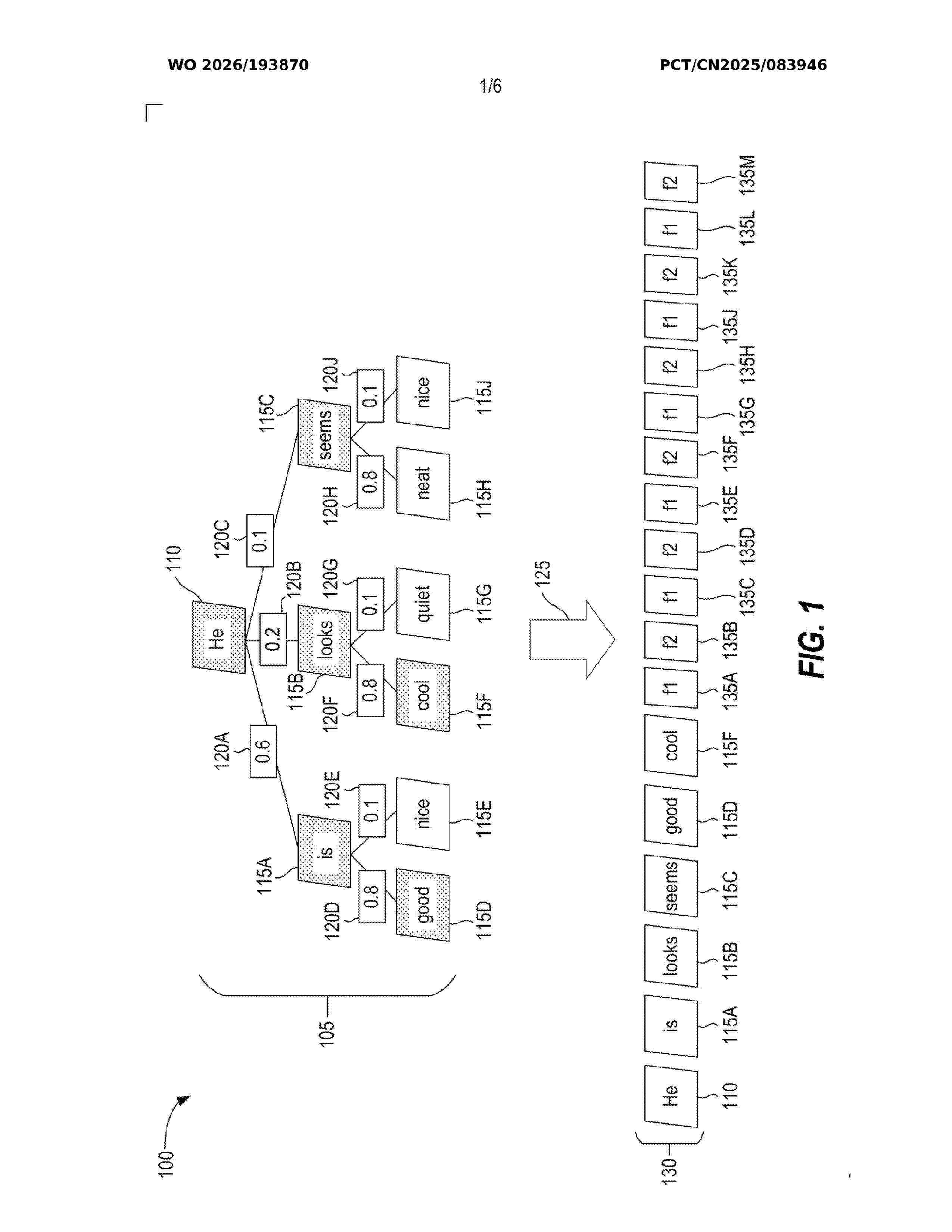
Resumen de: WO2026193870A1
Certain aspects of the present disclosure provide techniques and apparatus for machine learning. In an example method, a drafting tree comprising a first plurality of draft tokens is generated using a generative machine learning model. A plurality of confidence scores comprising a respective confidence score for each respective token of the first plurality of draft tokens is determined. A plurality of acceptance predictions comprising a respective acceptance prediction for each respective token of the first plurality of draft tokens is generated based on the plurality of confidence scores and a structure of the drafting tree, and a subset of draft tokens is selected from the first plurality of draft tokens based on the plurality of acceptance predictions. An output token is generated based on processing the subset of draft tokens using the generative machine learning model.
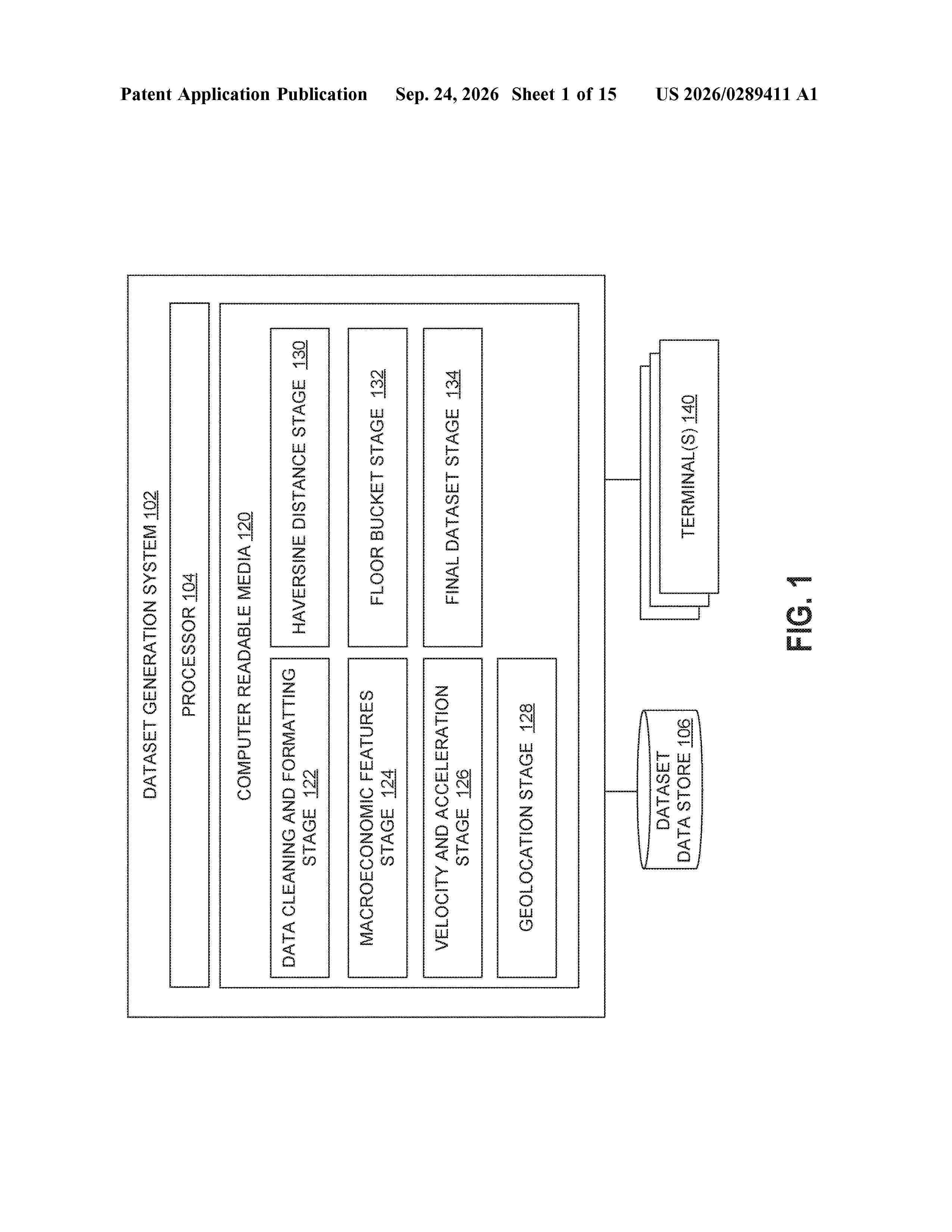
Resumen de: US20260289411A1
0000 System, apparatus and method may control receiving time-indexed data comprising values of a plurality of features; generating derived features based on temporal changes of at least one of the plurality of features, the derived features including at least a first derivative of a first value; temporally aligning the plurality of features and the derived features to a reference date such that only data available prior to the reference date is used for training a machine learning model; training a machine learning model on the temporally aligned features and the derived features to predict a forward-looking value; and outputting the forward-looking value.
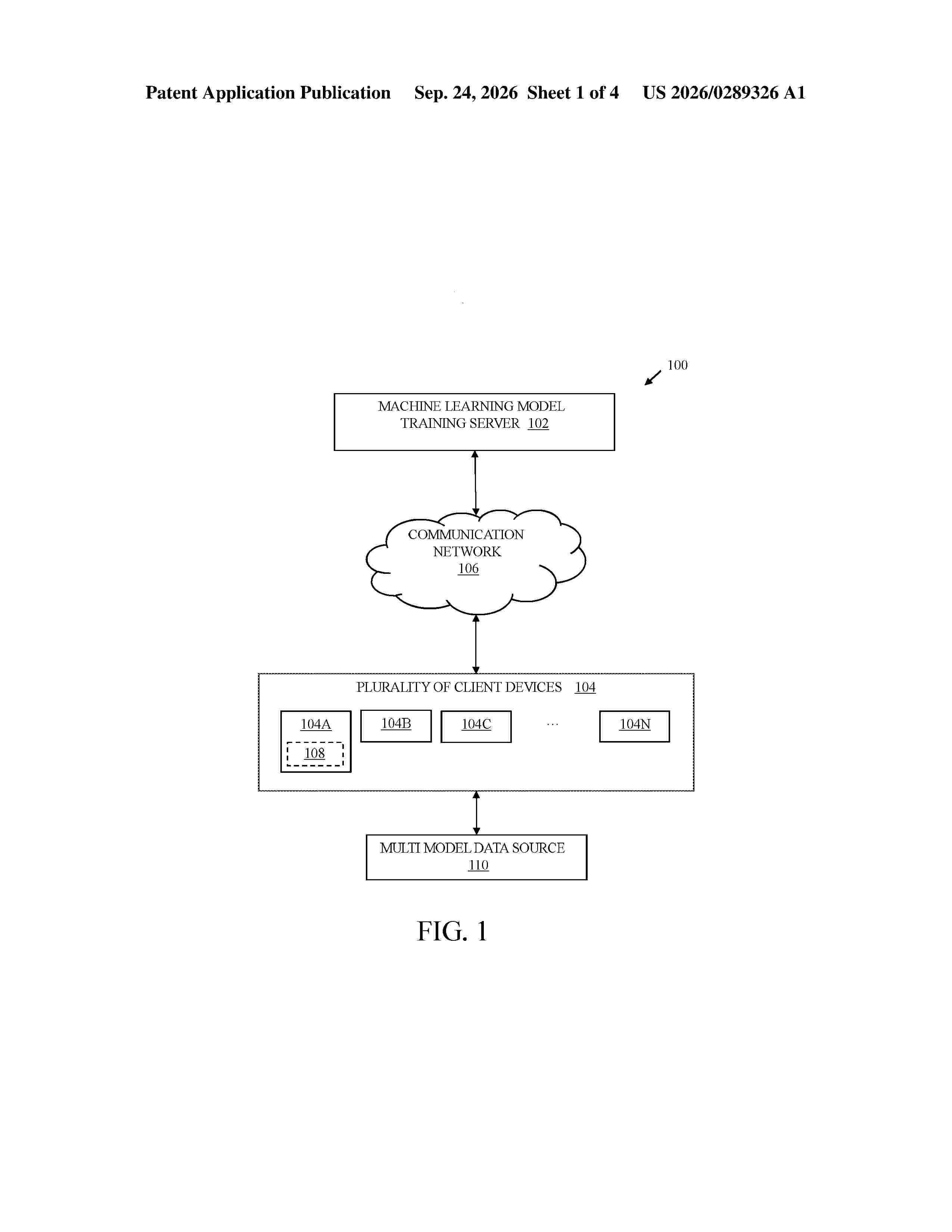
Resumen de: US20260289326A1
A system for automated machine learning model training comprising processor configured to receive multi-modal training data and user-defined parameters through end-user abstraction interface, autonomously determine machine learning domain applicable to multi-modal input data by analyzing data annotations. Autonomously prune redundant data elements from multi-modal input data to generate training dataset, automatically identify hyperparameters for training dataset, automatically split multi-modal input data into plurality of data groups using dynamically determined split ratios. Select a machine learning framework and neural network architecture based on the determined machine learning domain. Perform batch normalization on training dataset, train machine learning model using training dataset, selected framework and architecture, and identified hyperparameters, training includes dynamic adjustment of learning rates and evaluate machine learning model during training using validation data from plurality of data groups, wherein training is terminated when loss function indicates minimal reduction in difference between actual and predicted value.
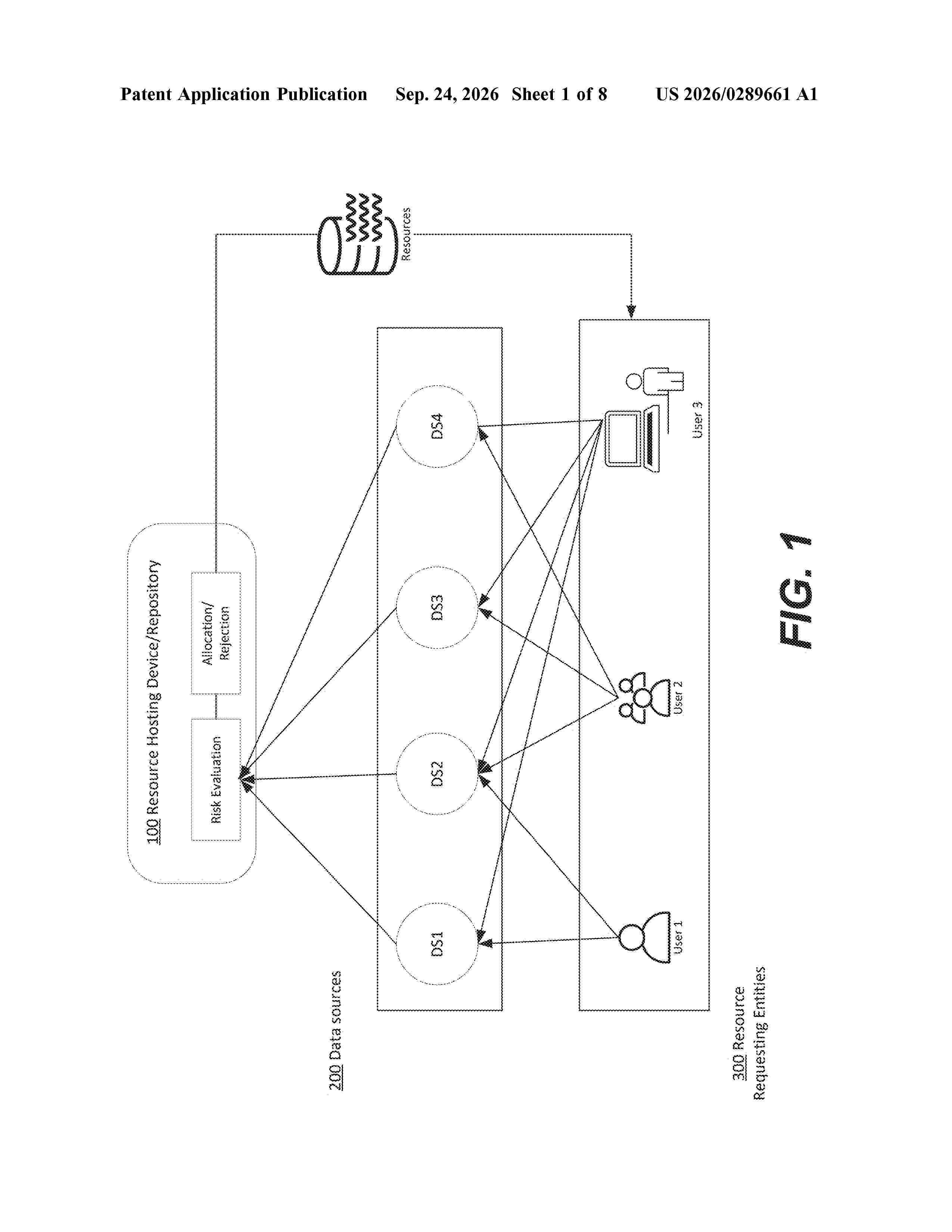
Resumen de: US20260289661A1
A computer-implemented method for evaluating resource allocation requests using an ensemble machine learning model is disclosed. A resource request is received, comprising multiple data inputs from different data sources, where each data source provides a specific type of user feature. A first set of machine learning models, each trained on a single data source, generates corresponding first risk scores. A second decision tree-based machine learning model processes the data inputs, leveraging feature dependencies and learned missing feature patterns to generate a second risk score, enabling robust predictions even when certain user features are incomplete or missing. The first and second risk scores are ensembled using an ensemble technique to produce an overall risk score. The ensembled risk score is then transmitted to a resource hosting device, which approves, denies, or adjusts the requested resource based on the assessed risk.
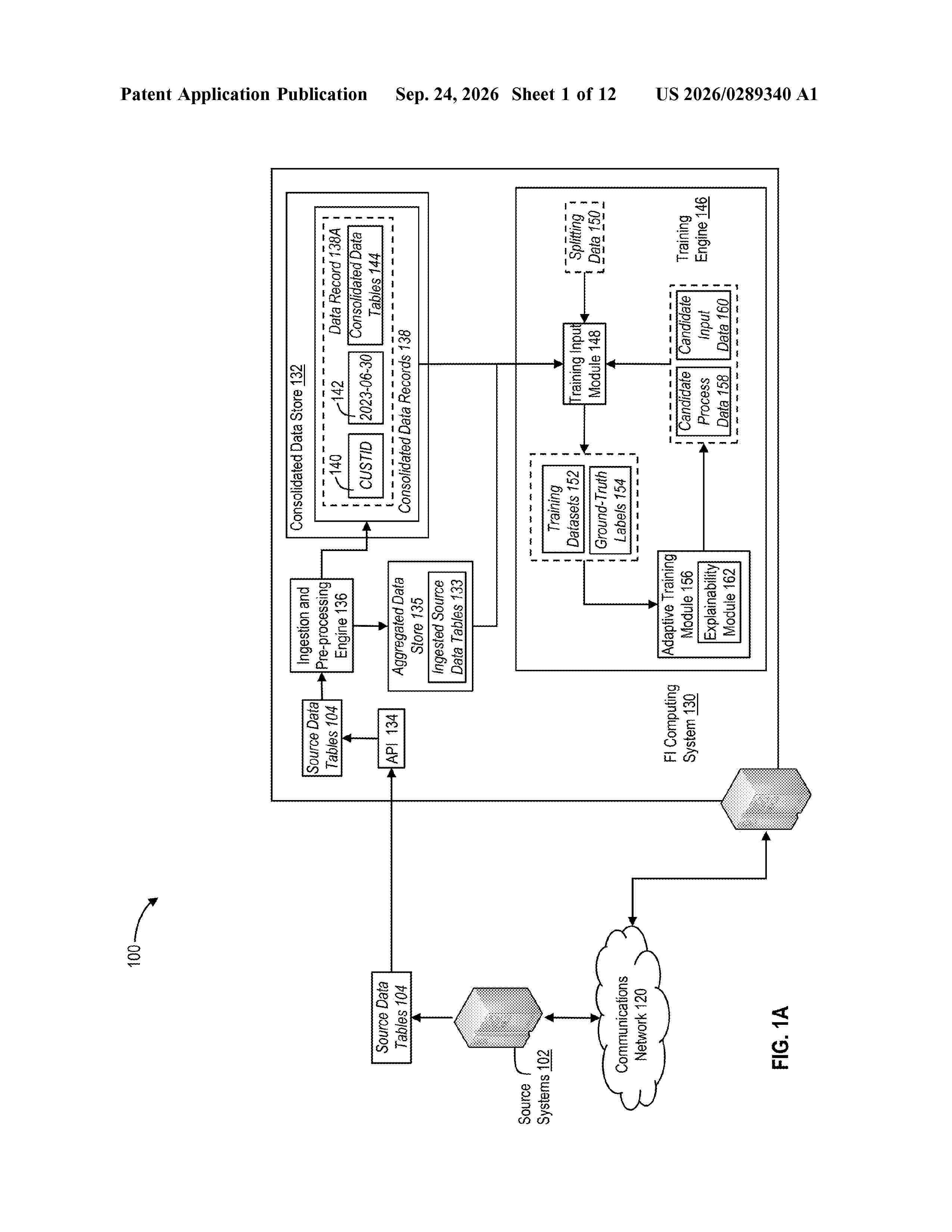
Resumen de: US20260289340A1
The disclosed embodiments include computer-implemented systems and processes that dynamically monitor variations in process explainability of within a distributed computing environment. For example, an apparatus may determine a first metric value characterizing a variation in an explainability of a machine-learning or artificial-intelligence process between a first temporal interval and a second temporal interval. When the first metric value is inconsistent with an exception criterion, the apparatus may obtain a second metric value characterizing an additional variation in the explainability of the machine-learning or artificial-intelligence process between the first temporal interval and a third temporal interval, and when the second metric value is inconsistent with the exception criterion, the apparatus may perform operations that modify at least one of (i) a value of a process parameter that characterizes the machine-learning or artificial-intelligence process or (ii) a composition of an input dataset associated with the machine-learning or artificial intelligence process.
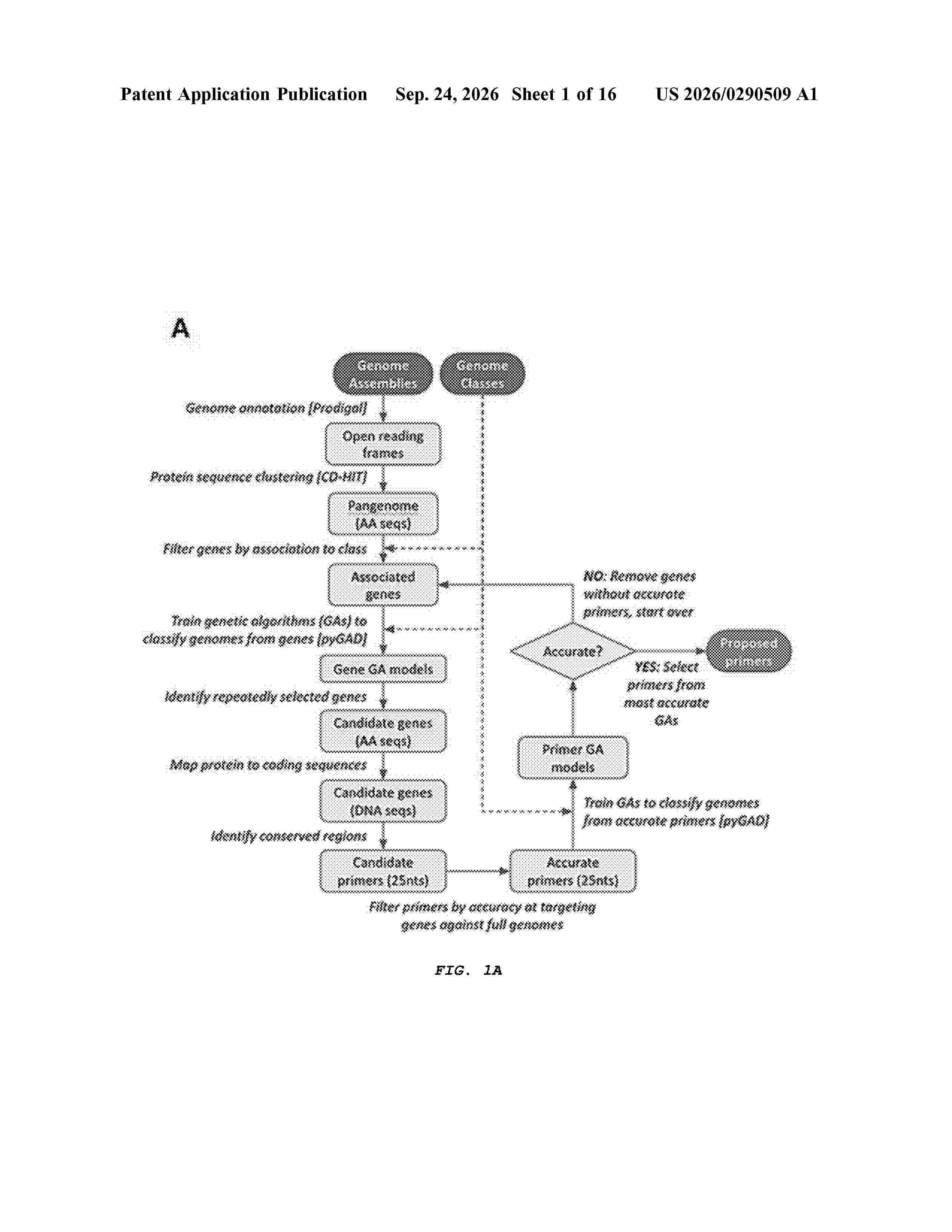
Resumen de: US20260290509A1
0000 The disclosure provides methods to identify marker sequences for rapid classification of microbial strains through machine learning analysis of genome assemblies.
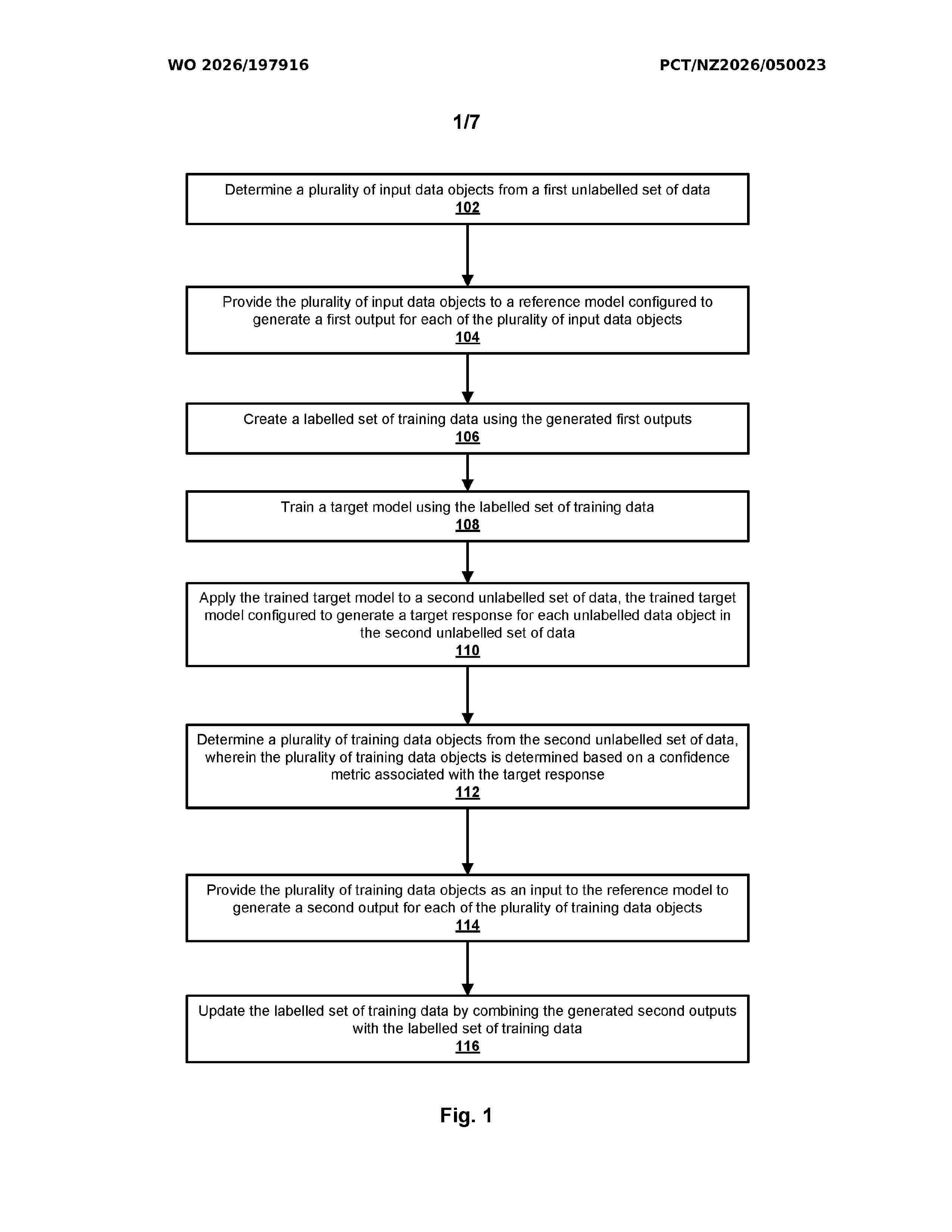
Resumen de: WO2026197916A1
A method for training a machine learning model, comprising determining a plurality of input data objects from a first unlabelled set of data, and providing the plurality of input data objects to at least one reference model configured to generate a first output for each of the plurality of input data objects. A labelled set of training data is created using the generated first outputs, and a target model is trained using the labelled set of training data. The trained target model is applied to a second unlabelled set of data. A plurality of training data objects is determined from the second unlabelled set of data. The plurality of training data objects is provided as an input to the at least one reference model to generate a second output for each of the plurality of training data objects, and the labelled set of training data is updated.
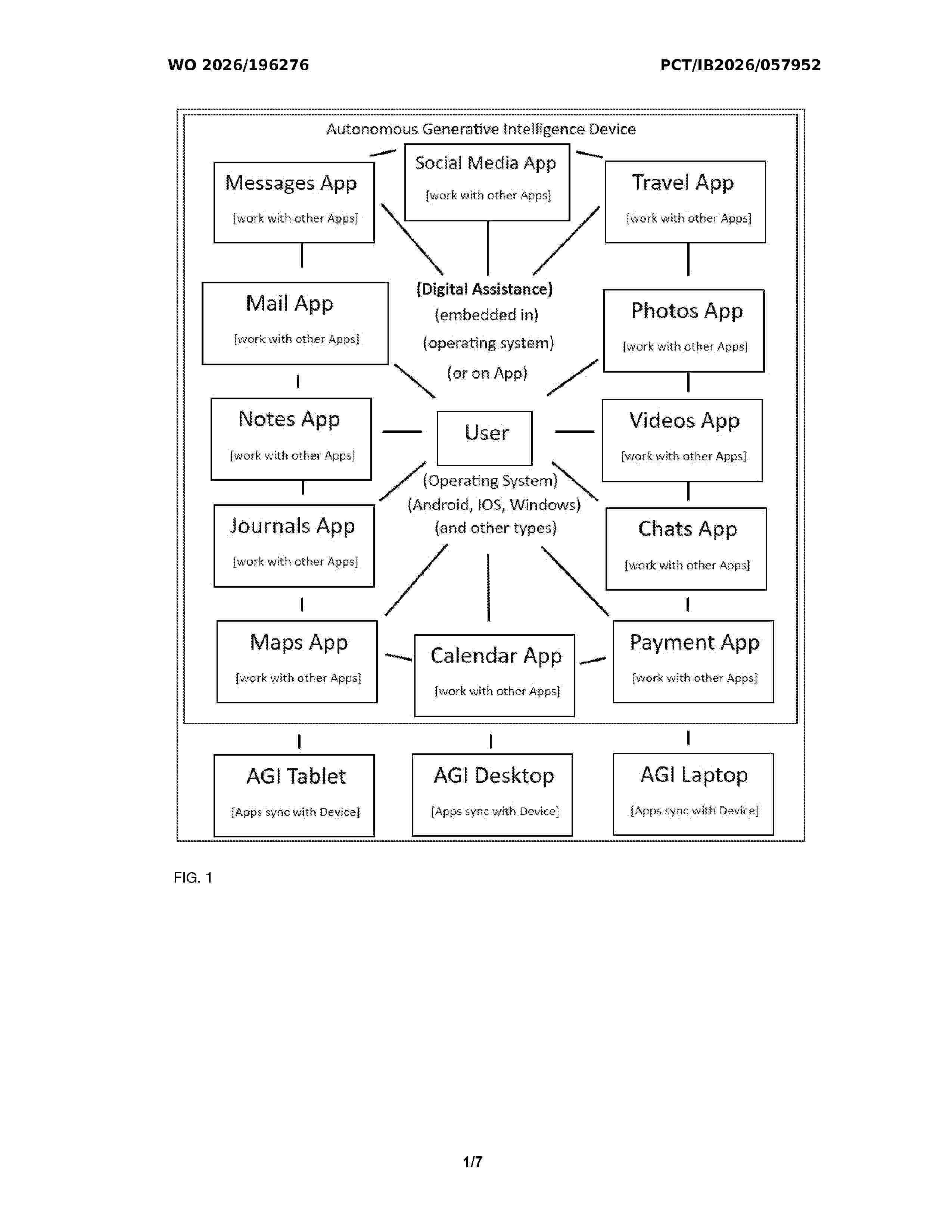
Resumen de: WO2026196276A2
A computer-implemented system and method for operating a local cross-application autonomous task routing framework tangibly embodied as a low-level software operational layer designated as 49AGI app via playstore and ios app store. The system architecture intercepts multi-modal input data directly from a plurality of distinct local applications, bypasses visual screen-pixel processing, and manages active task states natively via local processor networks. The 49AGI architecture executes background operations across applications lacking native machine learning models, providing local multi-modal reminder generation, notification scheduling, and native document compilation.
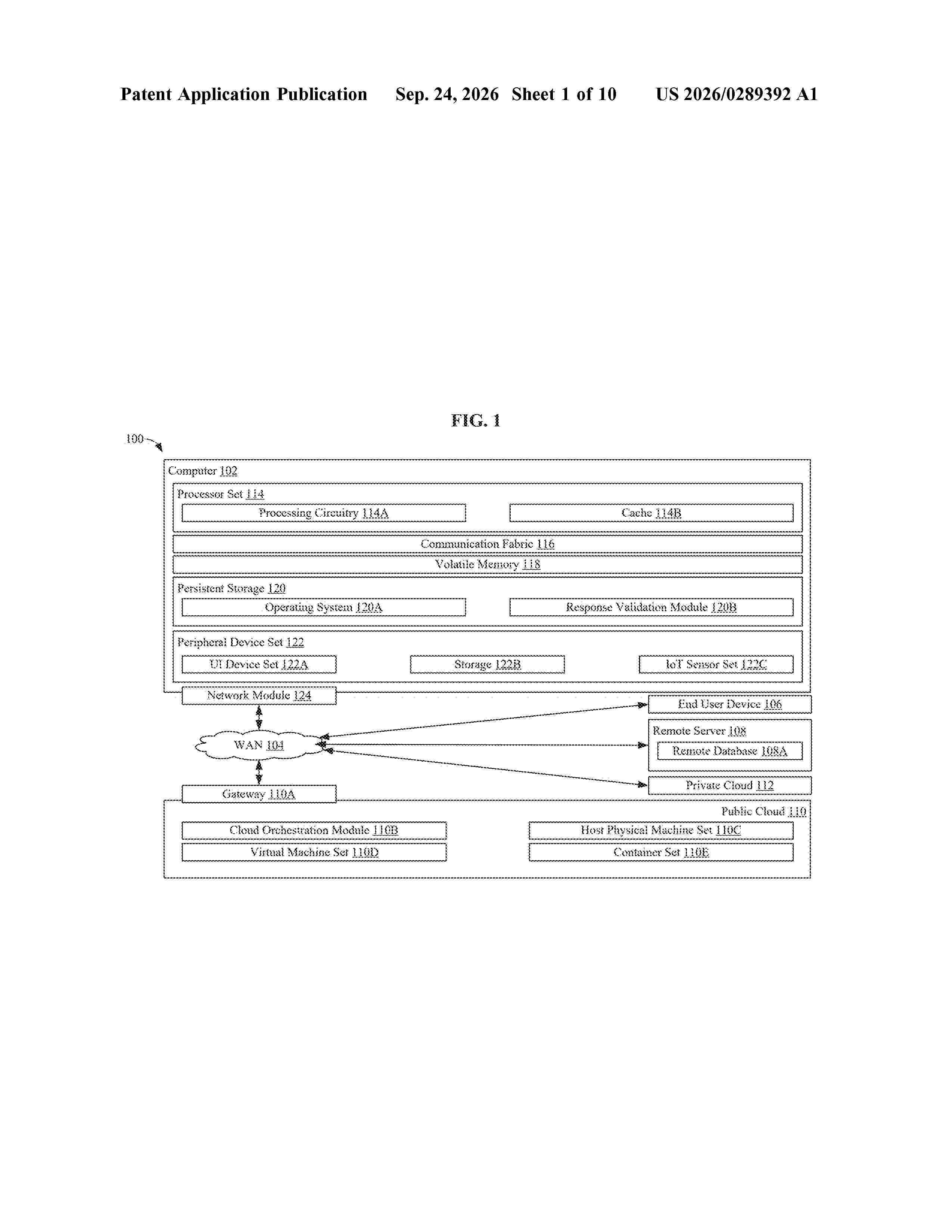
Resumen de: US20260289392A1
Validation of responses generated by a language model is provided and includes identifying, via machine learning, first entity action pairs from a first response of a generative language machine learning model. Each of the first entity action pairs includes a respective entity and a respective action associated with the respective entity. A first validation score is determined based on whether the first entity action pairs are present within a first knowledge base and a second set of validation scores is determined based on whether the first entity action pairs are present within a second knowledge base. A first final validation score is generated based on the first validation score and the second set of validation scores. A first recommendation from the first response is presented based on the first final validation score and operations are controlled based on the presented first recommendation.
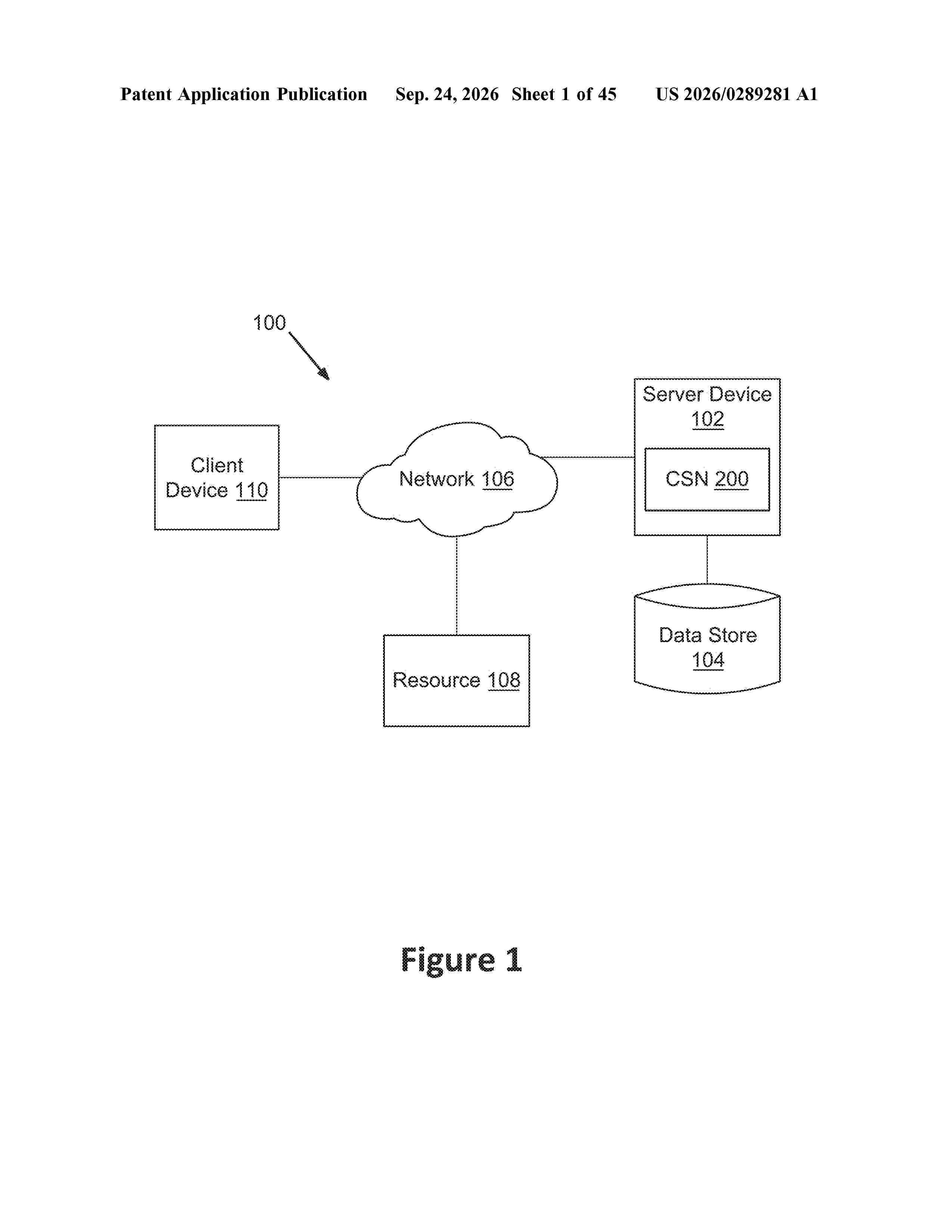
Resumen de: US20260289281A1
A computer system for machine learning-based prediction is disclosed. The system applies a neural network-based spline transformation to input variables to generate transformed features. The transformed features are processed using a cross network comprising one or more cross layers, each configured to model feature interactions by combining prior layer outputs with learned weight parameters and applying a “cross” (multiplication) transformation with the input features. An output prediction is generated based on the transformed features processed by the cross network. The disclosed approach enables improved modeling of feature interactions while leveraging neural network-based transformations, facilitating enhanced interpretability and computational efficiency in machine learning applications.
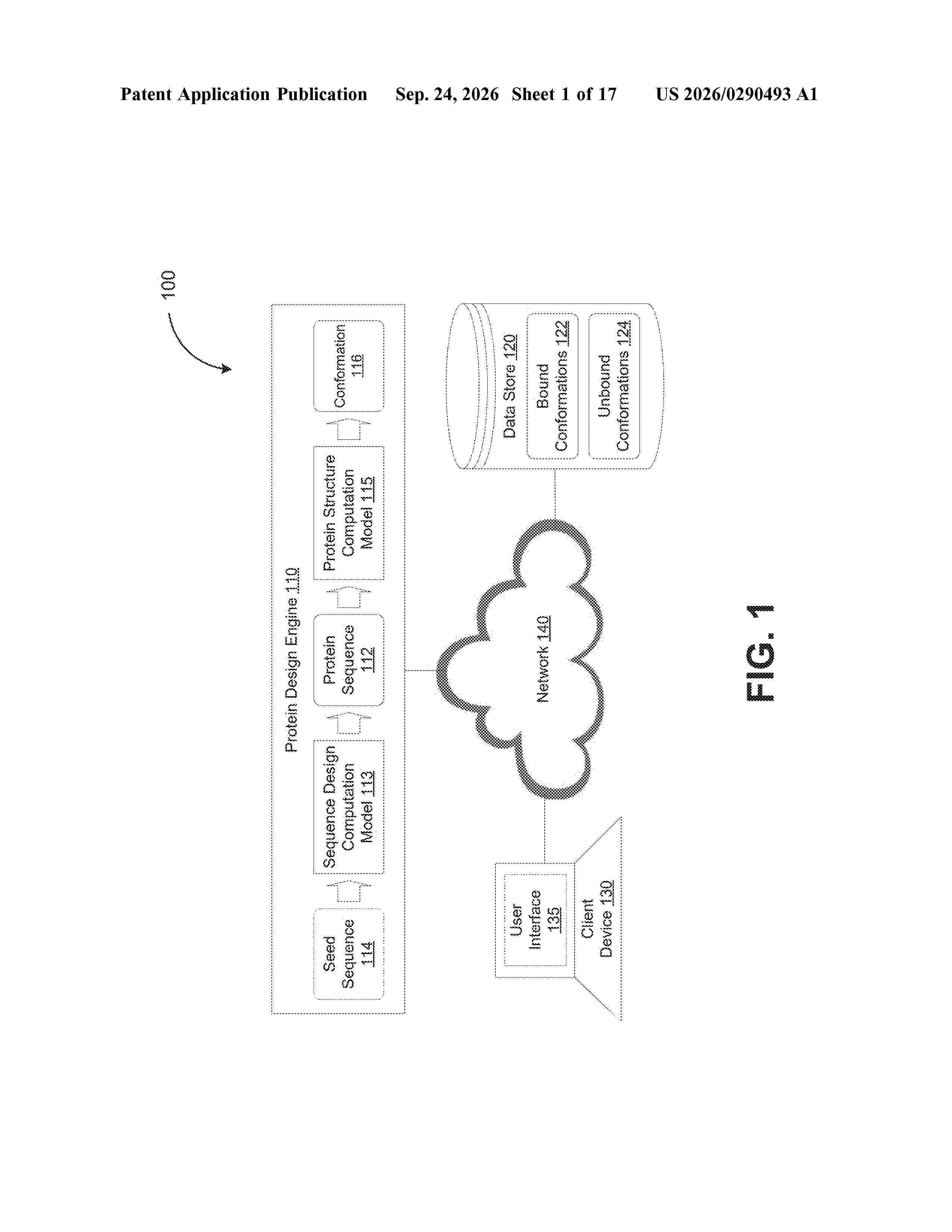
Resumen de: US20260290493A1
0000 A method for conformation aware protein structure prediction may include receiving an amino acid residue sequence of an input protein molecule, such as at least a portion of an antibody, a nanobody, or a T-cell receptor (TCR). A representation of the amino acid residue sequence of the input protein molecule may be determined to include a conformation token specifying a conformation state of the input protein molecule. The conformation state of the input protein molecule may be an unbound state or a bound state. A protein structure computation model may be applied to determine, based on the representation of the amino acid residue sequence of the input protein molecule, a conformation of the input protein molecule in the conformation state specified by the conformation token. Related systems and computer program products are also provided.
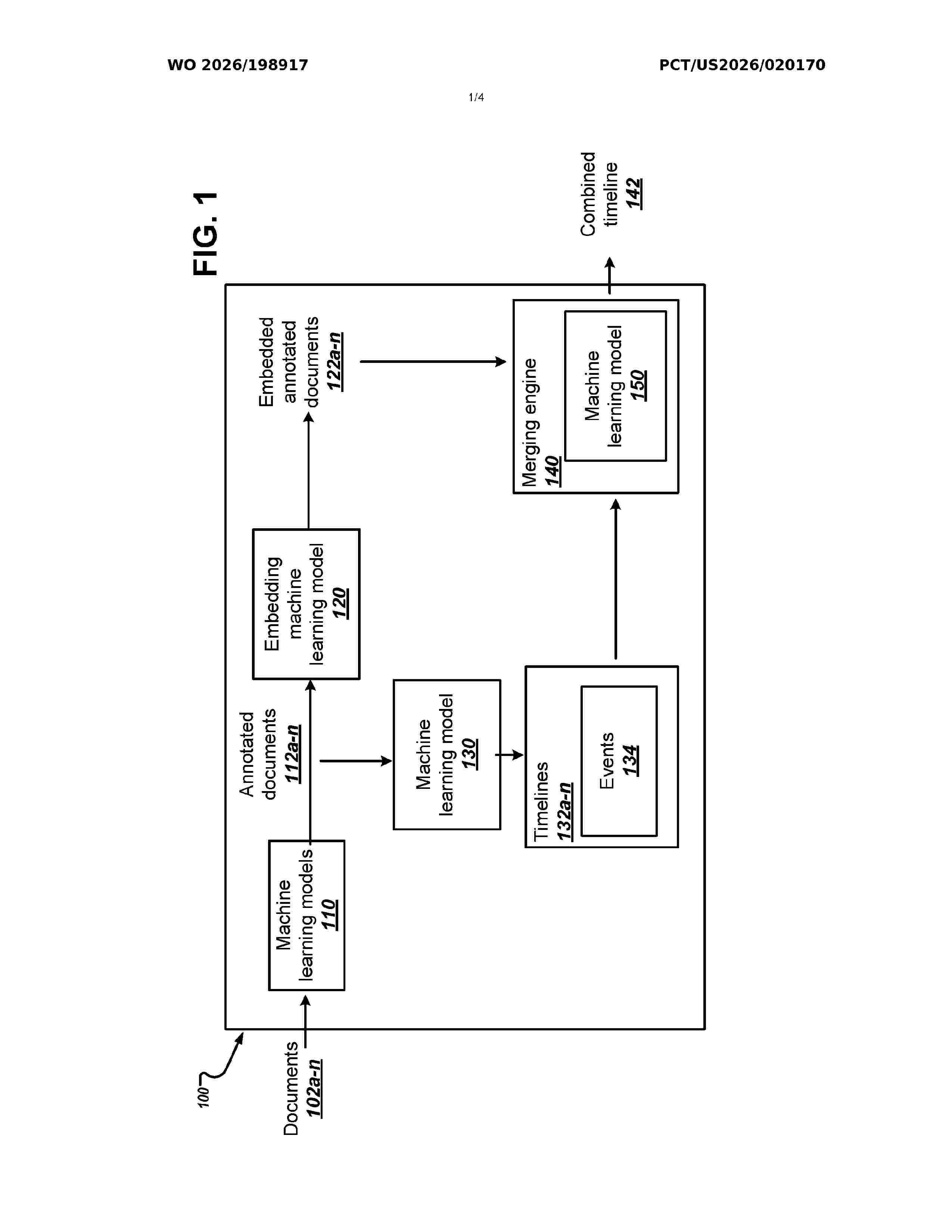
Resumen de: WO2026198917A1
Methods, systems, and apparatus, including computer programs encoded on computer storage media, for generating a timeline. One of the methods includes obtaining a plurality of documents; generating, for each document, a corresponding annotated document; generating, for each corresponding annotated document, an embedded annotated document; generating, for each document, a corresponding timeline for the document; and generating a combined timeline over the plurality of documents by merging each of the corresponding timelines based on at least the embedded annotated document for one or more of the documents.
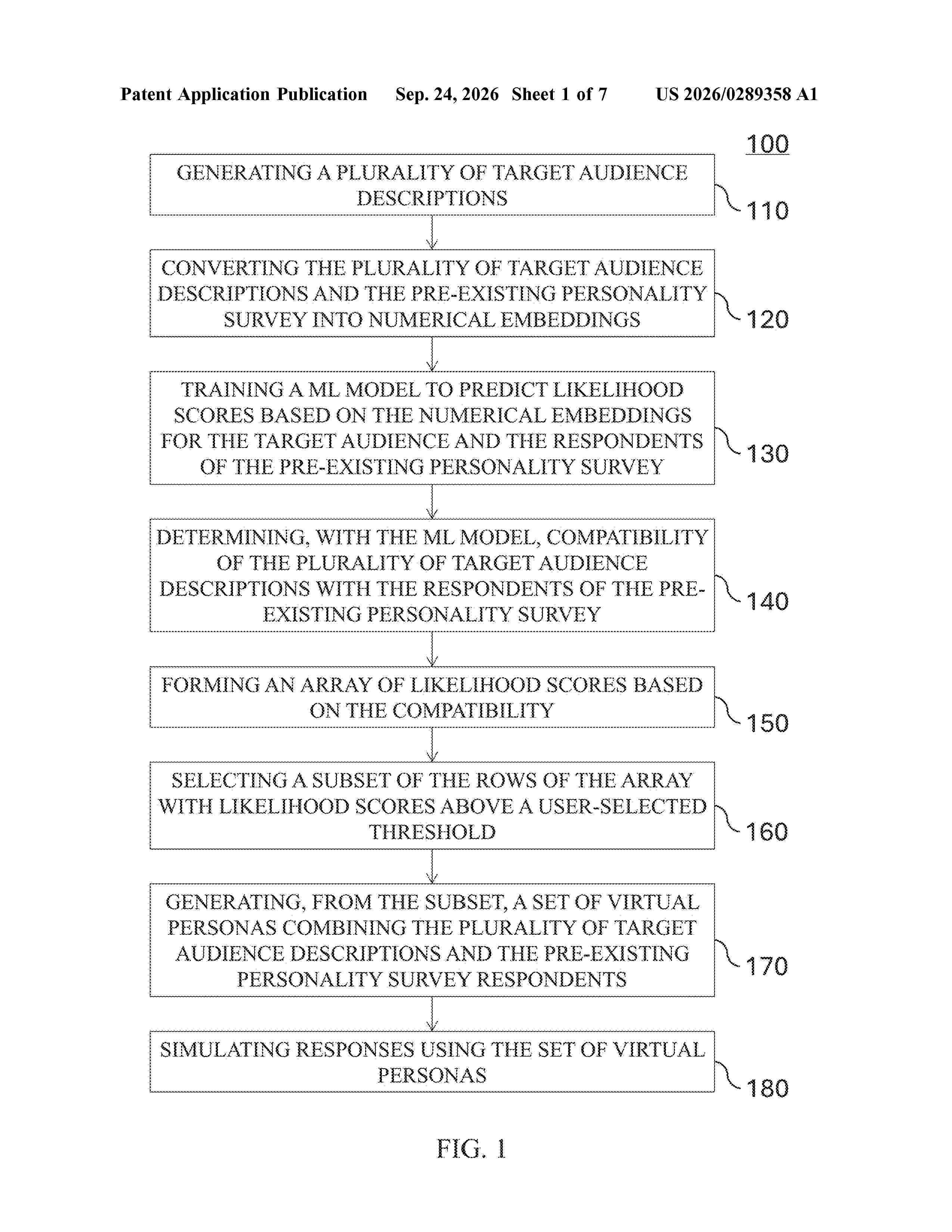
Resumen de: US20260289358A1
A method and system for simulating responses from virtual personas, the method comprising: using a computer processor, generating a plurality of target audience descriptions; converting the plurality of target audience descriptions into numerical embeddings; converting a pre-existing personality survey into numerical embeddings; determining, with a machine learning model, compatibility of the plurality of target audience descriptions with respondents of the pre-existing personality survey; forming an array of likelihood scores based on the compatibility, wherein columns of the array correspond to the target audience descriptions and rows correspond to the pre-existing personality survey; selecting a subset of the rows of the array with likelihood scores above a user-selected threshold; generating, from the subset, a set of virtual personas combining the plurality of target audience descriptions and the pre-existing personality survey respondents; and simulating responses using the set of virtual personas.
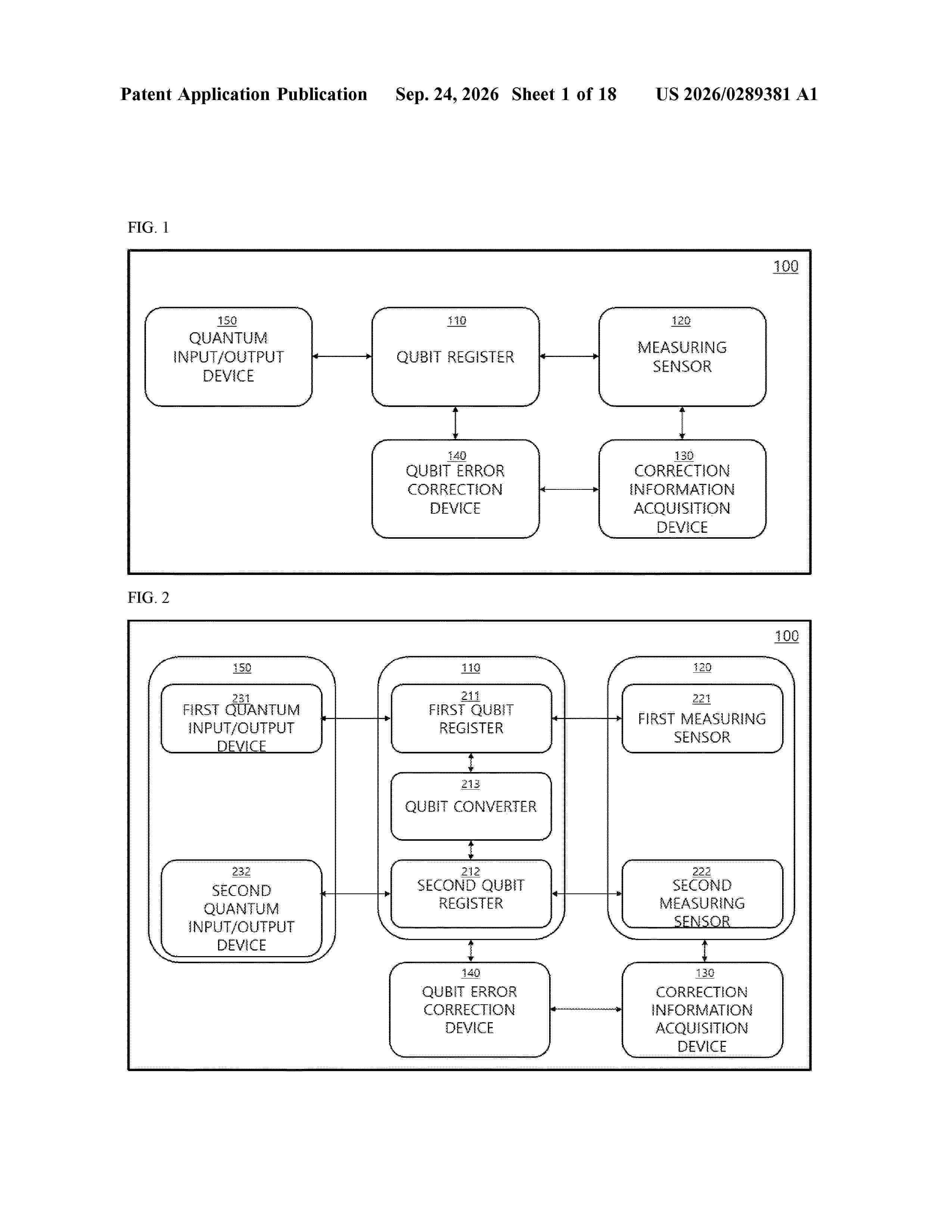
Resumen de: US20260289381A1
A hybrid quantum calculating system according to the present disclosure comprises a correction information acquisition device acquiring correction information for correcting an error of at least one of a first qubit and a second qubit based on first environment information and second environment information, and a qubit error correction device correcting values of a first qubit register and a second qubit register based on the correction information. Also, the hybrid quantum calculating system acquires module selection information by applying environment information to a dynamic selection machine learning model, and selects at least one of a first encryption module, a second encryption module, and a third encryption module based on the module selection information.
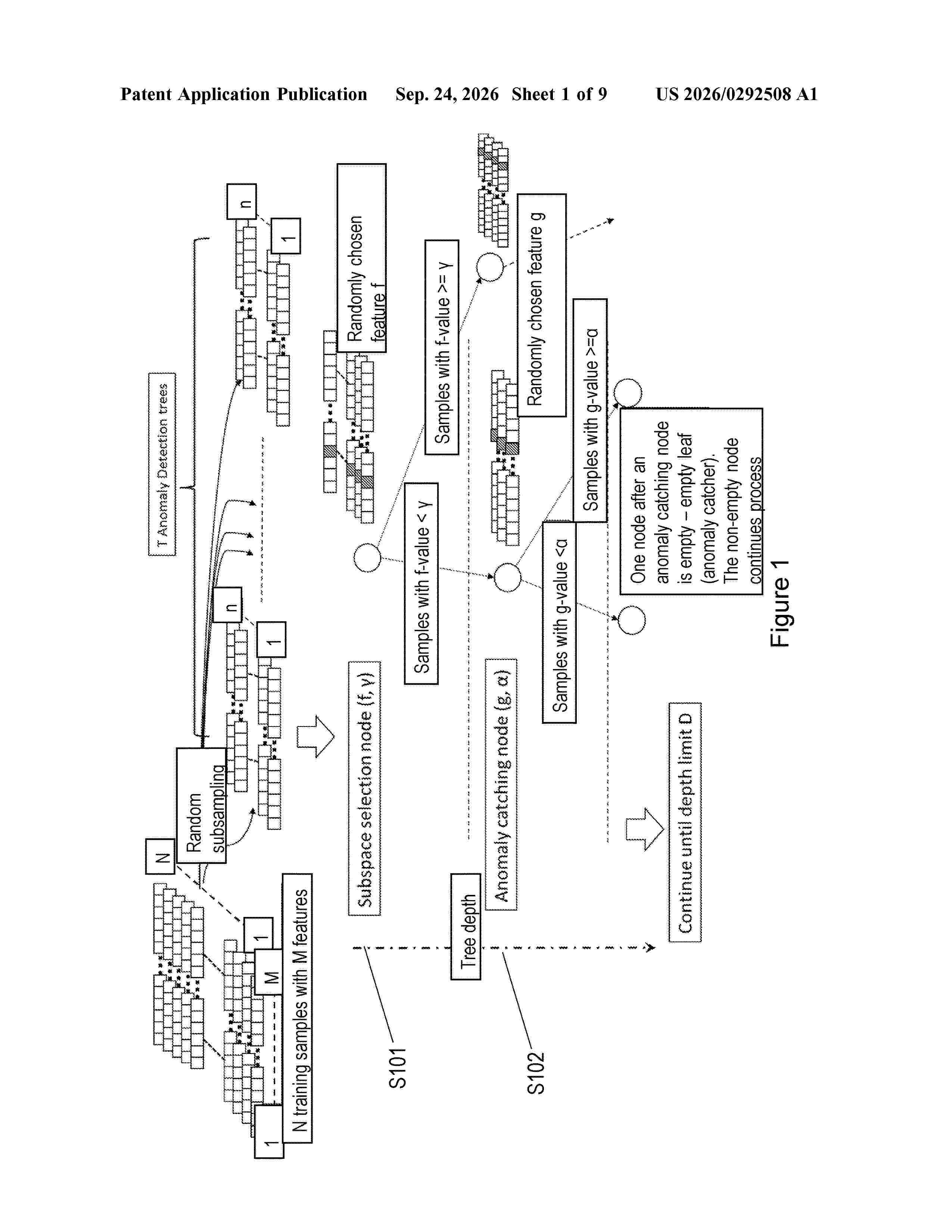
Resumen de: US20260292508A1
0000 A method for identifying anomalous base station behaviour in a communications network comprises generating an ensemble algorithm ML model, performing first training of plural decision trees in the ML model and performing second training of the decision trees such that feature values of diversion nodes are included in feature contributions of anomaly detection nodes. The method further includes processing communications network report data using the ML model, identifying a base station exhibiting anomalous behaviour and generating an alert. A machine learning agent, a communications network, a computer program and a computer-readable storage medium are also disclosed.
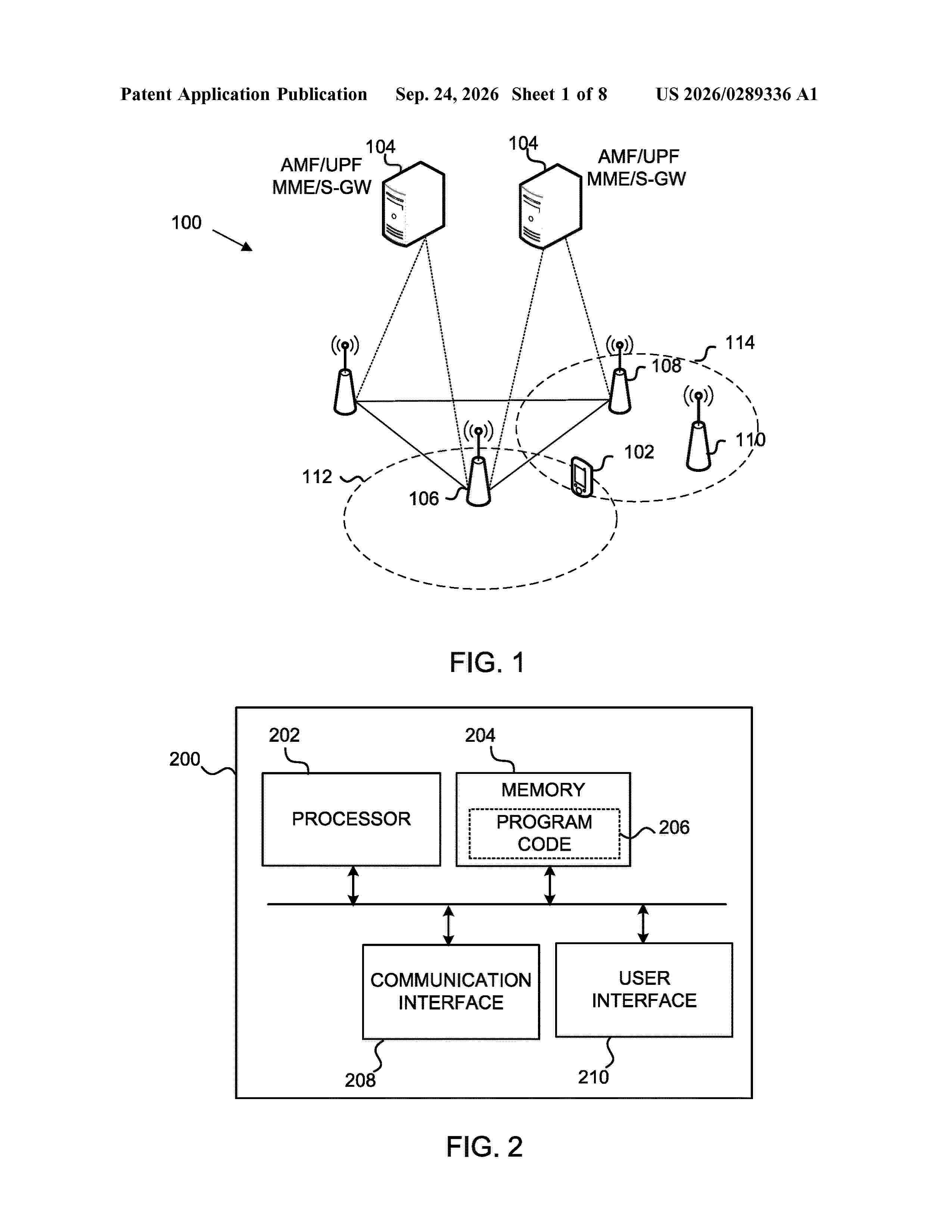
Resumen de: US20260289336A1
Example embodiments enable reliability assessment of a machine learning model for mobility management related predictions. A client node may be configured to obtain configuration information for reliability assessment of a machine learning model, the configuration information comprising one or more parameters for configuration of an evaluation window, one or more evaluation functions and one or more reliability acceptance thresholds; obtain verification data based on the evaluation window and evaluation criteria for determining at least one reliability measure; determine at least one reliability measure based on the verification data and the one or more evaluation functions; determine qualification of the machine learning model based on the at least one reliability measure and the one or more reliability acceptance thresholds; send a result of the qualification to the network node; receive feedback from the network node based on the result indicating if the client node is authorized to use the machine learning model; and perform a mobility management related prediction based on the machine learning model when authorized by the network node. Apparatuses and methods are disclosed.
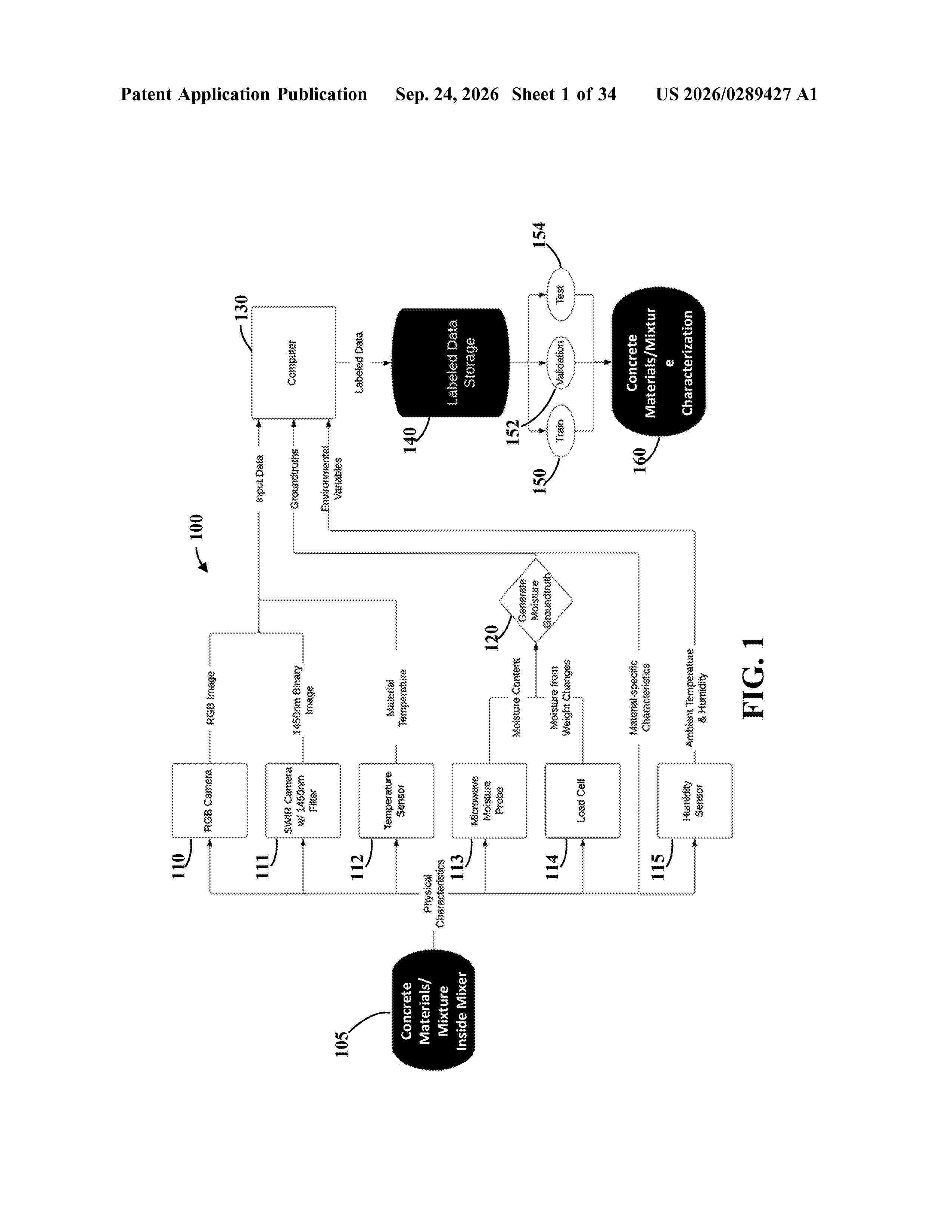
Resumen de: US20260289427A1
Systems, methods, and computer-readable media of characterizing concrete materials or concrete mixtures may include: obtaining, using sensors that comprise at least two different types of sensors, sensor data corresponding to the concrete materials or the concrete mixtures; analyzing, using a trained machine learning model, the sensor data to generate the characterization of the concrete materials or the concrete mixture; and outputting the characterization of the concrete materials or the concrete mixture. Training the trained machine learning model may include: obtaining a set of training data for historical concrete materials or a historical concrete mixture, including a plurality of characterizations of the historical concrete materials or the historical concrete mixture; classifying the set of training data into a plurality of subsets each corresponding to a different characterization or range of characterizations of the plurality of characterizations; and generating the trained machine learning model using the plurality of subsets of training data.
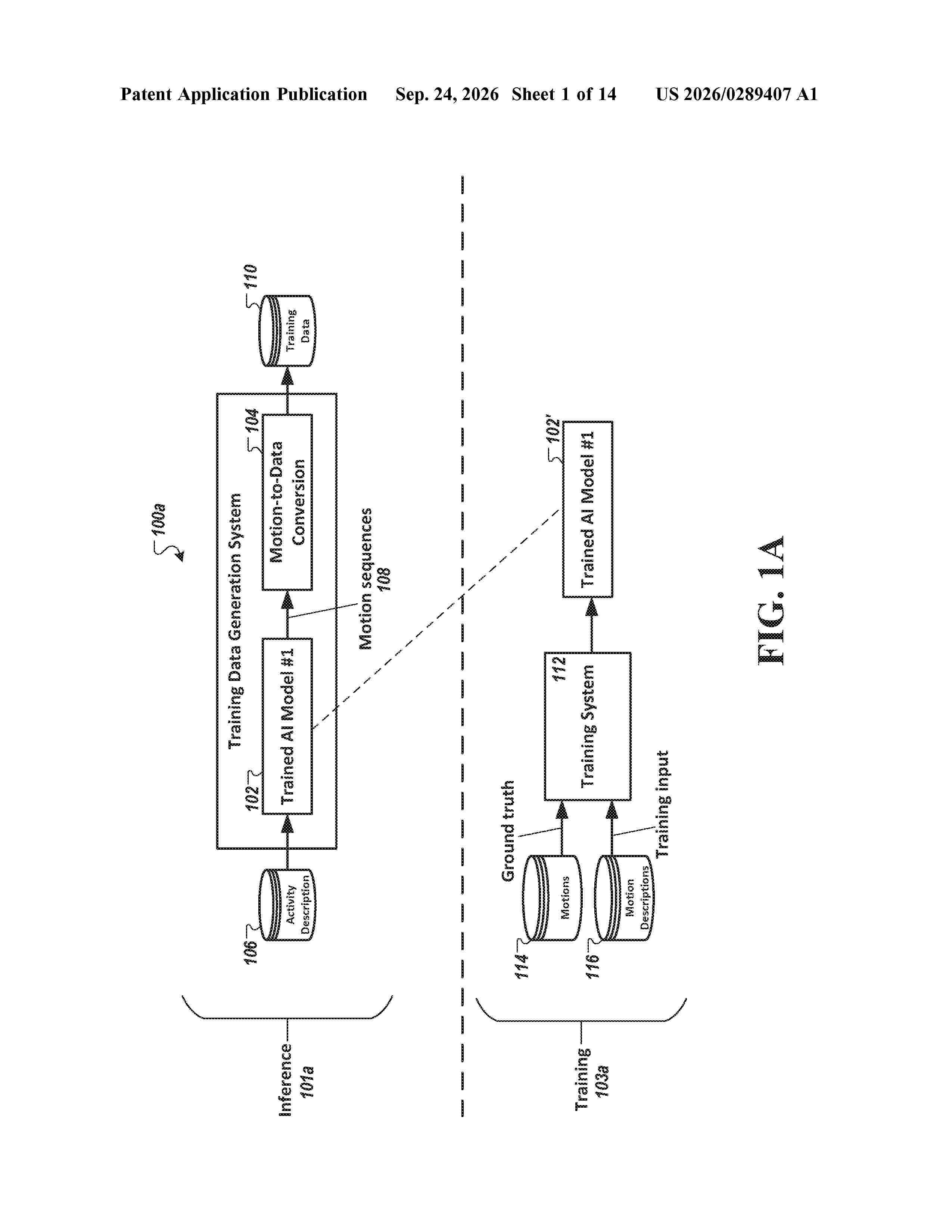
Resumen de: US20260289407A1
0000 An exemplary system and method are disclosed for generating training data for artificial intelligence (AI) or machine learning (ML) models to detect or recognize activities of a subject. In one implementation, an example method includes generating, via a motion synthesis model and as a first trained AI model, a set of motion sequence data objects representing motion sequences corresponding with the plurality of activity descriptions, where the generation of the set of motion sequence data objects includes applying an iterative data-variability evaluation operation.
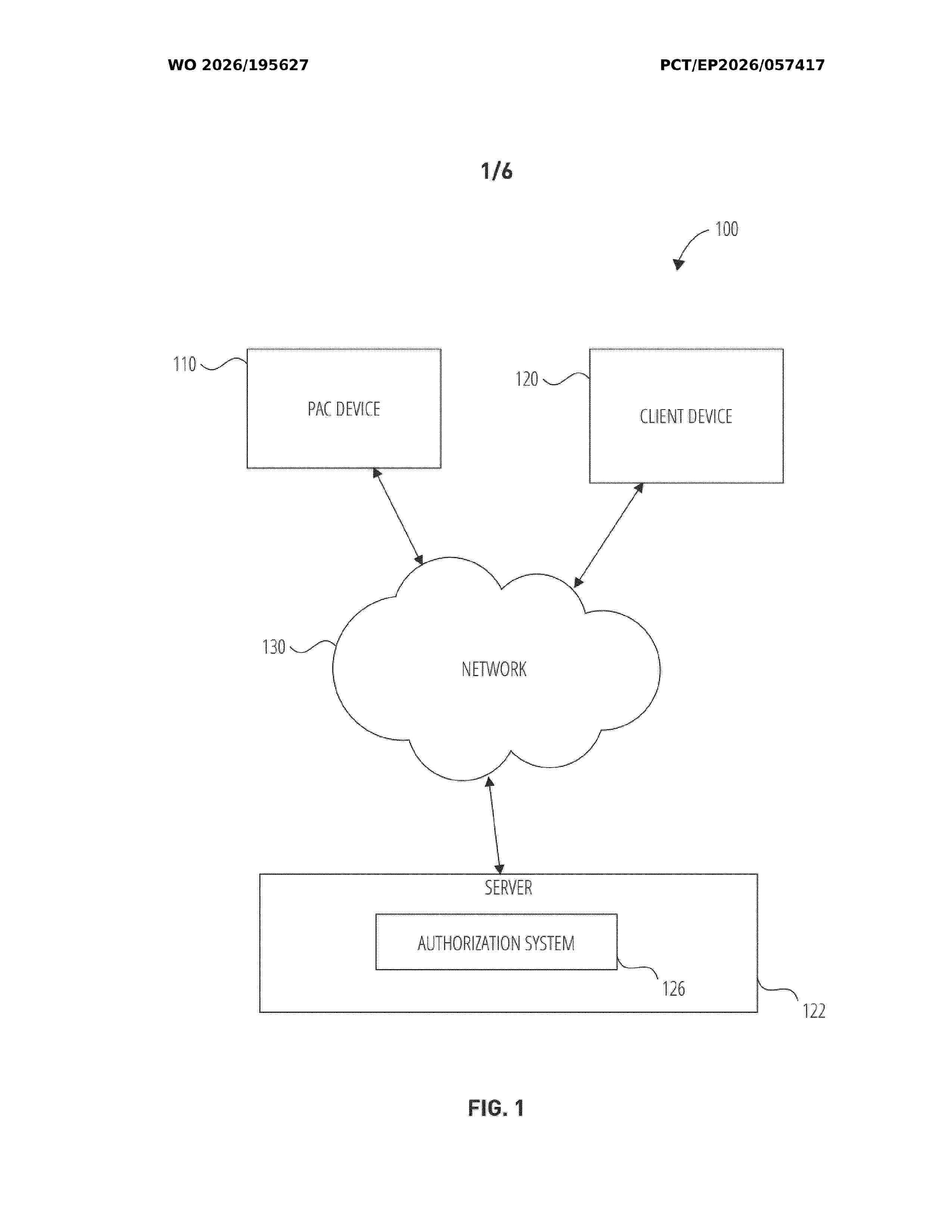
Resumen de: WO2026195627A1
A system for predicting lifespan of a physical access control (PAC) reader device is described. The system collects data associated with a PAC reader. The system processes the data using one or more machine learning (ML) models to generate a prediction of a remaining lifespan of the PAC reader and one or more configuration changes for extending the remaining lifespan of the PAC reader. The system generates an alert comprising the prediction and the one or more configuration changes.
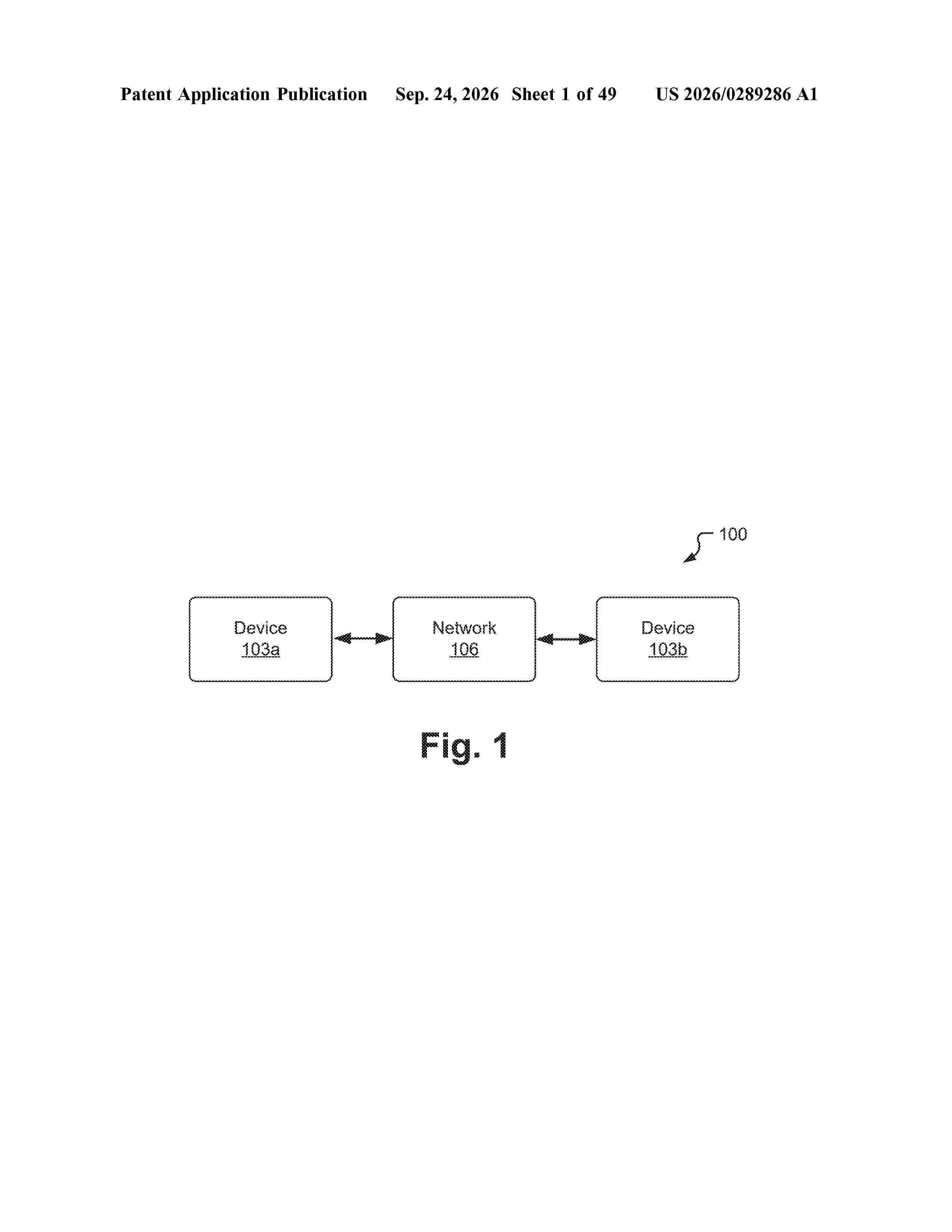
Resumen de: US20260289286A1
0000 Embodiments described herein are directed to a multi-layer telemetry pipeline utilizing Machine Learning (ML) and/or Artificial Intelligence (AI) to perform reduction-based telemetry collection for anomaly detection and/or prediction tasks. Throughout the pipeline the amount of data is reduced at each level. As telemetry pipelines usually collect many data items into a central collector, through layers of aggregation, ML/AI can be integrated into each layer, i.e., the pipeline nodes/layers themselves to execute layers of the algorithm. In other words, the “low-level”, e.g. feature extraction layers of the pipeline can be executed within a local aggregator. This reduces the data to be sent, making it easier but without losing data to be ingested by the algorithm. The “higher level,” result-calculating parts of the algorithm can be executed within a collector.
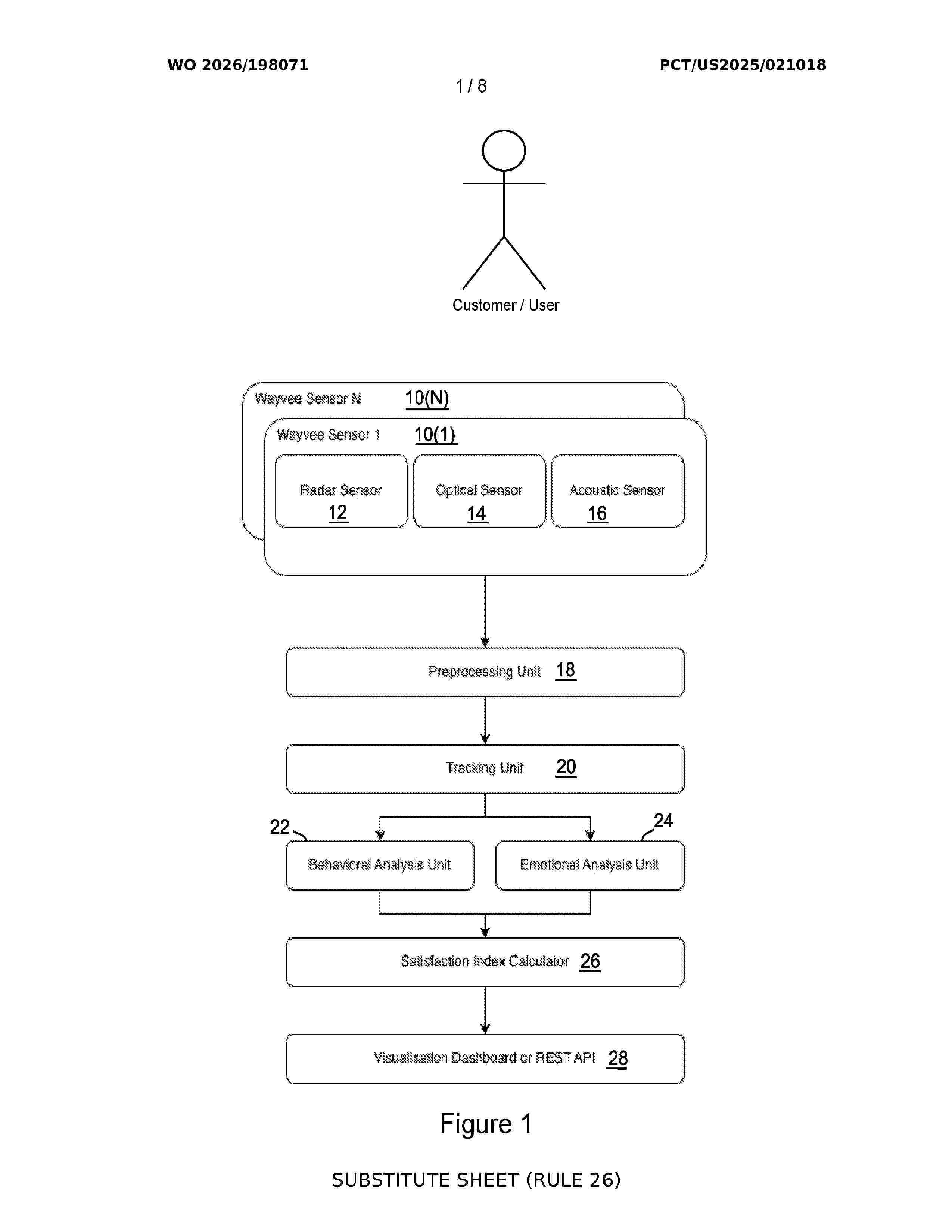
Nº publicación: WO2026198071A1 24/09/2026
Solicitante:
WAYVEE INC [US]
OVCHAROV ALEKSEI [CY]
MATIUNIN VIACHESLAV [CY]
TIMASHEV ANTON [CY]
MAZALEUSKI VITALI [PL]
DANILOV EGOR [AM]
GRACHEV PAVEL [ME]
DANILINA ANNA [CY]
MIKHAILENKO DMITRII [GE]
NALIVAIKO ALEXEY [PL]
KHURS SIARHEI [PL]
WAYVEE INC.
OVCHAROV, Aleksei
MATIUNIN, Viacheslav
TIMASHEV, Anton
MAZALEUSKI, Vitali
DANILOV, Egor
GRACHEV, Pavel
DANILINA, Anna
MIKHAILENKO, Dmitrii
NALIVAIKO, Alexey
KHURS, Siarhei
Resumen de: WO2026198071A1
A non-invasive, privacy-conscious system and method for calculating User Satisfaction Index (USI) in real-time using multi-sensory data fusion. The system is primarily based on radar sensors, ensuring privacy, while optical and acoustic sensors are optional and can be integrated as needed. It employs machine learning algorithms to analyze physiological (heart rate, respiration, micro-movements), emotional response, and behavioral (gestures, vocal intonation, facial expressions) markers. The User Satisfaction Index prediction and recommendation algorithms estimate users' satisfaction across various industries, including retail, healthcare, corporate environments, smart cities, transportation, and other fields.
 BOPI
 Sede Electrónica