Si deseas distinguir tus productos, servicios o ambos de los de otra empresa, es posible que necesites una marca o nombre comercial. Descubre qué son, en qué consiste su procedimiento de registro y qué implica.

Información sobre los plazos de presentación de solicitudes de transformación de marcas de la Unión Europea en marca nacional española. Más información


Si tienes un nuevo dispositivo, producto o procedimiento que resuelva un problema técnico o tenga una ventaja práctica, existen distintas formas de protegerlo en España y en otros países. Descubre cómo hacerlo.

¿Tu innovación reside en la estética, la ornamentación o la apariencia de tu producto? Protégela mediante un diseño industrial. Descubre qué derechos confiere el registro y cómo realizar la tramitación.

Las indicaciones geográficas protegen el nombre de un producto originario de una zona geográfica, a la cual le debe una determinada calidad, reputación u otra característica. Descubre qué son, en qué consiste su procedimiento de registro y qué beneficios conceden.

Las patentes publicadas en todo el mundo son una valiosa fuente de información científica, técnica y comercial.

Si eres emprendedor/a o una empresa y quieres potenciar y mejorar la rentabilidad de tu negocio protegiendo de forma adecuada los activos intangibles de tu organización, en este espacio encontrarás lo necesario.


 1890
resultados
1890
resultados
 Última actualización
30/06/2026 [12:07:00]
Última actualización
30/06/2026 [12:07:00]


 Resultados 1300 a 1325 de 1890

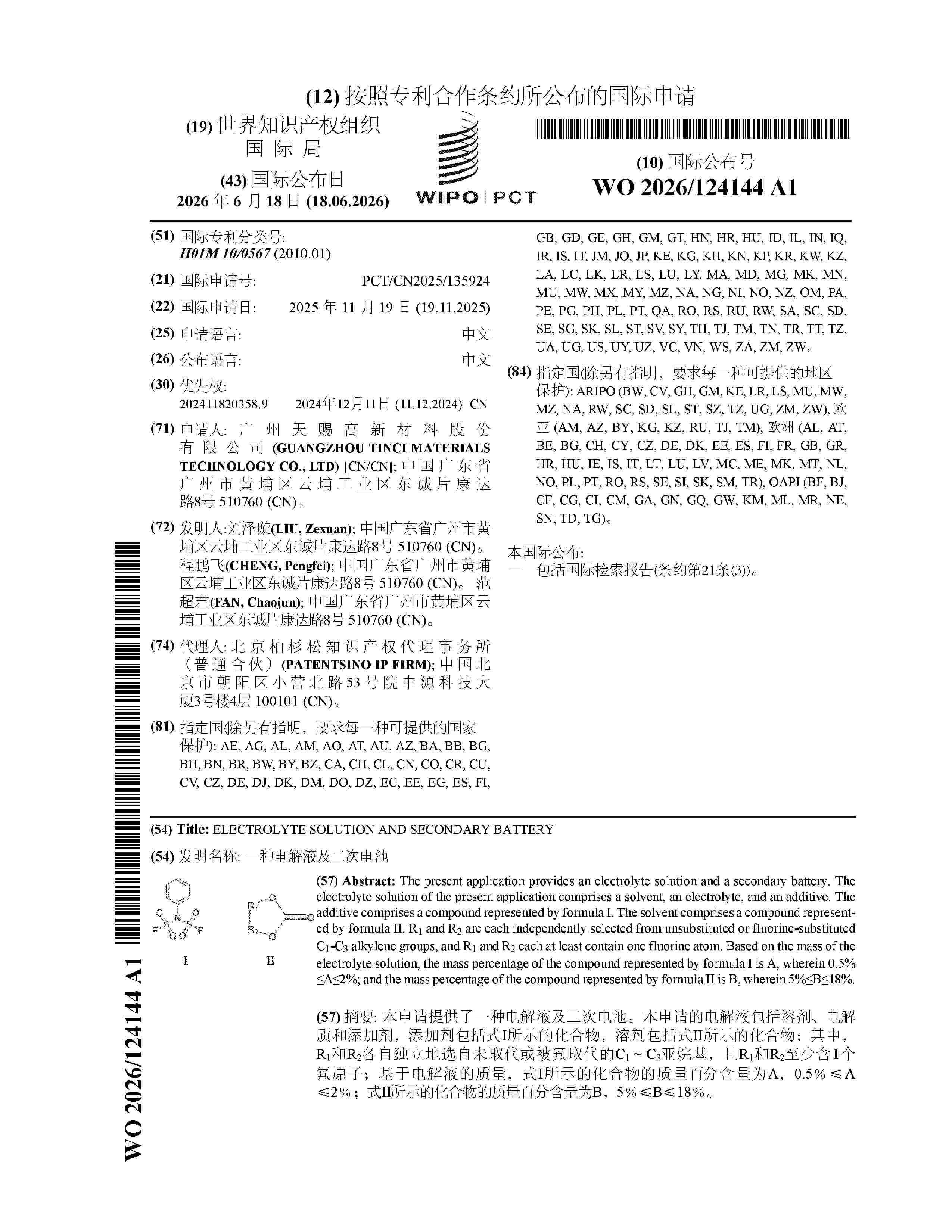
Resumen de: WO2026124144A1
The present application provides an electrolyte solution and a secondary battery. The electrolyte solution of the present application comprises a solvent, an electrolyte, and an additive. The additive comprises a compound represented by formula I. The solvent comprises a compound represented by formula II. R1 and R2 are each independently selected from unsubstituted or fluorine-substituted C1-C3 alkylene groups, and R1 and R2 each at least contain one fluorine atom. Based on the mass of the electrolyte solution, the mass percentage of the compound represented by formula I is A, wherein 0.5%≤A≤2%; and the mass percentage of the compound represented by formula II is B, wherein 5%≤B≤18%.

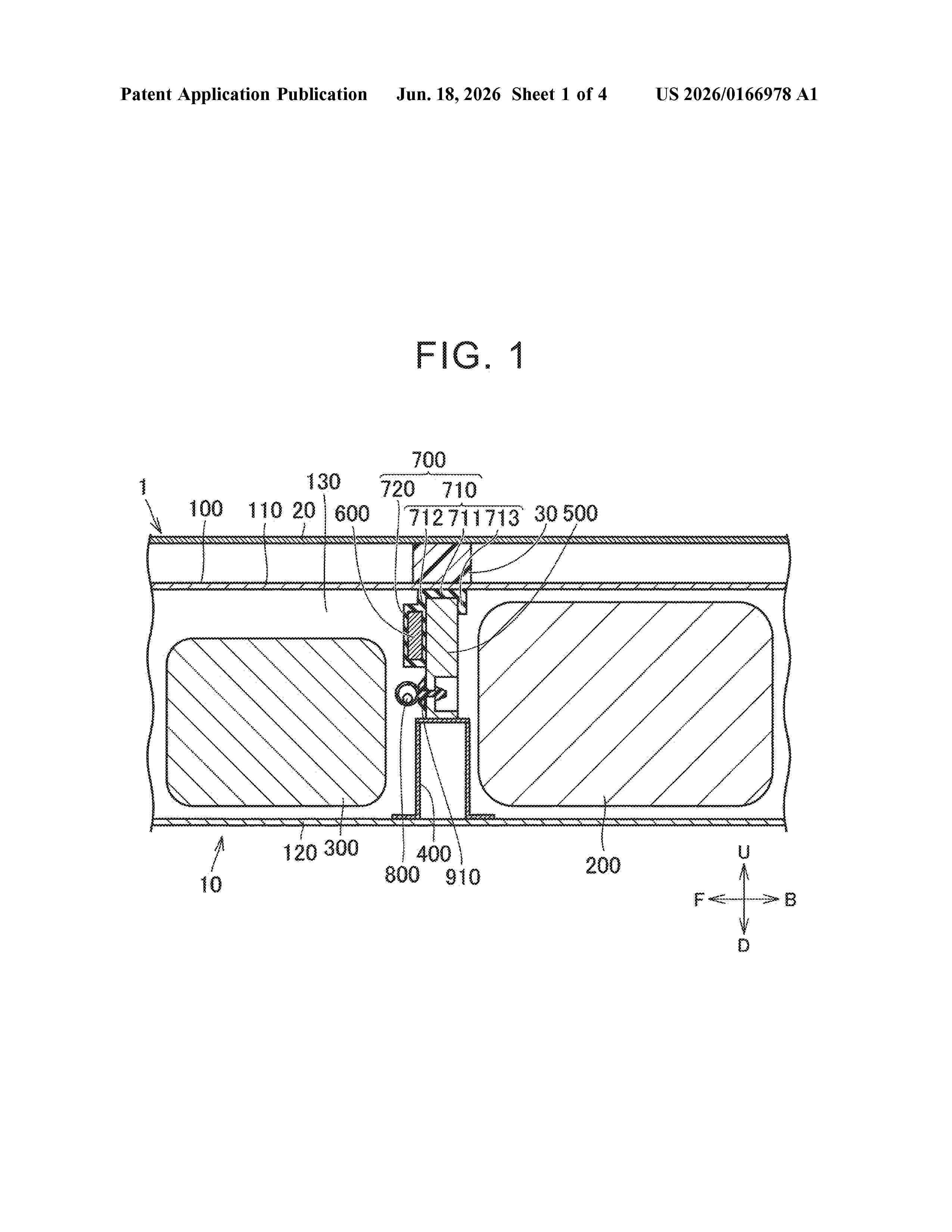
Resumen de: US20260166978A1
0000 In an energy storage device, a reinforcing member is disposed between an energy storage module and an electrical device. An intermediate member is disposed between the energy storage module and the electrical device. The intermediate member is disposed between an upper plate and the reinforcing member. An electrical connection member electrically connects the energy storage module and the electrical device. A holding member includes a retaining portion and a holding portion. The retaining portion is disposed between the upper plate and the intermediate member. The retaining portion retains the intermediate member. The holding portion holds the electrical connection member. The holding portion is in contact with the intermediate member in a horizontal direction.
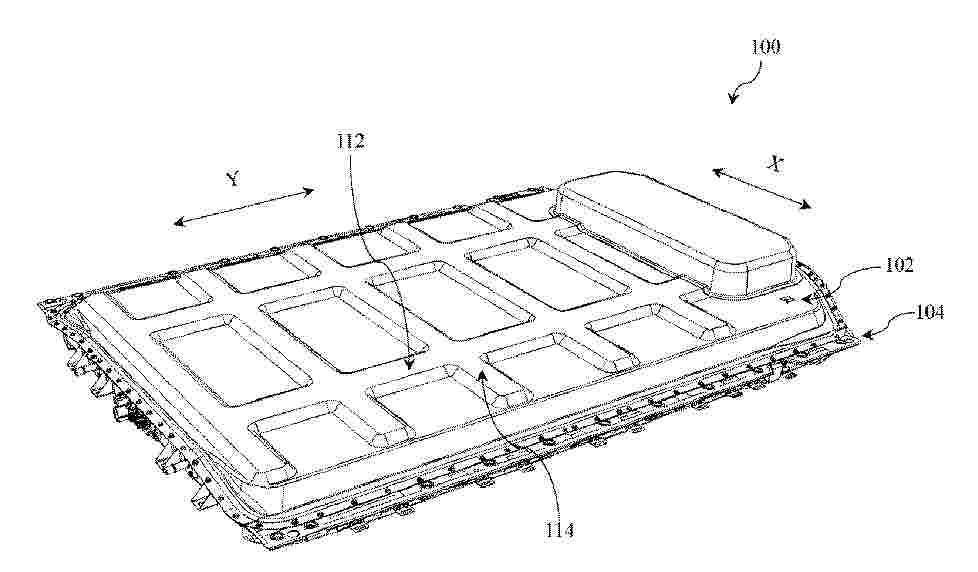
Resumen de: DE102025150571A1
Die vorliegende Erfindung betrifft ein Batteriepaket sowie ein entsprechendes Fahrzeug. Das Batteriepaket umfasst: eine Oberabdeckung und eine Bodenwanne; eine Batteriezelle, die in einem durch die Oberabdeckung und die Bodenwanne gemeinsam begrenzten Raum angeordnet ist, wobei eine erste Seitenfläche der Batteriezelle mit einer Zellenentgasungsöffnung versehen ist oder die erste Seitenfläche einer Zellenentgasungsöffnung zugewandt ist, wobei die Oberabdeckung und/oder die Bodenwanne einen ersten Seitenabschnitt aufweist, welcher an eine zweite Seitenfläche der Batteriezelle angrenzt, wobei die erste Seitenfläche und die zweite Seitenfläche einander benachbart sind, wobei der erste Seitenabschnitt mit einem ersten Entgasungskanal zum Sammeln der Entgasung der Batteriezelle versehen ist, und wobei zumindest ein Teilbereich des ersten Entgasungskanals von der Batteriezelle isoliert ist. Die erfindungsgemäße Lösung ermöglicht es, für im Inneren des Batteriepakets erzeugte Gase einen ungehinderten Abführweg bereitzustellen und gleichzeitig die Gesamtstruktur des Batteriepakets möglichst kompakt zu gestalten.
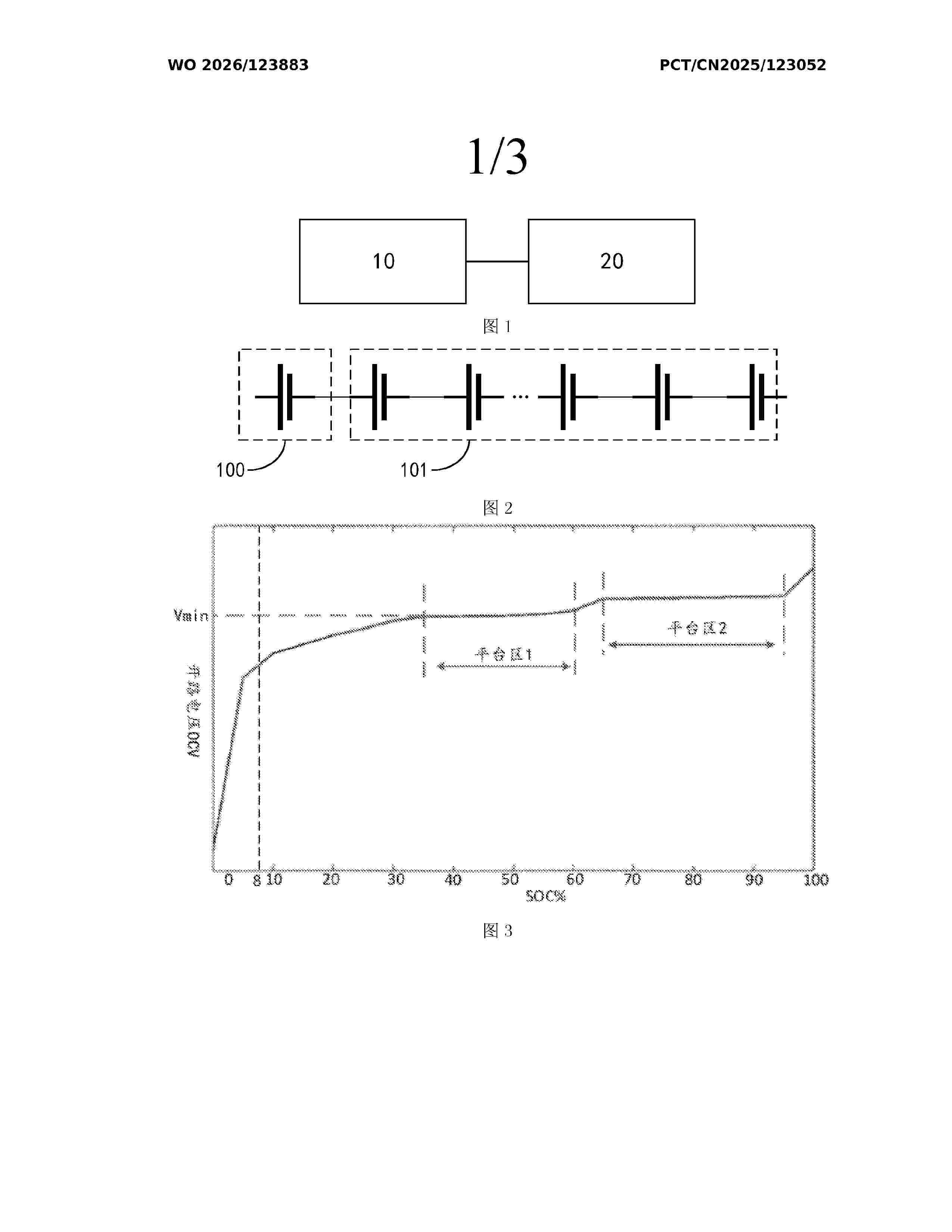
Resumen de: WO2026123883A1
A battery apparatus and a battery pack test method. The battery apparatus comprises a battery pack (10) and a battery management system (20). The battery pack (10) comprises a first battery set (100) having no platform area and a second battery set (101) having a platform area, and the first battery set (100) and the second battery set (101) are connected in series. The battery management system (20) is used for, on the basis of state of charge change data of the first battery set (100) in a current voltage interval, determining the current phase change capacity of the first battery set (100), so as to obtain the current battery state of health of the battery pack (10) on the basis of the battery state of health corresponding to a target phase change capacity matching the current phase change capacity among preset phase change capacities. The described battery apparatus and the battery pack test method can improve the accuracy of a battery pack test result.
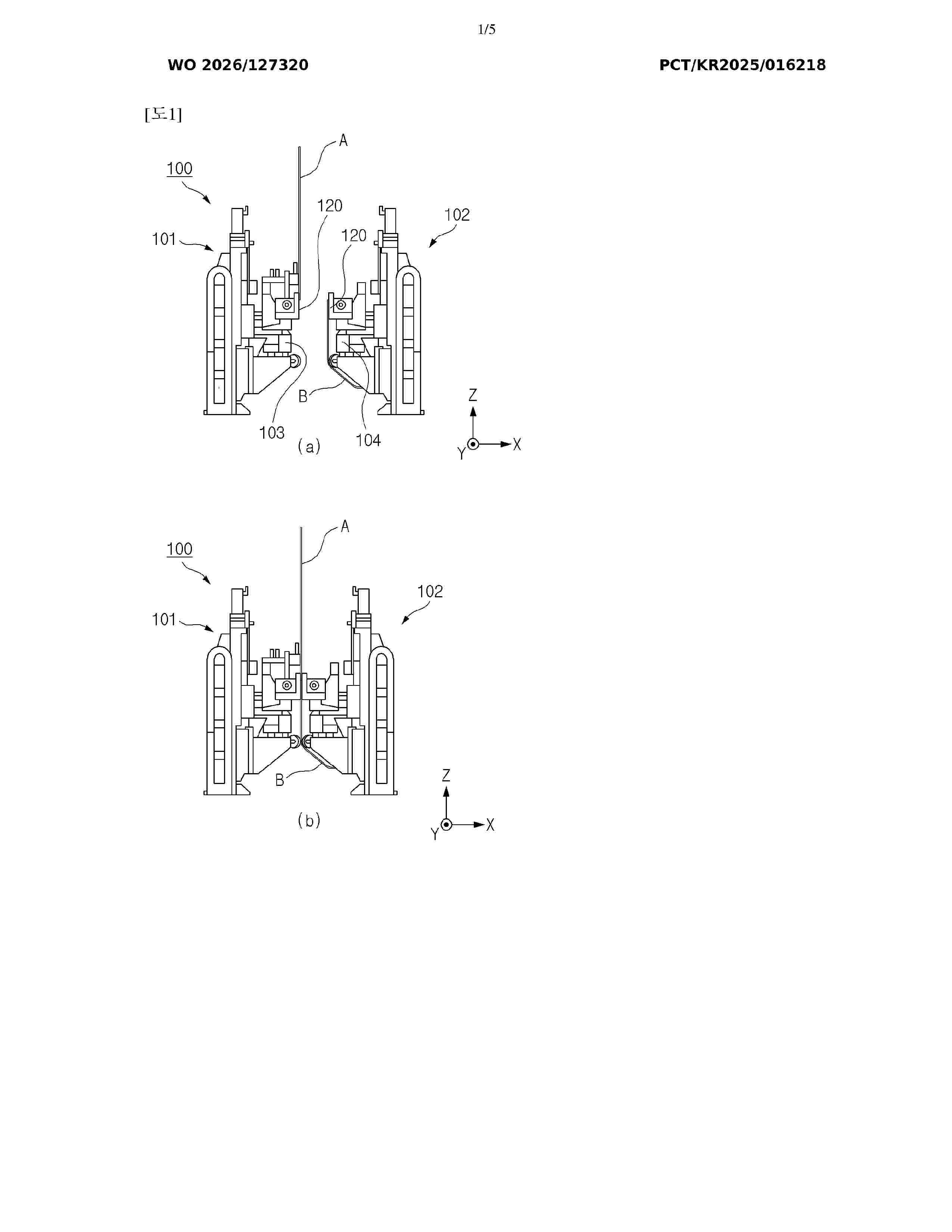
Resumen de: WO2026127320A1
According to exemplary embodiments of the present invention, an electrode splicing device is provided. The electrode splicing device comprises: a first splicing unit capable of gripping a trailing end part of a running electrode sheet; a second splicing unit which is positioned to face the first splicing unit and which can grip a leading end part of a standby electrode sheet; and a line contact type pressing unit for bonding, using tape, the trailing end part of the running electrode sheet and the leading end part of the standby electrode sheet. In addition, the present invention provides an electrode splicing method using the electrode splicing device.
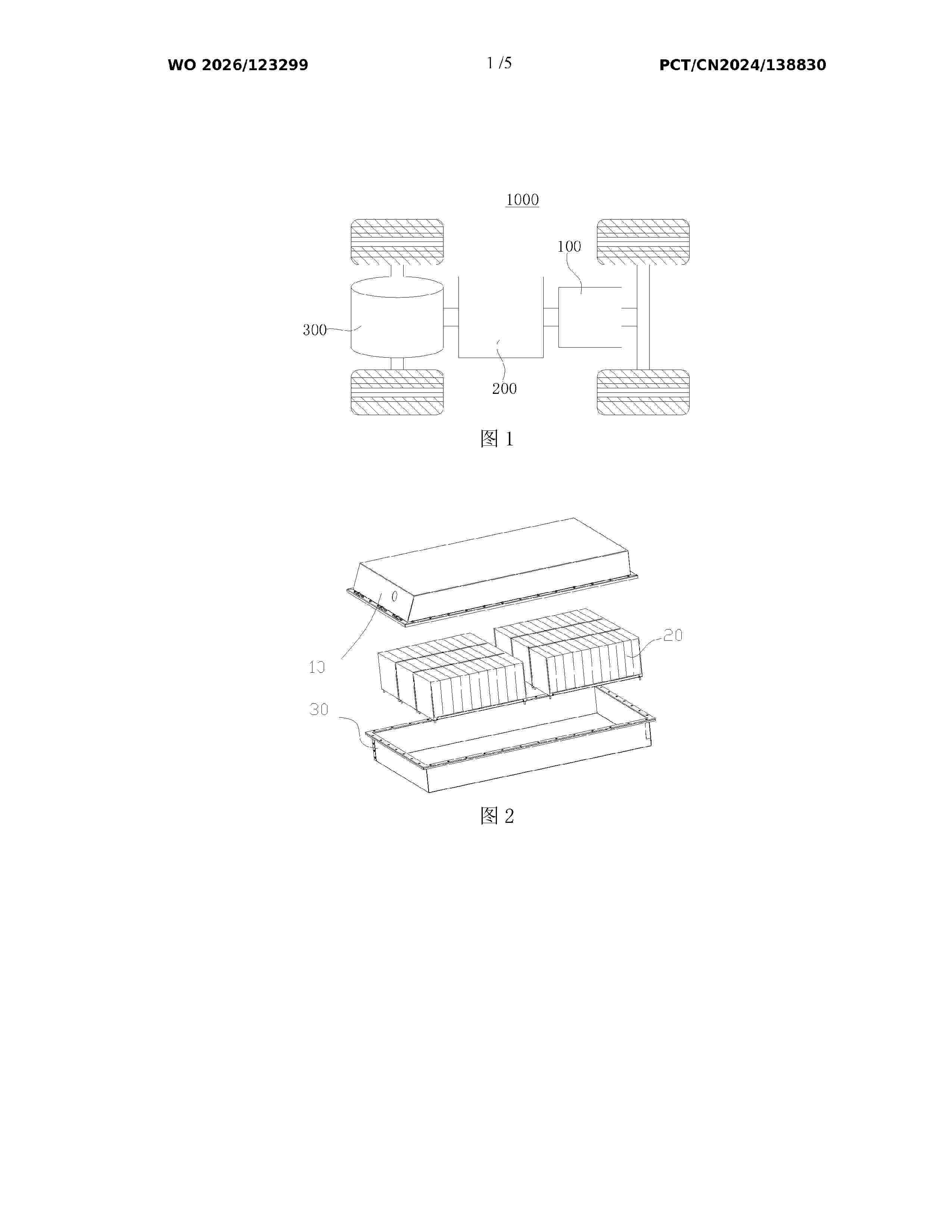
Resumen de: WO2026123299A1
Disclosed in the present application are a battery cell, a battery device, and an electric device. The battery cell comprises a housing, an electrode assembly, and a hydrogen-absorbing layer. The electrode assembly is disposed inside the housing and comprises a positive electrode sheet and a negative electrode sheet. The positive electrode sheet comprises a positive current collector and a positive active material layer disposed on the positive current collector. The negative electrode sheet comprises a negative current collector, and the negative current collector protrudes beyond the positive active material layer in a first direction, the first direction being perpendicular to a direction of thickness of the negative current collector. The hydrogen-absorbing layer is disposed on a portion of the negative current collector that protrudes beyond the positive active material layer in the first direction. The present application can improve the energy density of the battery cell.
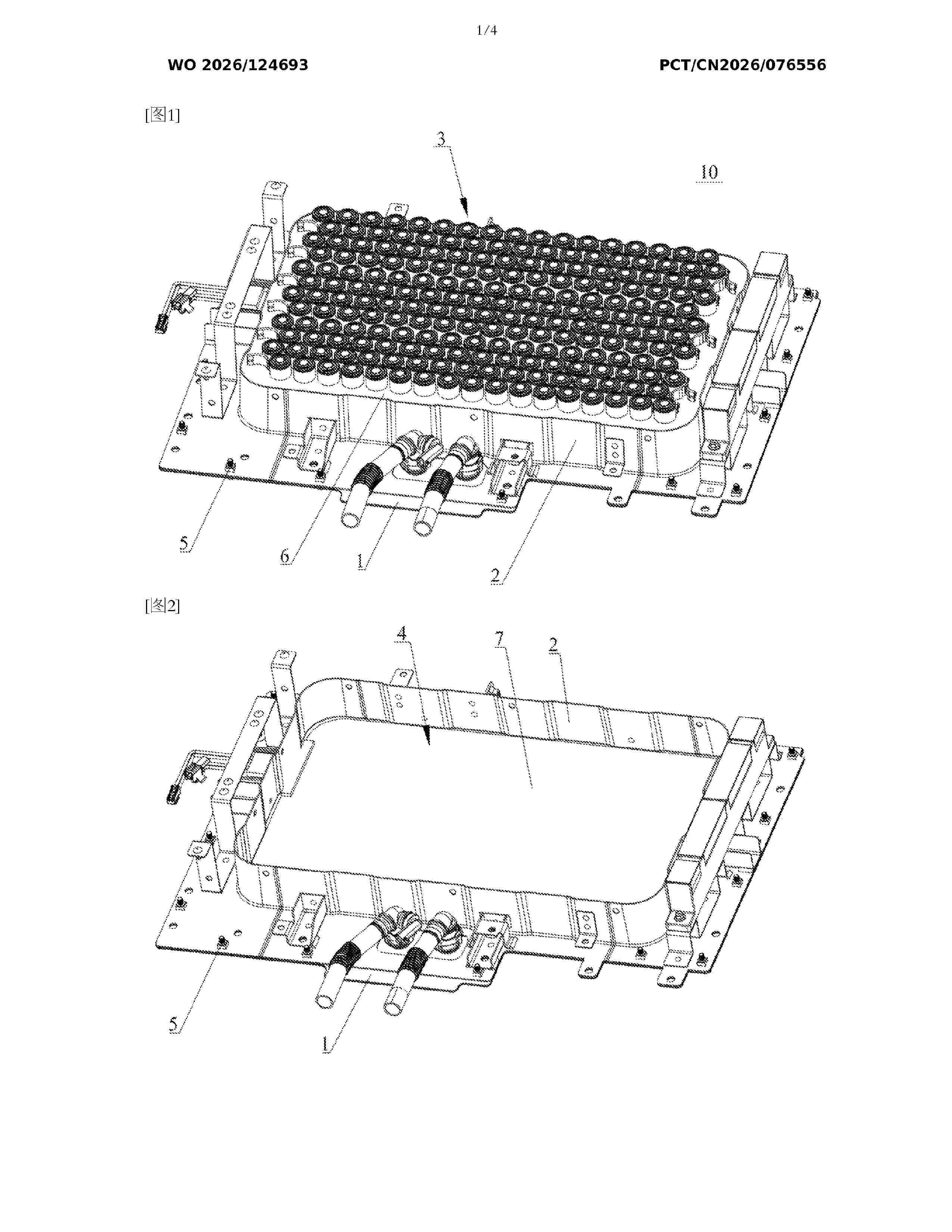
Resumen de: WO2026124693A1
A battery module, a battery pack and an electric device. The battery module comprises a liquid cooling plate (1), a module frame (2) and a battery cell module (3), wherein the module frame (2) is fixedly connected to the liquid cooling plate (1), and forms an accommodating cavity (4) together with the liquid cooling plate (1) by means of enclosing; and the battery cell module (3) is fixedly arranged in the accommodating cavity (4) and is supported on the liquid cooling plate (1).
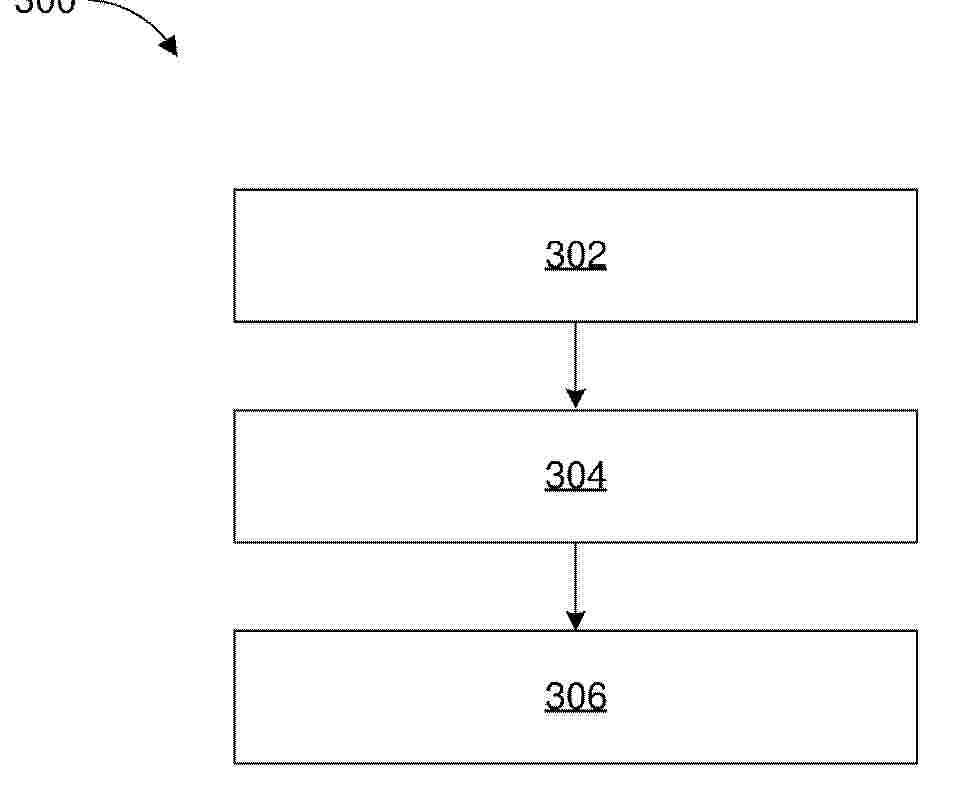
Resumen de: DE102024138330A1
Die vorliegende Erfindung stellt ein Verfahren (300) und ein Ladesteuergerät (102) für geräuschbegrenztes Laden bereit. Das Verfahren (300) umfasst das Empfangen (302) eines oder mehrerer Eingangsparameter an einem Ladesteuergerät (102), wobei der eine oder die mehreren Eingangsparameter mindestens einen der folgenden Parameter umfassen: einen Startladezustand (SoC), einen Ziel-SoC, eine Starttemperatur der Batterie, einen Gesundheitszustand (SoH) der Batterie, eine Ladeleistung und einen Lademodus; Bestimmen (304) eines Stromprofils durch das Ladesteuergerät (102) durch Verarbeiten des einen oder der mehreren Eingangsparameter durch ein Lernmodell; und Laden (306) der Fahrzeugbatterie durch das Ladesteuergerät (102) basierend auf dem bestimmten Stromprofil.
Resumen de: DE102024138231A1
Bereitgestellt wird eine Batteriemodulstruktur, aufweisend ein als geschlossene Hülle gebildetes Foliensystem mit vorgegebenen Abmessungen, wobei das Foliensystem derart gebildet ist, dass es innerhalb der Hülle einen hohlen Raum zur Aufnahme eines Materials bereitstellt, und dass in einer Oberseite der Hülle mehrere Aufnahmebereiche zur Aufnahme jeweils einer Batterie-Zelle vorgesehen sind, wobei das Foliensystem ferner mindestens eine Einfüllöffnung zum Einbringen des Materials in den hohlen Raum aufweist.
Resumen de: WO2026123902A1
The present application provides a copper current collector and a use thereof. The copper current collector comprises a substrate layer and a copper layer arranged on at least one side of the substrate layer; and the relative texture coefficient (RTC) of all grains in the copper layer along a (111) crystal plane orientation satisfies: 20%≤RTC≤50%.
Resumen de: WO2026123545A1
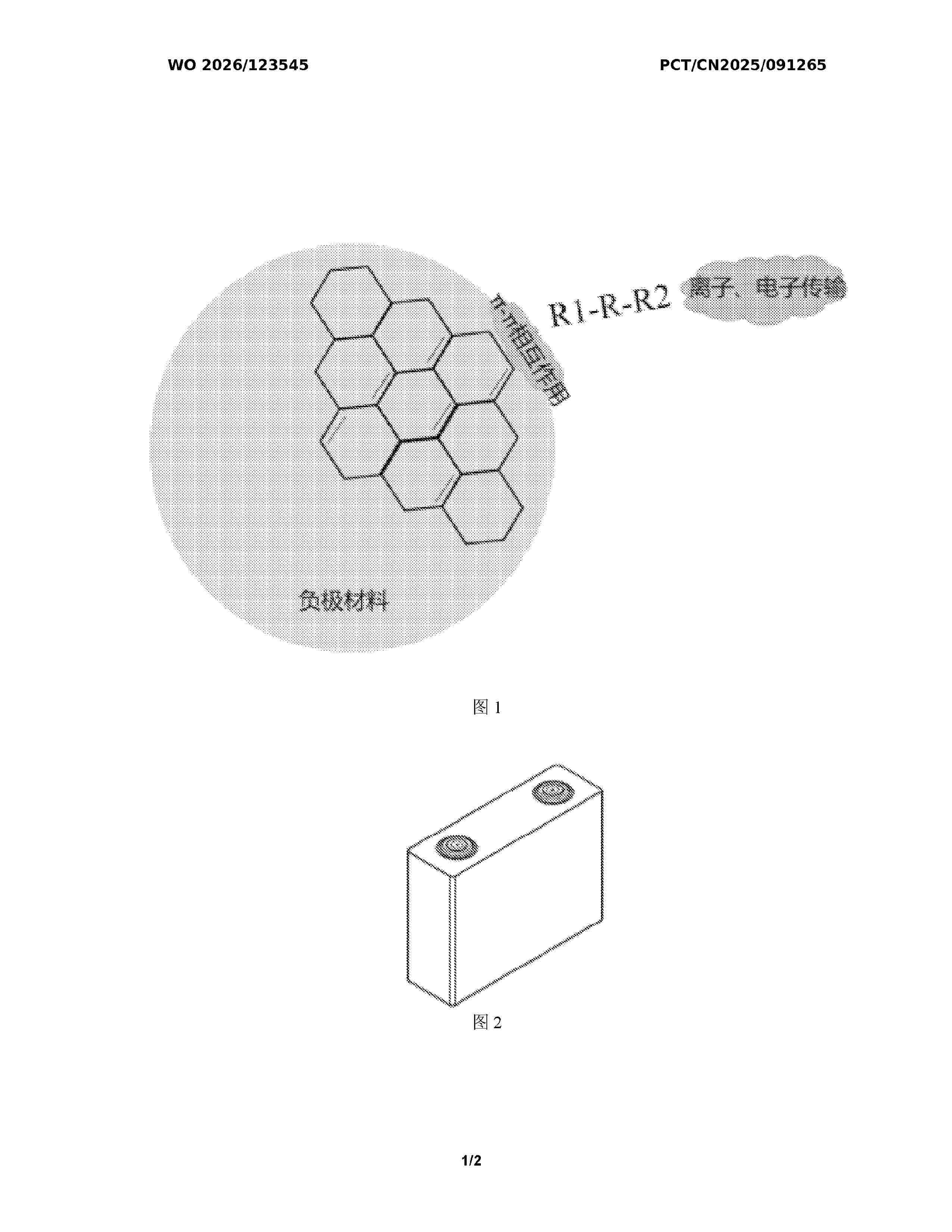
The present application relates to the technical field of batteries, and in particular relates to a battery cell, a negative electrode sheet, a battery device, an energy storage device, and an electric device. The battery cell comprises a negative electrode sheet, wherein the negative electrode sheet comprises a negative electrode current collector and an interface layer disposed on at least one side of the negative electrode current collector; the interface layer comprises a negative electrode material and a binder; the negative electrode material comprises unsaturated bonds; and the binder comprises a main polymer, and an aromatic group and an electrically/ionically conductive segment which are grafted onto the main polymer. In the present application, the electron/ion transport performance of the negative electrode sheet can be effectively improved after repeated charging and discharging; therefore, a battery exhibits good cycle performance, and also has improved capacity and initial efficiency.
Resumen de: WO2026123742A1
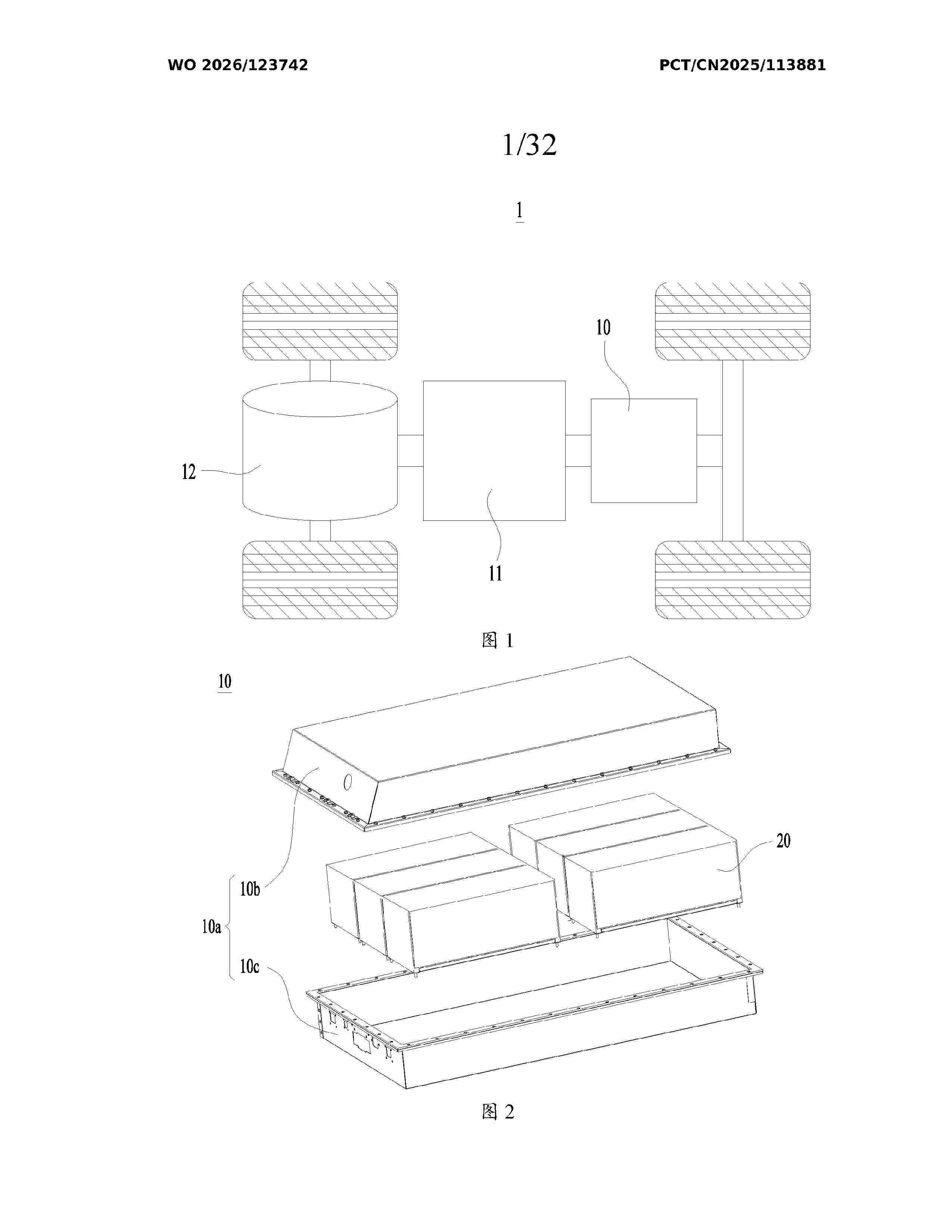
The present application provides an electrode assembly, a battery cell, a battery apparatus, an electrical apparatus, and a manufacturing method. The electrode assembly comprises a first electrode sheet, a second electrode sheet, a first solid-state electrolyte layer, and a first insulating layer. The first electrode sheet comprises a first main body portion and a first tab. The first electrode sheet and the second electrode sheet have opposite polarities. The second electrode sheet comprises a second main body portion. The area of the second main body portion is greater than the area of the first main body portion. The second main body portion comprises an edge extension portion extending beyond the first main body portion. The first solid-state electrolyte layer is disposed between the first main body portion and the second main body portion. The first insulating layer is disposed corresponding to the edge extension portion. The first insulating layer is disposed surrounding the first main body portion. The first insulating layer enclosingly forms an accommodating space. A part of the first main body portion is located in the accommodating space. The first insulating layer comprises a tab lead-out channel. The tab lead-out channel is in communication with the accommodating space. The first tab is led out from the tab lead-out channel.
Resumen de: WO2026125208A1
The present invention relates to a solid-state polymer electrolyte composition comprising an ethylene copolymer containing at least 20 wt% (based on the overall weight of the ethylene copolymer) of an oxygen containing comonomer, and at least one Lithium salt.
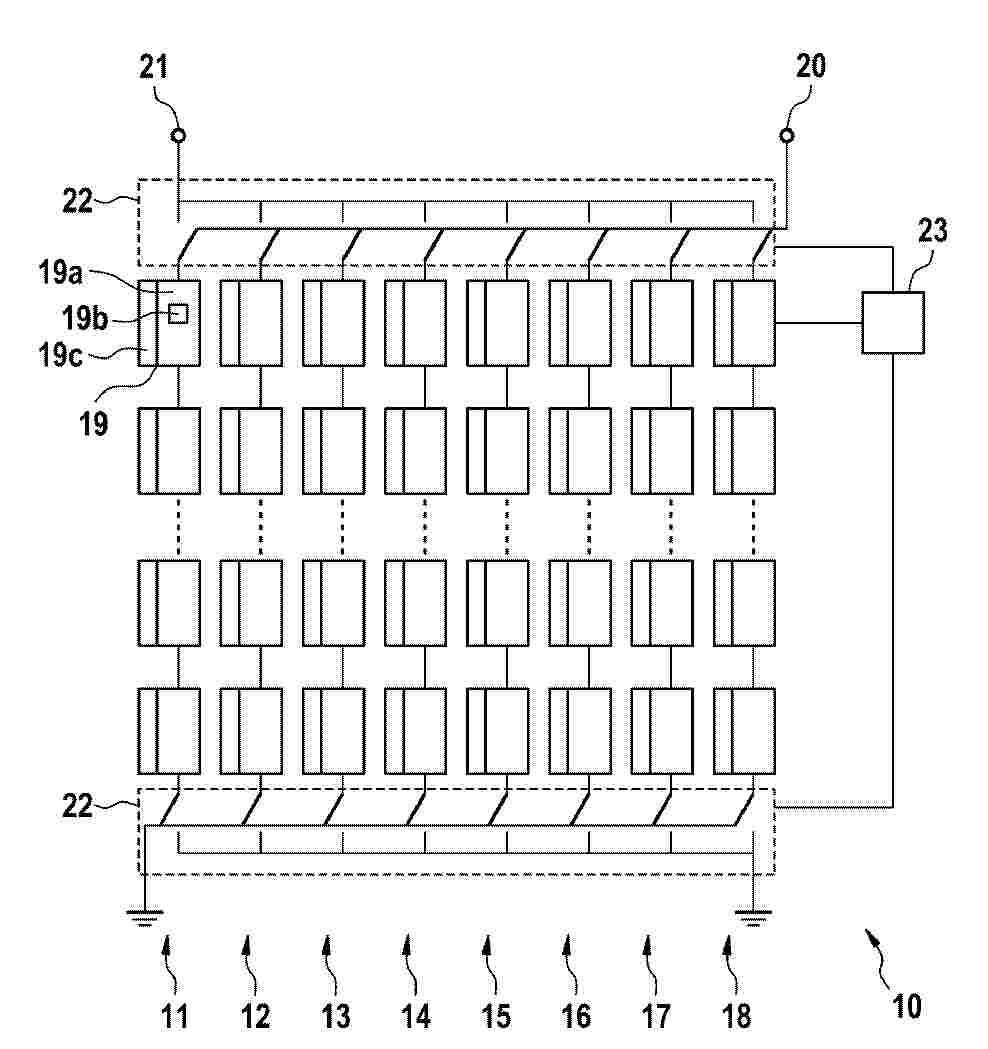
Resumen de: DE102024137426A1
Die Erfindung betrifft eine Zweitlebensdauer-Batterie (10) aufweisend- eine Vielzahl von Batteriezellengruppen (19), die in mehreren Strängen angeordnet sind und von denen jede eine Vielzahl von wiederverwendeten Zellen (19b) enthält, die identische oder ähnliche elektrochemische Eigenschaften aufweisen;- ein selektives Schaltsystem (22) mit unabhängigen elektrischen Verbindungen und Schaltern, die eine Manipulation der genannten Batteriezellengruppen (19) auf einer Strang-für-Strang-Basis ermöglichen; und- eine Steuereinheit (23), die mit den Batteriezellengruppen (19) und dem selektiven Schaltsystem (22) verbunden ist,- wobei die Steuereinheit (23) eingerichtet ist, einen Zellenausgleich der Batterie (10) durchzuführen:- durch Manipulieren des selektiven Schaltsystems (22) mit einem der Modi Laden, Entladen oder Ruheposition, so dass die Spannung jedes Stranges auf einen vorbestimmten Spannungswert der Klemmenspannung eingestellt wird,- durch Verwendung des vorbestimmten Spannungswertes als eine Ausgleichsreferenz, wobei der vorbestimmte Spannungswert ein mittlerer Spannungswert (40) der Zellenspannungen aller wiederverwendeten Zellen (19b) ist, die in den Batteriezellengruppen (19) enthalten sind.
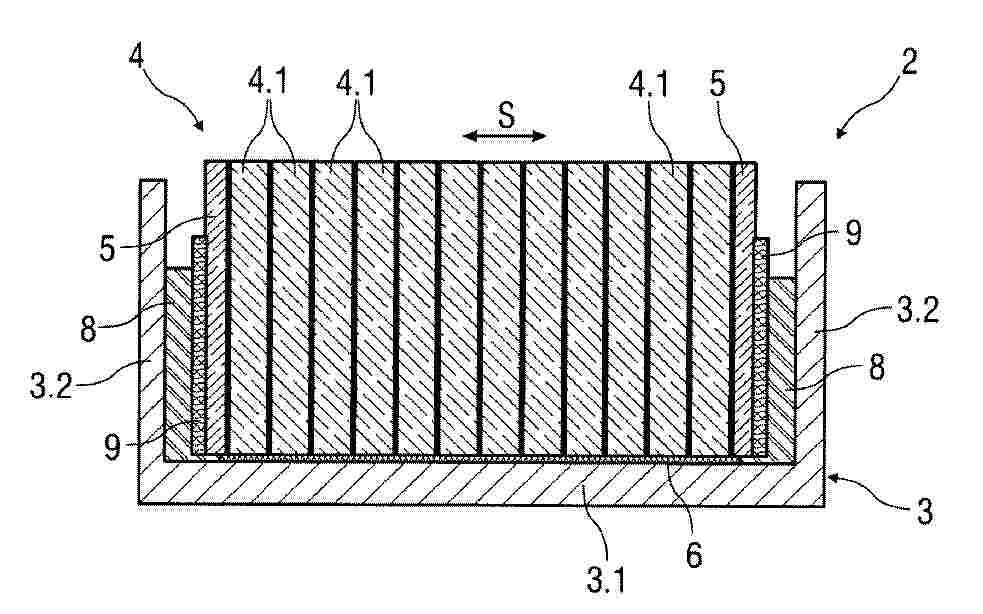
Resumen de: DE102024004401A1
Die Erfindung betrifft einen elektrischen Energiespeicher (2) für ein Fahrzeug (1) mit zumindest einem in einem Gehäuse (3) angeordneten Zellmodul (4), welches eine Anzahl von elektrisch miteinander verbundenen Einzelzellen (4.1) aufweist, die einen Zellstapel bilden, wobei in Stapelrichtung (S) jeweils endseitig eine Endplatte (5) an dem Zellstapel angeordnet ist. Erfindungsgemäß ist vorgesehen, dass an einer freien Flachseite der jeweiligen Endplatte (5) zwischen dieser und dem Gehäuse (3) ein Kompressionselement (9) zur Kompensation eines Zelldickenwachstums der Einzelzellen (4.1) angeordnet ist. Weiterhin betrifft die Erfindung ein Verfahren zur Herstellung des elektrischen Energiespeichers (2) und ein Fahrzeug (1) mit einem solchen.
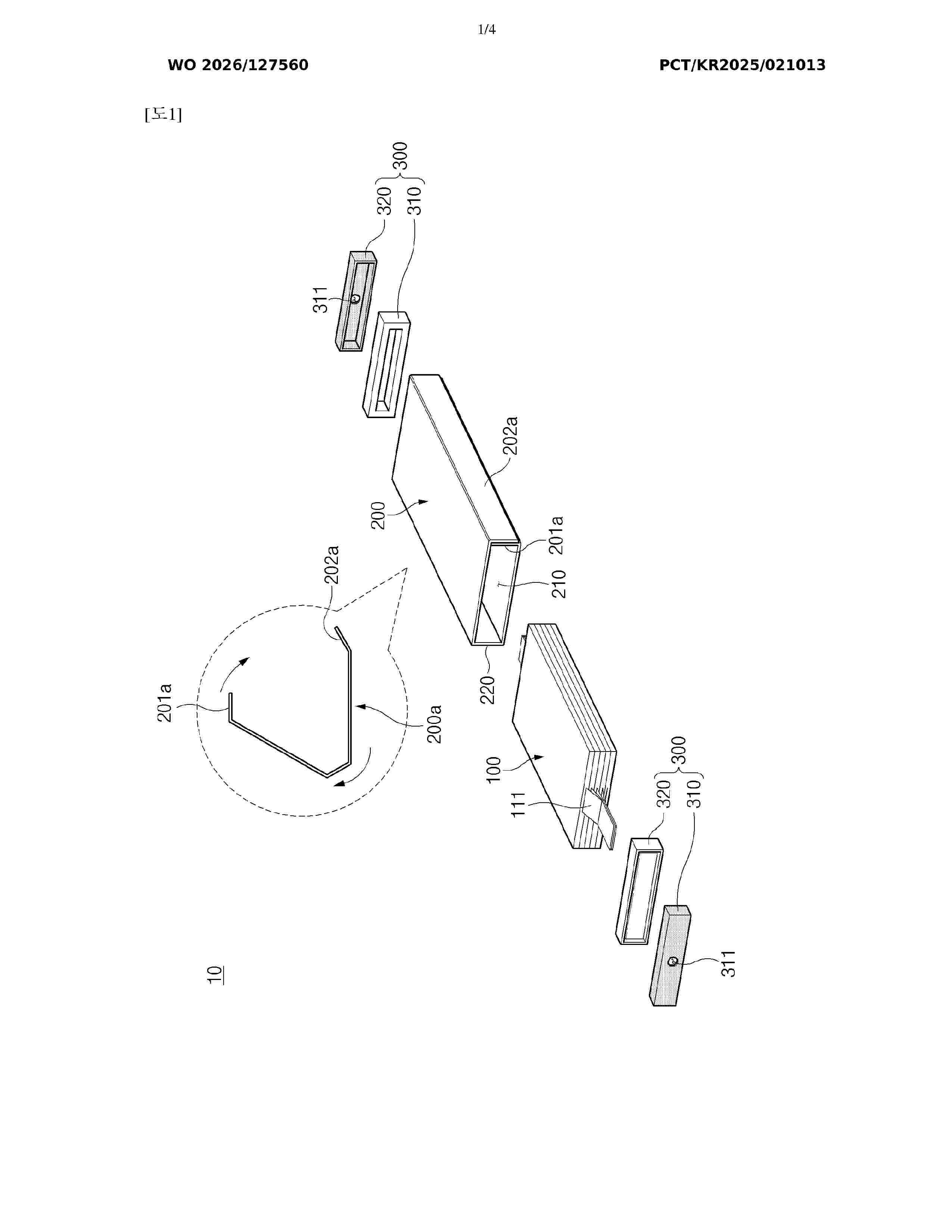
Resumen de: WO2026127560A1
The present invention relates to a chargeable/dischargeable secondary battery. The secondary battery, according to one embodiment of the present invention, may comprise: an electrode assembly; a sheet-type exterior material provided with an inner space for receiving the electrode assembly therein, and an exterior material opening enabling the inner space to communicate with the outside; a cap coupled to the sheet-type exterior material by being inserted into the exterior material opening; and a pressing member receiving heat and expanding, thereby pressing a coupling portion where the sheet-type exterior material and the cap are coupled.
Resumen de: WO2026127422A1
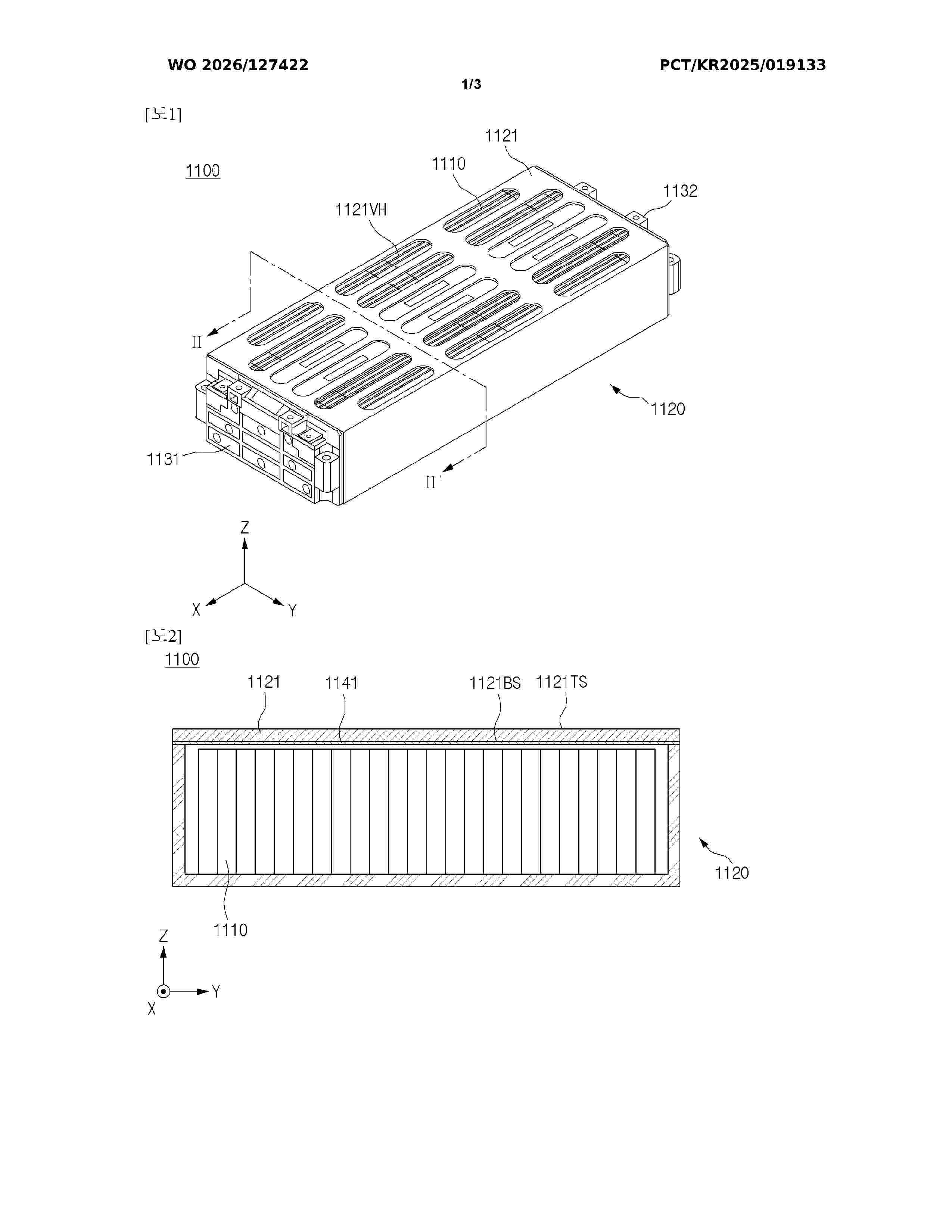
A battery module according to example embodiments may include battery cells, a module frame, and a first thermal barrier, wherein the module frame accommodates the battery cells, the module frame includes a top plate including vent holes, and the first thermal barrier may be present between the battery cells and the top plate.
Resumen de: WO2026128218A1
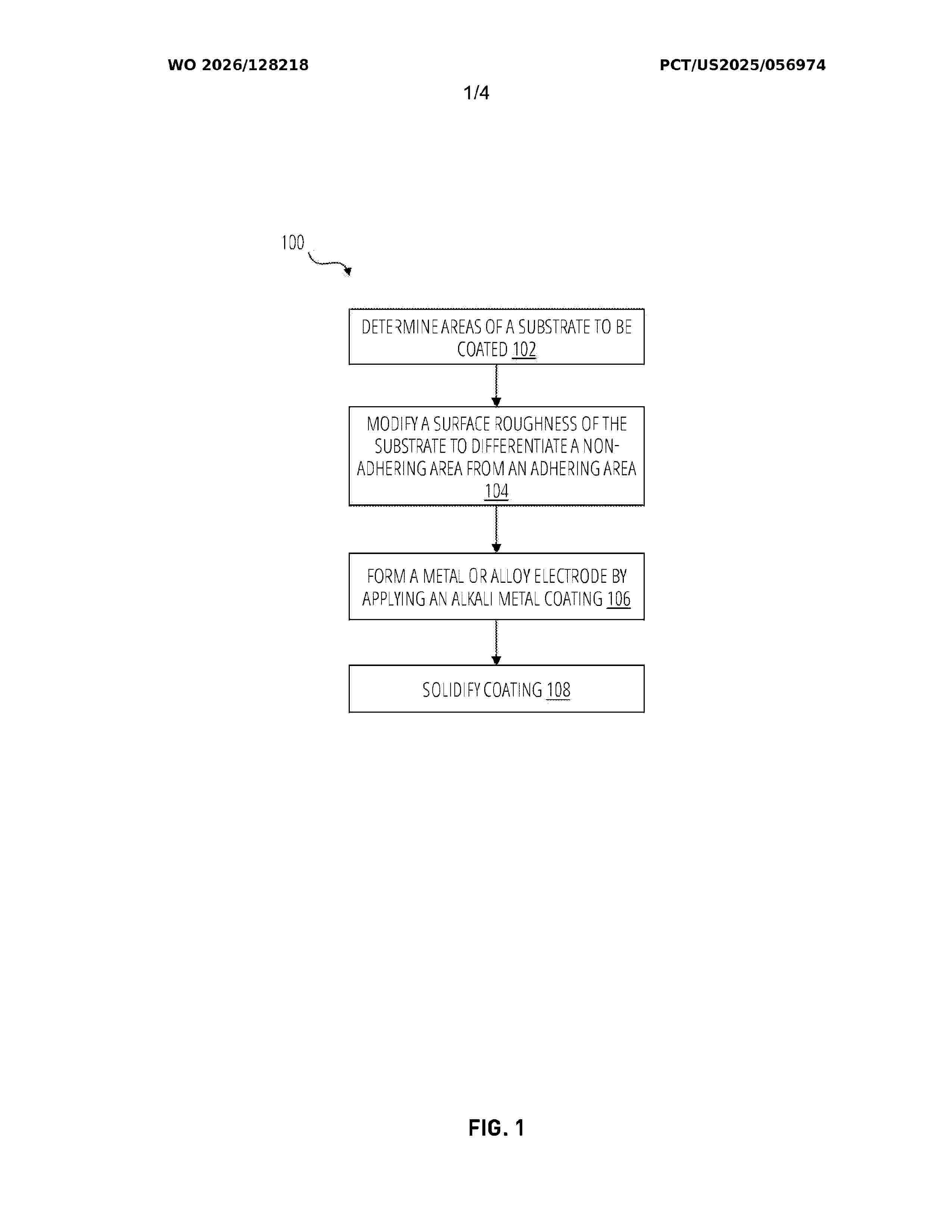
A process is described to selectively coat an alkali metal or alkali metal alloy onto a battery electrode substrate. The process includes roughening at least a first portion of a substrate to a first average roughness range that prevents adherence of a coating comprising a molten lithium or other alkali metal or alkali metal alloy. The coating is adhered to a portion of the substrate that is not roughened to the first average roughness range and is not adhered to the first portion of the anode substate. The portion to which the coating does not adhere has an average roughness range that is between 0.3 microns and 10 microns.
Resumen de: WO2026125892A1
A method for preparing a composite cathode active material includes: providing a carbon material having: a specific surface area of > 350 m2/g, a cumulative pore volume of > 0.34 cm3/g, and an ID/IG ratio of < 0.80, where the ID/IG ratio represents an intensity ratio of D band to G band in Raman spectroscopy; mixing the carbon material with a precursor source material for preparing a cathode active material having a formula of LiMPO4 to obtain a mixture, where an amount of the carbon material is in a range of 0.5 to 4 wt% based on a total weight of 1 mol of the cathode active material; adding the mixture into water to form a slurry; grinding the slurry, and spray drying the slurry to obtain a precursor material; and calcinating the precursor material to obtain the composite cathode active material.
Resumen de: DE102024138077A1
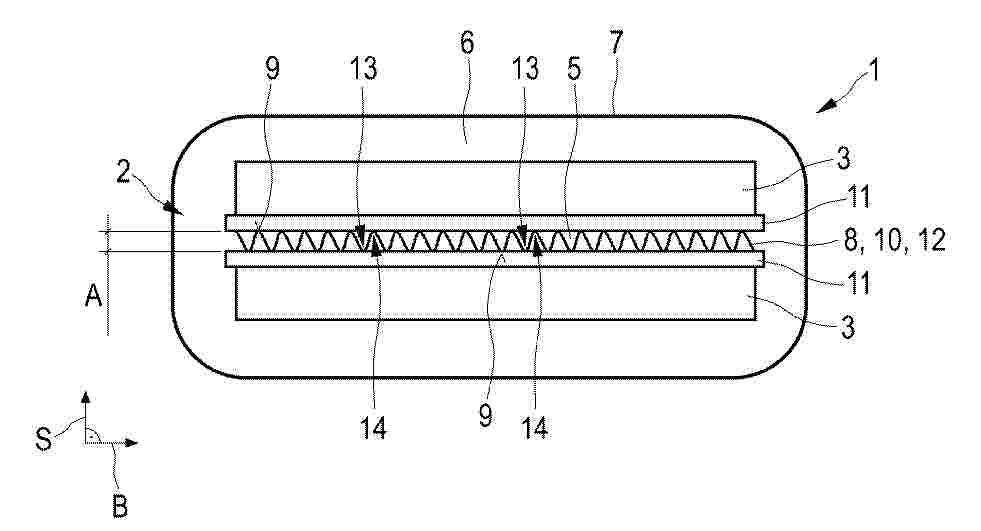
Die Erfindung betrifft einen Batteriepack (1) für ein Bearbeitungssystem (100), wobei der Batteriepack (1) eine Zellanordnung (2) aufweist sowie einen Gehäuseinnenraum (6) zum Aufnehmen der Zellanordnung (2) und ein den Gehäuseinnenraum (6) begrenzendes Gehäuse (7), wobei die Zellanordnung (2) eine Vorspanneinrichtung (8) aufweist, wobei die Vorspanneinrichtung (8) dazu ausgebildet ist, eine auf eine Festkörperbatteriezelle (3) der Zellanordnung (2) wirkende Vorspannkraft derart zu erzeugen, dass bei Ausdehnung des Gehäuses (7) relativ zu der Zellanordnung (2) die Vorspannkraft einen bestimmten Mindestwert nicht unterschreitet.
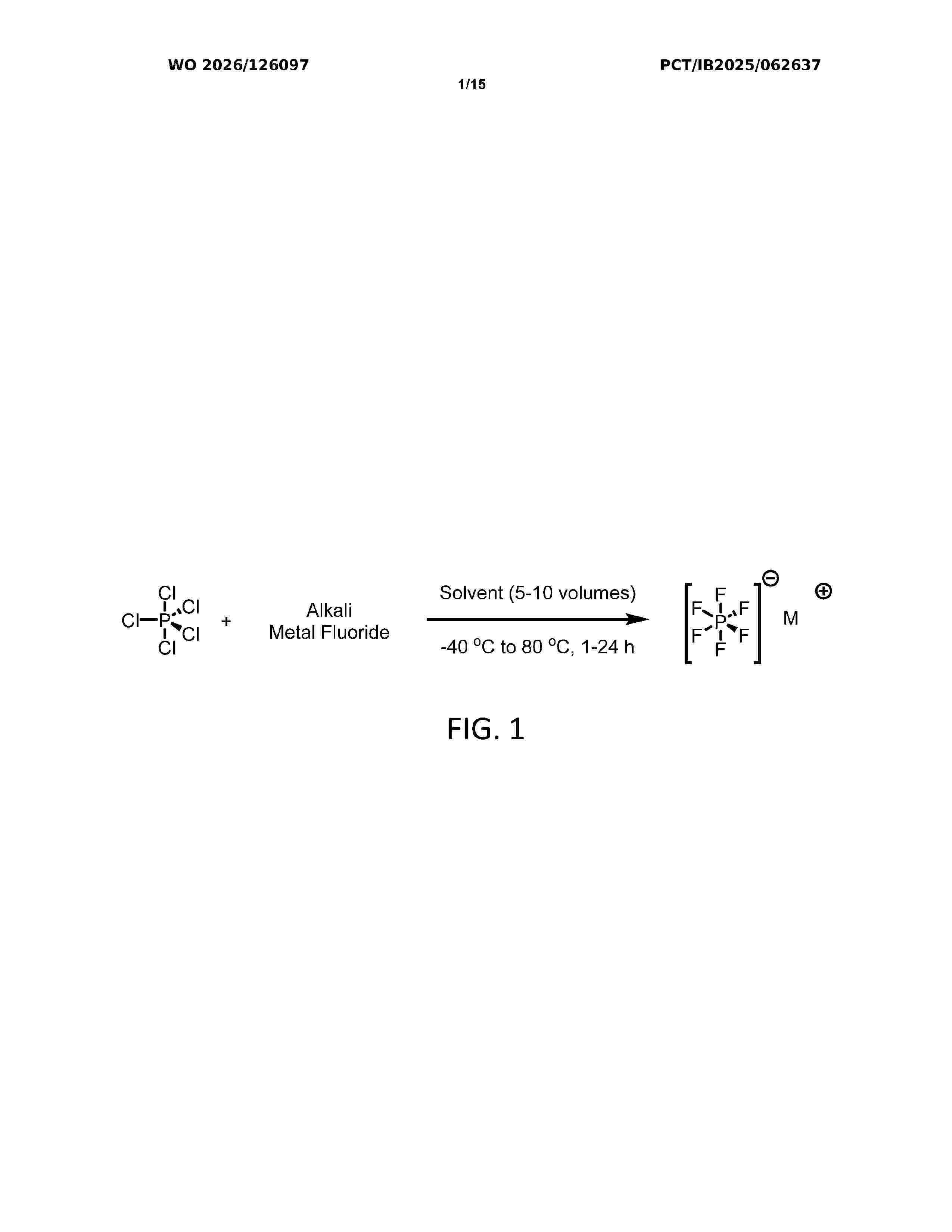
Resumen de: WO2026126097A1
Provided herein are methods and processes useful in producing battery electrolyte precursors and battery electrolytes using metal fluorides.
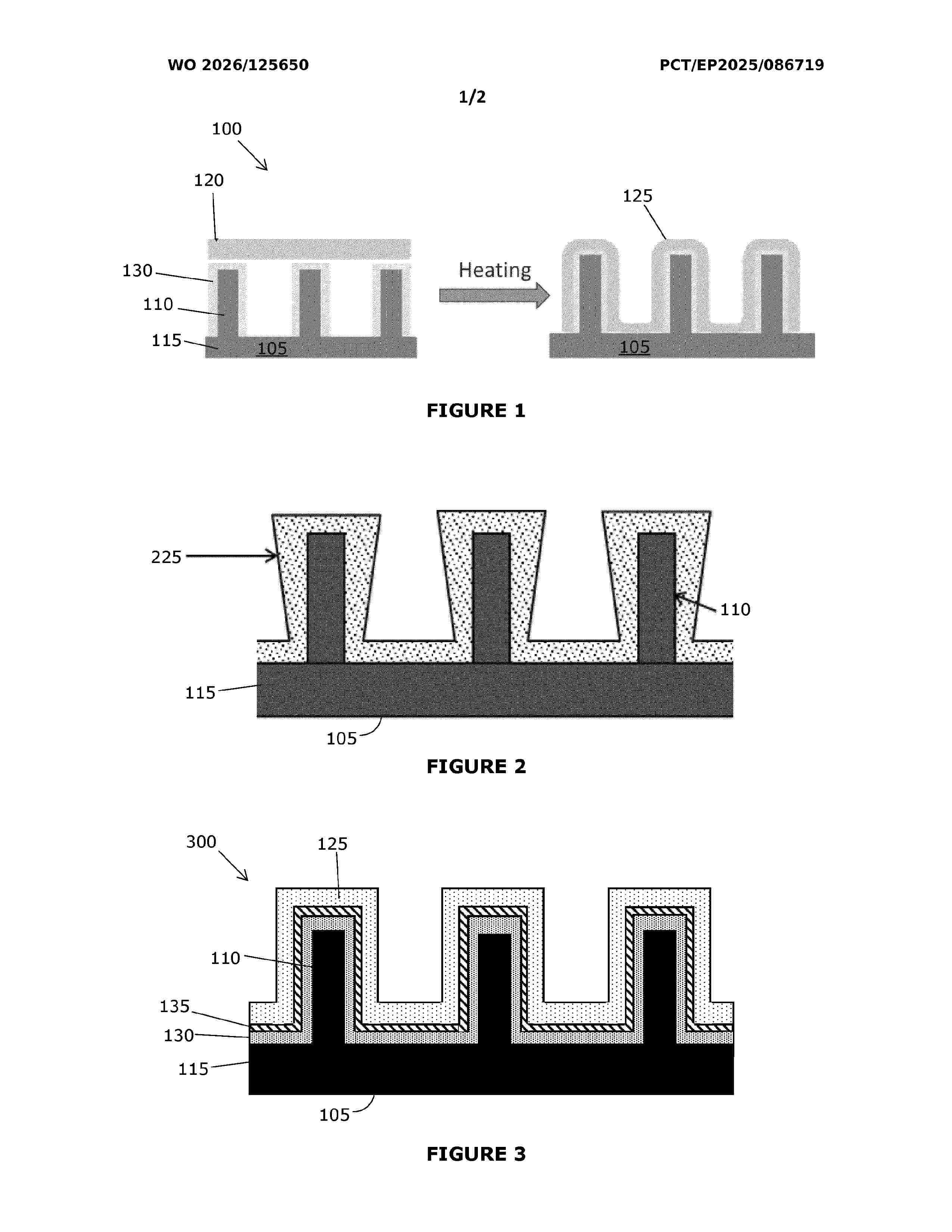
Resumen de: WO2026125650A1
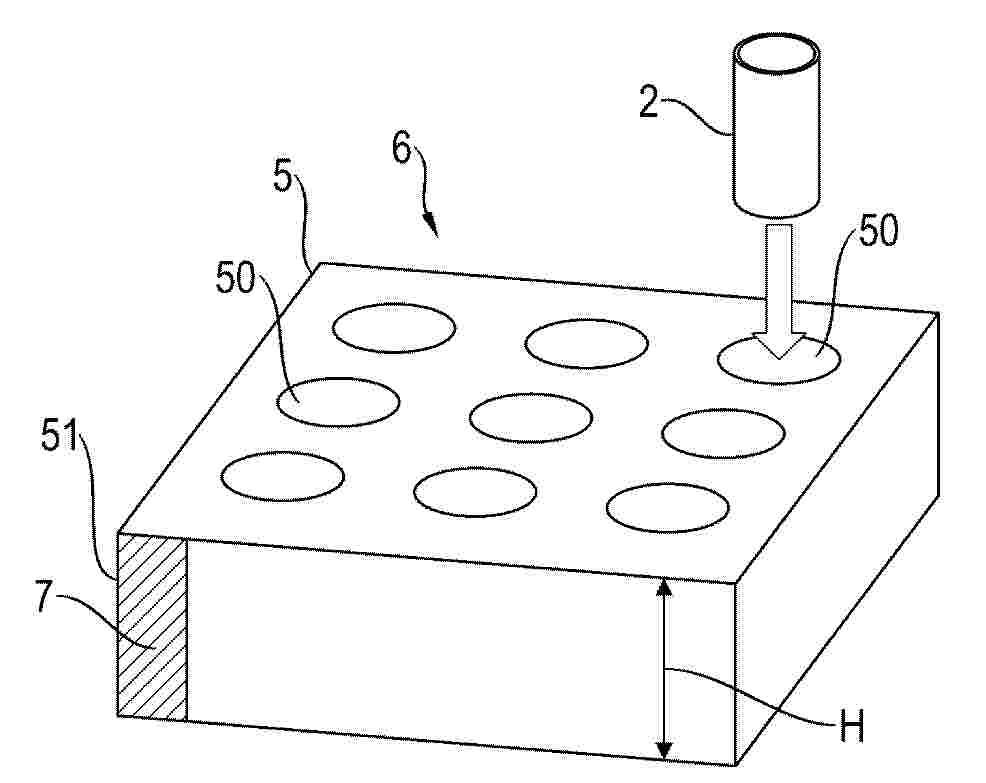
The present disclosure provides a method for manufacturing a component of a secondary battery, a component for a secondary battery, and a battery cell comprising the component. The method comprises: providing an electrically conductive 3D current collector substrate comprising a plurality of electrically conductive protrusions extending from a base of the substrate, wherein a metal anode is provided as a layer of electrode active material on the 3D current collector, and wherein the metal anode comprises an alkali metal or an alkaline earth metal; coating the 3D current collector with a polymer, wherein the polymer is capable of at least partially conducting ionically and/or forming a gel, and/or forming a porous structure; and contacting the polymer coating with a liquid electrolyte to at least partially convert the polymer to an ionically conductive gel or to form an ungelled porous structure which at least partially holds the liquid electrolyte.
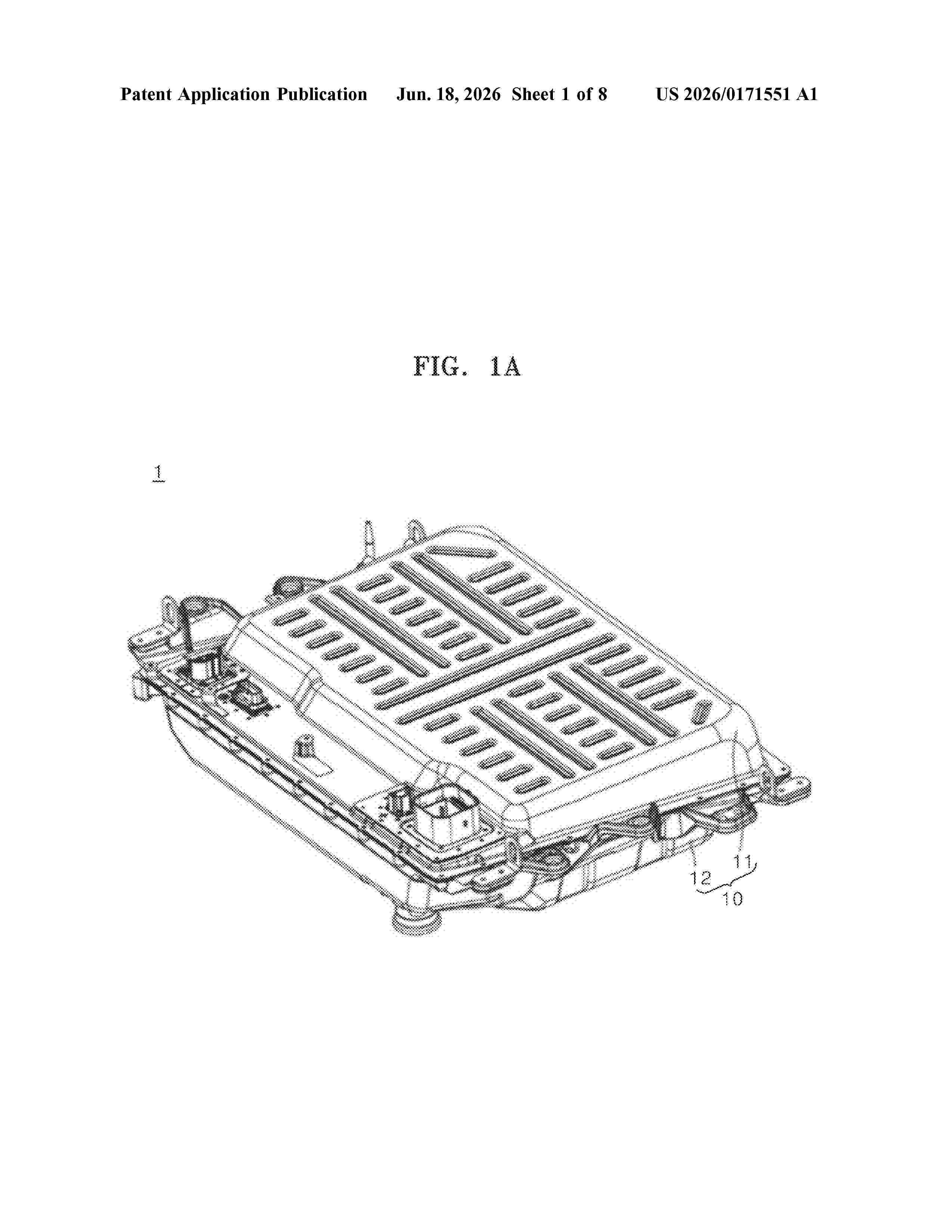
Resumen de: US20260171551A1
A battery module includes a plurality of battery cells and an insulating unit between adjacent ones of the battery cells. The insulating unit includes: a first sheet including an insulating material; a second sheet facing the first sheet and including an insulating material; and an adhesive portion between the first sheet and the second sheet and coupling the first sheet and the second sheet to each other. A support portion protrudes from one surface of the adhesive portion facing the first sheet and is inserted into the first sheet.
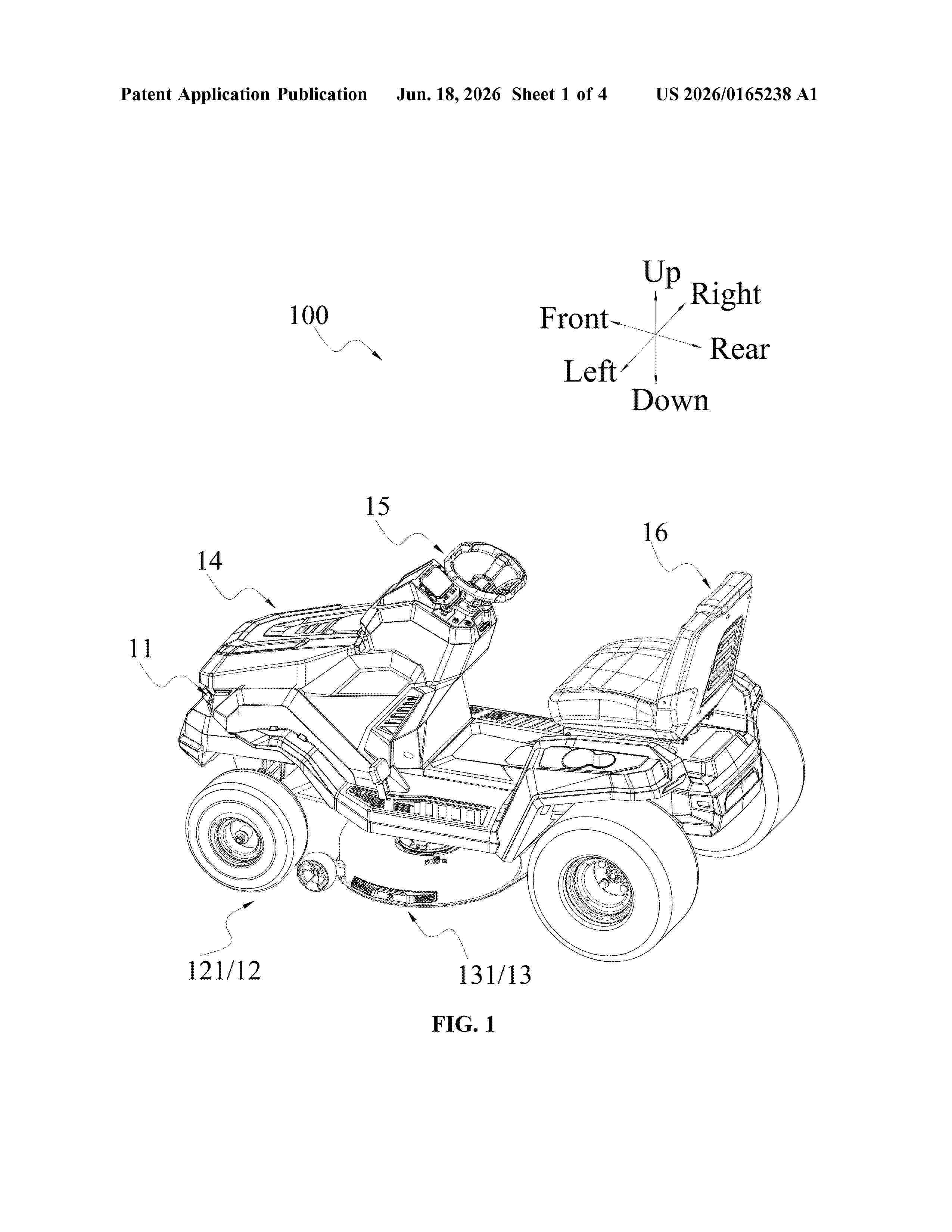
Resumen de: US20260165238A1
A mower includes: a battery compartment for mounting at least one battery pack; a cutting assembly including a cutting motor; a traveling assembly including a traveling motor; a battery management unit at least used for monitoring the discharge capacity of the battery pack; and a control device electrically connected to the cutting motor, the traveling motor, and the battery management unit. The battery management unit is configured to determine the current discharge capacity parameters of the battery pack in at least two manners and output the minimum parameter among the determined current discharge capacity parameters of the battery pack. The control device is configured to acquire the current discharge capacity parameter of the battery pack outputted by the battery management unit and according to the outputted current discharge capacity parameter of the battery pack, determine control information adapted to the cutting motor and the traveling motor.
Nº publicación: WO2026125041A1 18/06/2026
Solicitante:
CODRONIC GMBH [DE]
CODRONIC GMBH
Resumen de: WO2026125041A1
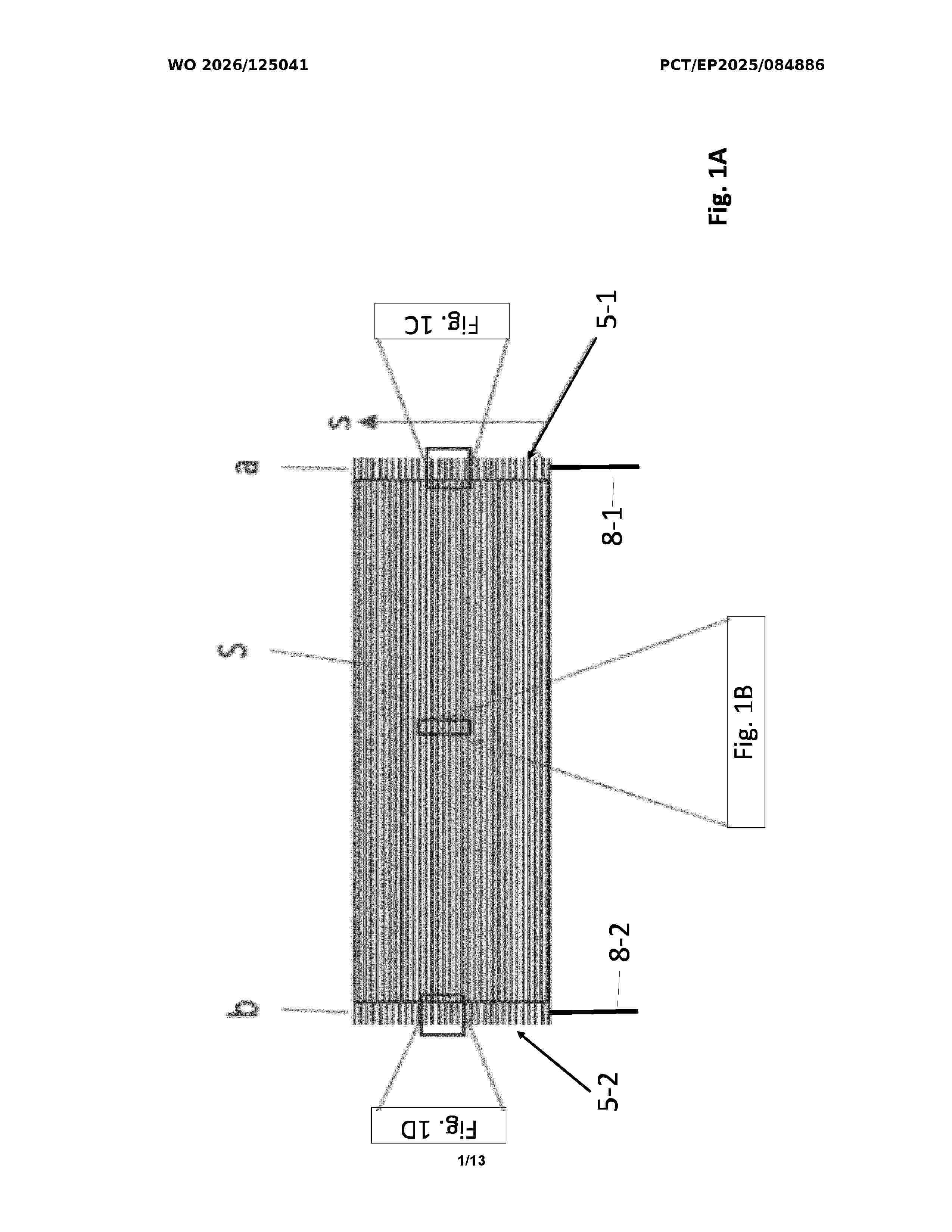
The invention relates to an electrode assembly for a battery cell, comprising a plurality of first electrodes (1) and a plurality of second electrodes (2) which, in the electrode assembly, are alternately stacked one on top of the other in a stacking direction (s) or wound into an electrode roll (R) and alternately follow one another in a radial direction (r), wherein the first electrodes (1) and the second electrodes (2) each have an electrically conductive carrier layer (3) and a coating (4) made of an active material on at least one side of the carrier layer (3), and an edge section of each carrier layer (3) is designed as a contact section (5) which is at least partially free of the coating (4). In order to make extensive contact between the first electrodes (1) and between the second electrodes (2), a respective electrically conductive material (6-1; 6-2) is introduced between the contact sections (5-1) of adjacent first electrodes (1) and between the contact sections (5-2) of adjacent second electrodes (2) in order to electrically conductively connect the contact sections (5-1) of the first electrodes (1) to one another and the contact sections (5-2) of the second electrodes (2) to one another. This allows for extensive contact between the electrodes (1, 2) while avoiding excessively high current densities at the contact point. The invention further relates to a method for producing an electrode assembly for a battery cell and to a battery cell having an electrode assem
 BOPI
BOPI
 Sede Electrónica