Si deseas distinguir tus productos, servicios o ambos de los de otra empresa, es posible que necesites una marca o nombre comercial. Descubre qué son, en qué consiste su procedimiento de registro y qué implica.

Información sobre los plazos de presentación de solicitudes de transformación de marcas de la Unión Europea en marca nacional española. Más información


Si tienes un nuevo dispositivo, producto o procedimiento que resuelva un problema técnico o tenga una ventaja práctica, existen distintas formas de protegerlo en España y en otros países. Descubre cómo hacerlo.

¿Tu innovación reside en la estética, la ornamentación o la apariencia de tu producto? Protégela mediante un diseño industrial. Descubre qué derechos confiere el registro y cómo realizar la tramitación.

Las indicaciones geográficas protegen el nombre de un producto originario de una zona geográfica, a la cual le debe una determinada calidad, reputación u otra característica. Descubre qué son, en qué consiste su procedimiento de registro y qué beneficios conceden.

Las patentes publicadas en todo el mundo son una valiosa fuente de información científica, técnica y comercial.

Si eres emprendedor/a o una empresa y quieres potenciar y mejorar la rentabilidad de tu negocio protegiendo de forma adecuada los activos intangibles de tu organización, en este espacio encontrarás lo necesario.


 1890
resultados
1890
resultados
 Última actualización
30/06/2026 [12:07:00]
Última actualización
30/06/2026 [12:07:00]


 Resultados 1275 a 1300 de 1890

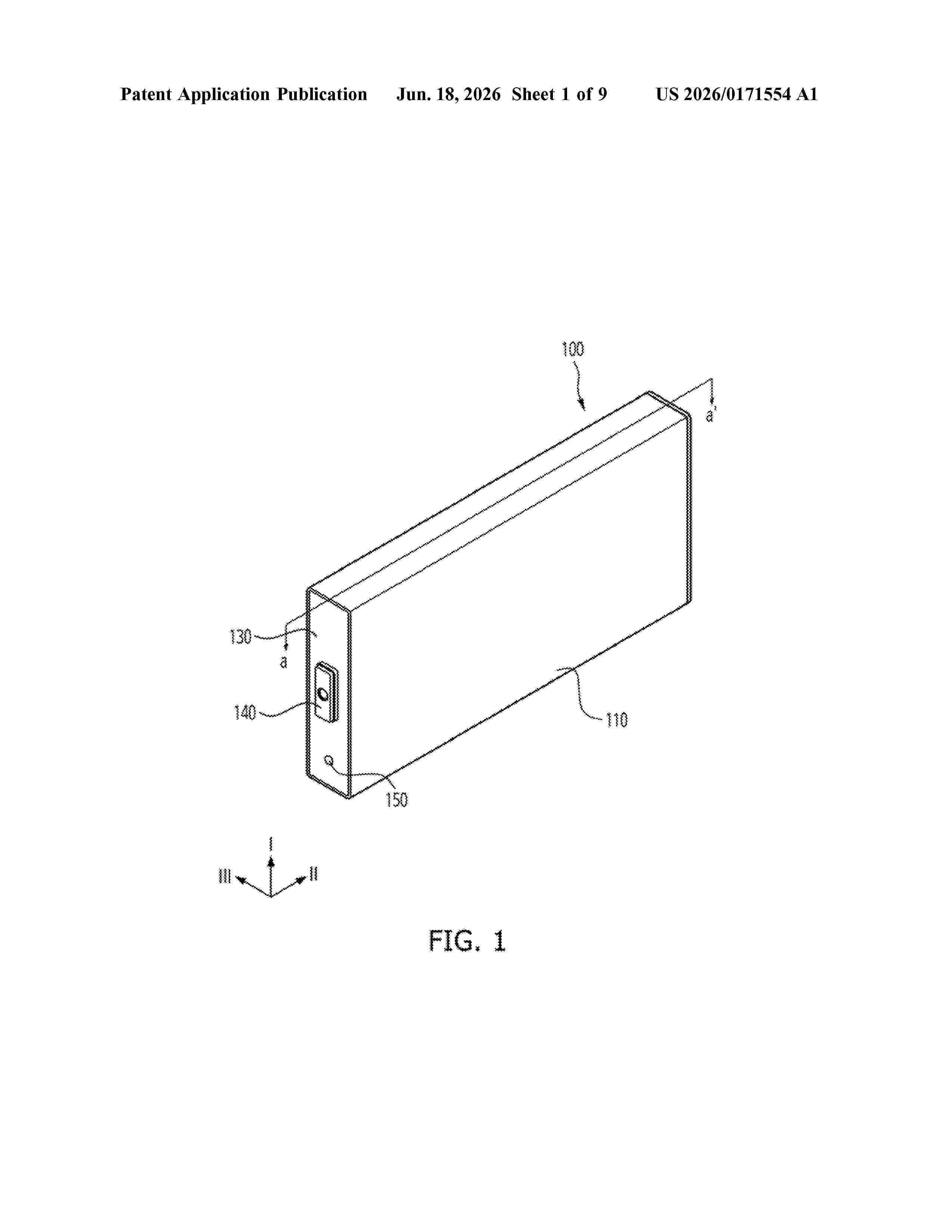
Resumen de: US20260171554A1
0000 A secondary battery includes an electrode assembly, a case having an opening on at least one side surface, the case accommodating the electrode assembly, and a cap plate coupled to the opening of the case, wherein the case includes a weld portion having a curved pattern on at least one surface of the case.

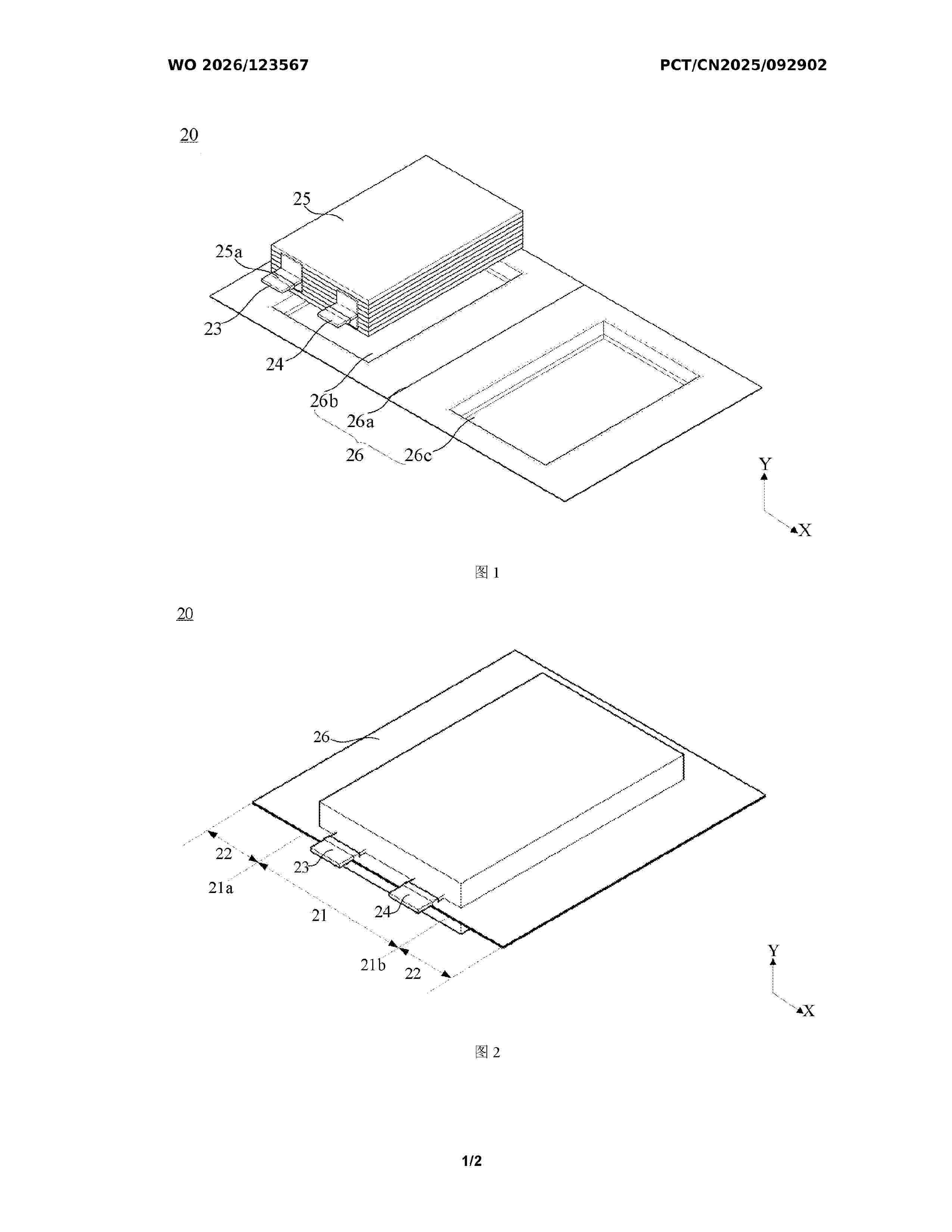
Resumen de: WO2026123567A1
The present application relates to a packaging mechanism, a battery production system, and a battery packaging method. The packaging mechanism comprises a first packaging member (100) and a second packaging member (200), and the first packaging member (100) and the second packaging member (200) are arranged opposite to each other and are used for jointly packaging a battery (20). The first packaging member (100) comprises a primary sealing head (110) and a secondary sealing head (120), and the hardness of the primary sealing head (110) is less than the hardness of the secondary sealing head (120). The battery production system comprises the packaging mechanism. The battery packaging method comprises the following steps: driving the primary sealing head (110) and the second packaging member (200) to package a first sealing region (21); and driving the secondary sealing head (120) and the second packaging member (200) to package a second sealing region (22). In the packaging mechanism, battery production system, and battery packaging method, when the primary sealing head (110) is pressed onto a region where a tab adapter piece is located, the primary sealing head (110) is capable of undergoing relatively large elastic deformation.
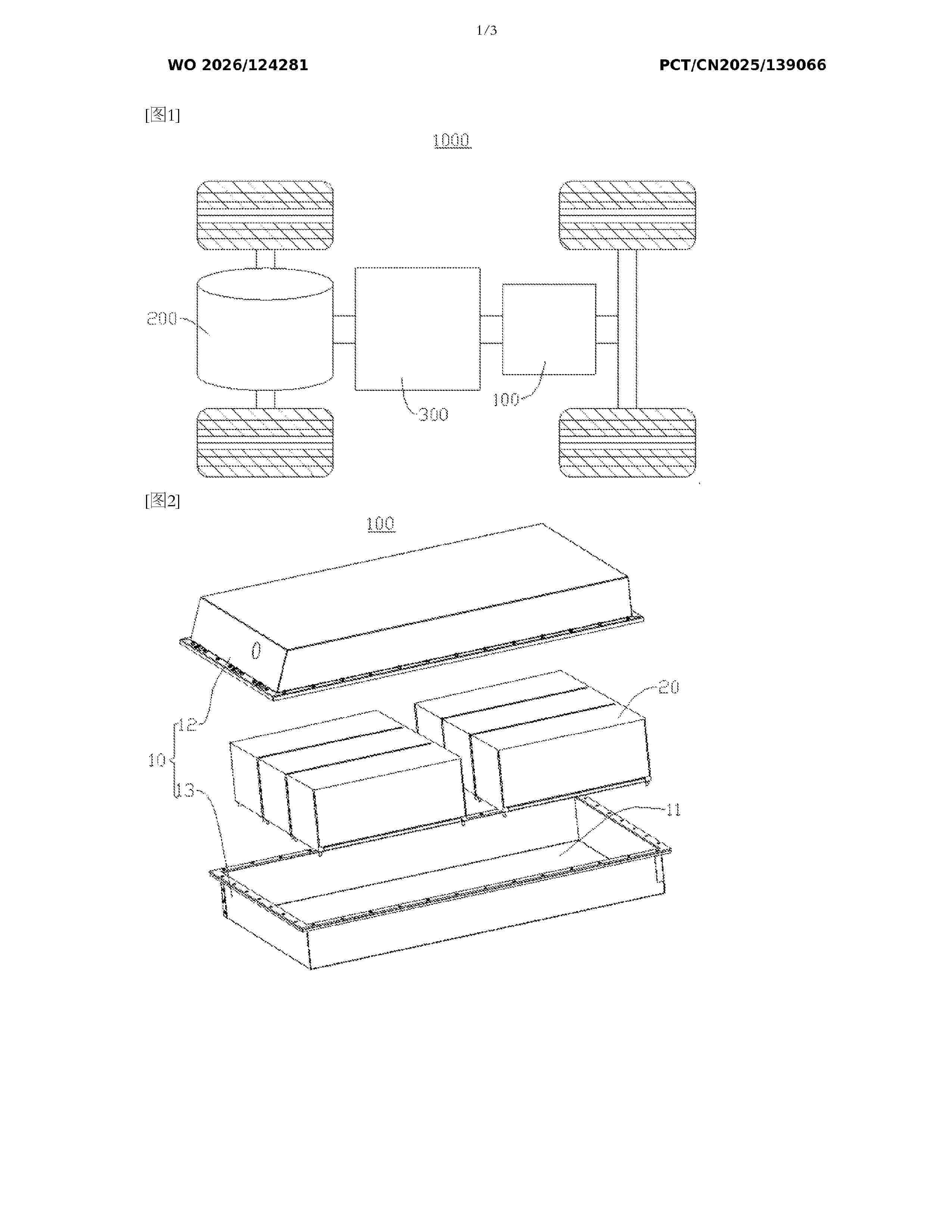
Resumen de: WO2026124281A1
A secondary battery and an electric device, relating to the technical field of secondary batteries. NaaMbNicFedMneO2 is used as a positive electrode active material. A propylene carbonate compound is used as an electrolyte solvent, wherein the activity of H in the propylene carbonate compound is low, such that the propylene carbonate compound has good oxidation resistance, thereby inhibiting the formation of RH+ to a certain extent, and achieving the effect of inhibiting gas generation from reduction at a negative electrode. Moreover, when a nickel-iron-manganese layered metal oxide is used as the positive electrode active material, a cyclic sulfate compound is used as an additive, so that a CEI film can be formed on a positive electrode, thereby inhibiting gas generation from the oxidative decomposition of an electrolyte by a sodium layered oxide, and reducing the formation of RH+. Moreover, since the reduction potential of the cyclic sulfate compound is higher than that of the propylene carbonate compound, the cyclic sulfate compound can form an SEI film before the reduction of the propylene carbonate compound at the negative electrode, thereby inhibiting the formation of the oxidation product RH+ and gas generation from reduction of the electrolyte solvent at the negative electrode.
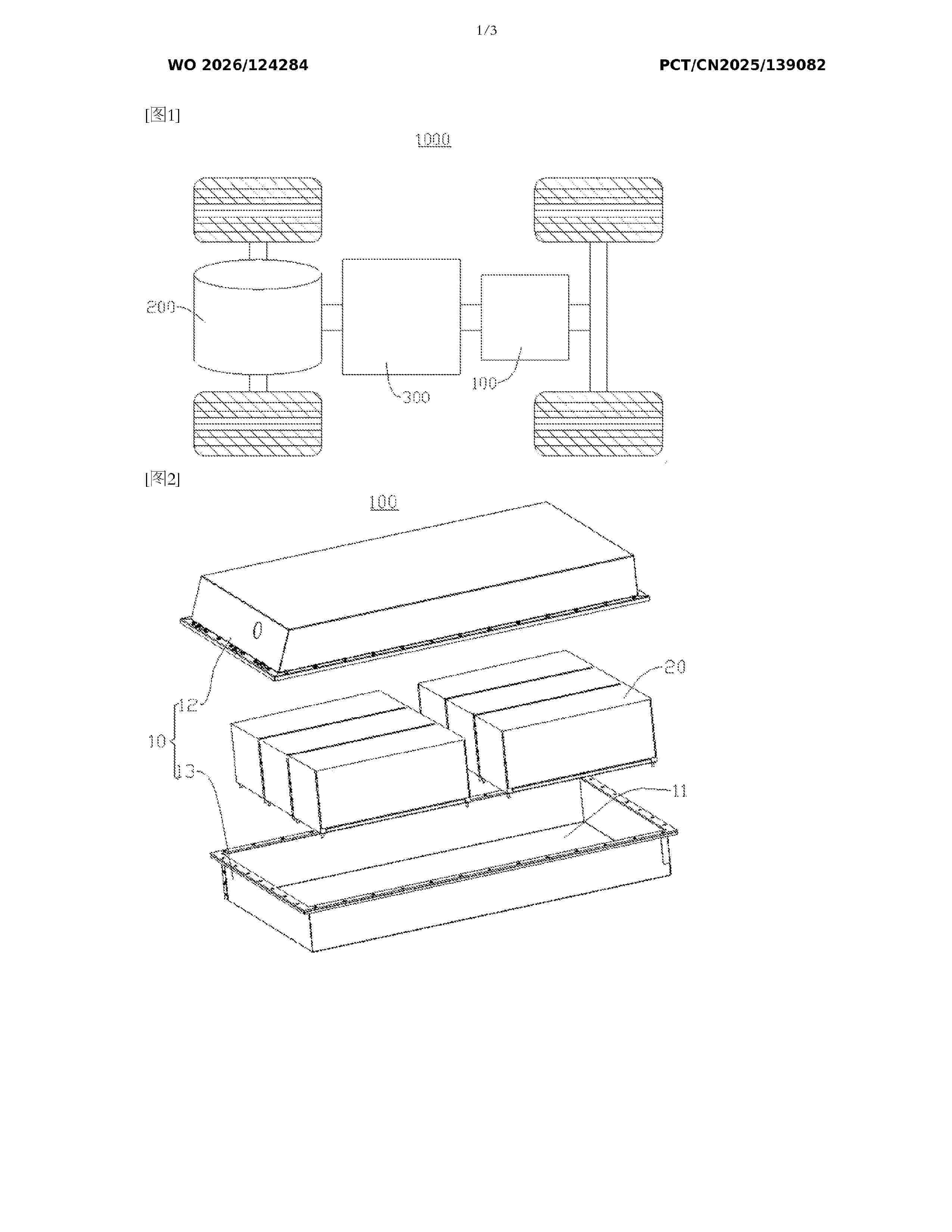
Resumen de: WO2026124284A1
A secondary battery and an electric device, relating to the technical field of secondary batteries. When a positive electrode active material is a nickel-iron-manganese layered metal oxide, a cyclic sulfate ester compound is capable of forming films on both a positive electrode sheet and a negative electrode sheet, and a CEI film formed on the positive electrode sheet suppresses a side reaction between the nickel-iron-manganese layered metal oxide and a non-aqueous electrolyte, thereby improving the cycle performance of the secondary battery and reducing gas generation during high-SOC storage. Moreover, a difluorooxalatoborate salt compound, which has a higher reduction potential than the cyclic sulfate ester compound, is selected, the difluorooxalatoborate salt compound is capable of preferentially forming an inorganic SEI film on the surface of a negative electrode sheet prior to the cyclic sulfate ester compound, and the inorganic SEI film is distributed in a dot-like manner to occupy some of surface active sites of a negative electrode active material, thereby reducing extensive formation of an organic polymer-type SEI film by the cyclic sulfate ester compound on the negative electrode sheet, so that the overall impedance of the SEI film is low, reducing the DCR of the secondary battery, and isolating the electrolyte from a negative electrode to suppress gas generation caused by reduction at the negative electrode.
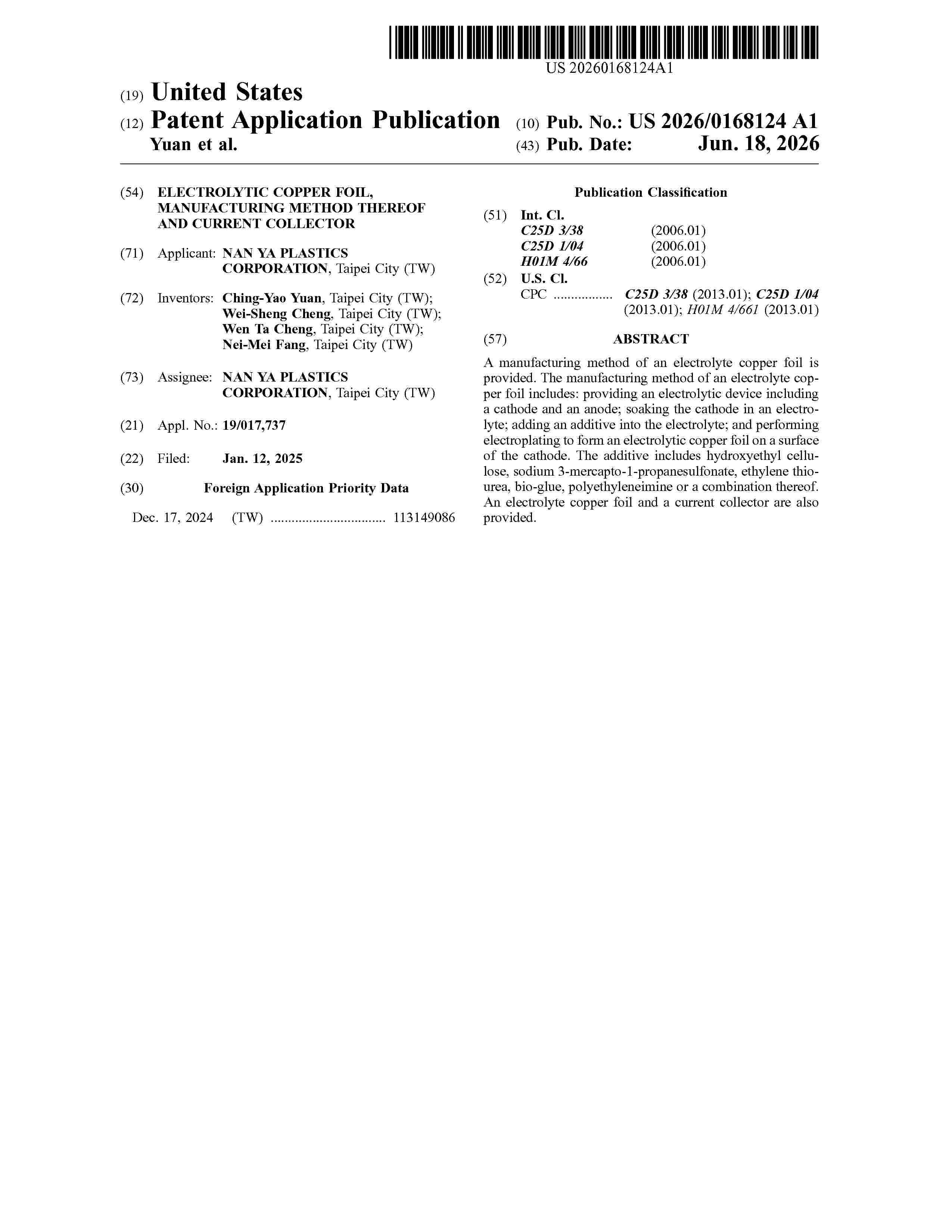
Resumen de: US20260168124A1
A manufacturing method of an electrolyte copper foil is provided. The manufacturing method of an electrolyte copper foil includes: providing an electrolytic device including a cathode and an anode; soaking the cathode in an electrolyte; adding an additive into the electrolyte; and performing electroplating to form an electrolytic copper foil on a surface of the cathode. The additive includes hydroxyethyl cellulose, sodium 3-mercapto-1-propanesulfonate, ethylene thiourea, bio-glue, polyethyleneimine or a combination thereof. An electrolyte copper foil and a current collector are also provided.
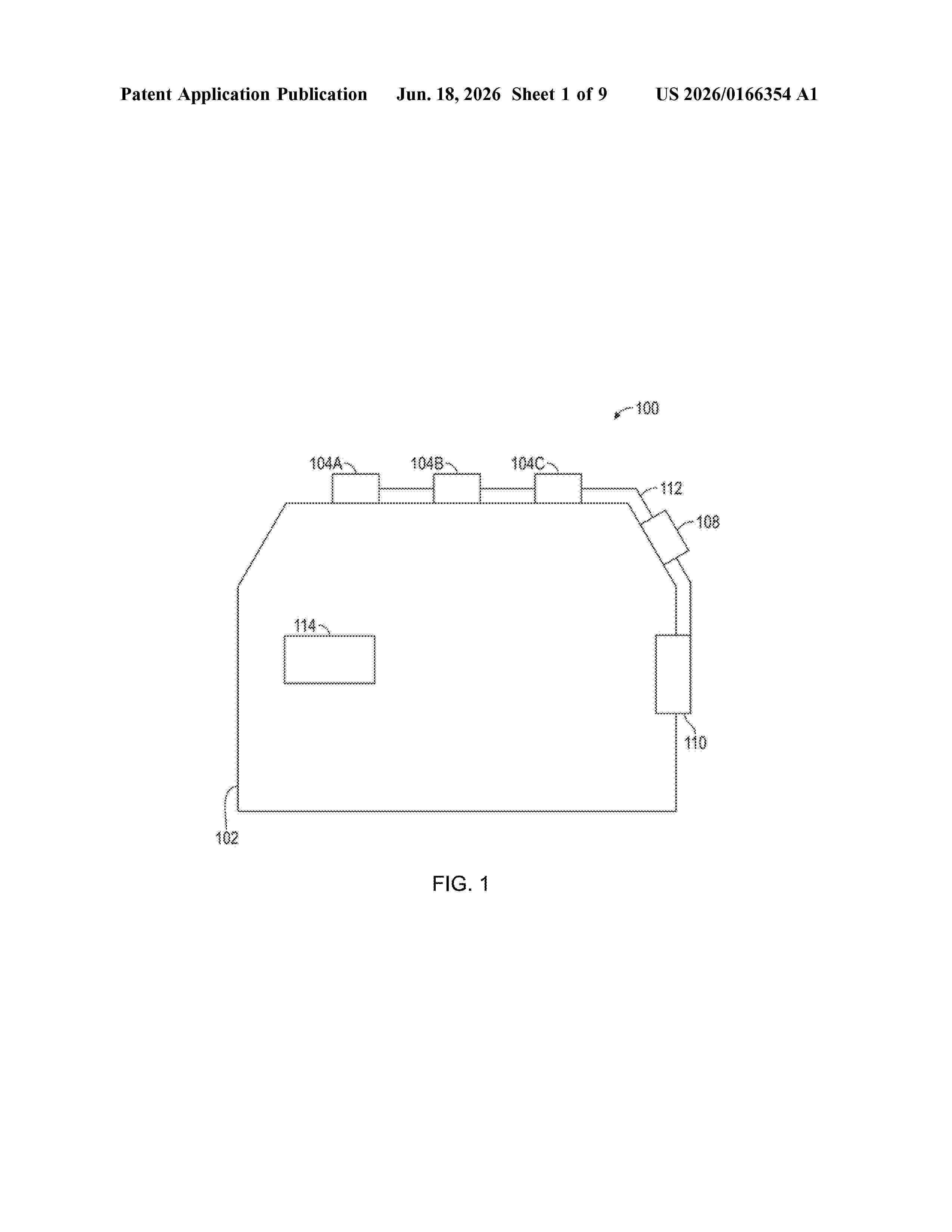
Resumen de: US20260166354A1
0000 The present disclosure provides a fire extinguishing system for lithium-ion battery fires. The system includes a container configured to enclose a lithium-ion battery, at least two canisters mounted on the container, each canister containing an extinguishing agent, at least one sensor configured to detect indicators of a lithium-ion battery fire, and a computing device operatively connected to the canisters and the sensor. The computing device is configured to trigger discharge of the extinguishing agents from the canisters based on signals from the sensor. The system provides a targeted and automated response to lithium-ion battery fires, enhancing safety in environments where such batteries are used.
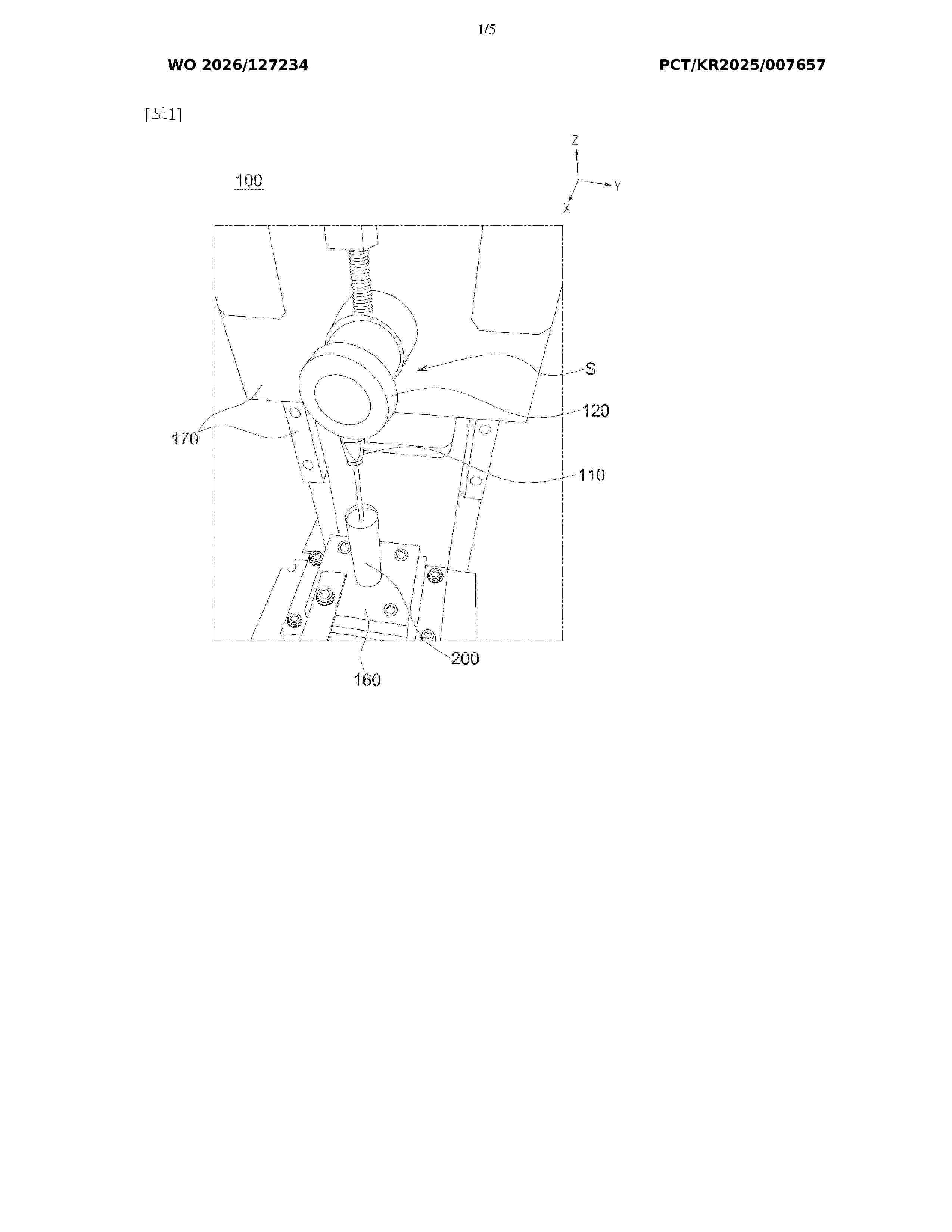
Resumen de: WO2026127234A1
The present invention provides an ultrasonic welding horn for a secondary battery, which is employed in an ultrasonic welding apparatus for a secondary battery, and has a certain length and is disposed vertically, has an upper end connected to an ultrasonic vibrator of the ultrasonic welding apparatus, is inserted into a can of a secondary battery to carry out welding by applying ultrasonic waves while pressing an object to be welded, and has an outer circumference at a lower end, to which a ring structure of a ring shape is detachably coupled.
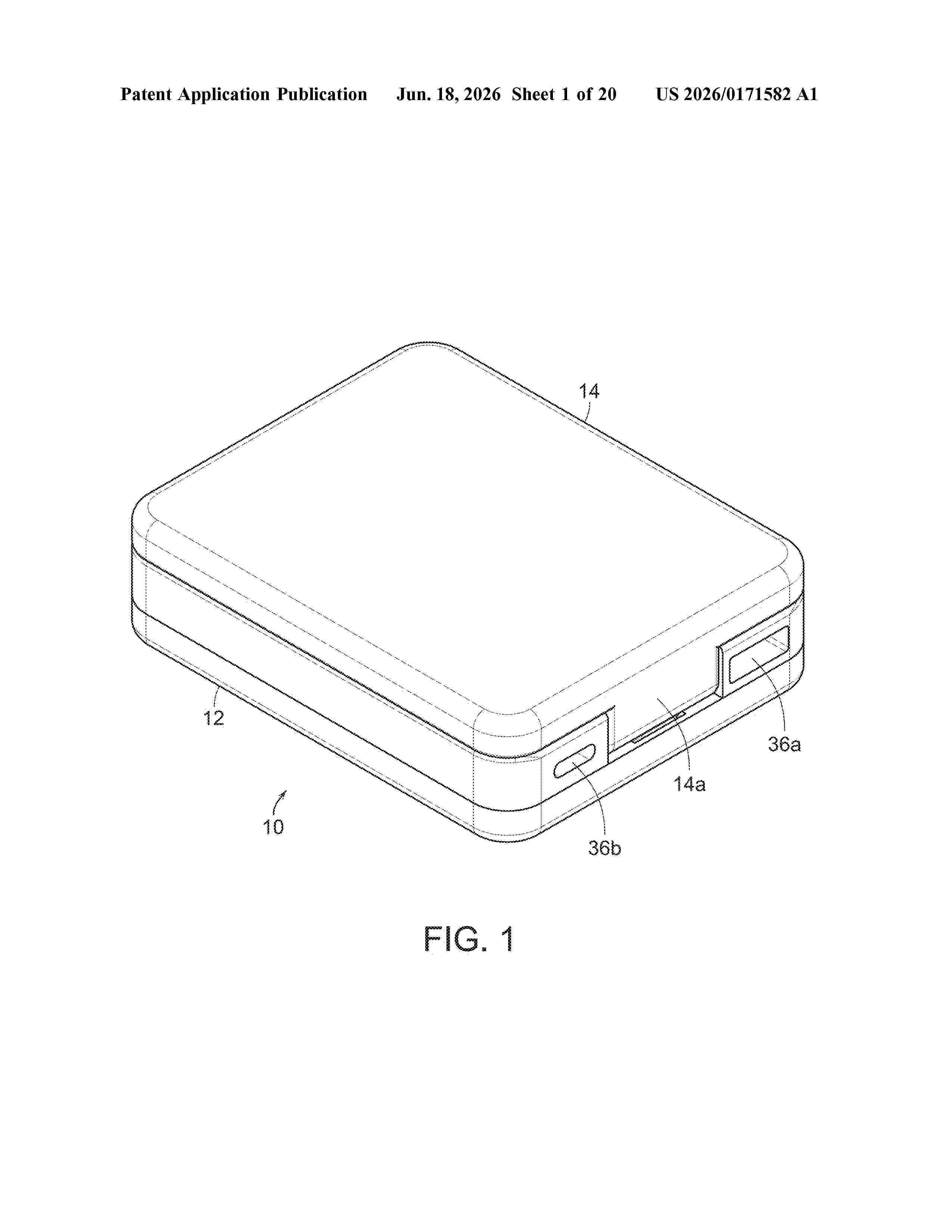
Resumen de: US20260171582A1
0000 A battery case for storing and/or charging swappable batteries comprises a base, a cover, a raising/lowering system and a charging system. The raising/lowering system includes at least one battery carrier, preferably two battery carriers, that can raise the batteries out of recesses when the cover is opened, such that the batteries appear as a pair of wings when raised. The raising/lowering system includes at least one linkage bar that pivots to engage a built-in hinge lever of the cover on one end and the battery carriers on the other end. The charging system comprises at least one electrical contact disposed on at least one battery carrier or the base to contact at least one battery contact of the battery or batteries when the case is opened and/or closed. The battery case allows users to conveniently access, swap, and charge batteries.
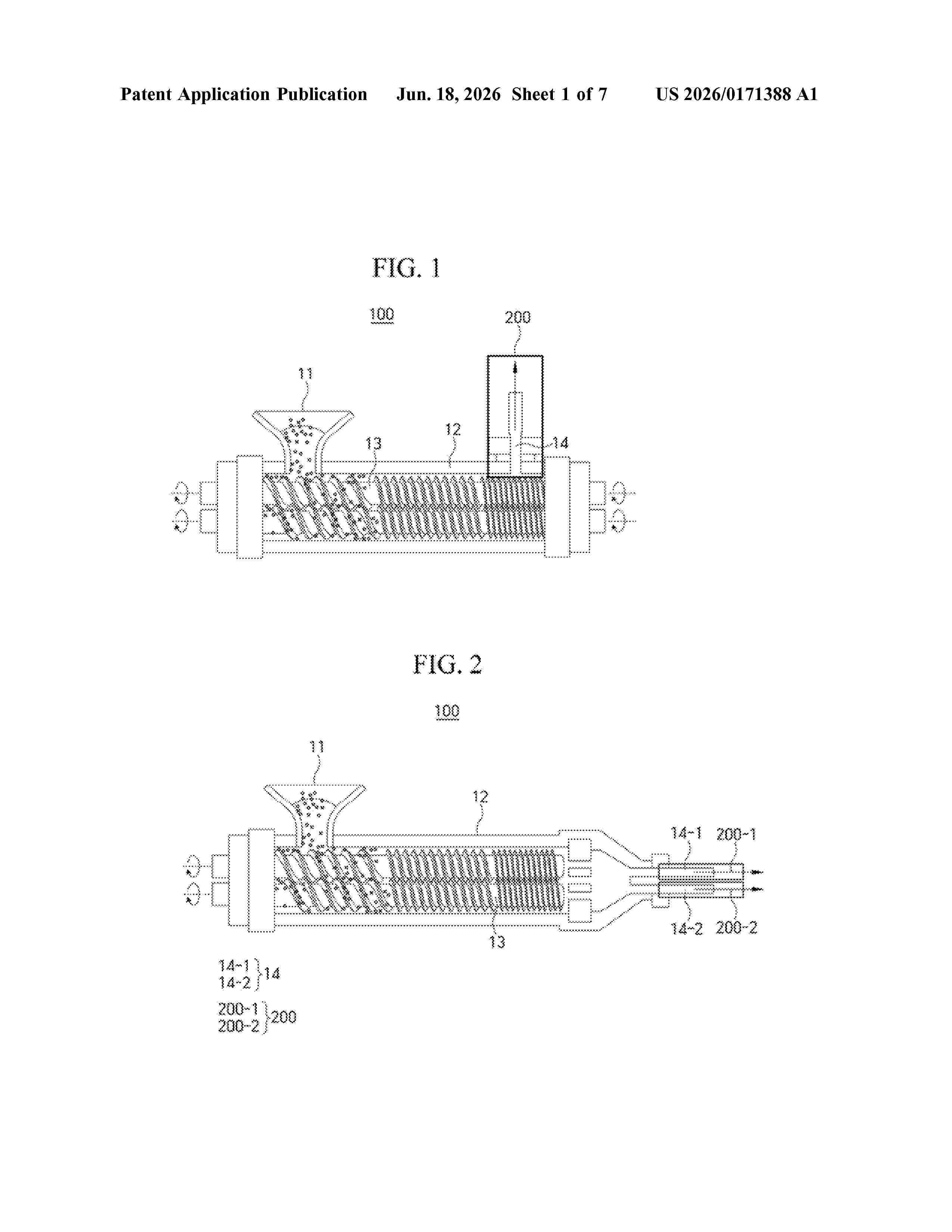
Resumen de: US20260171388A1
0000 An ultrasonic dispersion device in a slurry extrusion apparatus includes ultrasonic probes in an outlet of the slurry extrusion apparatus, the ultrasonic probes being configured to irradiate a slurry in the slurry extrusion apparatus with ultrasonic waves, and a controller configured to control the ultrasonic waves of the ultrasonic probes.
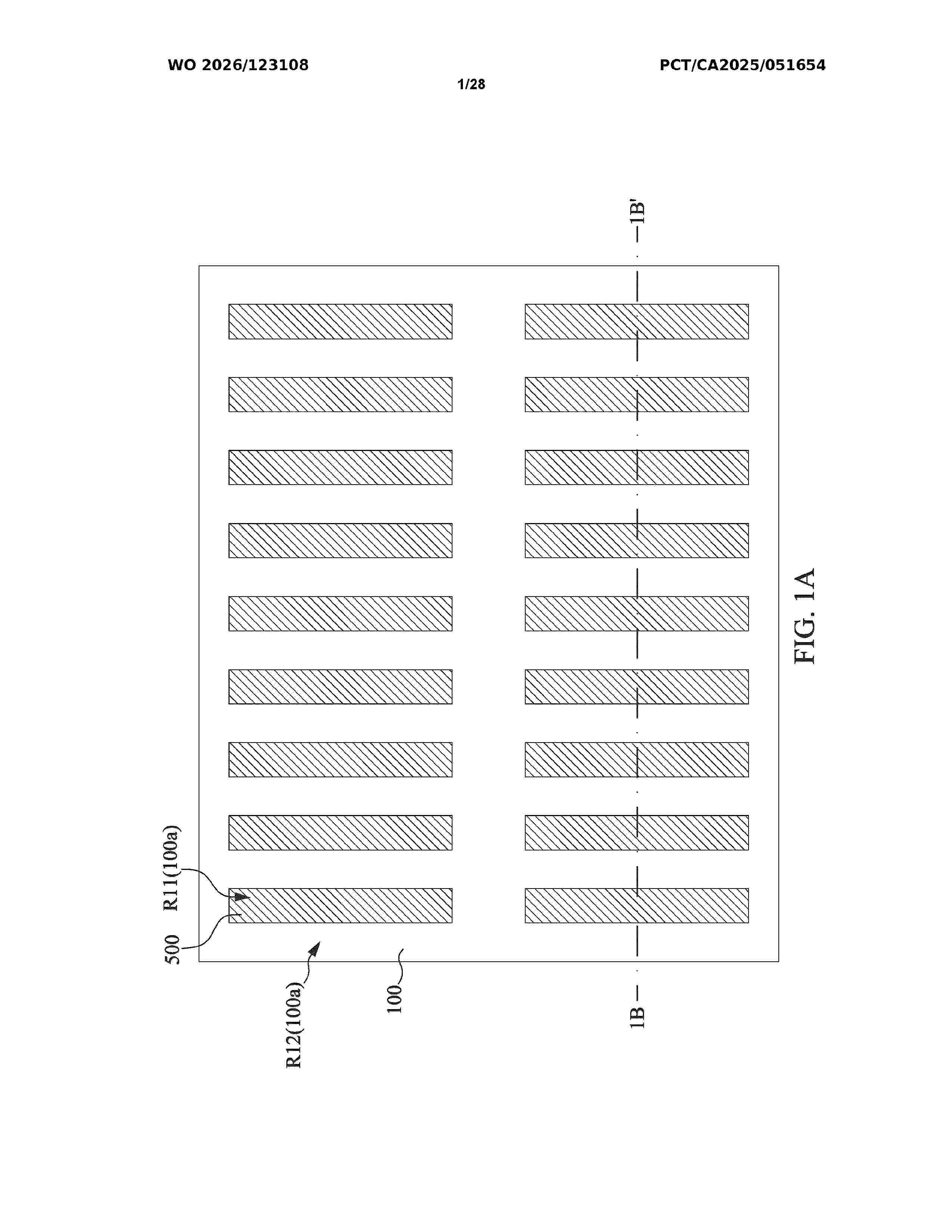
Resumen de: WO2026123108A1
The present disclosure provides a battery, a manufacturing method of a battery, and a manufacturing method of an electrode body. The manufacturing method of the electrode body includes: providing a collector including an upper surface; shielding a first region of the upper surface of the collector by a patterned thermal release adhesive layer; applying an electrode material on the upper surface of the collector, where a contact angle of the patterned thermal release adhesive layer relative to the electrode material is 90° or more; and removing the patterned thermal release adhesive layer, to form the electrode material into an electrode material layer that exposes the first region of the upper surface of the collector.
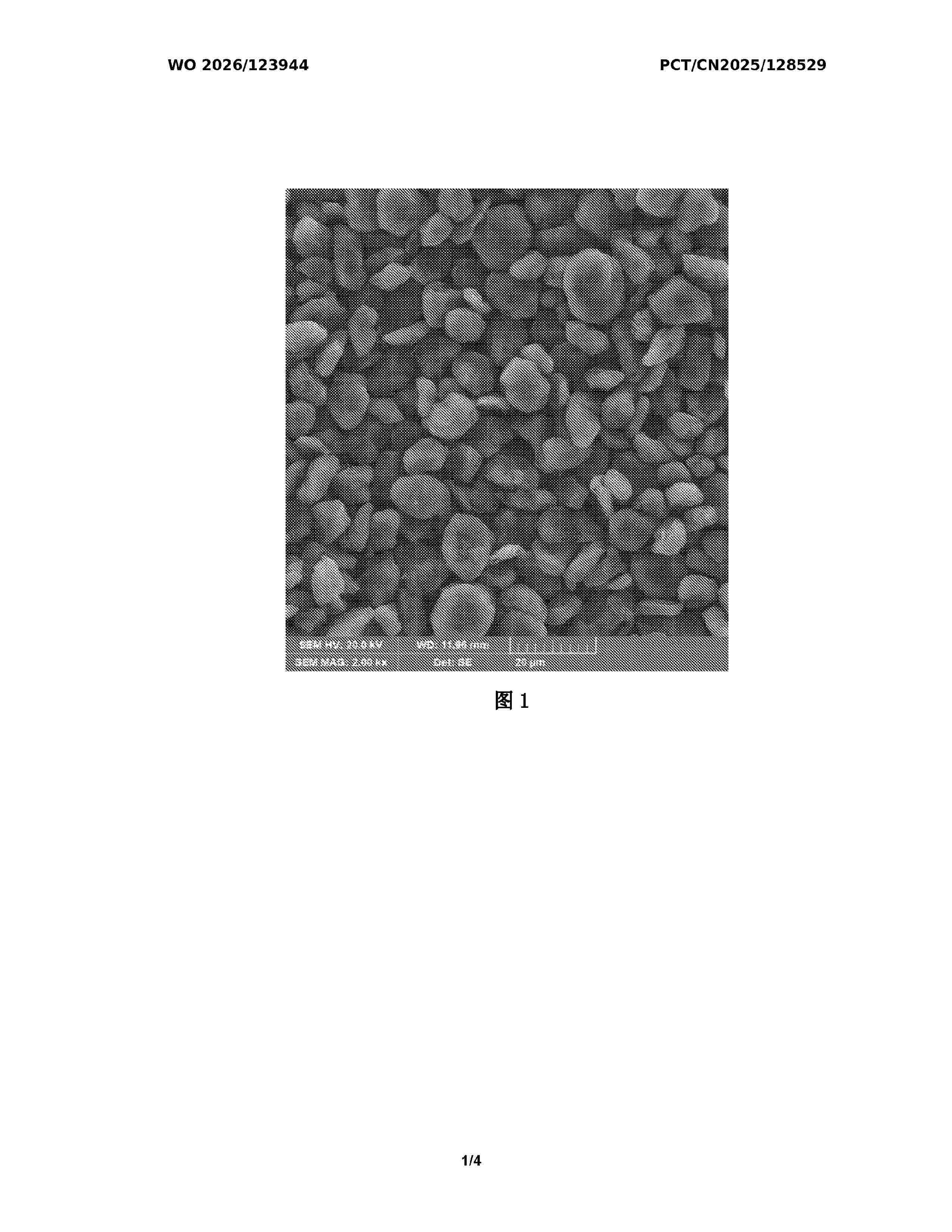
Resumen de: WO2026123944A1
The present application relates to the technical field of secondary batteries, and discloses a negative electrode material, a negative electrode sheet, and a secondary battery. The negative electrode material comprises a graphite core and an amorphous carbon coating layer located on the surface of the graphite core. When the compaction density of the negative electrode material is 1.5 g/cm3-2.0 g/cm3, the orientation index of the negative electrode material is 2-5. Preparing the negative electrode material into a negative electrode sheet and using same for a secondary battery can improve both capacity and cycle stability.
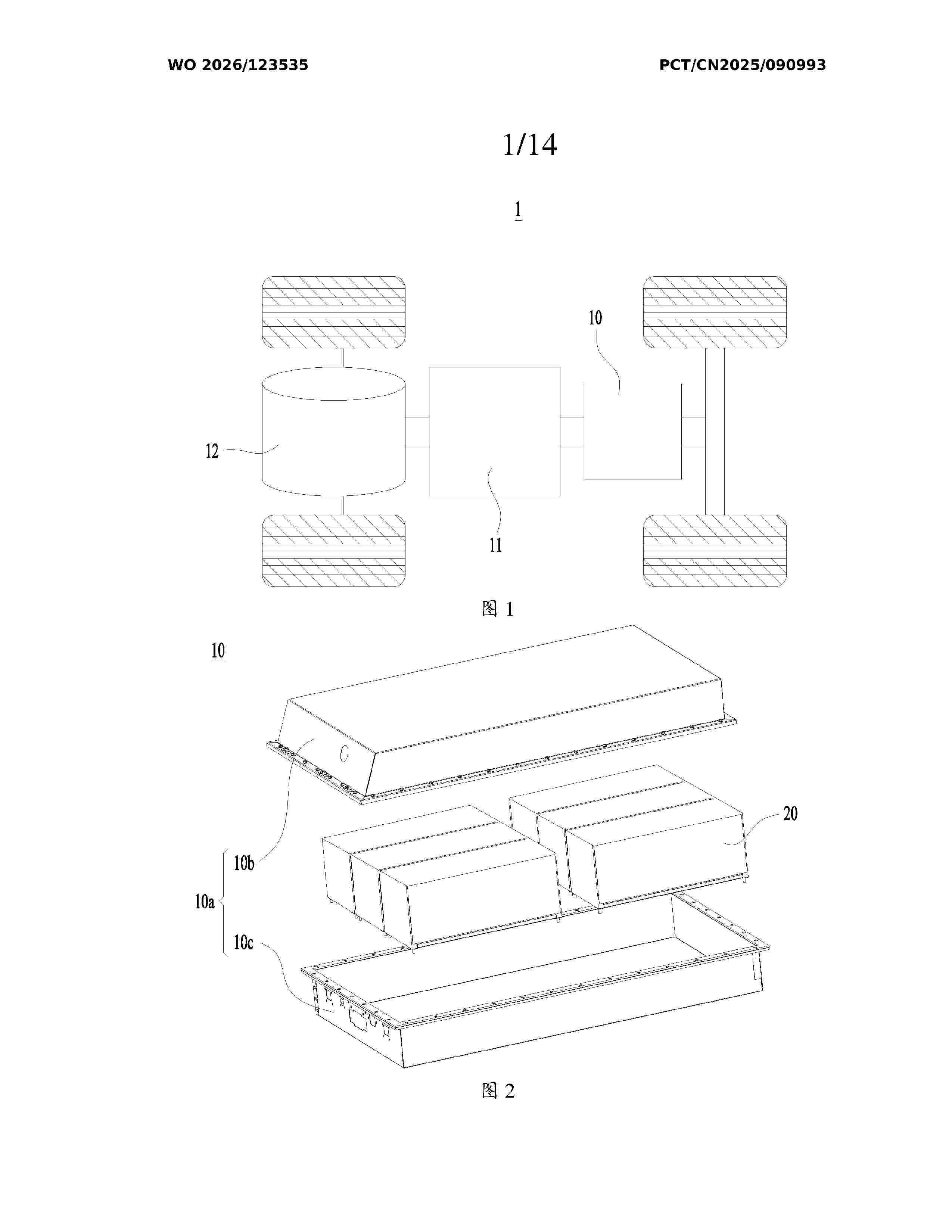
Resumen de: WO2026123535A1
Provided are an electrode assembly (60), a battery cell (30), a battery apparatus (10), an electrical apparatus, and a manufacturing method. The electrode assembly (60) comprises a first electrode sheet (70), a second electrode sheet (80), a solid-state electrolyte layer (90), and an insulating layer (100). The first electrode sheet (70) comprises a first main body portion (71) and a first tab (72), and the first electrode sheet (70) has a polarity opposite to that of the second electrode sheet (80). The second electrode sheet (80) comprises a second main body portion (81), the area of the second main body portion (81) being greater than the area of the first main body portion (71), and the second main body portion (81) being provided with the solid-state electrolyte layer (90). The solid-state electrolyte layer (90) is located between the first main body portion (71) and the second main body portion (81). The insulating layer (100) is disposed at edges of the solid-state electrolyte layer (90). The insulating layer (100) faces the first electrode sheet (70). The insulating layer (100) is provided with a notch (101), and the first tab (72) is disposed corresponding to the notch (101).
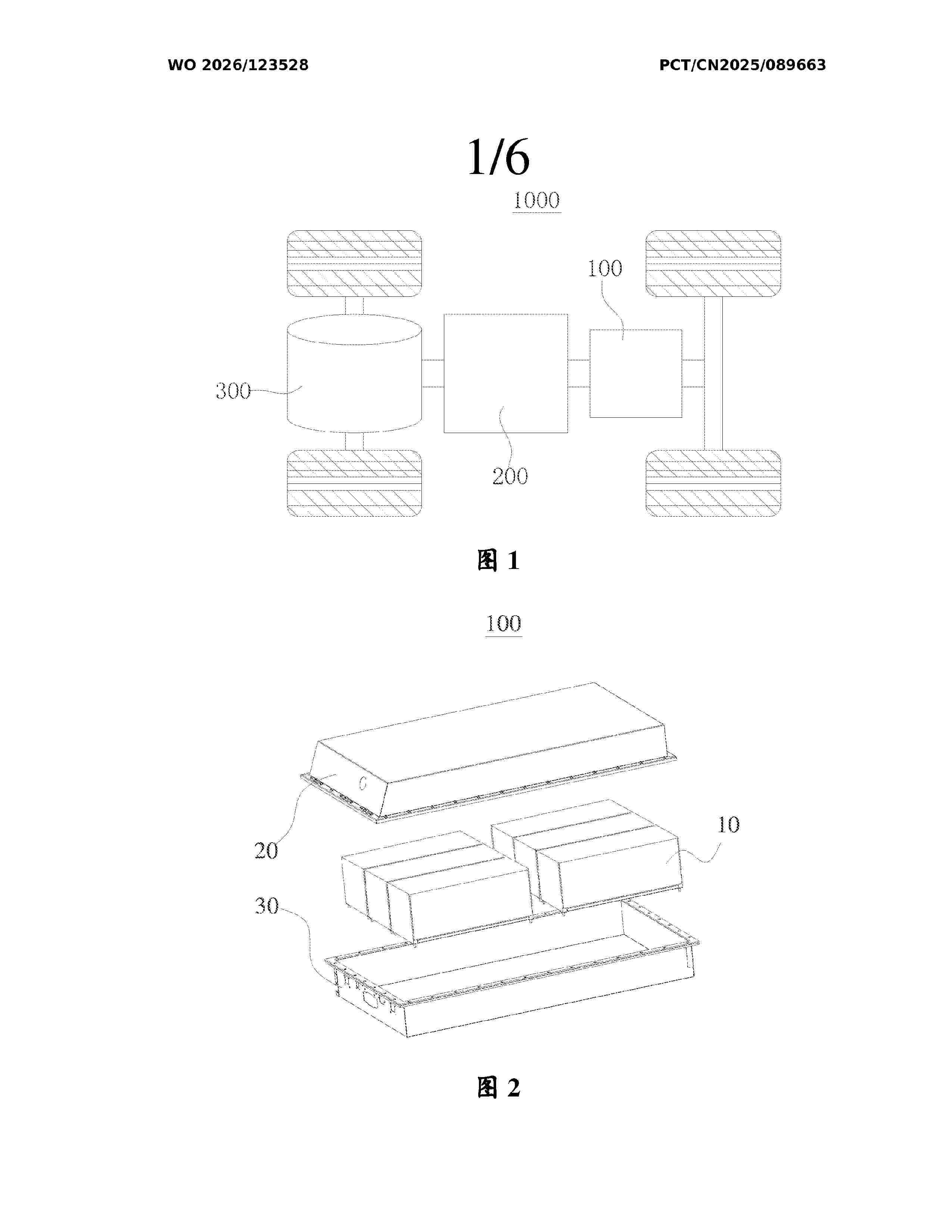
Resumen de: WO2026123528A1
The present application relates to a solid-state battery cell and a manufacturing method therefor, a battery apparatus, and an electrical apparatus. The manufacturing method comprises: providing an encapsulation film; encapsulating an electrode assembly and a gas absorption member in the encapsulation film; compressing the electrode assembly by means of the encapsulation film; removing the electrode assembly from the encapsulation film; and mounting the electrode assembly in a housing. The solid-state battery cell manufacturing method provided by the present application encapsulates the gas absorption member and the electrode assembly of the solid-state battery cell together in the encapsulation film, and during compression, the gas absorption member continuously absorbs gas released inside the electrode assembly, thereby improving the densification effect of the solid-state battery cell.
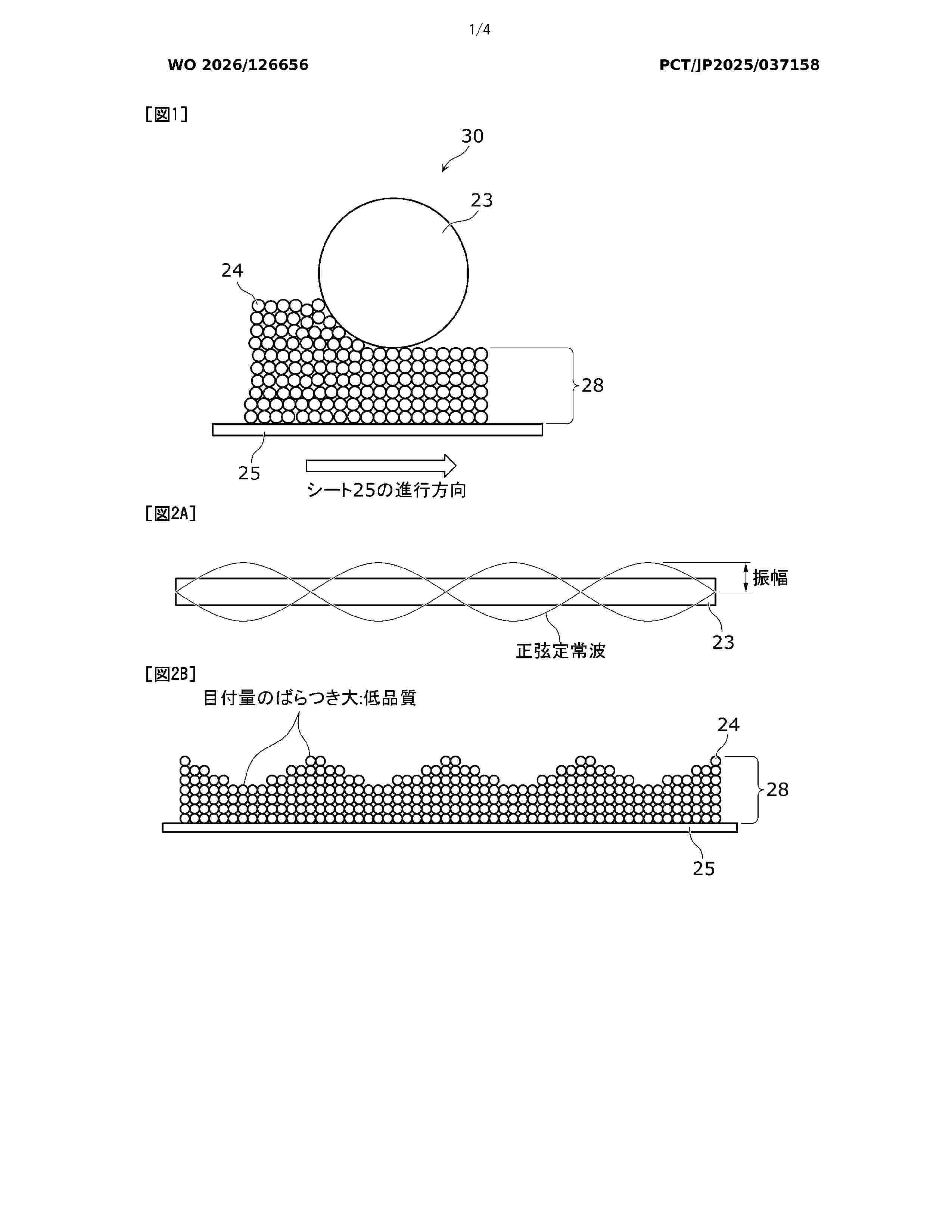
Resumen de: WO2026126656A1
A powder adjustment unit (11) is provided with: a hollow squeegee (3); a first horn (10a) connected to one side of the squeegee (3); a second horn (10b) connected to the other side of the squeegee (3); a first vibrator (1) for exciting waves in the squeegee (3); and a second vibrator (2) for exciting waves in the squeegee (3). Both ends of the squeegee (3) are open ends. The first vibrator (1) is connected to the one side of the squeegee (3) via the first horn (10a), and the second vibrator (2) is connected to the other side of the squeegee (3) via the second horn (10b). The first vibrator (1) and the second vibrator (2) vibrate such that the waves excited by the first vibrator (1) and the waves excited by the second vibrator (2) are different in phase.
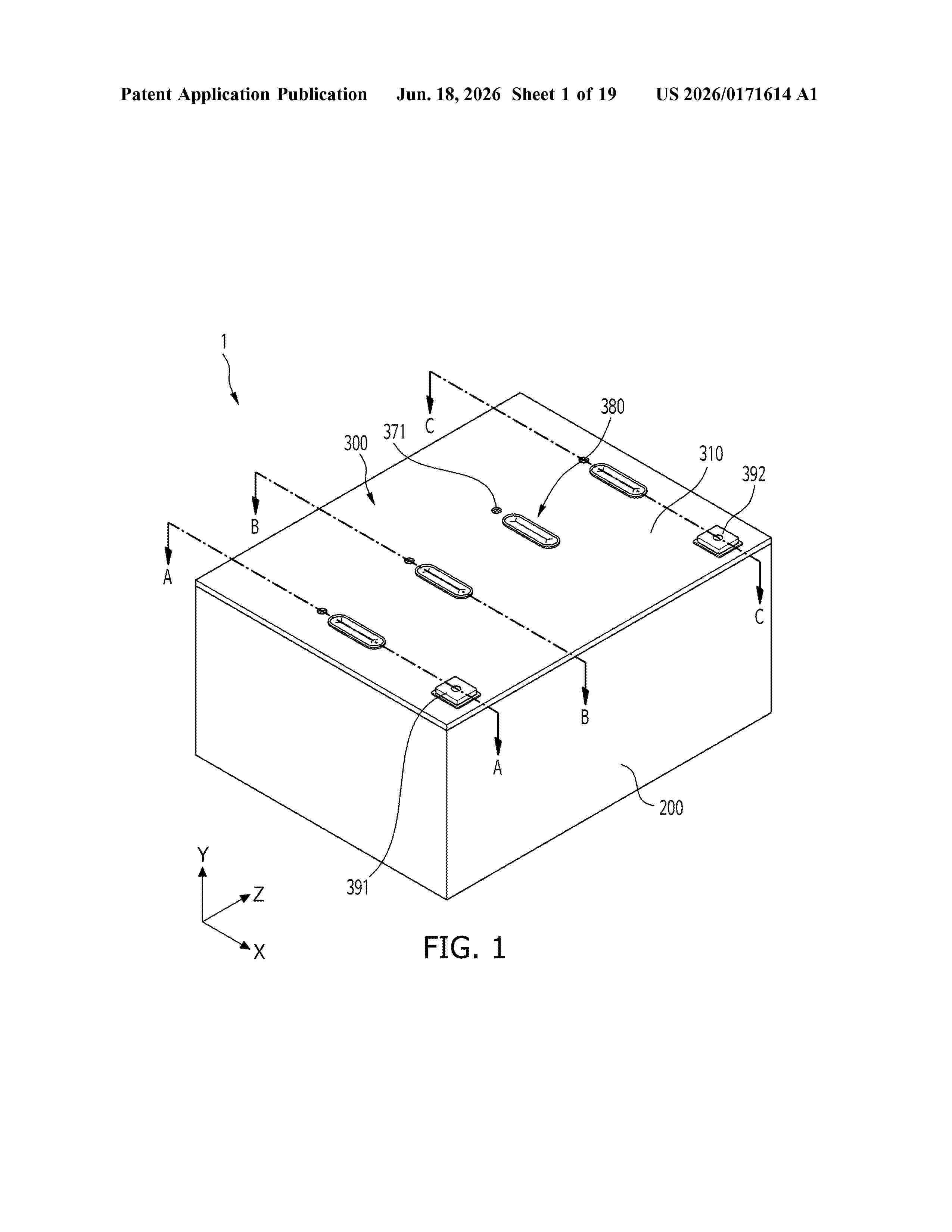
Resumen de: US20260171614A1
0000 A secondary battery includes electrode assemblies, a case including a receiving space accommodating the electrode assemblies, and a cap assembly coupled to the case. The cap assembly includes a cap plate sealing an opening formed in the case, first collector plates connected to first electrodes tabs of the electrode assemblies, second collector plates connected to second electrode tabs the electrode assemblies. Bus plates are arranged in a first direction in which the electrode assemblies are arranged, with one of the bus plates connecting two of the first collector plates, and with one of the bus plates connecting two of second collector plates. A first external terminal is connected to one of the first collector plates, and a second external terminal connected to one of the second collector plates.
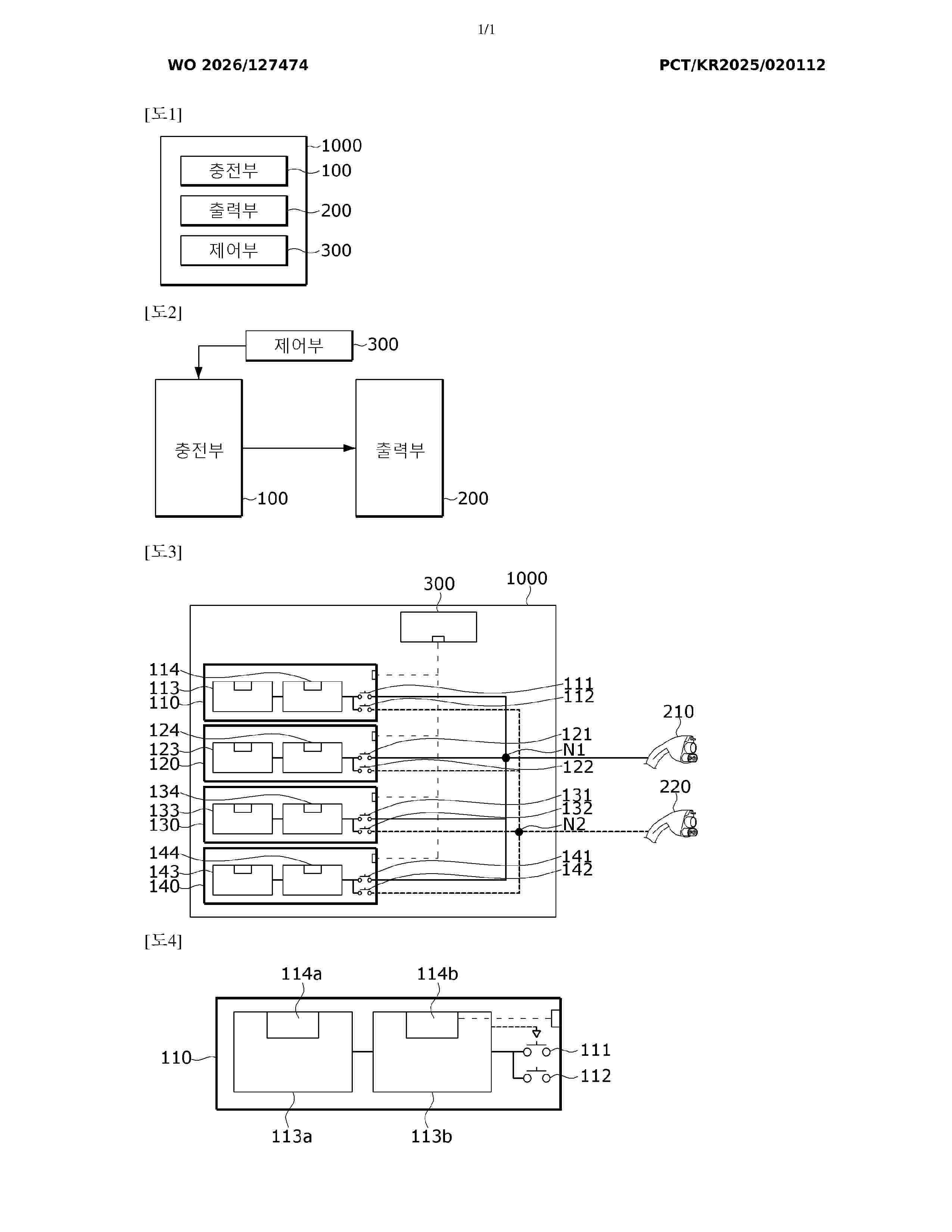
Resumen de: WO2026127474A1
An embodiment provides a charging device comprising: a first charging unit and a second charging unit; a first output unit and a second output unit which are connected to the first charging unit and the second charging unit; and a control unit which communicates with the first charging unit and the second charging unit, wherein the first charging unit includes a first switch and a second switch, the second charging unit includes a third switch and a fourth switch, the first switch and the third switch are connected to the first output unit, and the second switch and the fourth switch are connected to the second output unit.
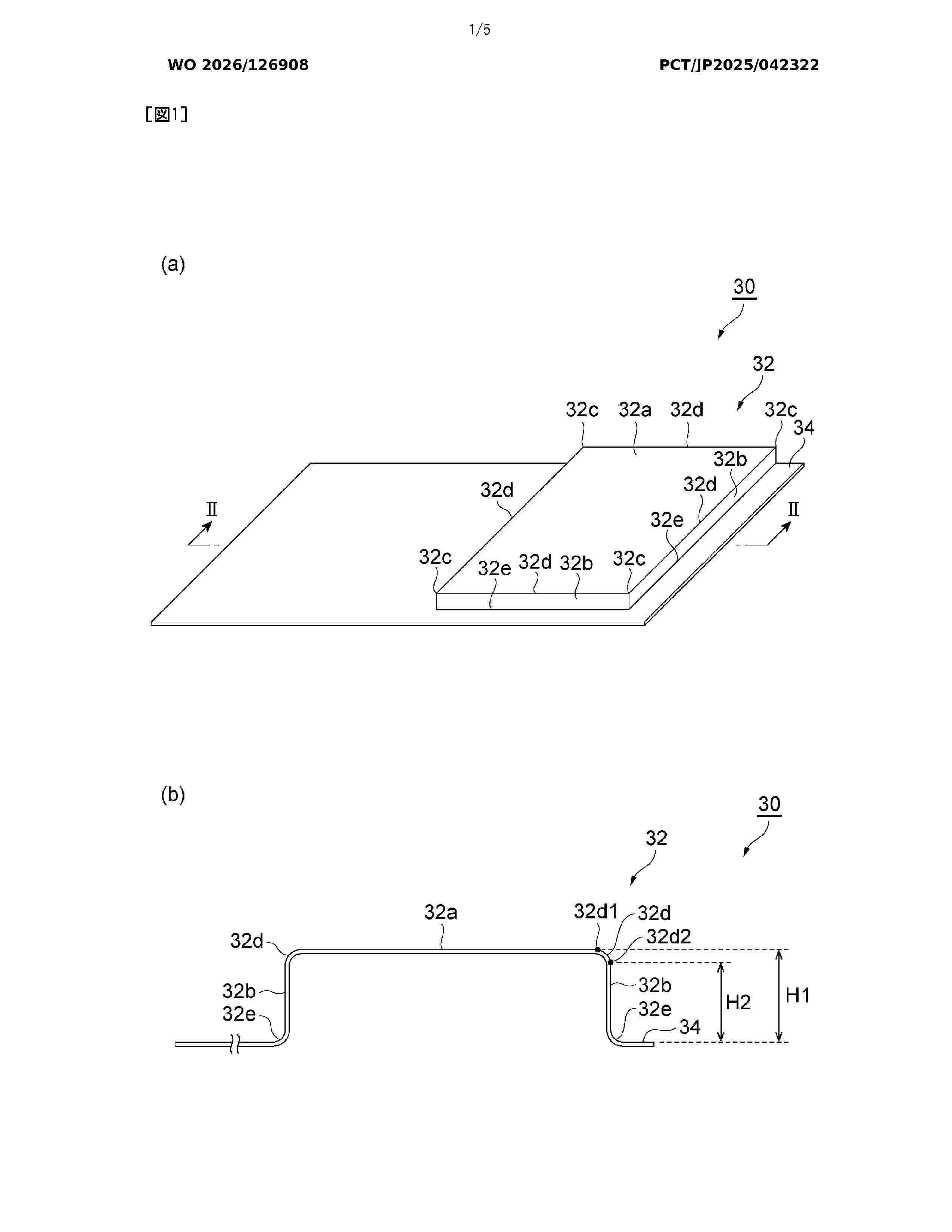
Resumen de: WO2026126908A1
One aspect according to the present disclosure is a laminate having a layered structure comprising a base material layer, a first adhesive layer, a barrier layer, and a sealant layer, in this order, the laminate being measured, using a nanoindenter, under the condition of the plastic deformation amount of the base material layer being 30 nm or more, and the plastic deformation amount of the base material layer being a maximum load of 100 μN.
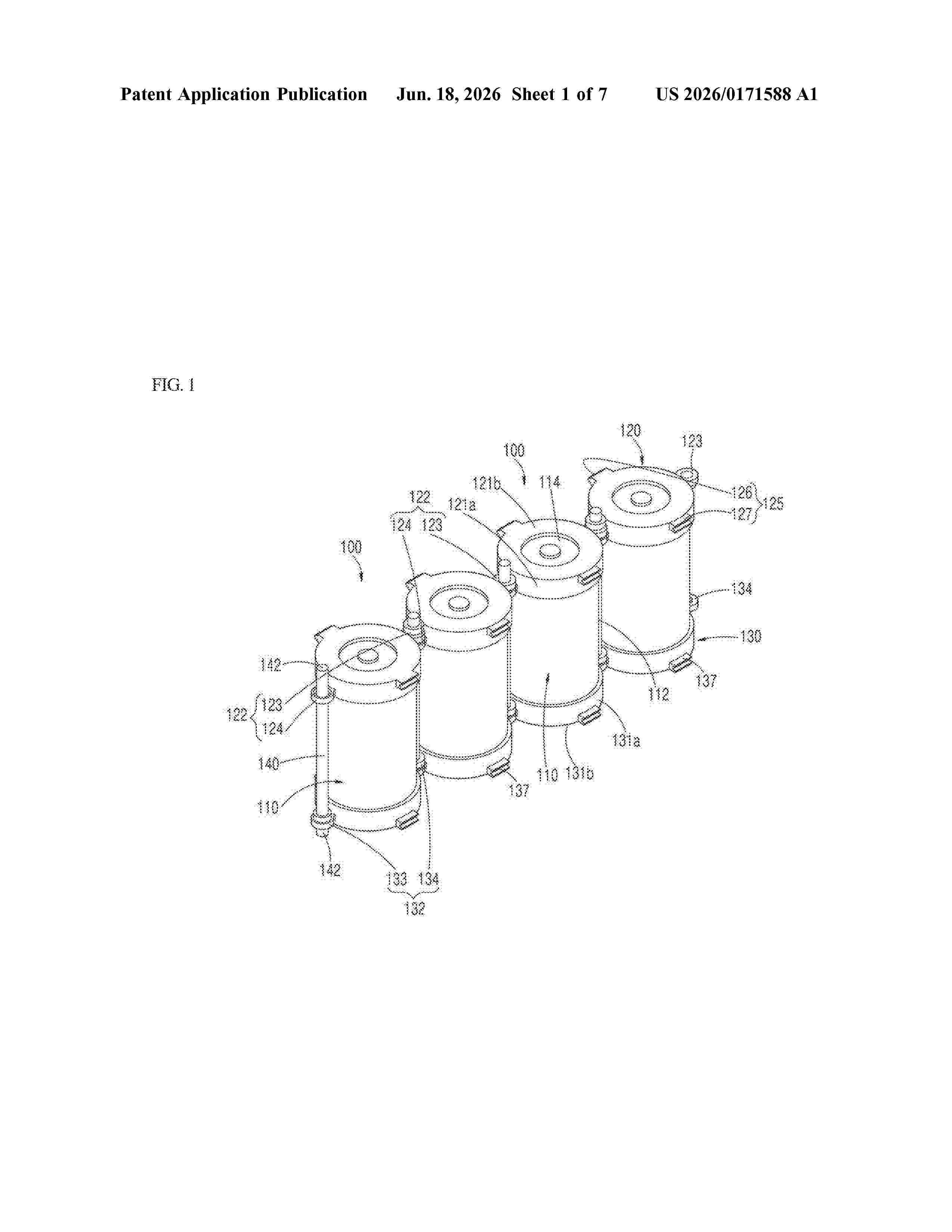
Resumen de: US20260171588A1
0000 A chain-linked cylindrical battery cell includes a cylindrical can sealed by a top cap. The cylindrical can is configured to house a jelly-roll and electrolyte. The chain-linked cylindrical battery cell further includes a first chain ring configured to attach to an upper end of the cylindrical can, and a second chain ring configured to attach to a lower end of the cylindrical can. Each ring includes a pair of coupling rings protruding in opposite directions. Additionally, the chain-linked cylindrical can includes a chain pin configured to be inserted through the coupling rings, aligned with a longitudinal axis of the cylindrical can. The configuration allows adjacent similarly-structured chain-linked cylindrical battery cells to be rotatably connected, forming a chain-like structure suitable for battery packs.
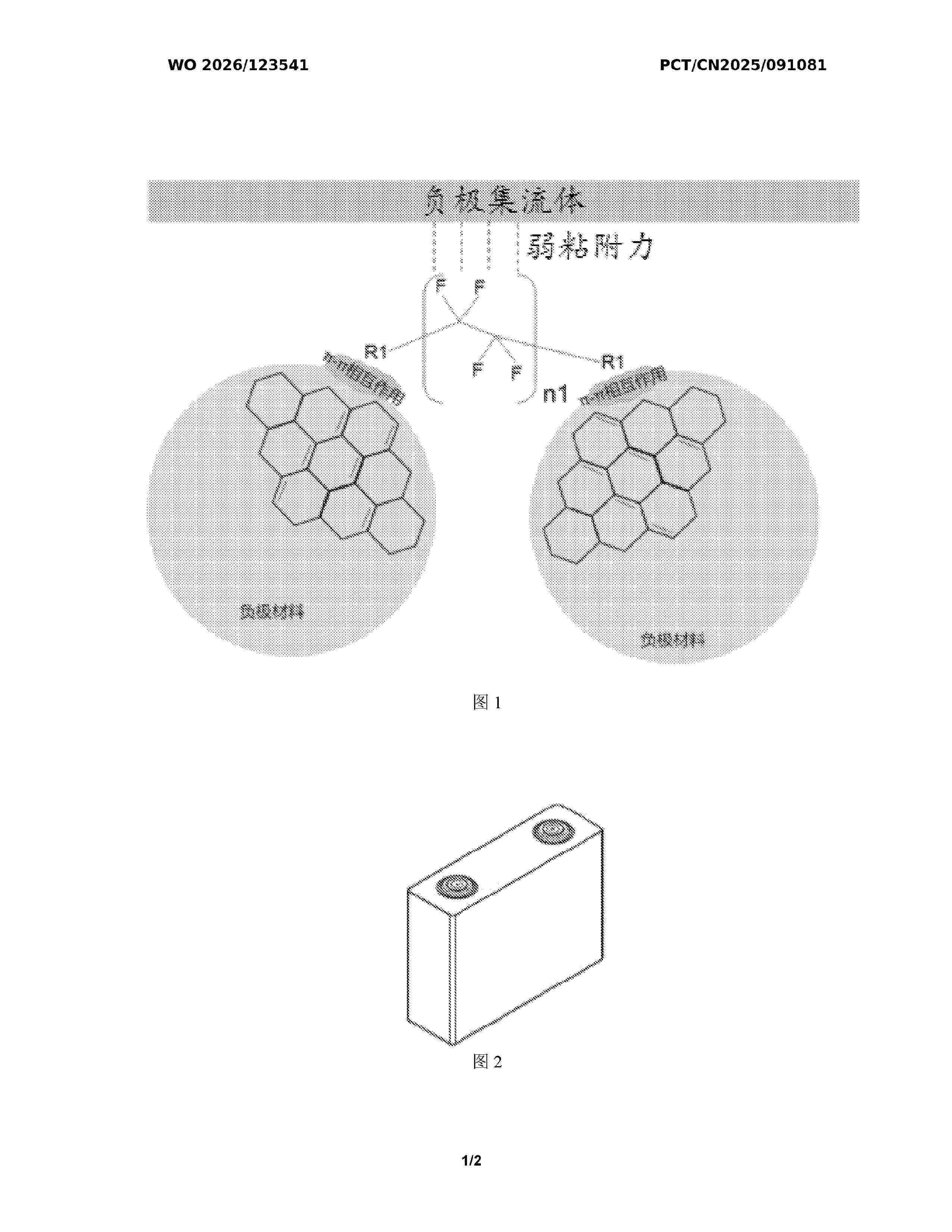
Resumen de: WO2026123541A1
The present application relates to the technical field of batteries, and in particular relates to a battery cell, a negative electrode sheet, a battery device, an energy storage device, and an electric device. The battery cell comprises a negative electrode sheet, wherein the negative electrode sheet comprises a negative electrode current collector and an interface layer disposed on at least one side of the negative electrode current collector; the interface layer comprises a negative electrode material and a binder; the negative electrode material comprises unsaturated bonds; and the binder comprises a main polymer and an aromatic group that is grafted onto the main polymer. In the present application, the interaction between the binder and the negative electrode material can be enhanced, and the cohesion of the interface layer can be improved; therefore, negative electrode material particles can remain in intimate contact after repeated charging and discharging while the adhesion between the interface layer and the current collector is not enhanced, such that the interface layer only has a weak adhesive action on the current collector, thereby achieving specific adhesion.
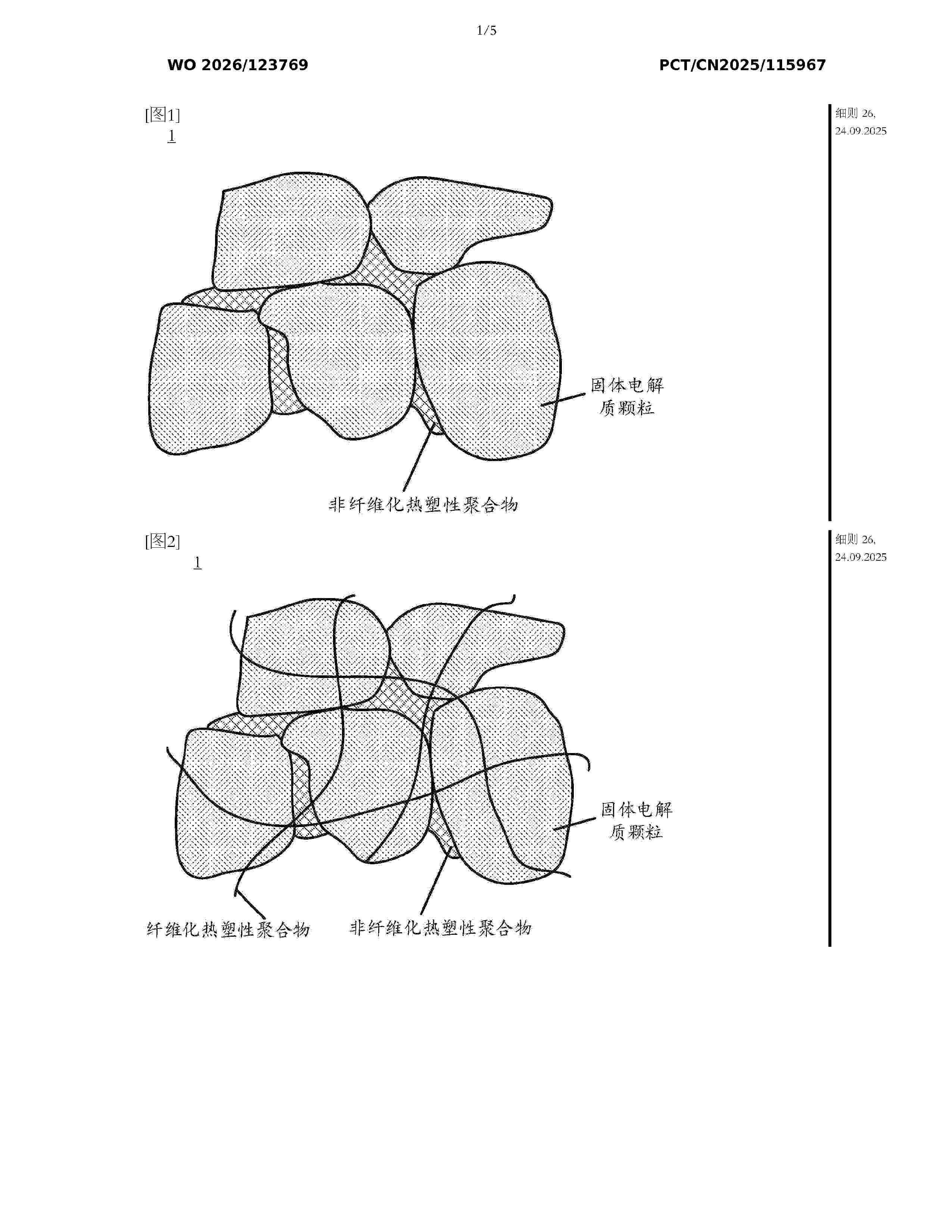
Resumen de: WO2026123769A1
The present application relates to the technical field of batteries, and discloses a solid-state electrolyte membrane and a preparation method therefor, an electrical battery cell, a battery, and a use thereof. The solid-state electrolyte membrane at least comprises a fiber-free thermoplastic polymer and multiple solid electrolyte particles, the solid electrolyte particles being bonded by means of the fiber-free thermoplastic polymer. The tensile strength of the solid-state electrolyte membrane is 0.1 MPa-50 MPa, and/or the ionic conductivity of the solid-state electrolyte membrane is 0.1 mS/cm-100 mS/cm. The solution of the present application enhances the mechanical properties of the solid-state electrolyte membrane, and does not affect the ionic conductivity of the solid-state electrolyte membrane, thereby improving the cycling and safety of the solid-state electrolyte membrane.
Resumen de: WO2026123537A1
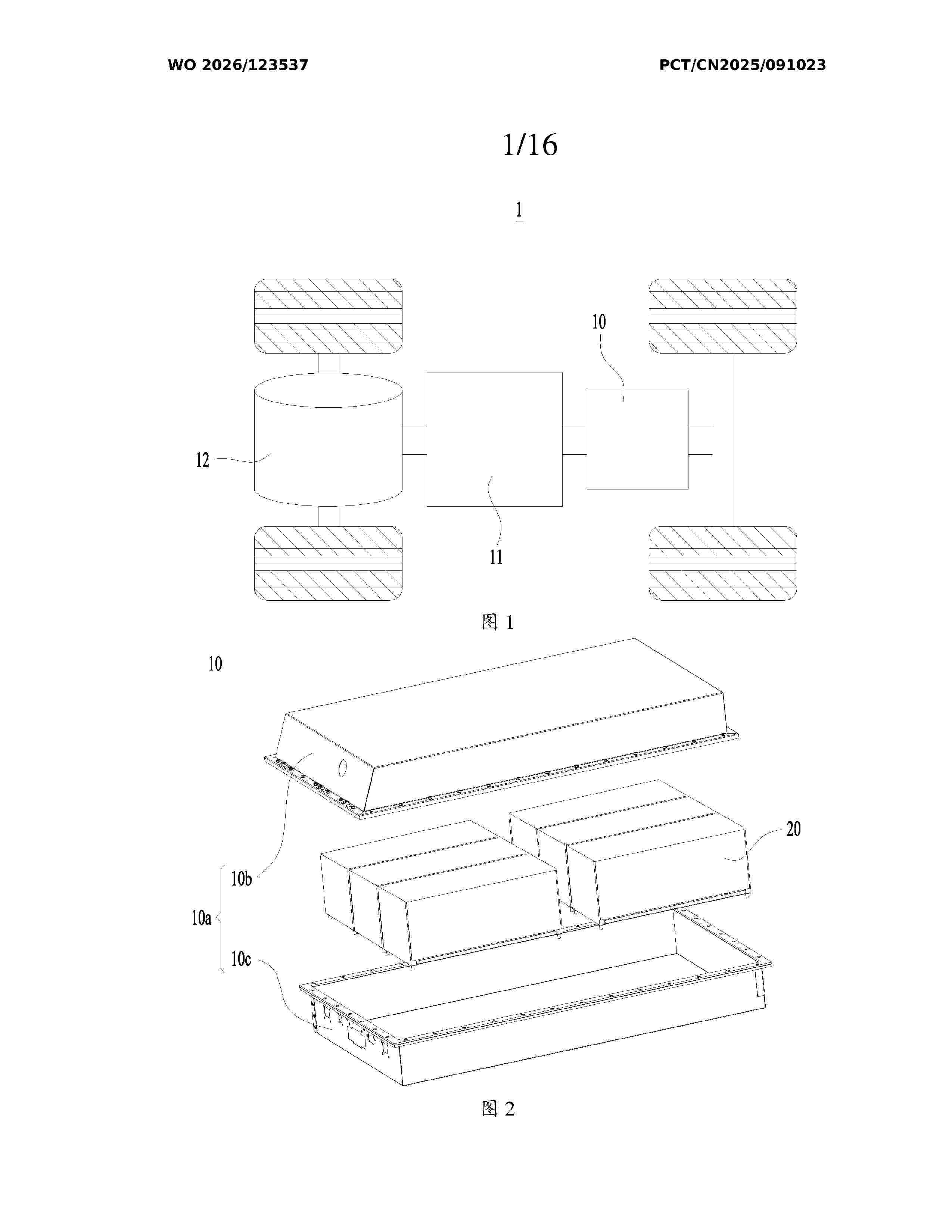
The present application provides an electrode assembly, a battery cell, a battery apparatus, an electrical apparatus, and a manufacturing method. The electrode assembly comprises a first electrode sheet, a first solid-state electrolyte layer, a second electrode sheet, a second solid-state electrolyte layer, and an insulating layer. The first electrode sheet comprises a first main body portion and a first tab. The first solid-state electrolyte layer is provided on the first main body portion. The first electrode sheet and the second electrode sheet have opposite polarities. The second electrode sheet comprises a second main body portion. The area of the second main body portion is greater than the area of the first main body portion. The second solid-state electrolyte layer is provided on the second main body portion. The second solid-state electrolyte layer is located between the first solid-state electrolyte layer and the second main body portion. The area of the second solid-state electrolyte layer is greater than the area of the first solid-state electrolyte layer. The insulating layer is disposed at an edge of the second solid-state electrolyte layer. The insulating layer is disposed facing the first electrode sheet. The insulating layer has a notch. The first tab is disposed corresponding to the notch.
Resumen de: WO2026127704A1
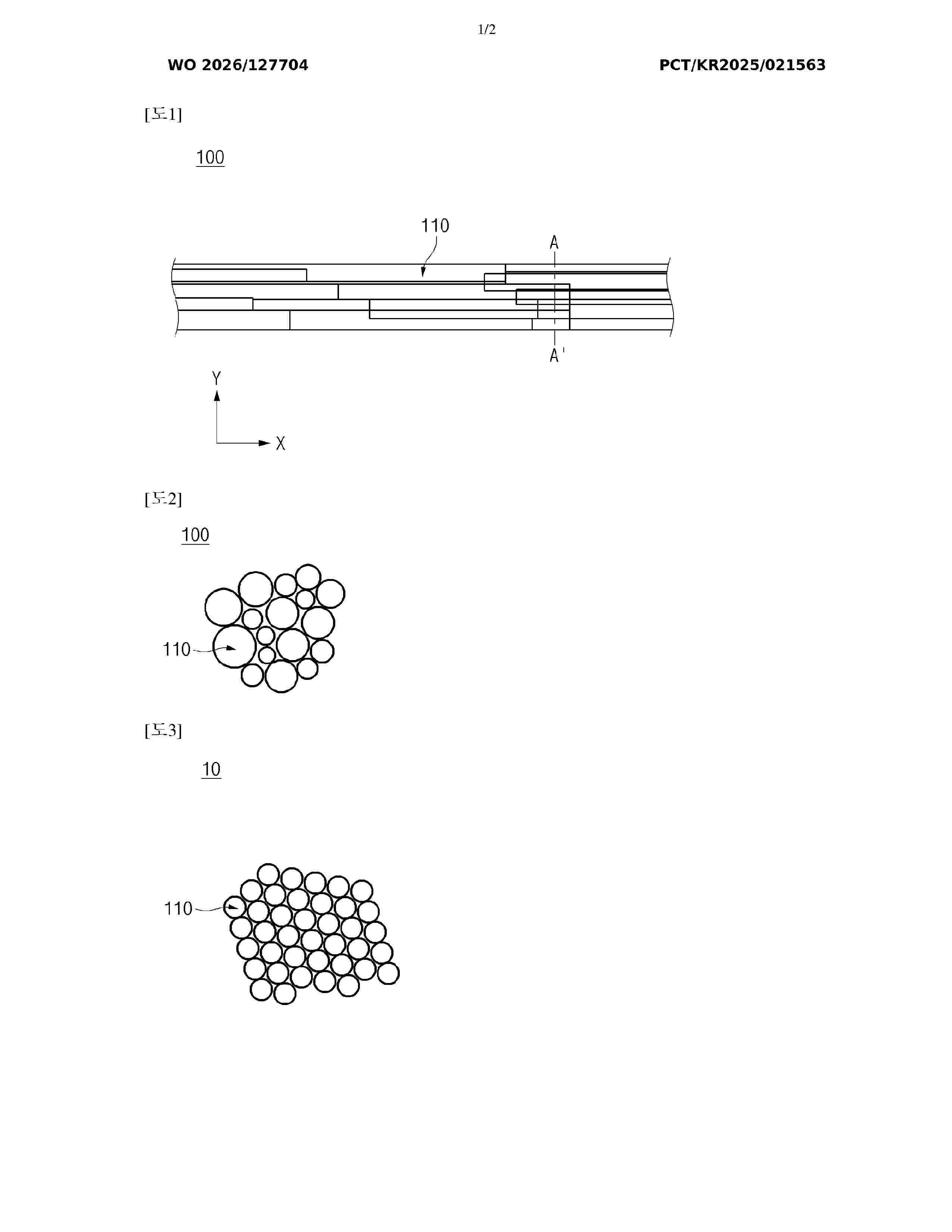
Disclosed in the present specification is an invention relating to a conductive material dispersion comprising a carbon nanocable and a dispersant, wherein the carbon nanocable is formed by arranging a plurality of carbon nanotube units comprising single-walled carbon nanotubes and double-walled carbon nanotubes in the longitudinal direction and the radial direction and bonding same, the carbon nanotube units have an average diameter of 1.8 nm to 4.0 nm, and the carbon nanocable has a volume cumulative 90% average particle diameter D90 of 10 µm or less and a volume cumulative 99% average particle diameter D99 of 15 µm or less in dispersion. The conductive material dispersion can provide a secondary battery having improved resistance characteristics and lifespan characteristics by using the carbon nanocable having a high packing density and a long length as a conductive material.
Resumen de: US20260171571A1
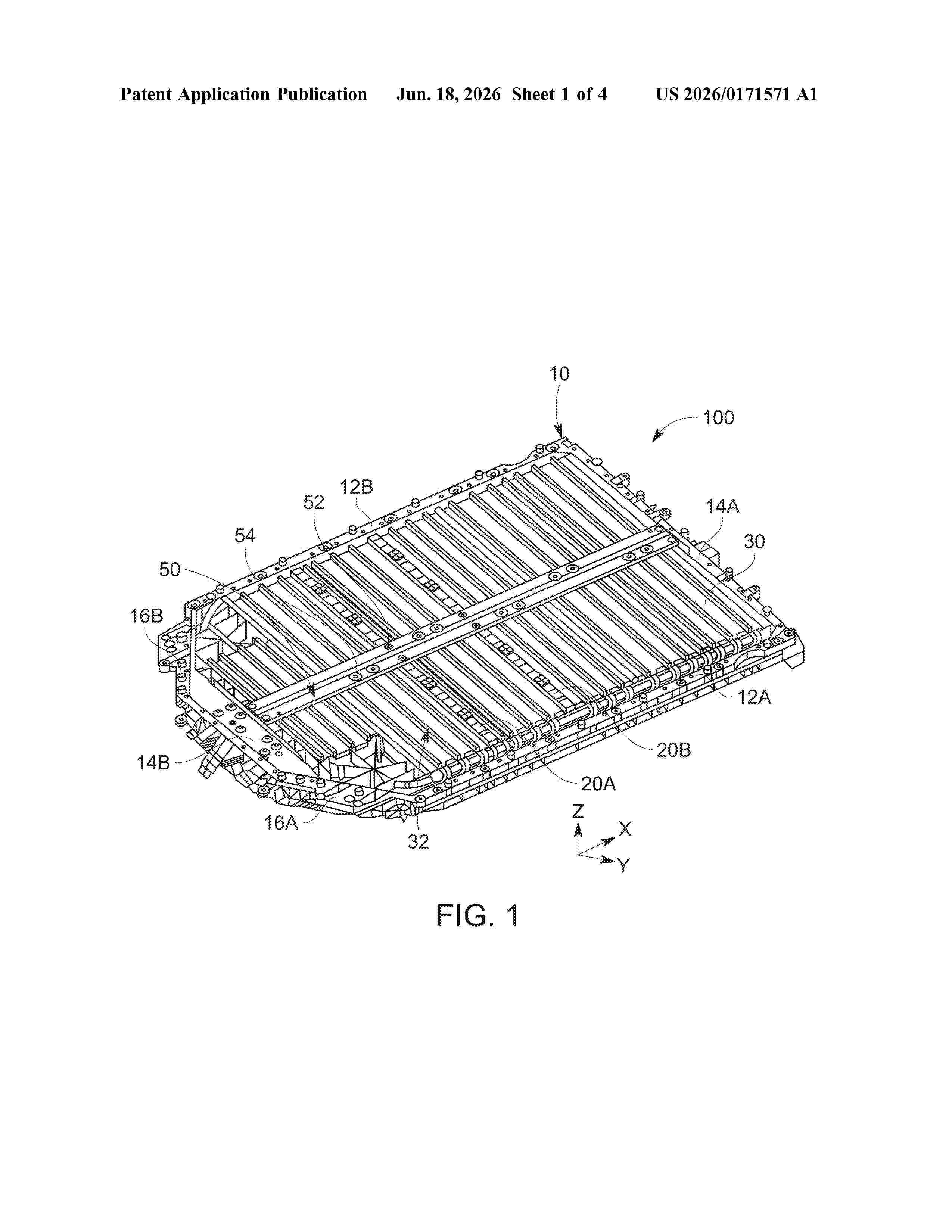
0000 A carrier framework for a battery pack includes: a frame including two pairs of opposing side beams; a cross beam connecting a first pair of the opposing side beams of the frame; and a stiffening beam fixed to a second pair of the opposing side beams of the frame and to the cross beam.
Resumen de: WO2026127381A1
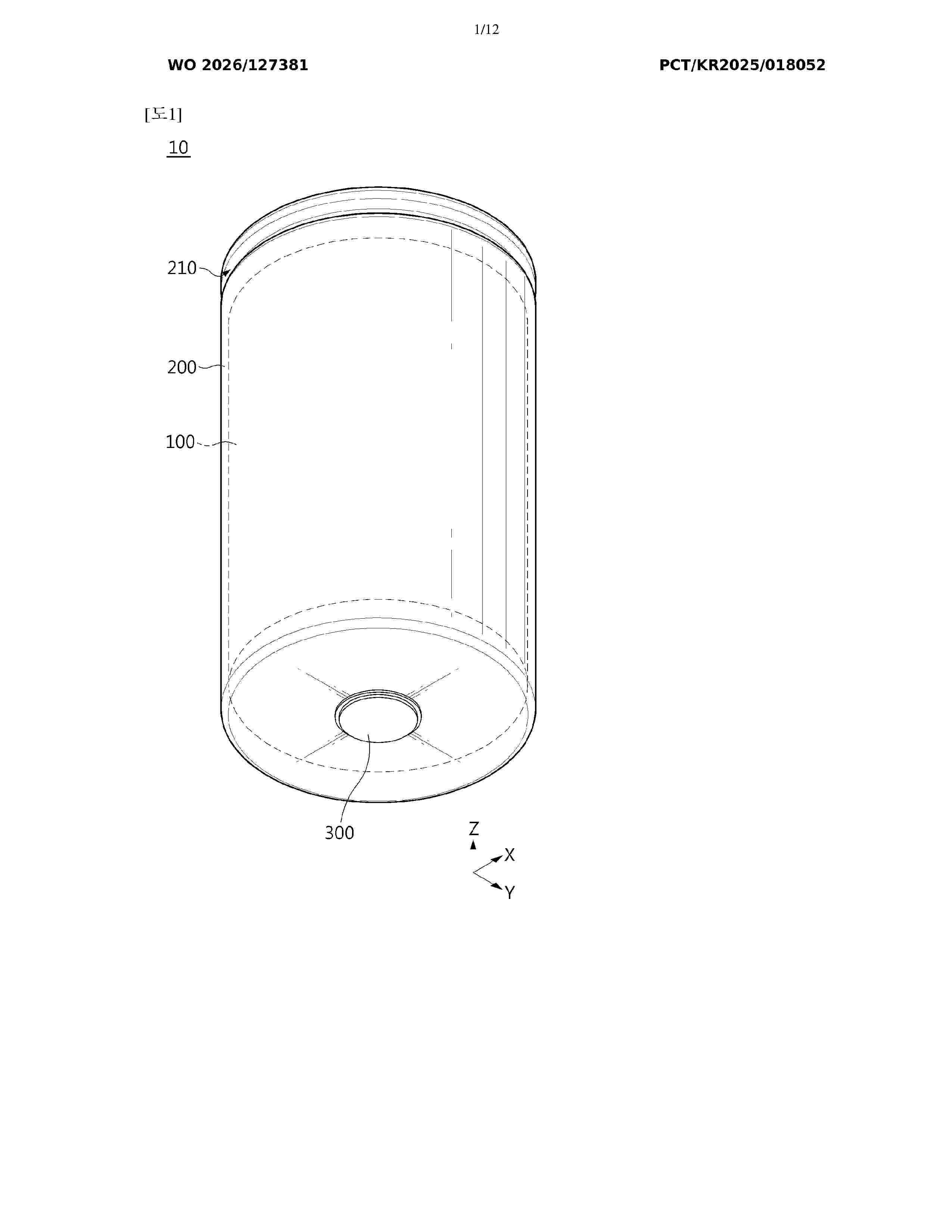
The battery cell sizing device according to the present invention is a battery cell sizing device configured to be able to perform a sizing process by compressing a can housing of a battery cell in a vertical direction, the battery cell sizing device comprising: a support pusher supporting the lower portion of the can housing in the upward direction in a state where the support pusher is not in contact with a rivet terminal protruding from the lower portion of the can housing; a lifting pusher for pressing the lower portion of the can housing in the upward direction; a lowering pusher for pressing the upper portion of the can housing in the downward direction; and a beading guide member having an insertion support part of which at least a portion is inserted into a beading part of the can housing to be able to support at least a portion of the beading part, and an elastic support part elastically supporting the insertion support part in the vertical direction.
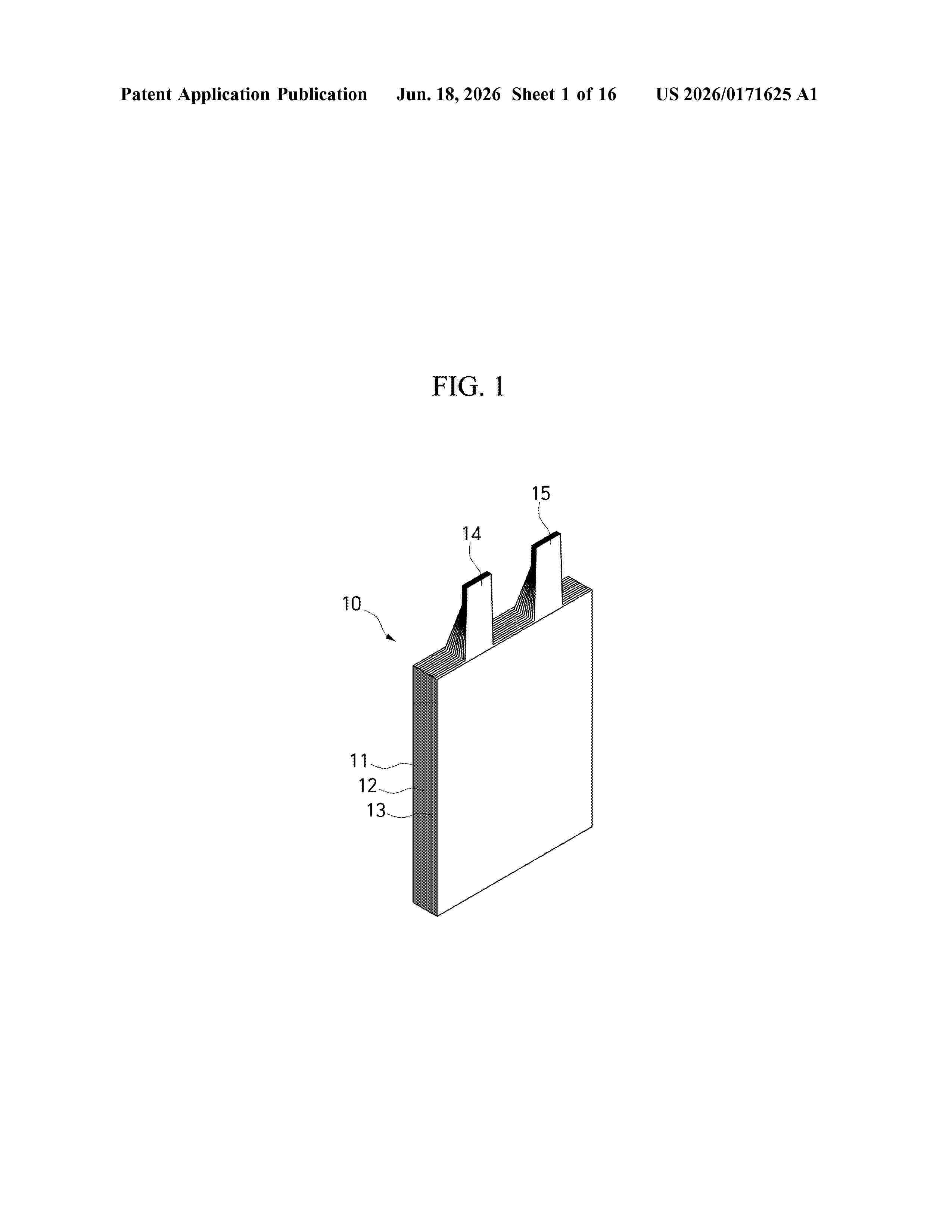
Nº publicación: US20260171625A1 18/06/2026
Solicitante:
SAMSUNG SDI CO LTD [KR]
Samsung SDI Co., Ltd.
Resumen de: US20260171625A1
0000 The present disclosure relates to a secondary battery having electrode plates made of composite substrates and a manufacturing method that facilitates the welding of a strip conductor. According to an aspect of the present disclosure, there is provided a secondary battery including an exterior material; an electrode assembly accommodated in the exterior material including an electrode plate in which a coated portion coated with an electrode material and an uncoated portion which is not coated with the electrode material are formed on a composite substrate including a polymer layer and a conductive layer, a conductive plate attached to the conductive layer of the uncoated portion of the electrode plate included in the electrode assembly, and a strip conductor welded to the conductive plate.
 BOPI
BOPI
 Sede Electrónica