Si deseas distinguir tus productos, servicios o ambos de los de otra empresa, es posible que necesites una marca o nombre comercial. Descubre qué son, en qué consiste su procedimiento de registro y qué implica.

Información sobre los plazos de presentación de solicitudes de transformación de marcas de la Unión Europea en marca nacional española. Más información


Si tienes un nuevo dispositivo, producto o procedimiento que resuelva un problema técnico o tenga una ventaja práctica, existen distintas formas de protegerlo en España y en otros países. Descubre cómo hacerlo.

¿Tu innovación reside en la estética, la ornamentación o la apariencia de tu producto? Protégela mediante un diseño industrial. Descubre qué derechos confiere el registro y cómo realizar la tramitación.

Las indicaciones geográficas protegen el nombre de un producto originario de una zona geográfica, a la cual le debe una determinada calidad, reputación u otra característica. Descubre qué son, en qué consiste su procedimiento de registro y qué beneficios conceden.

Las patentes publicadas en todo el mundo son una valiosa fuente de información científica, técnica y comercial.

Si eres emprendedor/a o una empresa y quieres potenciar y mejorar la rentabilidad de tu negocio protegiendo de forma adecuada los activos intangibles de tu organización, en este espacio encontrarás lo necesario.


 1426
resultados
1426
resultados
 Última actualización
29/06/2026 [08:41:00]
Última actualización
29/06/2026 [08:41:00]


 Resultados 1100 a 1125 de 1426

Resumen de: EP4760909A1
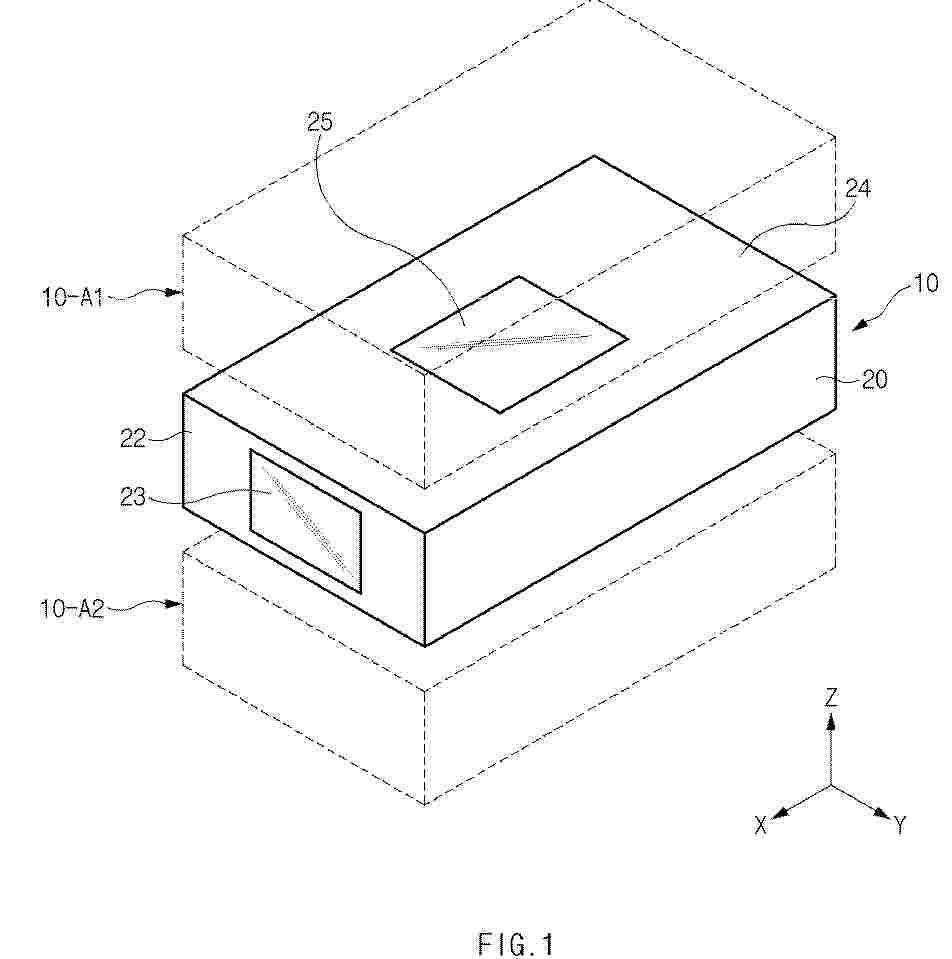
The present disclosure relates to a battery pack, and a battery pack according to one aspect of the present disclosure may include a battery pack housing having a main window that allows infrared rays to pass through; a battery assembly accommodated inside the battery pack housing and composed of at least one battery cell; and a slave controller including a main communication unit capable of receiving infrared rays passing through the main window and configured to control the battery assembly.

Resumen de: EP4760939A1
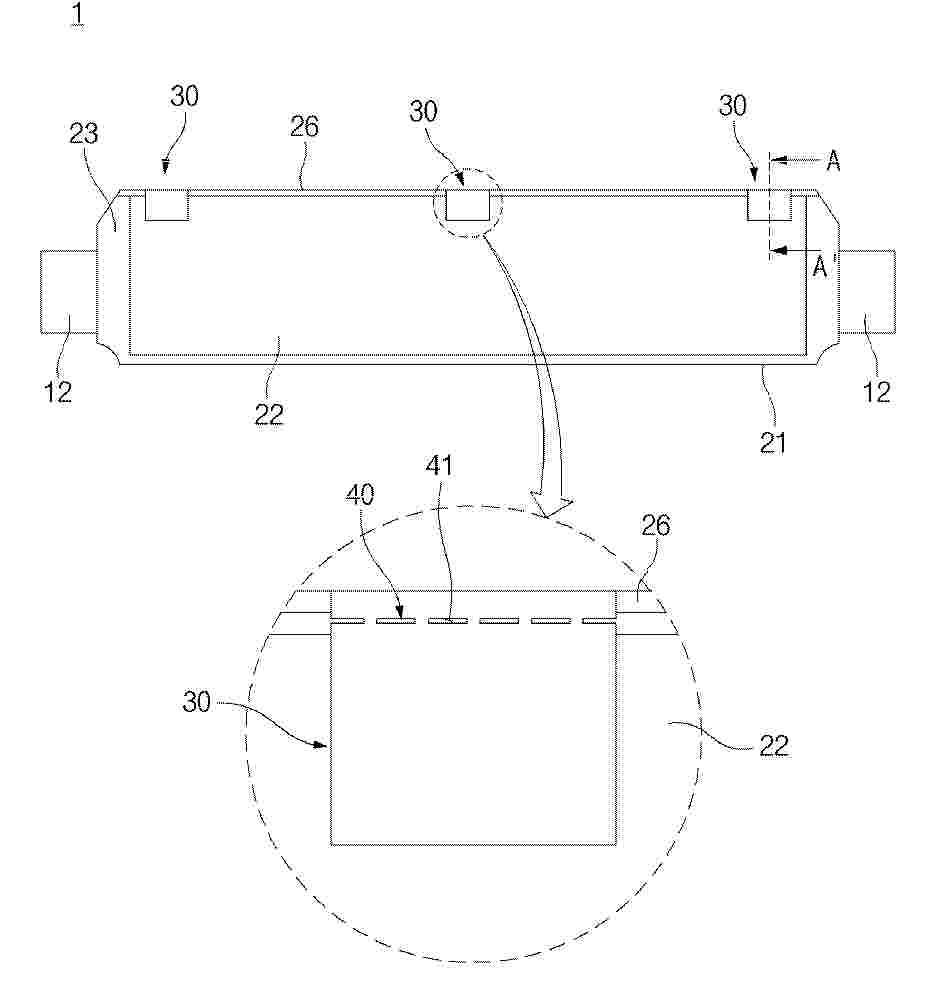
A secondary battery according to an embodiment of the present disclosure may include an electrode assembly; a battery case including an accommodation portion accommodating the electrode assembly, and a side portion located at an outer side of the accommodation portion and folded at least once; and a fixing member attached to the battery case and configured to fix the side portion in the folded state. The fixing member may have a cut-off line to allow the fixing member to easily rupture when an external force is applied to the fixing member.
Resumen de: EP4761059A1
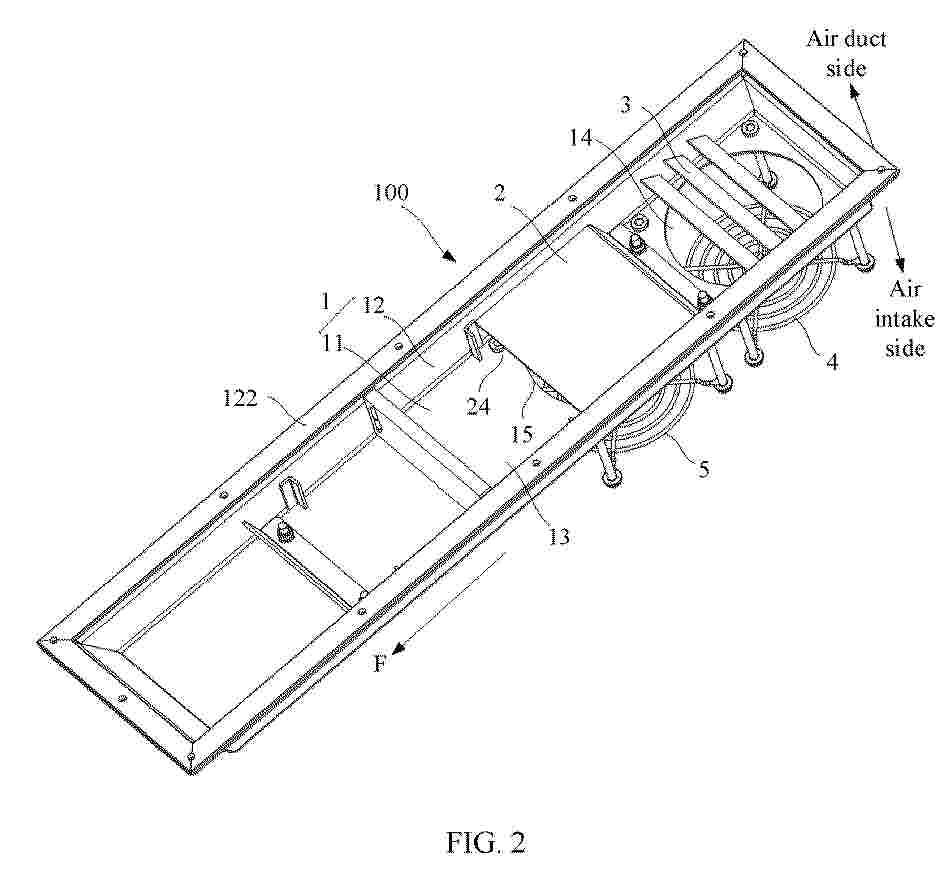
The present disclosure provides an energy storage cabinet with exhaust, and pertains to the field of battery energy storage technologies. An exhaust air duct assembly in the energy storage cabinet with exhaust includes an air duct housing extending in a height direction of a cabinet, a first flow guide member, a first fan, and a second fan. The first flow guide member is located in the air duct housing, and between an air duct side wall of the air duct housing and an inner wall of the cabinet that are spaced apart and opposite to each other, and covers at least a part of a second air inlet. A joint between a first edge of the first flow guide member and the air duct side wall is located between a first air inlet and the second air inlet, and a second edge of the first flow guide member is spaced apart from the air duct side wall, to form an air outlet. The exhaust air duct assembly in the energy storage cabinet with exhaust can reduce air intake interference between fans, thereby increasing exhaust efficiency.
Resumen de: EP4760803A1
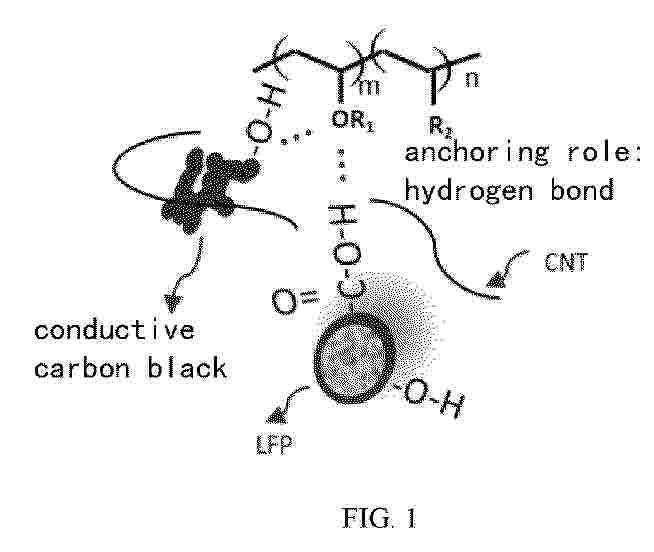
The present disclosure provides a positive electrode sheet, a method for preparing the positive electrode sheet, and an application of the positive electrode sheet. The positive electrode sheet includes a positive electrode current collector and a positive electrode active material layer disposed on at least one surface of the positive electrode current collector. The positive electrode active material layer includes a dispersing aid, a lithium iron phosphate positive electrode material, conductive carbon black, and carbon nanotubes. The dispersing aid, lithium iron phosphate positive electrode material, conductive carbon black, and carbon nanotubes in the positive electrode active material layer satisfies a relationship: 30≤(B1 × C1+B2 × C2+B3 × C3)/A × 0.01 ≤500. By reasonably adjusting the proportion and specific surface area of LFP in the positive electrode active material layer, the proportion and specific surface area of the conductive agent in the positive electrode active material layer, as well as an addition amount of the dispersing aid in the positive electrode active material layer, multiple characteristic parameters satisfy a specific relationship, which promotes dispersion of multi-component materials, ensures a good conductive network and binder distribution state, increases the peel strength, reduces the resistance of the positive electrode sheet, thereby reducing the DCR of the lithium-ion battery and increasing the rate-discharge energy efficiency of
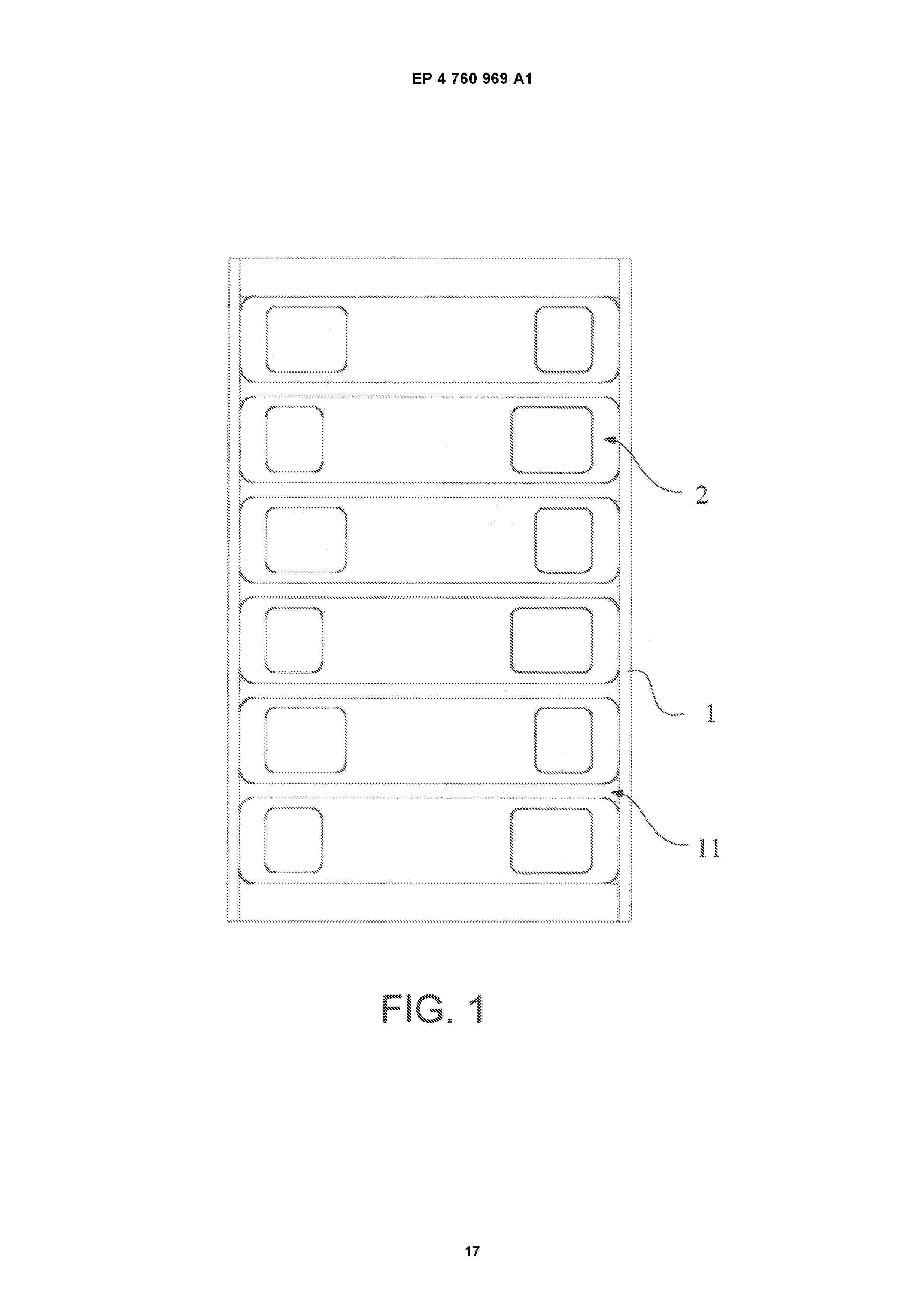
Resumen de: EP4760969A1
Provided in the present disclosure are an insulating film for a battery cell housing, a battery cell, and a secondary battery. A first insulating film is used for covering a first side surface; a second insulating film is used for covering a second side surface; a third insulating film is used for at least covering the junction between a third side surface and a bottom surface, and the junction between the third side surface and a top surface, so that the third side surface is partially exposed; and a fourth insulating film is used for at least covering the junction between a fourth side surface and the bottom surface, and the junction between the fourth side surface and the top surface, so that the fourth side surface is partially exposed. The first insulating film, the second insulating film, the third insulating film, and the fourth insulating film are independent of one another and can be directly processed into shapes matching the corresponding side surfaces of the battery cell housing, eliminating the need for further cutting, and reducing the number of folding areas on the insulating film and the number of times the insulating film is folded, thus reducing insulating film waste, reducing costs, and further effectively avoiding an increase in overall battery cell thickness caused by multilayer folding of the insulating film, thereby improving the space utilization rate of the secondary battery.
Resumen de: EP4760447A1
This electronic device comprises: a battery including a first case, a second case, and at least one battery cell including a first electrode electrically connected to the first case and a second electrode electrically connected to the second case; and a housing including a rod at least partially inserted into the first case and the second case and electrically connected to the at least one battery cell, and a body extending from the rod and positioned outside the battery housing. The rod is configured to provide an electrical path for power provided from the battery.
Resumen de: EP4760844A1
A non-aqueous electrolyte energy storage device according to one aspect of the present invention includes: a positive electrode having a positive electrode active material layer; a negative electrode having a metal negative electrode substrate and a negative electrode active material layer containing graphite; and a separator disposed between the positive electrode active material layer and the negative electrode active material layer, in which the separator has an air resistance of not less than 125 seconds/100 mL, and X represented by the following formula (1) is not more than 890. X=PcTcTa/Pa (In formula (1), Pc is a porosity (%) of the positive electrode active material layer, Tc is a thickness (µm) of the positive electrode active material layer, Pa is a porosity (%) of the negative electrode active material layer, and Ta is a thickness (µm) of the negative electrode active material layer.)
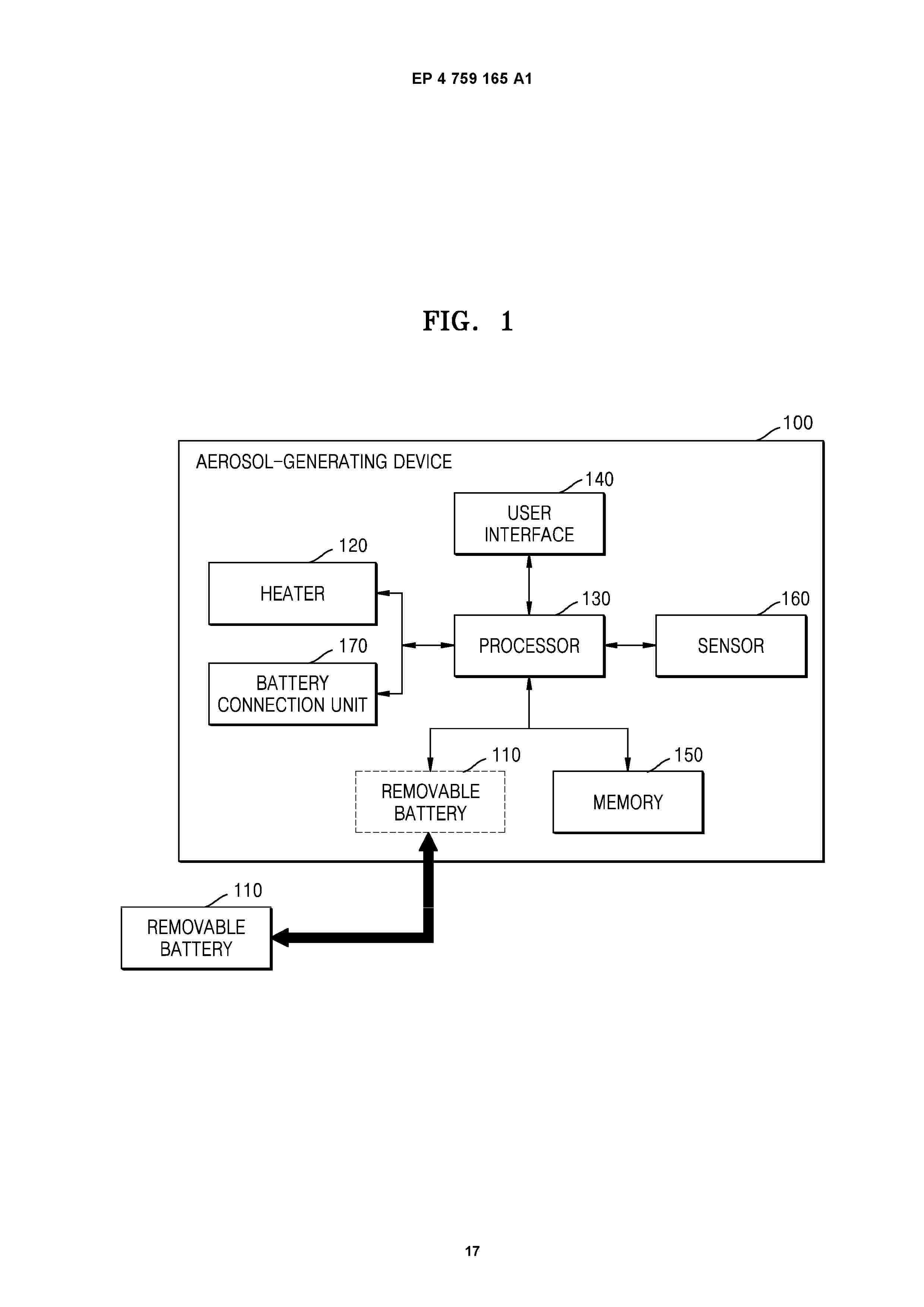
Resumen de: EP4759165A1
In an aerosol-generating device and a method of authenticating a removable battery in the aerosol-generating device, a protection circuit module is accessed by electrically coupling with the protection circuit module provided in the removable battery when a removable battery is newly mounted on the aerosol-generating device, authentication information of the removable battery is obtained from the protection circuit module by accessing the protection circuit module through the battery connection unit, whether the removable battery is an authenticated battery or unauthenticated battery for the aerosol-generating device is determined based on the obtained authentication information, and the aerosol-generating device is controlled to operate in an authenticated mode in which all functions of the aerosol-generating device are activated by power supply from the removable battery, when the removable battery is determined as being an authenticated battery, or in an unauthenticated mode in which at least some functions of the aerosol-generating device are deactivated by power supply from the removable battery, when the removable battery determined as being an unauthenticated battery.
Resumen de: EP4760820A1
A binder composition for a non-aqueous secondary battery electrode contains a polymer X dissolved in water. The polymer X is water-soluble and has a total proportional content of a conjugated diene monomer unit and an alkylene structural unit of not less than 25.0 mass% and not more than 58.0 mass%.
Resumen de: WO2025032494A1
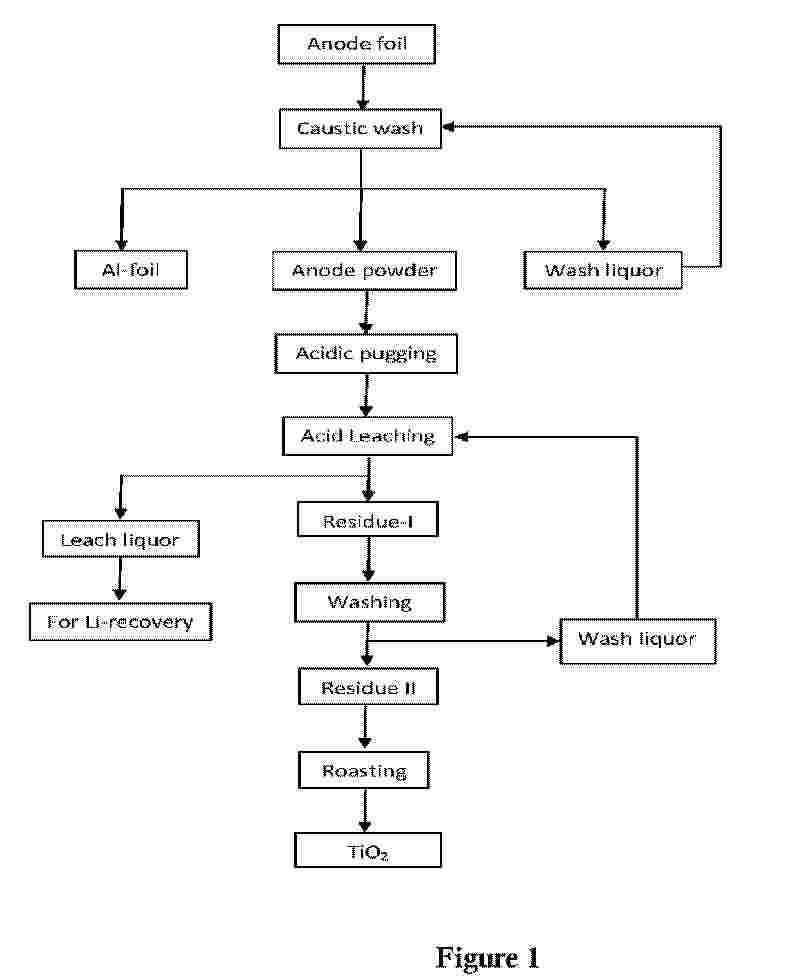
The present invention relates to the field of spent lithium-ion batteries. More particularly, the present invention relates to a process for production of titanium dioxide from anode material of waste lithium titanate batteries in a commercially feasible manner. The method provides the recovery of titanium (>98%) with purity (>99%) of titanium dioxide. The process is simple, easy to operate and cost effective as, a chemical free process is used for recovery.
Resumen de: WO2025032046A1
The present invention relates to a positive electrode active material powder comprising secondary particles comprising a plurality of primary particles, wherein the positive electrode active material powder comprises a lithium metal oxide comprising lithium (Li), M',and oxygen (O), wherein the first lithium metal oxide has a layered α-NaFeO2 structure; wherein M' comprises titanium (Ti) and at least one element selected from the group consisting of nickel (Ni) and manganese (Mn); wherein a grain boundary is present between adjacent primary particles of the secondary particles; wherein a concentration of Ti in the grain boundary is greater than a concentration of Ti in the adjacent primary particles; and wherein the positive electrode active material powder has a surface area between 0.3 m2/g and 1.2 m2/g as determined by BET measurement.
Resumen de: EP4760917A1
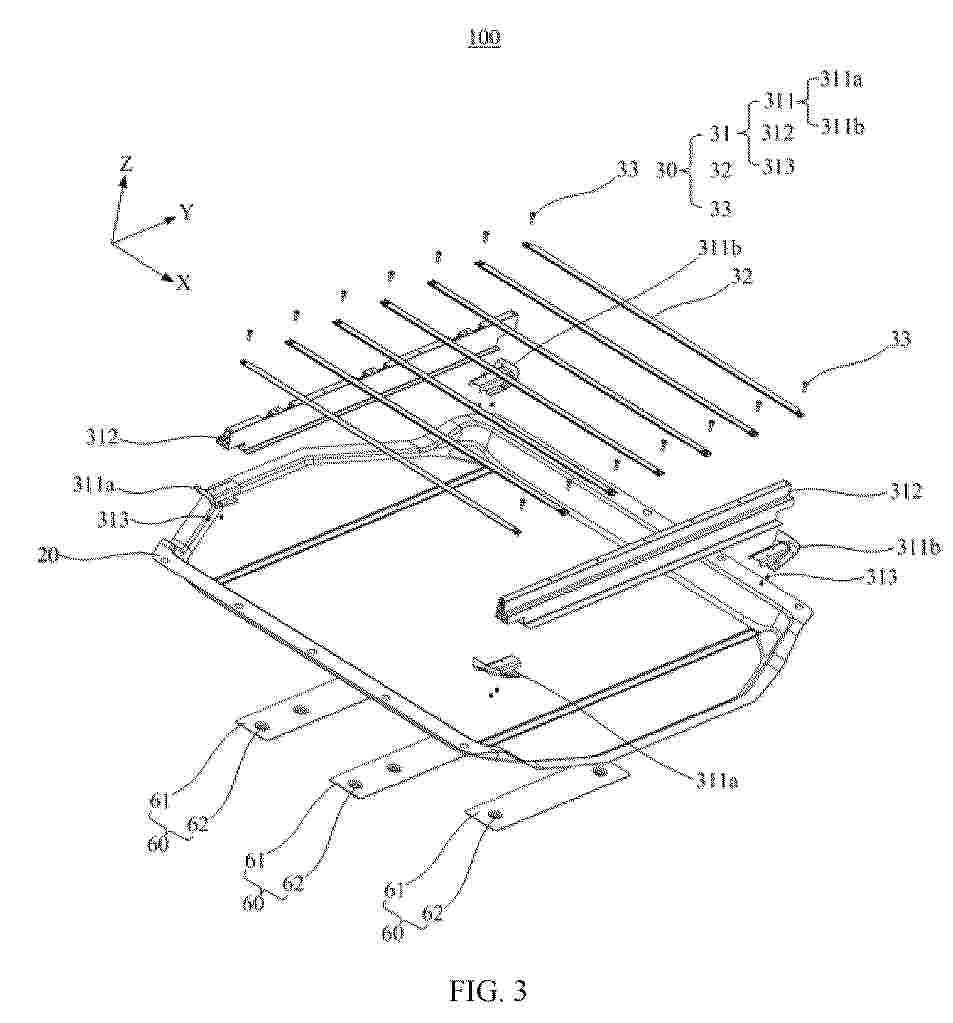
A battery (100) and an electric device are provided. The battery (100) includes a cell assembly (10), a case cover (20), and a constraining structure (30). The case cover (20) is configured to be fixedly connected to the cell assembly (10), the case cover (20) has a cavity (23), the cavity (23) is configured to accommodate at least a portion of the cell assembly (10), the constraining structure (30) is configured to constrain swelling of the cell assembly (10), and the constraining structure (30) is disposed on the case cover (20).
Resumen de: EP4760940A1
The present application relates to the technical field of batteries, and discloses a battery pack and a power unit. The battery pack includes an edge beam, a first protective plate, a second protective plate, and a battery module, where the edge beam is formed in a ring shape, the edge beam has a first cavity inside, a first through hole is provided on a peripheral wall of the edge beam, and a first explosion-proof valve is provided in the first through hole; the first protective plate is arranged at an end of the edge beam in an axial direction and connected to the edge beam, and the first protective plate is configured to block the end of the edge beam in the axial direction and define a mounting space with the edge beam; the second protective plate and the first protective plate are arranged at the same end of the edge beam and connected to the edge beam, the second protective plate is located on a side of the first protective plate that is away from the mounting space, the second protective plate is spaced apart from the first protective plate to define a gas outlet channel, and the gas outlet channel connects the first cavity and the mounting space; and the battery module is arranged in the mounting space. The battery pack and power unit provided in the present application can effectively reduce the risks that other components inside the battery pack cannot be used normally and the entire battery pack experiences thermal runaway due to the thermal runaway of battery cell
Resumen de: US2025161842A1
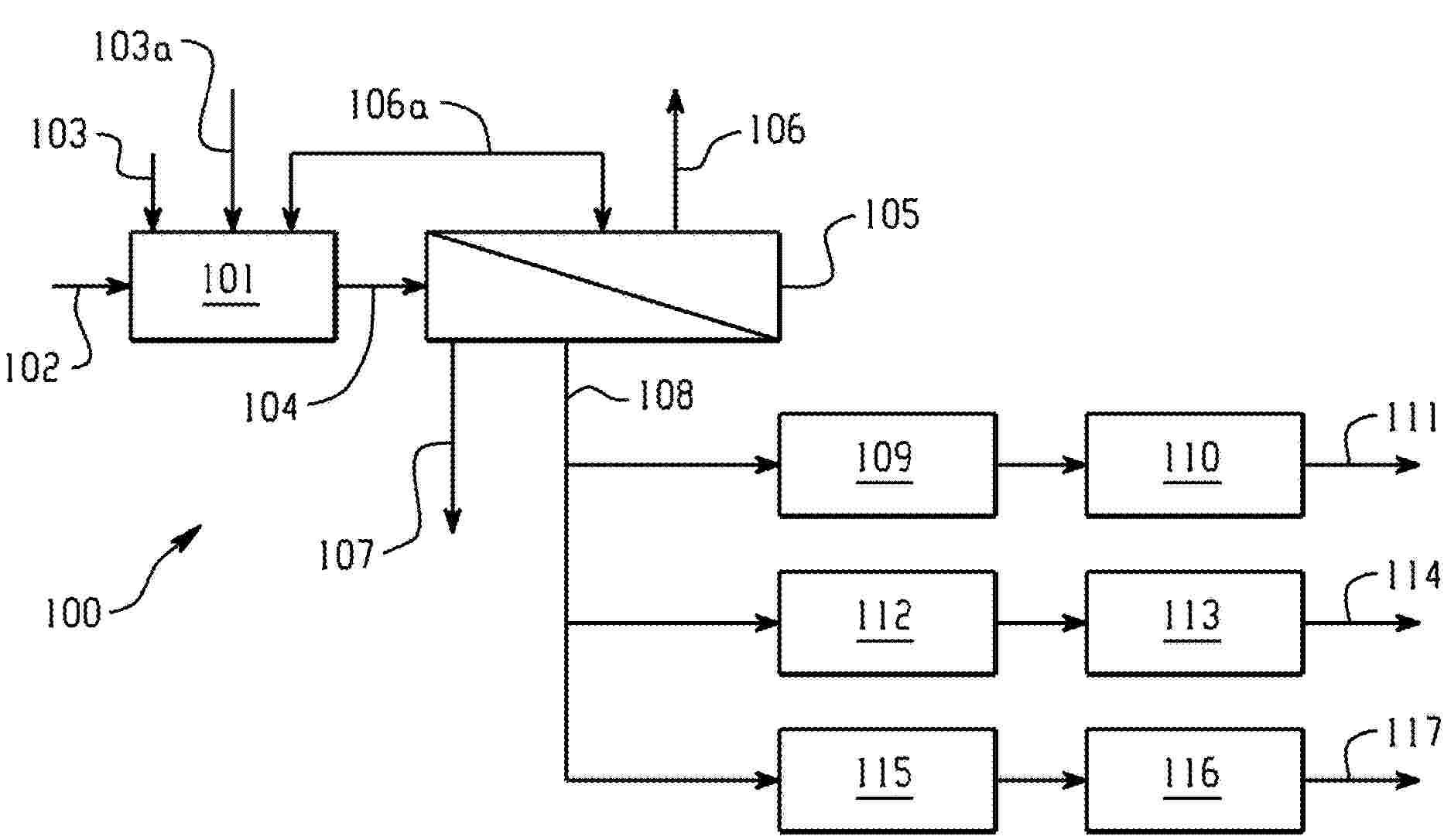
A method of purifying an alkaline electrolyte includes contacting the alkaline electrolyte with an aluminum compound to provide a purified alkaline electrolyte. The alkaline electrolyte includes a metal hydroxide, a compound comprising aluminum, silicon, or a combination thereof, and a solvent. The method can be particularly advantageous when used with a method of processing an iron-containing feedstock.
Resumen de: EP4760824A1
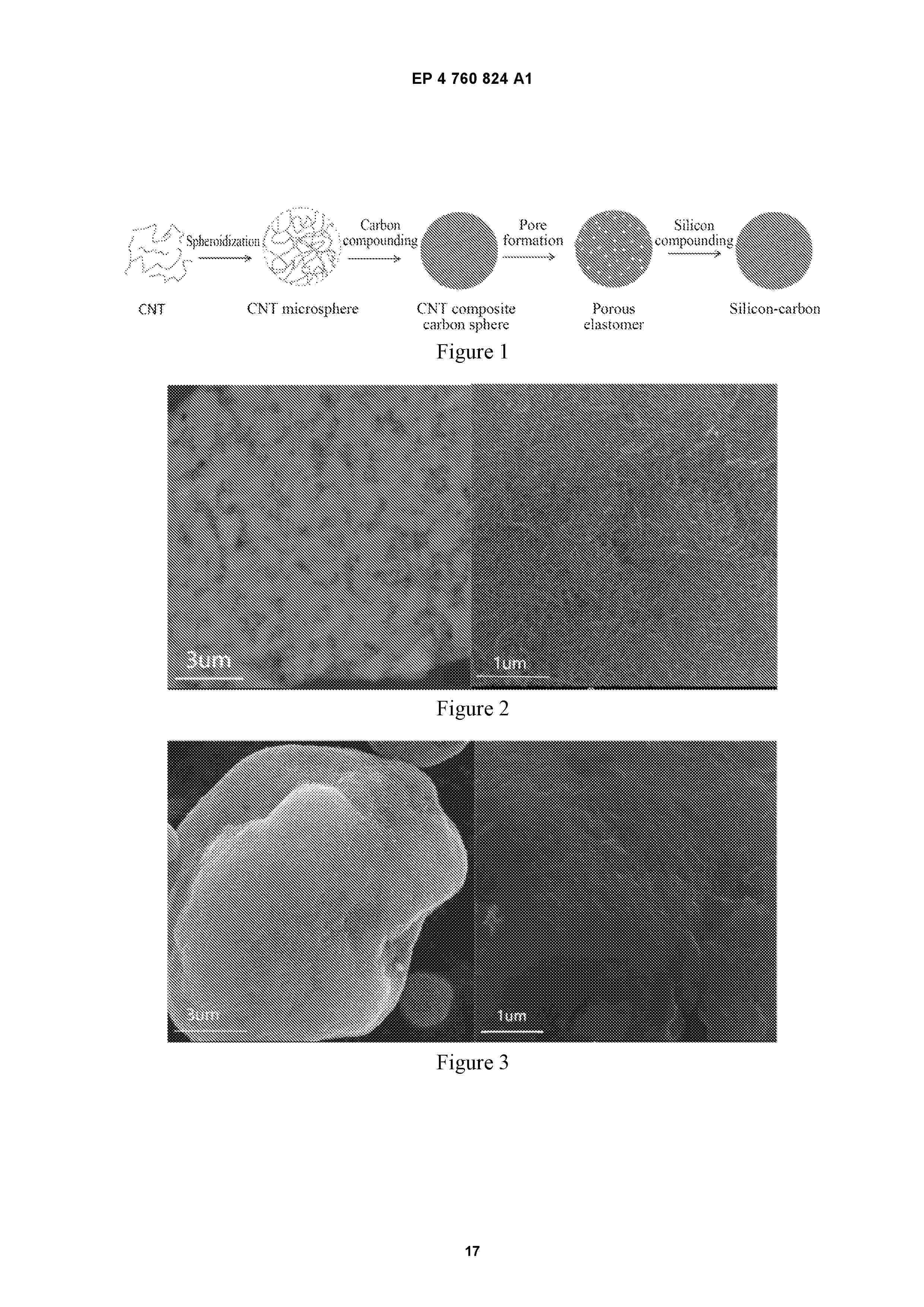
The present application relates to the technical field of negative electrode materials for batteries, and in particular relates to a porous composite elastomer and silicon-carbon, and preparation methods therefor and the use thereof. The present application provides a porous composite elastomer, which has a porous structure and comprises a flexible body and a rigid body, which are interpenetrating, wherein a raw material of the flexible body comprises carbon nanotubes, and the rigid body comprises hard carbon. In the present application, a silicon-carbon composite material is prepared by using carbon nanotubes and hard carbon as carbon sources and compounding same with silicon; and compared with a conventional silicon-carbon composite material, the carbon nanotubes, serving as a bridge between the silicon and the hard carbon, effectively improve the conductivity and the ion conducting energy, thereby improving the rate performance of a negative electrode material.
Resumen de: EP4760834A1
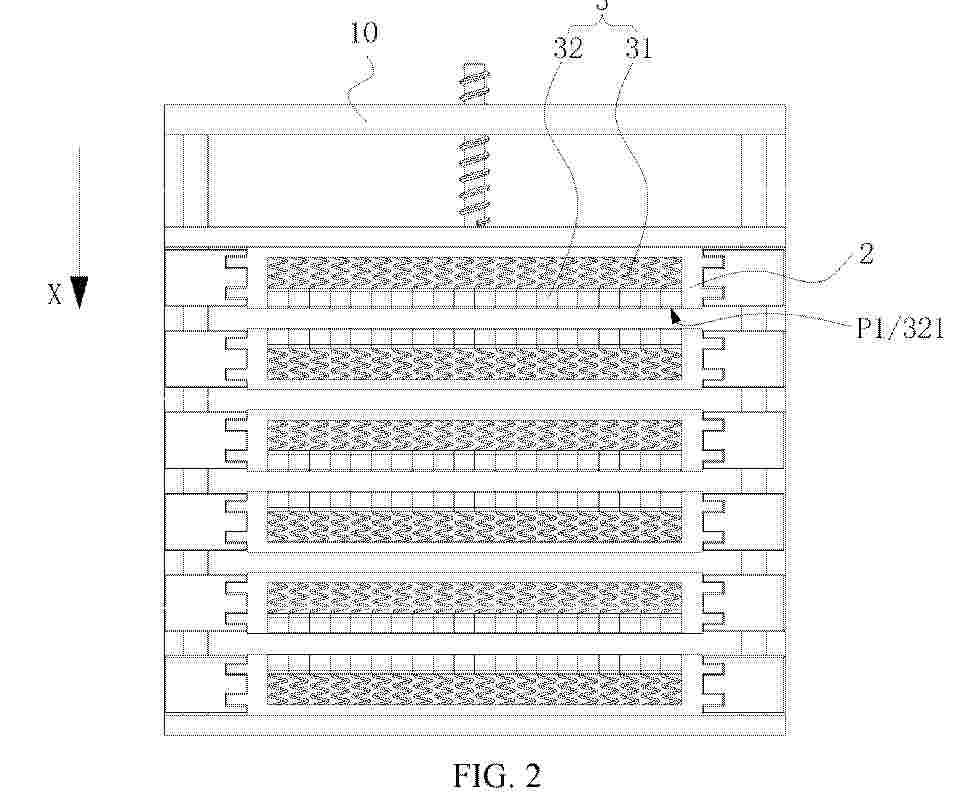
The present application provides a battery pressurizing device and a battery production system. The battery pressurizing device comprises a bearing mechanism and pressurizing assemblies. Each pressurizing assembly comprises a pressurizing plate and a plurality of pressurizing units; the pressurizing plate is movably arranged on the bearing mechanism in a first direction; each pressurizing unit comprises an adjustment portion and a pressurizing portion; the adjustment portion is connected to the pressurizing plate and the pressurizing portion; the end of the pressurizing portion in the first direction is provided with an outer end surface, and the outer end surface is used for abutting against a battery cell; and the adjustment portion is used for switching the position of the outer end surface in the first direction. The present application can realize pressurizing of the battery cells, and has good compatibility.
Resumen de: EP4759170A1
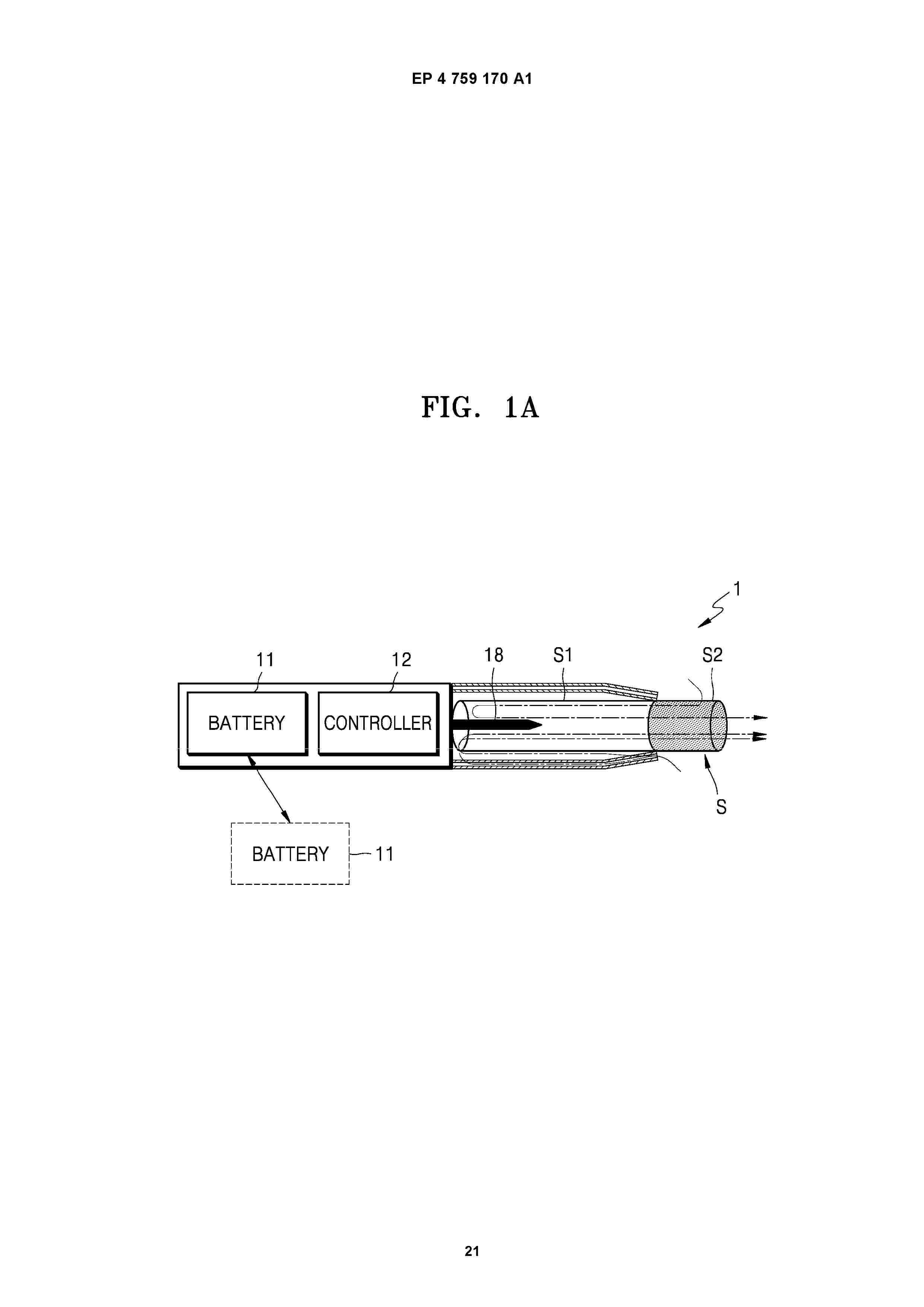
An aerosol generating device includes a body including an accommodation space for accommodating an aerosol generating article, a heater for heating the aerosol generating article accommodated in the accommodation space, a plurality of batteries which are detachably coupled to the body and include a supply terminal for supplying power to the interior of the body, and a plurality of receiving terminals for receiving power by contacting the supply terminal in different directions, wherein the body includes a first extension portion and a second extension portion extending in a first direction while facing each other, a first base portion extending in a second direction crossing the first direction so as to cross the first extension portion and the second extension portion, and a second base portion protruding from the first base portion in the first direction so as to be connected to the second extension portion, and having the plurality of receiving terminals arranged therein.
Resumen de: EP4759881A1
Provided are a resin composition having excellent conductivity, toughness, processability, and long-term stability, a molded article, a composite, and production methods therefor. Specifically, provided is a polyarylene sulfide (PAS) resin composition containing a PAS resin (A) and a carbon-based material (B) other than carbon fibers as essential components, in which the PAS resin (A) has a melt viscosity (V6) of 200 Pa·s or less, the carbon-based material (B) other than carbon fibers has a pH of 6 or more, a mixing amount of the carbon-based material (B) other than carbon fibers is 5 to 80 parts by mass relative to 100 parts by mass of the PAS resin (A), and a bending elastic modulus is 18 GPa or less. A molded article, a composite, and production methods therefor are also provided.
Resumen de: WO2025032095A1
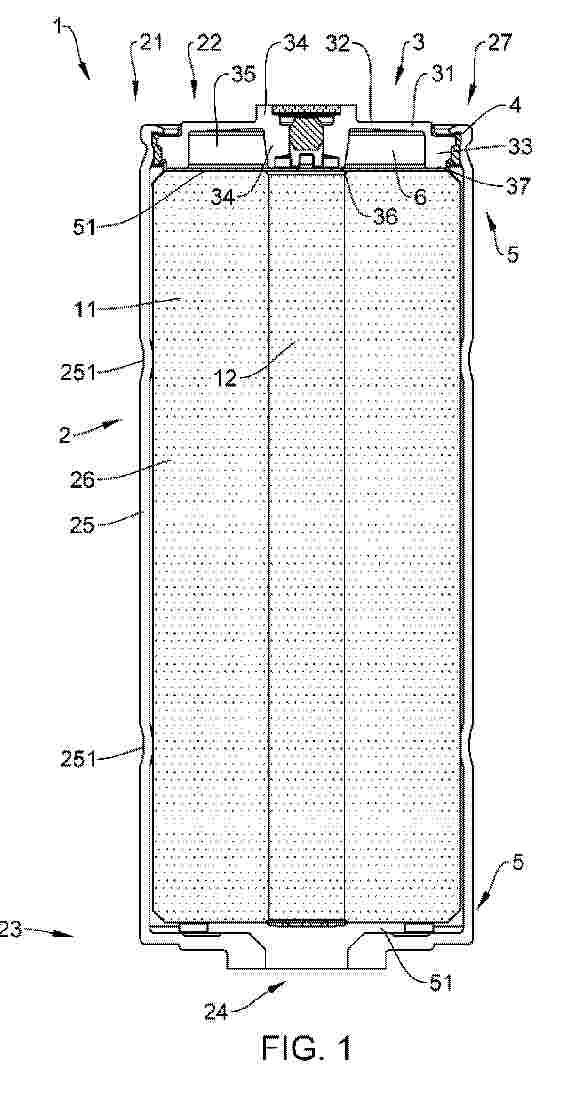
A lid assembly for an energy storage cell comprises a lid member having a lid circumferential portion, the lid circumferential portion extending in a circumferential direction and having a profile that includes a sealing support protrusion that extends in a radial direction; a sealing member extending in the circumferential direction, and having an annular shape and a profile that includes a first vertical sealing portion that is recessed in the radial direction, wherein the sealing support protrusion and the first vertical sealing portion engage each other in a sealing manner to prevent the leakage of a fluid electrolyte.
Resumen de: WO2025031528A1
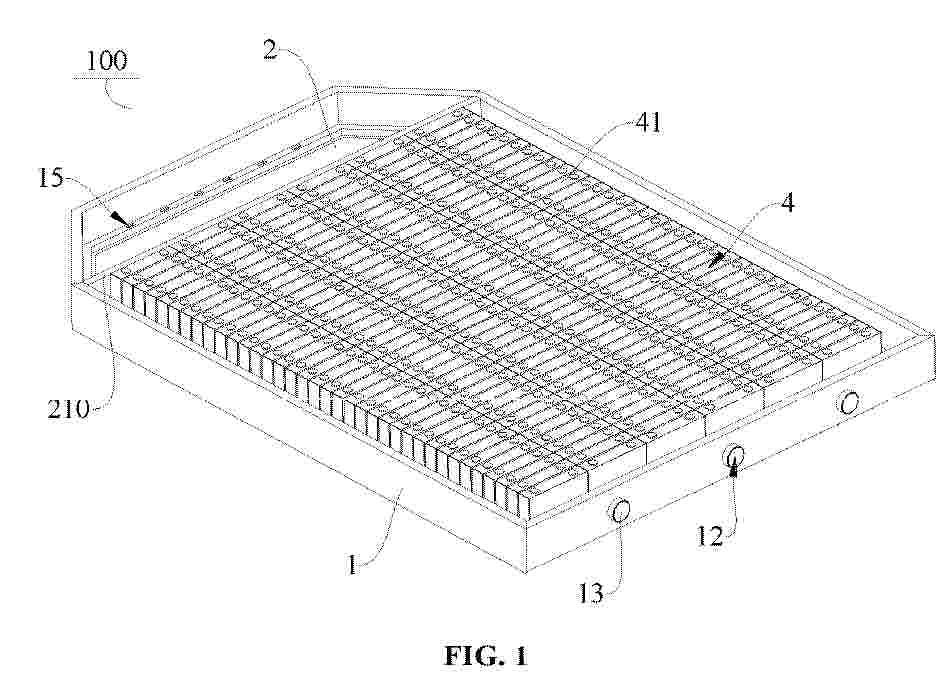
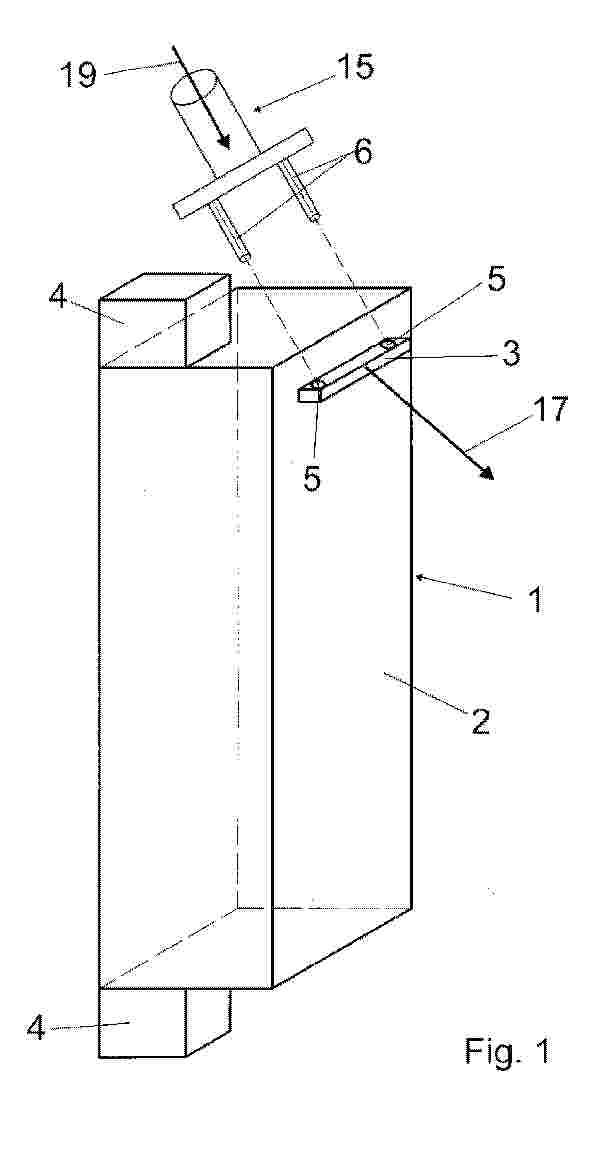
The invention relates to a method for making accessible the interior of a closed battery housing (1), in particular of electric vehicles, in particular during the recycling and/or repair of the battery, wherein on a cover (2) or on an outer surface of the closed battery housing (1) at least one engagement element (3) is arranged in the region of the outer side of the battery housing (1), and a lifting device (15) via the at least one engagement element (3) exerts a force (17), directed away from the battery housing (1), onto the cover (2) or outer surface, as a result of which, preferably under the influence of cold (11, 14), the cover (2) or the outer surface is mechanically separated and lifted from the remainder of the battery. The invention also relates to a device suitable for this and to a correspondingly designed battery cover (1).
Resumen de: EP4760957A1
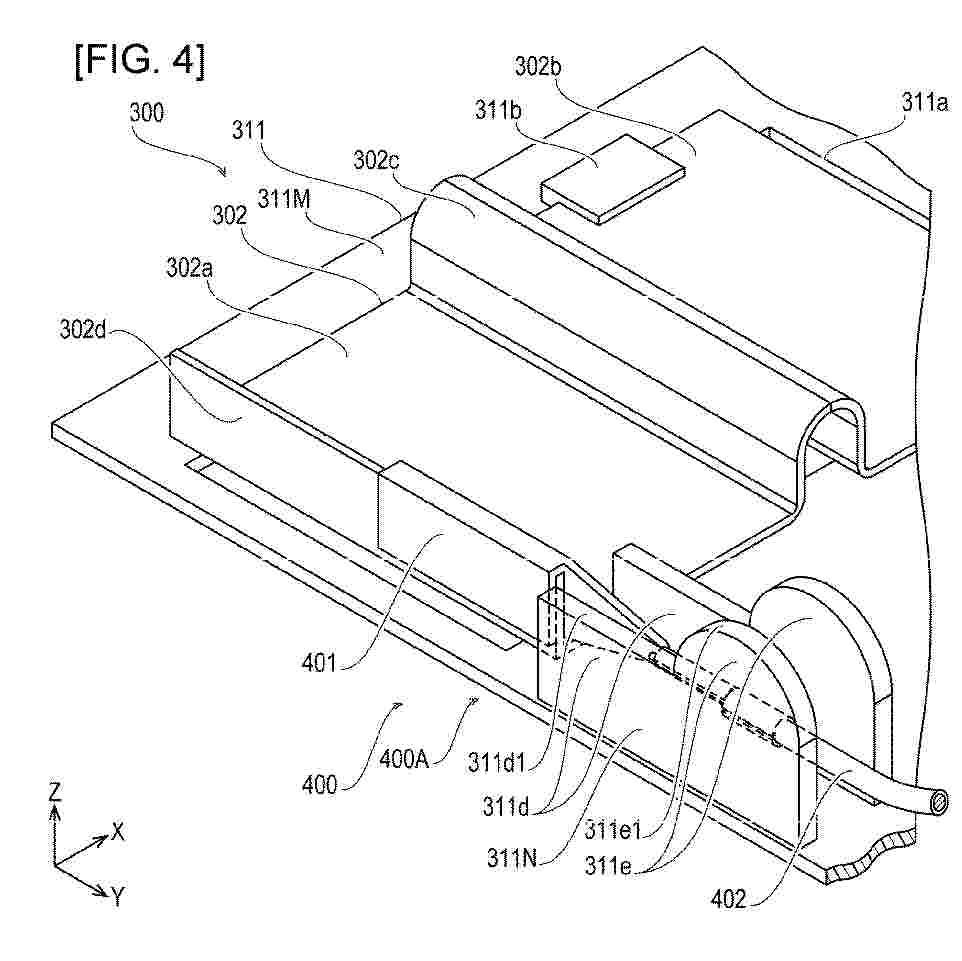
A battery pack (1) has a cell (100), a bus bar (inter-cell bus bar 302), a harness (400A) that includes a terminal (401) connected to the inter-cell bus bar (302) and an electrical wire (402), and a holding member (bus bar holder 311) that holds the inter-cell bus bar (302). The bus bar holder (311) includes a base portion (311M) and a projecting portion (311N). The harness (400A) includes a first connection portion (400P) in which the inter-cell bus bar (302) and the terminal (401) are connected to each other and a second connection portion (400Q) in which the terminal (401) and the electrical wire (402) are connected to each other. The projecting portion (311N) includes a first wall portion (311d) adjacent to the first connection portion (400P) and a second wall portion (311e) adjacent to the second connection portion (400Q). The first wall portion (311d) and the second wall portion (311e) are adjacent to the harness (400A). The second wall portion (311e) includes a portion extending beyond than the second connection portion (400Q) in a direction away from the cell (100).
Resumen de: WO2025032011A1
The present invention relates to spherical metal mixed hydroxides, a process for production thereof and their use as precursors for cathode active materials of Li-ion/polymer batteries.
Resumen de: EP4760794A1
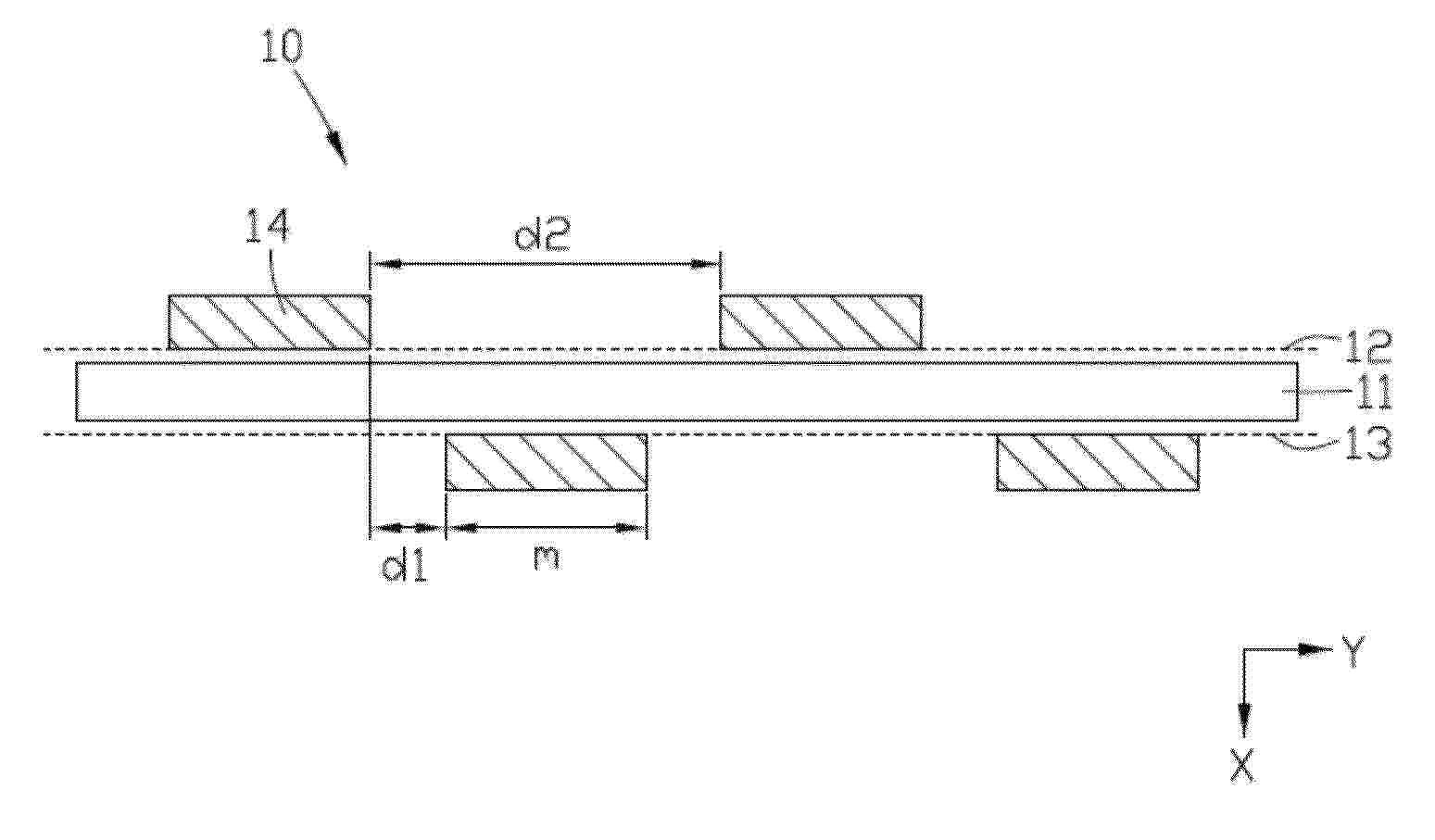
An electrode plate composite (10) includes a negative electrode plate (11), a first separator (12), a second separator (13), and a plurality of positive electrode plates (14). The negative electrode plate (11) includes a first current collector (111), a first active material layer (112), and a second active material layer (113). The first current collector (111) includes a first surface (1111) and a second surface (1112) arranged opposite to each other along a first direction (X). The first active material layer (112) is disposed on the first surface (1111), and the second active material layer (113) is disposed on the second surface (1112). The plurality of positive electrode plates (14) are alternately laminated on the first separator (12) and the second separator (13), and projections of the plurality of positive electrode plates (14) along the first direction (X) do not overlap.
Resumen de: EP4760825A1
The present application relates to a current collector and a use thereof. The present application can provide a current collector capable of forming an electrode that does not affect performance and operation of a secondary battery by exhibiting excellent electrical characteristics, including low resistance, in a normal state, and can secure stability by blocking energization of an electrode assembly through an increase in resistance in an abnormal state, and a use thereof.
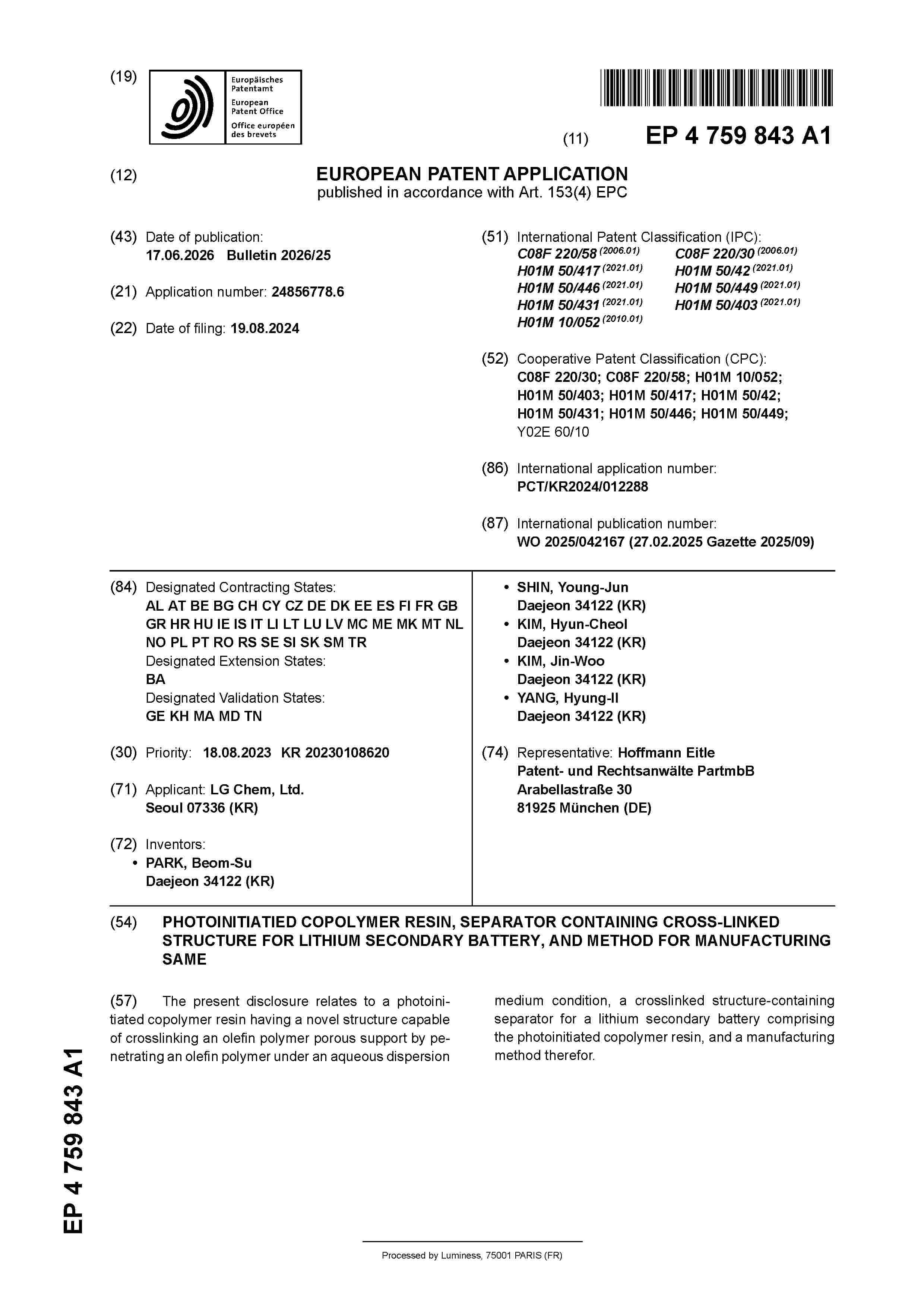
Nº publicación: EP4759843A1 17/06/2026
Solicitante:
LG CHEMICAL LTD [KR]
LG Chem, Ltd.
Resumen de: EP4759843A1
The present disclosure relates to a photoinitiated copolymer resin having a novel structure capable of crosslinking an olefin polymer porous support by penetrating an olefin polymer under an aqueous dispersion medium condition, a crosslinked structure-containing separator for a lithium secondary battery comprising the photoinitiated copolymer resin, and a manufacturing method therefor.
 BOPI
BOPI
 Sede Electrónica