Si deseas distinguir tus productos, servicios o ambos de los de otra empresa, es posible que necesites una marca o nombre comercial. Descubre qué son, en qué consiste su procedimiento de registro y qué implica.

Información sobre los plazos de presentación de solicitudes de transformación de marcas de la Unión Europea en marca nacional española. Más información


Si tienes un nuevo dispositivo, producto o procedimiento que resuelva un problema técnico o tenga una ventaja práctica, existen distintas formas de protegerlo en España y en otros países. Descubre cómo hacerlo.

¿Tu innovación reside en la estética, la ornamentación o la apariencia de tu producto? Protégela mediante un diseño industrial. Descubre qué derechos confiere el registro y cómo realizar la tramitación.

Las indicaciones geográficas protegen el nombre de un producto originario de una zona geográfica, a la cual le debe una determinada calidad, reputación u otra característica. Descubre qué son, en qué consiste su procedimiento de registro y qué beneficios conceden.

Las patentes publicadas en todo el mundo son una valiosa fuente de información científica, técnica y comercial.

Si eres emprendedor/a o una empresa y quieres potenciar y mejorar la rentabilidad de tu negocio protegiendo de forma adecuada los activos intangibles de tu organización, en este espacio encontrarás lo necesario.


 1426
resultados
1426
resultados
 Última actualización
29/06/2026 [08:41:00]
Última actualización
29/06/2026 [08:41:00]


 Resultados 1075 a 1100 de 1426

Resumen de: EP4760895A1
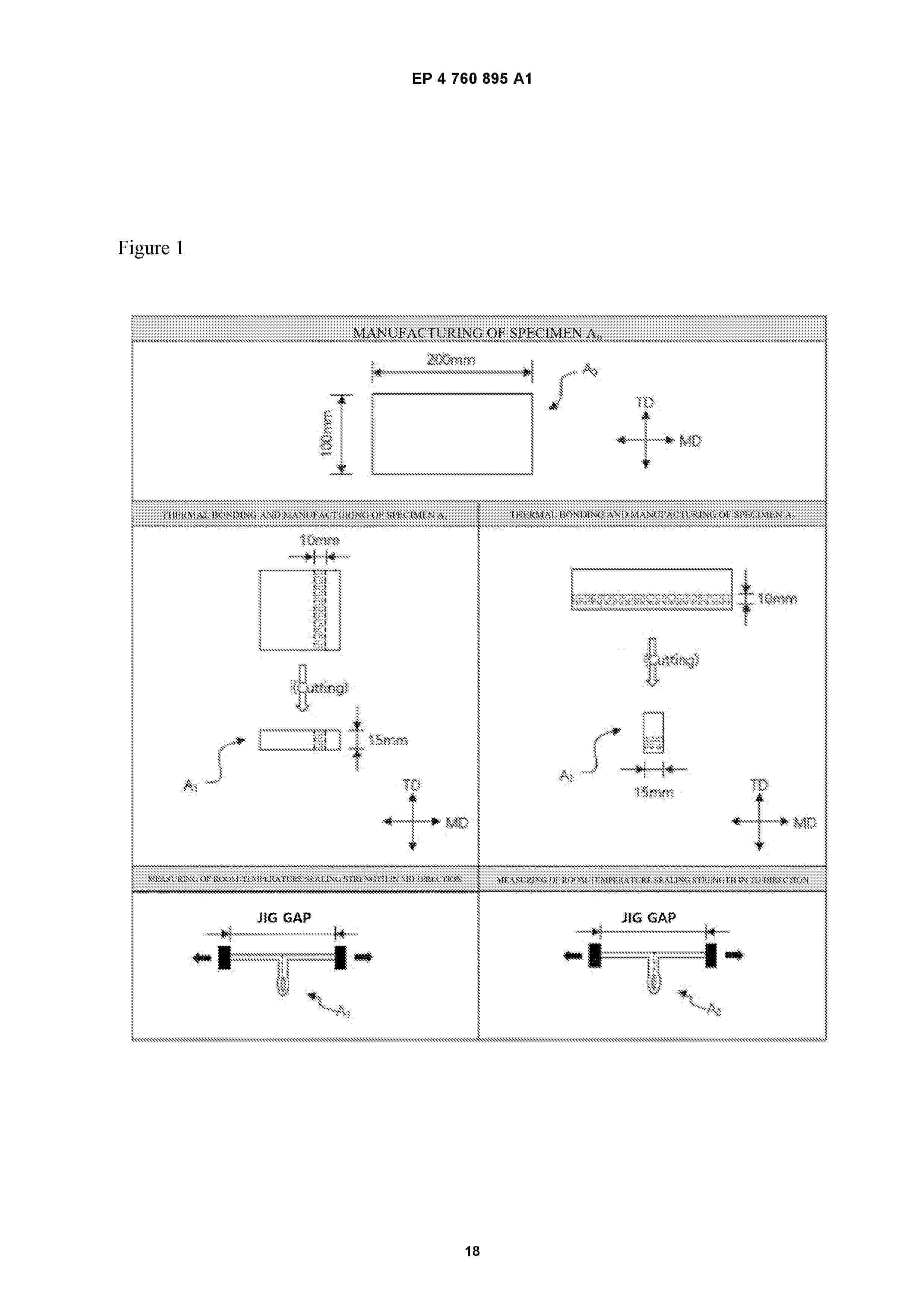
The present disclosure provides a pouch film for a secondary battery exterior, the pouch film comprising an outer layer, a barrier layer, and a sealant layer that are sequentially laminated, wherein the sealant layer comprises a polyolefin-based resin, an upper yield strength of the sealant layer in an MD direction is in a range of 17.50 N/mm2 to 19.99 N/mm2, an upper yield strength thereof in a TD direction is in a range of 16.50 N/mm2 to 18.99 N/mm2, and a glass transition temperature of the sealant layer is in a range of -30.00°C to -20.00°C.

Resumen de: WO2025032030A1
The present invention relates to a high purity ammonium salt of bis(fluoro sulfonyl)imide (NH4FSI), to a process for its manufacturing and to its use as an intermediate to produce high purity lithium bis(fluorosulfonyl)imide (LiFSI).
Resumen de: EP4760805A1
A double-layer coated ternary material and a preparation method therefor, and a lithium-ion battery. The double-layer coated ternary material comprises a monocrystalline high-nickel ternary material, a polycrystalline nanometer ternary material layer coated outside the monocrystalline high-nickel ternary material, and a modification compound layer coated outside the polycrystalline nanometer ternary material layer, wherein the modification compound layer comprises a B-containing compound and an Al-containing compound. By coating the monocrystalline high-nickel ternary material with the polycrystalline nanometer ternary material, the rate capability and specific discharge capacity of the material can be improved, and the impedance can be reduced. The modification compound layer can integrate the advantages of the B-containing compound and the Al-containing compound, and can effectively improve the first-cycle specific charge-discharge capacity, initial efficiency, normal-temperature cycle performance and high-temperature cycle performance of the double-layer coated ternary material.
Resumen de: EP4760955A2
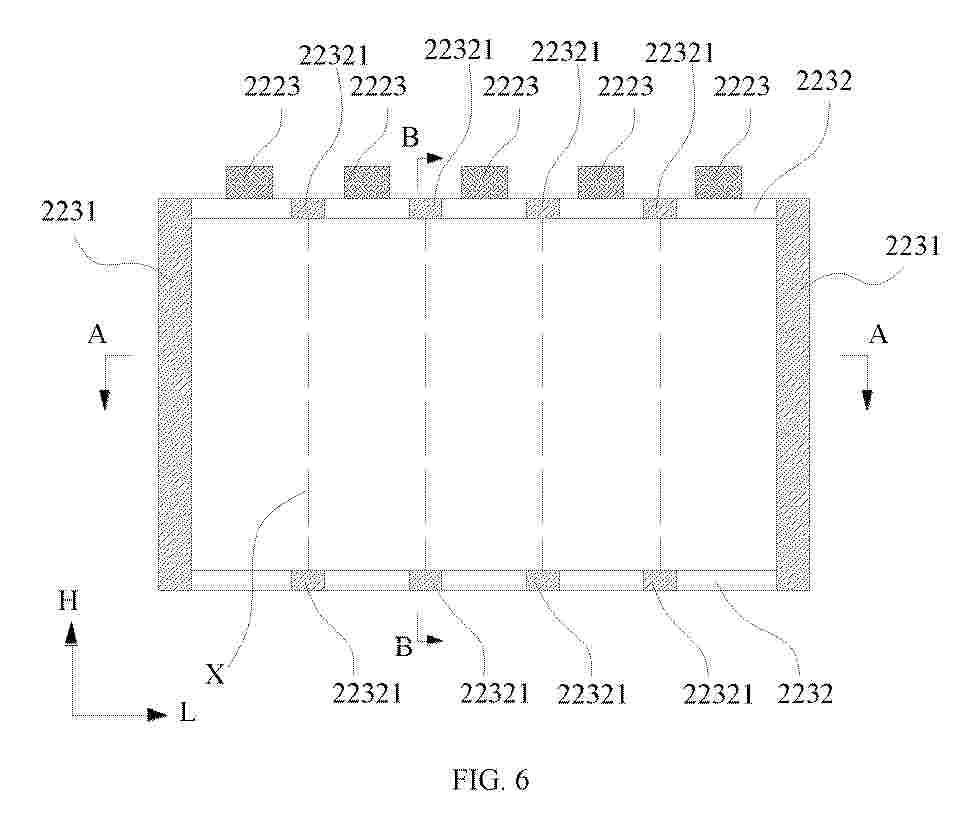
This application provides an electrode assembly and a manufacturing method thereof, a battery cell, a battery, and an electric apparatus. The electrode assembly includes a first electrode plate, and separators provided on two sides of the first electrode plate in a thickness direction of the electrode plate and stacked with the first electrode plate; where in an unfolded state of the electrode assembly, the separator has first edge portions each exceeding an end of the first electrode plate in a length direction of the separator, and the separator has second edge portions each exceeding an end of the first electrode plate in a height direction of the separator; and in the thickness direction of the electrode plate, the corresponding first edge portions on two sides of the first electrode plate are at least partly hot-melt connected to form first hot-melted segments, and the corresponding second edge portions on two sides of the first electrode plate are at least partly hot-melt connected to form second hot-melted segments. The technical solution in this application can enhance the electrochemical performance of batteries and improve the safety and reliability of batteries.
Resumen de: EP4759702A1
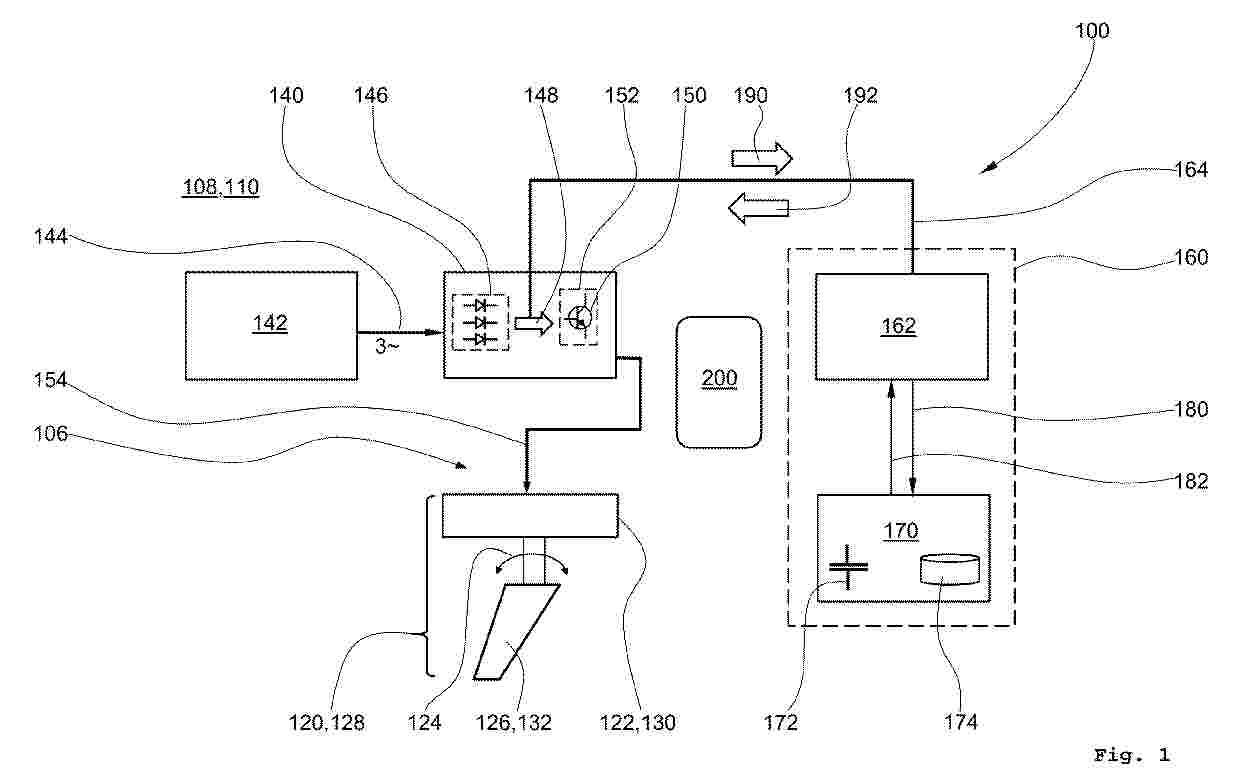
Die Erfindung betrifft ein Energiespeichersystem (100) für mindestens einen elektrischen Verbraucher (106) in einem Bordnetz (142) eines Wasserfahrzeugs (108), wobei das Energiespeichersystem (100) mindestens einen an das Bordnetz (142) angeschlossenen Umrichter (140) zur Speisung des Verbrauchers (106) aufweist. Dem mindestens einen Umrichter (140) ein Energiespeicher (160) zugeordnet. Erfindungsgemäß weist der Energiespeicher (160) mindestens einen Energiewandler (162) und mindestens eine diesem zugeordnete Speichereinheit (170) aufweist, wobei der Energiewandler (162) dazu ausgebildet ist, einen bidirektionalen Energiefluss (180, 182) zu ermöglichen, infolgedessen eine Rückspeisung (182) von überschüssiger elektrischer Energie in das Bordnetz (142) des Wasserfahrzeugs realisierbar ist. Hierdurch lassen sich auch hohe elektrische Lastspitzen verursachende Verbraucher (106), wie eine Stabilisierungseinrichtung (120), eine Ruderanlage (128) oder dergleichen, problemlos an einem Bordnetz (142) eines Wasserfahrzeugs (108) betreiben.
Resumen de: EP4760904A1
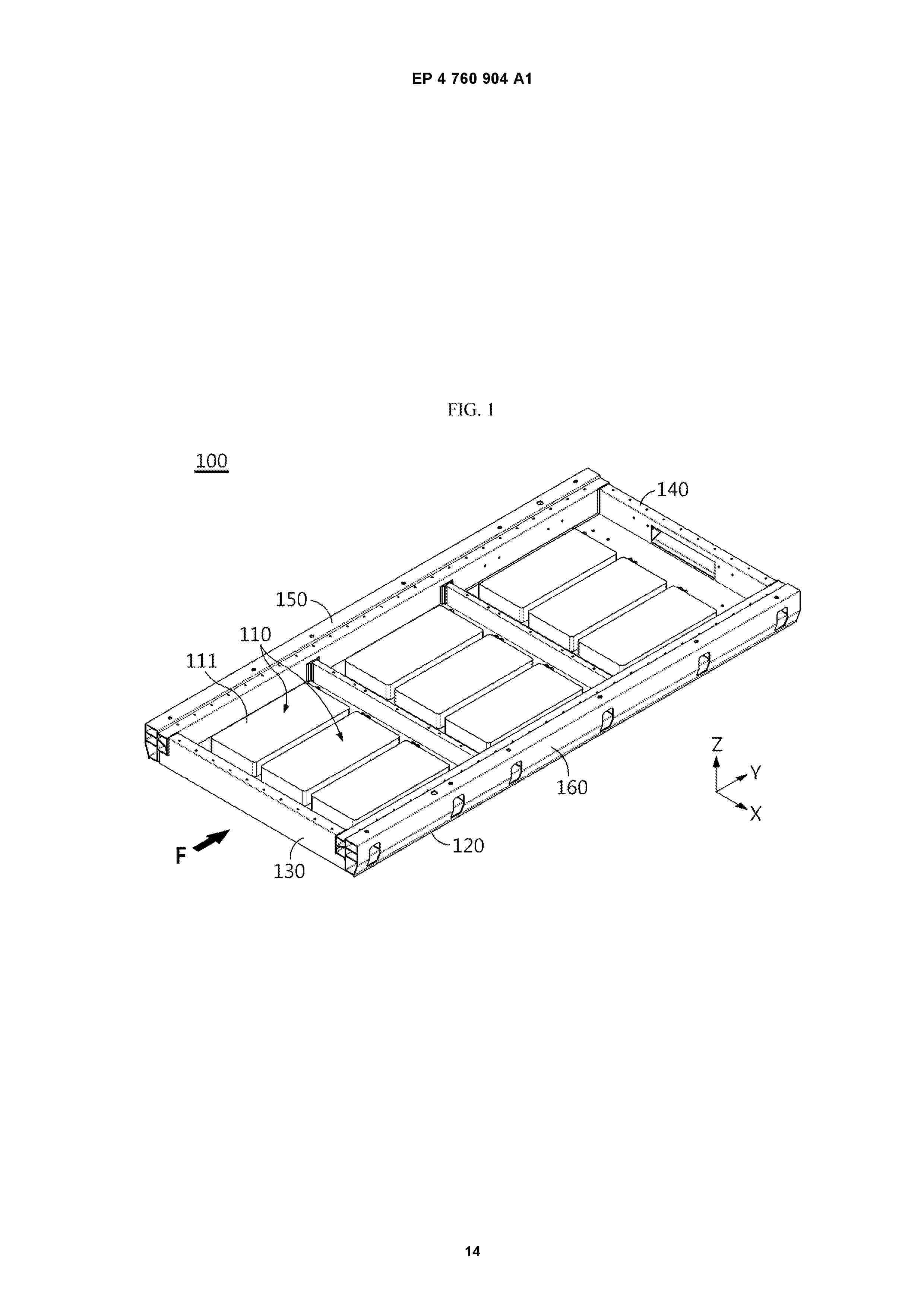
Provided is a battery pack including a plurality of battery modules; a base plate on which the plurality of battery modules are located; a front frame including a front cover portion covering a front of the base plate and a front plate portion extending rearward from one side of the front cover portion, wherein the front cover portion and the front plate portion are integrally formed; a rear frame having a rear cover portion covering a rear of the base plate, and a rear plate portion extending forward from one side of the rear cover portion, wherein the rear cover portion and the rear plate portion are integrally formed; a first side frame covering a left side of the base plate; and a second side frame covering a right side of the base plate.
Resumen de: EP4760905A2
A battery pack according to one embodiment of the present disclosure includes a lower pack housing having a plurality of module regions; a partition wall that partitions the plurality of module regions; a cell block that is mounted in each of the plurality of module regions; and a coupling member that couples the cell block and the partition wall, wherein the cell block includes a battery cell stack formed by stacking a plurality of battery cells; and a side surface plate located between the battery cell stack and the partition wall.
Resumen de: EP4760869A1
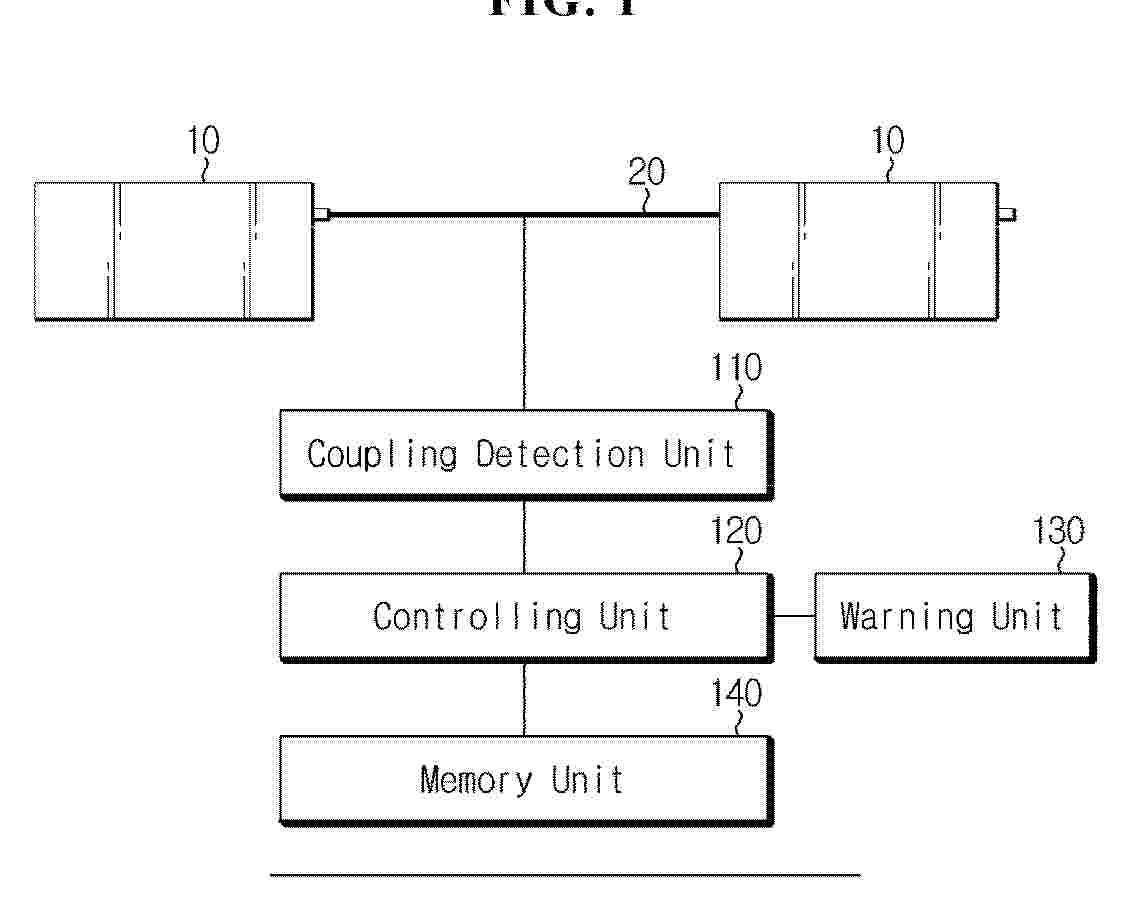
Disclosed are a method and a device for managing a battery pack for promptly and accurately diagnosing the coupling status of a bus bar to a battery module in the battery pack. The device for managing a battery pack of the present invention is a device for managing a battery pack having a plurality of battery modules, and a bus bar coupled between the plurality of battery modules and electrically connecting each of the plurality of battery modules, and comprises: a coupling detection unit for detecting the coupling status of the bus bar to the battery modules; and a control unit for determining whether or not abnormality exists in the coupling status of the bus bar according to the coupling status detected according to the coupling detection unit.
Resumen de: EP4760215A1
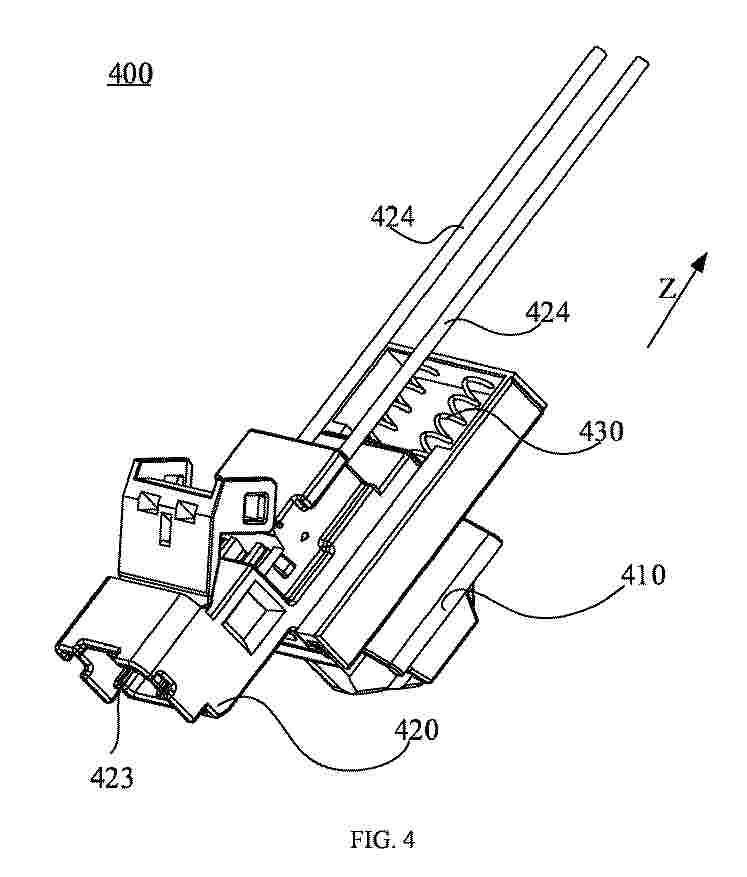
A detection apparatus (400), a battery (100), and an electric apparatus are provided, pertaining to the field of detection technology. The detection apparatus (400) includes a base (410) and a sensor (420), where the base (410) includes one of a guide member and a sliding member. The sensor (420) is configured to be connected to the base (410), the sensor (420) includes a sensor shell, and the sensor shell includes the other of the guide member and the sliding member. The guide member is configured to guide a sliding direction of the sliding member to enable the sensor (420) to move relative to the base (410) along a first direction (Z), where the guide member includes a slide rail (411) and a groove (412), the sliding member includes a slider (421) and a protrusion (422), the slide rail (411) is configured to guide a sliding direction of the slider (421), and the groove (412) is configured to guide a sliding direction of the protrusion (422). The sensor (420) is connected to the base (410) and can move relative to the base (410) along the first direction (Z), so that when the detection apparatus (400) is subjected to impact or the like, the sensor (420) can move relative to the base (410) along the first direction (Z), reducing the probability of damage to the sensor (420).
Resumen de: EP4760927A1
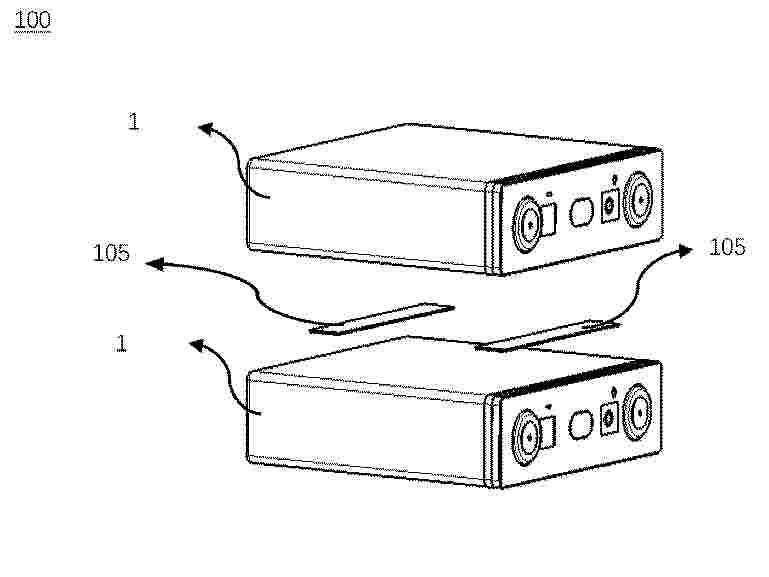
Provided in the present application is a battery pack assembly for a vehicle, the battery pack assembly comprising a bottom tray; at least one battery cell module, which is received on the bottom tray; a battery cell constraint system, which is arranged above the at least one battery cell module, wherein the at least one battery cell module is fixed between the bottom tray and the battery cell constraint system; and a top cover, which is arranged above the battery cell constraint system and configured to be connectable to the bottom tray. The at least one battery cell module comprises a first battery cell group and a second battery cell group, which are adjacent to each other via a side surface portion excluding positive and negative electrode structures and which are axisymmetrically arranged with each other, wherein each battery cell group comprises at least two battery cell pairs and a spacer located between one battery cell pair and the other battery cell pair. Thus, battery cells can be directly integrated into the battery pack assembly by means of only one packaging process, without the need for the battery cells to be assembled into a module by means of a packaging process and for the module to be then subjected to a secondary packaging process to form the battery pack assembly.
Resumen de: EP4760943A1
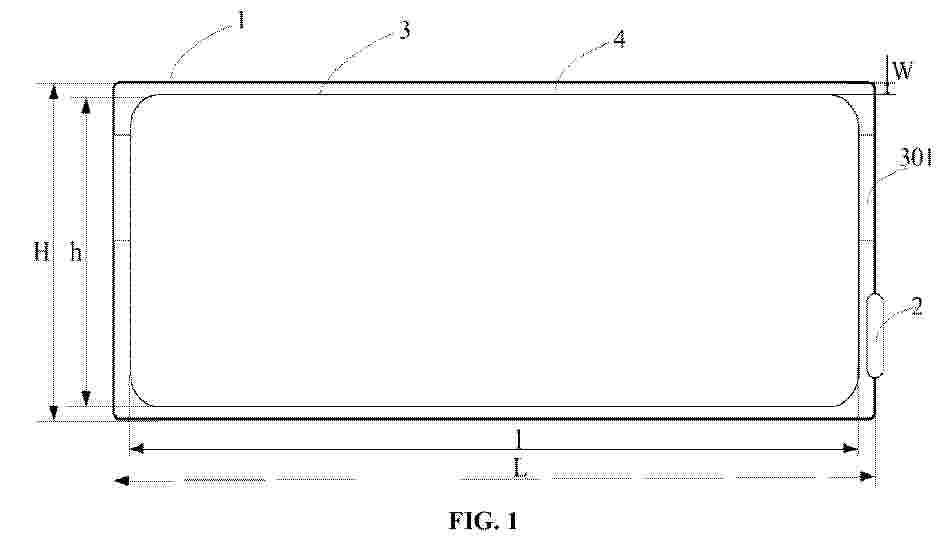
The present application relates to the technical field of batteries. Disclosed are a power battery and a battery pack. The power battery in the present application comprises a housing, a pressure relief mechanism and an electrode group. When the dimensions of a pressure relief channel are determined, an equivalent sectional area S of the pressure relief channel is calculated on the basis of the dimensions of the housing and the formula S=LHTβ/(L+H)/2, S is made to satisfy S 1
Resumen de: EP4760902A1
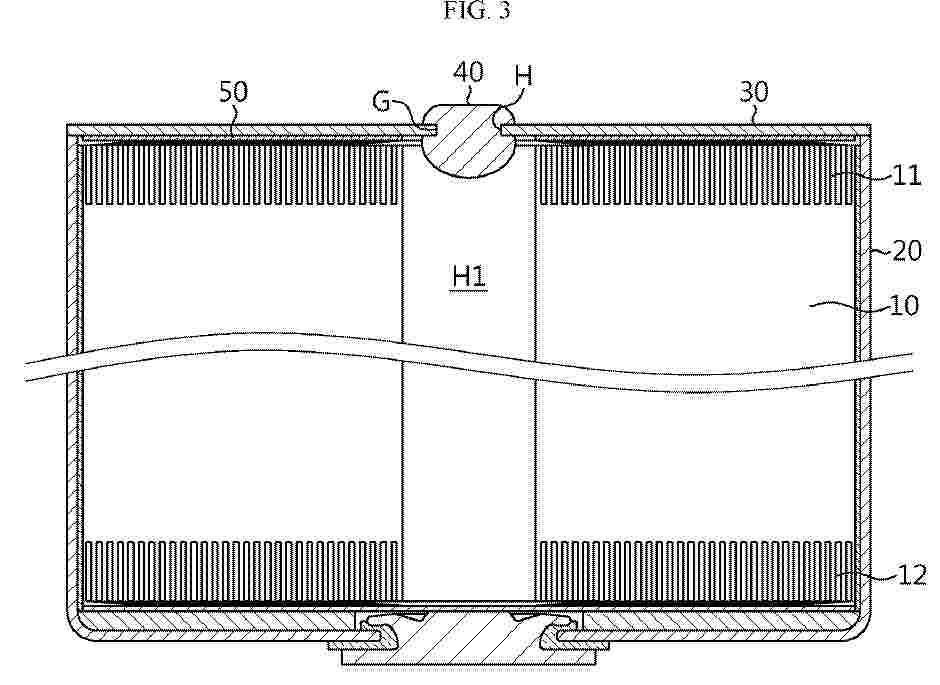
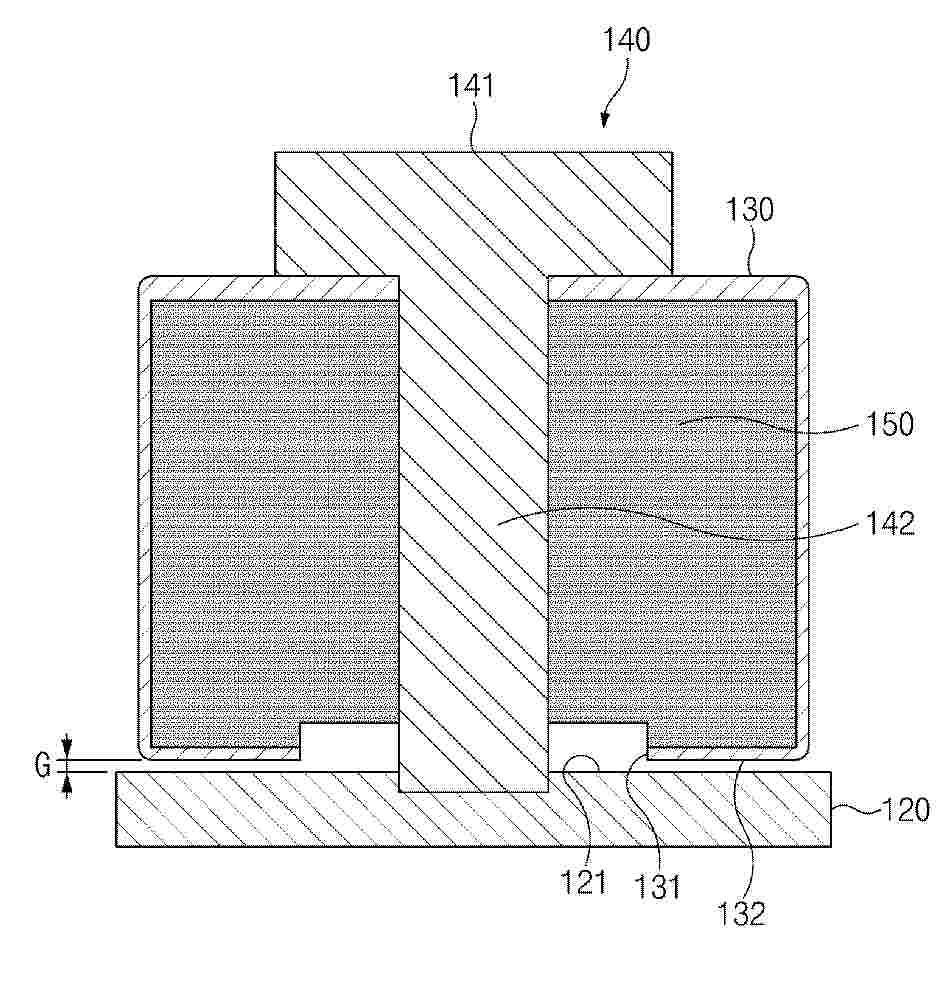
A battery cell according to an embodiment of the present disclosure includes an electrode assembly obtained by winding a first electrode and a second electrode around a winding axis with a separator interposed therebetween to define a core and an outer surface, wherein the first electrode includes an active material portion coated with an active material layer along a winding direction and a first uncoated portion not coated with an active material layer, at least a portion of the first uncoated portion being used as an electrode tab by itself, a battery housing configured to receive the electrode assembly through an opening formed on one side, a housing cover configured to cover the opening and having a through-hole in a center, and a debossed ball configured to be inserted into the through-hole.
Resumen de: EP4760809A1
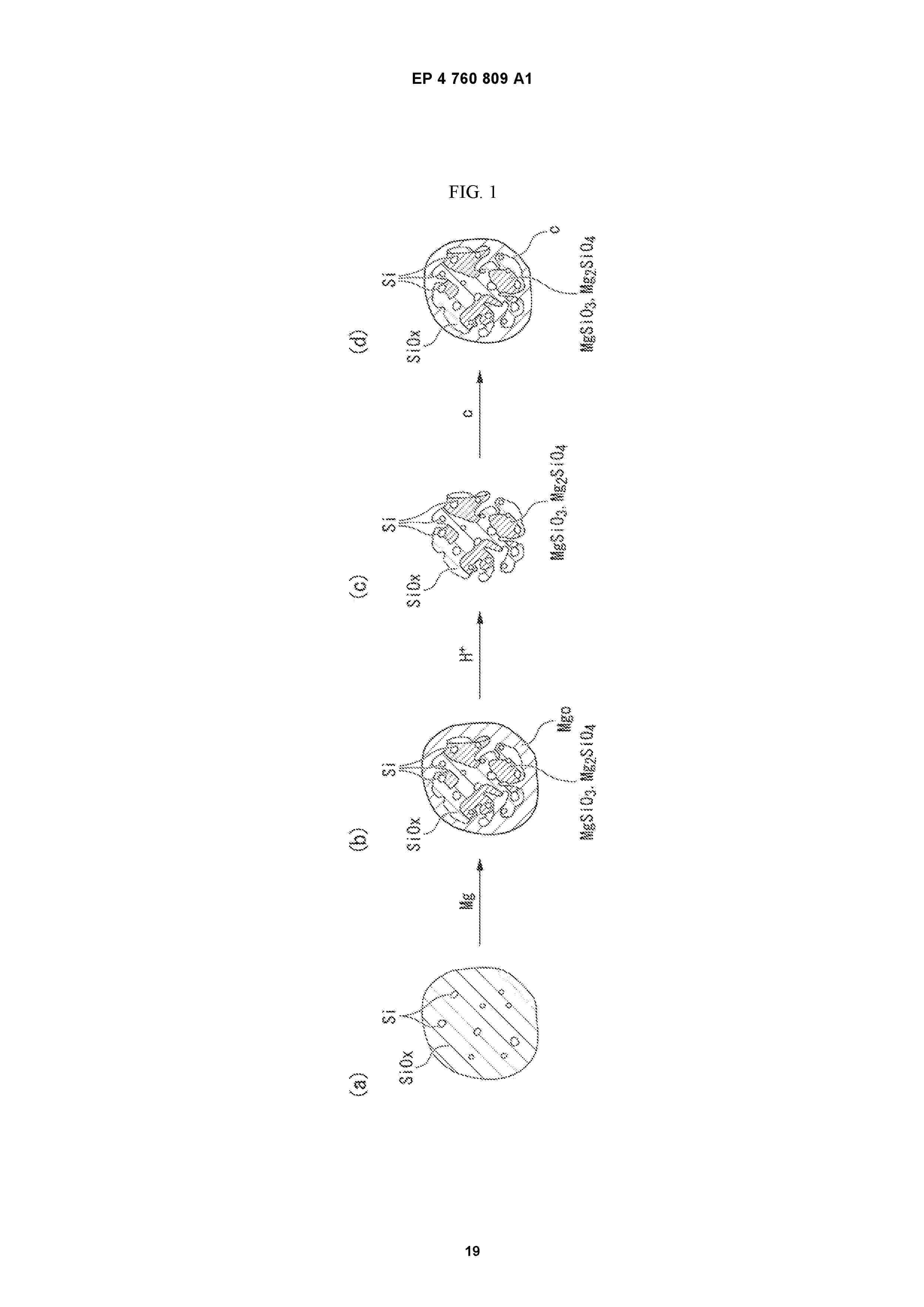
The present invention improves at least one among the initial efficiency, the battery capacity, and the cycle characteristics of a non-aqueous electrolyte secondary battery. A negative electrode active material for a non-aqueous electrolyte secondary battery according to an embodiment of the present invention comprises porous composite particles containing silicon and silicon oxide (SiOx, 0 < x≤2), wherein some or all of the pores of the porous composite particles are filled with carbon, and some or all of the surfaces of the porous composite particles are coated with carbon.
Resumen de: EP4760298A1
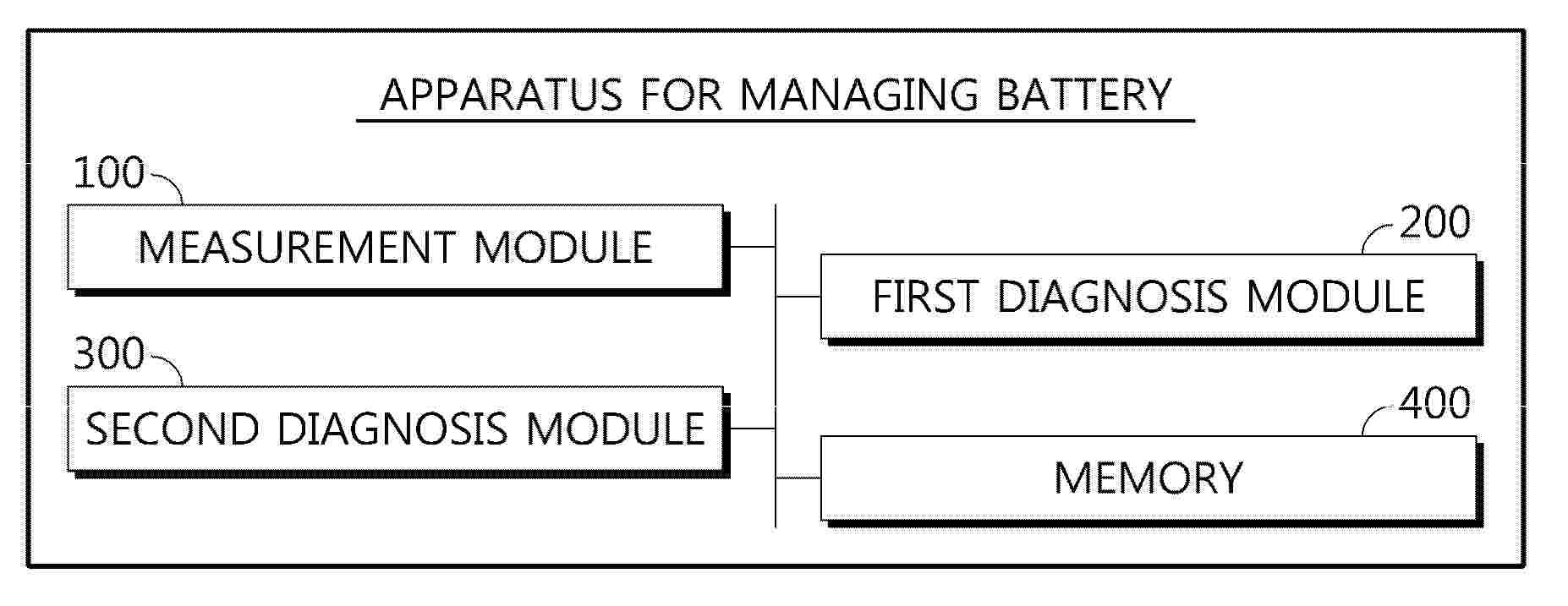
An apparatus for managing a battery may include a measurement module configured to measure state information of the battery, a first diagnosis module configured to diagnose whether the battery is abnormal by comparing the state information measured by the measurement module with a first diagnosis criterion, and a second diagnosis module configured to diagnose whether the battery is abnormal based on a change amount of the state information measured by the measurement module.
Resumen de: EP4760821A1
The present invention relates to an electrode including an electrode current collector, and an electrode active material layer positioned on the electrode current collector, wherein the electrode active material layer includes an electrode active material, a single-walled carbon nanotube structure, a first dispersant containing a hydrogenated nitrile-based copolymer, and a second dispersant containing a fluorine-based polymer, the single-walled carbon nanotube structure has an average diameter of 60 nm to 300 nm, and an interface resistance between the electrode active material layer and the electrode current collector, measured by a multi-probe resistance (MP resistance) measurement method, is 0.43 Ω·cm2 or less.
Resumen de: EP4760840A1
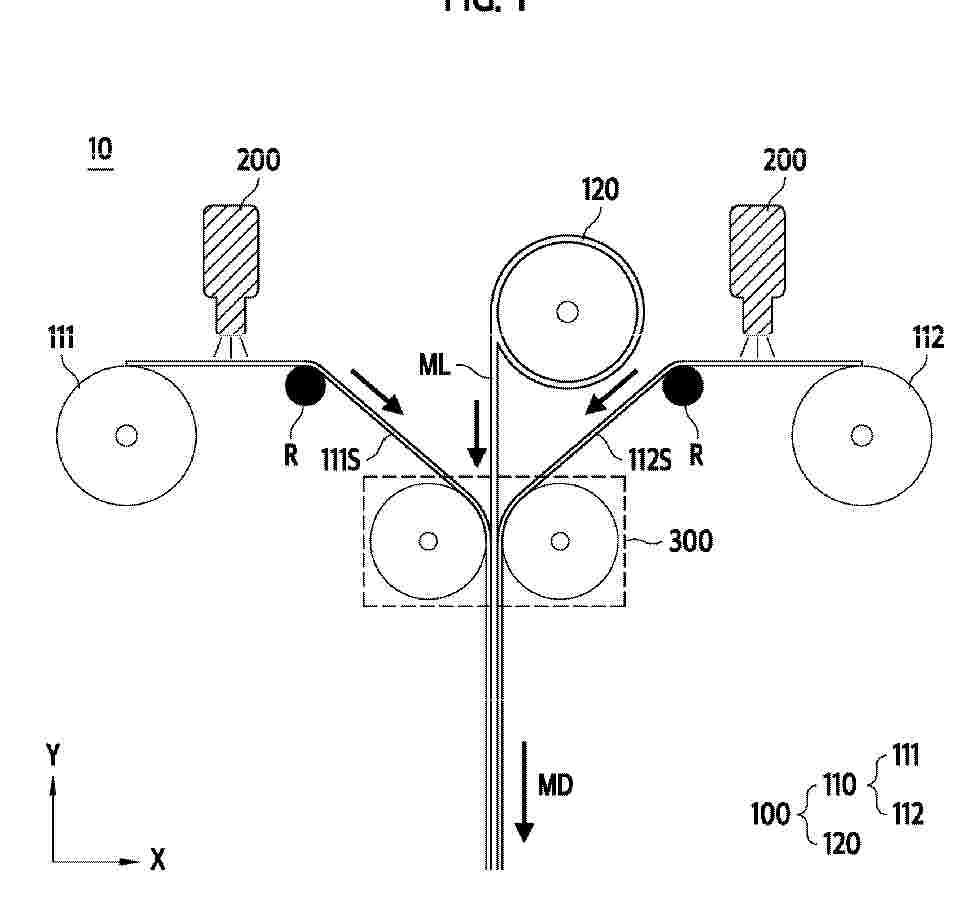
The present application provides roll-to-roll type electrode assembly manufacturing equipment comprising: a sheet supply unit (100) including a first sheet supply unit for supplying a first separator sheet and a second separator sheet and a second sheet supply unit for supplying a lithium metal sheet; an application unit for applying a binder to at least one of the first separator sheet and the second separator sheet; and a lamination unit for laminating the first separator sheet and the second separator sheet while having the lithium metal sheet disposed therebetween, wherein; each of the first separator sheet and the second separator sheet includes an inner area corresponding to the lithium metal sheet at the time of lamination by the lamination unit, and an outer area at least partially surrounding the peripheral portion of the inner area in the thickness direction (TD); and the application unit applies the binder onto at least a part of the outer area of the first separator sheet and the outer area of the second separator sheet.
Resumen de: EP4760862A1
The present invention relates to a method of activating an all-solid-state battery comprising a positive electrode, a negative electrode, and a solid electrolyte layer interposed between the positive electrode and negative electrode, the method comprising: a first charging step of charging the all-solid-state battery at a first current density; and a first discharging step of discharging the all-solid-state battery at a second current density greater than the first current density after the first charging step.
Resumen de: EP4760138A1
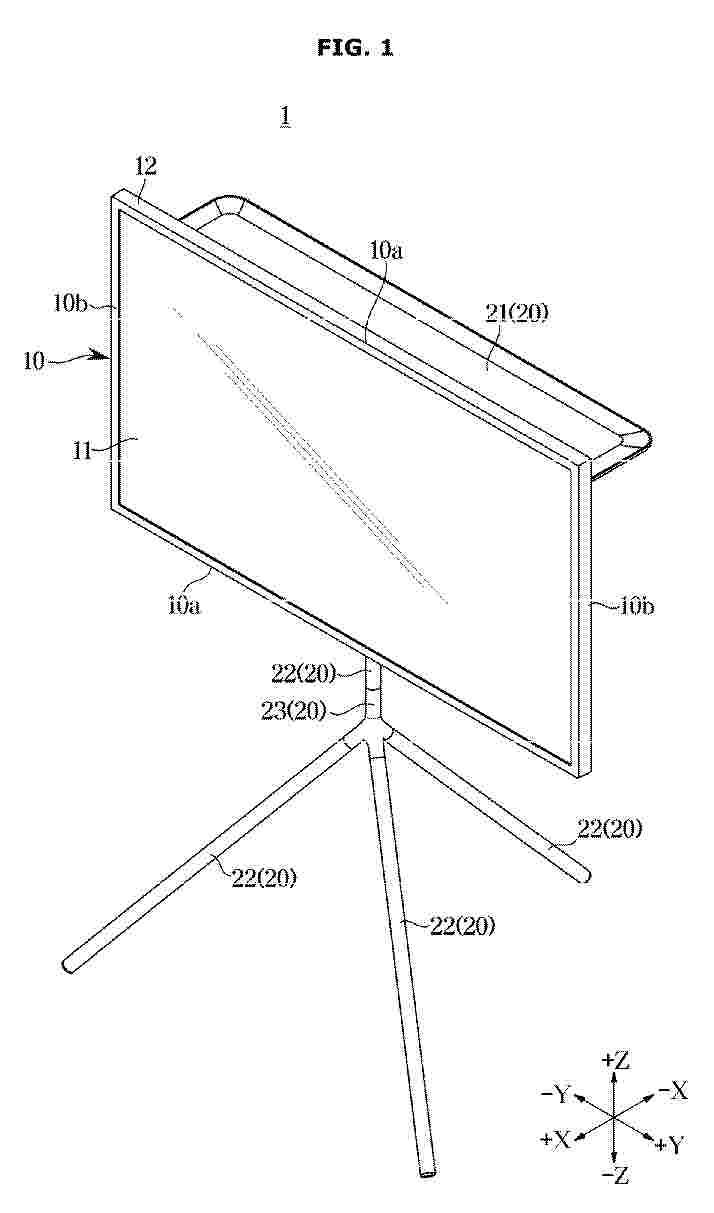
A display apparatus according to an embodiment includes a display and a stand on which the display is mountable. The stand includes a stand panel couplable to the display, and a plurality of legs couplable to the stand panel. The stand is configured to be switchable between a first state which each of four legs of the plurality of legs is coupled to the stand panel and is configured to support the stand panel so that the display is supported in four directions of the four legs, respectively, and a second state which each of three legs of the plurality of legs is coupled to the stand panel and is configured to support the stand panel so that the display is supported in three directions of the three legs, respectively.
Resumen de: EP4760249A1
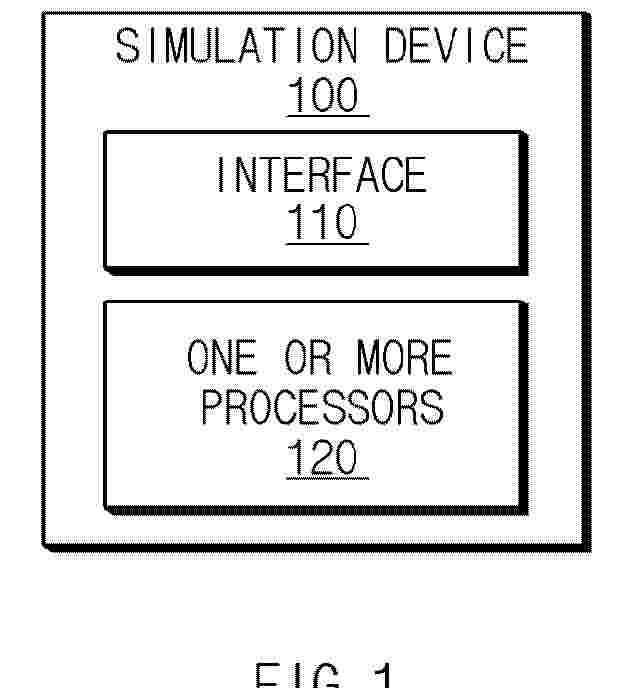
A simulation device according to one embodiment disclosed herein may include an interface configured to acquire at least one welding condition information for welding a lead and a tab of a battery, at least one lead condition information corresponding to the lead, and at least one tab condition information corresponding to the tab, and one or more processors, wherein the processor may diagnose a welding state of the lead and the tab by referring to the welding condition information, the lead condition information, and the tab condition information.
Resumen de: EP4761038A1
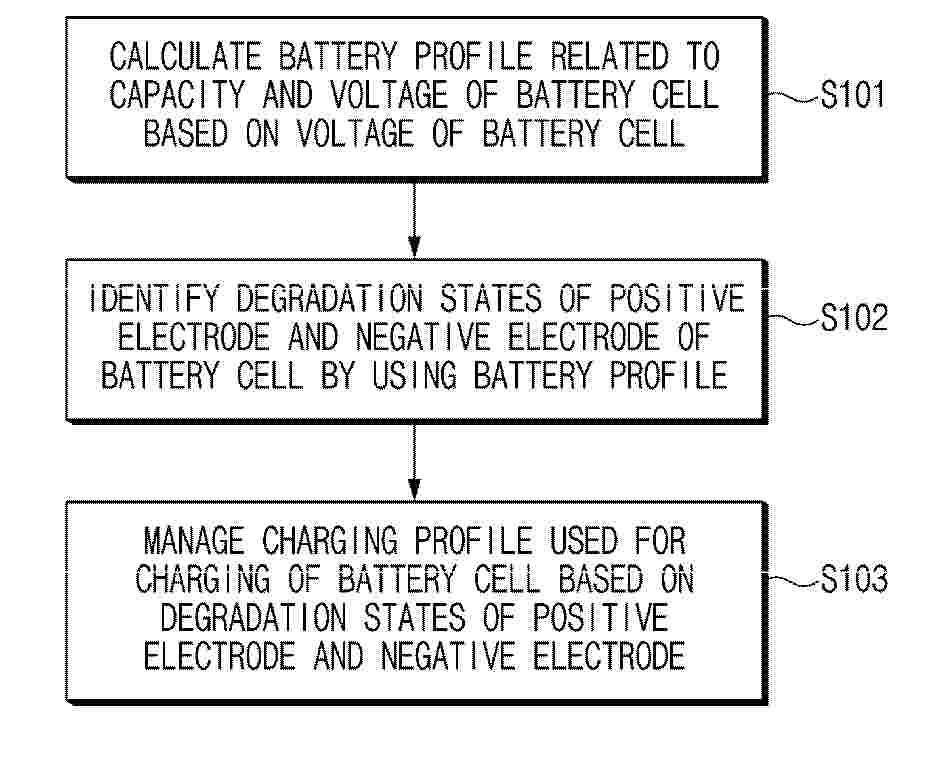
A battery management apparatus according to an embodiment disclosed herein includes an obtaining unit configured to obtain a voltage of a battery cell and a controller configured to calculate a battery profile related to a capacity and the voltage of the battery cell, based on the voltage of the battery cell, identify degradation states of a positive electrode and a negative electrode of the battery cell, by using the battery profile, and manage a charging profile used for charging of the battery cell based on the degradation states of the positive electrode and the negative electrode.
Resumen de: EP4760918A1
The present invention relates to a battery pack, and more particularly, to a battery pack capable of effectively absorbing heat when thermal runaway occurs within the battery pack due to an event (impact, internal/external short circuit, etc.) within the battery pack, and blocking a heat transfer path within the battery pack to prevent the thermal runaway starting from one battery module from being transmitted to other battery modules.
Resumen de: EP4761040A1
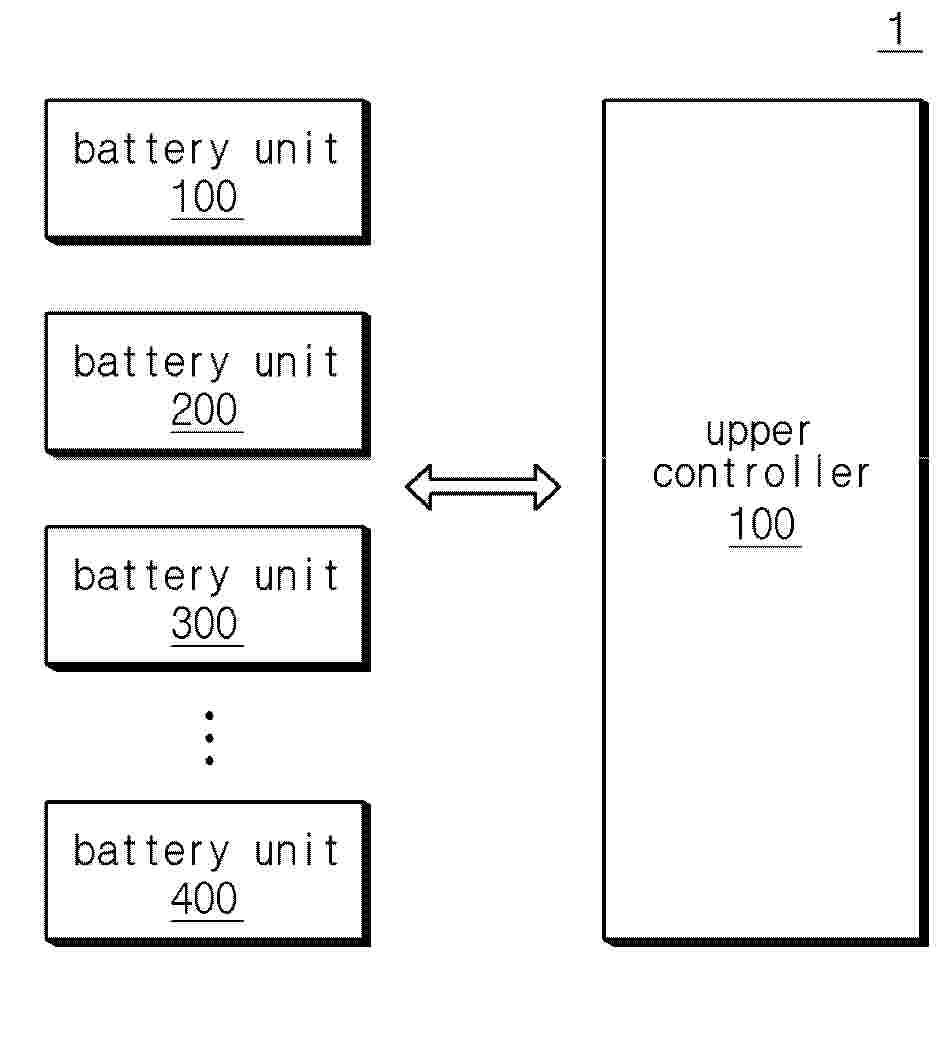
A battery system according to an embodiment disclosed in this document includes a plurality of battery units; and an upper controller configured to perform wireless communication with a battery unit assigned as a master unit among the plurality of battery units, wherein each of the plurality of battery units is assigned as the master unit to communicate with the upper controller in different periods.
Resumen de: WO2025106109A1
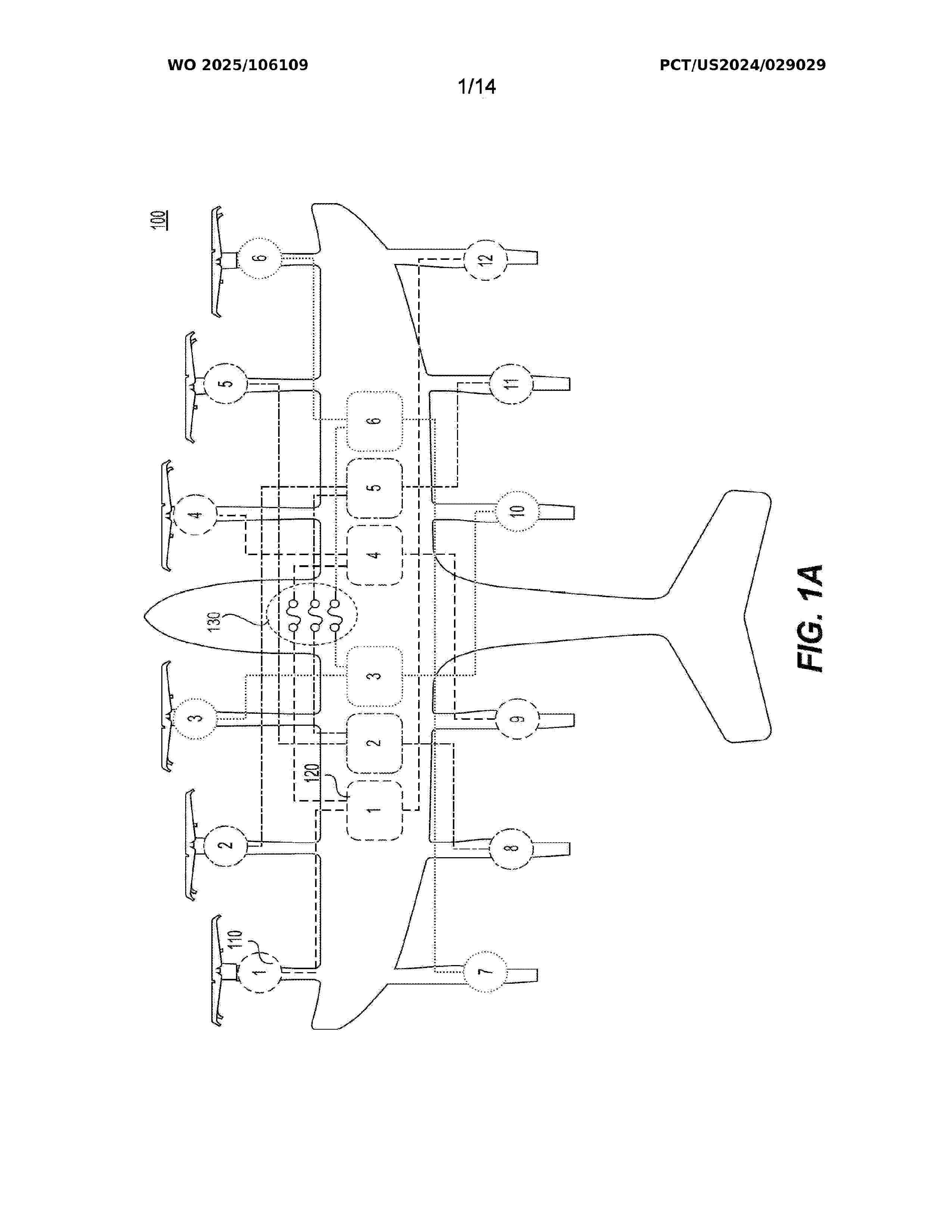
A method of controlling aircraft power distribution comprises: receiving aircraft state information of an aircraft, detecting whether the aircraft state information indicates a crash, and disconnecting supply of high voltage power to the aircraft by at least one battery upon detecting both that the aircraft state information indicates a crash and a loss of continuity in at least one low voltage wire.
Resumen de: EP4760848A1
An electrolyte additive composition, an electrolyte, a battery, and an electric apparatus are provided. The electrolyte additive composition includes an isocyanate additive and an impedance-stabilizing additive at a weight ratio of (0.1 to 0.8):1. In the electrolyte additive composition, the impedance-stabilizing additive and the isocyanate additive are compounded, and a content ratio of the two is controlled, so that the stability of the impedance-stabilizing additive in the electrolyte can be improved, reducing the DCR of a cell of a battery and improving the stability of the DCR of the cell of the battery during charging, discharging, and storage, thereby improving the RTE of the battery during service.
Nº publicación: EP4760906A1 17/06/2026
Solicitante:
EVE ENERGY CO LTD [CN]
Eve Energy Co., Ltd.
Resumen de: EP4760906A1
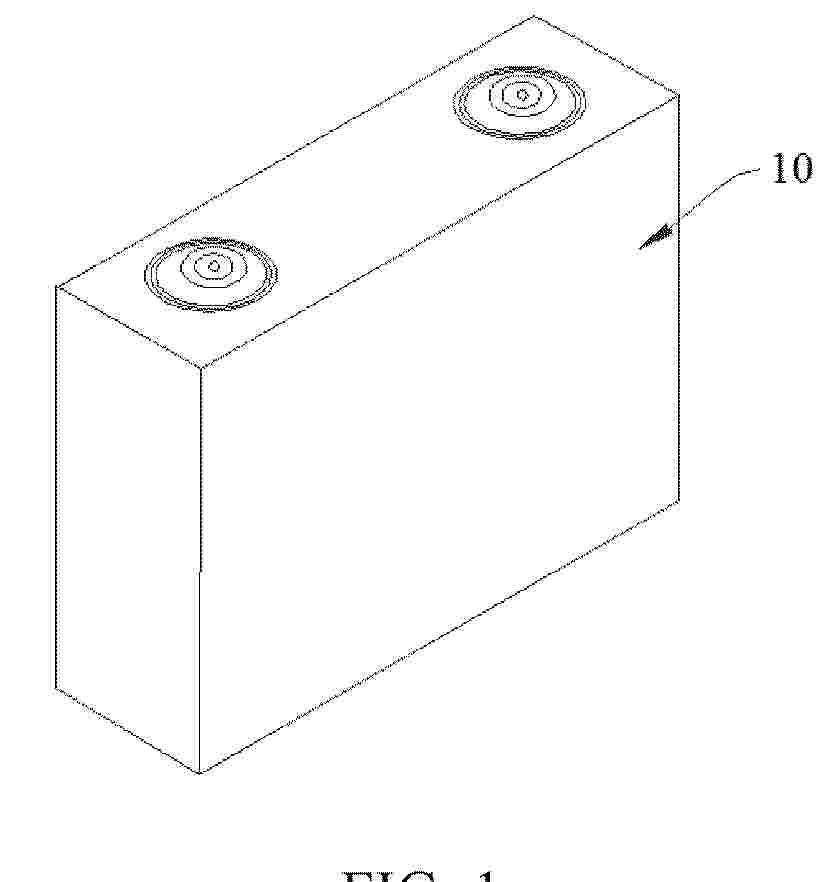
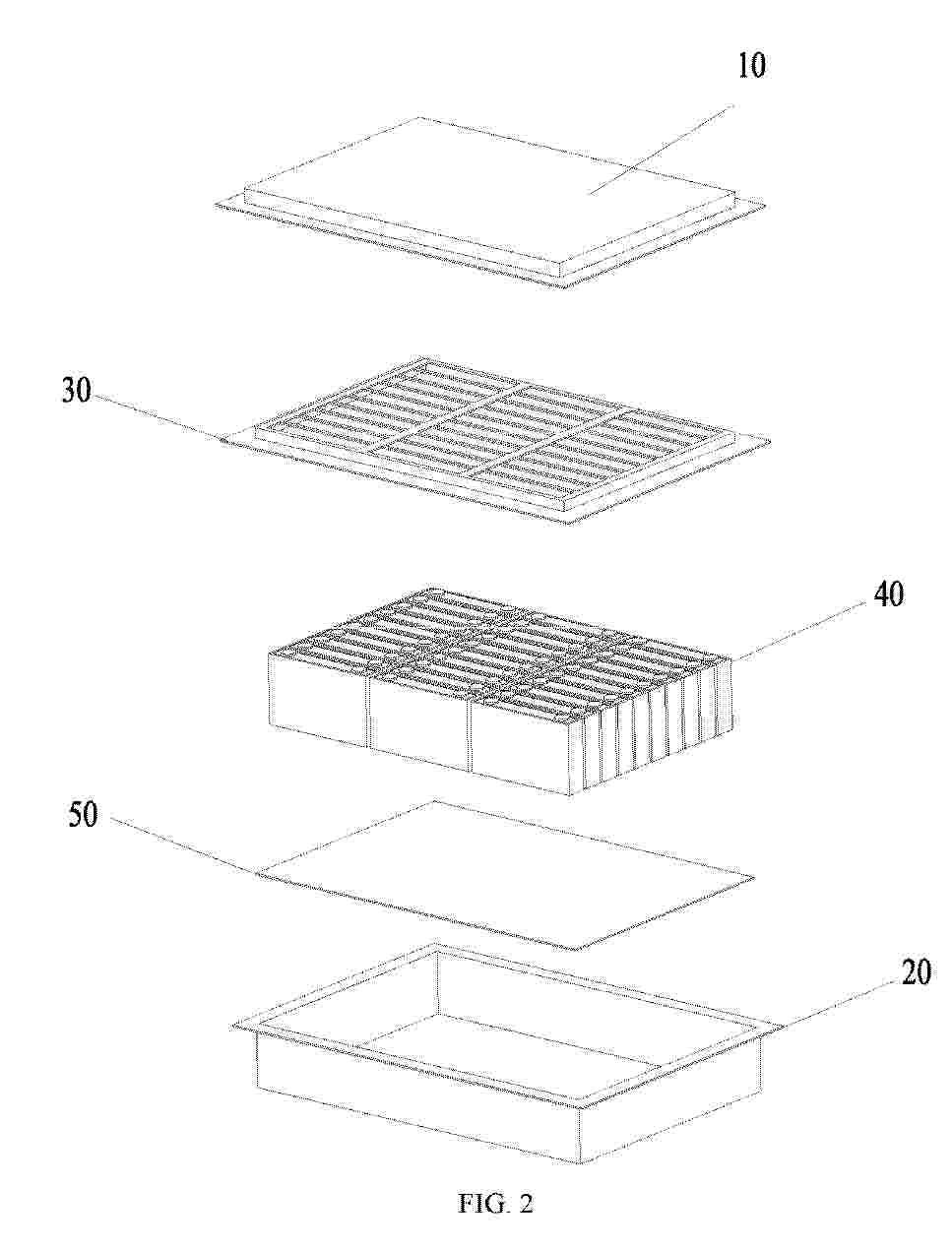
A battery case and a battery pack are provided. The battery case includes a top cover, a case body, and a pressing frame. The case body and the top cover cooperatively define an accommodating space configured to accommodate a battery module. The pressing frame is connected to the case body. At least a portion of the pressing frame abuts against a top portion of the battery module and presses the battery module toward a bottom portion of the case body.
 BOPI
BOPI
 Sede Electrónica