Si deseas distinguir tus productos, servicios o ambos de los de otra empresa, es posible que necesites una marca o nombre comercial. Descubre qué son, en qué consiste su procedimiento de registro y qué implica.

Información sobre los plazos de presentación de solicitudes de transformación de marcas de la Unión Europea en marca nacional española. Más información


Si tienes un nuevo dispositivo, producto o procedimiento que resuelva un problema técnico o tenga una ventaja práctica, existen distintas formas de protegerlo en España y en otros países. Descubre cómo hacerlo.

¿Tu innovación reside en la estética, la ornamentación o la apariencia de tu producto? Protégela mediante un diseño industrial. Descubre qué derechos confiere el registro y cómo realizar la tramitación.

Las indicaciones geográficas protegen el nombre de un producto originario de una zona geográfica, a la cual le debe una determinada calidad, reputación u otra característica. Descubre qué son, en qué consiste su procedimiento de registro y qué beneficios conceden.

Las patentes publicadas en todo el mundo son una valiosa fuente de información científica, técnica y comercial.

Si eres emprendedor/a o una empresa y quieres potenciar y mejorar la rentabilidad de tu negocio protegiendo de forma adecuada los activos intangibles de tu organización, en este espacio encontrarás lo necesario.


 1426
resultados
1426
resultados
 Última actualización
29/06/2026 [08:41:00]
Última actualización
29/06/2026 [08:41:00]


 Resultados 1050 a 1075 de 1426

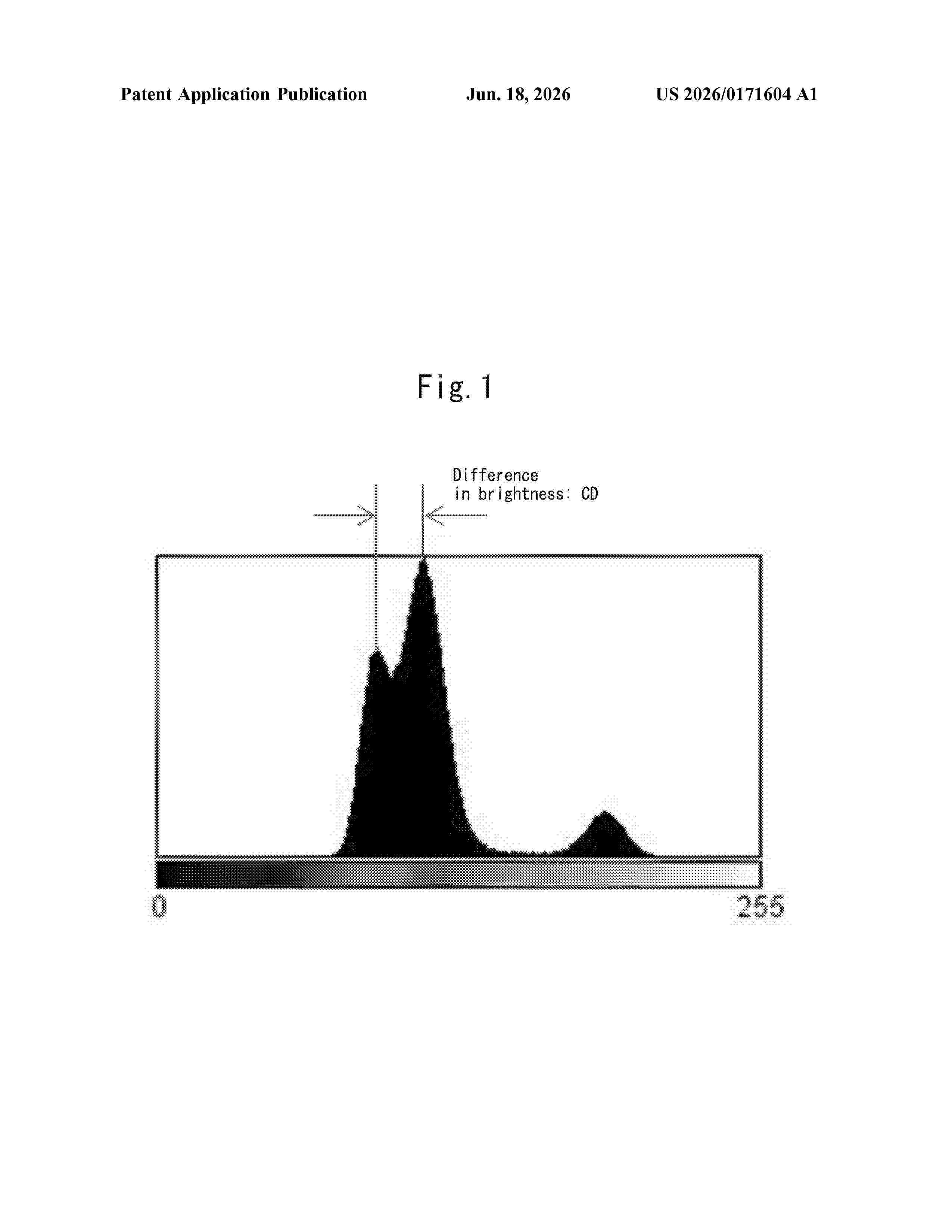
Resumen de: US20260171604A1
Provided are: a separator for an electric power storage device, the separator having high liquid absorption and high strength; and an electric power storage device in which the separator is used. The separator for an electric power storage device includes a microporous membrane (A) containing an inorganic filler and a polyolefin resin. The microporous membrane (A) has a MFR of 0.05-5 inclusive, includes not less than 20 mass % but less than 100 mass % of the organic filler, has an average pore diameter of 100-1500 nm inclusive for the pores in a cross-section ND-MD, and has an air permeability of 340 sec/100 mL or less.

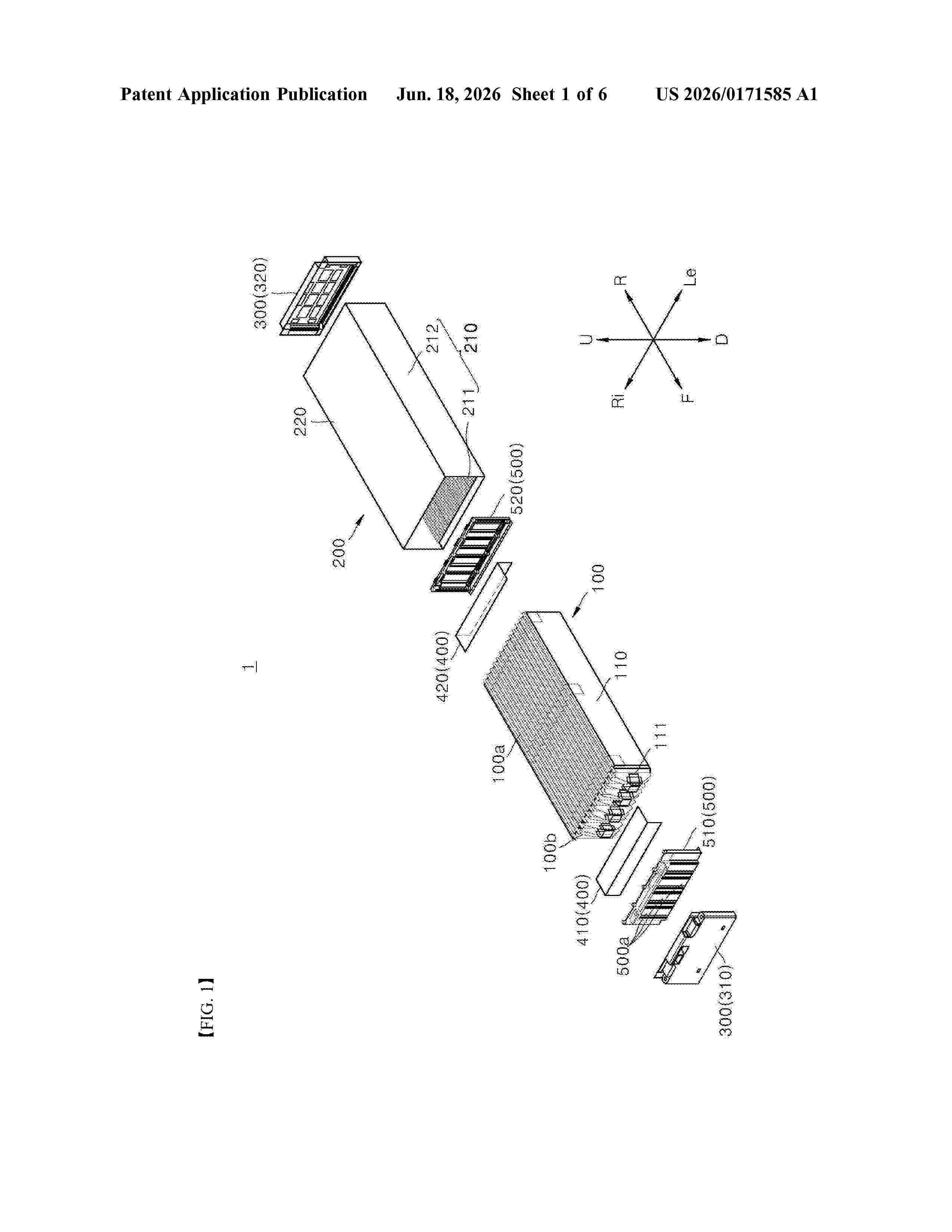
Resumen de: US20260171585A1
0000 An aspect of the present disclosure includes a battery module, including a battery cell stack formed by stacking a plurality of battery cells, a plurality of electrode leads electrically connected to the plurality of battery cells, respectively, and disposed on one end of the battery cell stack, a bus bar plate having at least one terminal on one side thereof, and electrically connected to the plurality of electrode leads, and an insulation cover, having an inner side which is configured to face the one side of the bus bar plate, and having an opening that exposes the at least one terminal to an outside of the battery module at least partially, wherein the inner side of the insulation cover is spaced apart from the one side of the bus bar plate, and wherein the insulation cover comprises at least one blocking rib.
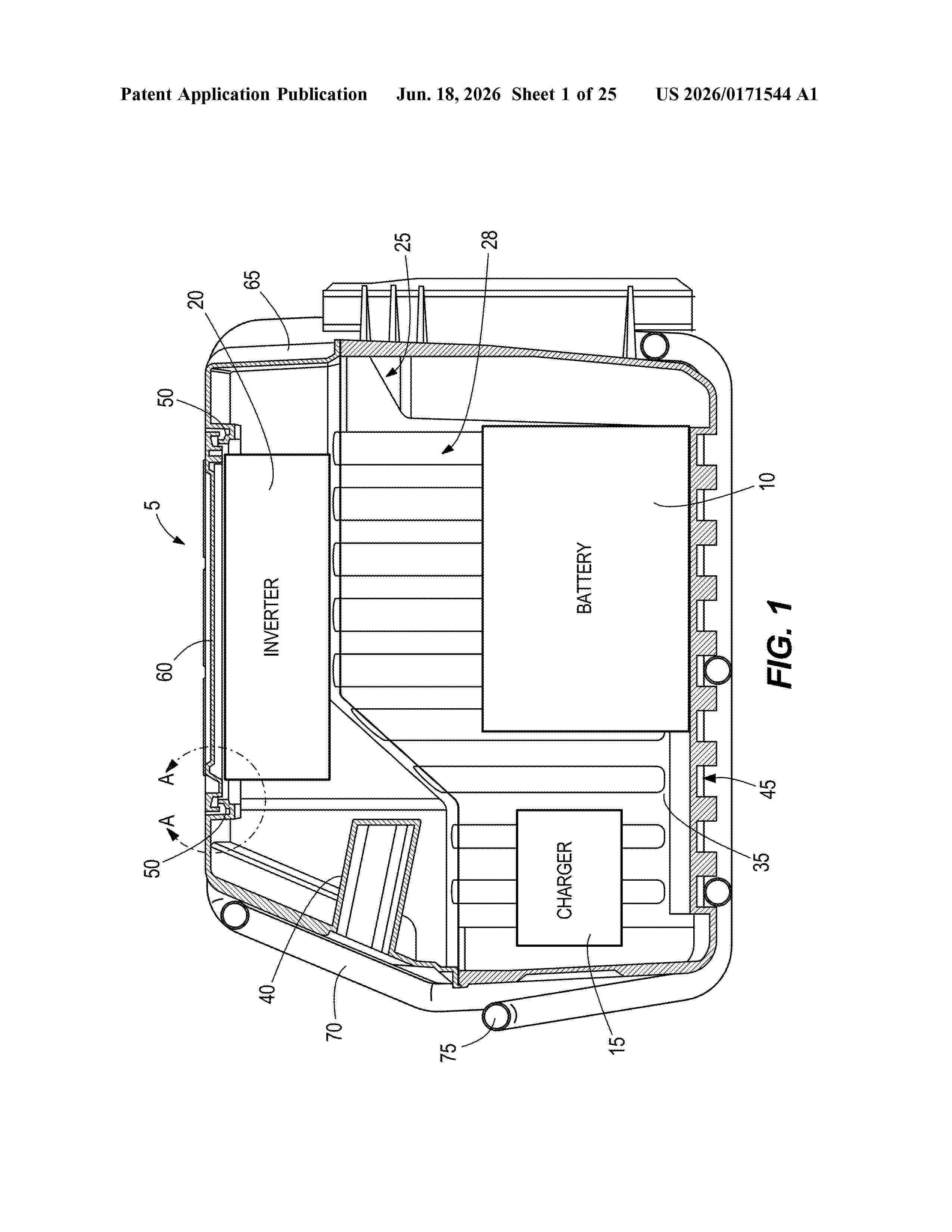
Resumen de: US20260171544A1
0000 A portable power supply including a housing, at least one battery cell, a charger, and an attachment. The housing defines a cavity. The housing includes an upper portion, a lower portion, a plurality of air inlets defined in the lower portion, and a plurality of air outlets defined in the upper portion. The plurality of air inlets is in fluid communication with the cavity. The plurality of air outlets is in fluid communication with the cavity. The at least one battery cell is disposed in the cavity. The charger is electrically coupled with the battery cell. The attachment is coupled to the upper portion. The attachment is configured to at least partially cover each of the air outlets such that airflow exiting the air outlets travels a circuitous path.
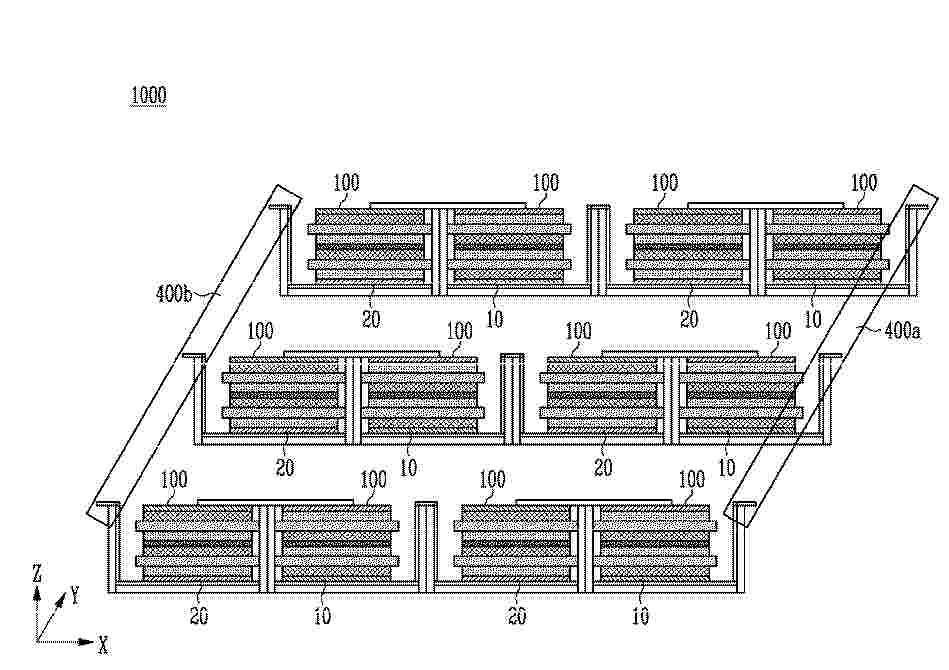
Resumen de: EP4760832A1
According to an embodiment of the present disclosure, a bipolar battery comprising: a frame extending in a first direction and a second direction and partitioning a plurality of regions; and unit cells respectively disposed in the plurality of regions, each of the unit cells including a first electrode, a solid electrolyte, and a second electrode stacked in a third direction, wherein unit cells adjacent to each other in the first direction are each arranged such that the first electrodes and the second electrodes are alternately positioned at both ends in the third direction, wherein the unit cells adjacent to each other in the first direction are electrically connected to each other in series, wherein the first electrodes of the unit cells positioned at one end in the first direction are electrically connected to each other along the second direction, wherein the second electrodes of the unit cells positioned at the other end in the first direction are electrically connected to each other along the second direction, and wherein the first direction, the second direction, and the third direction may be orthogonal to each other.
Resumen de: EP4760822A1
A negative electrode plate and a preparation method and application thereof. The negative electrode plate includes a current collector and a composite active material layer disposed on at least one surface of the current collector. The composite active material layer includes a first and a second active material layers disposed sequentially on a surface of the current collector. The second active material layer is disposed on a surface of the first active material layer away from the current collector. The first active material layer includes a first binder. The first binder includes a low-swelling binder. The second active material layer includes a second binder. The second binder includes at least one of a high-swelling binder, an acrylic acid derivative multi-component copolymer. The low-swelling binder has a volume swelling ratio of 25% to 40%, and the high-swelling binder has a volume swelling ratio of 60% to 85%.
Resumen de: EP4760944A1
The present application provides a battery cell, a battery, and an electrical apparatus, which belongs to the field of battery technologies. The battery cell includes a shell. The shell has a wall portion, the wall portion is provided with a first weak portion and a pressure relief region, and the wall portion is configured to be capable of cracking along the first weak portion to open the pressure relief region. The wall portion is further provided with a second weak portion, and the pressure relief region is configured to be capable of flipping around the second weak portion when the first weak portion cracks, so as to relieve an internal pressure of the battery cell. The second weak portion is provided on the wall portion, so that the pressure relief region, when opened, is capable of flipping with the second weak portion as an axis, thereby improving an opening effect of the pressure relief region of the wall portion, which is conducive to increasing a pressure relief area of the battery cell after the pressure relief region is opened, and further improving a pressure relief rate of the battery cell when thermal runaway occurs, so as to reduce the risk of fire, explosion, or connection failure of the battery cell due to untimely pressure relief, and is conducive to improving the reliability in use of the battery cell.
Resumen de: EP4760922A1
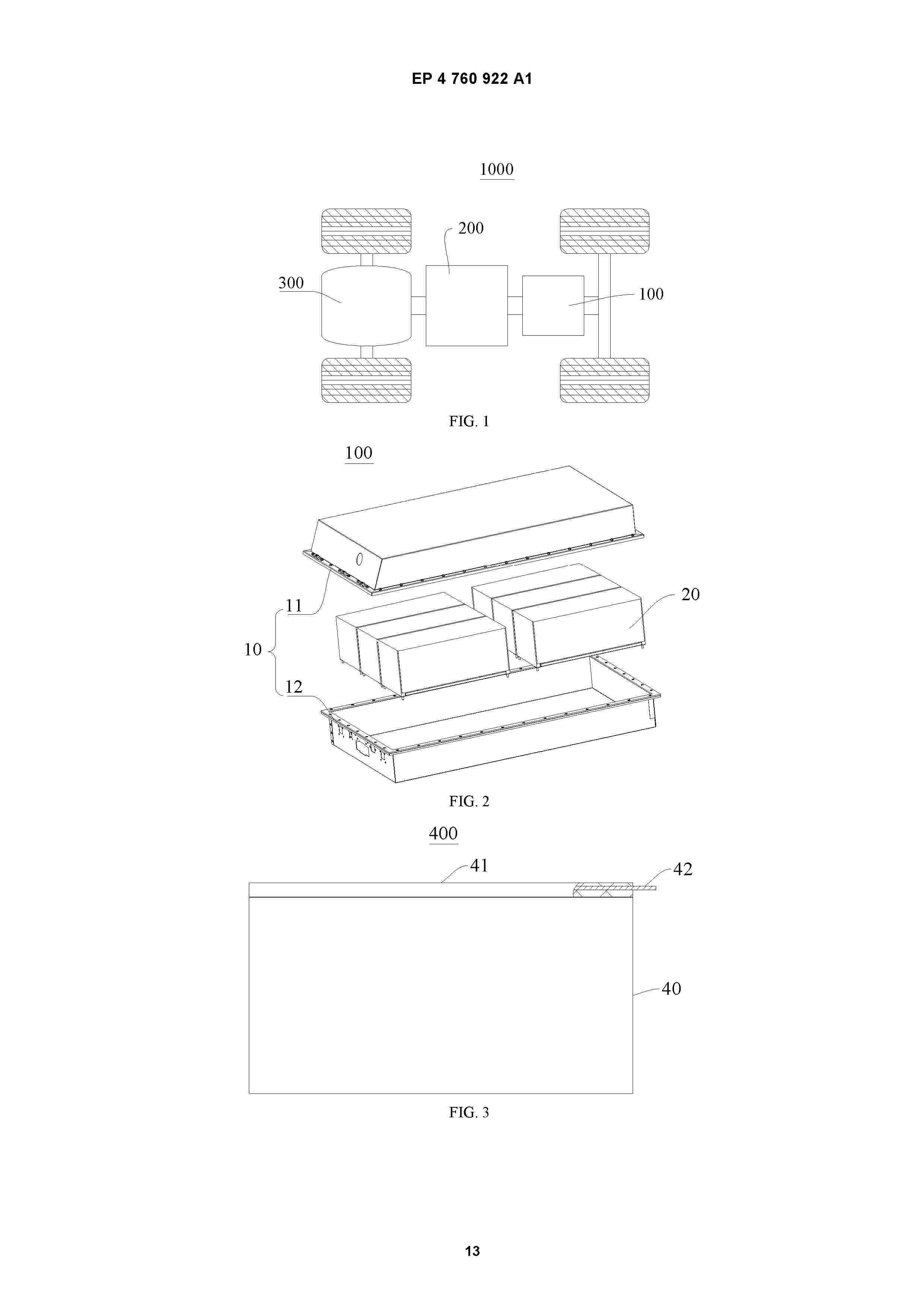
A high-voltage power distribution apparatus (400), a battery (100) and an electrical apparatus. The high-voltage power distribution apparatus (400) comprises a housing (40), a cover body (41) and a low-voltage terminal (42); the housing (40) has an opening; the cover body (41) seals the opening, and forms a mounting chamber with the housing (40); the low-voltage terminal (42) is integrated onto a target member, the target member being the housing (40) or the cover body (41); a first end of the low-voltage terminal (42) is exposed outside the mounting chamber, and a second end of the low-voltage terminal (42) is electrically connected to a low-voltage circuit inside the housing (40); at least one side wall of the target member is provided with a protective housing (43) having an outward opening; the first end of the low-voltage terminal (42) is located inside the protective housing (43). With regard to the high-voltage power distribution apparatus (400), the battery (100) and the electrical apparatus, the number of components inside the high-voltage power distribution apparatus (400) can be reduced to some extent, thus reducing the area occupied by the high-voltage power distribution apparatus (400).
Resumen de: CN121464525A
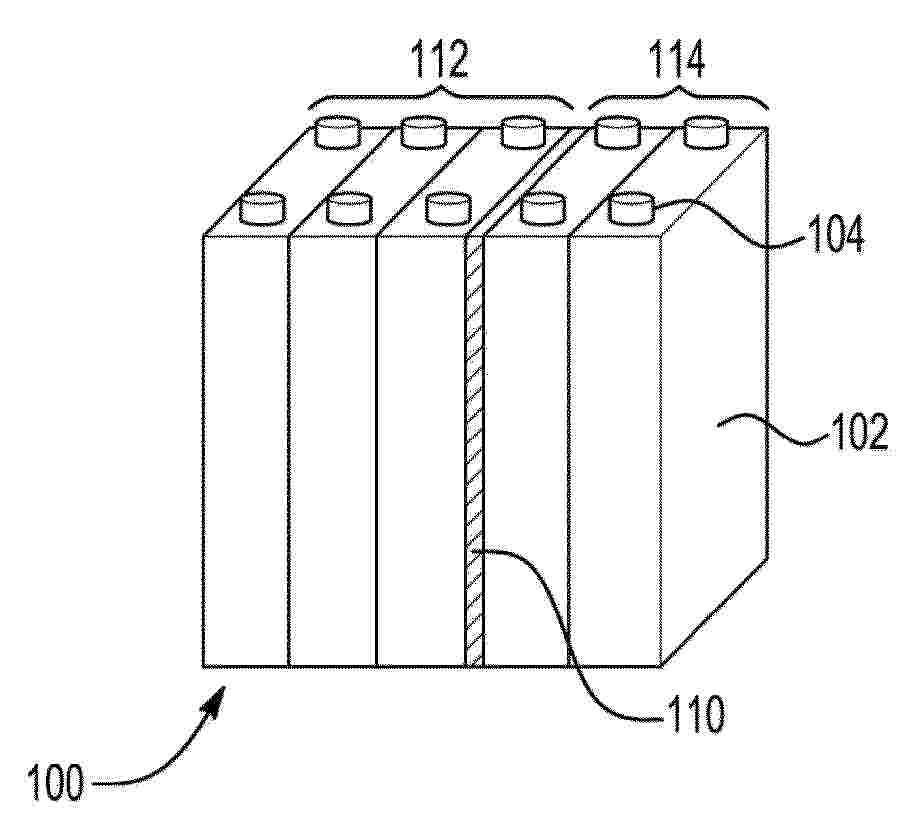
The battery module (100) comprises a plurality of battery cells (102). The battery cell defines a heat transfer surface that defines a cross-sectional area. The battery module includes one or more thermal barriers (110) that divide the plurality of battery cells into cell partitions (112, 114), each of the cell partitions having a cell partition energy storage capacity. The thermal barrier is formed from a volume of insulating material. The area energy density is equal to half of the energy storage capacity of the cell partition divided by the cross-sectional area. The volume of thermal insulation material divided by half of the energy storage capacity of the cell partition defines a proportion.
Resumen de: CN121844434A
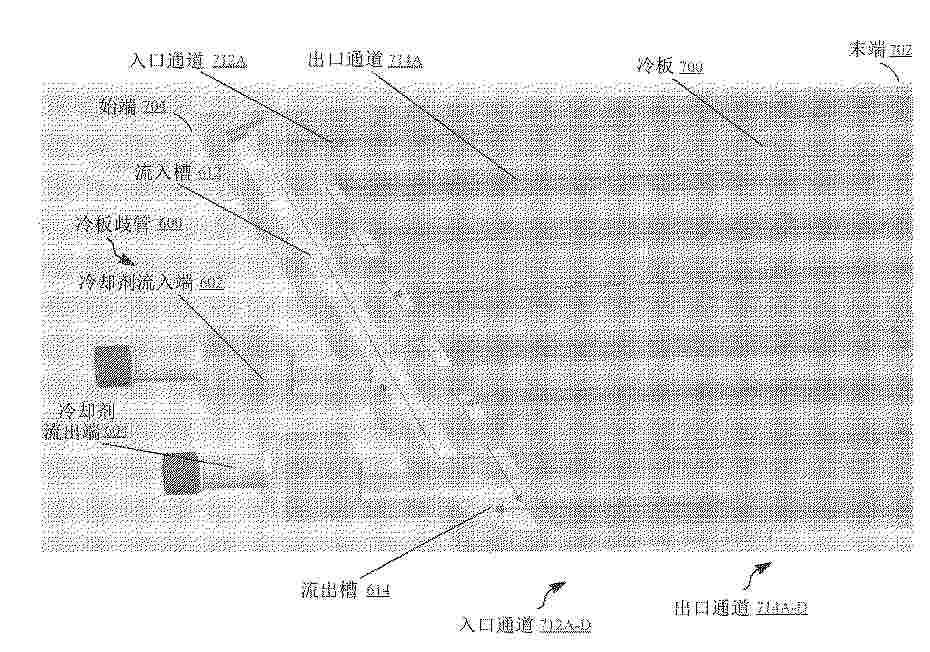
An energy storage system includes a plurality of energy storage nodes, wherein each energy storage node includes an energy storage element, at least one cold plate, and a coolant manifold coupled with the at least one cold plate. The coolant manifold splits a flow of coolant in a bi-directional configuration at the front and interior of the cold plate. A method for assembling an energy storage cooling system is also provided.
Resumen de: WO2025032599A1
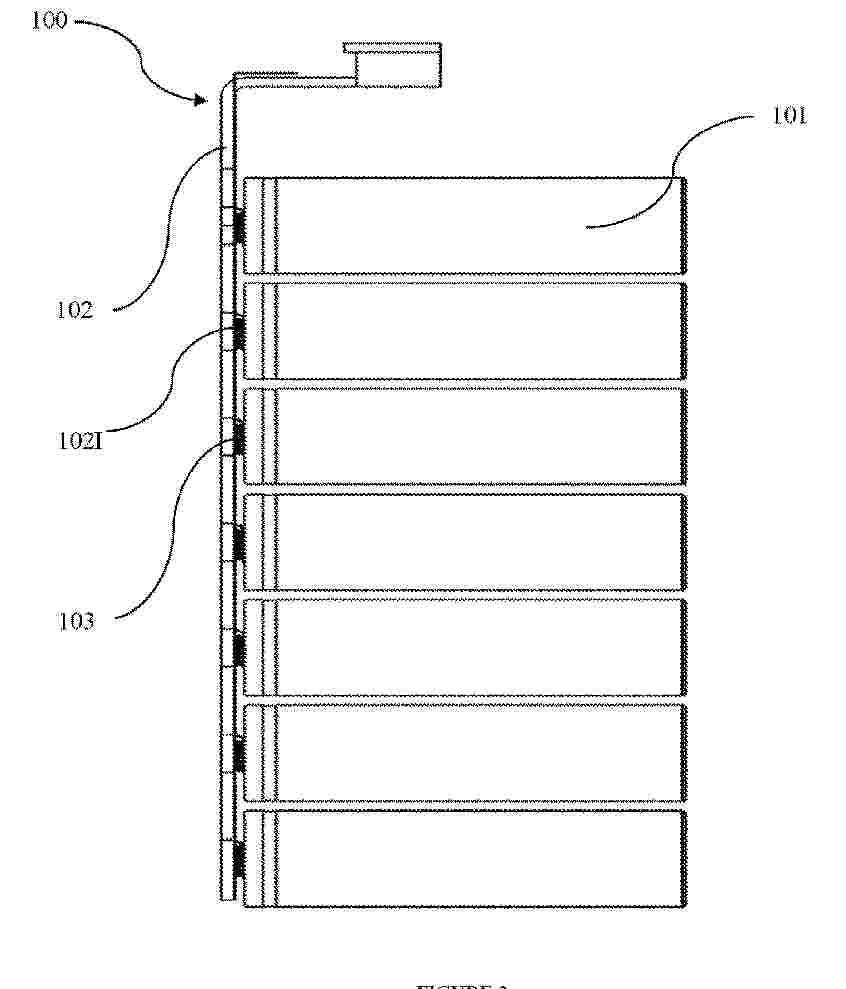
The present subject matter relates generally to an energy storage assembly (100) which comprises a plurality of energy storage cells (101), conducting member (102), and a thermal interface material (103). The plurality of energy storage cells (101) has at least two cell terminals ( 10 IT). The conducting member (102) conducts a plurality of energy forms. The conducting member (102) has at least one interface (1021) which is thermally and electrically coupled with at least one of the at least two cell terminals (101T) through at least one attachment (102A). The thermal interface material (103) is a thermally conductive and electrically insulating material. The thermal interface material (103) fdls in a plurality of irregularities on a surface of the at least one interface (1021) and on a surface of the at least one cell terminals (10 IT).
Resumen de: WO2025032031A1
The present invention relates to a method for preparing the sodium salt of bis(fluorosulfonyl)imide (NaFSI).
Resumen de: EP4760880A1
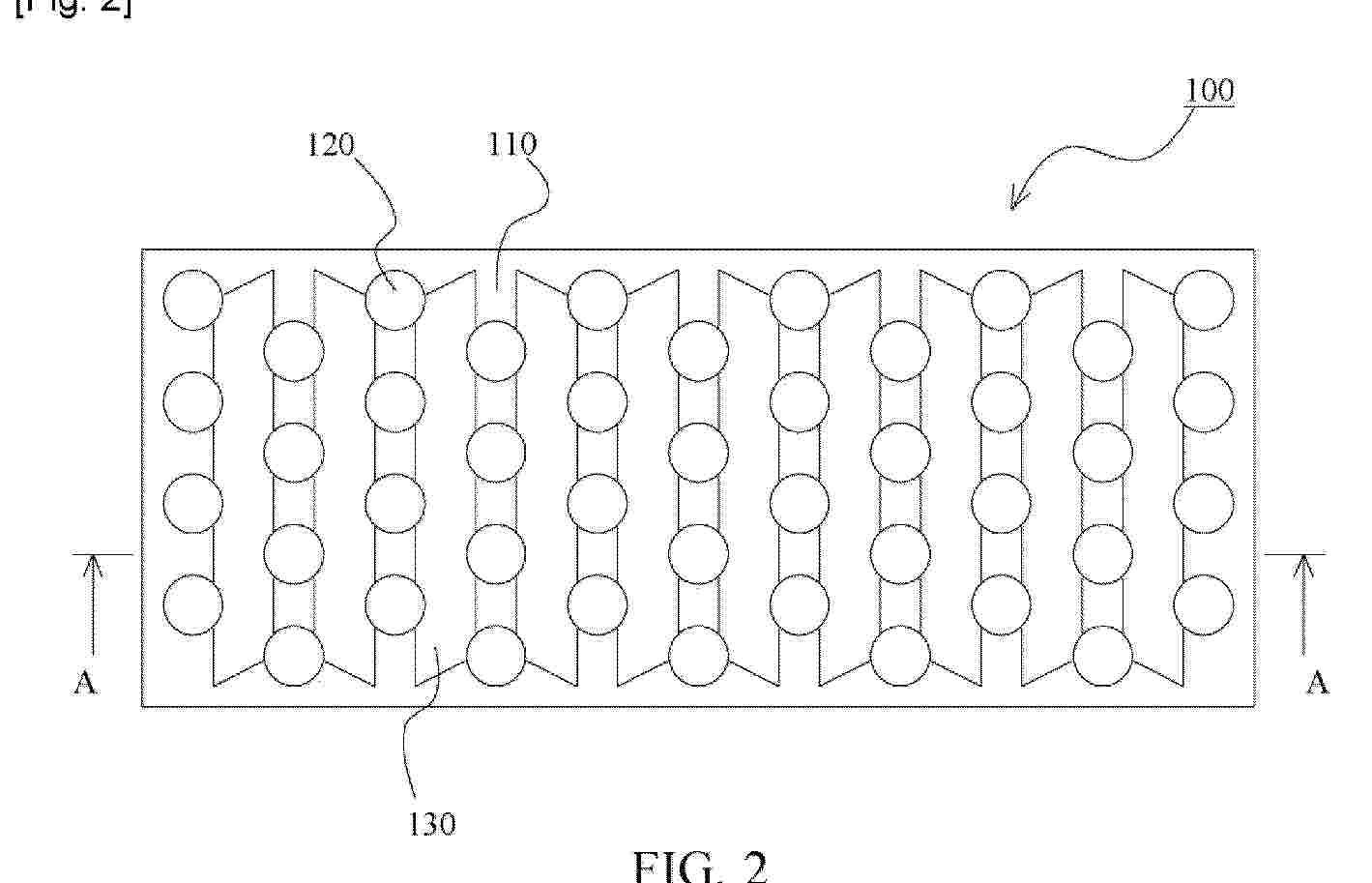
A battery including: a plurality of cells, a plurality of buffer sheets 100 each disposed between respective adjacent cells, and a coolant passage for allowing a coolant to flow through a region where the buffer sheet 100 is disposed between adjacent cells, wherein the buffer sheet 100 includes a flat plate part 110, a plurality of protrusions 120 protruding from both sides of the flat plate part 110, and a plurality of through holes 130 provided so as to penetrate both sides of the flat plate part 110.
Resumen de: US2025054979A1
This invention relates generally to the field of energy storage, batteries, cathodes, and anodes. This invention also relates to anode materials and/or cathode materials and methods to make said materials.
Resumen de: EP4760952A1
A battery cell, applicable to a secondary battery, includes at least one composite electrode unit; the composite electrode unit includes a positive electrode sheet and a negative electrode sheet; the positive electrode sheet includes a first positive active coating (4), the negative electrode sheet includes a first negative active coating (2), and the first positive active coating (4) and the first negative active coating (2) are stacked with an isolation coating (3) therebetween; a length and a width of the first negative active coating (2) are respectively greater than a length and a width of the first positive active coating (4); the isolation coating (3) includes an inorganic material and a polymer, a proportion of the inorganic material in the isolation coating (3) is not less than 70 wt%, a dielectric constant of the inorganic material is not less than 8, and an average particle size D50 of the inorganic material ranges from 0.2 µm to 5 µm.
Resumen de: EP4760792A2
Disclosed (or Provided) is a lithium secondary battery including a positive electrode, a separator and a negative electrode, in which the positive electrode includes a lithium composite transition metal compound including nickel (Ni) and cobalt (Co), the negative electrode includes a silicon-based active material and a carbon-based active material, the efficiency constants of the silicon-based active material and the carbon-based active material and the efficiency constant of the lithium composite transition metal compound satisfy a specific Equation.
Resumen de: EP4760793A1
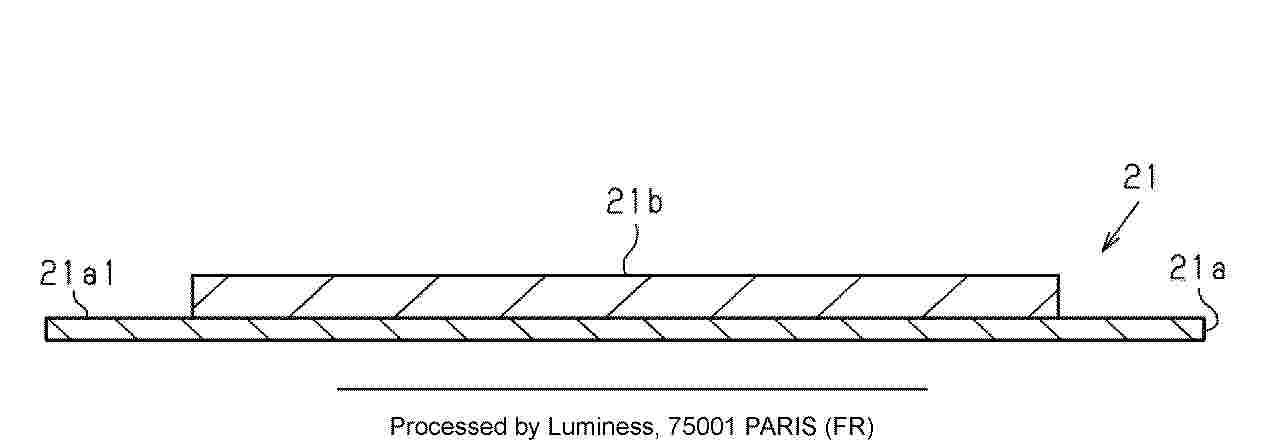
A positive electrode (21) for a power storage device comprises: a positive electrode current collector (21a) that has a first surface (21a1); and a positive electrode active material layer (21b) that is formed on the first surface (21a1) of the positive electrode current collector (21a). The positive electrode active material layer (21b) contains a positive electrode active material that can store and release charge carriers. The basis weight of the positive electrode active material layer (21b) is greater than 50 mg/cm2, and the positive electrode active material content in the positive electrode active material layer (21b) is 97 mass% or more. The positive electrode active material layer (21b) contains an aqueous binder with a glass transition temperature of less than 7°C, and single-walled carbon nanotubes.
Resumen de: WO2025032342A1
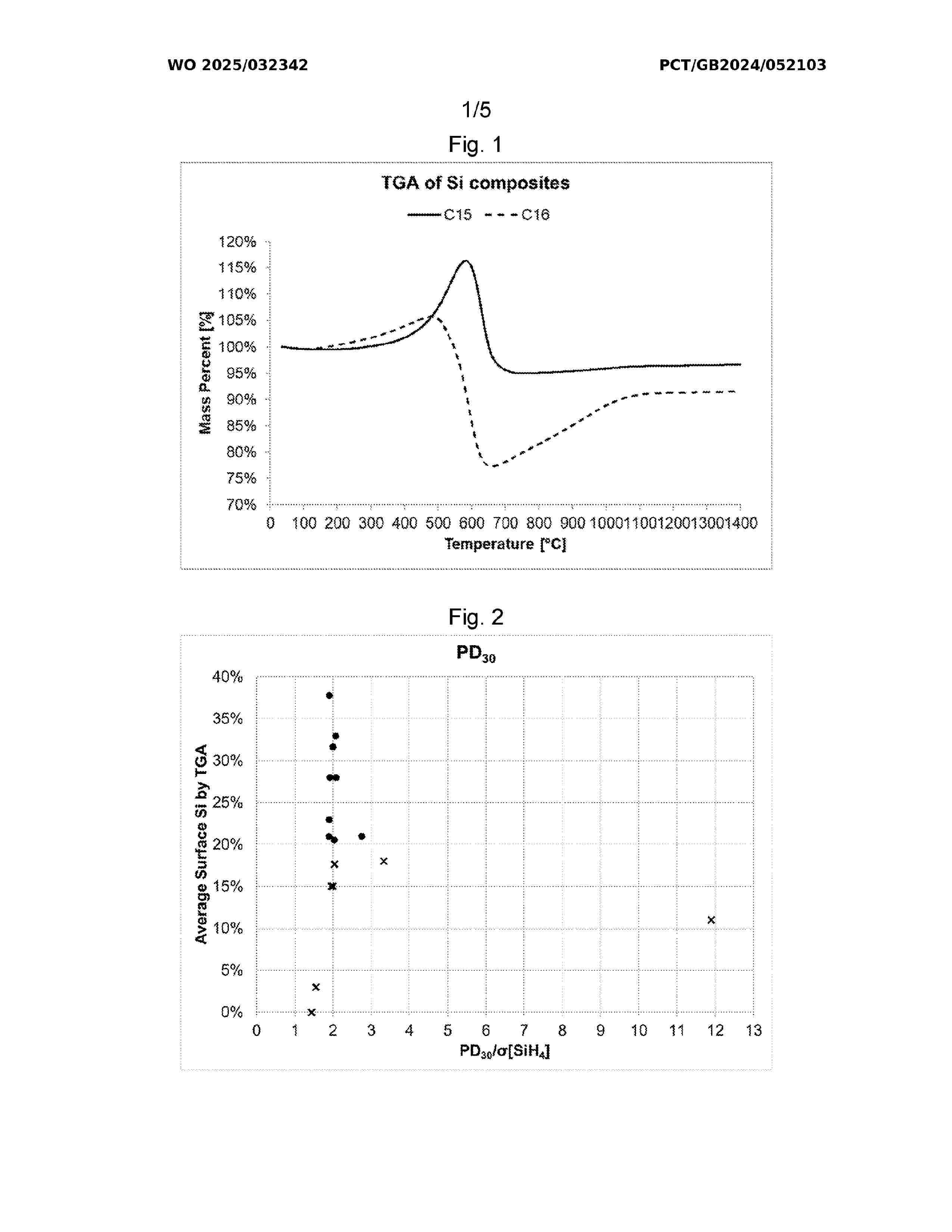
The present invention is in the field of metal-ion batteries, in particular anode materials for lithium-ion batteries. A process is provided comprising the steps of: (a) determining an effective size σ of a silicon precursor; (b) providing a population of optimised particulate porous frameworks comprising micropores and/or mesopores and having an optimised pore structure for the silicon precursor, the optimised pore structure comprising: a PD30 pore diameter of 1.4σ-3.0σ, a PD90 pore diameter of 5.0σ-14.0σ, and a pore diameter span (PD90-PD10) of 4.0σ-12.0σ, wherein "effective size σ" refers to the value σ in the Lennard-Jones potential for the silicon precursor; wherein "PDn pore diameter" refers to the pore diameter below which n% of the total micropore and mesopore volume is found.
Resumen de: WO2025035135A1
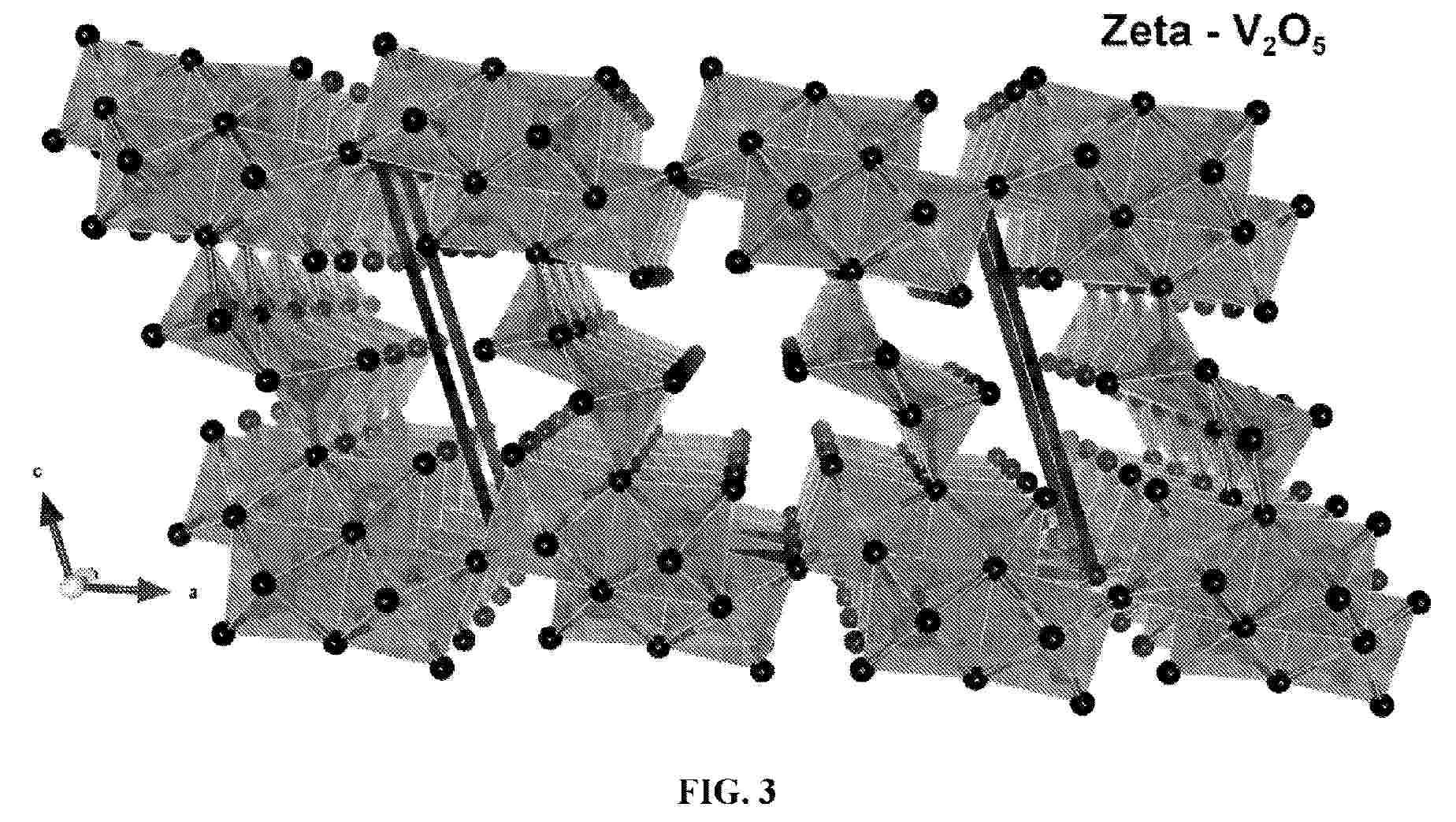
A positive electrode material is presented for a rechargeable electrochemical cell that comprises a negative electrode, a positive electrode, and an electrolyte. The positive electrode material comprises a compound with the general formula ζ-AxMyV2O5 and/or ζ-AxMyNzV2- z05, where M and N are transition metals, alkaline earths, alkalis, post-transition metals, metalloids, or a combination thereof and A is one or more ions selected from the group consisting of Li, Na, K, Mg, Ca, Zn, and Al ions. This series of vanadium oxide compounds provides additional electrochemically active ions above the quantity required for cycling that are used to mitigate first cycle capacity losses, also known as formation losses, in secondary batteries.
Resumen de: EP4760963A1
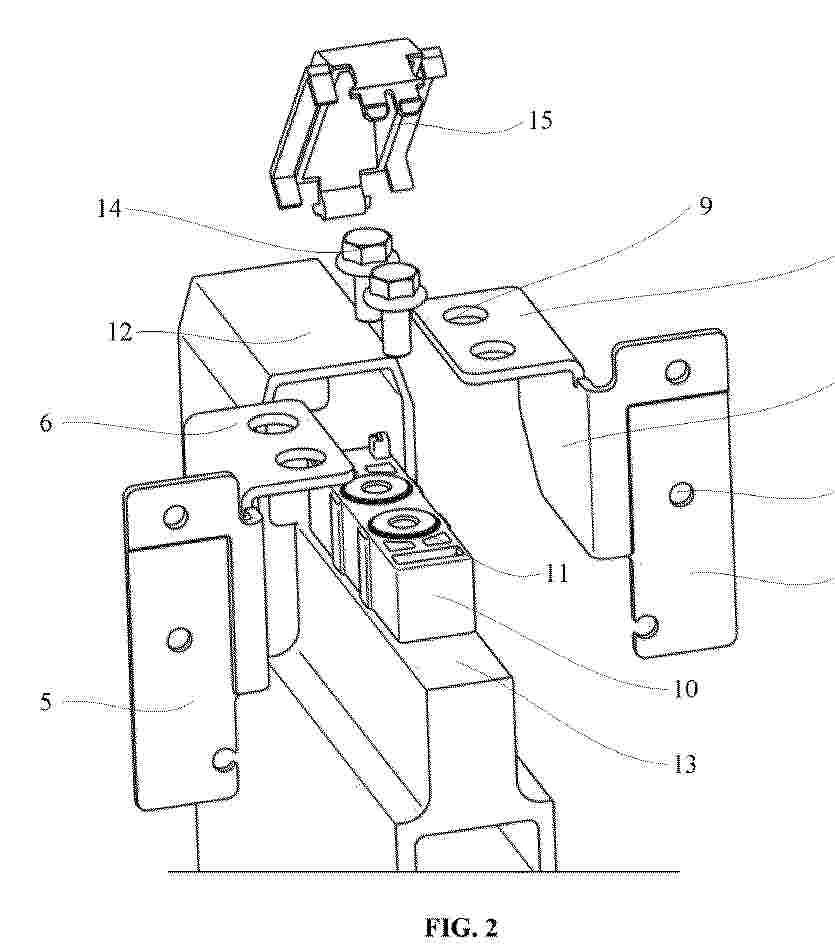
The present application relates to the technical field of batteries, and in particular, relates to a module connection structure and a power battery. The module connection structure includes: modules; current collecting members, where the current collecting member includes a first connection portion and a second connection portion, and the first connection portion is connected to the module; and support bases, where the second connection portions of the current collecting members on the adjacent modules are stacked and fixed to the same support base. Overlap portions of two current collecting members are fixed to the same support base by partially stacking the current collecting members, thereby connecting the two modules in series. On the basis of ensuring the connection strength and connection stability between the current collecting member and the module and between the current collecting members, such design effectively reduces space occupation of module connection positions, connection difficulty, and time consumption for module connection, and can effectively reduce the sizes of voltage integration modules. Therefore, the module connection structure is suitable for most types of module connections and battery packaging and assembly processes.
Resumen de: EP4759378A1
The present disclosure discloses an application relating to an energy storage container with an independent fire-fighting module. The energy storage container includes a container body and one or more independent fire-fighting module. The container body is provided with one or more battery clusters therein. Each of the one or more independent fire-fighting modules is individually provided with a fire-extinguishing medium. Each of the one or more independent fire-fighting modules is provided with a nozzle for spraying the fire-extinguishing medium. The one or more independent fire-fighting modules are disposed in the container body.
Resumen de: EP4760870A1
The present invention relates to the field of batteries, and particularly, to a heat exchange pipe assembly and a large-capacity battery. This solves the technical problems of heat exchange pipe assemblies of the existing large-capacity batteries, such as complex structures, mounting difficulty, large volume, and the like. The heat exchange pipe assembly includes a heat exchange pipe, wherein the heat exchange pipe performs heat exchange with battery cells in a large-capacity battery in a single-stage heat exchange manner. By adopting a single-stage heat exchange method, the structure is simplified compared to a two-stage heat exchange structure, making the mounting process easier and more convenient.
Resumen de: NL2035566B1
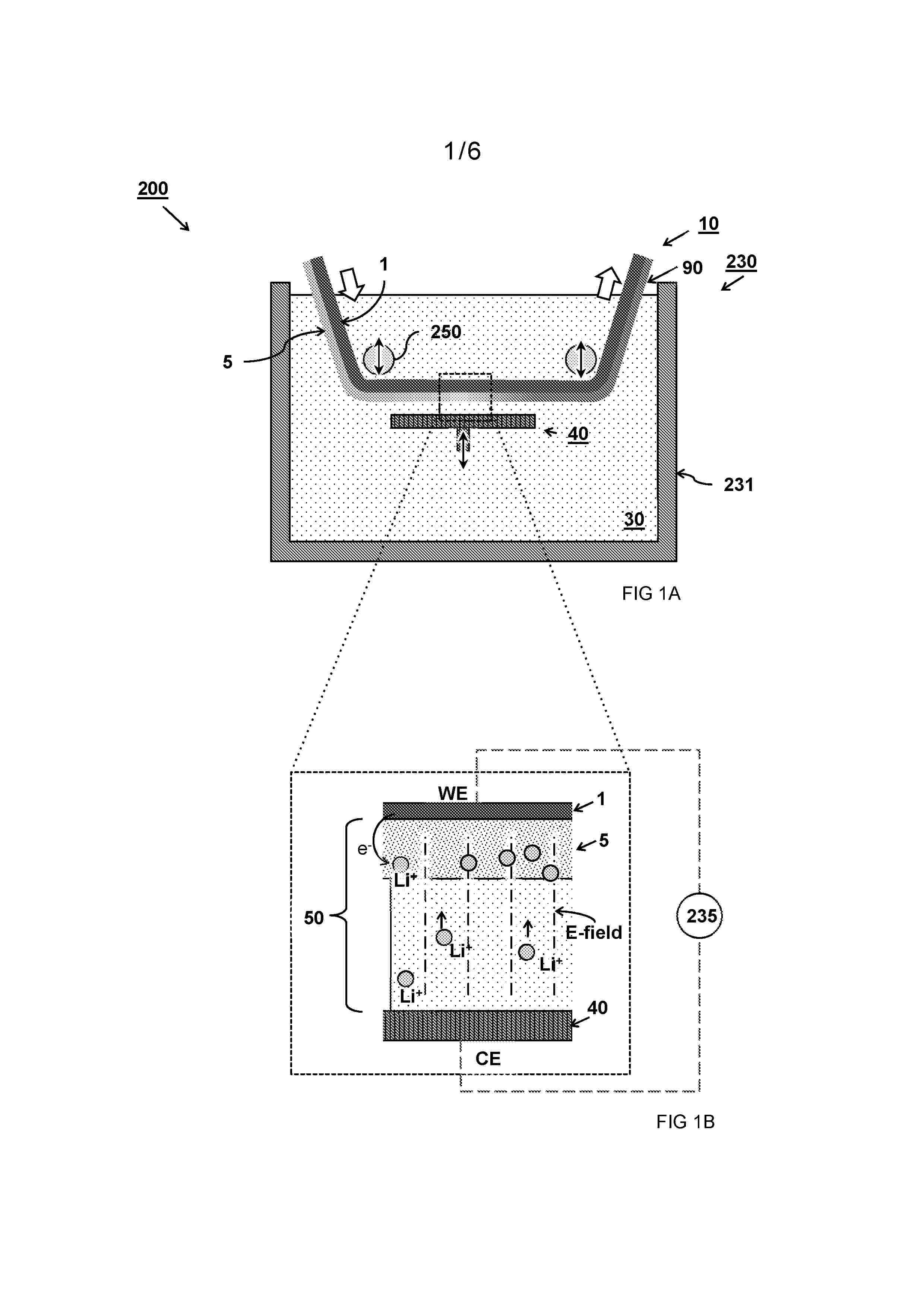
The present disclosure relates to a method of manufacturing a protected electrode (10), specifically a method of eX-situ generation of a solid electrolyte interphase layer (SEI). The disclosure further provides electrodes having ex-situ generated SEI further, a battery comprising said electrode, and a manufacturing assembly. The method comprises covering an electrically conductive current collector substrate 1 With a coating 5; exposing 131 the current collector substrate 1 to a deposition electrolyte 30 comprising alkali metal cations; and While exposed to the electrolyte, electrochemically forming an artificial SEI by electrochemically reacting (132) the alkali metal cations With one or more organic constituents comprised in the coating (30) having the current collector substrate (1) as a working electrode (WE) and a further electrode (40) that is separated therefrom by a gap (50) as a counter electrode (CE). FIG 1A
Resumen de: EP4760798A1
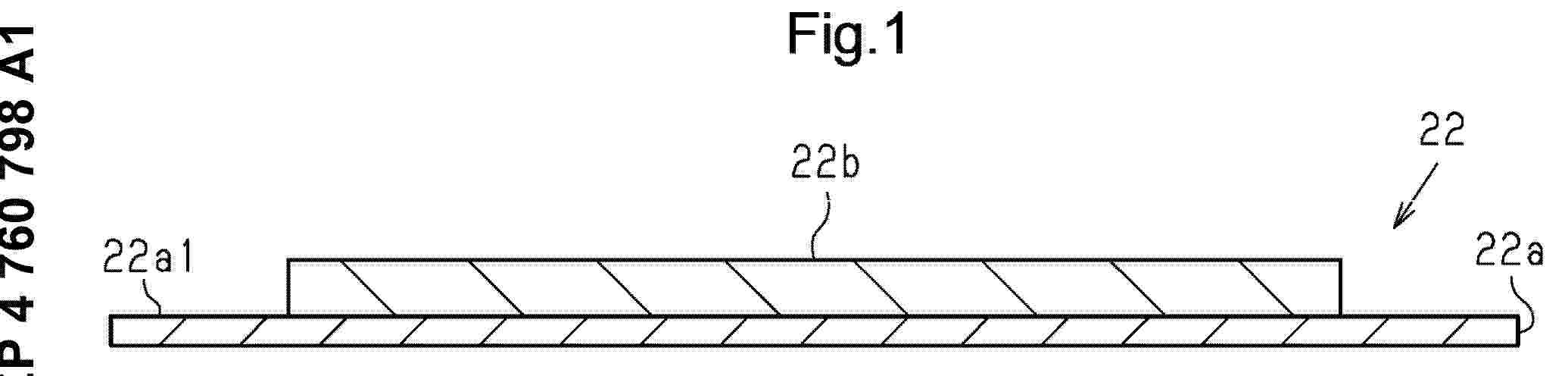
A negative electrode (22) for a power storage device includes a negative electrode current collector (22a) including a first surface (22a1), and a negative electrode active material layer (22b) formed on the first surface (22a1) of the negative electrode current collector (22a). The weight per unit area of the negative electrode active material layer (22b) is 20 mg/cm2 or greater. The negative electrode active material layer (22b) contains graphite, an aqueous binder having a glass transition temperature less than 7°C, and single-walled carbon nanotubes.
Resumen de: WO2025032048A1
The present invention relates to a method for preparing a salt of bis(fluorosulfonyl)imide, preferably lithium bis(fluorosulfonyl)imide (LiFSI).
Nº publicación: EP4758672A1 17/06/2026
Solicitante:
MYCON GMBH [DE]
mycon GmbH
Resumen de: WO2025031529A1
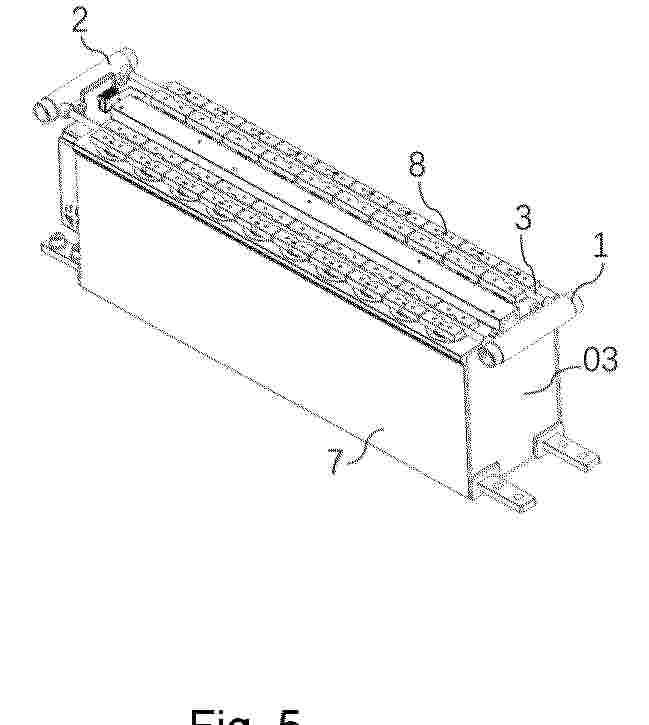
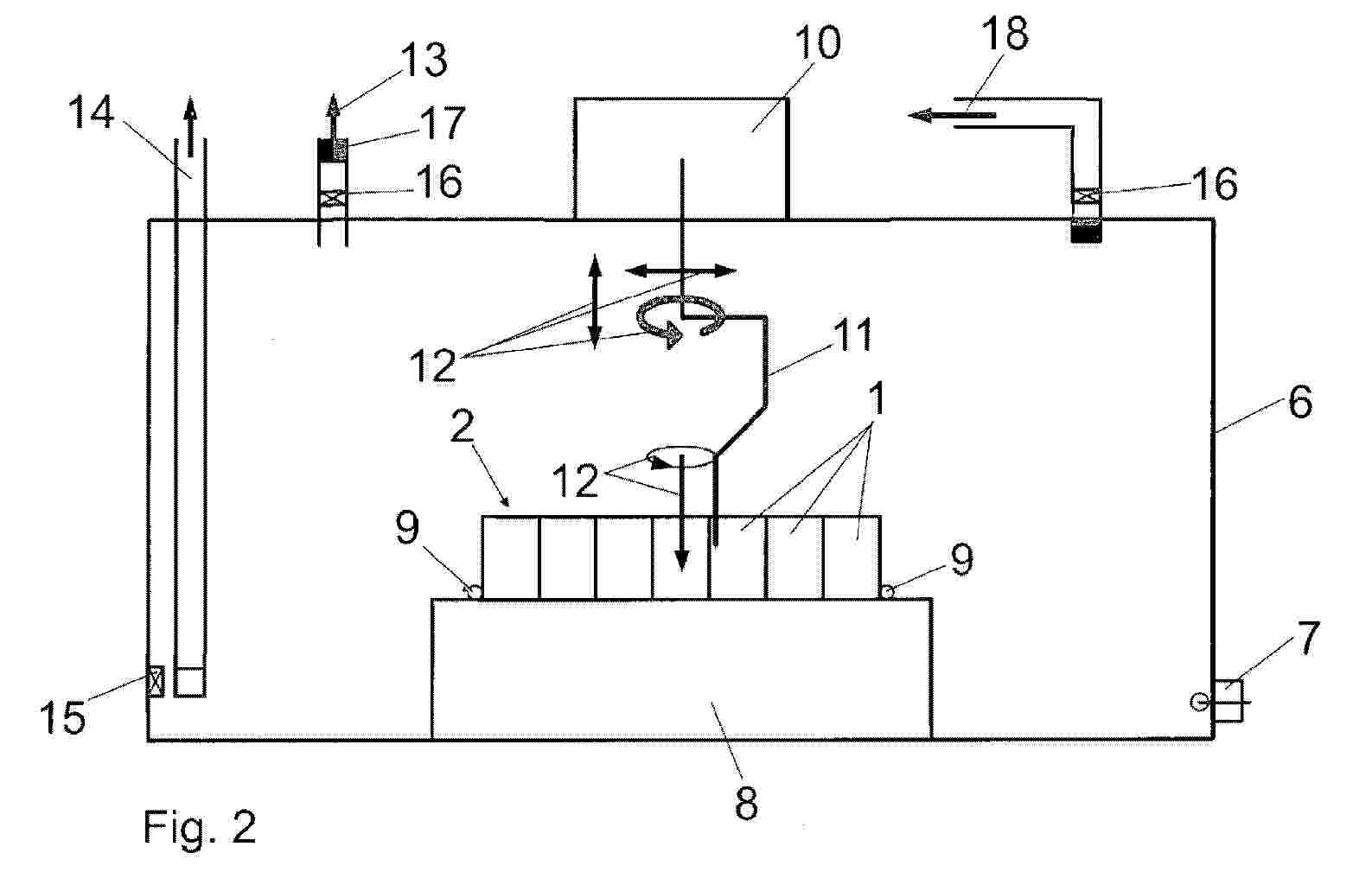
The invention relates to a method for recycling and/or repairing individual cells (1) from a glued combination (2) of individual cells (1) in the form of structural batteries, in particular vehicle batteries for electric vehicles, in which a plurality of individual cells (1) are glued to one another, spaced apart from one another, by means of an adhesive (3), in which method, under inert atmosphere, at least one individual cell (1) is separated by mechanical separating methods in the region of the adhesive (3) surrounding the individual cell (1) with adjacent individual cells (1), wherein at least the surrounding region of the individual cell (3) to be processed is cooled to such a degree that the adhesive (3) between the adjacent individual cells (1) is embrittled loses at least some of its adhesive force and the region of the adhesive (3) to be processed does not heat up to an impermissible degree during the separation process.
 BOPI
BOPI
 Sede Electrónica