Si deseas distinguir tus productos, servicios o ambos de los de otra empresa, es posible que necesites una marca o nombre comercial. Descubre qué son, en qué consiste su procedimiento de registro y qué implica.

Información sobre los plazos de presentación de solicitudes de transformación de marcas de la Unión Europea en marca nacional española. Más información


Si tienes un nuevo dispositivo, producto o procedimiento que resuelva un problema técnico o tenga una ventaja práctica, existen distintas formas de protegerlo en España y en otros países. Descubre cómo hacerlo.

¿Tu innovación reside en la estética, la ornamentación o la apariencia de tu producto? Protégela mediante un diseño industrial. Descubre qué derechos confiere el registro y cómo realizar la tramitación.

Las indicaciones geográficas protegen el nombre de un producto originario de una zona geográfica, a la cual le debe una determinada calidad, reputación u otra característica. Descubre qué son, en qué consiste su procedimiento de registro y qué beneficios conceden.

Las patentes publicadas en todo el mundo son una valiosa fuente de información científica, técnica y comercial.

Si eres emprendedor/a o una empresa y quieres potenciar y mejorar la rentabilidad de tu negocio protegiendo de forma adecuada los activos intangibles de tu organización, en este espacio encontrarás lo necesario.


 1426
resultados
1426
resultados
 Última actualización
29/06/2026 [08:41:00]
Última actualización
29/06/2026 [08:41:00]


 Resultados 1000 a 1025 de 1426

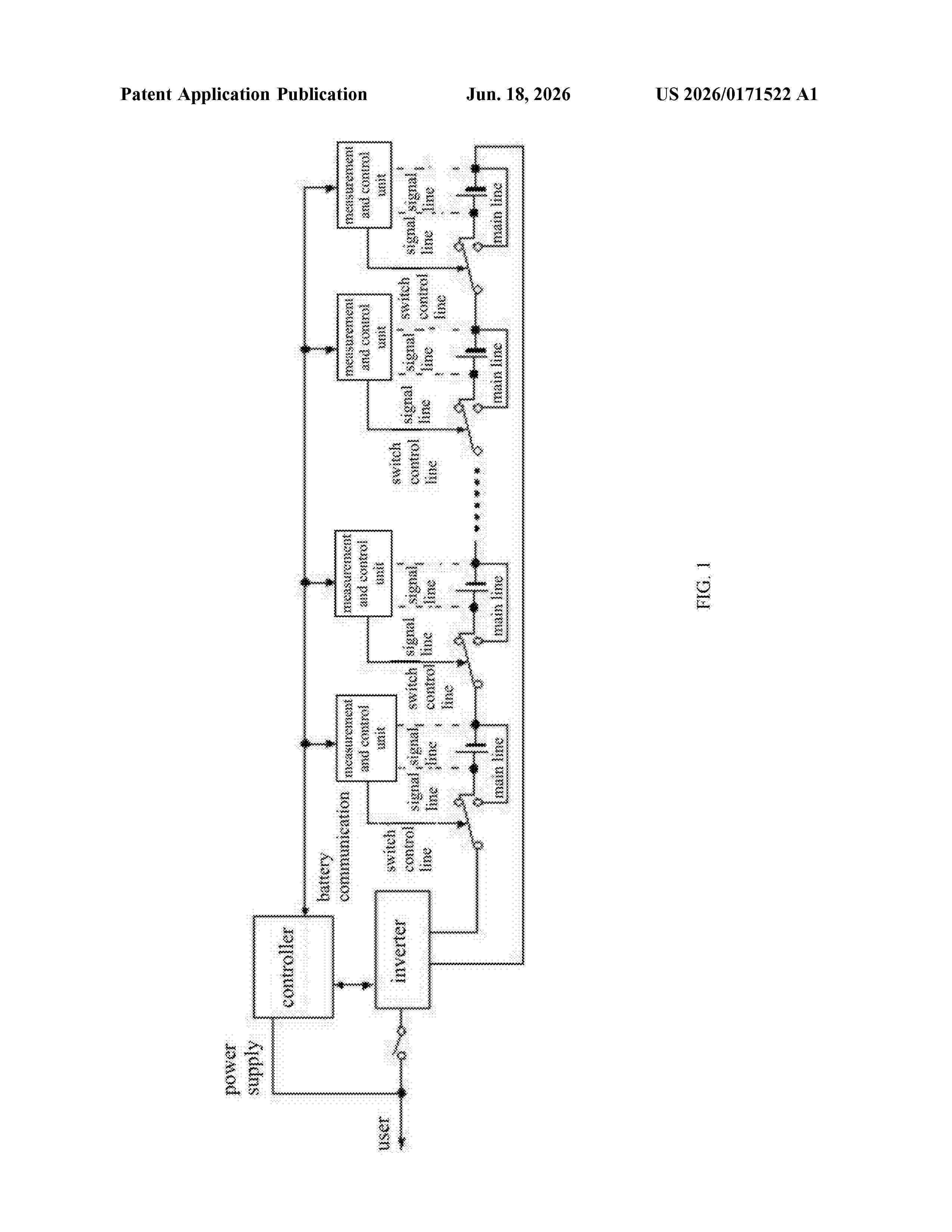
Resumen de: US20260171522A1
0000 A charging and discharging method for energy storage, relating to the technical field of new energy. The method comprises the following steps: (1) setting up a hardware system; (2) carrying out initialization detection to ensure that each hardware device is in a normal state; (3) setting up a software system; and (4) during standby or working, a controller reading battery parameters of each measurement and control unit in turn and comparing set data to make corresponding actions. The charging and discharging method for energy storage has the advantages of simple and convenient wiring, low cost, and easy maintenance.

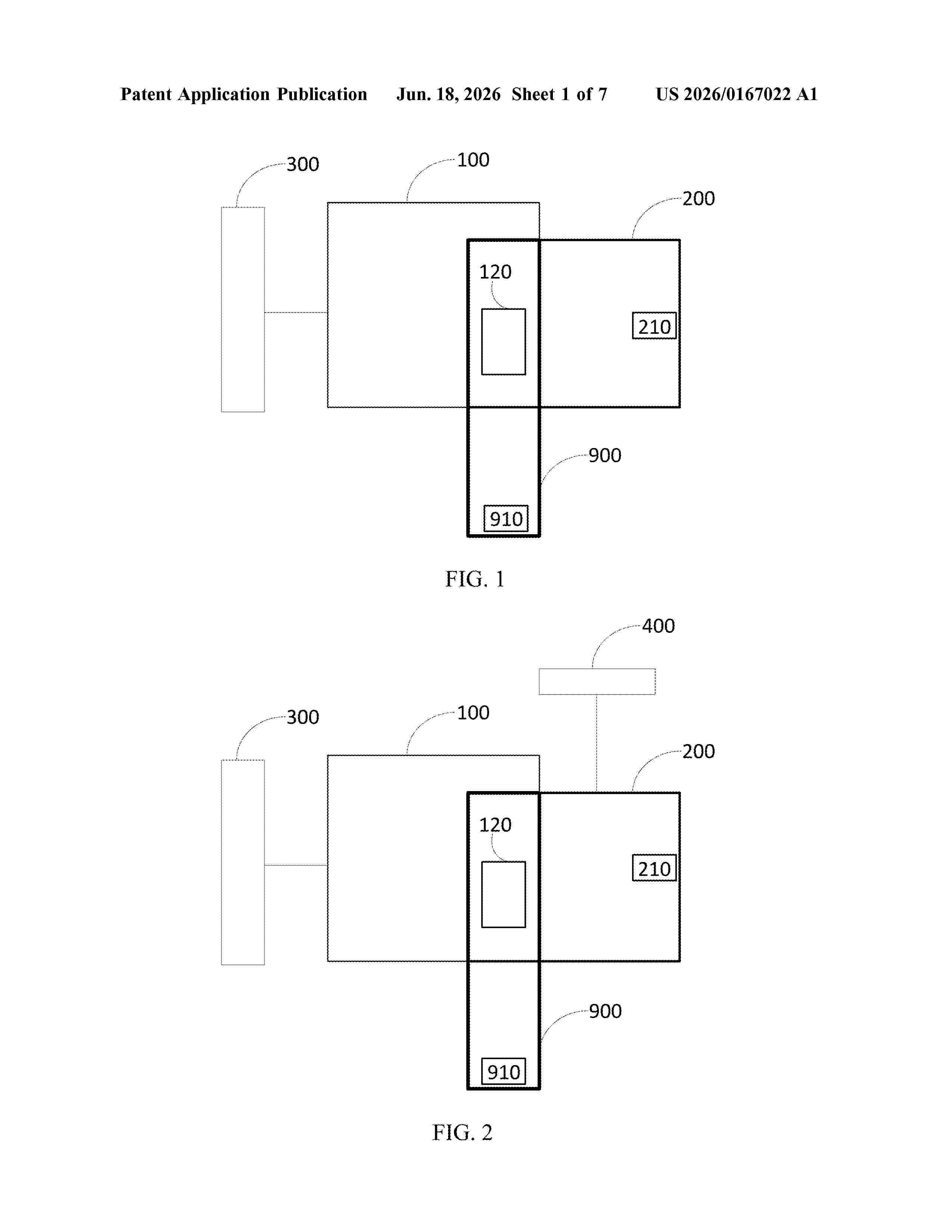
Resumen de: US20260167022A1
0000 A vehicle integrated domain controller architecture, a vehicle management system, and a vehicle. The vehicle integrated domain controller architecture includes: a low-voltage battery, a battery management module, a low-voltage power distribution module, and a thermal management module, where the low-voltage battery is electrically connected to the low-voltage power distribution module; the low-voltage power distribution module is configured with a low-voltage load access terminal configured to connect to a low-voltage load; the thermal management module is configured with a thermal management load access terminal configured to connect to a thermal management load; and the battery management module, and the low-voltage power distribution module, and the thermal management module share the same controller.
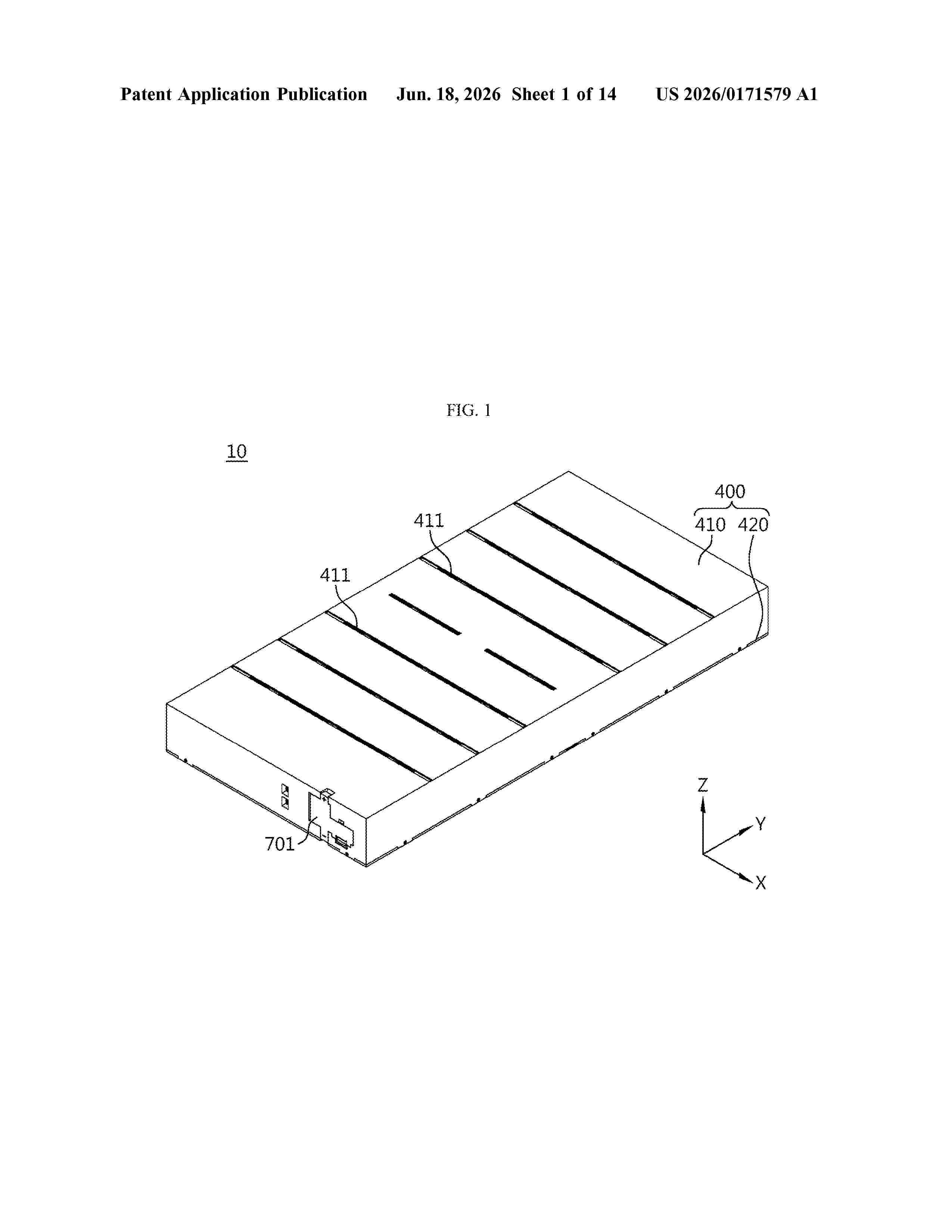
Resumen de: US20260171579A1
0000 Discussed is a battery back that may include at least one cell assembly and a pack case configured to accommodate the at least one cell assembly. The at least one cell assembly may include: two or more cell stacks including battery cells that are stacked; a cell pressurization unit disposed at outermost positions on opposite sides of each cell stack in a stacking direction of the battery cells and configured to provide pressing force to each cell stack; and a bus-bar frame assembly disposed at a front and a rear of the two or more cell stacks in a direction intersecting the stacking direction of the battery cells and configured to electrically connect the battery cells and integrally support the two or more cell stacks and the cell pressurization unit.
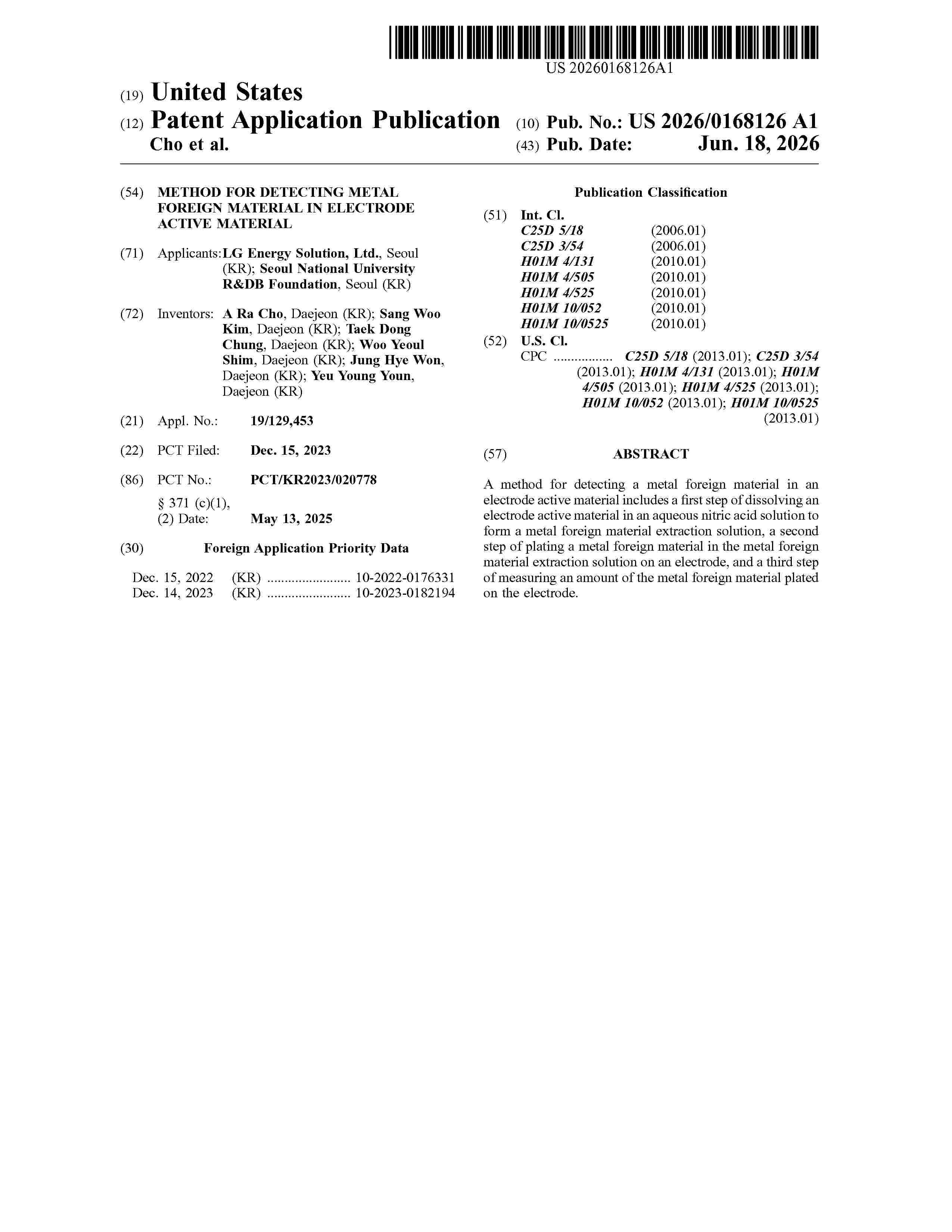
Resumen de: US20260168126A1
A method for detecting a metal foreign material in an electrode active material includes a first step of dissolving an electrode active material in an aqueous nitric acid solution to form a metal foreign material extraction solution, a second step of plating a metal foreign material in the metal foreign material extraction solution on an electrode, and a third step of measuring an amount of the metal foreign material plated on the electrode.
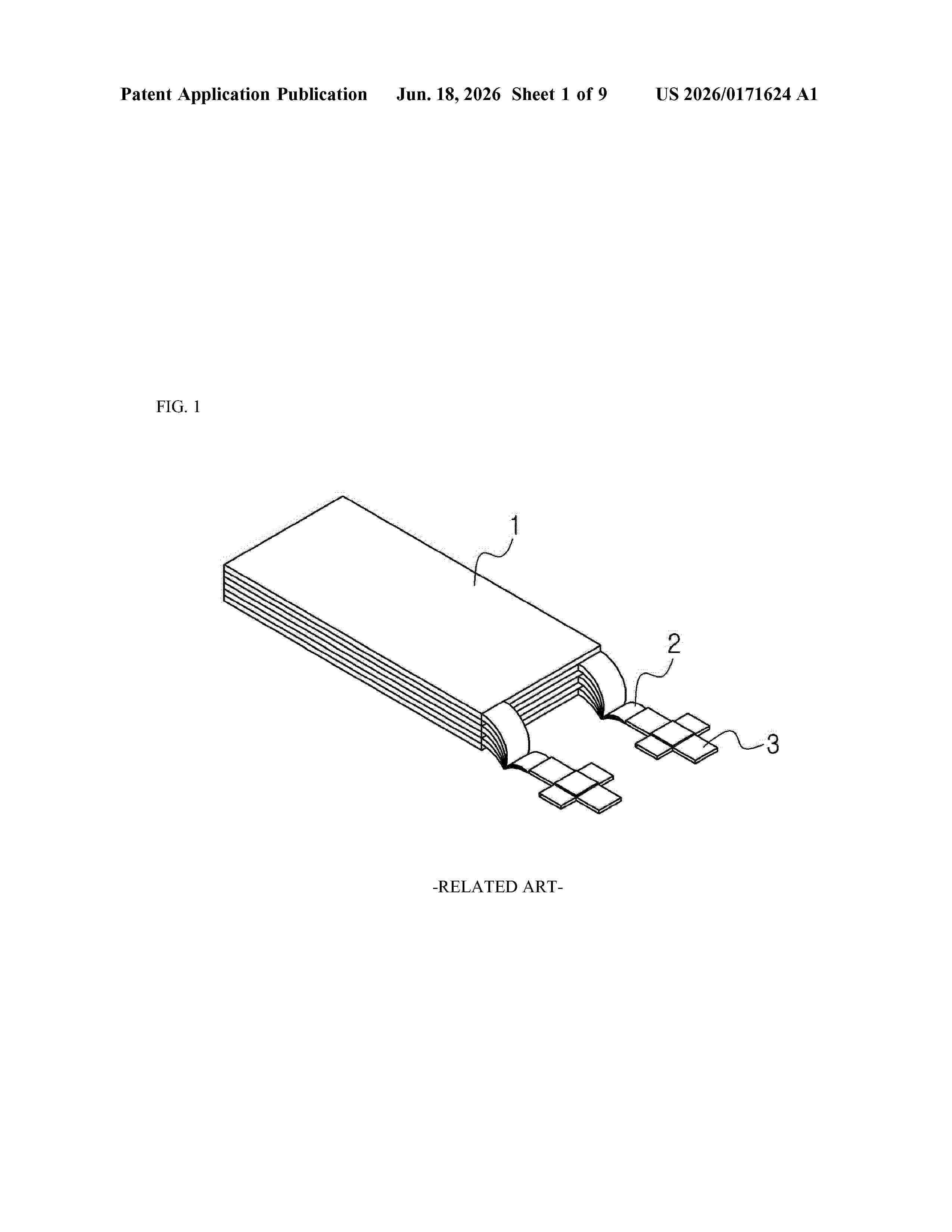
Resumen de: US20260171624A1
0000 A lead tab for bonding an electrode tab, a method for bonding the lead tab to the electrode tab, and a lithium secondary battery including a structure in which the lead tab is bonded to the electrode tab, which can prevent deformation of a lithium negative electrode tab by exposure while improving the physical strength and safety of the bonding area, are disclosed. The lead tab for bonding to the electrode tab includes: a first metal lead; and a second metal lead, wherein one end of the second metal lead is in contact with the first metal lead, and capping the electrode tab to form a bonding area.
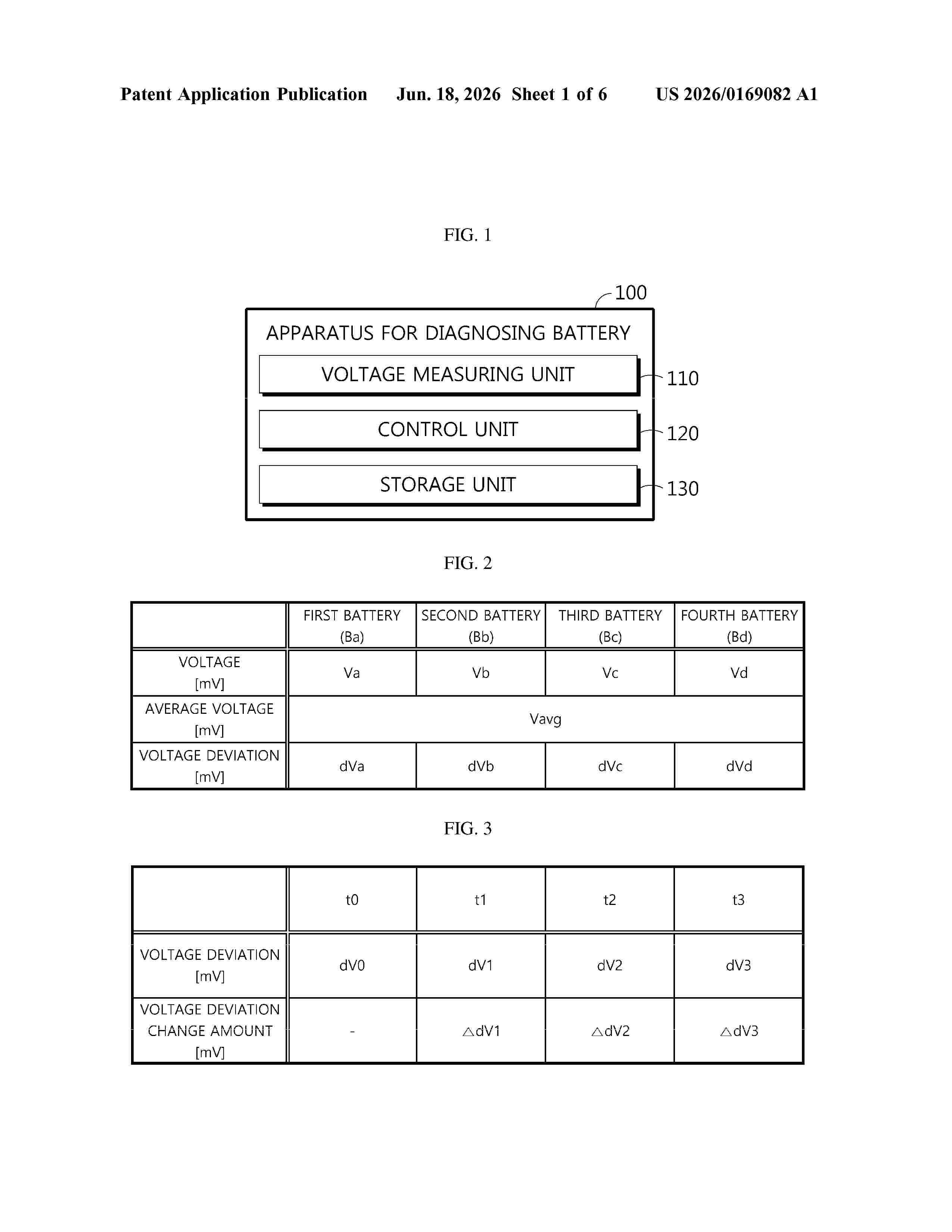
Resumen de: US20260169082A1
0000 An apparatus for diagnosing a battery includes a voltage measuring unit configured to measure voltages of a plurality of batteries, and a control unit configured to calculate a voltage deviation of the plurality of batteries, calculate a voltage deviation change amount of each of the plurality of batteries, and diagnose a state of each of the plurality of batteries based on the voltage deviation change amount and a calculation period of the voltage deviation change amount.
Resumen de: US20260171395A1
A positive electrode material is obtained by mixing a lithium manganese iron phosphate material and a ternary material. During mixing, a mass ratio n of the ternary material to the lithium manganese iron phosphate material in the positive electrode material is determined according to a range of a ratio k of an actual specific capacity of the ternary material to an actual specific capacity of the lithium manganese iron phosphate material. Specifically, when k is less than or equal to 1.34, n is 1 to 9; and when k is greater than 1.34, n is 0.1 to 1.
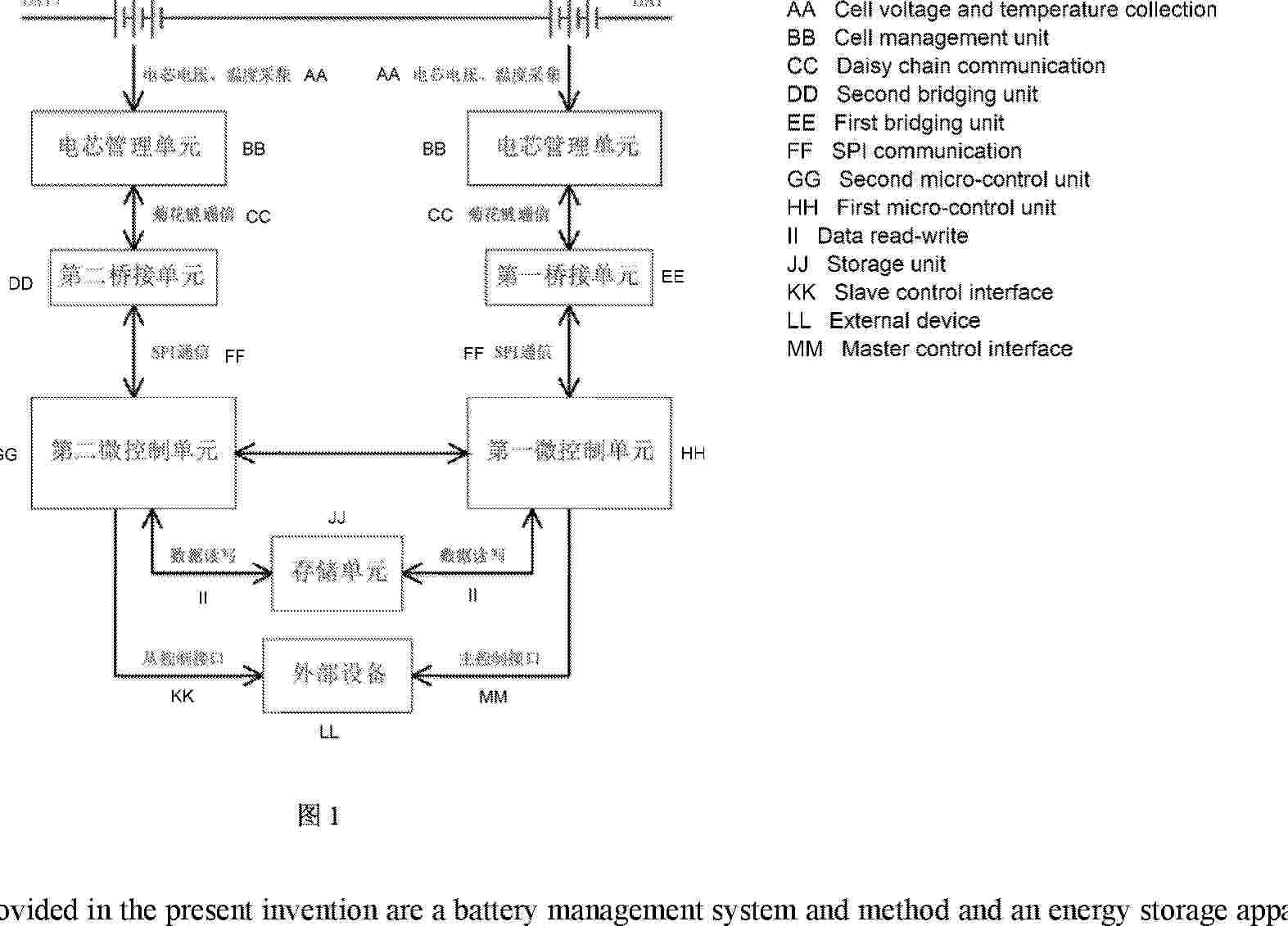
Resumen de: AU2025214887A1
Provided in the present invention are a battery management system and method and an energy storage apparatus. The battery management system comprises micro-control units and a collection unit, wherein each micro-control unit is used for receiving and/or sending a control signal, the collection unit is used for collecting cell parameters, two ends of the collection unit are connected to the micro-control units, the collection unit comprises at least one cell management unit, each cell management unit is provided with an analog front end, each analog front end is used for connecting to one cell for collection of the cell parameters, there are two micro-control units and two cell management units, each cell management unit is connected to one micro-control unit, and the two micro-control units share parameter signals and the control signals. The battery management system of the present invention can manage each cell, so as to allow for more balanced workload of each component, thus reducing the risk of slave control failures; and the battery management system can fully use the two micro-control units, so as to make system operation safer and more reliable.
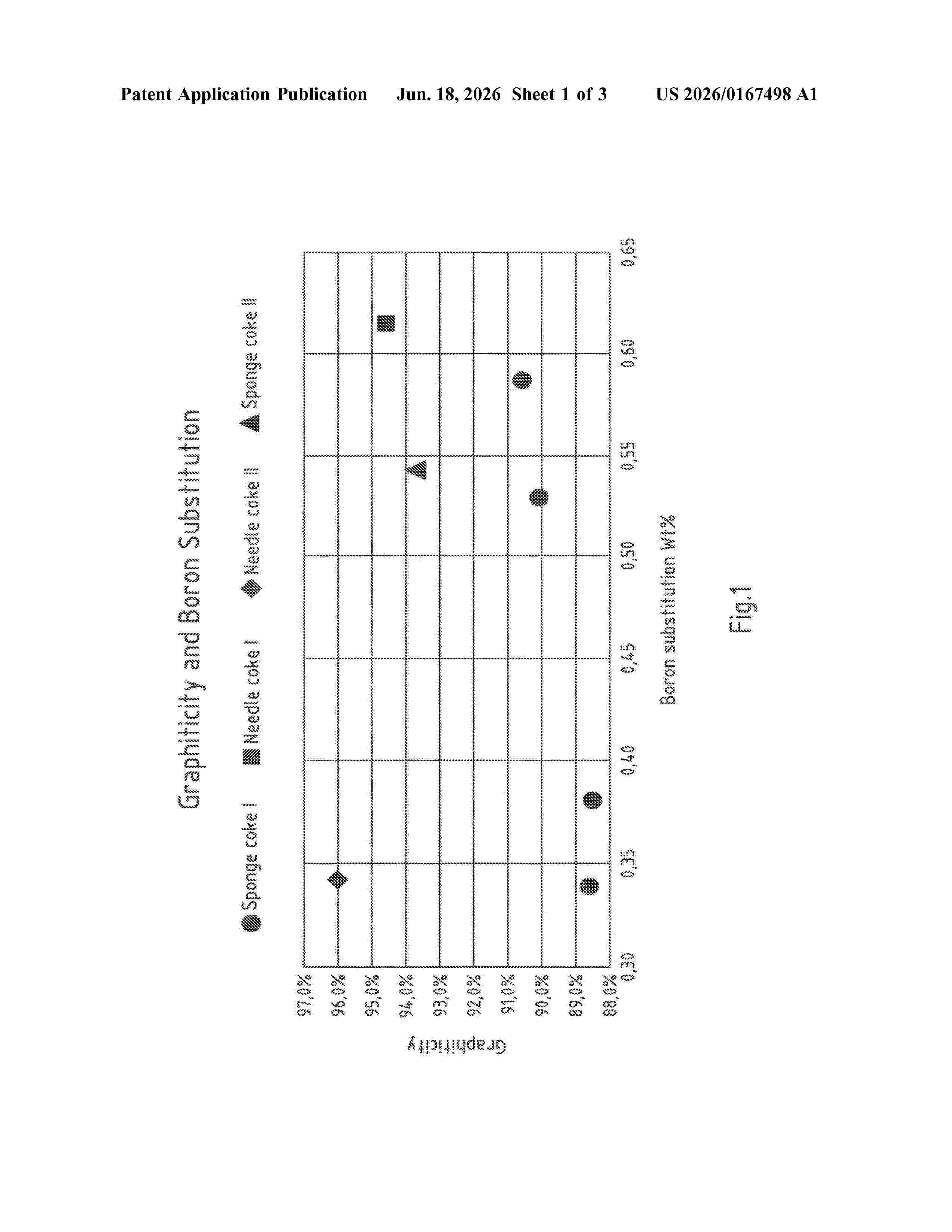
Resumen de: US20260167498A1
The invention relates to a carbon particle comprising at least 97 wt. % carbon, based on the total weight of the carbon particle, at most 0.2 wt. % impurities, based on the total weight of the carbon particle, at least 0.08 wt. % boron, based on the total weight of the carbon particle, at most 0.05 wt. % boron carbide, based on the total weight of the carbon particle. The invention also relates to a method for the manufacture of the carbon particle comprising a graphitization step in an electric field. The invention also relates to the use of the carbon particle as the active material of a negative electrode for a battery.
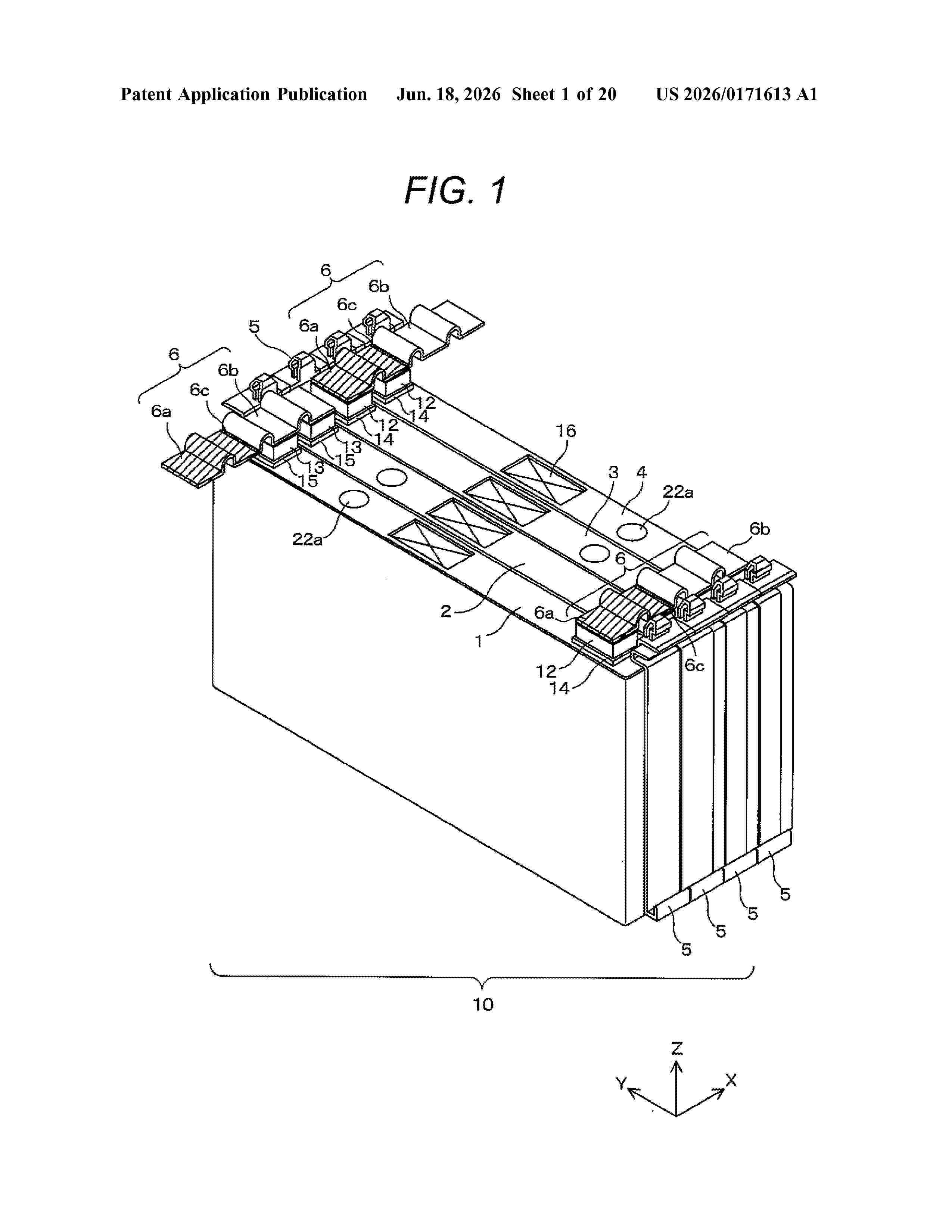
Resumen de: US20260171613A1
A battery pack capable of suppressing heat generation from current flowing through a bus bar and suppressing cell deterioration includes first to fourth stacked cells, each cell including positive electrode terminal and a negative electrode terminal having higher conductivity, and a bus bar electrically connecting the positive electrode terminal of the second cell and the negative electrode terminal of the third cell, the second and third cells being disposed side-by-side. The bus bar includes a first conductive part connected to the positive electrode terminal of the second cell, a second conductive part connected to the negative electrode terminal of the third cell and having higher conductivity and higher specific gravity, and a connecting part that connects the first conductive part and the second conductive part. The connecting part is disposed in a first region facing the second cell or in a second region facing the third cell.
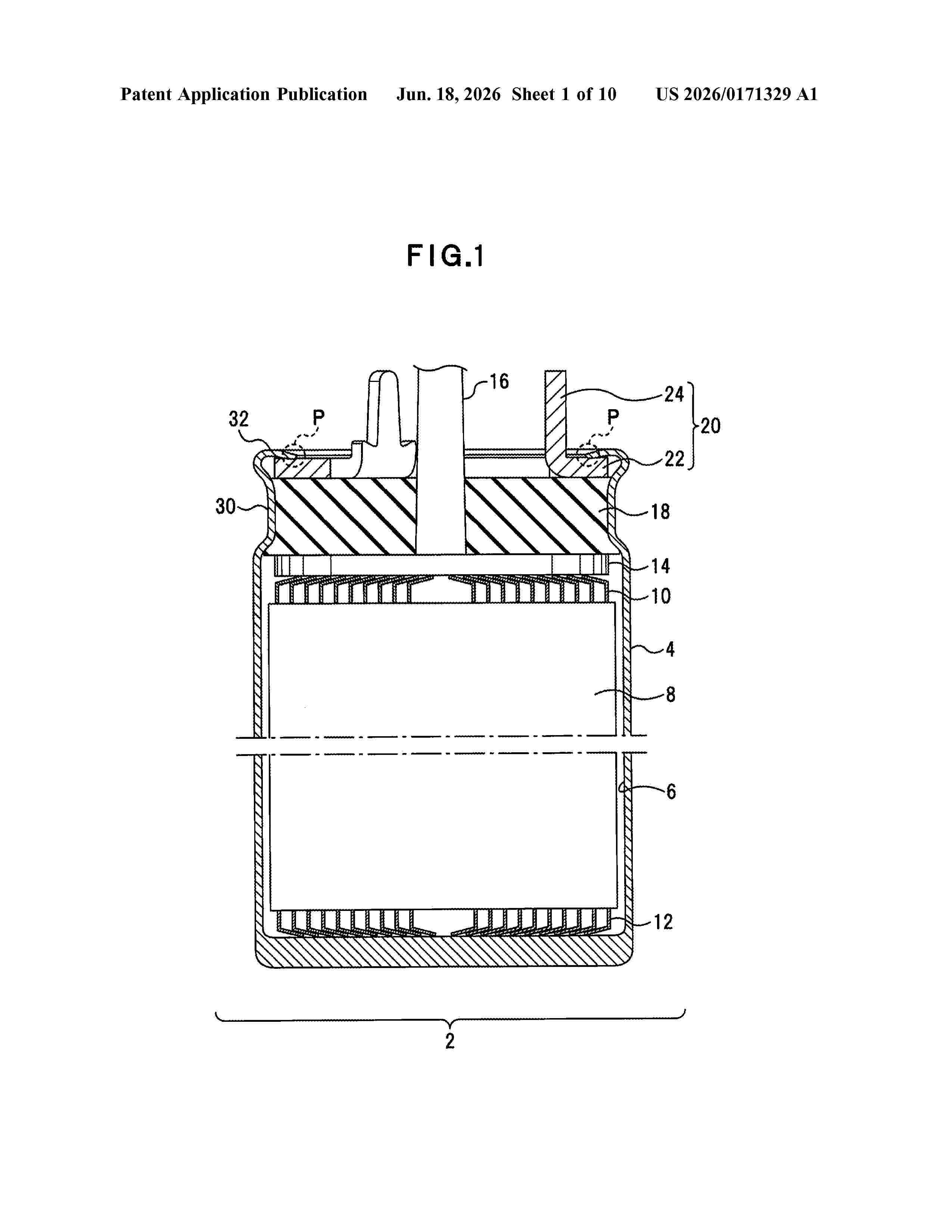
Resumen de: US20260171329A1
The power storage device includes: a case (exterior case 4) including a storage portion (6); a power storage element (8) in which an electrode tab (anode tab 10, cathode tab 12) is formed on a wound end surface and which is stored in the storage portion; a sealing member (18) which is disposed in the storage portion and whose peripheral surface is crimped to an inner wall surface of the case by swaging (swaging portion 30) from an outer peripheral side of the case to seal an opening portion of the storage portion; a support plate (current collecting plate 14) which is in contact with and supports a surface of the sealing member, the surface facing a bottom side of the storage portion; and a support member (folder 20) which is disposed on a surface of plane surfaces of the sealing member, the surface of the plane surfaces facing an opening portion side of the storage portion, and presses and supports the sealing member by engagement with an opening end (36) of the case swaged (vertical swaging portion 32) toward the bottom side of the storage portion. As a result, the sealed state of the case by the sealing member is stabilized against an increase in the pressure in the case.
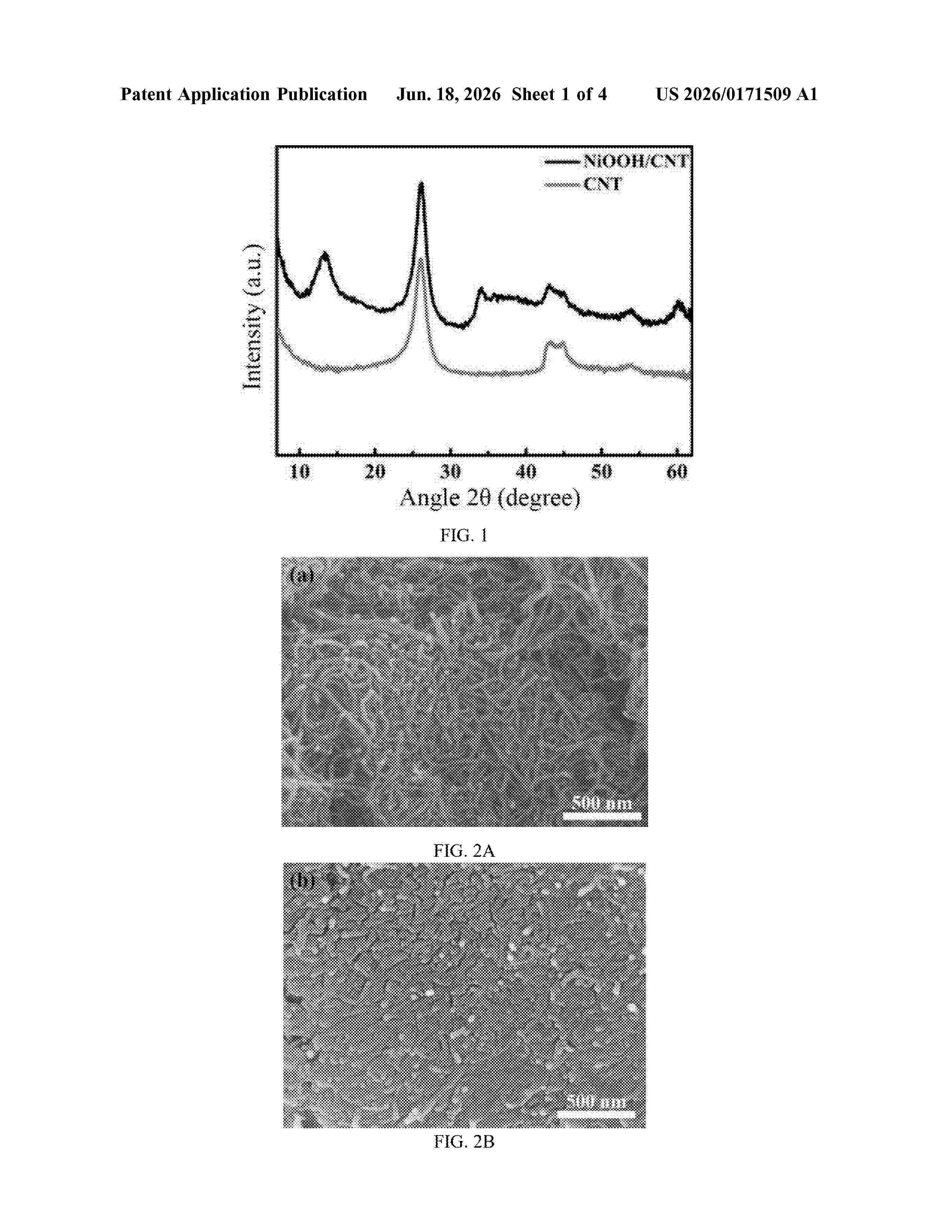
Resumen de: US20260171509A1
A nickel oxyhydroxide/carbon nanotube composite for a water-based magnesium ion positive electrode material, and a preparation method and use thereof are provided. In this approach, carbon nanotubes serve as substrates onto which nickel oxyhydroxide particles are grown via a chemical bath method, yielding the desired composite. By employing this technique, nickel oxyhydroxide nanoparticles are synthesized directly on the surface of carbon nanotubes through a simple chemical bath process, resulting in the formation of a composite structure. This composite material, utilized as a cathode electrode in water-based magnesium ion batteries, exhibits outstanding electrochemical performance, particularly in terms of cycling stability and magnesium ion storage capacity.
Resumen de: US20260171396A1
0000 The present invention relates to a positive electrode active material and a lithium secondary battery including the same, and more particularly, to a bimodal-type positive electrode active material including a first lithium composite oxide as a small particle and a second lithium composite oxide as a large particle, wherein the positive electrode active material may uniformly improve the particle stability of the small particle and the large particle by controlling a slope of a concentration gradient in which cobalt in the small particle and the large particle decreases from a surface portion toward a central portion, a positive electrode including the positive electrode active material, and a lithium secondary battery using the positive electrode.
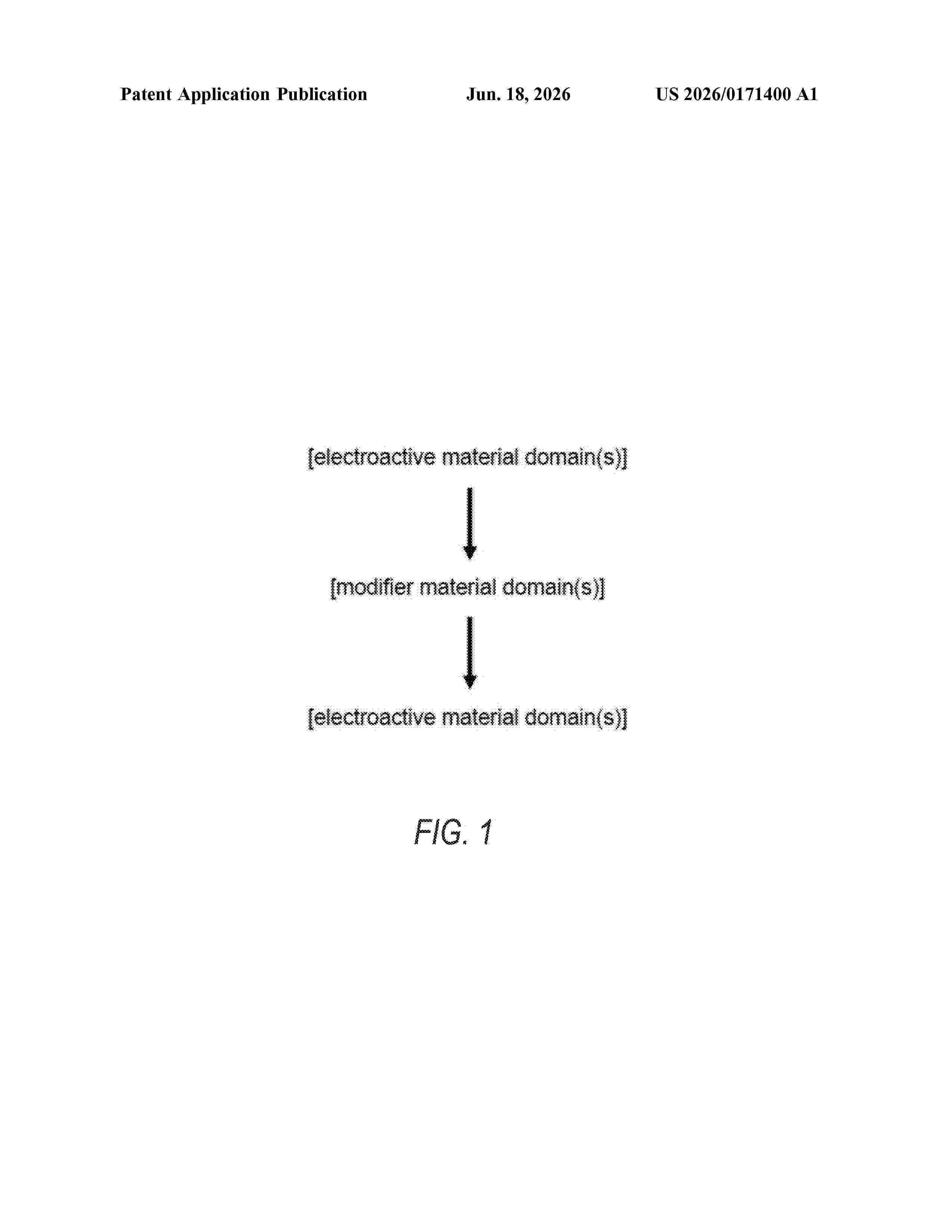
Resumen de: US20260171400A1
The invention relates to a particulate material and processes for the preparation thereof. The particulate material consists of a plurality of composite particles. The composite particles comprise a porous particle framework comprising micropores and/or mesopores. The total pore volume of micropores and mesopores as measured by gas adsorption is in the range from 0.4 to 2.2 cm3/g. The composite particles comprise a plurality of electroactive material domains and a plurality of modifier material domains disposed within the internal pore volume of the porous particle framework. At least a portion of the modifier material domains are located between adjacent electroactive material domains.
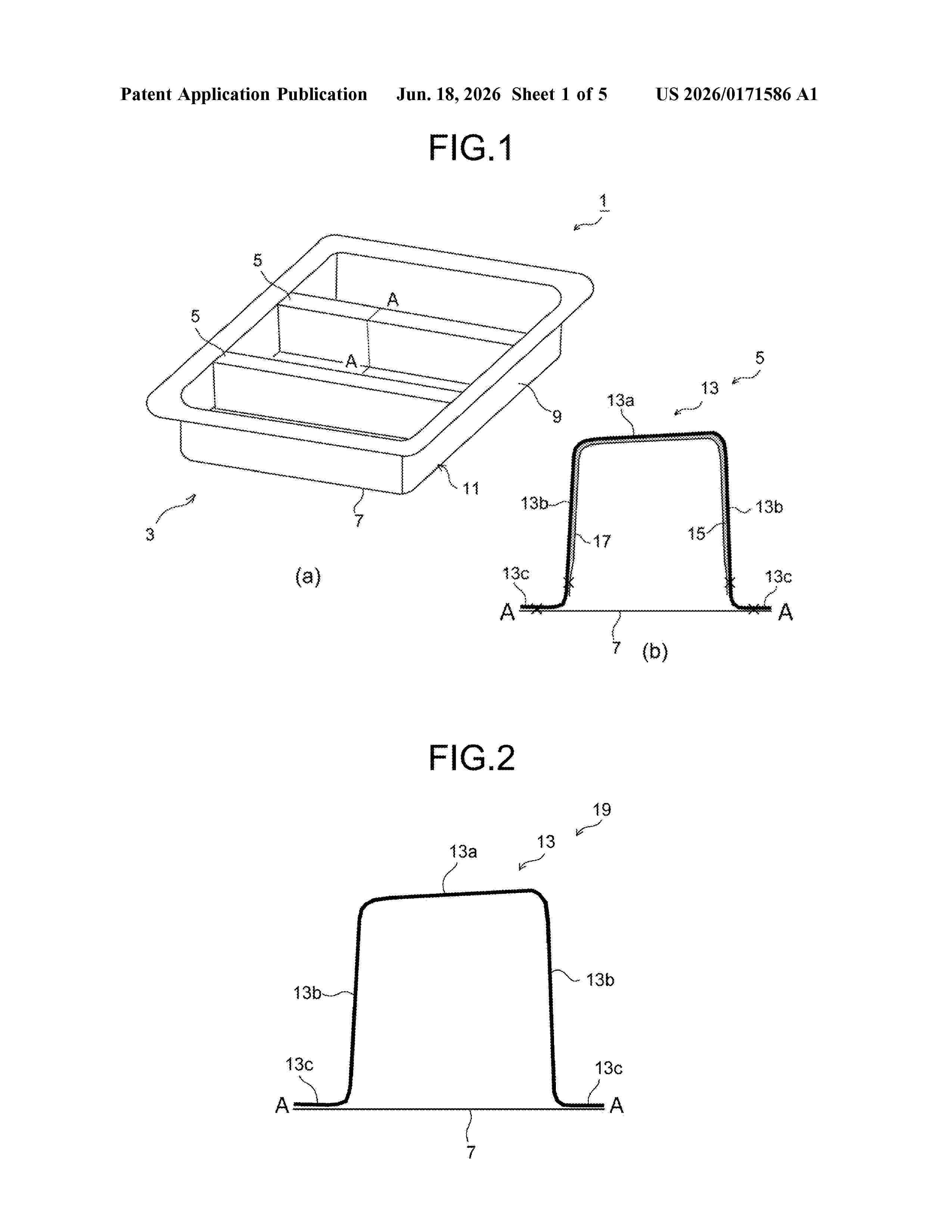
Resumen de: US20260171586A1
A battery case for being mounted under a floor of a vehicle body and storing a battery includes: a main body formed of a bottomed frame body having side walls facing each other in a vehicle width direction in a state of being mounted on the vehicle body; and a battery case cross member configured to extend between the facing side walls in the main body and to reinforce the main body. The battery case cross member includes a hat-shaped section part including a top portion, side wall portions, and flange portions, the flange portions abutting on a bottom surface of the main body, a resin patched on or coating a full length of an inner surface and/or outer surface of the hat-shaped section part, and a reinforcement arranged to cover the resin and adhered to the resin.
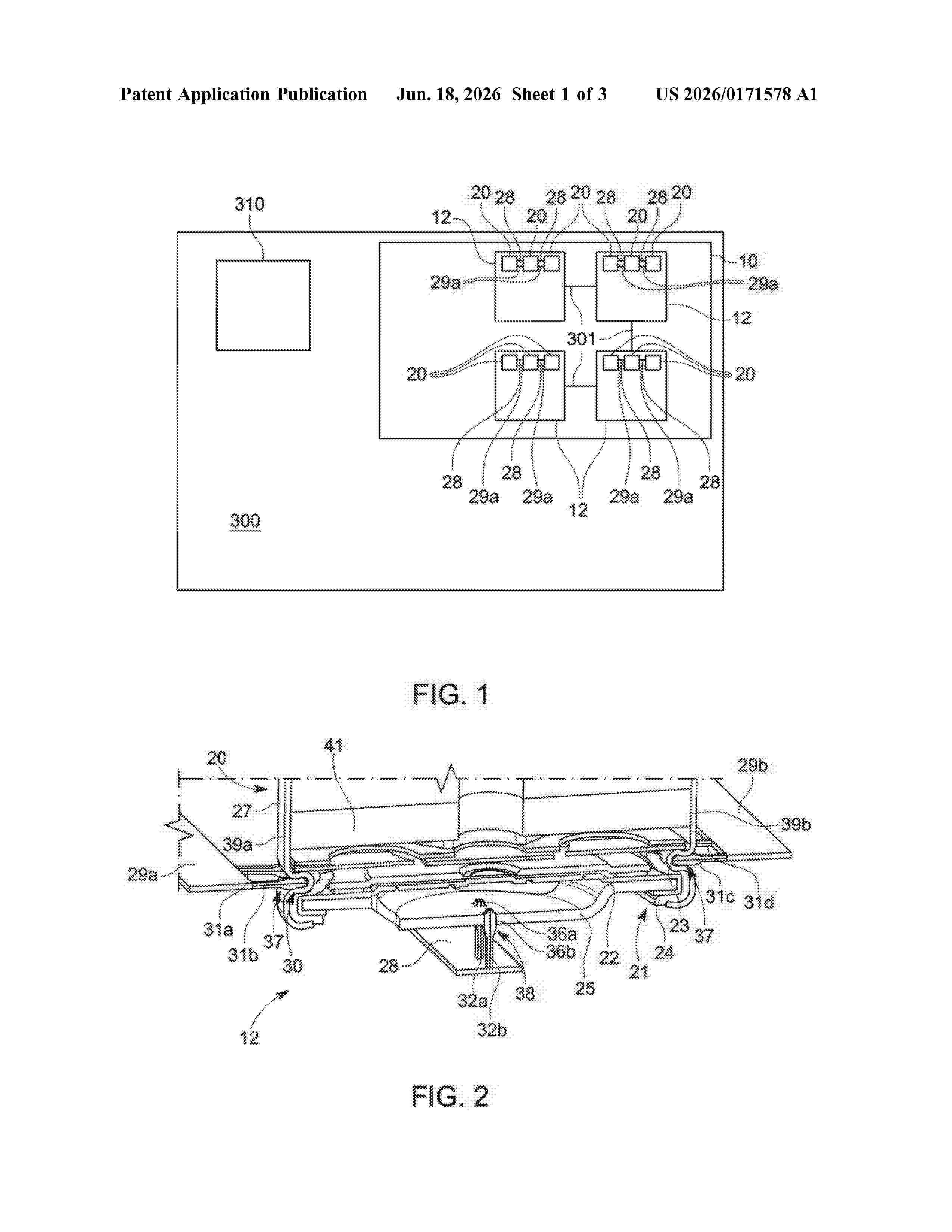
Resumen de: US20260171578A1
A battery module includes a plurality of secondary battery cells and a negative current collector. Each of the secondary battery cells includes an electrode assembly including a positive electrode, a negative electrode, and a separator interposed between the positive electrode and the negative electrode, a case accommodating the electrode assembly, a positive terminal electrically connected to the positive electrode, and a negative terminal electrically connected to the negative electrode. The case of each of the plurality of secondary battery cells has a groove that is part of the negative terminal. The negative current collector includes a negative connection portion mechanically and electrically connected with a first one of the plurality of secondary battery cells by a first press fit connection in the groove of the case.
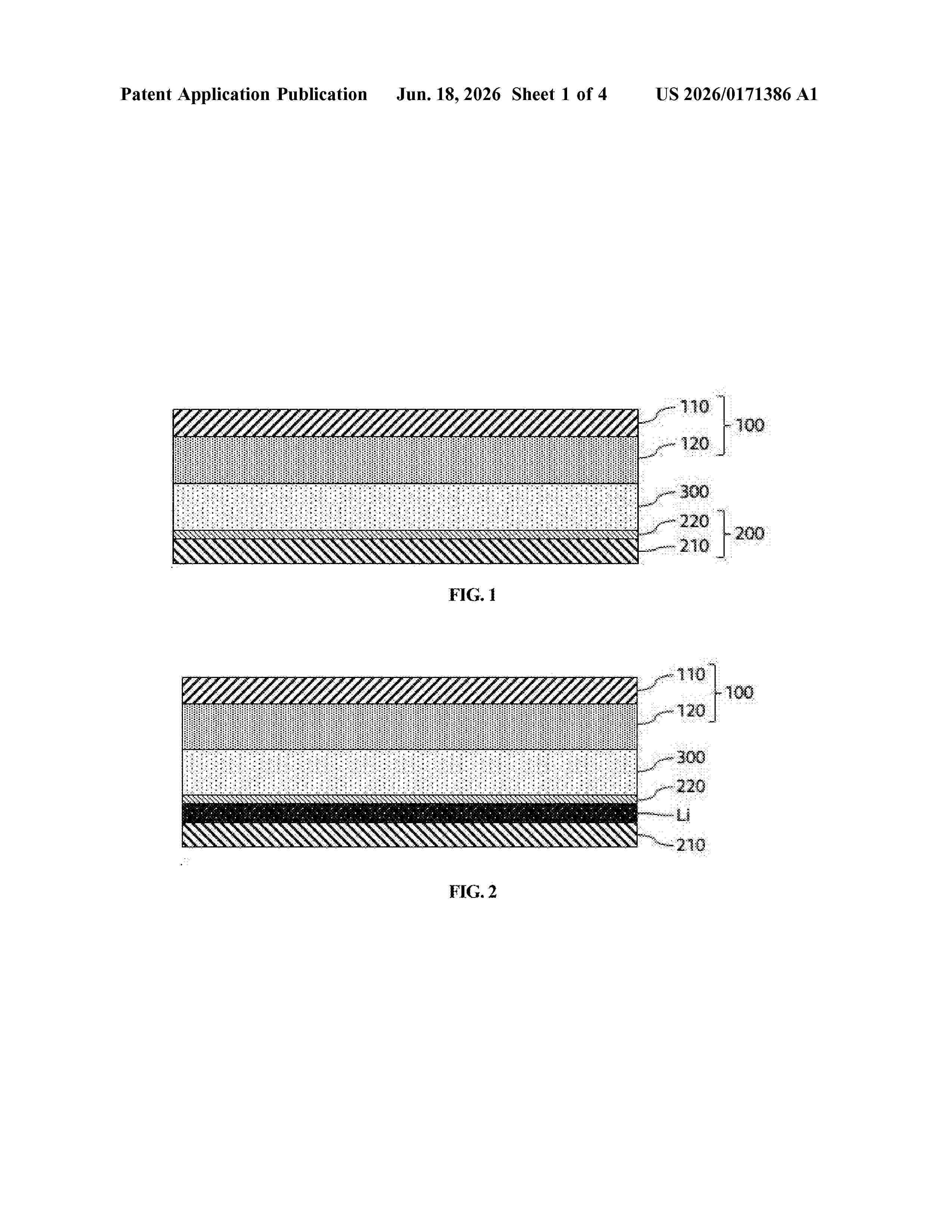
Resumen de: US20260171386A1
Disclosed are a method and an apparatus of manufacturing an anode for an all-solid-state battery by using an electric field. The manufacturing method includes: preparing a first coating member and a second coating member spaced apart from the first coating member by a predetermined distance; preparing a coating slurry, the coating slurry including a carbon material and a metal alloyable with lithium; feeding the coating slurry to the first coating member, feeding a current collector between the first coating member and the second coating member, and coating the coating slurry on the current collector by using an electric field generated between the first coating member and the second coating member by applying voltages to the first coating member and the second coating member.
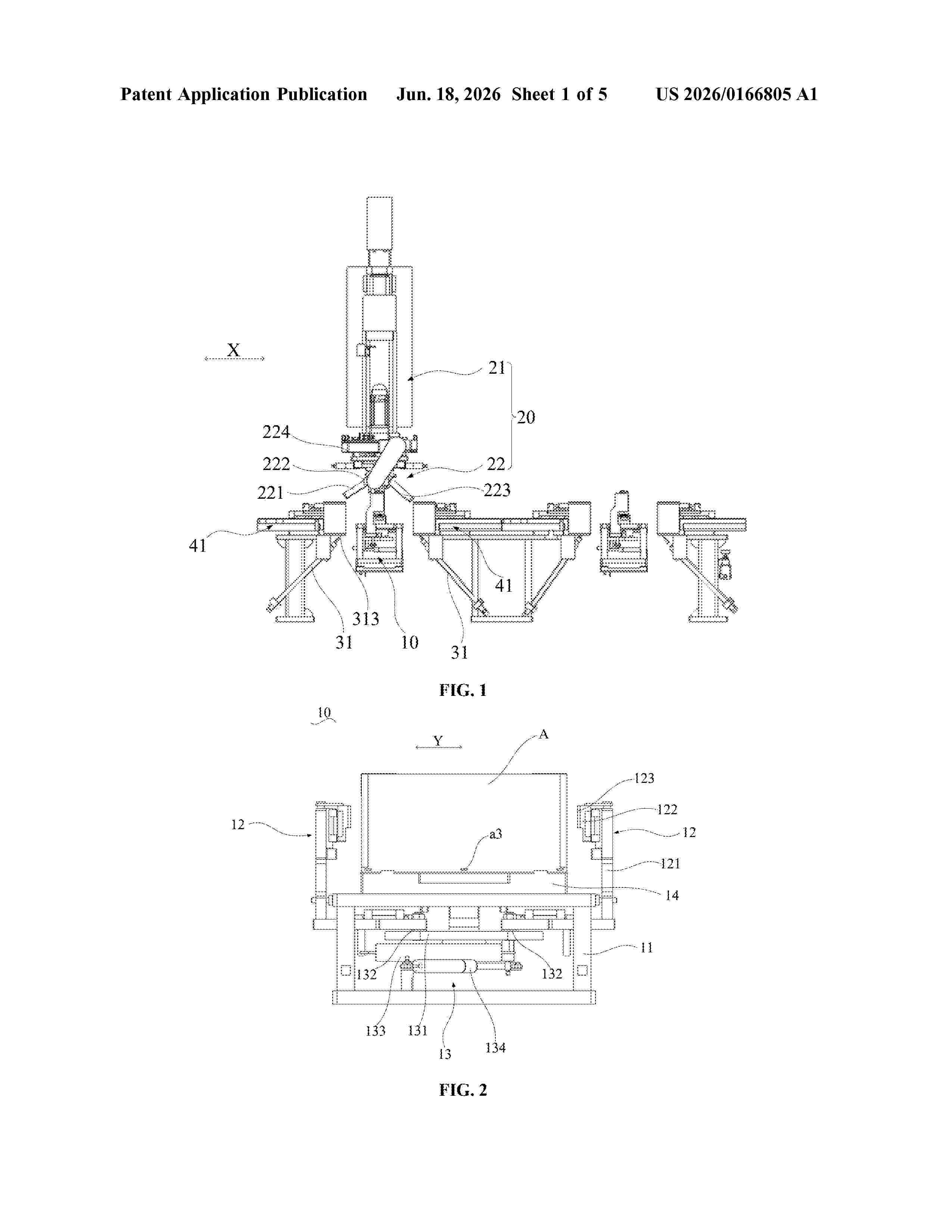
Resumen de: US20260166805A1
Disclosed is a film-coating device, comprising: a bearing mechanism; a film-coating mechanism comprising a driving assembly and a film-adsorbing assembly, the film-adsorbing assembly comprising a mounting seat, a first adsorbing plate, a second adsorbing plate and a third adsorbing plate; a smoothing mechanism; the driving assembly may lead the second adsorbing plate to abut against the upper end surface of the product in the process of driving the mounting seat to descend; when the second adsorbing plate abuts against the upper end surface of the product, the first adsorbing plate and the third adsorbing plate may rotate relative to the mounting seat to respectively abut against side surfaces of the product in the first horizontal direction.
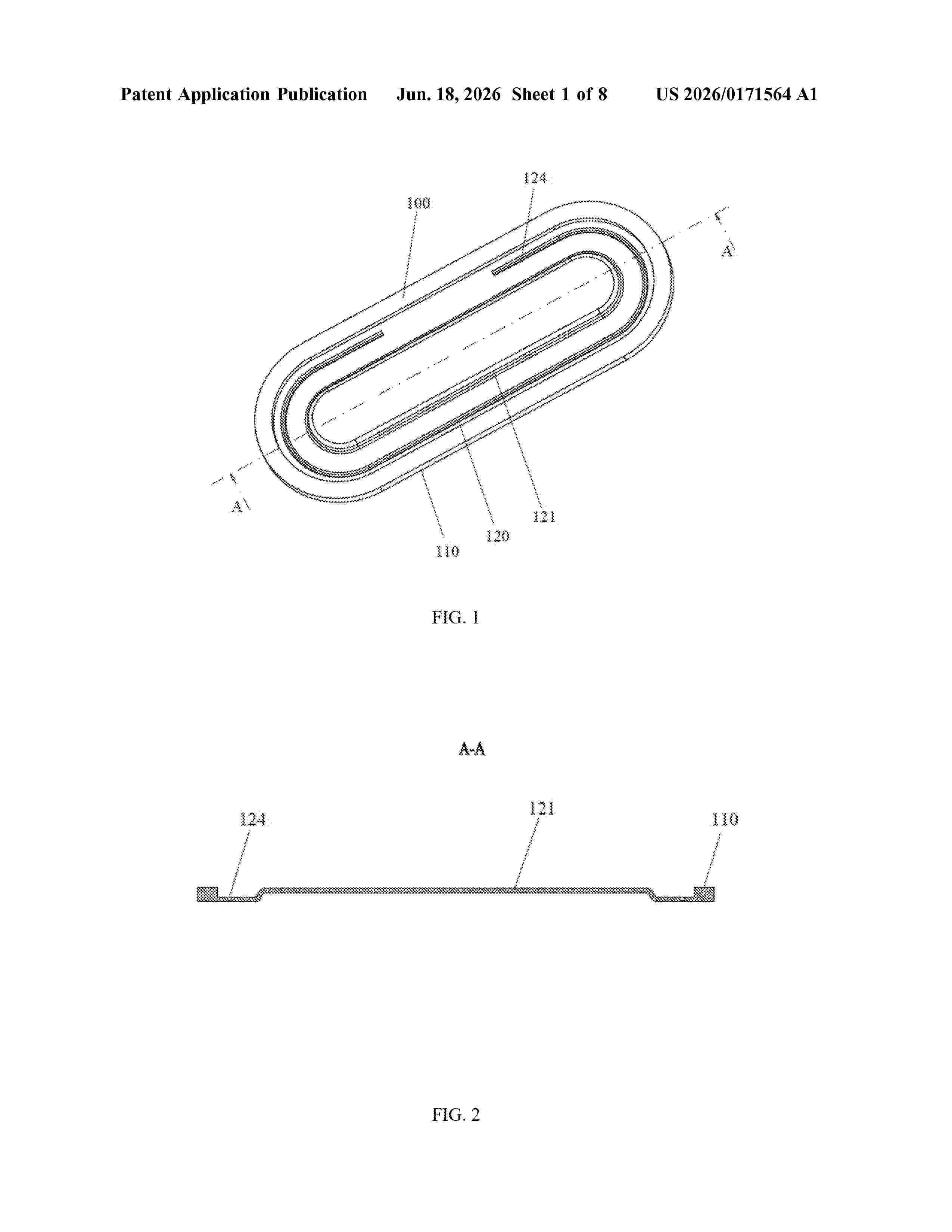
Resumen de: US20260171564A1
An explosion-proof valve, a top cover assembly and a battery are disclosed. The explosion-proof valve includes a mounting part and a body part, the mounting part is arranged on a peripheral edge of the body part, the body part includes a weak part and a first buffer part, and the weak part is arranged between the mounting part and the first buffer part or the weak part is arranged on the first buffer part. The weak part is located at a position with a minimum explosive pressure on the explosion-proof valve, and is configured to open the explosion-proof valve when an air pressure in an inner space of the top cover assembly reaches an opening threshold of the explosion-proof valve.
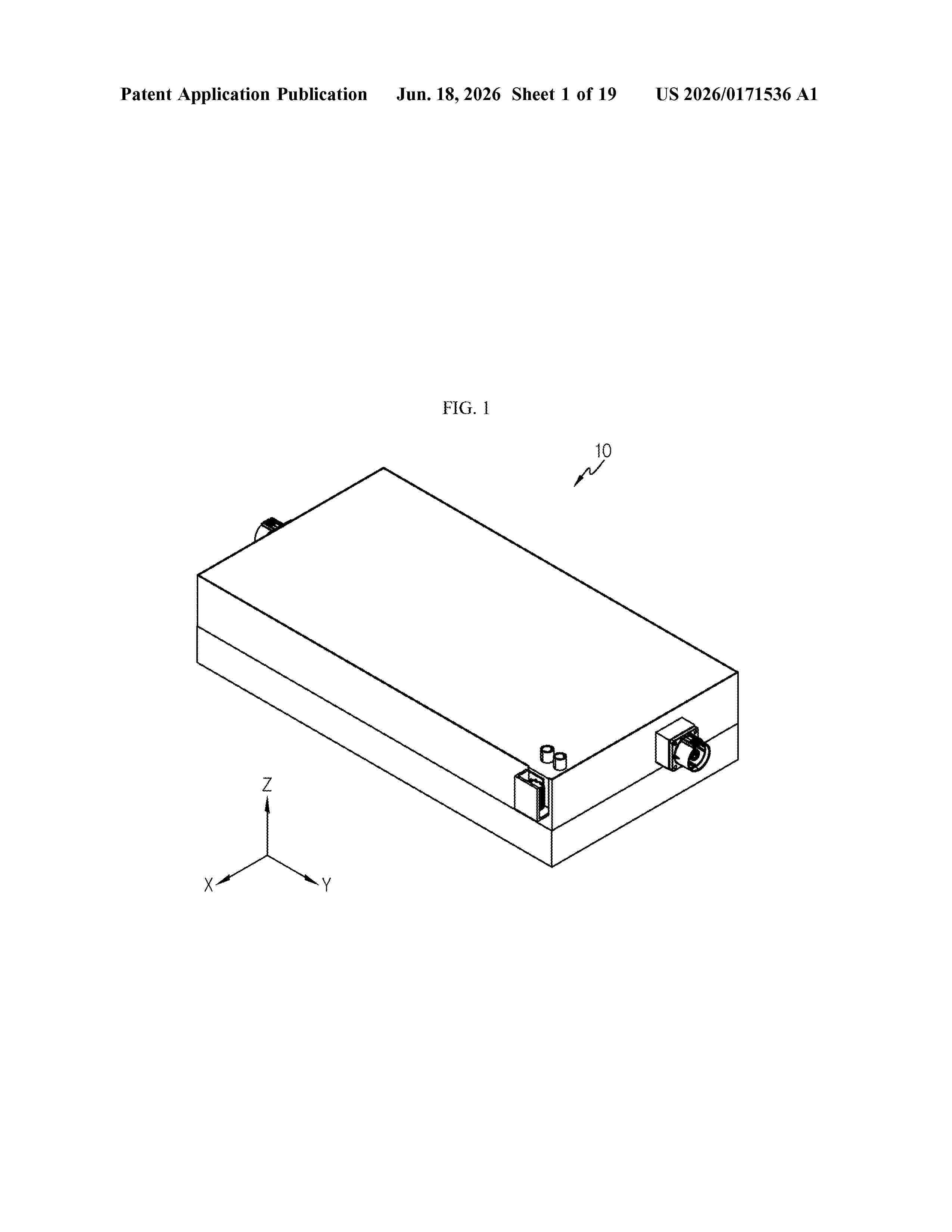
Resumen de: US20260171536A1
A battery pack according to an embodiment of the present disclosure includes a battery cell assembly including a plurality of battery cells; a busbar assembly on the battery cell assembly and electrically connected to the plurality of battery cells; a cooling unit below the busbar assembly and interposed between the plurality of battery cells along a lengthwise direction of the battery cell assembly; and a thermally conductive member disposed in a space between the cooling unit and the plurality of battery cells.
Resumen de: US20260171547A1
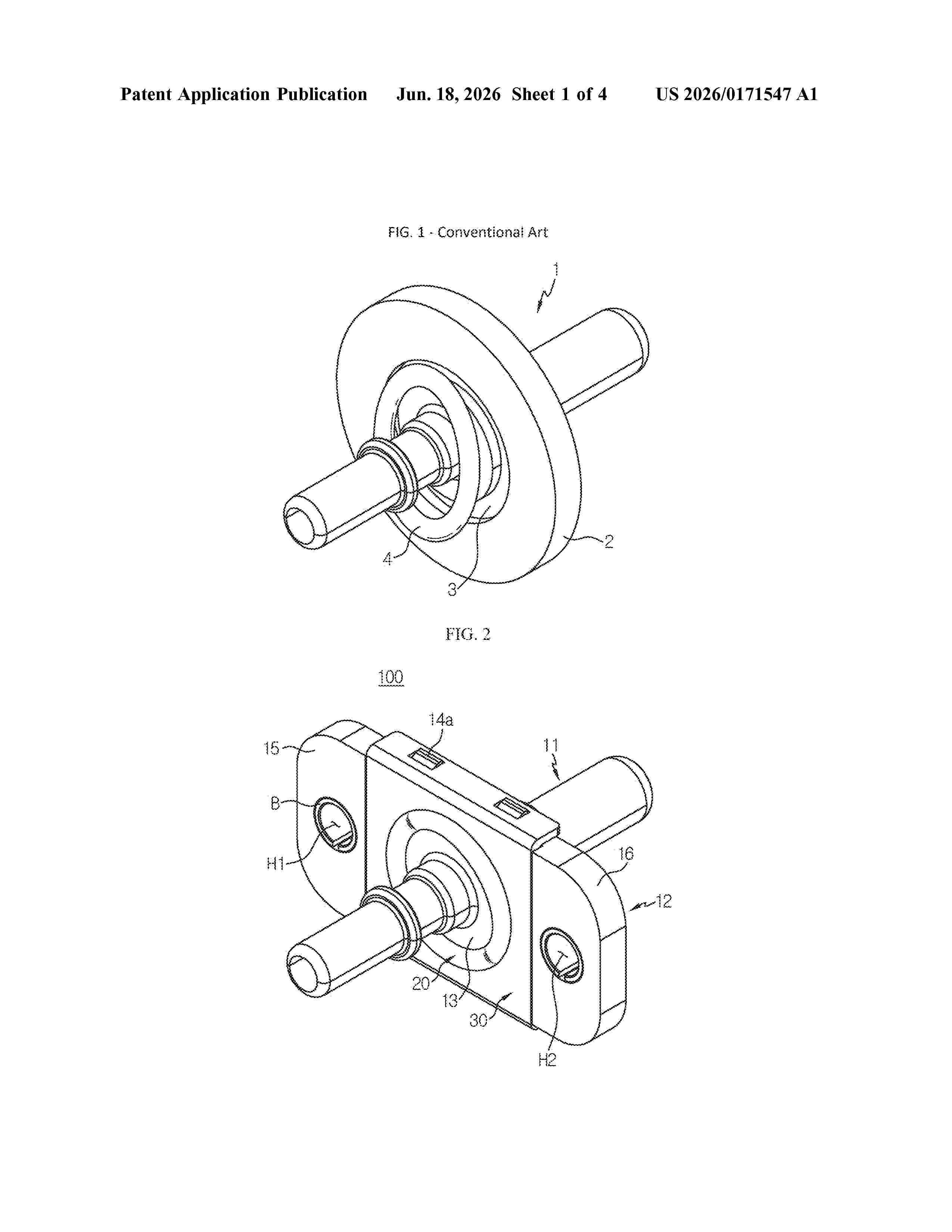
A coolant port assembly includes a coolant port including a port portion having a pipe shape formed to extend by a predetermined length, and a plate-shaped mounting bracket portion formed at one side of an outer circumference of the port portion to expand in a direction intersecting a longitudinal direction of the port portion; a sealing gasket provided in a ring shape that surrounds a peripheral outer side of the port portion; and a gasket cover configured to be closely coupled to the mounting bracket portion together with the sealing gasket while pressing a part of the sealing gasket.
Resumen de: US20260171619A1
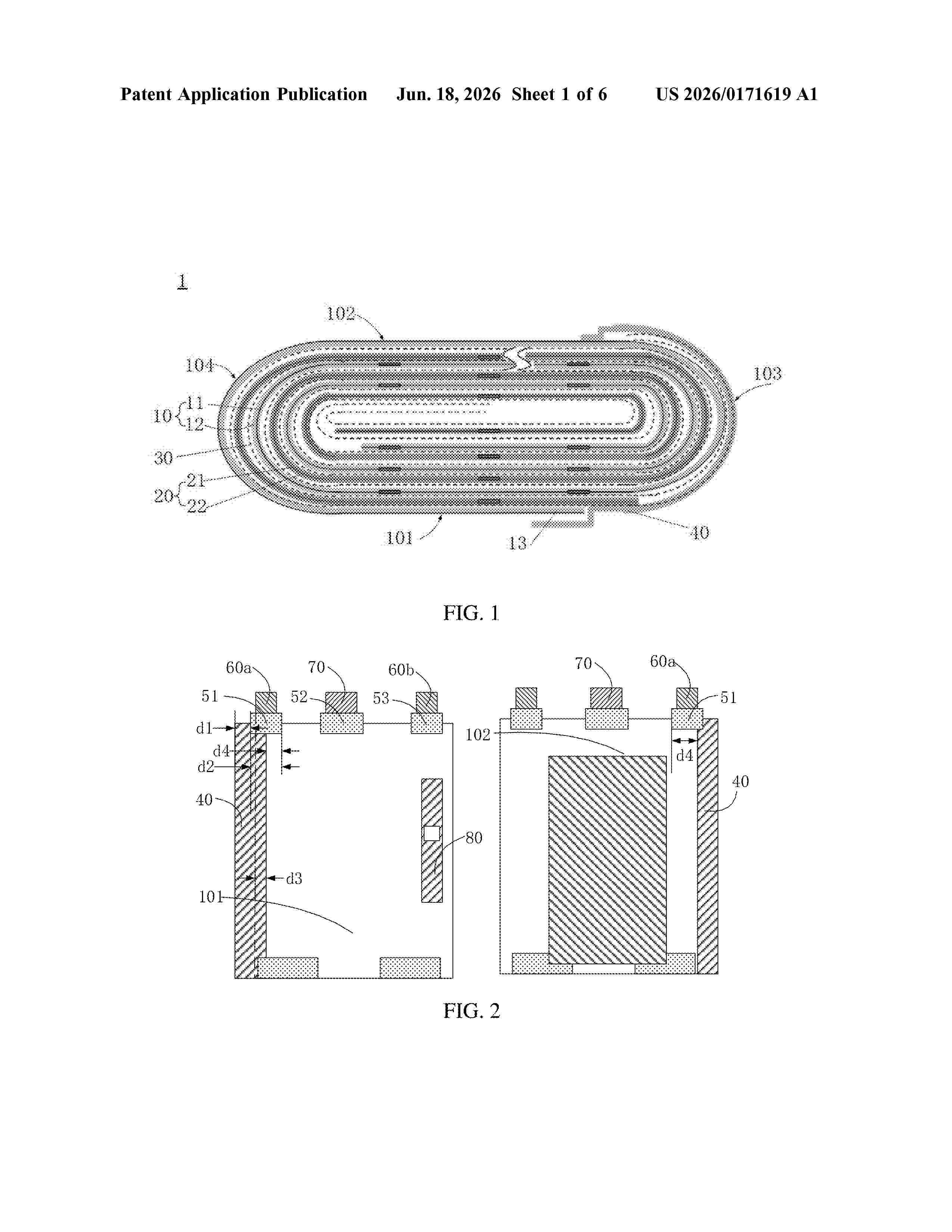
0000 A battery cell includes a battery cell body, at least two tabs, a first connector and at least two insulators. The first connector is configured to fasten a tail end of an electrode assembly to an outer surface of the battery cell body; the at least two tabs include a first tab and a second tab, and the at least two insulators include a first insulator and a second insulator, where first ends of the first insulator and the second insulator are all provided on the battery cell body, a second end of the first insulator covers part of the first tab, and a second end of the second insulator covers part of the second tab; and in a width direction of the battery cell body, the first insulator is provided close to the first connector, where at least part of the first insulator is located outside the first connector.
Resumen de: US20260171424A1
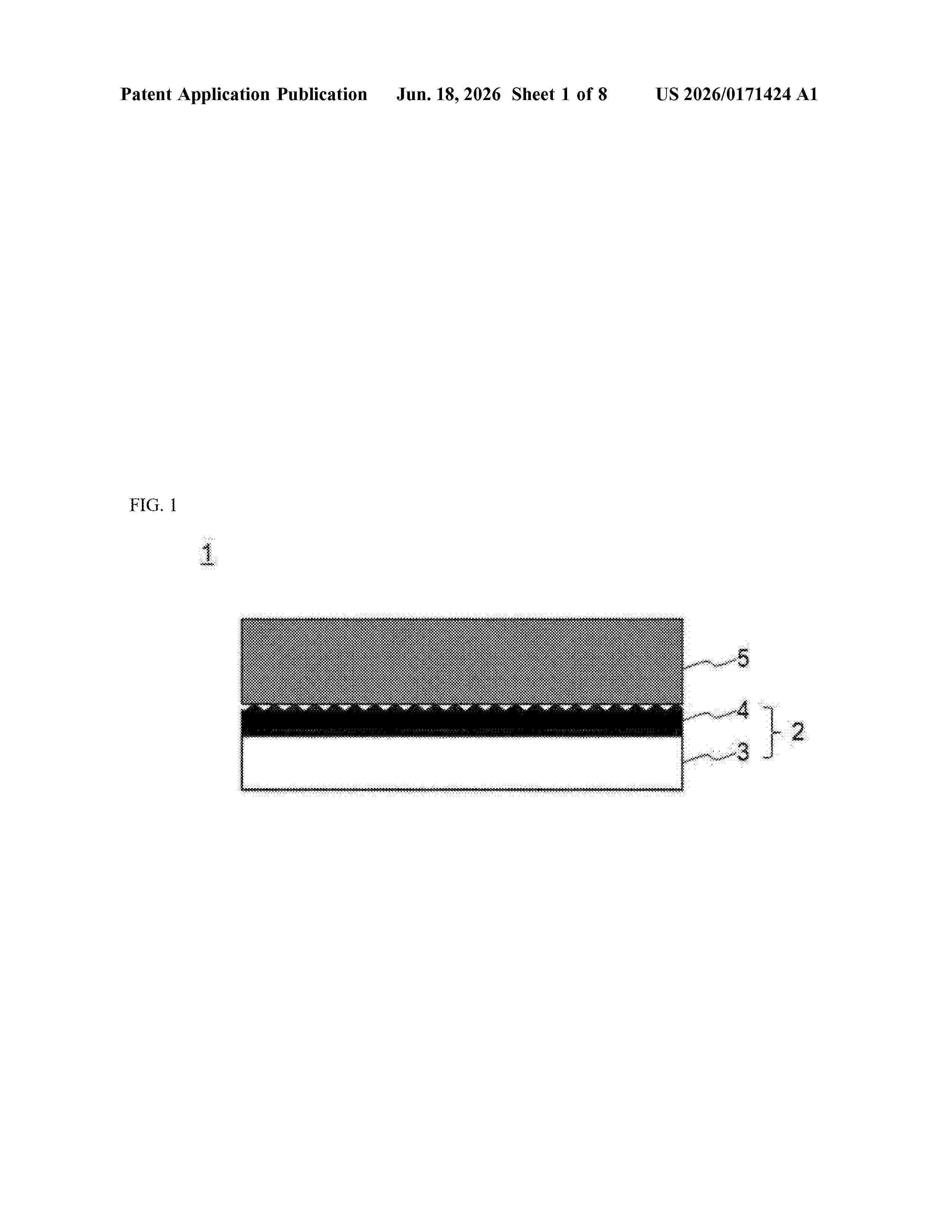
0000 A current collector including a metal foil, and a primer coating layer formed on at least one surface of the metal foil. A surface roughness (Ra) of the primer coating layer is 0.01 to 1 μm. The primer coating layer may include a carbon-based material and a binder. A surface of the metal foil may have irregularities formed by a rolling of the primer coating layer.
Resumen de: US20260169089A1
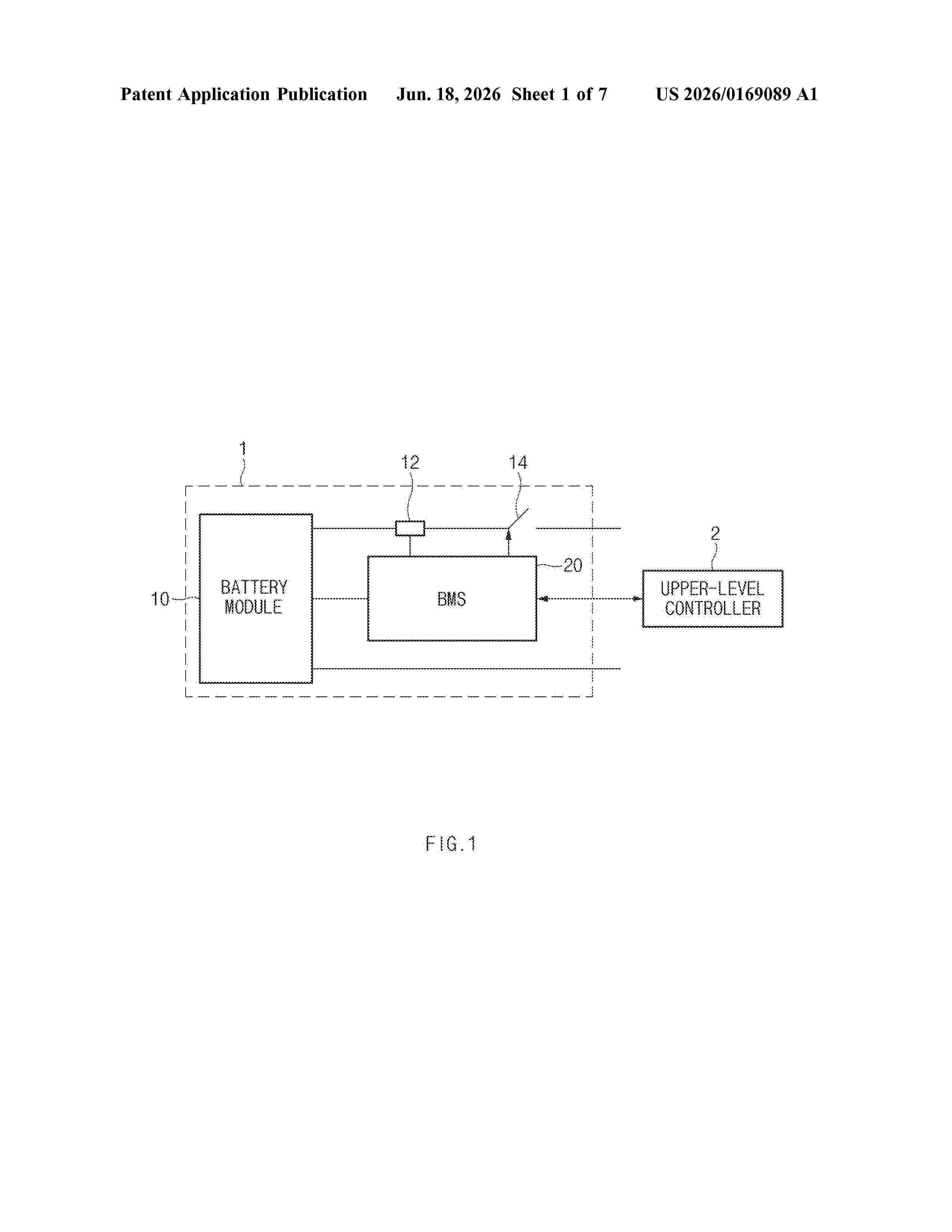
0000 A battery life prediction apparatus may include a storing unit configured to store a plurality of pieces of power pattern data used at an actual site, a pattern generating unit configured to generate a test pattern for predicting a life of a battery based on the power pattern data, and a life predicting unit configured to predict a residual life of the battery based on the test pattern. Additionally, the pattern generating unit may generate the test pattern by changing a scale of the power pattern data, and the life predicting unit may communicate the predicted residual life of the battery to a battery management system, and based on the predicted residual life of the battery, the battery management system controls an on or off of a switch connected to the battery.
Nº publicación: US20260167516A1 18/06/2026
Solicitante:
ZHENGZHOU UNIV [CN]
ZHENGZHOU UNIVERSITY
Resumen de: US20260167516A1
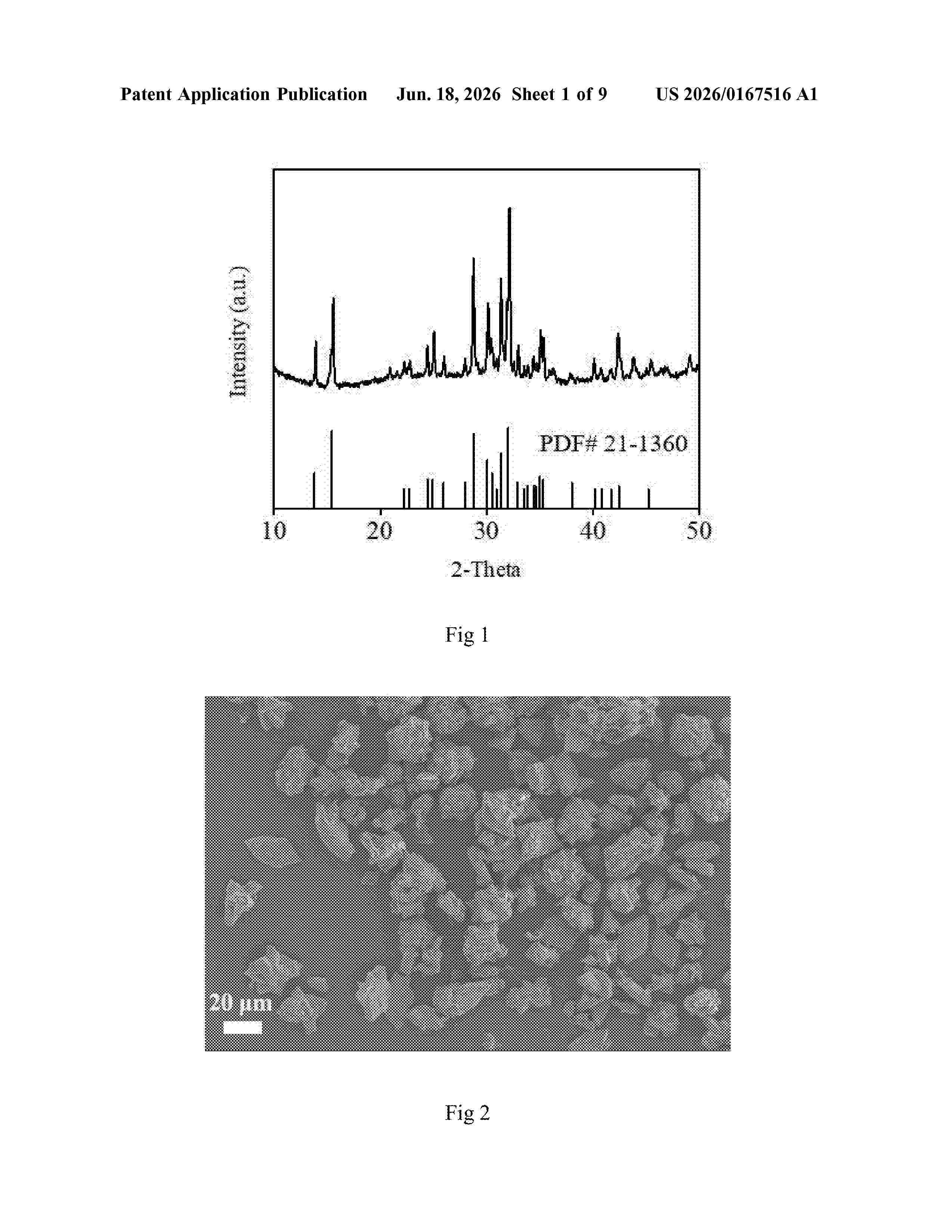
The invention discloses a kind of micrometer-scale porous sodium ferrous sulfate/carbon composite cathode materials and sodium-ion or sodium batteries with it. The materials are prepared by a co-precipitation and solid-phase calcination method, and/or involve the metal-doped elements. The materials feature a porous structure with a three-dimensional conductive network, and have a size distribution (2-30 μm) of particles, consisting of a close stack of primary particles of 80-200 nm tightly covered by an amorphous carbon. Micrometer-scale cathode materials deliver a high vibration density, which helps to improve the volumetric energy density of batteries. As a cathode for sodium-ion or sodium batteries, the materials have the advantages of abundant raw materials, low cost, high operating voltage, good rate performance and cycling stability, and simple preparation process. The assembled sodium-ion or sodium batteries show a broad market application prospect with the advantage of high energy density.
 BOPI
BOPI
 Sede Electrónica