Si deseas distinguir tus productos, servicios o ambos de los de otra empresa, es posible que necesites una marca o nombre comercial. Descubre qué son, en qué consiste su procedimiento de registro y qué implica.

Información sobre los plazos de presentación de solicitudes de transformación de marcas de la Unión Europea en marca nacional española. Más información


Si tienes un nuevo dispositivo, producto o procedimiento que resuelva un problema técnico o tenga una ventaja práctica, existen distintas formas de protegerlo en España y en otros países. Descubre cómo hacerlo.

¿Tu innovación reside en la estética, la ornamentación o la apariencia de tu producto? Protégela mediante un diseño industrial. Descubre qué derechos confiere el registro y cómo realizar la tramitación.

Las indicaciones geográficas protegen el nombre de un producto originario de una zona geográfica, a la cual le debe una determinada calidad, reputación u otra característica. Descubre qué son, en qué consiste su procedimiento de registro y qué beneficios conceden.

Las patentes publicadas en todo el mundo son una valiosa fuente de información científica, técnica y comercial.

Si eres emprendedor/a o una empresa y quieres potenciar y mejorar la rentabilidad de tu negocio protegiendo de forma adecuada los activos intangibles de tu organización, en este espacio encontrarás lo necesario.


 1422
resultados
1422
resultados
 Última actualización
28/06/2026 [07:11:00]
Última actualización
28/06/2026 [07:11:00]


 Resultados 925 a 950 de 1422

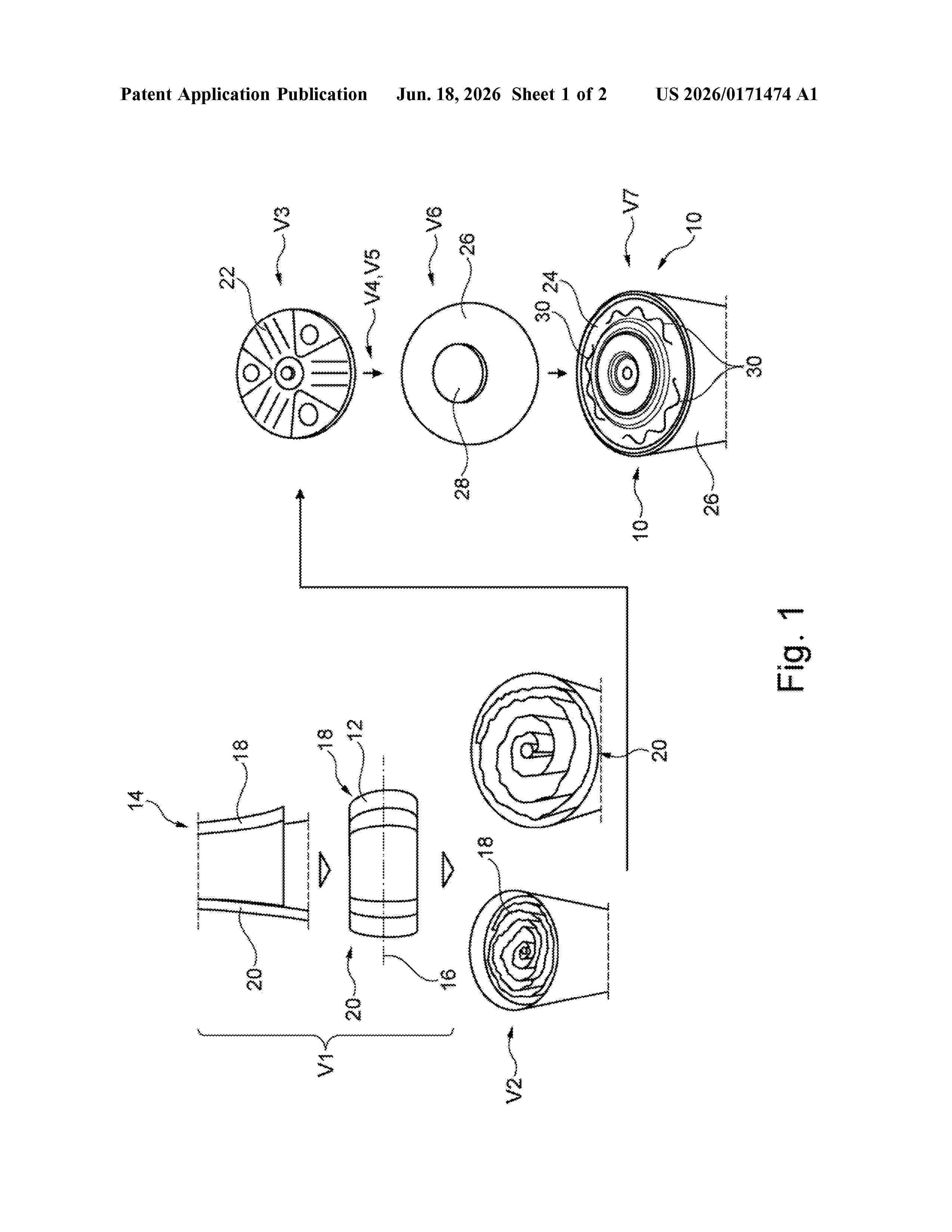
Resumen de: US20260171474A1
0000 A method for manufacturing a cylindrical battery cell for a traction battery of a motor vehicle, in which method: an electrode coil is wound, a cathode contact region being arranged on the first end face of said electrode coil and an anode contact region being arranged on the second end face of said electrode coil opposite the first end face; the cathode contact region and the anode contact region are flattened at the end faces; a cathodic current collector plate is welded to the flattened cathode contact region; a housing cover is welded directly to the flattened anode contact region; the electrode coil is inserted into a housing cylinder; the cathodic current collector plate is electrically connected to a positive pole of the housing cylinder; and the housing cover is connected to the housing cylinder.

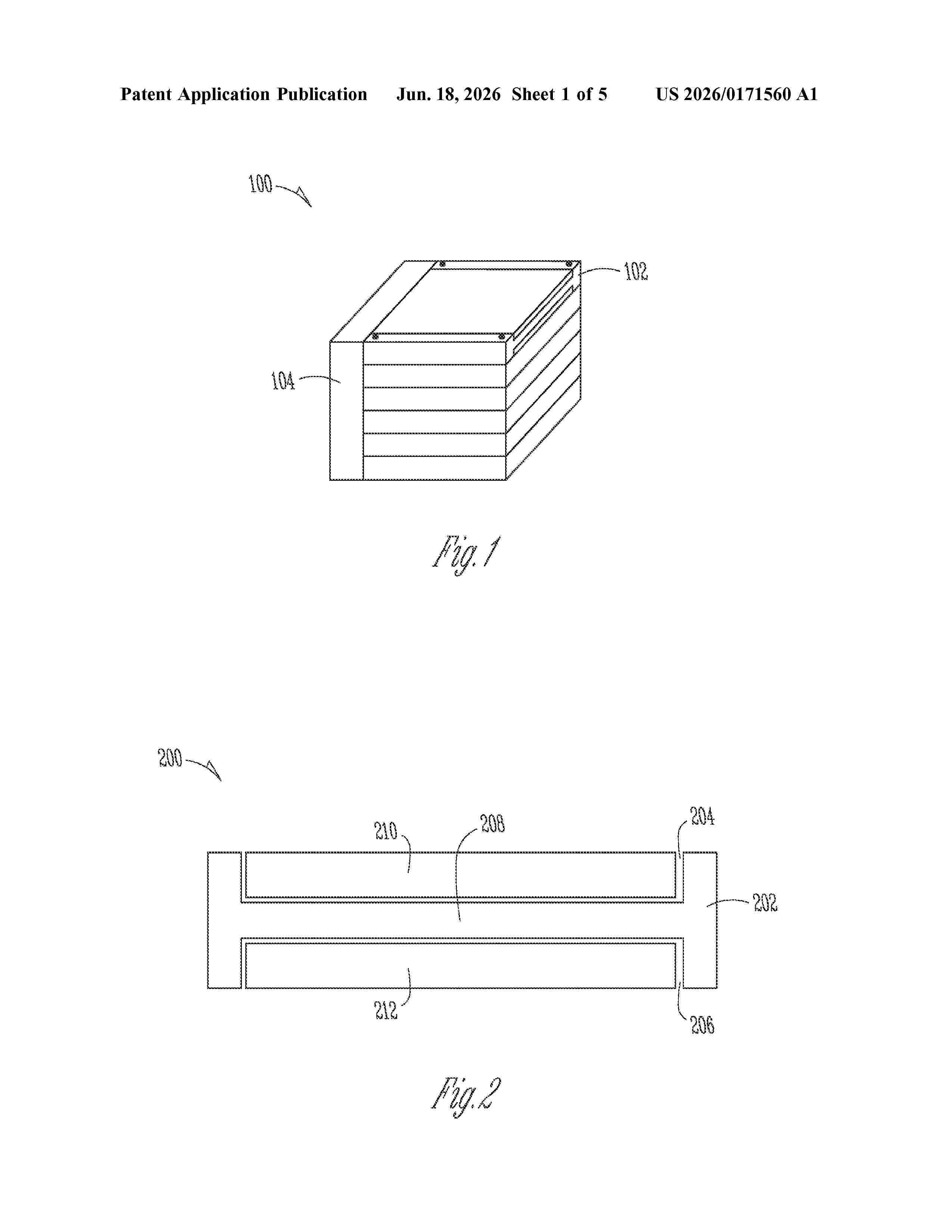
Resumen de: US20260171560A1
0000 A battery module, and associated methods are disclosed. In one example, a battery module includes thermal regulating member with a structural support plate and an aerogel layer. An aerogel density gradient is shown at an interface between the structural support plate and the aerogel layer.
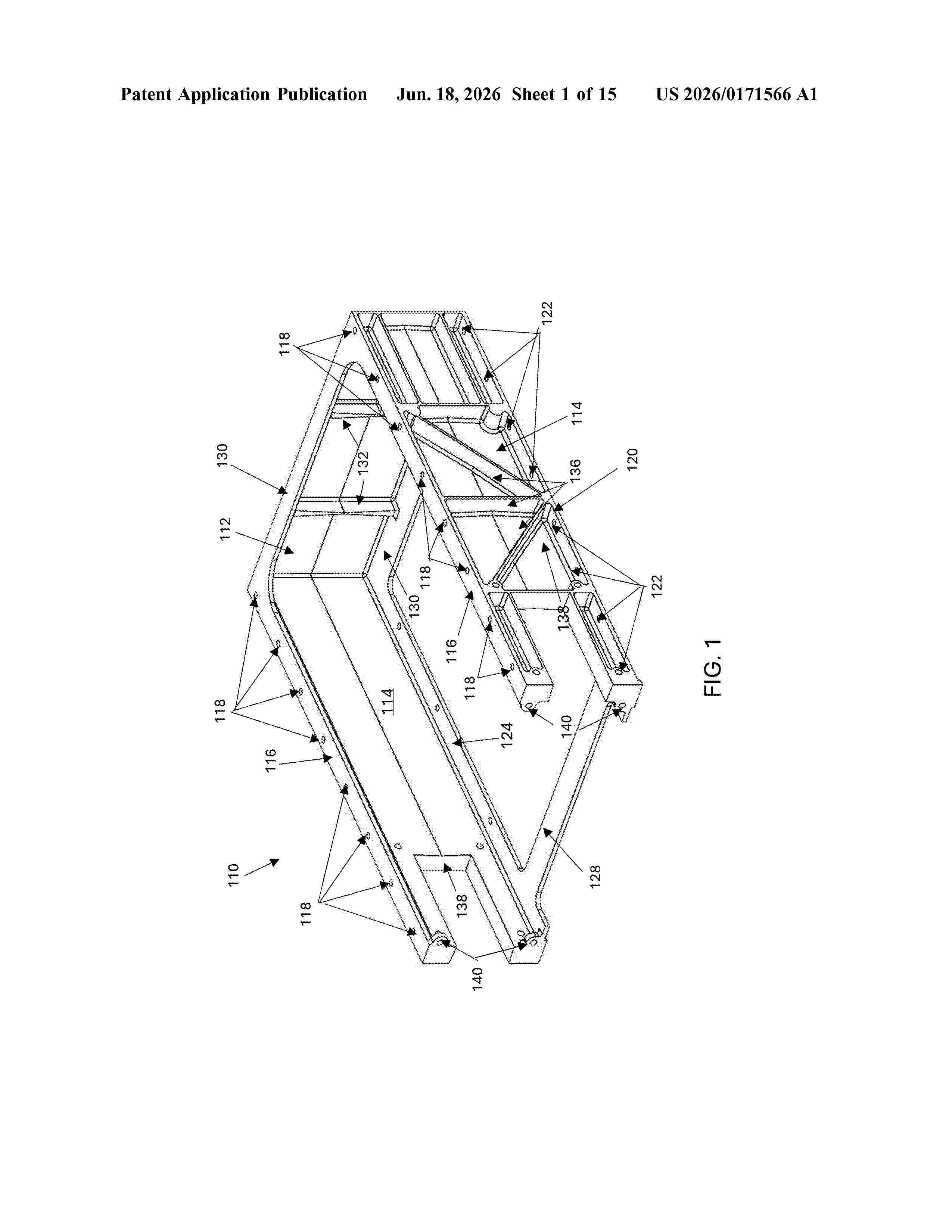
Resumen de: US20260171566A1
0000 A battery frame has a generally planar rear member and a pair of opposing parallel generally planar side members extending generally orthogonally from the rear member. A pair of opposing coplanar top flanges extend generally orthogonally to the rear member and the side members and each outwardly from a respective side member and has a plurality of apertures spaced there along. A pair of opposing coplanar bottom flanges extend generally orthogonally to the rear member and the side members and each outwardly from a respective side member and have a plurality of apertures spaced there along and aligned with the apertures of the top flanges respective to each side. A pair of opposing coplanar inner flanges extending generally orthogonally to the rear member and the side members and each inwardly from a respective side member for support of a battery package disposed therein the battery frame.
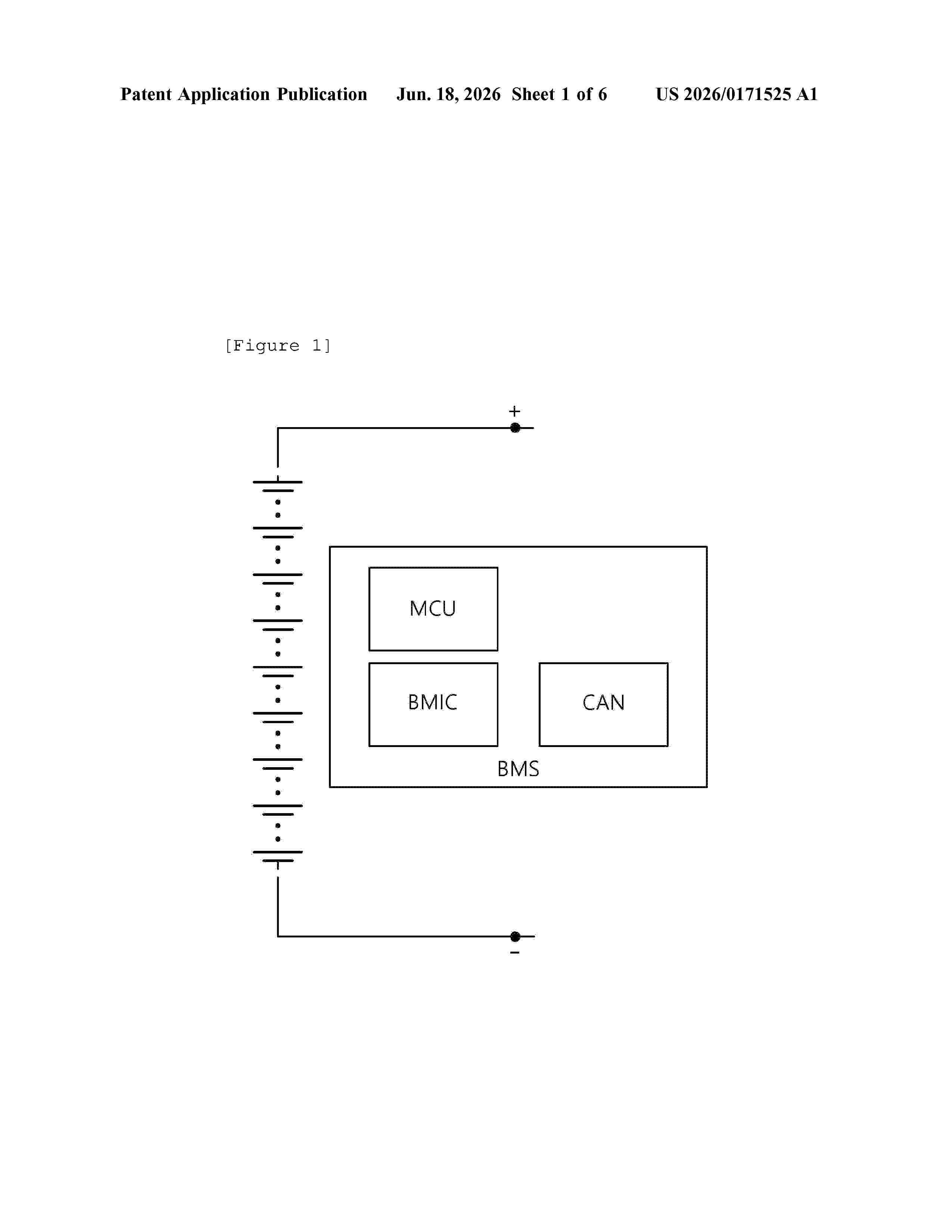
Resumen de: US20260171525A1
0000 According to aspects of the disclosure, a battery charging control apparatus and method, and a battery system including the same may charge the battery with a predefined charging current magnitude belonging to a corresponding section based on the state of charge (SOC) of the battery to be charged, charge the battery by adjusting the charging current downwards to magnitude of the charging current of the next section when the battery voltage exceeds a predefined threshold value during charging, determine the magnitude of the charging current for each section based on real-time voltage information, not the state of charge (SOC) information of the battery, and charge the battery with the determined charging current until the battery is fully charged, and thus, lithium precipitation and battery deterioration due to quick charging can be prevented and charging time can be shortened.
Resumen de: US20260167850A1
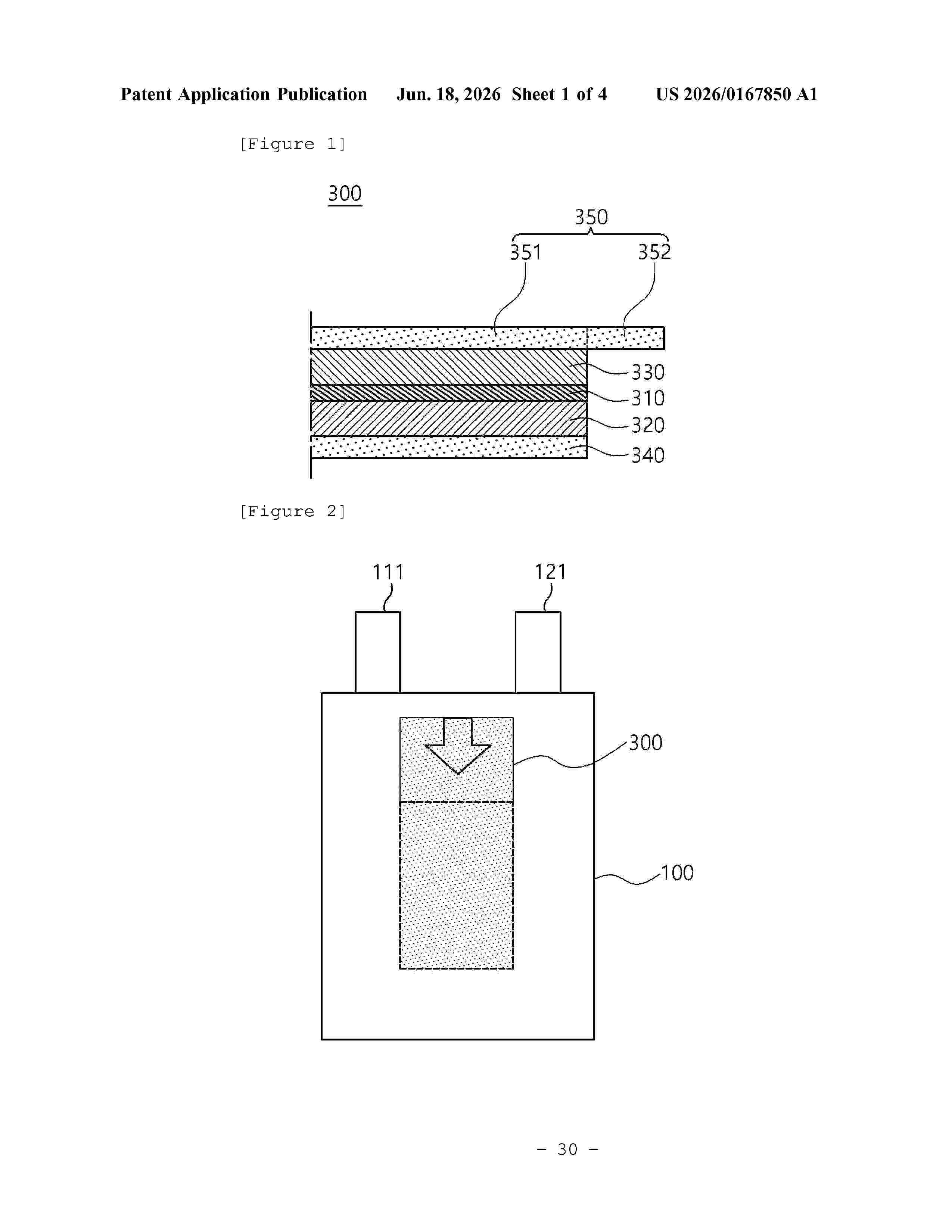
0000 The present invention relates to a thermocompression finishing tape including a base material; a first adhesive layer stacked on one surface of the base material; an second adhesive layer stacked on the other surface of the base material; a first protective member provided on one surface of the first adhesive layer opposite to the base material; and a second protective member provided on one surface of the second adhesive layer opposite to the base material, wherein the second protective member is provided while protruding in an outward direction from at least one end portion of the second adhesive layer.
Resumen de: US20260171550A1
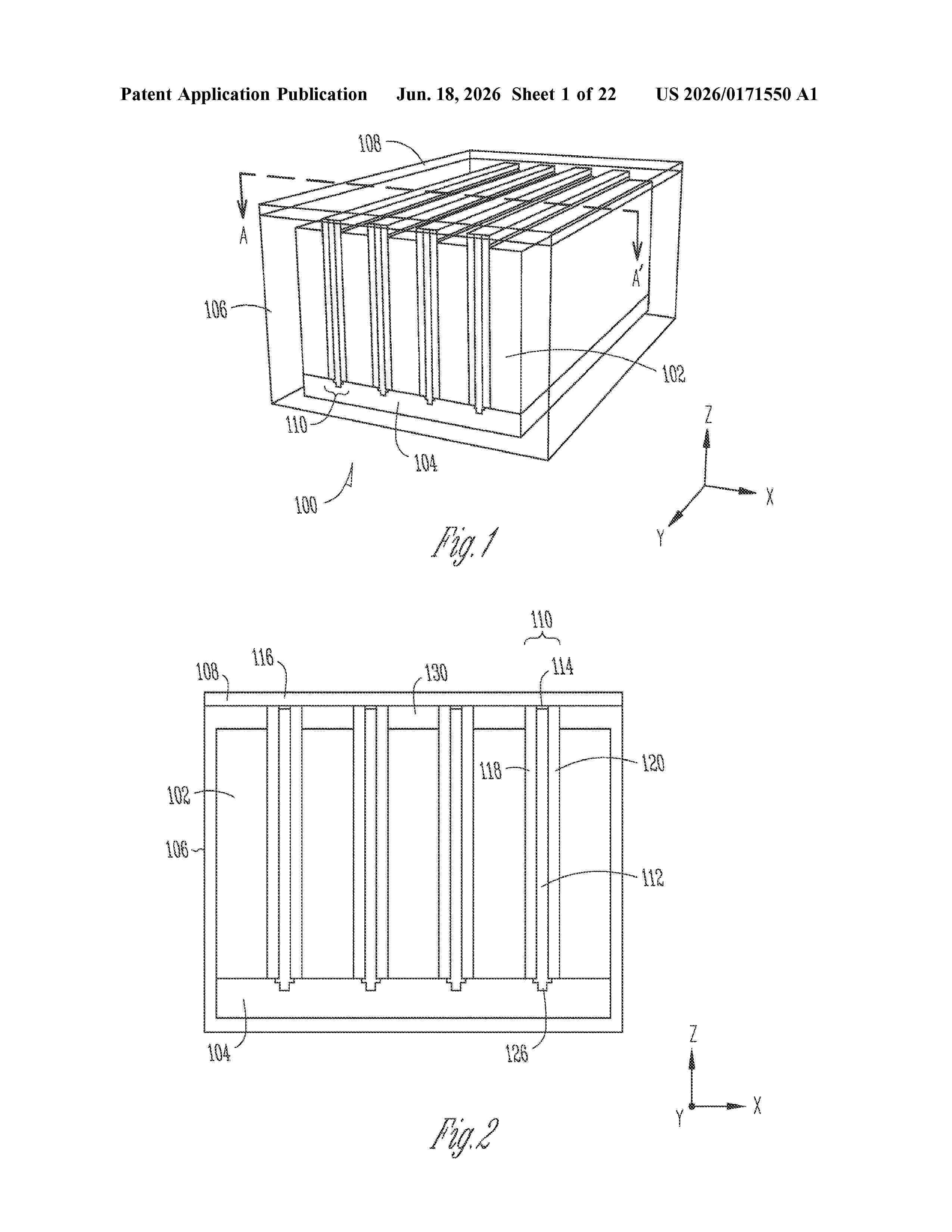
A battery module, and associated methods are disclosed. In one example, a battery module includes thermal isolation structures with a structural support plate and an aerogel layer. Examples of thermal isolation structures are shown that include a module cover contact located on a top end of a structural support plate.
Resumen de: US20260171602A1
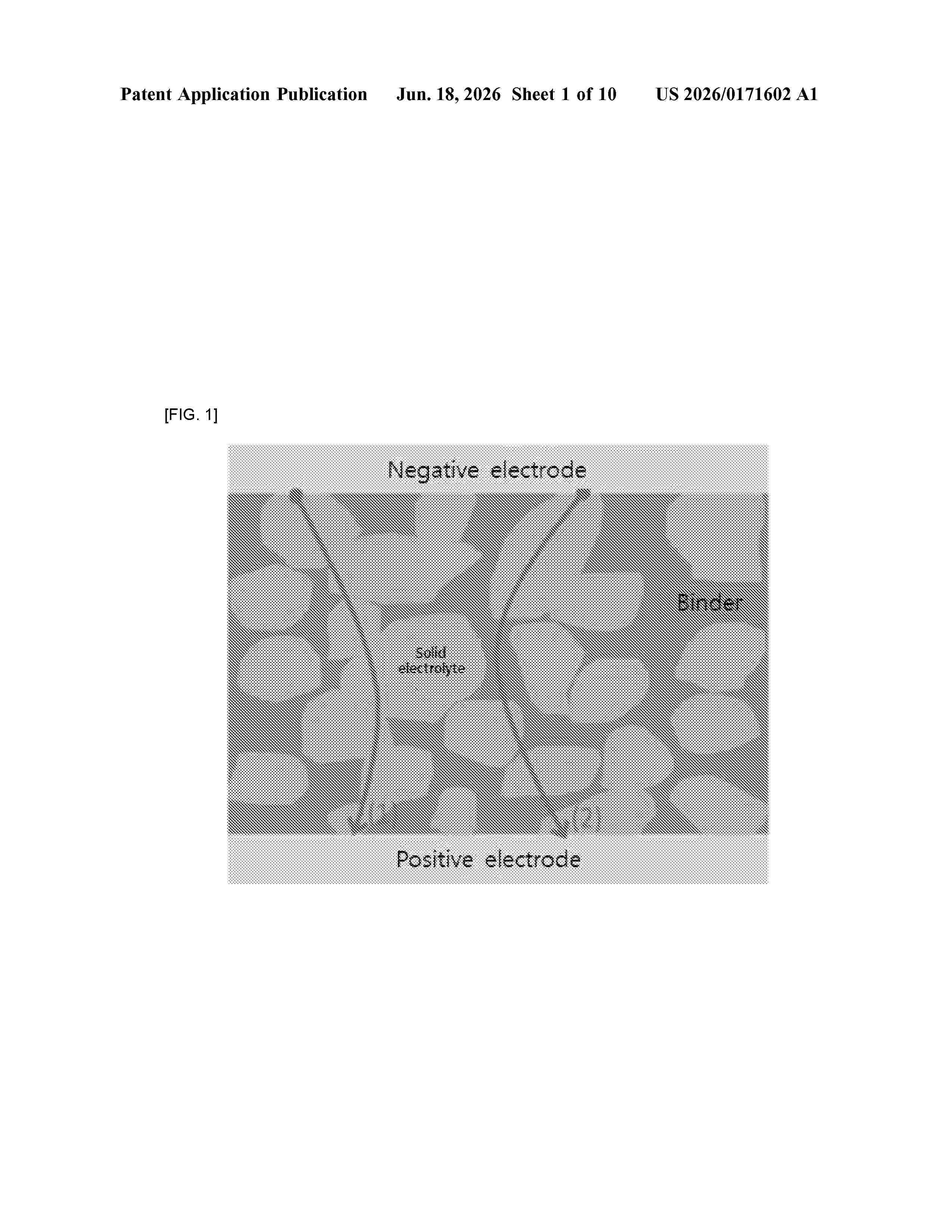
A solid electrolyte membrane for an all-solid-state battery includes a binder and a solid electrolyte comprising 22 to 34 weight % styrene, relative to the total weight of the styrene-butadiene-styrene copolymer, and to an all-solid-state battery comprising the same.
Resumen de: US20260171420A1
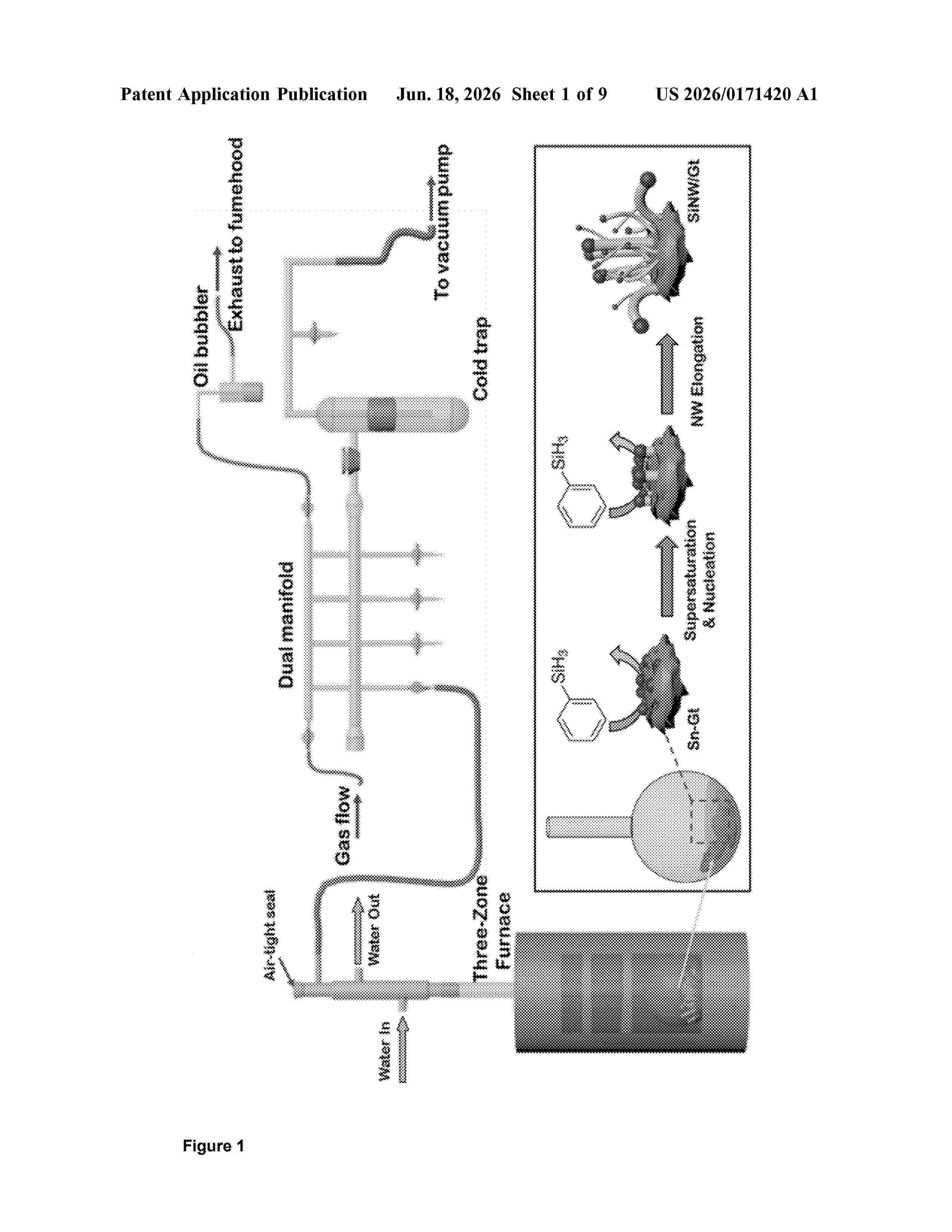
0000 A method for synthesizing an Si and/or Ge NW/carbon composite in a solution-based approach is provided. The method comprises combining (i) a mixture of a lithium alloying metal and a carbon particle, (ii) an Si and/or Ge precursor and (iii) a refluxing solvent under reflux conditions and reacting to form the composites.
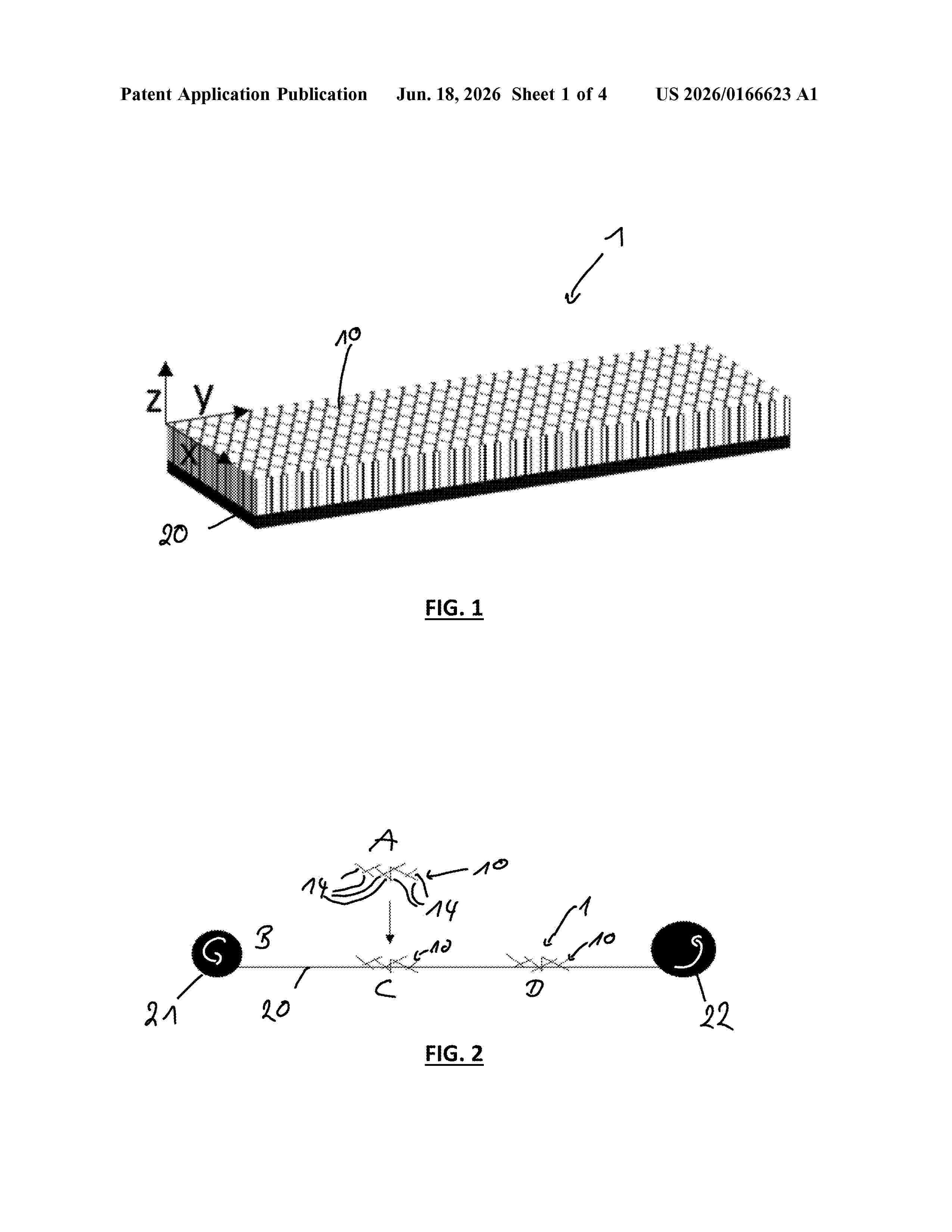
Resumen de: US20260166623A1
Three-dimensional (3D) network of metal fibers, comprising a plurality of metal fibers fixed to one another, wherein said plurality of metal fibers comprises a first kind of metal fibers and a second kind of metal fibers, wherein the first kind and second kind of metal fibers are different from one another, in particular in regard to their mechanical properties.
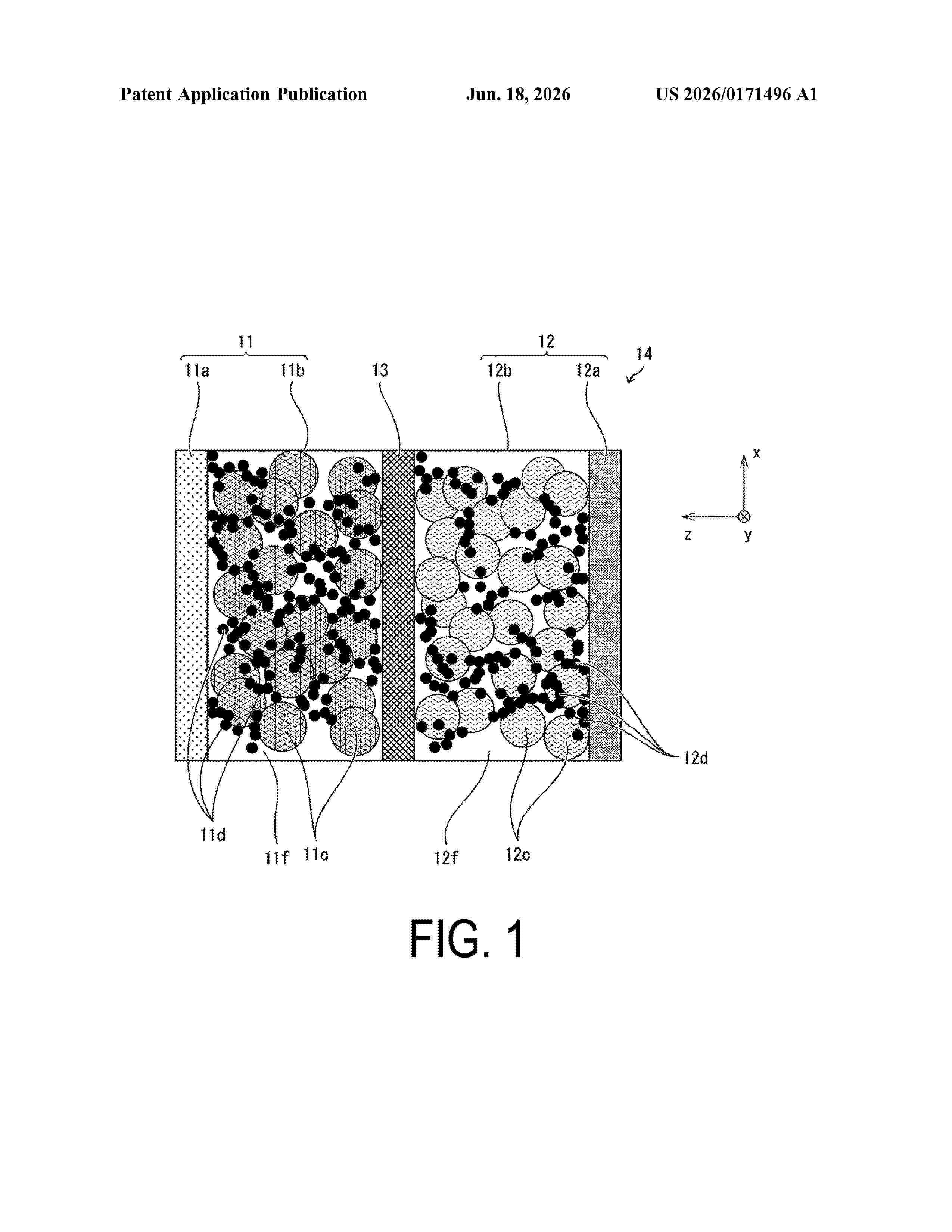
Resumen de: US20260171496A1
0000 The present disclosure provides a lithium ion secondary battery excellent in cycle properties which are important for secondary batteries to be installed in vehicles such as electric vehicles, and provides an electrolytic solution that can be used for producing such a lithium ion secondary battery. An electrolytic solution for a lithium ion secondary battery is an electrolytic solution for a lithium ion secondary battery in which an electrolyte is dissolved in a nonaqueous solvent, and contains cyanomethyl formate and vinylene carbonate. The lithium ion secondary battery includes a positive electrode, a negative electrode, a separator, and the electrolytic solution for a lithium ion secondary battery.
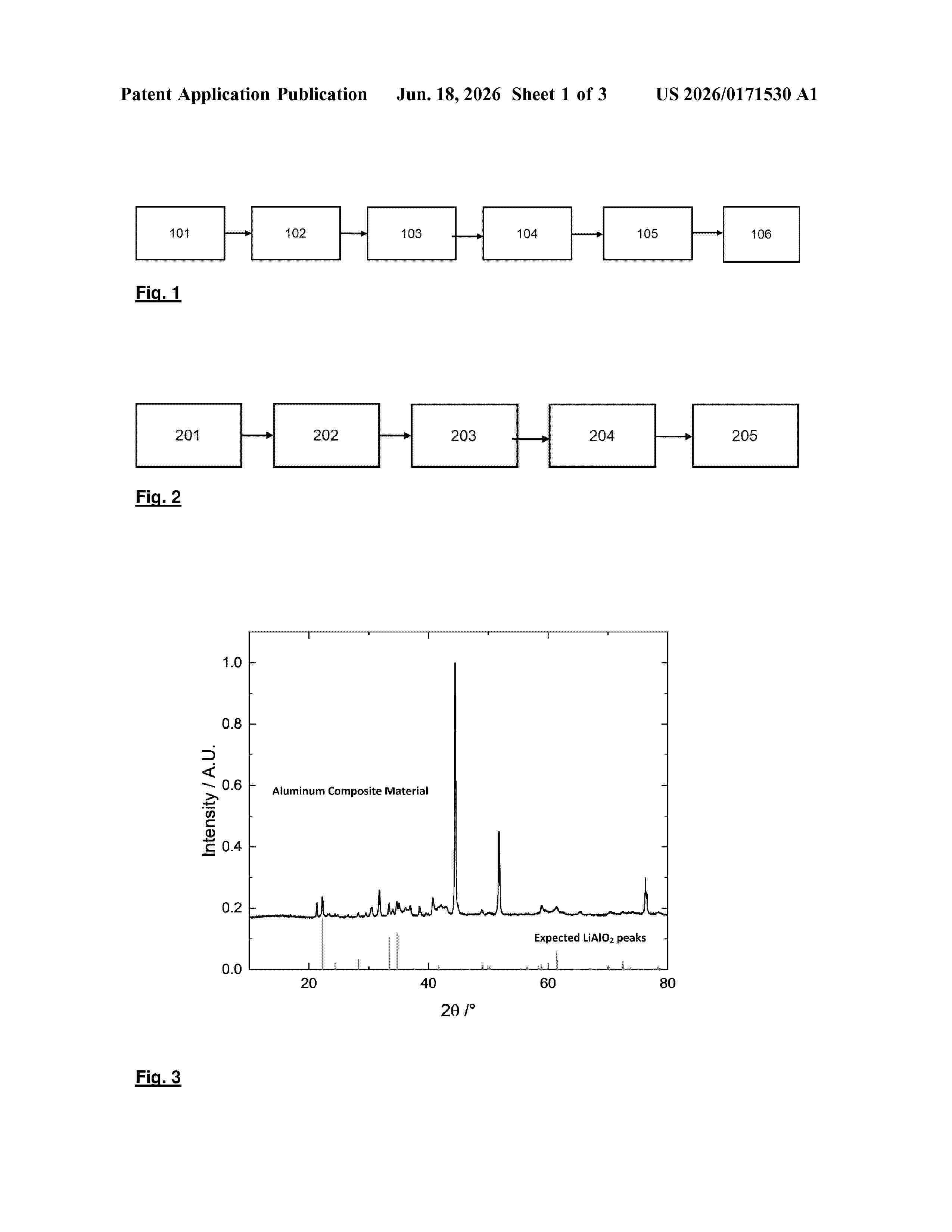
Resumen de: US20260171530A1
0000 Disclosed herein are aluminum composite materials and methods of preparing the same. The aluminum composite materials are useful intermediates in the recycling of lithium ion batteries. For example, some materials may be easily leached to obtain one or more value metals.
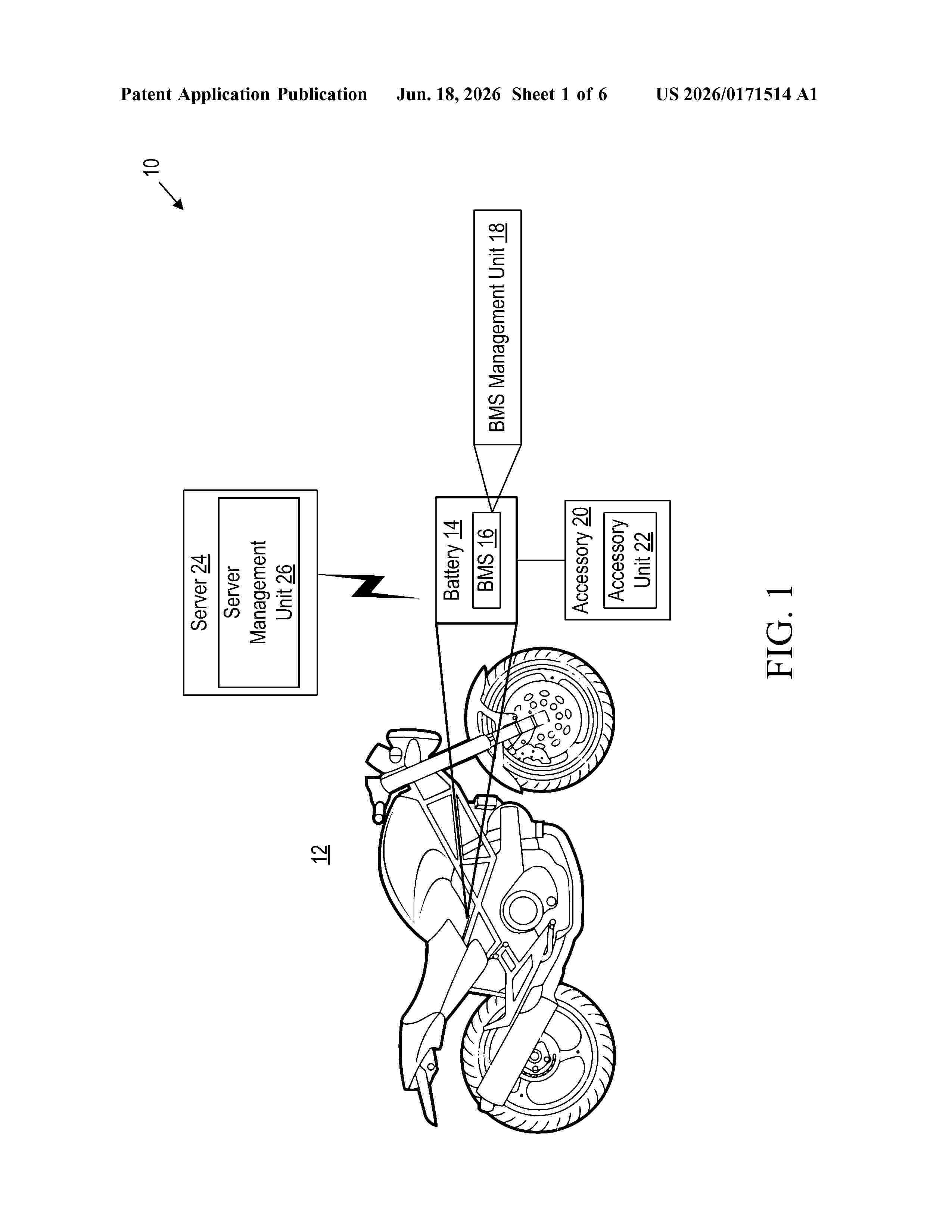
Resumen de: US20260171514A1
0000 A battery management system (BMS) removably connectable to at least one of a battery and an accessory is described. The accessory is operable by the BMS. The BMS includes processing circuitry configured to determine a first plurality of functions associated with the BMS and a second plurality of functions associated with the accessory based on BMS information and accessory information, respectively, determine at least one operation mode based on at least one parameter associated with the battery, the first plurality of functions, and the second plurality of functions, and operate at least one of the BMS and the accessory based on the determined at least one operation mode.
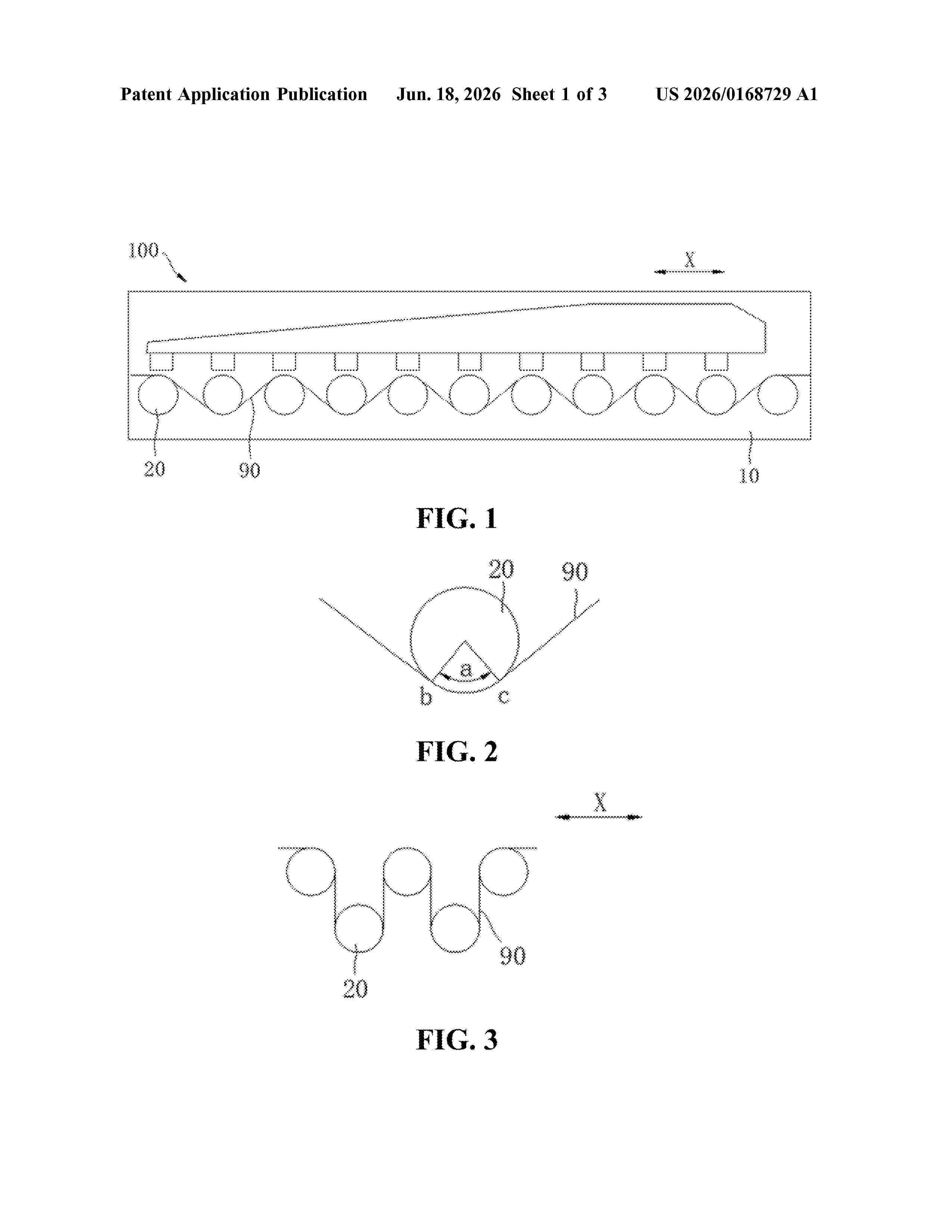
Resumen de: US20260168729A1
0000 An oven, which is used for heating an electrode plate, and the oven comprises a box body and a plurality of heating rollers. Among all the heating rollers, at least two adjacent heating rollers can rotate in opposite directions relative to the box body. All the heating rollers are arranged at intervals in the box body in a first direction, and all the heating rollers jointly support and guide the electrode plate to travel in the first direction.
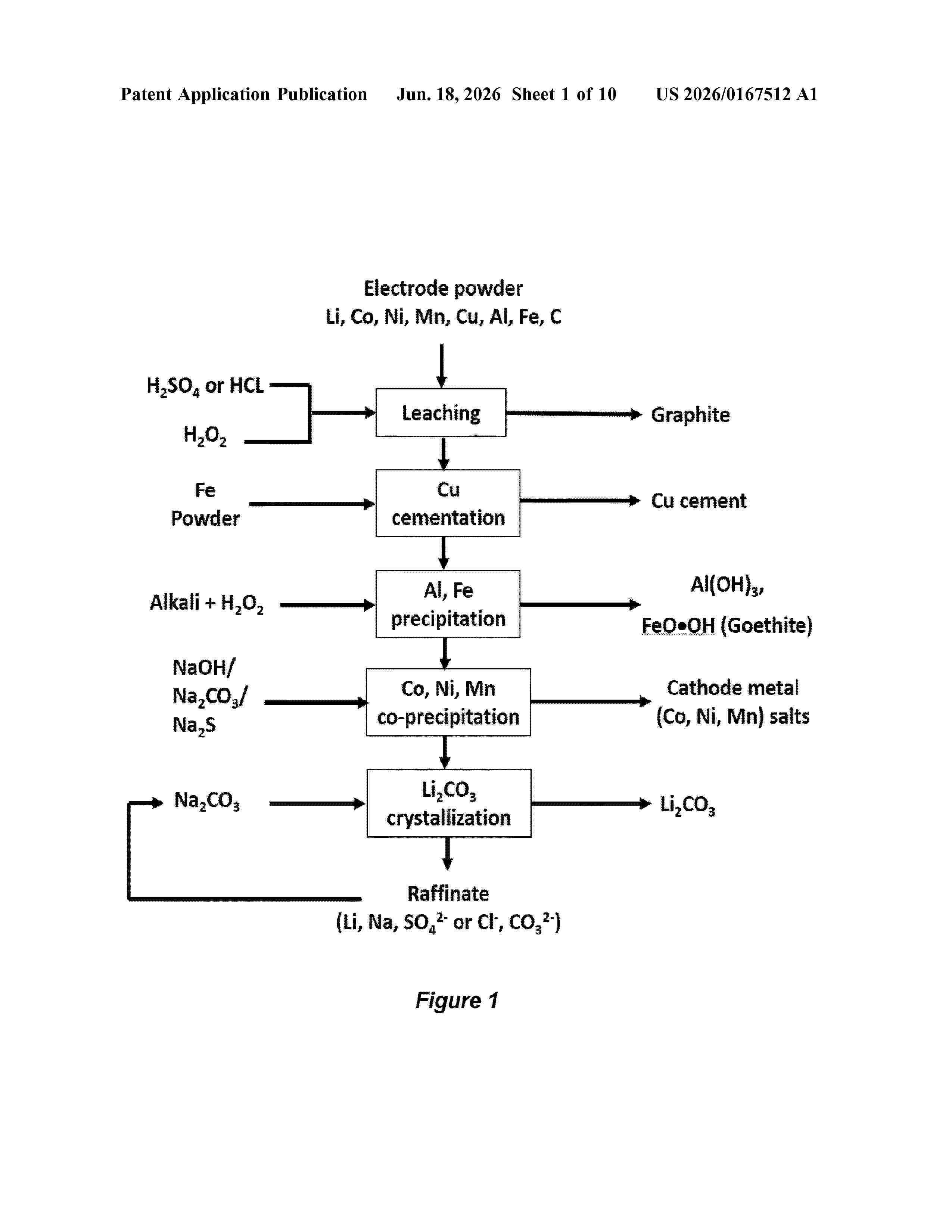
Resumen de: US20260167512A1
According to the present invention there is provided processes for the recovery of lithium from end-of-life lithium-ion batteries and battery matter. A representative process resides in a process for separating lithium from lithium ion batteries before undertaking hydrometallurgical or pyrometallurgical processing, the process comprising: providing a black mass (BM) or shredded battery material (SBM) that includes cation and anion components; commixing the BM or SBM with an admixture that includes water and supercritical carbon dioxide; and separating an aqueous leachate and a lithium-leached BM or SBM, where the aqueous leachate includes a lithium carbonate and/or bicarbonate.
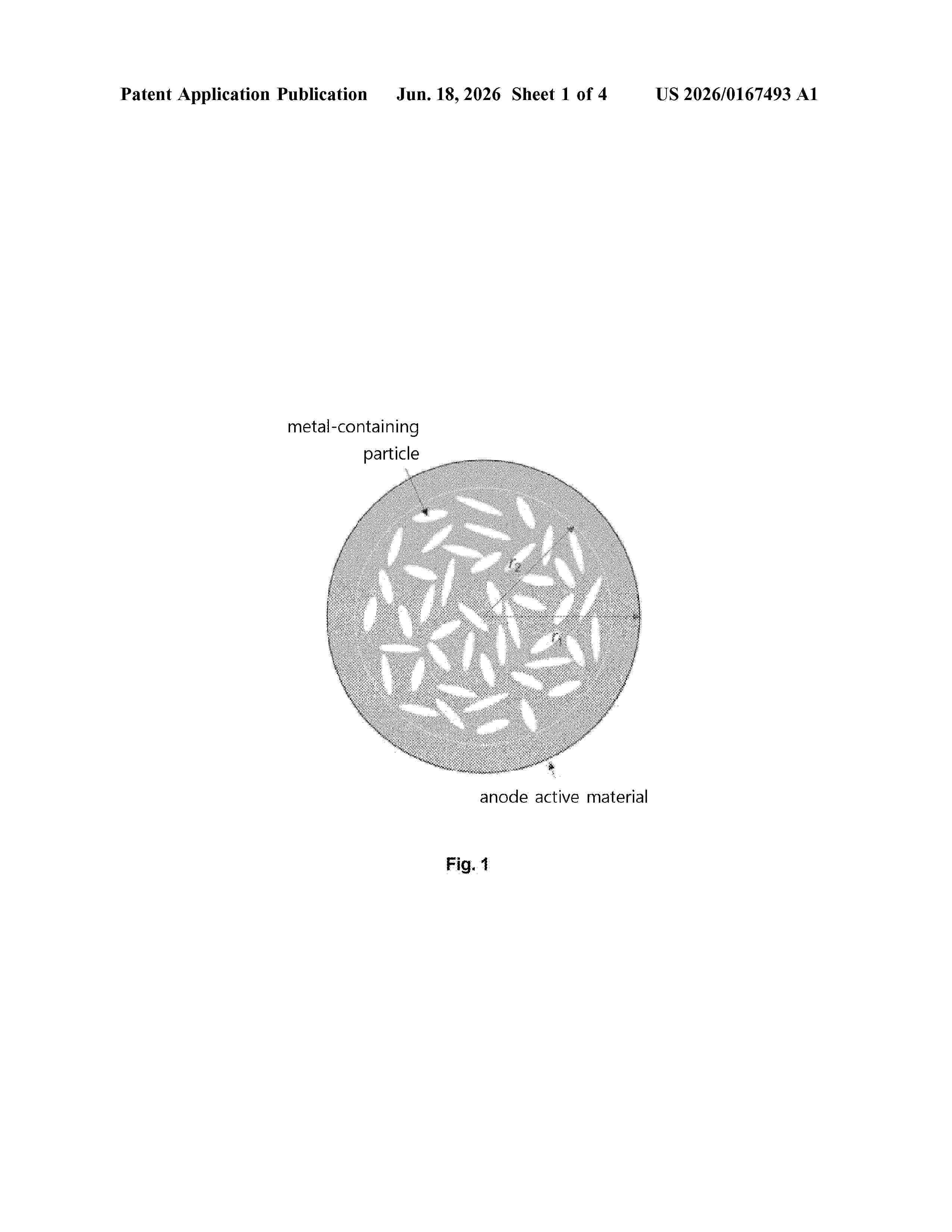
Resumen de: US20260167493A1
0000 The present invention relates to an anode active material, a preparation method therefor and a lithium secondary battery comprising same, the anode active material comprising at least one metal-containing particle, wherein the ratio (r<2>/r<1>) of the radius (r<1>) of the anode active material to the length (r<2>) of the longest linear line for connecting a center point of the anode active material and a distal end of the center point of the anode active material of the metal-containing particle positioned at the farthest distance is 0.8-0.95.
Resumen de: AU2024375096A1
The present application provides an electrolyte, a sodium secondary battery and an electric device. The electrolyte comprises a first additive and a second additive, the first additive comprises a cyclic ester compound containing a sulfur element, and the second additive comprises one or more of fluorosulfonate and difluorophosphate. The combination use of the first additive and the second additive is beneficial to improving the stability of an SEI film, so that the degree of gas production during circulation and storage of the sodium secondary battery is reduced, and the storage performance, the quick charging performance and the storage performance of the sodium secondary battery are improved.
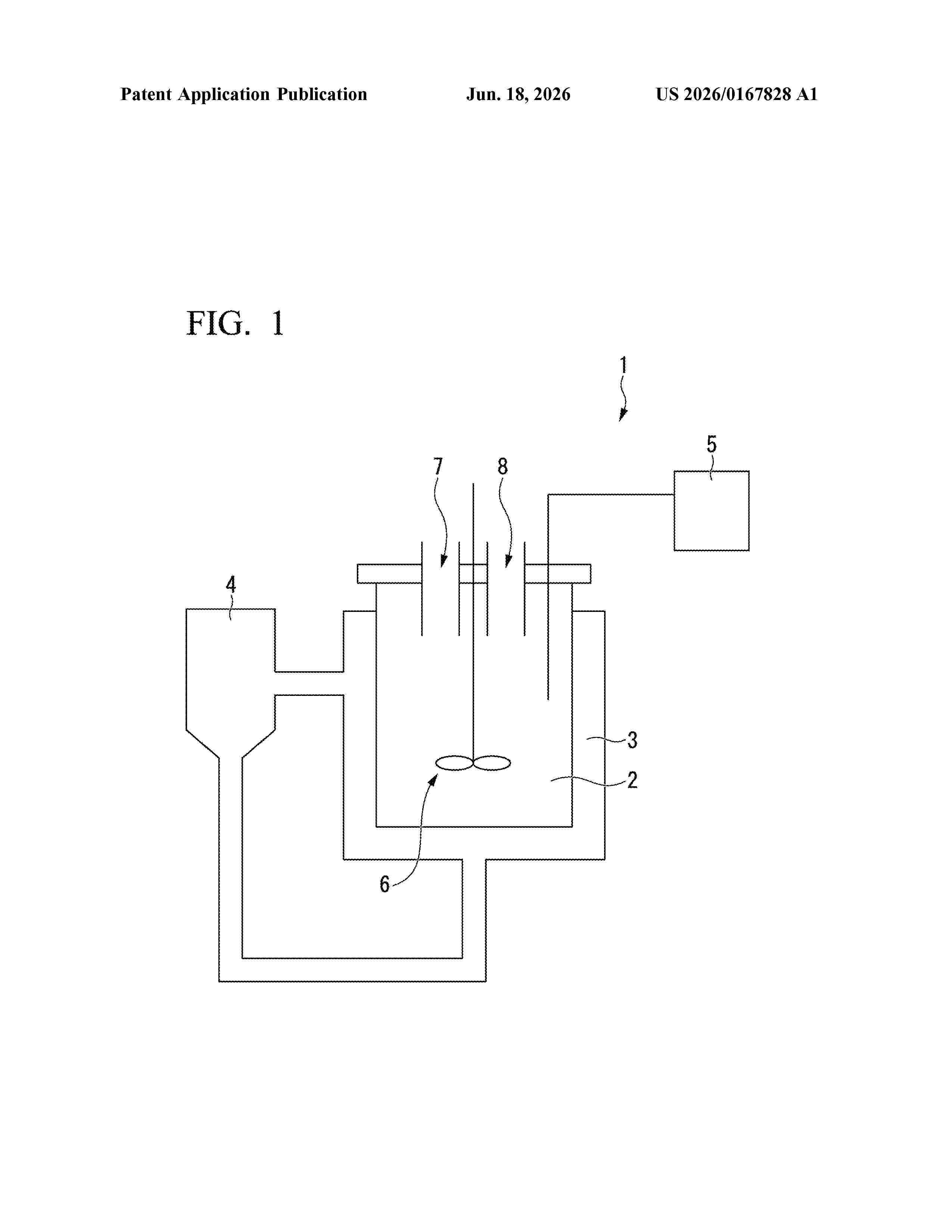
Resumen de: US20260167828A1
0000 An aqueous solution contains Li, a peroxo complex of an element α, an ammonium ion, and a nitrate ion, in which the element α is one or more elements selected from the group consisting of Nb, Ti, Ta, Zr, W, Mo, and V, and in the aqueous solution, a ratio (NH<4>+ /α) of a mass molar concentration of the ammonium ion to a mass molar concentration of the element α is less than 4.5, and a mass molar concentration of the nitrate ion (NO<3>− ) is less than 4.0×10<−3 >mol/kg.
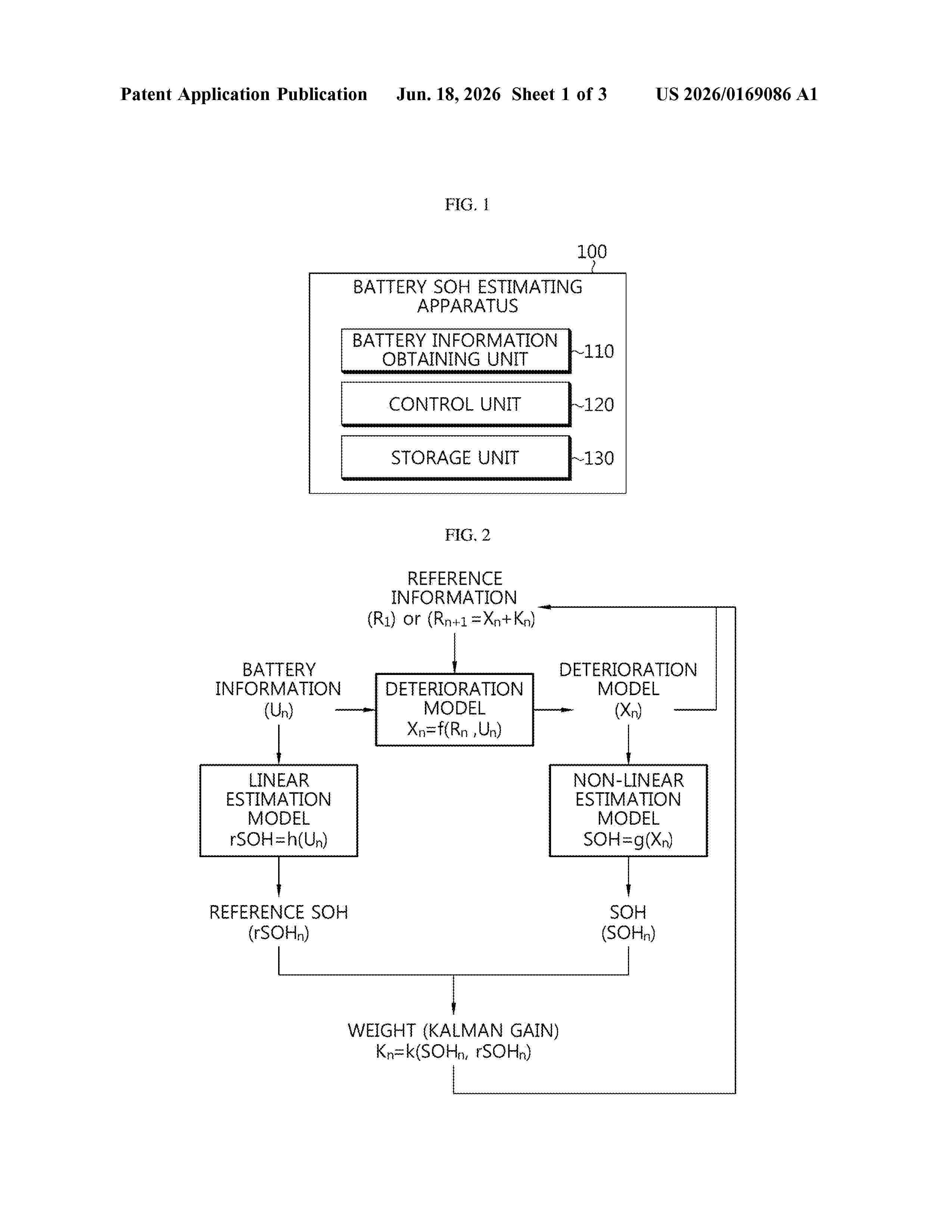
Resumen de: US20260169086A1
A battery SOH estimating apparatus according includes a battery information obtaining unit configured to obtain battery information including at least one of voltage, current, temperature, and SOC; and a control unit configured to calculate deterioration information for the battery from the battery information and preset reference information based on a preset deterioration model, and estimate SOH for the battery from the deterioration information based on a preset non-linear estimation model.
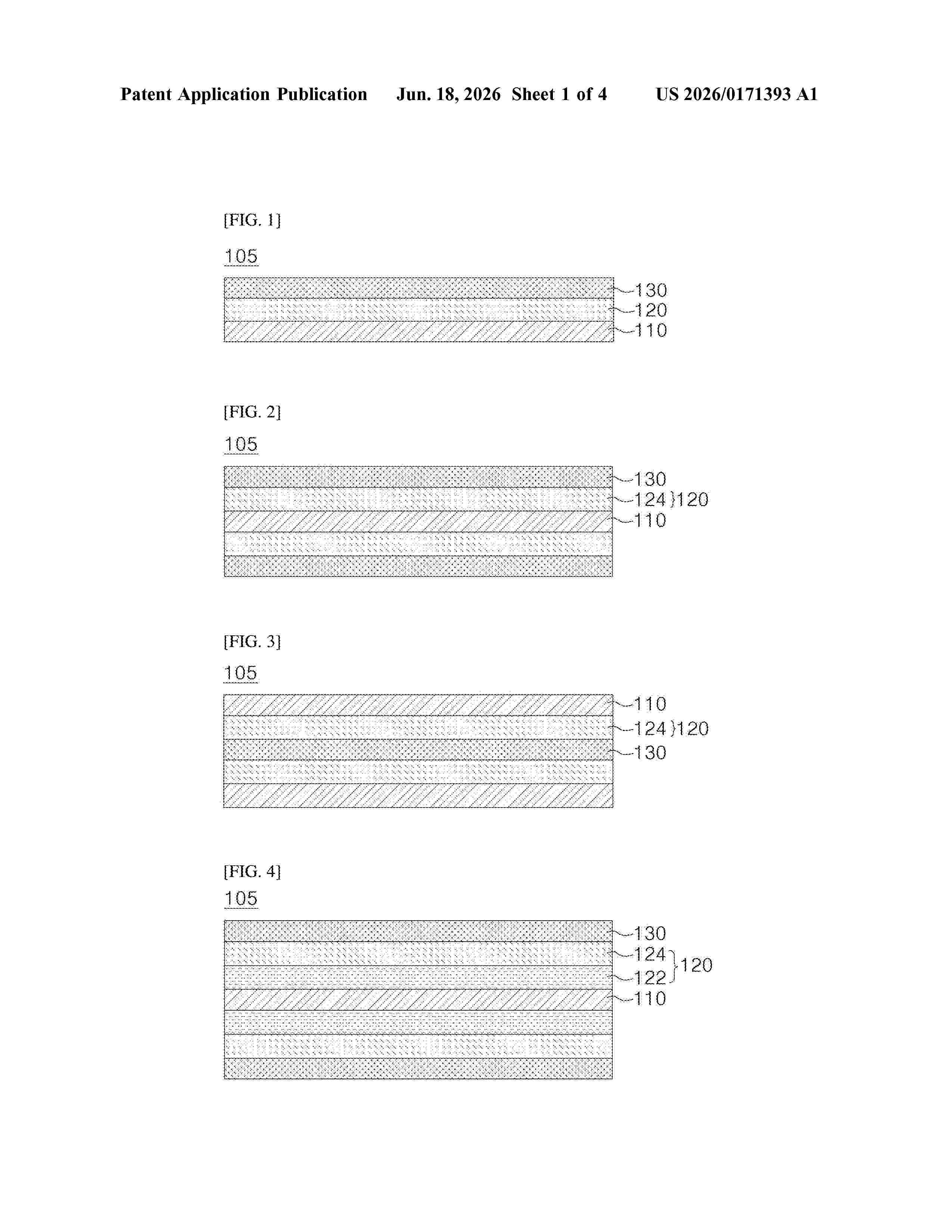
Resumen de: US20260171393A1
A cathode current collector for a lithium secondary battery according to embodiments of the present disclosure may include an aluminum layer, aluminum-copper alloy layers formed on the aluminum layer, and copper layers formed on the aluminum-copper alloy layer. Accordingly, even when a high-density cathode active material layer is formed on the cathode current collector, deformation or fracture of the cathode current collector may be prevented, thereby improving the cycle life of the secondary battery.
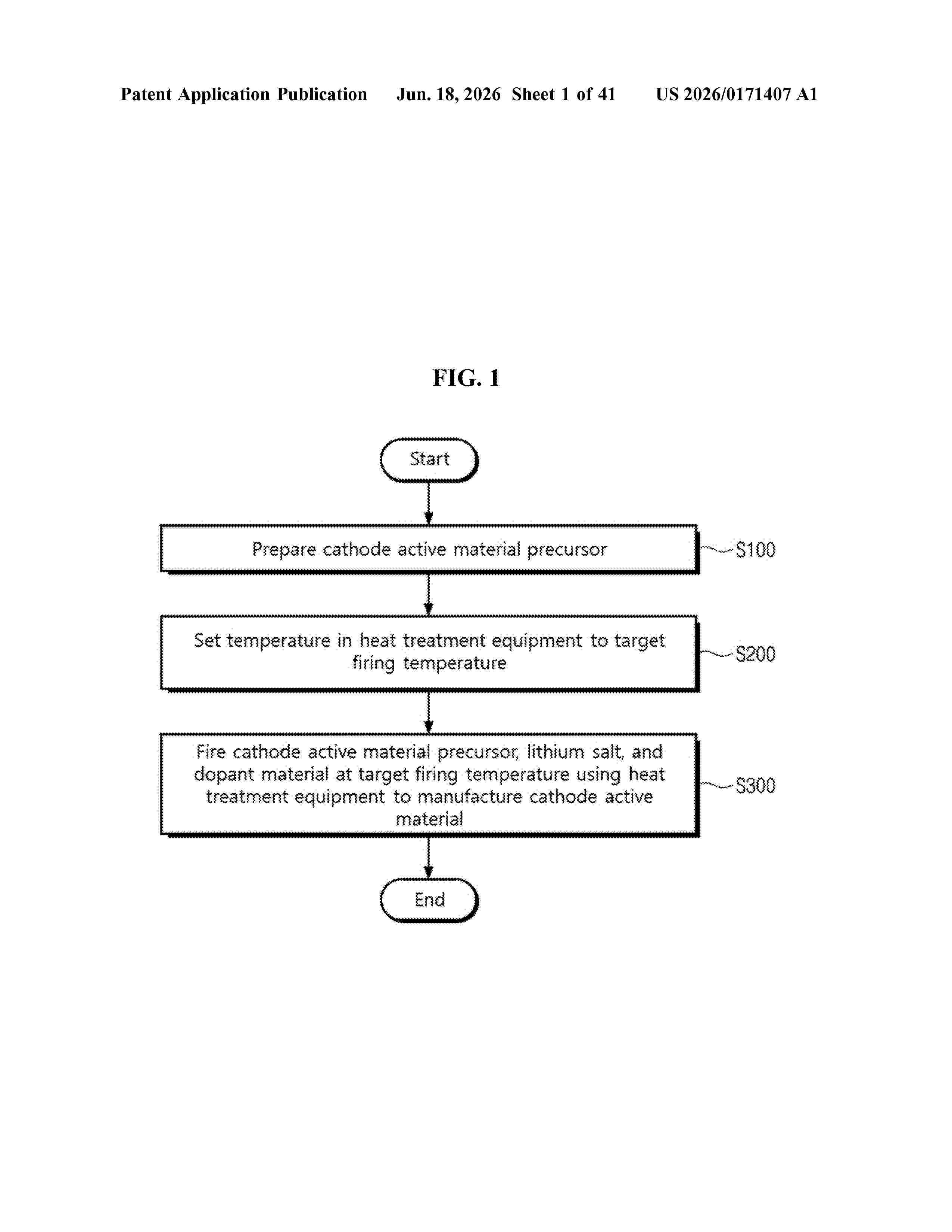
Resumen de: US20260171407A1
0000 A method for manufacturing a cathode active material comprises: preparing a cathode active material precursor; setting the temperature in heat treatment equipment to a target firing temperature; and firing the cathode active material precursor, a lithium salt, and a dopant material at the target firing temperature using the heat treatment equipment to manufacture the cathode active material, wherein the target firing temperature is controlled according to the dopant material. The setting the temperature in the heat treatment equipment to a target firing temperature includes: obtaining the difference value between a set firing temperature of the heat treatment equipment and the actual firing temperature in the heat treatment equipment; constructing a DB on the basis of the difference value; and using the DB to set the set firing temperature of the heat treatment equipment so that the target firing temperature matches the actual firing temperature in the heat treatment equipment.
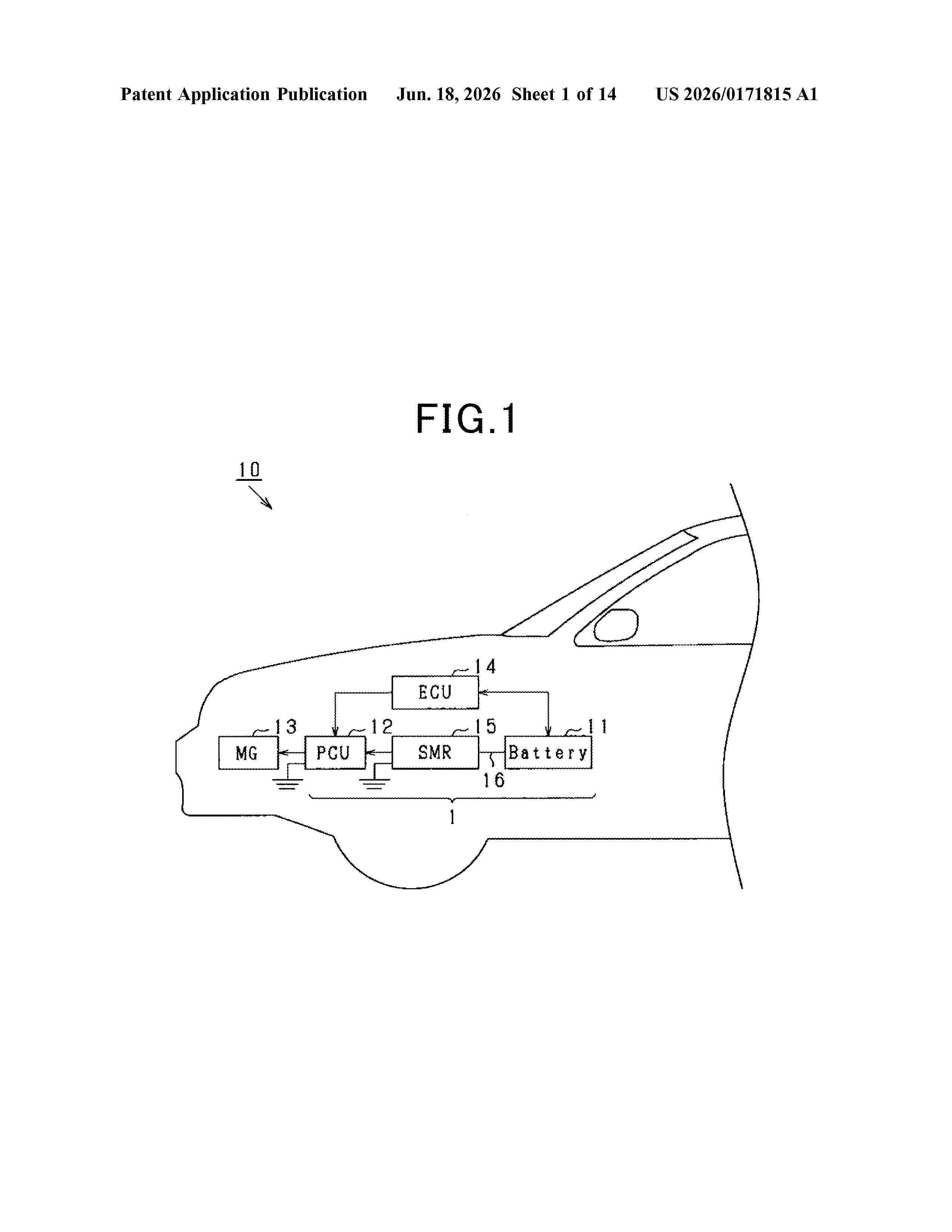
Resumen de: US20260171815A1
A circuit board is to be used for a battery monitoring system configured to monitor a battery condition of a battery unit. The circuit board includes: a wireless antenna; a wireless unit configured to perform wireless communication through the wireless antenna to transmit or receive the battery condition; and a connecting conductor configured to be connectable to an electrical path between the wireless unit and the wireless antenna and configured to allow an inspection terminal to be electrically connected thereto.
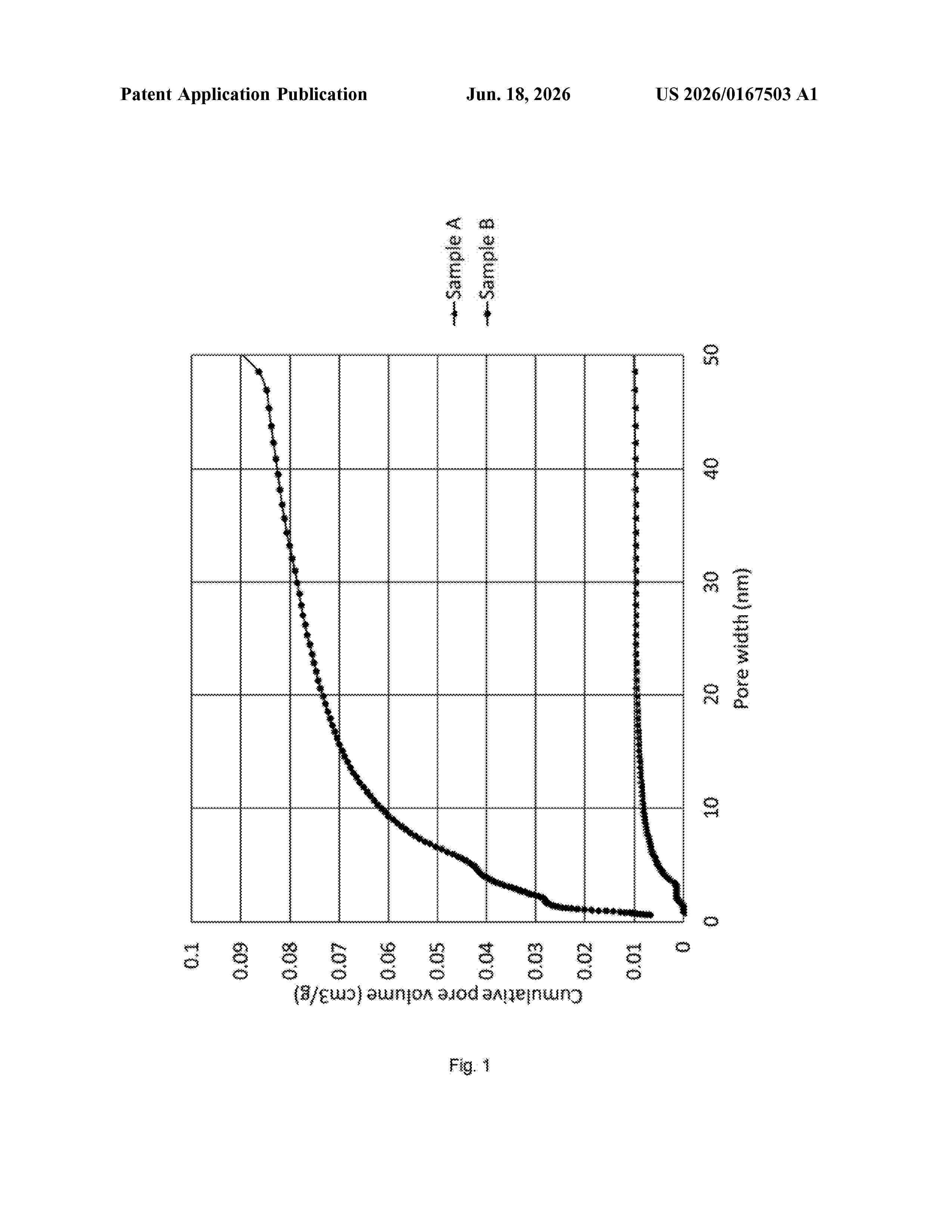
Resumen de: US20260167503A1
0000 The invention relates to a process for preparing composite particles. The process comprises the steps of providing a plurality of porous particles comprising micropores and/or mesopores; contacting the porous particles with a silicon-containing precursor at a temperature effective to cause deposition of a plurality of silicon domains in the pores of the porous particles; subjecting the particles to heat treatment at a temperature of at least 400° C. and in the presence of an inert gas; and contacting the particles with a silicon-containing precursor at a temperature effective to cause deposition of further silicon domains in the pores of the porous particles.
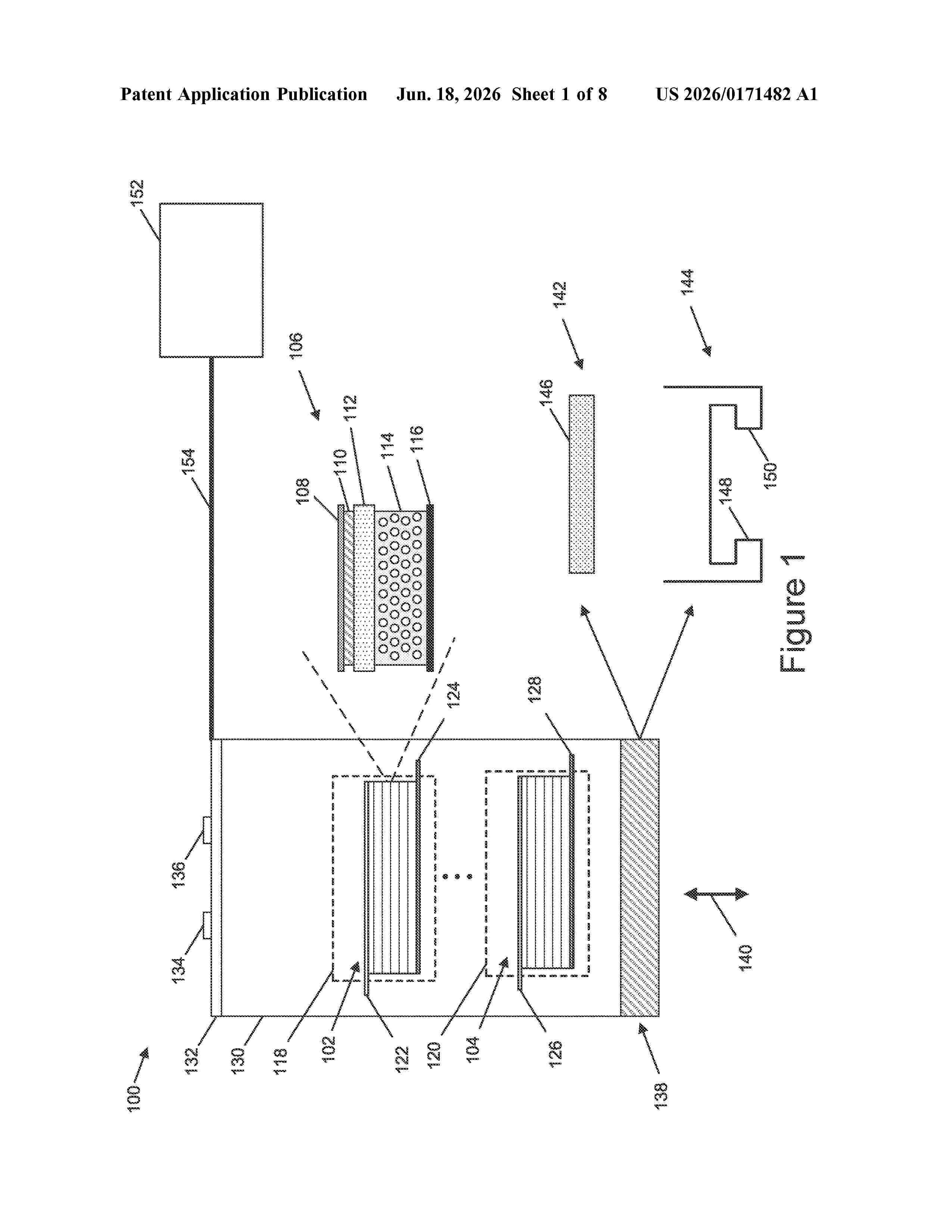
Resumen de: US20260171482A1
A battery unit comprises an arrangement of a plurality of stacked battery cells with individual battery cells including a number of discrete layers. The layers of the battery cells can include a solid-state separator layer. Dimensions of the battery cells are configured to minimize stress placed on one or more layers of the battery cells and to provide flexibility in the arrangements of battery cells to provide voltages and/or currents based on a load being driven by the battery cells.
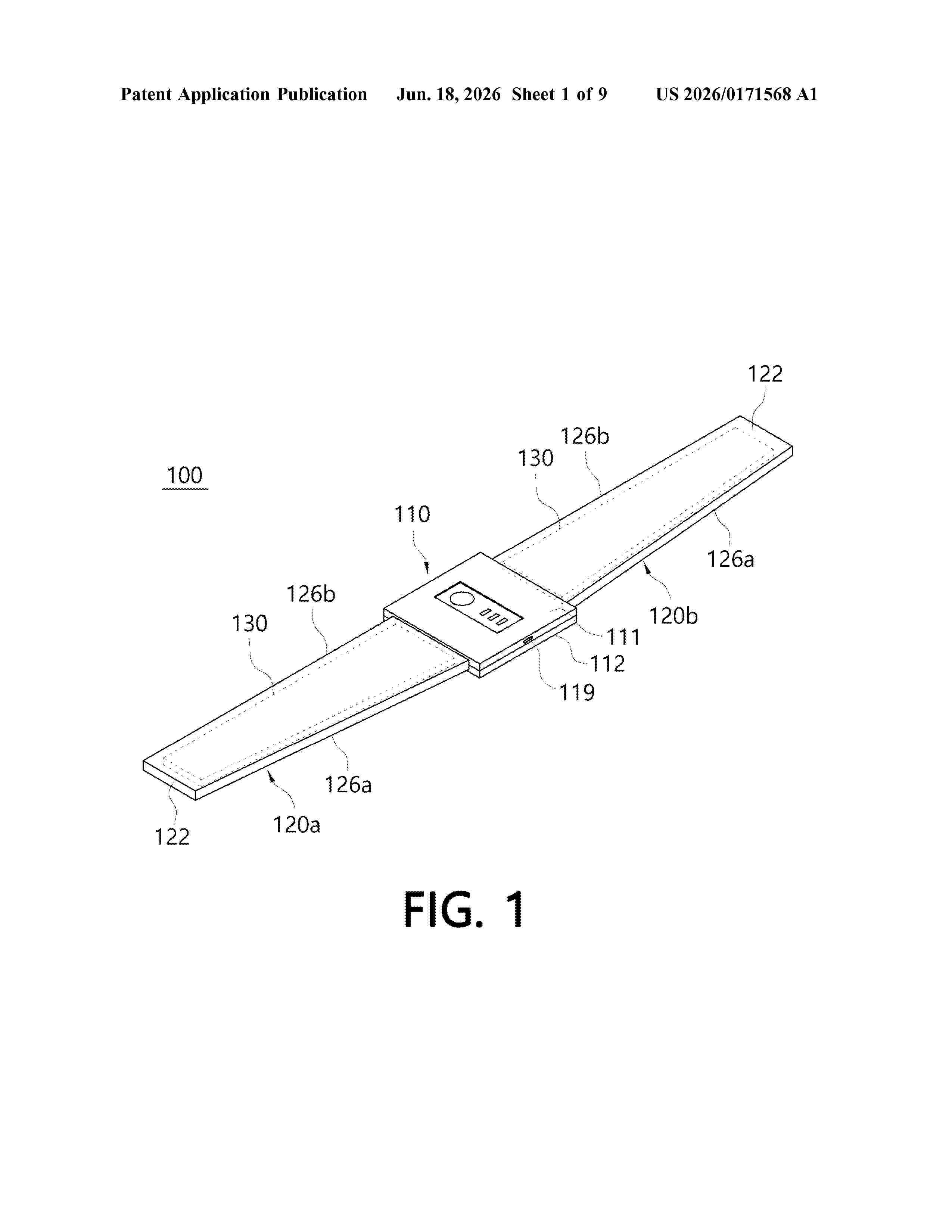
Resumen de: US20260171568A1
0000 An auxiliary battery is provided. An auxiliary battery, according to one embodiment of the present invention, comprises: a main body comprising a case, a circuit board built into the case, and charge and discharge ports mounted on the circuit board; and a battery unit which comprises a plate-shaped flexible battery having a predetermined area and a soft cover member covering the flexible battery, and is coupled to the main body such that the flexible battery is electrically connected to the circuit board, wherein the cover member may be formed of a flexible and waterproof material.
Nº publicación: US20260167787A1 18/06/2026
Solicitante:
NANYANG TECHNOLOGICAL UNIV [SG]
ATERA WATER PTE LTD [SG]
ATERA WATER PTE LTD
NANYANG TECHNOLOGICAL UNIVERSITY
Resumen de: US20260167787A1
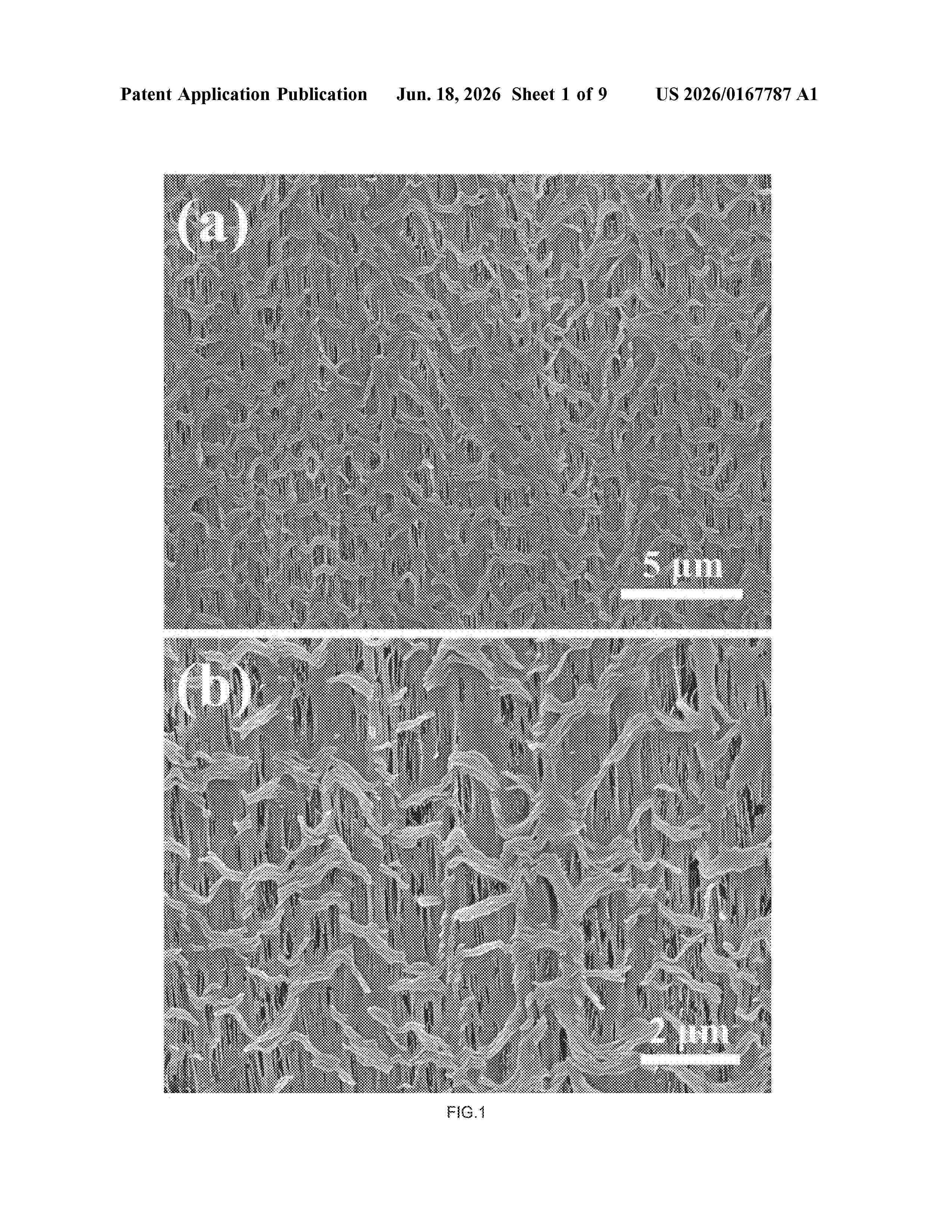
0000 Disclosed herein provides the porous polyolefin composites, which comprise the polyolefin polymer as the matrix and embedded fillers with high aspect ratio as the reinforcing element and are mainly featured by the enhanced mechanical properties in biaxial direction. These said composites can be used as filtering semi-permeable membranes in filtration/purification of air, water or other liquids, or can be used as separators in energy industries.
 BOPI
BOPI
 Sede Electrónica