Si deseas distinguir tus productos, servicios o ambos de los de otra empresa, es posible que necesites una marca o nombre comercial. Descubre qué son, en qué consiste su procedimiento de registro y qué implica.

Información sobre los plazos de presentación de solicitudes de transformación de marcas de la Unión Europea en marca nacional española. Más información


Si tienes un nuevo dispositivo, producto o procedimiento que resuelva un problema técnico o tenga una ventaja práctica, existen distintas formas de protegerlo en España y en otros países. Descubre cómo hacerlo.

¿Tu innovación reside en la estética, la ornamentación o la apariencia de tu producto? Protégela mediante un diseño industrial. Descubre qué derechos confiere el registro y cómo realizar la tramitación.

Las indicaciones geográficas protegen el nombre de un producto originario de una zona geográfica, a la cual le debe una determinada calidad, reputación u otra característica. Descubre qué son, en qué consiste su procedimiento de registro y qué beneficios conceden.

Las patentes publicadas en todo el mundo son una valiosa fuente de información científica, técnica y comercial.

Si eres emprendedor/a o una empresa y quieres potenciar y mejorar la rentabilidad de tu negocio protegiendo de forma adecuada los activos intangibles de tu organización, en este espacio encontrarás lo necesario.


 1422
resultados
1422
resultados
 Última actualización
28/06/2026 [07:11:00]
Última actualización
28/06/2026 [07:11:00]


 Resultados 650 a 675 de 1422

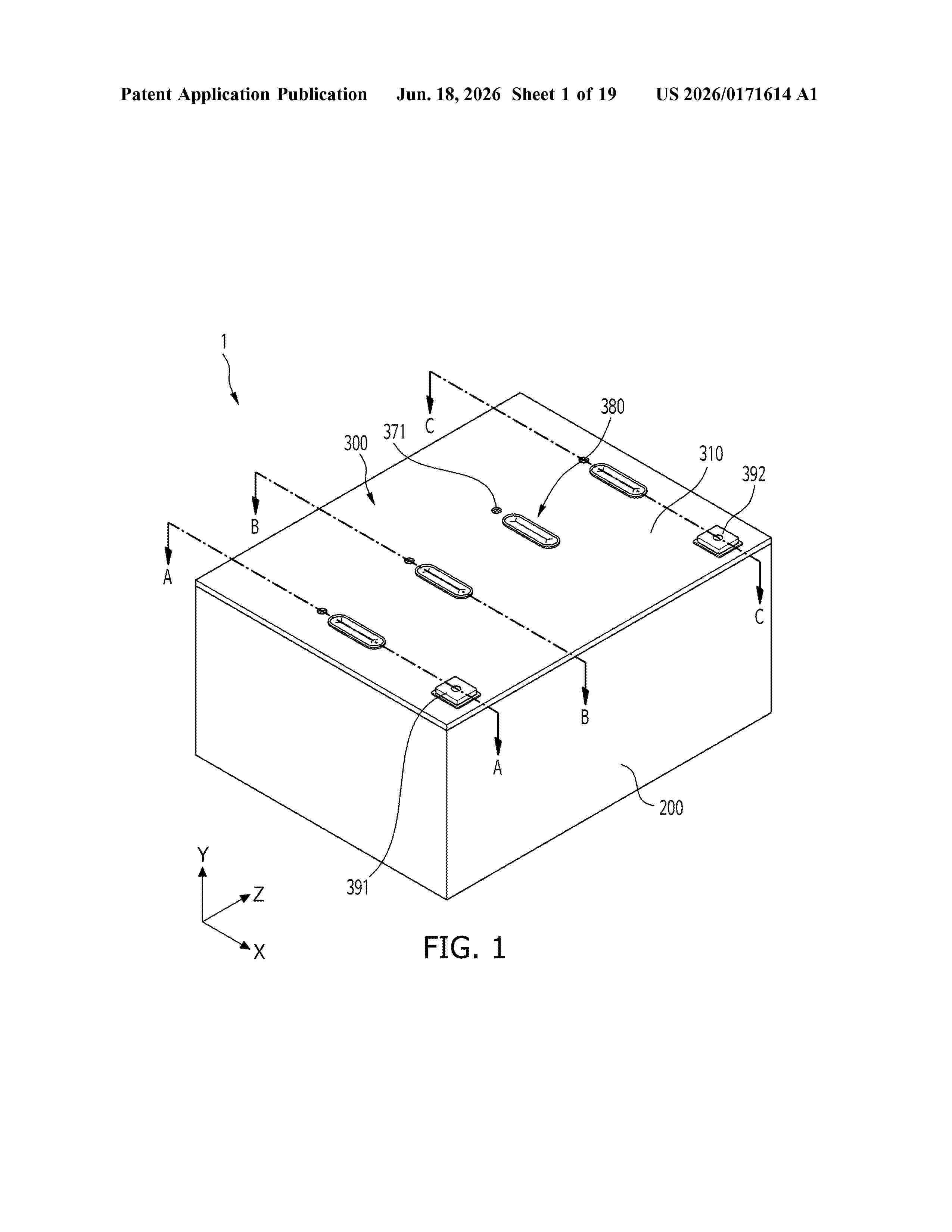
Resumen de: US20260171614A1
0000 A secondary battery includes electrode assemblies, a case including a receiving space accommodating the electrode assemblies, and a cap assembly coupled to the case. The cap assembly includes a cap plate sealing an opening formed in the case, first collector plates connected to first electrodes tabs of the electrode assemblies, second collector plates connected to second electrode tabs the electrode assemblies. Bus plates are arranged in a first direction in which the electrode assemblies are arranged, with one of the bus plates connecting two of the first collector plates, and with one of the bus plates connecting two of second collector plates. A first external terminal is connected to one of the first collector plates, and a second external terminal connected to one of the second collector plates.

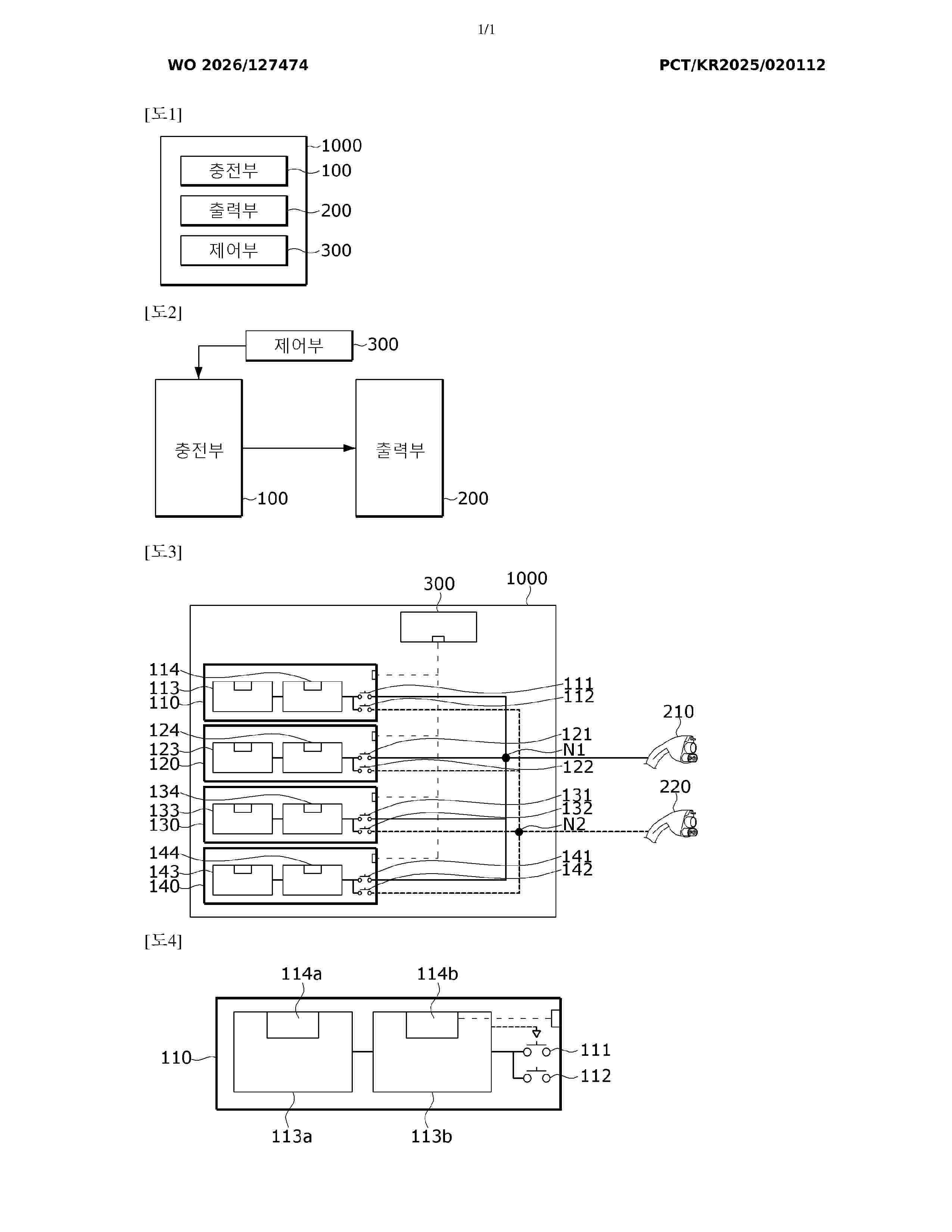
Resumen de: WO2026127474A1
An embodiment provides a charging device comprising: a first charging unit and a second charging unit; a first output unit and a second output unit which are connected to the first charging unit and the second charging unit; and a control unit which communicates with the first charging unit and the second charging unit, wherein the first charging unit includes a first switch and a second switch, the second charging unit includes a third switch and a fourth switch, the first switch and the third switch are connected to the first output unit, and the second switch and the fourth switch are connected to the second output unit.
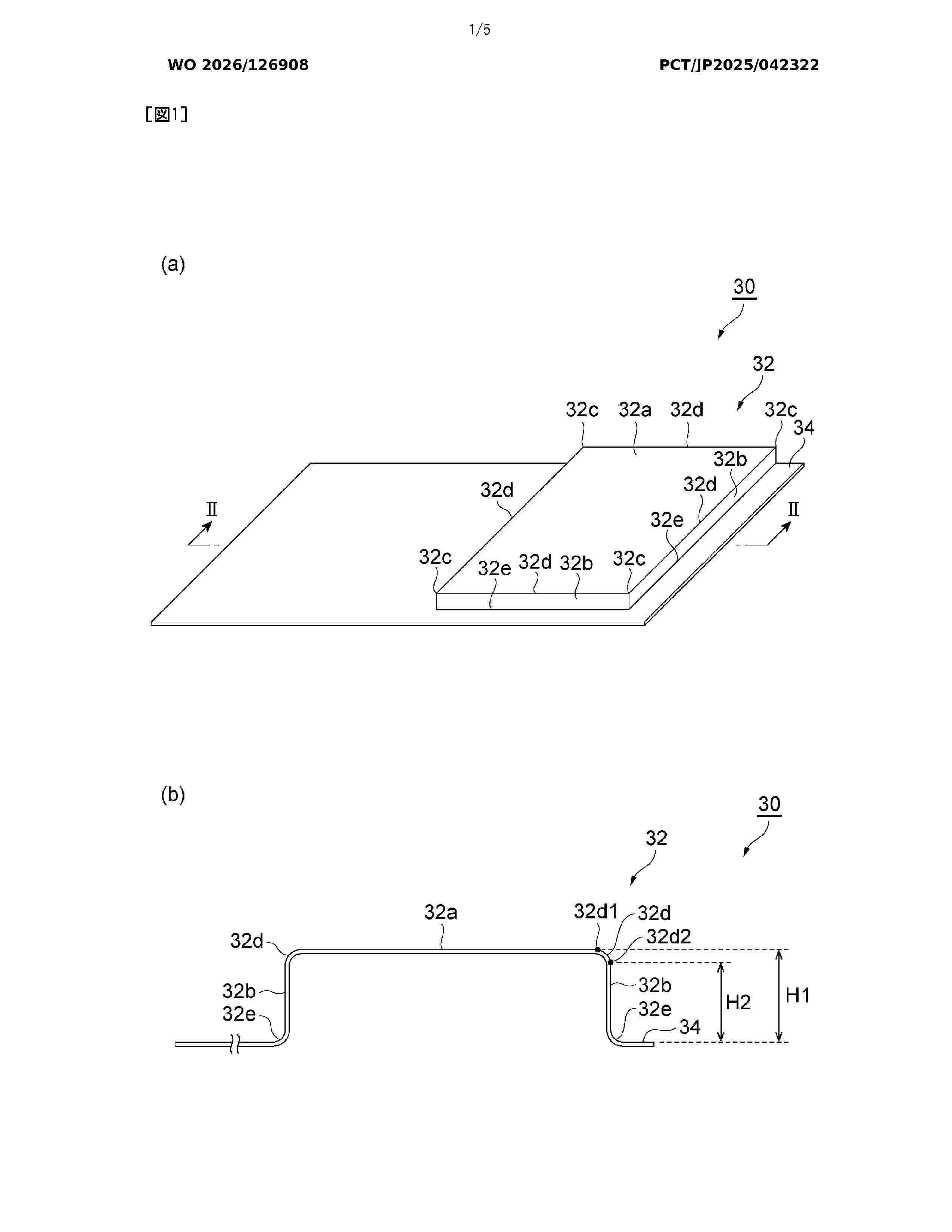
Resumen de: WO2026126908A1
One aspect according to the present disclosure is a laminate having a layered structure comprising a base material layer, a first adhesive layer, a barrier layer, and a sealant layer, in this order, the laminate being measured, using a nanoindenter, under the condition of the plastic deformation amount of the base material layer being 30 nm or more, and the plastic deformation amount of the base material layer being a maximum load of 100 μN.
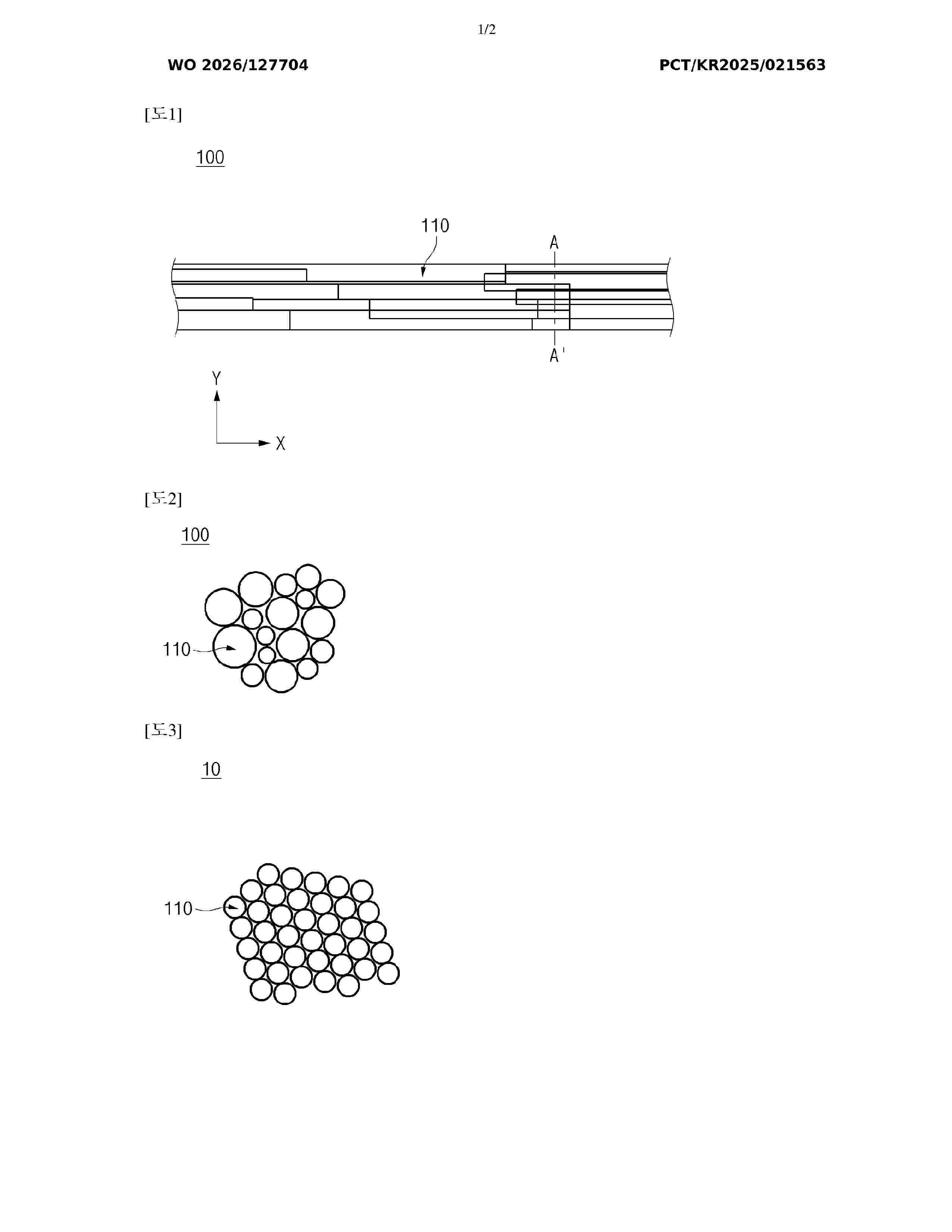
Resumen de: WO2026127704A1
Disclosed in the present specification is an invention relating to a conductive material dispersion comprising a carbon nanocable and a dispersant, wherein the carbon nanocable is formed by arranging a plurality of carbon nanotube units comprising single-walled carbon nanotubes and double-walled carbon nanotubes in the longitudinal direction and the radial direction and bonding same, the carbon nanotube units have an average diameter of 1.8 nm to 4.0 nm, and the carbon nanocable has a volume cumulative 90% average particle diameter D90 of 10 µm or less and a volume cumulative 99% average particle diameter D99 of 15 µm or less in dispersion. The conductive material dispersion can provide a secondary battery having improved resistance characteristics and lifespan characteristics by using the carbon nanocable having a high packing density and a long length as a conductive material.
Resumen de: WO2026126656A1
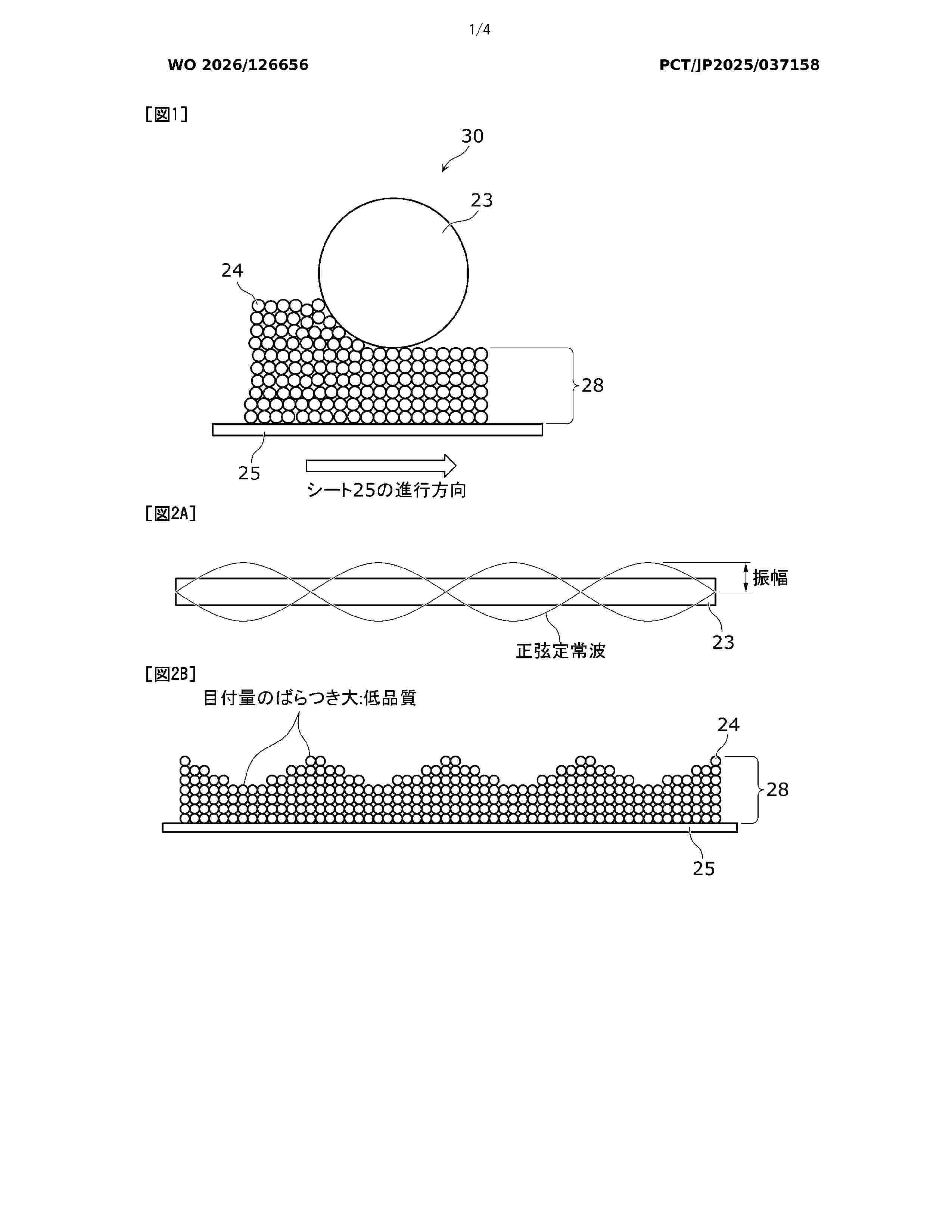
A powder adjustment unit (11) is provided with: a hollow squeegee (3); a first horn (10a) connected to one side of the squeegee (3); a second horn (10b) connected to the other side of the squeegee (3); a first vibrator (1) for exciting waves in the squeegee (3); and a second vibrator (2) for exciting waves in the squeegee (3). Both ends of the squeegee (3) are open ends. The first vibrator (1) is connected to the one side of the squeegee (3) via the first horn (10a), and the second vibrator (2) is connected to the other side of the squeegee (3) via the second horn (10b). The first vibrator (1) and the second vibrator (2) vibrate such that the waves excited by the first vibrator (1) and the waves excited by the second vibrator (2) are different in phase.
Resumen de: US20260171543A1
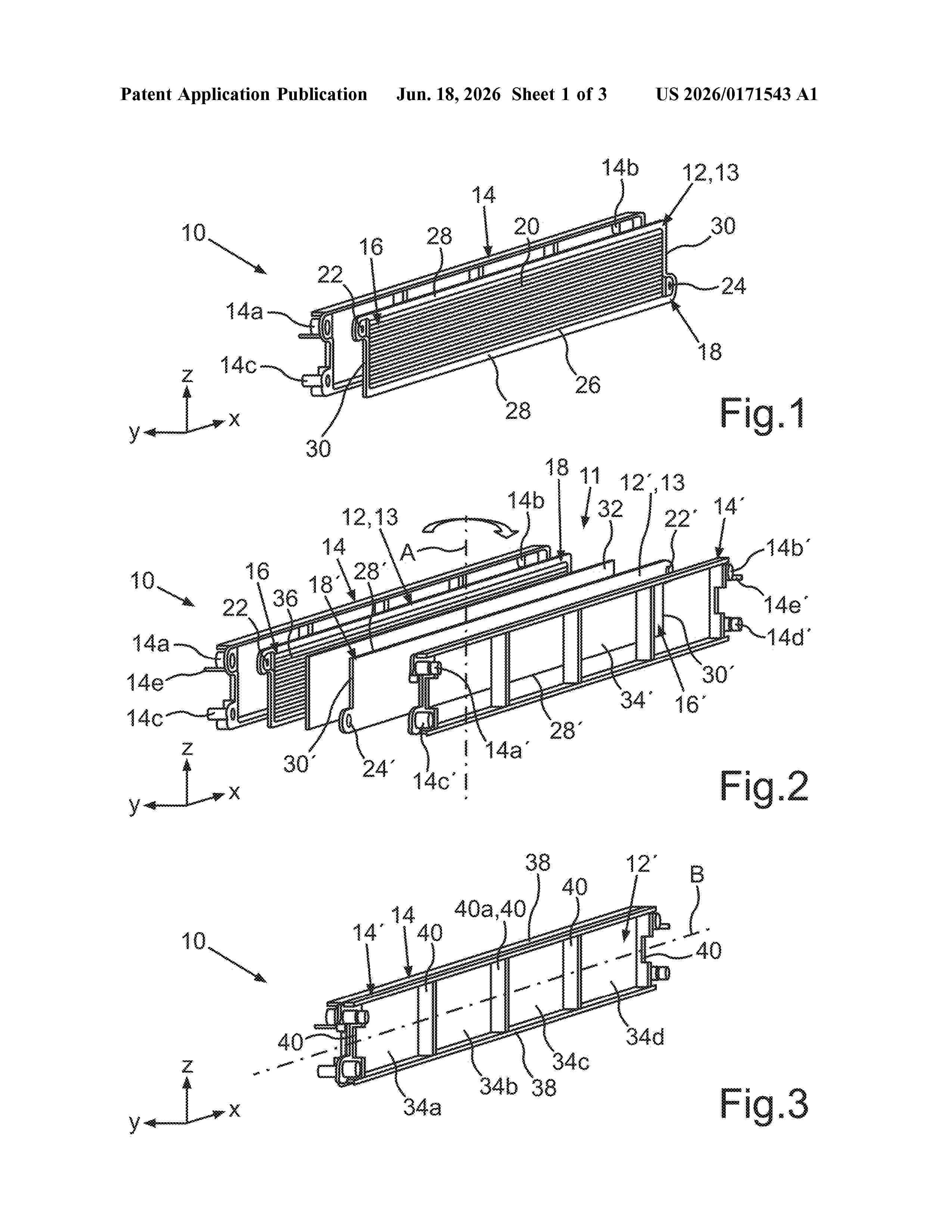
An inter-cell cooling unit for arrangement between two cell rows, each having at least one battery cell, the inter-cell cooling unit includes a cooling plate unit which has a first cooling plate which includes a first and a second end region which are opposite one another with respect to a first direction, an integrated first cooling duct extending from the first to the second end region, a first coolant supply opening arranged in the first end region, and a first coolant discharge opening arranged in the second end region. The cooling plate unit includes a second cooling plate which is arranged next to the first cooling plate with respect to a second direction and which comprises a third and a fourth end region, at least one integrated second cooling duct extending from the third to the fourth end region.
Resumen de: US20260171540A1
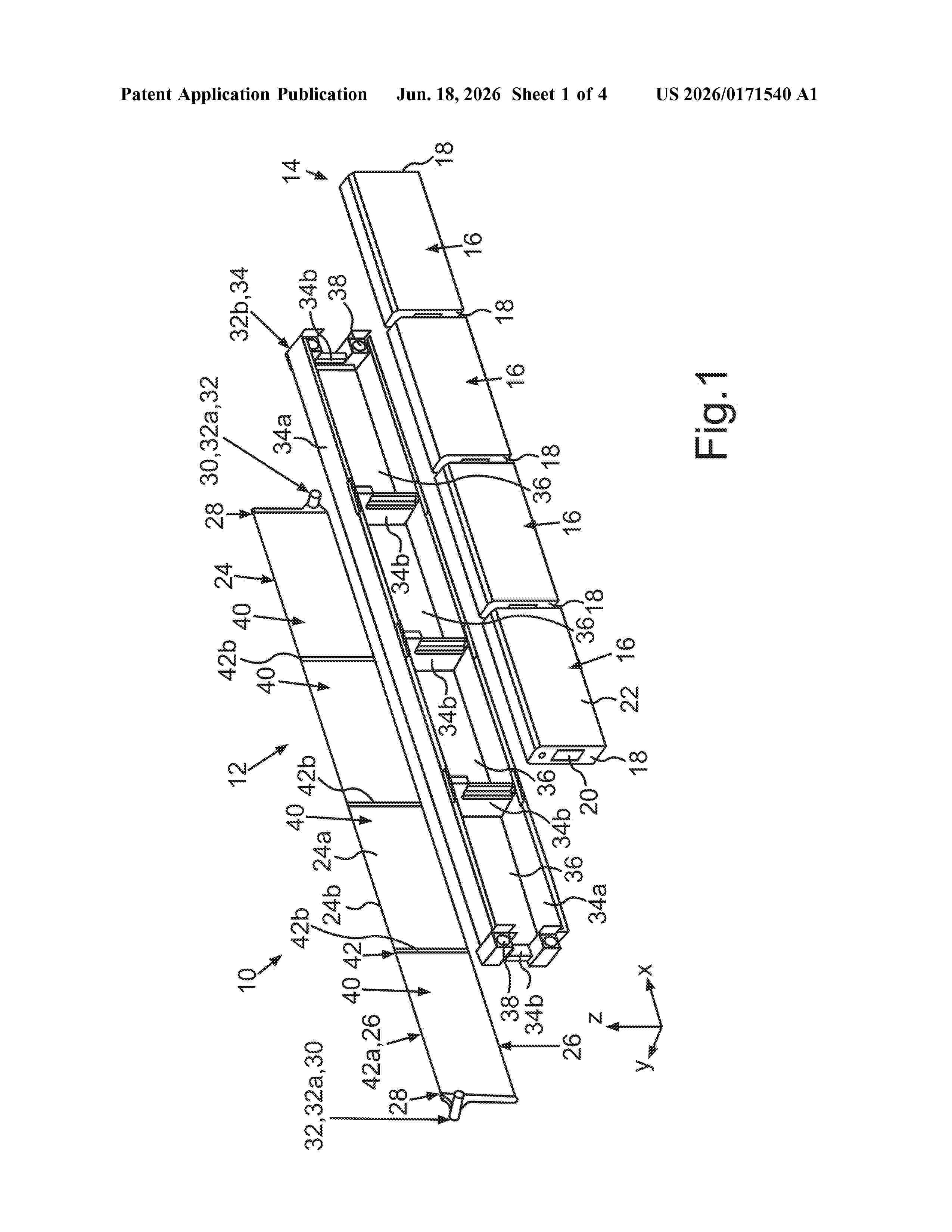
An intercell cooling element for arrangement between two cell rows, each having at least one battery cell, the intercell cooling element comprises a cooling plate including a first outer wall and a second outer wall opposite the same in a first direction. Between the first and second outer walls there is an interior space in which at least one cooling channel is arranged. The intercell cooling element includes at least one plastic component arranged on the outside of the cooling plate. A layered compression element compressible in the first direction is arranged in the interior of the cooling plate, and a layered stiffening element less compressible than the compression element is arranged in a second direction adjacent to the compression element.
Resumen de: US20260171533A1
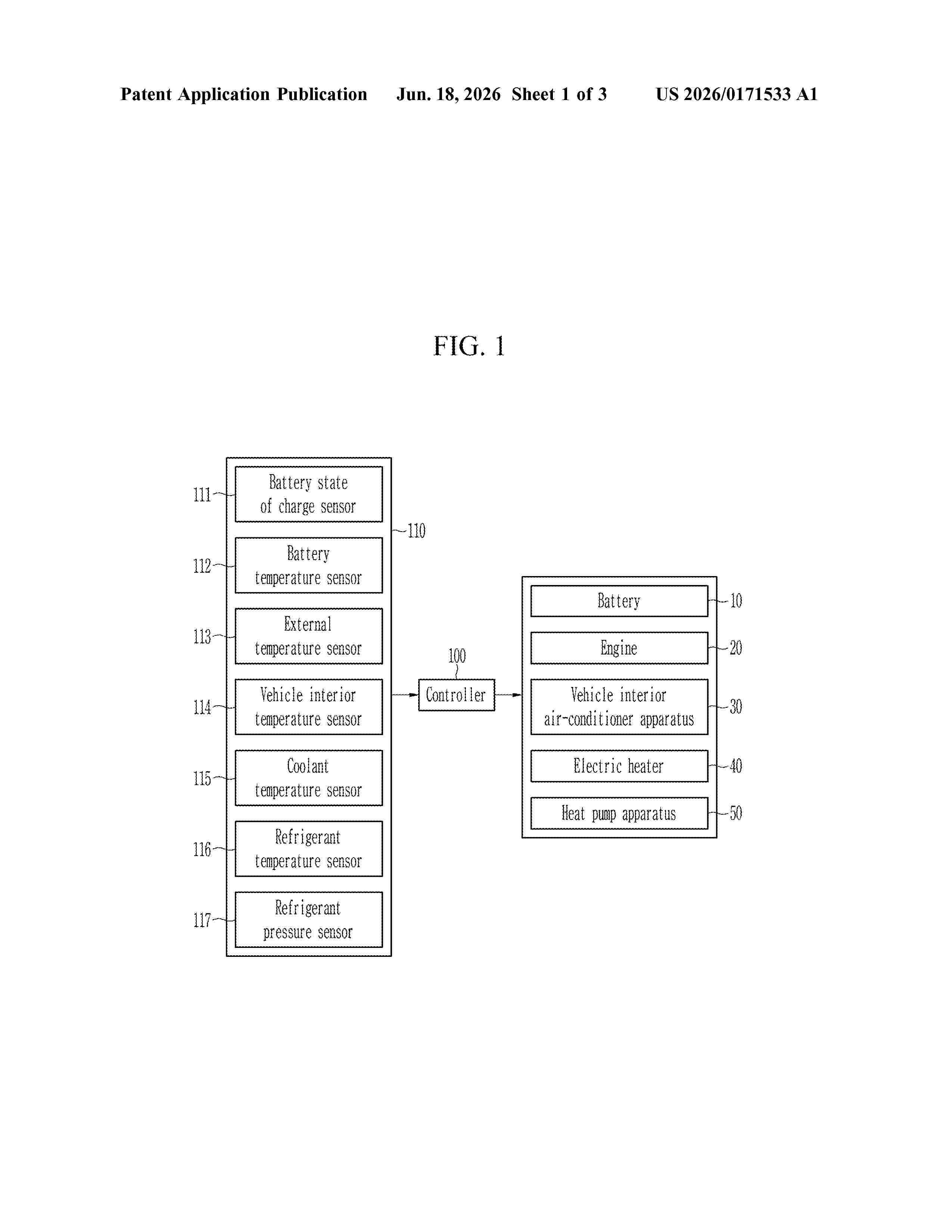
0000 In an embodiment a method includes determining, by a controller, whether a state-of-charge of a battery is greater than or equal to 30% based on data from a data detector, determining, by the controller, whether a battery temperature is higher than 10° C. based on data from the data detector and based on determining that the state-of-charge of the battery is greater than or equal to 30%, determining, by the controller, whether an ambient air temperature is higher than −20° C. based on data from the data detector, operating, by the controller, an electric heater based on determining that the ambient air temperature is lower than or equal to −20° C., determining, by the controller, whether the battery temperature is higher than a target temperature and a vehicle interior temperature is higher than a user-set temperature based on data from the data detector and terminating the active thermal management control based on determining that the battery temperature is higher than a target temperature and the vehicle interior temperature is higher than the user-set temperature.
Resumen de: WO2026127715A1
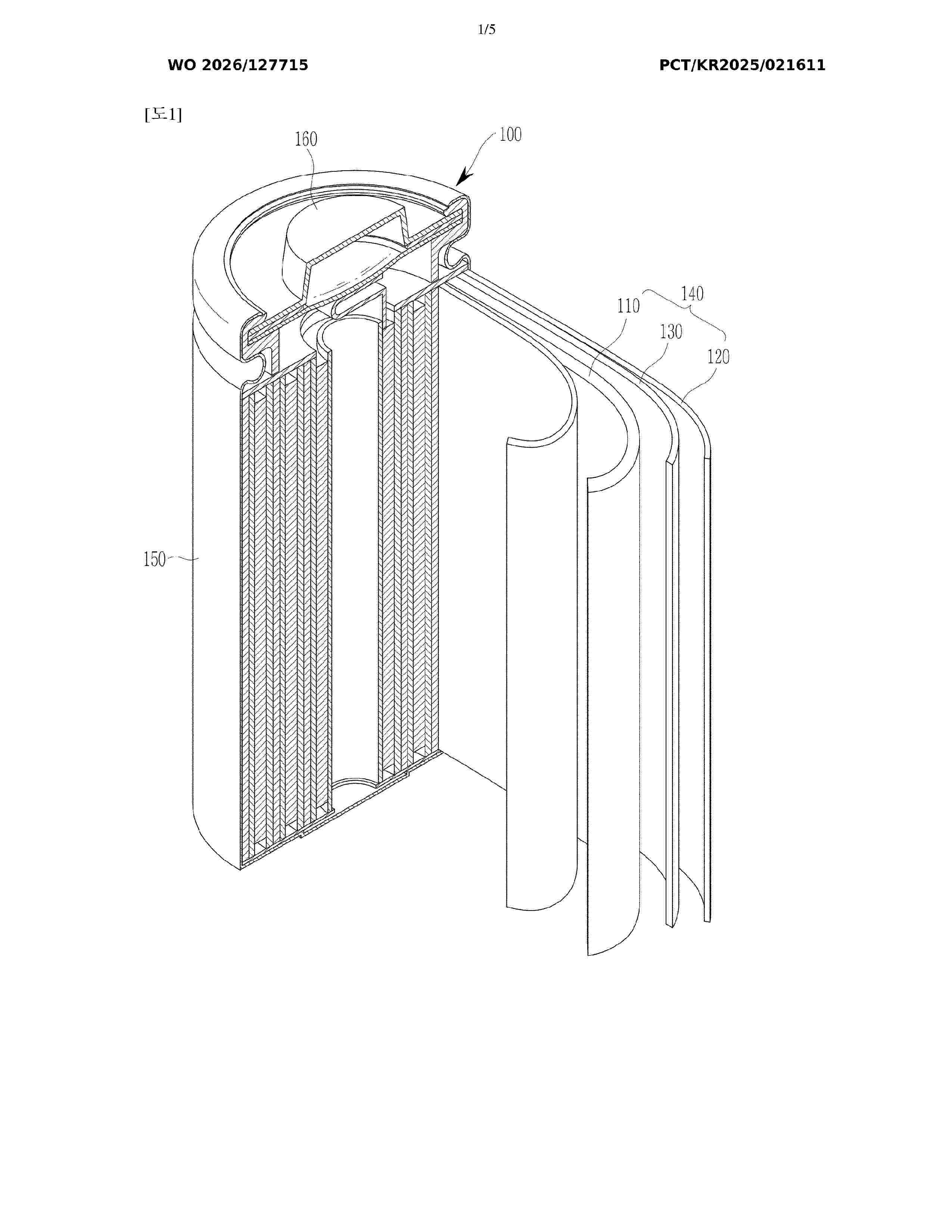
Provided are a positive electrode lithium supplement, and a positive electrode and a lithium secondary battery comprising same. The positive electrode lithium supplement includes an inorganic lithium-supplemented solid electrolyte material and a two-dimensional MXene material. The inorganic lithium-supplemented solid electrolyte material includes a sulfide-based lithium-supplemented solid electrolyte and/or a halide-based lithium-supplemented solid electrolyte. The two-dimensional MXene material is used as a conductive agent for constructing a three-dimensional conductive network and also as a catalyst for effectively reducing the decomposition voltage of an inorganic lithium-supplemented solid electrolyte material. The positive electrode lithium supplement supplies additional lithium ions to the battery through an electrochemical decomposition reaction at a low voltage during first charging/discharging in a battery formation process, thereby improving the initial efficiency, energy density, and cycle stability of the battery. In addition, elements such as P, S, and halogen are introduced as effective components of a negative electrode SEI film, further enhancing the cycle stability of the battery.
Resumen de: US20260171555A1
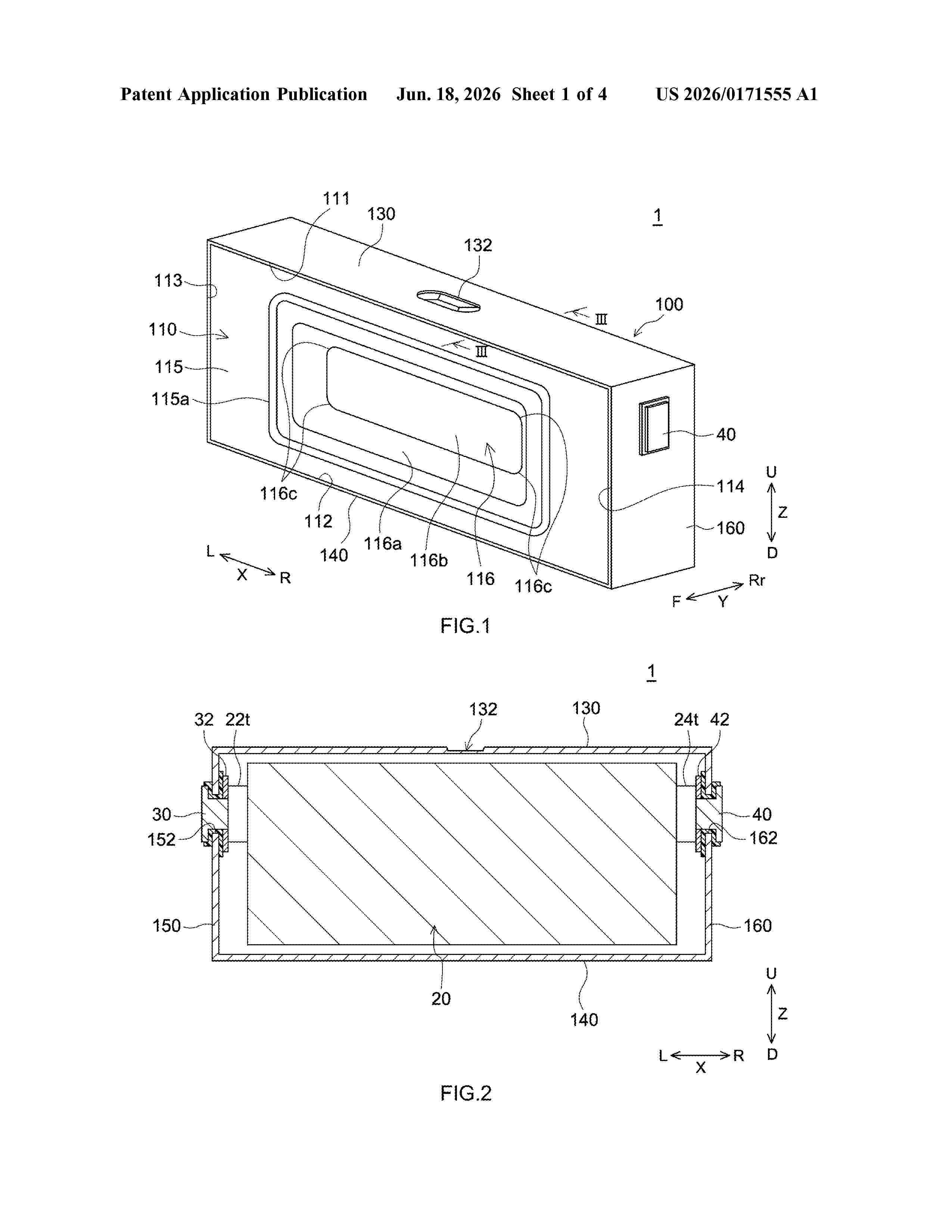
0000 The herein disclosed electricity storage device includes the case and an electrode assembly accommodated in the case. The case includes a first wall having a first side and a second side, and includes a second wall being opposed to the first wall. The electrode assembly includes a laminate part in which the positive electrode and the negative electrode are laminated along an opposed direction of the first wall and the second wall. The first wall includes a base part and a hollow part protruding from the base part toward the electrode assembly. The hollow part includes an inclined part from the base part toward the electrode assembly and a bottom part that is positioned closer to the electrode assembly than the base part. The base part includes a recessed part between the hollow part and the first side.
Resumen de: US20260171508A1
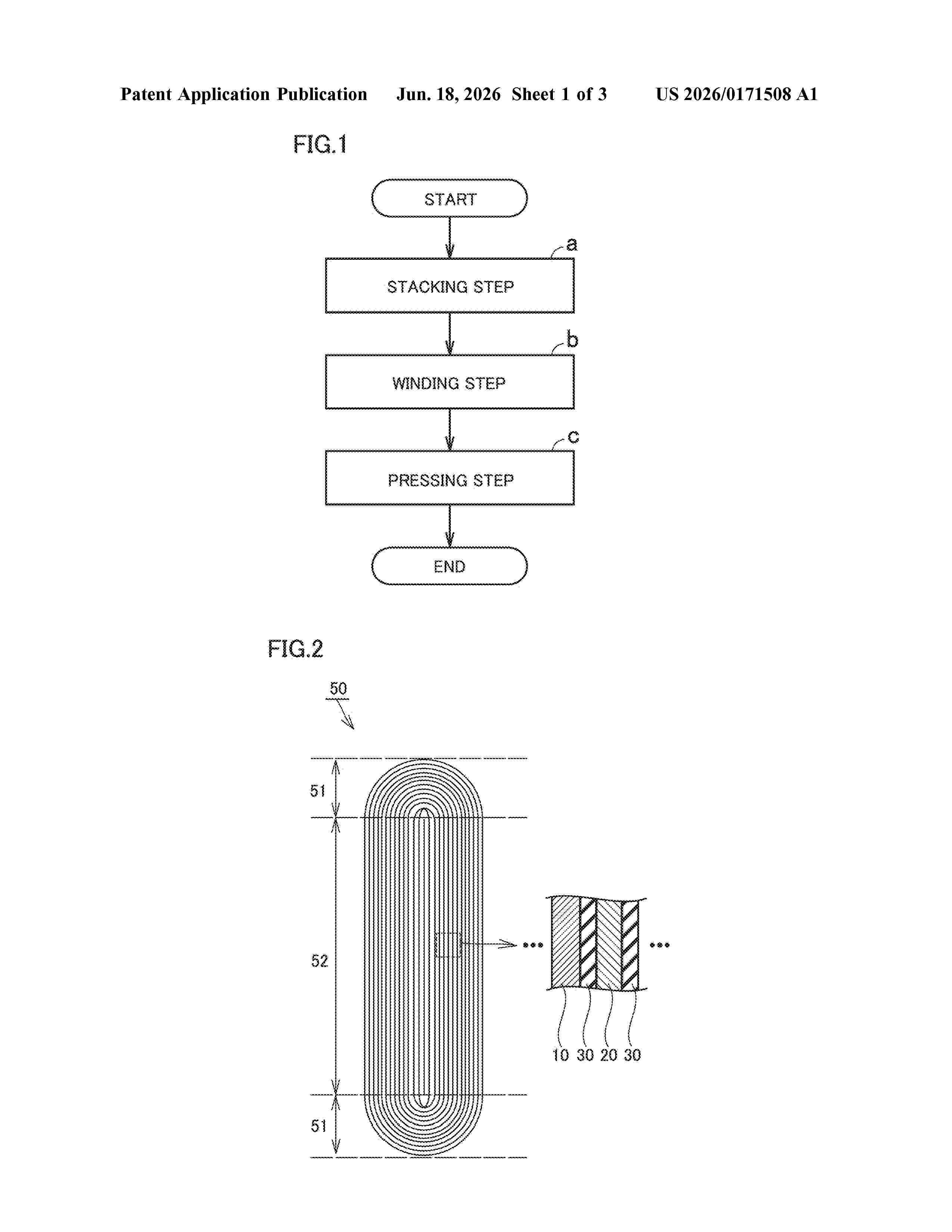
A method of producing an electrode assembly comprises: a stacking step to stack a positive electrode and a negative electrode with a separator interposed therebetween to form a stack; a winding step to wind the stack to form a wound body; and a pressing step to press the wound body to form a wound electrode assembly having a flat form. A press load in the pressing step is less than 140 kN. A thickness of the separator in the wound electrode assembly is from 16 μm to 20 μm. When the press load is denoted as A (kN), the thickness of the separator in the wound electrode assembly is denoted as B (μm), and a thickness of the negative electrode in the wound electrode assembly is denoted as C (μm), A/(B/C) is from 190 kN to 473 kN.
Resumen de: WO2026123579A1
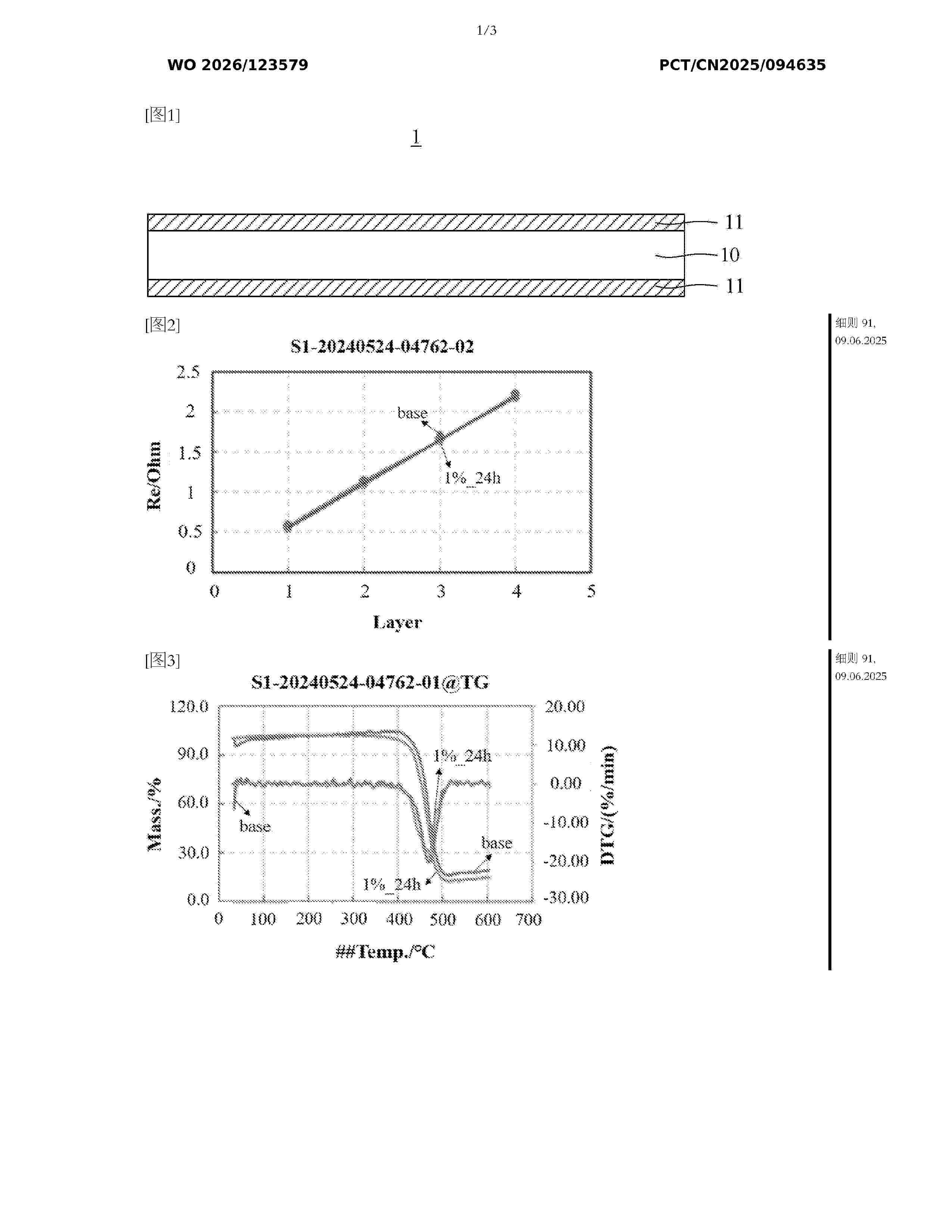
A battery cell and an electrical apparatus. The battery cell comprises a positive electrode sheet and an electrolyte, the positive electrode sheet comprising a positive electrode current collector and a positive electrode film layer, the positive electrode film layer being disposed on at least one side of the positive electrode current collector, and the positive electrode film layer comprising a positive electrode active material. The positive electrode active material comprises a lithium-containing phosphate, the electrolyte comprises a first additive and a second additive, the first additive comprises a fluorocarbonate, and the second additive comprises at least one of lithium bis(fluorosulfonyl)imide and lithium bis(trifluoromethanesulfonyl)imide. The present application can reduce the rate of increase of internal resistance of the battery and improve the cycle performance of the battery, so that the battery cell has both cycle performance and rate performance.
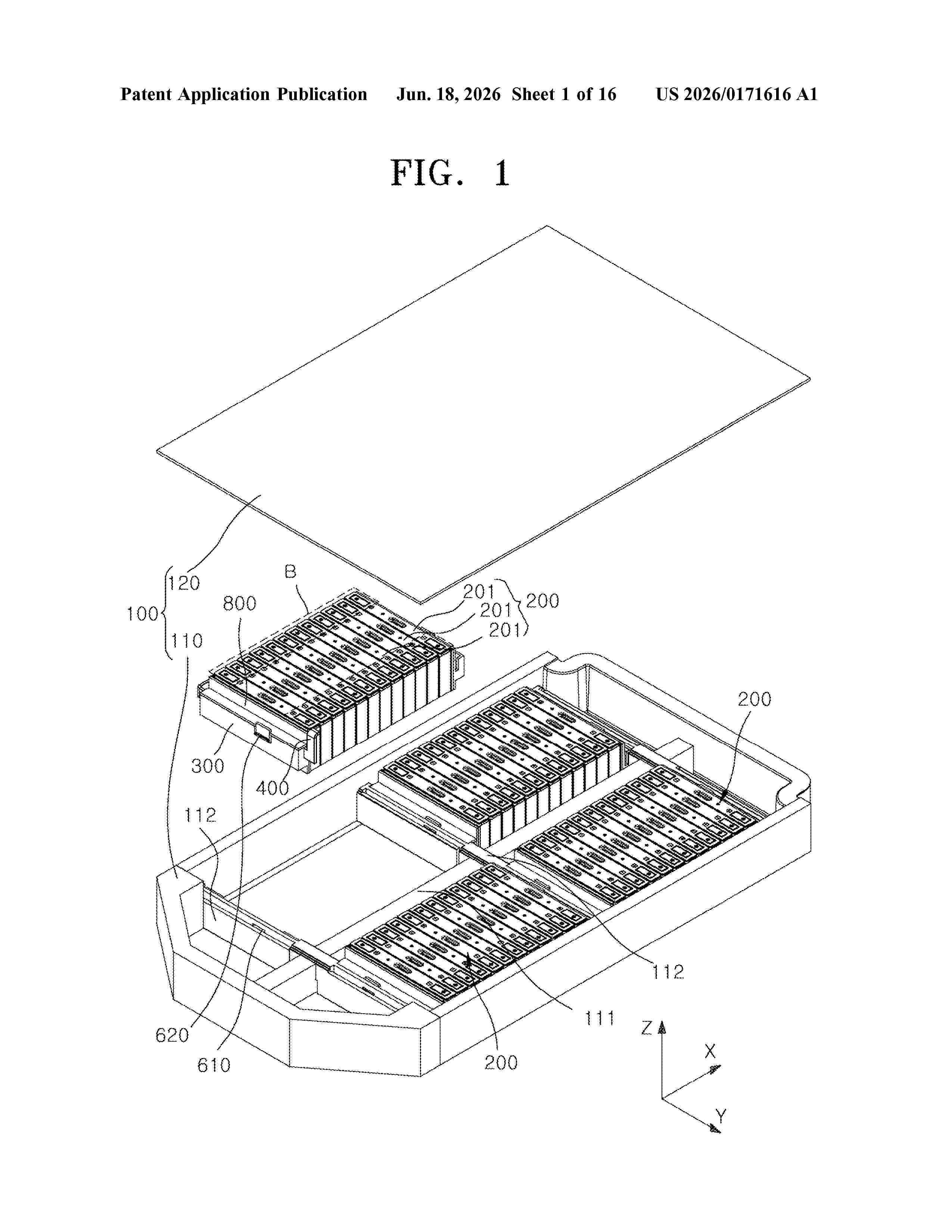
Resumen de: US20260171616A1
0000 The present disclosure relates to a battery pack, and the technical problem to be solved is to provide a battery pack capable of increasing space utilization and preventing damage to components. To this end, the present disclosure provides a battery pack including a housing, one or more cell stacks disposed in the housing and including a plurality of battery cells arranged along a first direction, an end plate disposed to face the cell stack along the first direction, a slot disposed in the end plate, and a stack bus bar connected to the cell stack and inserted into the slot.
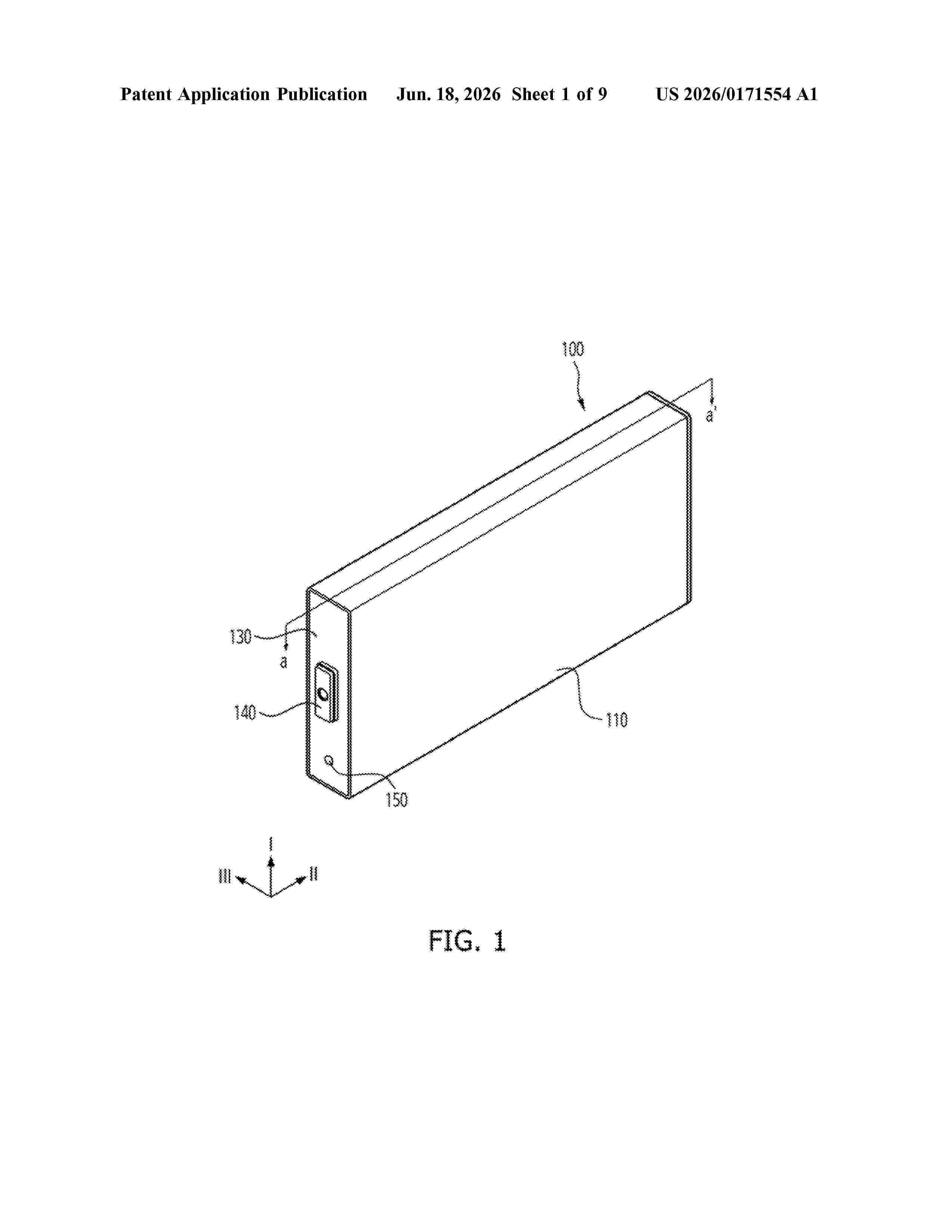
Resumen de: US20260171554A1
0000 A secondary battery includes an electrode assembly, a case having an opening on at least one side surface, the case accommodating the electrode assembly, and a cap plate coupled to the opening of the case, wherein the case includes a weld portion having a curved pattern on at least one surface of the case.
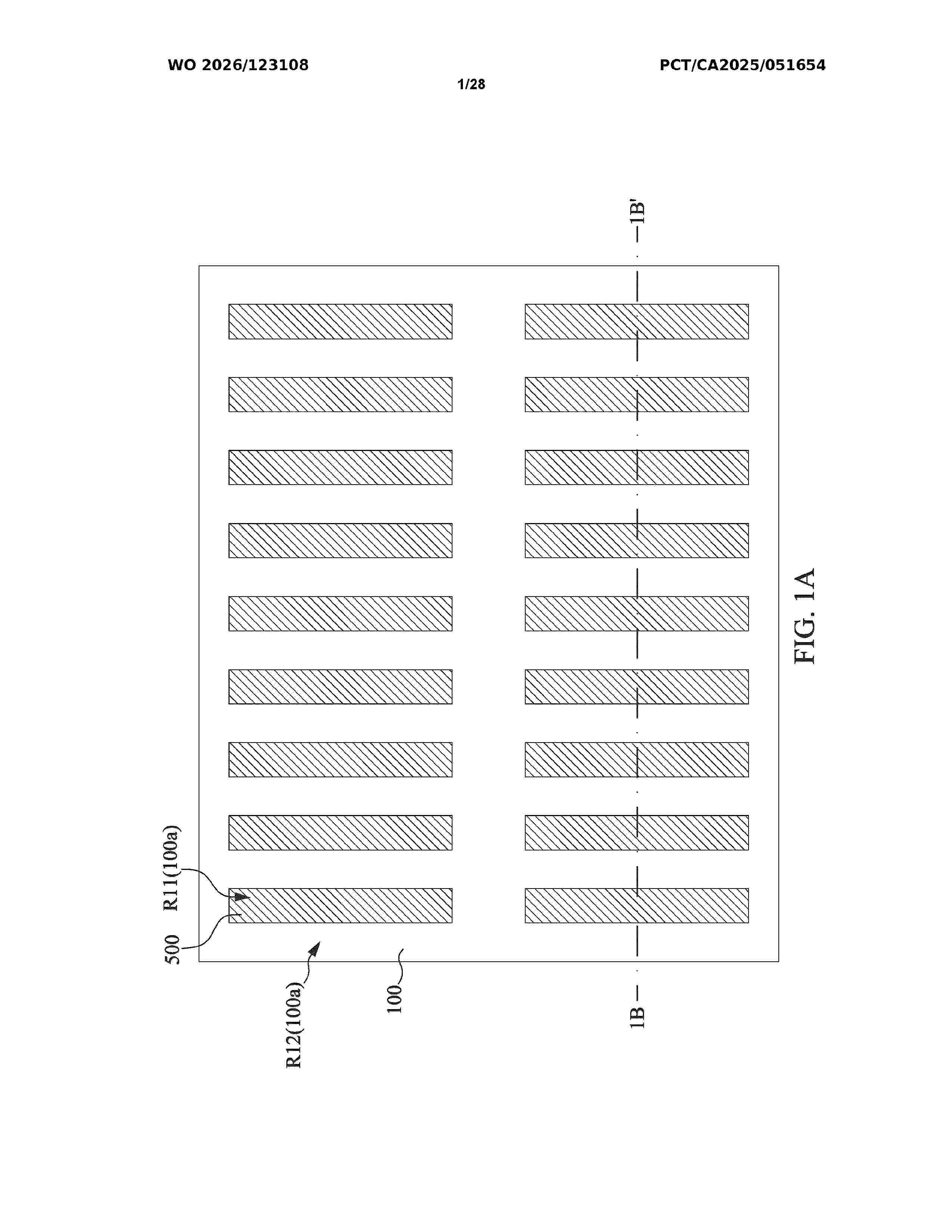
Resumen de: WO2026123108A1
The present disclosure provides a battery, a manufacturing method of a battery, and a manufacturing method of an electrode body. The manufacturing method of the electrode body includes: providing a collector including an upper surface; shielding a first region of the upper surface of the collector by a patterned thermal release adhesive layer; applying an electrode material on the upper surface of the collector, where a contact angle of the patterned thermal release adhesive layer relative to the electrode material is 90° or more; and removing the patterned thermal release adhesive layer, to form the electrode material into an electrode material layer that exposes the first region of the upper surface of the collector.
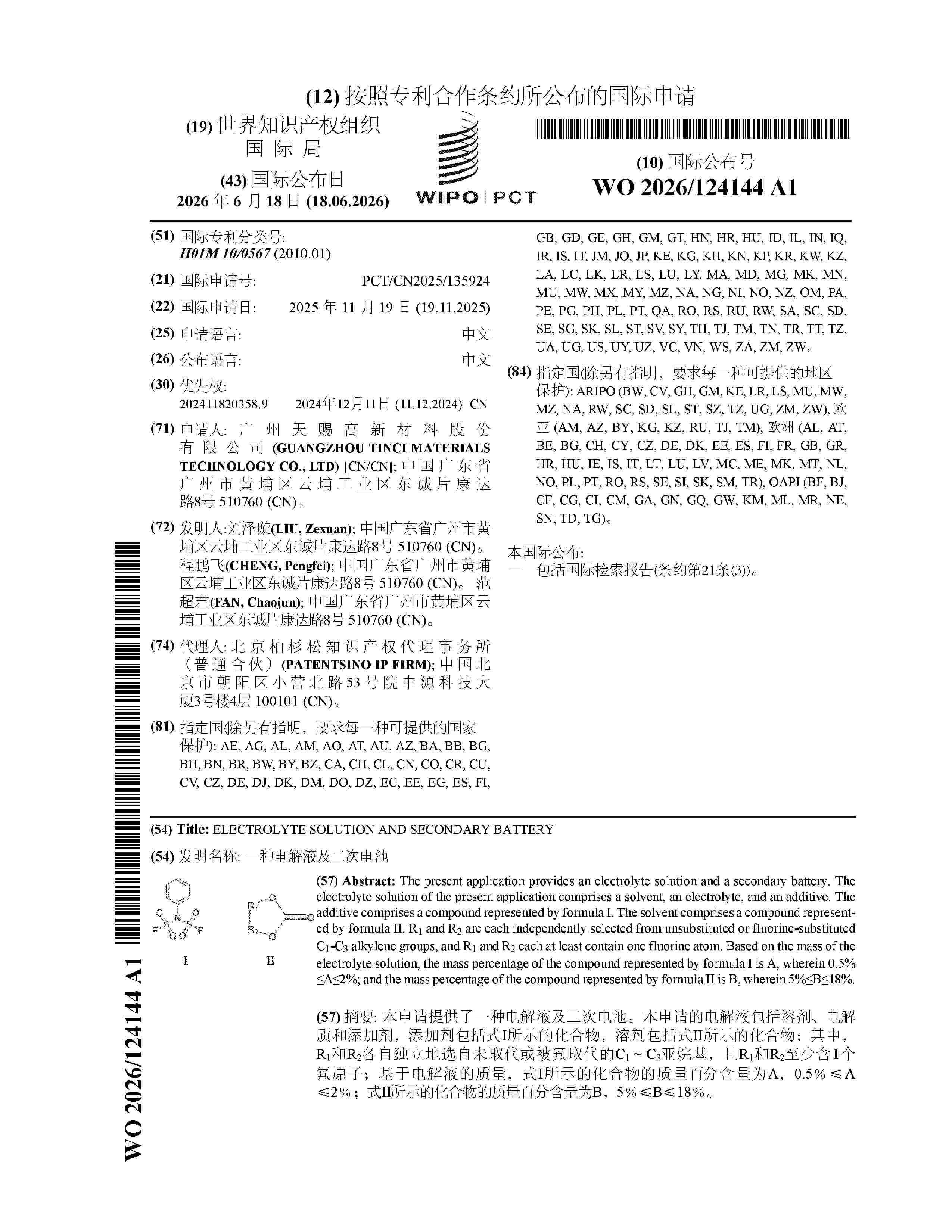
Resumen de: WO2026124144A1
The present application provides an electrolyte solution and a secondary battery. The electrolyte solution of the present application comprises a solvent, an electrolyte, and an additive. The additive comprises a compound represented by formula I. The solvent comprises a compound represented by formula II. R1 and R2 are each independently selected from unsubstituted or fluorine-substituted C1-C3 alkylene groups, and R1 and R2 each at least contain one fluorine atom. Based on the mass of the electrolyte solution, the mass percentage of the compound represented by formula I is A, wherein 0.5%≤A≤2%; and the mass percentage of the compound represented by formula II is B, wherein 5%≤B≤18%.
Resumen de: US20260166978A1
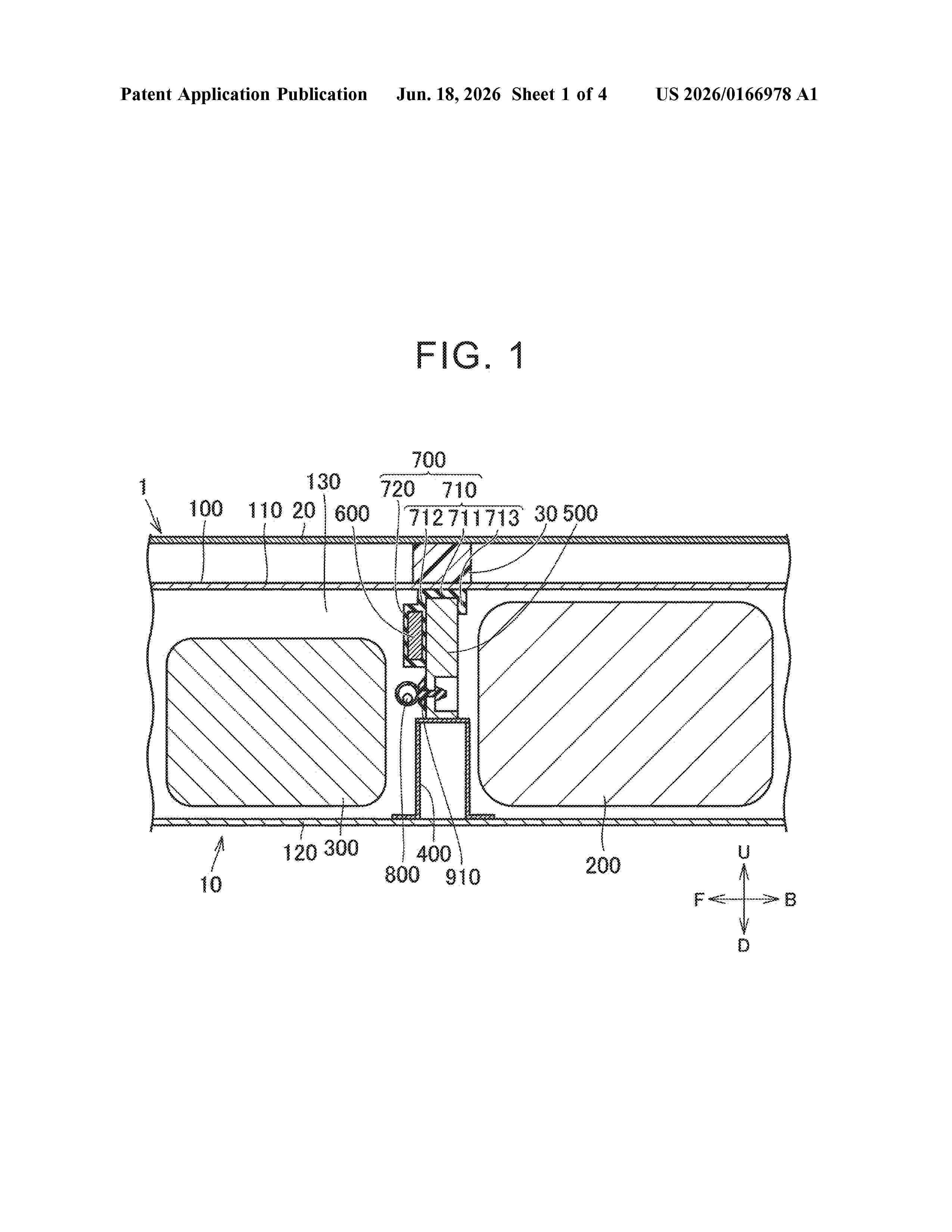
0000 In an energy storage device, a reinforcing member is disposed between an energy storage module and an electrical device. An intermediate member is disposed between the energy storage module and the electrical device. The intermediate member is disposed between an upper plate and the reinforcing member. An electrical connection member electrically connects the energy storage module and the electrical device. A holding member includes a retaining portion and a holding portion. The retaining portion is disposed between the upper plate and the intermediate member. The retaining portion retains the intermediate member. The holding portion holds the electrical connection member. The holding portion is in contact with the intermediate member in a horizontal direction.
Resumen de: DE102025150571A1
Die vorliegende Erfindung betrifft ein Batteriepaket sowie ein entsprechendes Fahrzeug. Das Batteriepaket umfasst: eine Oberabdeckung und eine Bodenwanne; eine Batteriezelle, die in einem durch die Oberabdeckung und die Bodenwanne gemeinsam begrenzten Raum angeordnet ist, wobei eine erste Seitenfläche der Batteriezelle mit einer Zellenentgasungsöffnung versehen ist oder die erste Seitenfläche einer Zellenentgasungsöffnung zugewandt ist, wobei die Oberabdeckung und/oder die Bodenwanne einen ersten Seitenabschnitt aufweist, welcher an eine zweite Seitenfläche der Batteriezelle angrenzt, wobei die erste Seitenfläche und die zweite Seitenfläche einander benachbart sind, wobei der erste Seitenabschnitt mit einem ersten Entgasungskanal zum Sammeln der Entgasung der Batteriezelle versehen ist, und wobei zumindest ein Teilbereich des ersten Entgasungskanals von der Batteriezelle isoliert ist. Die erfindungsgemäße Lösung ermöglicht es, für im Inneren des Batteriepakets erzeugte Gase einen ungehinderten Abführweg bereitzustellen und gleichzeitig die Gesamtstruktur des Batteriepakets möglichst kompakt zu gestalten.
Resumen de: WO2026123902A1
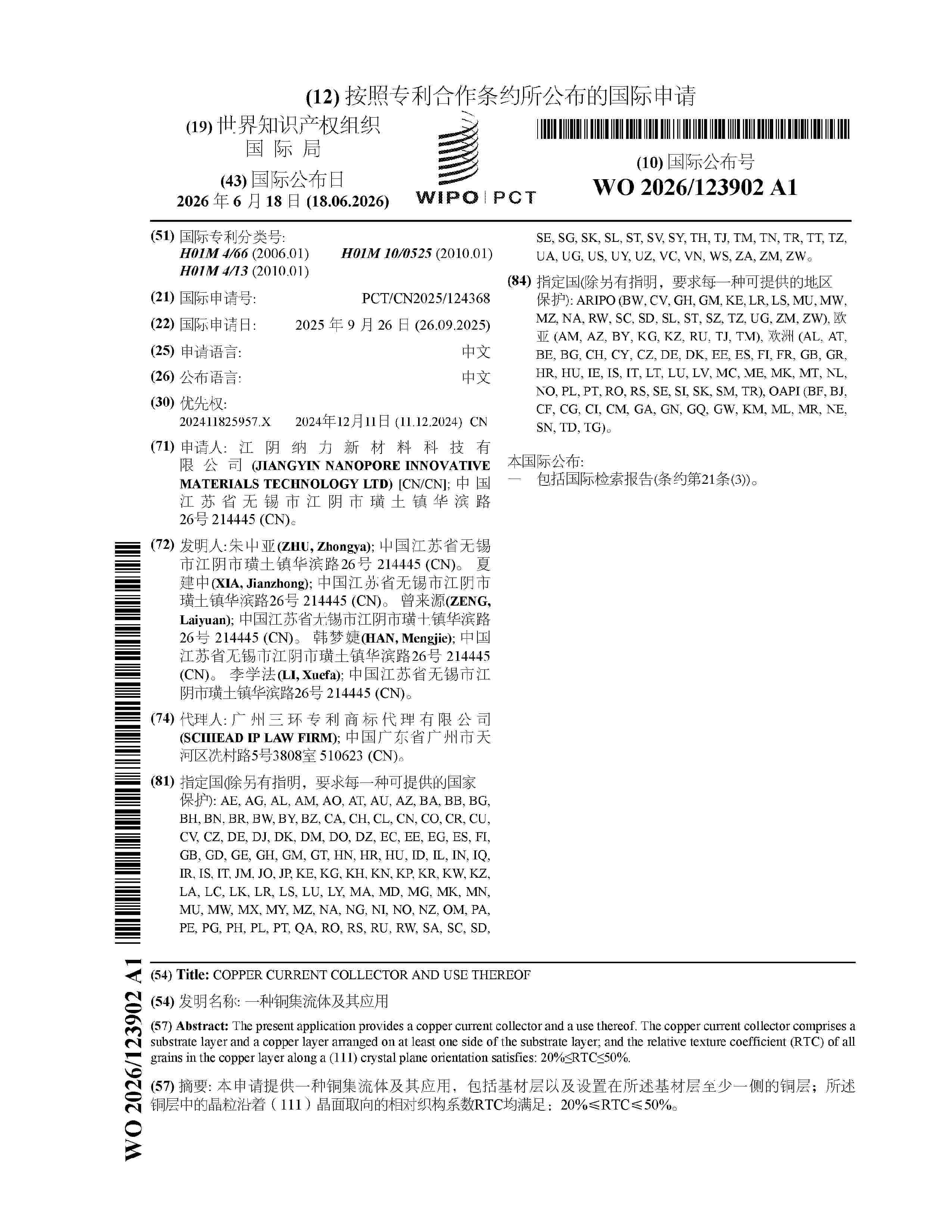
The present application provides a copper current collector and a use thereof. The copper current collector comprises a substrate layer and a copper layer arranged on at least one side of the substrate layer; and the relative texture coefficient (RTC) of all grains in the copper layer along a (111) crystal plane orientation satisfies: 20%≤RTC≤50%.
Resumen de: WO2026123883A1
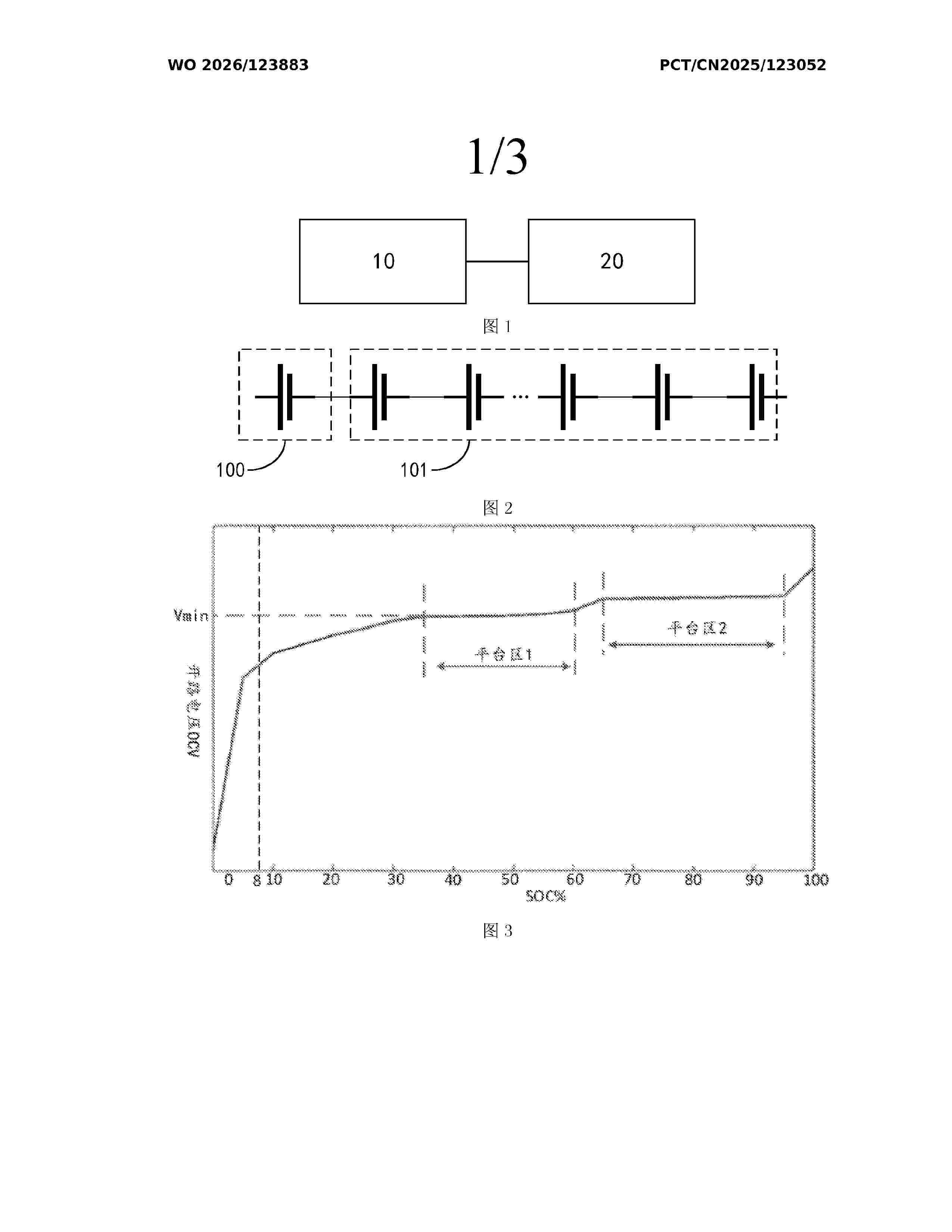
A battery apparatus and a battery pack test method. The battery apparatus comprises a battery pack (10) and a battery management system (20). The battery pack (10) comprises a first battery set (100) having no platform area and a second battery set (101) having a platform area, and the first battery set (100) and the second battery set (101) are connected in series. The battery management system (20) is used for, on the basis of state of charge change data of the first battery set (100) in a current voltage interval, determining the current phase change capacity of the first battery set (100), so as to obtain the current battery state of health of the battery pack (10) on the basis of the battery state of health corresponding to a target phase change capacity matching the current phase change capacity among preset phase change capacities. The described battery apparatus and the battery pack test method can improve the accuracy of a battery pack test result.
Resumen de: WO2026123742A1
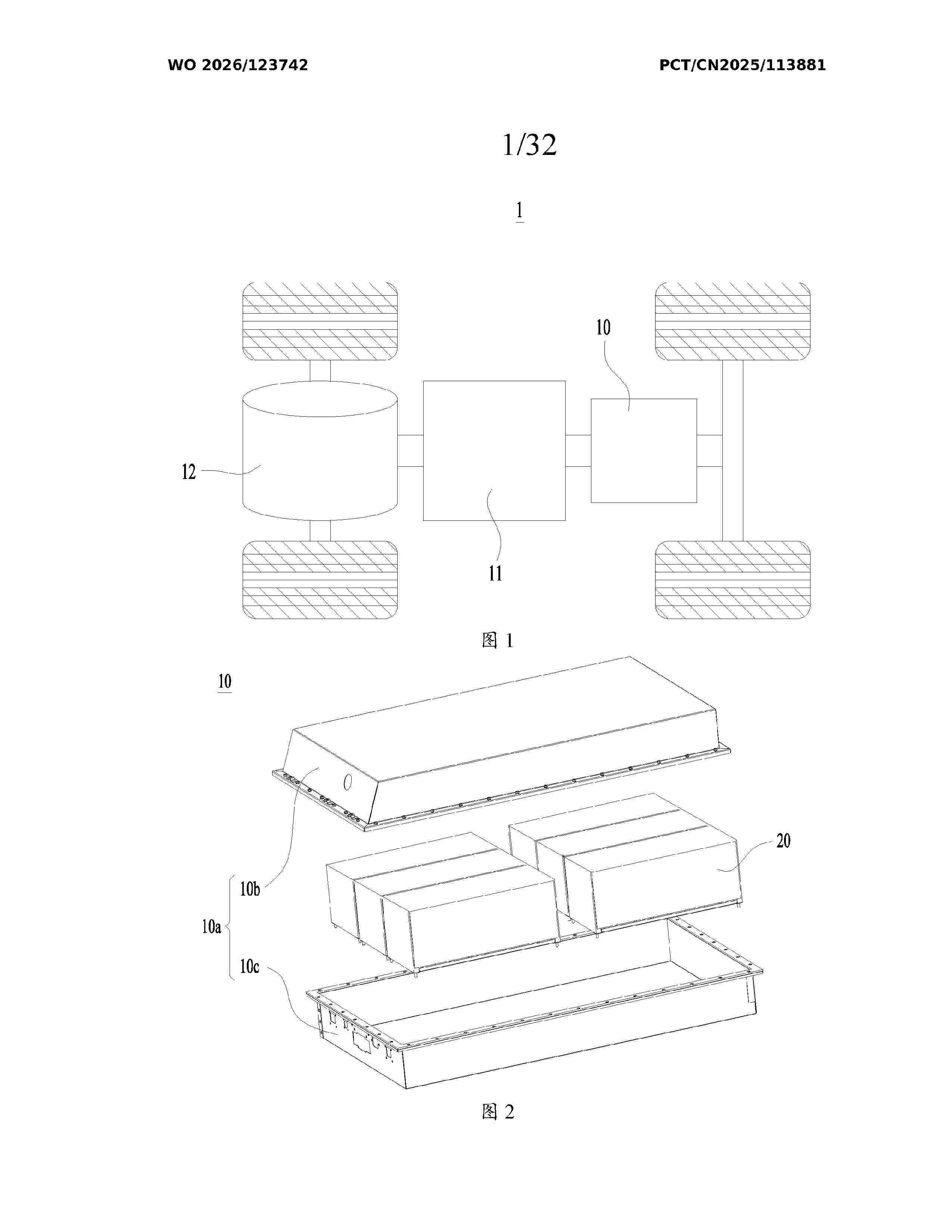
The present application provides an electrode assembly, a battery cell, a battery apparatus, an electrical apparatus, and a manufacturing method. The electrode assembly comprises a first electrode sheet, a second electrode sheet, a first solid-state electrolyte layer, and a first insulating layer. The first electrode sheet comprises a first main body portion and a first tab. The first electrode sheet and the second electrode sheet have opposite polarities. The second electrode sheet comprises a second main body portion. The area of the second main body portion is greater than the area of the first main body portion. The second main body portion comprises an edge extension portion extending beyond the first main body portion. The first solid-state electrolyte layer is disposed between the first main body portion and the second main body portion. The first insulating layer is disposed corresponding to the edge extension portion. The first insulating layer is disposed surrounding the first main body portion. The first insulating layer enclosingly forms an accommodating space. A part of the first main body portion is located in the accommodating space. The first insulating layer comprises a tab lead-out channel. The tab lead-out channel is in communication with the accommodating space. The first tab is led out from the tab lead-out channel.
Resumen de: WO2026123545A1
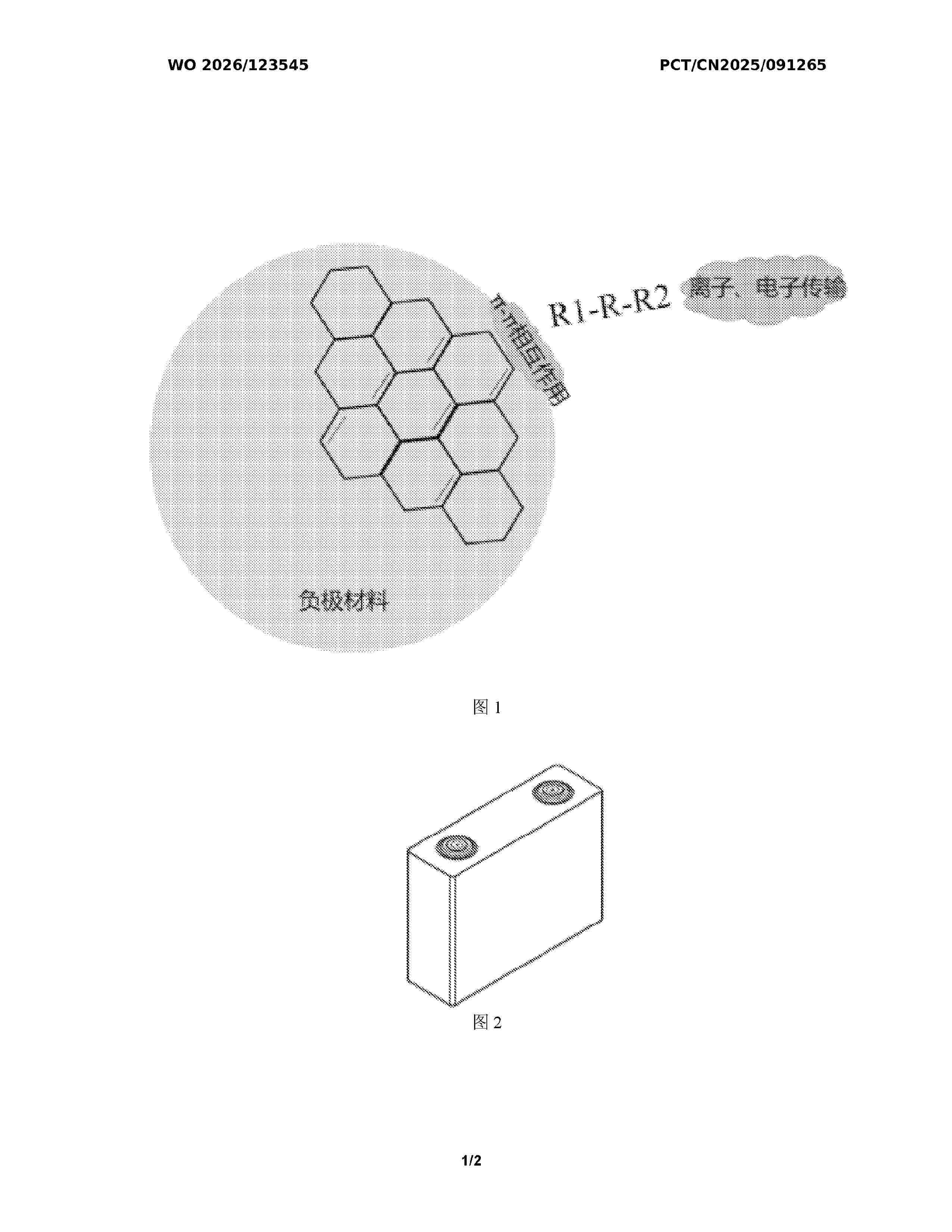
The present application relates to the technical field of batteries, and in particular relates to a battery cell, a negative electrode sheet, a battery device, an energy storage device, and an electric device. The battery cell comprises a negative electrode sheet, wherein the negative electrode sheet comprises a negative electrode current collector and an interface layer disposed on at least one side of the negative electrode current collector; the interface layer comprises a negative electrode material and a binder; the negative electrode material comprises unsaturated bonds; and the binder comprises a main polymer, and an aromatic group and an electrically/ionically conductive segment which are grafted onto the main polymer. In the present application, the electron/ion transport performance of the negative electrode sheet can be effectively improved after repeated charging and discharging; therefore, a battery exhibits good cycle performance, and also has improved capacity and initial efficiency.
Resumen de: US20260171607A1
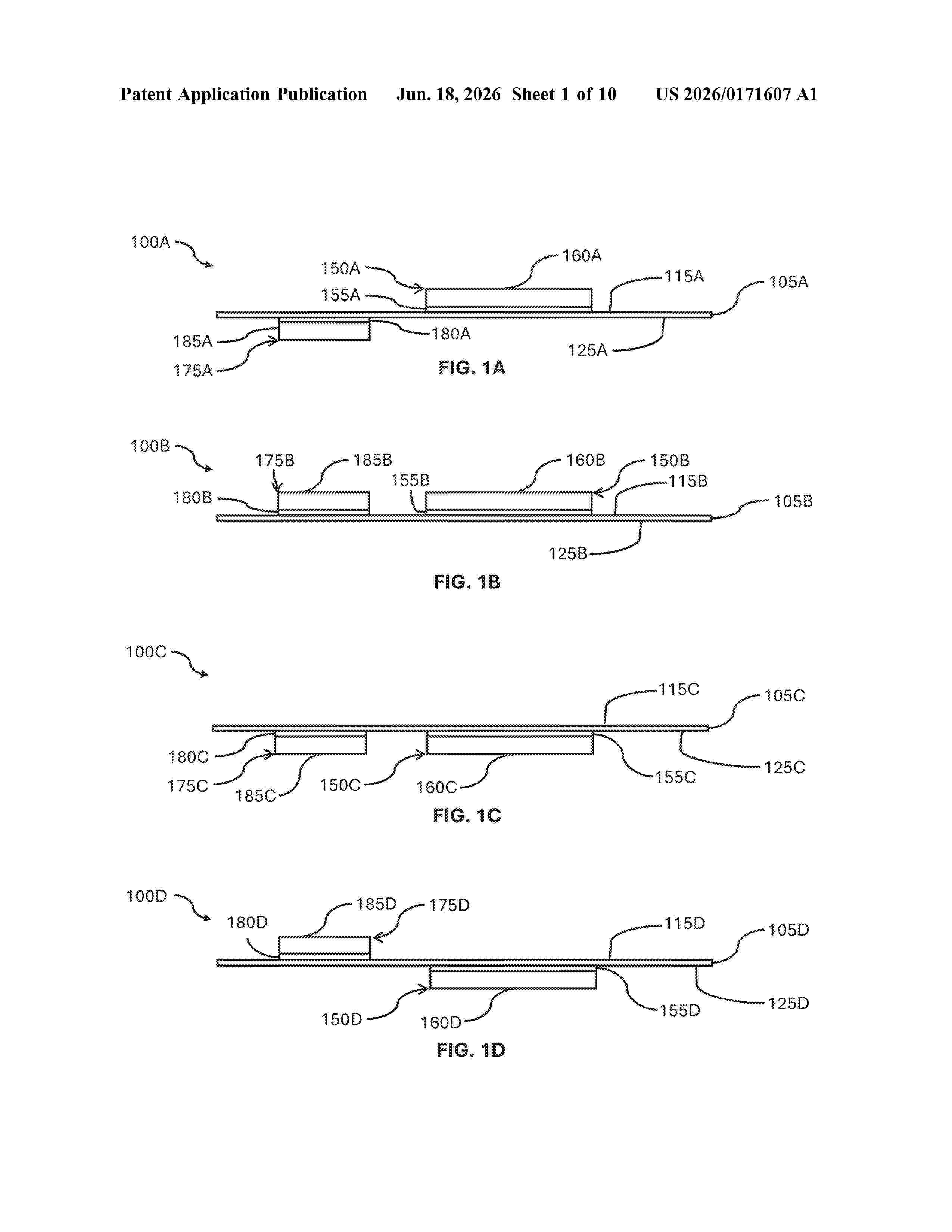
A separator assembly for use in energy storages devices comprising a separator layer and a supporting tape, and methods thereof are disclosed. Separator assemblies utilizing a supporting tape such as a barrier layer and/or a coil core layer provides additional support to prevent electrode buckling and to protect the separator layer from wear-related electrode buckling and puncture over the life of the energy storage device.
Resumen de: WO2026125340A1
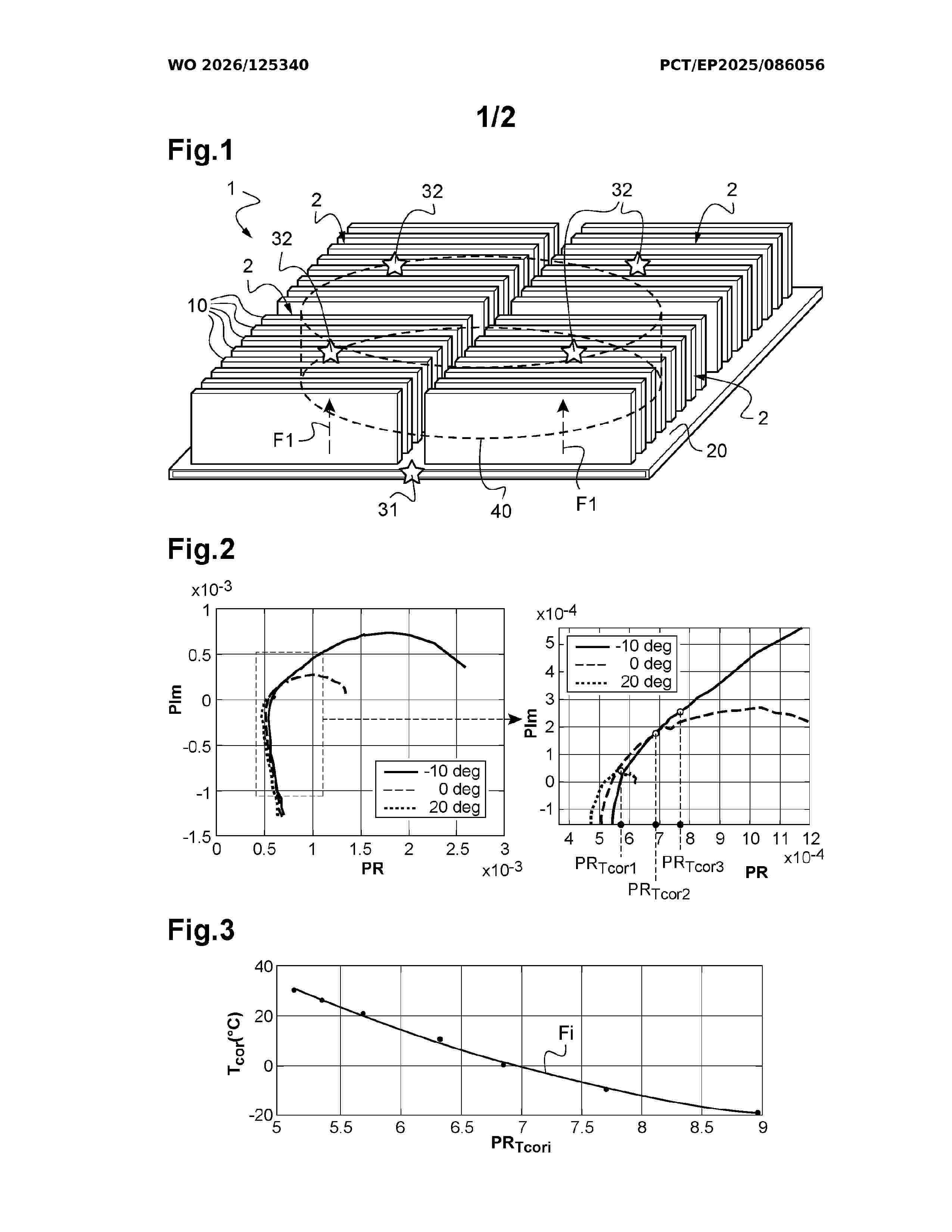
The invention relates to a method for determining a temperature datum of an electrochemical cell of a storage battery, comprising steps of: - applying a sinusoidal or square-wave voltage at a predetermined frequency across the terminals of the electrochemical cell, - measuring the resulting voltage and current across the terminals of the electrochemical cell, - calculating a value (PR) relating to the impedance of the electrochemical cell, - determining the temperature datum on the basis of the calculated value.
Nº publicación: US20260171548A1 18/06/2026
Solicitante:
TOYOTA JIDOSHA KK [JP]
TOYOTA JIDOSHA KABUSHIKI KAISHA
Resumen de: US20260171548A1
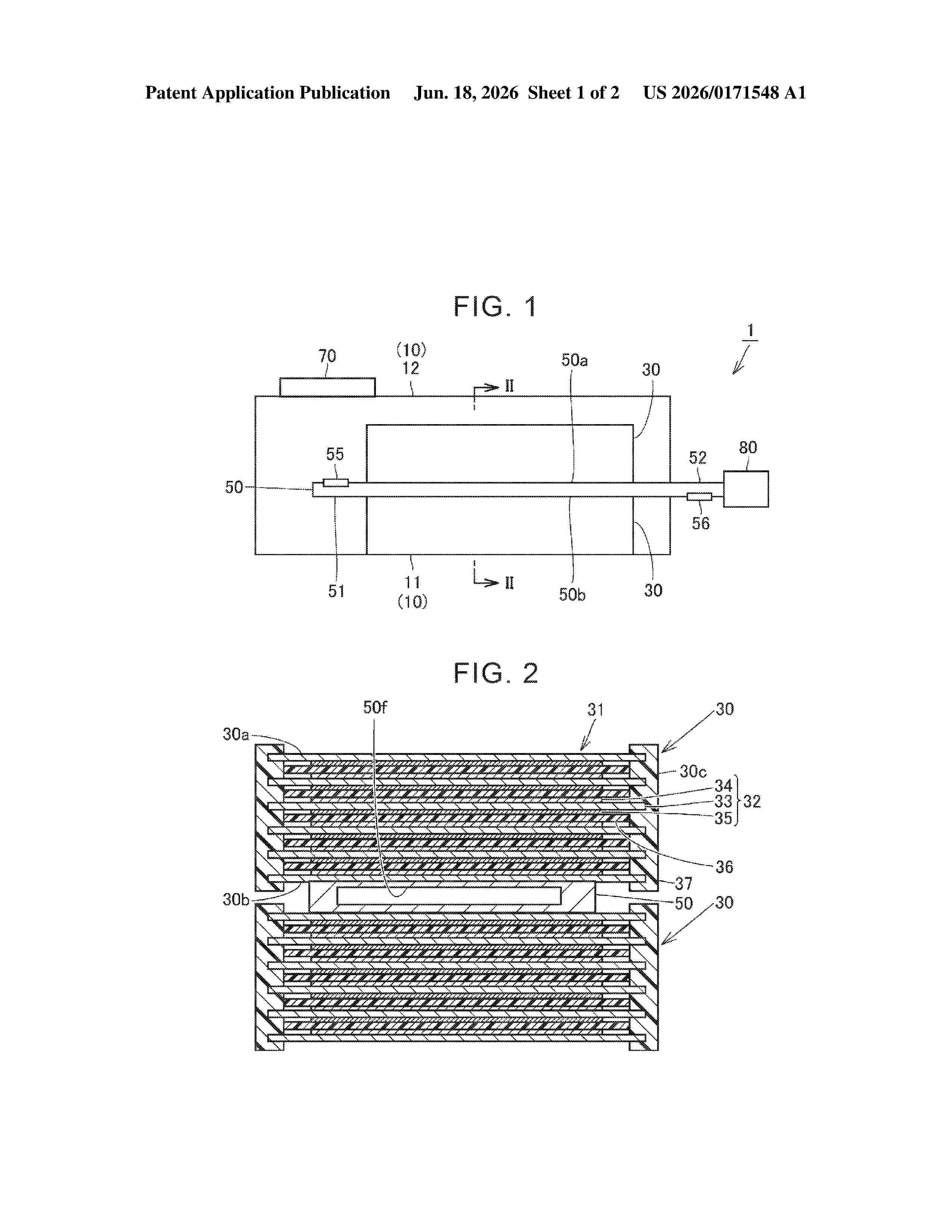
0000 An energy storage device includes: a plurality of bipolar batteries arranged in an arrangement direction; a housing case that houses the bipolar batteries; and a cooler disposed between adjacent ones of the bipolar batteries in the arrangement direction and including a flow path provided therein. When viewed in the arrangement direction, the cooler includes a first protruding portion that protrudes into the housing case from between the bipolar batteries, and a second protruding portion that protrudes out of the housing case. A weak portion configured to rupture at a pressure lower than a pressure resistance limit of the housing case is provided on each of the first protruding portion and the second protruding portion.
 BOPI
BOPI
 Sede Electrónica