Si deseas distinguir tus productos, servicios o ambos de los de otra empresa, es posible que necesites una marca o nombre comercial. Descubre qué son, en qué consiste su procedimiento de registro y qué implica.

Información sobre los plazos de presentación de solicitudes de transformación de marcas de la Unión Europea en marca nacional española. Más información


Si tienes un nuevo dispositivo, producto o procedimiento que resuelva un problema técnico o tenga una ventaja práctica, existen distintas formas de protegerlo en España y en otros países. Descubre cómo hacerlo.

¿Tu innovación reside en la estética, la ornamentación o la apariencia de tu producto? Protégela mediante un diseño industrial. Descubre qué derechos confiere el registro y cómo realizar la tramitación.

Las indicaciones geográficas protegen el nombre de un producto originario de una zona geográfica, a la cual le debe una determinada calidad, reputación u otra característica. Descubre qué son, en qué consiste su procedimiento de registro y qué beneficios conceden.

Las patentes publicadas en todo el mundo son una valiosa fuente de información científica, técnica y comercial.

Si eres emprendedor/a o una empresa y quieres potenciar y mejorar la rentabilidad de tu negocio protegiendo de forma adecuada los activos intangibles de tu organización, en este espacio encontrarás lo necesario.


 1500
resultados
1500
resultados
 Última actualización
27/06/2026 [07:57:00]
Última actualización
27/06/2026 [07:57:00]


 Resultados 600 a 625 de 1500

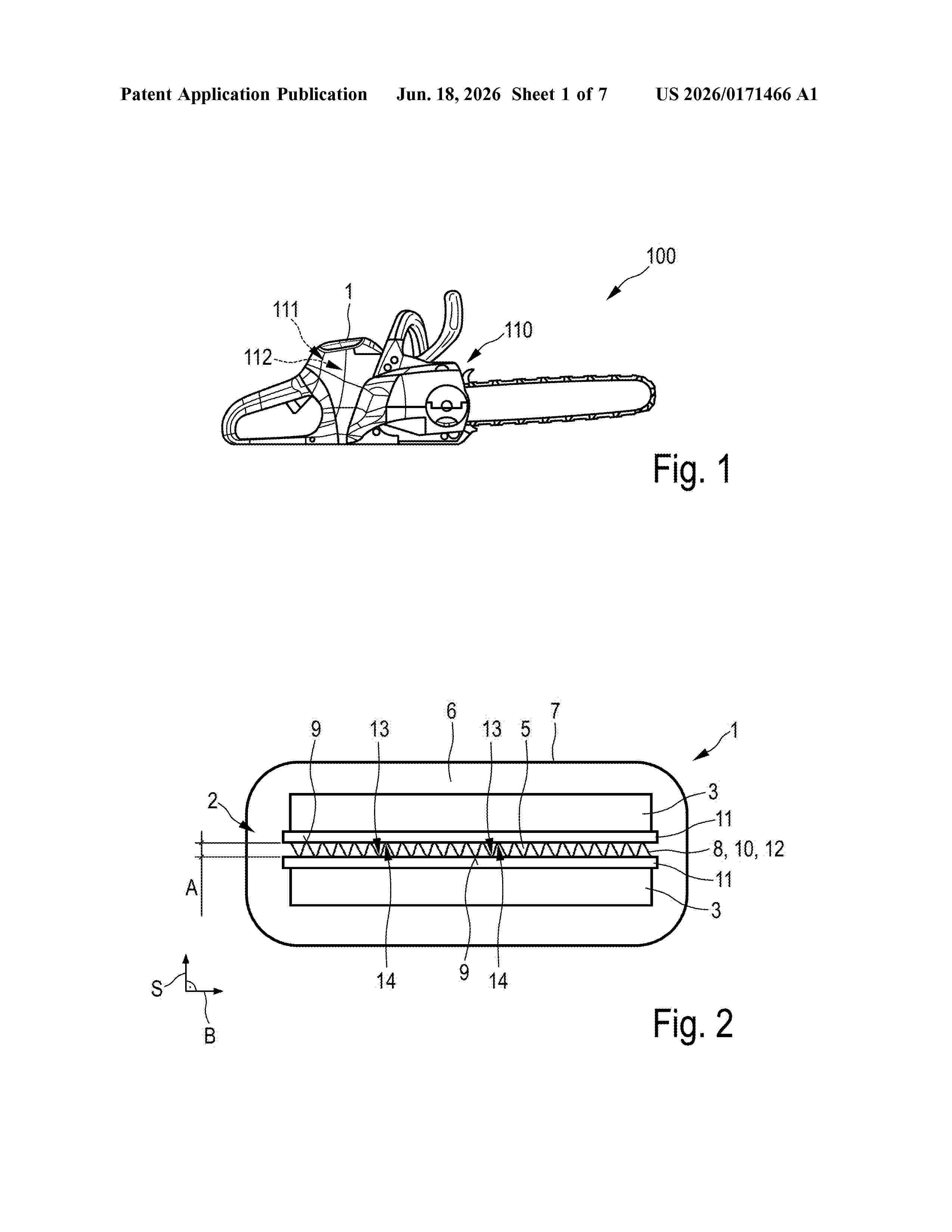
Resumen de: US20260171466A1
0000 A battery pack for a machining system has a cell assembly, a housing interior for holding the cell assembly, and a housing delimiting the housing interior. The cell assembly has a pretensioning device. The pretensioning device is designed to generate a pretensioning force acting on a solid-state battery cell of the cell assembly such that the pretensioning force does not fall below a specified minimum value when the housing expands relative to the cell assembly.

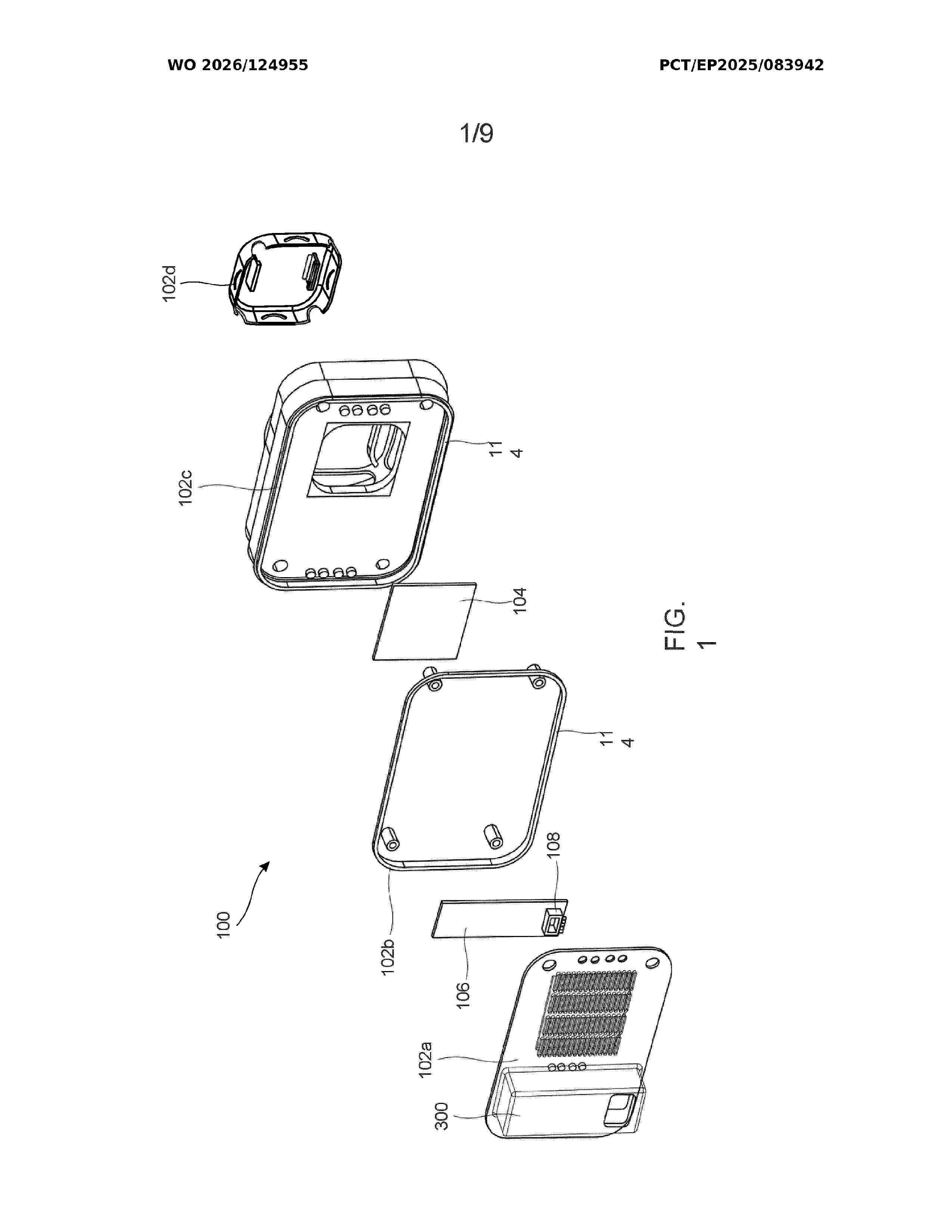
Resumen de: WO2026124955A1
The disclosure relates to a breather or vent cap assembly (100) for an energy storage system (1000), a system (800), and methods thereof. The assembly (100) includes a housing (102) with a permeable membrane (104) for controlled air exchange and water ingress prevention, protected by a grill or mesh structure. A printed circuit board assembly, PCBA, housed within the housing (102) integrates one or more sensors to monitor environmental conditions, detect thermal runaway, and provide early warnings of thermal events. A communication interface (110) transmits sensor data to a monitoring system for real-time analysis and alerts. The assembly (100) combines thermal runaway detection and venting support to ensure safety and reliability of the energy storage system (1000).
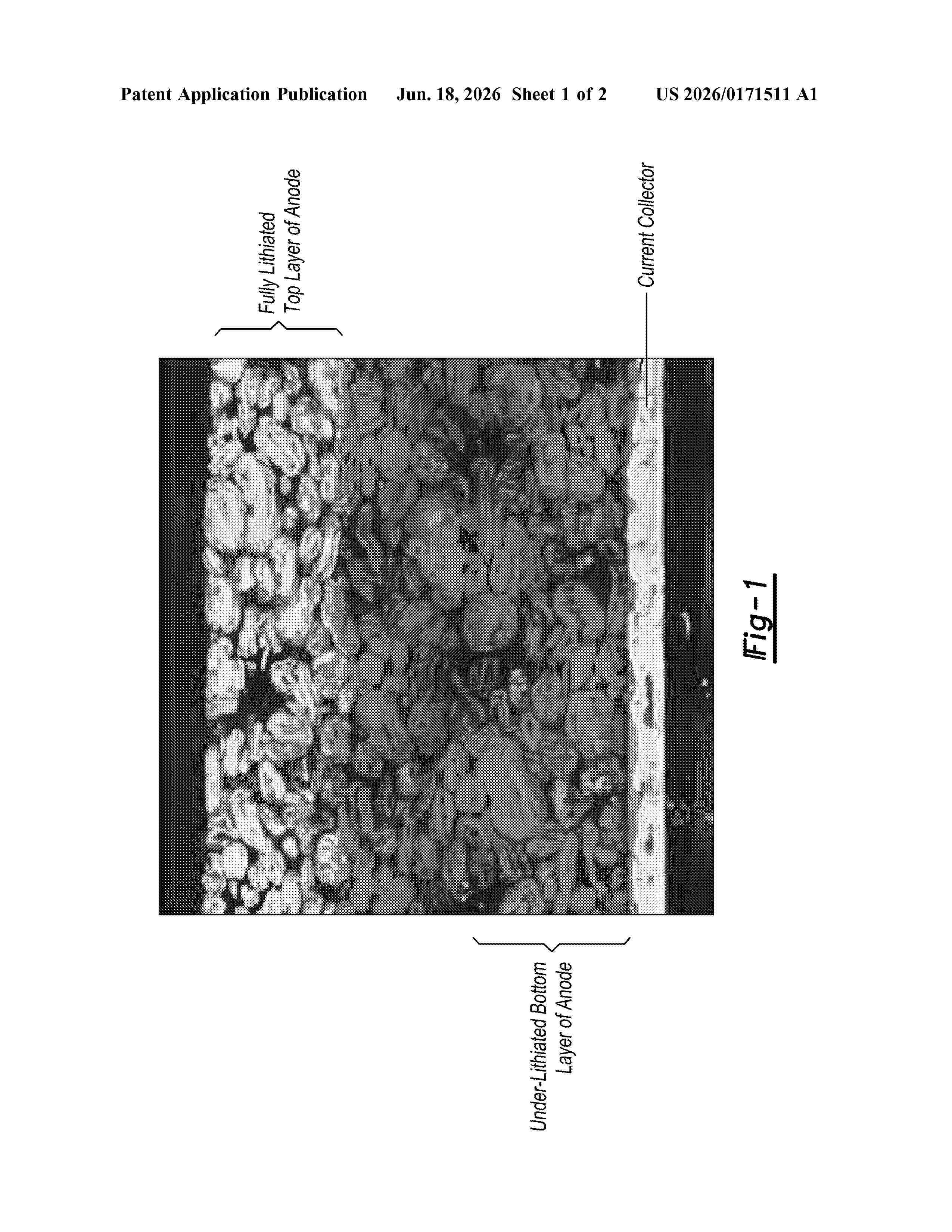
Resumen de: US20260171511A1
0000 A lithium-ion battery cell is presented. The lithium-ion battery cell includes a current collector and an active material layered thereon. The active material layer includes an electrode active material, a conductive agent, and a binder, with a bottom adjacent to the current collector containing a solid electrolyte. The battery cell further includes a liquid electrolyte that permeates the active material layer, increasing ion transport through interaction with the solid electrolyte during cycling.
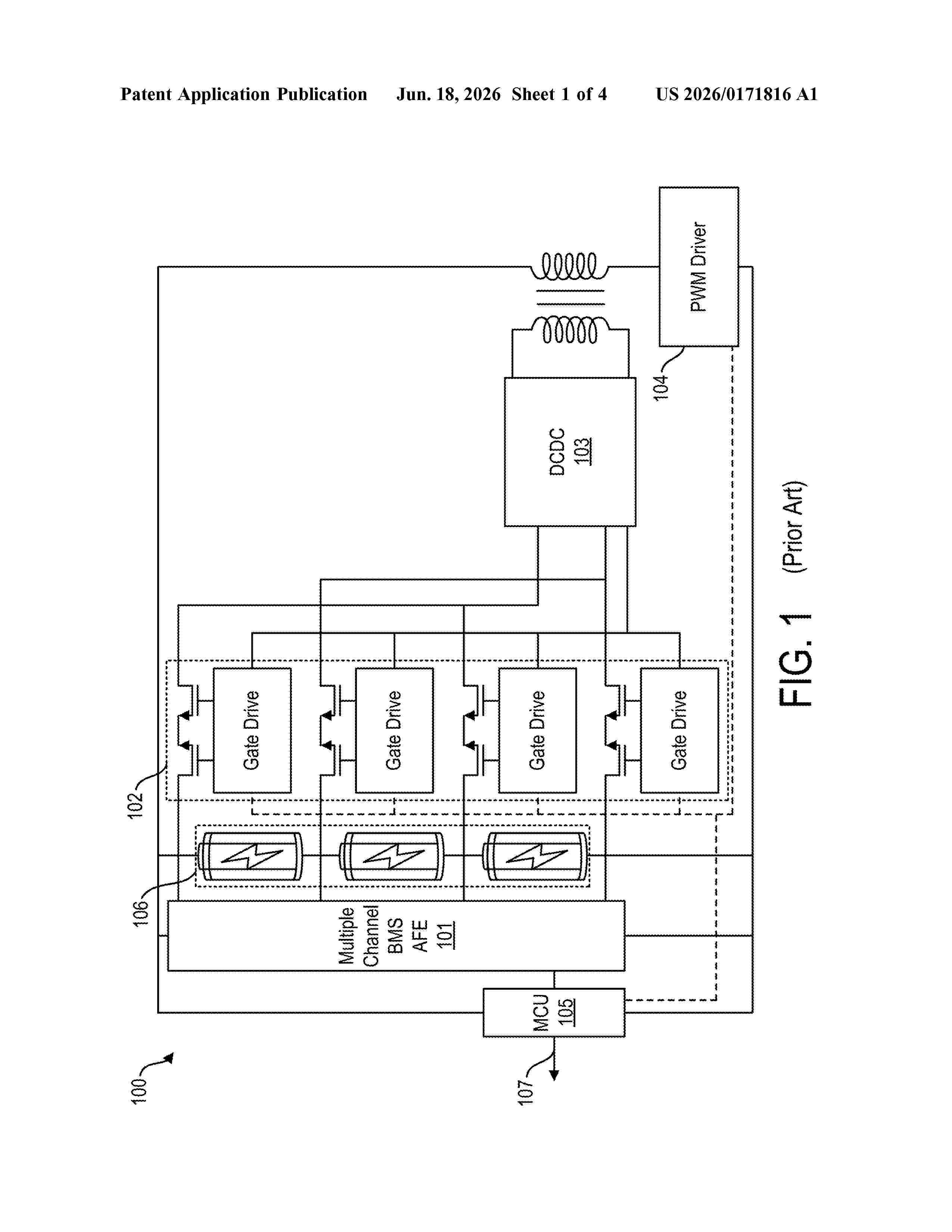
Resumen de: US20260171816A1
A centralized control unit for actively balancing a multi-cell battery pack is provided. The centralized control unit may include an analog-to-digital converter (ADC) to monitor and digitize voltage readings of the battery cells in the multi-cell battery pack, a microcontroller unit (MCU) to process the digitized voltage readings from the ADC, analyze a state of the battery cells, and execute one or more balancing algorithms, and a DC-DC converter to enable redistribution of energy to maintain balance across the battery cells.
Resumen de: US20260171404A1
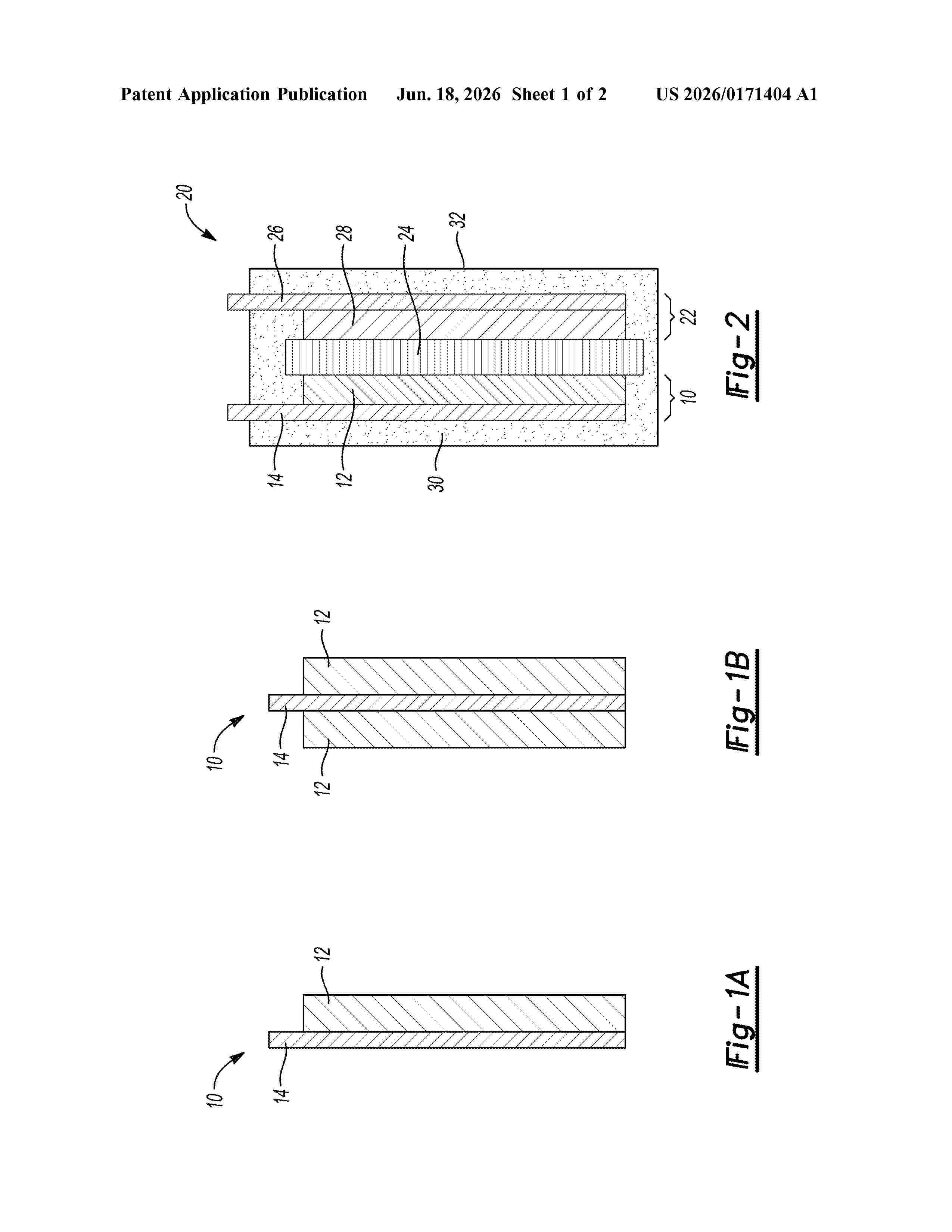
A positive electrode active material for lithium-ion batteries is represented by the formula Li1.01+aMn0.50+bNi0.25+cCoxO2, where 0
Resumen de: WO2026127528A1
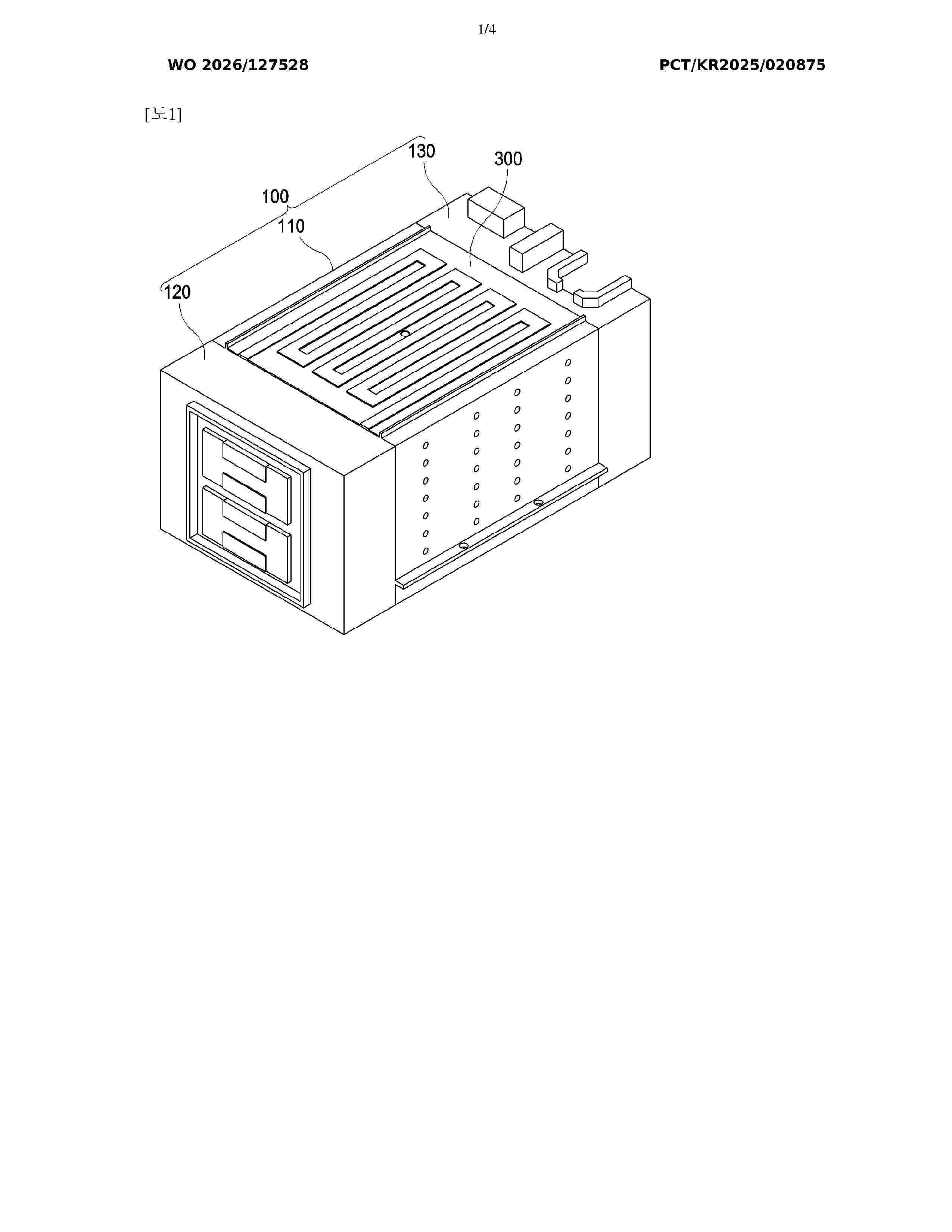
Disclosed is a battery module characterized by comprising: a battery case made of a metallic material and having a battery cell storage unit formed therein; a plurality of battery cells stored in the battery cell storage unit; and a heater attached to the outer circumferential surface of the battery case. Therefore, even though all of the battery cells can be uniformly heated, there is no risk of carbonization and the like caused by separation of a portion of the heater.
Resumen de: WO2026126334A1
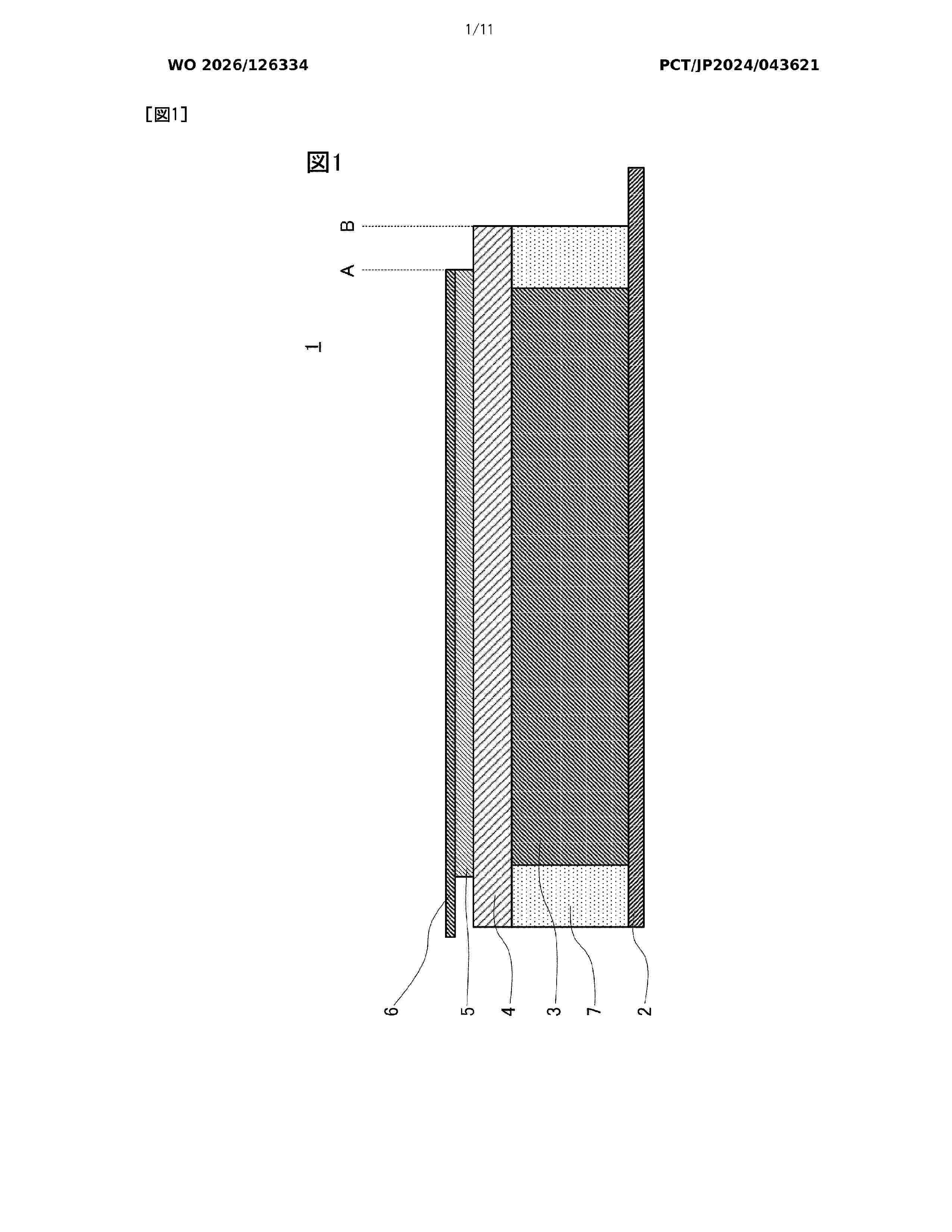
This secondary battery comprises: a positive electrode current collector foil; a positive electrode layer; a positive electrode frame that is disposed on the positive electrode current collector foil so as to surround the positive electrode layer and has electronic insulation properties; an electrolyte layer; a negative electrode layer; and a negative electrode current collector foil. The positive electrode layer is rectangular. The positive electrode frame is divided into a pair of positive electrode frame elements. Each among the pair of positive electrode frame elements is L-shaped so as to correspond to two adjacent side surfaces of the positive electrode layer.
Resumen de: US20260167051A1
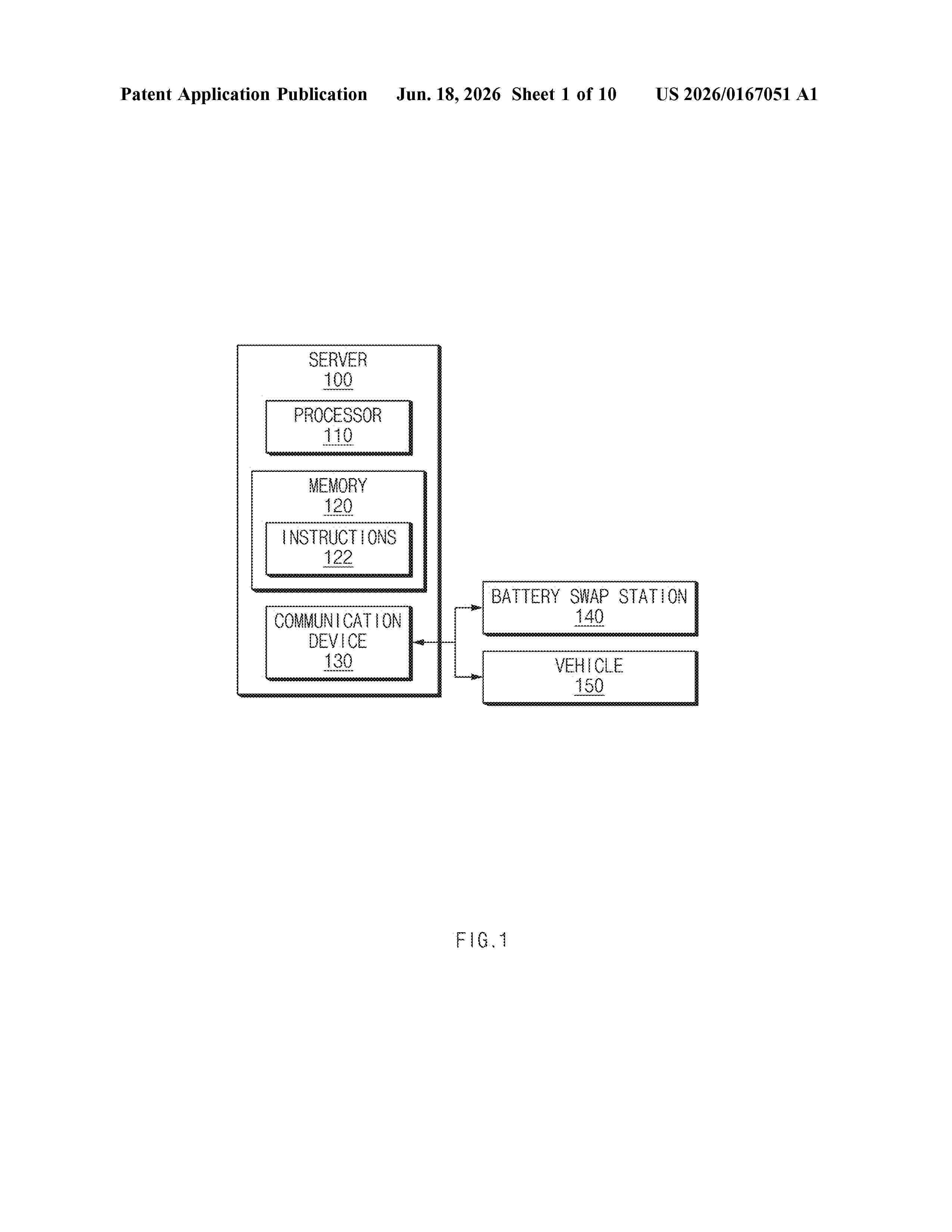
0000 A server includes a memory that stores computer-executable instructions, and at least one processor that accesses the memory to execute the instructions. The at least one processor receives first battery pack information from a vehicle, receives identification information of the battery swap station and second battery pack information from the battery swap station, determines whether a target battery pack associated with the second battery pack information is mountable in or configured to interface with the vehicle based on the first battery pack information and the second battery pack information, and transmits a request to open a slot to the battery swap station to the battery swap station based on a determination that the target battery pack is mountable in or configured to interface with the vehicle.
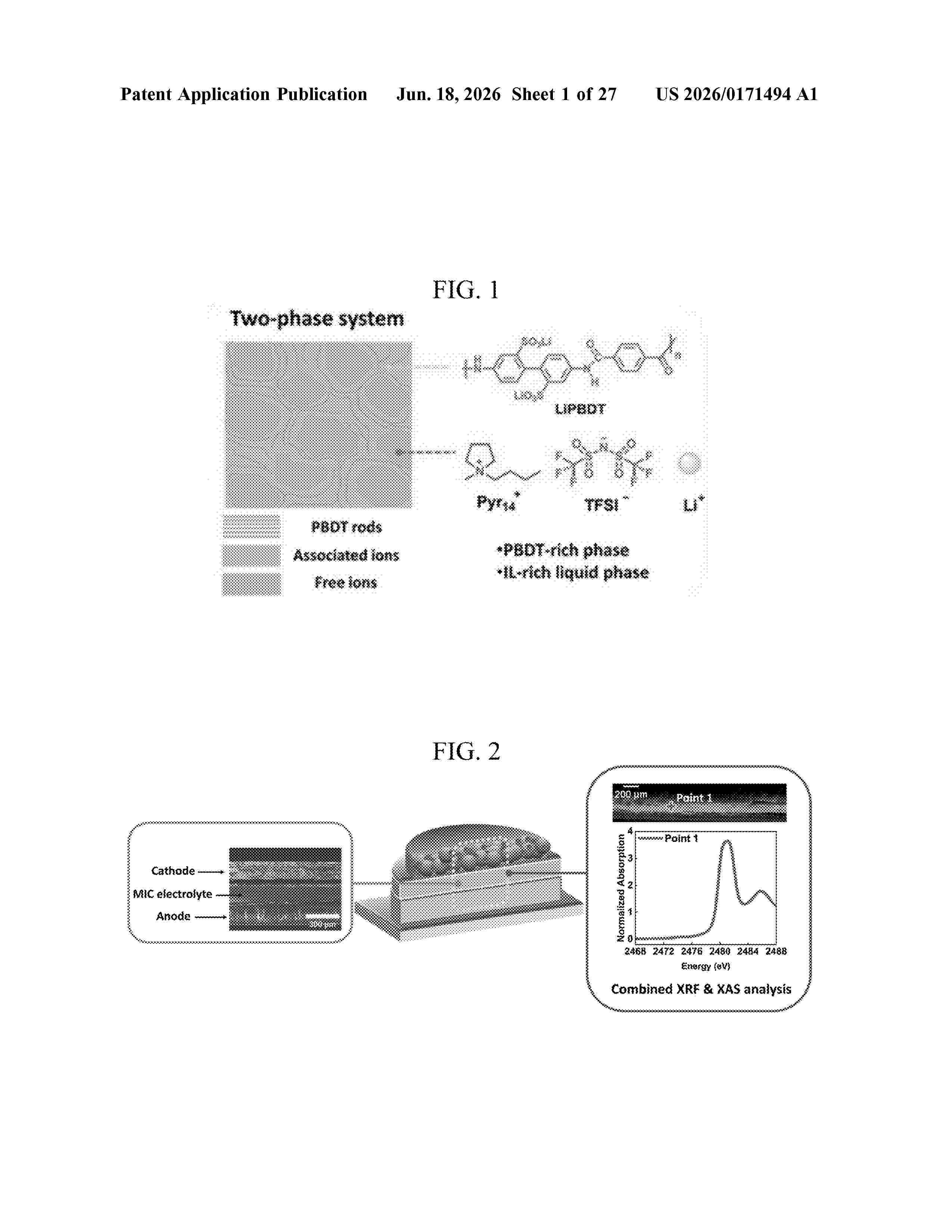
Resumen de: US20260171494A1
Disclosed herein are molecular ionic composite (MIC) polymer electrolytes. The MIC electrolytes described may be formulated to provide enhanced mechanical properties, improved ionic transport, and stable electrochemical performance across a broad temperature range. The compositions and methods presented are adaptable and may be tailored for various battery applications, including but not limited to solid-state lithium batteries or high-voltage lithium batteries.
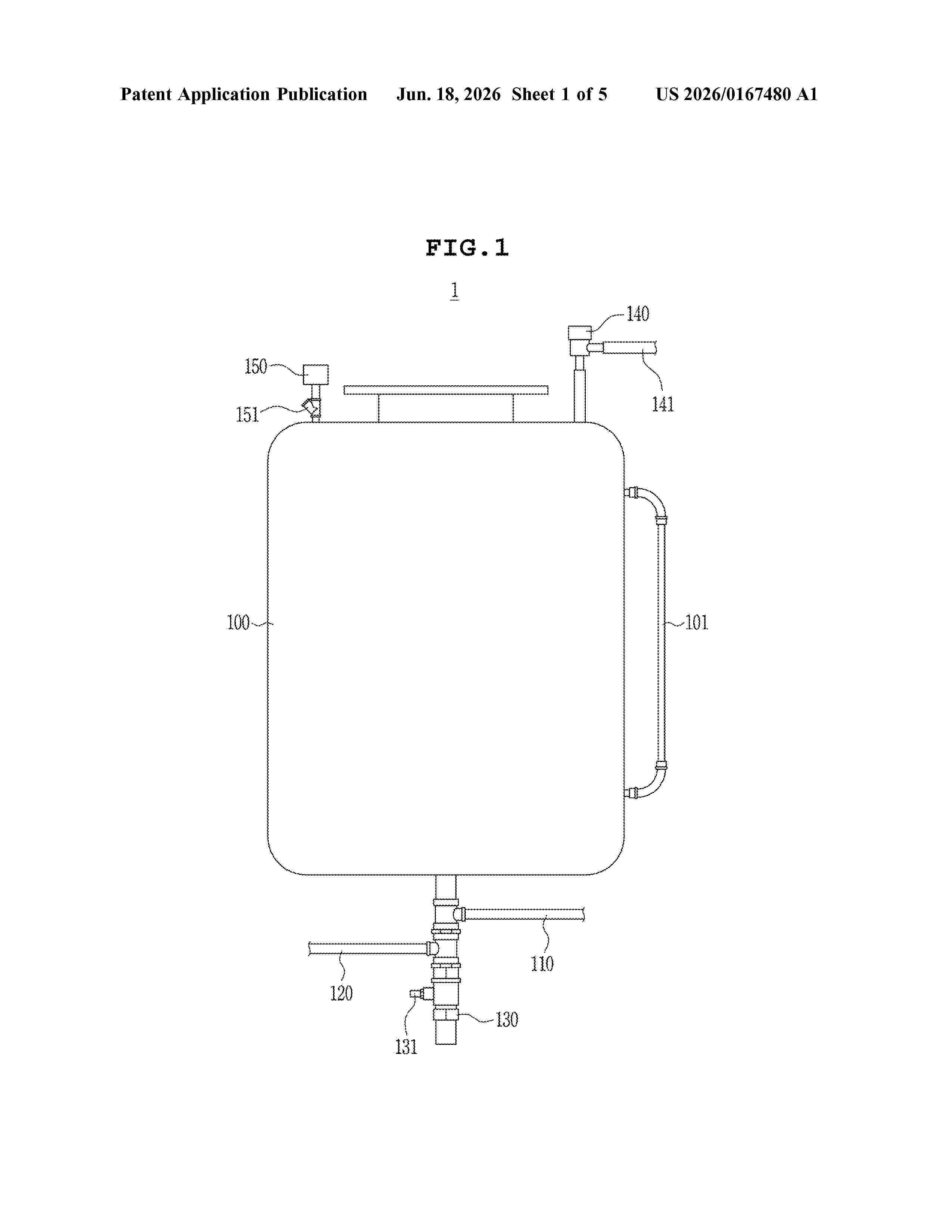
Resumen de: US20260167480A1
0000 Proposed are a supply tank and a method for operating the same. The tank includes a body part configured to have a closed storage space inside, an injection part configured to communicate with the storage space and inject an object into the storage space, a supply part configured to communicate with the storage space and supply the object stored in the storage space to a next process, a discharge part configured to communicate with the storage space and discharge the object stored in the storage space to outside, a pressure maintenance valve connected to the storage space and configured to open or close in conjunction with one of the injection part, the supply part, and the discharge part, and a safety valve connected to the storage space, and configured to open above a set pressure and close below the set pressure.
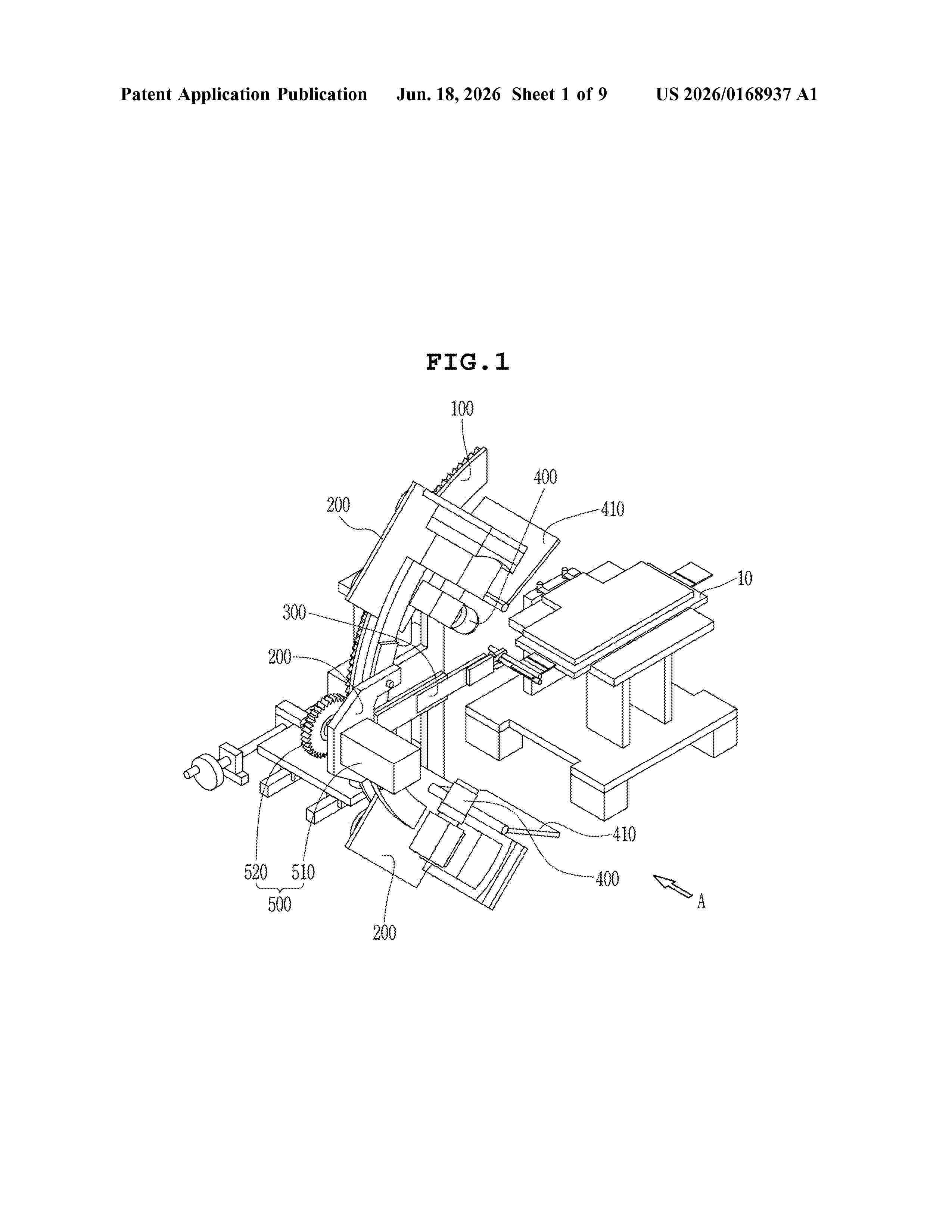
Resumen de: US20260168937A1
Proposed is a welding quality inspection device for a secondary battery. The welding quality inspection device for a secondary battery includes a ring slide portion disposed spaced apart from an inspection target and provided in a form having a predetermined curvature, a carrier portion mounted on the ring slide portion and provided to be movable along the ring slide portion, a gripper portion extending from the carrier portion toward the inspection target and provided to maintain a predetermined distance from the inspection target, a camera portion mounted on the carrier portion to move along the ring slide portion, the camera portion being arranged respectively on an upper side and a lower side of the gripper portion to capture the inspection target from a plurality of angles, and a driving portion for driving the carrier portion.
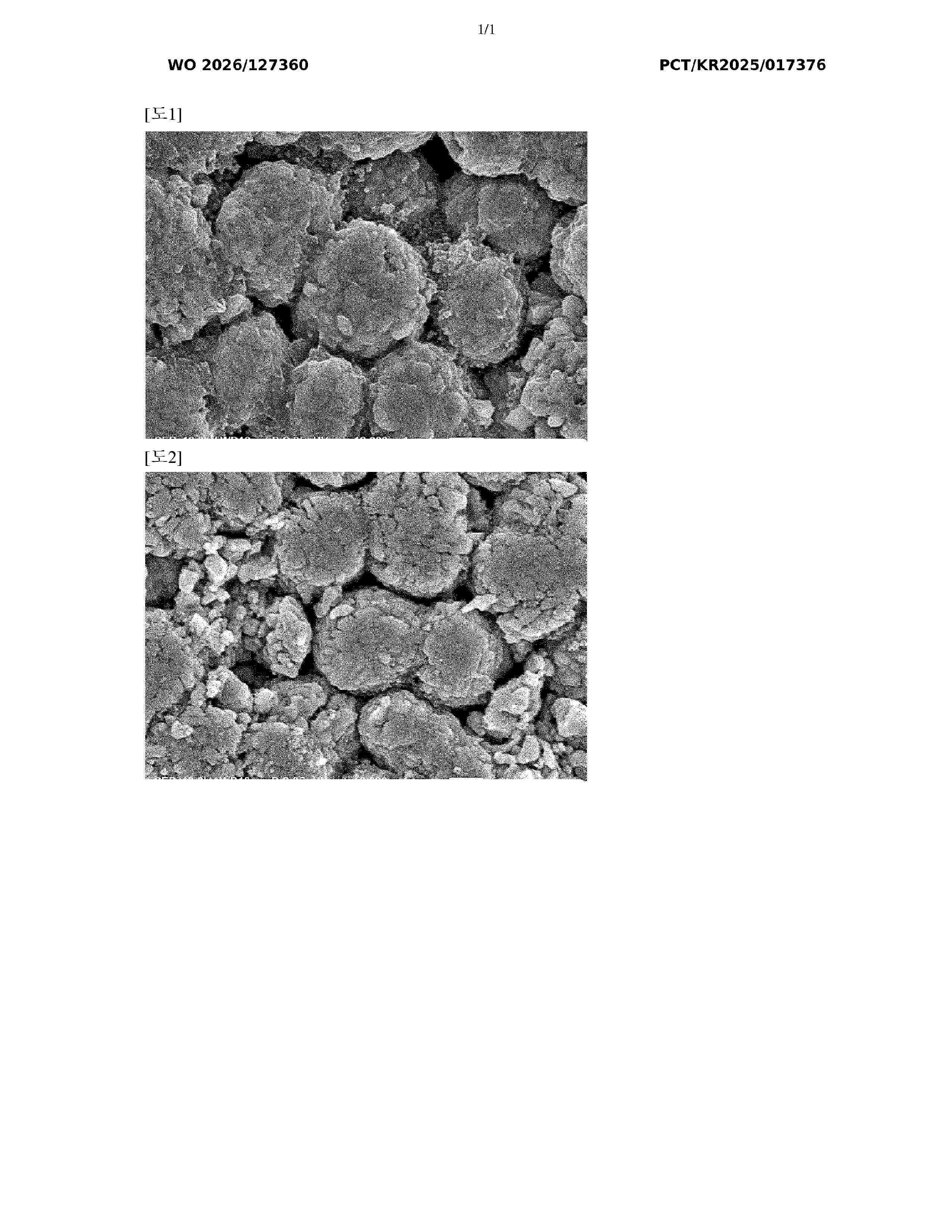
Resumen de: WO2026127360A1
The present invention provides a positive electrode active material comprising Ni and having a particle durability in the range of 20 to 60, the particle durability being defined as (C×S×102)/G, wherein C is an Li site occupancy percentage of Ni2+ (hereinafter, Ni2+ occupancy rate), S is a span value calculated using (D90-D10)/D50 according to particle-size distribution (PSD), and G is a grain size (㎛).
Resumen de: WO2026126655A1
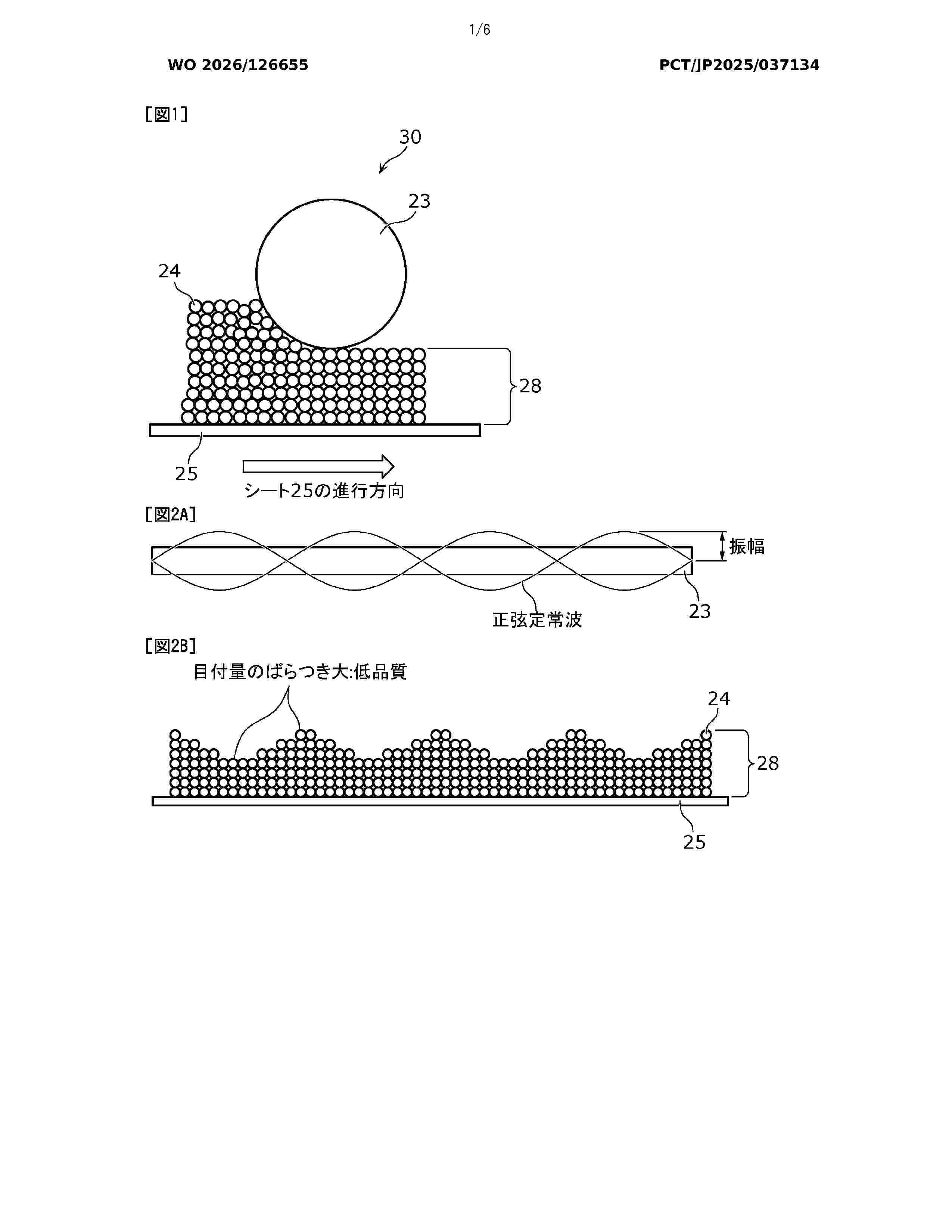
This powder adjustment unit (11) is provided with: a cylindrical squeegee (3); a horn connected to the squeegee (3); a vibrator for exciting waves in the squeegee (3); and fastening parts (12a, 12b). The vibrator is connected to the squeegee (3) via the horn, and the squeegee (3) and the horn are fastened to each other via the fastening parts (12a, 12b).
Resumen de: US20260171512A1
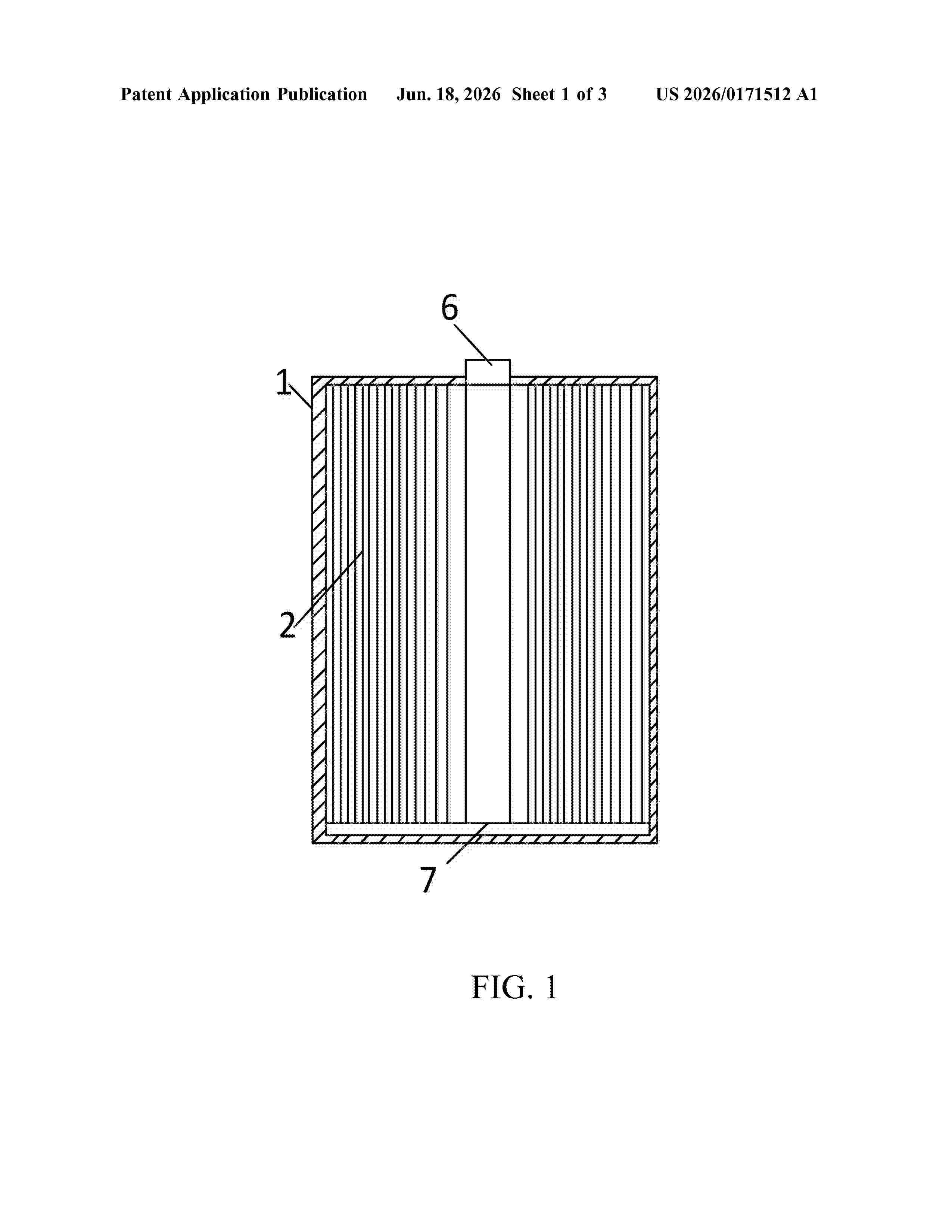
A separator and a preparation method thereof are provided. The separator includes: a first isolation layer, configured to contact with a positive electrode sheet of the lithium battery; a third isolation layer, configured to contact with a negative electrode sheet of the lithium battery; and a second isolation layer, provided between the first isolation layer and the third isolation layer; where the first isolation layer includes a ceramic material, the second isolation layer includes a polymer layer material, and the third isolation layer includes a modified polymer composite layer material.
Resumen de: US20260171623A1
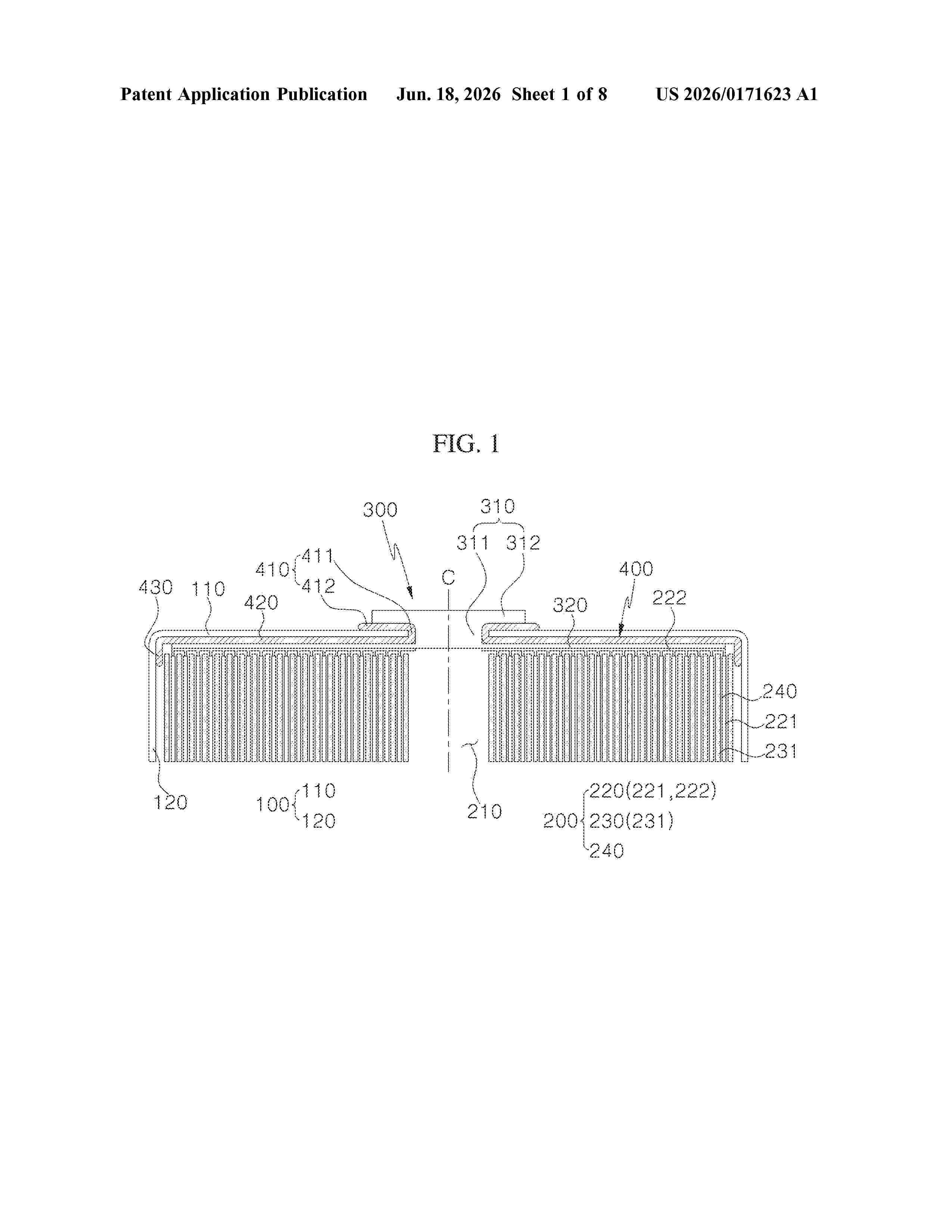
A secondary battery according to various embodiments of the present disclosure may comprise a battery can in which an electrode assembly is housed, and having a terminal hole formed on one side thereof; an electron transfer unit that is disposed inside the battery can, at least a partial region of which protrudes to the outside of the battery can through the terminal hole; and an insulation unit interposed between the electron transfer unit and the battery can.
Resumen de: WO2026125552A1
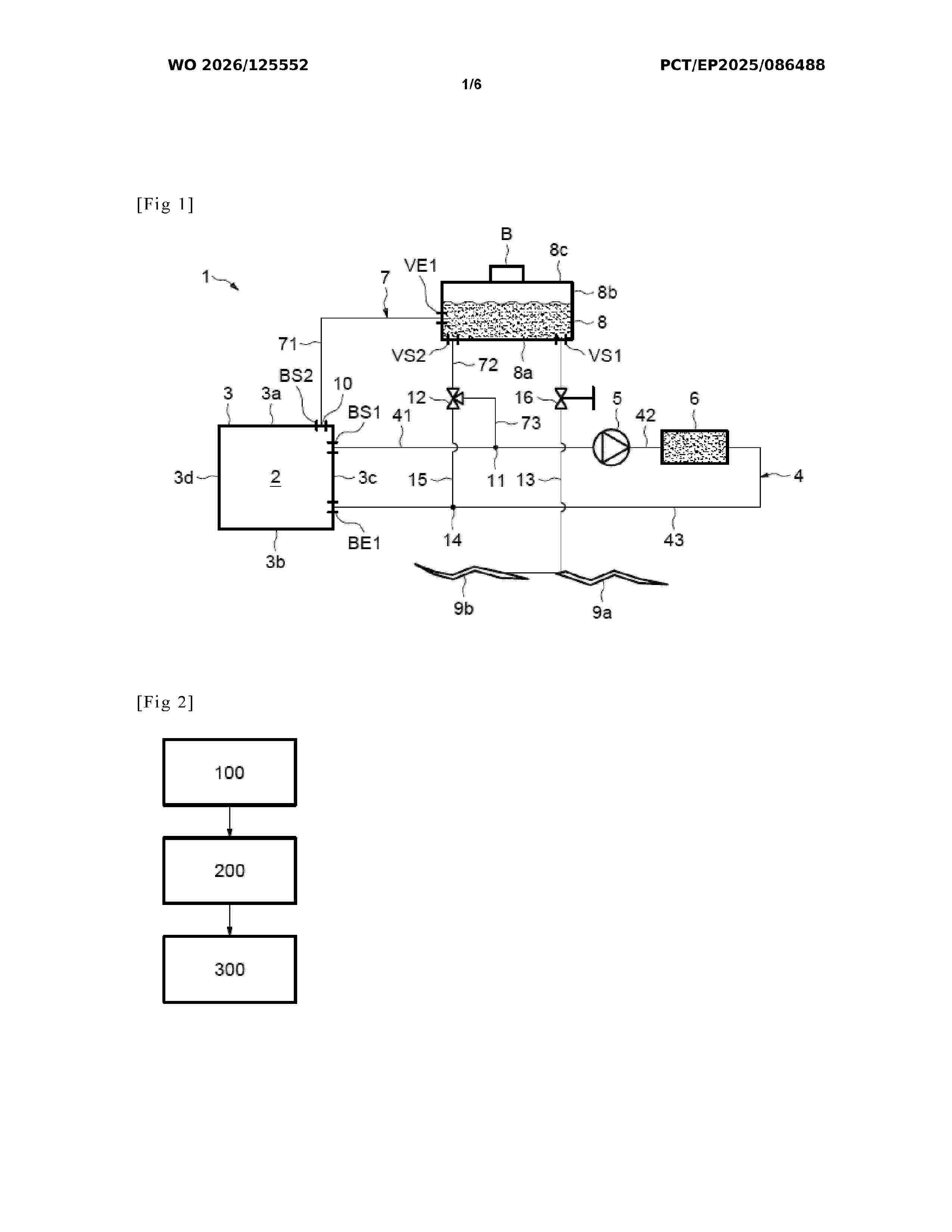
The invention relates to a system for cooling a battery (2) by means of a dielectric fluid intended to circulate in contact with energy storage members of the battery (2), the cooling system (1) comprising the battery (2), a pump (5) for circulating the dielectric fluid between a main outlet (BS1) and a main inlet (BE1) of the battery (2), a heat exchanger (6) intended to cool the dielectric fluid, an expansion vessel (8), at least one variable-volume tank (9a, 9b) connected to the expansion vessel (8), and an isolation valve (16) designed to allow the selective flow of dielectric fluid between the expansion vessel (8) and the variable-volume tank (9a, 9b).
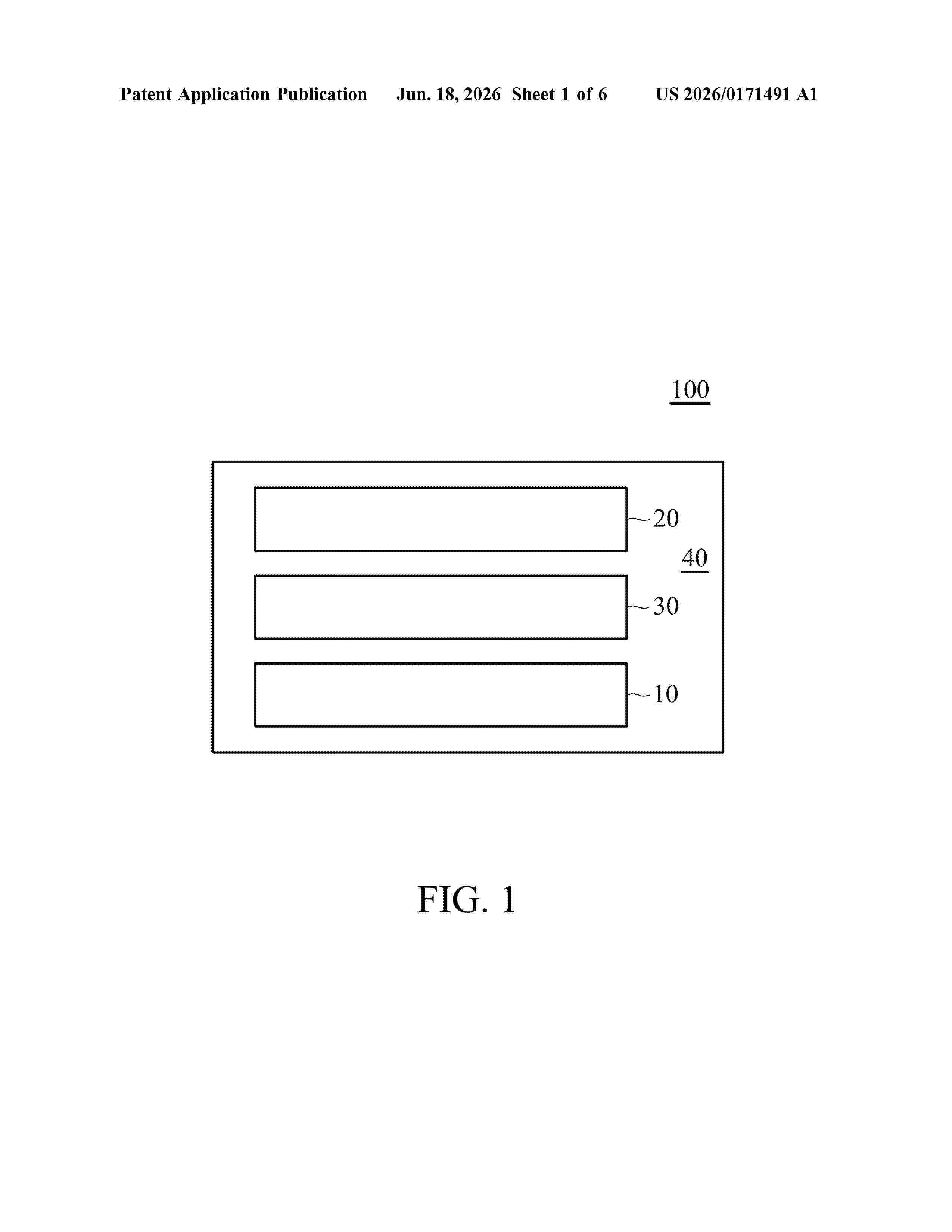
Resumen de: US20260171491A1
An electrolyte composition includes a solvent, a lithium salt, a diluent, a cationic ring-opening polymerization initiator, and a non-phosphorus polymer. The non-phosphorus polymer has repeating units represented by formula (I), wherein n=30-1200, and based on a total weight of the electrolyte composition being 100 wt %, the electrolyte composition includes 0.5-10 wt % of the non-phosphorus polymer.
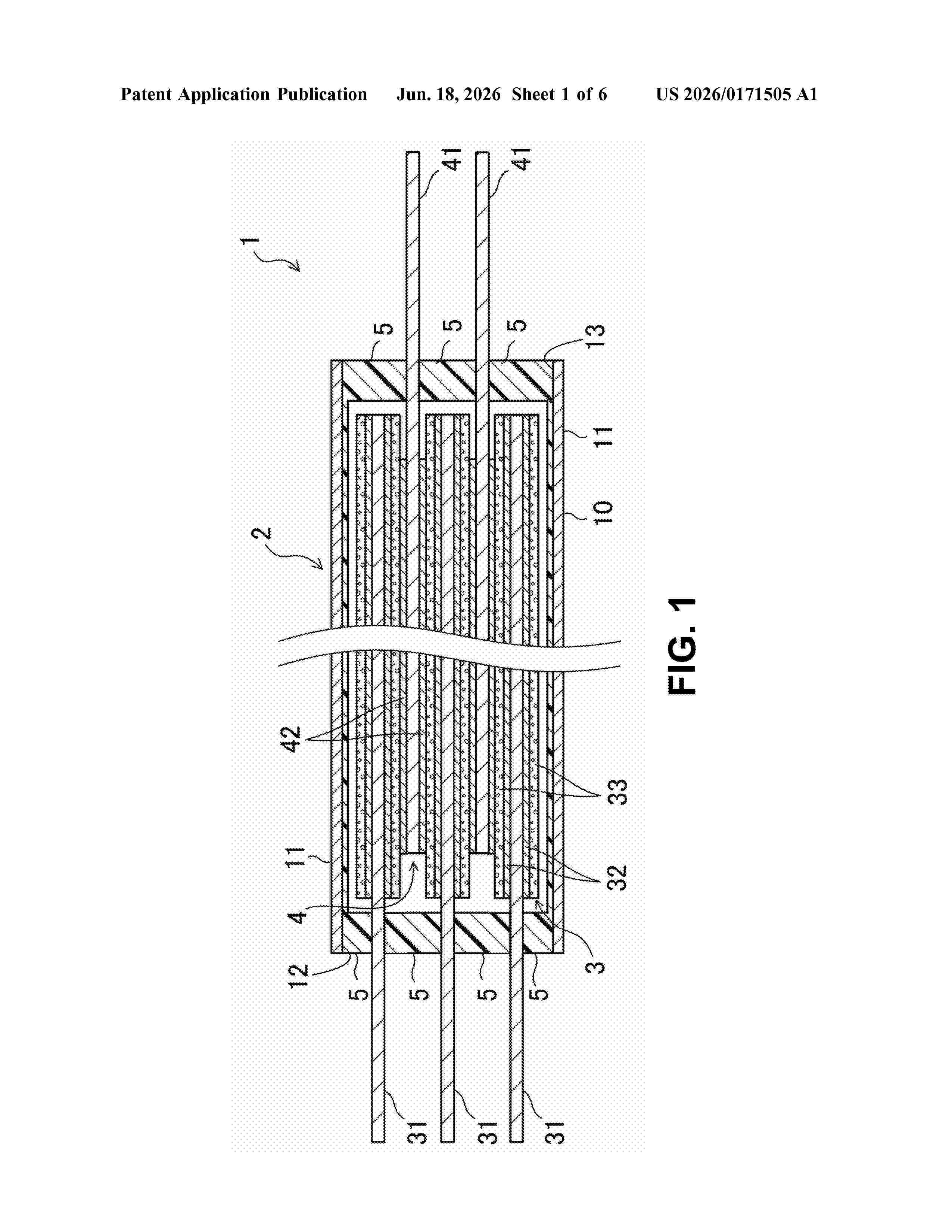
Resumen de: US20260171505A1
To prevent an electricity generation element from being affected by heat during manufacture of a battery cell, a method for manufacturing a battery cell includes: stacking electrode sheets in a layering direction to form an electricity generation element, the electrode sheets each including an electrode and a current collector, the electrodes being located in a container, the current collectors each being connected to the electrode in the container and protruding outward from an opening of the container; pressurizing and heating resin pieces from an outside toward a center in layering direction at positions of the openings of the container, the resin pieces being located between the adjacently stacked current collectors; promoting transfer of heat from the electricity generation element to an outside of the electricity generation element during pressurizing and heating the resin pieces; welding resin pieces together between the current collectors; and sealing the opening of the container.
Resumen de: WO2026128411A2
The disclosed technology relates to a coating primer for electrochemical devices, such as lithium ion batteries, including electrodes (both anode and cathode) prepared with a polymer binder functionalized with a leaving group that acts as a mechanical kill switch.
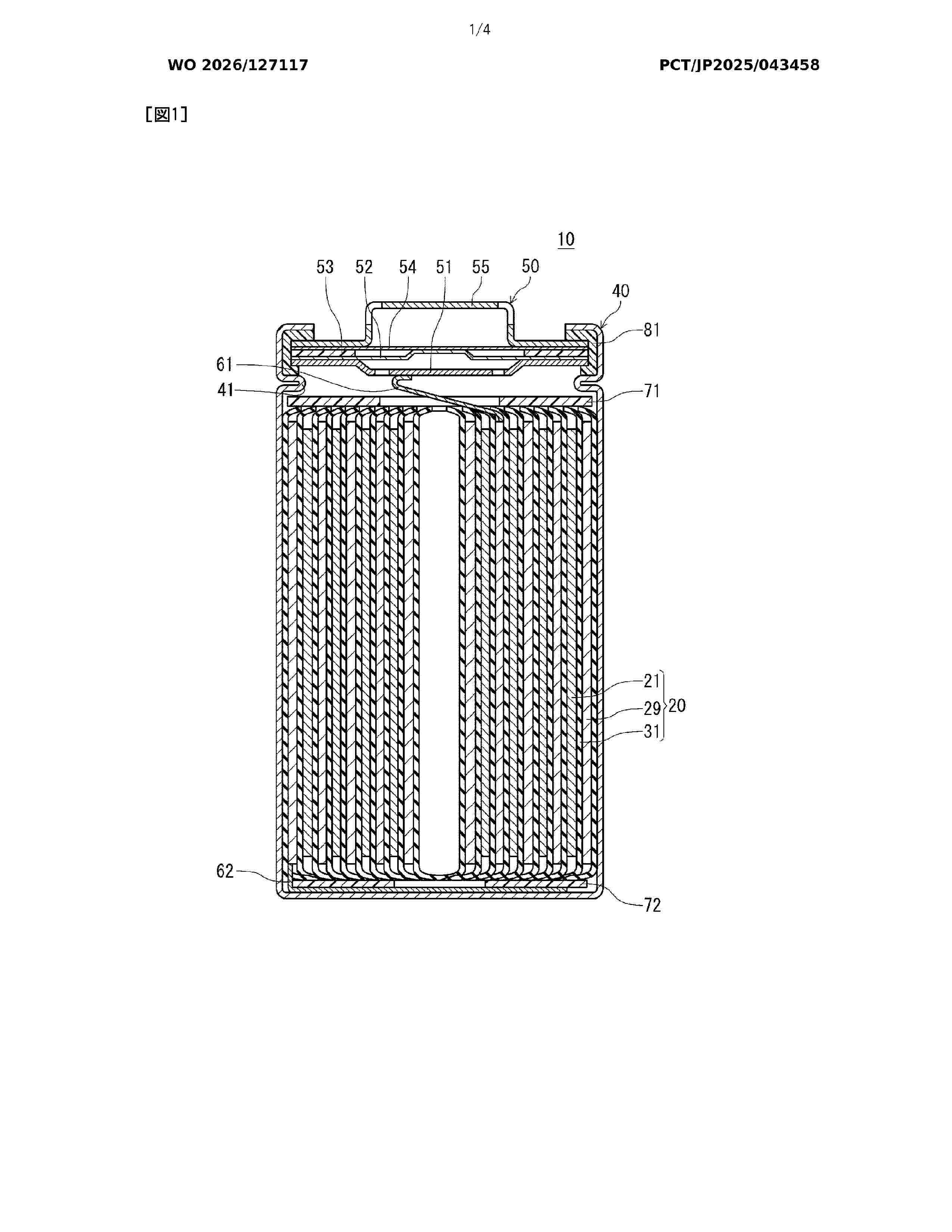
Resumen de: WO2026127117A1
This power storage device is provided with an electrode body. A first electrode plate of the electrode body comprises an elongated sheet-shaped current collector having a first main surface and a second main surface, and a first active material layer provided on the first main surface. The first main surface has at least one first uncoated portion that is partially provided along the longitudinal direction of the current collector and does not have the first active material layer. The first active material layer has at least one first region in which a length in the longitudinal direction of the current collector is 10% or less of the length in the longitudinal direction of the current collector. The first region extends along the width direction of the current collector. The mass per unit area of the first active material layer in the first region is 50% or more and less than 100% of the mass per unit area of the first active material layer surrounding the first region. The total proportion of the first region in the first active material layer is 50% or less. The first uncoated portion and the first region are spaced apart from each other.
Resumen de: US20260171534A1
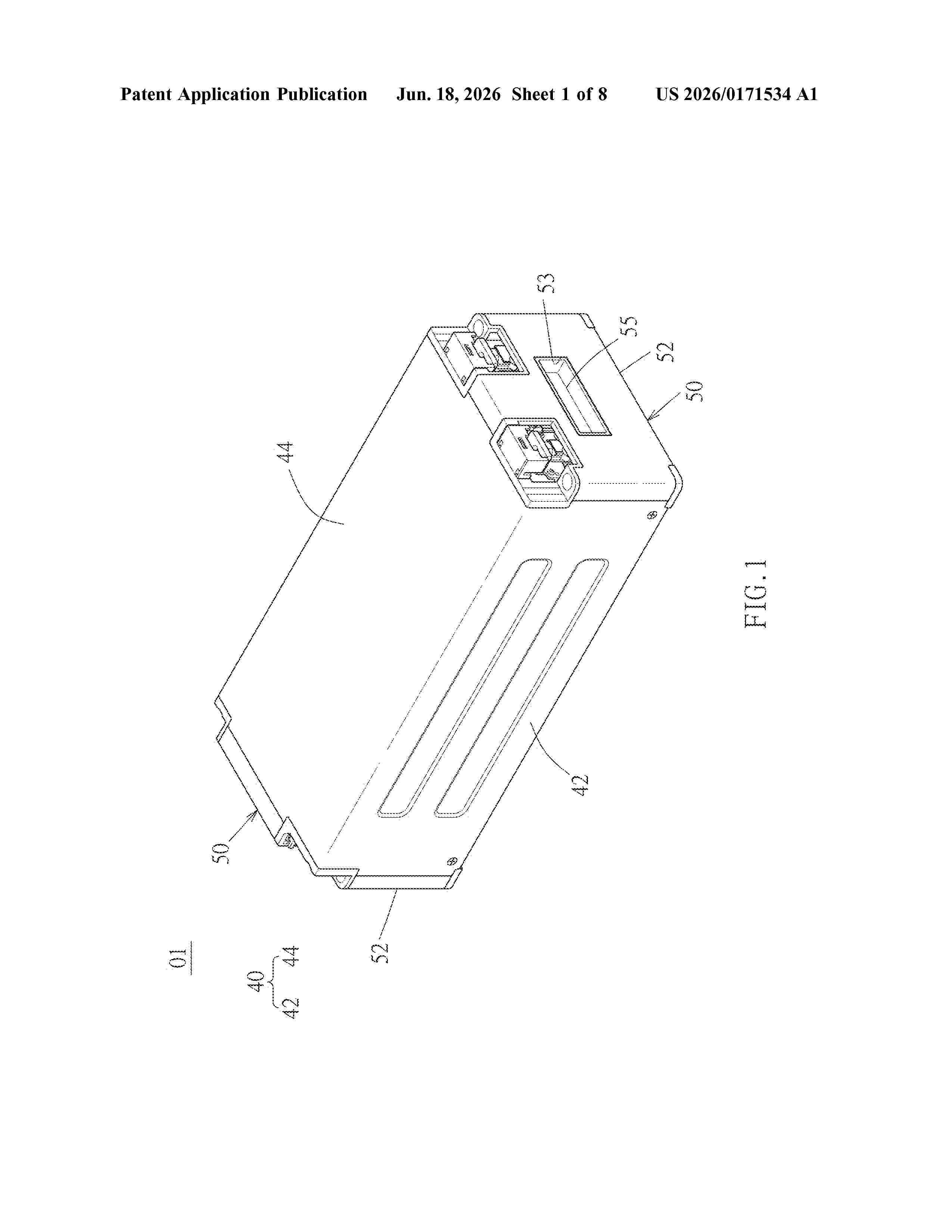
The present invention provides a protective structure for a pouch cell battery, comprising a base, a top cover, and two terminal covers, wherein the base supports a battery cell module, the top cover is connected to the base, and the terminal covers are connected to both ends of the base and the top cover. The battery cell module and two bus structures are positioned between the terminal covers, with each terminal cover primarily consisting of an outer shell and an insulating interface, with each outer shell including a central through-hole. Each insulating interface is a shell-like structure made of an insulating and thermally conductive plastic material positioned adjacent to the bus structures and protruding toward the adjacent bus structures to form thermal conduction elements aligned with the respective through-holes, thereby enhancing the heat dissipation efficiency through the terminal covers.
Resumen de: US20260171492A1
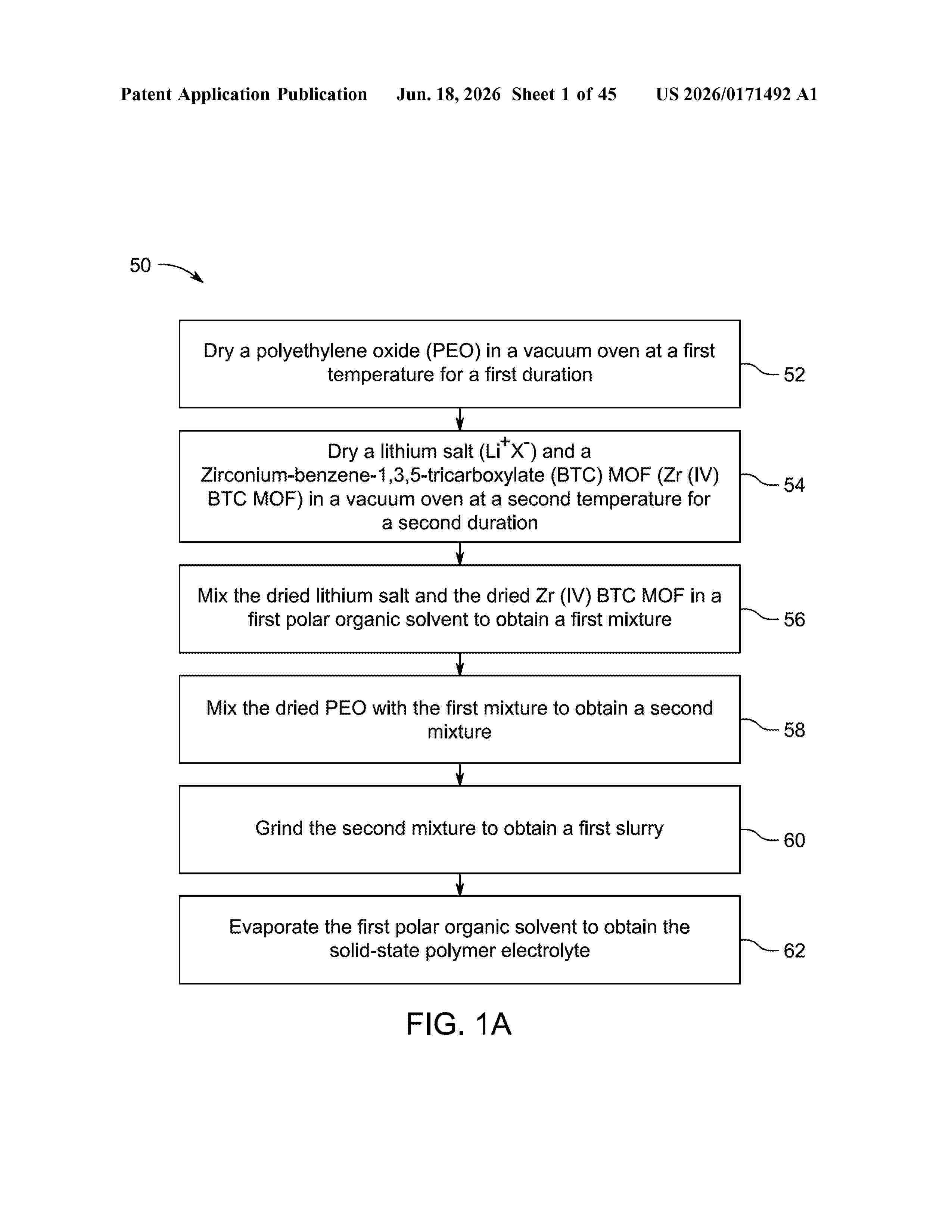
A solid-state polymer electrolyte including, based on the weight of the electrolyte: from 60 to 75 wt. % of polyethylene oxide (PEO); from 20 to 30 wt. % of a lithium salt (Li+X−); and, from 1 to 20 wt. % of a zirconium (IV) benzene-1,3,5-tricarboxylate (BTC) metal-organic framework (MOF). The solid-state polymer electrolyte has an X-ray diffraction (XRD) pattern of MOF-808 and has the general formula Zr6O4(OH)4(BTC)(L)6, wherein L is an anion selected from the group consisting of fluoride, formate (COO−), acetate (CH3COO−), propionate (CH3CH2COO−) and benzoate (C6H5COO−). The solid-state polymer electrolyte may have: an enthalpy of melting (ΔHm) of less than 50 Jg−1; and, an ionic conductivity of at least 30 μScm−1, as determined by electrochemical impedance spectroscopy (EIS) at 20° C.
Resumen de: WO2026128468A1
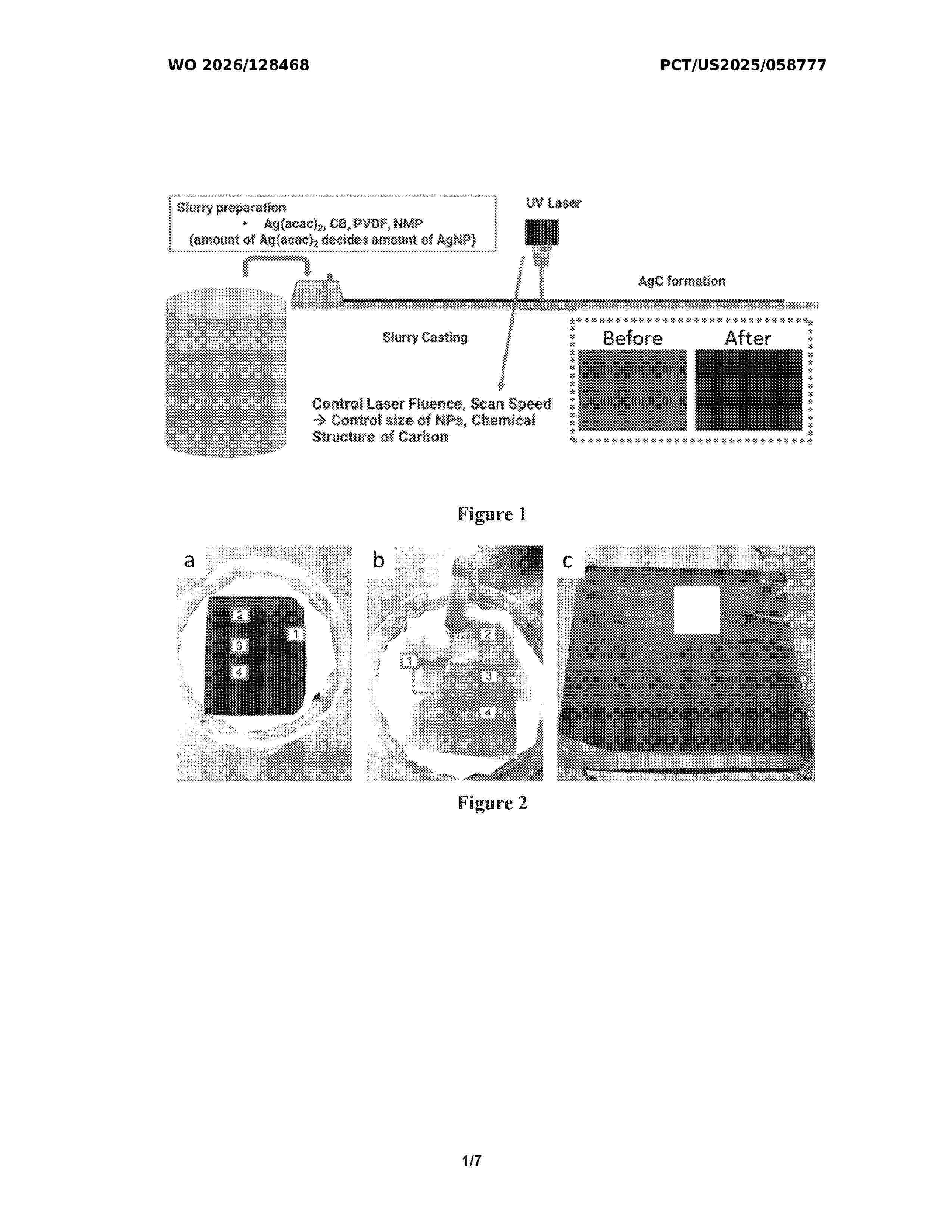
Disclosed herein are composite films as well as methods of making and using thereof.
Resumen de: DE102024138620A1
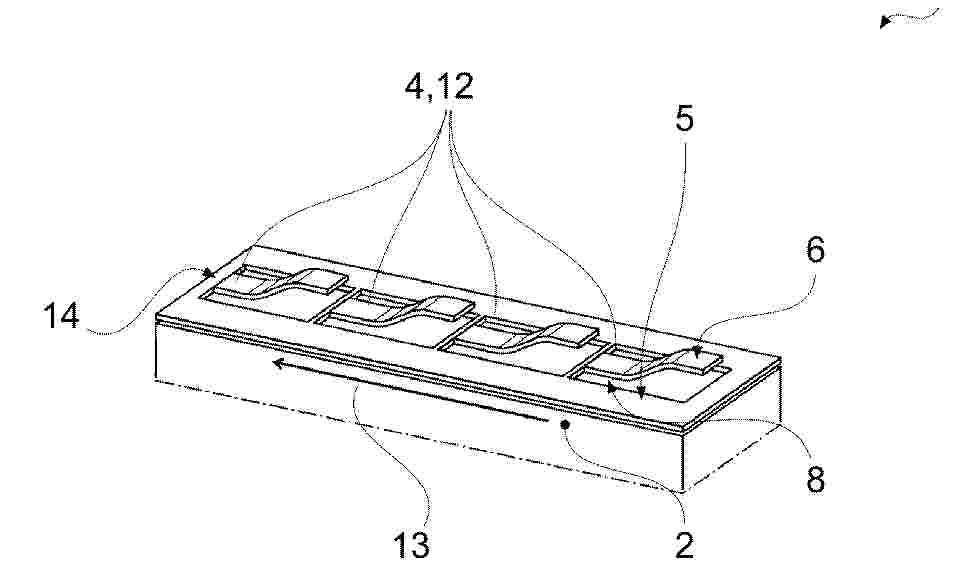
Die Erfindung betrifft eine Abstützeinrichtung für eine immersionstemperierte Batteriezelle in einem Batteriemodul, wobeidie Abstützeinrichtung für eine einzige Batteriezelle eingerichtet ist und eine Vielzahl von Federelementen umfasst,wobei die Federelemente über die Erstreckung zumindest einer Außenwandung der betreffenden Batteriezelle verteilt sind,wobei die Federelemente jeweils eine gehäuseseitige Abstützfläche zum mechanischen Abstützen der betreffenden Batteriezelle an einem Modulgehäuse eines Batteriemoduls aufweisen,wobei die Abstützeinrichtung weiterhin zumindest eine zellenseitige Anbindungsfläche zum zumindest verliersicheren Verbinden mit der betreffenden Batteriezelle umfasst,wobei die Anbindungsfläche und die Abstützfläche eines Federelements zum Ausbilden einer Federeigenschaft quer zu einem Montagespalt zwischen der betreffenden Batteriezelle und dem Modulgehäuse zueinander räumlich versetzt angeordnet sind,wobei die Abstützeinrichtung eine elektrische Isolationsschicht zum elektrischen Isolieren der Batteriezelle gegenüber dem Modulgehäuse aufweist.Mit der hier vorgeschlagenen Abstützeinrichtung ist eine Batteriezelle kostengünstig und zugleich sicher über eine angestrebte Lebensdauer adäquat in ihrem Modulgehäuse gegen äußere und innere Kräfte abgestützt.
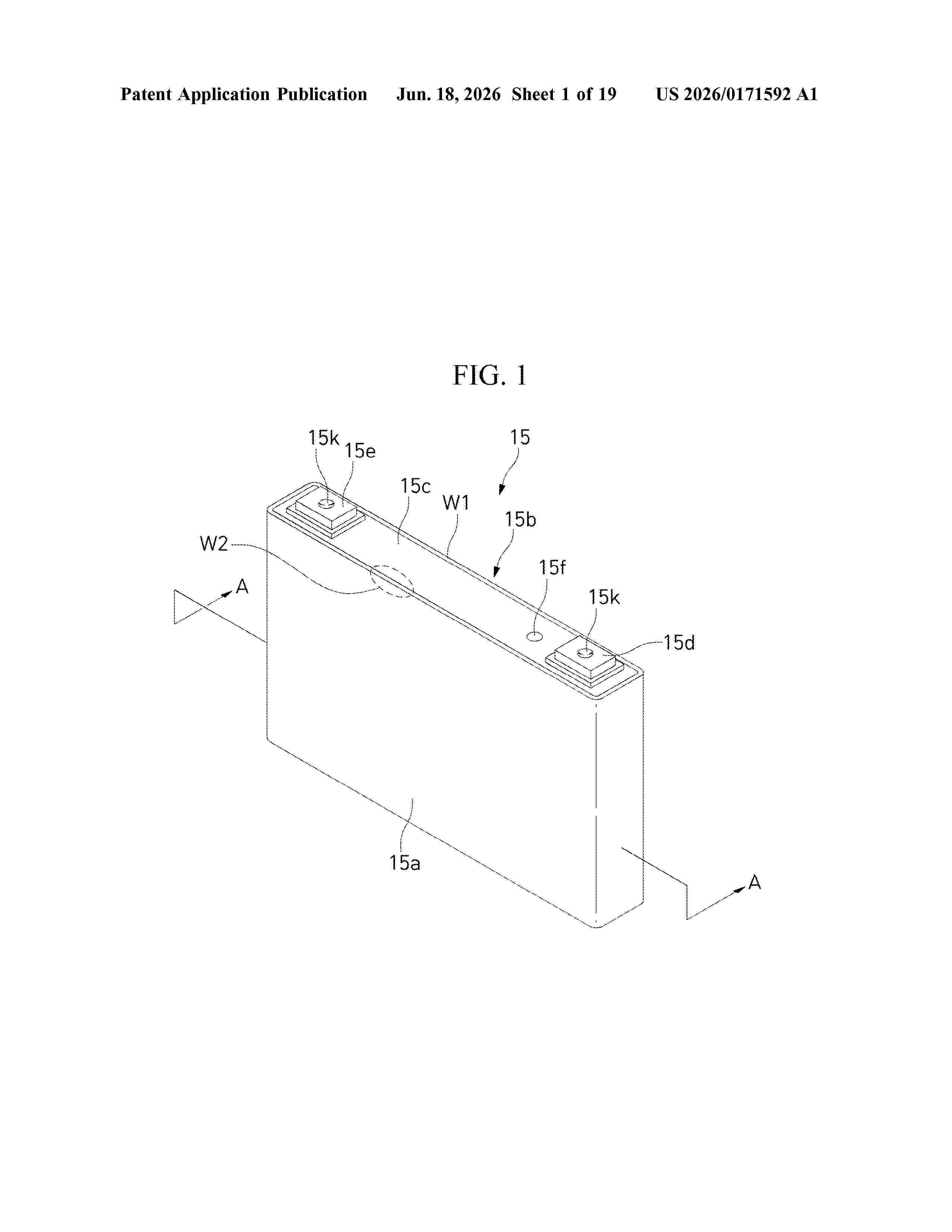
Nº publicación: US20260171592A1 18/06/2026
Solicitante:
SAMSUNG SDI CO LTD [KR]
Samsung SDI Co., Ltd.
Resumen de: US20260171592A1
The present disclosure provides a secondary battery, which has a battery can and a vent portion formed at a welding portion of a sealing member that seals the battery can, and thus there is no need to form a hole or apply a separate part to make the vent portion, thereby easily manufacturing the secondary battery, and a method of manufacturing the same, which enables the manufacturing of a secondary battery with a safer structure because the vent trigger pressure is accurately designed by controlling the welding strength of the welding portion. The secondary battery includes a battery can that provides a space for accommodating an electrode assembly and opens toward the outside of the secondary battery, the electrode assembly accommodated in the battery can, and a cap assembly including a cap plate coupled to an upper end portion of the battery can by welding to seal the battery can, wherein a welding portion that couples the battery can to the cap plate includes a first welding portion and a second welding portion that provide different bonding forces.
 BOPI
BOPI
 Sede Electrónica