Si deseas distinguir tus productos, servicios o ambos de los de otra empresa, es posible que necesites una marca o nombre comercial. Descubre qué son, en qué consiste su procedimiento de registro y qué implica.

Información sobre los plazos de presentación de solicitudes de transformación de marcas de la Unión Europea en marca nacional española. Más información


Si tienes un nuevo dispositivo, producto o procedimiento que resuelva un problema técnico o tenga una ventaja práctica, existen distintas formas de protegerlo en España y en otros países. Descubre cómo hacerlo.

¿Tu innovación reside en la estética, la ornamentación o la apariencia de tu producto? Protégela mediante un diseño industrial. Descubre qué derechos confiere el registro y cómo realizar la tramitación.

Las indicaciones geográficas protegen el nombre de un producto originario de una zona geográfica, a la cual le debe una determinada calidad, reputación u otra característica. Descubre qué son, en qué consiste su procedimiento de registro y qué beneficios conceden.

Las patentes publicadas en todo el mundo son una valiosa fuente de información científica, técnica y comercial.

Si eres emprendedor/a o una empresa y quieres potenciar y mejorar la rentabilidad de tu negocio protegiendo de forma adecuada los activos intangibles de tu organización, en este espacio encontrarás lo necesario.


 557
resultados
557
resultados
 Última actualización
02/04/2026 [06:49:00]
Última actualización
02/04/2026 [06:49:00]


 Resultados 525 a 550 de 557

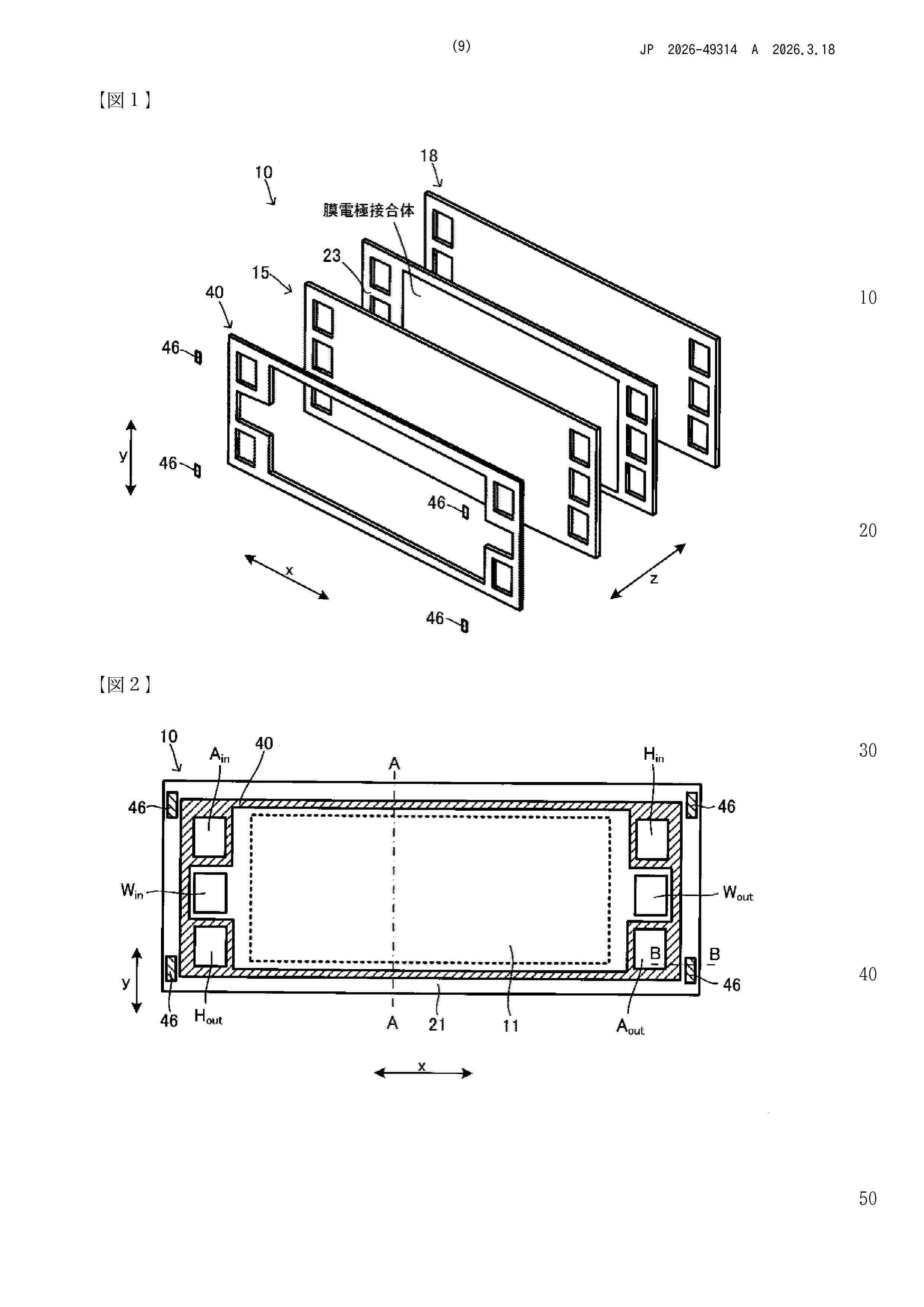
Resumen de: US20260074241A1
A fuel cell including an electrode assembly between a pair of separators includes a gasket disposed on a surface of one of the separators on a side opposite to a surface on a side on which the electrode assembly is disposed, and a protruding member disposed on a surface of one of the separators on a side opposite to a surface on a side on which the electrode assembly is disposed. The protruding member is disposed on an outer peripheral edge side of the separator from the gasket. The height of the protruding member is smaller than the height of the gasket.

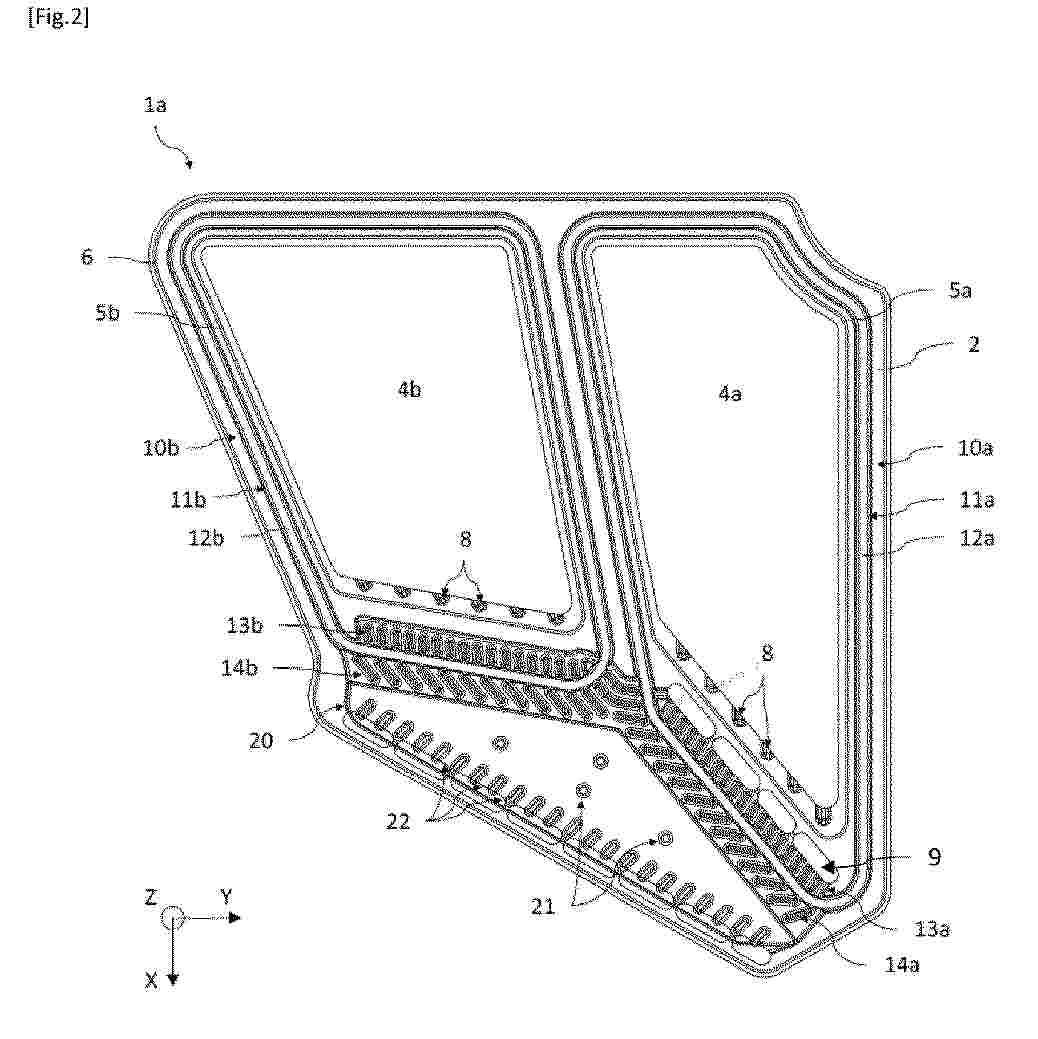
Resumen de: EP4712175A1
L'invention porte sur un empilement de cellules électrochimiques réparties en N groupes d'alimentation en les fluides réactifs. Chaque plaque bipolaire (1a) comporte N premiers collecteurs (4a, 4b) pour l'alimentation en le même premier fluide réactif, au moins une ligne d'étanchéité interne (5b), N premières lignes de joint (10a, 10b), et un compartiment d'homogénéisation (20). La ligne d'étanchéité interne (5b) est située entre le premier collecteur non-alimentant (4b) et la première ligne de joint (10b) associée. La première tôle (2) s'étend continûment entre les tunnels d'injection aval (14a, 14b) et le compartiment d'homogénéisation (20) en restant espacée de la deuxième tôle (3), de sorte que le premier fluide réactif s'écoule des tunnels d'injection aval (14a) dans le compartiment d'homogénéisation (20) en étant confiné entre les deux tôles (2, 3).
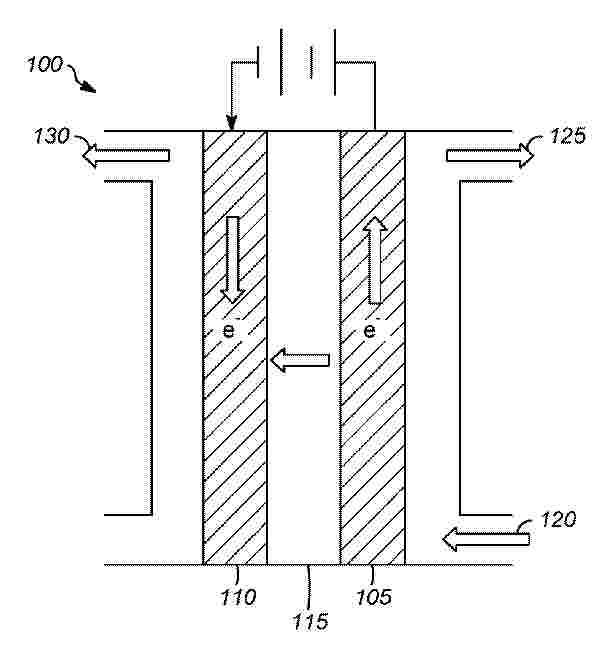
Resumen de: CN121311631A
Composite proton exchange membranes are described. The composite proton exchange membrane comprises three layers, wherein the three layers comprise a proton exchange membrane layer, a continuous nonporous organic-inorganic composite coating layer and a continuous nonporous cross-linked polyelectrolyte multilayer coating. Catalyst coated membranes incorporating the composite proton exchange membranes and methods of making the composite proton exchange membranes are also described.
Resumen de: CN121195365A
The present invention provides a separator for an electrochemical device, comprising: an ion exchange membrane comprising at least one first polymer having an acidic functional group A; and a fabric wherein the fabric comprises fibers, and wherein the surface of the fibers has a basic functional group C, and wherein the fabric supports an ion exchange membrane. The invention also provides a method for manufacturing the separator for the disclosed electrochemical device, a device comprising the separator for the disclosed electrochemical device and the use of the separator for the disclosed electrochemical device in an electrodialysis cell, in a fuel cell, in a PEM electrolysis device or in a redox flow battery.
Resumen de: CN121100421A
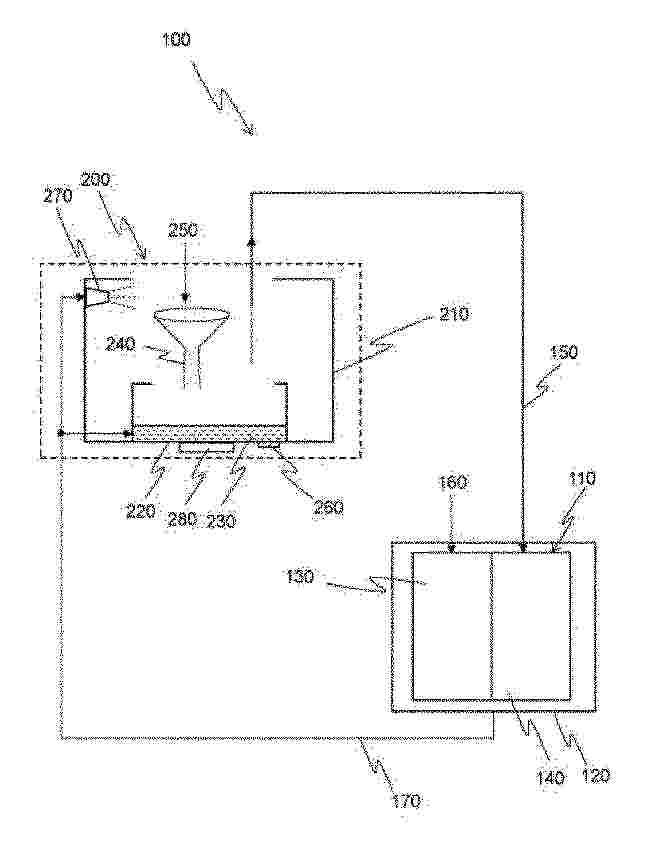
The invention relates to a device (100) for filtering ambient air, comprising: a reactor (110) which is designed to carry out an electrochemical reaction of a reactant with an oxidizing agent, by means of which at least one liquid (230) can be produced as a product; the filtering system (200) is provided with a first liquid storage device (220); a first connection line (170) is formed between the reactor (110) and the first reservoir (220) through which the generated liquid (230) can flow from the reactor (110) to the first reservoir (220); the filtration system (200) is designed to bring ambient air into contact with the generated liquid (230) in the reservoir (220) so that impurities can be filtered from the ambient air; a second connection line (150) is formed between the filtration system (200) and the reactor (110), through which filtered ambient air of the filtration system (200) can be fed to the reactor (110) as an oxidizing agent for electrochemical reactions.
Resumen de: CN121195363A
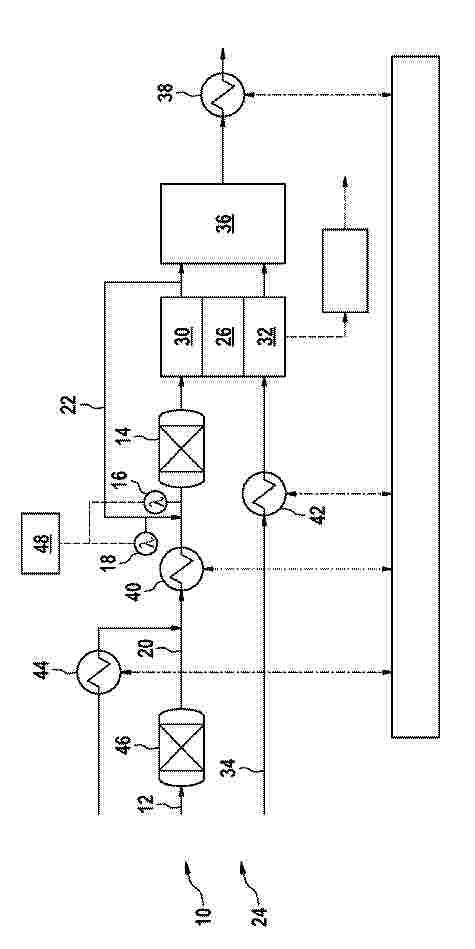
The invention relates to a fuel cell device (10) having at least one line system (12) for conducting fuel; having at least one reformer (14) connected to the line system (12) for reforming the fuel; and at least one Nernst cell unit (16, 18), in particular a lambda sensor, for detecting a process fluid parameter of a fluid located in the line system (12). According to the invention, the Nernst cell unit (16, 18) is arranged upstream of the reformer (14).
Resumen de: CN121079603A
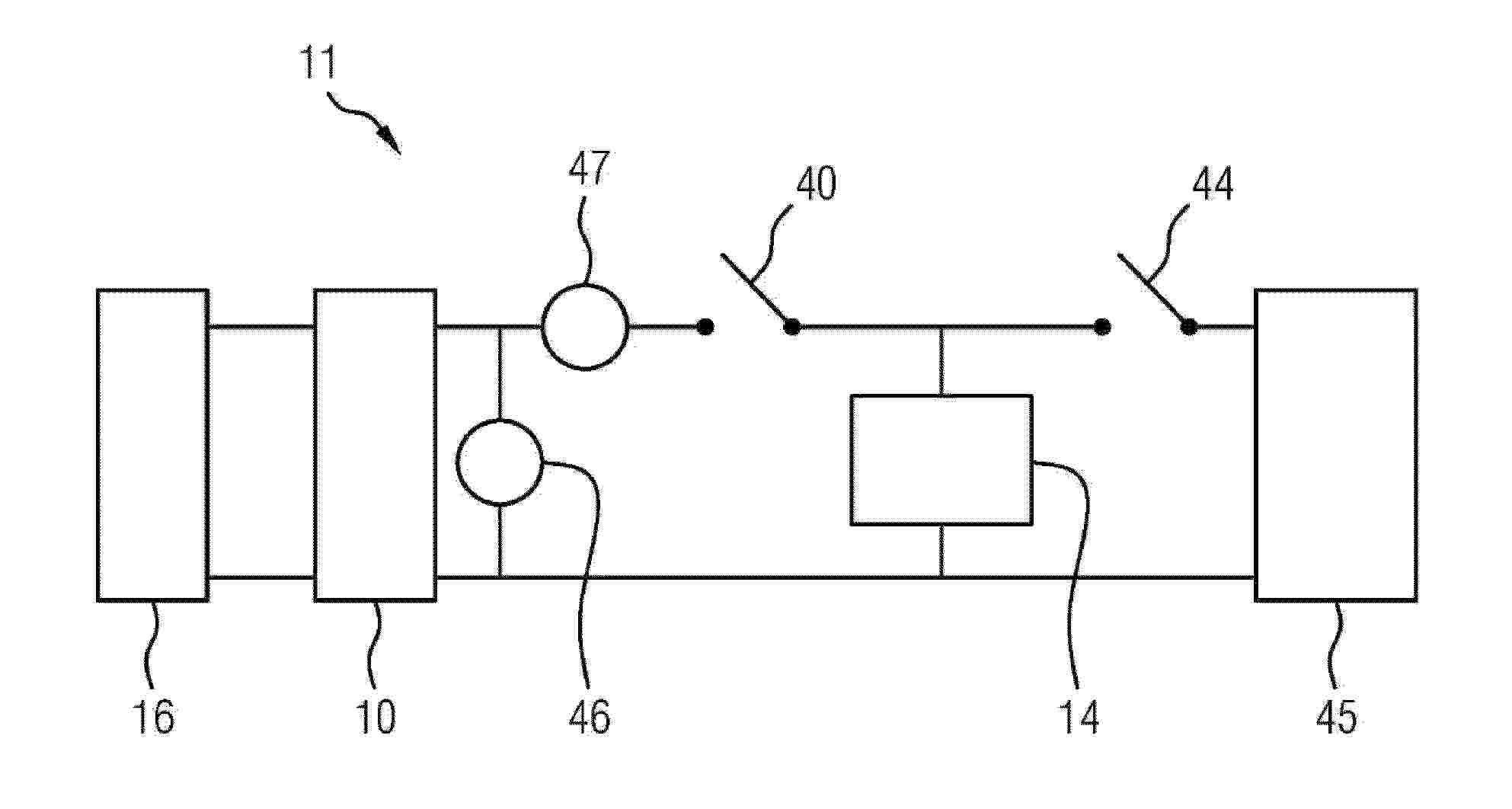
The invention relates to a method and a measuring device for diagnosing a component to be examined, comprising the following steps: operating the component (10) to be examined in a circuit (11) at a predefined operating point for a predefined first measurement interval (12); during the first measurement interval, a measurement signal and an excitation signal (13) are detected in the circuit as a function of time, the excitation signal being a signal of a passive component (14) in the circuit, which passive component is in a predetermined first excitation state (15) at the beginning of the first measurement interval, and the passive component is in a predetermined second excitation state (15) at the beginning of the first measurement interval. And the measurement signal is formed by superposing an excitation signal of the passive device and a working signal of the component to be inspected.
Resumen de: CN121443774A
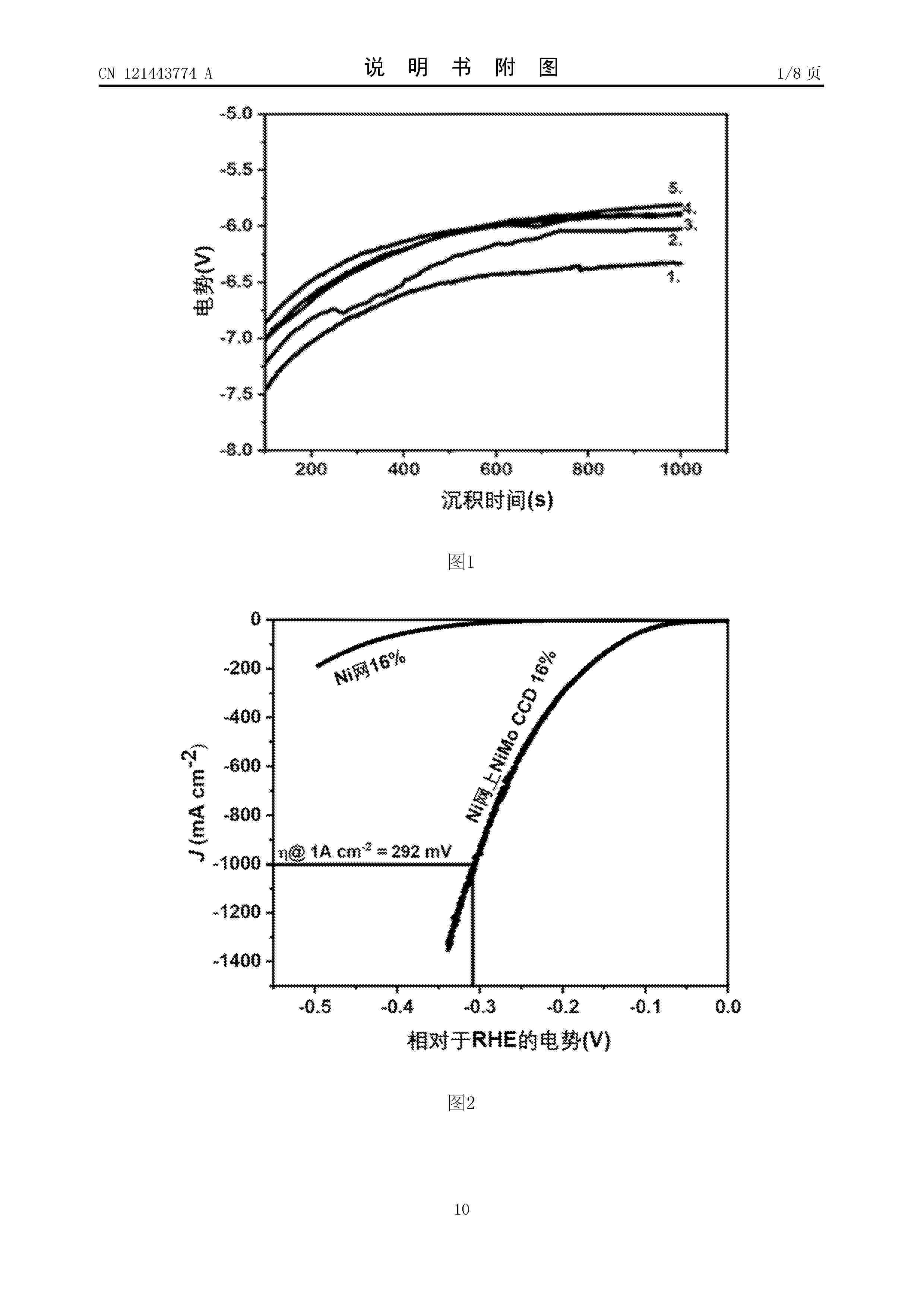
The present invention relates to a method of synthesizing a transition metal catalyst consisting of electrodeposition on a substrate electrode from an electrolyte solution comprising at least one transition metal precursor wherein the electrodeposition is carried out at a deposition current density of 500 to 2000 mA/cm2. The invention also relates to a transition metal catalyst characterized in that it is stable on a base electrode at a current density of at least 400 A/cm2 for at least 30 minutes.
Resumen de: WO2024235659A1
The invention relates to a method for operating an electric drive system of a motor vehicle, comprising at least one fuel cell and at least one battery. The invention is characterised in that an operating strategy is determined in real time using a computing unit disposed in the vehicle, wherein the operating strategy is aimed at achieving a constant power specification with low operating points, so that the fuel cell is operated continuously with constant power.
Resumen de: WO2024231107A1
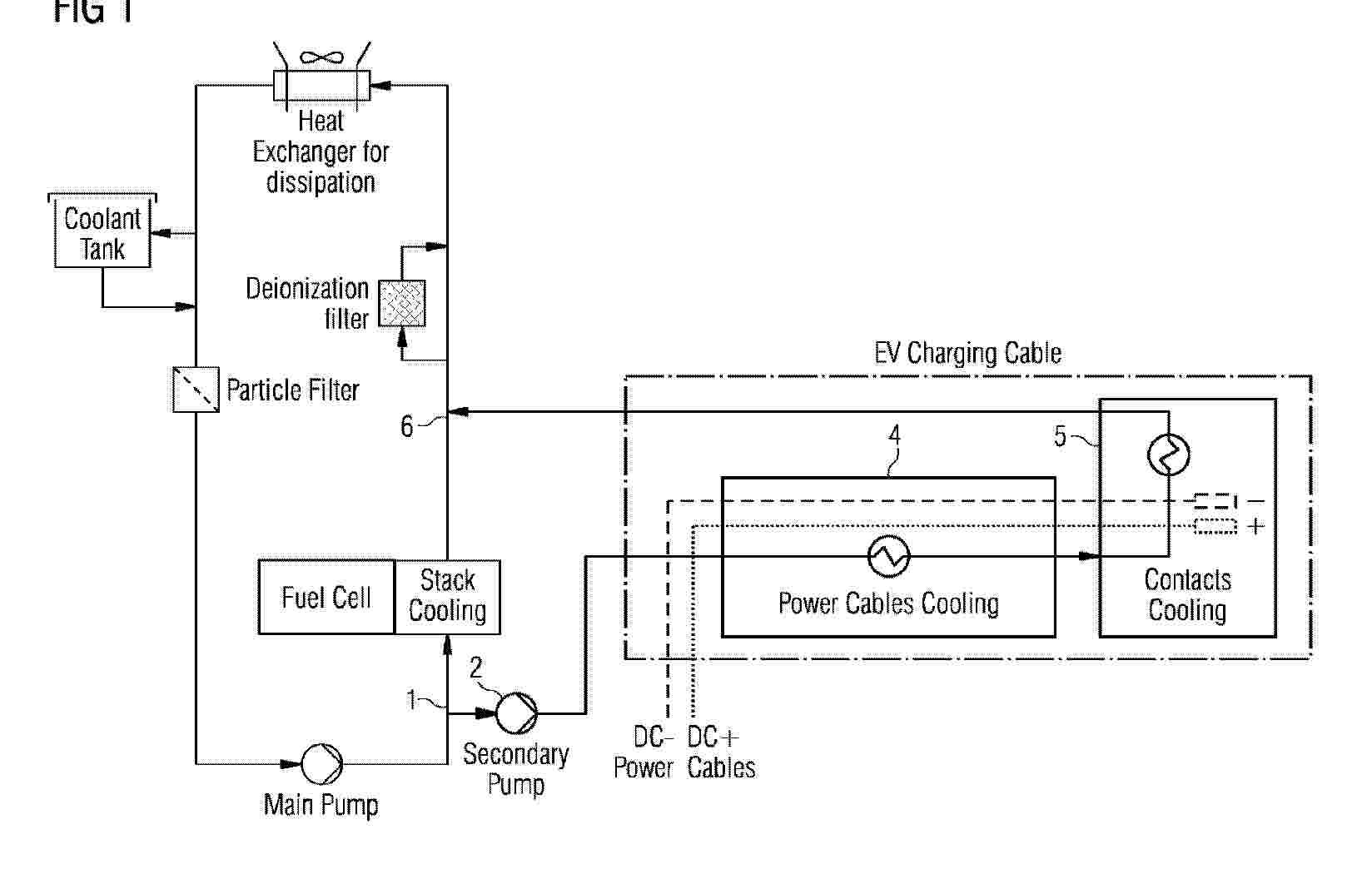
It is the objective of the present invention to provide a fuel cell powered EV fast charger that allows to charge at high current without the risk of overheating the charging infrastructure, such as cables (4), contact (5) and the like. This objective is achieved according to the present invention by a fuel cell powered EV fast charger, comprising: • a) a stack of fuel cells, each fuel cell comprising an anode-side electrical power collector and a cathode-side electrical power collector; • b) a power converting unit that is on its input-side connected to the anode- and cathode-side electrical power collectors and that provide at its output-side a number of power cables (4) for the transfer of fast charging voltages and currents; c) a cooling system that is connected for heat dissipation with the stack of fuel cells, wherein a cooling line of said cooling system is used to cool the power cables (4) and/or the contacts (5) and/or the power-converting unit and/or d) a further cooling system that collects process water generated by the electrochemical reaction in the fuel cells wherein the power cables (4) and/or the contacts (5) and/or the power-converting unit are cooled using this process water.
Resumen de: CN120957831A
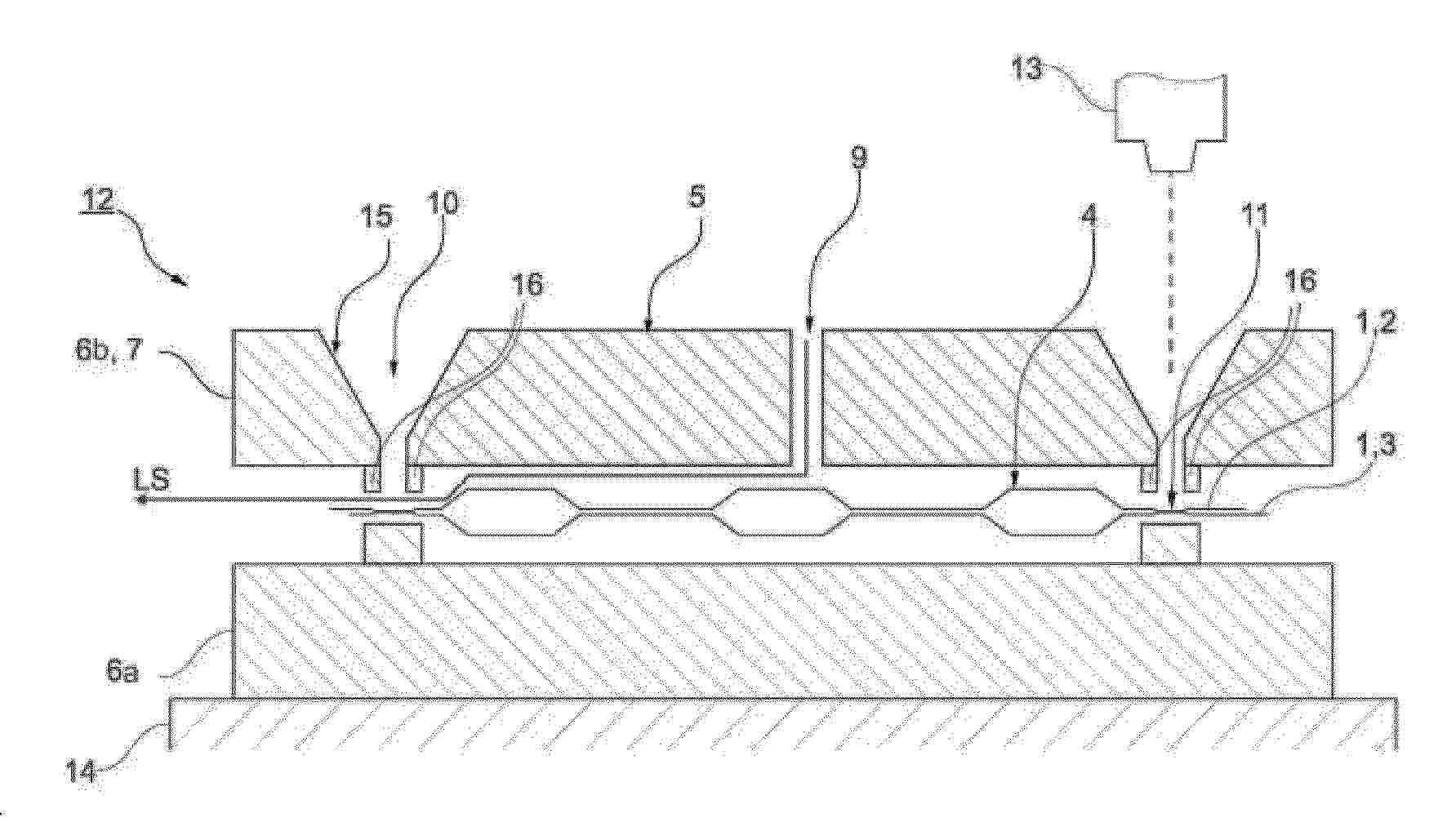
The invention relates to a device (5) and a method for welding half-sheets (2, 3) to form a bipolar plate (1). The device comprises at least three tool parts, namely a lower tool part (6a) and a multi-part upper tool part (6b), in which half-sheets (2, 3) to be welded together can be inserted between the lower tool part (6a) and the multi-part upper tool part (6b). The multi-part upper tool part (6b) comprises a plurality of individual parts (7; the individual parts (7, 8) of the multi-part upper tool part (6a) can be arranged one after the other and only alternately above the lower tool part (6a), and wherein both at least one first opening (9) for introducing a pressurized gas and at least one second opening (10) for introducing a pressurized gas are formed in each of the individual parts (7, 8) of the multi-part upper tool part (6a). The half-sheets (2, 3) can be pressed against each other by means of a pressurized gas, and a second opening (10, 10 ') for introducing joining energy during the welding process for welding the half-sheets (2, 3), the second opening (10, 10') in the individual part (7, 8) of the multi-part upper tool part (6b) as viewed perpendicular to the plane of the half-sheets (2, 3), and the second opening (10, 10 ') being formed in the individual part (7, 8) of the multi-part upper tool part (6b), as viewed perpendicular to the plane of the half-sheets (2, 3). 10 ') are largely complementary to each other and overlap only in some areas, such that only a
Resumen de: WO2024230958A1
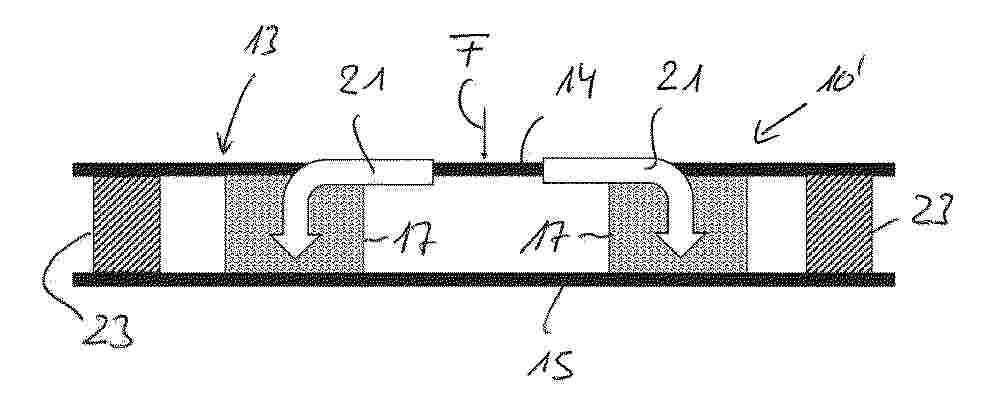
An electrochemical device (10'), with a cell stack consisting of a plurality of cell stack elements, with a force application unit (13) which exerts a force on the cell stack in order to press the cell stack elements of the cell stack fluid-tightly in sealing regions (17) of the cell stack, wherein the force application unit (13) is designed in such a manner that the force for pressing the cell stack acts on the cell stack and therefore on the sealing regions (17) of the cell stack depending on the operating state of the electrochemical device (10').
Resumen de: WO2024235430A1
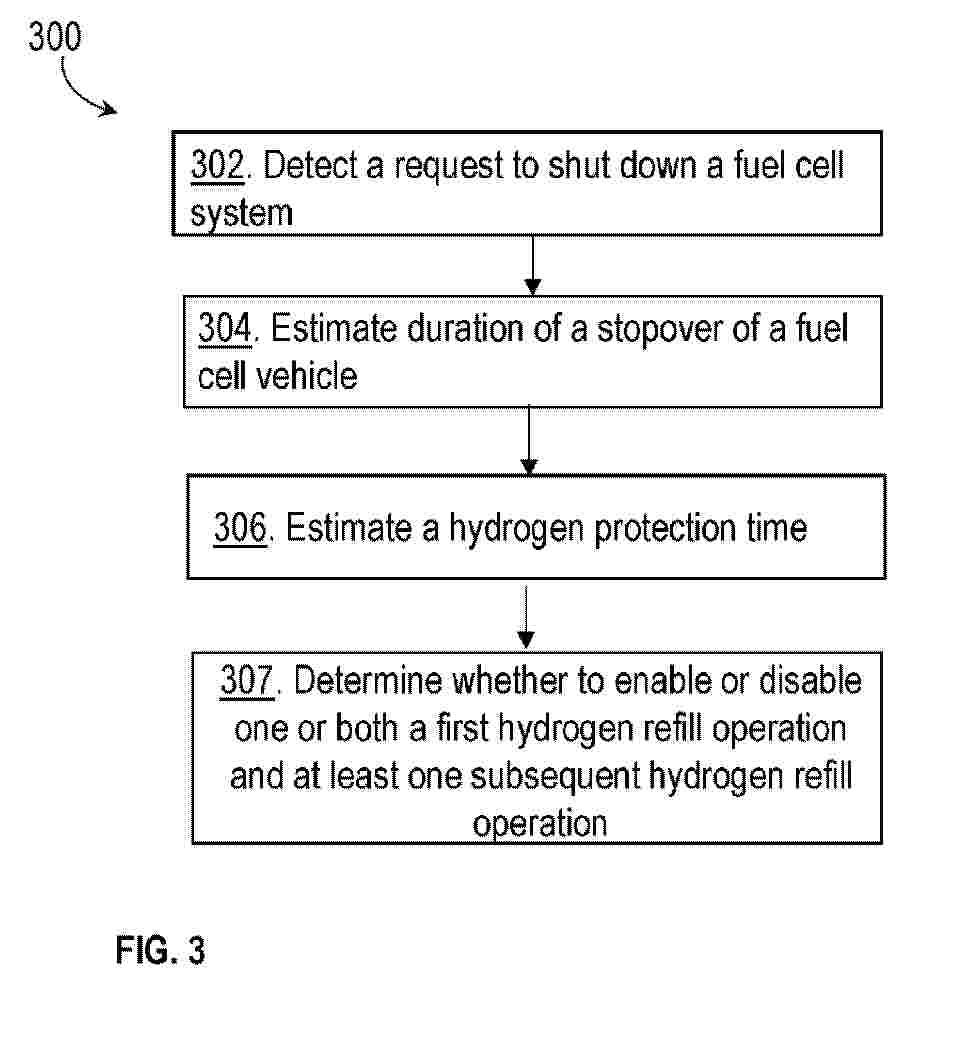
A system and method for controlling operation of a fuel cell system of a fuel cell vehicle are provided. The fuel cell system comprises a fuel cell stack comprising an anode side and a cathode side, and a hydrogen storage device for storing hydrogen supplied to the anode side of the fuel cell stack. The method comprises estimating a duration of a stopover of the vehicle when a request to shut down the fuel cell system is received, estimating a hydrogen protection time at least due to a first hydrogen refill comprising supplying the hydrogen to the anode side of the fuel cell stack from the hydrogen storage device, and determining, based at least on the estimated duration of the stopover and the hydrogen protection time, whether to enable or disable one or both the first hydrogen refill operation and at least one subsequent hydrogen refill operation.
Resumen de: EP4711327A1
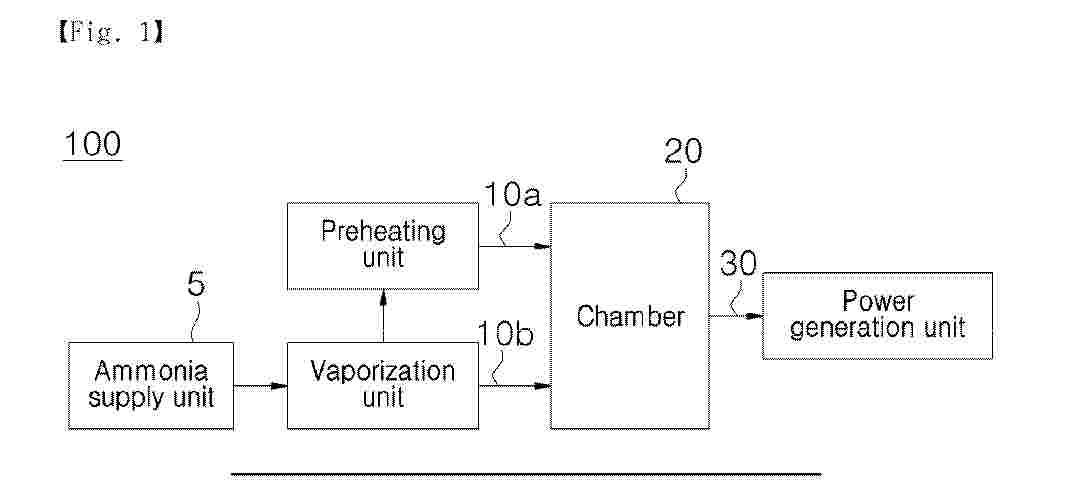
A corrosion-resistant system, a carbon-free power generation and fuel cell system comprising the corrosion-resistant system, and a method for ammonia decomposition utilizing said corrosion-resistant system are provided. The corrosion-resistant system includes: an ammonia supply unit; a first pipe connected to the ammonia supply unit; an ammonia decomposition unit comprising a chamber connected to the first pipe; and a second pipe connected to the chamber, wherein the chamber is configured to operate at an operating temperature of 410°C or lower, the first pipe and the chamber comprise at least one selected from the group consisting of carbon steel, low alloy steel, stainless steel and a nickel-based alloy, and the second pipe comprises a nickel-based alloy (NT) satisfying Equation 1 below. T≤15μm
Resumen de: EP4711328A1
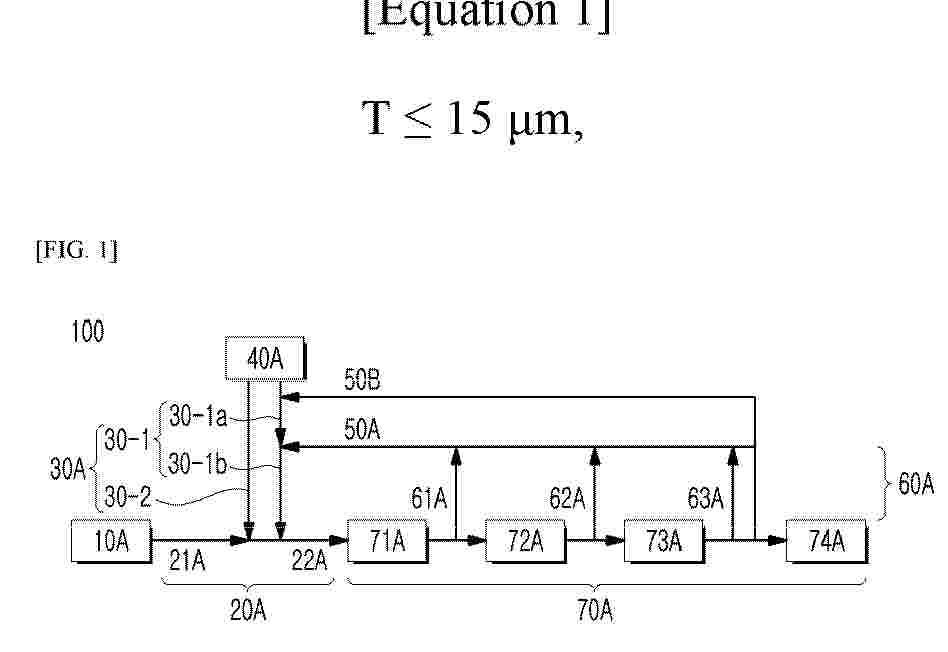
Disclosed are an ammonia supply system, a hydrogen production system, a carbon-free power generation system and a fuel cell system. The ammonia supply system includes: an ammonia supply unit; an ammonia demand unit; a connection line that is arranged to connect the ammonia supply unit and the ammonia demand unit; a hydrogen supply unit; and one or more first hydrogen supply lines that are arranged to connect the hydrogen supply unit and the connection line, and are configured to supply a hydrogen gas stream, wherein the connection line includes a first pipe configured to be controlled to an average temperature of 410°C or lower and a second pipe configured to be controlled to an average temperature of greater than 410°C, and the second pipe includes a nickel-based alloy (NT) satisfying Equation 1 below. T≤15μm,
Resumen de: EP4712293A1
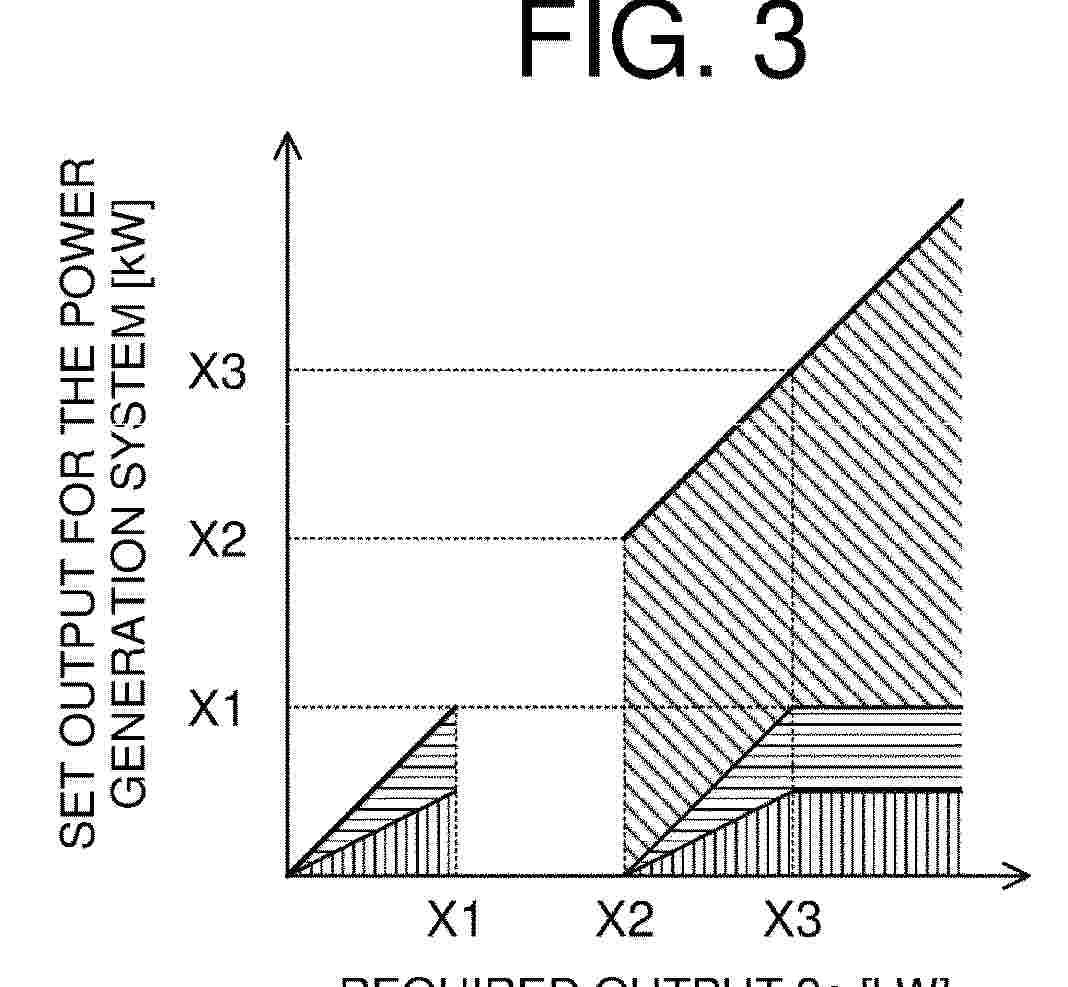
Problem To provide an operation management device capable of ensuring the convenience of a power generation system by causing the power generation system to perform an operation suitable for a request to the power generation system in a predetermined case.Solution An operation management device manages an operation of a power generation system comprising an engine power generator and a fuel cell power generator, and the operation management device comprises a processing portion that operates one of the engine power generator and the fuel cell power generator when a required output of the power generation system is equal to or less than a first predetermined value.
Resumen de: EP4712176A1
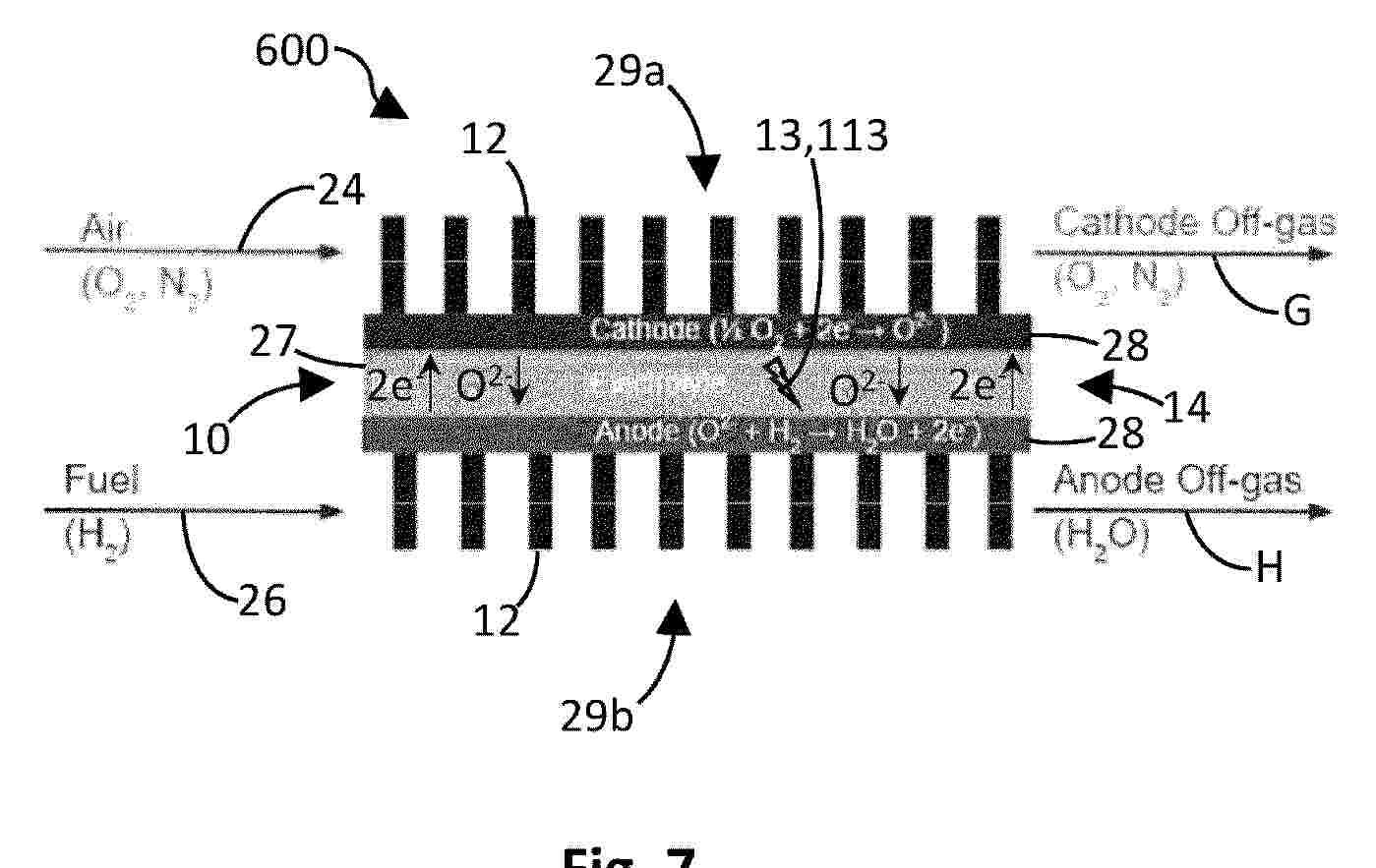
The present invention relates to a oxide oxidation unit (600) for converting at least one reductant to thermal energy under the production of exhausts (G) and further exhausts (H) from a first supply flow (24) comprising an oxidant and a second supply flow (26) comprising the reductant, respectively; the solid oxide oxidation unit (600) comprising a duct wall (14) configured for separating the first supply flow (24) from the second supply flow and at least sectionwise comprising an electrolyte layer allowing for a transfer of ions of the oxidant to the reductant; wherein the duct wall (14) comprises an electrically conducting material (113) allowing for a transfer of electrons from the reductant to the oxidant for enabling a full oxidation of the reductant contained in the second supply flow (26). Furthermore, the present invention relates to a fuel cell arrangement (200) comprising at least one solid oxide oxidation unit (600) and at least one fuel cell setup (100) comprising a carrier structure (10) comprising a duct wall; wherein a primary power coating layer (28) is applied on a surface of the duct wall for being arranged between the first supply flow and the second supply flow; and wherein the primary power coating layer (28) is configured for generating electrical energy from the first supply flow and the second supply flow; to an energy supply system (300), comprising at least one solid oxide oxidation unit (600) and/or at least one fuel cell arrangement (200), and to
Resumen de: CN121100020A
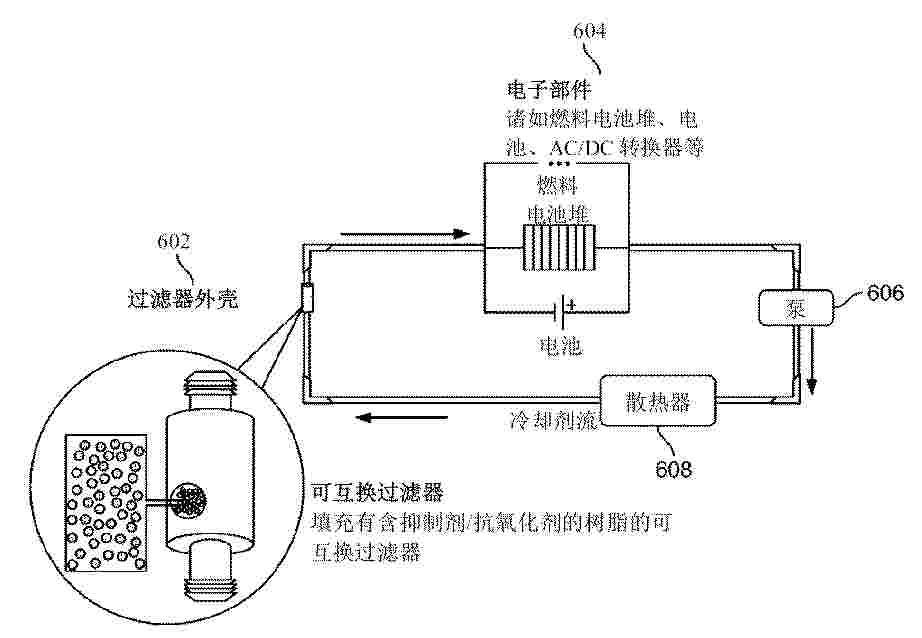
Methods and apparatus for pre-treated ion exchange resins and their use in heat transfer systems, alternative power sources such as fuel cells, battery systems, and assemblies comprising such power sources. The apparatus may include a cooling system and a pretreated ion exchange resin. The pretreated ion exchange resin may include an ion exchange resin treated with a corrosion inhibitor and/or an antioxidant. The cooling system may include a heat transfer fluid. The heat transfer fluid may include water, a glycol-based freezing point depressant, and mixtures thereof. The glycol-based freezing point depressant may include ethylene glycol, propylene glycol, 1, 3-propylene glycol, and mixtures thereof. The cooling system may include an ion exchange unit. The ion exchange unit may include a pretreated ion exchange resin, an untreated ion exchange resin, a basic anion exchange resin, an acidic cation exchange resin, and mixtures thereof.
Resumen de: CN121241467A
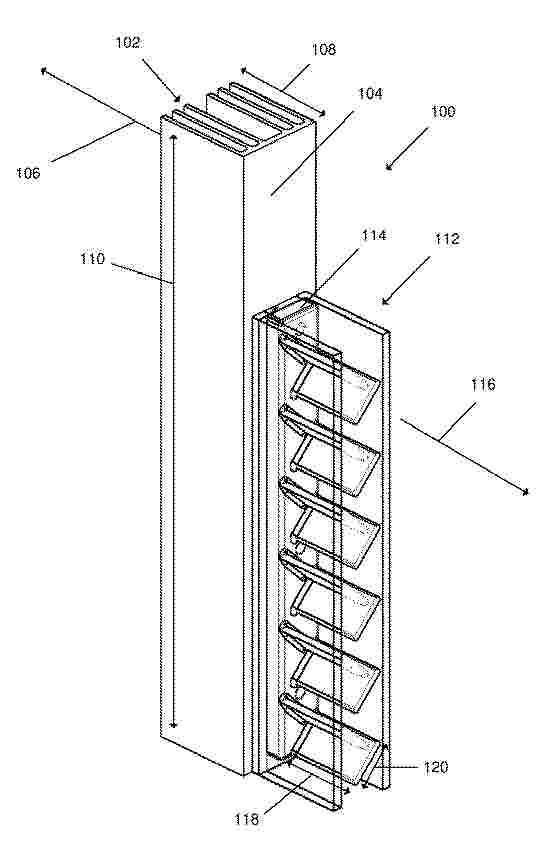
A metal-air battery equipped with a heat exchanger having air-side fins directly connected to a back plate and liquid-side fins thermally connected to the back plate. The liquid side fins receive the electrolyte from the overflow port and then direct the electrolyte into the electrolyte chamber. The liquid side cooling fins are composed of adjacent cooling fins which are arranged alternately, a certain angle (theta) is formed between the cooling fins, and gaps are formed between the cooling fins, so that electrolyte can flow on the adjacent cooling fins. The heat exchanger can perform degassing treatment on the electrolyte at the same time, and redundant heat is removed from the electrolyte.
Resumen de: WO2024231783A1
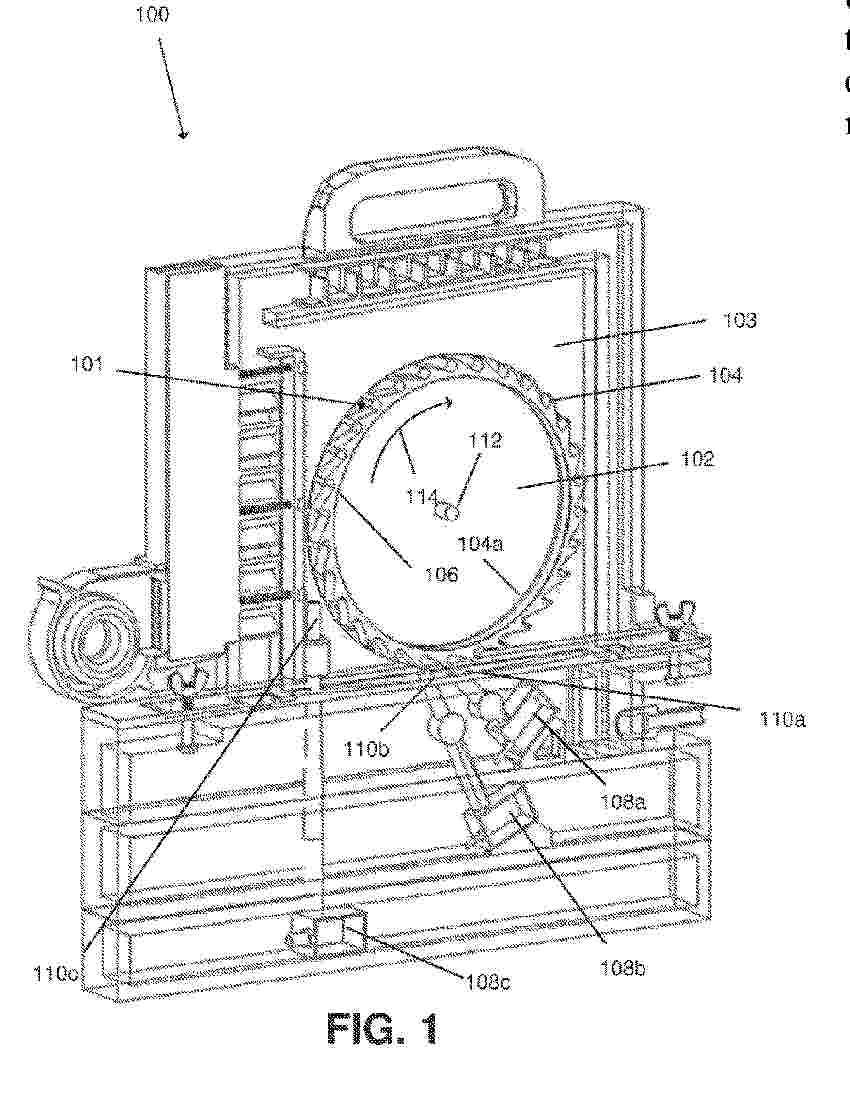
This disclosure provides a rotary metal air battery system that rotates without using a rotary motor. A metal anode is rotated by impact of a liquid electrolyte on turbine blades disposed on a radial edge of the metal anode.
Resumen de: EP4711326A1
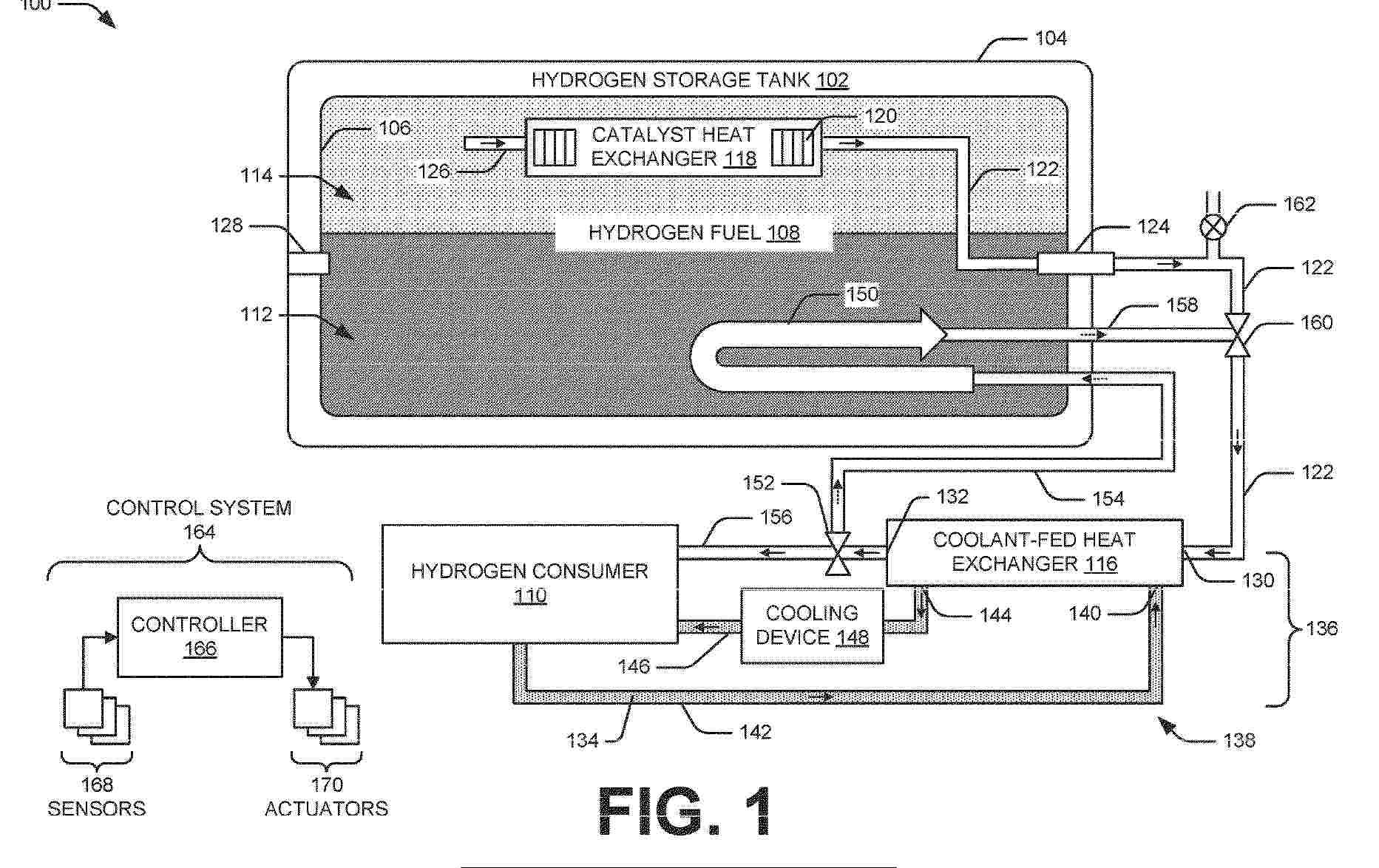
A hydrogen catalyst for vehicle cooling is described. A system may include a catalyst positioned in a flow path coupling a hydrogen storage tank to a hydrogen consumer, the catalyst configured to convert hydrogen fuel from a para state to an ortho state via an endothermic reaction. The system may further include a coolant circuit configured to circulate coolant through the hydrogen consumer and a coolant-fed heat exchanger configured to thermally couple the coolant in the coolant circuit to the hydrogen fuel, the coolant-fed heat exchanger arranged upstream of the hydrogen consumer in the flow path.
Resumen de: GB2644072A
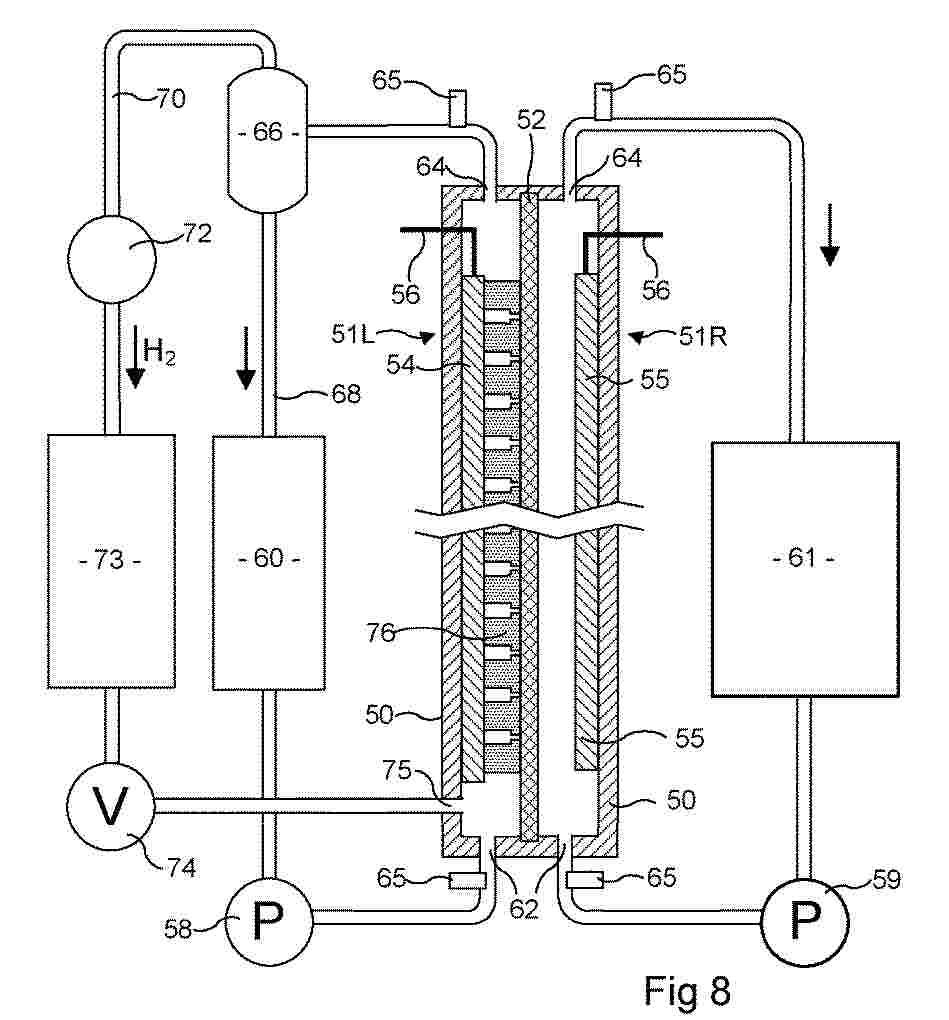
A regenerative fuel cell has a first half-cell 51L and a second half-cell 51Rwith a permeable separator 52 therebetween. The first half cell includes a first liquid electrolyte which reacts at a first electrode 54 to produce gas, for example hydrogen gas, while charging whilst gas is consumed during discharge of the cell. The liquid electrolyte contains a solute enabling the liquid to display elastic turbulence. The solute may be a viscoelastic surfactant or a flexible long chain polymer such as hydrolysed polyacrylamide. A flow path, for example including flow quide 76, is configured to compel changes in the direction of flow so as to cause elastic turbulence in the electrolyte flowing into contact with the first electrode. The second electrochemical half-cell includes a second liquid electrolyte which undergoes reaction at a second electrode 55 wherein the reaction does not produce or consume gas. The regenerative fuel cell includes a first storage vessel 60 and a first pump 58 for storage and circulation of the first electrolyte as well as a second storage vessel 61 and second pump 59 for storage and circulation of the second electrolyte.
Resumen de: GB2644099A
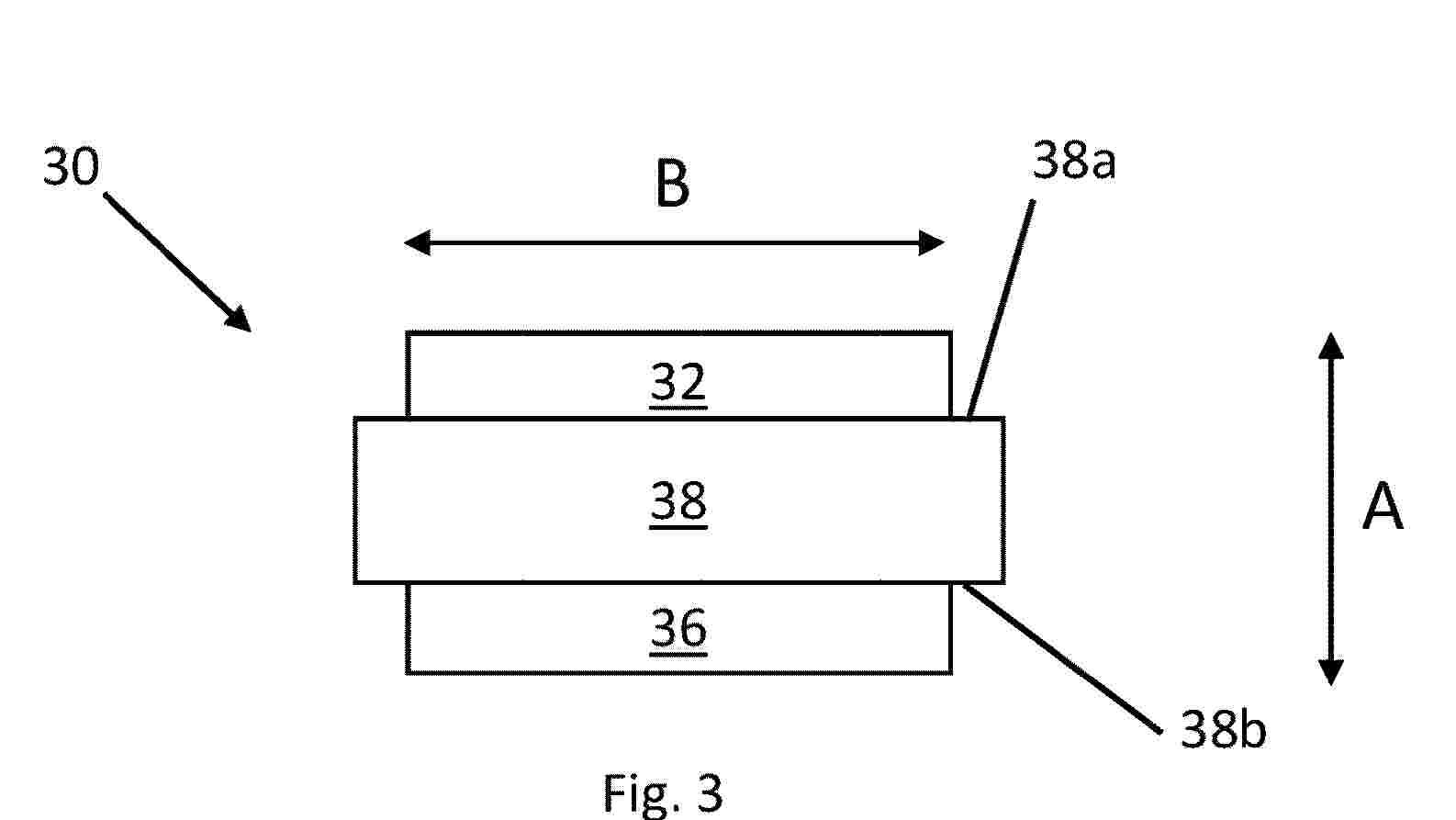
A gasket 30 suitable for use in an electrochemical cell stack, the gasket 30 comprises an electrically insulating core 38 having first and second opposing faces 38a 38b, a first metal-containing foil 32 disposed on the first face 38a and a second metal-containing foil 36 disposed on the second face 38b, and wherein the first and second metal-containing foils 32 36 comprise aluminium or copper. A kit of parts comprises an annular insulating core and annular foils. A method of manufacturing an electrochemical cell stack is disclosed as comprising a formation step of a gasket 30.
Resumen de: GB2644071A
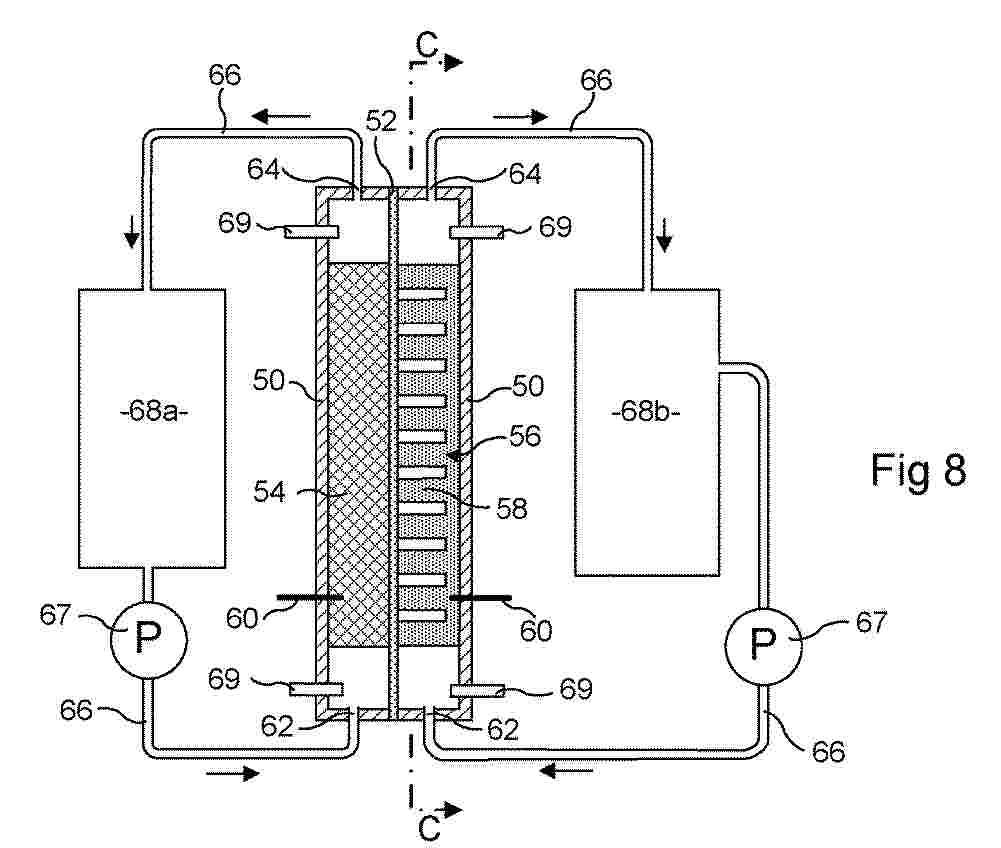
A first electrochemical half-cell includes a first liquid containing a dissolved reactive species which reacts electrochemically at a first electrode to form a solid which deposits at the electrode. The liquid further contains a solute, such as a high molecular weight linear polymer or a viscoelastic surfactant, enabling the liquid to display elastic turbulence. A structure, for example a flow guide 56 located adjacent the electrode comprising a spaced array of obstructions 58, defines a flow path carrying the liquid into contact with the electrode which compels changes in the direction of liquid flow causing elastic turbulence. At least one pump 67 propels the liquid along the flow path. A rechargeable battery includes the first half-cell and a second electrochemical half-cell. A metal-air rechargeable battery includes the first half-cell and a second electrochemical half-cell with a separator (52, Figure 12) therebetween wherein the second half-cell comprises a second liquid which undergoes oxygen evolution (OER) at a catalyst within a porous body wherein the second liquid also includes a solute enabling the liquid to display elastic turbulence and the second half-cell also includes a flow path which causes elastic turbulence by compelling changes in the direction of liquid flow.
Nº publicación: EP4711503A2 18/03/2026
Solicitante:
TOSHIBA KK [JP]
TOSHIBA ENERGY SYSTEMS & SOLUTIONS CORP [JP]
Kabushiki Kaisha Toshiba,
Toshiba Energy Systems & Solutions Corporation
Resumen de: EP4711503A2
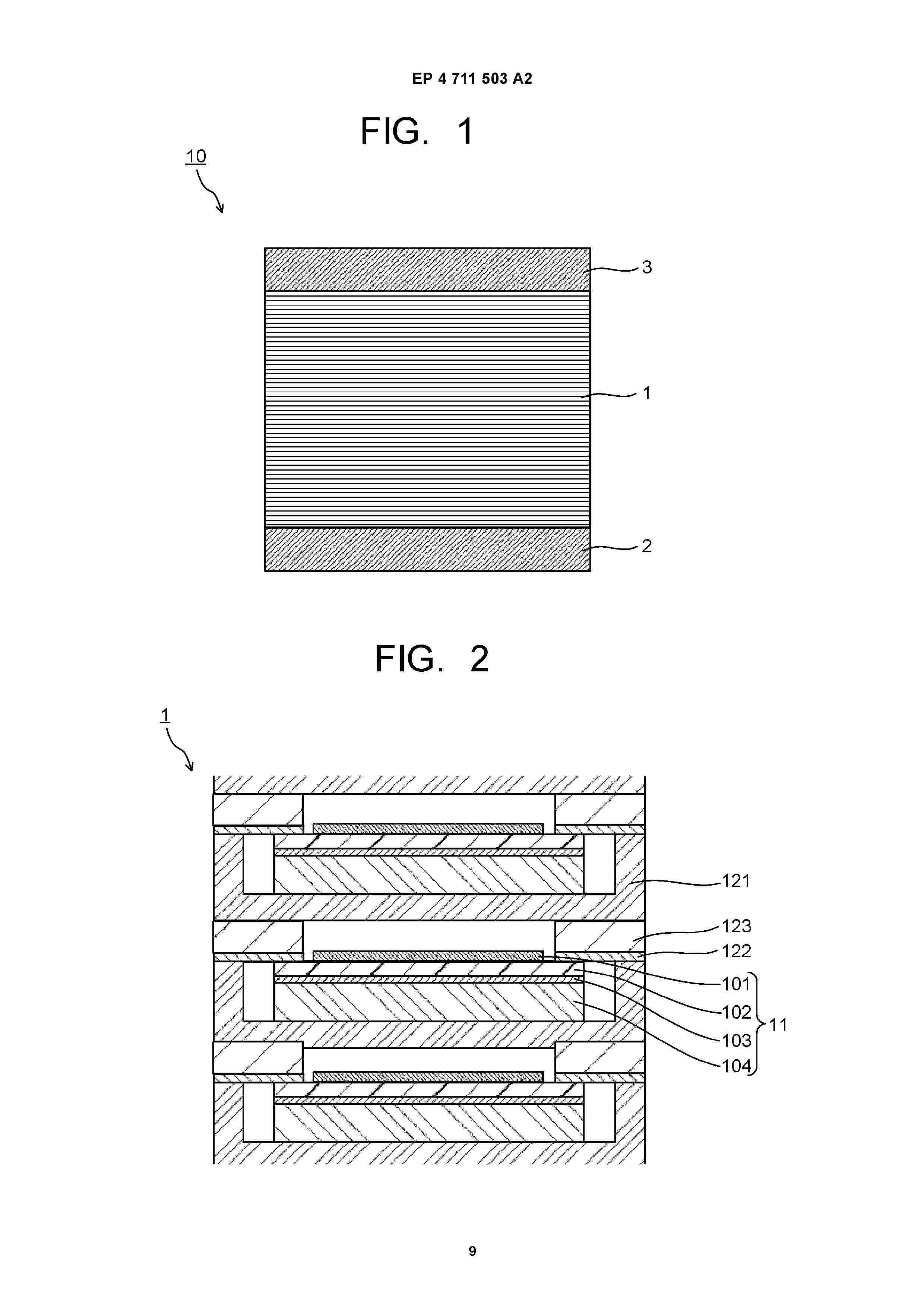
An electrochemical cell stack includes: a stack including electrochemical cells; a first clamping plate provided in contact with the stack; and a heat conduction member provided in contact with the first clamping plate. The heat conduction member is lower in heat conductivity than the first clamping plate under an operating temperature range of the electrochemical cell stack.
 BOPI
BOPI
 Sede Electrónica