Si deseas distinguir tus productos, servicios o ambos de los de otra empresa, es posible que necesites una marca o nombre comercial. Descubre qué son, en qué consiste su procedimiento de registro y qué implica.

Información sobre los plazos de presentación de solicitudes de transformación de marcas de la Unión Europea en marca nacional española. Más información


Si tienes un nuevo dispositivo, producto o procedimiento que resuelva un problema técnico o tenga una ventaja práctica, existen distintas formas de protegerlo en España y en otros países. Descubre cómo hacerlo.

¿Tu innovación reside en la estética, la ornamentación o la apariencia de tu producto? Protégela mediante un diseño industrial. Descubre qué derechos confiere el registro y cómo realizar la tramitación.

Las indicaciones geográficas protegen el nombre de un producto originario de una zona geográfica, a la cual le debe una determinada calidad, reputación u otra característica. Descubre qué son, en qué consiste su procedimiento de registro y qué beneficios conceden.

Las patentes publicadas en todo el mundo son una valiosa fuente de información científica, técnica y comercial.

Si eres emprendedor/a o una empresa y quieres potenciar y mejorar la rentabilidad de tu negocio protegiendo de forma adecuada los activos intangibles de tu organización, en este espacio encontrarás lo necesario.


 412
resultados
412
resultados
 Última actualización
24/10/2026 [07:41:00]
Última actualización
24/10/2026 [07:41:00]


 Resultados 200 a 225 de 412

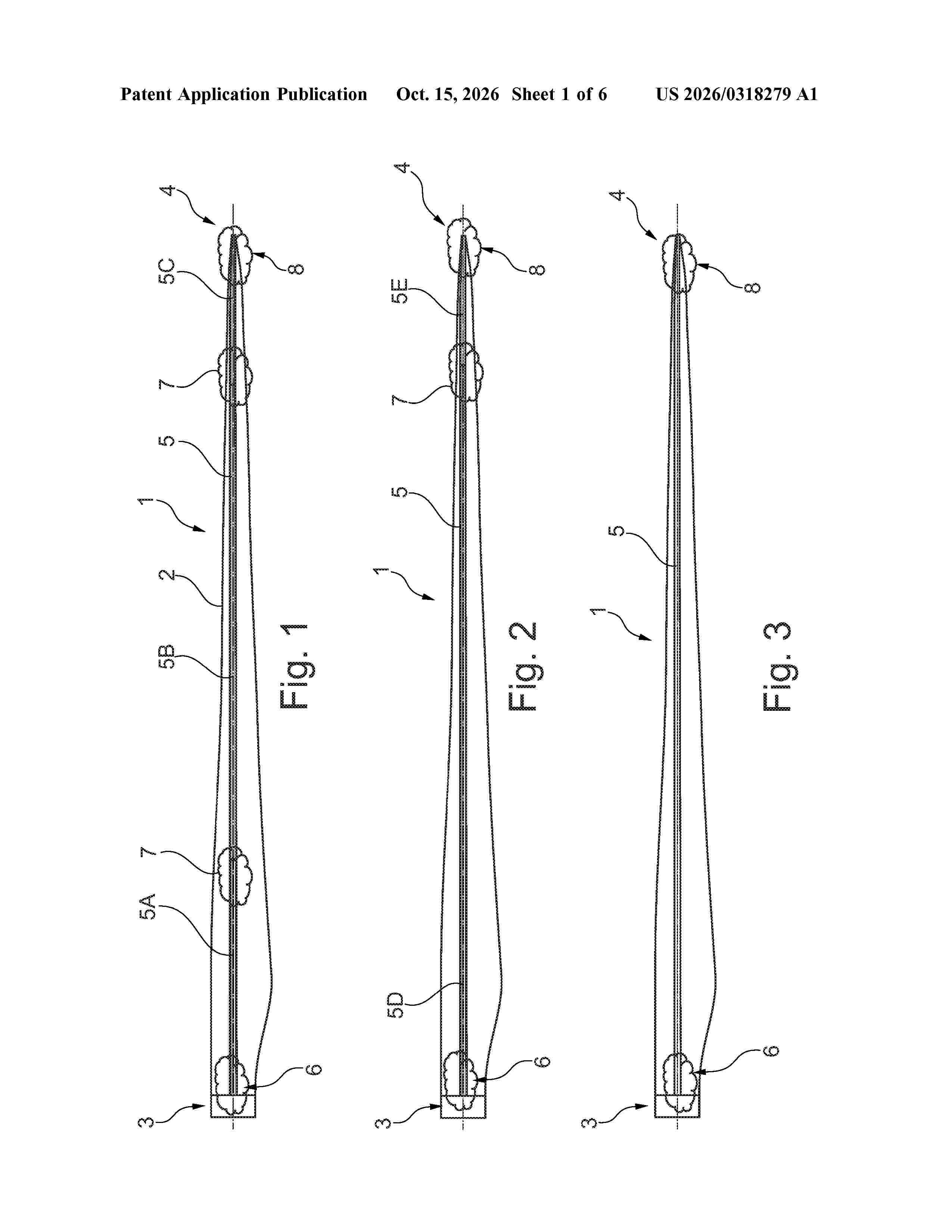
Resumen de: US20260318279A1
0000 A spar (5) for a wind turbine blade (1) having a shear web (10) with a spar cap (11) at each end. The spar caps (11) are formed of a stack of planks (12A, B) with offset termination faces (20). A connector (16) extends across a termination face (20) with a first surface of the connector being attached to two planks of the spar cap. The connector (16) may have an opposite face with a different geometry. This may be connected to transfer the load from the spar cap (5) to an adjacent component or between adjacent planks.

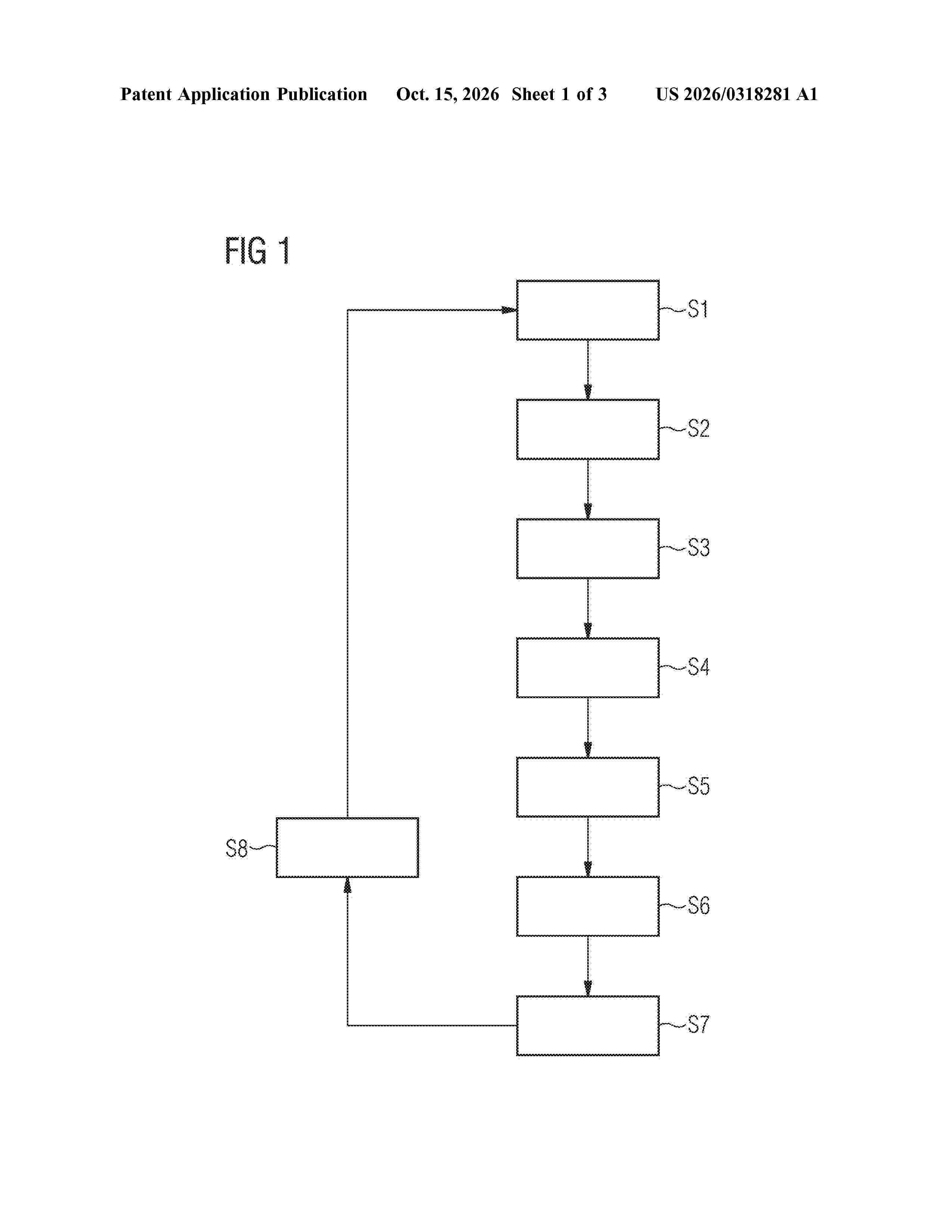
Resumen de: US20260318281A1
0000 A method for applying a film to an outer surface of a wind turbine blade or an inner surface of a casting mold for a wind turbine blade is provided. The method including: providing a wind turbine blade or a casting mold for a wind turbine blade; providing a film on a film roll; applying the film from the film roll to the outer surface of the wind turbine blade or to an inner surface of the casting mold for the wind turbine blade; smoothening the applied film.
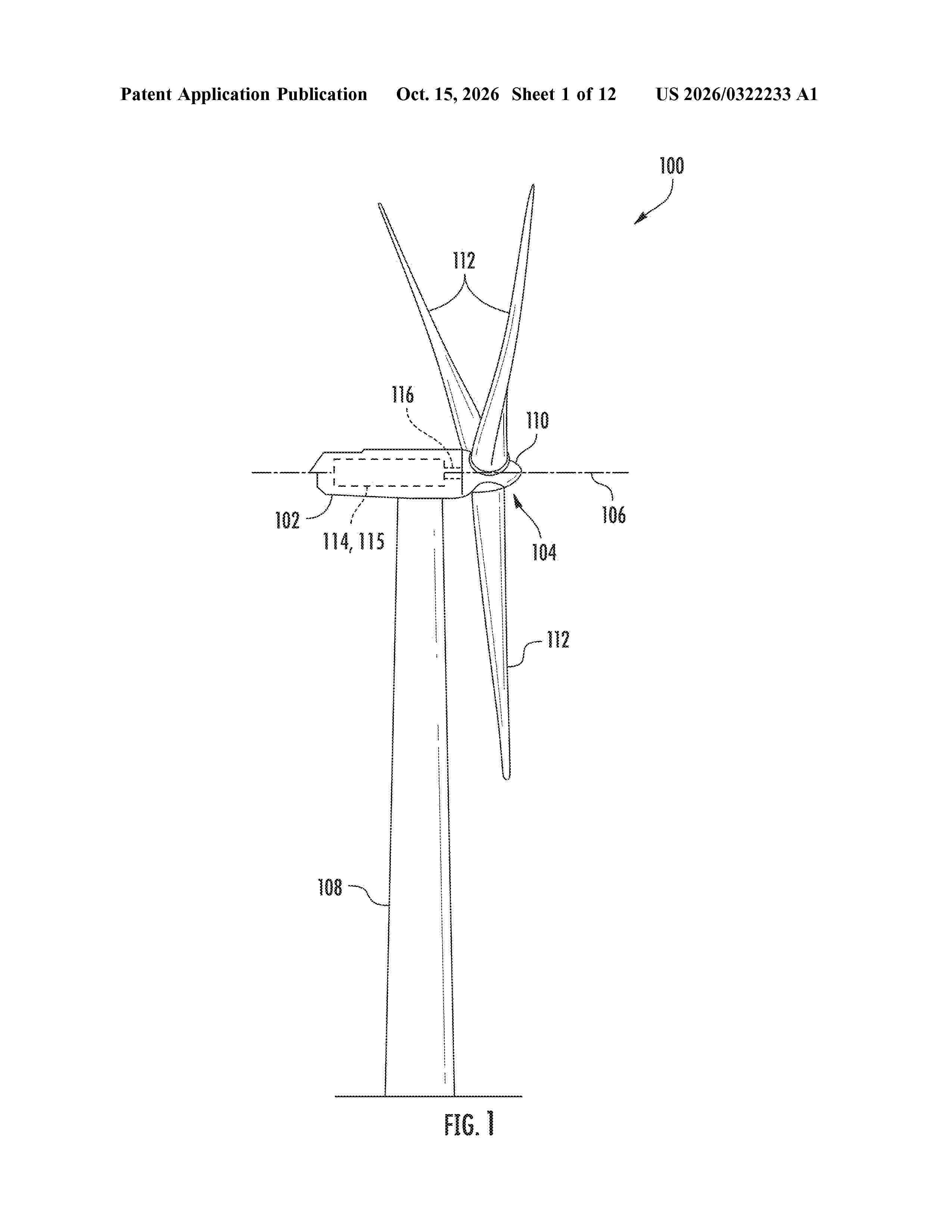
Resumen de: US20260322233A1
An electrical machine is provided. The electrical machine includes a coil support assembly including a plurality of coil support structures for receiving a plurality of conducting coils, the plurality of coil support structures arranged together in a generally circumferential arrangement. Each of the plurality of coil support structures includes a first face defining a cavity for receiving one of the plurality of conducting coils and opposing sides each including a joint component. Further, the joint components of adjacent coil support structures include corresponding male and female joint components secured together at a joint structure.
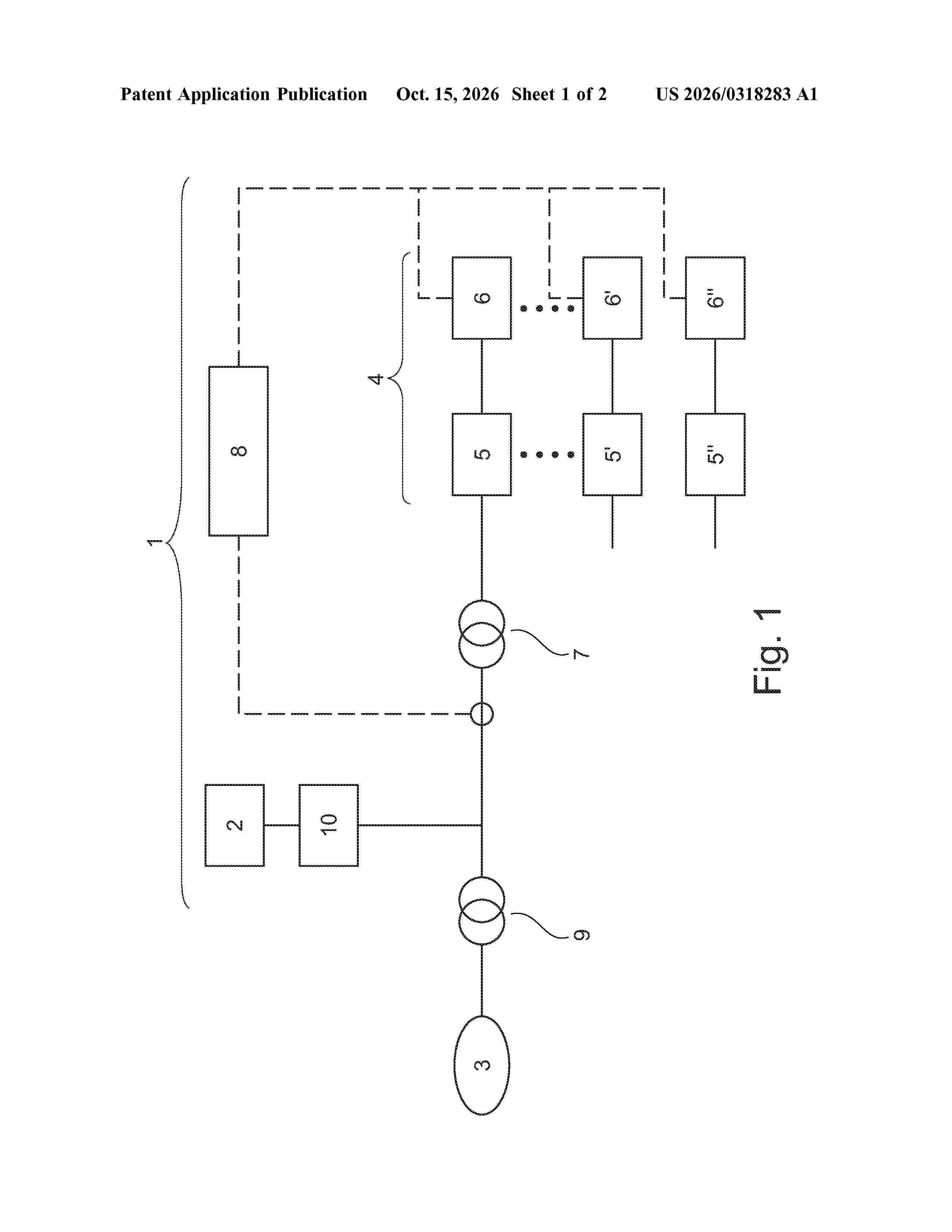
Resumen de: US20260318283A1
The present invention relates to a method for operating a wind turbine during an undervoltage event where a grid voltage drops to an undervoltage value, wherein the wind turbine comprises a generator being operatively connected to a power grid, an auxiliary system comprising one or more auxiliary electrical components and one or more auxiliary electrical loads, an auxiliary transformer being operatively connected on a primary side to the generator and to the power grid, and being operatively connected on a secondary side to the auxiliary system, and a load controller being arranged to reduce one or more auxiliary electrical loads in the auxiliary system in response to a detected undervoltage event, the method comprising the steps of determining, using the load controller, that an undervoltage event has occurred, and reducing, using the load controller, one or more auxiliary electrical loads in the auxiliary system thereby preventing tripping of one or more auxiliary electrical components or tripping of the entire wind turbine. The present invention also relates to a wind turbine arranged to perform this method.
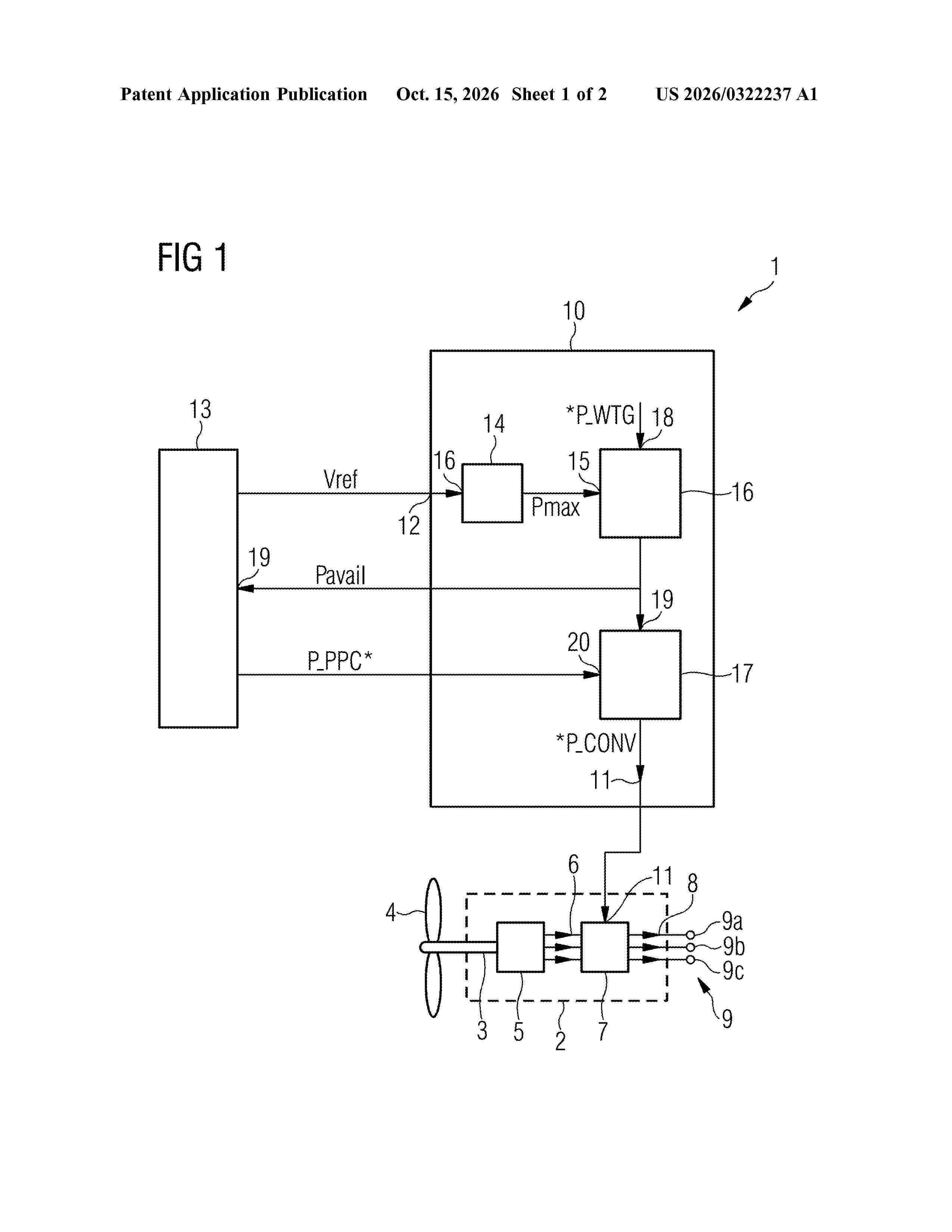
Resumen de: US20260322237A1
0000 It is described a method of boosting power output of a wind turbine above a nominal power output, the method comprising: determining dynamically a maximum active power production limit (Pmax) in dependency of a voltage (Vref) related to a wind turbine output terminal; setting a power output of the wind turbine, during a power boost operation, to be lower than or equal to the maximum active power production limit (Pmax).
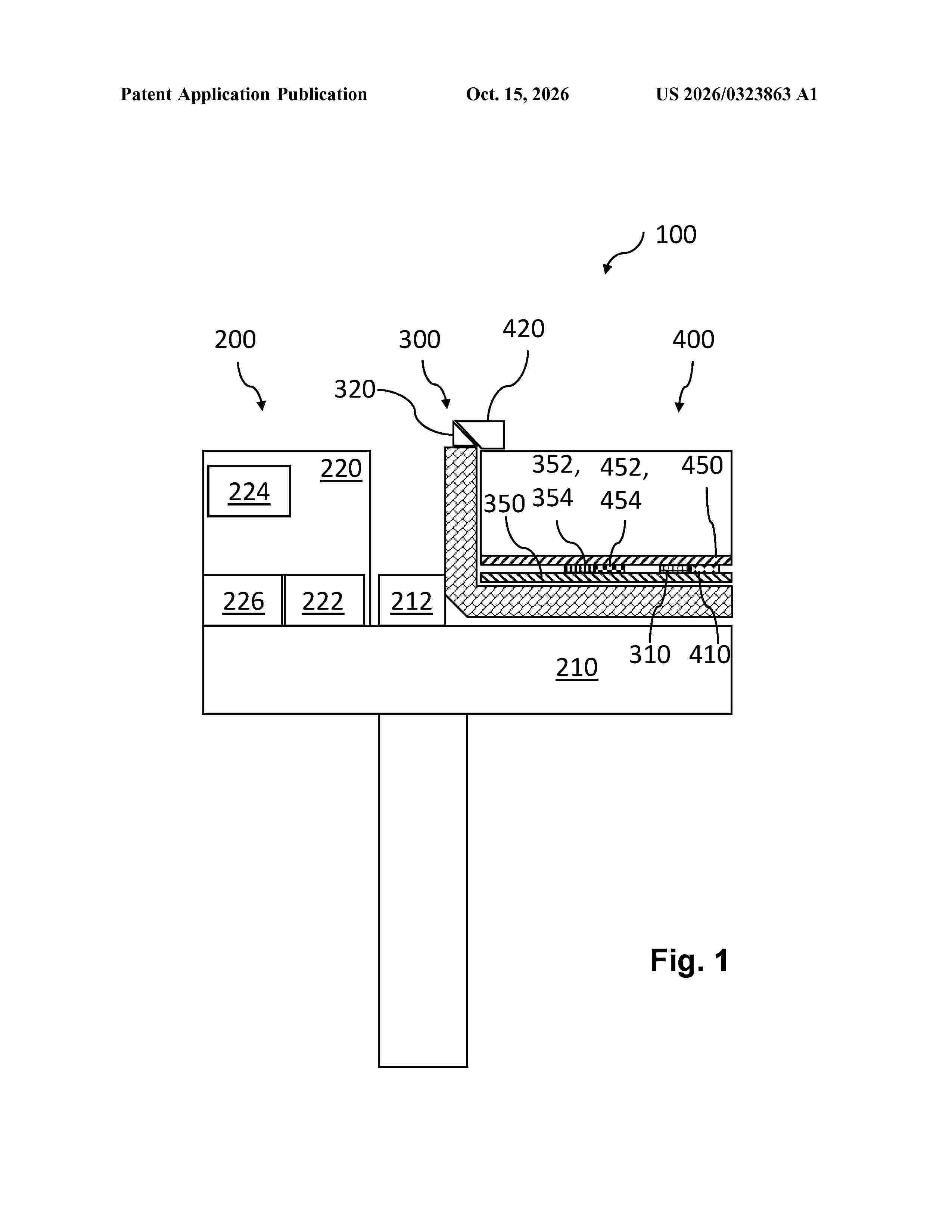
Resumen de: US20260323863A1
0000 A system and method for interfacing a module for computation with local 5 infrastructure is provided. The object of the invention is achieved using a receptacle (300) for a module (400) for computation, wherein the receptacle (300) comprises a mating interface (350), and module interface (450) for a module (400) for computation, wherein two interfaces are matched.
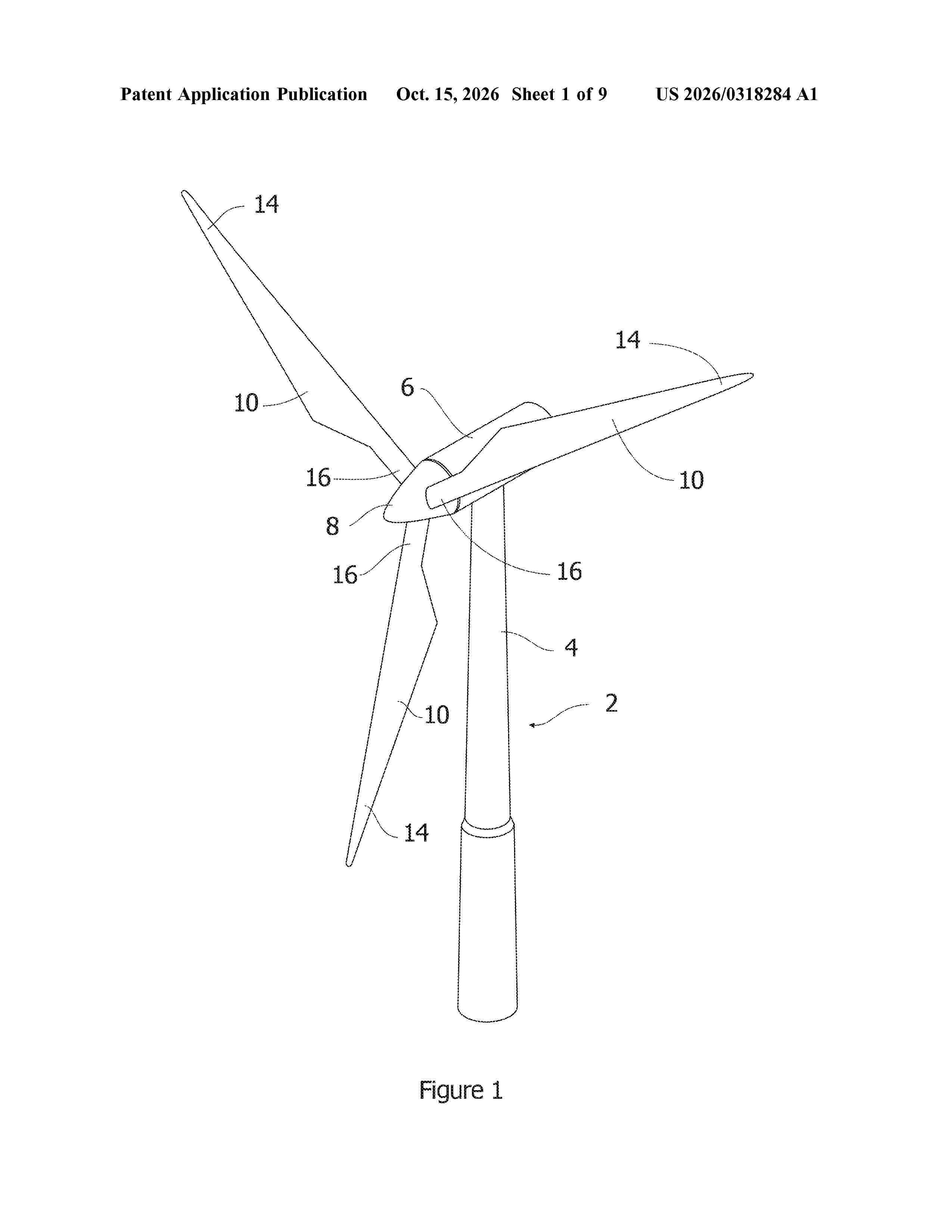
Resumen de: US20260318284A1
A wind turbine blade comprising suction and pressure side shell parts of an aerodynamic shell body extending in a longitudinal direction between a root end and a tip end and in a transverse direction between a leading edge and a trailing edge, and an electro-thermal system comprising suction and pressure side heating layers comprising electrically conductive fibres to mitigate ice formation on the wind turbine blade; suction and pressure side metallic lightning protection layers for receiving a lightning strike and arranged exteriorly to and overlapping the heating layers; and a down conductor being electrically connected to the metallic lightning protection layers so as to be able to conduct a lightning strike current from the metallic lightning protection layers to a root of the wind turbine blade, wherein the electro-thermal system comprises at least one equipotential bonding conductor electrically connecting the electrically conductive fibres of the suction side heating layer and the electrically conductive fibres of the pressure side heating layer to form an equipotential bonding;
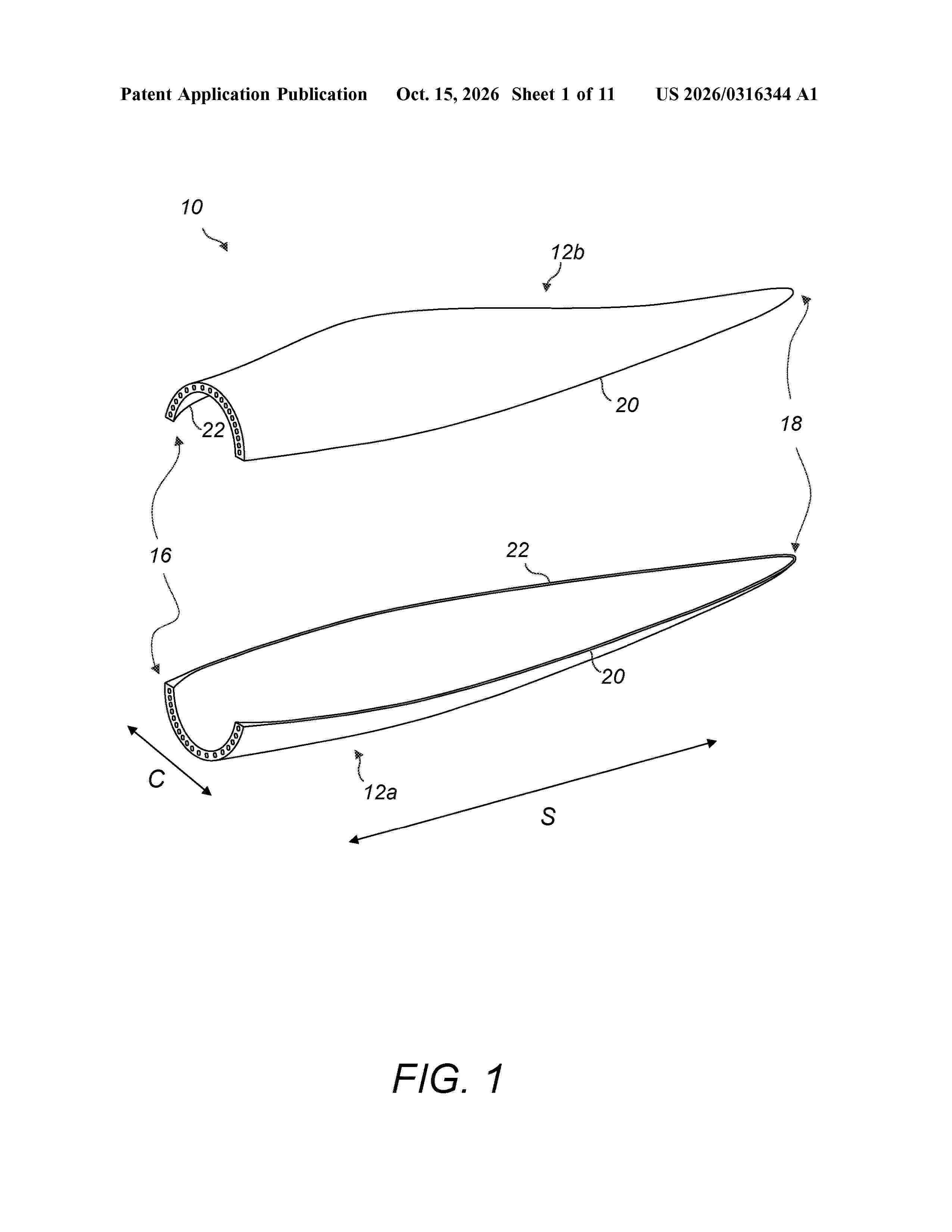
Resumen de: US20260316344A1
According to an aspect of the invention there is provided a reconfigurable mould assembly for the manufacture of wind turbine blades having different geometries. The mould assembly comprises a mould skin extending longitudinally in a spanwise direction and transversely in a chordwise direction. The mould skin defines a mould surface shaped to form a half shell of a wind turbine blade. The mould skin comprises a plurality of spanwise sections for arrangement end to end in a spanwise direction to form the half shell. The plurality of skin sections include one or more inboard skin sections for forming a root end of the half shell, and one or more outboard skin sections for forming a tip end of the half shell. The mould assembly further comprises a main frame comprising a series of independent main frame modules arranged end to end in the spanwise direction. The main frame modules include one or more inboard main frame modules for supporting the one or more inboard skin sections and one or more outboard main frame modules for supporting the one or more outboard skin sections. The mould assembly further comprises an intermediate support structure attached to a reverse side of each mould skin section. The intermediate support structure(s) attached to the inboard skin section(s) are releasably connectable to the inboard main frame module(s). The intermediate support structure(s) attached to the outboard skin section(s) are releasably connectable to the outboard main frame module(s).
Resumen de: US20260318285A1
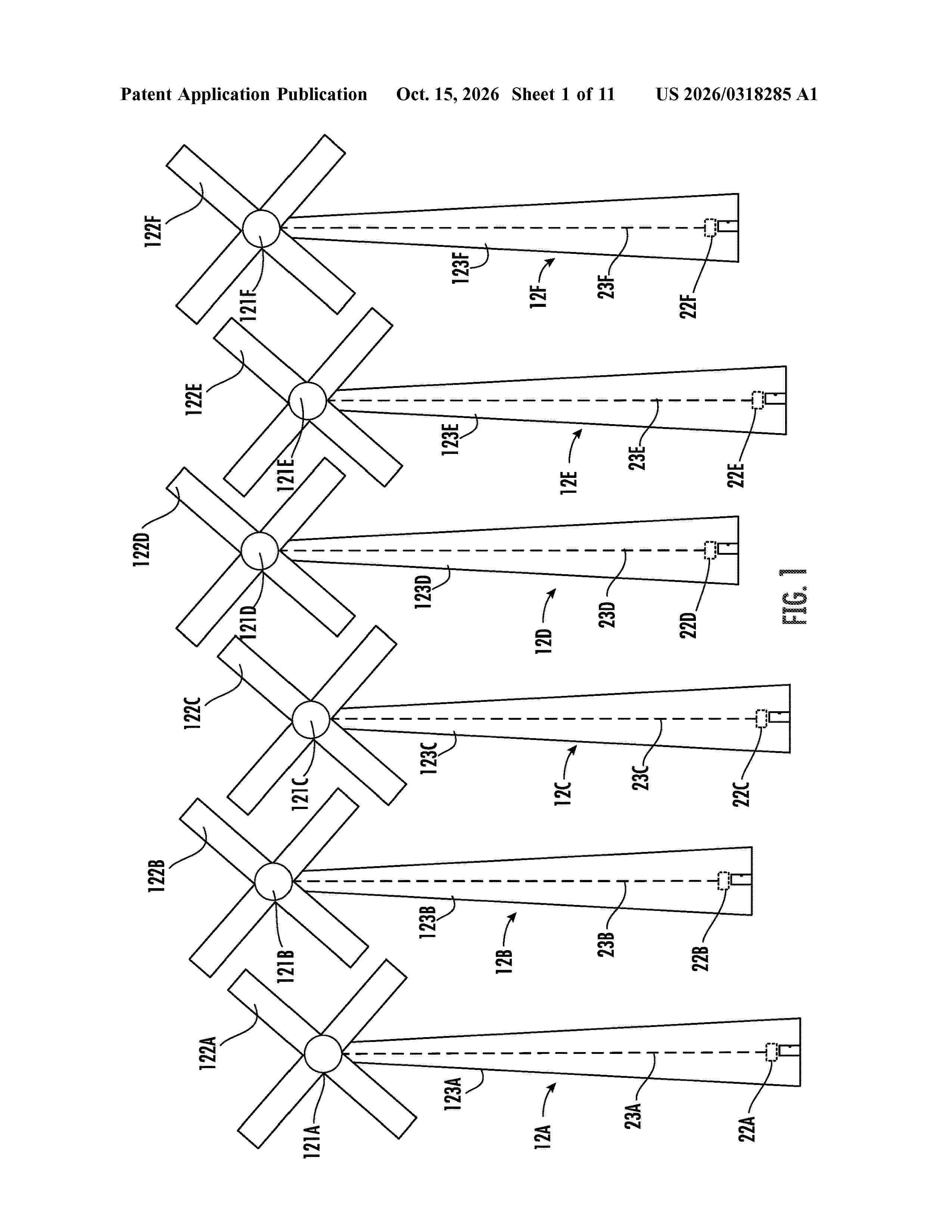
0000 A lift system for a wind turbine includes an elevator car disposed inside the wind turbine. The elevator car includes a platform to support a worker, a sidewall extending from the platform, and a top portion coupled with the sidewall. The platform, sidewall, and top portion define a cabin. The lift system includes a traction hoist coupled with the top portion. The traction hoist is configured to move the elevator car within the wind turbine. The lift system includes a control panel operably coupled with the traction hoist. The control panel is configured to receive an input to control the traction hoist. The lift system includes a portable battery configured to power the traction hoist. The portable battery is configured to be removably coupled with the elevator car to electrically couple the portable battery with the traction hoist.
Resumen de: US20260318282A1
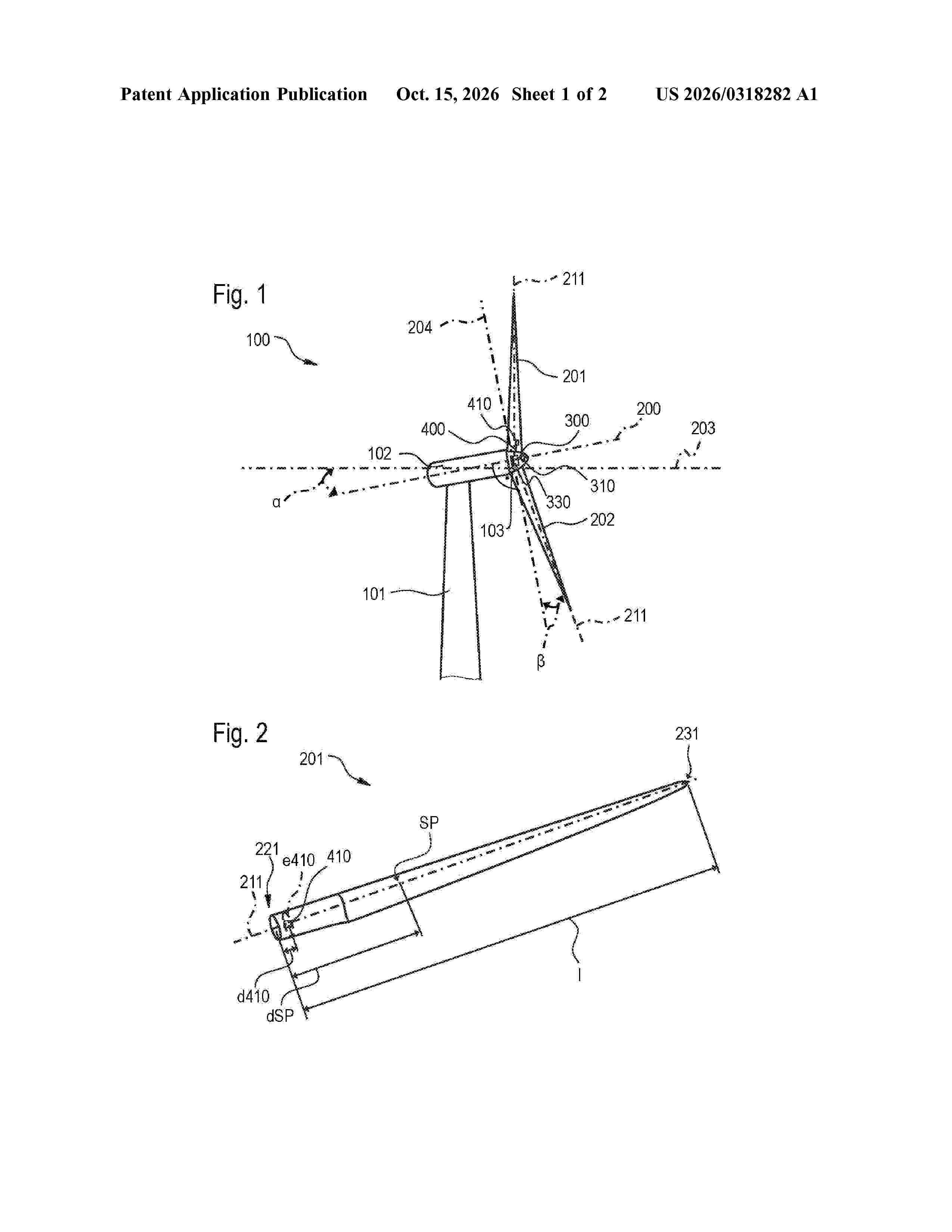
A computer-implemented method for adjusting a blade load measurement system having a strain sensor on a rotor blade of a wind turbine, having the following steps: measuring an acceleration with an acceleration sensor; determining a reference bending moment and/or a reference axial force based on the measured acceleration; determining a measured bending moment and/or a measured axial force based on measured values from the strain sensor of the blade load measurement system and an adjustment parameter set with initial adjustment parameter values associated with the blade load measurement system; determining a deviation of the reference bending moment and/or the reference axial force from the measured bending moment and/or the measured axial force; adapting the adjustment parameter values of the adjustment parameter set for the blade load measurement system such that the deviation is less than or equal to a threshold value.
Resumen de: WO2026214927A1
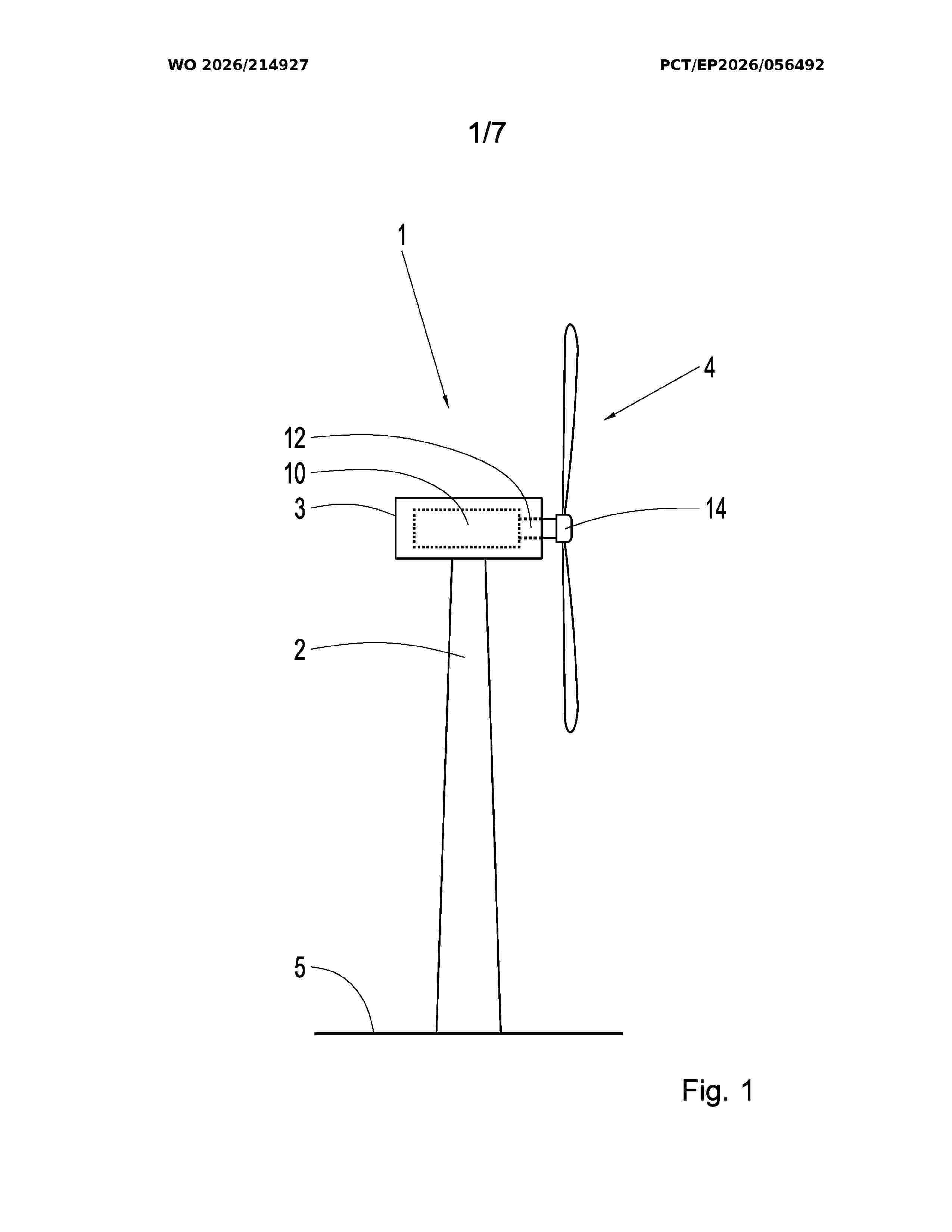
The invention relates to a gearbox (20) for a wind turbine (1). The gearbox has a drive shaft (30) for receiving mechanical power from a rotor (4) of the wind turbine (1), and a drive gear (32) which is connected to the drive shaft (30) for conjoint rotation. The gearbox has an output shaft (40) which is axially parallel to and spaced apart from the drive shaft (30) and can be mechanically coupled to a generator unit (50) to transmit mechanical power. The gearbox has an output gear (42) which is connected to the output shaft (40) for conjoint rotation. The output gear has a toothing portion (44; 46) for receiving torque from the drive gear (32). The output shaft (40) has a power transmission interface (49) for connection to the generator unit (50). In an axial direction (90) of the output shaft (40), the power transmission interface (49) overlaps a region (43) between axially outer ends of the toothing portion (44; 46) of the output gear (42). The invention also relates to a drive train (10) and to a wind turbine (1).
Resumen de: WO2026217696A1
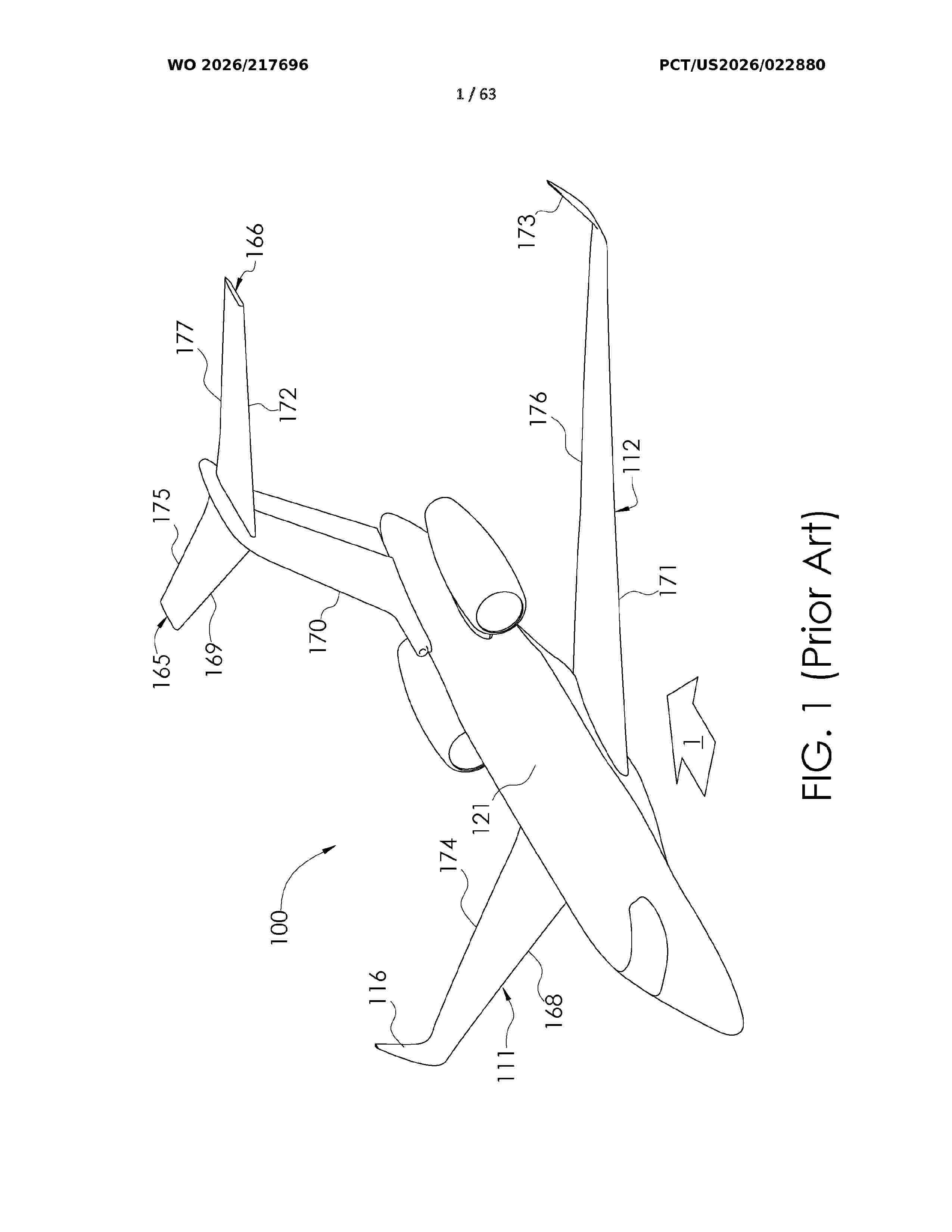
ABSTRACT A flow transitioner configured so as to define a pressure surface and a suction surface when exposed to relative fluid flow is positioned and oriented with respect to an associated wing, stabilizer, blade or other foil so as to affect fluid flow impacting such foil irrespective of the foil's orientation to the fluid flow or, with respect to a rotor blade, propellor, or other rotating foil, irrespective of the longitudinal axis (axis of rotation) or direction of rotation of the rotating foil, to alter the lift-to-drag ratio of the foil. Embodiments include flow transitioners of variable angle, curvature, thickness, length, and/or leading edge nose circle diameter.
Resumen de: WO2026215543A1
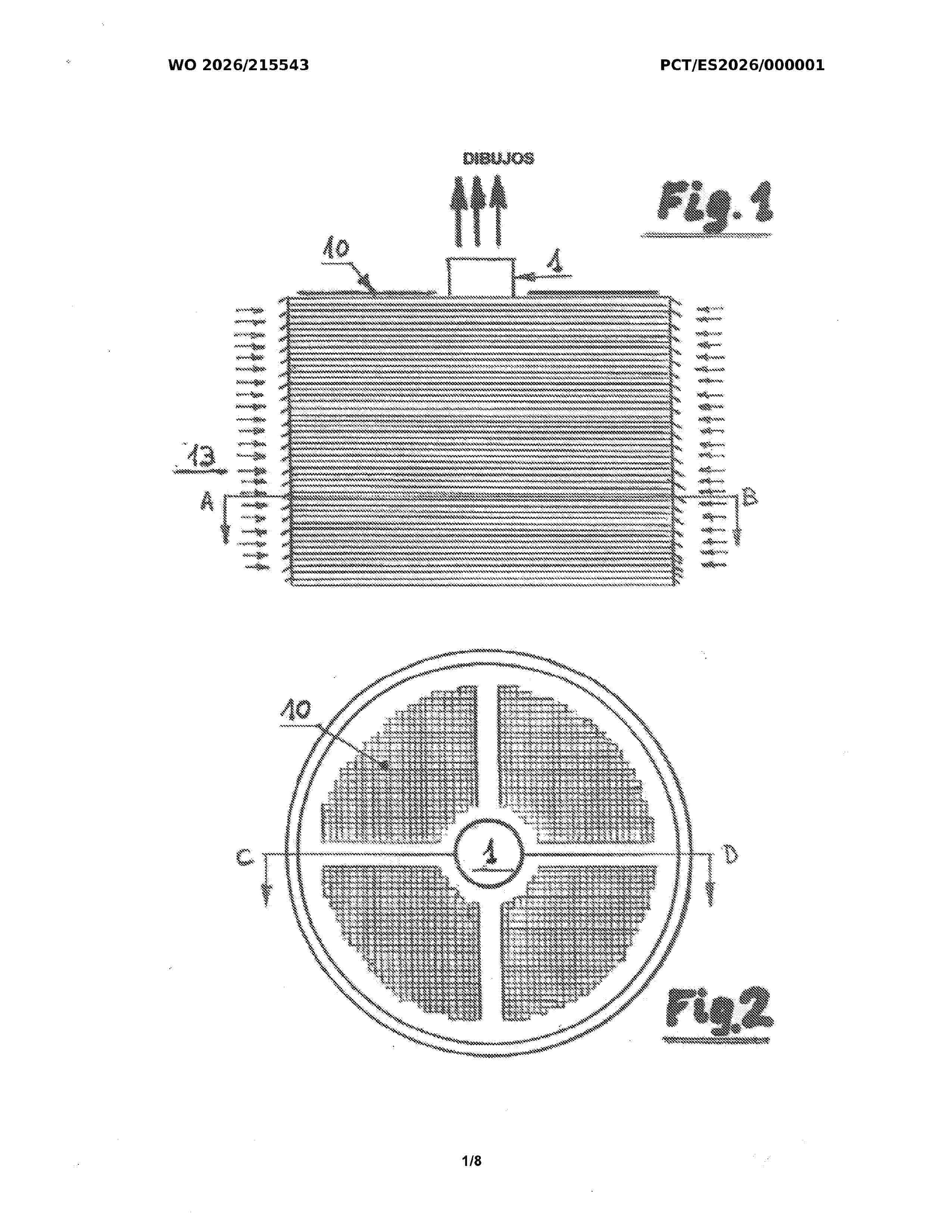
The present invention relates to a structural installation that regenerates the atmosphere in large cities using nature itself (Fig.3). The ambient air is heated by capturing solar energy (solar panels (10)) and it is taken to a central vertical duct where it rises, as the temperature of the air is higher than that of the environment. This contaminated air moves to the chimney through large holes where wind turbines (8) are installed. The wind turbines harness the kinetic energy of the treated air to convert it into electrical energy. In order to regenerate large masses of contaminated air, the invention is designed with 25 superimposed levels with a total height of 150 m and a width of 200 m. This air rises rapidly due to the applied heat and exits the chimney at high speed. This causes the air to rise to the upper layers of the atmosphere.
Resumen de: WO2026215625A2
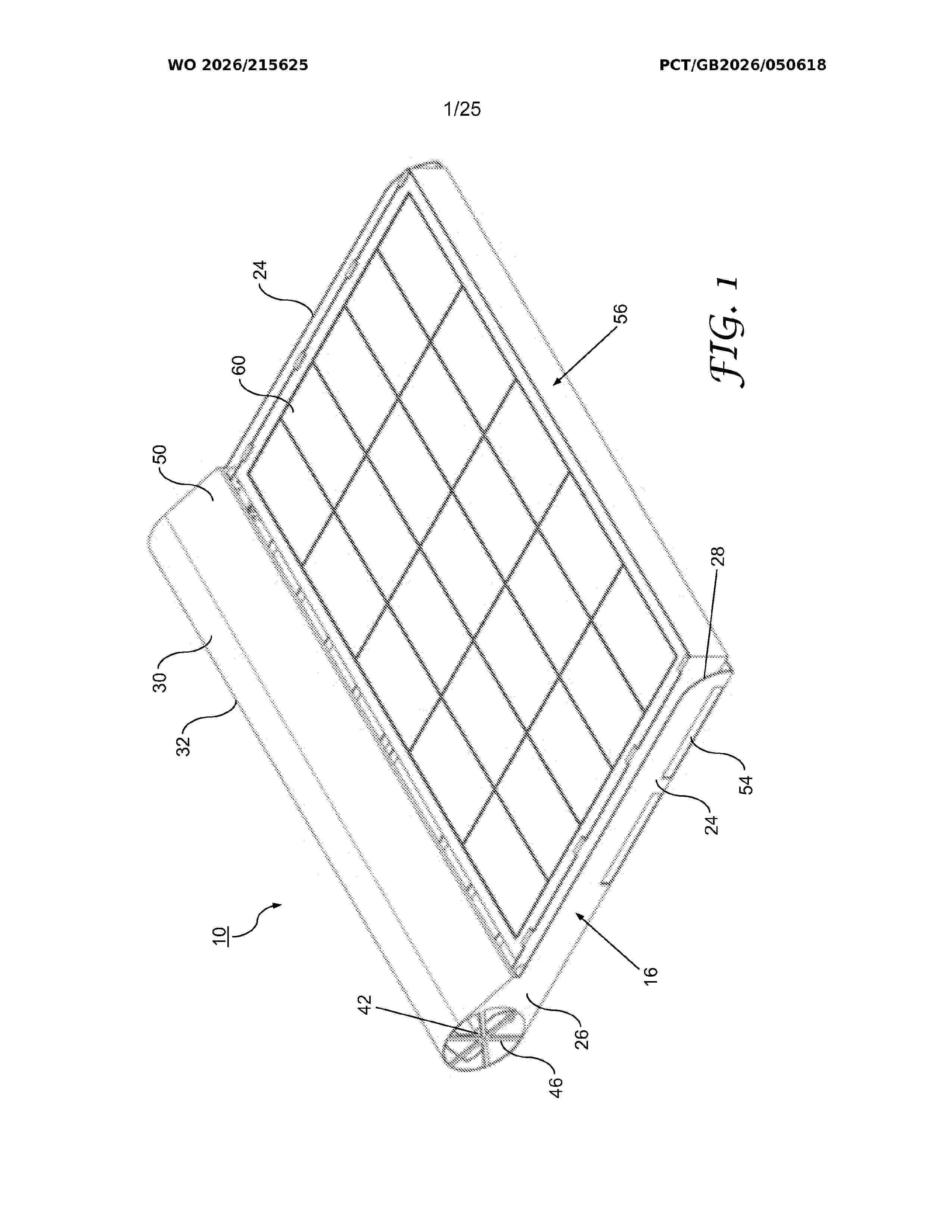
The present invention relates to a solar-wind generation apparatus for a pitched roof structure, the apparatus comprising: a base unit being attachable to the roof structure; a turbine housing disposed along an edge of the base unit, the turbine housing receiving a wind turbine rotatably supported therein; a positionable air-directing member pivotally connected to the base unit, the air-directing member being positionable to direct airflow into the turbine housing; and a solar energy collector affixed to the air-directing member, wherein the solar-wind generation apparatus generates electrical energy from both solar and wind sources.
Resumen de: WO2026215032A1
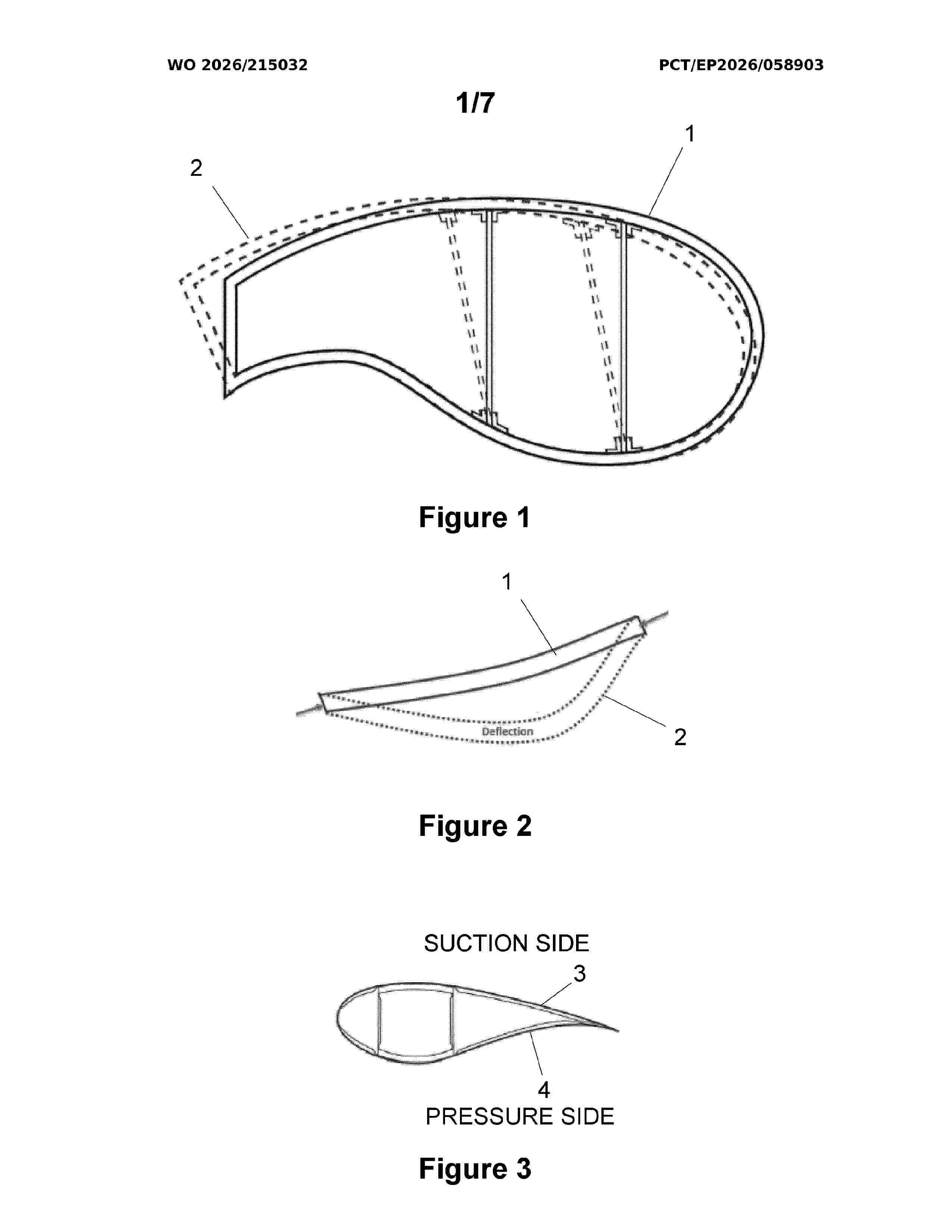
A wind turbine blade comprising a blade shell with an aerodynamic profile having a suction side and a pressure side, wherein a plurality of lattice elements which are generally V-shaped or U-shaped are disposed along at least part of the length of the blade, each being mounted between the pressure side and suction side of the blade shell, wherein a proximal end of the lattice element is positioned on or towards the pressure or suction side and distal ends of legs extending from the proximal end extend towards or against the respective other pressure side or suction side.
Resumen de: WO2026216998A1
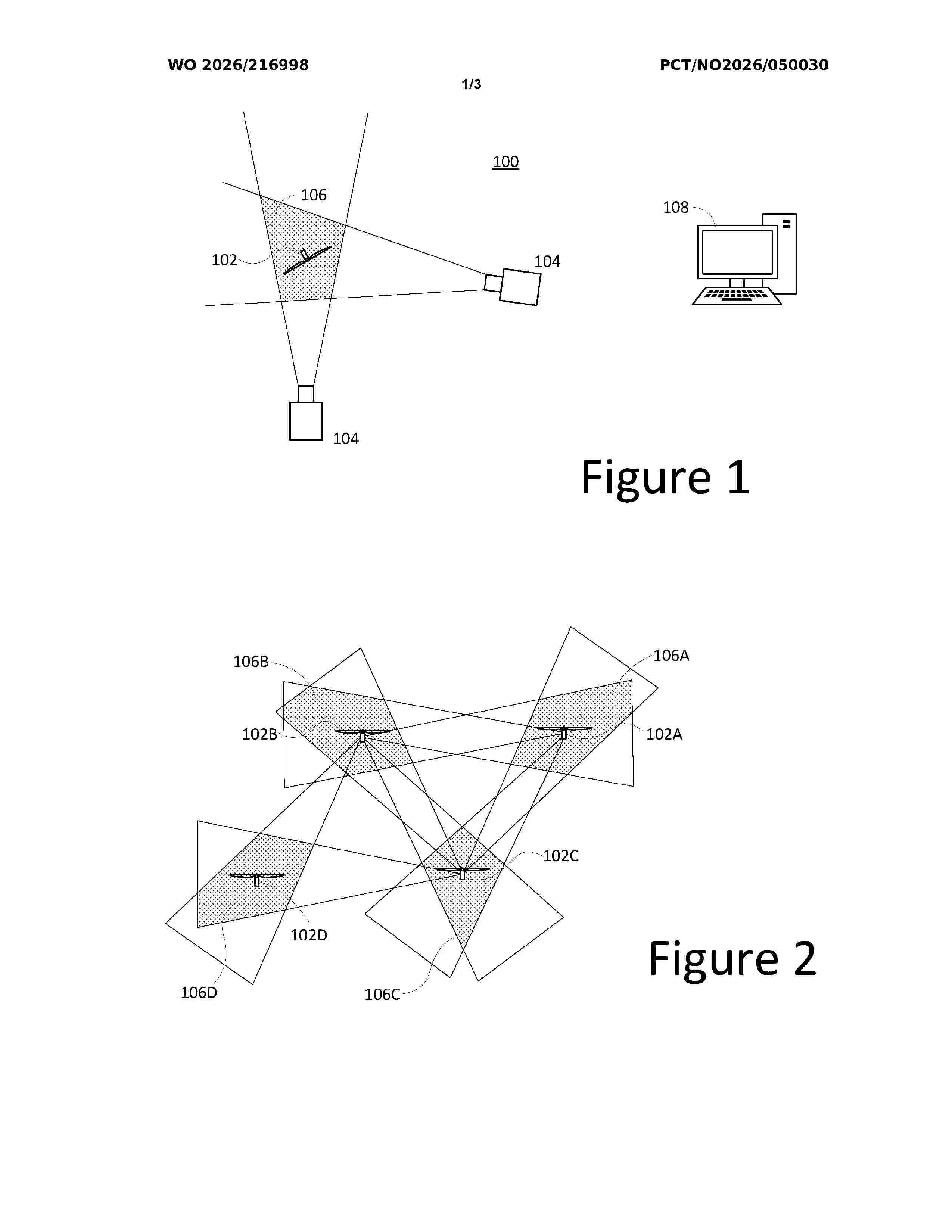
A method and system are provided for detecting collisions between flying objects (114) and wind turbine generators (102). A plurality of cameras (104) is positioned to monitor a wind turbine (102) from multiple points of view, with each camera (104) connected to a local computing unit (108) configured to execute computer vision and machine learning algorithms to detect and track flying objects in captured image data. When a characteristic of a flight trajectory consistent with a potential collision is detected, the local computing unit (108) transmits time-stamped event data to a central computing unit (110). A collision event is confirmed when the central computing unit receives data with corresponding time stamps from at least two cameras (104) monitoring the same turbine (102). The invention enables accurate detection of actual collisions while supporting integration with bird detection and mitigation systems (112) using shared sensors.
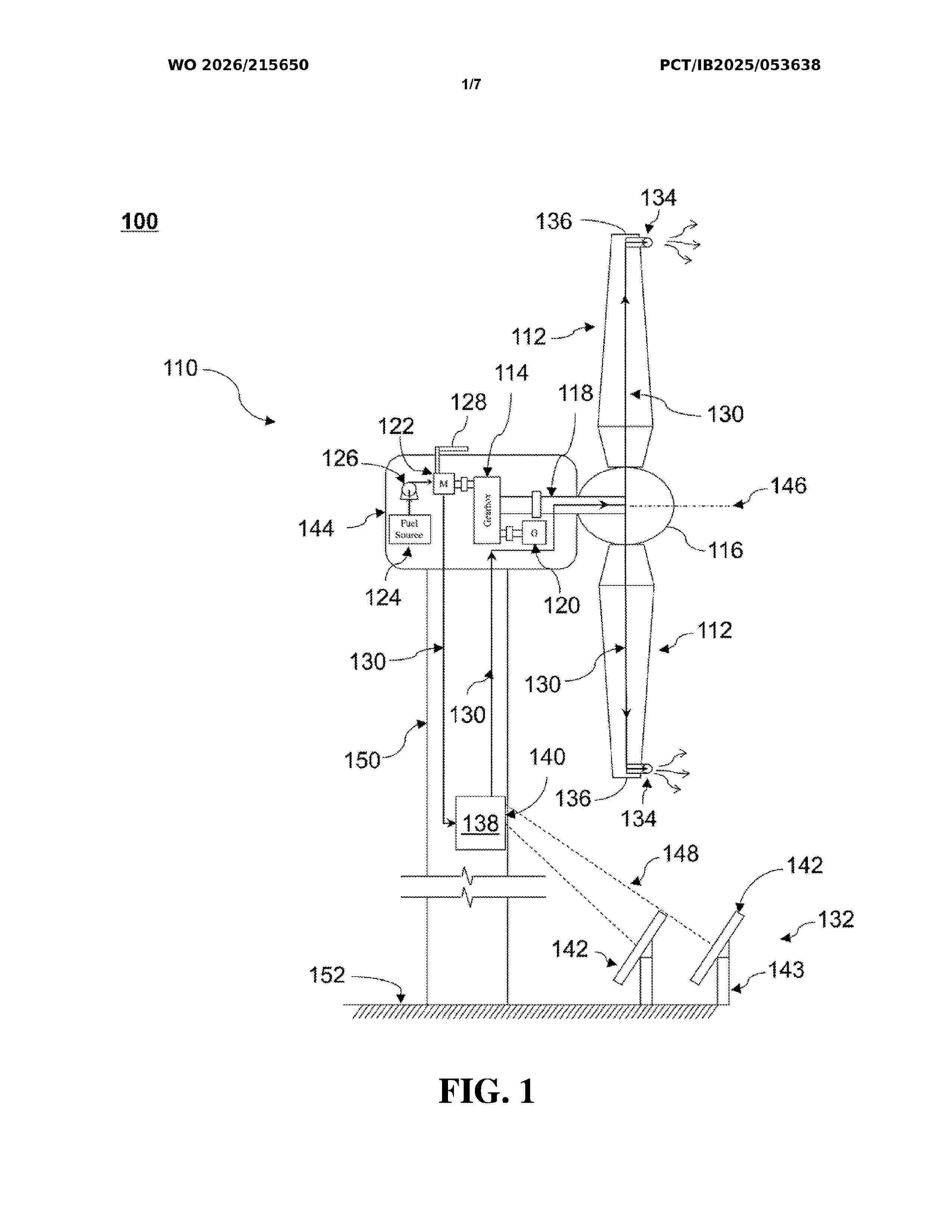
Resumen de: WO2026215650A1
A system for electric power generation is disclosed. The system may comprise a wind turbine and an internal combustion engine unit. The wind turbine may comprise a flow channel extending inside a blade of the wind turbine, between a rotor hub of the wind turbine and a tip of the blade, and a nozzle disposed at the tip and at a trailing edge of the blade and connected in fluid communication with the flow channel. The nozzle may be selected from a group consisting of convergent nozzle and converging-diverging nozzle. The nozzle may be configured to discharge a flow substantially perpendicular to a rotational axis of the rotor hub. Furthermore, the internal combustion engine unit may be connected in fluid communication to the flow channel.
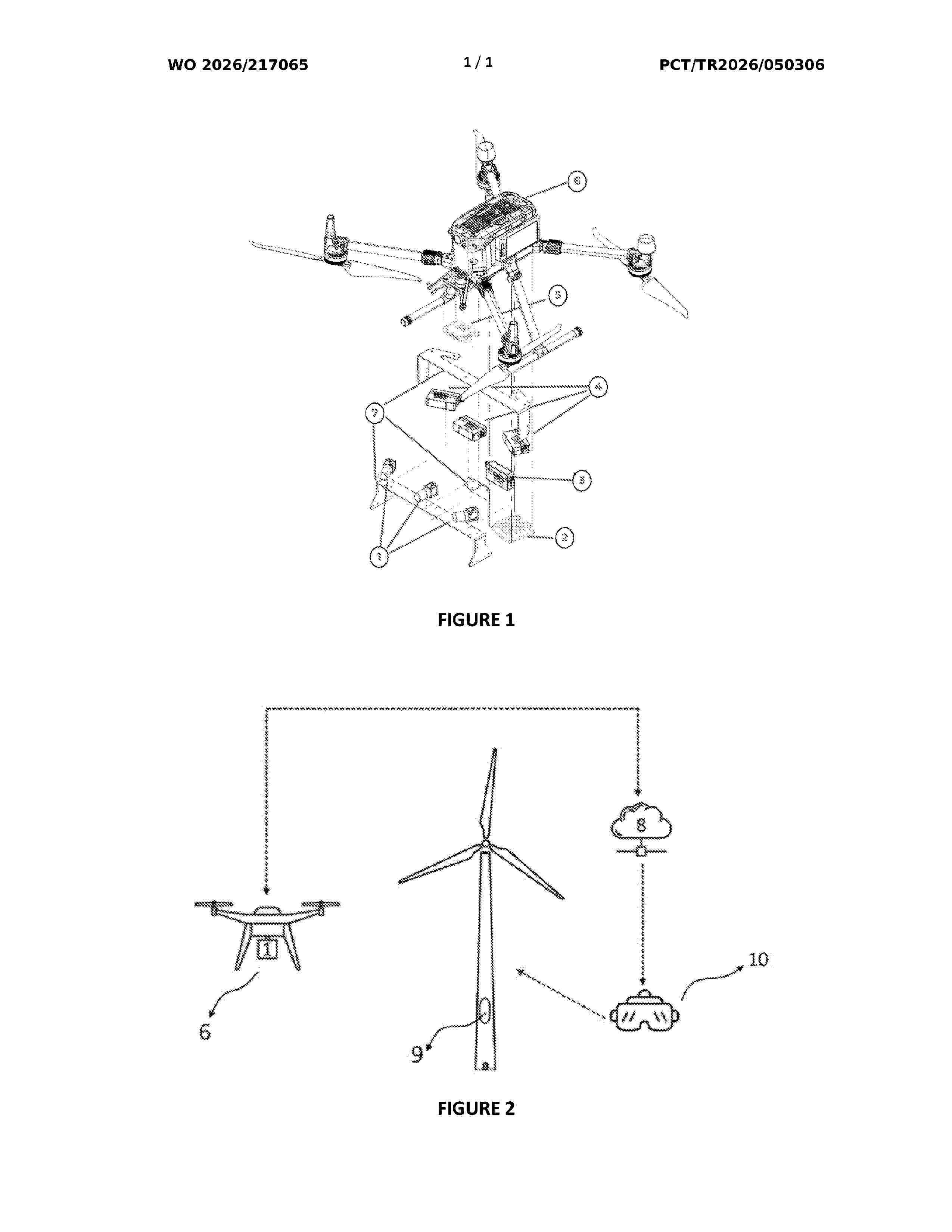
Resumen de: WO2026217065A1
The invention relates to an artificial intelligence and virtual reality assisted wind turbine damage detection, analysis and reporting system developed for damage inspections and reporting of blades of wind turbines located in regularly maintained wind power plants, that enables the capturing of images of wind turbine blades from different angles via high-speed industrial cameras, the merging of these images, and the obtaining of a 3-dimensional image from the captured images/data; enables damages on the captured images to be detected and marked by the artificial intelligence thereon, and the damage type and sizes to be presented to the customer in the form of a report; enables the optimization of the repair time required for damage repair by means of the precise 3-dimensional image data generated, the optimization of repair materials to be used during repair with the developed algorithm, and the use of the 3-dimensional image in the repair process accompanied by the virtual reality headset (10) provided to repair teams; and enables the detection of anomalies on turbine blades via vibration sensors (9) mounted on turbine bodies, the correlation and interpretation of captured images with the detected anomalies using the developed algorithm, the extraction of a structural map of the turbine by means of the regularly interpreted data from the data flow coming from the turbine, and real-time reporting to turbine owners.
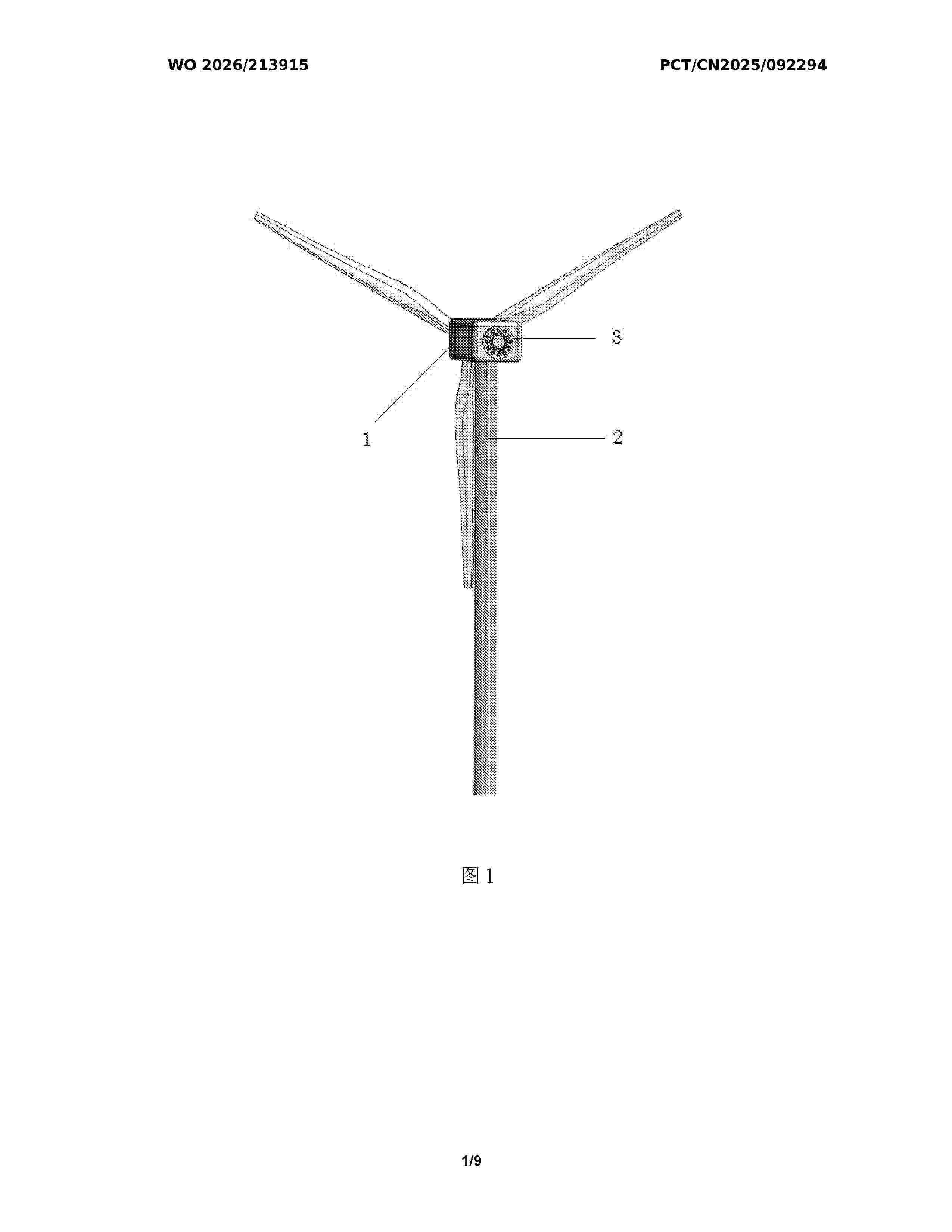
Resumen de: WO2026213915A1
An active control optimization system for wind turbine wakes, wherein atomized water droplets are sprayed to reduce the temperature of wake air and increase the density thereof, thereby increasing wind speed and improving inflow conditions for downstream wind turbines. The system comprises a water supply device (2), a high-pressure atomization device (3), and a control unit. The water supply device (2) is used for supplying water to the high-pressure atomization device (3); the high-pressure atomization device (3) atomizes the water and sprays the atomized water into a wake region, causing water droplets to vaporize and absorb heat, thereby achieving air cooling and an increase in air density. The system improves the power generation efficiency of wind farms, prolongs the service life of wind turbines, and is applicable to both offshore and onshore wind farms. In addition, the present invention also relates to an active control optimization method for wind turbine wakes.
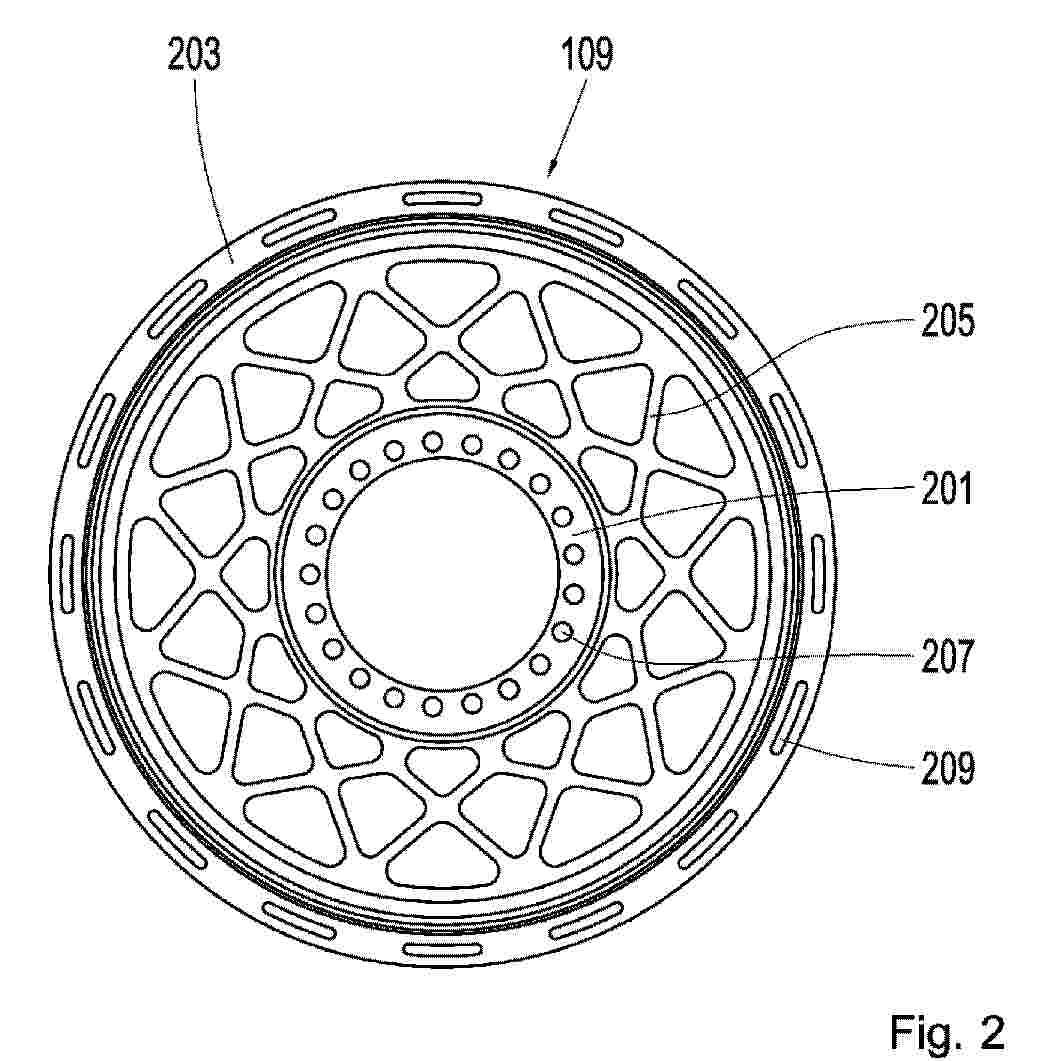
Resumen de: WO2025119558A1
The invention relates to a rotor hub (109) comprising a first screwed flange (201) for screwing together with an output shaft or output hub (107) of a gearing (101) of a wind turbine, and further comprising a second screwed flange (203) for screwing together with a rotor (111) of a generator (103) of the wind turbine. The one or more screw holes (209) of the second screwed flange (203) are slotted holes.
Resumen de: JP2026165841A
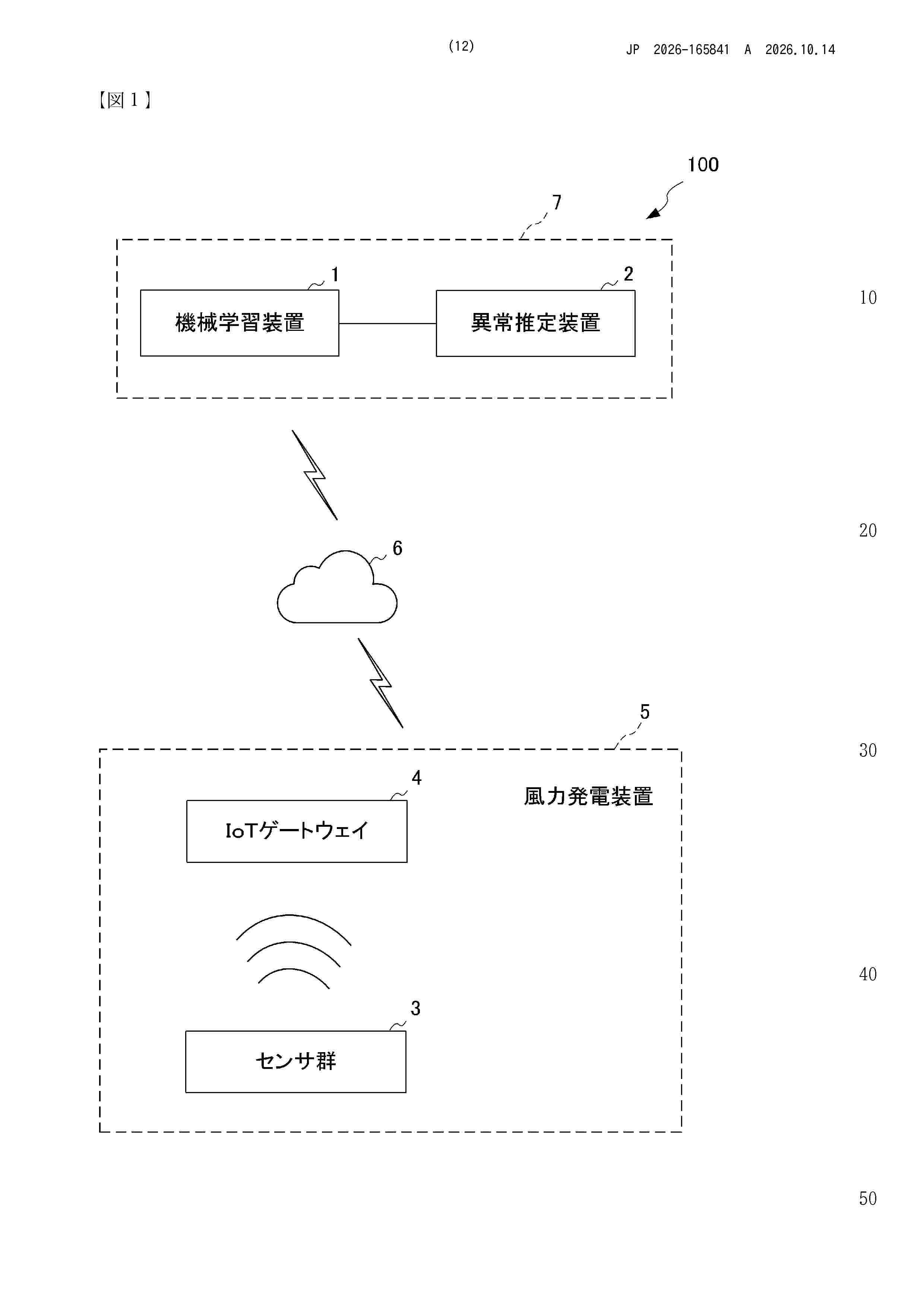
【課題】様々な異常の発生の有無及び発生した異常の原因をより迅速に推定するための学習モデルを構築できる機械学習装置及び異常推定装置を提供すること。【解決手段】機械学習装置1は、風力発電装置5に配置された振動センサ31によって検出された振動波形を少なくとも含むデータ群を入力データとして取得する入力データ取得部11と、風力発電装置5における異常の発生の有無及び異常が発生した場合の異常原因をラベルとして取得するラベル取得部12と、入力データとラベルとの組を教師データとして教師あり学習を行うことにより、風力発電装置5における異常の発生の有無及び異常原因を推定するための学習モデルを構築する学習モデル構築部14と、を備える。【選択図】図4
Resumen de: WO2025120536A1
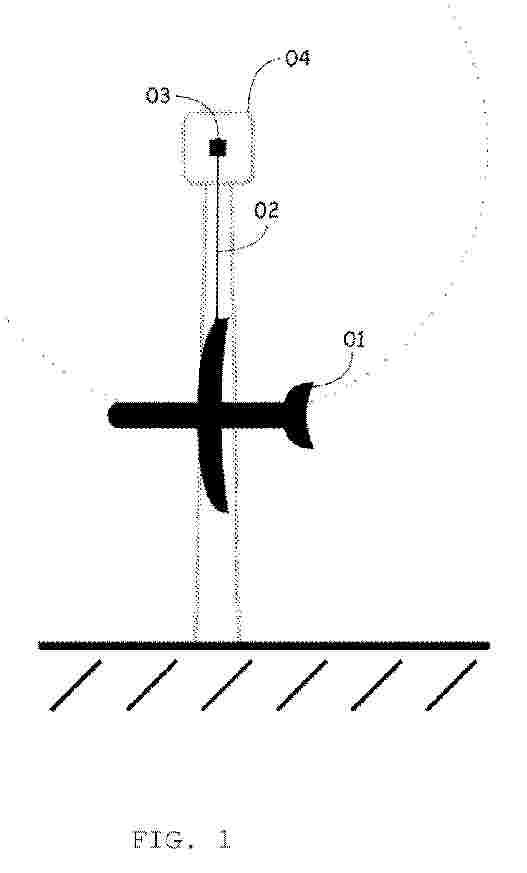
The present invention relates to a vertical tethered aircraft system for circular launching, transition to flight and recovery of tethered aircraft which uses the vertical plane to initiate launching and to terminate recovery. The vertical tethered aircraft system comprises a tower (04), a fixed-wing aircraft (01) connected via a tether (02) to an anchorage point (03), wherein the anchorage point (03) is positioned at the top of a tower (04). The invention also refers to a method of operating the vertical tethered aircraft system and use of the same. The invention can be applied to airborne wind energy systems for the generation of electrical energy. It can also be used in other applications of tethered aircraft such as agricultural spraying, or aerial surveillance and monitoring.
Resumen de: WO2025122118A1
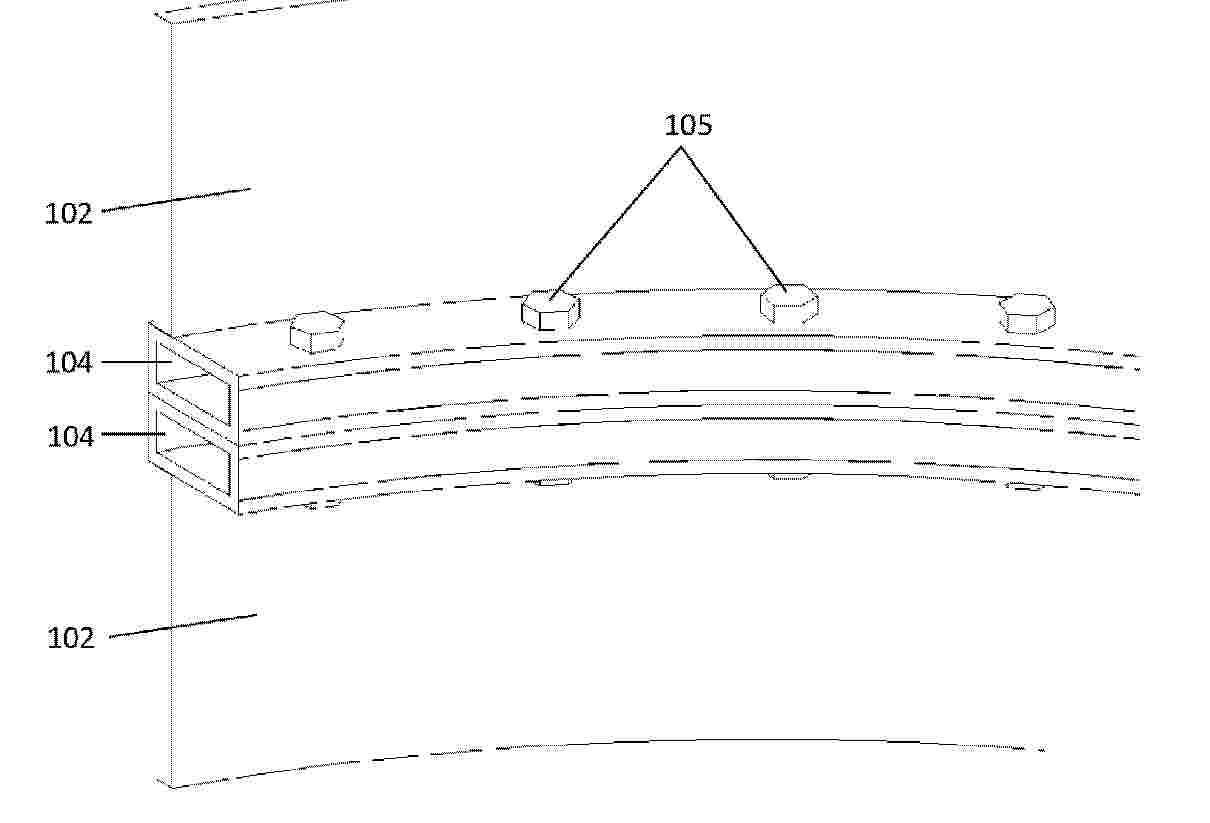
The invention relates to a ring flange with a hollow cross section for connecting tubular sections of wind turbine towers. The invention provides a realistic, easy to fabricate and structurally efficient circumferential connection between tubular sections of wind turbine towers which is particularly suitable for towers with very large height. The hollow ring flange according to the invention can be employed in a similar manner to the conventional solid ring flanges while avoiding the need for prohibitively thick flange plates associated with increased tower height and swept area. As a result, the hollow ring flange allows flange weight savings, bringing direct and indirect benefits with respect to overall cost, increases procurement alternatives needed for the sustainability of the supply chain.
Resumen de: EP4821830A2
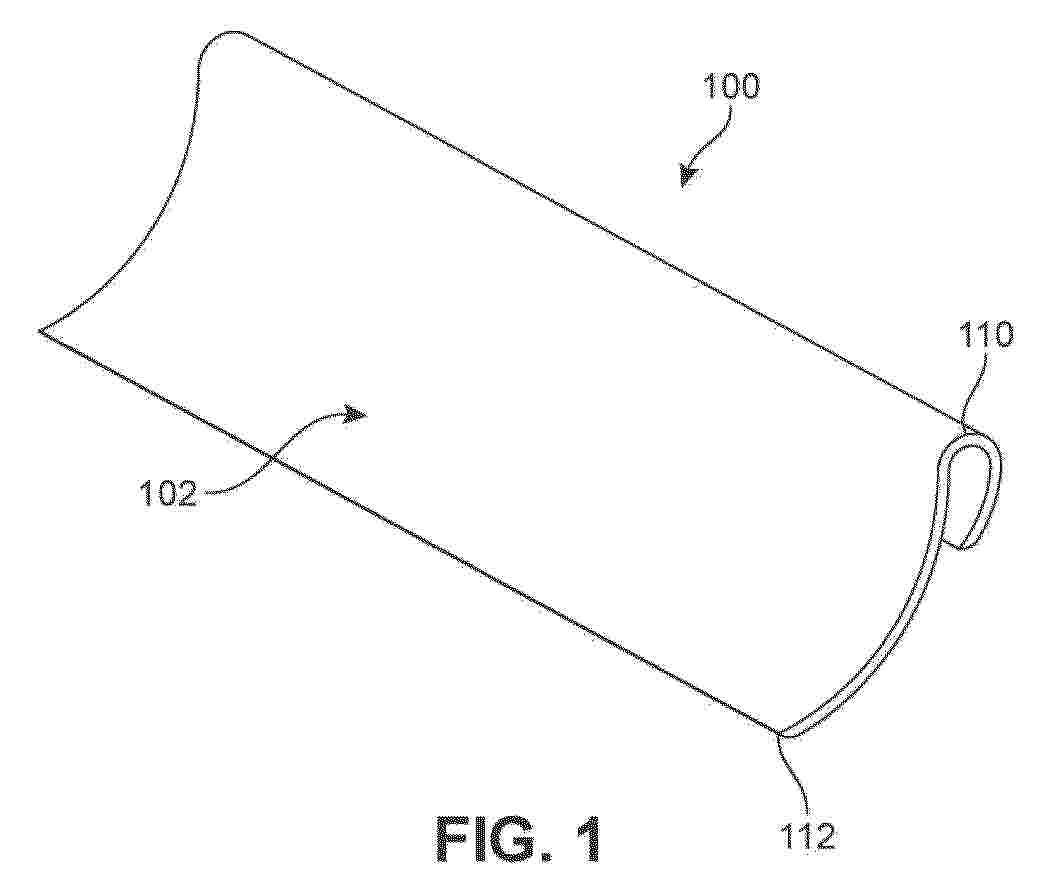
Various embodiments of an airfoil and machines with airfoils are disclosed. The airfoils include a thicker leading airfoil portion and a thinner trailing airfoil portion. In one embodiment, the leading airfoil portion is formed by bending a body of the airfoil back toward itself. In another embodiment, the leading airfoil portion has a solid geometry and includes two elliptic surfaces. To prevent detachment of airflow, the leading airfoil portion includes at least two arc portions or surfaces that act to direct the airflow down to the trailing airfoil portion in a manner that stabilizes vortexes that may form in the region of changing thickness.
Nº publicación: GB2705374A 14/10/2026
Solicitante:
AKER SOLUTIONS AS [NO]
Aker Solutions AS
Resumen de: GB2705374A
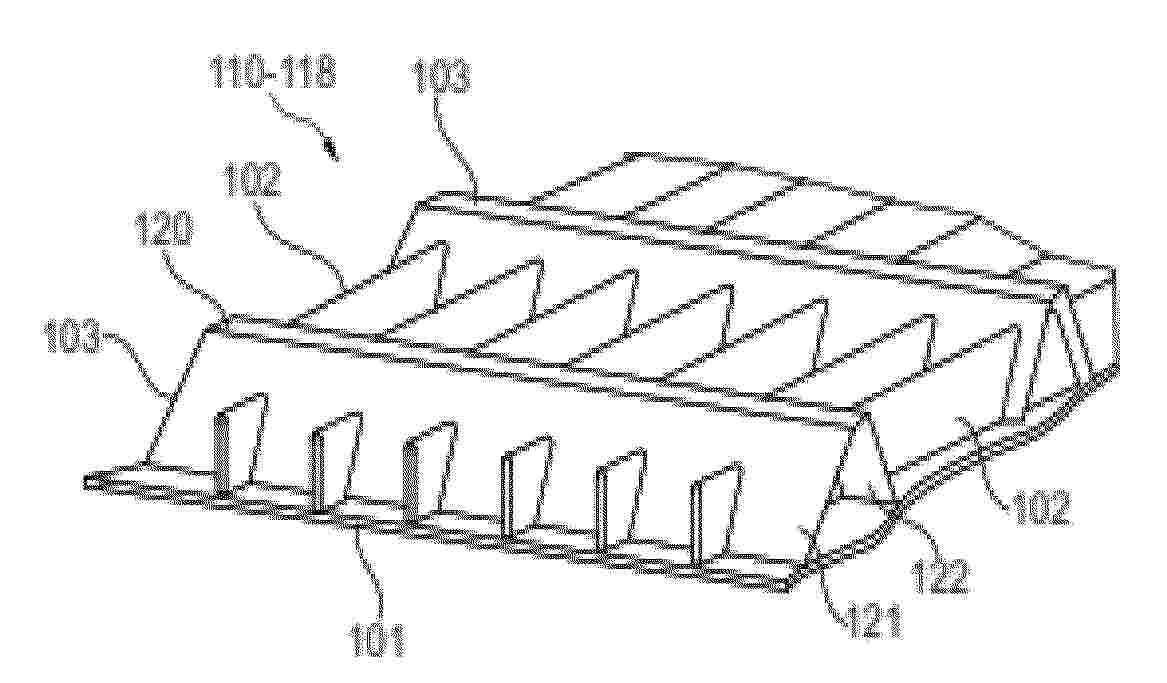
A floatable foundation 100 for a wind turbine generator comprises a frame section 140,141 of at least four structural plate parts 110-118, each having a shell plate 101 and girders 103 welded to the shell plate. Each girder has an apex bar 120 and a pair of leg bars 121,122 to connect to the shell plate. The frame section comprises an internal box frame 133 fixed to girders. The box frame may be welded to the girders. Preferably the box frame is perpendicular to the shell plate and / or fixed at apex bars of the girders and / or fixed to the girders via a plurality of brackets (Fig 40 135,136). The frame section may be part of a horizontally arranged, elongate upper or lower connecting structure (Fig 3, 30,31,32,40,41,42) and the brackets arranged between the box frame and side structural plate parts 111. The leg bars are preferably outwardly diverging that widen toward the shell plate. The girders may have a cross-sectional shape of a bottomless isosceles trapezoid. The leg bars may be parallel. A watertight wall (132, Figure 16) may be fixed at the apex bars of at least two interconnected plate parts. Figure 39
 BOPI
BOPI
 Sede Electrónica