Si deseas distinguir tus productos, servicios o ambos de los de otra empresa, es posible que necesites una marca o nombre comercial. Descubre qué son, en qué consiste su procedimiento de registro y qué implica.

Información sobre los plazos de presentación de solicitudes de transformación de marcas de la Unión Europea en marca nacional española. Más información


Si tienes un nuevo dispositivo, producto o procedimiento que resuelva un problema técnico o tenga una ventaja práctica, existen distintas formas de protegerlo en España y en otros países. Descubre cómo hacerlo.

¿Tu innovación reside en la estética, la ornamentación o la apariencia de tu producto? Protégela mediante un diseño industrial. Descubre qué derechos confiere el registro y cómo realizar la tramitación.

Las indicaciones geográficas protegen el nombre de un producto originario de una zona geográfica, a la cual le debe una determinada calidad, reputación u otra característica. Descubre qué son, en qué consiste su procedimiento de registro y qué beneficios conceden.

Las patentes publicadas en todo el mundo son una valiosa fuente de información científica, técnica y comercial.

Si eres emprendedor/a o una empresa y quieres potenciar y mejorar la rentabilidad de tu negocio protegiendo de forma adecuada los activos intangibles de tu organización, en este espacio encontrarás lo necesario.


 568
resultados
568
resultados
 Última actualización
17/10/2026 [07:24:00]
Última actualización
17/10/2026 [07:24:00]


 Resultados 425 a 450 de 568

Resumen de: CN122786555A
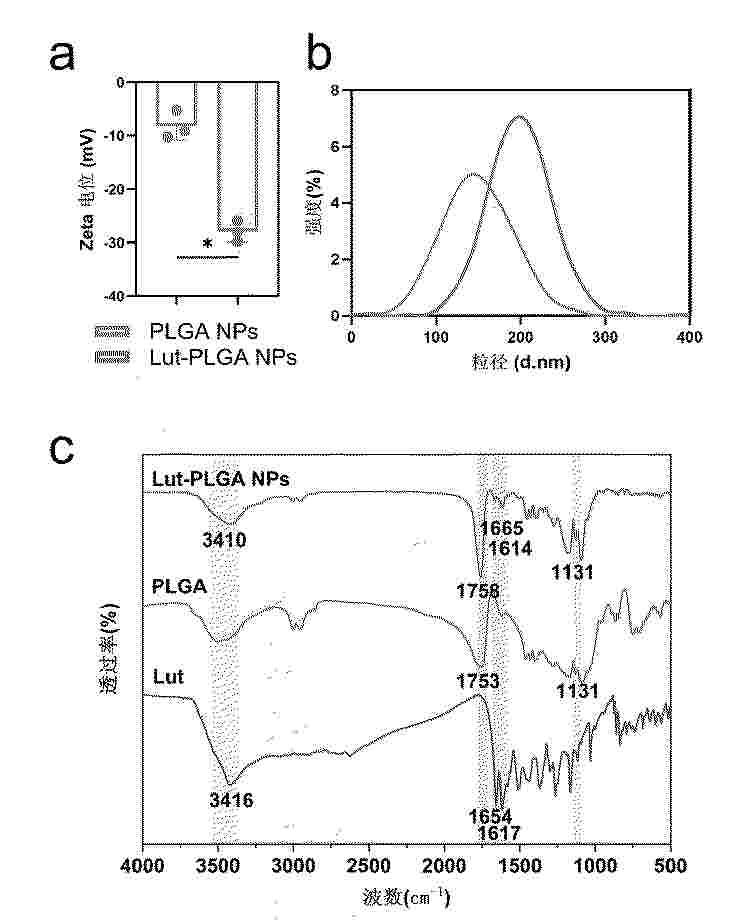
一种用于心肌修复的pH响应性3D打印复合水凝胶及其制备方法,其中通过步骤S1,制备木犀草素‑PLGA纳米颗粒;S2,制备预凝胶溶液;S3,将木犀草素‑PLGA纳米颗粒和预凝胶溶液搅拌均匀后进行凝胶化处理得到3D打印墨水;S4,将3D打印墨水装入注射器,经过数字光处理后通过3D打印机成型获取初型复合水凝胶,将初型复合水凝胶进行漂洗筛分得到3D打印载药复合水凝胶。该水凝胶能够实现对药物的高木犀草素的稳定性和缓释能力,以水凝胶作为支架,填充梗死区域,便于临床推广的综合效果。

Resumen de: CN122786549A
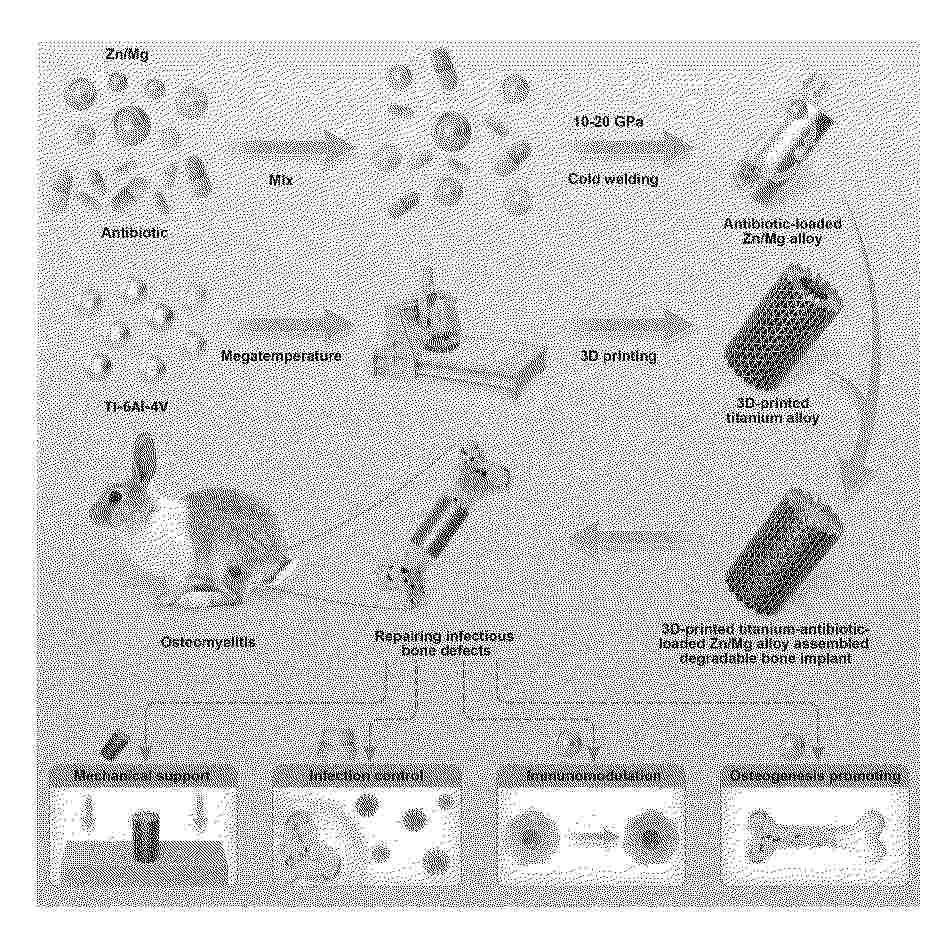
本发明涉及一种组配式3D打印钛‑载抗生素锌/镁合金骨替代物。所述骨替代物包括载抗生素锌/镁合金芯体和3D打印多孔钛合金壳体,所述骨替代物通过组配式结构设计,使钛合金承担载荷,锌/镁合金单元实现金属降解‑药物释放同步,避免可降解金属降解过快导致骨生长速率不匹配问题,建立起“抗生素快速释放‑锌/镁离子免疫调节‑降解产物促骨再生”的协同网络,从而实现更好的促骨再生作用。另外,所述骨替代物在加工过程无高温,可以避免高温引起的抗生素失活。
Resumen de: CN122796633A
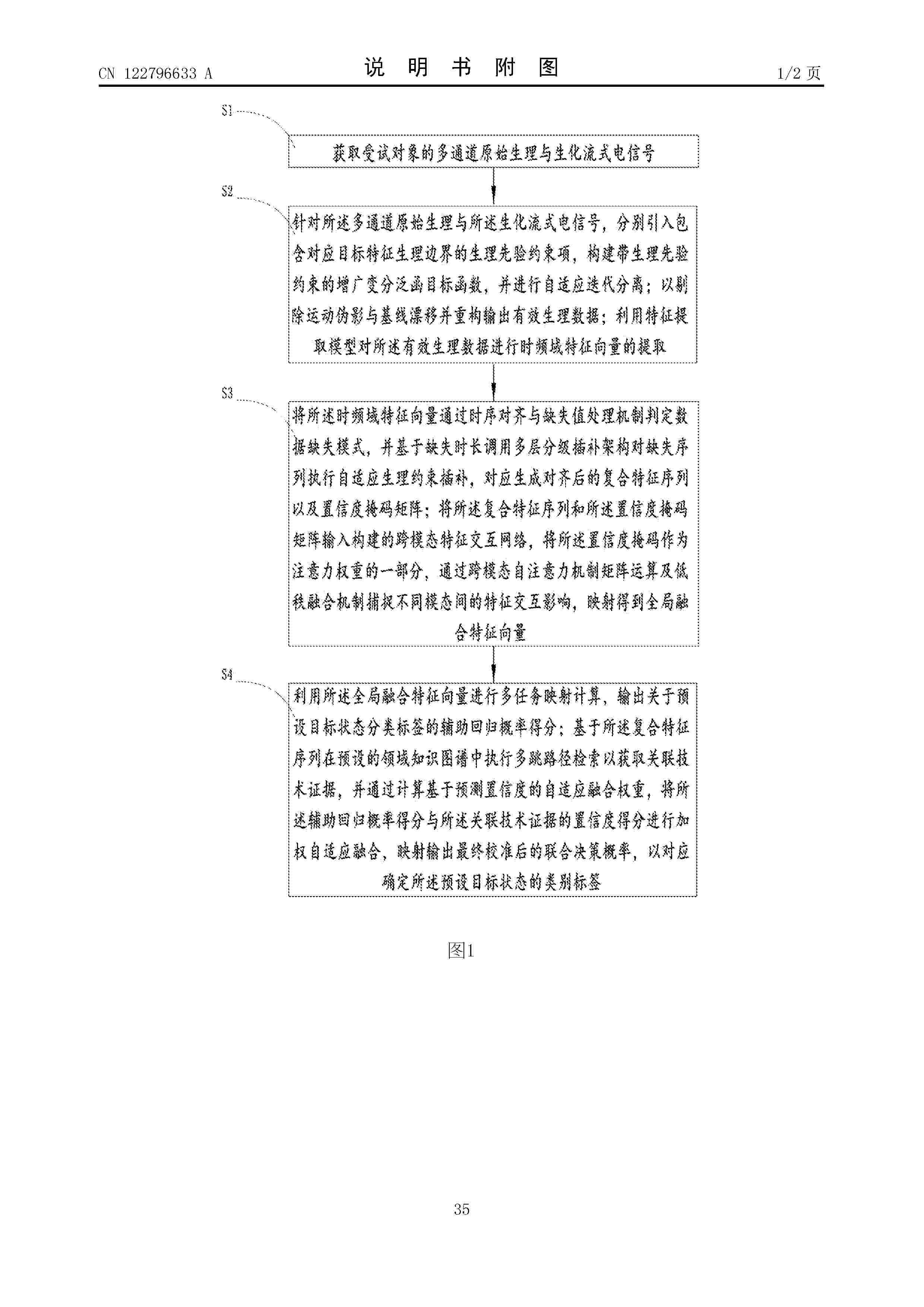
0001 本发明属于医用柔性电子与智能生理参数技术监测领域,具体提供一种基于多模态柔性传感阵列的数据处理方法及系统,该方法包括:获取多通道原始流式电信号;引入先验约束构建增广变分泛函,自适应迭代分离剔除运动伪影与基线漂移,提取时频域特征向量;基于缺失时长调用四层分级插补架构执行生理约束插补,生成复合特征序列与置信度掩码矩阵;输入跨模态特征交互网络经低秩融合得到全局融合特征向量;利用该向量计算多任务回归得分,同步在领域知识图谱中检索关联技术证据;通过计算自适应融合权重对回归得分与证据置信度执行加权自适应融合,输出校准后的联合决策概率,以对应确定预设目标状态的类别标签。本发明提升数据吞吐的鲁棒性与可解释性。
Resumen de: EP4811369A1
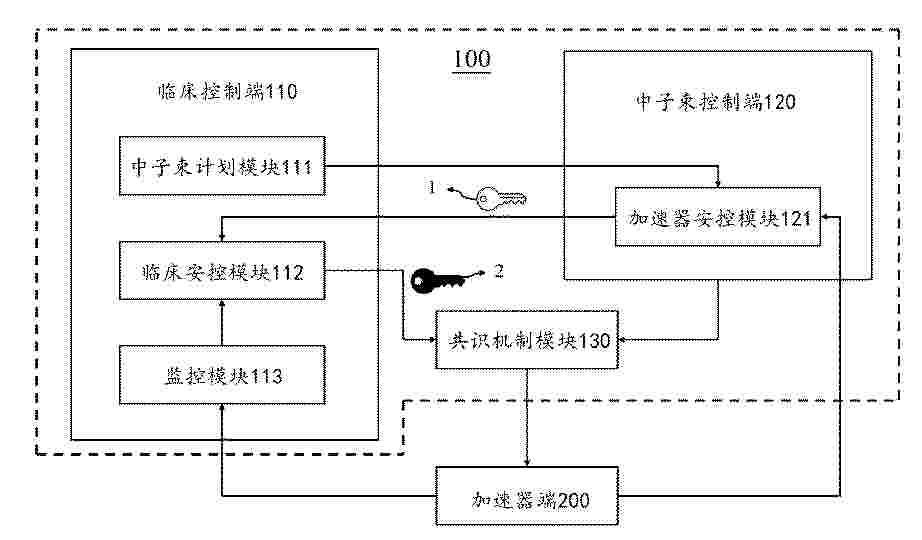
A medical security management system (100) and method, including: a clinical control terminal (110), further including a clinical security control module (112); a neutron beam control terminal (120), connected to the clinical control terminal (110), controlling the operation of the accelerator terminal (200), wherein the neutron beam control terminal (120) further includes an accelerator security control module (121). The system (100) further including a consensus mechanism module (130), storing at least one consensus mechanism. When the clinical control terminal (110) transmits a neutron beam generation request to the neutron beam control terminal (120), the accelerator security control module (121) and the clinical security control module (112) respectively generate and transmit a first key and a second key to the consensus mechanism module, thereby the consensus mechanism module drive the accelerator terminal to generate a neutron beam if the first key (1) and the second key (2) meet the requirement of the consensus mechanism.
Resumen de: WO2025195973A1
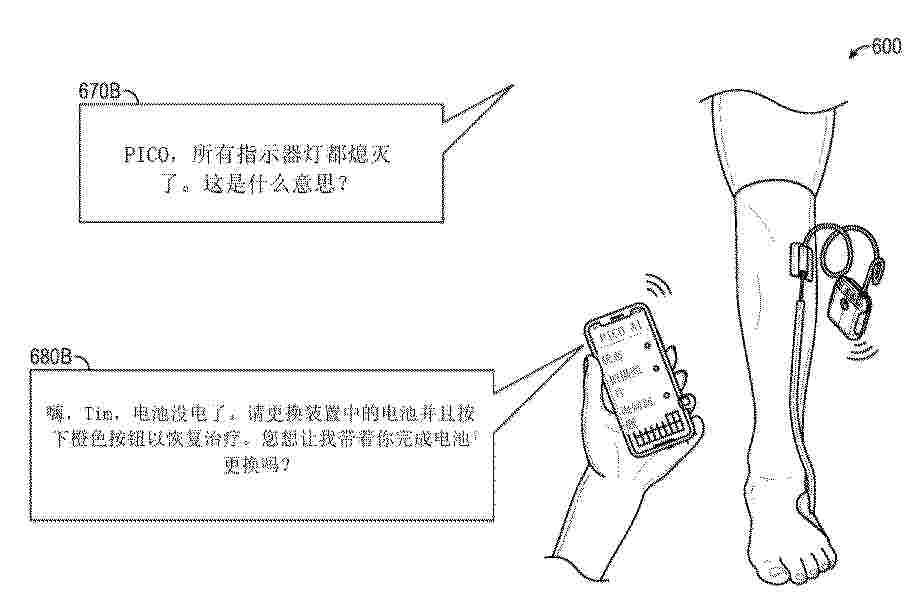
A negative and/or positive pressure therapy system can include a therapy device with a pressure source configured to provide a pressure therapy to a wound site covered by a wound dressing and a controller configured to control operation of the pressure source. The system can include a storage medium storing executable instructions that, when executed by one or more processors, cause the one or more processors to receive a natural language query associated with provision of the pressure therapy, the natural language query being issued by a user of the therapy device, using one or more machine learning models trained solely with data provided by a manufacturer of the therapy device, process the natural language query and determine a response, and provide the response to one or more of the user or the controller.
Resumen de: US20250210187A1
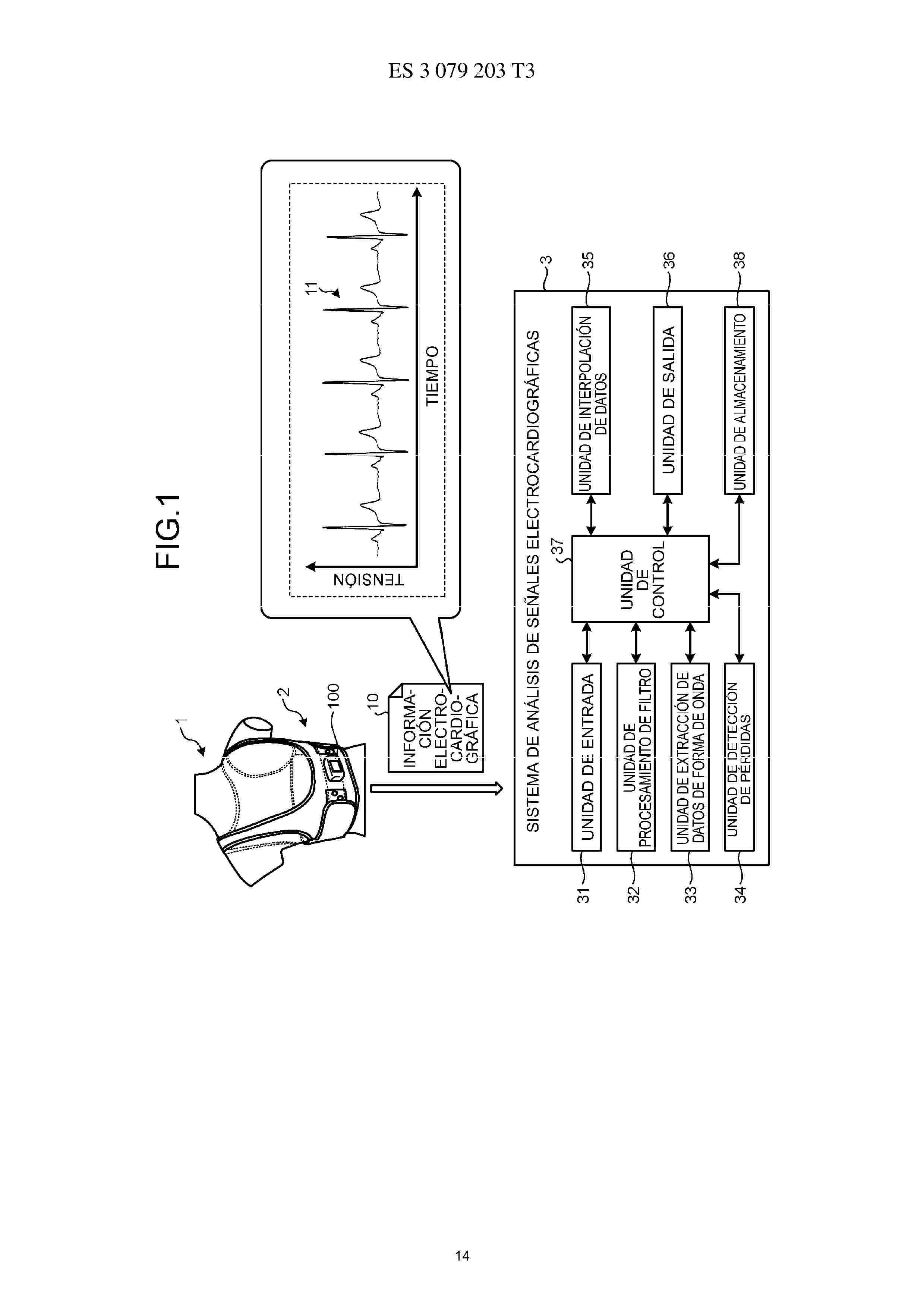
An electrocardiographic signal analysis system includes: an input unit configured to receive input of electrocardiographic information; a unit waveform data extracting unit configured to perform segmentation and extract unit waveform data based on a peak of an R wave or an S wave from waveform data included in the electrocardiographic information; a loss detection unit configured to detect a loss portion of a peak of an R wave or an S wave in the unit waveform data using an extreme value immediately before or immediately after the peak or using a point of inflection immediately before or immediately after the peak; and a data interpolation unit configured to set a wave height or a cycle of a waveform after interpolation based on a peak position of an R wave or an S wave of a waveform obtained by interpolating the loss portion.
Resumen de: EP4811383A1
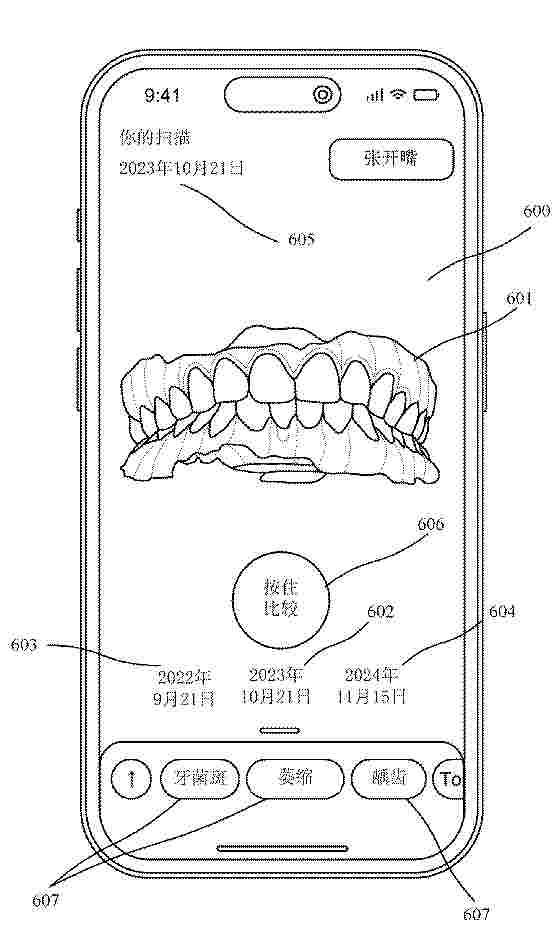
0001 A computer-implemented method for comparing digital 3D dental models of a patient's oral situation in a user interface (600) of a mobile application is disclosed, the method comprising receiving, in the user interface (600) of the mobile application, a selection of a dental condition of the at least two dental conditions, displaying buttons (602, 603, 604) representative of digital 3D dental models available for comparison, wherein the buttons comprise a first button (602) associated with a first digital 3D dental model (601) representative of a patient's oral situation at a first point in time and a second button (603) associated with a second digital 3D dental model representative of the patient's oral situation at a second point in time. The method further comprises receiving, in the user interface (600), a selection of the first button (602), and in response, displaying the first digital 3D dental model (601) in the user interface (600), such that the displayed first digital 3D dental model (601) visualizes the selected dental condition corresponding to the first point in time. Further, the method comprises launching a compare mode of the mobile application by detecting a drag command performed by a user of the mobile application, the drag command comprising a drag motion, in the user interface (600), from a compare button (606) to the second button (603), and in response to the drag command, displaying a transition from the first digital 3D dental model (601) to
Resumen de: EP4811387A1
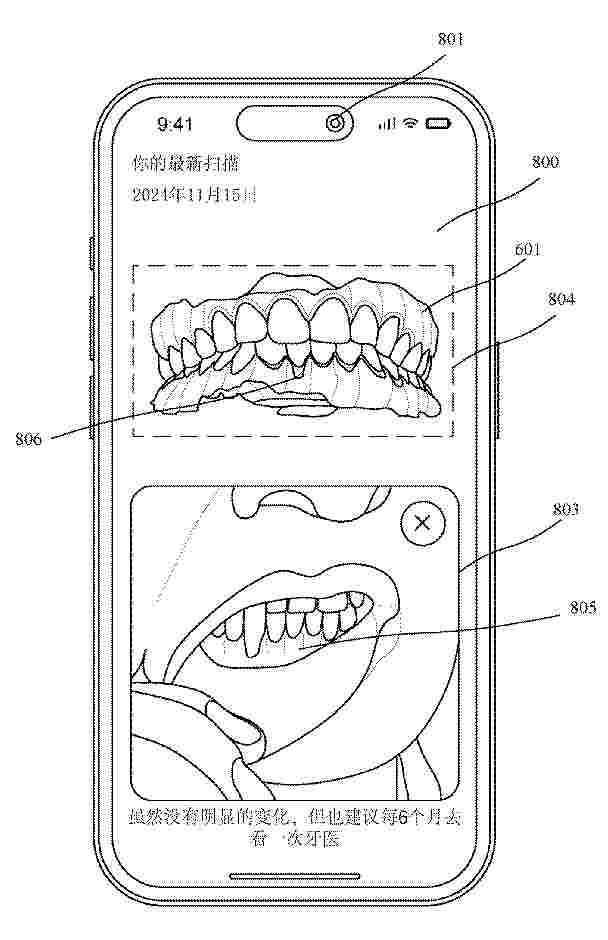
0001 A computer-implemented method for comparing, in a user interface of a mobile application, a digital 3D dental model of a patient's oral situation to a user's oral situation is disclosed. The method comprises receiving, in the user interface (800), a selection of a dental condition of the at least two dental conditions, displaying buttons (602, 603, 604) representative of digital 3D dental models available for comparison, wherein the buttons comprise a first button (602) associated with a first digital 3D dental model (601) representative of a patient's oral situation at a first point in time and a second button (603) associated with a second digital 3D dental model representative of a patient's oral situation at a second point in time. The method further comprises receiving, in the user interface (800), a selection of the first button (602), and in response, displaying the first digital 3D dental model (601) in a first area (804) of the user interface (800), such that the displayed first digital 3D dental model (601) visualizes the selected dental condition corresponding to the first point in time. Further, the method comprises arranging, in the user interface (800), a camera button (802) configured, when engaged, to activate a front camera (801) of a mobile device hosting the mobile application, detecting engaging of the camera button (802) by a user, and in response, activating the front camera (801), displaying, in a second area (803) of the user interface (800), a
Resumen de: US12741156B1
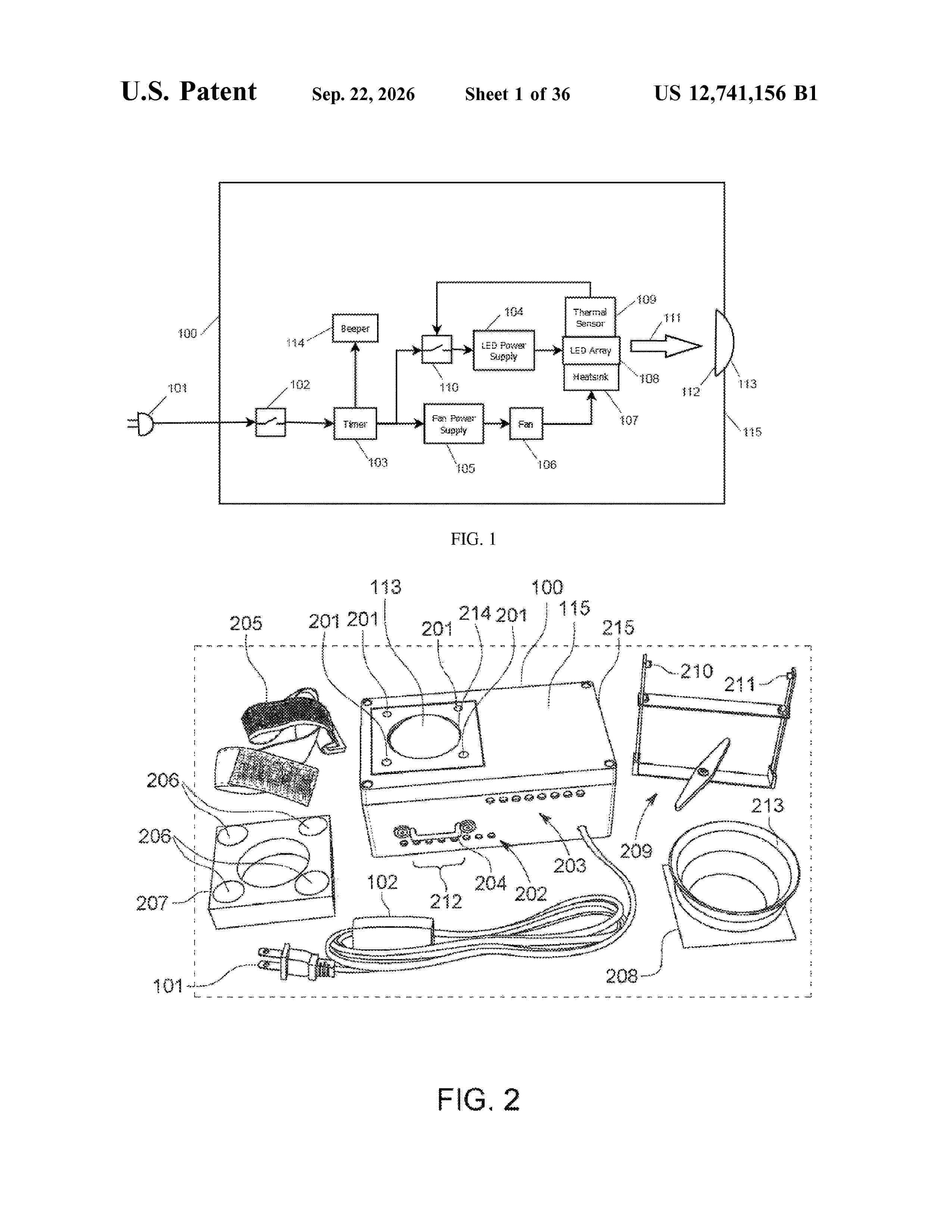
Red light therapy devices are disclosed which is substantially more powerful and treats a provided in-contact treatment of a substantially larger area of the human body compared with red light therapy devices previously known in the art. The design is ergonomically versatile, allowing relaxed comfortable treatment of hand, wrist, arm, leg knee, ankle, foot, neck, face, and back. A safety cap for a hand-held red light therapy unit is disclosed. A safety improvement for a hand-held red light therapy unit is disclosed which eases alignment and reduces chance of short-circuit. A bed adapter for stand-up red light therapy panels is disclosed. Flexible light guides for red light therapy treatment are disclosed. An adaptor for adapting a red light therapy head to a clinical treatment stand is disclosed. An open-bottom 3-D-printer-mounted hotbox for increasing the quality of fused deposition modeling 3-D printed parts for red light therapy devices is disclosed.
Resumen de: KR20260139234A
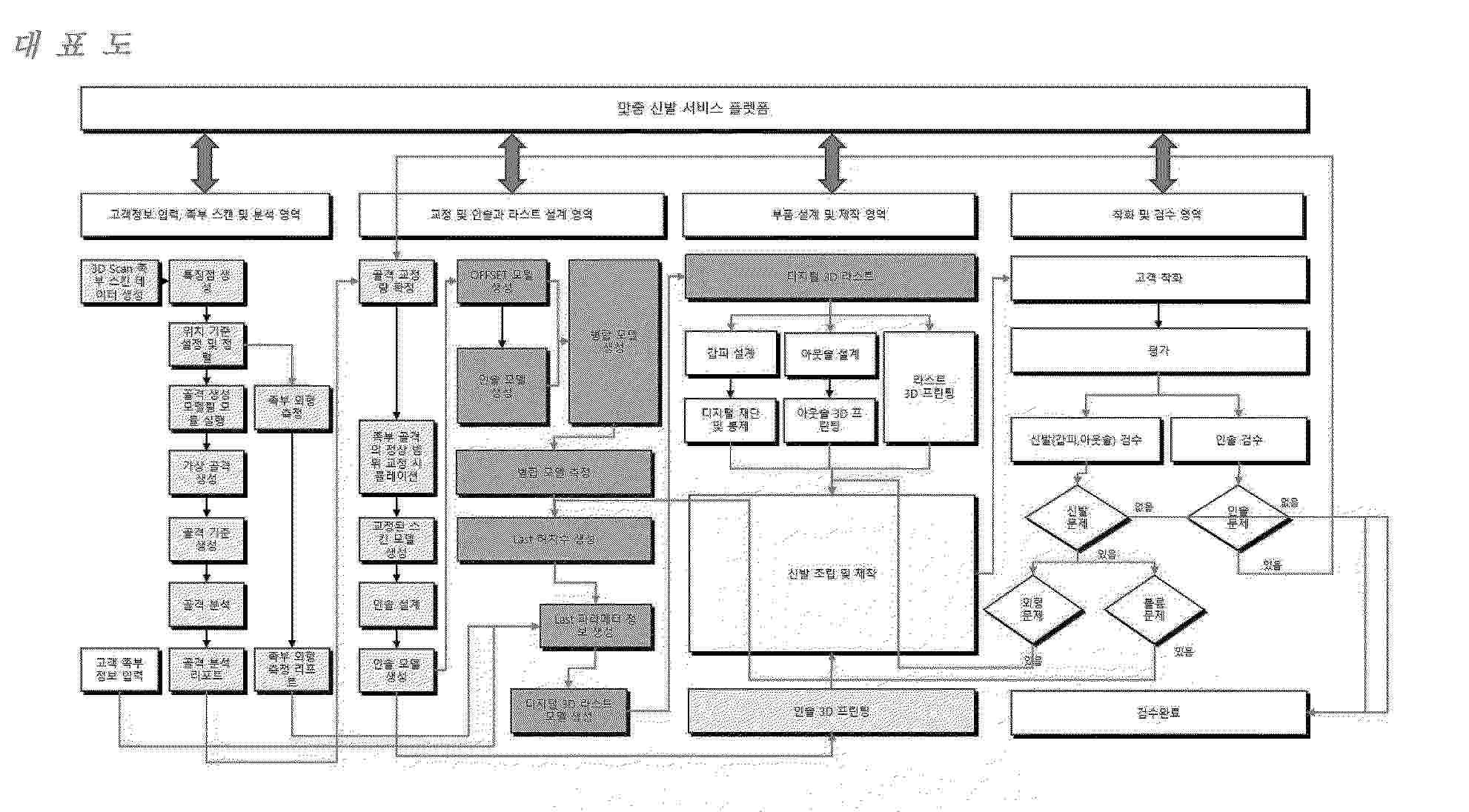
본 발명은 모델링 장치와 신발 제작 장비 중 적어도 하나를 포함하며, 상기 모델링 장치는, 영상촬영기기를 통해 생성된 족부의 스킨 데이터를 입력받고 교정하여 교정 스킨 모델을 생성하고, 상기 교정 스킨 모델을 기초로 라스트 모델과 인솔 모델을 생성하며, 상기 신발 제작 장비는, 라스트 제조 장비와 갑피 제조 장비와 아웃솔 제조 장비와 인솔 제조 장비 중 적어도 하나를 포함하고, 상기 라스트 제조 장비는 상기 라스트 모델을 기초로 라스트를 제조하고, 상기 갑피 제조 장비는 상기 라스트 모델을 기초로 갑피를 제조하고, 상기 아웃솔 제조 장비는 상기 라스트 모델을 기초로 아웃솔을 제조하고, 상기 인솔 제조 장비는 상기 인솔 모델을 기초로 인솔을 제조하는 맞춤 신발 제작 시스템을 제공한다.
Resumen de: CN122800120A
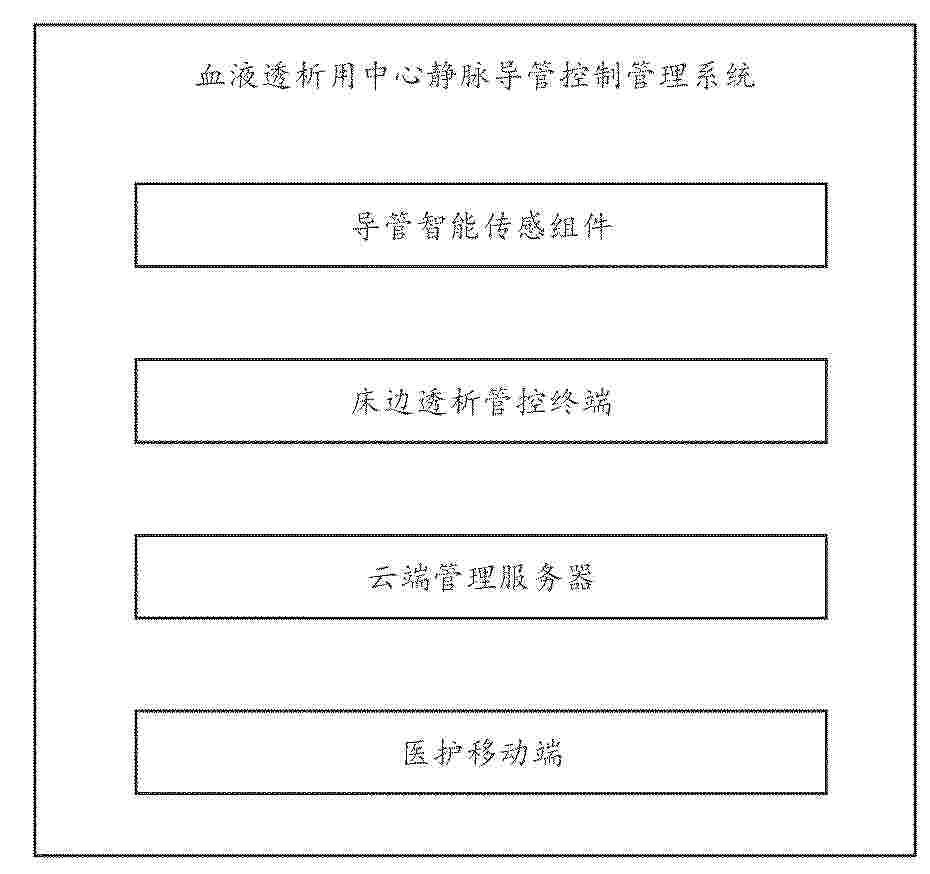
本发明涉及血液透析医疗技术领域,公开了一种血液透析用中心静脉导管控制管理系统及方法,所述系统包括:导管传感组件、床边管控终端、云端服务器、医护移动端,内置智能封管计量、感染血栓风险评估算法;所述管控方法覆盖术中置入实时监测、透析过程管路状态监控、透析后精准封管、并发症分级预警、导管全生命周期数字化归档全流程。本发明适配QUINTON、Hemosplit透析导管,实时捕捉隧道渗血、管路弯折堵塞、局部感染先兆并分级推送预警,实现导管置入、透析、维护、并发症防控闭环数字化管理,消除封管剂量差错,大幅降低并发症、减轻医护工作负担,临床实用性强、推广门槛低。
Resumen de: CN122785960A
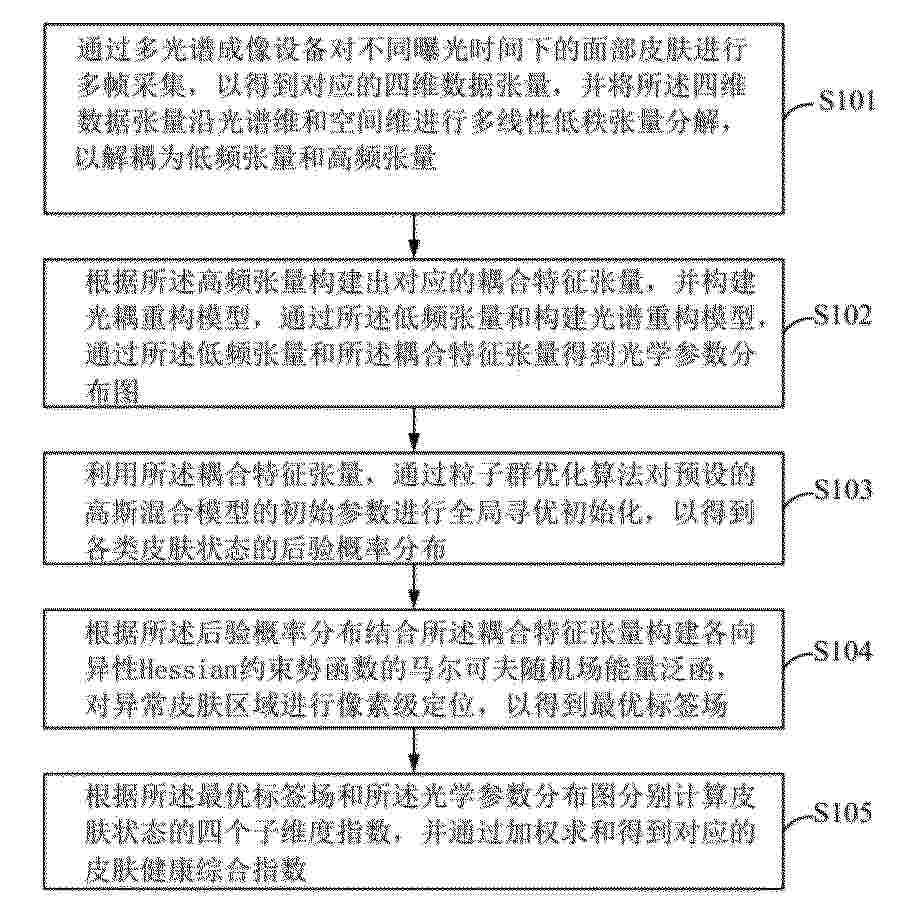
0001 本发明提供一种基于多光谱图像的皮肤深层状态评估方法及系统,该方法包括:多帧采集不同曝光下面部皮肤,构建四维张量并多线性低秩分解为低频和高频张量;根据高频张量构建耦合特征,并构建光谱重构模型以低频张量和耦合特征得到光学参数分布;利用耦合特征经粒子群优化高斯混合模型初始参数,得到各类皮肤状态后验概率;结合后验概率与耦合特征,构建各向异性Hessian约束MRF能量泛函,像素级定位异常皮肤,得到最优标签场;根据最优标签场和光学参数分布计算皱纹、色素、炎性、纹理四个子维度指数,加权求和得到皮肤健康综合指数。
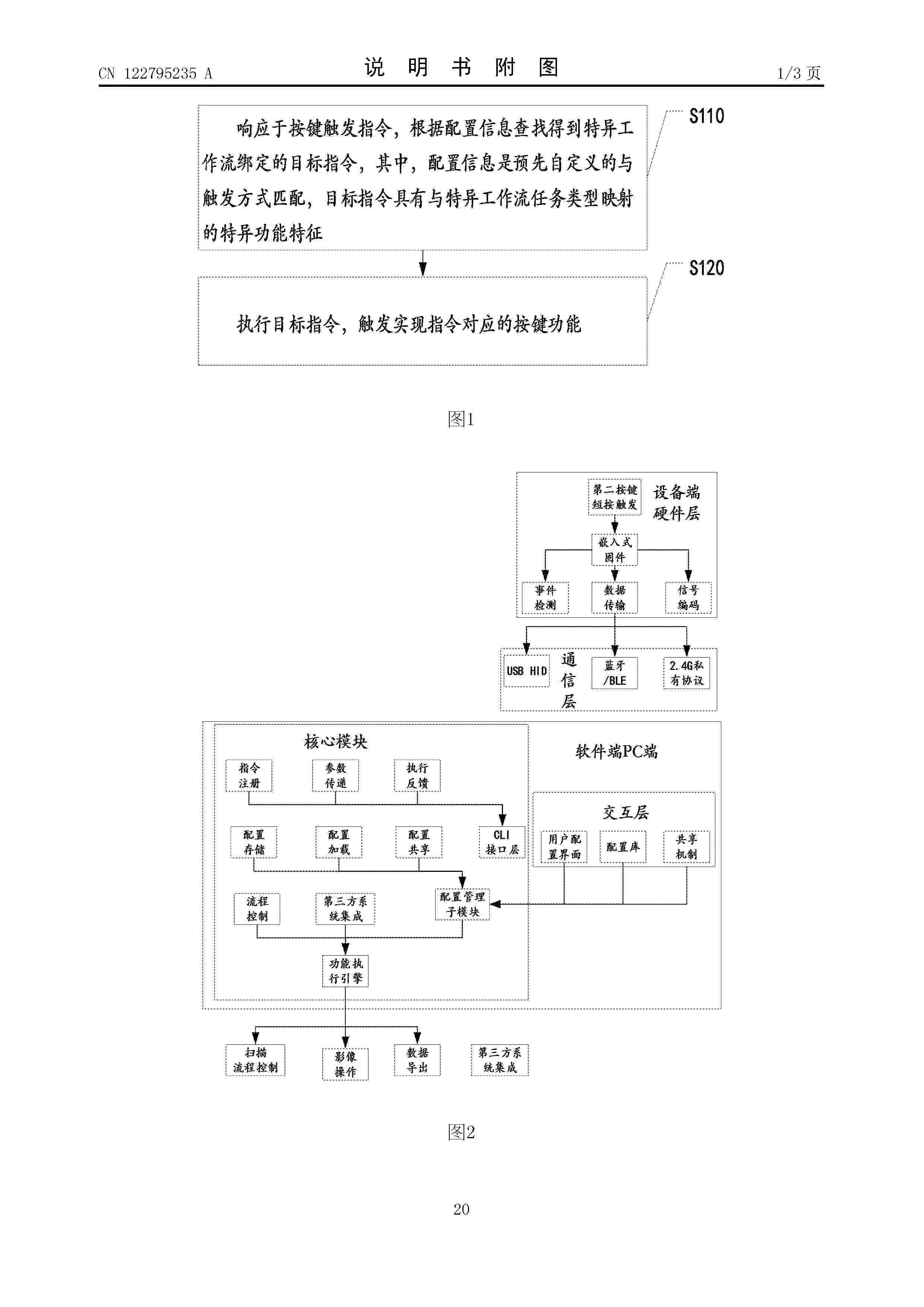
Resumen de: CN122795235A
0001 本申请实施例公开了按键响应方法、装置、牙科操作设备及存储介质。方法应用于处于特异工作流中的牙科操作设备。方法包括:响应于按键触发指令,根据配置信息查找得到特异工作流绑定的目标指令,配置信息预先自定义与触发方式匹配,目标指令具有与特异工作流任务类型映射的特异功能特征;执行目标指令触发实现指令对应的按键功能。本申请将按键逻辑抽象为动态配置。对应触发方式触发实现专属该场景的按键功能,不需用户适应本按键响应方案,而是本按键响应方案自适应不同场景中不同用户需求。用户无需改变自身工作习惯去迎合本申请的牙科操作设备。解决了现有技术中的牙科操作设备在不同按键功能需求下迫使用户配合协调的技术问题。
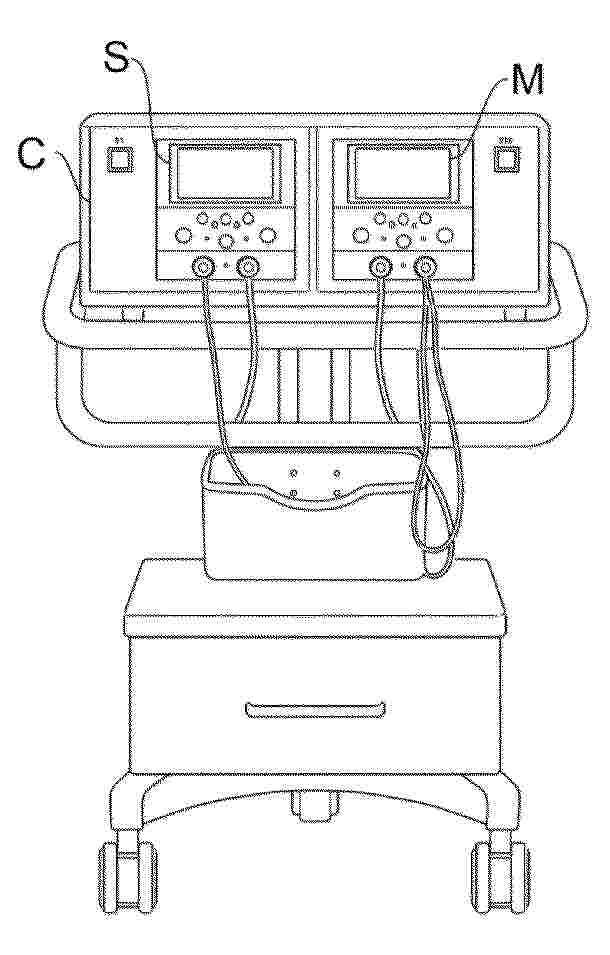
Resumen de: CN122786630A
本发明公开了一种电刺激治疗设备的人机交互控制系统、设备及存储介质,包括:用于接收使用人员操作指令的输入部件;以及,控制装置,其对显示界面进行控制,控制装置被配置为:控制显示界面在第一显示模式时,在第一显示模式上显示多个第一电流模式选项的至少一部分,并通过输入部件接收对第一电流模式选项的选择操作。该电刺激治疗设备的人机交互控制系统,通过根据基础电流参数、总治疗时间参数、刺激时间参数T、松弛时间参数R以及脉冲形状参数建立电刺激输出控制关系,使界面设定结果能够直接映射到实际治疗输出过程,保证人机交互结果与治疗执行行为的一致性,提高治疗控制准确性。
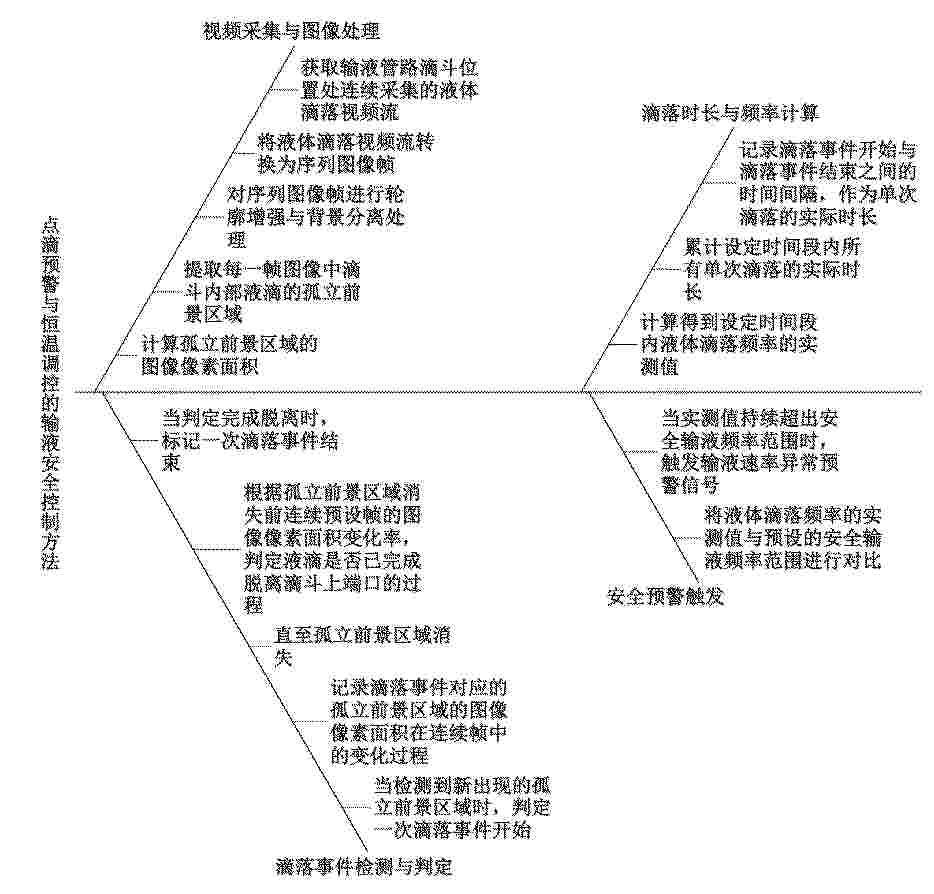
Resumen de: CN122786584A
0001 本发明涉及医疗输液监控技术领域,具体为一种点滴预警与恒温调控的输液安全控制方法,包括:获取输液管路滴斗位置连续采集的液体滴落视频流并转换为序列图像帧,对图像帧进行轮廓增强与背景分离处理,提取滴斗内部液滴孤立前景区域并计算其图像像素面积;以新孤立前景区域出现判定滴落事件开始,依据该区域消失前连续预设帧的像素面积变化率判定液滴脱离完成并标记滴落结束,记录单次滴落实际时长,累计计算设定时间段内滴落频率实测值;将实测值与预设安全输液频率范围比对,实测值持续超标时触发输液速率异常预警。该方法可精准识别液滴图像特征,准确判定滴落周期,提高输液速率检测精度,实现输液异常的可靠预警。
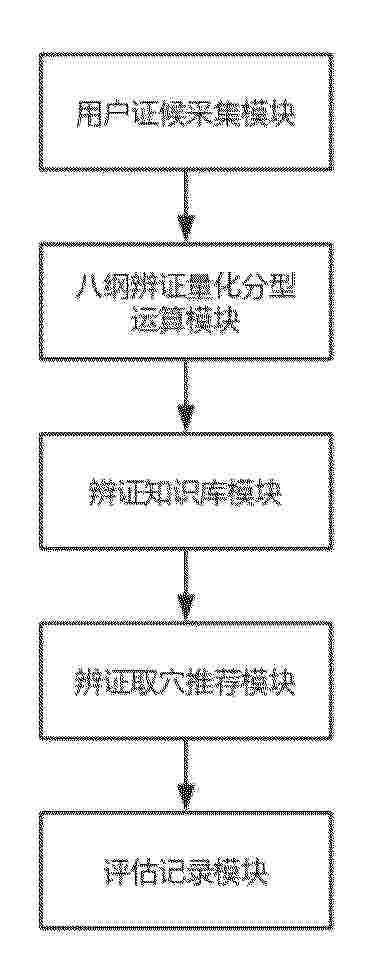
Resumen de: CN122786201A
本发明公开了一种基于八纲辨证的耳穴护理推荐系统及方法,涉及中医护理辅助技术领域,包括用户证候采集模块、八纲辨证量化分型运算模块、辨证知识库模块、辨证取穴推荐模块及评估记录模块;通过标准化证候量化采集与八纲辨证权重运算模型完成复合证型判定,调取知识库匹配耳穴配组及护理参数,生成耳穴护理推荐方案,并通过评估记录模块采集复评数据,动态优化辨证权重与穴位配伍。本发明作为临床护理辅助决策工具,可有效提升耳穴配穴的规范性与精准性,形成护理效果反馈闭环以实现模型自适应迭代,降低专科护士操作门槛,提高耳穴护理工作效率与数据管理水平。
Resumen de: US2023146295A1
0000 Embodiments herein relate to an implant for insertion into a patient. The implant comprises a plurality of unit cells arranged to form a three-dimensional lattice structure, the three-dimensional structure comprising a resting volume of the implant. The plurality of unit cells are arranged to form a porous network of the three-dimensional structure, and wherein the three-dimensional structure is a reversibly compressible three-dimensional structure, wherein a bulk porosity of the three-dimensional structure of the implant is at least 50%. Also disclosed is a method of tissue reconstruction or tissue augmentation. The method comprises implanting into the body of a subject an implant of the disclosure.
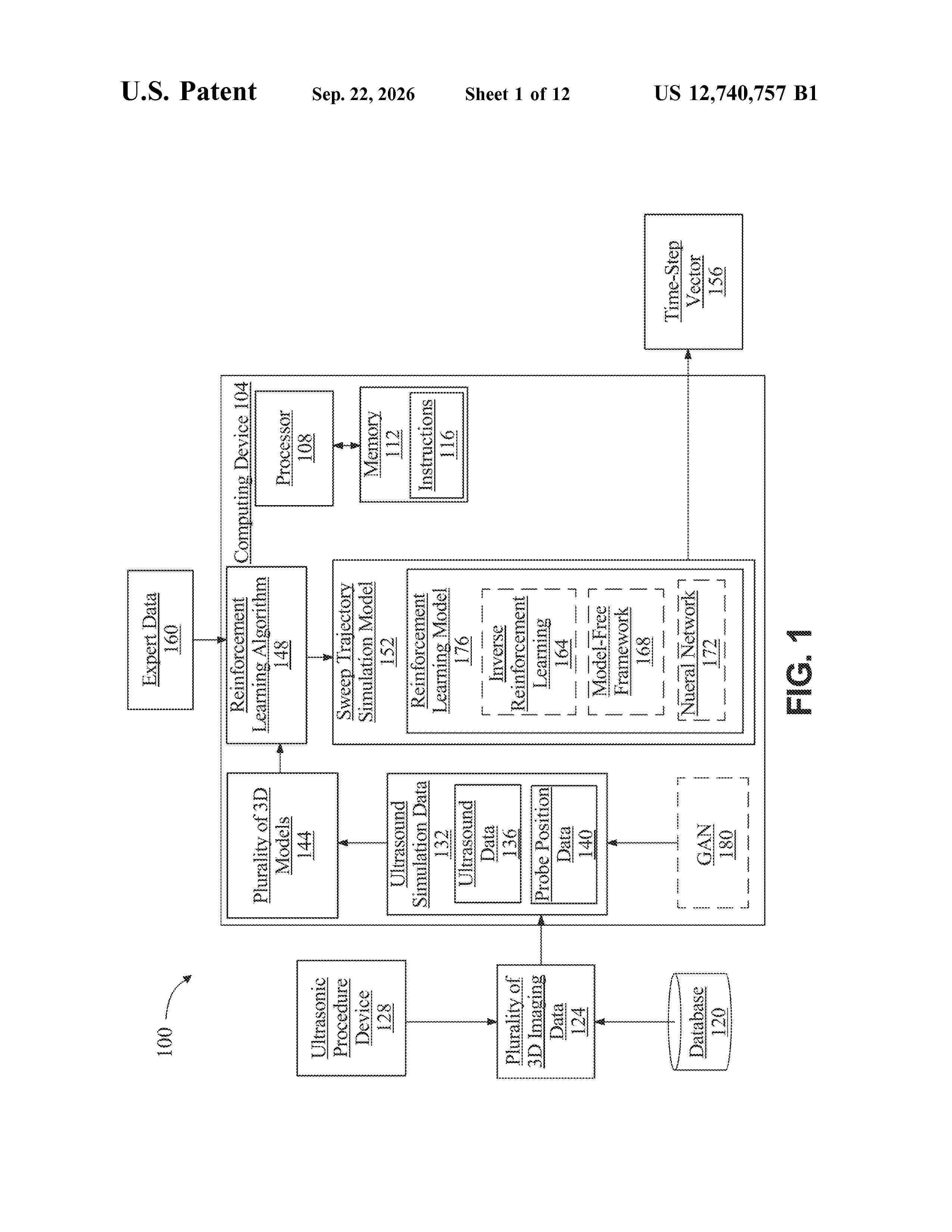
Resumen de: US12740757B1
A system for sweep trajectory simulation, wherein the system includes at least a processor and a memory communicatively connected to the at least a processor, wherein the memory contains instructions configuring the at least a processor to receive a plurality of 3D imaging data, generate, using the plurality of 3D imaging data, ultrasound simulation data, wherein the ultrasound simulation data includes ultrasound data and probe position data, generate, using the ultrasound simulation data, a plurality of 3D models, and train, using reinforcement learning algorithms, a sweep trajectory simulation model. In an embodiment, the sweep trajectory simulation model is trained using 3D imaging data, the probe position data, and the plurality of 3D models and the sweep trajectory simulation model is configured to output a time-step vector relating to the movement of a catheter.
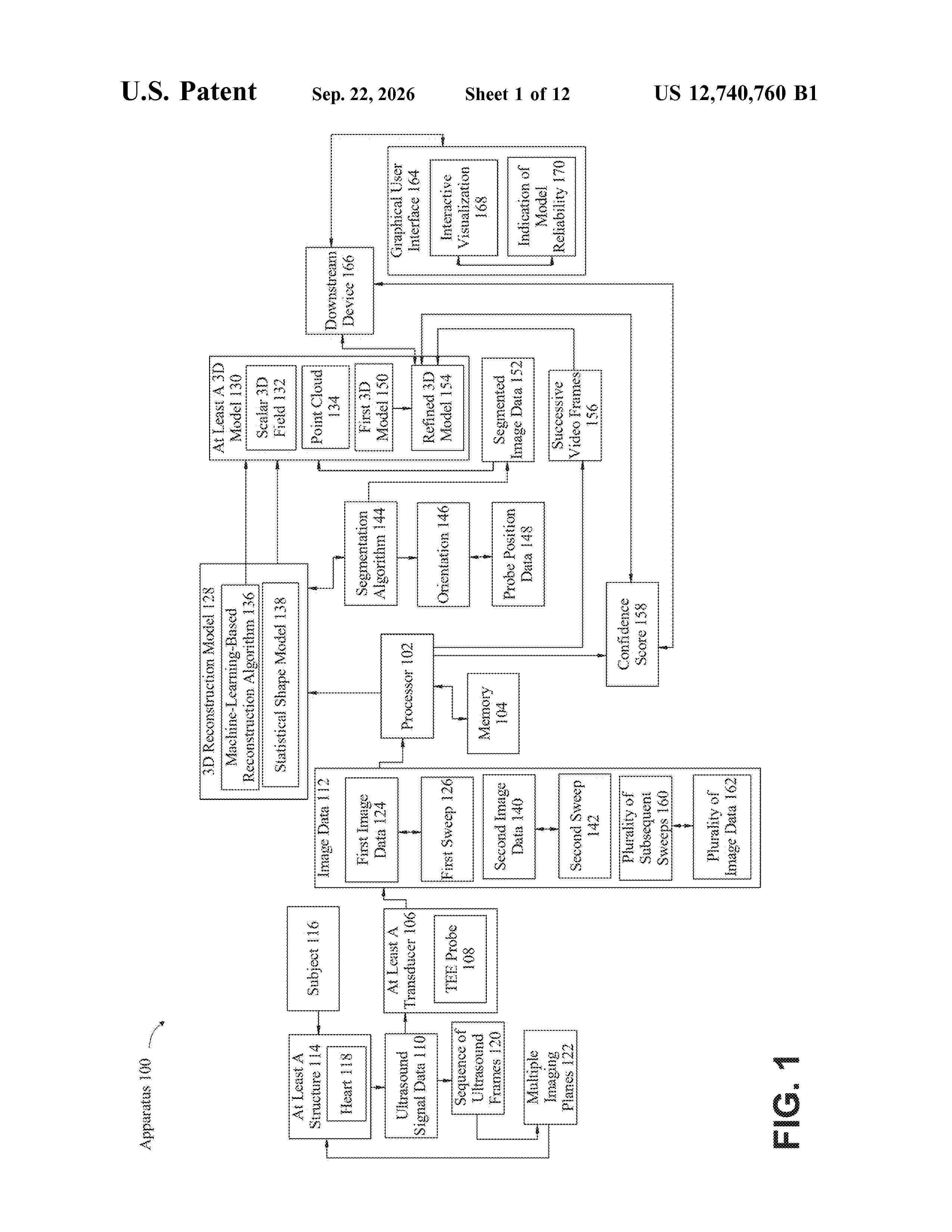
Resumen de: US12740760B1
0000 An apparatus and method for reconstruction of anatomical structure using Transesophageal Echocardiography (TEE) imaging. The apparatus includes at least a processor and a memory communicatively connected to the at least a processor configured to receive first image data corresponding to a first sweep of the at least a transducer from the TEE probe, generate, using a 3D reconstruction model, at least a 3D model representative of the at least a structure, as a function of image data, receive second image data corresponding to a second sweep of the at least a transducer from the TEE probe, refine, using the 3D reconstruction model, the at least a 3D model as a function of the second image data, identify, using the at least a processor, a confidence score of a refined 3D model, and display, using a graphical user interface of a downstream device, the refined 3D model and the confidence score.
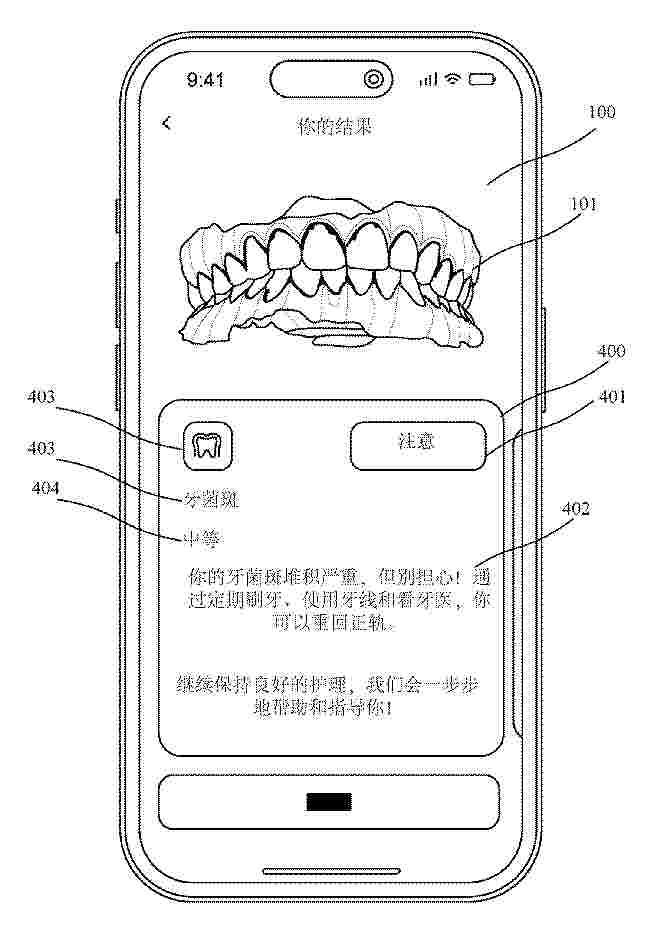
Resumen de: US20260290594A1
A method includes receiving a diagnostic intraoral scan data of a patient's oral situation, a quantitative data for at least two dental conditions associated with the patient's oral situation, a qualitative data for the at least two dental conditions, and a mesh overlay for each of the at least two dental conditions. The mesh overlay is configured to visualize the quantitative data and the qualitative data on the digital 3D dental model. The method further includes generating an individual dental profile for the patient based on the quantitative data and the qualitative data, obtaining metadata associated with the at least two dental conditions, wherein the metadata is curated based on the individual dental profile and displaying, in a user interface of the mobile application, the digital 3D dental model with the applied mesh overlay, and further displaying the metadata.
Resumen de: CN122789380A
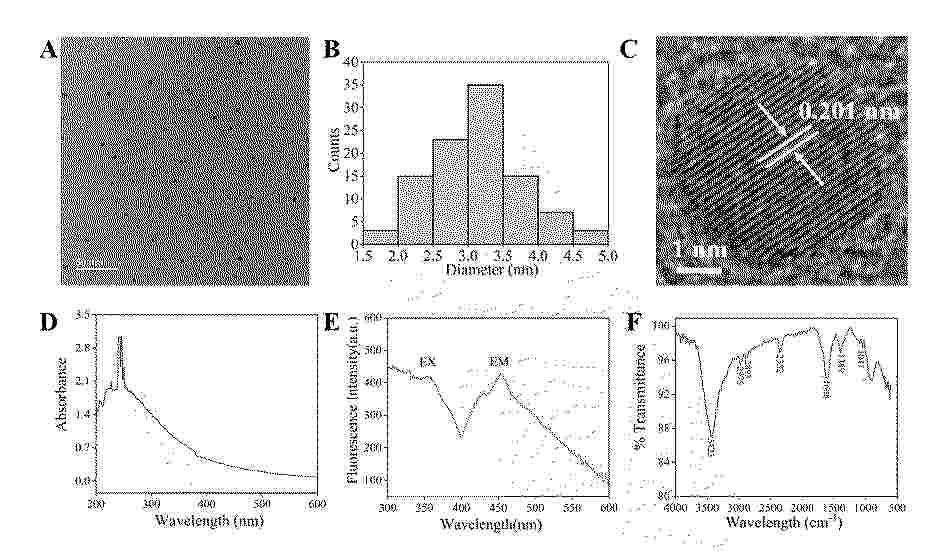
本发明实施例公开了一种槐花炭碳点的制备方法及其在治疗严重烧伤后肠道损伤中的应用,属于药物制备技术领域。一种槐花炭碳点的制备方法包括:槐花置于无氧环境中,在温度200℃~400℃下煅烧0.5h~3h,粉碎过筛,得到槐花炭粉;采用沸水对所述槐花炭粉进行提取,收集上清液,得到槐花炭碳点粗提液;对所述槐花炭碳点粗提液依次进行过滤、透析处理,得到所述槐花炭碳点。本发明提供一种成分明确、质量可控、生物安全性高、生物利用度好,且能同时作用于严重烧伤后肠道屏障损伤、炎症反应和氧化应激三个关键环节的新型药物制剂,具有较好的临床应用前景。
Resumen de: KR20260138815A
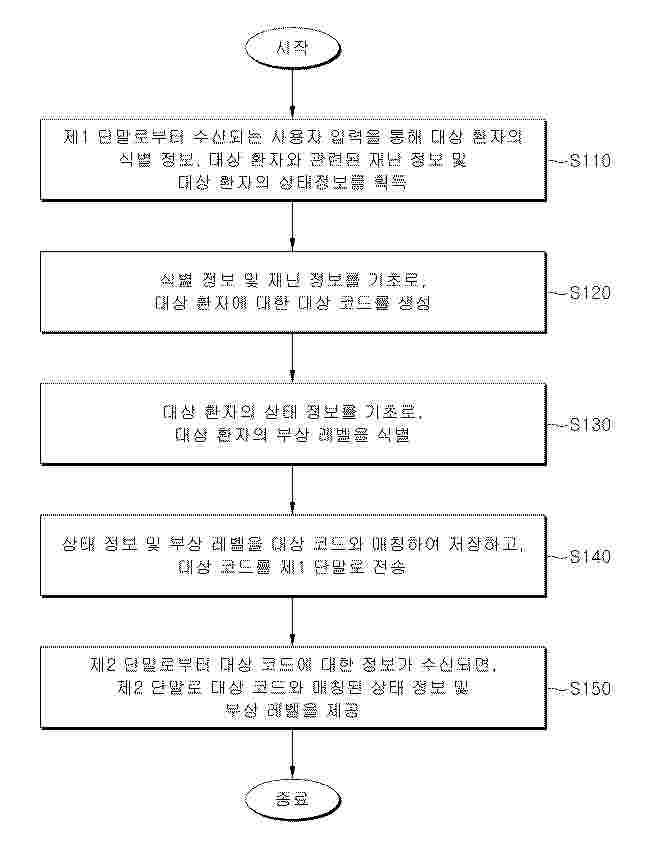
본 개시는 서버의 동작 방법에 관한 것이다. 본 동작 방법은, 구조 인력의 제1 단말로부터 수신되는 사용자 입력을 통해 대상 환자의 식별 정보, 대상 환자와 관련된 재난 정보, 및 대상 환자의 상태 정보를 획득하는 단계, 식별 정보 및 재난 정보를 기초로, 대상 환자에 대한 대상 코드를 생성하는 단계, 대상 환자의 상태 정보를 기초로, 대상 환자의 부상 레벨을 식별하는 단계, 상태 정보 및 부상 레벨을 대상 코드와 매칭하여 저장하고, 대상 코드를 제1 단말로 전송하는 단계, 및 의료 인력의 제2 단말로부터 대상 코드에 대한 정보가 수신되면, 제2 단말로 대상 코드와 매칭된 상태 정보 및 부상 레벨을 제공하는 단계를 포함한다.
Resumen de: US20250152333A1
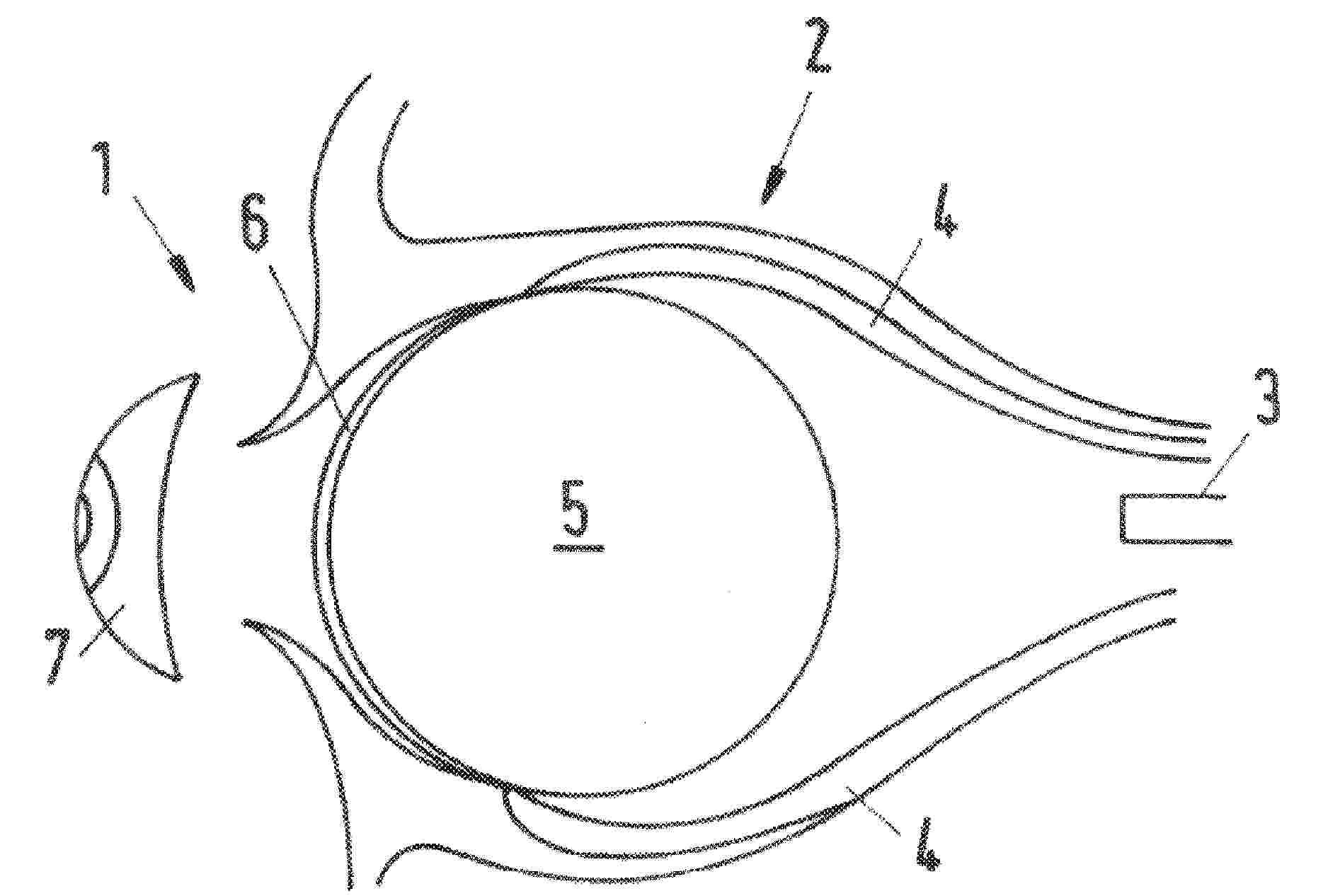
A method and a system for determining shape and appearance information of an ocular prosthesis for a patient, a computer program product and a conformer are provided. The method includes generating shape information for the ocular prosthesis, determining the shape of the ocular prosthesis depending on said shape information, generating appearance information for the ocular prosthesis by capturing an image of a patient's eye, and fusing the shape and the appearance information. Determining the shape of the ocular prosthesis includes determining the shape based on a shape model or determining the shape by generating shape information of an existing patient-specific prosthesis and transforming it into a uniform shape representation, and/or generating appearance information includes performing at least one of an inhomogeneous illumination correction and a color characterization being performed with same or similar viewing conditions as a color characterization of a device used for the manufacturing of the ocular prosthesis.
Resumen de: KR20230116244A
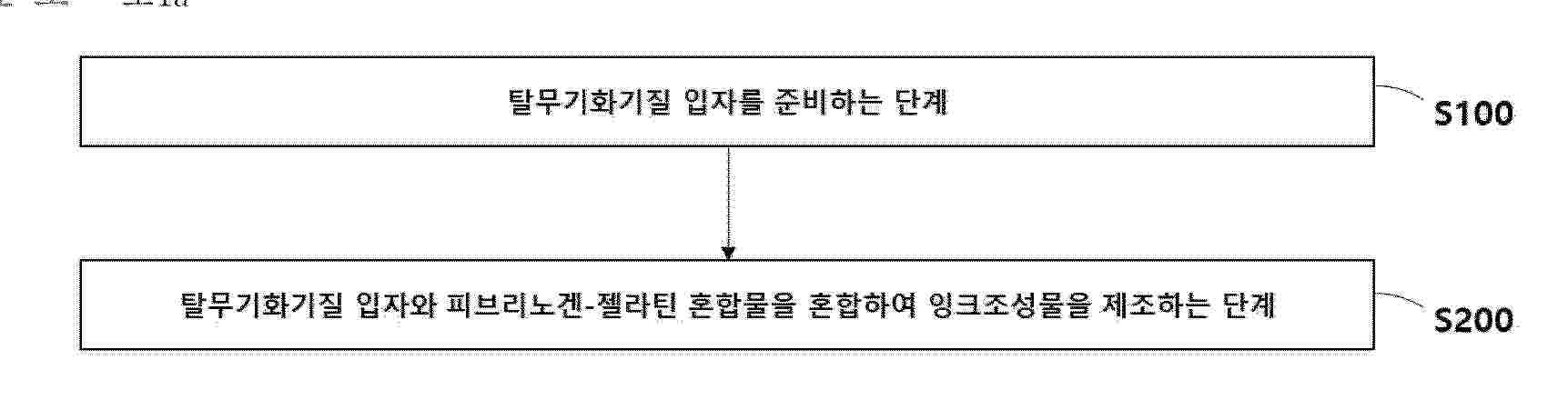
The present invention relates to bioink, and more specifically, to bioink that can produce 3D tooth structures with a clinically significant size, patient-specific shape, and high regenerative capacity. The bioink contains: demineralized matrix particles; and a fibrinogen-gelatin mixture.
Nº publicación: CA3321051A1 21/09/2026
Solicitante:
RONAWK INC [US]
RONAWK, INC.
Resumen de: WO2023133120A1
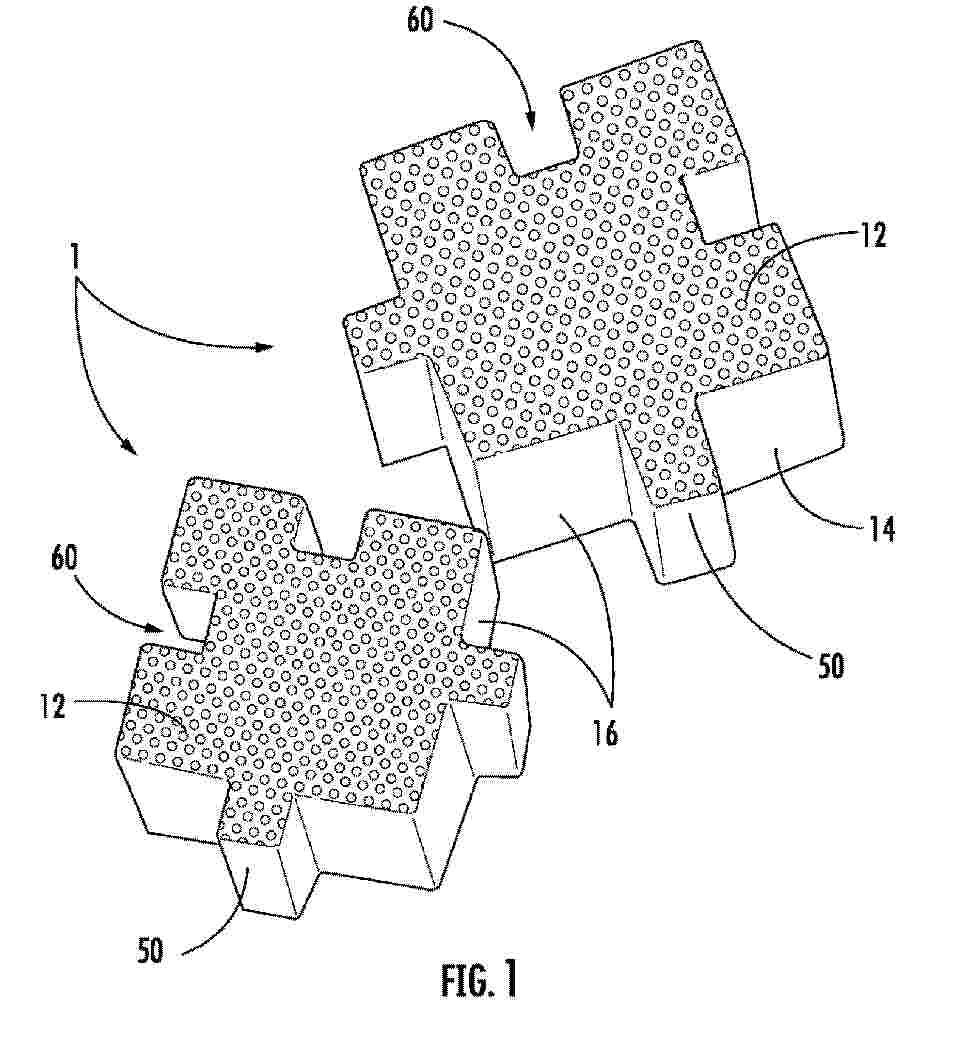
Interlocking porous hydrogel blocks (IPHB), which are suitable for variety of cell and/or tissue growth, are provided. The IPHBs have a three-dimensional (3D) macrostructure defined by a continuous polymeric matrix material and a network of microporous channels and/or chambers extending throughout the continuous polymeric matrix material. The 3D macrostructure comprises a top surface, a bottom surface, and a thickness defined by at least one side edge extending from the top surface to the bottom surface. The 3D macrostructure structure includes at least one interlocking-male component and at least one interlocking- female component.
 BOPI
BOPI
 Sede Electrónica