Si deseas distinguir tus productos, servicios o ambos de los de otra empresa, es posible que necesites una marca o nombre comercial. Descubre qué son, en qué consiste su procedimiento de registro y qué implica.

Información sobre los plazos de presentación de solicitudes de transformación de marcas de la Unión Europea en marca nacional española. Más información


Si tienes un nuevo dispositivo, producto o procedimiento que resuelva un problema técnico o tenga una ventaja práctica, existen distintas formas de protegerlo en España y en otros países. Descubre cómo hacerlo.

¿Tu innovación reside en la estética, la ornamentación o la apariencia de tu producto? Protégela mediante un diseño industrial. Descubre qué derechos confiere el registro y cómo realizar la tramitación.

Las indicaciones geográficas protegen el nombre de un producto originario de una zona geográfica, a la cual le debe una determinada calidad, reputación u otra característica. Descubre qué son, en qué consiste su procedimiento de registro y qué beneficios conceden.

Las patentes publicadas en todo el mundo son una valiosa fuente de información científica, técnica y comercial.

Si eres emprendedor/a o una empresa y quieres potenciar y mejorar la rentabilidad de tu negocio protegiendo de forma adecuada los activos intangibles de tu organización, en este espacio encontrarás lo necesario.


 789
resultados
789
resultados
 Última actualización
15/09/2026 [08:08:00]
Última actualización
15/09/2026 [08:08:00]


 Resultados 650 a 675 de 789

Resumen de: CN122428288A
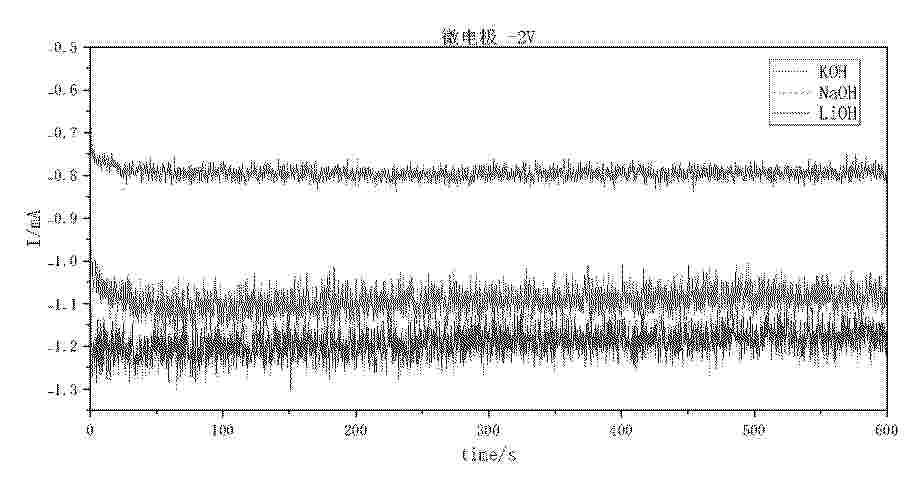
本发明提供一种基于阳离子界面效应调控碱性电解水析氢气泡行为的电解质优化方法及其应用,属于电化学能源转化技术领域。通过采用本发明的方法,在不改变电解装置硬件结构的前提下,通过科学选择和配置电解质中的阳离子种类,系统调控析氢电极表面气泡的脱附频率、聚并概率和覆盖面积,从而降低气泡诱导的传质阻力和极化过电位,显著提升宏观析氢电流密度和能量利用效率。该方法通过微电极特征化参数为阳离子筛选提供了量化依据,通过宏观电解验证确保了优化结果的工程可靠性,为碱性电解水制氢系统提供了一种科学化、可复现的电解质优化途径。

Resumen de: CN122428311A
本发明公开了一种碱式硫酸盐负载Pt复合材料及其制备方法和在海水电催化析氢中的应用,属于电催化材料的制备技术领域。本发明要解决现有催化剂的催化活性低,同时贵金属成本高的技术问题。方法包括:1)制备碱式硫酸镍载体;2)制备Pt源溶液;3)浸泡;4)电化学处理得到碱式硫酸盐负载Pt复合材料。本发明制备得到的碱式硫酸盐负载Pt复合电极材料在碱性条件和海水电催化析氢方面均表现出优越的催化性能,具有优异的电化学性能和稳定性,在电催化分解水电极材料技术领域将拥有广泛的应用前景。本发明方法制备的碱式硫酸盐负载Pt复合材料电解水催化剂用于电催化材料技术领域,改善氢能制备与海水利用问题。
Resumen de: CN122428314A
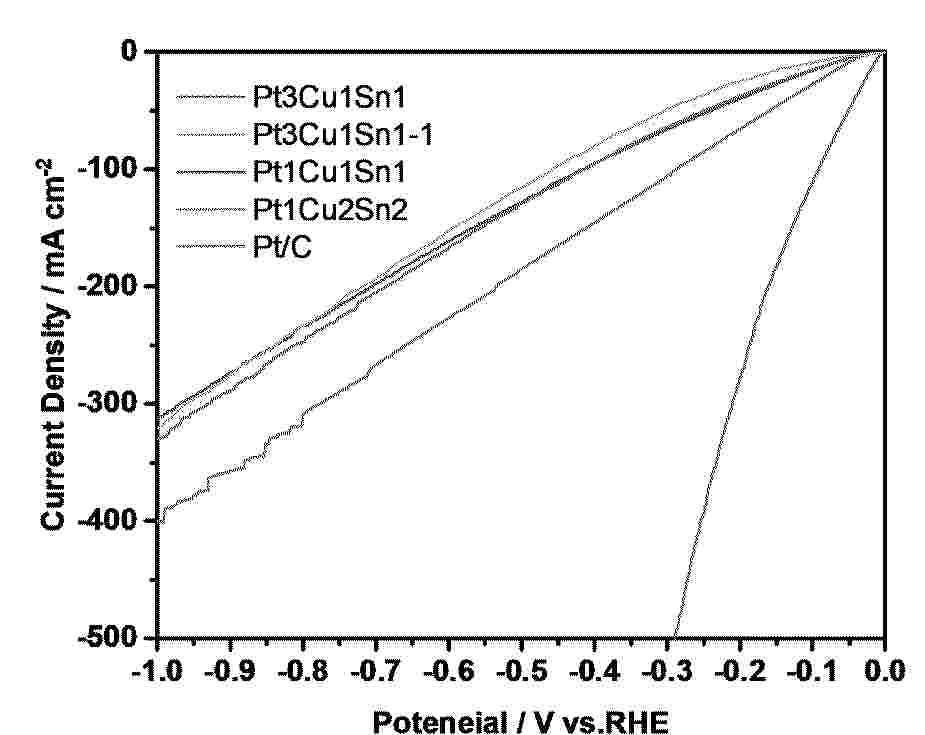
本发明公开了一种电解制氢用铂铜锡固溶体合金阴极催化剂及其制备方法。所述制备方法包括:配置含铂源、铜源、锡源的混合水溶液,加入碳载体并超声分散均匀;在冰水浴条件下,逐滴滴加强还原剂水溶液,通过液相共还原反应生成铂铜锡固溶体合金颗粒;经洗涤、烘干即得所述催化剂。本发明通过液相共还原法将铂、铜、锡以特定原子比例形成固溶体合金,利用铜的氢溢流效应与锡对氢氧根脱附的协同促进作用,构筑梯度电子结构活性中心。所得催化剂在100 mV过电位下的单位铂质量活性达到225.24 mA/mgPt,较商业化40%Pt/C提升约62.5%,在碱性电解水环境中连续运行600小时性能衰减低于5%,在实质性降低铂绝对用量的同时实现了超高活性与工业级耐久性。
Resumen de: CN122428321A
0001 本发明涉及纳米功能材料及电解水制氢技术领域,具体涉及一种La‑MoS<2>/Mo<2>CT
Resumen de: CN122437076A
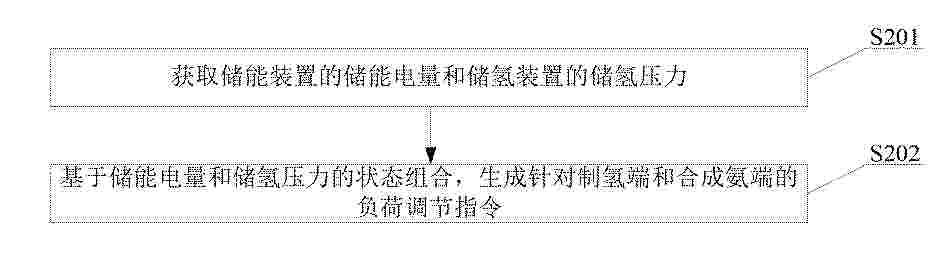
The invention discloses a flexible control method of a green ammonia synthesis system and a related device, and relates to the field of new energy chemical coupling, and the method comprises the steps: obtaining the energy storage electric quantity of an energy storage device and the hydrogen storage pressure of a hydrogen storage device; and based on the state combination of the energy storage electric quantity and the hydrogen storage pressure, generating a load regulation instruction aiming at the hydrogen production end and the ammonia synthesis end. According to the invention, closed-loop feedback adjustment is carried out by using real-time state combination of double buffering links of electric quantity buffering and material buffering, so that the problem of system oscillation caused by prediction deviation is fundamentally solved, and the robustness and stability of cooperative control of the whole chain from a power generation end, a hydrogen production end to a synthesis ammonia end are remarkably improved.
Resumen de: CN122428319A
0001 本申请公开了一种钐掺杂镍铁金属磷化物自支撑阳极及其制备方法、应用,属于电解水制氢阳极材料领域。所述钐掺杂镍铁金属磷化物自支撑阳极由钐掺杂镍铁金属磷化物原位生长在基底上。所述制备方法包括:S1、通过电化学沉积法在基底表面原位生长钐掺杂镍铁金属氢氧化物;S2、将钐掺杂镍铁金属氢氧化物进行磷化,得到所述钐掺杂镍铁金属磷化物自支撑阳极。该制备方法简单,反应周期短,制备成本可控。所制备电极对电解水制氢阳极反应具有优良的催化活性,同时具备良好的催化稳定性,具有规模应用的潜力和优势。
Resumen de: CN122428977A
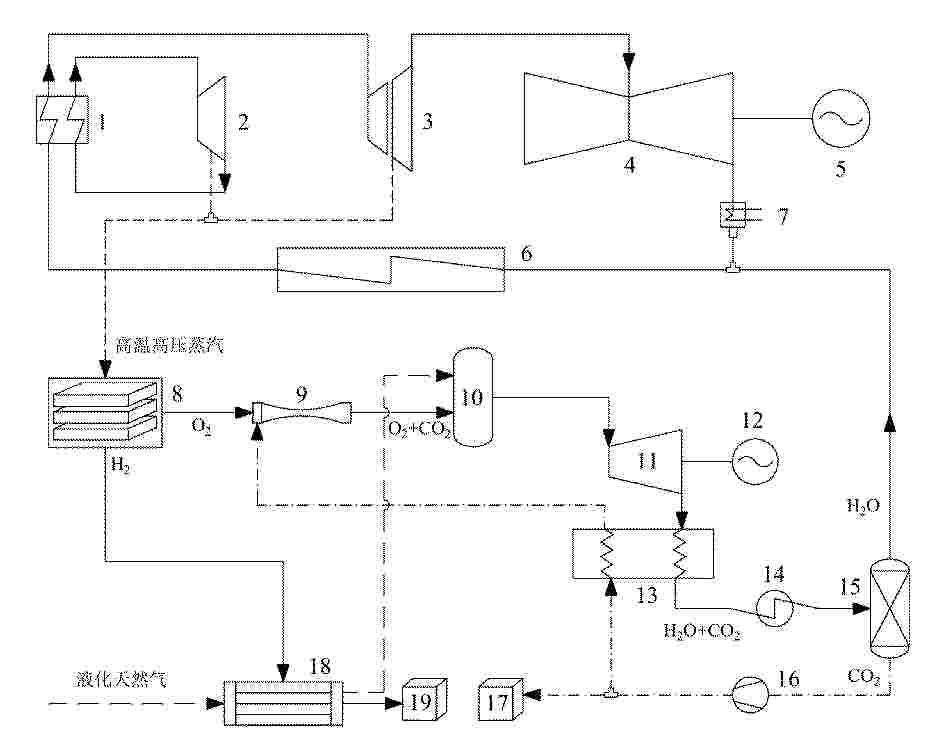
The invention discloses a zero-carbon power generation system and method with a thermal power generating unit deep peak regulation function, and relates to the field of thermal power generating unit deep peak regulation and clean energy power generation. The system comprises a thermal power generating unit body, an SOEC hydrogen production unit, a natural gas combustion and Brayton cycle power generation unit, a carbon dioxide cycle and storage unit and a hydrogen treatment and storage unit. In the electricity trough period, high-temperature and high-pressure steam of the thermal power generating unit is extracted for electrolysis to produce hydrogen and oxygen, and surplus electric energy of the unit and new energy are used for abandoning electricity for power supply; in the peak period of power utilization, SOEC byproduct oxygen is mixed with circulating carbon dioxide and then is subjected to oxygen-enriched combustion with natural gas, and generated mixed gas pushes a turbine to generate power; after acting, liquid water is supplemented to boiler feed water, and after compression, part of the carbon dioxide participates in combustion, and part of the carbon dioxide is sealed up. According to the system, deep peak regulation in the electricity consumption trough period is achieved, energy consumption is reduced, meanwhile, the by-product hydrogen can be obtained, and compared with Rankine cycle-based steam acting, the system has higher power generation efficiency.
Resumen de: CN122428296A
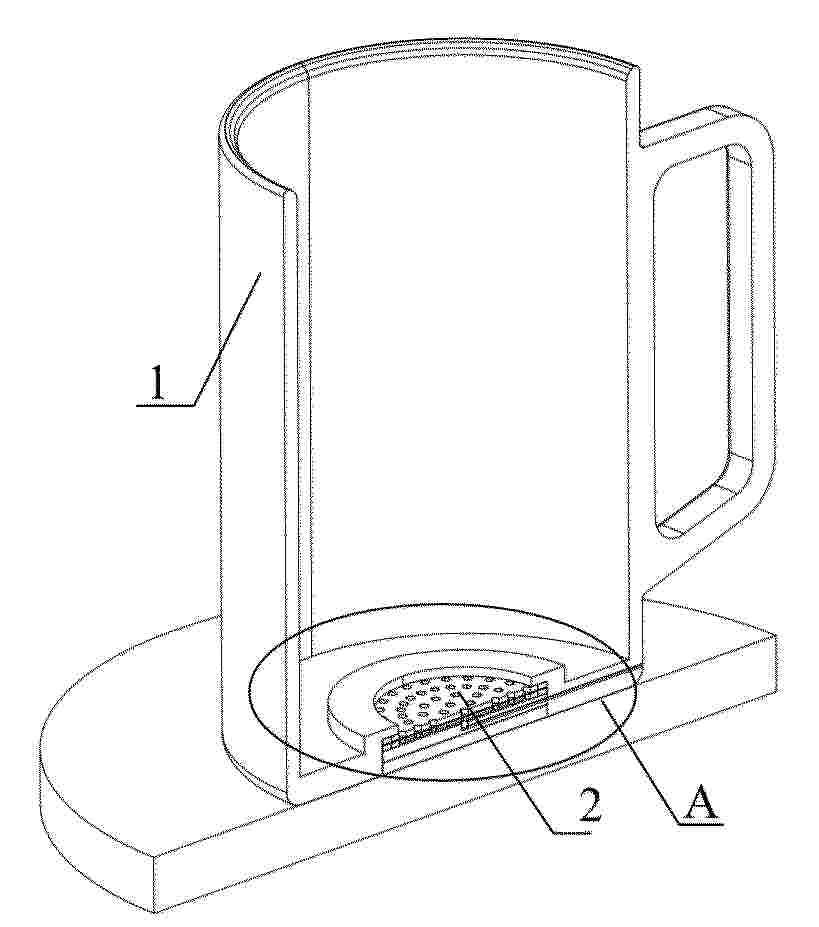
The invention discloses a tooth glass which comprises a cavity with one open end, a cup body, a cup cover and a cup cover. The electrolysis module comprises a water inlet end, a first output end and a second output end, the first output end and the second output end are mutually independent, the electrolysis space of the electrolysis module is communicated with the water containing space through the water inlet end and the first output end, and the second output end is communicated with the outer side of the water containing space, so that hydrogen is output, and the consumption of hydrogen on anode products is reduced. The second output end for discharging hydrogen is arranged in the tooth glass, consumption of reducing substances at the cathode to anode products is reduced, more needed electrolytes are generated, and for the scene where the anode products need to be used for cleaning the oral cavity, the waiting time of a user can be shortened, so that the use experience of the user is guaranteed.
Resumen de: CN122428315A
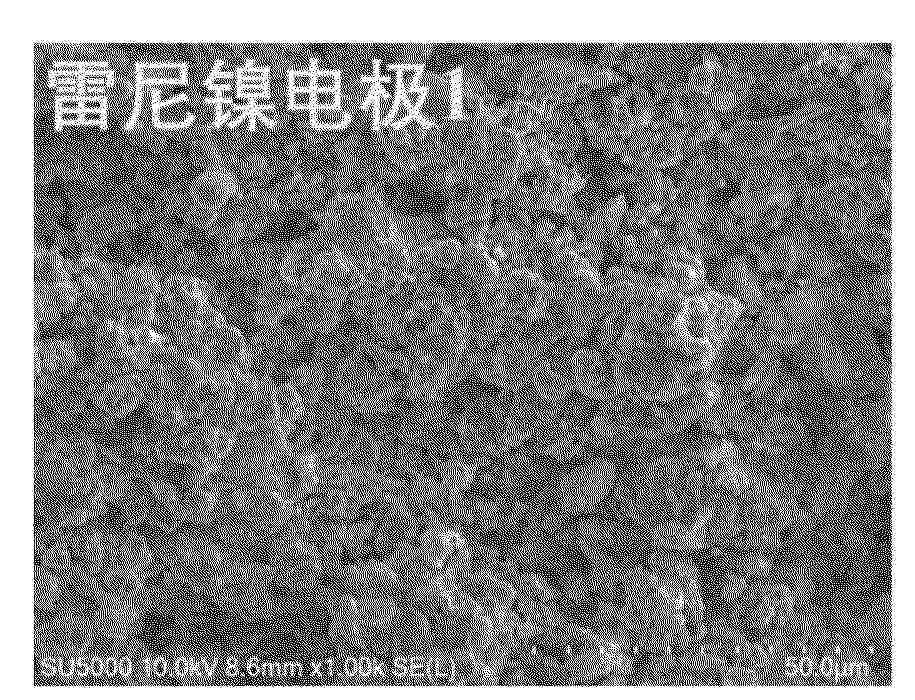
0001 本申请提供一种雷尼镍电极及其制备方法和应用,涉及电解水制氢领域。将表面设置雷尼镍催化层的电极基体进行热处理,得到热处理后电极;将碱液、添加剂和热处理后电极进行混合、活化处理、洗涤、干燥,得到雷尼镍电极;热处理中的氧气的体积浓度依次梯度降低直至为低氧气氛或无氧气氛,温度依次梯度升高。通过在碱液活化前引入可控梯度热处理过程,促进Ni与Al之间的充分扩散形成特定含量稳定的Ni3Al相,Ni3Al相中的Ni‑Al协同结构可在一定程度上调控表面电子结构,改善电极表面的反应活性位点分布,同时提高析氢和析氧性能,另外,在保证多孔电极骨架结构完整性的同时,提高了合金化程度。
Resumen de: CN122428312A
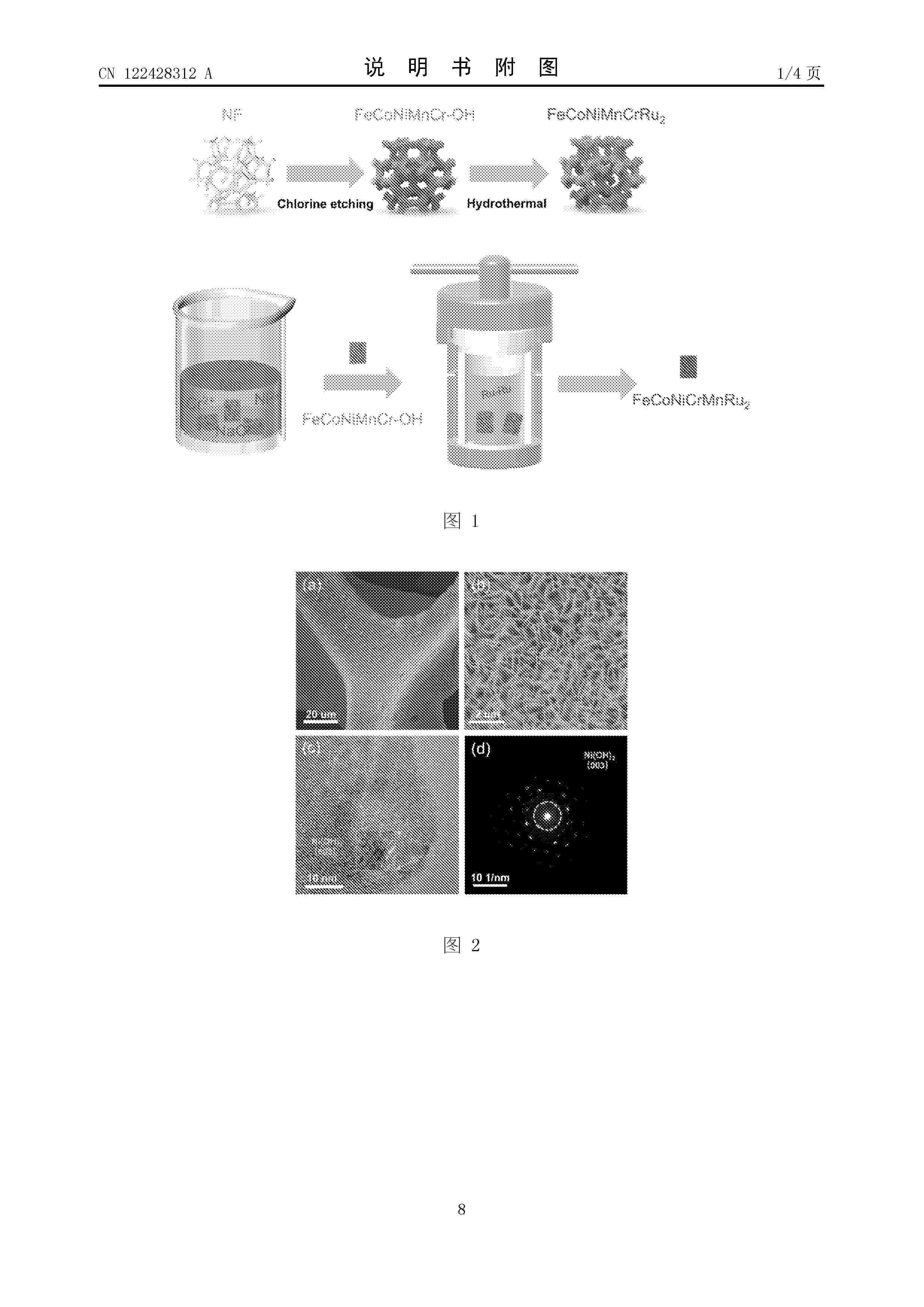
0001 本发明涉及电催化材料技术领域,具体涉及一种高熵氢氧化物担载金属双原子催化剂的制备方法及其应用,将自支撑基底材料置于含有氯化钠和金属源的溶液中,通过室温氯刻蚀法生成高熵氢氧化物FeCoNiMnCr纳米片,将生长有FeCoNiMnCr纳米片的自支撑基底材料置于含金属双原子前驱体的溶液中,通过水热法将金属双原子担载到高熵氢氧化物纳米片上得到高熵氢氧化物纳米片担载的金属双原子催化剂;本发明实现金属双原子‑基底强耦合,制得的催化剂析氢催化活性提升,作为自支撑电极在碱性析氢反应中展示出10mA/cm<2>@0.018V,全解水电解槽中展现1A/cm@1.82V极佳性能,突破传统单原子催化剂与基底负载稳定性限制。
Resumen de: CN122428307A
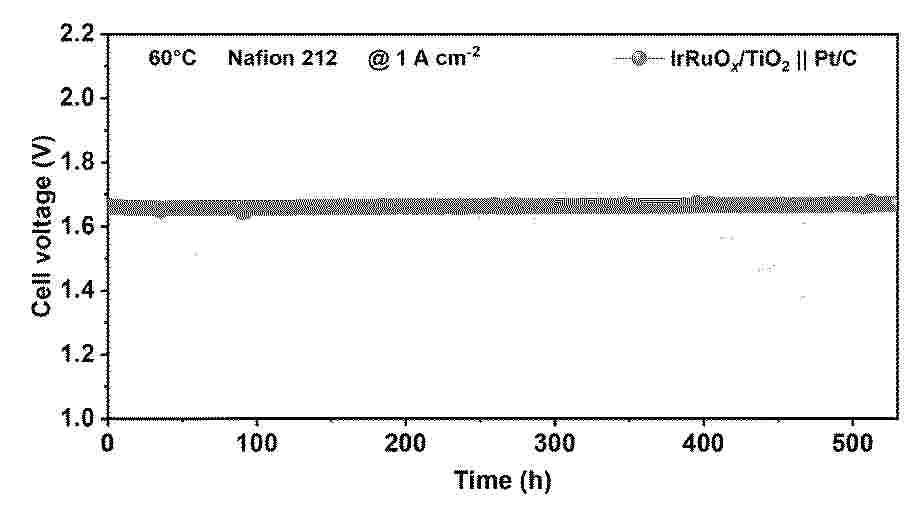
本发明公开了一种TiO2负载型IrRu基酸性电解水析氧电催化剂及其制备方法和应用,属于电解水制氢材料技术领域。本发明通过软模板法预制备初级TiO2,经盐模板辅助球磨、氩气高温煅烧、洗涤除盐得到高结晶度抗烧结改性TiO2载体;再将Ir、Ru金属盐经除氧、原位共还原负载到载体上,低温煅烧得到IrRuOx/TiO2催化剂。本发明所制备的IrRuOx/TiO2催化剂在0.5M H2SO4溶液中达到10 mA cm‑2电流密度的过电位仅为204 mV,组装为质子交换膜电解水电极后,可在1 A cm‑2电流密度下稳定运行超过540 h,兼具优异的催化活性与长期稳定性,适合酸性电解水制氢的实际应用。
Resumen de: CN122428297A
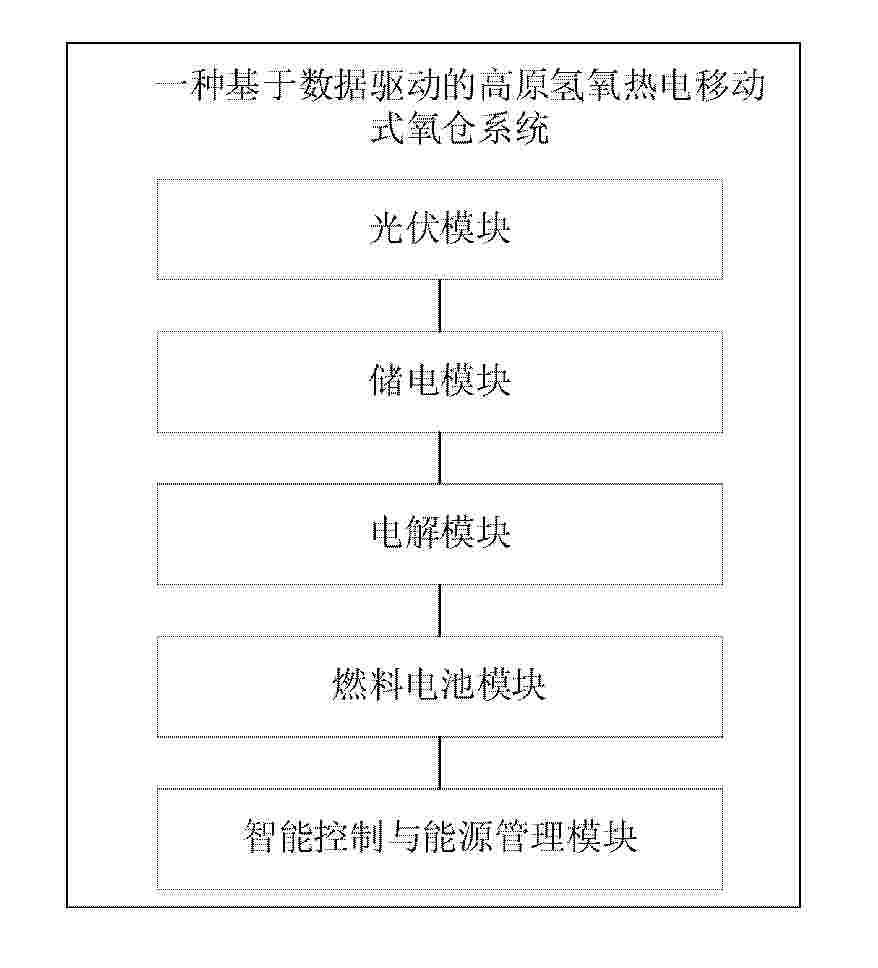
The invention relates to the technical field of plateau movable oxygen cabins, and discloses a plateau oxyhydrogen thermoelectric movable oxygen cabin system based on data driving, a photovoltaic module is used for converting solar energy into first electric energy, and the first electric energy is stored in an electricity storage module; the power storage module is used for supplying power to the plateau mobile oxygen cabin and the electrolysis module by using first electric energy; the electrolysis module is used for performing in-situ electrolysis on purified water by using first electric energy; the fuel cell module is used for calling hydrogen in the hydrogen storage bottle and oxygen in the oxygen storage bottle to react to generate second electric energy under the condition that the residual electric quantity of the electricity storage module is lower than a preset threshold value, so as to supply power to the plateau mobile oxygen cabin; and the intelligent control and energy management module is used for optimizing the execution process of the system. According to the technical scheme, the problems that a traditional hydrogen power plateau movable oxygen cabin is low in efficiency and high in cost in a high-cold and high-altitude area, cannot adapt to a low-oxygen environment and cannot meet the sustainable energy requirement can be solved.
Resumen de: CN122428303A
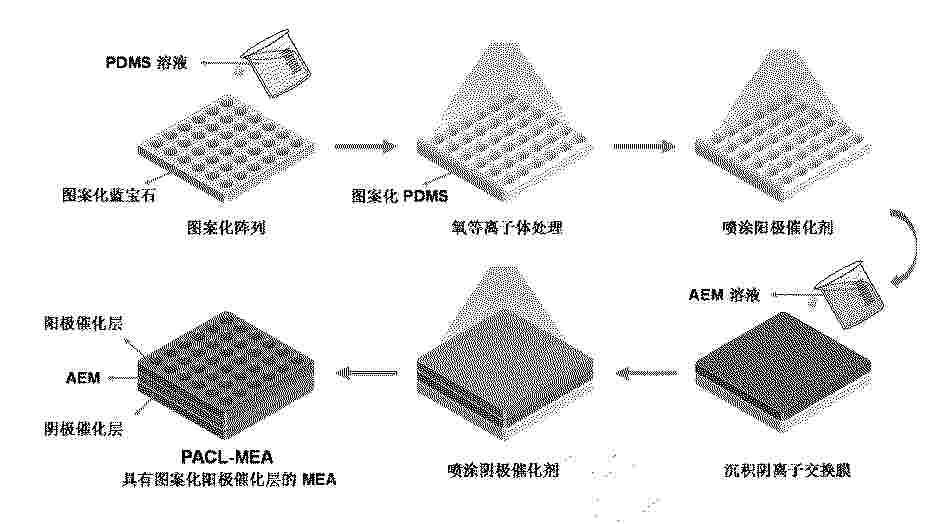
本发明提供了一种超薄有序一体化膜电极构建方法及应用,涉及电解水制氢技术领域,膜电极含有:离子交换膜、超薄有序催化层、气液扩散层和阴极催化层;其中,所述超薄有序催化层构建于离子交换膜的底面,并与所述离子交换膜的底面形成连续致密的一体化界面;所述离子交换膜的顶面设置有阴极催化层,所述阴极催化层的表面设置有气液扩散层;超薄有序催化层的另一面具有有序排列的微结构单元,气液扩散层与微结构单元直接接触。
Resumen de: CN122428334A
0001 本发明提供了一种金属有机框架异质结光电极材料及其制备方法和应用,涉及光电催化技术领域。该材料由导电衬底、BiVO<4>纳米棒及表面负载的Co
MOF构成,二者形成异质结结构。制备采用电化学沉积结合水热法,先在衬底上制得BiVO<4>纳米棒,再水热负载Co
MOF形成异质结。本发明有效提升电子输运效率、增加氧原子活性位点,抑制载流子复合,显著提高光电催化水分解性能,光电流密度远高于纯BiVO<4>电极,具备高效、稳定、工艺简便等优点,可用于光电水解制氢体系。
Resumen de: CN122428318A
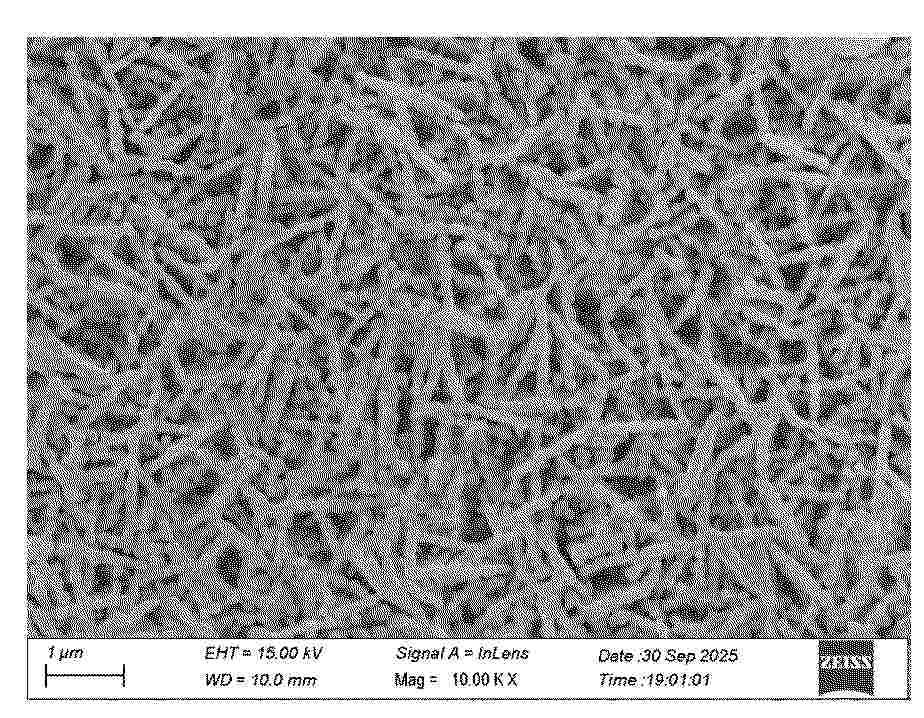
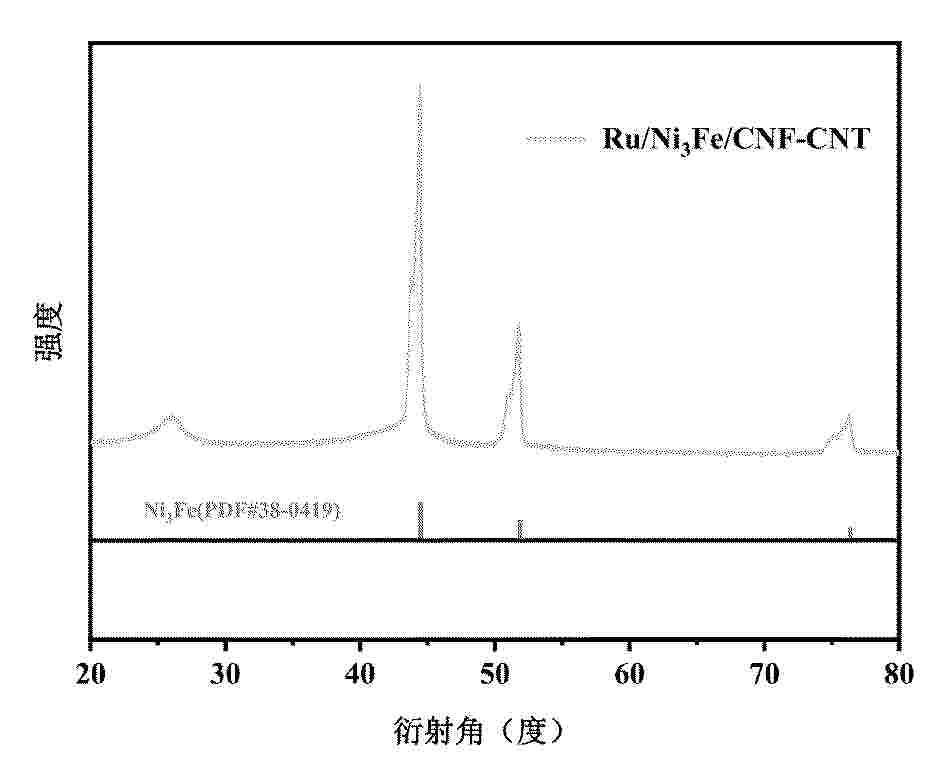
本发明公开一种复合电催化材料及其制备方法和应用,属于电催化材料技术领域。该复合电催化材料,包括基底、镍铁合金和钌纳米颗粒;所述基底为碳纤维/碳纳米管复合薄膜,所述镍铁合金嵌入所述基底中,所述钌纳米颗粒负载于所述基底上。本发明还提出一种复合电催化材料的制备方法,包括以下步骤:S1、将可溶性镍盐、可溶性铁盐、尿素和碳纤维/碳纳米管复合薄膜分散于醇溶液中,其后,进行水热反应,得到第一中间体;S2、对所述第一中间体进行碳化处理,得到第二中间体;S3、将所述第二中间体和可溶性钌盐在还原剂作用下进行还原反应,得到所述复合电催化材料。本发明实现了在减少贵金属用量的前提下提高了催化剂的催化制氢性能。
Resumen de: CN122428316A
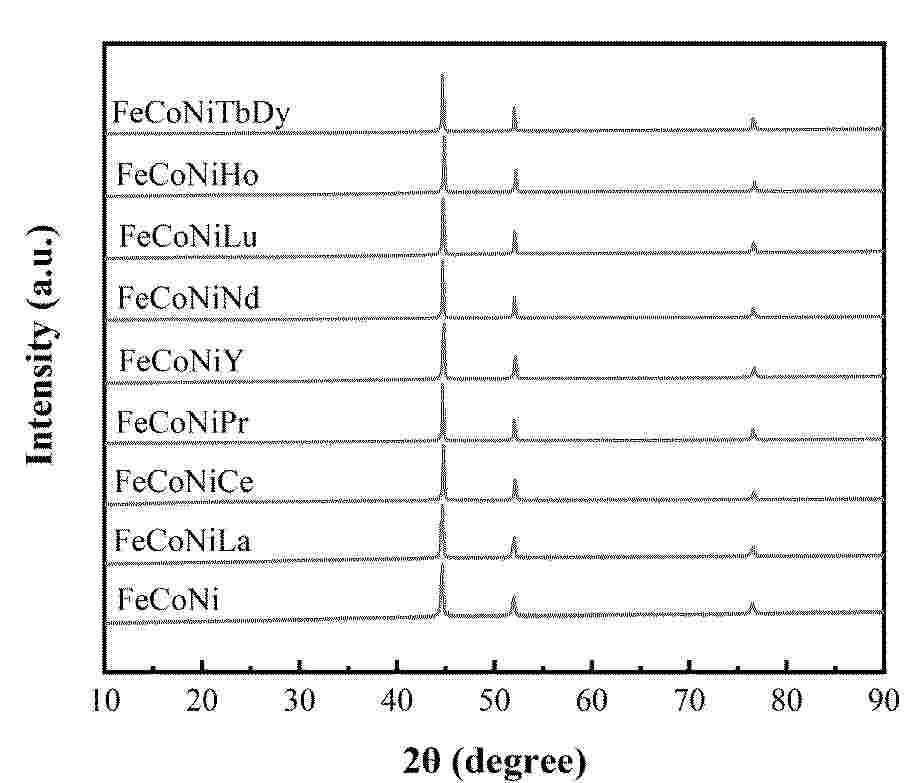
一种FeCoNi基稀土高熵电催化剂及其制备方法和应用,属于电解水制氢的新能源技术领域。本发明的FeCoNi高熵电催化剂包括Fe、Co、Ni,以及RE元素中的至少一种,各元素原子百分比at%为Fe:Co:Ni:RE=(5~35):(5~35):(5~35):(5~35),且各元素原子百分比at%的总和为100%,采用恒电位电沉积的方法制备而得。本发明所得FeCoNi基稀土高熵电催化剂形貌为树枝状结构,具有较大比表面积,提高了反应速率和电流密度,并且,该催化剂价格低廉,原材料来源广泛,环境友好,展现出良好的耐腐蚀性、稳定性以及优异的双功能电催化活性,具有较高的工业应用前景。
Resumen de: CN122428308A
0001 本发明公开了一种三维多孔空腔CrN‑c纳米笼电催化剂及其制备方法和应用,属于三维纳米材料合成和电解水催化技术领域。本发明通过溶剂热法制备氢氧化铬纳米笼作为前驱体,并在高温氮化过程中利用二氧化硅保护,而后刻蚀除去二氧化硅,制备三维多孔空腔CrN‑c纳米笼。本发明提供的三维多孔空腔CrN‑c纳米笼,由于多孔空腔的限域及不饱和配位边缘,不仅能在反应界面富集羟基反应物,还能促进氧气泡的形成与释放,并降低溶解氧产物的浓度,使得该三维多孔空腔CrN‑c纳米笼在阴离子交换膜电解水制氢阳极析氧反应中展示出优于商用氧化钌催化剂的催化活性和长期稳定性。
Resumen de: CN122428322A
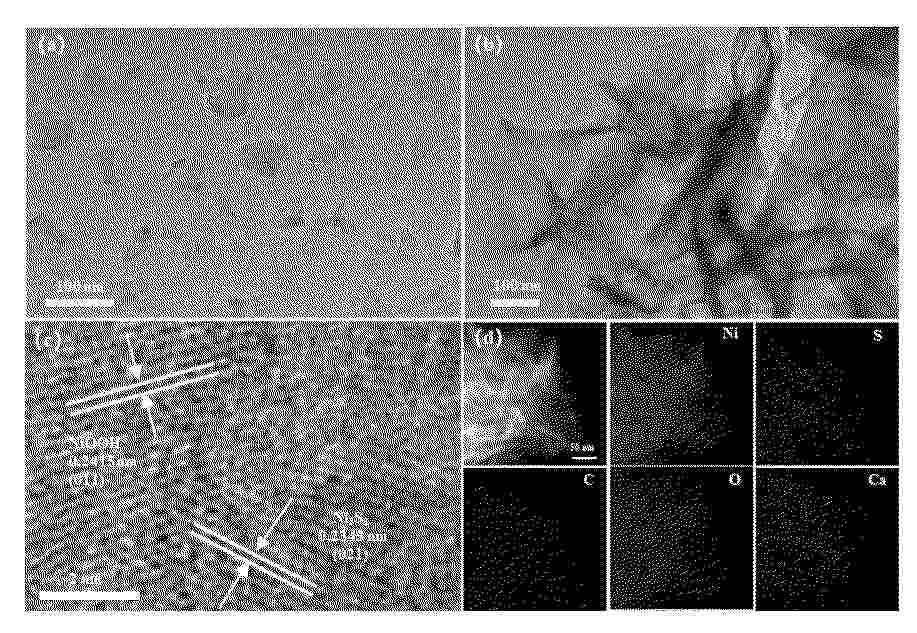
本发明公开了一种碳酸根与钙共修饰的硫化镍催化剂及其制备方法和应用,属于电解水制氢技术领域。本发明将“阴离子修饰策略”与“杂原子掺杂工程”相结合,采用水热法成功制备出碳酸根与钙共修饰的硫化镍催化剂。其中,Ca的引入能够增强碳酸根离子的吸附,减少由于碳酸根离子脱附而引起的催化活性降低。将碳酸根离子引入到硫化镍催化剂中,一方面能够促进高活性相NiOOH的生成,提高其催化活性;另一方面,碳酸根离子与Ca相互作用,能够优先吸附在催化剂表面,使得催化剂的结构更加稳定。本发明制备的硫化镍催化剂在400mA/cm2电流密度下,能够稳定运行550h。此外,该本发明的制备方法简单、生产成本低,有利于进行大规模产业化生产。
Resumen de: US12686931B1
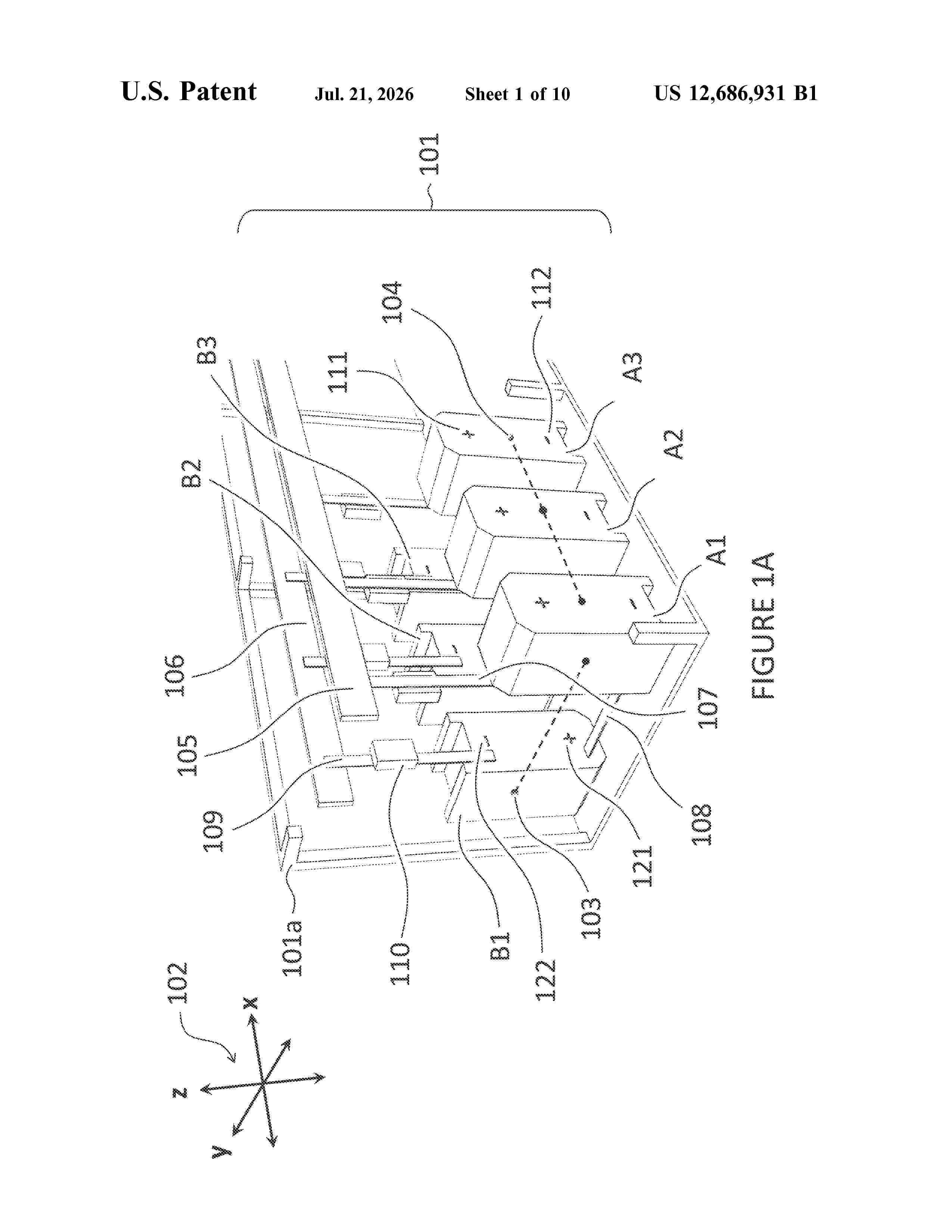
0000 The present invention relates to modular packages of individual electrolyzer stack units arranged to overcome prior art limitations related to power supply costs, as-manufactured stack unit performance variation, operating stack unit performance variation, and operational reliability. The electrolyzer stack module comprises an even number of individual stack units wired in series-parallel and arranged to minimize variation between branches of series-connected stack pairs.
Resumen de: WO2026155716A2
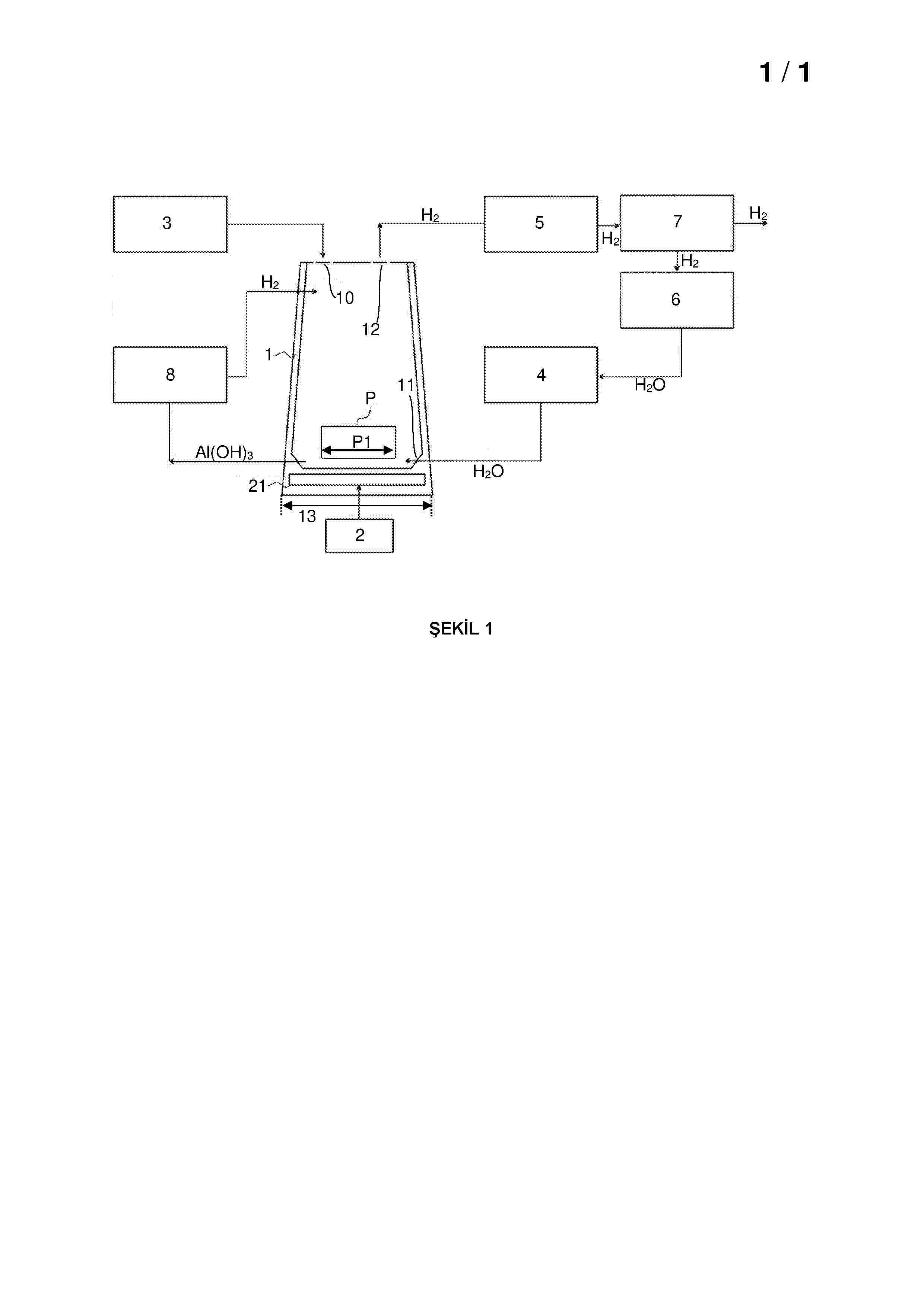
The present invention relates to a system, which enables a reagent containing aluminum to react with water to generate hydrogen gas with high efficiency and in a controlled manner. In a preferred embodiment, the present invention relates to a system, wherein a reagent containing aluminum powder in the form of pellet (P) is enabled to react with water inside a reactor body (1), at a stoichiometric ratio at every stage of said reaction, wherein, owing to a vibration actuator (2) included in said system, it is made possible to remove the protective oxide layer that is naturally present on the surface of aluminum and accelerate the reaction kinetics, and wherein said system makes a highly efficient, continuous, sustainable, and controllable generation of hydrogen gas possible.
Resumen de: WO2026155715A2
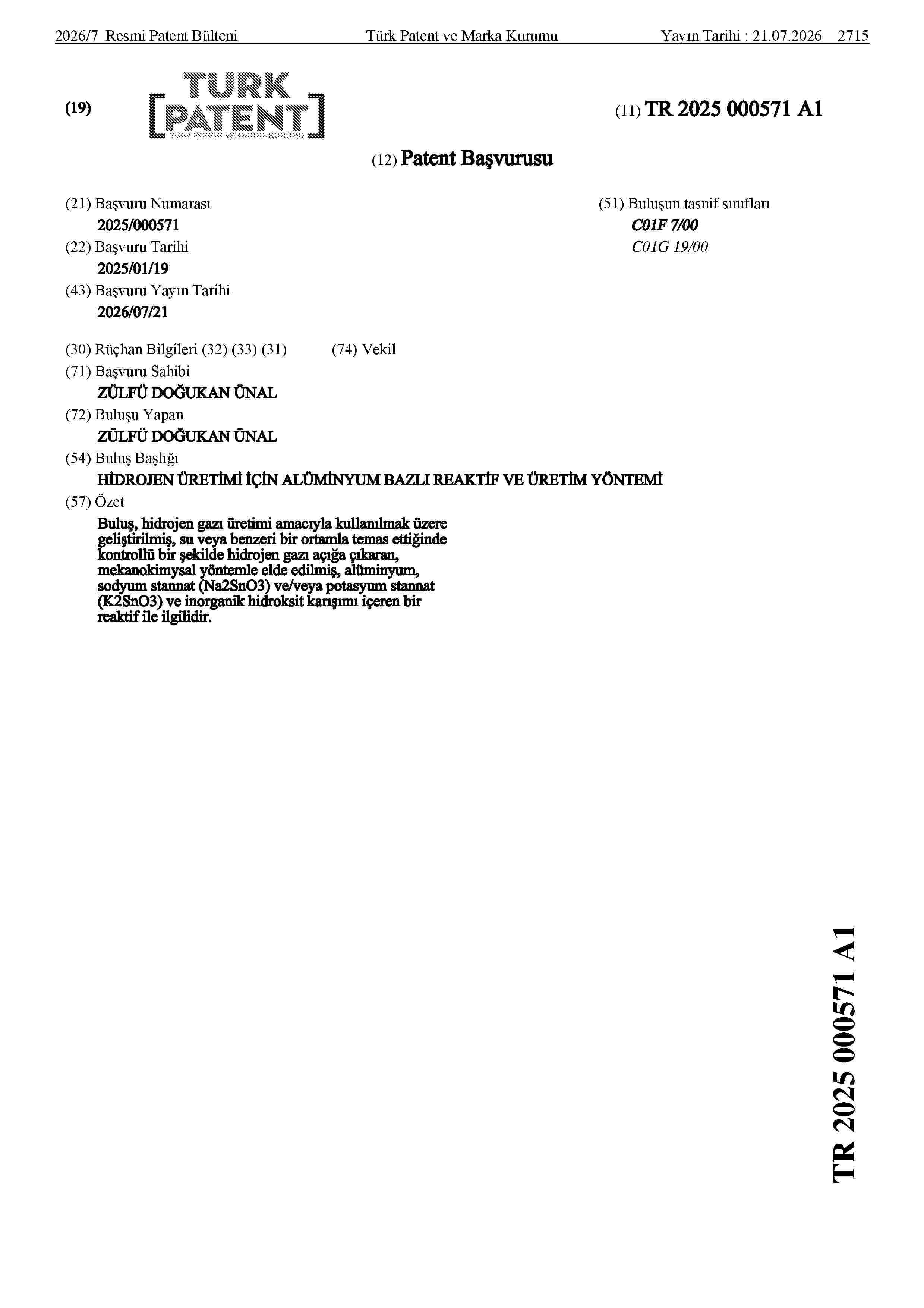
The invention relates to a reagent developed for use in the generation of hydrogen gas, said reagent releasing the hydrogen gas in a controlled manner upon contact with water or a similar medium, said reagent being obtained via a mechano-chemical method, and said reagent comprising a mixture of aluminum, sodium stannate (Na2SnO3) and/or potassium stannate (K2SnO3), and an inorganic hydroxide.
Resumen de: CN122437077A
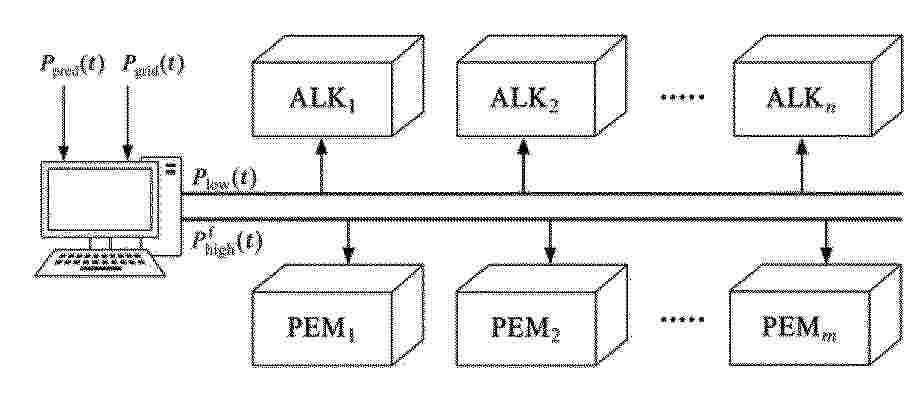
The invention relates to the technical field of new energy hydrogen production, in particular to a leveling load support-oriented heterogeneous electrolytic cell array optimization control method, which comprises the following steps of: configuring a heterogeneous electrolytic cell array consisting of electrolytic cells with different power regulation characteristics; determining a total input power task of the heterogeneous electrolytic cell array, wherein the total input power task comprises a fluctuation part representing new energy power fluctuation characteristics and a power grid load support instruction part; decomposing the total input power task based on frequency characteristics to obtain a low-frequency power part and a high-frequency power part; the low-frequency power part is distributed to the first type of electrolytic cells for bearing, and the high-frequency power part is distributed to the second type of electrolytic cells for bearing; and dynamically adjusting the priority of the power task undertaken by each electrolytic cell according to the accumulative running state information of each electrolytic cell. According to the invention, the alkaline electrolytic cell and the proton exchange membrane electrolytic cell can be synergistically utilized, and the complementary advantages of the two types of electrolytic cells in adjusting performance can be fully exerted.
Resumen de: CN122428324A
0001 本发明公开了一种自支撑异质结构复合材料及其制备方法与应用,复合材料,包括泡沫镍和附着其上的异质结构,异质结构为Ni<3>S<2>和1T相的MoS<2>形成的异质结构,异质结构的微观形貌为纳米棒状纤维,表面附着褶皱、卷曲的片层状包裹物。制备方法包括以下步骤:将泡沫镍与钼酸盐溶液、镍盐溶液进行水热反应,冷却至室温后取出泡沫镍,清洗后在惰性气体中升温到440~460℃并保温,获得自支撑NiMoO<4>@NF前驱体;将NiMoO<4>@NF前驱体、水合肼、硫代乙酰胺溶液进行溶剂热反应,通过水合肼辅助的硫化形成1T相的MoS<2>并形成异质结构材料,冷却至室温,取出产物,清洗烘干。本发明能实现高效全解水,合成方法简便易行。
Resumen de: KR20260113438A
0001a 본 발명은 액상의 수소화합물을 연소보조재로 이용하는 증기 생산용 가열로에 관한 것으로, 하단의 버너로부터 공급되는 열과 내부 연소열을 축열실에서 축열하도록 하고, 상기 축열실의 축열에 의해 외부로부터 적당한 양이 지속적으로 공급되는 액상의 수소화합물을 분자 구조로 변환하면서 연소가 가능한 활성증기화 하여 공급하도록 하고, 상기의 축열실에서 공급되는 활성증기와 내부에서 증기를 변환한 활성증기를 연소실에서 연소시키도록 하고, 연소 시에 발생하는 열로 발전용 증기와 전기분해용 증기를 생산하도록 함으로써 최소의 연료비로 내부 연소용 증기와 발전용 증기 및 전기분해용 증기를 얻으면서 최대의 열량을 얻을 수 있도록 구성됨을 특징으로 한다.
Nº publicación: CN122426711A 21/07/2026
Solicitante:
武夷学院
Resumen de: CN122426711A
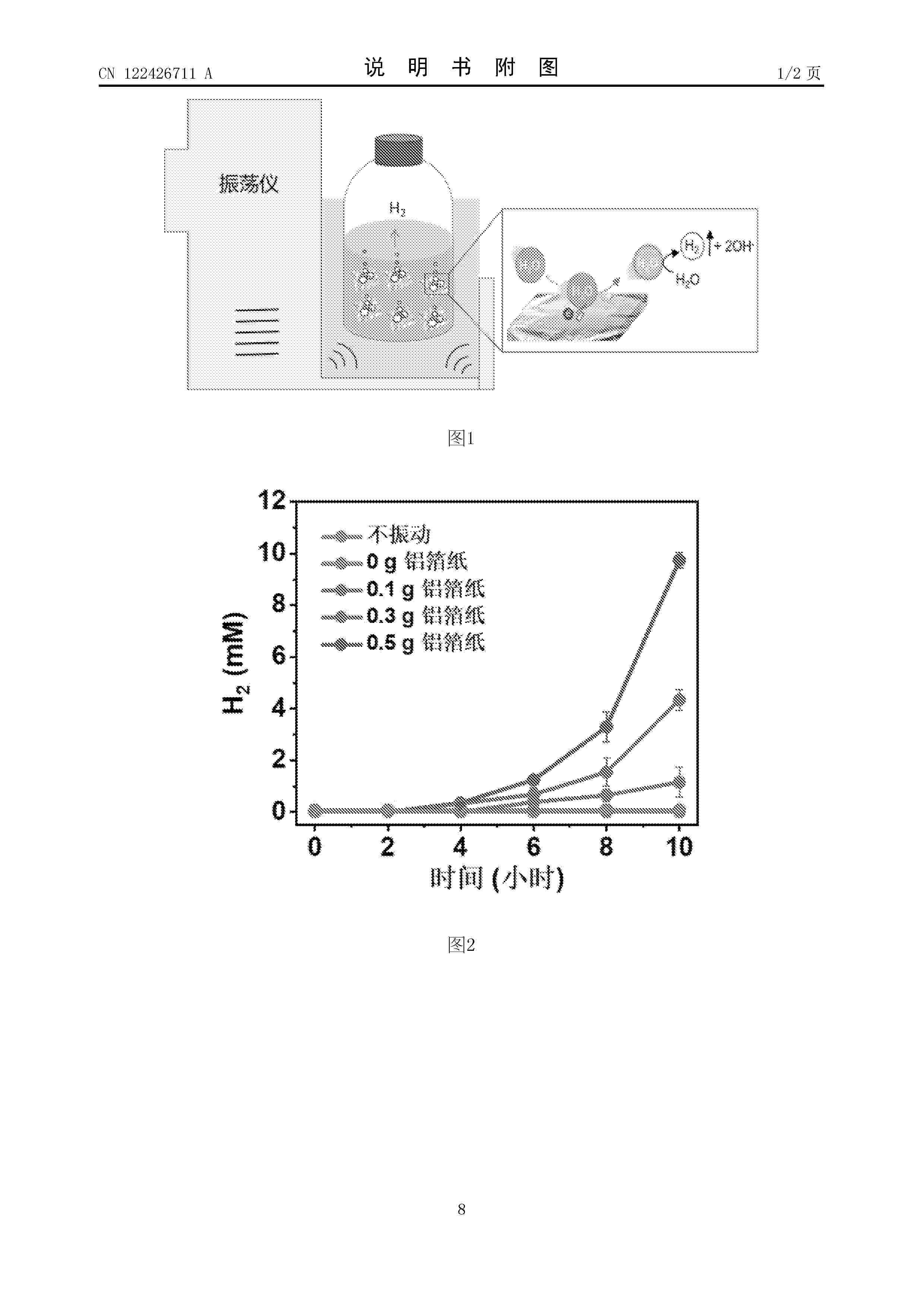
本发明公开了一种基于摩擦电材料—水摩擦电效应的氢气制备方法。本发明针对现有氢能制备技术碳排放高、成本高、系统复杂,以及现有摩擦电产氢技术依赖中间环节、材料类型单一的问题,提供了一种无需外部电能输入、无需催化剂修饰,利用金属与水的摩擦电效应直接产氢的方法,实现低成本、绿色、高效的氢气制备。
 BOPI
BOPI
 Sede Electrónica