Si deseas distinguir tus productos, servicios o ambos de los de otra empresa, es posible que necesites una marca o nombre comercial. Descubre qué son, en qué consiste su procedimiento de registro y qué implica.

Información sobre los plazos de presentación de solicitudes de transformación de marcas de la Unión Europea en marca nacional española. Más información


Si tienes un nuevo dispositivo, producto o procedimiento que resuelva un problema técnico o tenga una ventaja práctica, existen distintas formas de protegerlo en España y en otros países. Descubre cómo hacerlo.

¿Tu innovación reside en la estética, la ornamentación o la apariencia de tu producto? Protégela mediante un diseño industrial. Descubre qué derechos confiere el registro y cómo realizar la tramitación.

Las indicaciones geográficas protegen el nombre de un producto originario de una zona geográfica, a la cual le debe una determinada calidad, reputación u otra característica. Descubre qué son, en qué consiste su procedimiento de registro y qué beneficios conceden.

Las patentes publicadas en todo el mundo son una valiosa fuente de información científica, técnica y comercial.

Si eres emprendedor/a o una empresa y quieres potenciar y mejorar la rentabilidad de tu negocio protegiendo de forma adecuada los activos intangibles de tu organización, en este espacio encontrarás lo necesario.


 116
resultados
116
resultados
 Última actualización
16/10/2026 [07:20:00]
Última actualización
16/10/2026 [07:20:00]


 Resultados 25 a 50 de 116

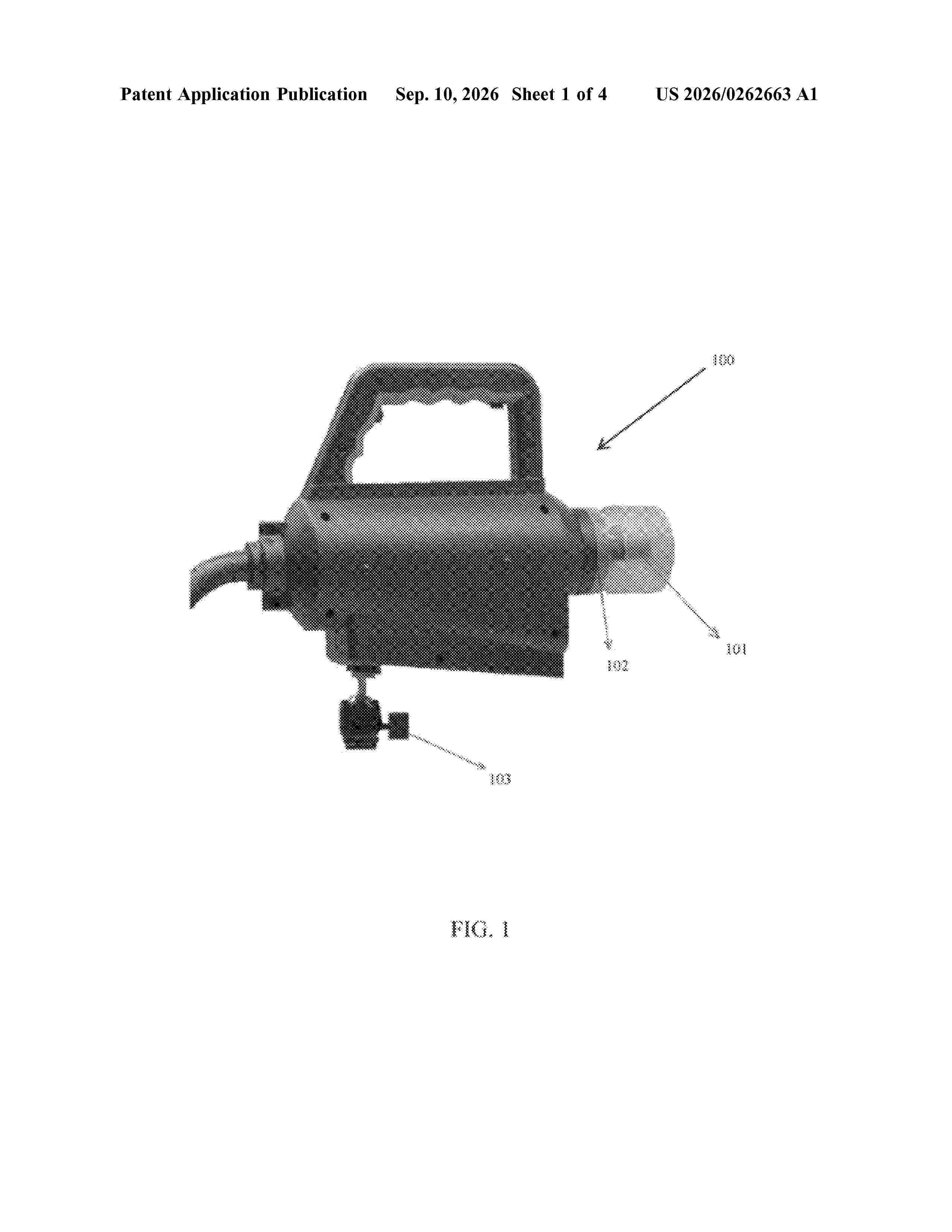
Resumen de: US20260262663A1
Systems and methods of decontaminating food substances by using cold plasma to enhance the performance of ionized hydrogen peroxide to decontaminate food, and methods of use thereof. Cold plasma activation significantly enhanced the efficacy of hydrogen peroxide mist against bacteria on fresh produce, and the technology may be used to enhance microbial safety. Cold plasma activated ionized hydrogen peroxide (iHP) can be applied on various fresh produce items. In particular, cold plasma enhanced the efficacy of hydrogen peroxide (H2O2) mist against Salmonella.

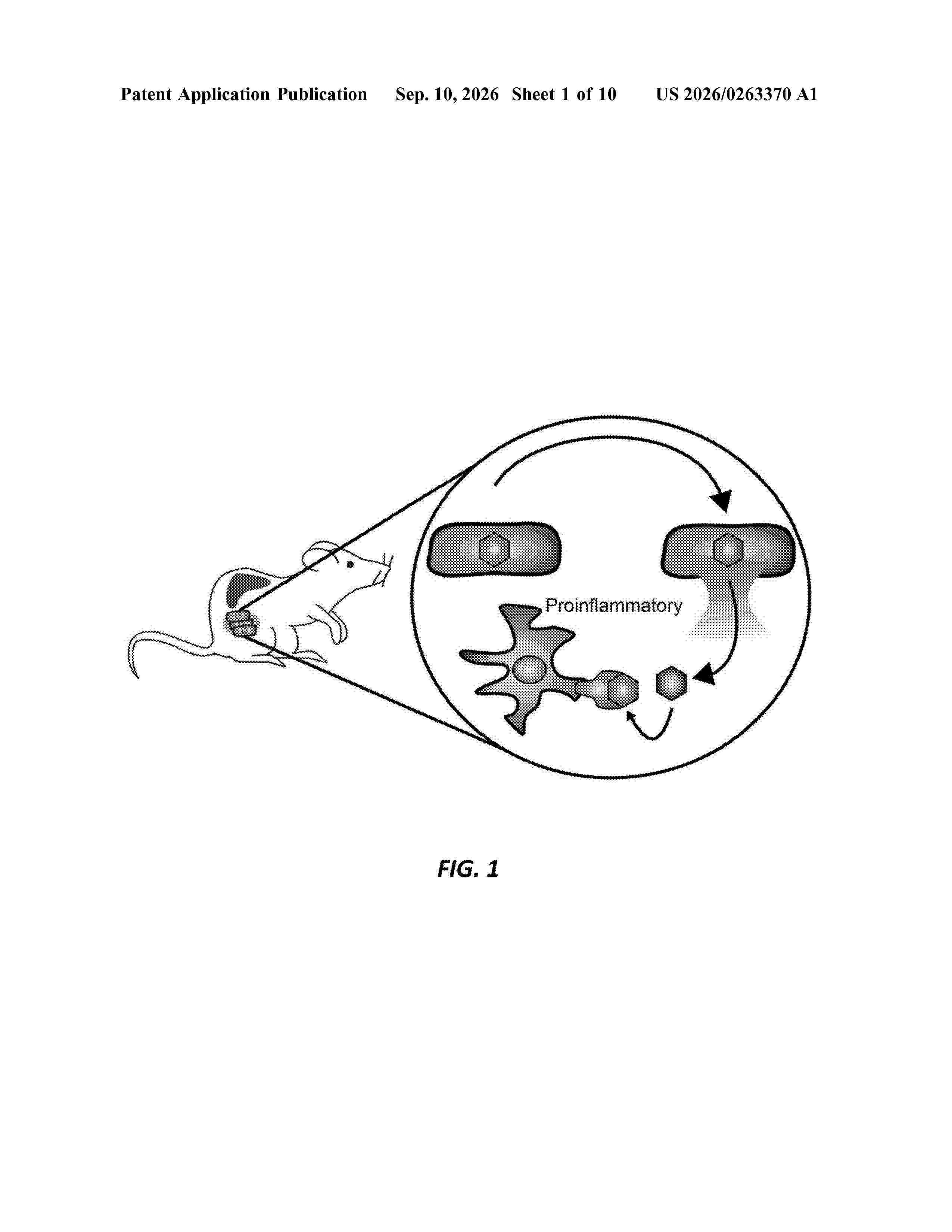
Resumen de: US20260263370A1
The described technology pertains to biotechnology, specifically engineered bacterial systems designed for extracellular delivery of therapeutic proteins in cancer treatment. The disclosed bacteria, such as Salmonella typhimurium, are genetically modified to include plasmid coding for a therapeutic protein, a salicylic acid-inducible promoter operably linked to a lysis protein, and a plasmid retention mechanism. These bacteria are modified to remain extracellular by incorporating knockouts such as flhD, which prevent intracellular invasion of cancer cells. Upon induction with salicylic acid, the bacteria lyse and release therapeutic proteins, such as IFNγ, into the tumor microenvironment, converting the environment from immunosuppressive to immunostimulatory and reducing tumor growth. The system is designed to provide safe and tumor-specific delivery, minimizing systemic toxicity. Applications include treating solid tumors, such as pancreatic and breast cancer.
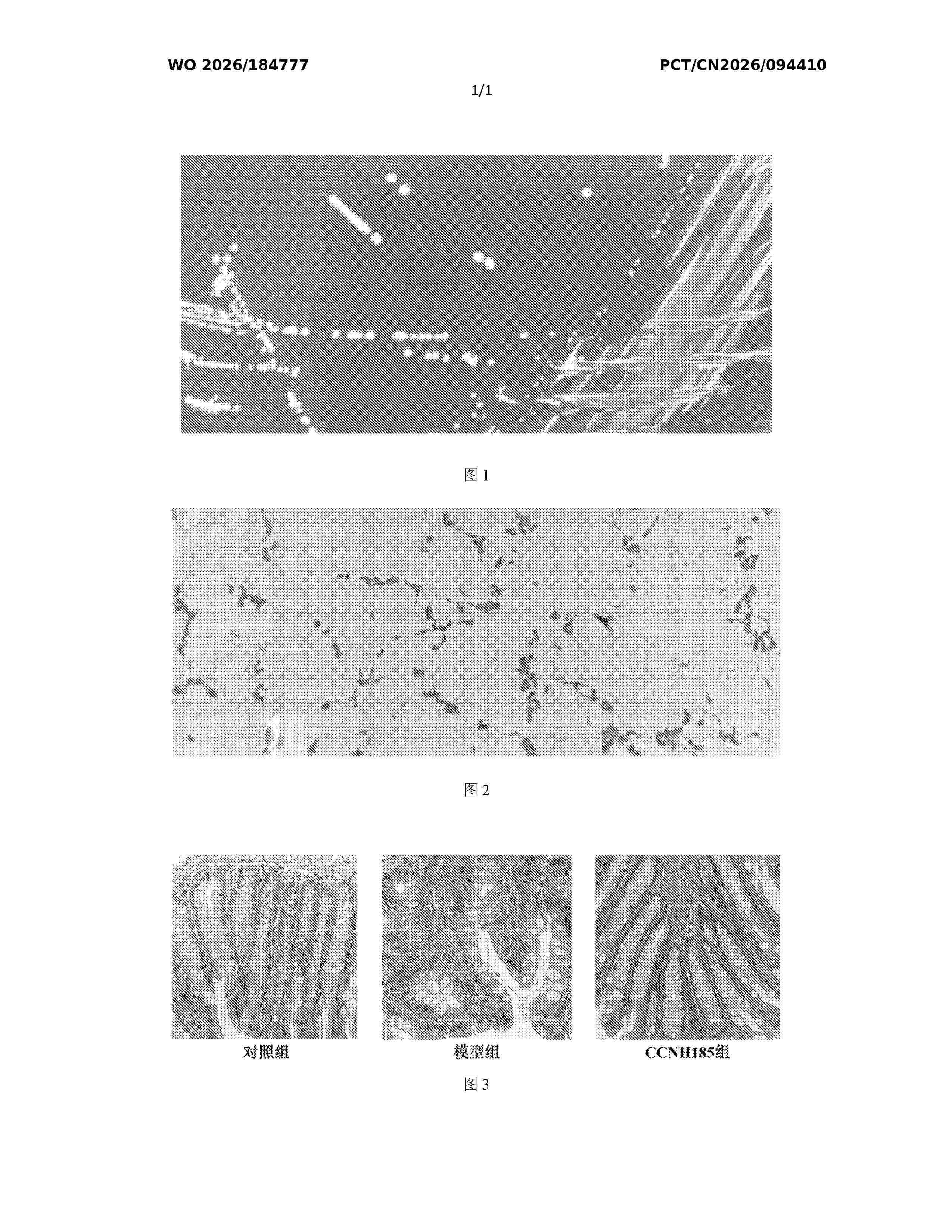
Resumen de: WO2026184777A1
A Lactobacillus plantarum strain having an antibacterial effect, and the use thereof, wherein the Lactobacillus plantarum has a deposit number of CGMCC No. 33151. The strain exhibits strong tolerance to bile salts and resists gastric acid, and has good acid producing and H2O2-producing capabilities, has a relatively strong antibacterial effect against common pathogenic bacteria such as Staphylococcus aureus, Candida albicans, Escherichia coli, Salmonella and Helicobacter pylori, and is capable of inhibiting urease activity, interfering with Helicobacter pylori colonization, etc. to inhibit Helicobacter pylori infection or alleviate the symptoms of Helicobacter pylori infection, and reduce the disease severity of colitis in mice. The strain can be used in the preparation of a microbial preparation, and has the potential for use in the preparation of a drug for preventing and/or treating diseases caused by Helicobacter pylori infection.
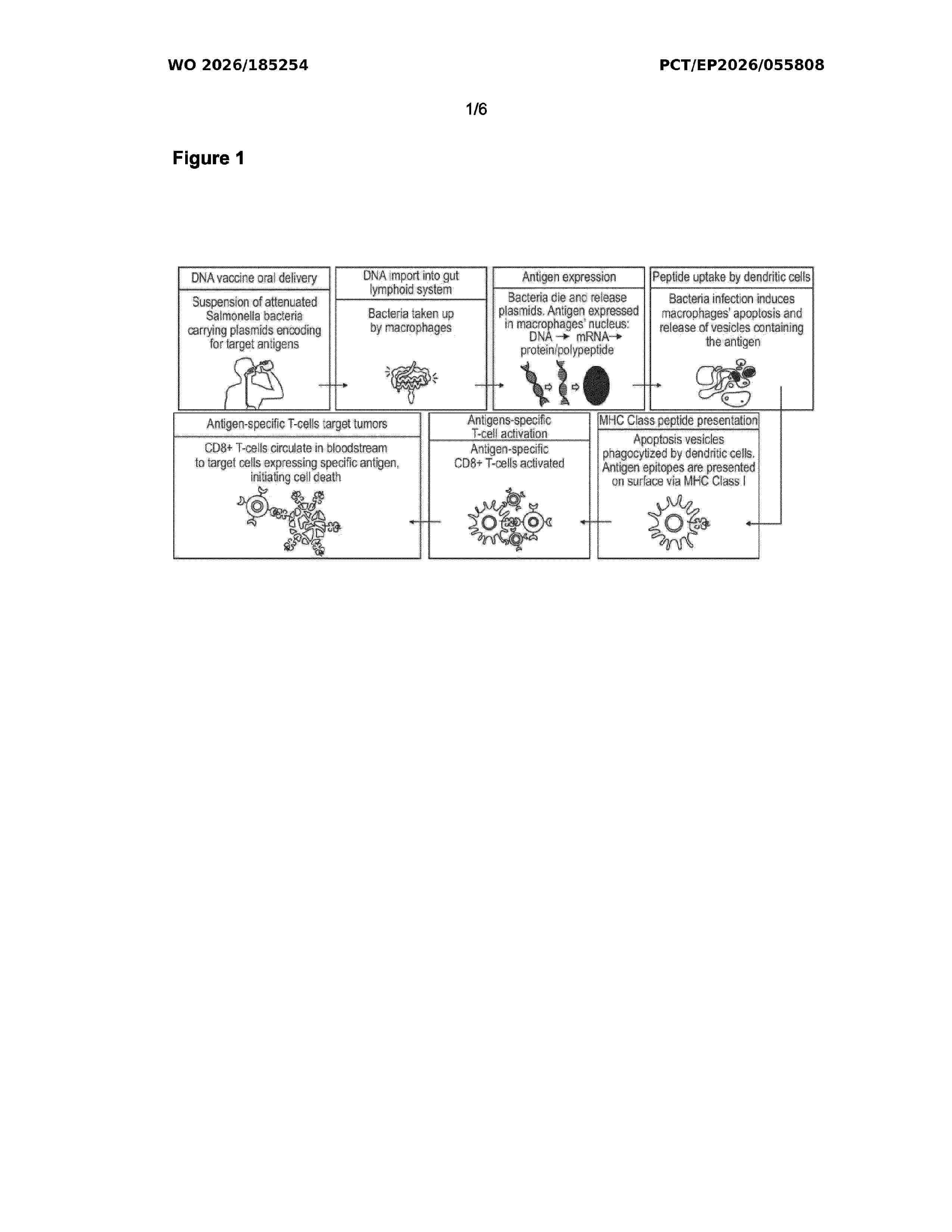
Resumen de: WO2026185254A1
The present invention relates to an attenuated Salmonella strain, particularly a Salmonella typhi Ty21a strain comprising a recombinant DNA molecule comprising at least one eukaryotic expression cassette encoding a fusion protein comprising a targeting unit, a multimerization unit, and an antigenic unit and to a pharmaceutical composition comprising said attenuated Salmonella strain, wherein the composition is for oral administration. Said attenuated Salmonella strain or pharmaceutical composition is further provided for use in preventing and/or treating a disorder or disease selected from the group consisting of cancer, an infectious disease a chronic infectious disease or an autoimmune disease.
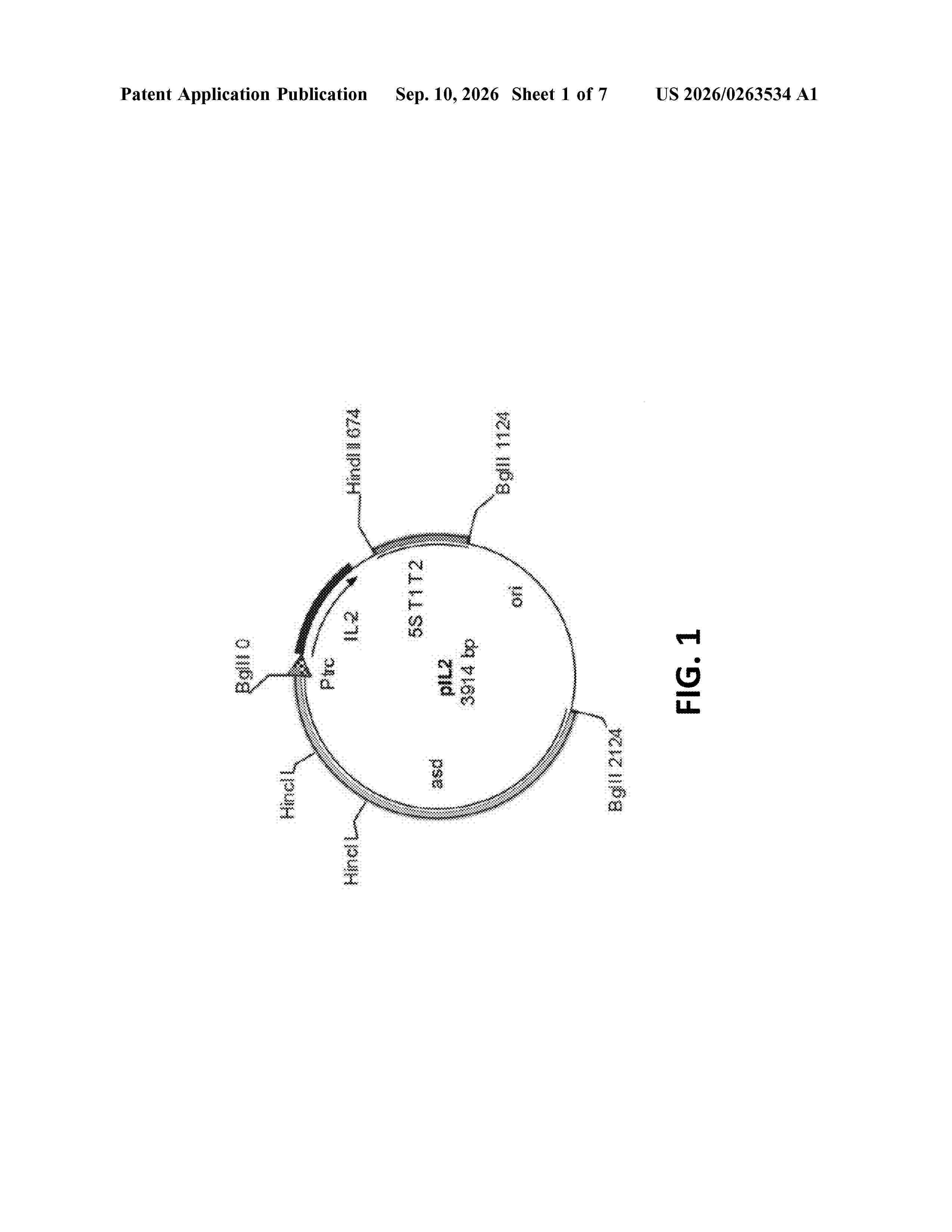
Resumen de: US20260263534A1
The present disclosure provides a method of treating a solid tumor cancer. The method includes administering a combination to a subject in need thereof. The combination includes at least two chemotherapy agents and a dose of a composition consisting essentially of attenuated Salmonella typhimurium. The present disclosure also provides an anti-tumor agent for use in a method of treating cancer. In such instances, the anti-tumor agent may include the combination.
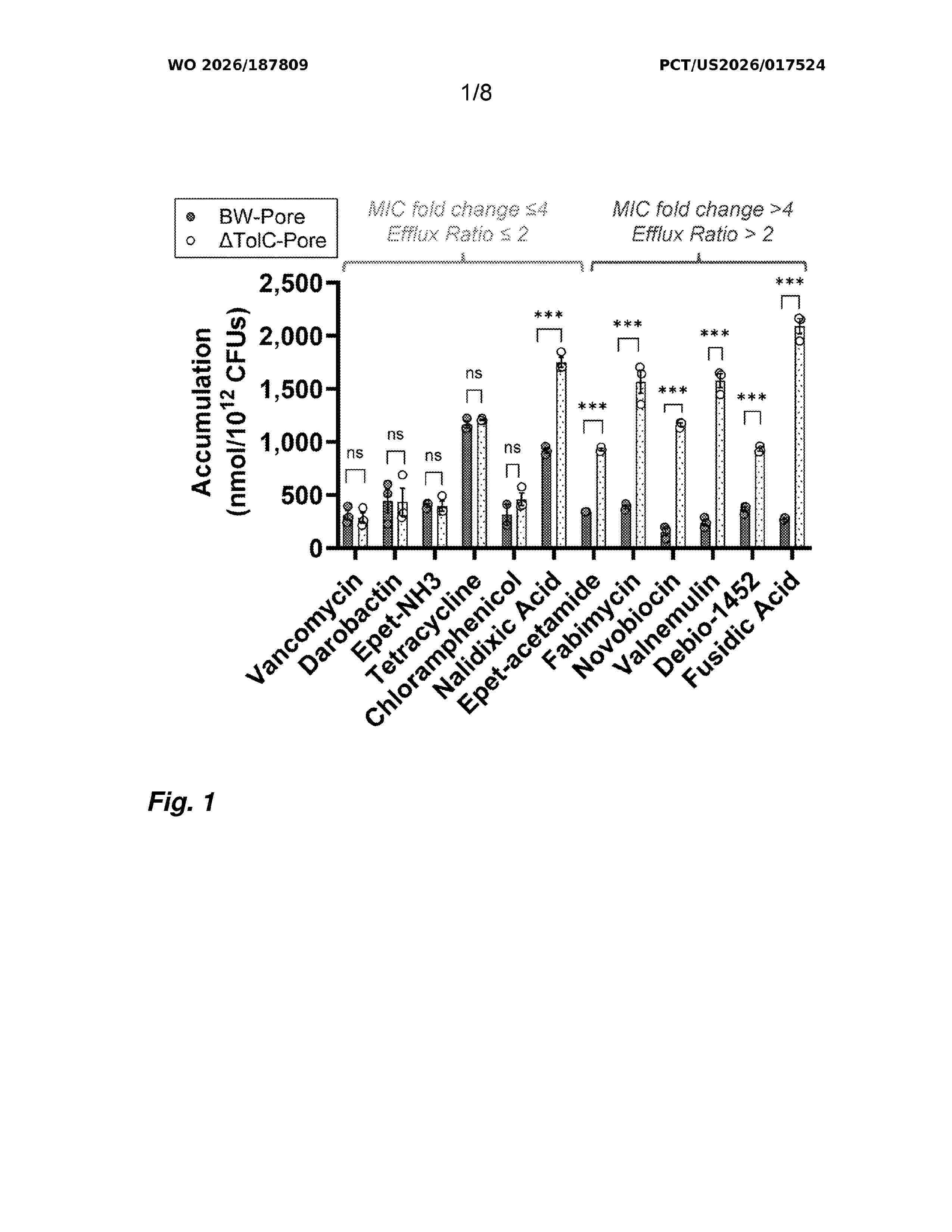
Resumen de: WO2026187809A2
Provided herein are compounds that target Gram-negative bacteria such as Escherichia coli, Klebsiella pneumoniae, Enterobacter cloacae, and Salmonella typhimurium, and are selective over Gram-negative and Gram-positive commensal bacteria, as well as their methods of use.
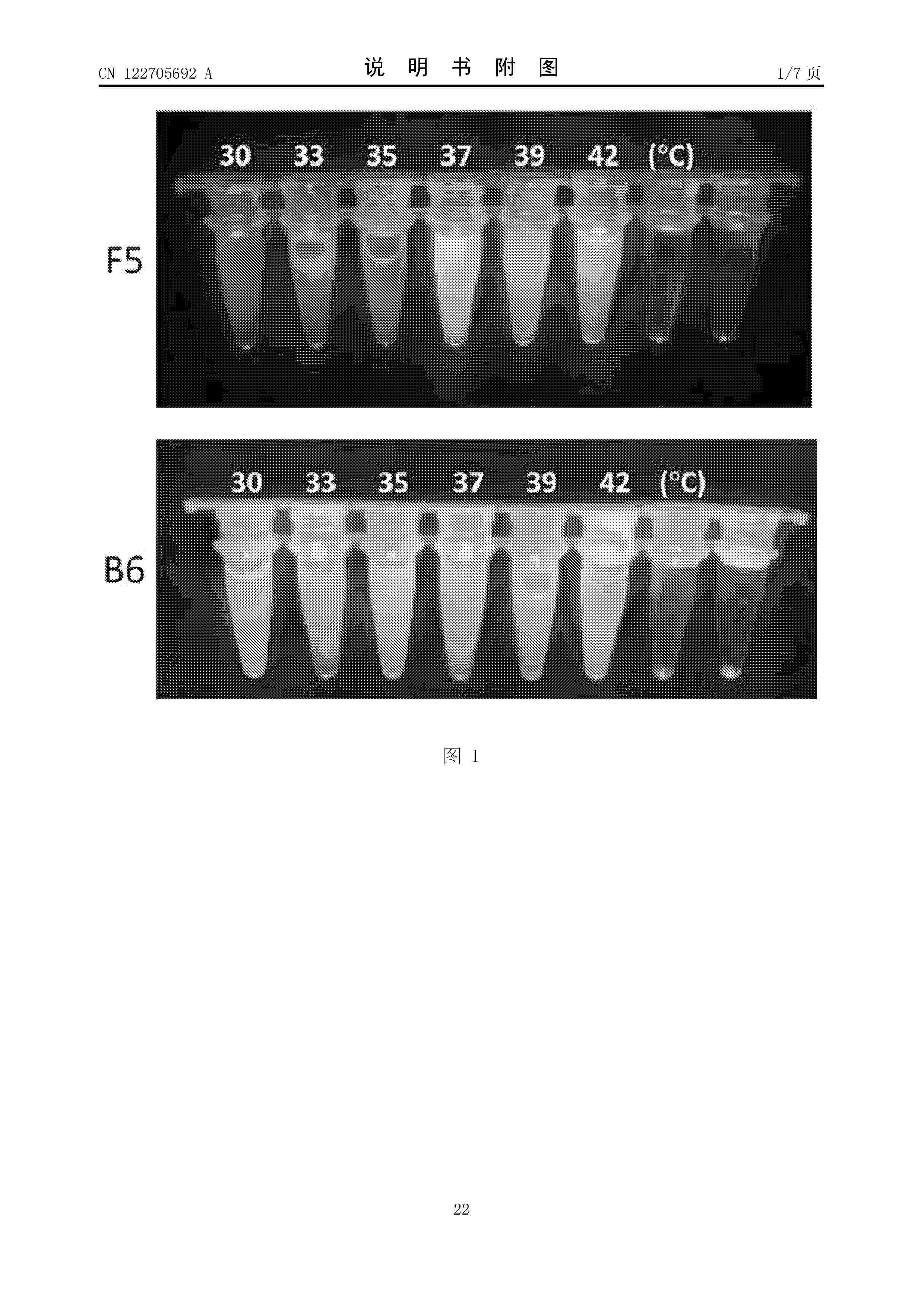
Resumen de: CN122705692A
本发明提供了一种能响应温度变化从而诱导下游基因表达的重组盐单胞菌及其构建方法和应用。所述重组盐单胞菌利用突变筛选得到的Toll/白介素‑1受体类似蛋白A(TIR‑like protein A,TlpA)构建的37°C及42°C诱导型启动子,并且对该37°C及42°C诱导型启动子进行了全面表征。所述重组盐单胞菌可以实现在30°C升温至37°C及37°C升温至42°C时启动目的基因表达的目的,且采用这种方法实现基因的诱导表达,具有操作简单、成本低的特点。
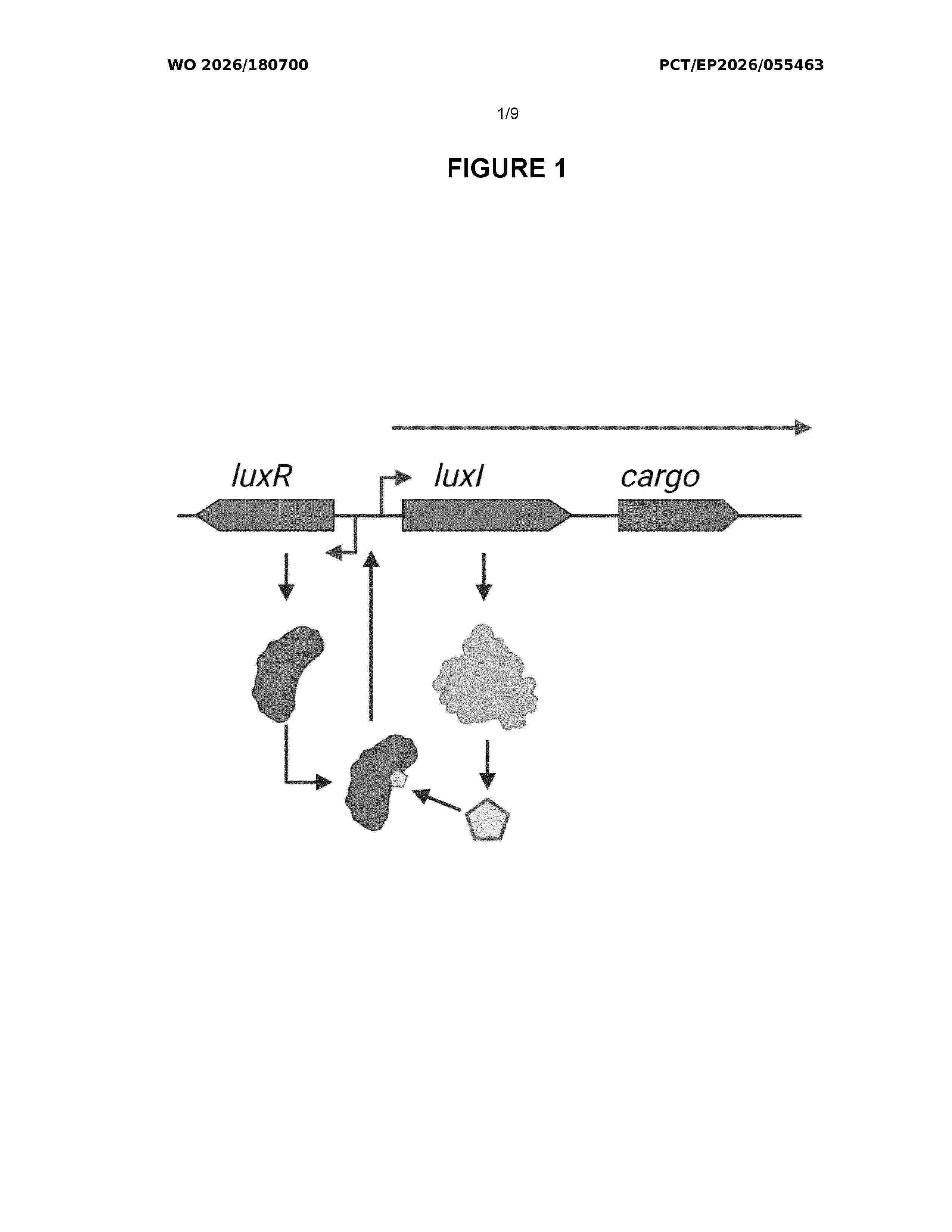
Resumen de: WO2026180700A1
The present invention provides a modified quorum sensing circuit, wherein the modified quorum sensing circuit comprises a quorum sensing synthase and a quorum sensing receptor, wherein the quorum sensing synthase and the quorum sensing receptor are transcriptionally separated.
Resumen de: US20260256858A1
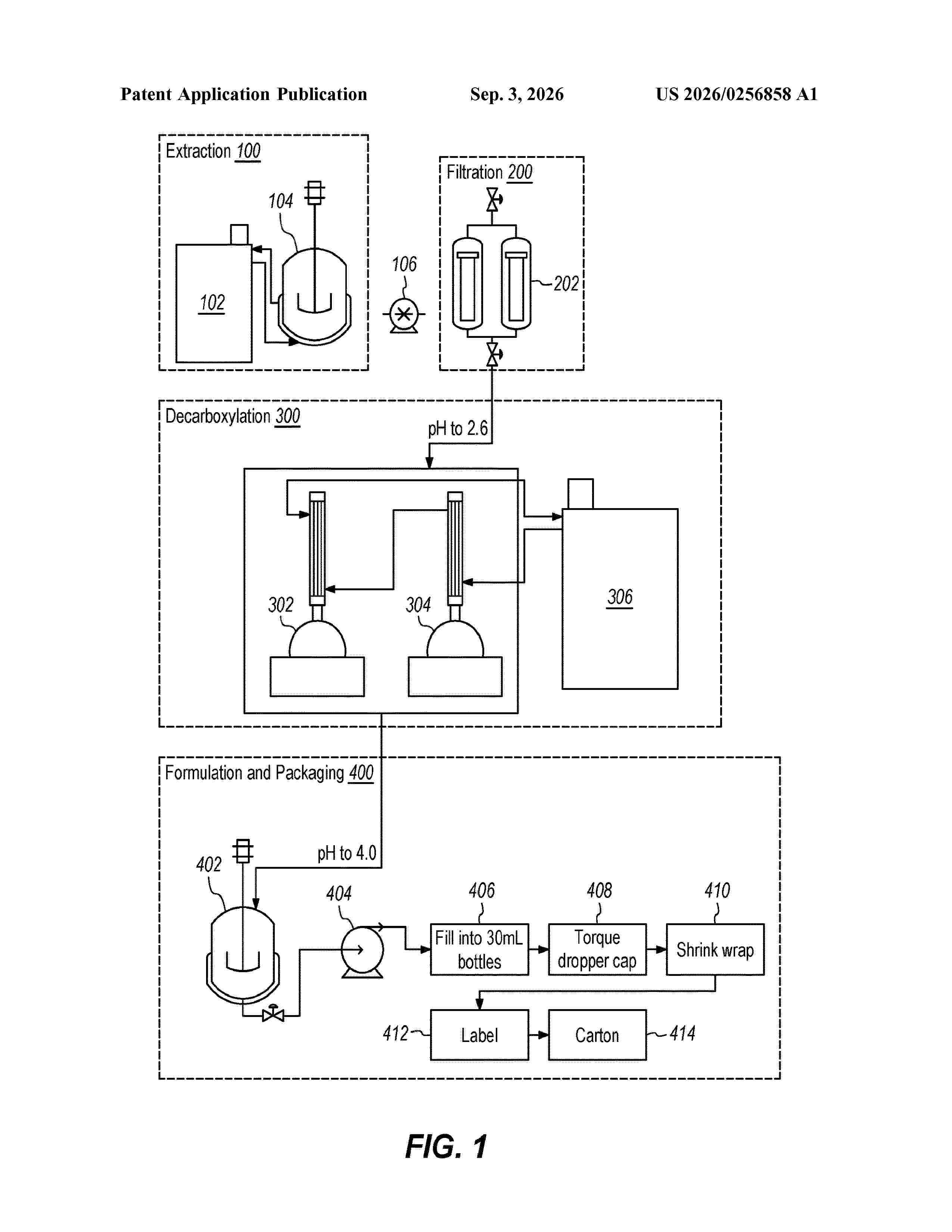
0000 Disclosed herein are processes for extracting muscimol from Amanita mushrooms, and more particularly, from Amanita muscaria, including processes that increase muscimol content and decrease ibotenic acid content, and further including improved processes that produce extract at scale, such as at kilogram scale. In some aspects are methods for selecting Amanita mushroom biomass suitable for the disclosed extraction methods, so as to produce extracts and products that are safe and beneficial for human use. Also disclosed are numerous compositions and formulations made with disclosed extracts, including beverage formulations, having a variety of improvements and advantages over previously known products made from Amanita muscaria.
Resumen de: CN122651547A
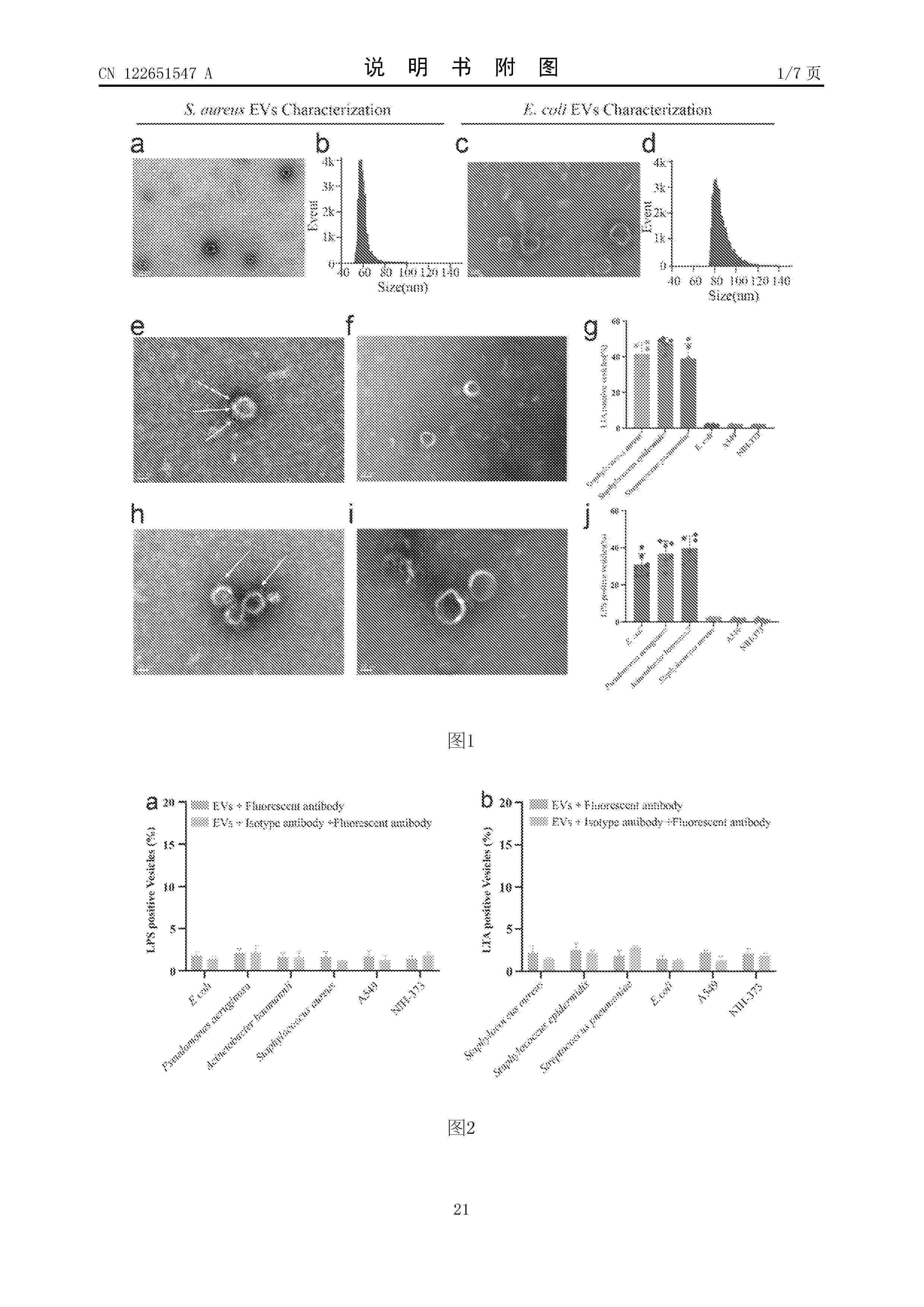
本发明属于医药健康领域,涉及血浆中脂磷壁酸(LTA)和/或脂多糖(LPS)阳性细胞外囊泡在细菌性炎症和/或菌血症的检测中的用途。具体地,本发明提供了一种细菌性炎症和/或菌血症的体外检测方法,包含以下步骤:提供来自受试对象的待测样本;从所述待测样本中分离细胞外囊泡;检测LPS阳性的细胞外囊泡(LPS+EVs)的水平,和/或LTA阳性的细胞外囊泡(LTA+EVs)的水平;如果LPS+EVs和/或LTA+EVs水平增加,则指示所述受试对象存在细菌性炎症和/或菌血症。
Resumen de: CN122652024A
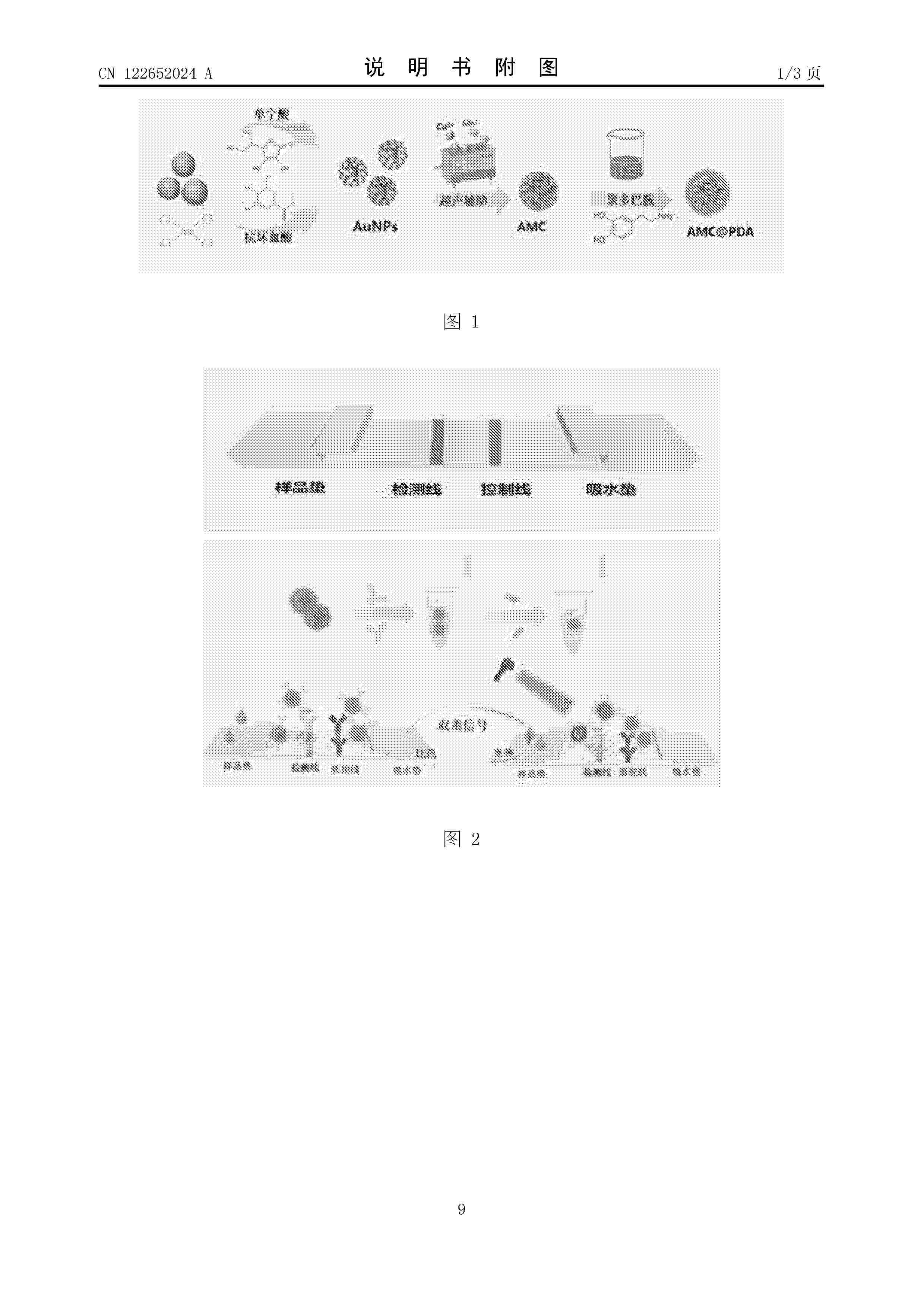
0001 本发明公开了一种生物探针、检测大肠杆菌O157:H7( Escherichia coli O157:H7 )的试纸条及应用。以超声辅助金属离子合成金基纳米合金,采用贻贝化学策略在合金基础上包覆聚多巴胺涂层,最终以AuMnCu@PDA作为信号示踪剂,利用天然贻贝富集的黑色条带和多原子调谐增强的等离子基元,不仅增强了传统的第一比色强度,而且引入了第二光热信号,大大增强了检测灵敏度。比色和光热信号下灵敏度较传统纳米金分别提高了100倍和1000倍,同时具有优异的稳定性和分散性,更有利于构建灵敏、准确的双峰型ICA。这项工作通过简便且绿色的贻贝化学策略为免疫层析测定的信号增强和性能改进开辟了新的途径,为提高分析性能和扩大ICA的实际应用提供了广阔的前景。
Resumen de: CN118620072A
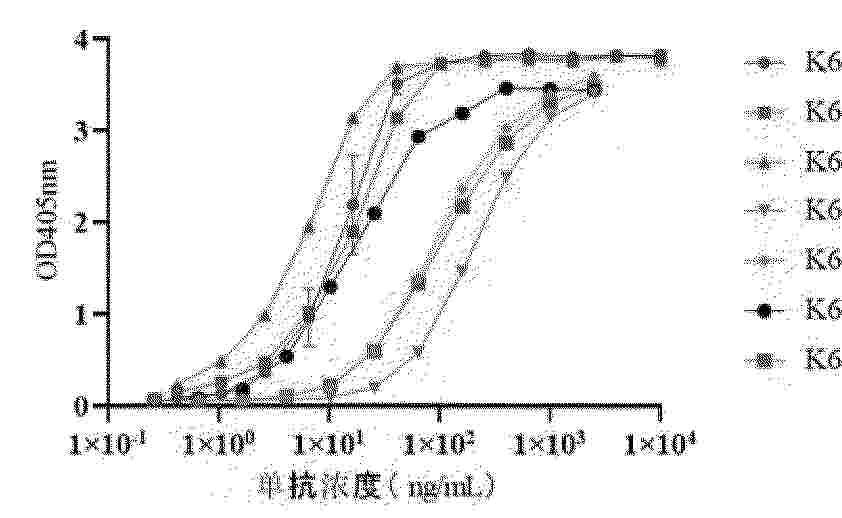
The invention discloses a klebsiella pneumoniae polysaccharide monoclonal antibody, a hybridoma cell strain and application of the klebsiella pneumoniae polysaccharide monoclonal antibody, the sequence information of the klebsiella pneumoniae polysaccharide monoclonal antibody is shown as SEQ NO: 1-SEQ NO: 64, and the preservation numbers of the hybridoma cell strain are respectively CCTCC: C2023296, CCTCC: C2023311, CCTCC: C2023312, CCTCC: C2023313, CCTCC: C2023314, CCTCC: C2023365, CCTCC: C2023366 and CCTCC: C2023367. The klebsiella pneumoniae polysaccharide monoclonal antibody provided by the invention can be specifically combined with capsular polysaccharide of klebsiella pneumoniae, is beneficial to typing of the klebsiella pneumoniae in clinic, and can prove that the klebsiella pneumoniae polysaccharide monoclonal antibody has an excellent effect of preventing and treating K47 type and K64 type klebsiella pneumoniae infection through in-vivo and in-vitro tests of animals; the invention provides a way for solving the problems of klebsiella pneumoniae infection and multiple drug resistance, has obvious significance for preventing, diagnosing and treating klebsiella pneumoniae infection, and has important value for developing a new generation of klebsiella pneumoniae medicine.
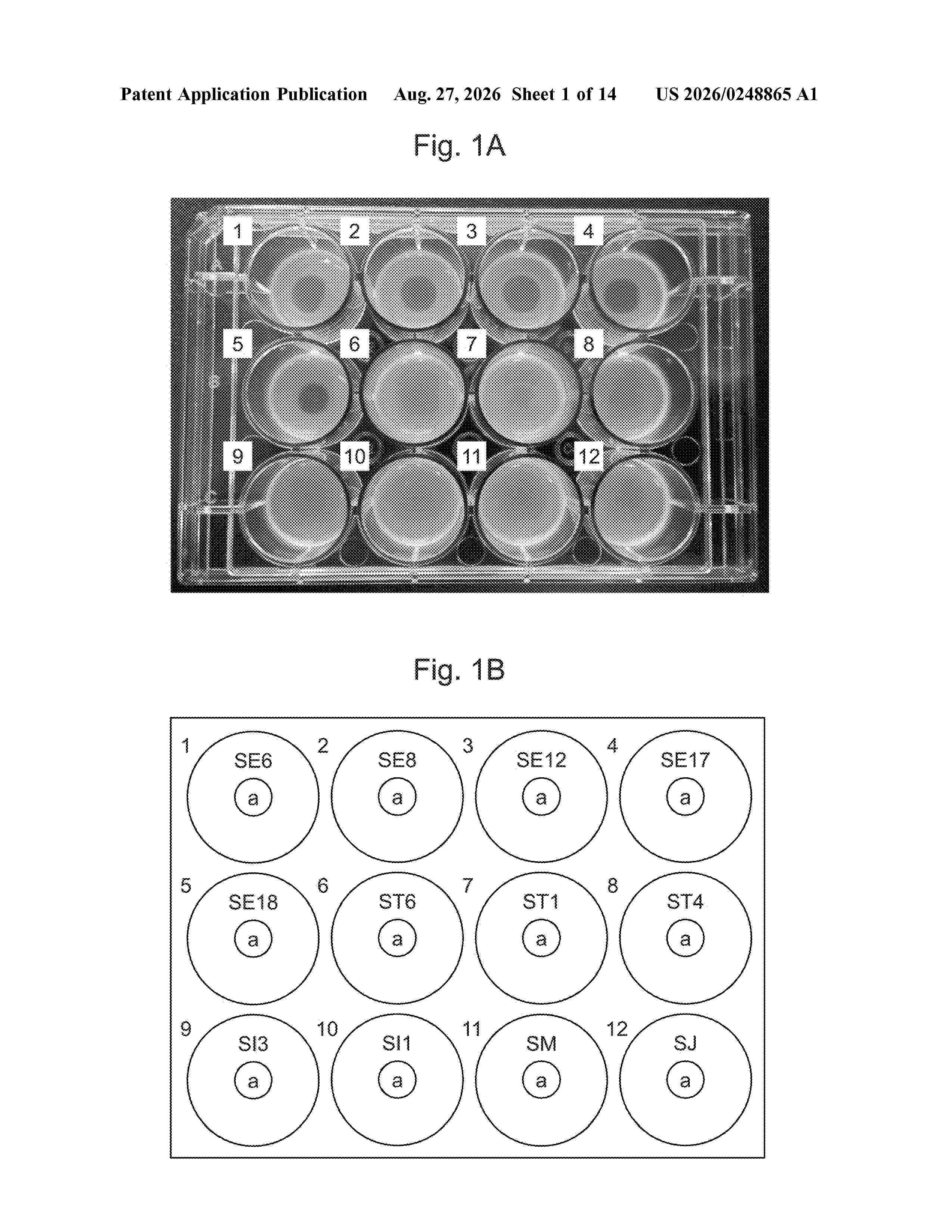
Resumen de: US20260248865A1
0000 A bacteriophage having a wide host range for bacteria of the genus Salmonella is provided. The bacteriophage has bacteriolytic activity against bacteria of the genus Salmonella. The bacteriophage has a genomic DNA sequence comprising a gene encoding a tail tip protein consisting of a specific amino acid sequence. Methods of using the bacteriophage are also provided.
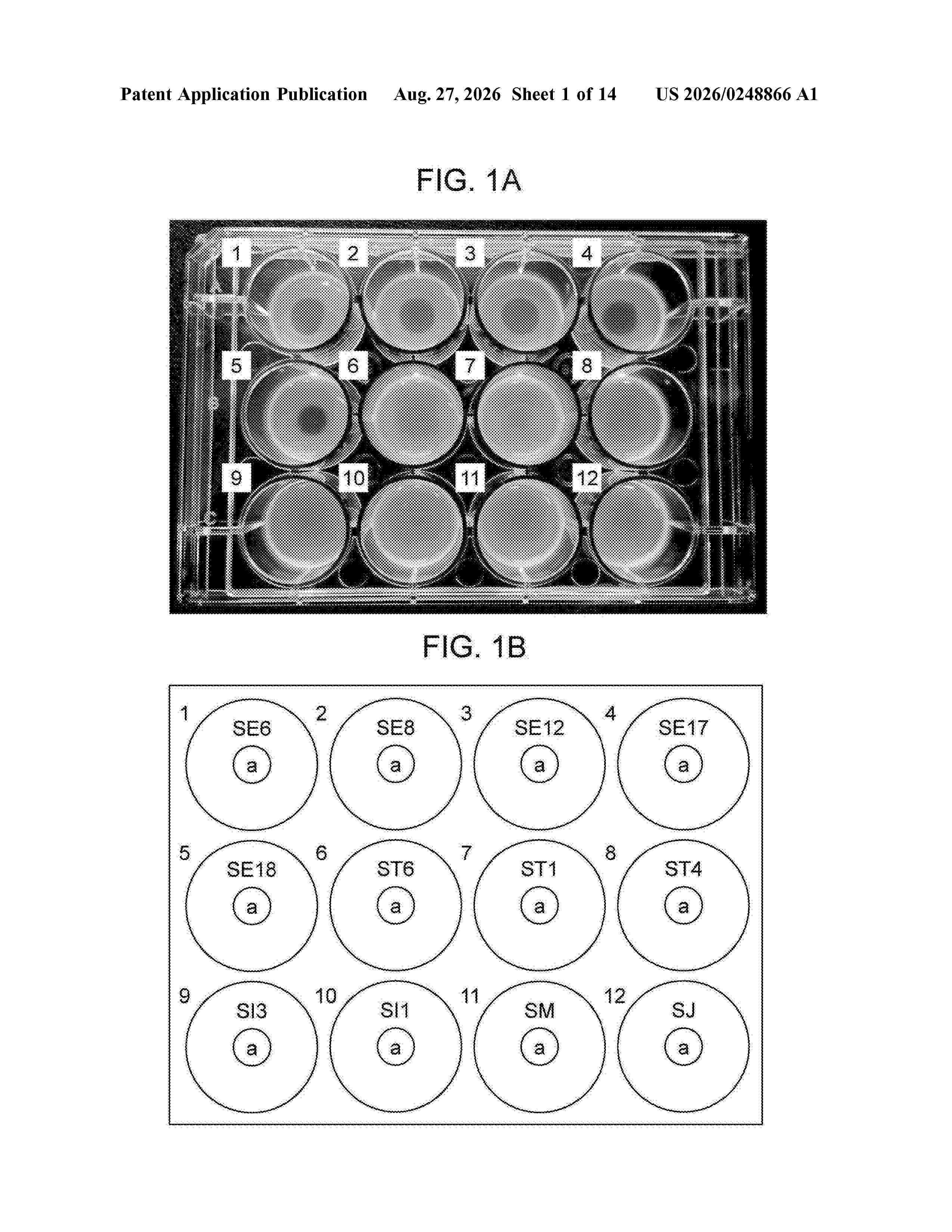
Resumen de: US20260248866A1
0000 An object of the present disclosure is to provide (i) a novel bacteriophage having lytic activity against a Salmonella species such as S. enteritidis or a lytic agent including the same, (ii) a bacteriophage having a broad host range against Salmonella species or a lytic agent including the same, (iii) a host-specific bacteriophage or an effective lytic agent for a Salmonella species including the same, or (iv) a bacteriophage or a lytic agent including the same, capable of effectively controlling S. typhimurium, particularly S. typhimurium having multidrug resistance. The present disclosure provides bacteriophages having specific genomic DNA sequences, lytic agents for Salmonella species including the same, and compositions including the same.
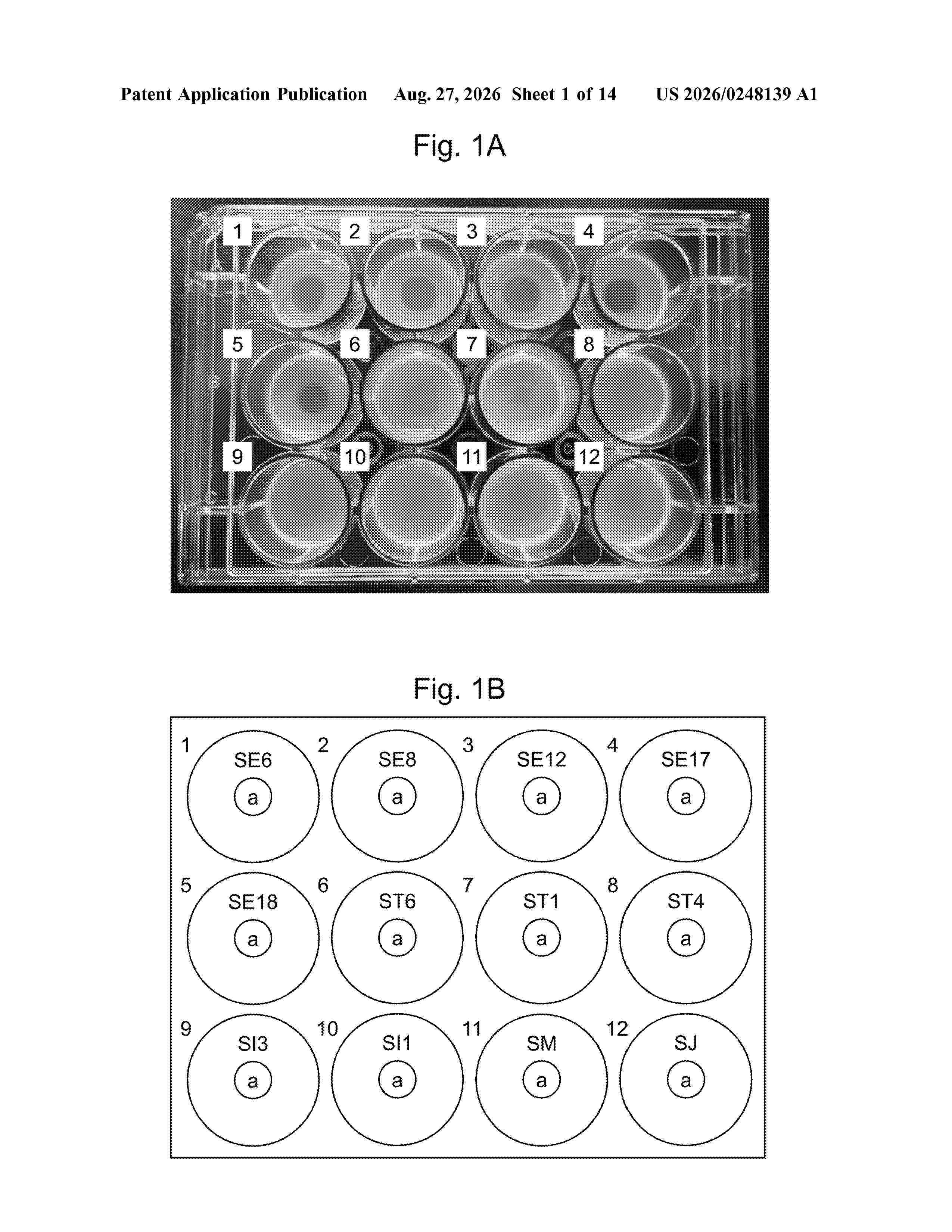
Resumen de: US20260248139A1
A novel bacteriophage having bacteriolytic activity against bacteria of the genus Salmonella, such as S. Enteritidis, and a bacteriolytic agent consisting of the same are provided. The bacteriophage and the bacteriolytic agent including the bacteriophage have a wide host range for bacteria of the genus Salmonella. A host-specific bacteriophage and an effective Salmonella bacteriolytic agent consisting of the same are provided. A bacteriophage capable of effectively controlling S. Typhimurium, and in particular, multidrug-resistant S. Typhimurium, and a bacteriolytic agent consisting of the same are also provided. A bacteriophage having a specific genomic DNA sequence; a Salmonella bacteriolytic agent consisting of the bacteriophage; and a composition comprising the same are provided.
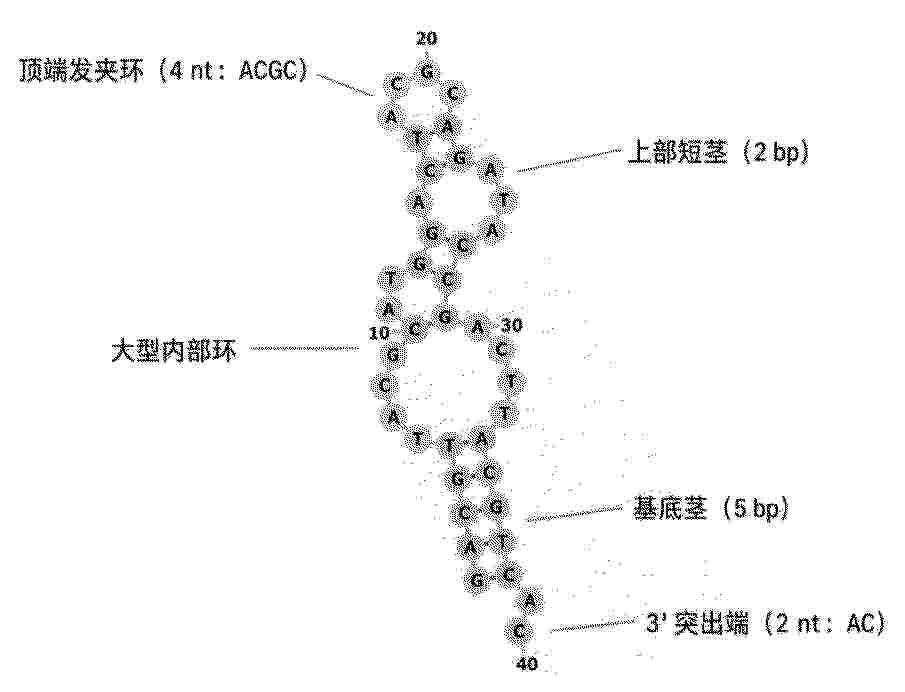
Resumen de: CN122629066A
本发明公开了与大肠杆菌特异结合的适配体、生物传感器、试剂盒及用途,属于生物技术与体外诊断技术领域。该适配体包括如SEQ ID NO.1所示的核心序列;其中含有如SEQ ID NO.3所示的核心结合基序,完整序列如SEQ ID NO.2所示。本发明基于活体全菌SELEX技术筛选的适配体对大肠杆菌的亲和力高,特异性强,对复杂样本中的大肠杆菌的捕获效率显著提升。
Resumen de: CN122629198A
0001 本发明适用于生物医学诊断技术领域,提供了一种早产儿视网膜病变的肠道菌群标志物组合及其应用,其中,该肠道菌群标志物组合包括产气克雷伯菌和/或丁酸梭菌作为检测靶标。本发明首次在种水平上鉴定出与早产儿视网膜病变风险相关的特异性肠道菌群标志物;其中,肠道菌群中的产气克雷伯菌的丰度与早产儿视网膜病变的风险呈正相关,可作为早产儿视网膜病变的风险预警标志物;肠道菌群中的丁酸梭菌的丰度与早产儿视网膜病变的风险呈负相关,可作为早产儿视网膜病变的保护性标志物;本发明为早产儿视网膜病变的早期预警、风险评估及预后判断提供了全新的无创检测靶点。
Resumen de: CN122612907A
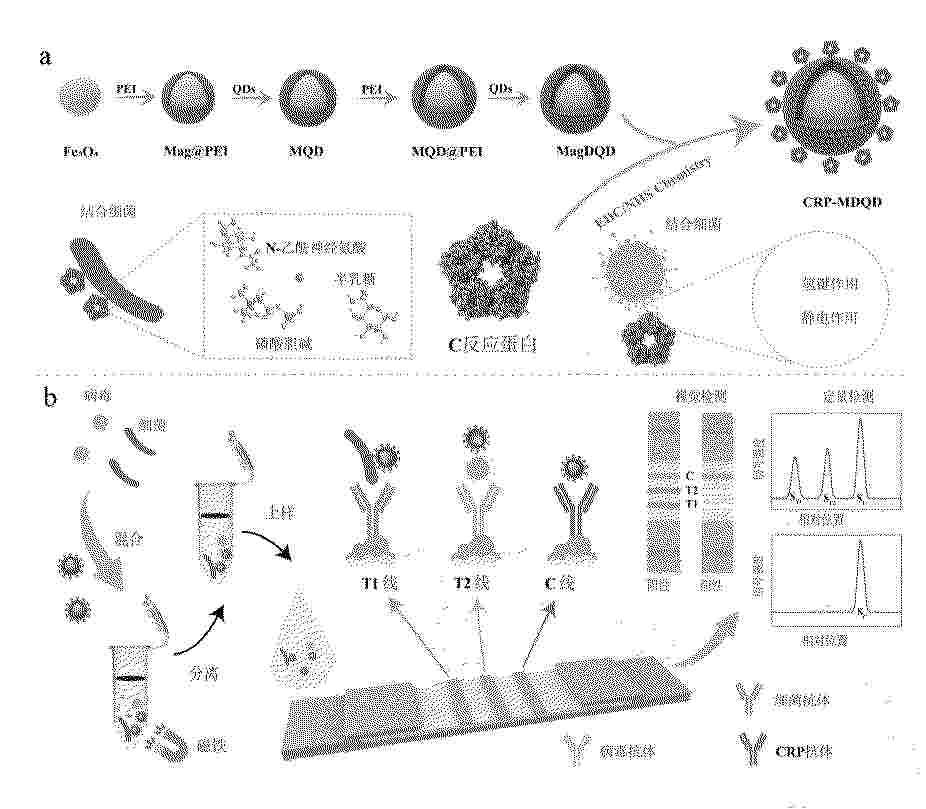
0001 本发明公开一种C‑反应蛋白功能化广谱病原体捕获磁珠的制备及其在细菌‑病毒共感染免疫层析检测中的应用,基于CRP的复合标记物(CRP‑MDQD)通过逐层自组装策略在Fe<3>O<4>表面连续包覆两层致密的CdSe/ZnS‑COOH量子点构建而成,并公开了其在LFIA中同步富集检测铜绿假单胞菌和SARS‑CoV‑2 NP的应用价值。CRP‑MDQD LFIA平台实现了铜绿假单胞菌与SARS‑CoV‑2 NP的无抗体同步富集检测。该生物传感器具有卓越的基质耐受性,其"抗体非依赖"设计突破了传统多重检测的固有局限,为资源有限环境下病毒‑细菌混合感染的快速分诊提供了变革性床旁解决方案。
Resumen de: CN122609470A
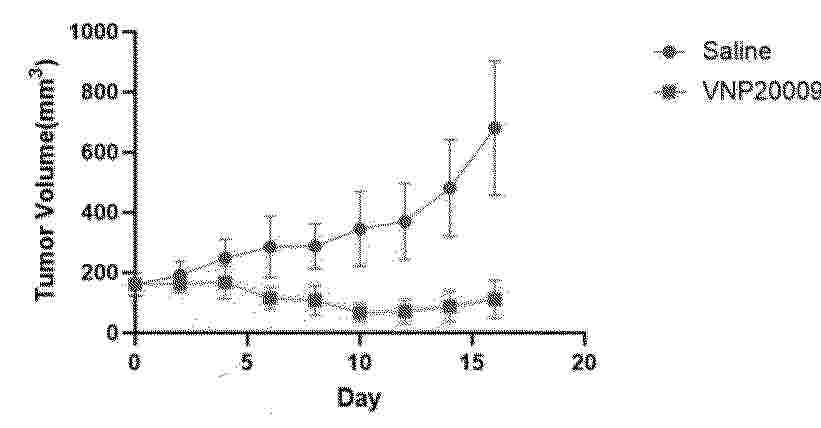
本发明属于生物医药领域,具体涉及一种胸苷依赖型的鼠伤寒沙门氏菌工程菌及其组合物与应用。所述工程菌以鼠伤寒沙门氏菌VNP20009为出发菌株,经敲除胸苷酸合成酶基因thyA和插入腺苷脱氨酶编码基因,获得生长依赖外源嘧啶核苷酸、胞内表达或外膜表达腺苷脱氨酶的工程菌;胞内表达腺苷脱氨酶的工程菌为鼠伤寒沙门氏菌VNP20009‑cADD,保藏号为CGMCC No.37959;外膜表达腺苷脱氨酶的工程菌为鼠伤寒沙门氏菌VNP20009‑wADD,保藏号为CGMCC No.37956。该工程菌可肿瘤靶向定植、安全性更高,能在肿瘤局部降解腺苷、解除免疫抑制,联合放疗或免疫检查点抑制剂时可显著抑制实体瘤生长。
Resumen de: CN122612721A
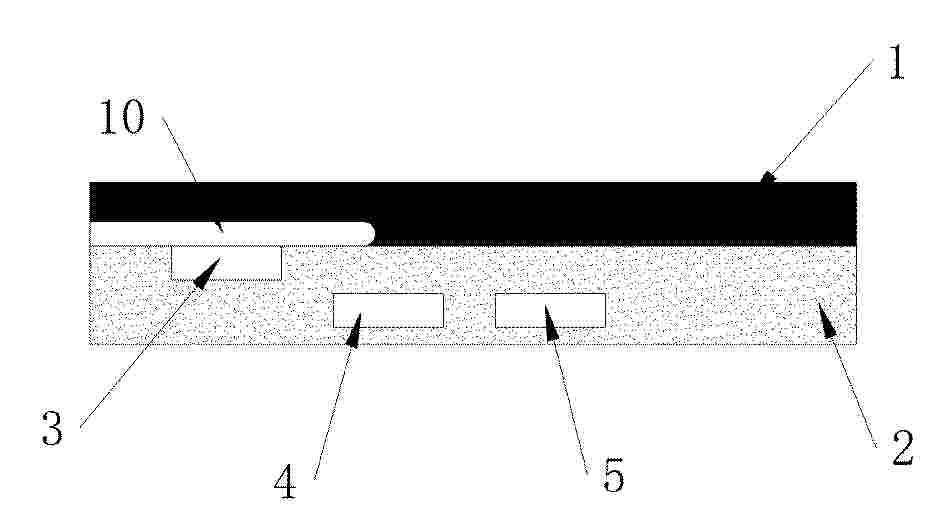
0001 本发明涉及生物传感与微流控领域,具体公开了一种集成微流控的小型化电化学生物传感器芯片及其制备方法,包括微流控芯片主体和集成于其内的电化学生物传感器,微流控芯片主体内部设有微流控通道结构,电化学生物传感器包括基底及设置于基底上的工作电极、对电极和参比电极,微流控通道结构与工作电极的表面流体连通。本发明通过将微流控通道与三电极体系在微小面积内一体化集成,并对芯片的整体尺寸、基底厚度及重量进行协同优化,在保证流体密封与键合强度的前提下实现了芯片的显著小型化和轻量化,使其能够灵活适配无人平台载荷,满足移动化、现场化的快速生物侦检需求。
Resumen de: CN122612924A
0001 本发明属于致病菌检测技术领域,具体涉及一种检测沙门氏菌的SERS探针及试剂盒和检测方法。该SERS探针由金纳米双锥内核、包被金纳米双锥的普鲁士蓝壳层和偶联于探针表面的鼠伤寒沙门氏菌单克隆抗体组成,可结合噬菌体修饰的氨基化磁珠捕获技术,用于鼠伤寒沙门氏菌检测,在785 nm激发下,采集2151 cm<‑1>附近的SERS信号。结果表明,本发明的探针及检测方法,对鼠伤寒沙门氏菌的检测限为1 CFU/mL,具有良好的特异性,可避免背景干扰及其他病原菌干扰。
Resumen de: US20260240985A1
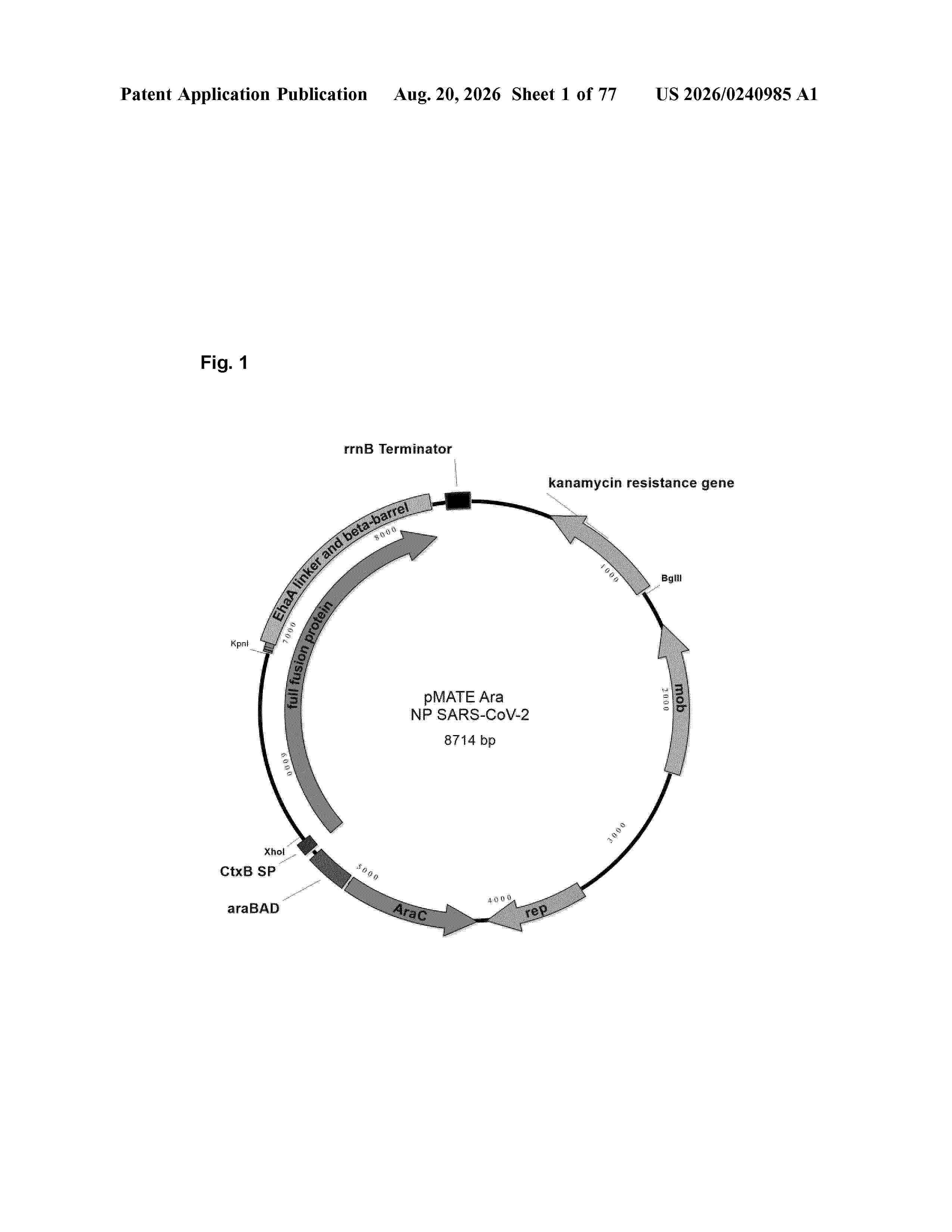
0000 The present invention relates to a non-viable bacterium cell wherein an immunogenic polypeptide fused to an auto-transporter comprising transmembrane linker and a trans-porter domain is displayed on the surface of the cell, and to a preparation comprising such non-viable cells. The preparation is useful as an oral vaccine.
Resumen de: US20260243764A1
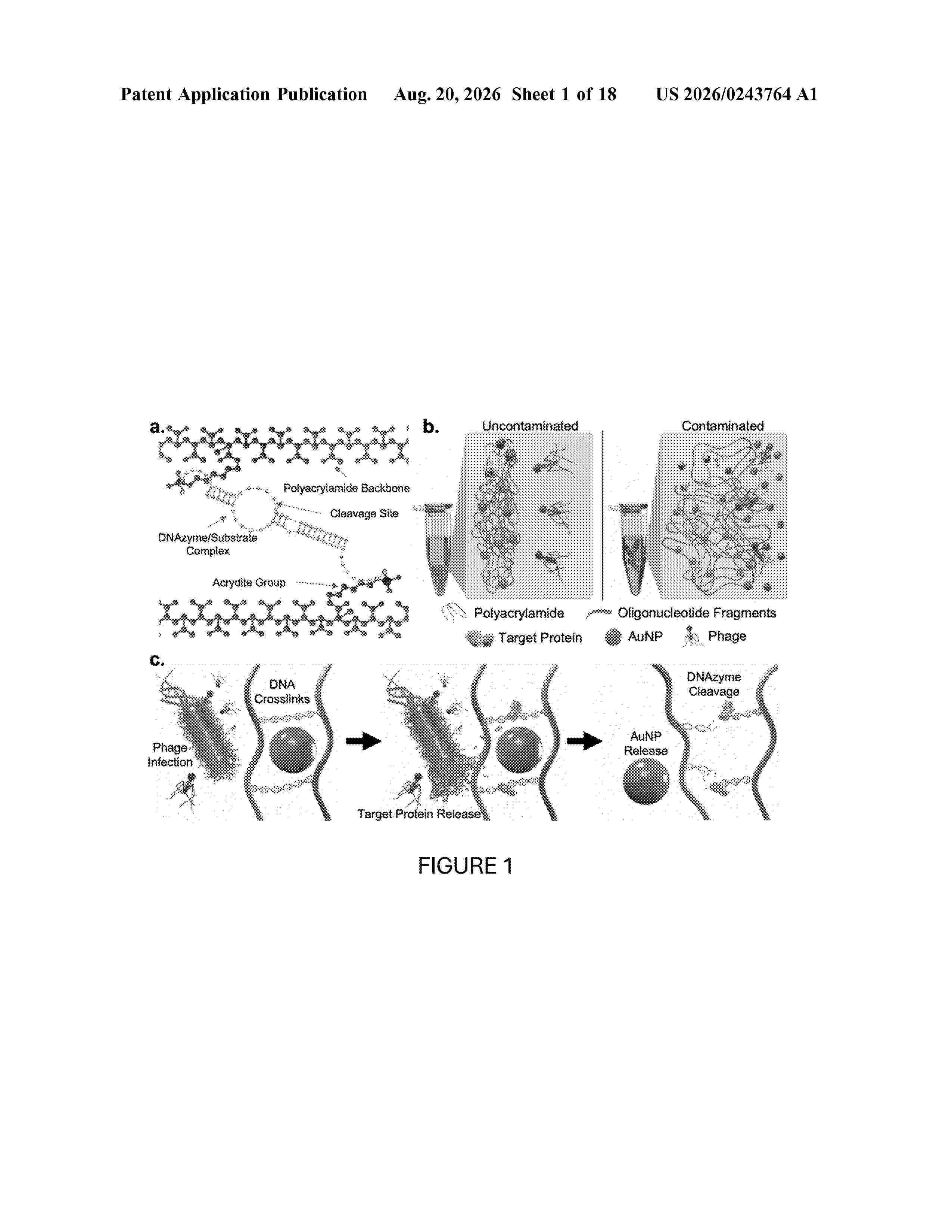
Described herein is a biosensor for detecting the presence of a target molecule in a sample. The biosensor comprises: a polymeric hydrogel; a colorimetric indicator entrapped in the polymeric hydrogel; and an oligonucleotide that crosslinks the polymeric hydrogel, wherein the oligonucleotide is separated in the presence of the target molecule, thereby releasing the colorimetric indicator from the hydrogel.
Resumen de: US20260242806A1
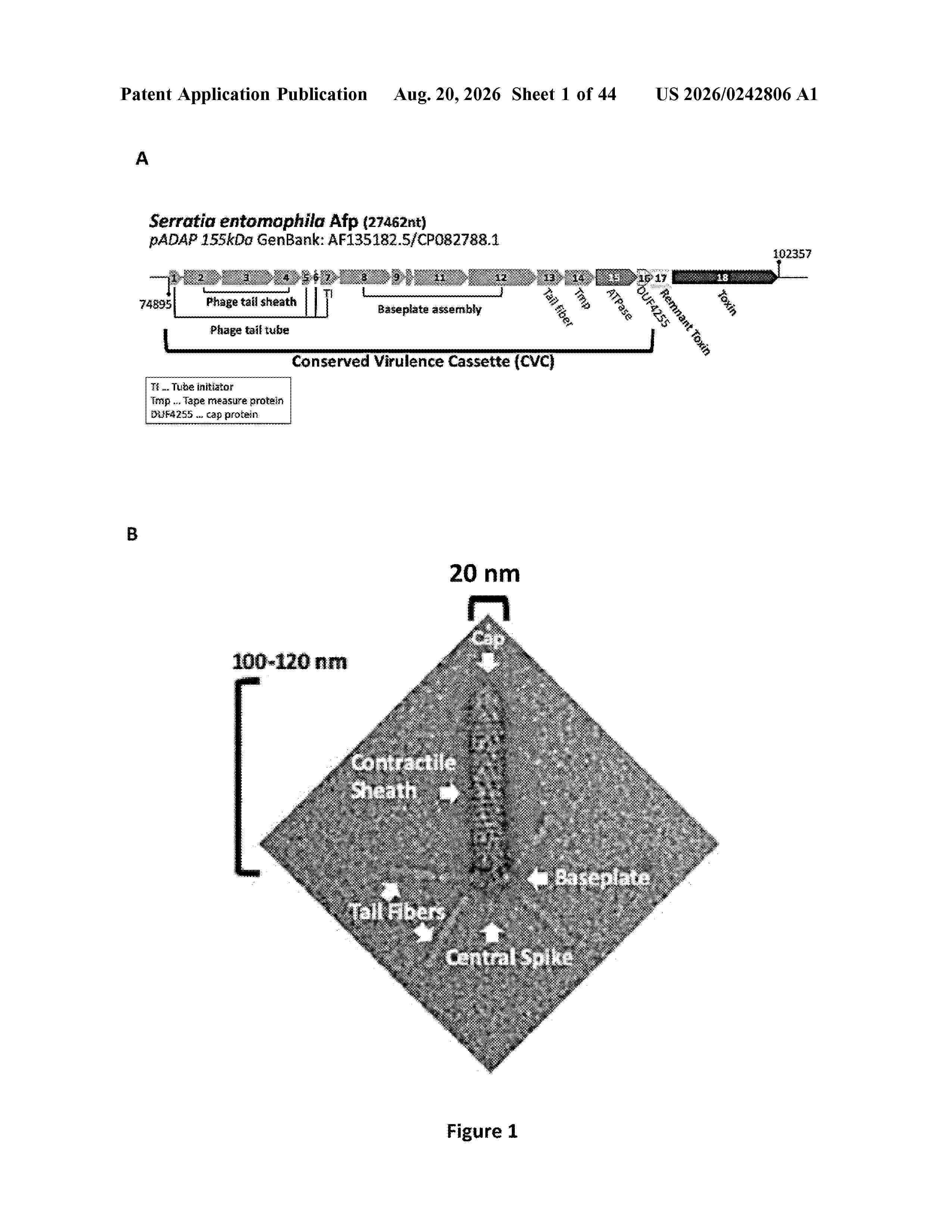
0000 The invention relates to re-engineering of a natural microbial syringe for loading of effector proteins that are not naturally found as cargo of the specific syringe. The cargo, that is one or more effector protein and proteins required for packing, can be up to 300 kDa and can be proteins such as toxins, therapeutic proteins, and gene modification tools. The re-engineering of the natural syringe result in a contractile injection system that allows packing of large cargo and cargo combinations, such as toxin-chimeras. The system comprises a Conserved Virulence Cassette encoding the syringe structure and is co-expressed with a sequence encoding cargo and a signal peptide. The signal peptide comprises a packing motif that enables packing of cargo into the syringe. The contractile injection system can be used for agricultural purposes as well as for medicinal purposes.
Nº publicación: US20260242416A1 20/08/2026
Solicitante:
PROVINCIAL HEALTH SERVICES AUTHORITY [CA]
UVIC IND PARTNERSHIPS INC [CA]
PROVINCIAL HEALTH SERVICES AUTHORITY
UVIC INDUSTRY PARTNERSHIPS INC.
Resumen de: US20260242416A1
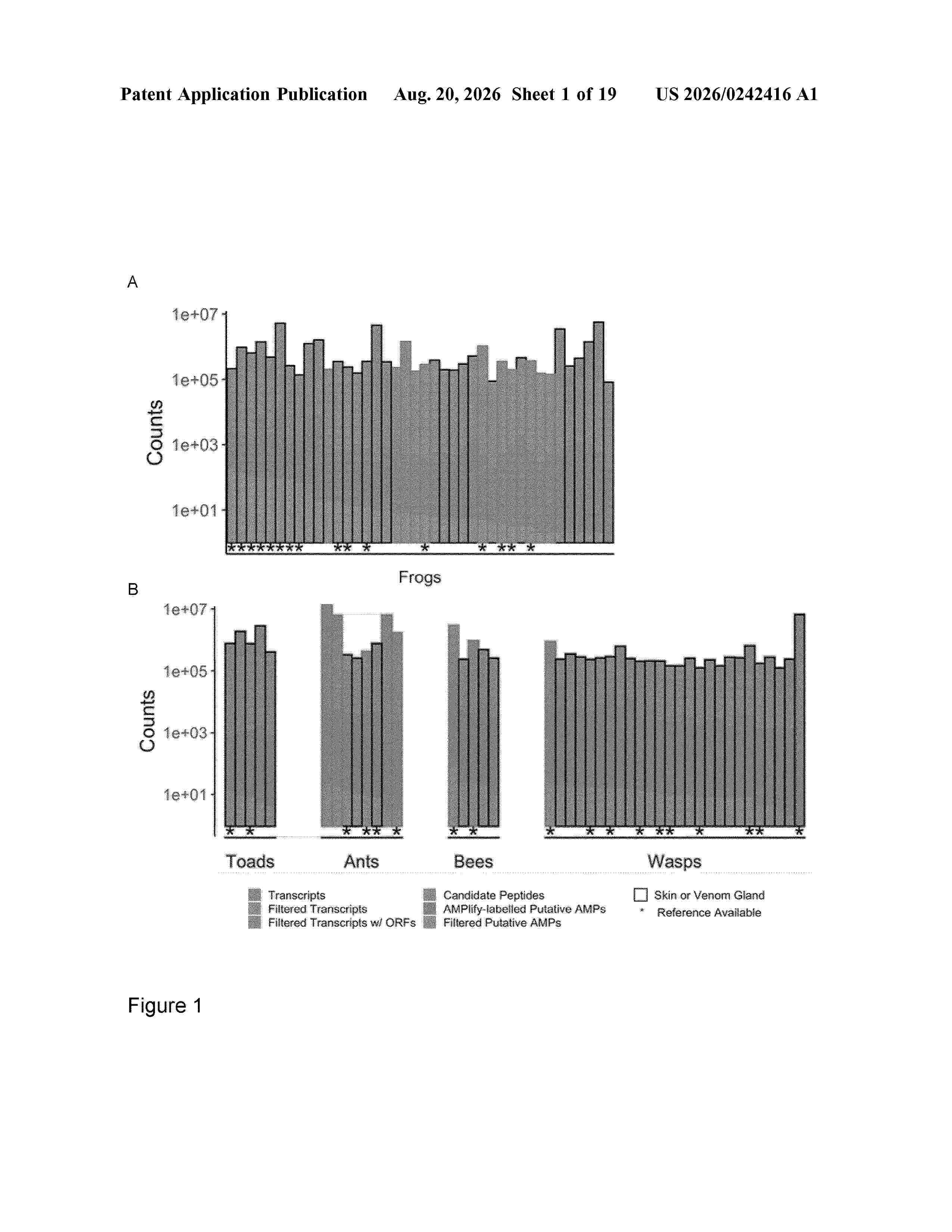
Antimicrobial peptides (AMPs) exhibiting broad spectrum antimicrobial activity are described. Such peptides are useful in treating or preventing infections and other conditions, and are of special interest for treating antibiotic-resistant bacterial pathogens. Development of new AMPs is arduous due to the practical limitations of classical protein-based discovery approaches. A high throughput bioinformatics approach leading to identification of numerous antimicrobial peptides from known genomic sequences is described.
 BOPI
BOPI
 Sede Electrónica