Si deseas distinguir tus productos, servicios o ambos de los de otra empresa, es posible que necesites una marca o nombre comercial. Descubre qué son, en qué consiste su procedimiento de registro y qué implica.

Información sobre los plazos de presentación de solicitudes de transformación de marcas de la Unión Europea en marca nacional española. Más información


Si tienes un nuevo dispositivo, producto o procedimiento que resuelva un problema técnico o tenga una ventaja práctica, existen distintas formas de protegerlo en España y en otros países. Descubre cómo hacerlo.

¿Tu innovación reside en la estética, la ornamentación o la apariencia de tu producto? Protégela mediante un diseño industrial. Descubre qué derechos confiere el registro y cómo realizar la tramitación.

Las indicaciones geográficas protegen el nombre de un producto originario de una zona geográfica, a la cual le debe una determinada calidad, reputación u otra característica. Descubre qué son, en qué consiste su procedimiento de registro y qué beneficios conceden.

Las patentes publicadas en todo el mundo son una valiosa fuente de información científica, técnica y comercial.

Si eres emprendedor/a o una empresa y quieres potenciar y mejorar la rentabilidad de tu negocio protegiendo de forma adecuada los activos intangibles de tu organización, en este espacio encontrarás lo necesario.


 116
resultados
116
resultados
 Última actualización
16/10/2026 [07:20:00]
Última actualización
16/10/2026 [07:20:00]


Resumen de: AU2025244392A1
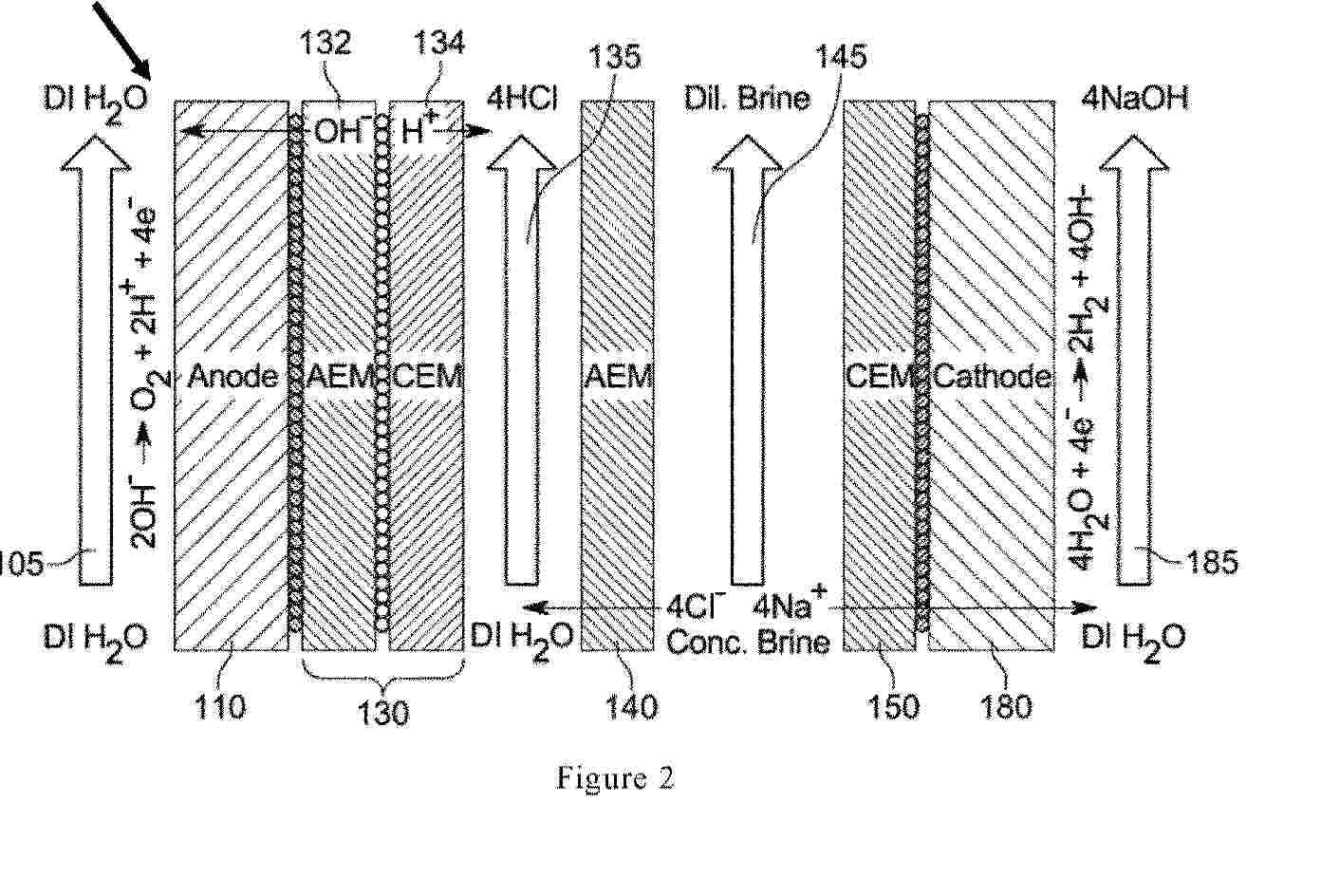
An electrochemical apparatus comprising: an anode; a bipolar membrane; an anion exchange membrane; a cation exchange membrane; and a cathode; wherein: the anode at least partially defines a first fluid flow path; the anode and/or the first fluid flow path is in contact with the anion exchange membrane of the bipolar membrane; a second fluid flow path is defined between the cation exchange membrane of the bipolar membrane and the anion exchange membrane; a third fluid flow path is defined between the anion exchange membrane and the cation exchange membrane; the cathode at least partially defines a fourth fluid flow path; and the cation exchange membrane is in contact with the cathode and/or the fourth fluid flow path.

Resumen de: DE102025114545A1
Die Erfindung betrifft die Verwendung eines Katalysators zum Entfernen von Ammoniak aus der Kathodenzuluft in einem Brennstoffzellensystem für ein Kraftfahrzeug, wobei es sich um einen Nickel-basierten Katalysator handelt, welcher in Strömungsrichtung der Kathoden-Zuluft vor einem Befeuchter angeordnet ist.
Resumen de: FI20255336A1
The present disclosure provides a thermal management system (100) for a fuel cell (102). The fuel cell (102) comprises an intake port (104) and a discharge port (106) to discharge an exhaust stream (108) exiting from the fuel cell (102). The system (100) comprises a housing (110) that houses the fuel cell (102). The housing (110) comprises an air inlet (112) to receive an ambient air stream, an exhaust outlet (116), and a merge section (118) fluidically coupled with the exhaust outlet (116) and the discharge port (106). The merge section (118) receives the exhaust stream (108) and the ambient air stream (114) to create a mixed air stream. A flap (120) is disposed at the exhaust outlet (116) to control a recirculation fraction (122) and a discharge fraction (124) of the mixed air stream. A sensing unit (126) generates an environmental condition signal. A control unit (128) processes the environmental condition signal to adjust the flap (120).
Resumen de: DE102025114781A1
Verfahren zum Betreiben eines elektrochemischen Systems, insbesondere eines Brennstoffzellensystems mit mindestens einem Brennstoffzellenstack, mit einer Multi-Ziel-Betriebsstrategie. Die Betriebsstrategie berücksichtigt mindestens zwei Zielgrößen, wobei eine erste Zielgröße die Minimierung der Stack-Alterung und eine zweite Zielgröße den Wasserstoffverbrauch umfasst und die Priorisierung der ersten und zweiten Zielgrößen über die Lebensdauer des Brennstoffzellenstacks basierend auf dem Alterungszustand des Systems angepasst wird.
Resumen de: DE102025114423A1
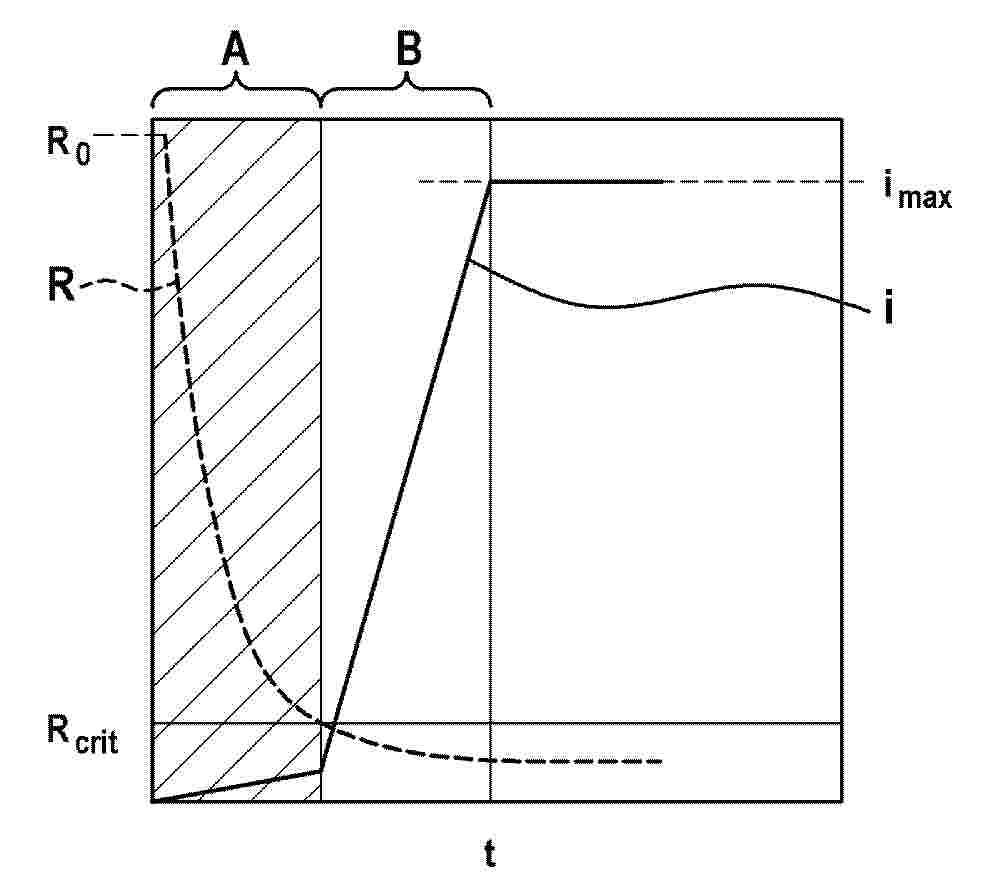
Vorgeschlagen wird ein Verfahren zum Konditionieren eines Brennstoffzellenstapels, umfassend mehrere Brennstoffzellen mit jeweils einer Anode und einer Kathode sowie einer dazwischen angeordneten Membran. Dabei wird zu Beginn des Konditionierungsvorgangs ein elektrischer Strom an den Brennstoffzellenstapel angelegt, dessen elektrische Stromdichte (i) gesteigert wird, bis eine vorab definierte maximale Stromdichte (imax) erreicht ist. Erfindungsgemäß wird der während der Konditionierung abnehmende elektrische Widerstand (R) der Membran überwacht. Die elektrische Stromdichte (i) wird an den abnehmenden elektrischen Widerstand (R) der Membran durch eine sich sprunghaft und/oder dynamisch verändernde Steigerungsrate angepasst.Darüber hinaus betrifft die Erfindung ein Steuergerät, welches geeignet ist, das erfindungsmäßige Verfahren oder einzelne Schritte des Verfahrens durchzuführen.
Resumen de: DE102025114743A1
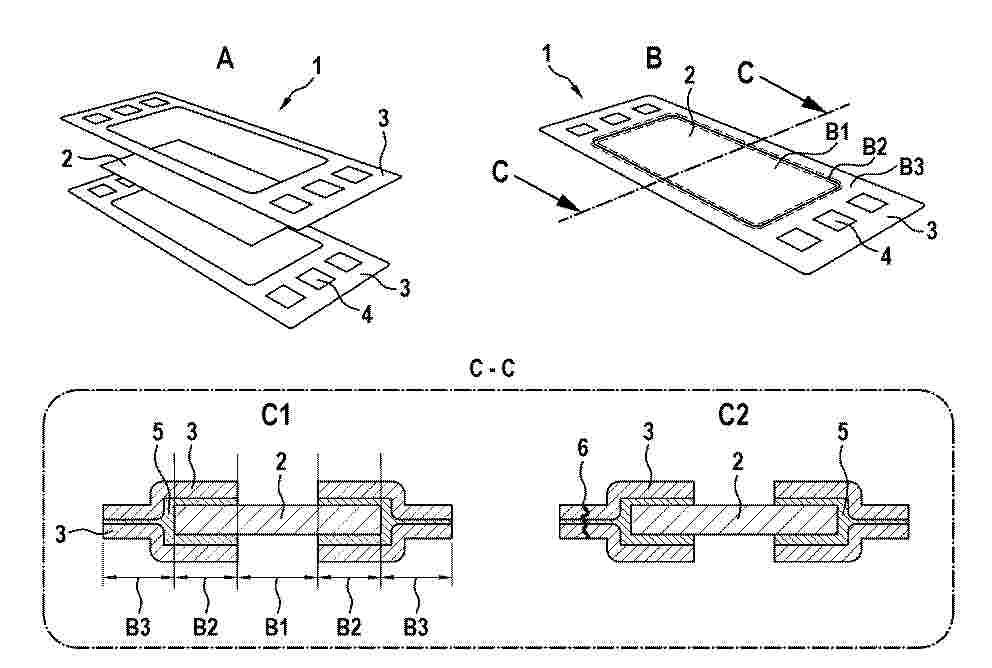
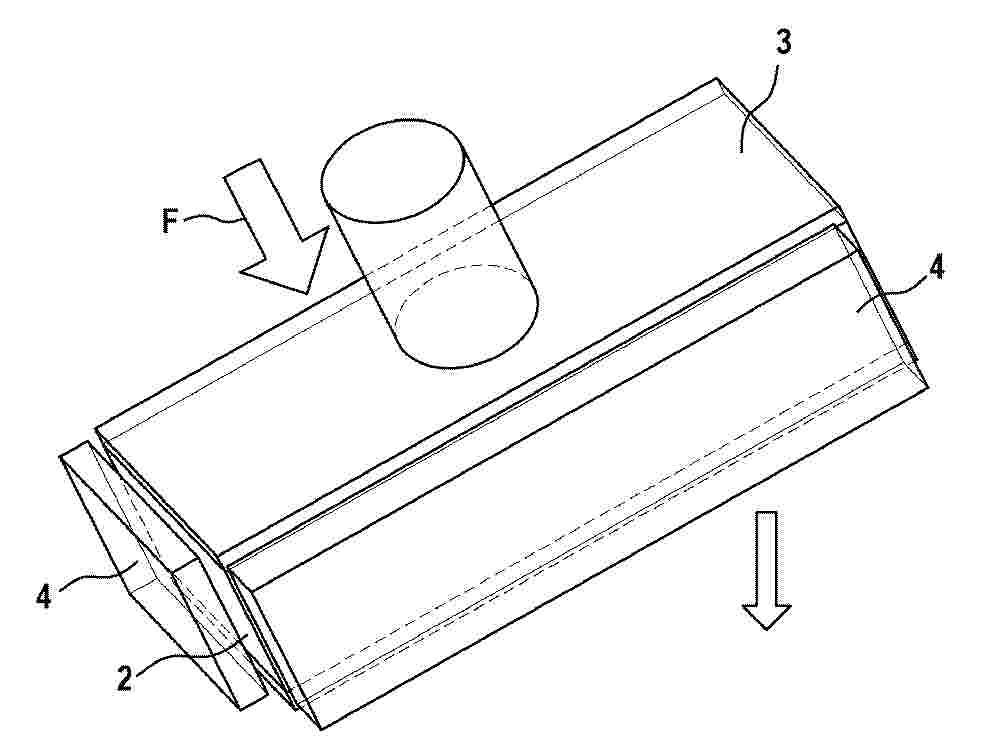
Die Erfindung betrifft ein Verfahren zur Lebensdauerprognose einer Membranelektrodenanordnung (1) einer elektrochemischen Zelle, vorzugsweise einer Brennstoffzelle, wobei die Membranelektrodenanordnung (1) eine Membran (2) umfasst, die auf mindestens einer Seite von einer Subgasketfolie (3) eingefasst ist, und wobei die Subgasketfolie (3) mindestens eine chemisch und/oder thermisch degradierbare Komponente enthält. Erfindungsgemäß werden die folgenden Schritte durchgeführt:a. Erstellen eines Modells der Membranelektrodenanordnung (1), wobei über das Modell eine chemische und/oder thermische Degradation an der Subgasketfolie (3) modelliert wird,b. Ermitteln eines Profils einer oder mehrerer die Degradation begünstigenden Charakteristiken, zumindest jedoch der Temperatur an der Membranelektrodenanordnung (1), als Eingangsgröße für das Modell sowiec. Berechnen einer Ausfallwahrscheinlichkeit der Subgasketfolie (3) durch Auswerten des Modells.Die Erfindung betrifft außerdem eine Recheneinheit.
Resumen de: DE102025114190A1
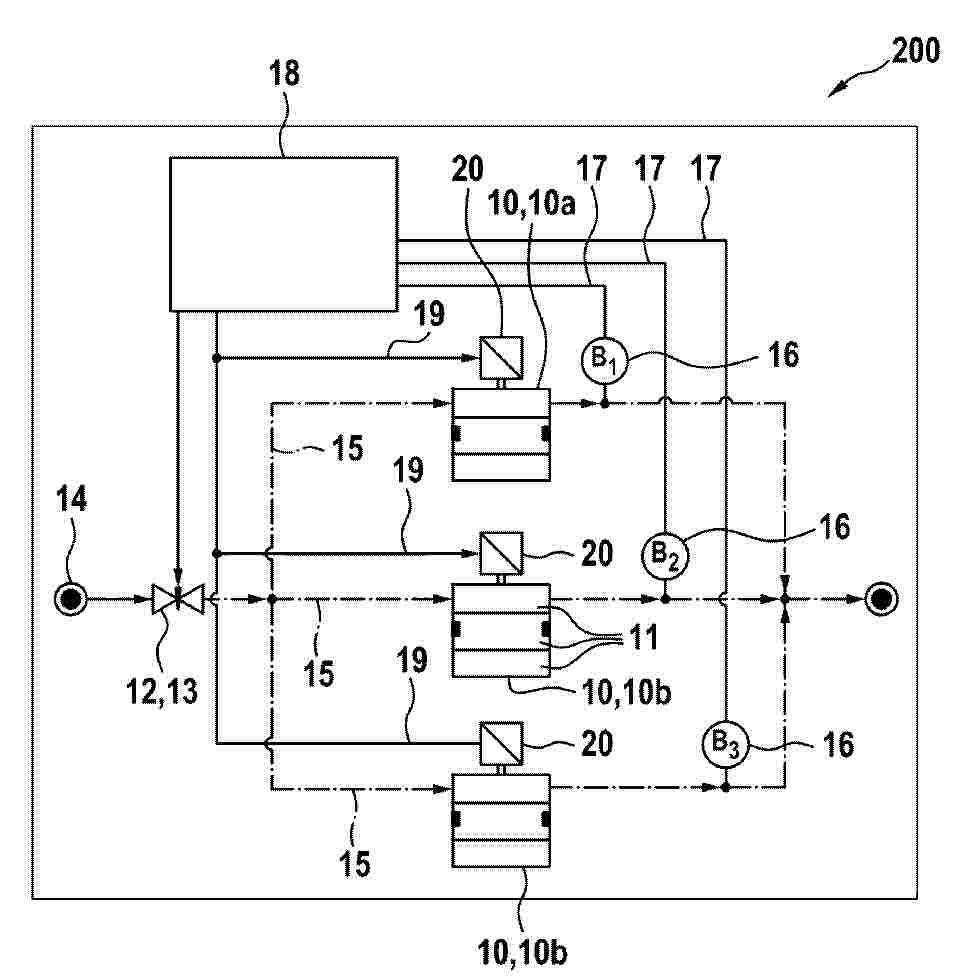
Es wird ein Verfahren (100) zur Regelung mindestens eines Betriebsparameters B eines elektrochemischen Moduls (200) aufweisend mindestens eine erste Vielzahl von elektrochemischen Einheiten (i=1,...,n) (10) vorgeschlagen, wobei jede der elektrochemischen Einheiten (10) eine Vielzahl elektrochemischer Zellen (11) umfasst, wobei mindestens der ersten Vielzahl von elektrochemischen Einheiten (10) ein Stellglied (12) zur Regelung einer Durchflussmenge eines Fluids zugeordnet ist, umfassend die Schritte, Bestimmen eines Sollwertes Bsollfür den Betriebsparameter B, Regelung der Durchflussmenge des Fluids mittels des Stellglieds (12) derart, dass für mindestens eine der elektrochemischen Einheiten (i) (10a) der Vielzahl von elektrochemischen Einheiten (10) der Wert Bides Betriebsparameters B dem Sollwert Bsollentspricht, wobei vorgesehen ist, dass durch Regelung elektrischer Betriebsstromstärken der weiteren elektrochemischen Einheiten (1,..i-1,i+1,...,n) (10b) die Werte B1, ..., Bi-1, Bi+1,.., Bndes Betriebsparameters B für die weiteren elektrochemischen Einheiten (1,..i-1,i+1,...,n) (10b) auf den Sollwert Bsollgeregelt werden.
Resumen de: DE102025114483A1
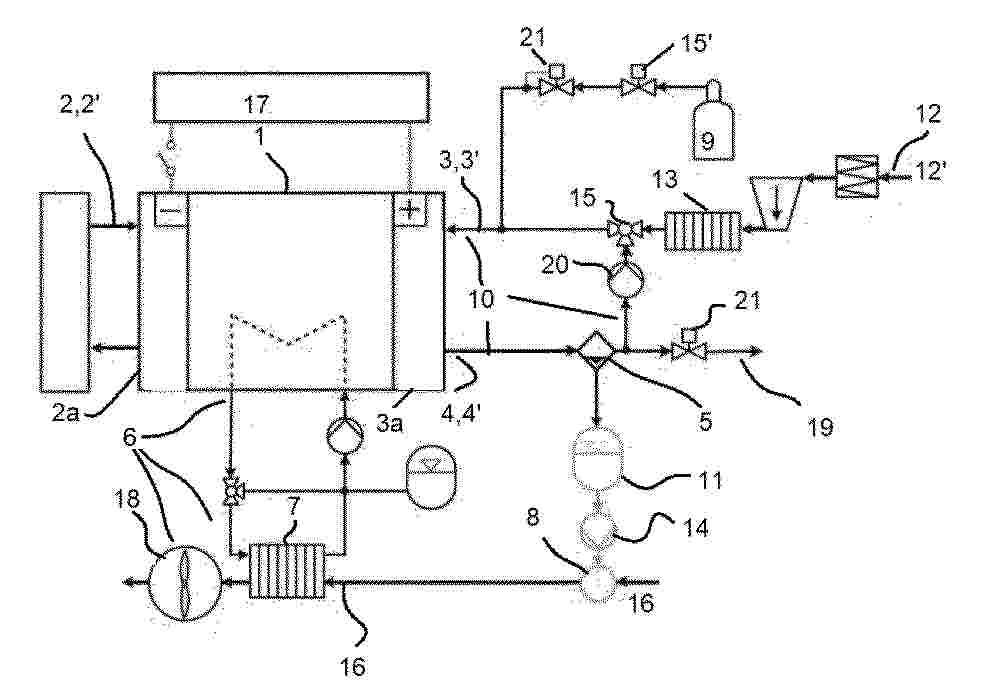
Die Erfindung betrifft ein System aufweisend einen Brennstoffzellenstack (1) , wobei der Brennstoffzellenstack (1) eine Anodengaszufuhr (2), eine Kathodenluftzufuhr (3) sowie eine Abgasableitung (4), welche Wasserentfernungsmittel (5) aufweist, aufweist, weiter aufweisend ein Brennstoffzellenkühlsystem (6) zur Kühlung des Brennstoffzellenstacks (1), wobei das Brennstoffzellenkühlsystem (6) eine Luftkühlung aufweist, welche einen Kühlluftstrom (16) an einem Wärmetauscher (7) vorbeiführend ist, bei dem zur Erreichung hoher Effizienz und verbesserter Kühlleistung, insbesondere für mobile Anwendungen Injektionsmittel (8) zur Injektion des durch die Wasserentfernungsmittel (5) entfernten, flüssigen Wassers in den Kühlluftstrom (16) vorgesehen sind. Die Erfindung betrifft weiterhin ein entsprechendes Verfahren sowie ein Flugzeug aufweisend eine Energieversorgung mit einem derartigen System.
Resumen de: DE102025121853A1
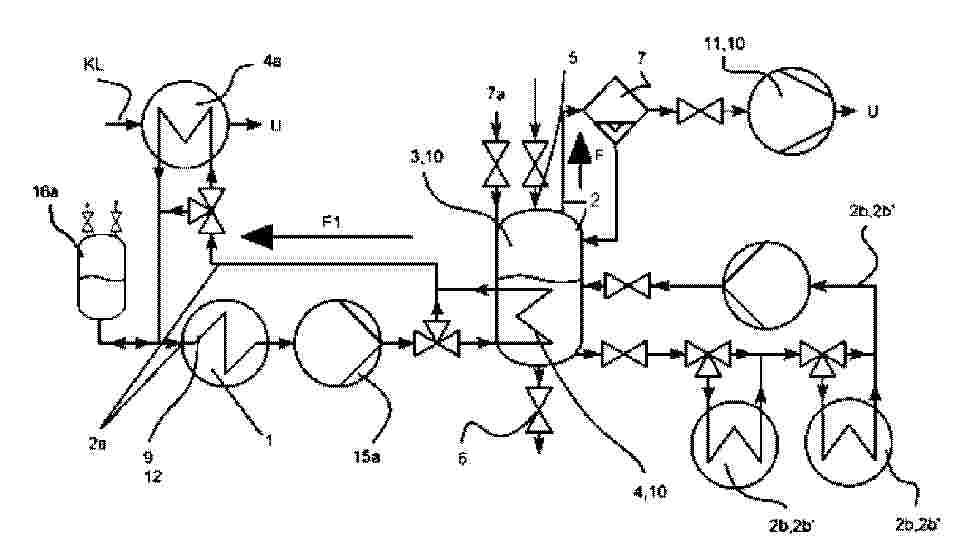
Die Erfindung betrifft ein System zur Kühlung eines Brennstoffzellenstacks, aufweisend ein erstes Brennstoffzellenkühlsystem, in welchem ein erstes Kühlmediums in Kühlkanälen gefördert wird und welches einen ersten Wärmeübertrager aufweist, welcher zur Abgabe einer ersten Wärme des ersten Kühlmediums an eine Umgebung eingerichtet ist, weiter aufweisend ein weiteres Kühlsystem, wobei das weitere Kühlsystem ein Wasserbehälter zur Aufnahme flüssigen Kühlwassers und einen weiteren Wärmeübertrager aufweist, wobei der weitere Wärmeübertrager in einer ersten Förderrichtung des ersten Kühlmediums angeordnet ist, dadurch gekennzeichnet, dass der weitere Wärmeübertrager zur Übertragung einer weiteren Wärme des ersten Kühlmediums an das Kühlwasser eingerichtet ist, wobei das weitere Kühlsystem Wasserverdampfungsmittel aufweist, durch die das Kühlwasser zumindest teilweise verdampfend ist und das verdampfte Wasser an die Umgebung abgegeben wird.Die Erfindung betrifft weiterhin ein Verfahren zur Kühlung eines Brennstoffzellenstacks.
Resumen de: DE102026112477A1
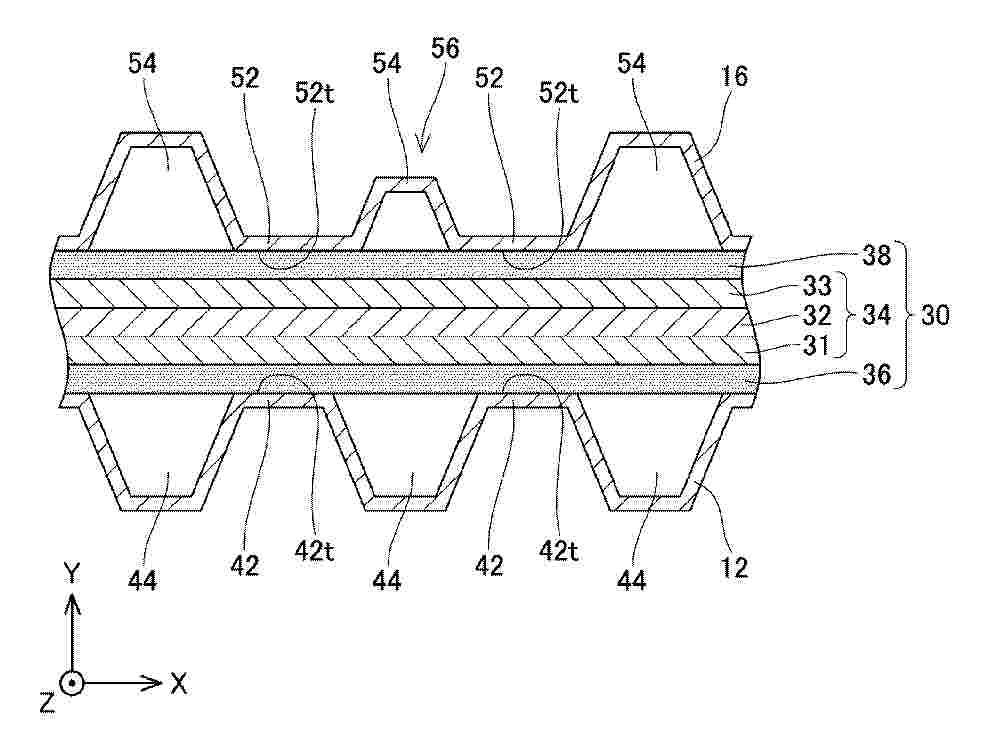
Eine Vielzahl von Gasströmungskanälen, die in mindestens einem der Separatoren angeordnet sind, weist mindestens einen verengten Abschnitt auf, in dem die Querschnittsfläche des Gasströmungskanals entlang einer Gasströmungsrichtung von einem Gaszufuhrloch in Richtung eines Gasabgabelochs abnimmt. Wenn die Anzahl der verengten Abschnitte, die in mindestens einem der Separatoren vorgesehen sind, zwischen mehreren Brennstoffzellen verglichen wird, variiert die Anzahl der verengten Abschnitte beruhend auf der Position der Brennstoffzelle in der Stapelrichtung.
Resumen de: DE102026110573A1
Der Brennstoffzellenstapel umfasst eine Dichtung, die auf einer Hauptfläche eines Separators angeordnet ist und ein Kühlmittel-Zufuhrloch, ein Kühlmittel-Abgabeloch und einen Kühlmittel-Strömungskanal umgibt. Ein von der Dichtung umgebener Bereich umfasst einen Hauptströmungsbereich, einen Verteilungsbereich, der zwischen dem Kühlmittel-Zufuhrloch und dem Hauptströmungsbereich gelegen ist, und einen Sammelbereich, der zwischen der Kühlmittel-Abgabeloch und dem Hauptströmungsbereich gelegen ist. Die Dichtungen umfassen eine Zufuhrstrom-Dichtung, die von einer Verteilungsbereich-Dichtung abzweigt und sich in den Verteilungsbereich erstreckt, und/oder eine Abgabestrom-Dichtung, die von der Sammelbereich-Dichtung abzweigt und sich in den Sammelbereich erstreckt.
Resumen de: DE102025114434A1
Die Erfindung betrifft ein Verfahren zur Herstellung eines Stacks (1) mit einer Vielzahl elektrochemischer Zellen (2), bei dem die elektrochemischen Zellen (2) gestapelt und in Stapelrichtung miteinander verspannt werden. Erfindungsgemäß werden beim Verspannen die elektrochemischen Zellen (2) zunächst mittels einer Vorspannkraft vorgespannt und dann in Schwingung versetzt, wobei zum finalen Verspannen der in Schwingung versetzten elektrochemischen Zellen (2) die Vorspannkraft kontinuierlich ansteigend auf einen vorab definierten Maximalwert gebracht wird.Die Erfindung betrifft darüber hinaus einen nach einem erfindungsgemäßen Verfahren hergestellten Stack (1).
Resumen de: DE102025114568A1
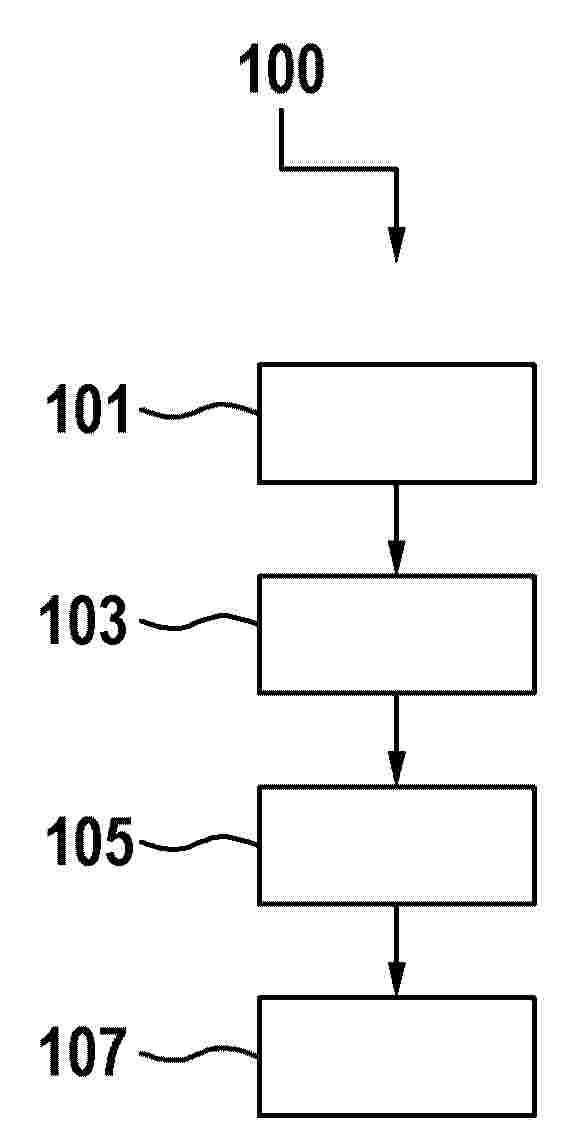
Die vorgestellte Erfindung betrifft ein Verfahren (100) zum Herstellen eines Zellelements (200) für eine Zelle (303) eines elektrochemischen Energiewandlers (300), wobei das Verfahren (100) umfasst:- Bereitstellen (101) eines Kanalelements (201),- Bereitstellen (103) eines Stützelements (203),- Verbinden (105) des Stützelements (203) mit dem Kanalelement (201) mittels eines Lasers und- Ausformen (107) von Ventilationsöffnungen (205) in dem Kanalelement (201) mittels des Lasers zum Herstellen des Zellelements (200).
Resumen de: DE102025114546A1
Die Erfindung betrifft die Verwendung eines Katalysators zum Entfernen von Ammoniak aus der Kathodenzuluft in einem Brennstoffzellensystem für ein Kraftfahrzeug, wobei es sich um einen Ruthenium-basierten Katalysator handelt, welcher in Strömungsrichtung der Kathoden-Zuluft vor einem Befeuchter angeordnet ist.
Resumen de: AU2025438737A1
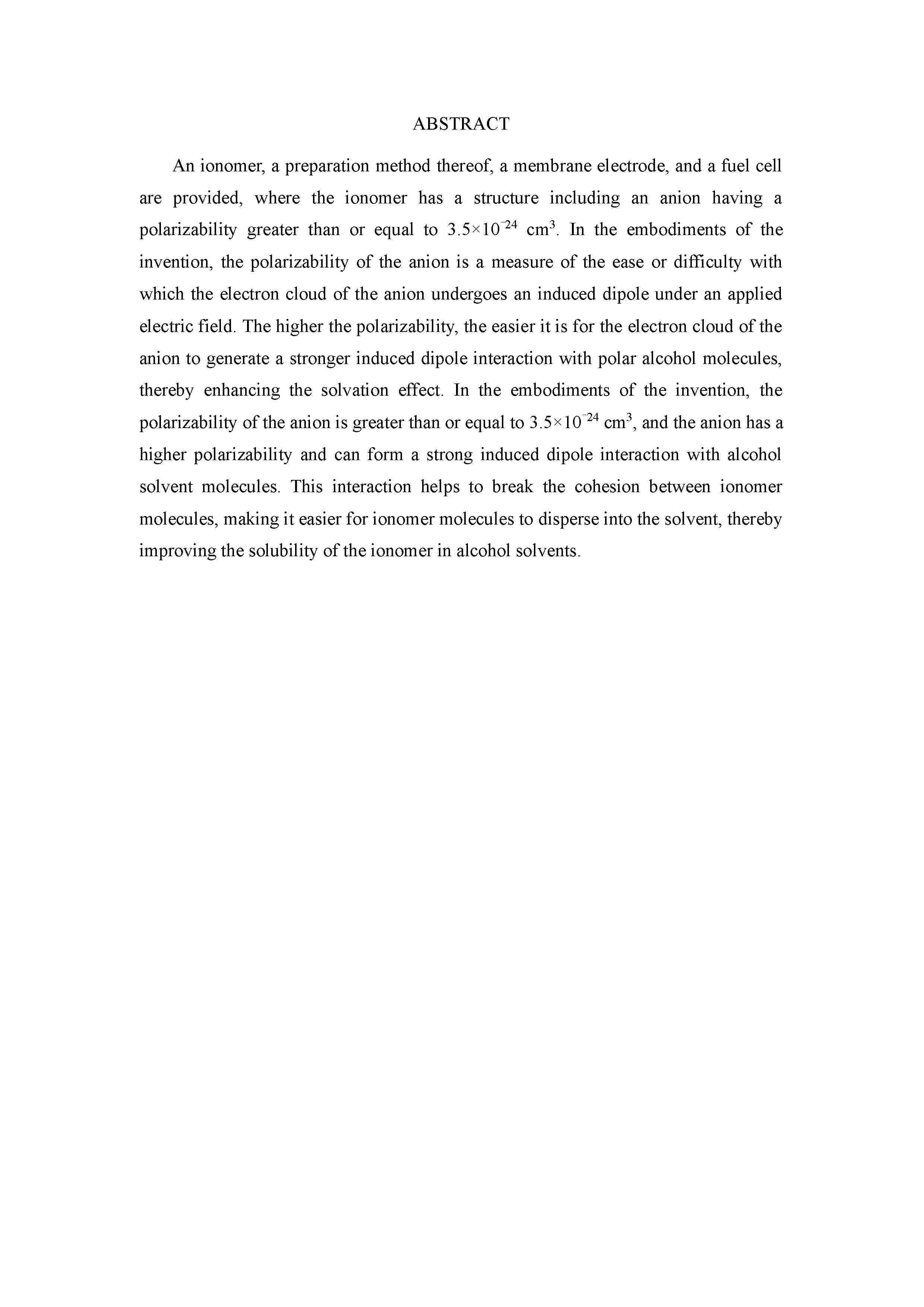
The present application provides an ionomer and a preparation method therefor, a membrane electrode, and a fuel cell. The structure of the ionomer comprises anions, and the polarizability of the anions is greater than or equal to 3.5x10⁻²⁴ cm3. In embodiments of the present application, the polarizability of the anions represents the level of difficulty of an electron cloud of the anions in producing an induced dipole under the action of an external electric field. The higher the polarizability, the more easily the electron cloud of the anions generates stronger induced dipole interaction with polar alcohol molecules, thereby enhancing the solvation effect. In the embodiments of the present application, the polarizability of the anions is greater than or equal to 3.5×10⁻²⁴ cm3. The anions have relatively high polarizability, and can form relatively strong induced dipole interaction with alcohol solvent molecules. Such interaction helps break the cohesion between ionomer molecules, making it easier for the ionomer molecules to disperse into a solvent, thereby improving the solubility of the ionomer in an alcohol solvent.
Resumen de: WO2025119498A1
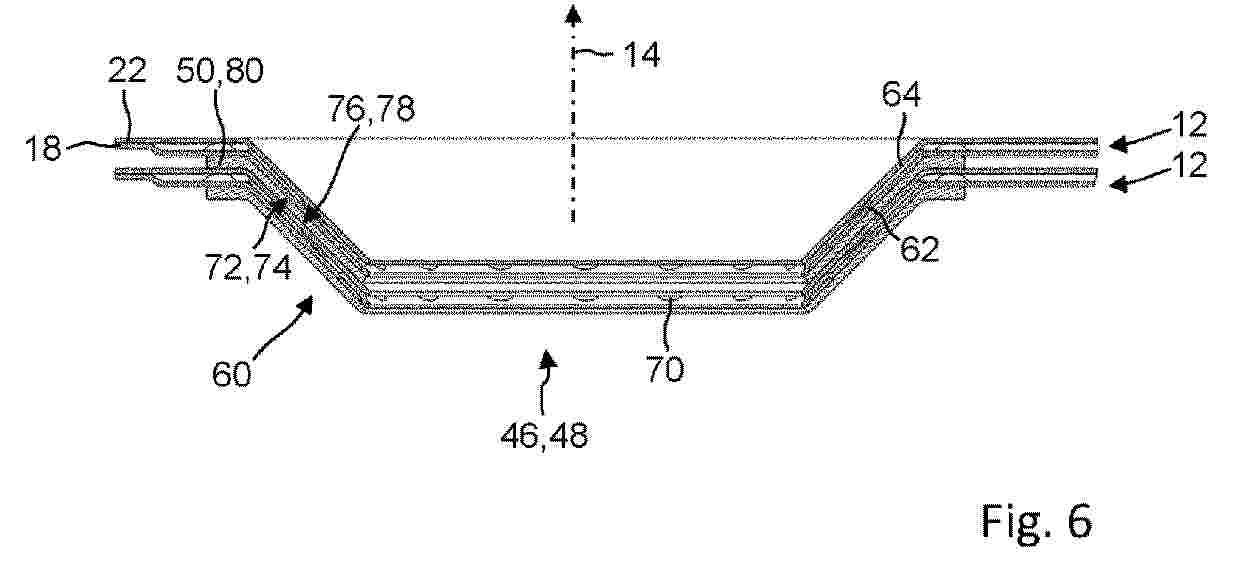
The invention relates to an electrochemical cell stack, comprising a plurality of electrochemical cell units (12) that are stacked upon one another along a stacking direction (14), wherein each cell unit comprises a cell layer having at least one electrochemically active cell chemistry region, and an interconnector plate (18), said cell layer and said interconnector plate overlie one another and are attached to each other to enclose a fluid volume therebetween, adjacent cell units cooperate with each other such that movement of the cell units relative to each other in a direction perpendicular to the stacking direction is limited or blocked. The invention also relates to electrochemical cell units and a method of manufacturing an electrochemical cell stack.
Resumen de: EP4822061A1
This document describes a method for enhancing bubble evacuation in electrochemical systems by integrating flow channels into porous electrode materials. These channels are engineered during the manufacturing process using techniques such as phase separation micro molding or sacrificial molds. The flow channels facilitate forced electrolyte flow, improving mass transport and preventing gas bubble accumulation, which can block active catalyst sites. This method also mitigates gas crossover risks, optimizes electrode performance, and contributes to system reliability and longevity. The porous electrode materials with integrated flow channels can be used in electrochemical cells to increase the electrochemical active surface area and are applicable in membrane electrode assemblies and alkaline water electrolyzers.
Resumen de: WO2025120298A1
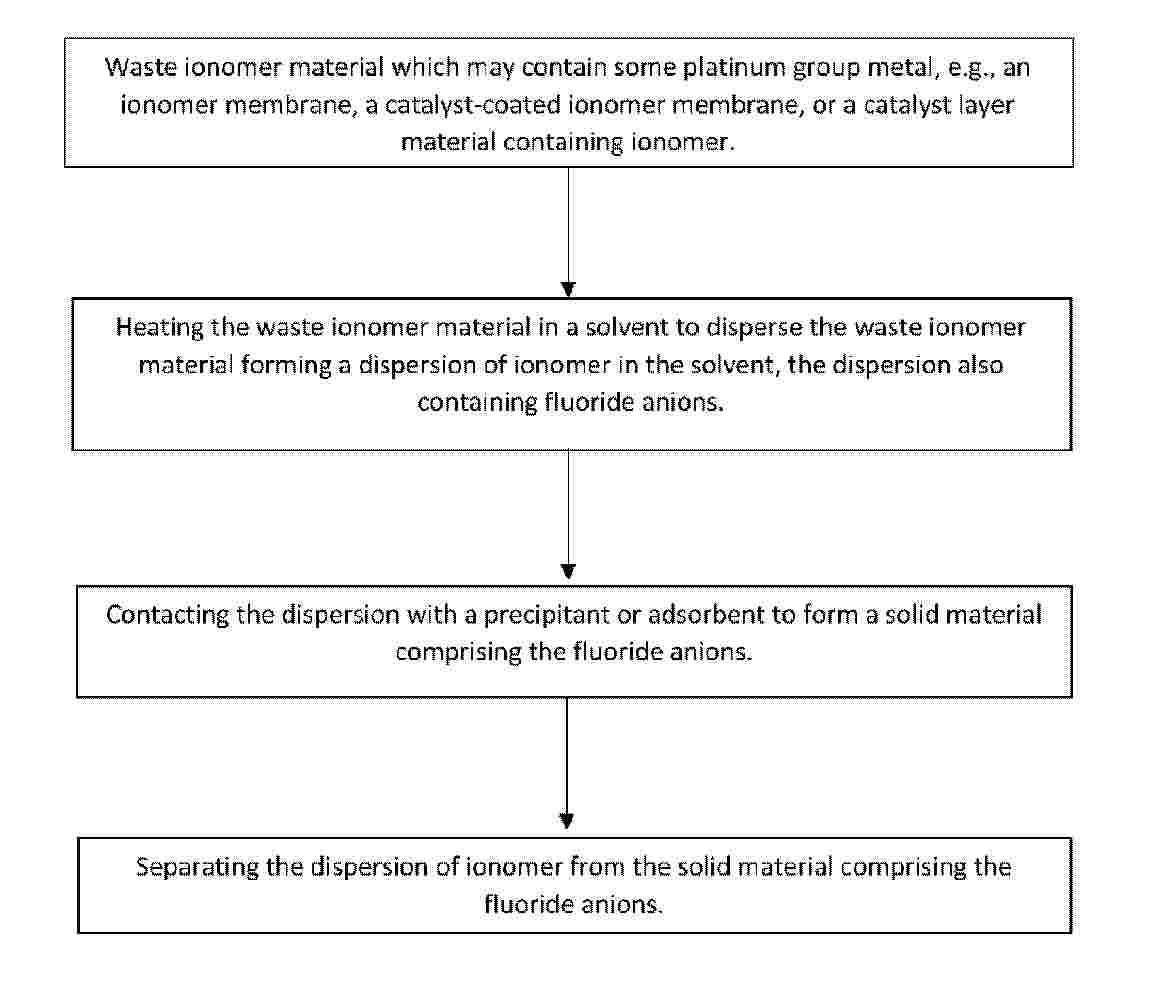
A method of recycling a waste ionomer material, the method comprising: heating the waste ionomer material in a solvent to disperse the waste ionomer material forming a dispersion of ionomer in the solvent, the dispersion also containing fluoride anions in solution; contacting the dispersion with a precipitant or adsorbent to form a solid material comprising the fluoride anions; and separating the dispersion of ionomer from the solid material comprising the fluoride anions.
Resumen de: GB2636356A
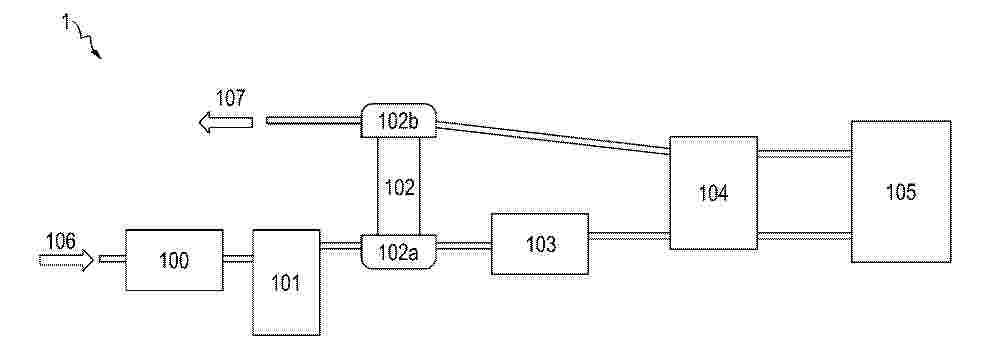
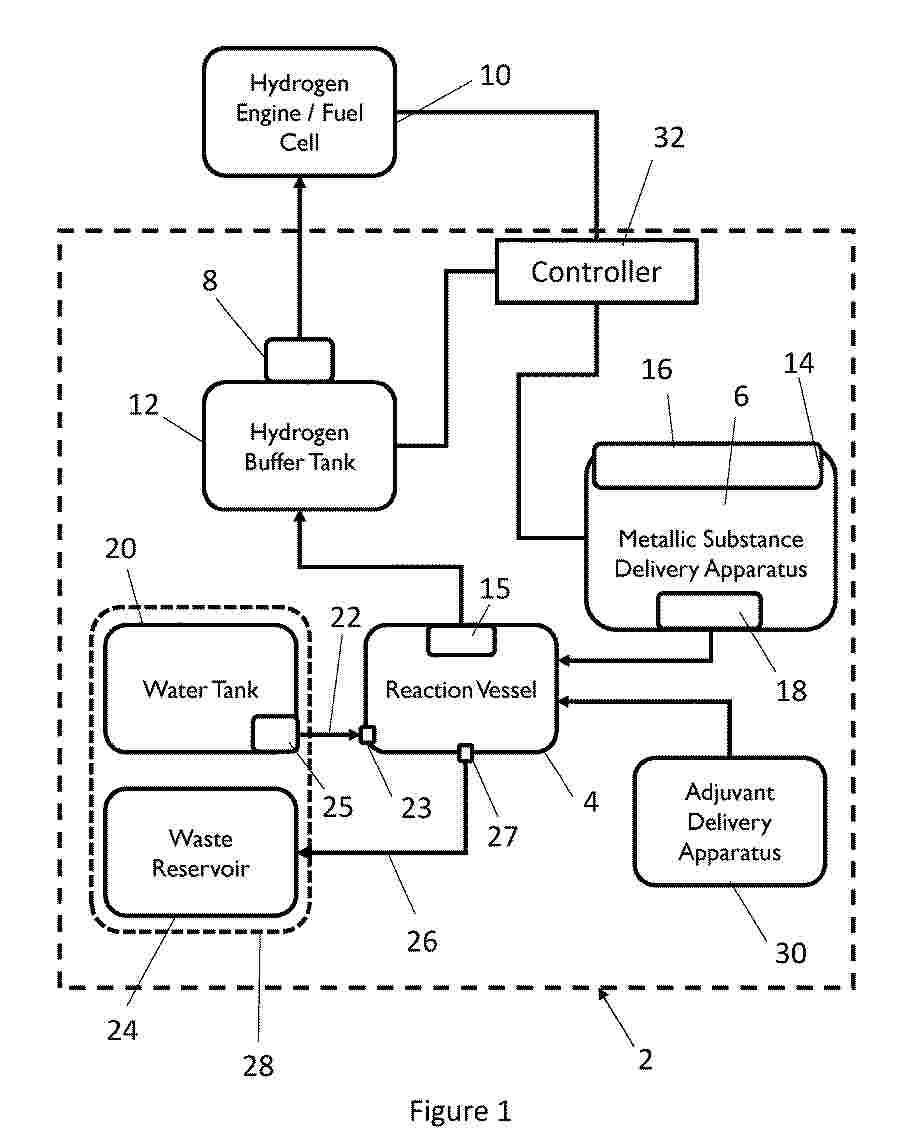
A hydrogen generation system 2 for mounting to a machine in which hydrogen generated by the system is utilised to provide energy to a prime mover (such as an engine or fuel cell) is detailed. The generation system 2 comprises a reaction vessel 4 arranged to hold a water containing liquid. A metallic substance delivery apparatus 6 for selectively delivering a reactive metallic substance to the reaction vessel 4 is described. The metallic substance will, on contact with the liquid, react to generate hydrogen. A pressure regulator assembly 8 is also arranged to deliver the hydrogen at a pressure above atmospheric pressure to an energy conversion apparatus 10 (ie ICE) downstream of the generation system. The hydrogen can be delivered at a pressure greater than 3Bar. An adjuvant material delivery system 30 may also be present to deliver a caustic material (such as sodium hydroxide) to the reaction vessel 4.
Resumen de: WO2025120299A1
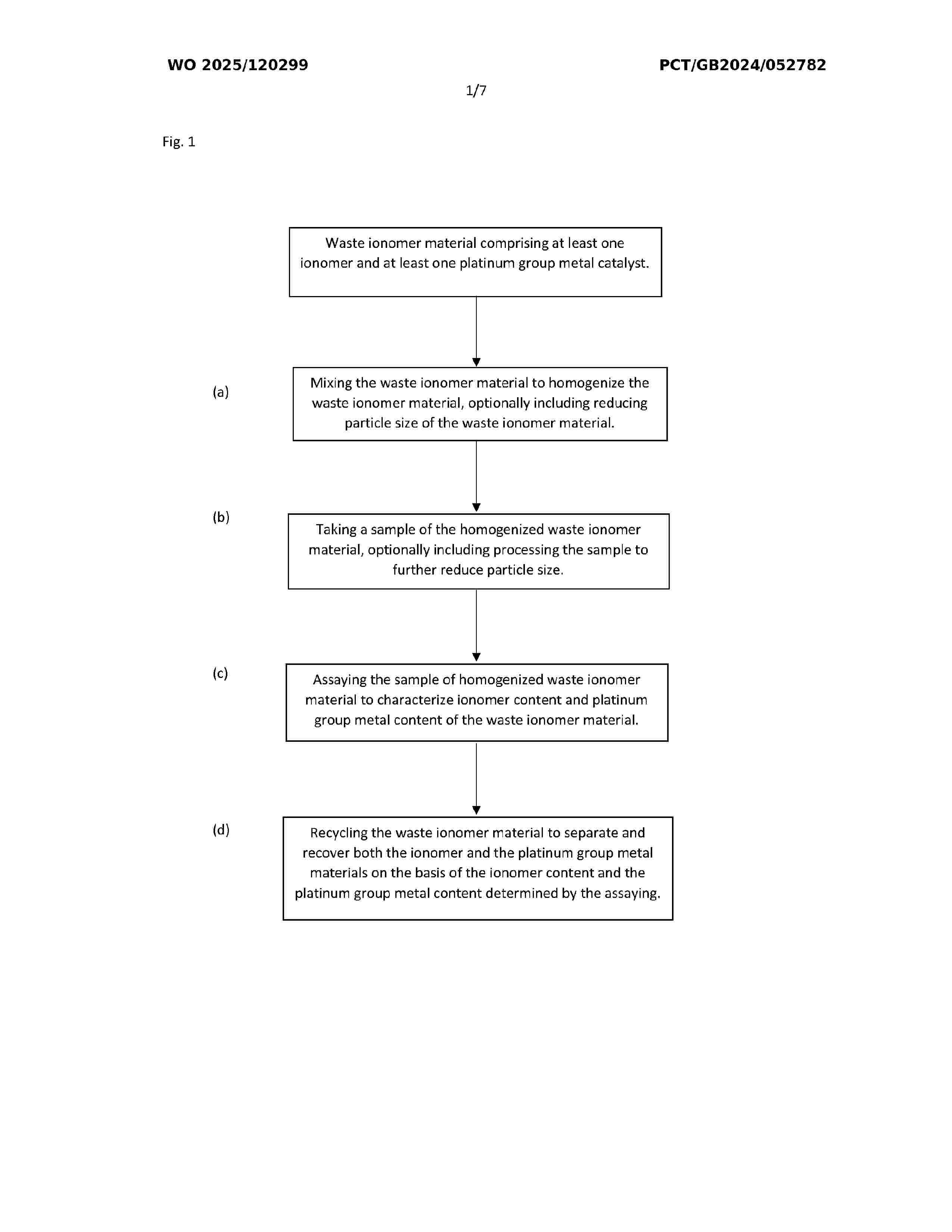
A method of recycling a waste ionomer material comprising at least one ionomer and at least one platinum group metal catalyst, the method comprising: (a) mixing the waste ionomer material to homogenize the waste ionomer material; (b) taking a sample of the homogenized waste ionomer material; (c) assaying the sample of homogenized waste ionomer material to characterize ionomer content and platinum group metal content of the waste ionomer material; and (d) recycling the waste ionomer material to separate and recover both the ionomer and the platinum group metal materials on the basis of the ionomer content and the platinum group metal content determined by the assaying.
Resumen de: EP4821890A1
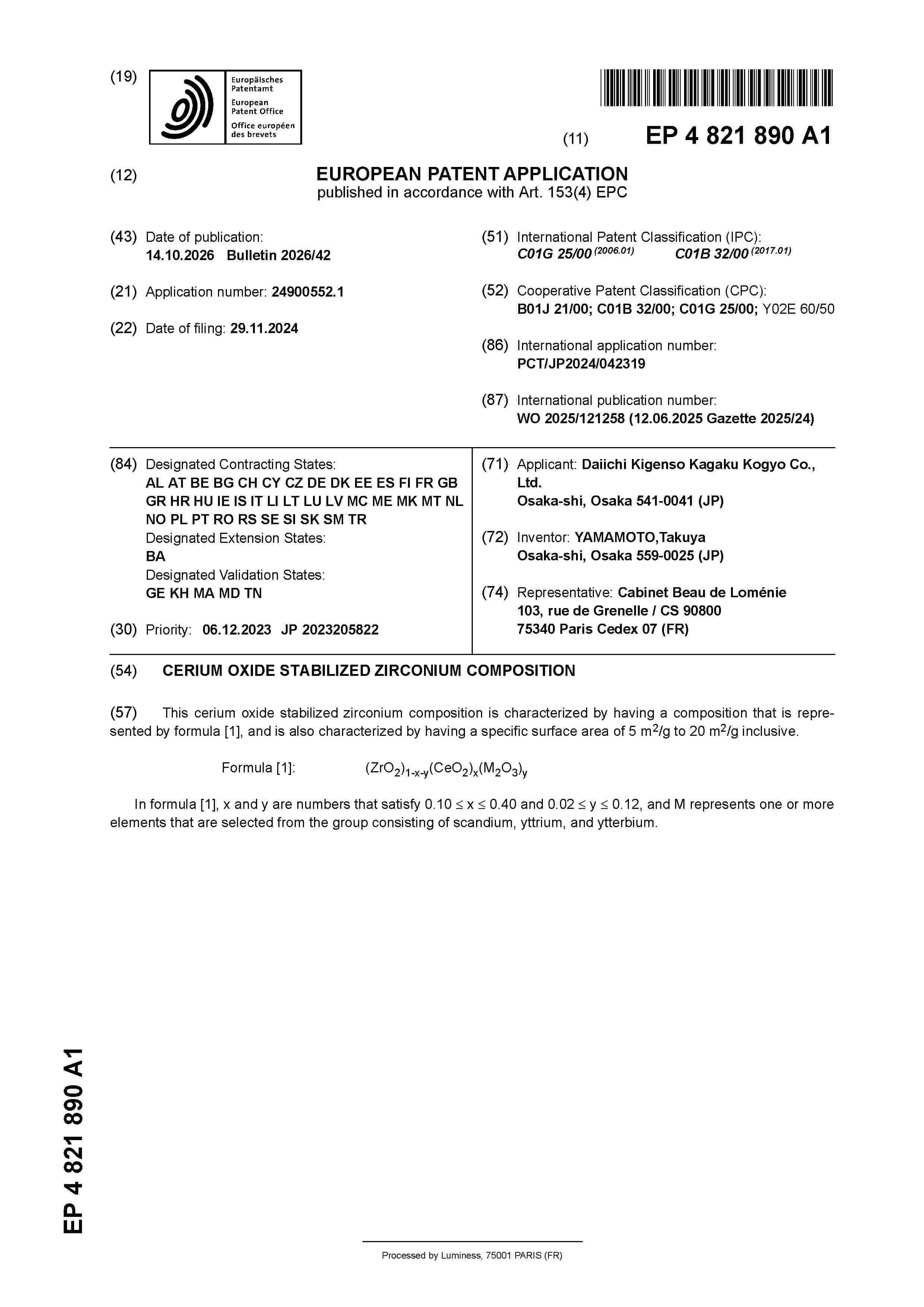
This cerium oxide stabilized zirconium composition is characterized by having a composition that is represented by formula 1, and is also characterized by having a specific surface area of 5 m2/g to 20 m2/g inclusive. Formula 1: (ZrO2)1-x-y(CeO2)x(M2O3)yIn formula 1, x and y are numbers that satisfy 0.10 ≤ x ≤ 0.40 and 0.02 ≤ y ≤ 0.12, and M represents one or more elements that are selected from the group consisting of scandium, yttrium, and ytterbium.
Resumen de: EP4822241A1
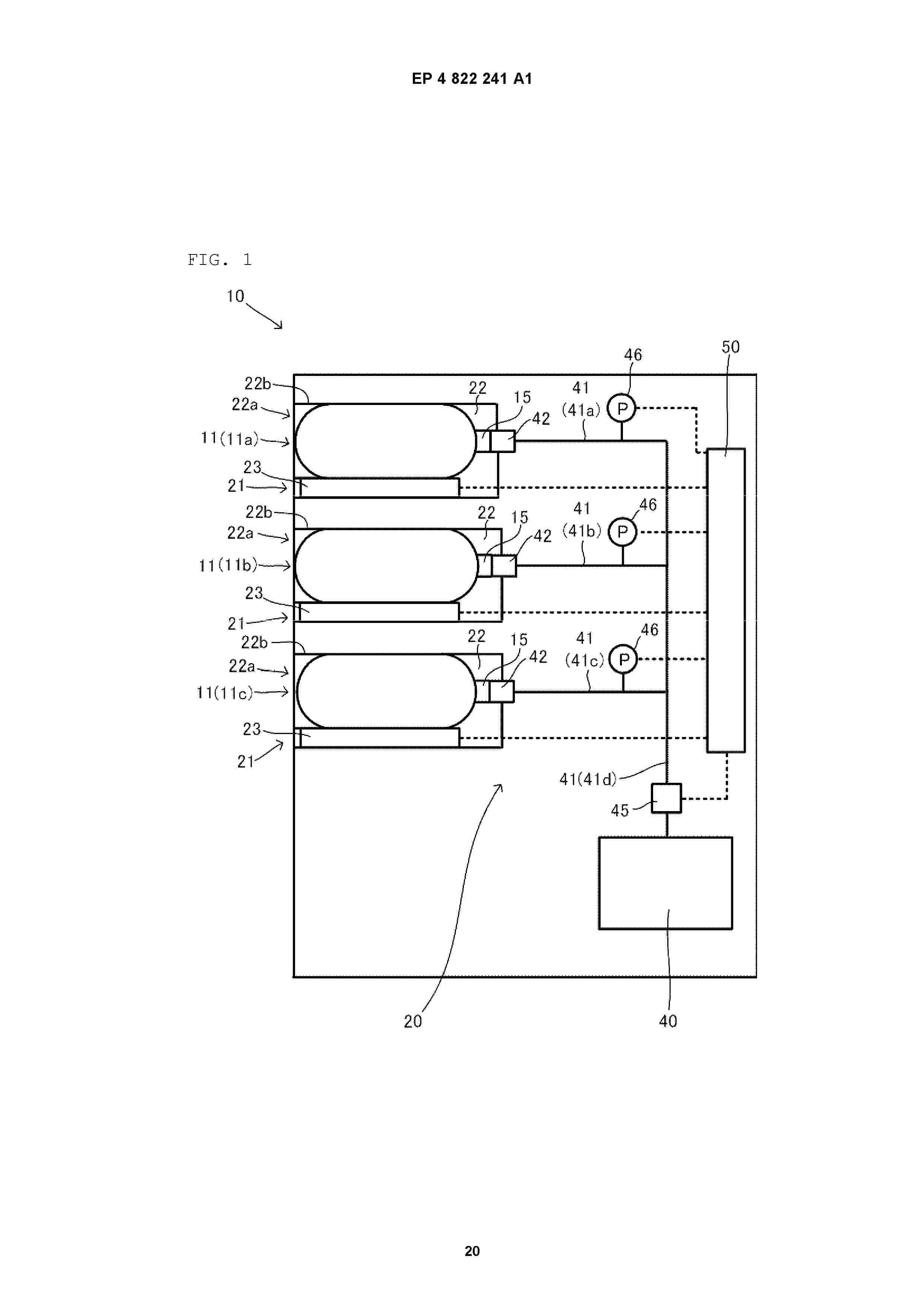
A hydrogen tank connection method for connecting a removable hydrogen tank to a hydrogen consuming apparatus, which is configured to suppress a connection failure between the connector of the hydrogen tank and that of the hydrogen consuming apparatus, the method comprises an approaching step of disposing the first and second connection parts to face each other in a separated state and a connecting step of connecting the separated first and second connection parts by reducing a distance therebetween after the approaching step, wherein, in the approaching step and the connecting step, the hydrogen tank is moved in an axial direction of the first and second connection parts by a moving part configured to move the hydrogen tank.
Resumen de: WO2025119890A1
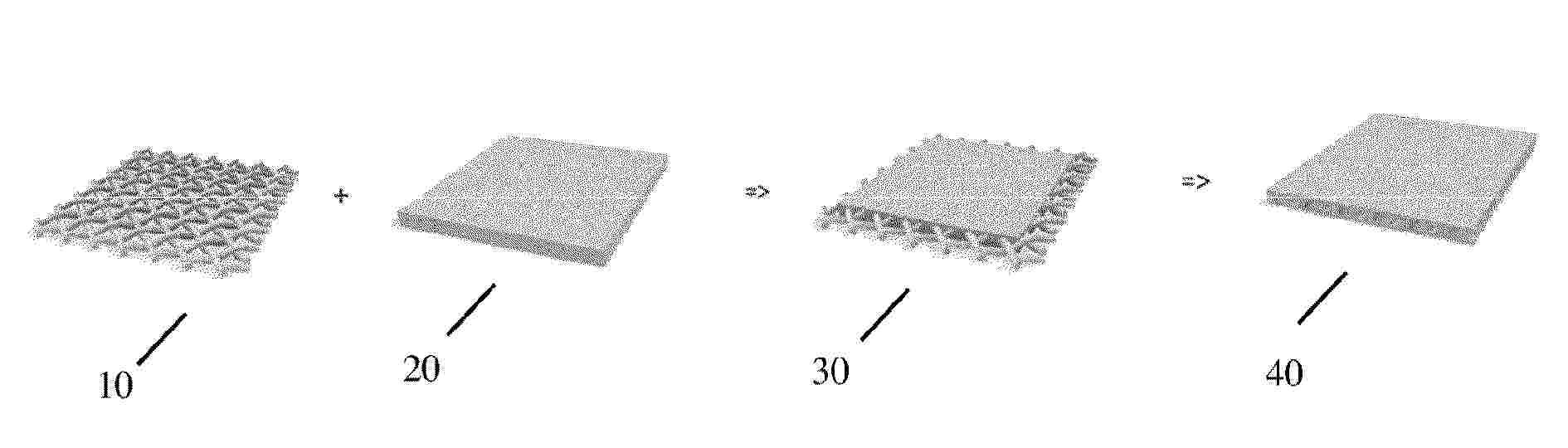
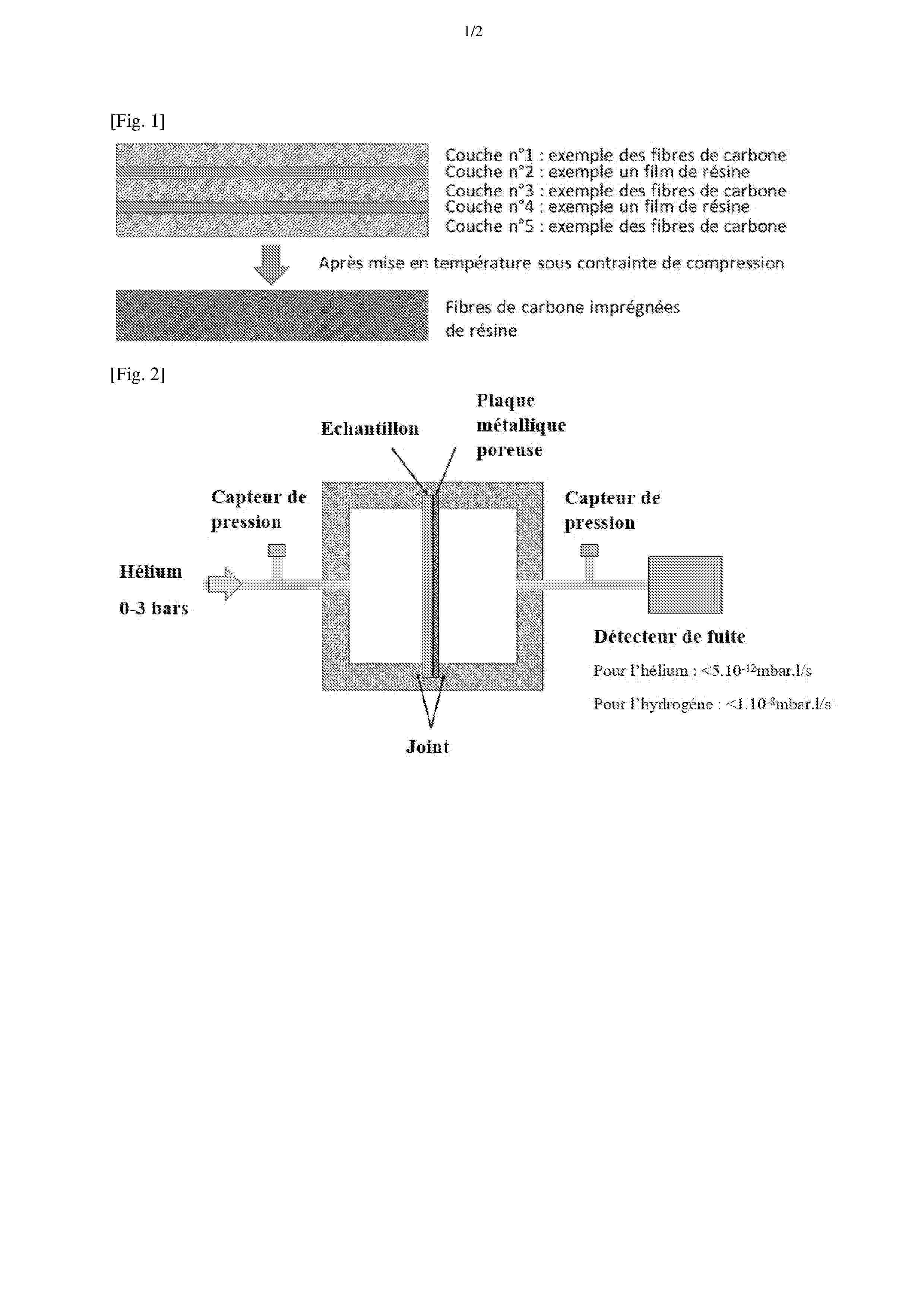
The present invention relates to a multilayer device, the method for preparing same and the uses thereof, in particular in fuel cells.
Resumen de: WO2025122054A1
A current collector for a planar fuel cell assembly comprising a plurality of planar fuel cells, the current collector comprising a flexible foil of electrically non-conductive material comprising first and second patterns of electrically conductive material provided on a first and second side thereof, respectively. The first pattern connects the fuel cells in series when the flexible foil is folded over the fuel cells. The second pattern conveys the electrical energy generated in the planar fuel cells to an output terminal.
Nº publicación: EP4820580A2 14/10/2026
Solicitante:
THYSSENKRUPP NUCERA AG & CO KGAA [DE]
thyssenkrupp nucera AG & Co. KGaA
Resumen de: WO2025119810A2
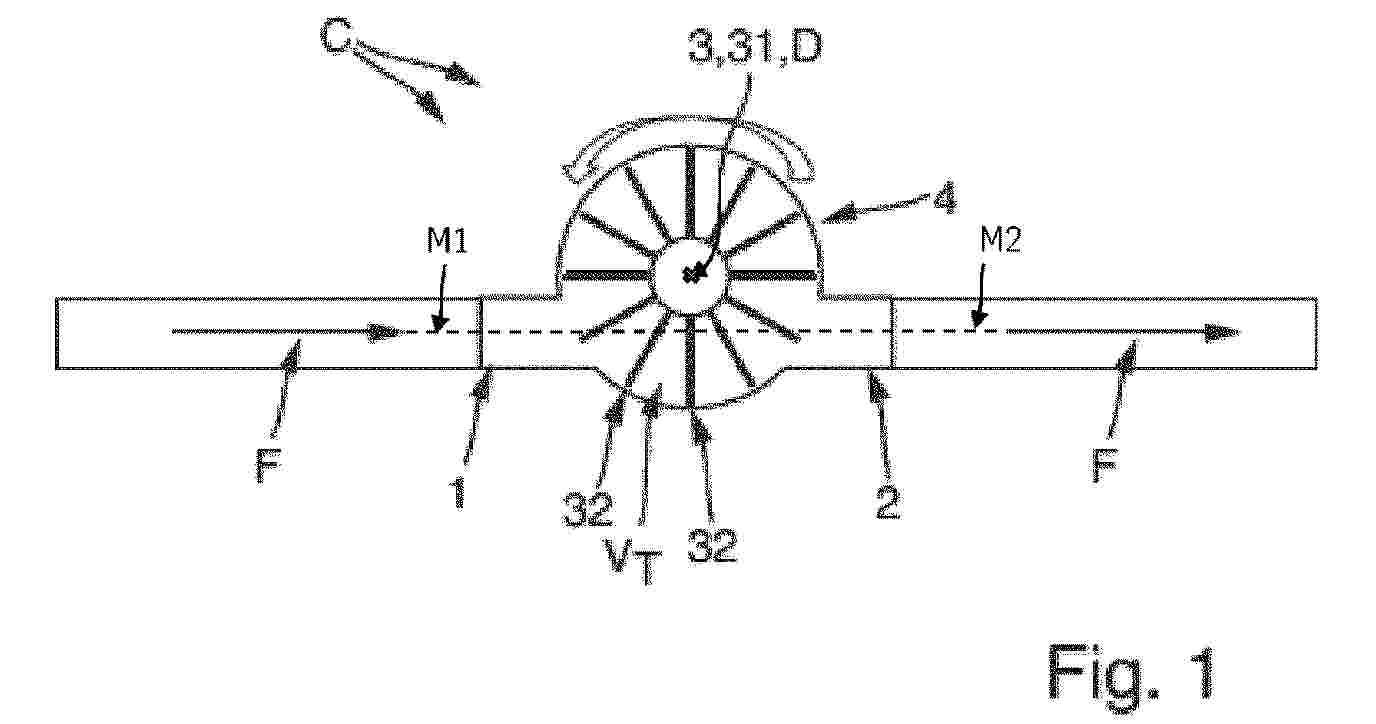
The invention relates to an electric current interrupter (C, C'), in particular a stray current interrupter, comprising an inlet (1) with a geometrical central axis (M1), in particular an electrolyte inlet, a fluid outlet (2) with a geometrical central axis (M2), in particular an electrolyte outlet, and an impeller (3, 100, 200, 300) which is surrounded by a housing (4) and which has a rotational axis (D). The impeller (3, 100, 200, 300) forms at least one non-conductive transport volume (VT) which is designed to transport fluid (F) from the inlet (1) to the outlet (2, 2'), and the fluid (F) in the transport volume (VT) is electrically insulated from the fluid (F) at the inlet (1) and at the outlet (2), wherein the central axis (M1) of the inlet (1) does not intersect the rotational axis (D) of the impeller (3). The invention additionally relates to a current interrupter (C, C') in which the impeller (100) is designed as a closed impeller (100) or in which the impeller (3, 100, 200, 300) comprises a plurality of blades (32), rotatable rollers (2001) being attached to the end face of the blades (32). The current interrupter comprises a gas/liquid separating device. The invention also relates to an electrolysis system comprising a plurality of electrolyzers (E1, E2, E3...) comprising at least one current interrupter according to the invention and to a method for transporting fluid (F) from the inlet (1) to the outlet (2) of a current interrupter according to the invention.
 BOPI
BOPI
 Sede Electrónica