Si deseas distinguir tus productos, servicios o ambos de los de otra empresa, es posible que necesites una marca o nombre comercial. Descubre qué son, en qué consiste su procedimiento de registro y qué implica.

Información sobre los plazos de presentación de solicitudes de transformación de marcas de la Unión Europea en marca nacional española. Más información


Si tienes un nuevo dispositivo, producto o procedimiento que resuelva un problema técnico o tenga una ventaja práctica, existen distintas formas de protegerlo en España y en otros países. Descubre cómo hacerlo.

¿Tu innovación reside en la estética, la ornamentación o la apariencia de tu producto? Protégela mediante un diseño industrial. Descubre qué derechos confiere el registro y cómo realizar la tramitación.

Las indicaciones geográficas protegen el nombre de un producto originario de una zona geográfica, a la cual le debe una determinada calidad, reputación u otra característica. Descubre qué son, en qué consiste su procedimiento de registro y qué beneficios conceden.

Las patentes publicadas en todo el mundo son una valiosa fuente de información científica, técnica y comercial.

Si eres emprendedor/a o una empresa y quieres potenciar y mejorar la rentabilidad de tu negocio protegiendo de forma adecuada los activos intangibles de tu organización, en este espacio encontrarás lo necesario.


 99
resultados
99
resultados
 Última actualización
15/09/2026 [08:58:00]
Última actualización
15/09/2026 [08:58:00]


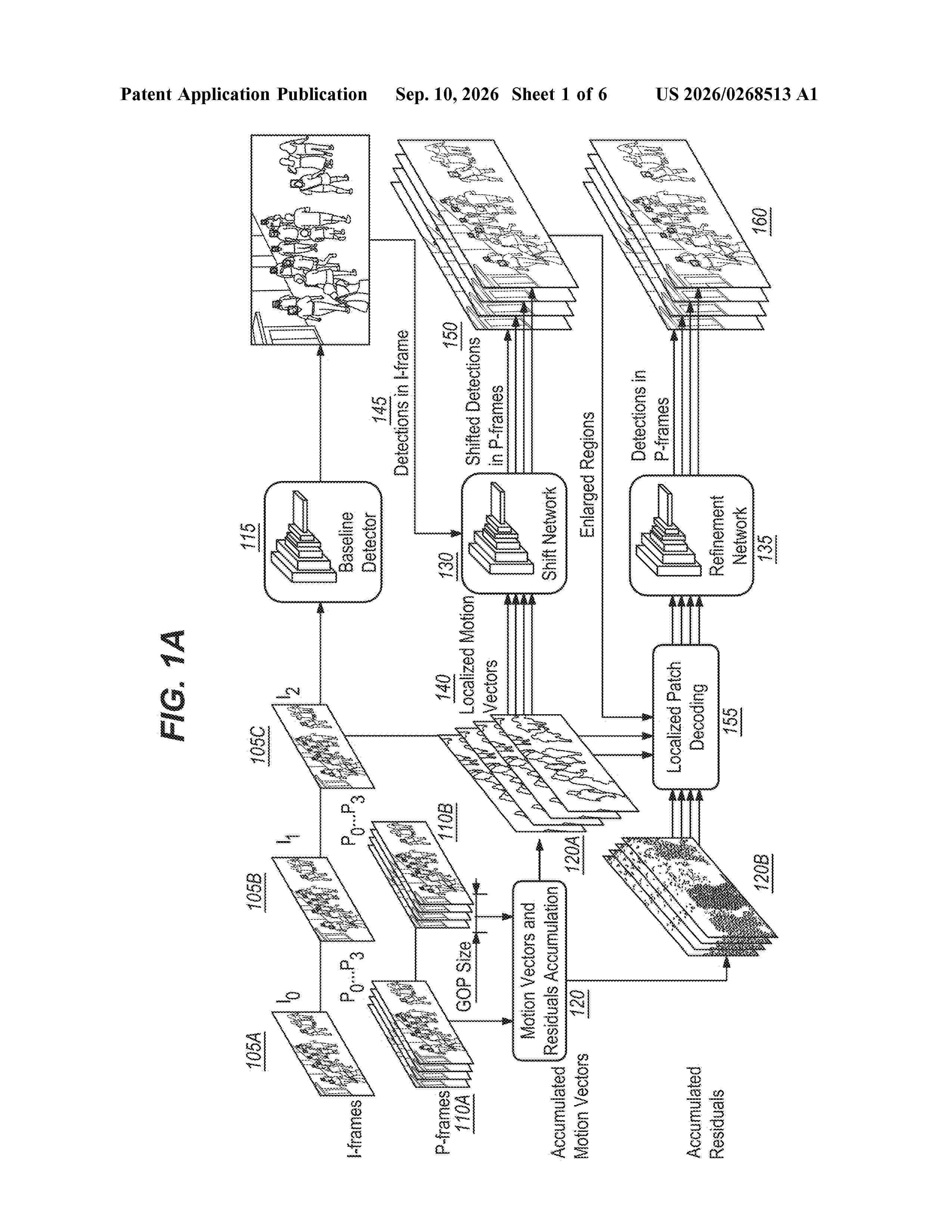
Resumen de: US20260268513A1
0000 Methods and systems for performing detections at native resolution in high resolution video streams without requiring reconstruction of each frame comprises a baseline detector for performing object detections on key frames such as I frames in H.264 or H.265 video together with a shift lightweight neural network for calculating, from accumulated motion vectors of intermediate frames such as B frames and P frames, shift in the object detections and also together with a refine lightweight neural network responsive to the calculations from the shift network and accumulated frame residuals of the intermediate frames to determine object detections in the intermediate frames.

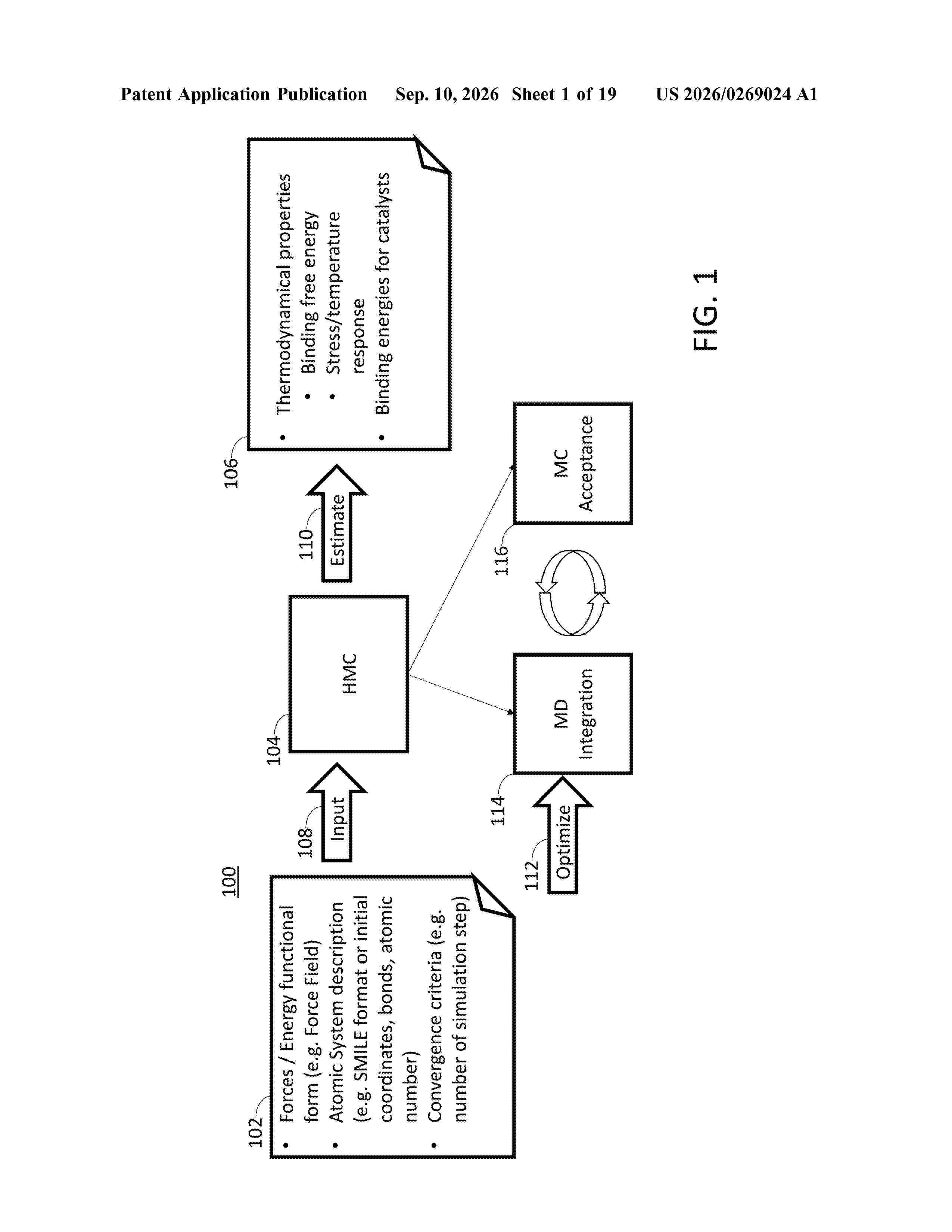
Resumen de: US20260269024A1
A computer-implemented method for accelerating the simulation of a molecular system is provided. The method includes learning a first set of parameters by executing a Hamiltonian Monte Carlo method on the molecular system based on a set of initial conditions. A simulation of the molecular system is executed based on the first set of parameters. Thermodynamics expectation values of the molecular system are predicted based on the executed simulation. The predicted thermodynamics expectation values are provided for a downstream machine learning (ML) task. The method has applications including, but not limited to use cases in artificial intelligence (AI), drug development, medical diagnostics/applications, healthcare, material design catalyst design and high performance computing, to optimize predictions, improve model (e.g., neural network) performance or support decision making.
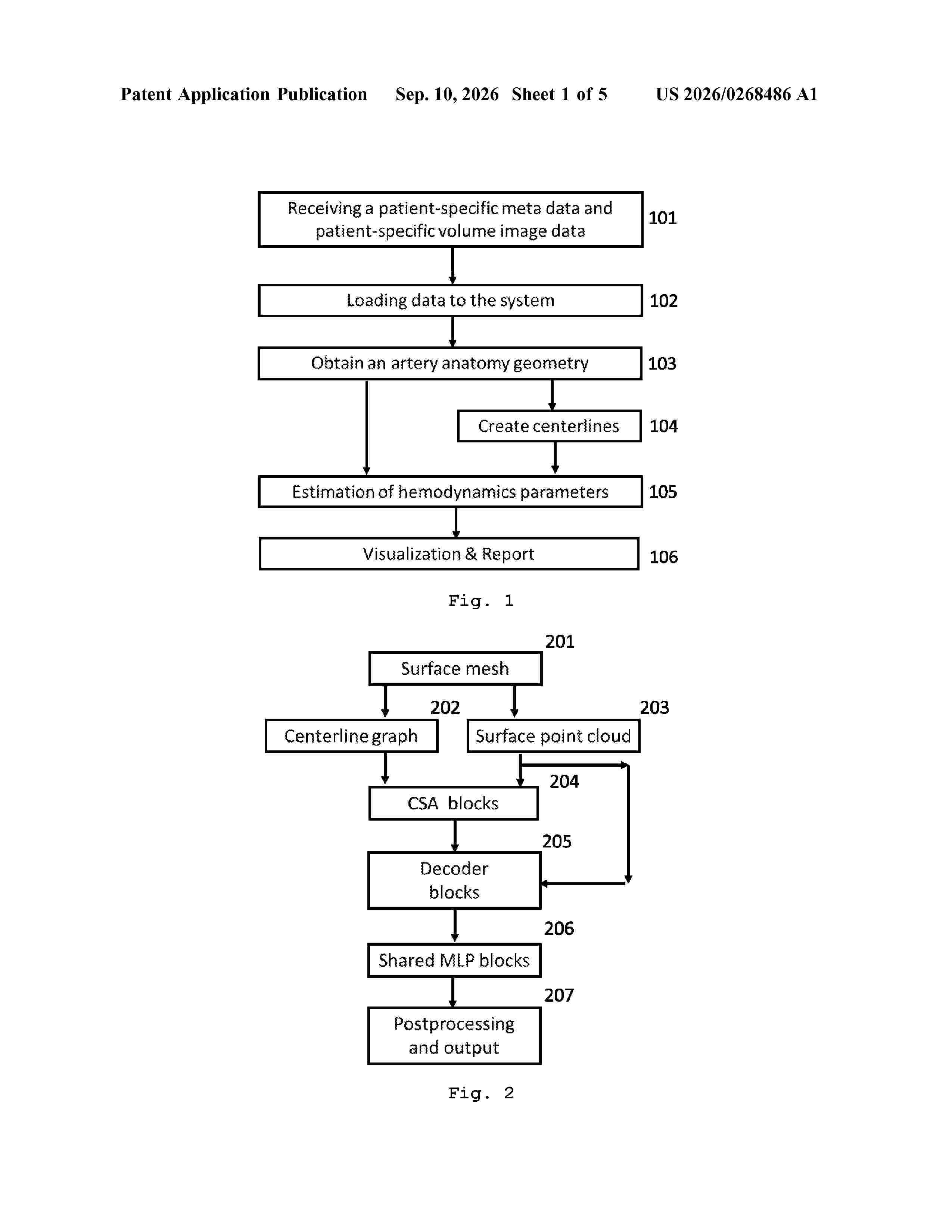
Resumen de: US20260268486A1
A method of training of an artificial deep neural network (ADNN) for estimation of a hemodynamic parameter from a geometry of a blood vessel tree comprising a step of obtaining of a set of geometries of vessel trees, according to the invention is realized with the ADNN having an architecture adapted for point cloud processing with distance based point grouping. The distance is defined as geodesic distance along the blood vessel tree. A method of estimation of hemodynamic parameters from a geometry of a blood vessel tree using an ADNN, according to the invention, involves using ADNN adapted for point cloud processing with geodesic distance based point grouping. The invention concerns also a computer program products comprising a set of instruction that, when run on a computing system, cause it to realize the methods according to the invention. The invention concerns also a computer system adapted to realize methods according to the invention.
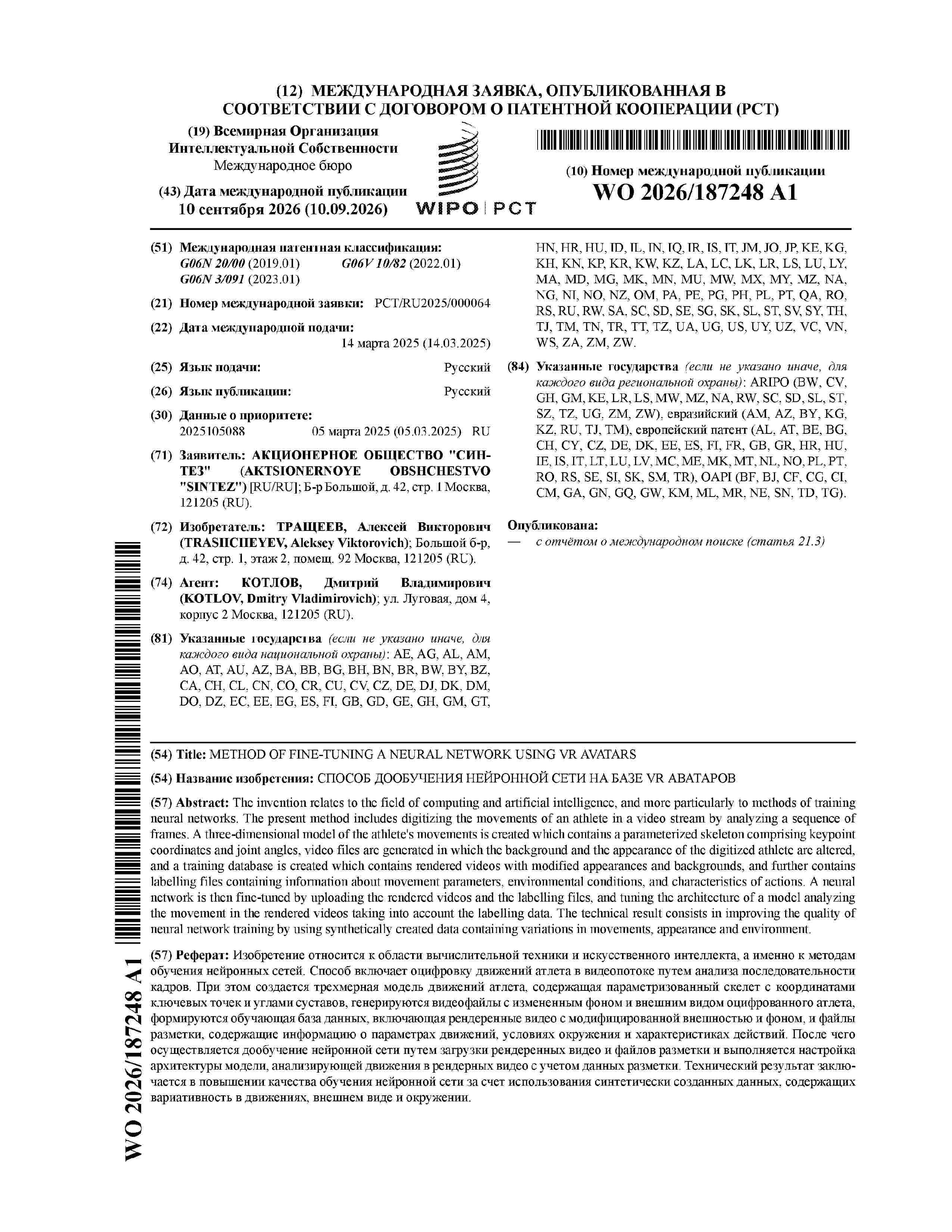
Resumen de: WO2026187248A1
The invention relates to the field of computing and artificial intelligence, and more particularly to methods of training neural networks. The present method includes digitizing the movements of an athlete in a video stream by analyzing a sequence of frames. A three-dimensional model of the athlete's movements is created which contains a parameterized skeleton comprising keypoint coordinates and joint angles, video files are generated in which the background and the appearance of the digitized athlete are altered, and a training database is created which contains rendered videos with modified appearances and backgrounds, and further contains labelling files containing information about movement parameters, environmental conditions, and characteristics of actions. A neural network is then fine-tuned by uploading the rendered videos and the labelling files, and tuning the architecture of a model analyzing the movement in the rendered videos taking into account the labelling data. The technical result consists in improving the quality of neural network training by using synthetically created data containing variations in movements, appearance and environment.
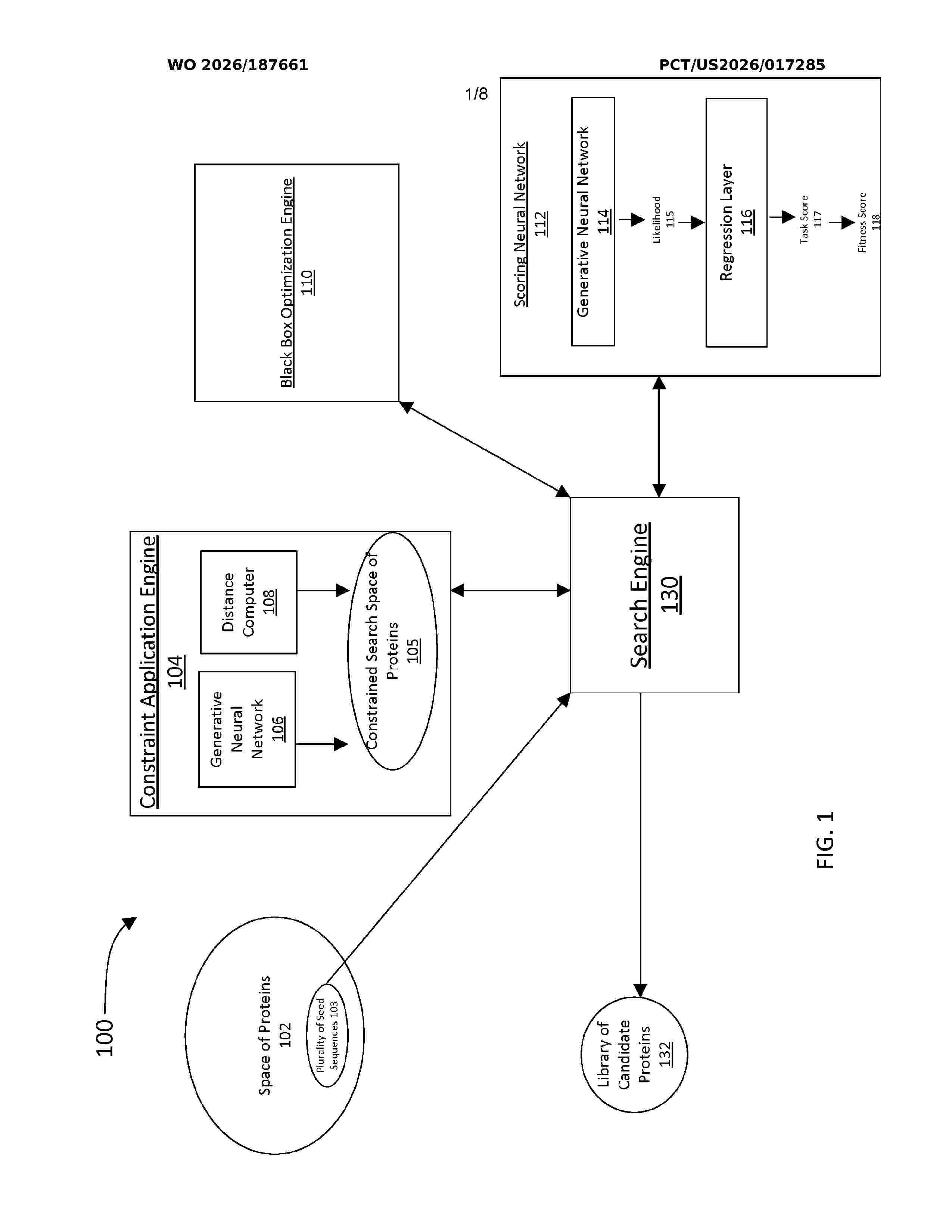
Resumen de: WO2026187661A1
Methods, systems, and apparatus, including computer programs encoded on a computer storage medium, for performing an automated search through a space of proteins to generate data defining a library of candidate proteins for performing a functional task. One of the methods includes performing an unconstrained search of the space of proteins to identify a first collection of candidate proteins. The method additionally includes performing a constrained search of the space of proteins to identify a second collection of candidate proteins, in which the constrained search uses a search space that is limited by one or more constraints and comprises only a proper subset of the space of proteins. The method includes generating the library of candidate proteins by combining the first collection generated by the unconstrained search and the second collection generated by the constrained search, and outputting the library of candidate proteins for performing the functional task.
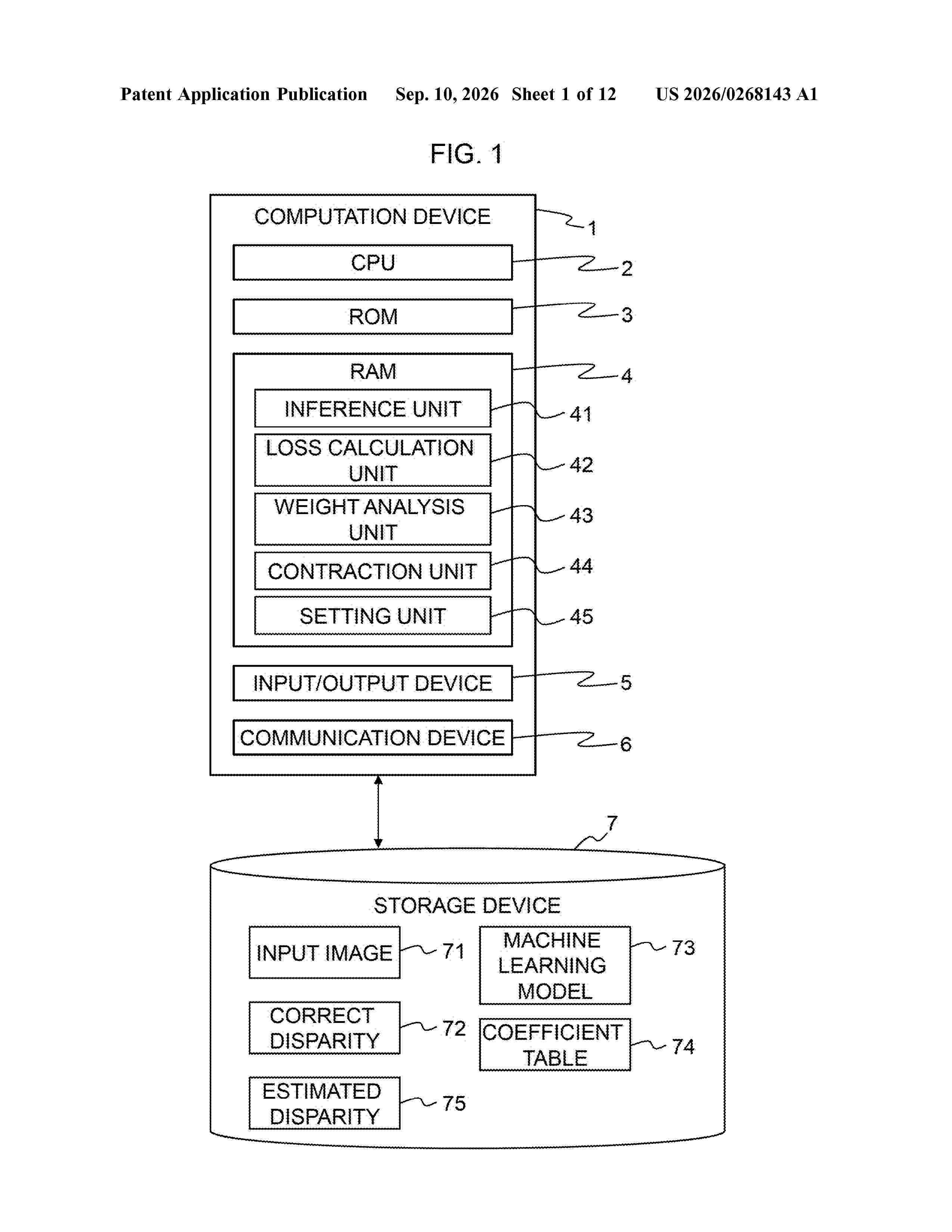
Resumen de: US20260268143A1
A computation device comprising an inference unit that uses an inference model, which is a neural network model, and outputs an inference result corresponding to input data, and an updating unit that updates a weight of the inference model based on the inference result, and spatial information indicating at least a part of an area in the input data.
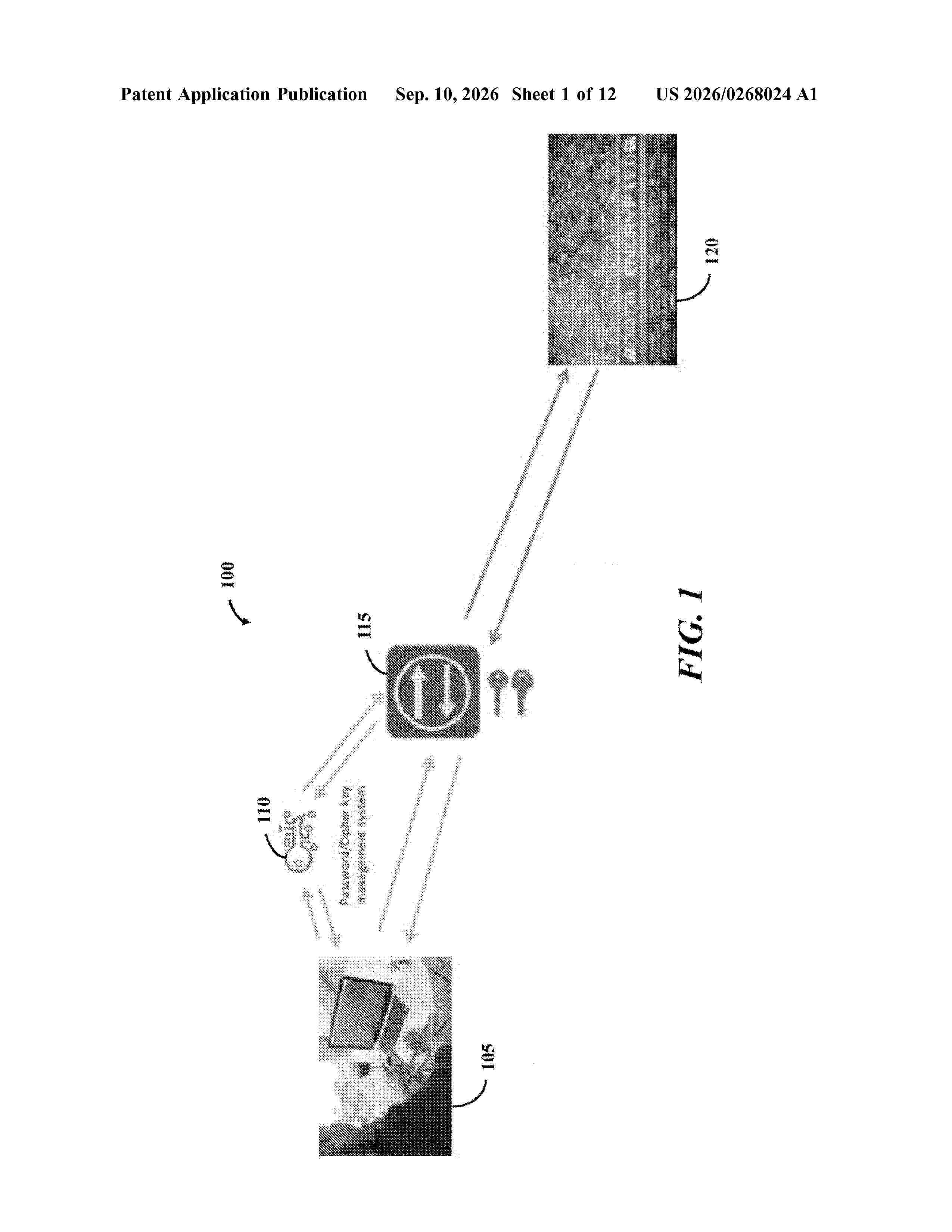
Resumen de: US20260268024A1
Provided herein are systems, methods, computer-readable media, and techniques for providing trusted artificial intelligence (AI) using Fully Homomorphic Encryption (FHE), comprising: (A) providing a deep neural network (DNN)-based model with modified architecture, wherein the modified architecture at least (i) uses a Gaussian function as an activation function and (ii) removes one or more pooling layers; (B) obtaining encrypted data, wherein the encrypted data are generated by applying the FHE to plaintext data; and (C) generating an inference with the DNN-based model based on the encrypted data. Further provided herein are systems, methods, computer-readable media, and techniques for providing trusted AI using stochastic computing, using noise based computing, using an artificial immune system, and with secure multi-party computation (SMPC) based at least in part on watermarking.
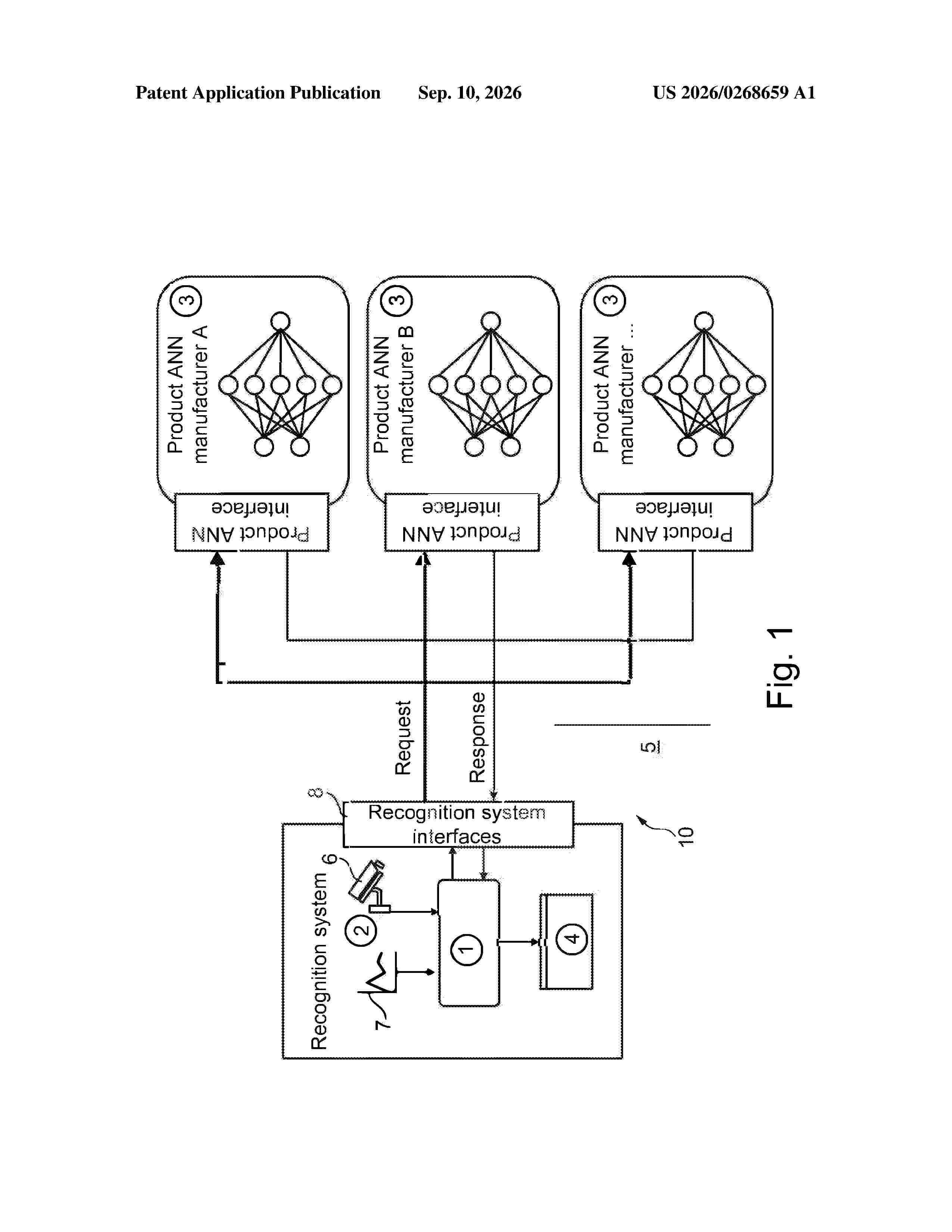
Resumen de: US20260268659A1
The present invention relates to a method and an apparatus for recognizing construction products and/or construction processes at a construction site, wherein, by means of a sensor system, a construction product and/or process at the construction site is detected and a product- and/or process-specific sensor data record is provided which is evaluated by means of an artificial neural network to identify and/or characterize the construction product and/or process. It is proposed that the recognition of the construction products and/or processes is no longer carried out by a central artificial neural network and instead, for this, a plurality of separate artificial neural networks are used which have been trained differently from one another and only for different subsets of the construction products and/or construction processes provided at the construction site.
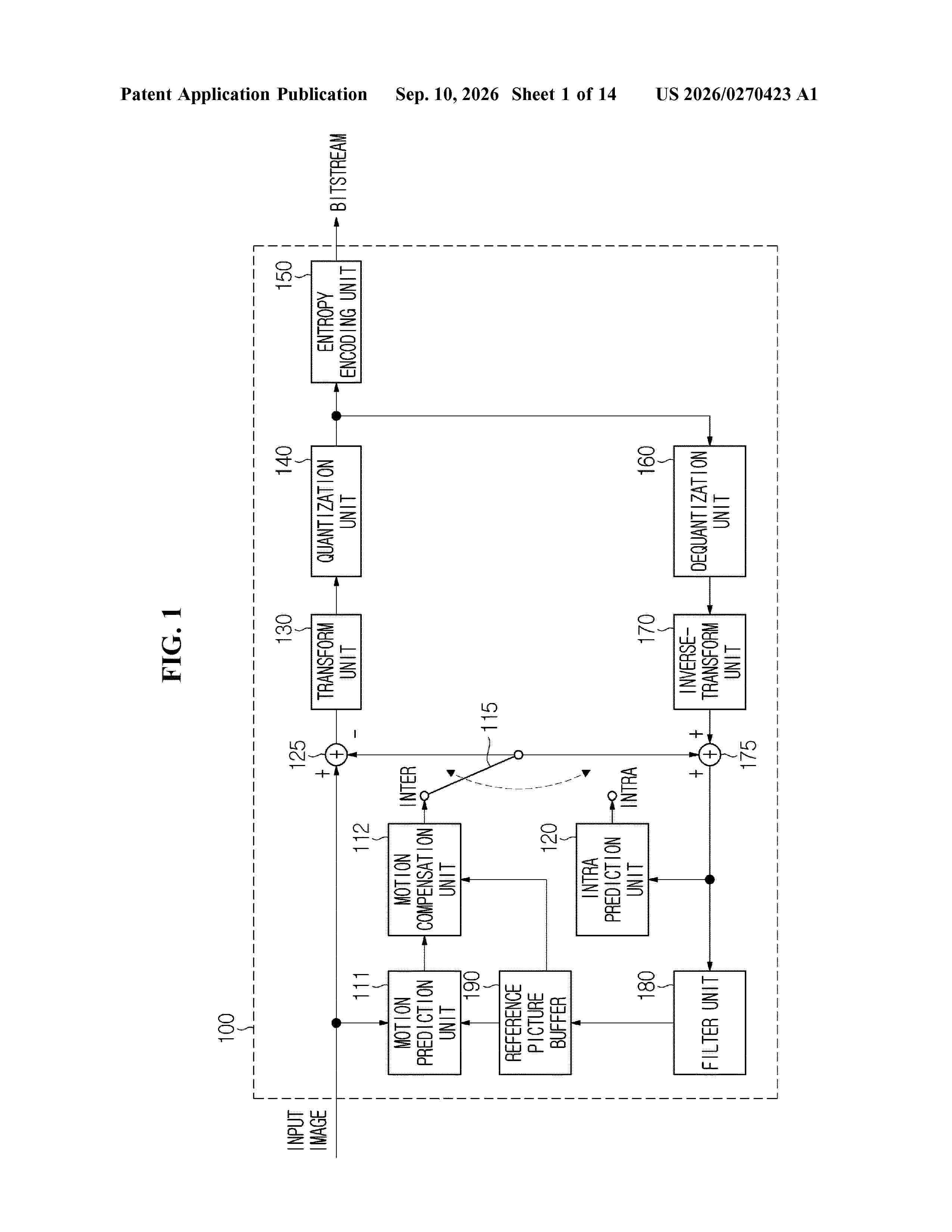
Resumen de: US20260270423A1
An image decoding method using a neural network-based in-loop filter may comprise obtaining a first image feature from an input image, obtaining a block information feature of the input image from block information of the input image, obtaining a second image feature by removing noise and distortion of the first image feature based on the block information feature, and reconstructing the input image based on the second image feature. The block information may comprise at least one of a block boundary map indicating a block partition structure of the input image or a block distribution map indicating encoding information of the input image.
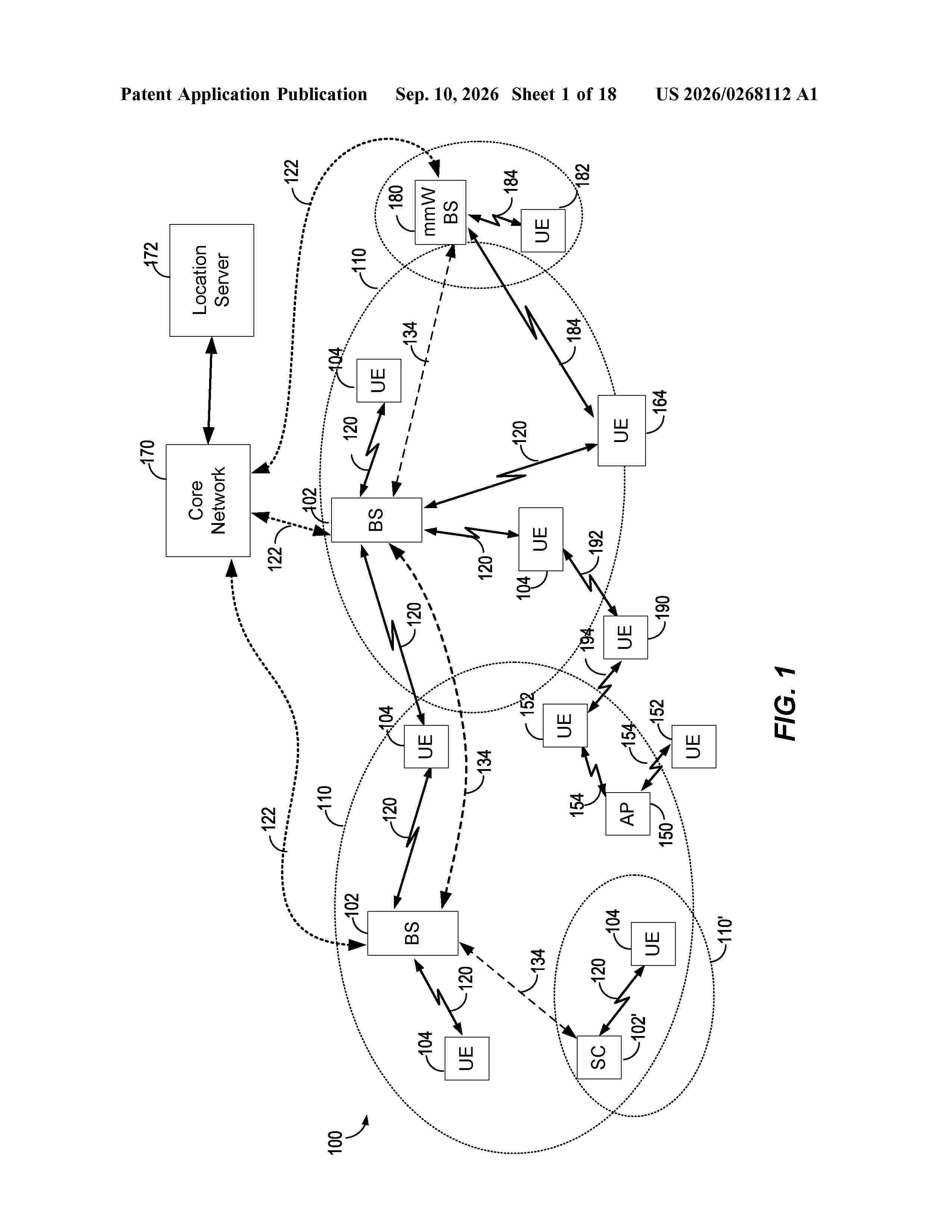
Resumen de: US20260268112A1
0000 In an aspect, a BS obtains at least one neural network function configured to facilitate a UE to derive a likelihood of at least one set of positioning measurement features being present at a candidate set of positioning estimates for the UE, the at least one neural network function being generated dynamically based on machine-learning associated with one or more historical measurement procedures. The BS transmits the at least one neural network function to the UE. In another aspect, the UE obtains positioning measurement data associated with a location of the UE (e.g., locally the UE, or remotely from the BS). The UE determines a positioning estimate for the UE based at least in part upon the positioning measurement data and the at least one neural network function.
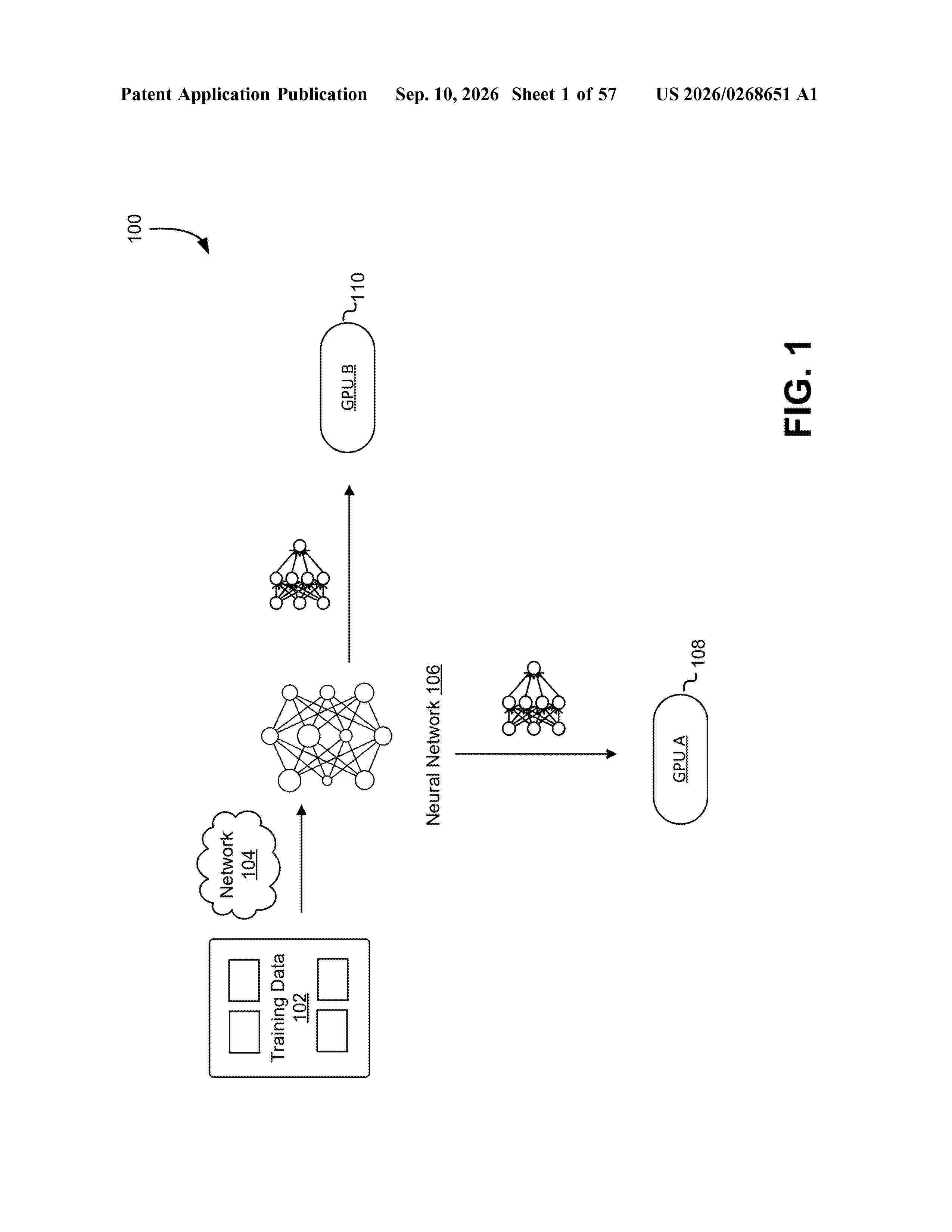
Resumen de: US20260268651A1
Apparatuses, systems, and techniques are described herein to speed up inferencing in a neural network by copying output from one layer of the neural network to another computing resource based on dependencies among layers in the network. In at least one embodiment, a processor comprising one or more circuits causes two or more subsequent layers of one or more neural networks to be performed on separate computing resources from a previous layer of the one or more neural networks.
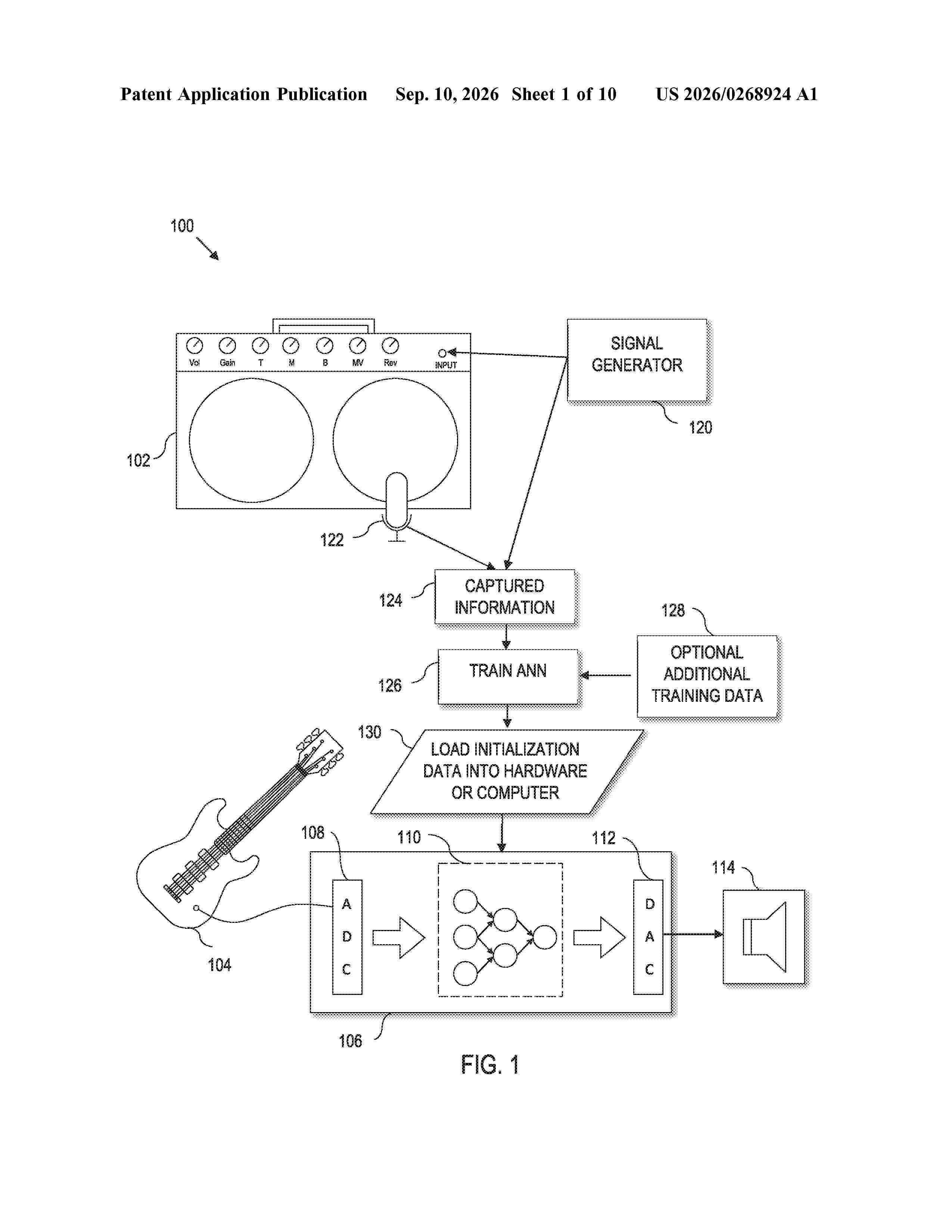
Resumen de: US20260268924A1
0000 A process trains a neural network that digitally models an audio system. The process couples a test signal into an input of a reference audio system. The process further electronically collects an output of the reference audio system responsive to the test signal as captured information. Moreover, the process trains a neural network using at least some of the captured information such that the overall output of the neural network converges towards an output representative of the reference audio system. The process also outputs to a graphical user interface, a graphical representation associated with the trained neural network, the graphical representation visually displaying at least one virtual control. Here, upon coupling a musical instrument to the trained neural network, a digital signal representing a musical instrument signal from the musical instrument is processed through the trained neural network in the time domain with an algorithmic latency under 20 milliseconds.
Resumen de: AU2026220313A1
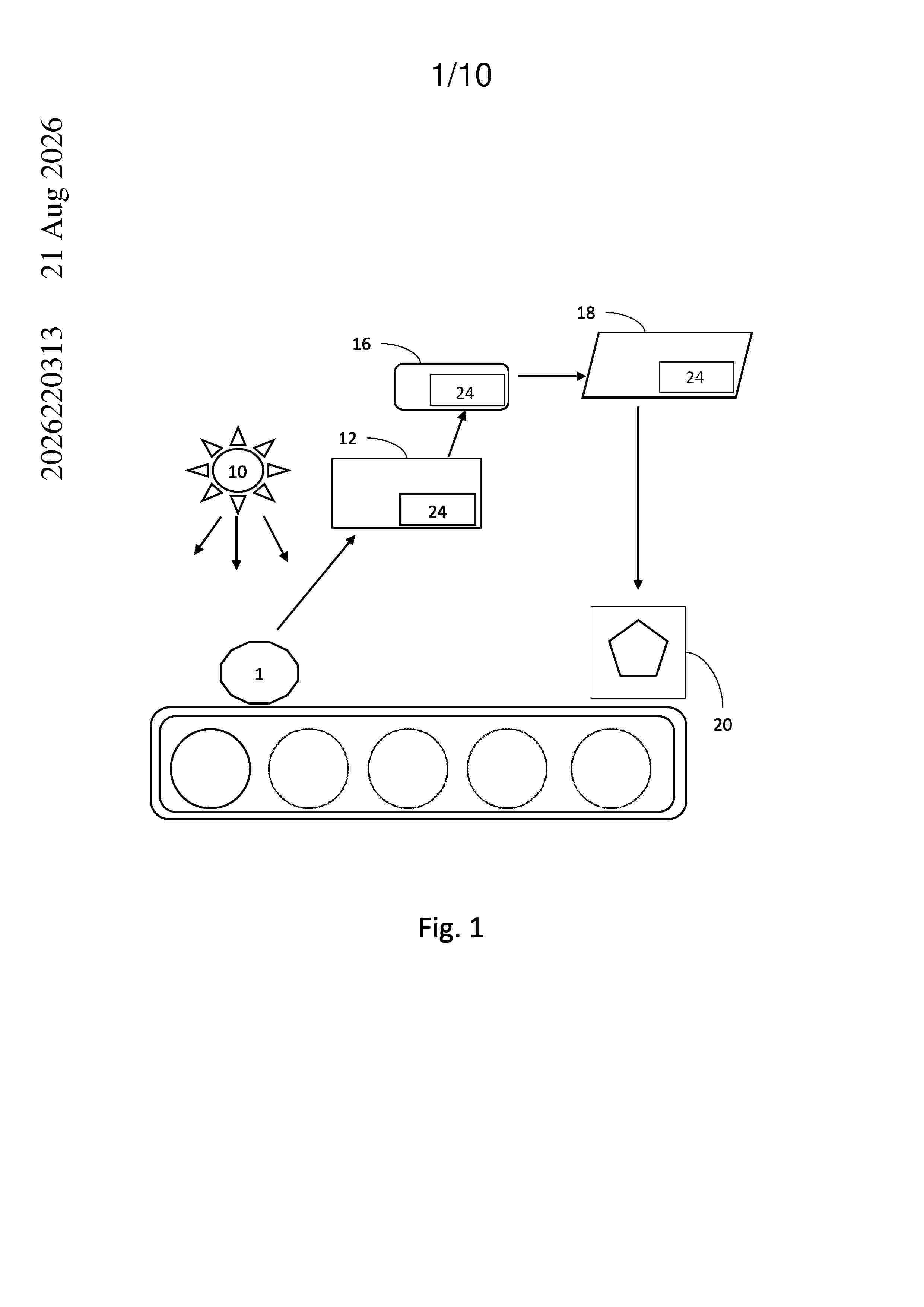
A bulk sorting system for sorting objects (1) in bulk is provided. The bulk sorting system comprises: at least one radiation source (10) arranged to radiate the objects, at least one optical sensor (12) arranged to capture reflected radiation (22) of 5 the objects and acquire the reflected radiation as multi- or hyperspectral data (24); a processing circuit (16) configured to analyze the reflected radiation of the objects by inputting the multi- or hyperspectral data into a convolutional neural network (CNN) (18) with at least two convolutional layers in order to either detect and classify the objects in the multi- or hyperspectral data and/or semantically segment the multi- or 10 hyperspectral data; and a mechanical sorter (20) configured to sort the objects according to their classification and/or segmentation using the analysis of the processing circuit such that different overlapping and/or stacked objects are separated or treated as a single group of objects. To be published with Fig. 1. ug u g Fig. 1 ug u g
Resumen de: US20260268648A1
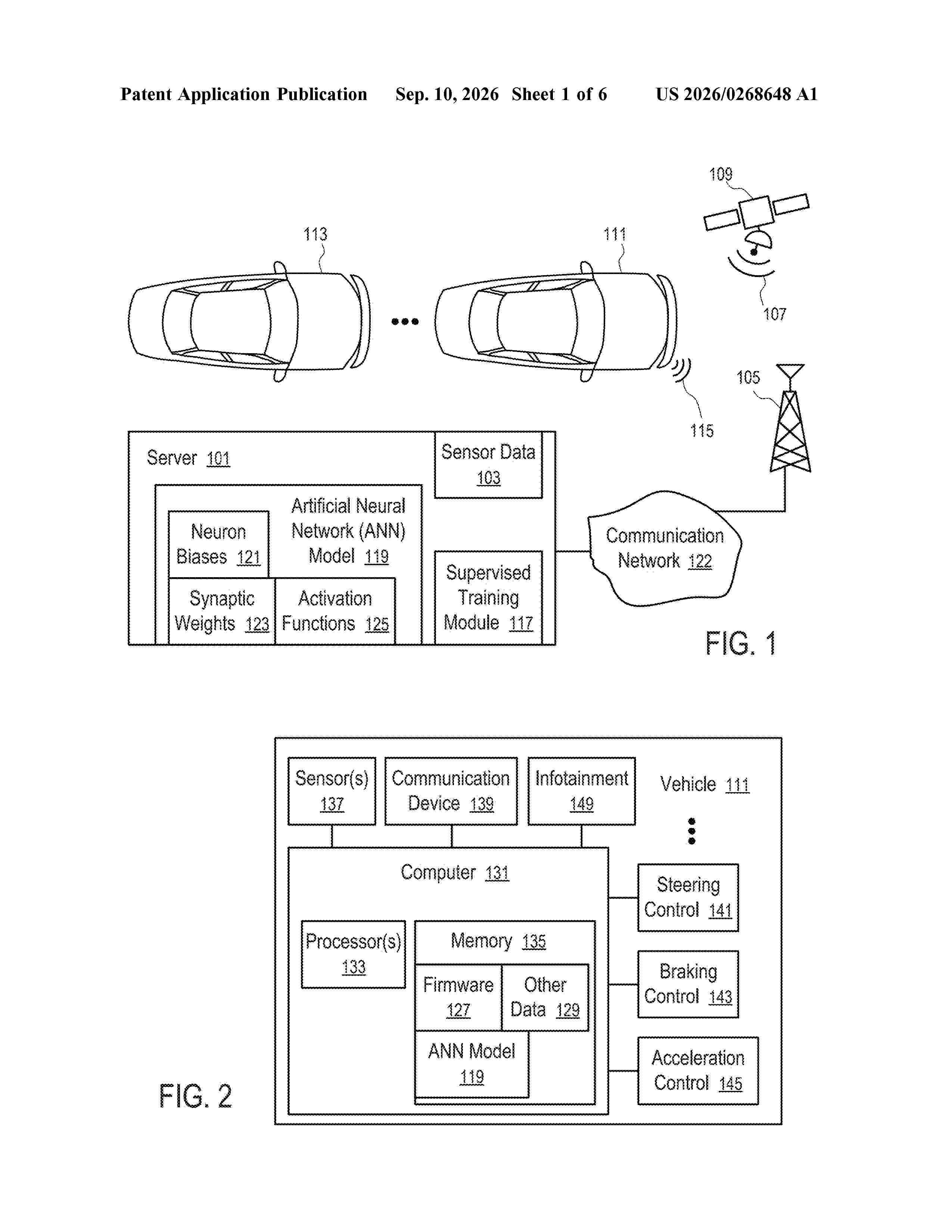
A vehicle having the first ANN model initially installed therein to generate outputs from inputs generated by one or more sensors of the vehicle. The vehicle selects an input based on an output generated from the input using the first ANN model. The vehicle has a module to incrementally train the first ANN model through unsupervised machine learning from sensor data that includes the input selected by the vehicle. Optionally, the sensor data used for the unsupervised learning may further include inputs selected by other vehicles in a population. Sensor inputs selected by vehicles are transmitted to a centralized computer server, which trains the first ANN model through supervised machine learning from sensor received inputs from the vehicles in the population and generates a second ANN model as replacement of the first ANN model previously incrementally improved via unsupervised machine learning in the population.
Resumen de: US20260268137A1
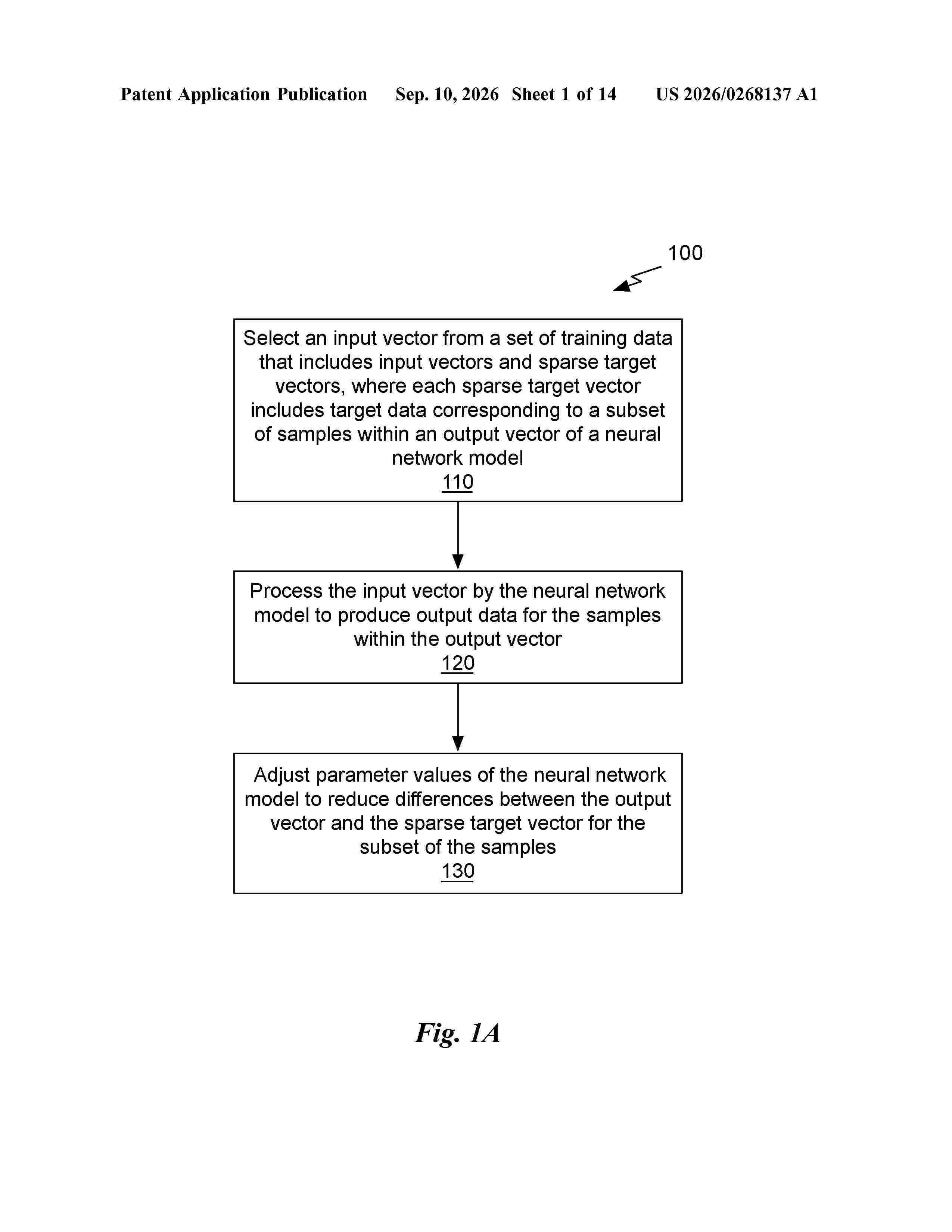
A method, computer readable medium, and system are disclosed for training a neural network model. The method includes the step of selecting an input vector from a set of training data that includes input vectors and sparse target vectors, where each sparse target vector includes target data corresponding to a subset of samples within an output vector of the neural network model. The method also includes the steps of processing the input vector by the neural network model to produce output data for the samples within the output vector and adjusting parameter values of the neural network model to reduce differences between the output vector and the sparse target vector for the subset of the samples.
Resumen de: US20260271132A1
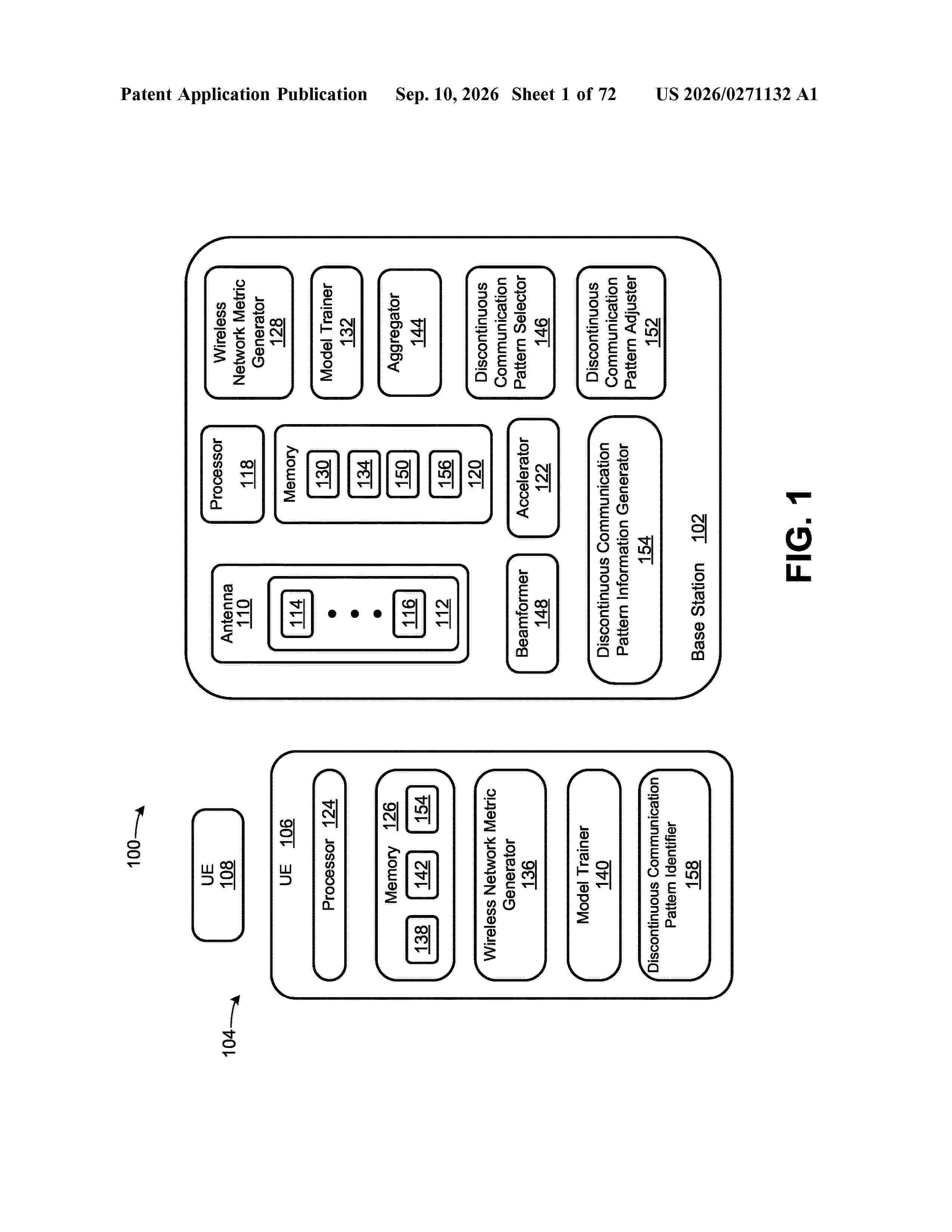
0000 Apparatuses, systems, and techniques to adjust one or more discontinuous wireless communication patterns. In at least one embodiment, a processor includes one or more circuits to use one or more neural networks to adjust one or more discontinuous wireless communication patterns.
Resumen de: AU2025228694A1
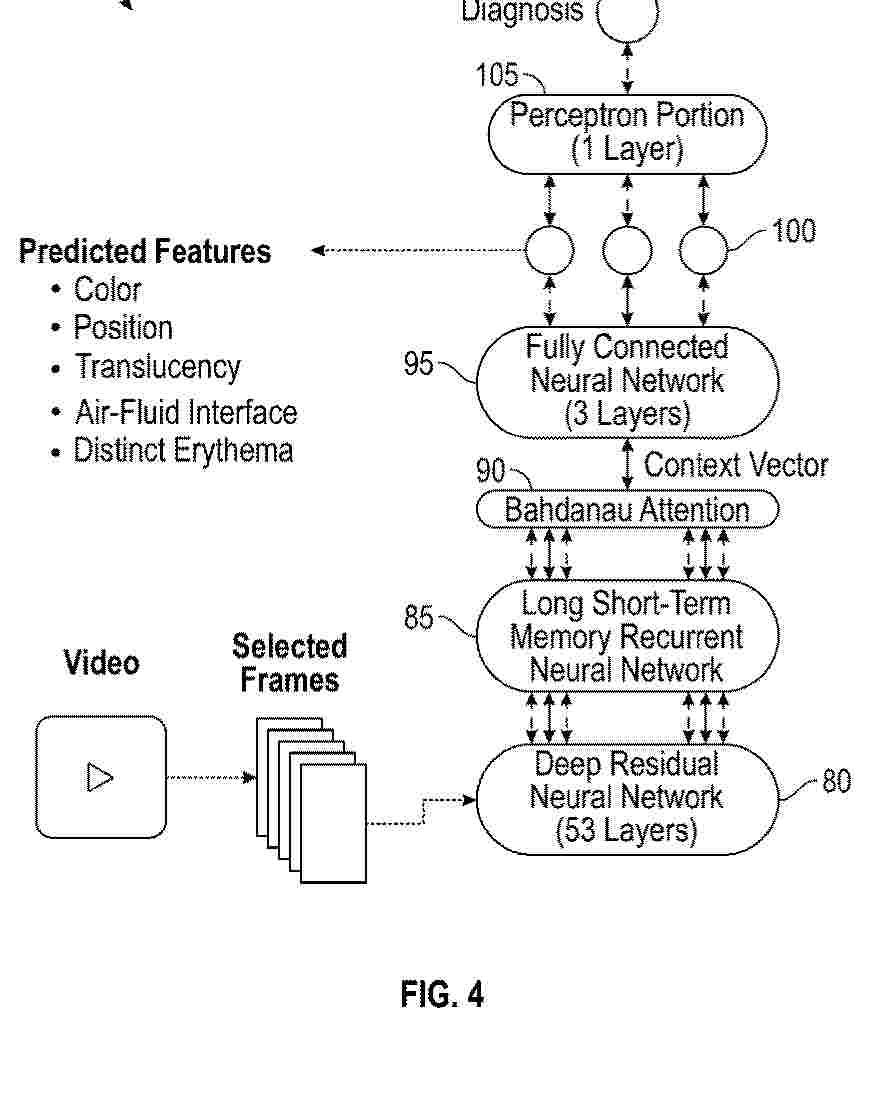
A system for assessing AOM includes a computing device having a processor apparatus, wherein the processor apparatus implements a diagnostic classifier component that comprises a. trained neural network, the processor apparatus being structured and configured to receive tympanic membrane image data representing one or more images of a tympanic membrane of the patient, provide the tympanic membrane image data to the diagnostic classifier component, and process the tympanic membrane image data in the diagnostic classifier component to determine: (i) a plurality of tympanic membrane features from the tympanic membrane image data, (ii) a diagnosis of whether the patient has AOM based on the plurality of tympanic membrane features, (iii) a. confidence in the diagnosis, and (iv) an identification one or more of the tympanic membrane features determined to be predominant contributing features that led to the diagnosis.
Resumen de: US20260267406A1
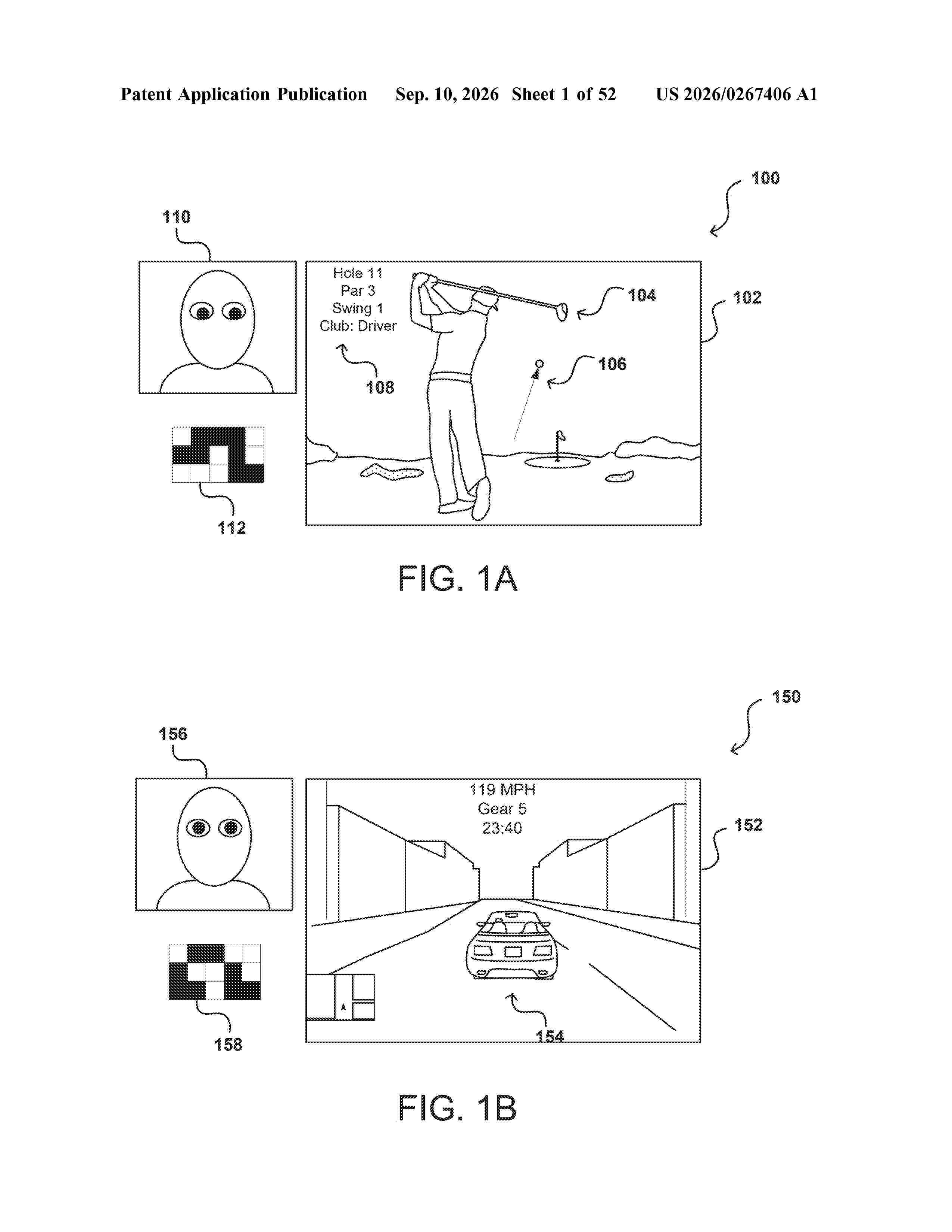
0000 Apparatuses, systems, and techniques are presented to predict gaze of an observer. In at least one embodiment, a network is trained to predict a gaze of one or more users based, at least in part, on one or more gazes corresponding to objects not always visible to the one or more users.
Resumen de: WO2026184676A1
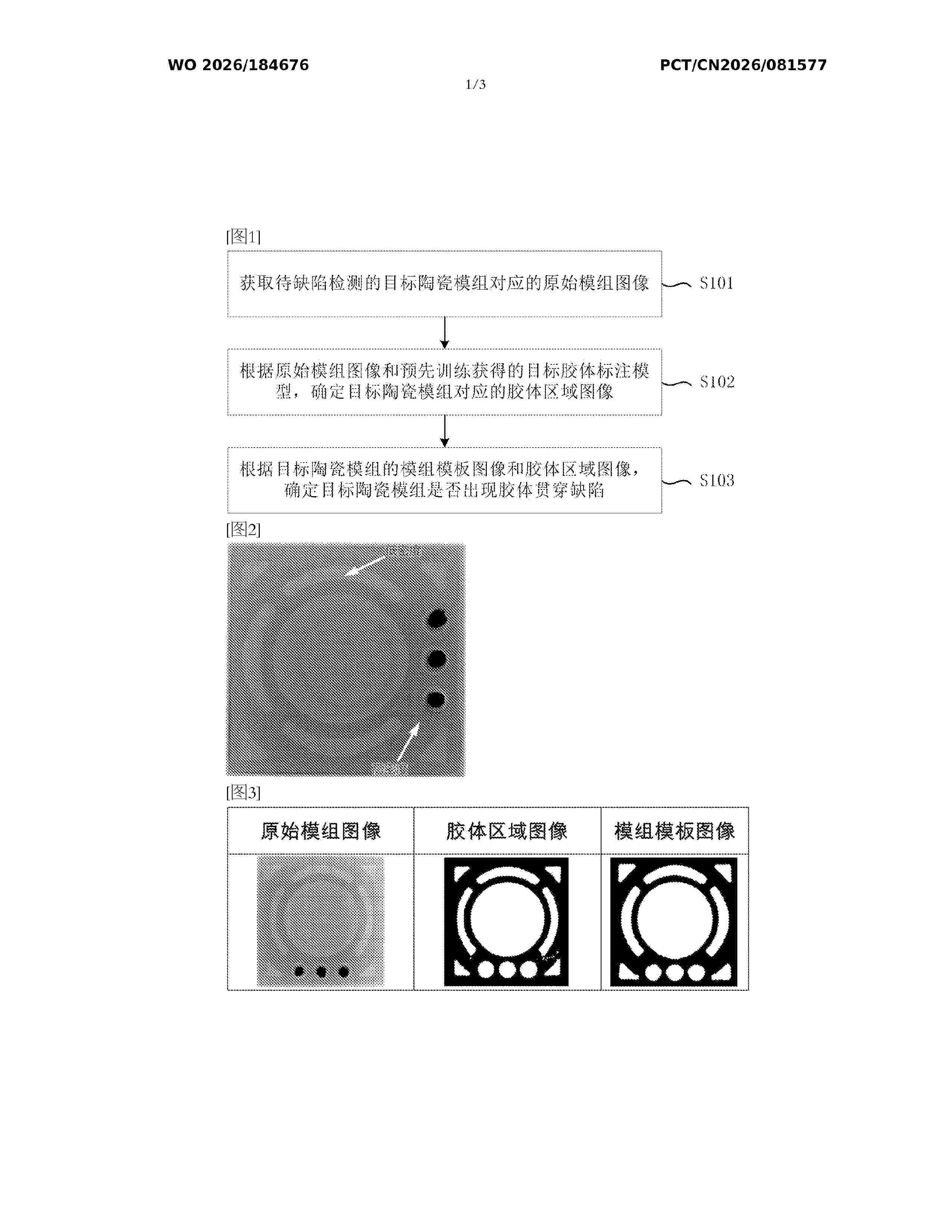
A defect detection method and apparatus for a ceramic module, and a device and a storage medium. The method comprises: acquiring an original module image corresponding to a target ceramic module to be subjected to defect detection (S101); on the basis of the original module image and a pre-trained target colloid annotation model, determining a colloid region image corresponding to the target ceramic module (S102), wherein the target colloid annotation model is obtained by means of training in advance on the basis of a U-shaped neural network model, and uses a convolutional block attention module; and on the basis of a module template image and the colloid region image of the target ceramic module, determining whether a colloid penetration defect occurs in the target ceramic module (S103).
Resumen de: WO2026184237A1
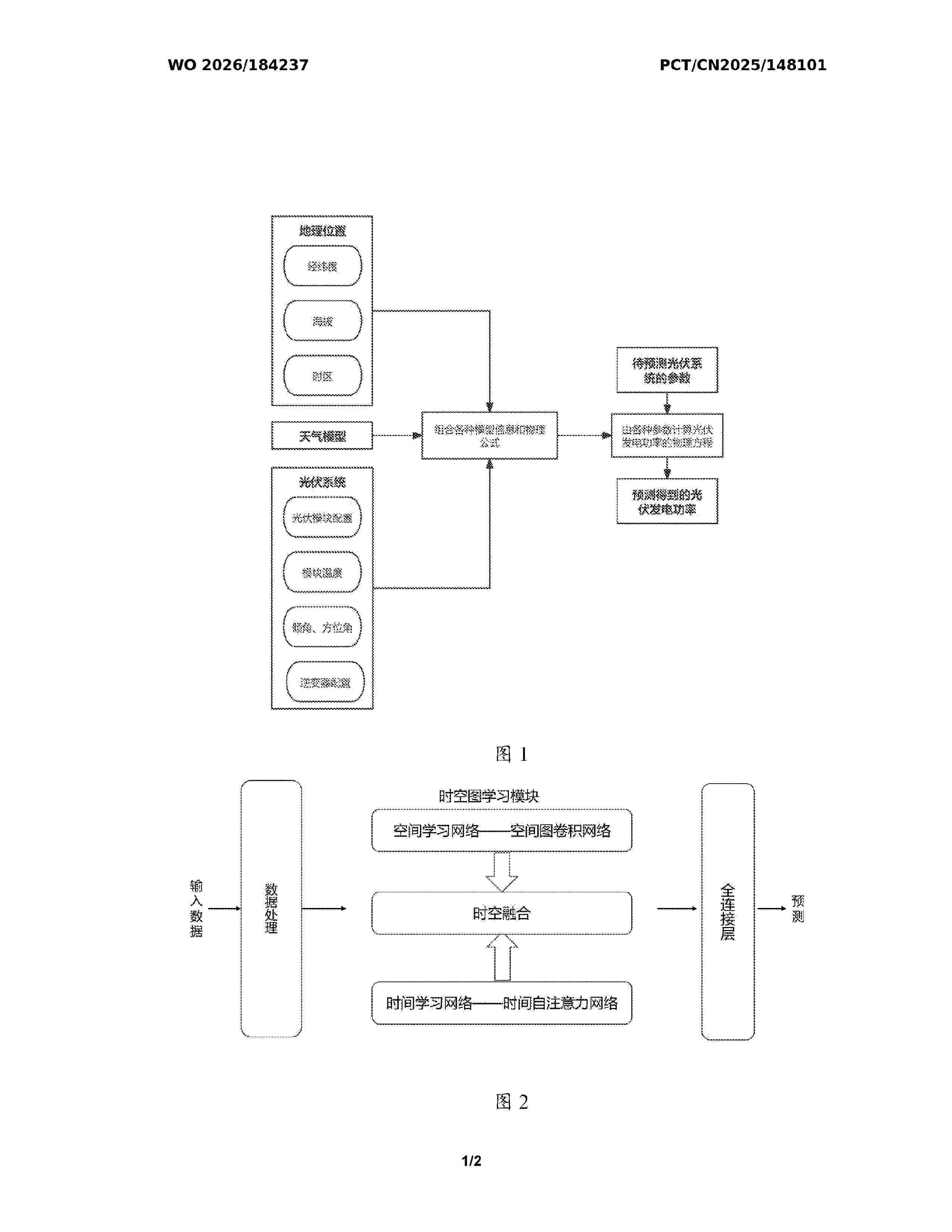
Disclosed are a spatio-temporal graph neural network-based photovoltaic power generation capability prediction method and system, and a medium. The method comprises: preprocessing historical data of a power system; dividing a plurality of power plants into a plurality of clusters, abstracting the power system into a topology graph, each cluster being regarded as a node of the topology graph; using a temporal self-attention network model to learn a temporal feature of the topological graph; using a spatial graph convolutional network model to learn a spatial feature of the topology graph; using a factorized structure to stack a temporal self-attention network and a spatial graph convolutional network; and using a fully connected layer to perform prediction. By modeling a photovoltaic power generation system as a graph model, the present invention can effectively capture spatial relationships and time dependencies between different power plants, thereby achieving more efficient data processing. This not only reduces redundant information, but also optimizes data flows, reducing storage resource requirements by reducing direct operations on raw data, and thereby improving hardware processing speeds.
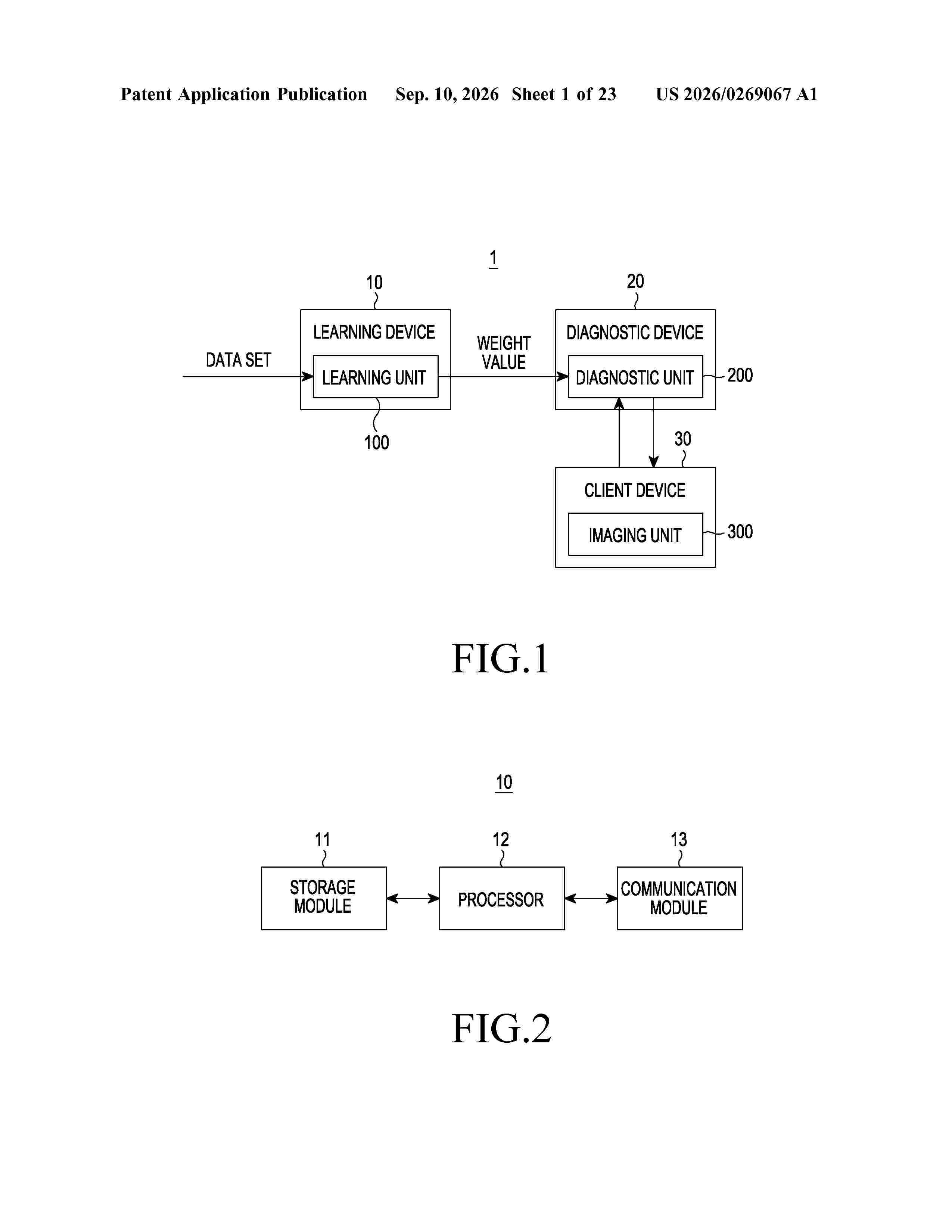
Resumen de: US20260269067A1
Disclosed are a method for diagnosing cardiovascular disease and a device using the same. A control method of a diagnostic device according to one embodiment may comprise: obtaining a retinal image of a subject; and obtaining cardiovascular disease diagnostic information about the subject by using a machine learning model based on the retinal image, wherein the machine learning model includes a first model and a second model, wherein the first model is a neural network model, and wherein the second model may be a regression-based machine learning model.
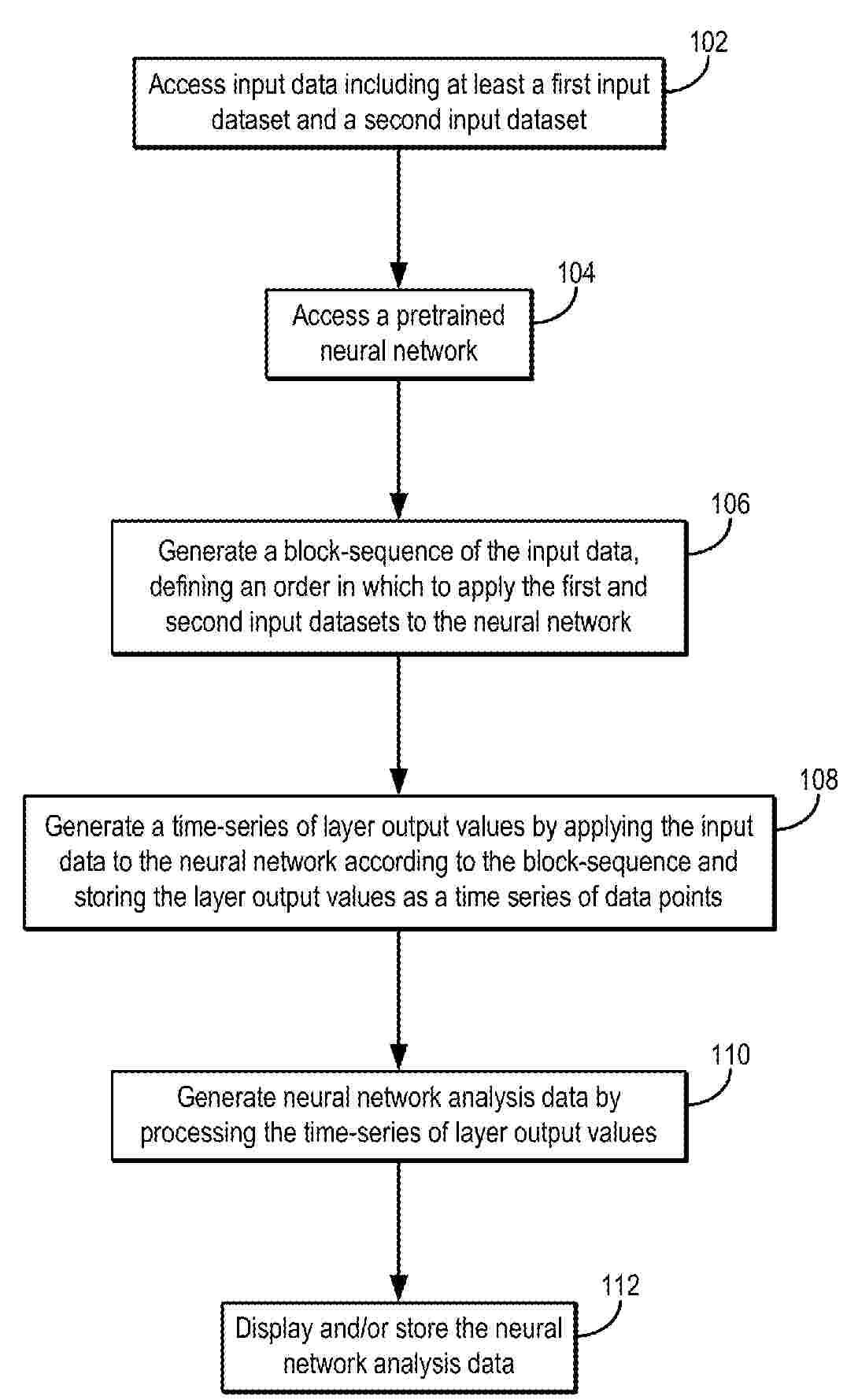
Resumen de: US20250148285A1
0000 Functional activation-based analysis of deep neural networks uses a structured set of inputs (e.g., input datasets corresponding to different knowledge or datatype domains) are sequentially provided to a pretrained neural network (e.g., according to a block-sequence). The output values for each node in the neural network are recorded and stored as a time-series of layer output values. A statistical analysis of the time-series of layer output values may be fit as a function of the structured set of inputs to generate neural network analysis data that indicate activations of layers within the neural network based on the inputs.
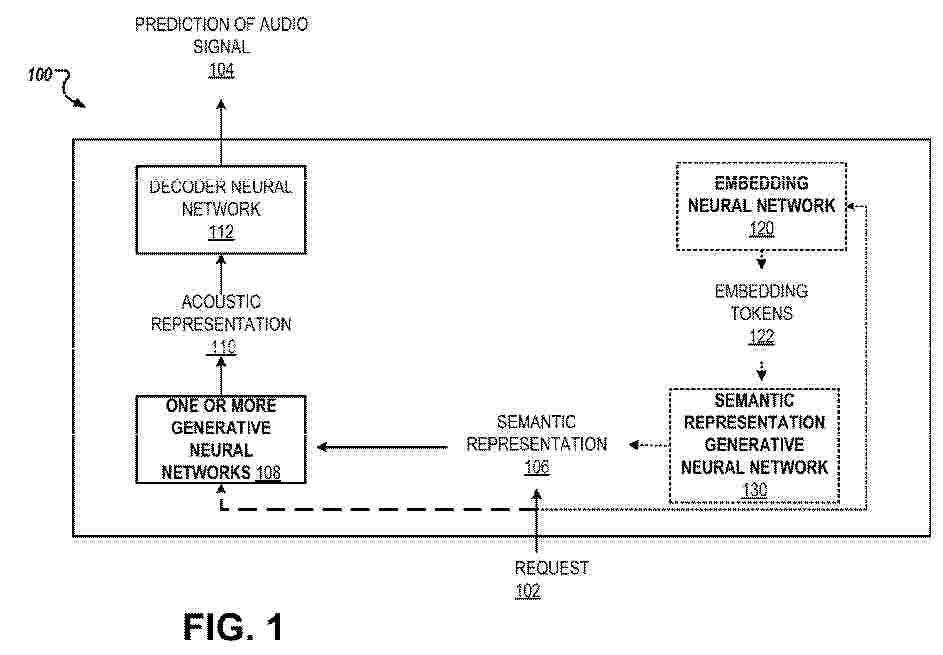
Resumen de: EP4804179A2
0001 Methods, systems, and apparatus, including computer programs encoded on computer storage media, for generating a prediction of an audio signal. One of the methods includes receiving a request to generate an audio signal; obtaining a semantic representation of the audio signal; generating, using one or more generative neural networks and conditioned on at least the semantic representation, an acoustic representation of the audio signal; and processing at least the acoustic representation using a decoder neural network to generate the prediction of the audio signal.
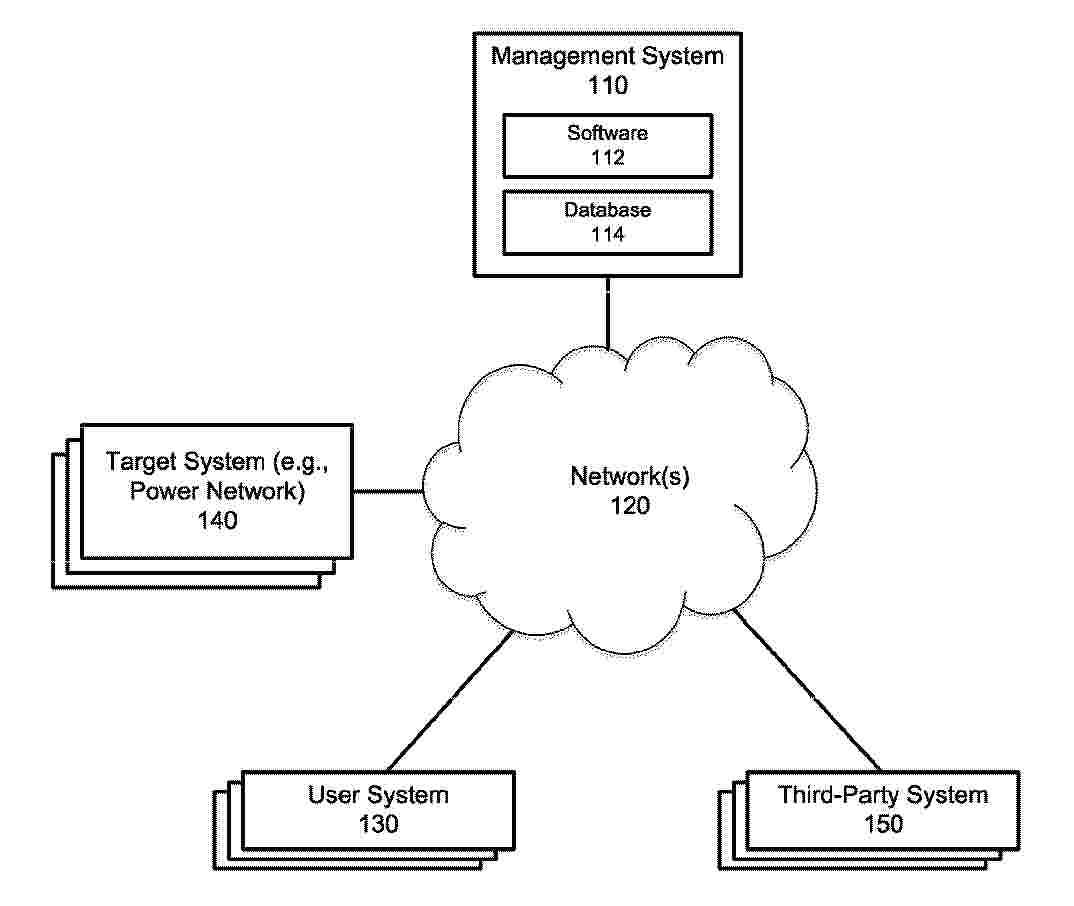
Resumen de: EP4804364A1
Rotor angle instability is a key criterion of dynamic stability in power networks. State-of-the-art machine-learning approaches are difficult to scale and have limited inputs with which to make predictions as to rotor angle instability. Accordingly, disclosed embodiments utilize a machine-learning model that is applied to bus voltage angles, which are local quantities available at every bus in the power network, to derive a prediction of the risk of rotor angle stability in the power network. These predictions may be biased in order to avoid false negatives. The machine-learning model may be a message-passing neural network. The resulting predictor is capable of quickly and reliably flagging potential rotor instability within a power network.
Nº publicación: US20260260498A1 03/09/2026
Solicitante:
NVIDIA CORP [US]
NVIDIA CORPORATION
Resumen de: US20260260498A1
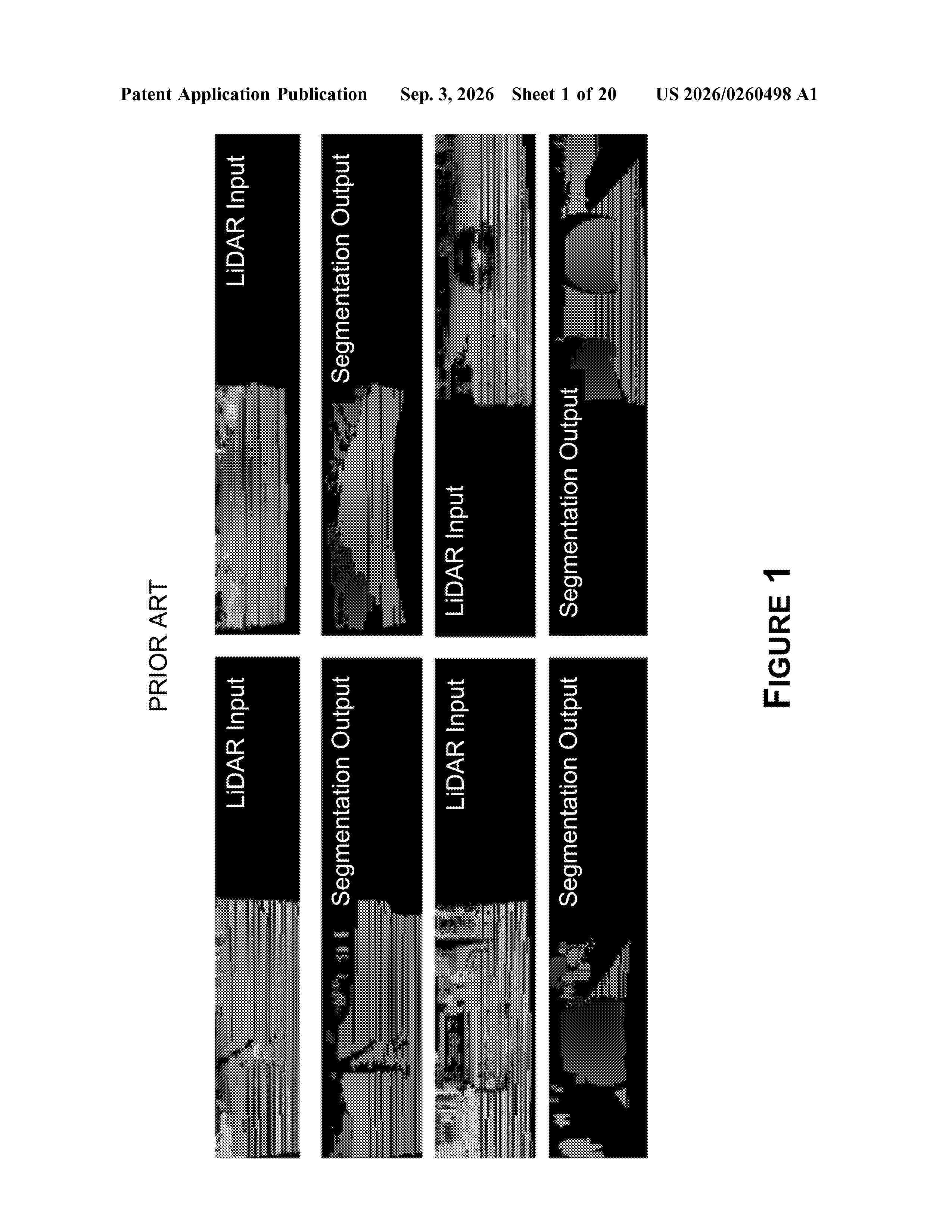
A deep neural network(s) (DNN) may be used to detect objects from sensor data of a three dimensional (3D) environment. For example, a multi-view perception DNN may include multiple constituent DNNs or stages chained together that sequentially process different views of the 3D environment. An example DNN may include a first stage that performs class segmentation in a first view (e.g., perspective view) and a second stage that performs class segmentation and/or regresses instance geometry in a second view (e.g., top-down). The DNN outputs may be processed to generate 2D and/or 3D bounding boxes and class labels for detected objects in the 3D environment. As such, the techniques described herein may be used to detect and classify animate objects and/or parts of an environment, and these detections and classifications may be provided to an autonomous vehicle drive stack to enable safe planning and control of the autonomous vehicle.
 BOPI
BOPI
 Sede Electrónica