Si deseas distinguir tus productos, servicios o ambos de los de otra empresa, es posible que necesites una marca o nombre comercial. Descubre qué son, en qué consiste su procedimiento de registro y qué implica.

Información sobre los plazos de presentación de solicitudes de transformación de marcas de la Unión Europea en marca nacional española. Más información


Si tienes un nuevo dispositivo, producto o procedimiento que resuelva un problema técnico o tenga una ventaja práctica, existen distintas formas de protegerlo en España y en otros países. Descubre cómo hacerlo.

¿Tu innovación reside en la estética, la ornamentación o la apariencia de tu producto? Protégela mediante un diseño industrial. Descubre qué derechos confiere el registro y cómo realizar la tramitación.

Las indicaciones geográficas protegen el nombre de un producto originario de una zona geográfica, a la cual le debe una determinada calidad, reputación u otra característica. Descubre qué son, en qué consiste su procedimiento de registro y qué beneficios conceden.

Las patentes publicadas en todo el mundo son una valiosa fuente de información científica, técnica y comercial.

Si eres emprendedor/a o una empresa y quieres potenciar y mejorar la rentabilidad de tu negocio protegiendo de forma adecuada los activos intangibles de tu organización, en este espacio encontrarás lo necesario.


 143
resultados
143
resultados
 Última actualización
15/09/2026 [09:17:00]
Última actualización
15/09/2026 [09:17:00]


 Resultados 100 a 125 de 143

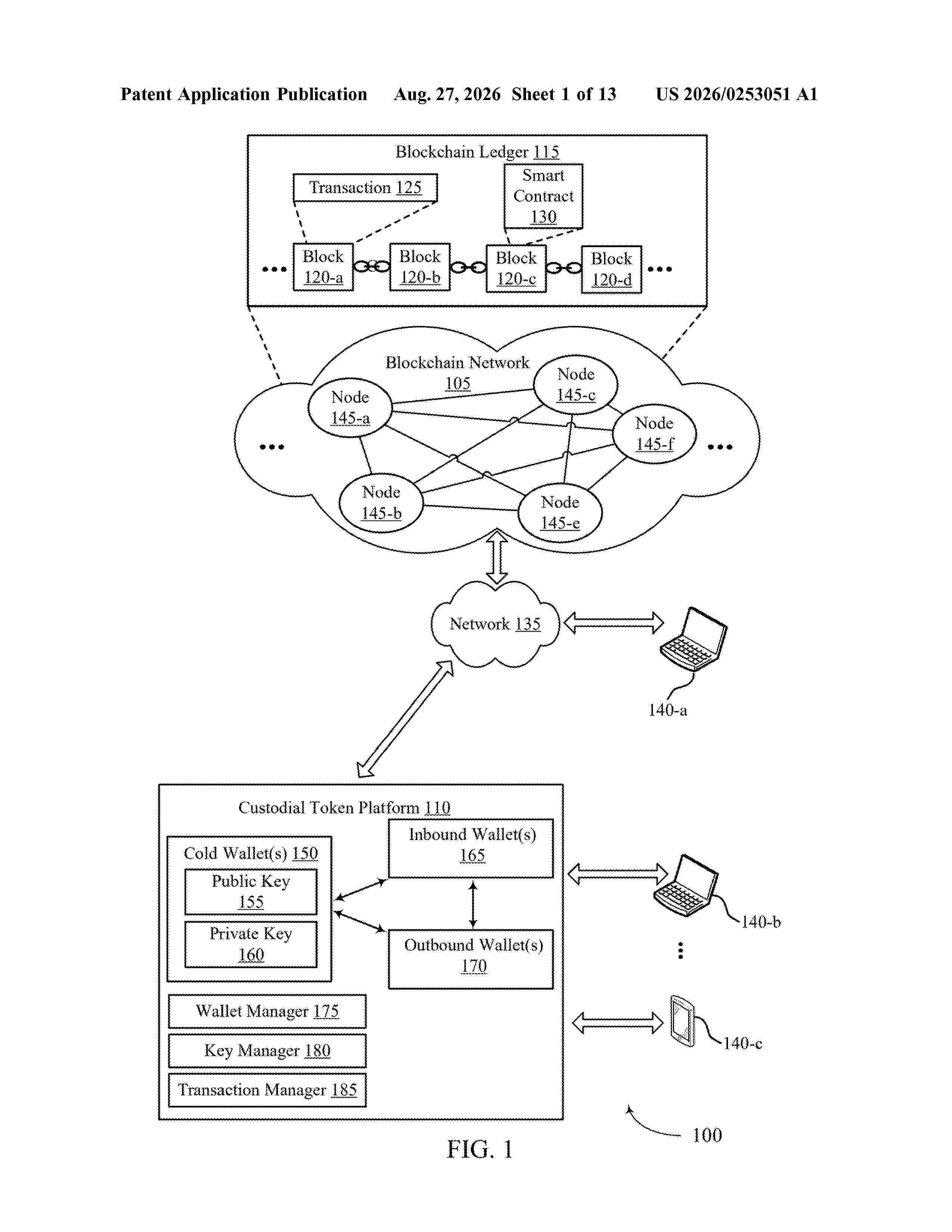
Resumen de: US20260253051A1
Methods, systems, and devices for data management are described. Techniques described herein may enable a user to link one or more blockchain wallet accounts such that a global wallet may be used to fund multiple application-specific smart accounts. For example, the user may create an application-specific smart account and may add the global smart wallet as an owner of the application-specific smart account. The user may accordingly transfer an amount of crypto to one or more destination addresses associated with the client applications by enabling the global smart account to transfer the amount of crypto token to the respective application-specific smart account. Additionally, a smart contract may be provided permissions to allow spends from the global smart account by third-party applications associated with the application-specific wallet.

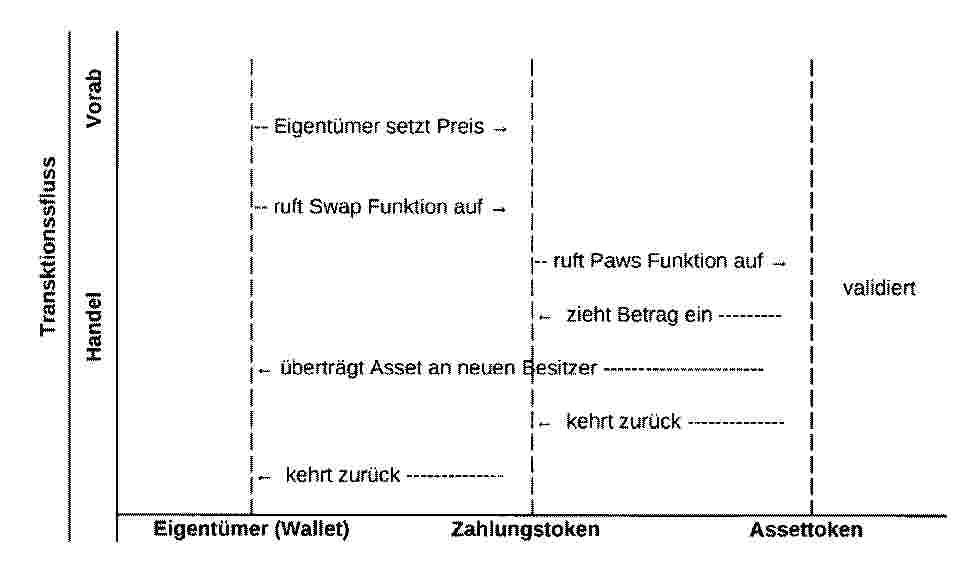
Resumen de: DE102025000685A1
Die Erfindung betrifft ein Peer-to-Peer Handelsprotokoll für den direkten Austausch von Vermögenswerten auf Blockchain-Netzwerken ohne Beteiligung Dritter.Das Protokoll umfasst eine Preisfestsetzungsmechanik, bei der Eigentümer einen Preis sowie akzeptierte Währungen direkt im intelligenten Vertrag des Vermögenswerts hinterlegen. Eine passive Swap-Funktion validiert eingehende Kaufanfragen hinsichtlich Preis, Verfügbarkeit und Währung, zieht die Zahlung ein und überträgt den Vermögenswert an den Käufer. Eine aktive Swap-Funktion ermöglicht es dem Käufer, Mittel vorab zuzuweisen, die passive Swap-Funktion des Zielvermögenswerts aufzurufen und die Zuweisung nach erfolgreichem Austausch wieder freizugeben.Die Sicherheit wird durch eindeutige Identifikation der aufrufenden Verträge sowie durch atomare Transaktionsausführung der Blockchain gewährleistet. Das Protokoll unterstützt sowohl fungible als auch nicht-fungible Vermögenswerte und ermöglicht Cross-Asset-Swaps.Die Erfindung eliminiert die Abhängigkeit von externen Marktplätzen, erhöht die Sicherheit durch Vermeidung von Drittpartei-Genehmigungen und gewährleistet volle Preiskontrolle für den Eigentümer.
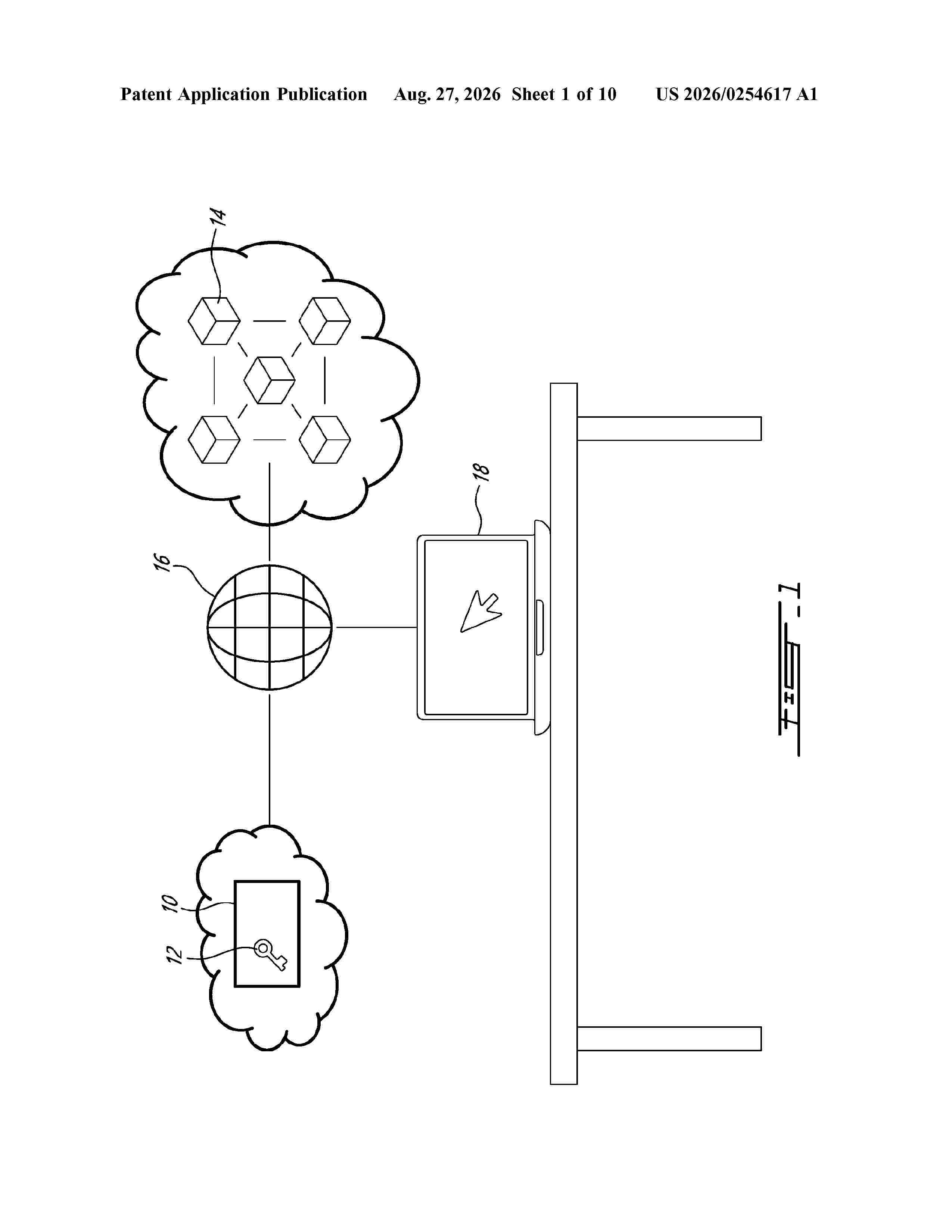
Resumen de: US20260254617A1
The method can include receiving a key generation request from a user; providing at least one value of a cost parameter associated to the user; calculating a cost value for a first key generation scheme using a cost function for the first key generation scheme and the at least one value of a cost parameter; calculating a cost value for a second key generation scheme using a cost function for the second key generation scheme and the at least one value of a cost parameter; comparing the cost value for the first key generation scheme to the cost value for the second key generation scheme; selecting one of the first key generation scheme and the second key generation scheme based on the results of the comparison; generating a blockchain key based on the selected key generation scheme; and storing the blockchain key in a non-transitory computer memory.
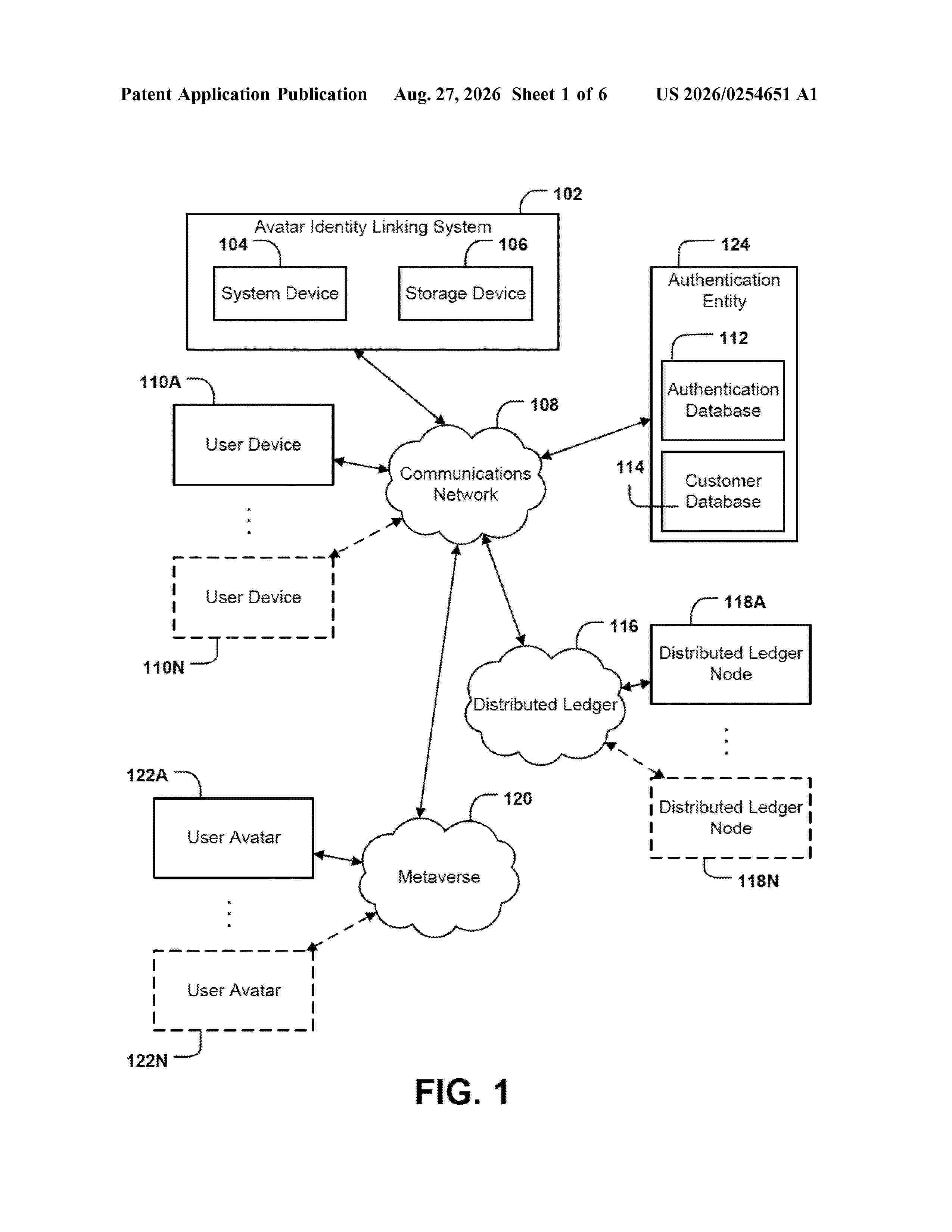
Resumen de: US20260254651A1
0000 Systems, apparatuses, methods, and computer program products are disclosed for linking a real-world identity and a metaverse identity. An example method includes receiving an indication of user input from a user avatar, the user input comprising a user identification and a set of input parameters, and verifying, by a distributed application engine, authenticity of the input parameters. The example method further includes generating, by cryptographic circuitry, an authentication hash of hash components, the hash components comprising the set of input parameters, and transmitting the authentication hash to an authentication entity. The example method further includes, in response to transmitting the authentication hash to the authentication entity, receiving customer verification data pertaining to a user associated with the user avatar, and generating, by blockchain circuitry and based on the customer verification data, a block on a distributed ledger, wherein the block comprises the set of input parameters.
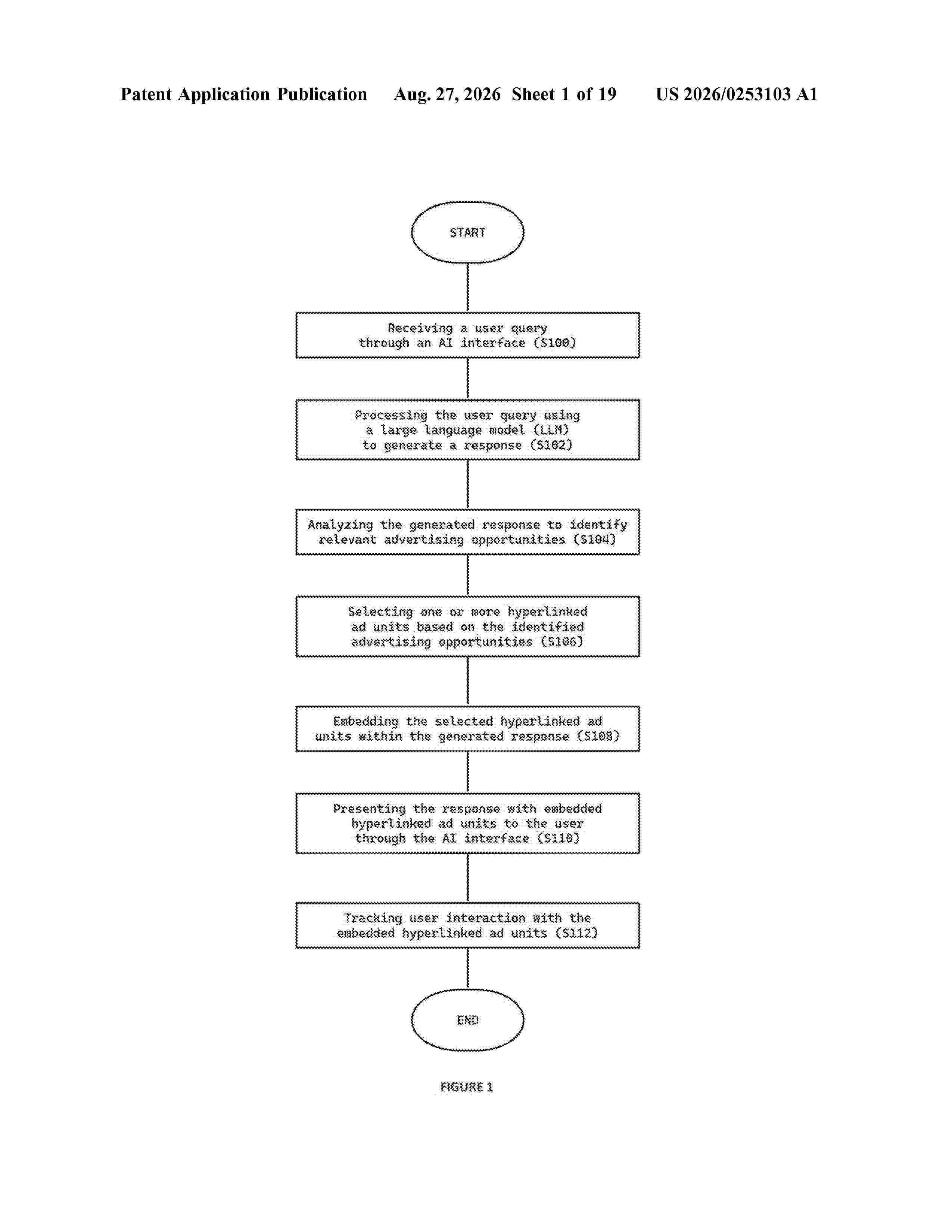
Resumen de: US20260253103A1
0000 Systems and methods are disclosed for integrating targeted, personalized advertising within AI-generated responses. A user query is received and processed by a large language model to produce a response, which is then analyzed to identify suitable advertising opportunities. Based on real-time contextual analysis, user profile data, and past interactions, one or more hyperlinked or text-based content units are selected and embedded at optimal positions determined by the semantic structure of the response. The final integrated response is presented to the user, with interactions such as click-through rates and time spent tracked to inform continuous machine learning optimization of content selection, placement, and personalization. Additional embodiments include features like privacy controls, blockchain-secured content transactions, augmented reality presentations, federated learning for data privacy, and dynamic pricing or bidding systems, enabling the framework to adapt to various input types and cultural contexts.
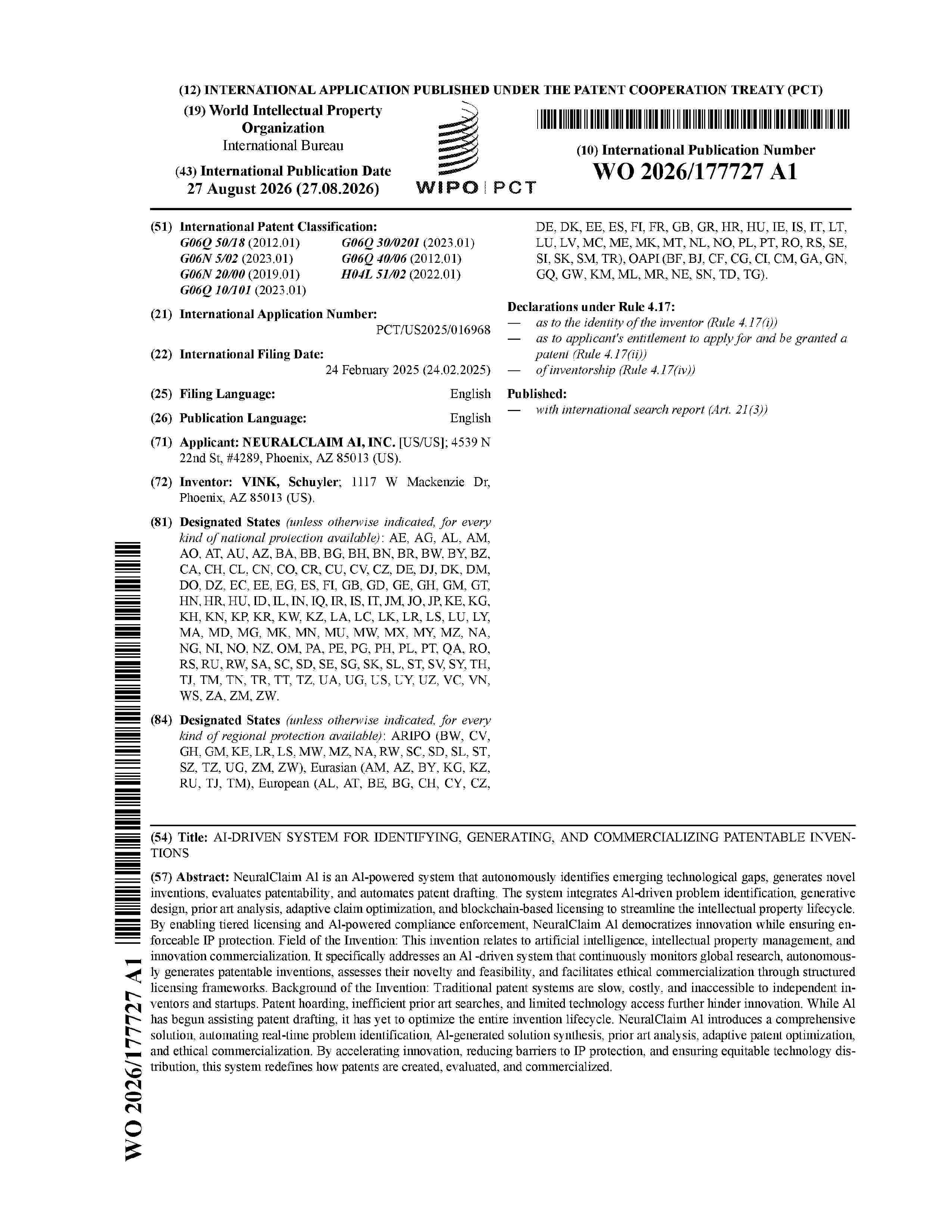
Resumen de: WO2026177727A1
NeuralClaim Al is an Al-powered system that autonomously identifies emerging technological gaps, generates novel inventions, evaluates patentability, and automates patent drafting. The system integrates Al-driven problem identification, generative design, prior art analysis, adaptive claim optimization, and blockchain-based licensing to streamline the intellectual property lifecycle. By enabling tiered licensing and Al-powered compliance enforcement, NeuralClaim Al democratizes innovation while ensuring enforceable IP protection. Field of the Invention: This invention relates to artificial intelligence, intellectual property management, and innovation commercialization. It specifically addresses an Al -driven system that continuously monitors global research, autonomously generates patentable inventions, assesses their novelty and feasibility, and facilitates ethical commercialization through structured licensing frameworks. Background of the Invention: Traditional patent systems are slow, costly, and inaccessible to independent inventors and startups. Patent hoarding, inefficient prior art searches, and limited technology access further hinder innovation. While Al has begun assisting patent drafting, it has yet to optimize the entire invention lifecycle. NeuralClaim Al introduces a comprehensive solution, automating real-time problem identification, Al-generated solution synthesis, prior art analysis, adaptive patent optimization, and ethical commercialization. By accelerati
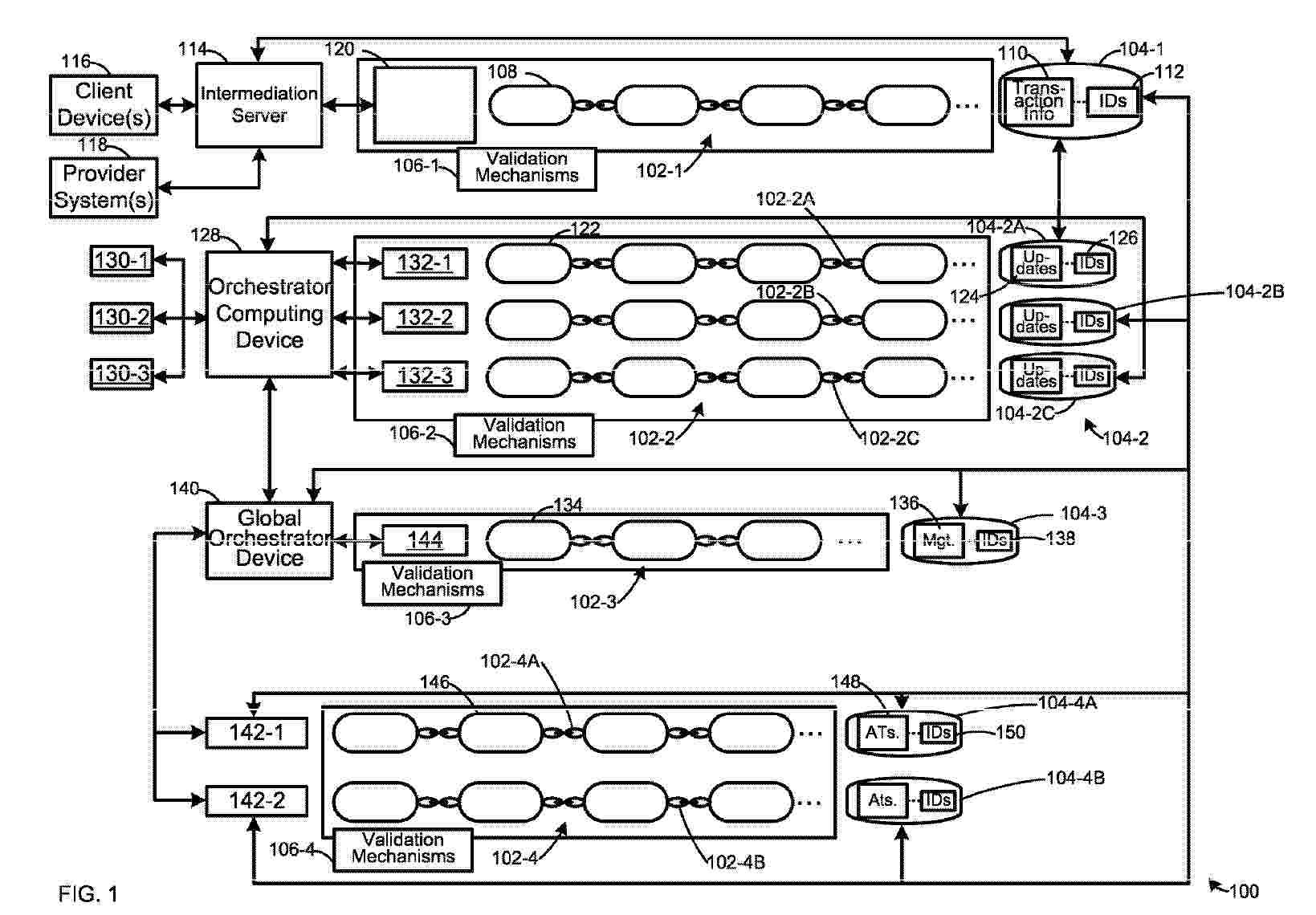
Resumen de: EP4797119A1
A hierarchical blockchain system is provided. The hierarchical blockchain system comprises: a plurality of blockchains and associated databases having a hierarchical relationship, wherein the plurality of blockchains, amongst hierarchical levels of the hierarchical relationship, are associated via one or more respective identifier types; and one or more computing devices configured to: populate the plurality of blockchains and the associated databases; and validate the plurality of blockchains. The plurality of blockchains are associated with different sets of validation mechanisms. Respective blockchains that are higher in the hierarchical relationship are associated with stricter validation mechanisms and further respective blockchains that are lower in the hierarchical relationship are associated with lighter validation mechanisms. The lighter validation mechanisms are more fault tolerant than the stricter validation mechanisms.
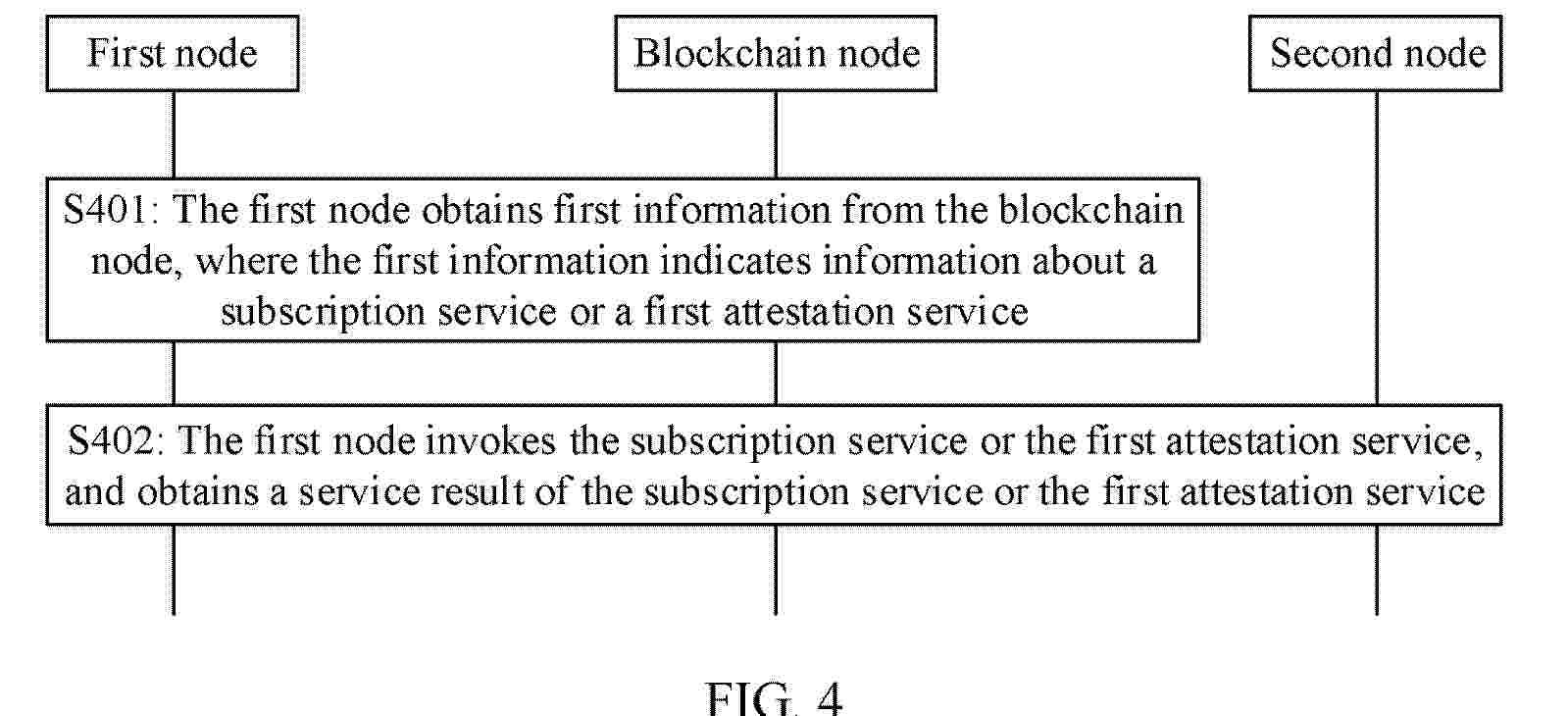
Resumen de: EP4797136A1
This application provides a communication method and a communication apparatus, allowing a user to obtain subscription or attestation services from a third party without direct contact with the third party. The communication method and the communication apparatus are applicable to communication systems. The communication method includes: obtaining, by a first node, first information from a blockchain node, where the first information indicates information about a subscription service or a first attestation service; and invoking, by the first node, the subscription service or the first attestation service and obtaining a corresponding service result.
Resumen de: KR20260128561A
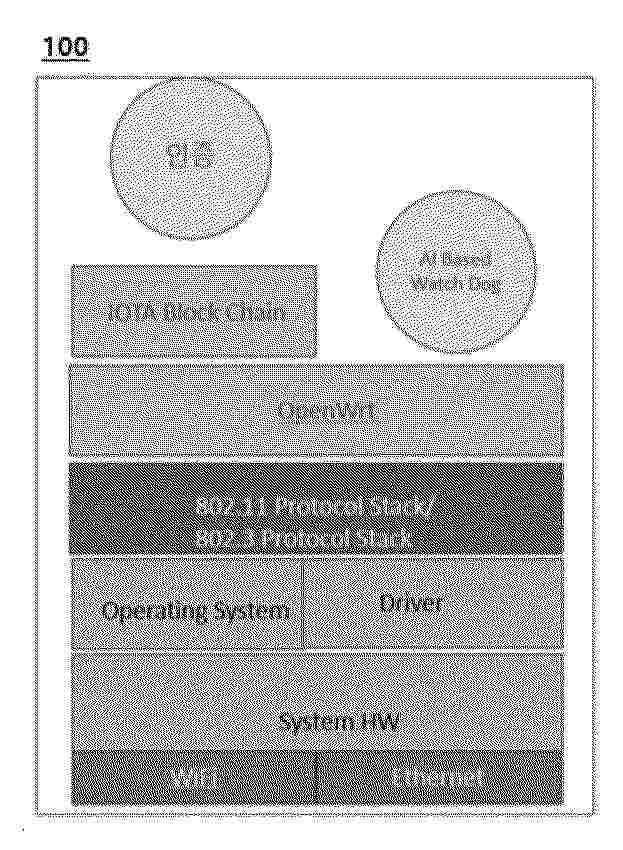
본 발명은 IOTA 블럭체인을 활용한 무선 네트워크 접속 제어 시스템에 관한 것으로, WiFi AP(Access Point)에서 IOTA 블럭체인(Block Chain)기반으로 사용자 인증을 실시하고 트래픽(Traffic)에 대한 감시를 인공지능을 활용하여 실시함으로써 데이터에 대한 무결성을 보장하고, 무선 WiFi를 사용하는 사용자의 데이터가 무단으로 유출되는 것을 방지할 수 있다.
Resumen de: KR20260127559A
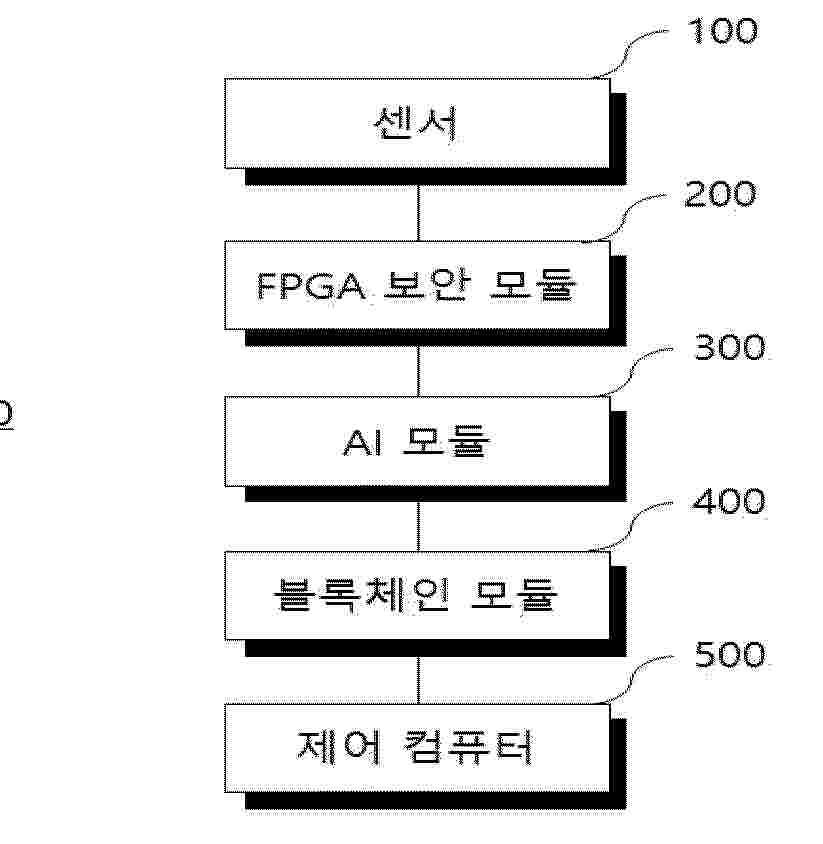
본 발명은 무인이동체의 센서 데이터 보호 및 신뢰성 향상을 위한 기술로, FPGA 기반 양자 내성 암호화(PQC), AI 기반 센서 데이터 보정, 블록체인을 이용한 데이터 무결성 보장 기술을 결합한 시스템 및 방법을 제공한다. FPGA 보안 모듈은 TRNG/QRNG를 활용해 난수를 생성하고, PQC 가속기를 통해 보안 키를 생성하여 센서 데이터를 양자 컴퓨터 기반 해킹으로부터 보호한다. AI 모듈은 센서 데이터의 실시간 오차 보정과 이상 감지를 수행하며, 블록체인 모듈은 데이터 위변조 방지 및 무결성 검증을 담당한다. 본 발명은 무인이동체뿐만 아니라 자율주행, 항공우주, 스마트 공장, 의료 데이터 보호 등 다양한 분야에 적용될 수 있다.
Resumen de: FR3172378A1
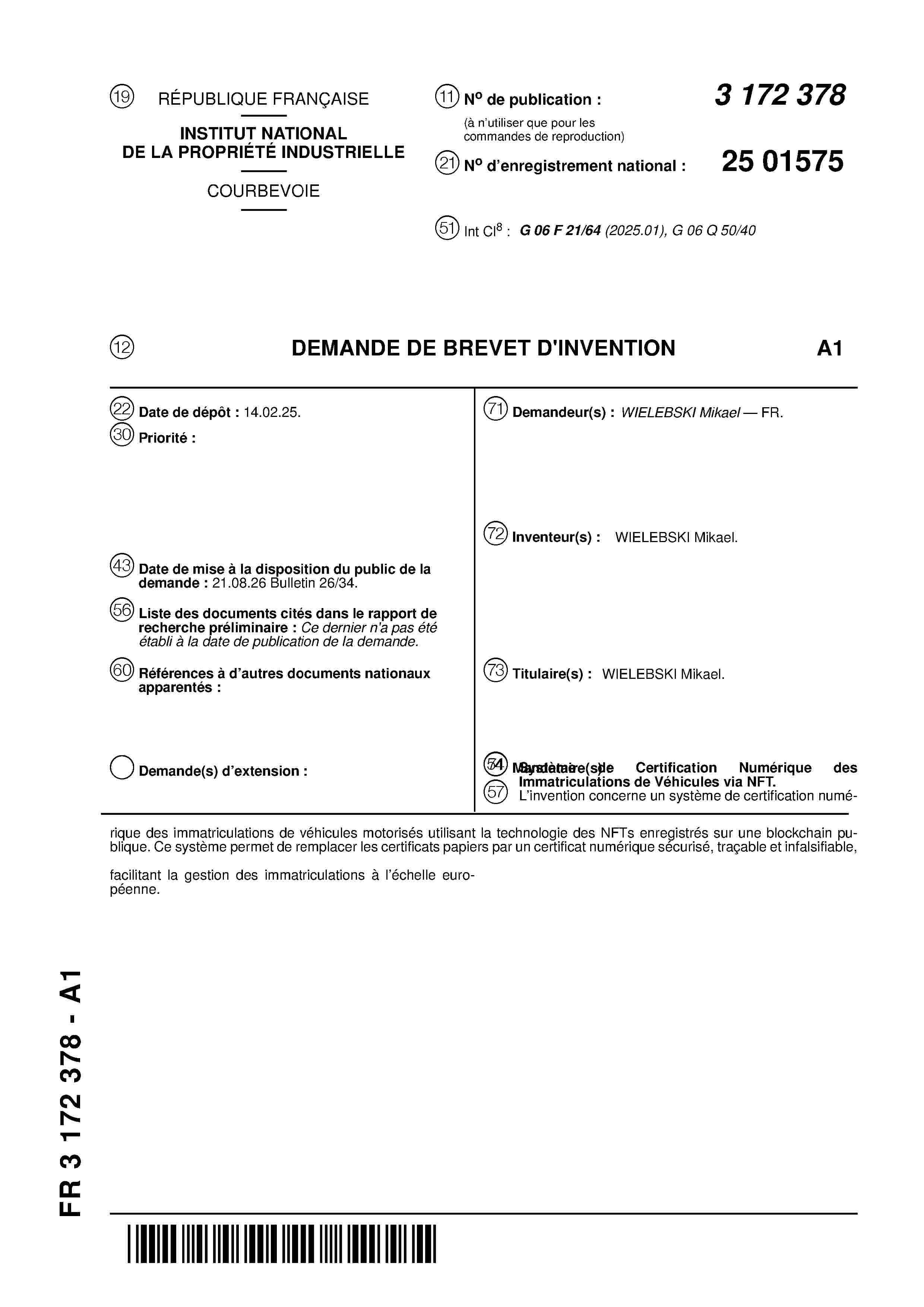
L’invention concerne un système de certification numérique des immatriculations de véhicules motorisés utilisant la technologie des NFTs enregistrés sur une blockchain publique. Ce système permet de remplacer les certificats papiers par un certificat numérique sécurisé, traçable et infalsifiable, facilitant la gestion des immatriculations à l’échelle européenne.
Resumen de: US20260246612A1
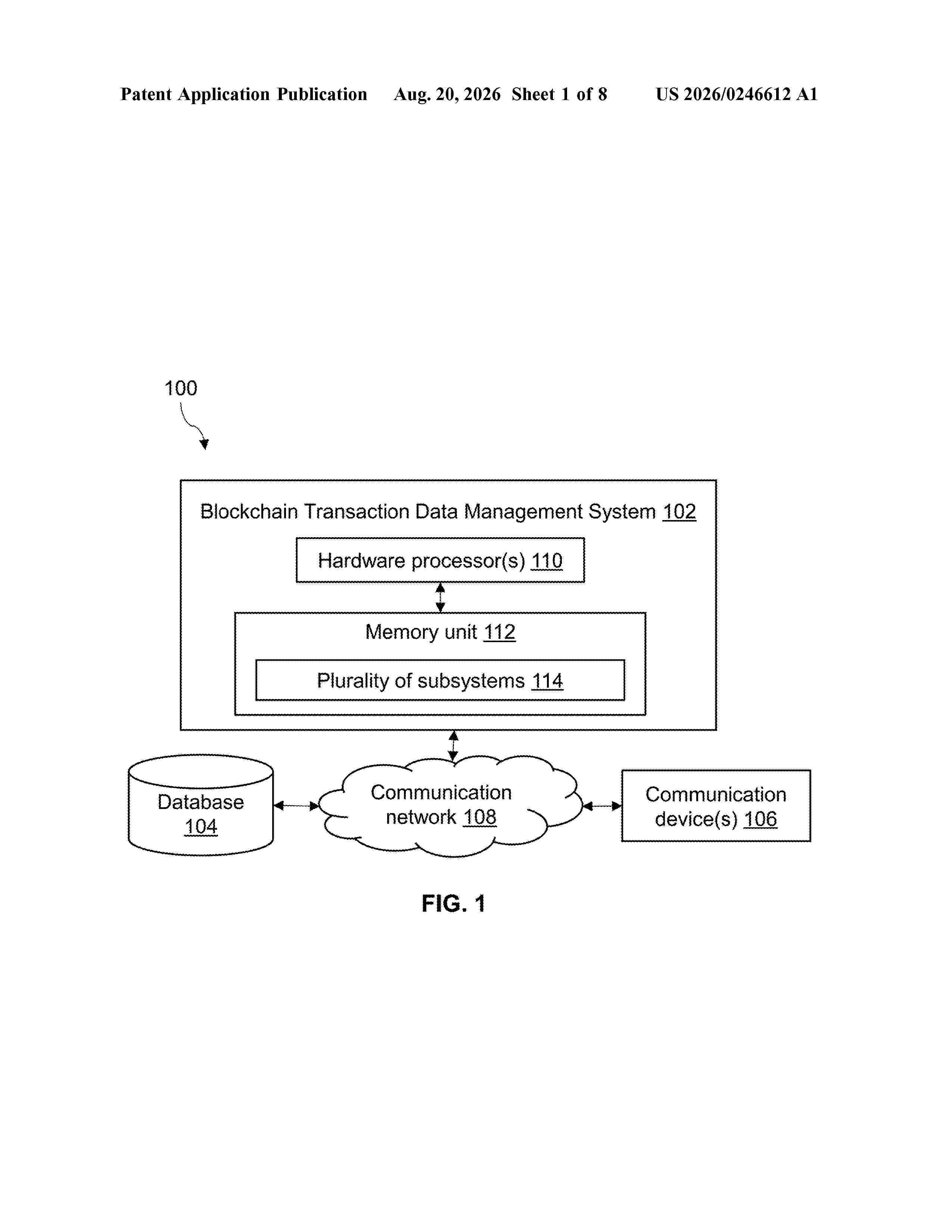
0000 A blockchain transaction data management method and system for managing blockchain based transaction data is disclosed. The blockchain transaction data management method includes: obtaining the blockchain based transaction data in form of plain text data from communication devices; classifying blockchain based transaction data as sensitive computational transaction data and reference transaction data; encrypting the sensitive computational transaction data when the blockchain based transaction data are classified as the sensitive computational transaction data, using a FHE technique; hashing the reference transaction data for validating blockchain transactions when the blockchain based transaction data are classified as reference transaction data, using cryptographic hashing techniques; performing computation-based operations on the encrypted sensitive computational transaction data to generate preserved encrypted and hashed text data without accessing the plain text data; and providing the generated preserved plain text data associated with the blockchain based transaction data, as output, to the communication devices of users.
Resumen de: US20260244773A1
A system for adaptive access control and asset management comprises a metric collection layer configured to capture real-time user metrics from integrated systems. A blockchain layer provides an immutable, quantum-resistant ledger for storing access events, asset records, and compliance data. An authorization layer manages adaptive access control based on effort scores, access thresholds, and effort decay mechanisms. A data integration layer interfaces with external applications for data access, analytics, and reporting. The metric collection layer captures task completion, accuracy, and engagement metrics. The blockchain layer employs a hybrid model combining on-block and off-block storage. The authorization layer includes a BlockCipher Module for making access decisions based on calculated effort scores and predefined thresholds. The data integration layer facilitates integration of AI algorithms for behavior analysis and predictive insights. The system enables secure, adaptive access control and asset tracking across industries like finance, healthcare, supply chain, and government sectors.
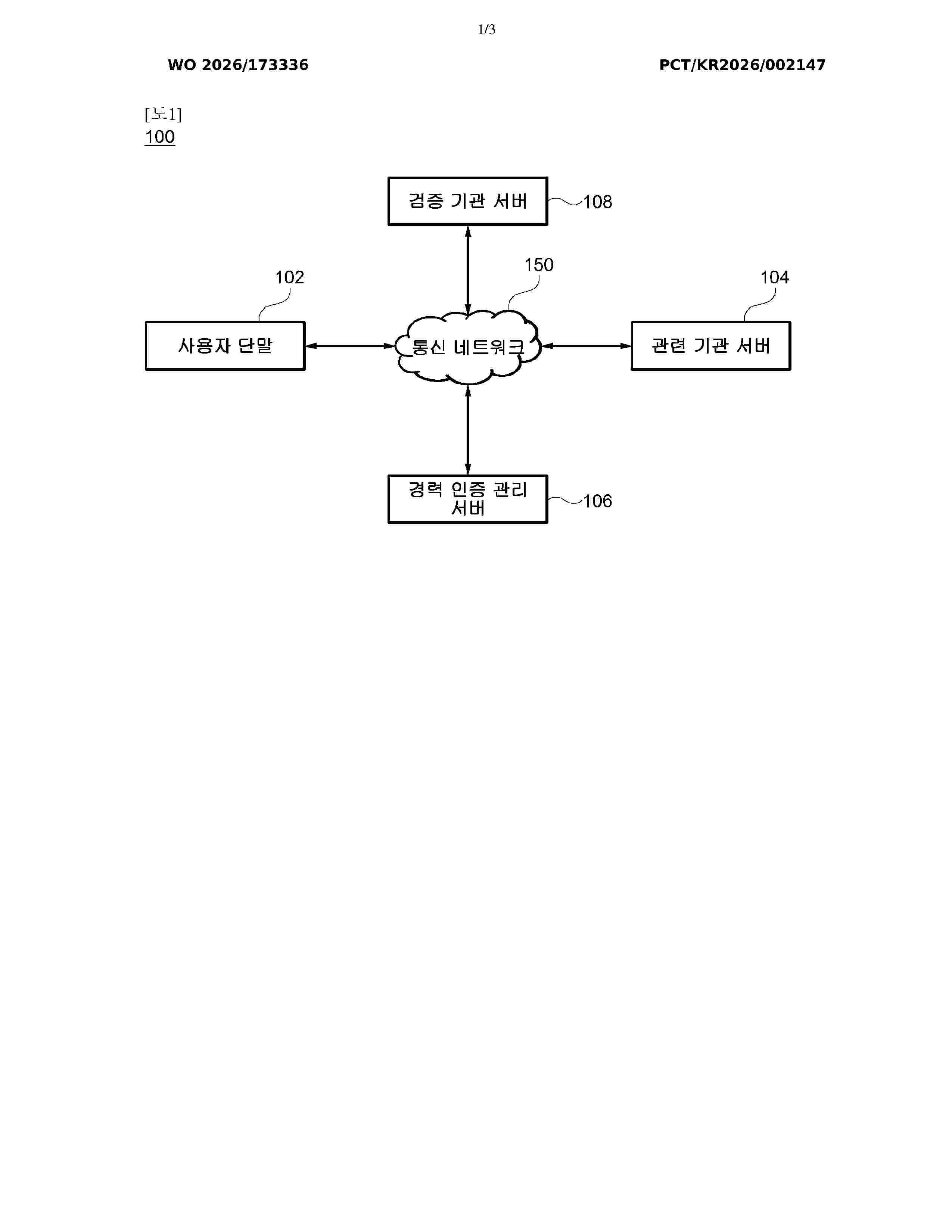
Resumen de: WO2026173336A1
A blockchain-based career authentication system and method, and a computing device for performing same are disclosed. The disclosed system according to one embodiment is a blockchain-based career authentication system comprising: a user terminal for transmitting a request for issuance of a career certificate of a user; a related institution server for receiving the request for issuance of the career certificate, verifying career information of the user, and transmitting a verification completion notification when the verification is completed; and a career authentication management server for receiving the verification completion notification and registering career proof information of the user in a blockchain network according to the verification completion notification.
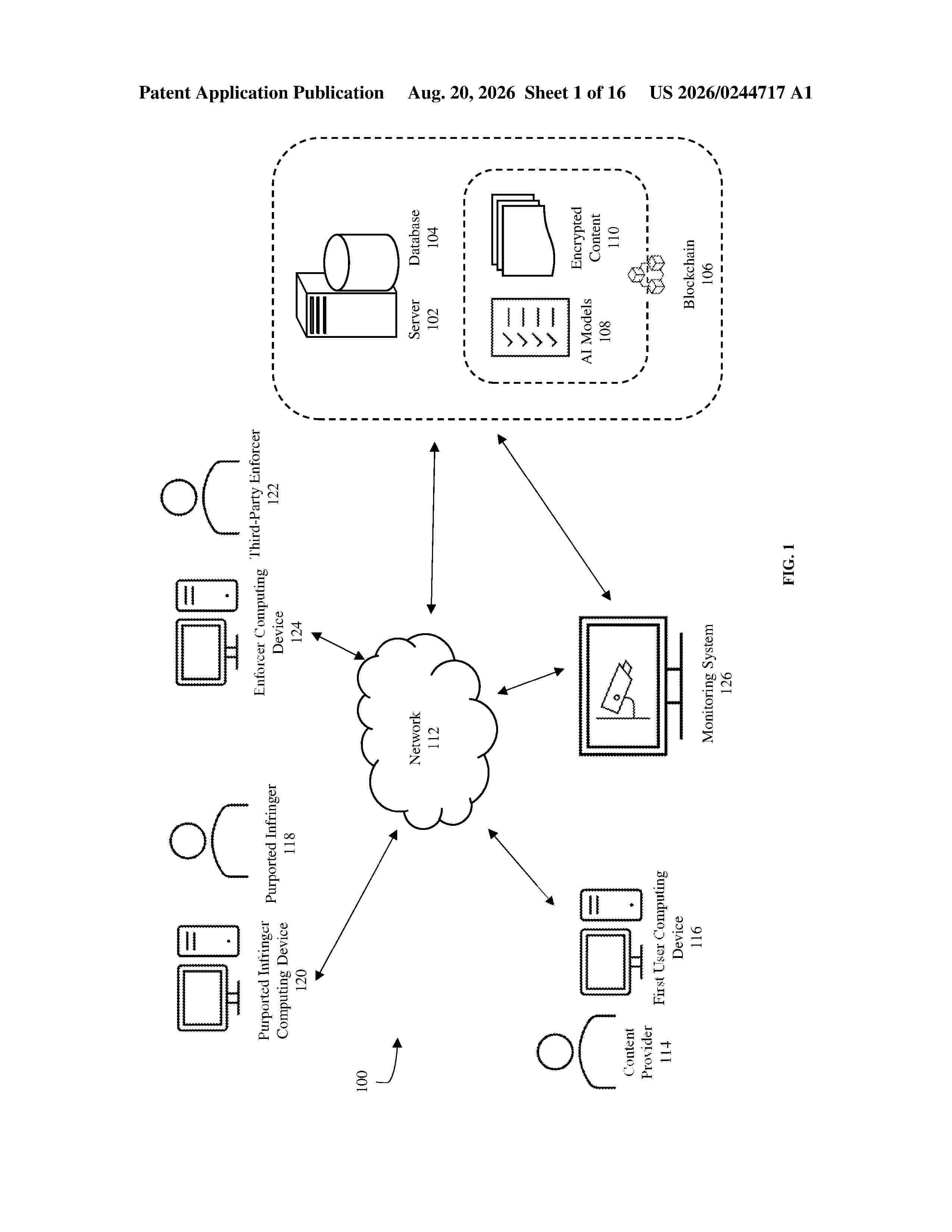
Resumen de: US20260244717A1
A method for modifying and tracking digital media using substantially imperceptible identifiers is disclosed. A content asset is received over a communications network and modified using at least one processor by applying a substantially imperceptible variation to generate a modified content asset. A unique digital signature is generated based on features of the modified content, including spatial, temporal, spectral, or typographic characteristics, and the digital signature is stored in a blockchain ledger for immutable verification. The system may scan digital platforms for potential unauthorized copies, extract embedded variations, regenerate the digital signature, and verify it against the blockchain record. Variations may include pixel-level adjustments, audio signal alterations in inaudible frequency ranges, zero-width character insertions in text, or frame timing shifts in video. The system enables persistent, content-level traceability and supports automated enforcement actions, transforming media assets into verifiable, self-identifying entities suitable for rights management and anti-piracy enforcement.
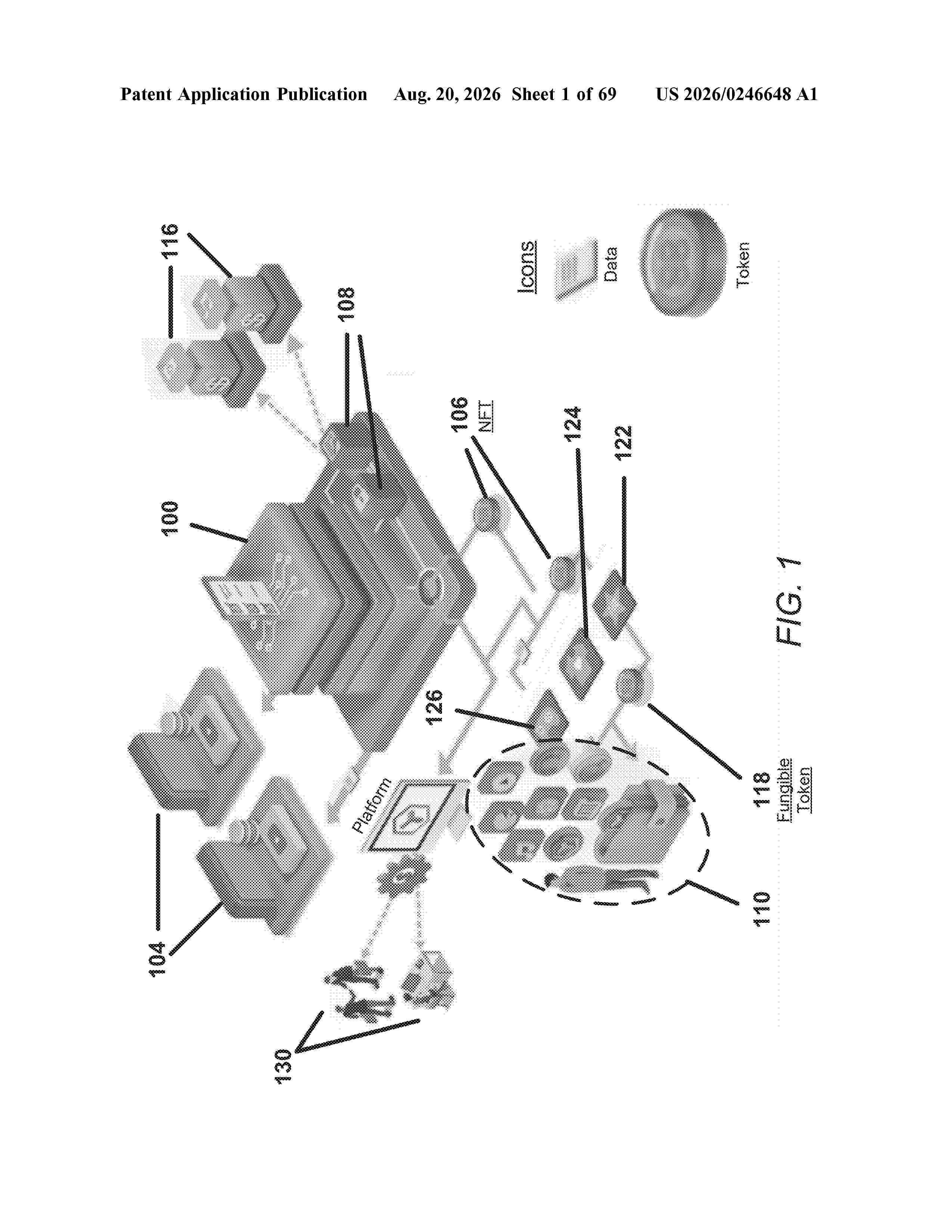
Resumen de: US20260246648A1
Systems and methods for performing quantum-secure blockchain operations in accordance with various embodiments of the invention are illustrated. One embodiment includes a method that conveys a hash of a randomly-generated first pre-image value to an initiating party of a proposed action that concerns cryptographic tokens. The method receives, from the initiating party, a second pre-image value, wherein the second pre-image value is received after a transaction from the initiating party is included in a block on a blockchain. The transaction from the initiating party references a locking script based on a concatenation of the hash of the first pre-image value and the second pre-image value. The method generates an unlocking script including the hash. The method submits the proposed action to the blockchain, wherein the proposed action includes a reference to the unlocking script, and wherein the unlocking script is validated against the locking script to initiate the proposed action.
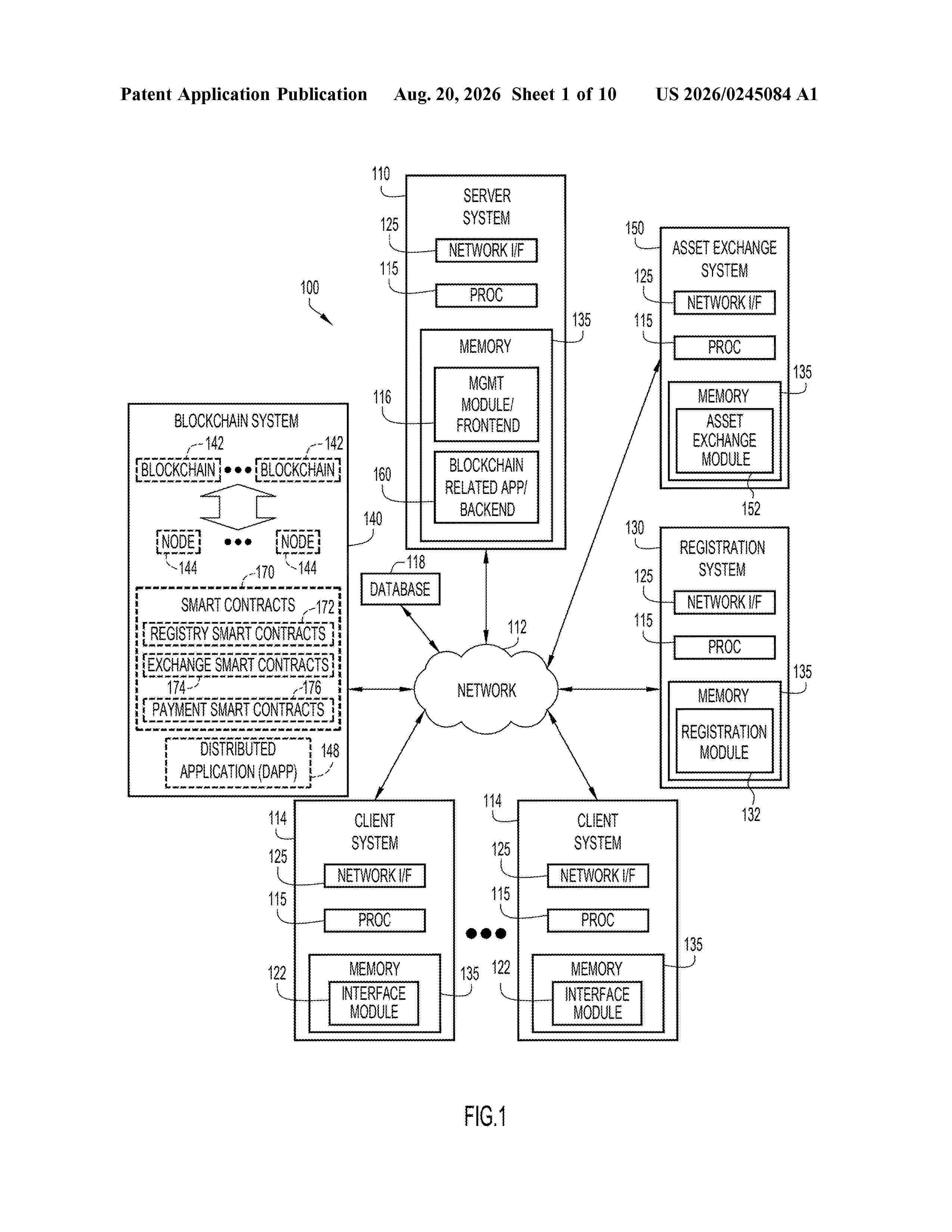
Resumen de: US20260245084A1
0000 According to an embodiment of the present invention, a system for transferring assets of a computer environment comprises one or more memories and at least one processor coupled to the one or more memories. The system receives a request to transfer an onchain asset of a user to a recipient. The onchain asset resides on a blockchain and corresponds to an offchain asset of the user. A verification of one or more aspects of the offchain asset is performed offchain. The onchain asset is transferred to the recipient in response to verification of the or more aspects of the offchain asset. The offchain asset is transferred to the recipient in response to transfer of the onchain asset. Embodiments of the present invention further include a method and computer program product for transferring assets of a computer environment in substantially the same manner described above.
Resumen de: WO2026173838A1
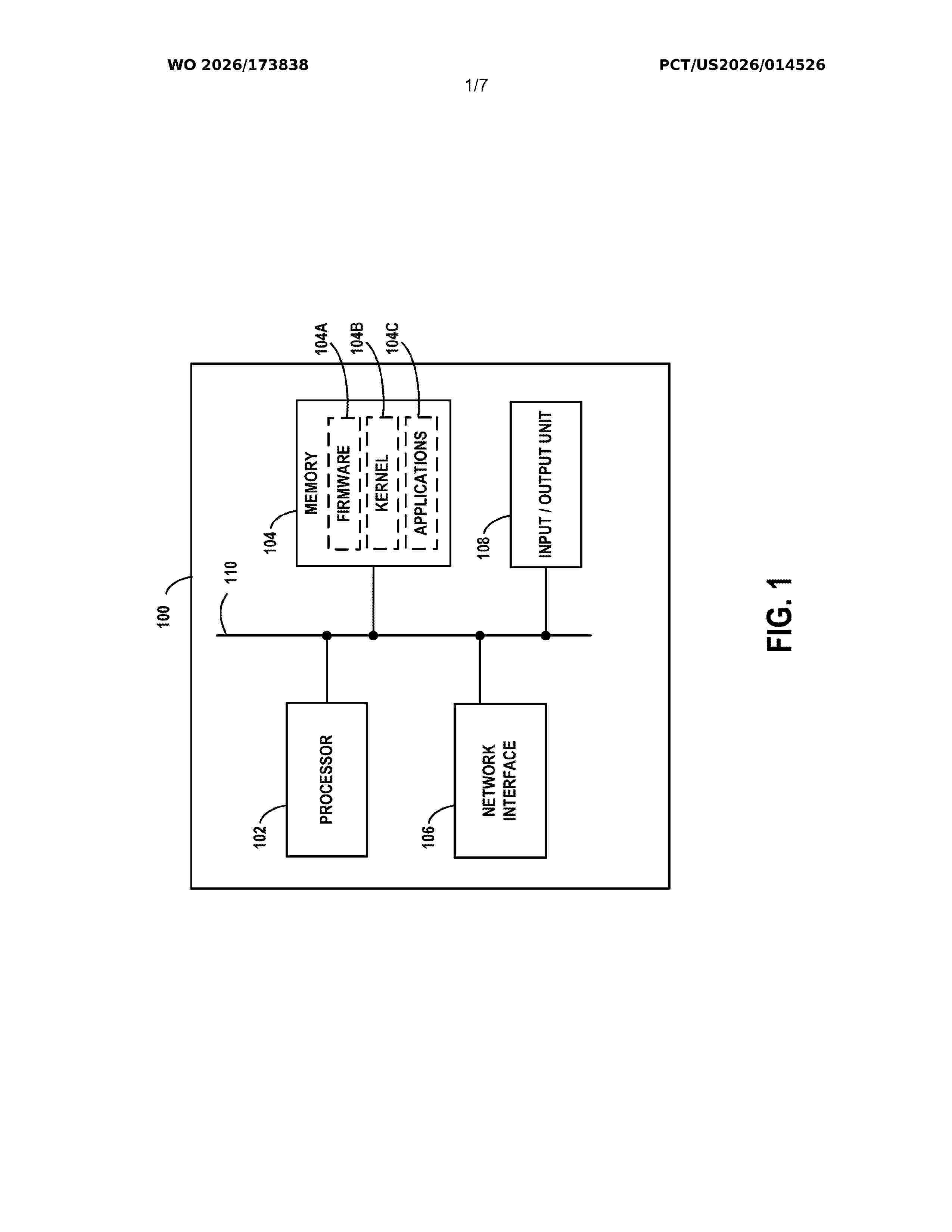
Example systems and methods include: determining, by one or more smart contracts, a list of miners operational with a source blockchain, wherein the miners are those that wrote at least one block to the source blockchain within a predetermined look-back period; assigning, by the one or more smart contracts, weights to the miners based on their respective degrees of success in writing blocks to the source blockchain during the predetermined look-back period; identifying, by the one or more smart contracts, a multisig digital vault jointly controlled by the miners in accordance with their weights; determining, by the one or more smart contracts, that digital tokens of the source blockchain have been sent to the multisig digital vault; and, in response to determining that the digital tokens of the source blockchain have been sent to the multisig digital vault, minting, by the one or more smart contracts, a number of digital tokens of a target blockchain.
Resumen de: US20260245055A1
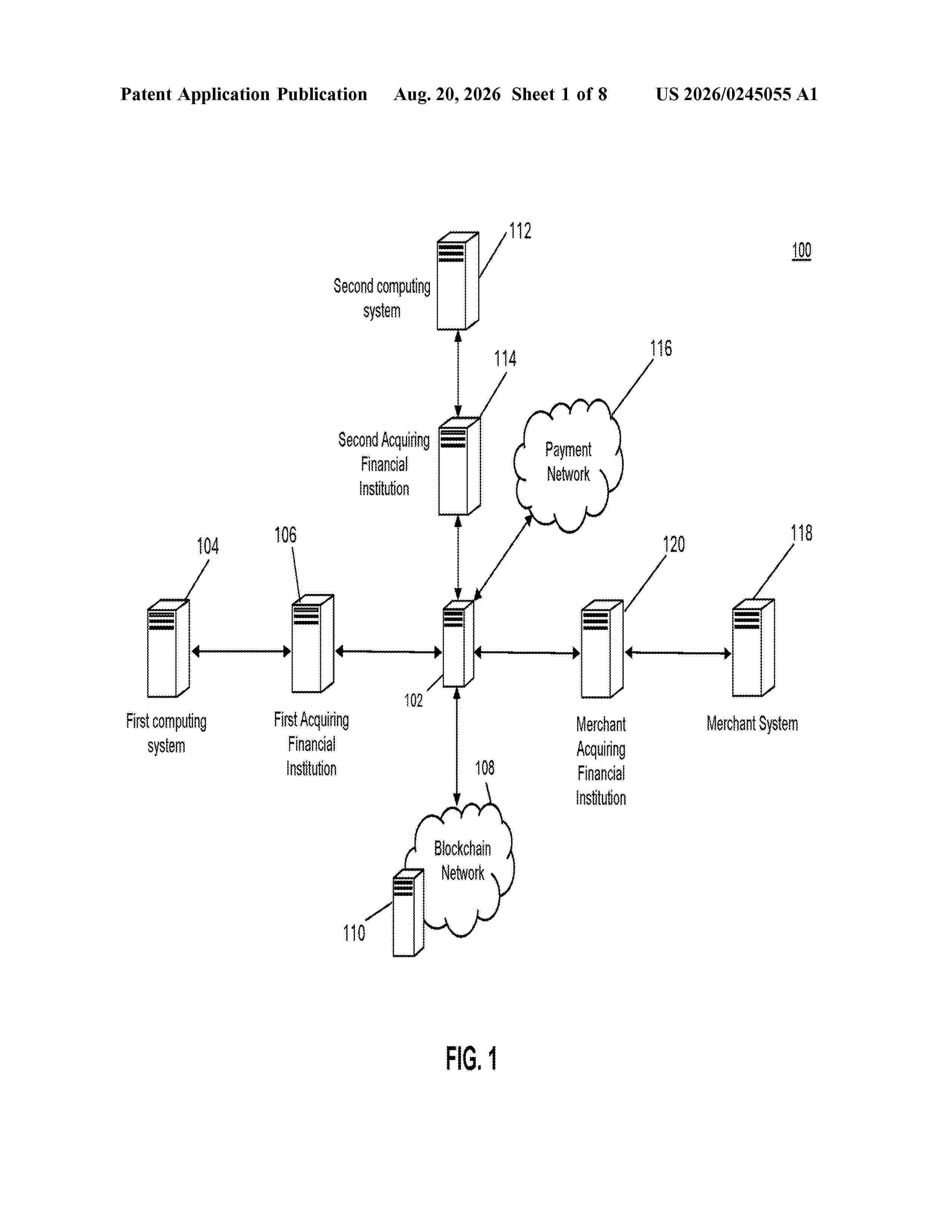
A method for creating traceability within a network system includes receiving, from a first computing system, a first account request message; receiving, from a second computing system, a second account request message; creating first and second tagged blockchain accounts on a blockchain that runs in parallel with a payment gateway service maintained by the processing server; receiving, from the first computing system, a disbursement request that identifies (i) an account identifier associated with the first tagged blockchain account, (ii) an account identifier associated with the second tagged blockchain account, and (iii) an amount of tagged funds; transferring the amount of tagged funds from the first tagged blockchain account to the second tagged blockchain account; and creating a genesis block on the blockchain that includes a unique identifier tag assigned to the received disbursement request and disbursement details associated with the disbursement of the tagged funds.
Resumen de: US20260245075A1
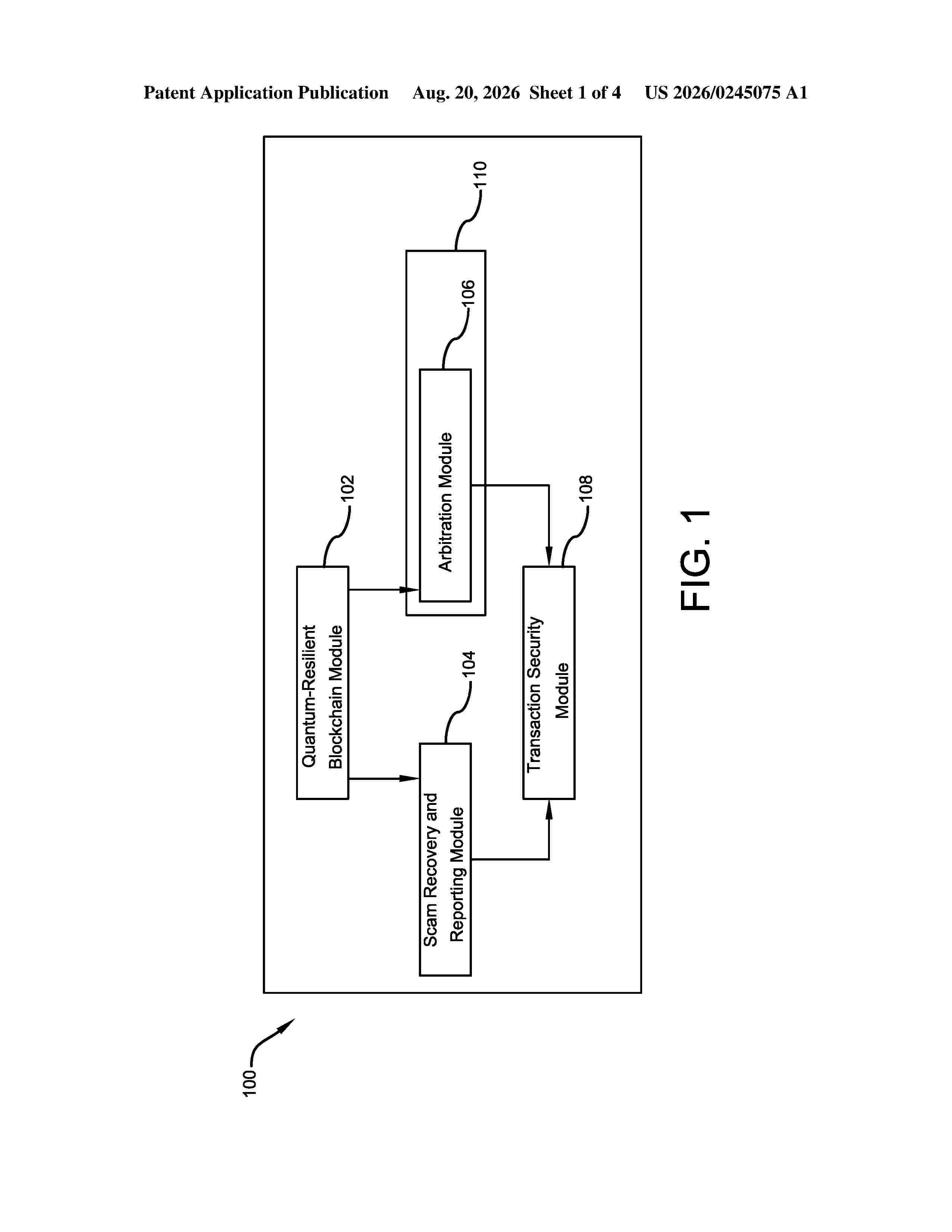
A quantum-safe digital currency system designed to resist security threats posed by quantum computing is disclosed. The system includes a quantum-resilient blockchain module that utilizes hash-based post-quantum digital signature algorithms, such as the eXtended Merkle Signature Scheme (XMSS), to generate and verify quantum-secure transactions while maintaining a fixed supply of cryptocurrency tokens. A scam recovery and reporting module employs artificial intelligence and a decentralized encrypted interface to detect and report fraudulent activities. An arbitration module, operating within a decentralized autonomous organization (DAO), enables validator nodes to perform quantum-secure voting and verification to authorize fund reversals. A transaction security module applies zero-knowledge proofs (ZKPs) and quantum-secure communication channels to ensure privacy and authenticity. When a scam is verified, a multi- signature quantum-secure reversal transaction restores assets to their rightful owner.
Resumen de: US20260245004A1
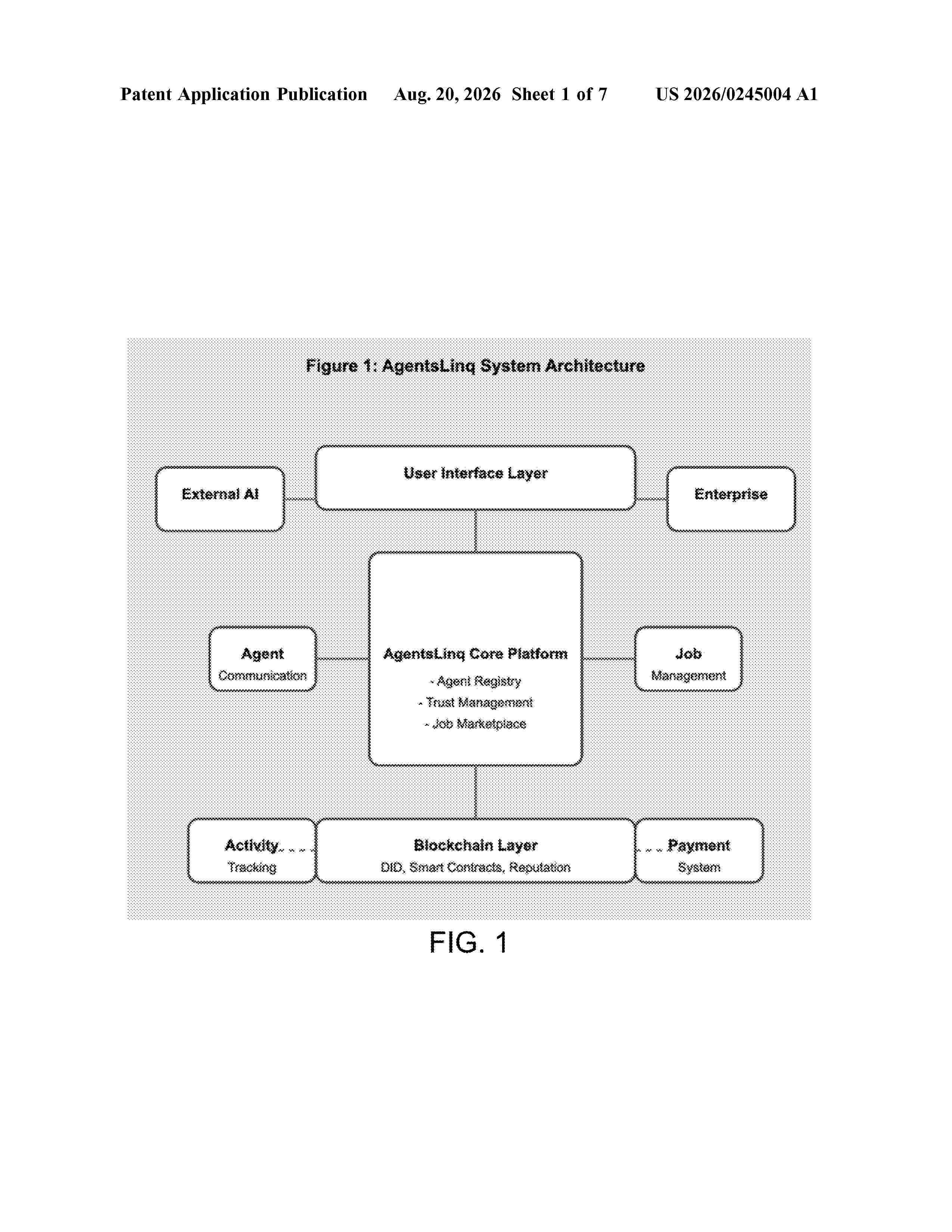
0000 The present invention provides a decentralized artificial intelligence (AI) agent networking, collaboration, and employment platform that enables AI agents to register, establish cryptographic identities, engage in peer-to-peer communication, and autonomously participate in a structured job marketplace. The system comprises a decentralized identity management module utilizing blockchain-based decentralized identifiers (DIDs) to authenticate AI agents, ensuring verifiable and tamper-resistant identity assignment. A trust and reputation management module dynamically evaluates AI agent credibility based on transaction history, service-level agreement (SLA) compliance, and cryptographic proof-of-service attestations, preventing fraudulent or malicious activity. The AI agent marketplace allows businesses to post AI-driven tasks, wherein AI agents autonomously bid, negotiate, and execute assignments using predefined decision-making protocols. A smart contract-based execution framework governs service transactions, automating contract enforcement, payment settlements, and dispute resolution.
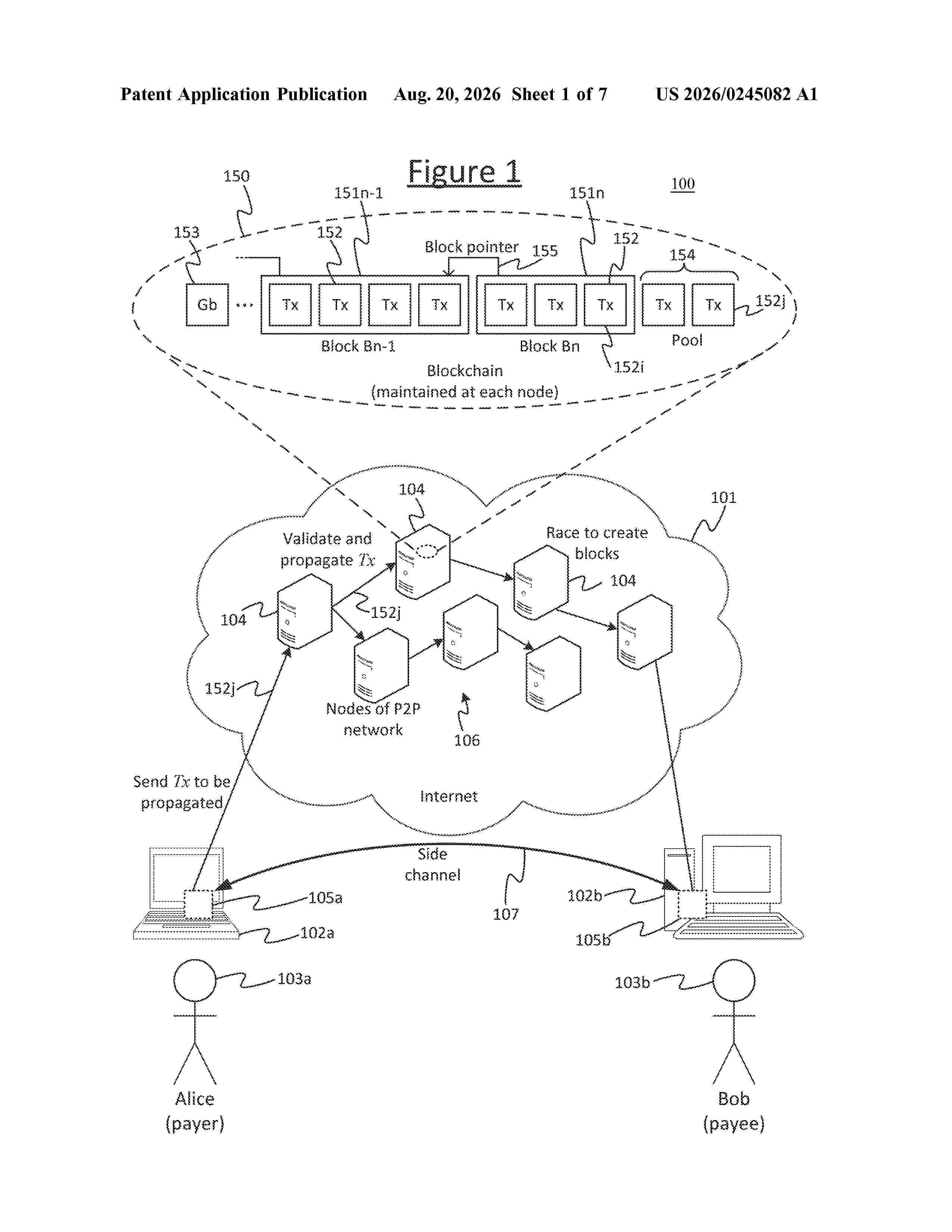
Resumen de: US20260245082A1
A computer-implemented method of making a commitment to a message upon which an outcome is to be determined, wherein the method is performed by a first participant of a group of participants, wherein a coordinator is associated with a coordinator public key, and wherein the method comprises: generating a first encrypted message by encrypting a first message with the coordinator public key; generating a first commitment value based on the first encrypted message; making the first commitment value available to the group of participants and the coordinator; and upon determining that each other participant has made a respective commitment value available to the group of participants the coordinator, making the first encrypted message and first reveal data available to the group of participants and the coordinator, wherein the first reveal data enables the first encrypted message to be obtained from the first commitment value.
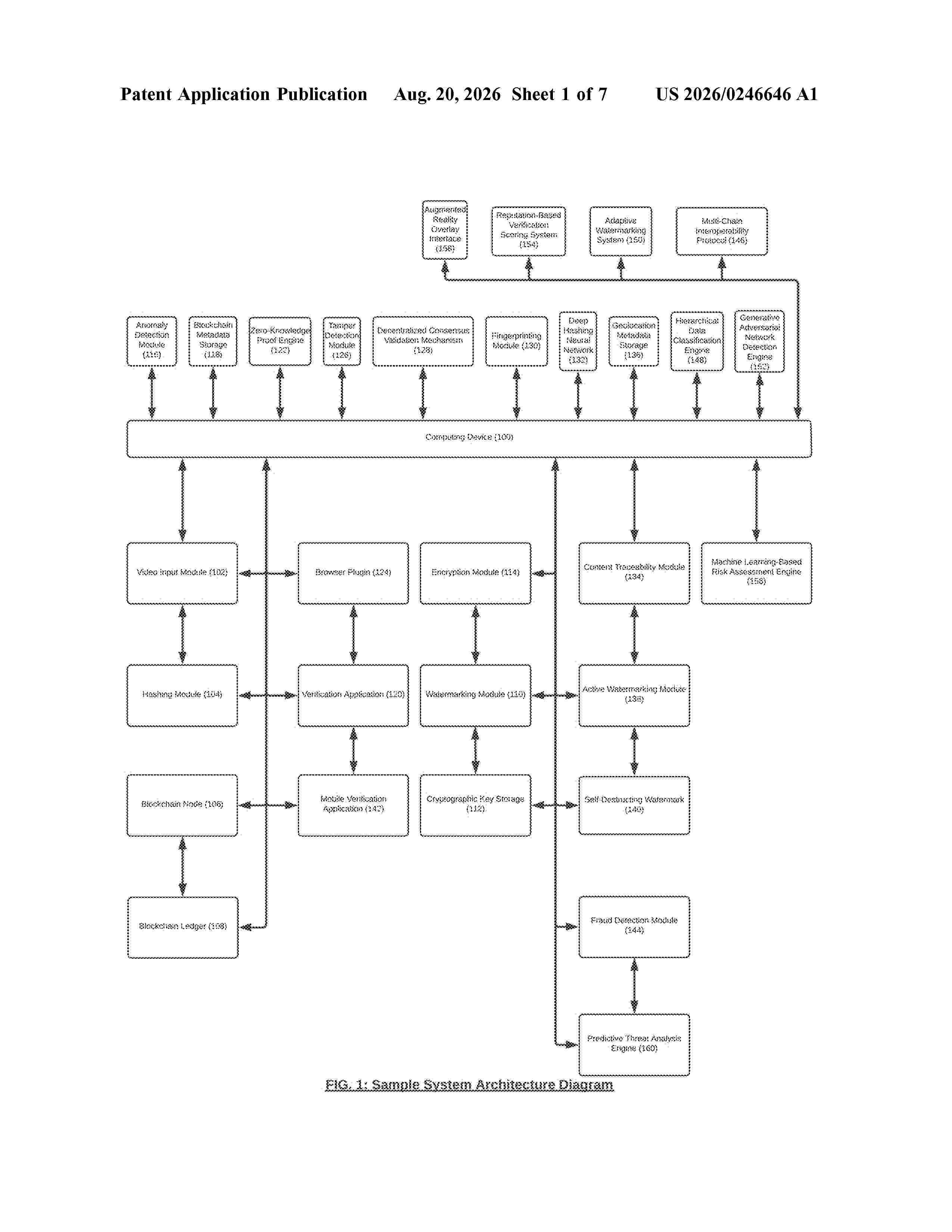
Resumen de: US20260246646A1
0000 A blockchain-based video authentication system ensures the integrity, authenticity, and security of digital video content by integrating cryptographic hashing, dynamic watermarking, AI-driven anomaly detection, and decentralized ledger storage. A video file is processed to generate a cryptographic hash, which is immutably stored in a blockchain ledger. A rotating digital watermark is embedded in the video to detect tampering. AI models, including convolutional and recurrent neural networks, analyze frames and motion patterns for manipulation. A fraud detection module leverages generative adversarial networks to identify deepfake alterations. A predictive threat analysis engine employs machine learning to detect emerging manipulation techniques. Verification is enabled via an API, a zero-knowledge proof engine, a browser plugin, and a mobile application. An active watermarking module monitors playback, detecting unauthorized use. A consensus-based validation mechanism ensures tamper resistance. The system provides a scalable, real-time, and privacy-preserving solution for securing and verifying digital video content.
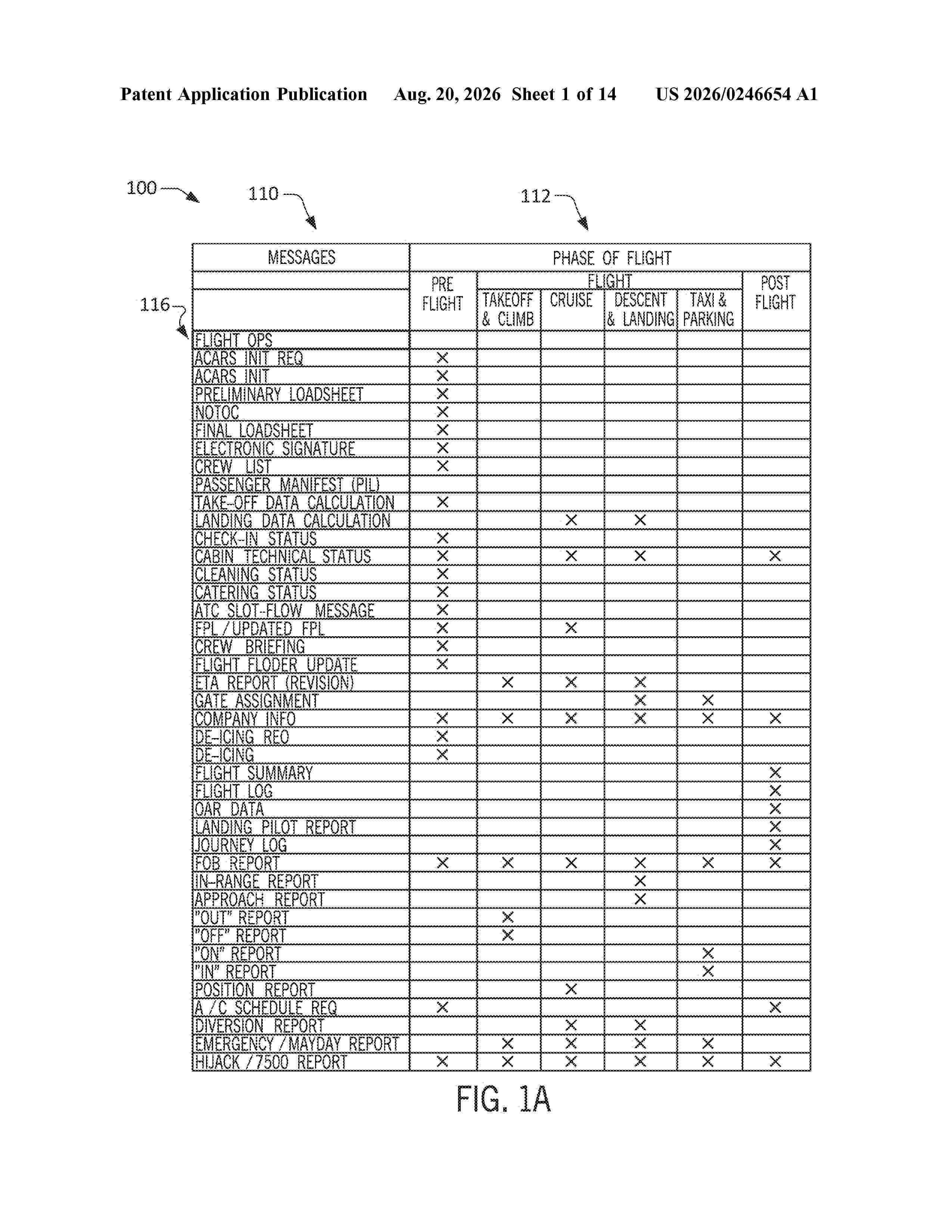
Resumen de: US20260246654A1
Disclosed are systems, methods, and media for a communication system for an aerospace system including a communications module that is configured to communicatively couple the aerospace system to an aircraft communication network using a blockchain. The communication system further includes a processor that is configured to communicate aircraft data having a unique hash ID between the aerospace system and one or more subsequent aerospace systems in the aircraft communication network via the communications module. The processor can be configured to access or receive the aircraft data and validate the unique hash ID of the aircraft data using the blockchain. Upon validation of the unique hash ID, the process can be configured to install the aircraft data on the aerospace system and broadcasting a copy of the aircraft data to the one or more subsequent aerospace systems.
Nº publicación: US20260246655A1 20/08/2026
Solicitante:
TENCENT TECHNOLOGY SHENZHEN CO LIMITED [CN]
Tencent Technology (Shenzhen) Company Limited
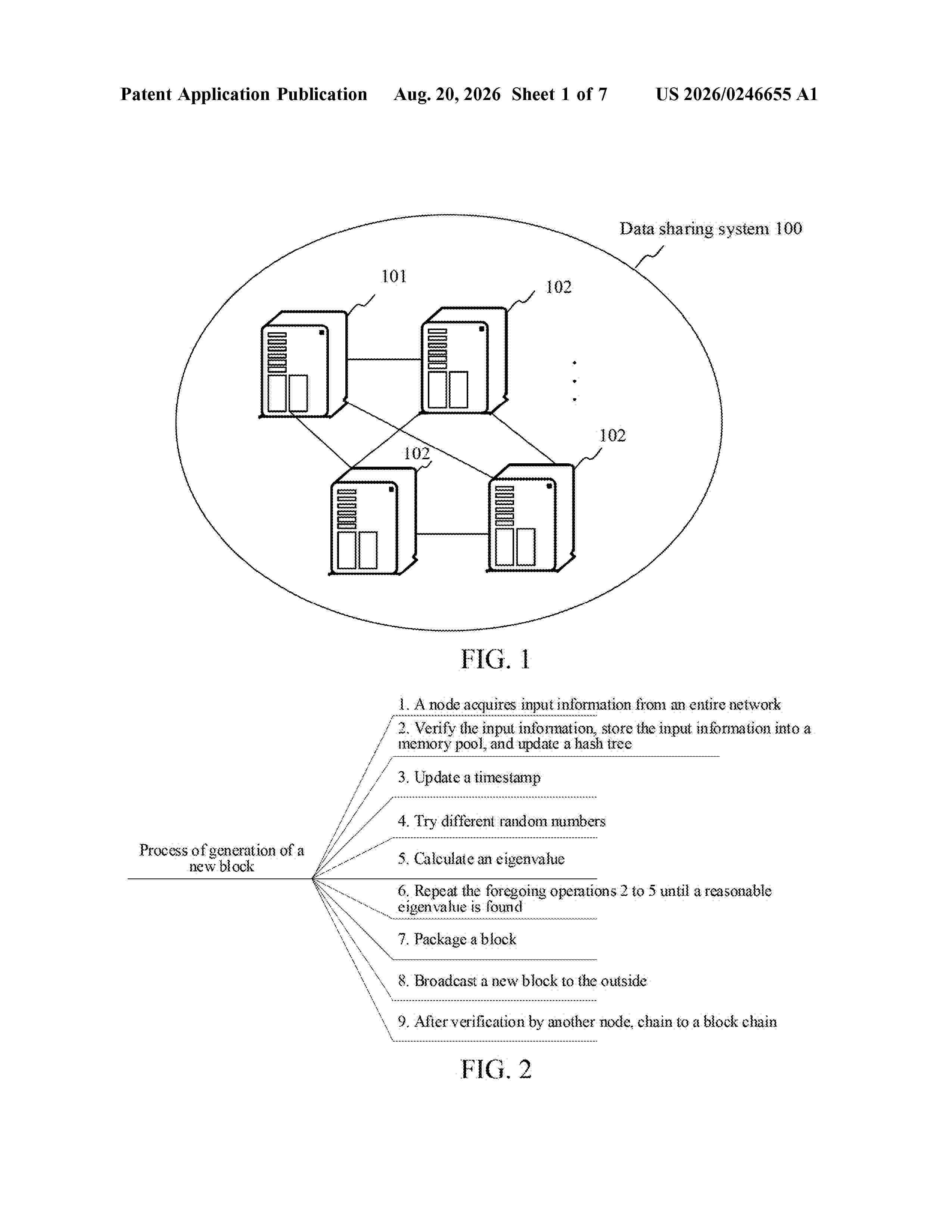
Resumen de: US20260246655A1
A block chain consensus method is provided, performed by a computer device in which a proposal node in a block chain is located, and includes: acquiring a to-be-consensual transaction block, the to-be-consensual transaction block being generated based on at least one piece of to-be-packaged transaction data; acquiring a hash fingerprint of the proposal node, and performing signature endorsement on the transaction block by using the hash fingerprint of the proposal node, to obtain signature endorsement information, the hash fingerprint being determined after a hash operation is performed on certificate data corresponding to the proposal node; combining the signature endorsement information and the transaction block, to generate a proposal message; and broadcasting the proposal message to at least one verification node in the block chain, to trigger each verification node to reach a consensus, based on the hash fingerprint of the proposal node in the proposal message, on the proposal message.
 BOPI
BOPI
 Sede Electrónica