Si deseas distinguir tus productos, servicios o ambos de los de otra empresa, es posible que necesites una marca o nombre comercial. Descubre qué son, en qué consiste su procedimiento de registro y qué implica.

Información sobre los plazos de presentación de solicitudes de transformación de marcas de la Unión Europea en marca nacional española. Más información


Si tienes un nuevo dispositivo, producto o procedimiento que resuelva un problema técnico o tenga una ventaja práctica, existen distintas formas de protegerlo en España y en otros países. Descubre cómo hacerlo.

¿Tu innovación reside en la estética, la ornamentación o la apariencia de tu producto? Protégela mediante un diseño industrial. Descubre qué derechos confiere el registro y cómo realizar la tramitación.

Las indicaciones geográficas protegen el nombre de un producto originario de una zona geográfica, a la cual le debe una determinada calidad, reputación u otra característica. Descubre qué son, en qué consiste su procedimiento de registro y qué beneficios conceden.

Las patentes publicadas en todo el mundo son una valiosa fuente de información científica, técnica y comercial.

Si eres emprendedor/a o una empresa y quieres potenciar y mejorar la rentabilidad de tu negocio protegiendo de forma adecuada los activos intangibles de tu organización, en este espacio encontrarás lo necesario.


 113
resultados
113
resultados
 Última actualización
25/10/2026 [08:08:00]
Última actualización
25/10/2026 [08:08:00]


 Resultados 25 a 50 de 113

Resumen de: EP4806778A1
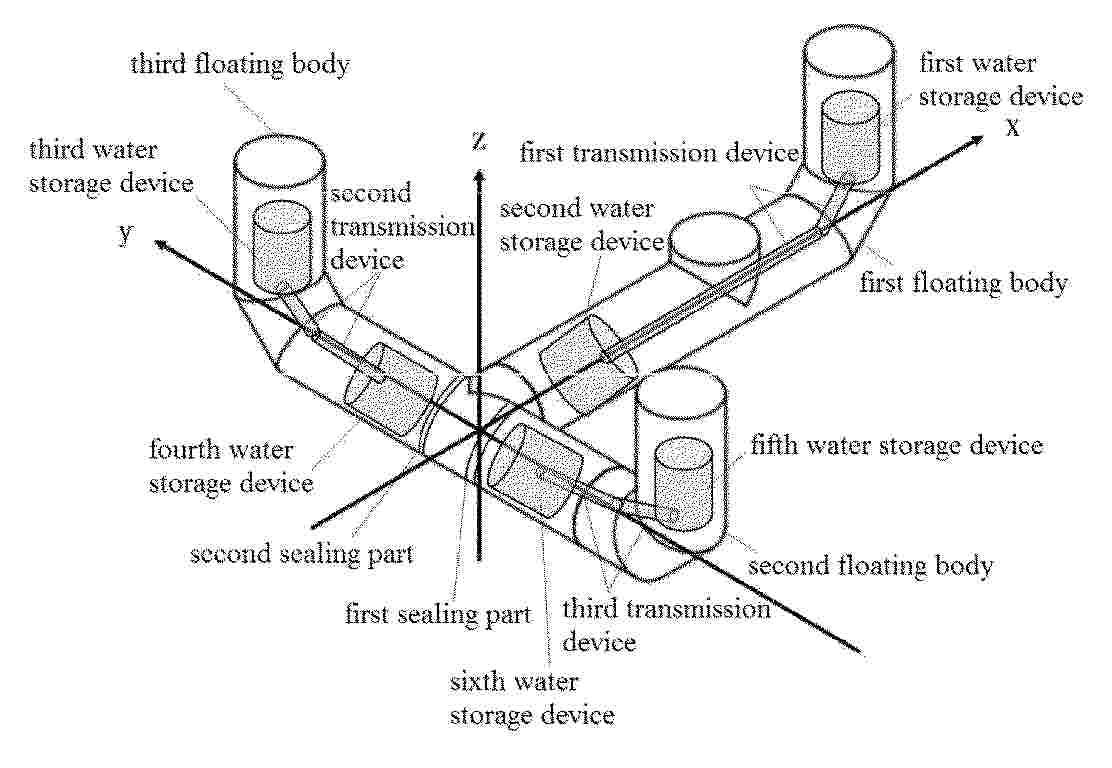
0001 A floating wind power floating body and a method for balancing the floating wind power floating body are provided. The first floating body is connected with the second floating body through a first sealing part; the first floating body is connected with the third floating body through a second sealing part. The first water storage device is connected with the second water storage device through first transmission devices; the third water storage device is connected with the fourth water storage device through second transmission devices; the fifth water storage device is connected with the sixth water storage device through third transmission devices.

Resumen de: EP4806578A1
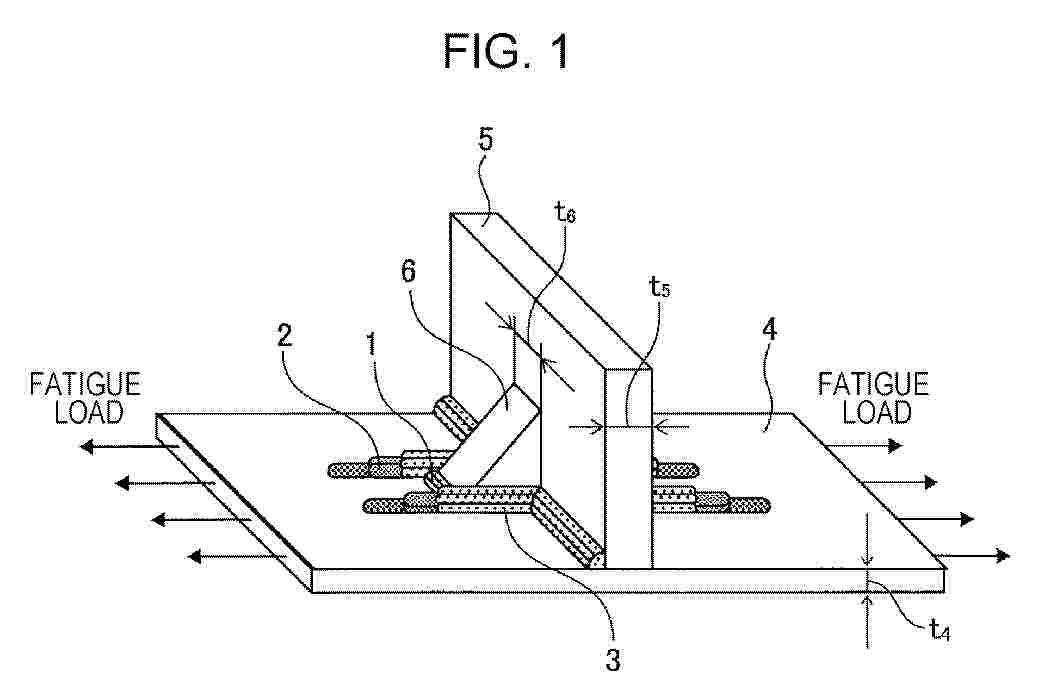
Provided a multi-layer welding method and a multi-layer welded joint in a large structure such as a floating offshore wind power generation facility. The present invention is a multi-layer welding method in which a bracket 6 for reinforcing a vertical plate 5 provided on a steel plate 4 is welded to the steel plate 4 and the vertical plate 5, the welding method including: forming a first weld bead 1 in multiple layers along a short side of a rectangular contact surface 6a at which the bracket 6 is in contact with the steel plate 4; and subsequently forming a second weld bead 2 and a third weld bead 3 in multiple layers such that the second weld bead 2 and the third weld bead 3 are provided along long sides of the rectangular contact surface 6a, overlap end portions of the first weld bead 1, and further extend onto the steel plate 4.
Resumen de: EP4552966A1
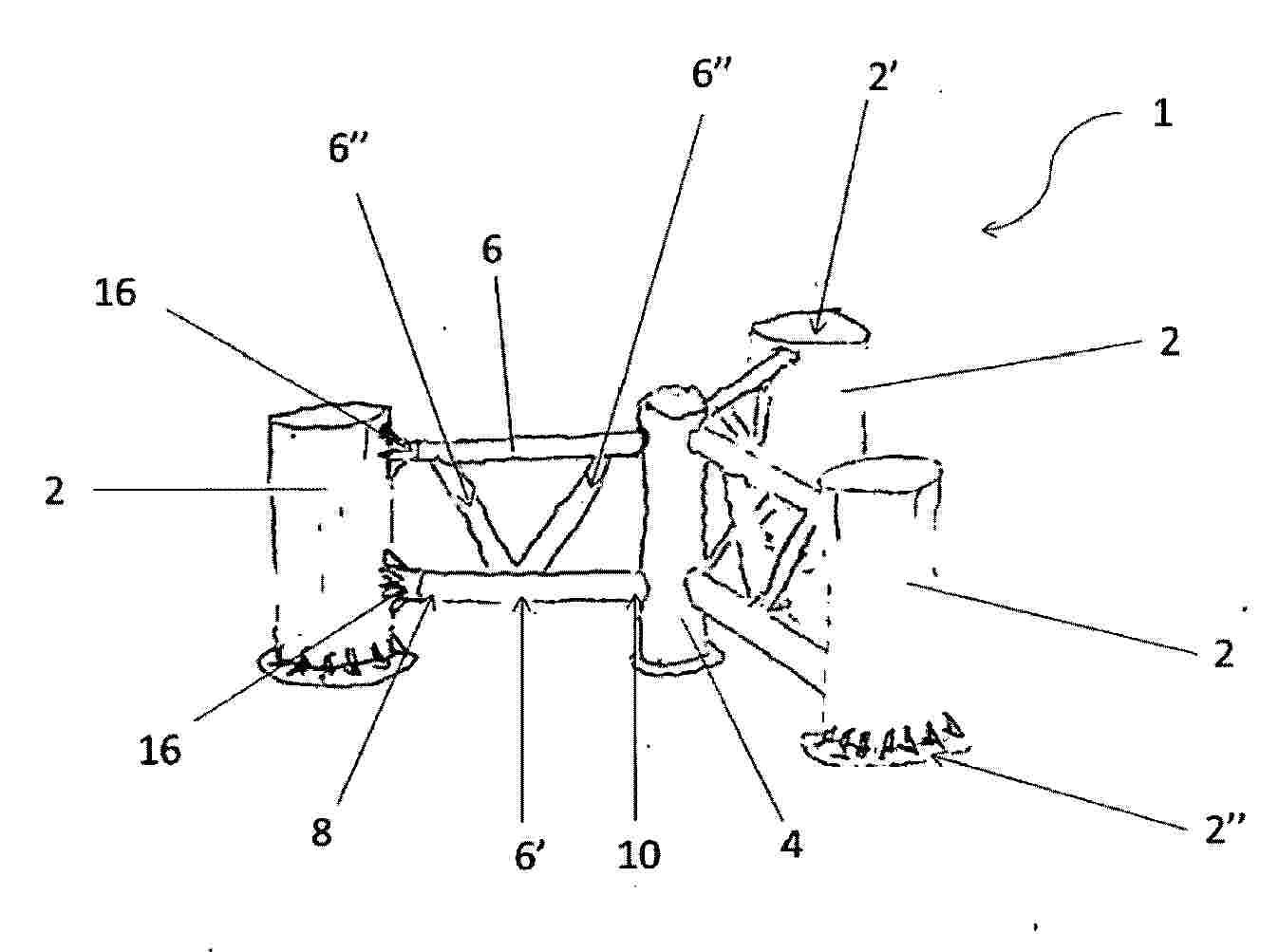
0001 The invention relates to an offshore wind turbine platform (1) comprising: - a main body (4) intended to receive a mast of a wind turbine attached to it, - several floats (2), each float comprising an upper metal wall (2') forming an upper end of the float, a lower metal wall (2") forming a lower end of the float, and several side walls (18, 28, 28', 48, 58) connecting the upper and lower metal walls to create a watertight enclosure of the float, - several metal connection structures (6), each metal connection structures comprising at least a first end (8) attached to one float and a second end (10) attached to the main body.
Resumen de: WO2026186047A1
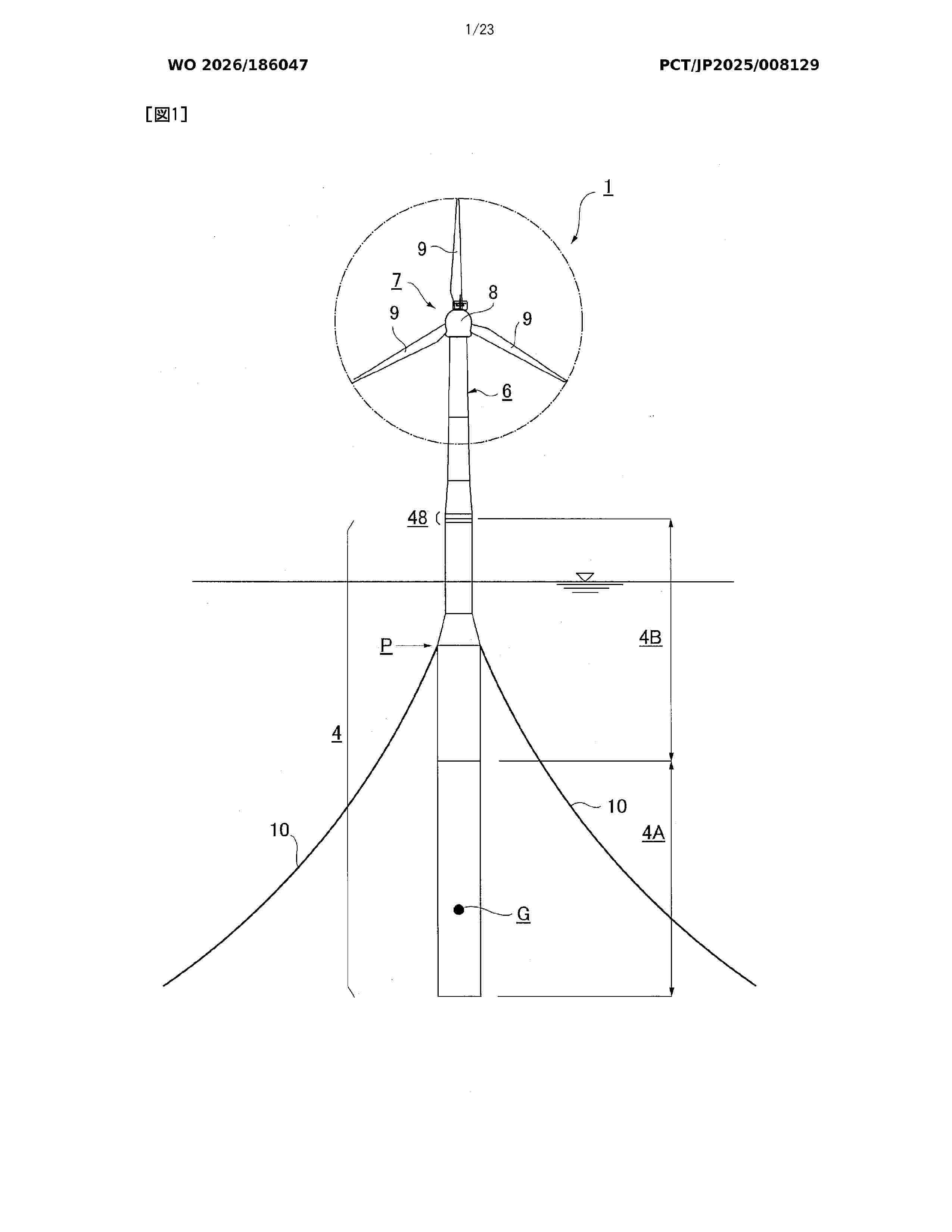
Problem To provide a connection device capable of stably and efficiently connecting a superstructure to a floating body. Solution A connection device 48 comprises a floating body-side connection device 49 provided at an upper end of a floating body 4, and a tower-side connection device 50 provided at a lower end of a tower 6. The floating body-side connection device 49 has at least two introduction pipes 54, 55, and the tower-side connection device 50 has a plurality of introduction pins 59, 60 provided corresponding to the introduction pipes 54, 55. The introduction pipes 54, 55 comprise engagement pipe portions 54A, 55B having through holes formed therein, and guide portions 54B, 55B, and the introduction pins 59, 60 have a cross-section that allows insertion into the through holes of the engagement pipe portions 54A, 55B, and are held so as to be slidable in an upward direction. With the corresponding introduction pipes 54, 55 and introduction pins 59, 60 respectively fitted together, a connecting flange 53 of the floating body-side connection device 49 and a connecting flange 58 of the tower-side connection device 50 are fastened together by bolt-and-nut members 65, 65.
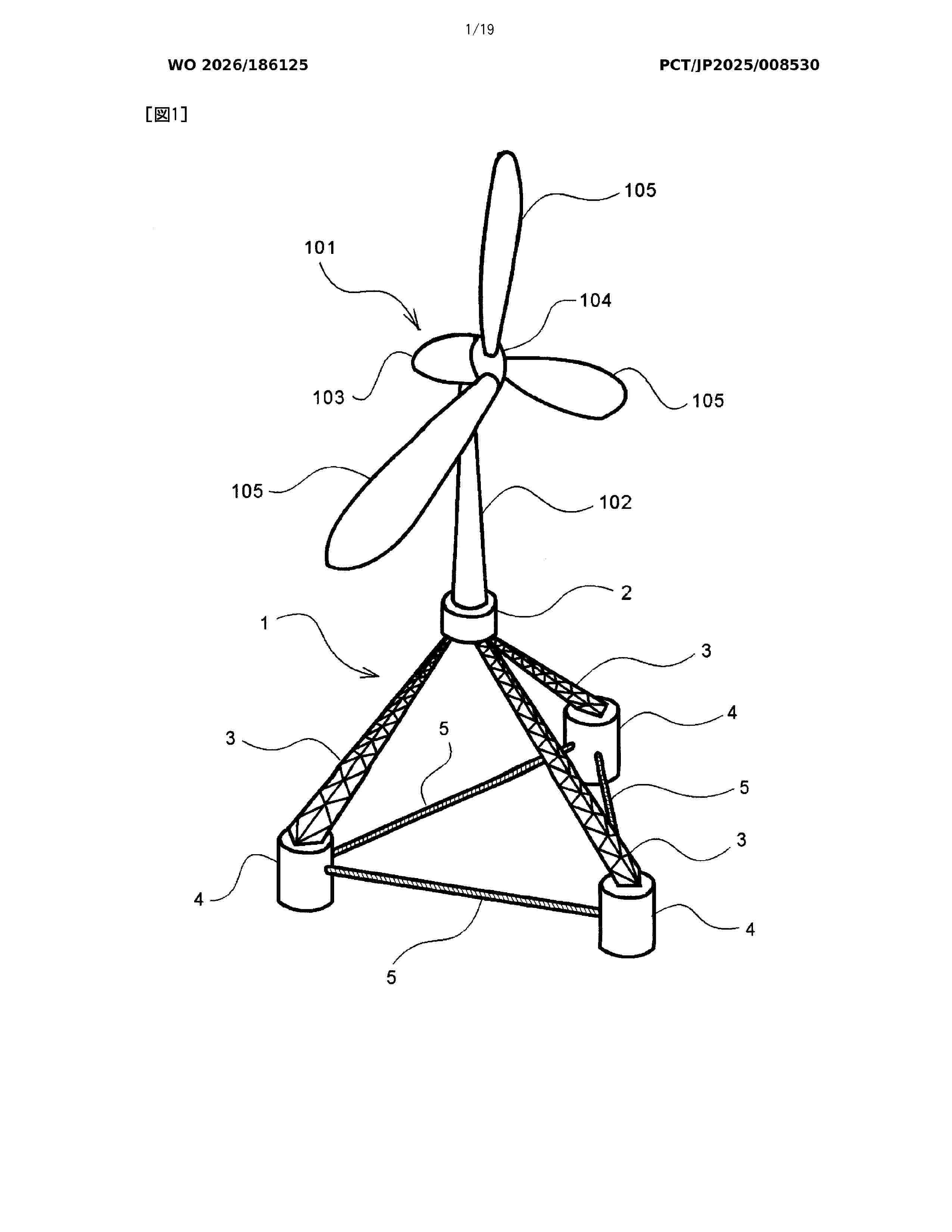
Resumen de: WO2026186125A1
The present invention addresses the problem of providing a floating body structure, and the problem is solved by a floating body structure 1 characterized by comprising a facility holding body 2 that holds an offshore facility 101, three or more inclined leg members 3 each having an upper end connected to the facility holding body 2 and a lower end swingable in directions in which the lower ends move toward and away from each other, floating bodies 4 attached to the lower ends of the inclined leg members 3, and a wire 5 that limits the distance between the floating bodies 4, wherein: in a state in which the lower ends of the inclined leg members 3 are directed obliquely downward around the facility holding body 2, the floating body structure 1 floats on the sea by buoyancy generated in the floating bodies 4; and tension is generated in the wire 5 by gravity acting on the offshore facility 101 and the facility holding body 2, and the distance between the floating bodies 4 is maintained constant.
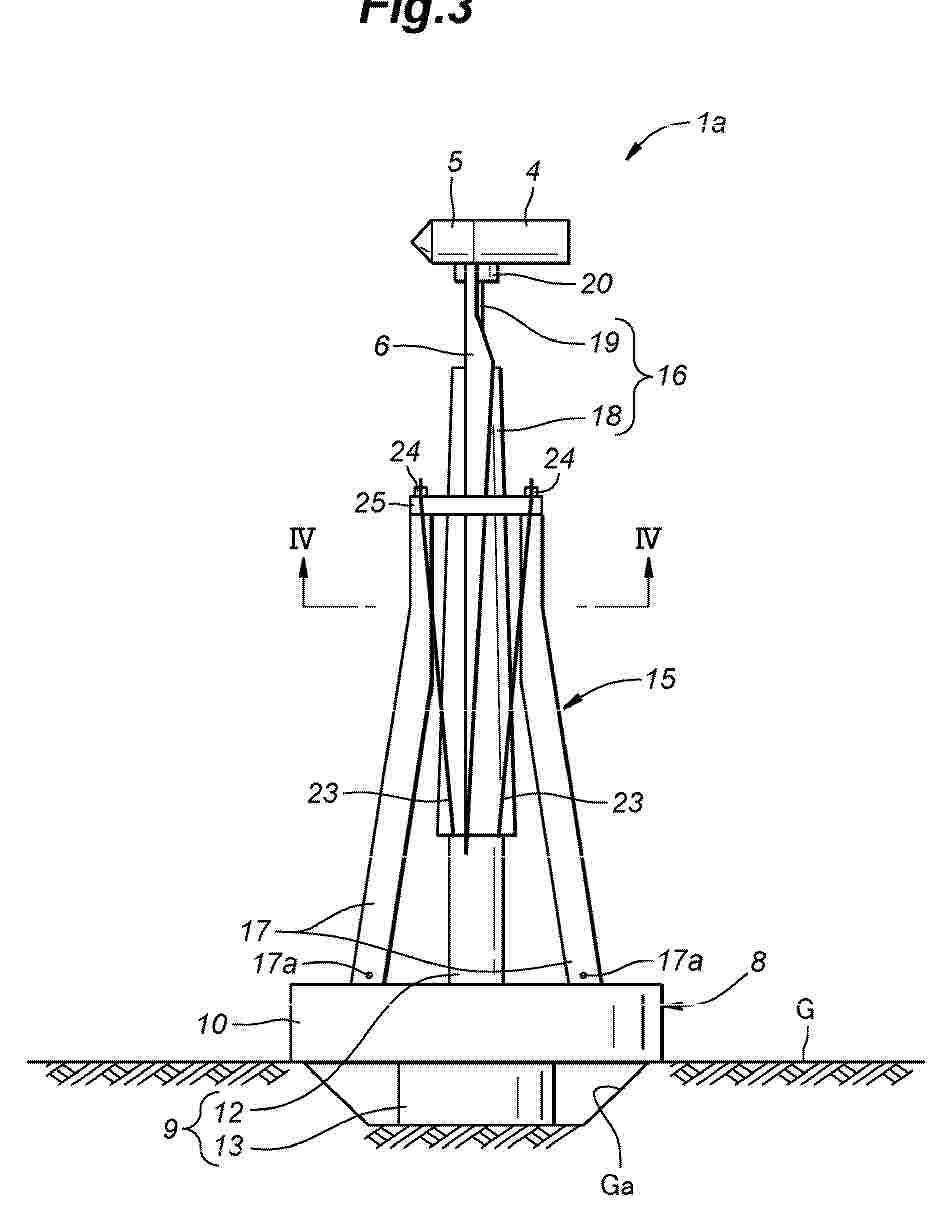
Resumen de: EP4803740A1
An object of the present invention is to provide a construction method for a floating wind power generation facility which is less susceptible to wind and waves when towing. A provisional assembly (1a) is assembled on land. The provisional assembly (1a) includes a base part (8) of a floating body (2) and a provisionally mounted member (6, 13, 16) disposed at a position different from a position at completion. After assembly of the provisional assembly (1a), the provisional assembly (1a) is launched. After being launched, the floating wind power generation facility under construction is towed to its installation position, and the provisionally mounted member (6, 13, 16) is disposed at the position at completion. Since the provisional assembly (1a) is shorter in length in the up-down direction than the completed floating wind power generation facility, the provisional assembly (1a) is less susceptible to wind and waves when towed.
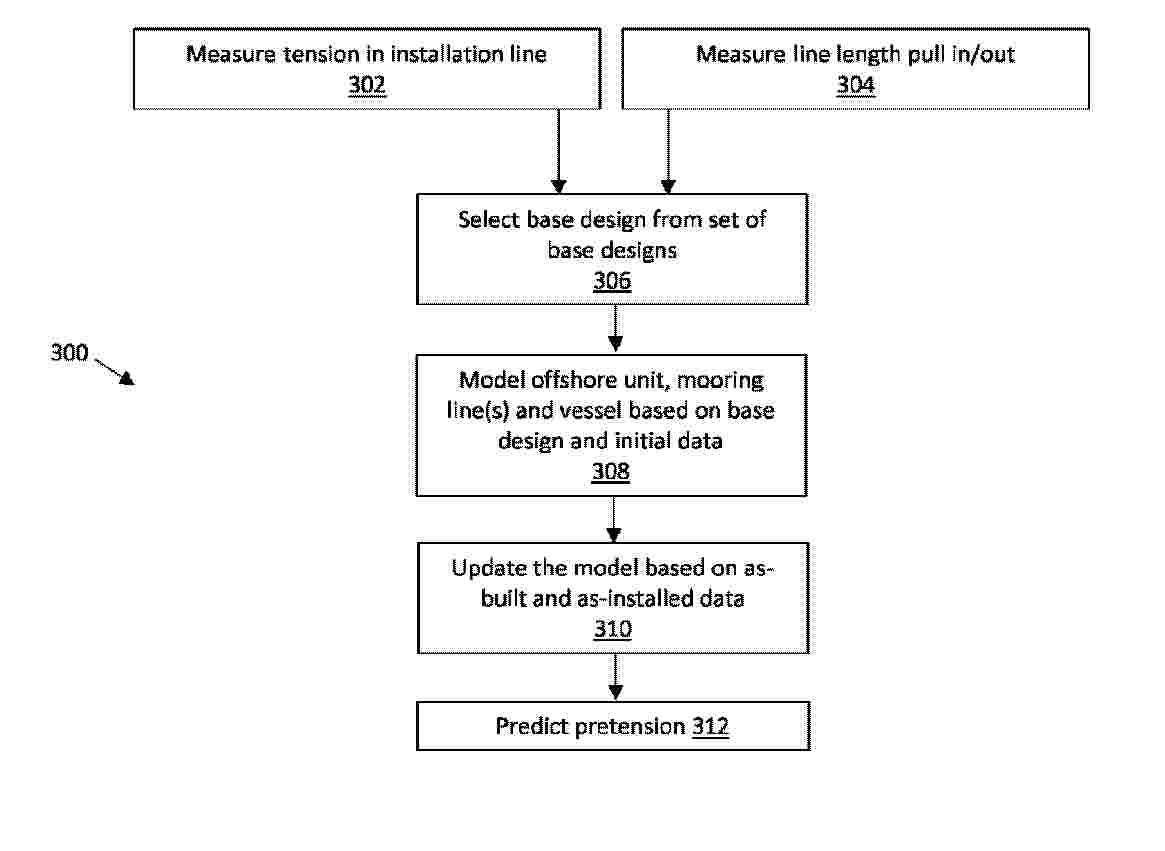
Resumen de: WO2025095785A1
A computer-implemented method of achieving a target pretension in one or more mooring lines of a physical floating offshore unit, the method comprising: measuring a tension in an installation line configured to install the physical floating offshore unit, measuring a line length pull in/out of the installation line; generating a model comprising a digital representation of the physical floating offshore unit's physical properties and/or physical behaviours, wherein the physical floating offshore unit comprises one or more mooring lines and wherein the model is configured to model the one or more mooring lines, the model further comprising a digital representation of physical properties and/or physical behaviours of an installation vessel that is configured to install the physical floating offshore unit, wherein generating the model comprises selecting a base design for the model from a set of base designs based on the measured tension and measured line length pull in/out and modelling the physical floating offshore unit's physical properties and/or physical behaviours based on initial data, wherein the initial data is to be updated based on as-built and as- installed data comprising (i) operations data specific to the physical floating offshore unit and the mooring lines and (ii) marine execution data, and estimating, by the model, based on the as-built and as-installed data, a predicted pretension in the one or more physical mooring lines such that vessel disconnection from
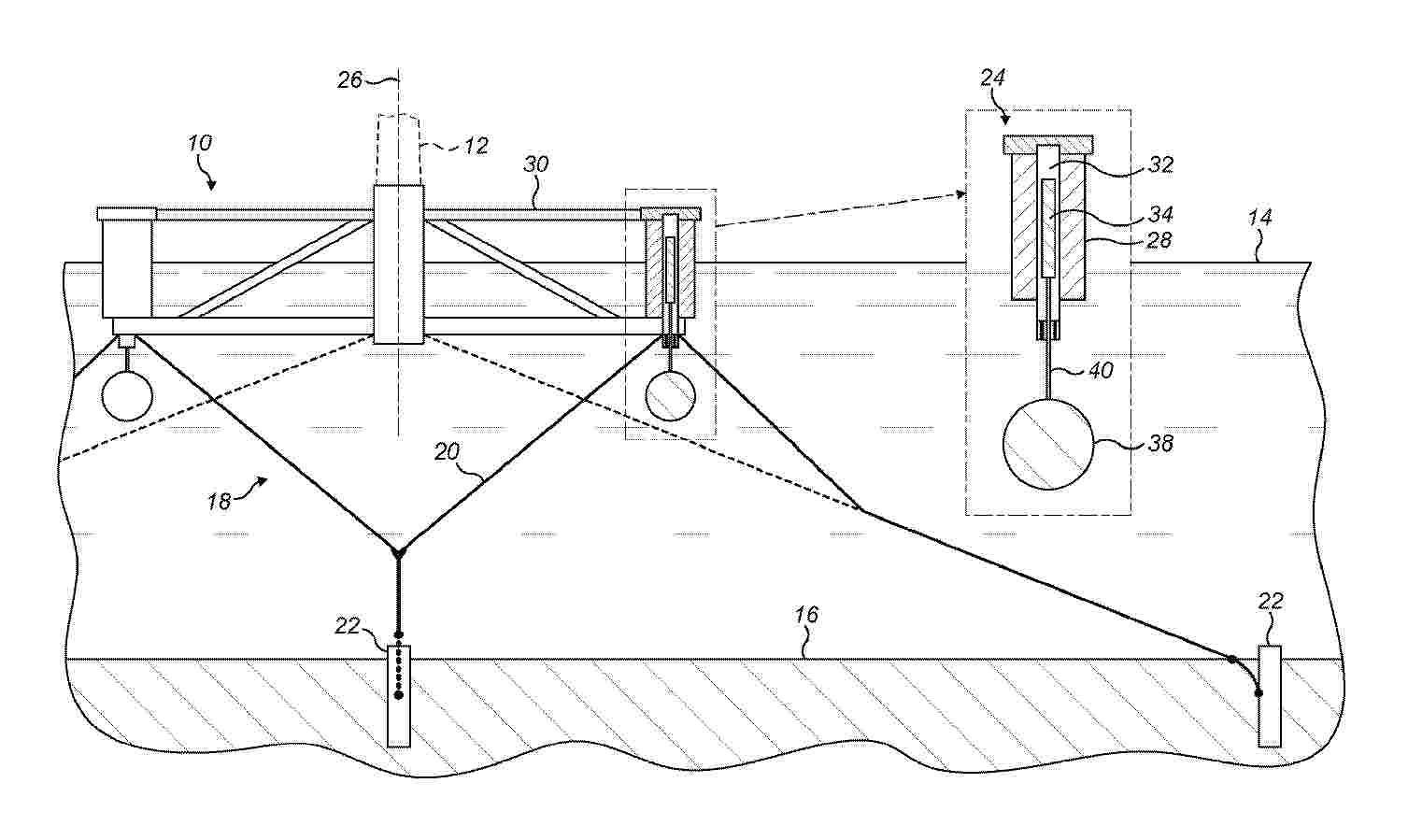
Resumen de: GB2635162A
Motion of a floating body 10 is damped by anchoring a piston 34 with a sea anchor 38 to restrict movement of the piston, permitting greater movement of a chamber 32 that surrounds the piston and is fixed to the body, but braking the resulting relative movement between the chamber and the piston by displacement of fluid in the chamber. Thus, a motion damper 24 has a brake structure that comprises a submerged sea anchor suspended in a water column and connected to a piston. The piston is movable within an elongate chamber that is in fixed relation to the floating body and that contains a fluid such as water. The sea anchor is connected to the piston by means of a link 40.
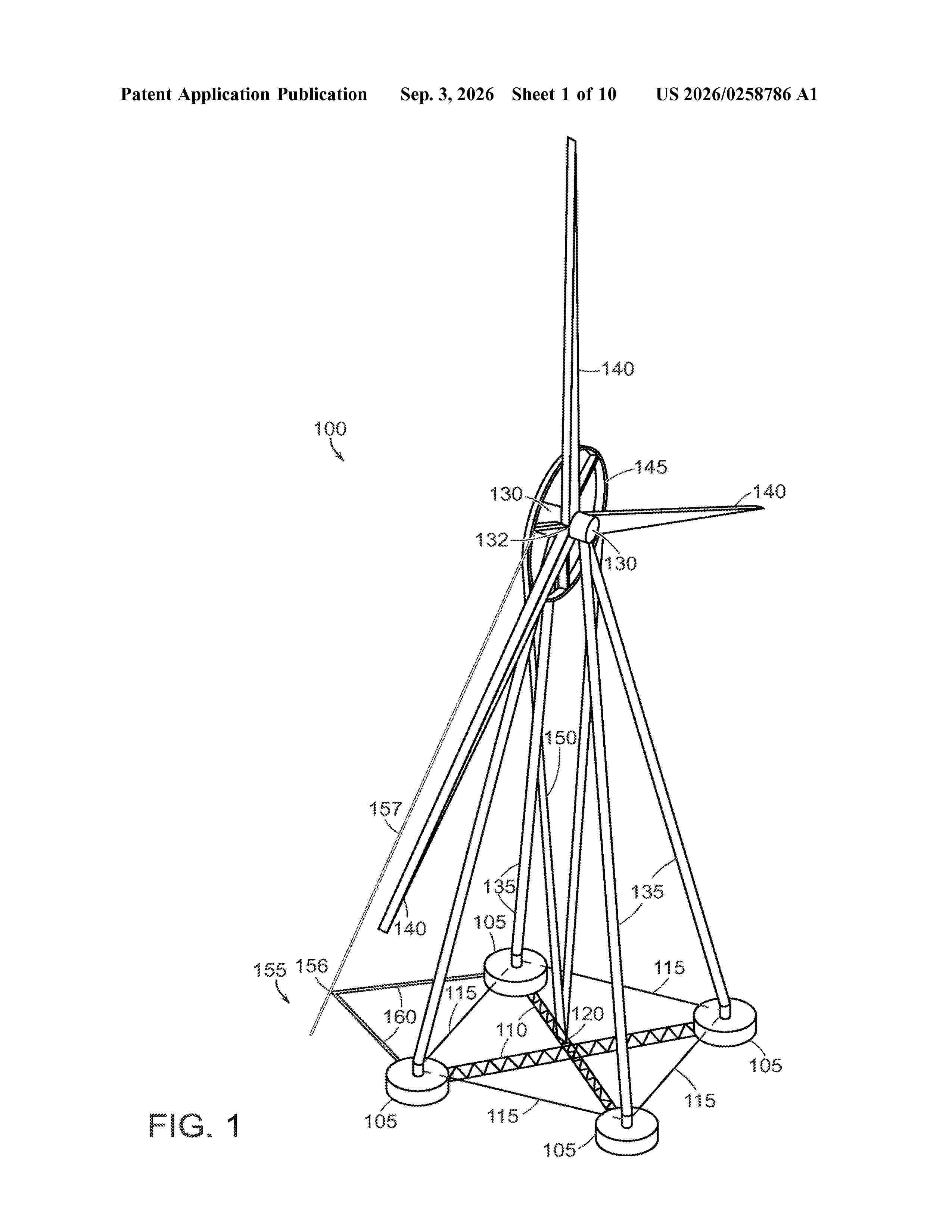
Resumen de: US20260258786A1
A high capacity, shallow draft, ocean-borne wind turbine is described, featuring a floating structure with at least three floats and a turbine rotor coupled to a generator with a power capacity of at least 3 MW. The turbine includes multiple blades, each with a length, and an operational draft less than about one-sixth of the blade length. Variations include configurations with round surf ace piercing floats and specific arrangements of four floats in a square formation. The design ensures a draft in operation of less than 1 meter per MW of rated capacity, providing an efficient and stable platform for offshore wind energy generation.
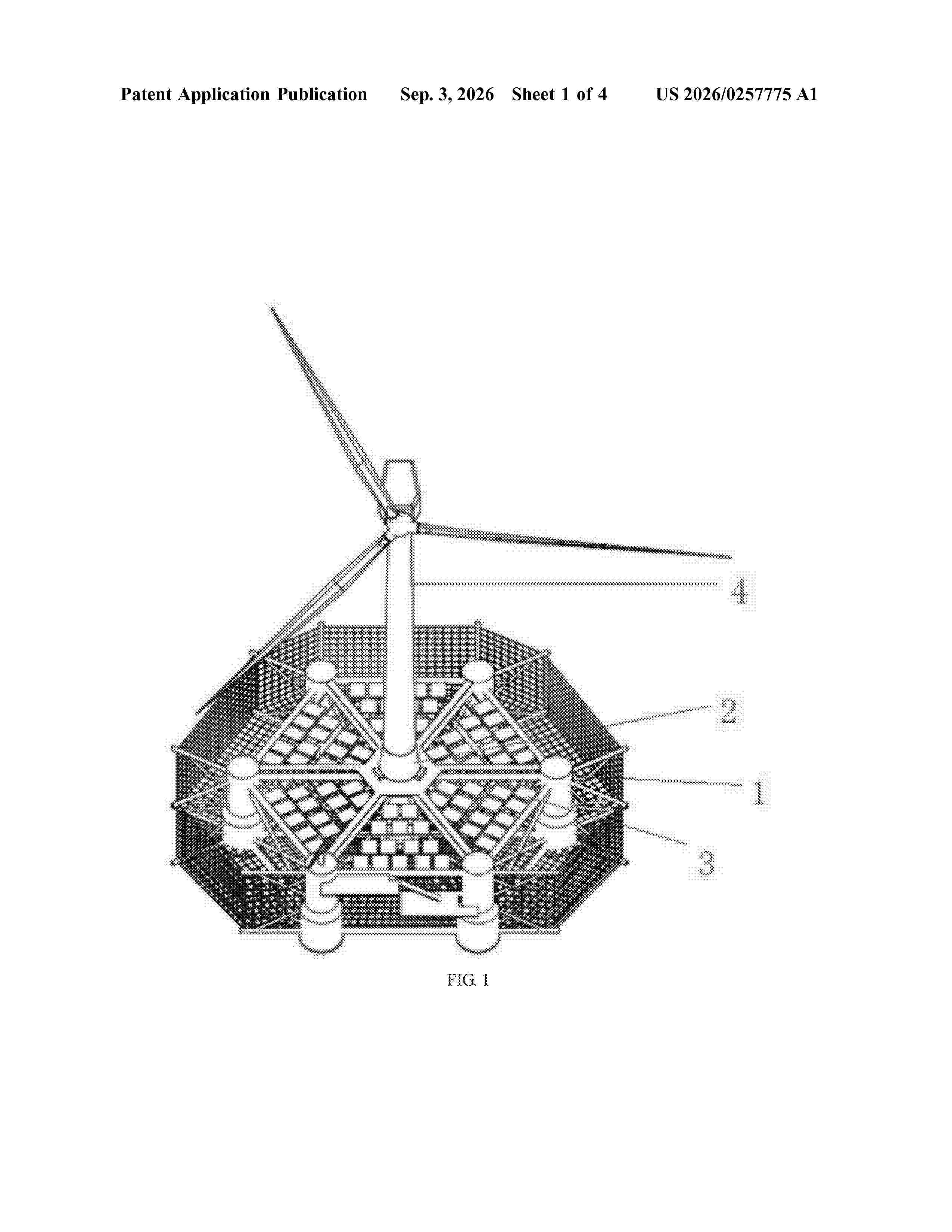
Resumen de: US20260257775A1
0000 A multifunctional integrated platform, includes a wind turbine, a photovoltaic power generation system, a floating body, and a net cage. The wind turbine, the photovoltaic power generation system and the net cage are all mounted on the floating body. The wind turbine is configured to perform wind power generation, and the photovoltaic power generation system is configured to perform photovoltaic power generation.
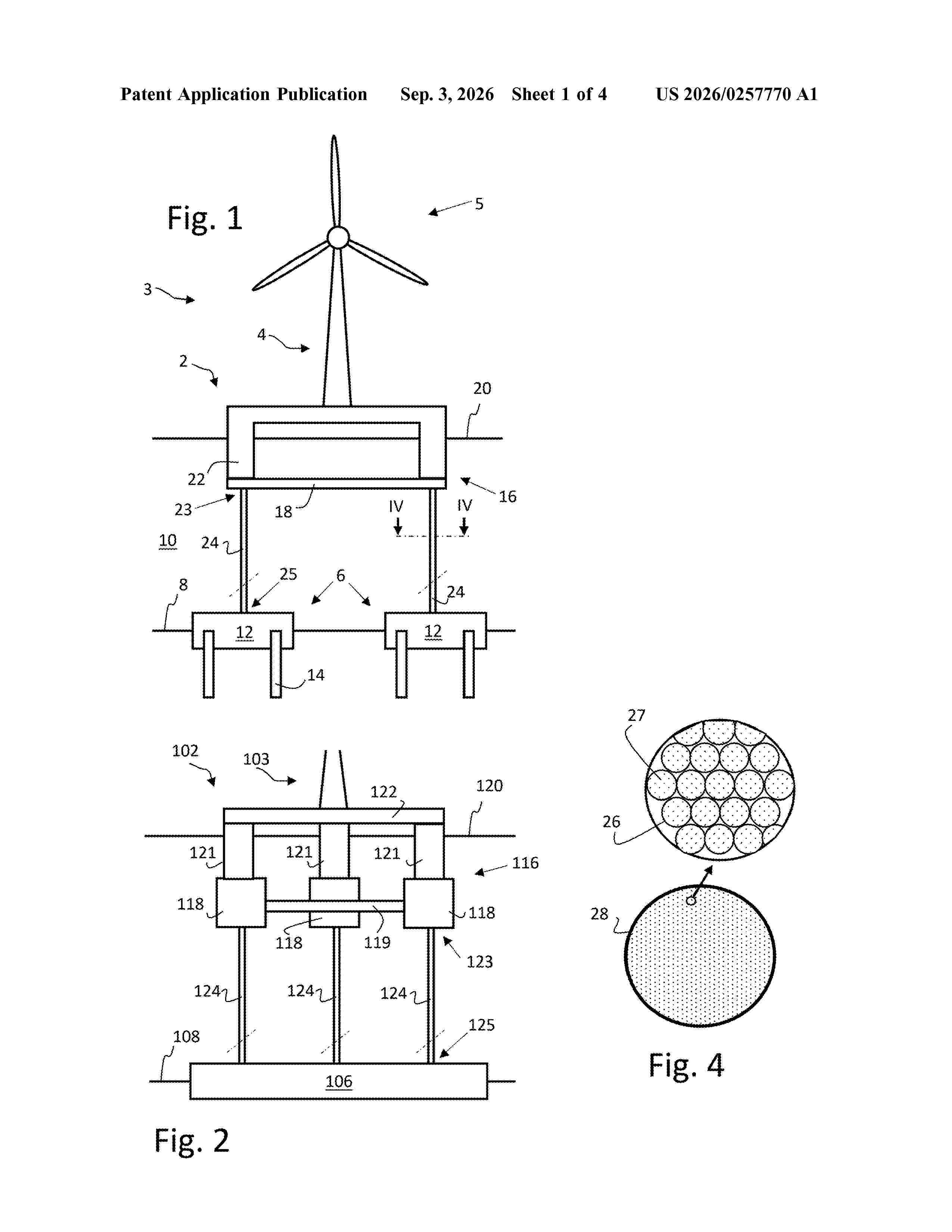
Resumen de: US20260257770A1
A tendon (224) for a tension leg platform (202), TLP, is provided. The TLP has a foundation (206), connectable to a bottom (208) of a body of water, and a buoyant hull (216). The tendon has a length of at least 300 meters, a proximal end (223), and a distal end (225). The tendon also has a proximal end fitting at the proximal end and a distal end fitting at the distal end. The tendon is connectable with the proximal end fitting to the hull and with the distal end fitting to the foundation to provide a pulling force on the hull. The tendon is formed with basalt fibres for transferring the pulling force from the proximal end fitting to the distal end fitting.
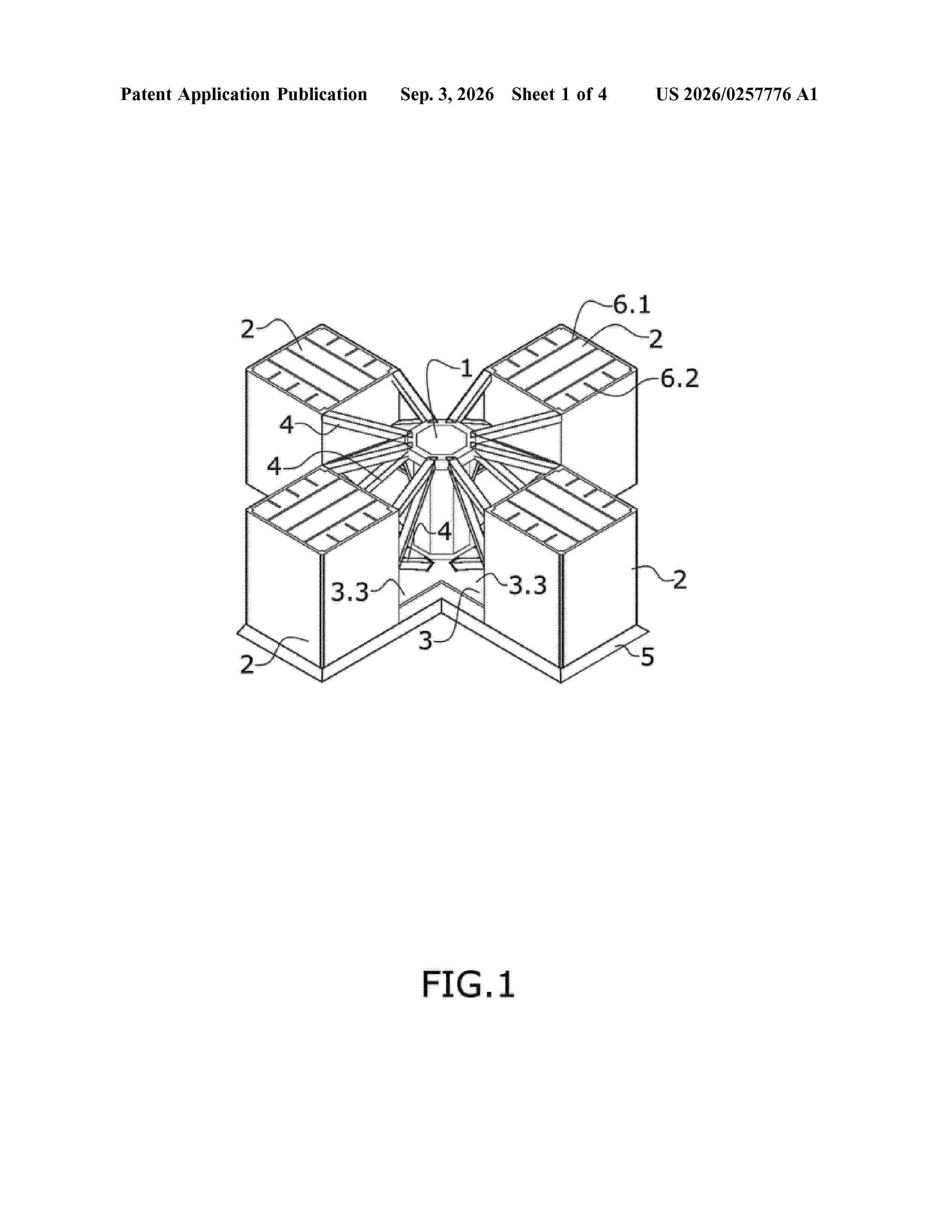
Resumen de: US20260257776A1
The present invention relates to a floating concrete structure for offshore wind applications, comprising a semi-submersible platform which in turn comprises: an inner column (1), a plurality of outer columns (2) distributed around the inner column (1) equidistant thereto (1), wherein the inner column (1) or one of the outer columns (2) supports a wind turbine tower, a plurality of beams (4) connecting each outer column (2) with the inner column (1). The floating structure further comprises a pontoon (3), the inner column (1) and the plurality of outer columns (2) being supported on the pontoon (3) and the plurality of beams (4) comprises first beams (4.1) which extend parallel to the pontoon (3) between the upper end of the inner column (1) to a point of attachment with the outer columns (2).
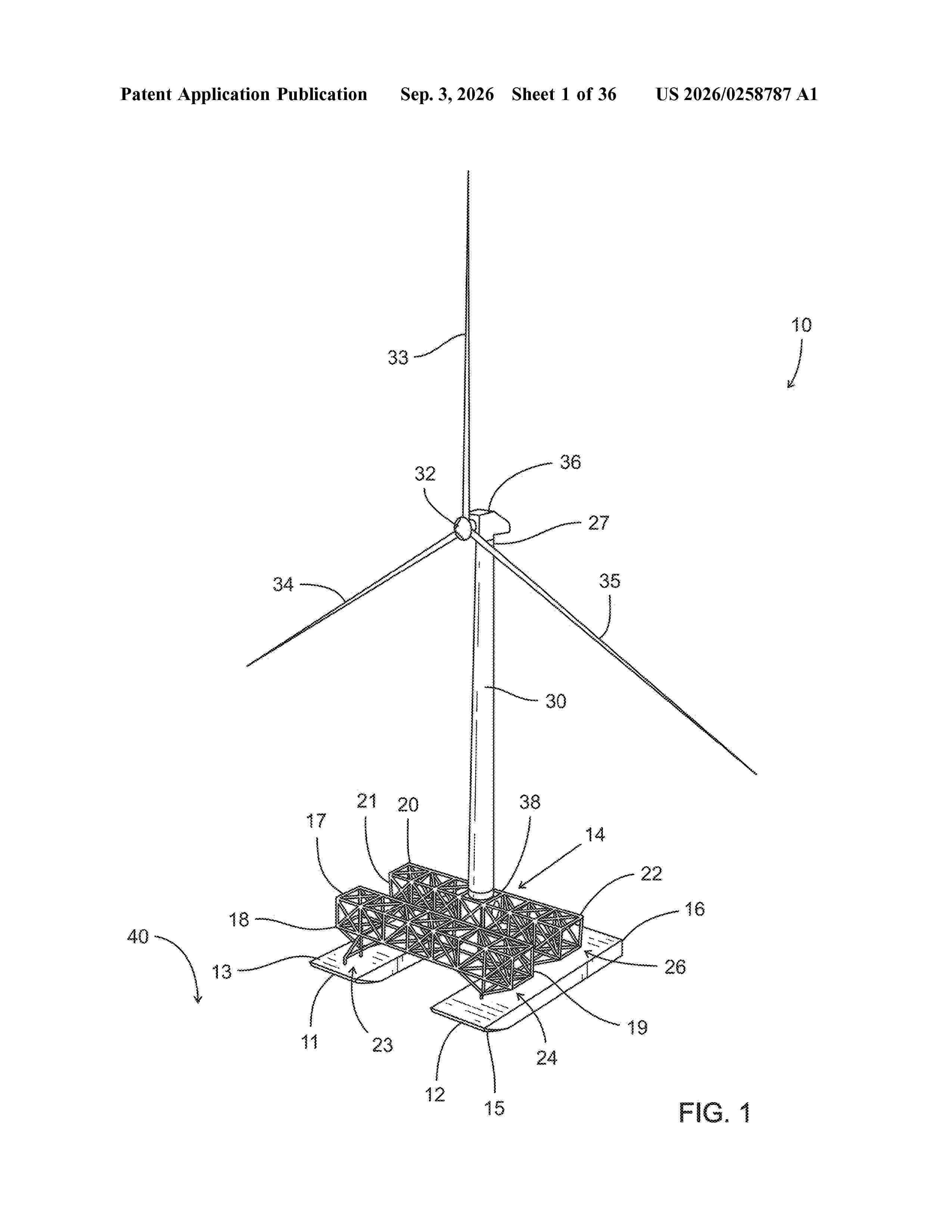
Resumen de: US20260258787A1
0000 An offshore floating wind turbine apparatus provides a pair of spaced apart hull sections with a space between the hull sections. One or more gantries each connect to the hull sections. The one or more gantries are spaced apart and connected to the hull sections with pivotal or universal joint connections. A wind turbine tower has upper and lower end portions. The wind turbine tower has a lower end portion with a base that is mounted to one of the gantries. The tower upper end portion has a rotor, hub, nacelle, and blades. A mooring system preferably holds the hull sections on a desired offshore marine location.
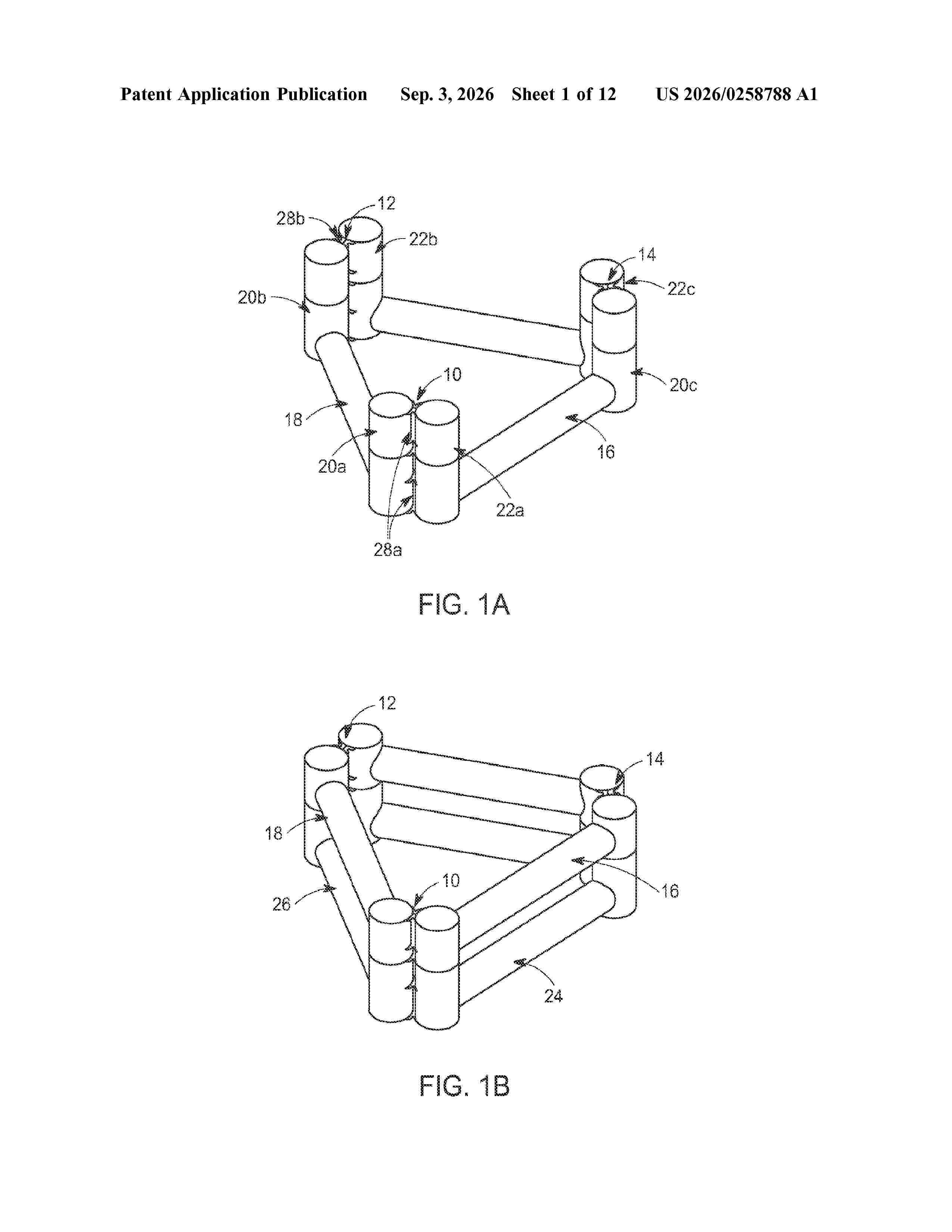
Resumen de: US20260258788A1
0000 Delivery of a high volume of floating systems for wind turbines can involve the standard design of sections, such as “tubes” or “cans,” comprising a rolled plate and ring stiffeners. The delivery can then involve the transportation of the sections in blocks to an assembly site that is closer to the planned installation point. The sections are used to manufacture semi-submersibles at the assembly site using a barge with cranes. The delivery can then involve the transportation of each of the semi-submersibles to a platform, such as a standard jack-up vessel or a crane jacket, near which the semi-submersible is temporarily attached to allow the installation of the Tower, the nacelle, and blades. Finally, the delivery involves the transportation of the completed wind turbine to the planned installation point, where it can be attached to a pile driven into the seafloor or moored during use. 0000 WO
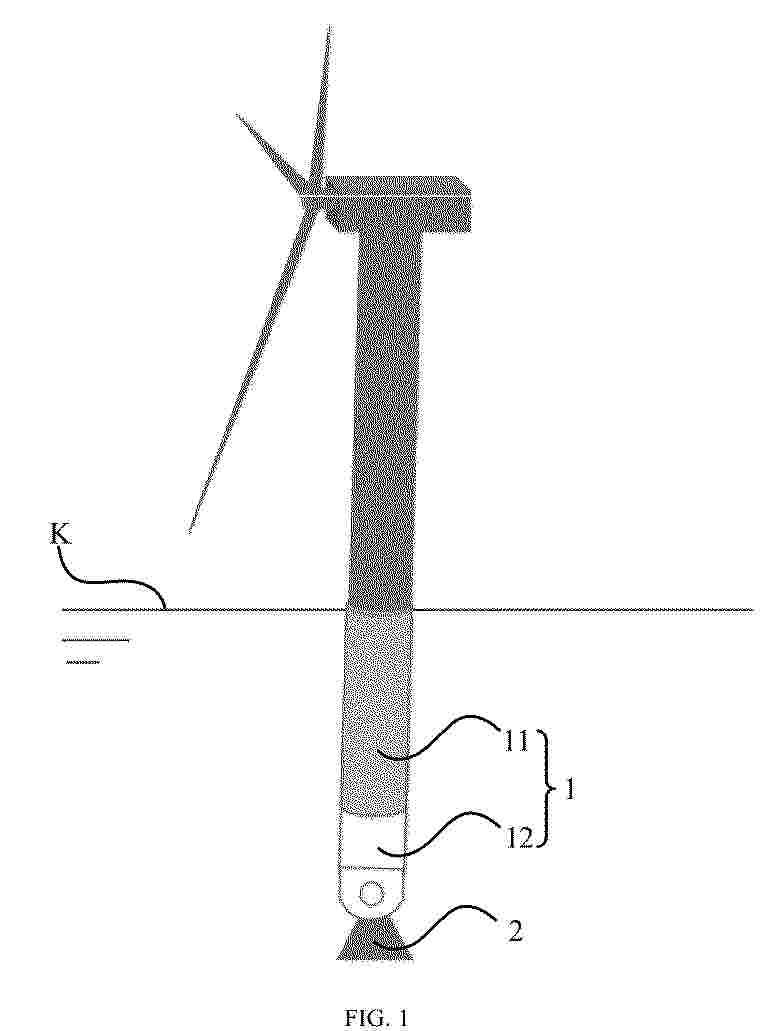
Resumen de: EP4800240A1
The present invention belongs to the technical field of offshore power generation, and specifically discloses a universal-joint-type connection device for connecting an offshore wind turbine platform to the seabed. By installing a cross universal-joint-type connection structure at the bottom of the main body of a tension-type floating offshore wind turbine platform and using the cross universal-joint-type connection structure as the swing center, when encountering strong winds or waves, the platform can swing in response to the winds or waves and float under the action of buoyancy. Meanwhile, by connecting the floating platform to the seabed, the forces acting on the platform main body can be transmitted to the seabed through the universal joint, avoiding the torsion phenomenon that occurs when mooring cables are used, improving the connection stability between the platform main body and the seabed, providing effective support for wind power generation equipment, and enabling the wind turbine unit to maintain stable wind-facing operation.
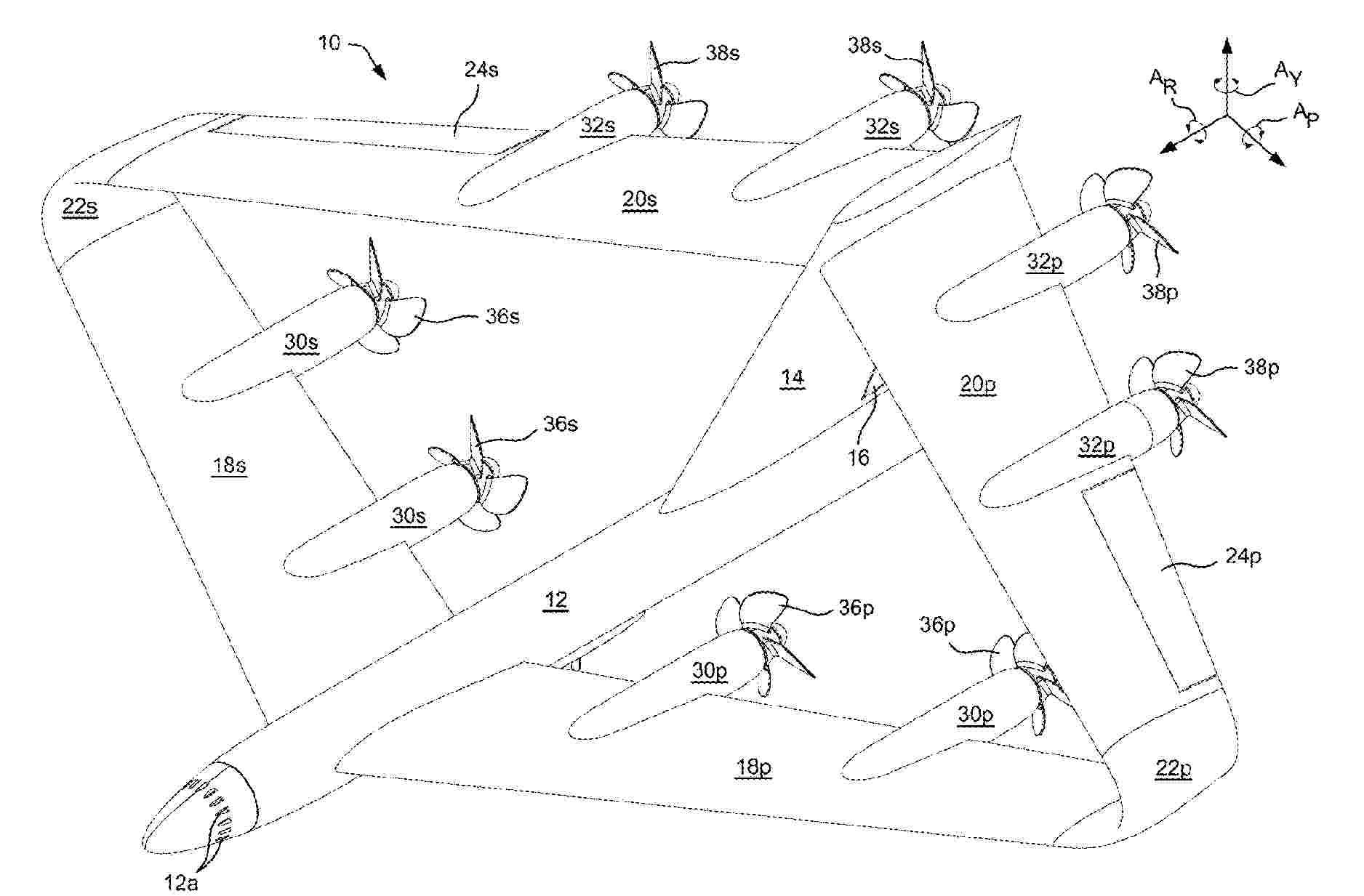
Resumen de: US2025137431A1
Submersible box-winged vehicle systems generate hydroelectric energy using naturally occurring tidal flows and/or water currents in a body of water. The vehicle systems include a submersible hull, an upright dorsal fin extending from an aft portion of the submersible hull, port and starboard wing assemblies each having respective proximal ends joined to a forward region of the hull an and an upper region of the dorsal fin so as to establish a box wing configuration, and electrical power generation units attached to the port and starboard wings, wherein each of the electrical power generation units include a generator and a marine propeller operatively connected to the generator so as to cause the generator to generate electrical energy in response to the marine propeller turning. The vehicle system when submerged in a body of water thereby allows tidal flows and/or currents associated with the body of water to responsively turn the marine propeller of each of the electrical power units thereby generating electricity by the generator operably associated therewith
Resumen de: EP4799916A2
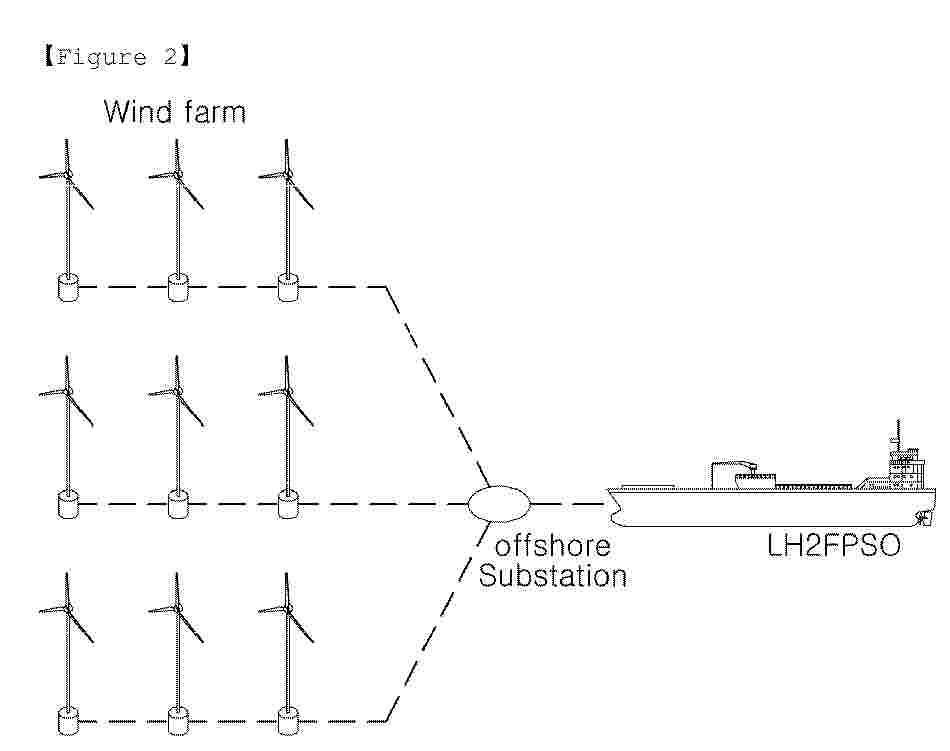
The present invention relates to an apparatus and method for producing, storing, and transferring hydrogen. According to the present invention, in order to address the problems of conventional systems and methods for producing, storing, and transferring marine green hydrogen, which are configured with a fixed structure in a small-scale offshore wind power generator on a coast or in a shallow sea area with a shallow depth of water, and thus, have low efficiency due to the difficulty in mass production of hydrogen, and a large storage space is occupied when the produced hydrogen is converted into a compressed gas form, and when the produced hydrogen is converted into ammonia, additional energy is required to extract the hydrogen again and there is a risk of environmental pollution and casualty in the event of an outflow accident, provided is a marine platform for producing, storing, and transferring marine green hydrogen, which is configured such that marine green hydrogen is produced through a floating marine structure configured to produce marine green hydrogen using electricity produced using renewable energy from the ocean, and simultaneously, the produced marine green hydrogen is stored, transferred, and offloaded through a single offshore platform (FPSO), thereby being possible to easily construct a large-scale production facility capable of producing, storing, and transferring marine green hydrogen without greenhouse gas emission on the basis of eco-friendly energy.
Resumen de: EP4799917A1
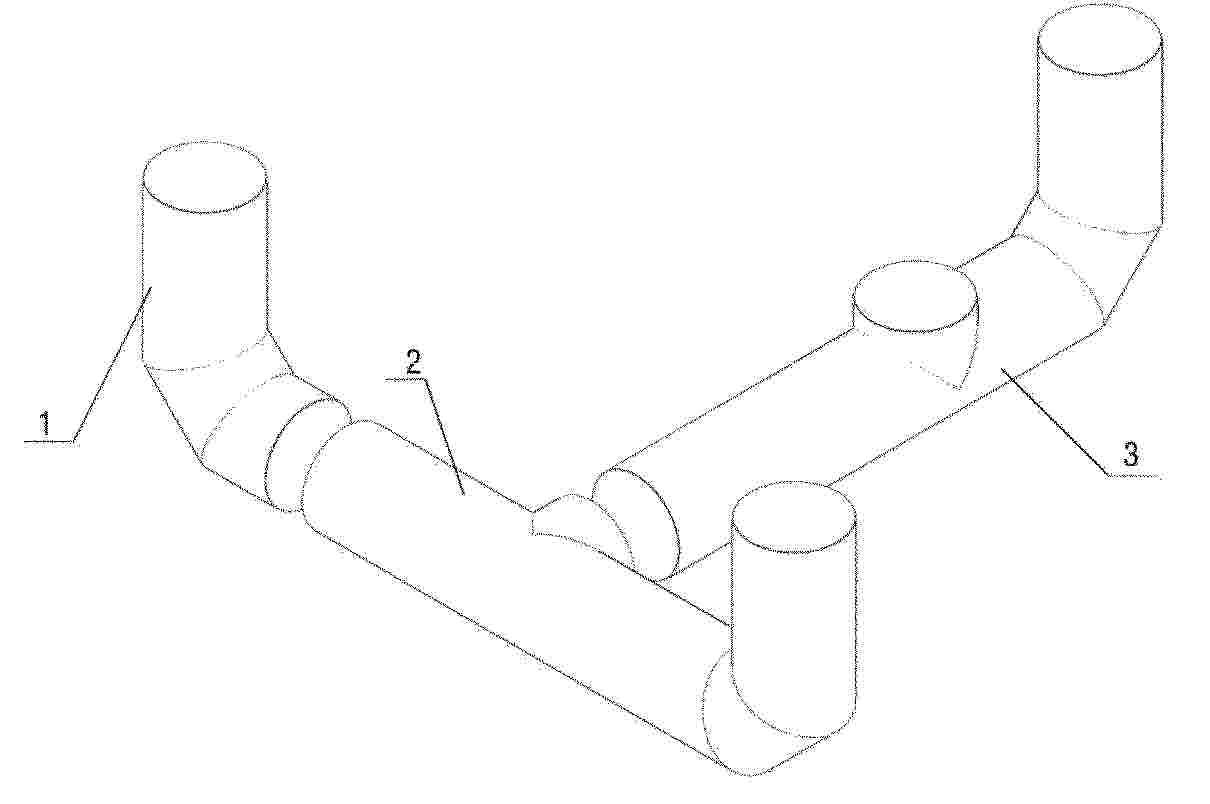
A floating foundation is provided and includes a plurality of foundation modules. The plurality of foundation modules are spliced and connected, and the foundation modules at least include a first foundation module extending in a first direction, a second foundation module extending in a second direction and a third foundation module extending in a third direction after the plurality of foundation modules being spliced, where the second foundation module and the third foundation module are located in a same plane, and a plane of the first foundation module is higher than planes of the second foundation module and the third foundation module being located. The first direction, the second direction and the third direction form a three-dimensional coordinate system. In addition, the disclosure also provides a method for assembling the floating fan.
Resumen de: CN224693491U
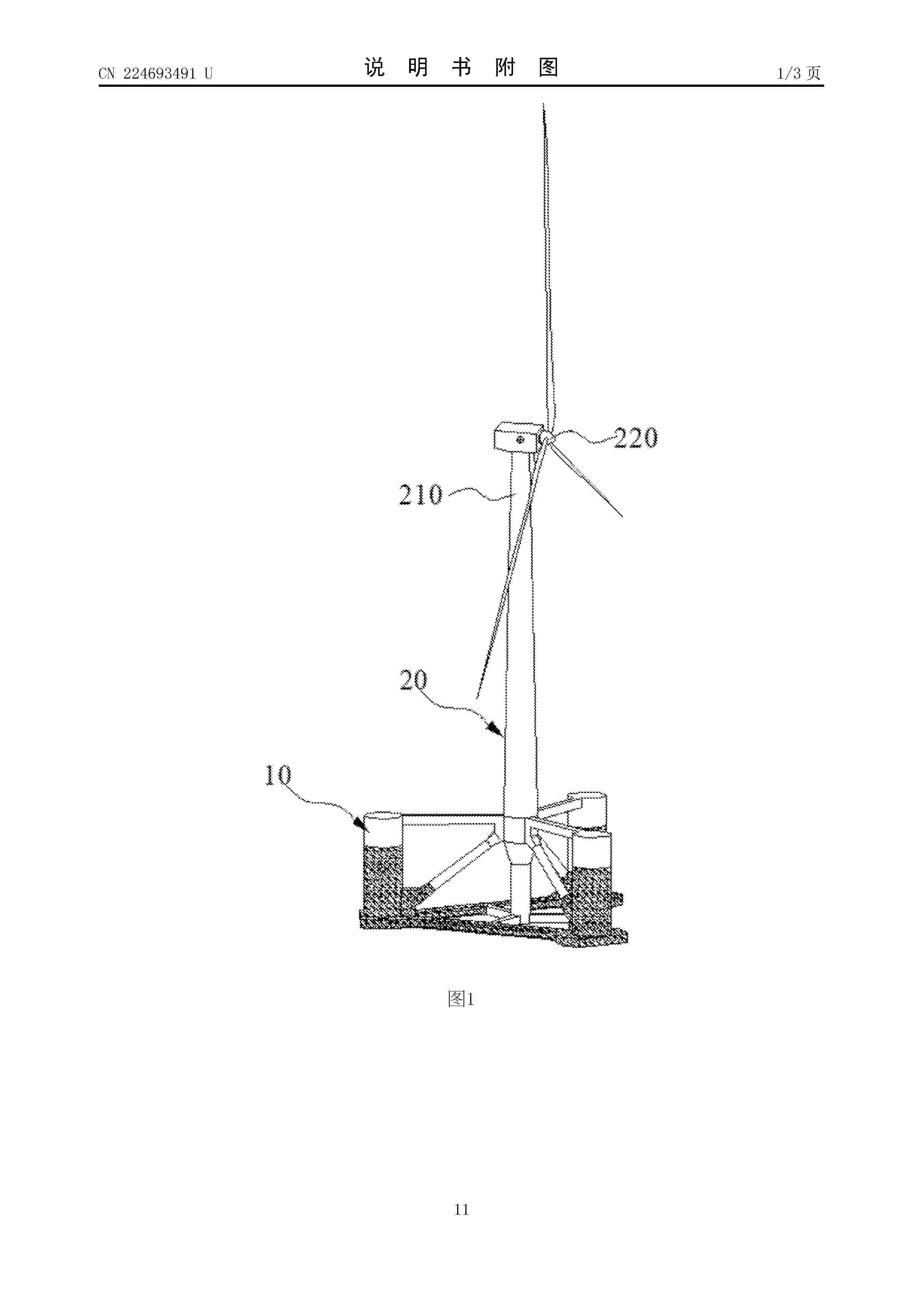
The utility model relates to a floating type draught fan foundation and a wind generating set, the floating type draught fan foundation comprises a center stand column, a floating body assembly and a supporting assembly, the center stand column is used for supporting a draught fan, the floating body assembly comprises a plurality of side stand columns and a floating body, the center connecting line of the side stand columns is in a polygon shape, and the supporting assembly is used for supporting the supporting assembly. The center stand column is located in the polygon, the floating bodies are supported at the lower ends of the side stand columns and the center stand column in the axial direction, and the side stand columns are connected to the center stand column through the supporting assemblies. Wherein at least part of the floating body assembly is of a concrete structure with a cavity, and the cavity is used for providing buoyancy. According to the floating type fan foundation in the embodiment of the invention, the cost can be reduced while the stability is improved.
Resumen de: CN224690386U
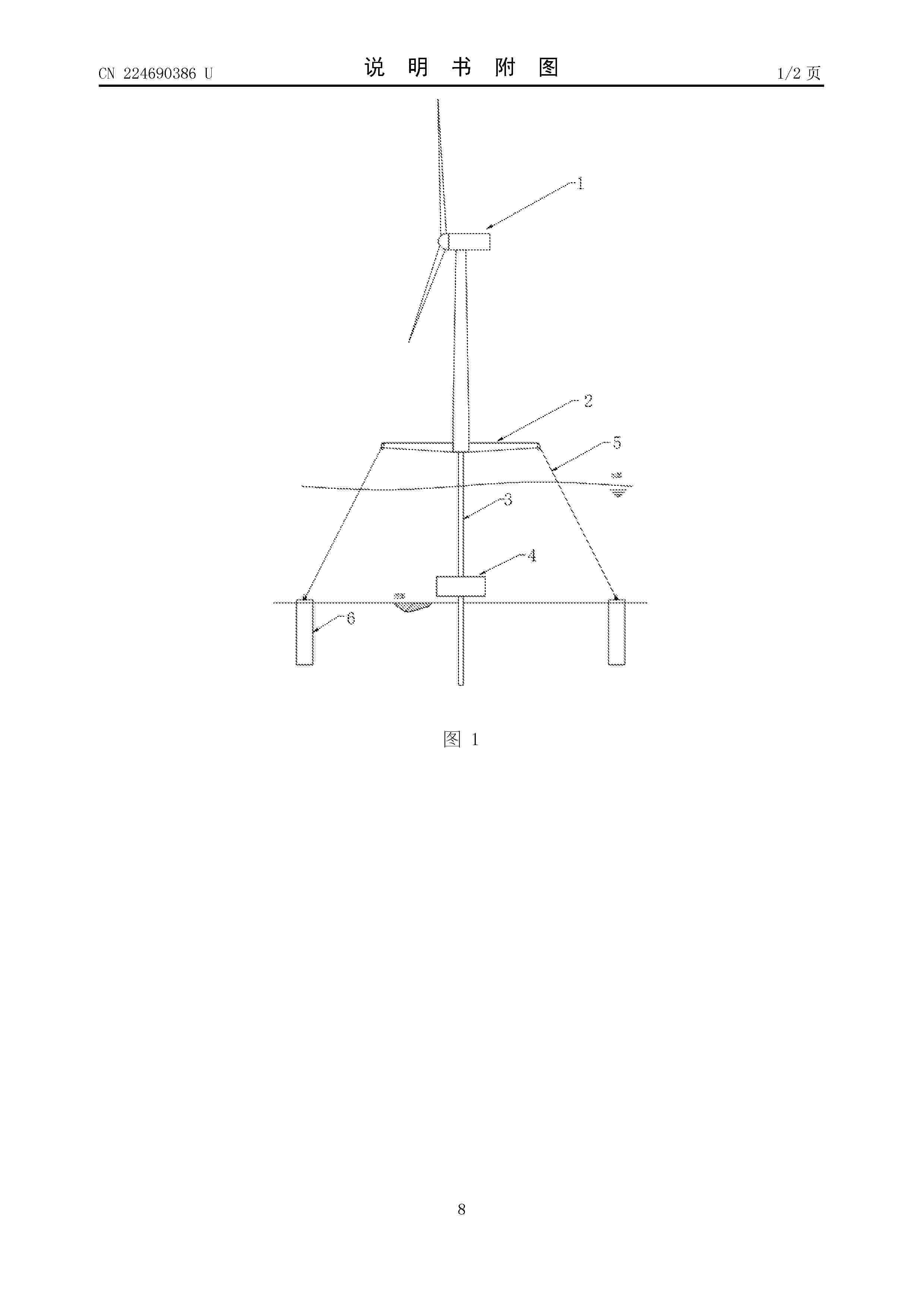
The utility model discloses a tension leg floating type wind power generation device, and relates to the technical field of wind power generation devices. The supporting pile is coaxially connected with the lower end of the wind power generation device, the supporting pile is used for being inserted into a seabed mud surface, a buoy is arranged on the supporting pile in a penetrating mode, the buoy is fixedly connected with the supporting pile to provide buoyancy for the supporting pile, and a positioning frame is arranged on the periphery of the end, connected with the supporting pile, of the wind power generation device; the pile anchors are located on the peripheries of the supporting piles and fixed to the seabed mud surface, a plurality of tension legs are connected between the pile anchors and the positioning frame, and the tension legs are in a tensioned state. The tension leg floating type wind power generation device solves the problems that an existing tension leg floating type connecting assembly is high in production cost, a floating body of the tension leg floating type connecting assembly can horizontally slide on the water surface, and the floating body cannot horizontally slide on the water surface; and the cable is easy to straighten and damage.
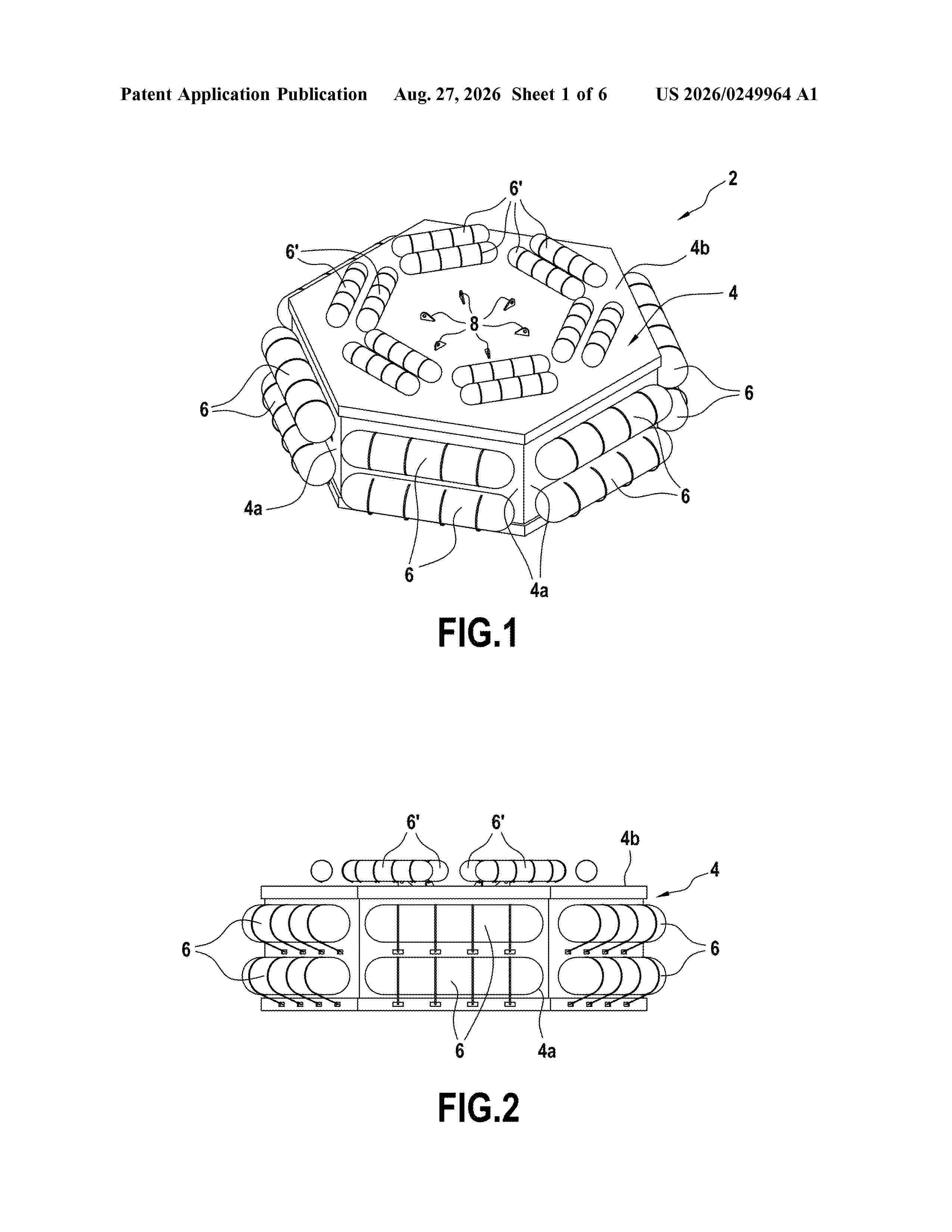
Resumen de: US20260249964A1
A counterweight for a semi-submersible float of an offshore wind turbine can be configured in a sinking state or a floating state, and includes a main counterweight structure made of a material that makes it sinking when immersed in water, and a plurality of airbags removably fixed to the main structure so as to make the counterweight floating when the airbags are inflated. A method is provided for installing such a counterweight
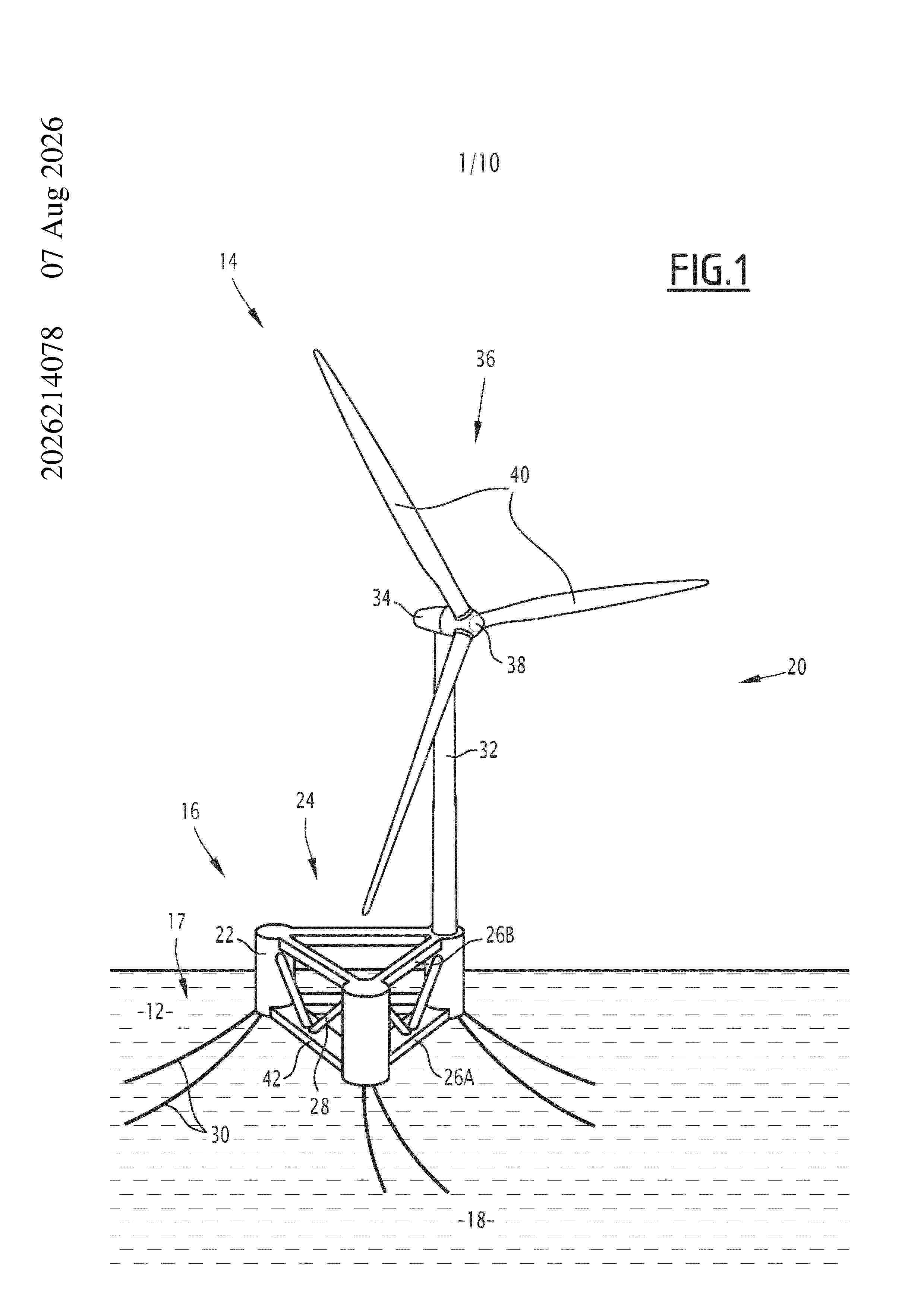
Resumen de: AU2026214078A1
Offshore floating intervention platform having a lifting tower with a position compensation device, related assembly and method The intervention platform (10) comprises at least a wind turbine equipment lifting tower (100), having at least a lifting unit (110A, 110B) comprising : a mast (112), a wind turbine equipment elevator (114) configured to vertically move along the mast (112) between a lower loading/unloading position and at least an upper intervention position and a lifting actuator (116), configured to move the wind turbine equipment elevator (114) between the lower unloading/loading position and the upper intervention position. The lifting unit (110A, 110B) comprises at least a position compensation device (118) configured to be activated in the loading/unloading position and/or in the intervention position to compensate local vertical displacements between the intervention platform (10) and the wind turbine platform when the intervention platform (10) is docked to the wind turbine platform. Figure 6 and ug u g a n d F' rx 140, 142 40 ug u g
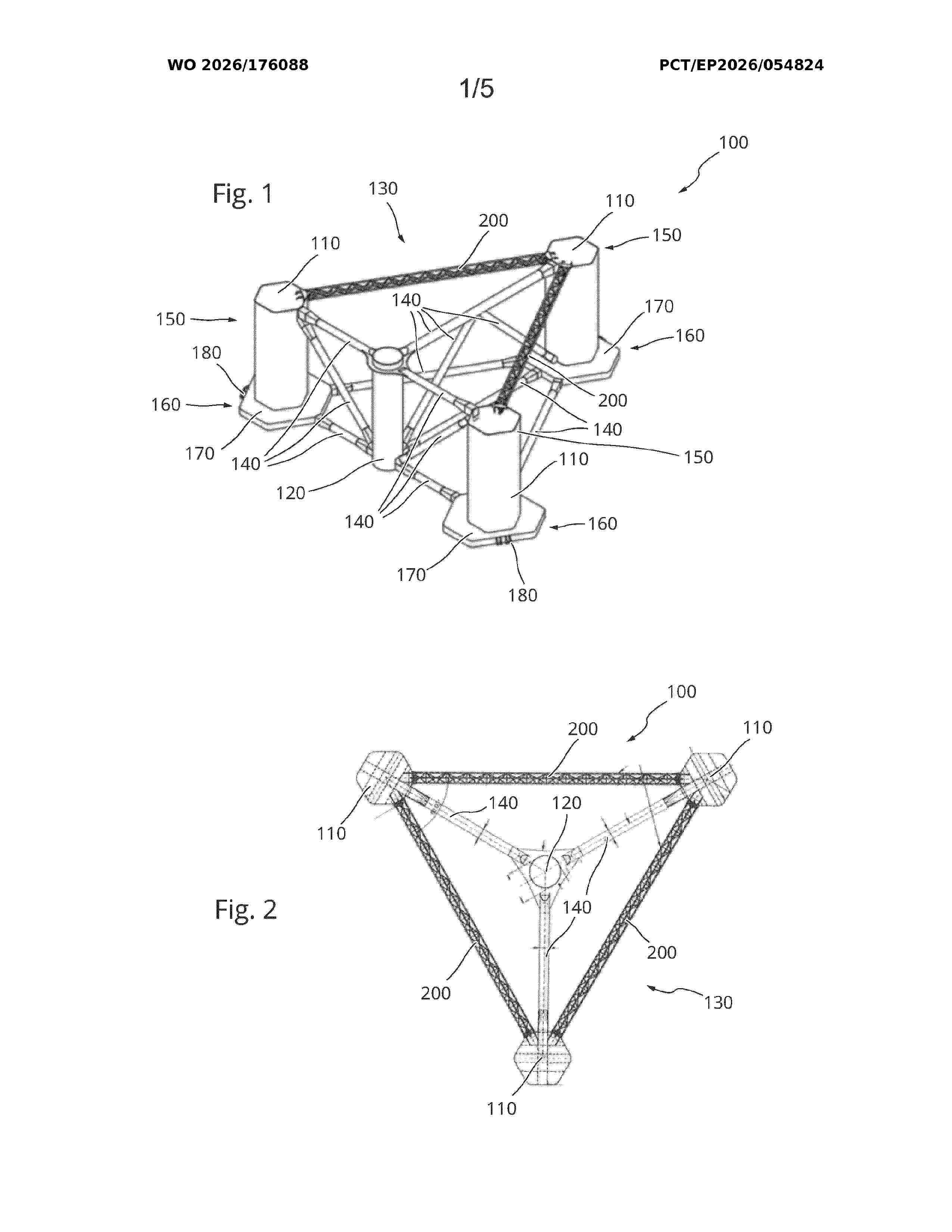
Resumen de: WO2026176088A1
Semi-submersible offshore support structure for a wind turbine comprising: three semi-submersible columns and a receiving element for a wind turbine; a connection structure comprising a plurality of braces connecting the semi-submersible columns and/or the receiving element, wherein at least one of the braces is a truss-brace.
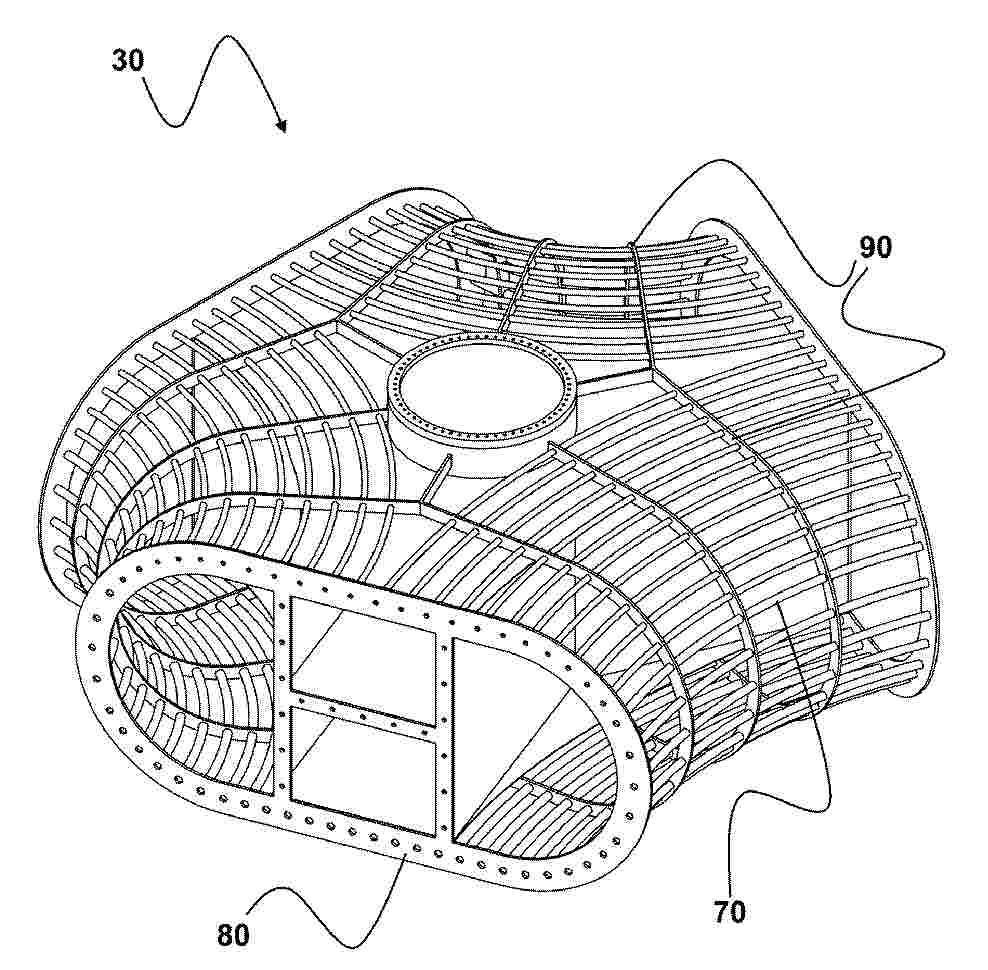
Resumen de: DE102025107505A1
Schwimmende Windenergieanlage mit einem schwimmenden Fundament (10) und einem auf dem schwimmenden Fundament (10) angeordneten Turm (20) mit wenigstens einer auf dem Turm (20) angeordneten, einen Rotor aufweisenden Energiewandlungseinheit, wobei das schwimmende Fundament (10) eine Mehrzahl von sich von einem Zentralelement (30) erstreckenden Armen (40, 50, 60) aufweist, die mittels einer Mehrzahl von Spannelementen mit dem Zentralelement (30) verspannt sind, dadurch gekennzeichnet, dass das Zentralelement (30) zwischen wenigstens zwei der Mehrzahl von Armen (40, 50, 60) mittels wenigstens eines diese zwei Arme (40, 50, 60) verbindenden Spannelements eingespannt ist.
Nº publicación: US20260251124A1 27/08/2026
Solicitante:
OSBIT LTD [GB]
OSBIT LIMITED
Resumen de: US20260251124A1
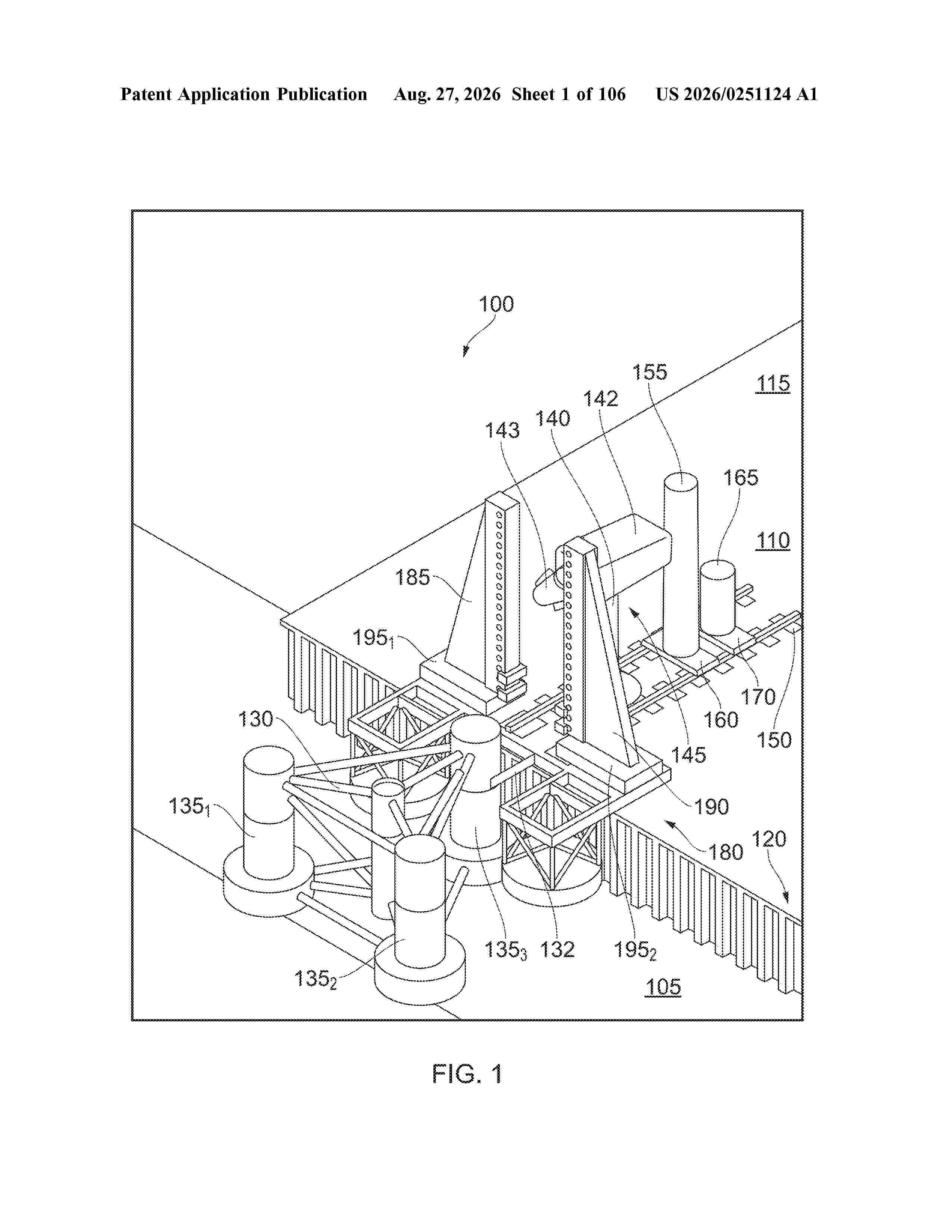
0000 Apparatus and a method of providing a wind turbine (WT) are disclosed. The method comprises the steps of: at a lift position location, erecting a wind turbine portion that comprises at least one elongate tower and a nacelle member on an upper end region of the elongate tower and at least one blade member, by providing a lower tower section at the lift position location, lifting the lower tower section vertically via at least one lift support thereby providing a lifted tower section, urging at least one incoming further tower section to the lift position location, to a position under a preceding tower section, and securing a top region of the incoming further tower section to a lower region of a lifted preceding tower section; whereby lifting tower sections comprises providing tower sections, one-by-one, to the lift position location that is at a desired position proximate to at least one lift support, gripping an incoming tower section via at least one lift beam mounted on respective climber elements movable with respect to each lift support, and via the climber elements raising the gripped tower section upwards to a raised position.
 BOPI
BOPI
 Sede Electrónica