Si deseas distinguir tus productos, servicios o ambos de los de otra empresa, es posible que necesites una marca o nombre comercial. Descubre qué son, en qué consiste su procedimiento de registro y qué implica.

Información sobre los plazos de presentación de solicitudes de transformación de marcas de la Unión Europea en marca nacional española. Más información


Si tienes un nuevo dispositivo, producto o procedimiento que resuelva un problema técnico o tenga una ventaja práctica, existen distintas formas de protegerlo en España y en otros países. Descubre cómo hacerlo.

¿Tu innovación reside en la estética, la ornamentación o la apariencia de tu producto? Protégela mediante un diseño industrial. Descubre qué derechos confiere el registro y cómo realizar la tramitación.

Las indicaciones geográficas protegen el nombre de un producto originario de una zona geográfica, a la cual le debe una determinada calidad, reputación u otra característica. Descubre qué son, en qué consiste su procedimiento de registro y qué beneficios conceden.

Las patentes publicadas en todo el mundo son una valiosa fuente de información científica, técnica y comercial.

Si eres emprendedor/a o una empresa y quieres potenciar y mejorar la rentabilidad de tu negocio protegiendo de forma adecuada los activos intangibles de tu organización, en este espacio encontrarás lo necesario.


 574
resultados
574
resultados
 Última actualización
15/09/2026 [08:53:00]
Última actualización
15/09/2026 [08:53:00]


Resumen de: GB2700593A
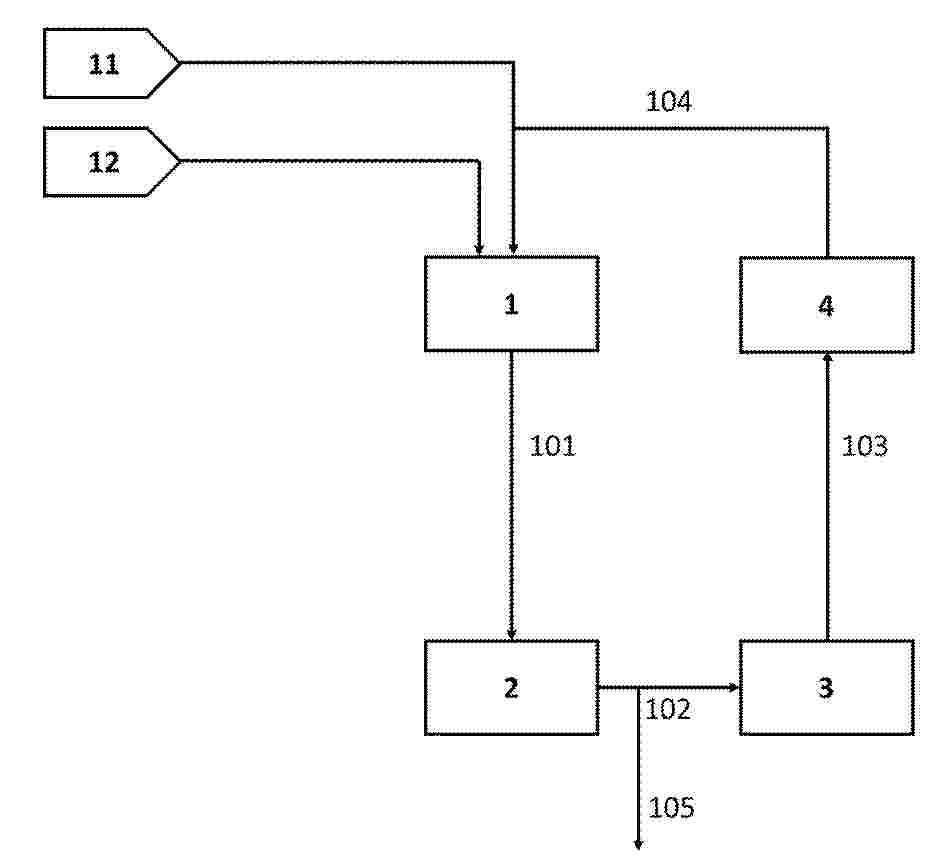
A process for controlling an ammonia cracking plant comprising a fired ammonia cracking reactor 1, may comprise the steps of: decreasing a flow of ammonia feedstock 11 to the catalyst containing reaction tube inlets, and decreasing the heat output of a fuel combustion zone of the reactor. The obtained cracked gas from the outlet of the reaction tubes may be cooled 2, increased in pressure 3, and heated 4 before recirculating the cracked gas to the inlet of the reaction tubes and passing it through the reaction tubes. An ammonia plant in a turn down state may have operated said process. The process is intended to place the ammonia cracking plant into a turndown state which enables it to rapidly return to normal operation without wasting ammonia feedstock or hydrogen. A process may return the plant from turndown by increasing ammonia feedstock flow and heat output and obtaining cracked gas. Figure 2

Resumen de: WO2025201590A1
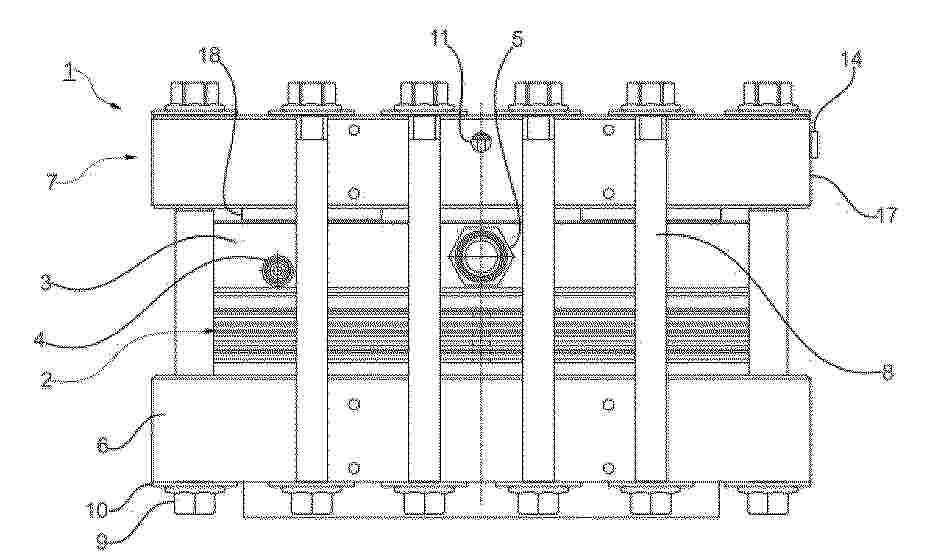
An arrangement (1) of electrochemical cells (2), in particular electrolysis cells, comprises a hydraulic compression device (7) which has a plurality of pistons (18) each guided within a cylinder (15, 16) and which is designed to exert a compressive force on the stacked cells (2). The cylinders (15, 16) are connected to one another by at least one transverse connection (12, 13) provided for pressure equalization.
Resumen de: CN121569378A
The present disclosure provides an ion conducting membrane comprising a sulfonated hydrocarbon ionomer wherein the ion conducting membrane has a lambda value of less than about 60.
Resumen de: WO2025181491A1
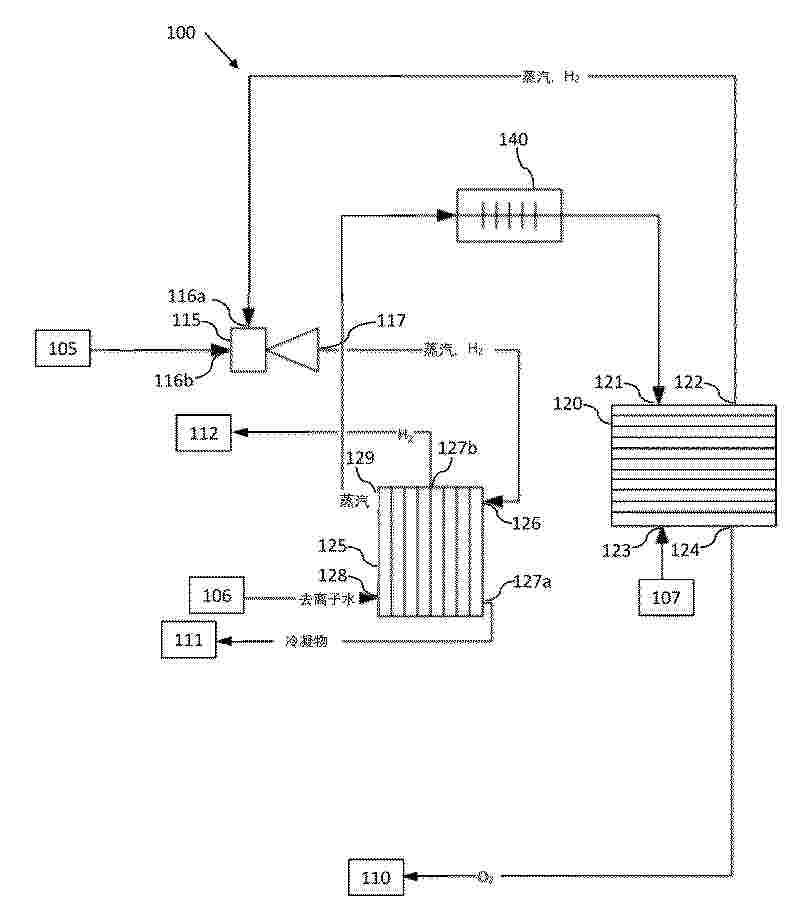
An electrolyser system comprising at least one electrolyser cell comprising a first outlet for exhaust of off-gas from the first fluid volume at a relatively low pressure, a steam supply configured to supply steam at a relatively high pressure, means for mixing two fluids, a first heat exchanger; and a fuel supply. The means for mixing is configured to exhaust, at an intermediate pressure, an intermediate fluid comprising a mixture of steam from the supply and off-gas from the first fluid volume, and the system is configured to route said intermediate fluid to a first path of the first heat exchanger. The first heat exchanger is configured to transfer heat from the first path for the intermediate fluid to a second path for fuel from the fuel supply to separate water from the first product of the electrolyser reaction by condensing liquid water out of the intermediate fluid. The system is configured to route the first product of the electrolyser reaction out of the system at the intermediate pressure, and to route fuel from the second path of the first heat exchanger to a first inlet of the at least one electrolyser cell.
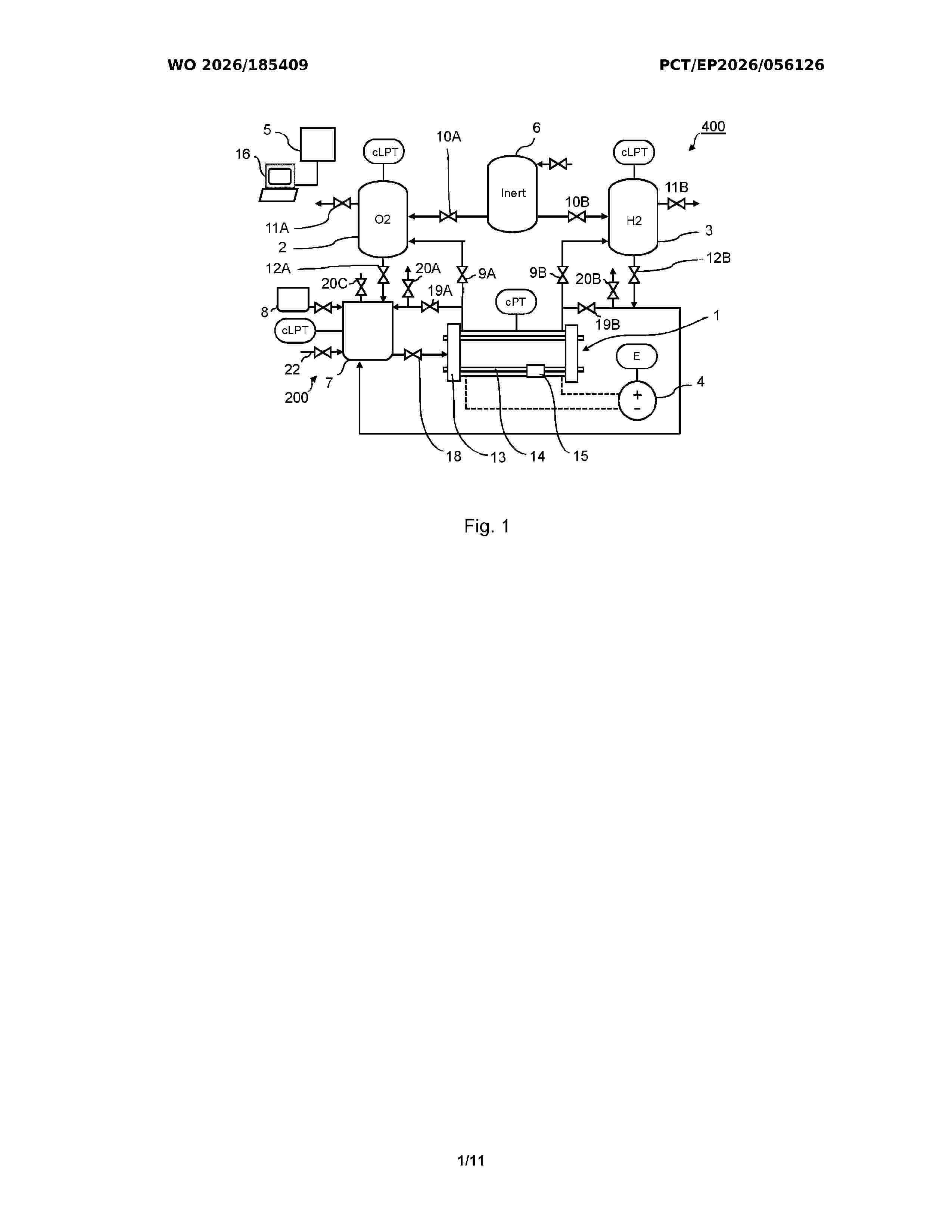
Resumen de: WO2026185409A1
The invention relates to a method for standby of an electrolysis system (400, 600). The electrolysis system comprises an electrolysis unit (1) and an oxygen gas separator (2) for separating oxygen gas and electrolyte, and the electrolysis unit (1) is connected to a power connection point (4) for an energy supply (E) for electrolysis in the electrolysis unit (1). The method comprises: lowering the hydrogen content (g(H2)) in the oxygen gas separator (2) in response to a signal for interrupting the electrolysis if a first threshold value (c1(H2), cMi_1(H2)) of a hydrogen gas content in the oxygen gas separator is exceeded, if a first threshold value of an oxygen gas content (c1(O2), cMi_1(O2)) in the oxygen gas separator is not met, if a predetermined first time (t1) is reached, if a first threshold value (r1, rMi_1) for a ratio (c(H2)/c(O2)) of hydrogen gas content to oxygen gas content is exceeded, and/or if a first threshold value (1/r1, 1/rMi_1) for a ratio (c(O2)/c(H2)) of oxygen gas content to hydrogen gas content is not met; and subsequently interrupting the electrolysis of the electrolysis unit (1). The invention also relates to a control device and to an electrolysis system.
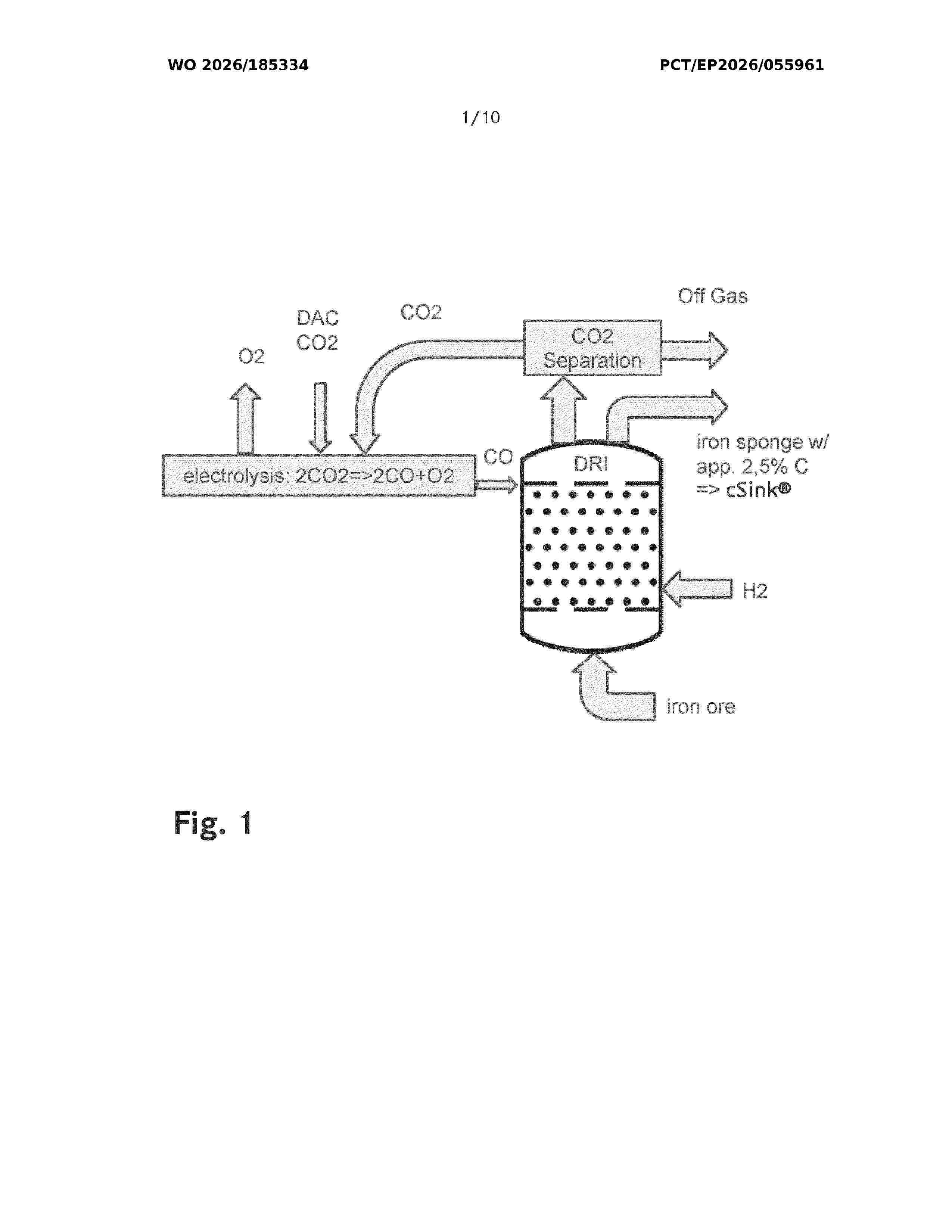
Resumen de: WO2026185334A1
In a process for the reduction of iron oxides comprising a DRI-process, wherein the DRI- process comprises processing iron, in particular iron ore, by H2 and CO in a process chamber in order to reduce the iron oxide to sponge iron, wherein the CO for use in the DRI-process is formed from CO2, at least a part of, in particular at least 90%, preferably 100% of the CO2 being obtained from a DAC process, whereby at least a part, in particular at least 90%, preferably 100% of carbon originating from the CO2 is stored permanently in the sponge iron.
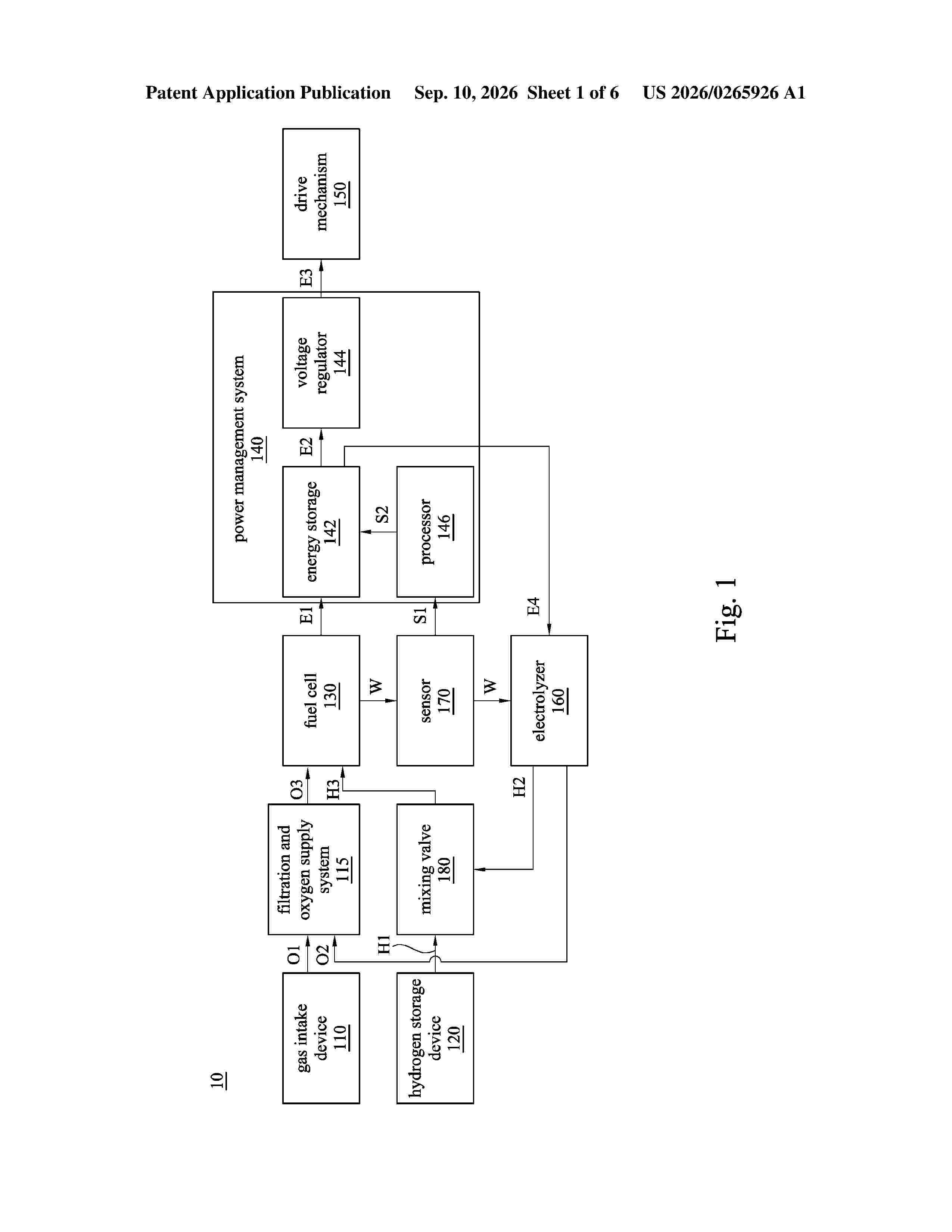
Resumen de: US20260265926A1
A hydrogen-powered autonomous mobile vehicle includes a mixing valve, a hydrogen storage device, a fuel cell, and an electrolyzer. The mixing valve has a first gas intake port coupled to the hydrogen storage device, a second gas intake port, and an outlet port coupled to the fuel cell, and includes a gas intake pipe coupled to the electrolyzer. The fuel cell is configured to perform a first redox reaction based on hydrogen supplied by the hydrogen storage device to generate electric energy and water. The electrolyzer is configured to receive the water and perform a water electrolysis reaction to generate hydrogen. The mixing valve is configured such that the hydrogen supplied by the hydrogen storage device and the hydrogen generated by the water electrolysis reaction converge and are delivered to the fuel cell. The fuel cell is configured to perform a second redox reaction based on the converged hydrogen.
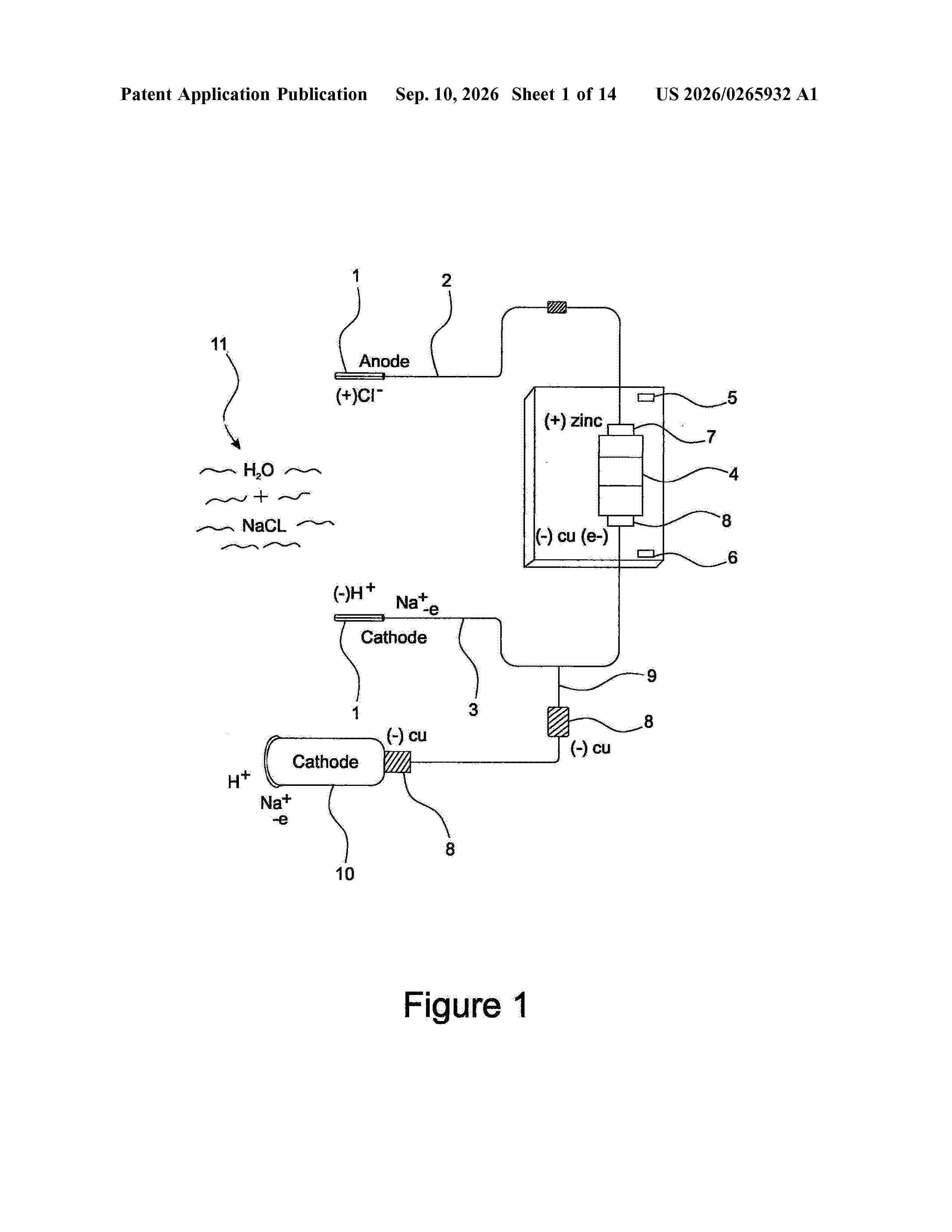
Resumen de: US20260265932A1
0000 An electrolysis apparatus is presented. Anode and cathode catalysts or carbon electrodes are submerged in saltwater in a basin with the goal of extracting hydrogen gas, which is a renewable source of energy. The basin is metallic and includes rubber on the outside of the basin to handle high temperatures. A battery connected to the basin serves as a power supply and provides direct electric current to cause the breakdown of the element via electricity to produce hydrogen gas and direct the hydrogen gas to other items as a source of electricity.
Resumen de: WO2026184800A1
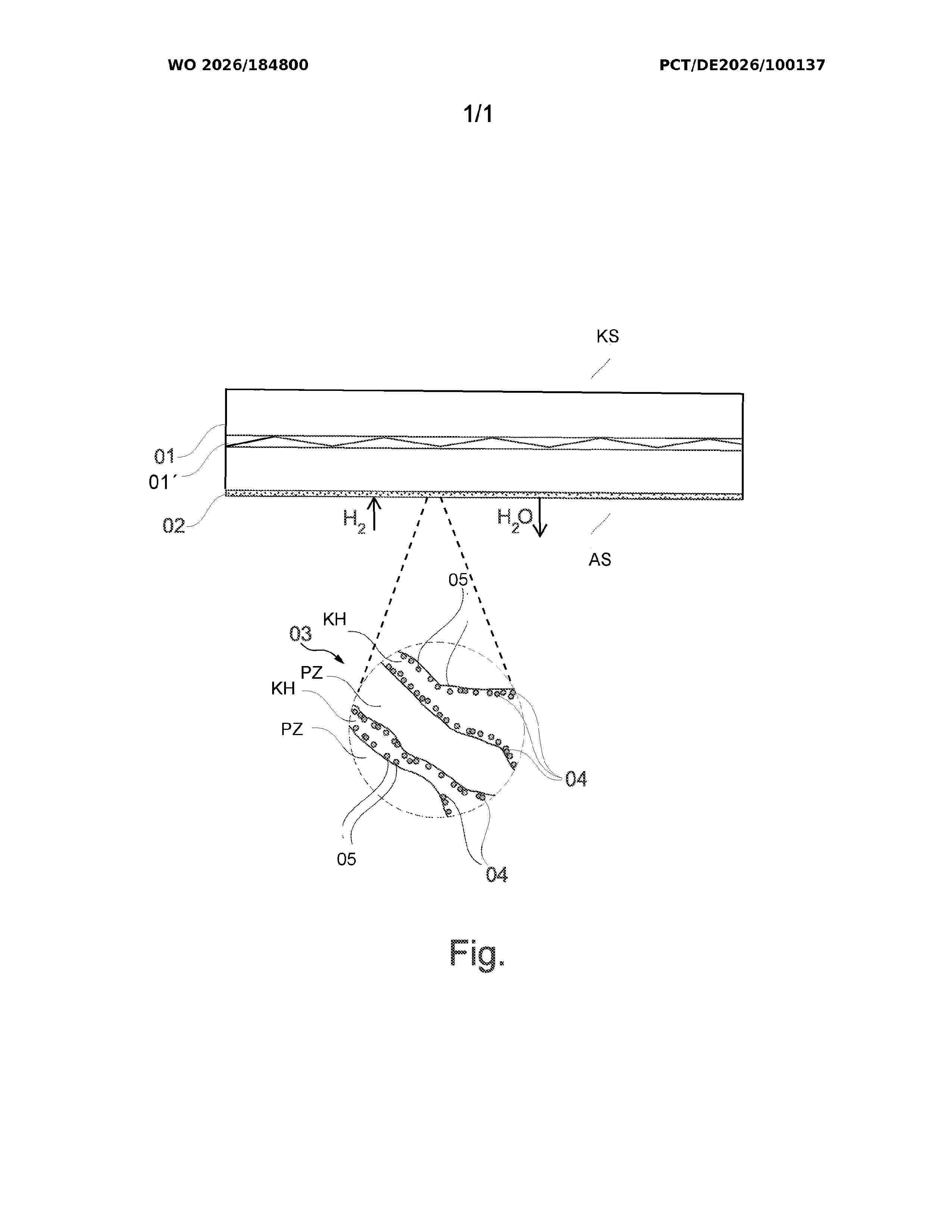
The present invention first relates to a method for coating a polymer electrolyte membrane (01), in particular for a water electrolysis cell, with a recombination catalyst layer (02). The recombination catalyst layer (02) is used to catalyze a recombination reaction of oxygen and hydrogen and is intended to prevent the formation of an explosive mixture, in particular in the water electrolysis cell. In one step of the method, the polymer electrolyte membrane (01) is provided. In addition, an aqueous solution of a platinum salt is provided. The aqueous solution of the platinum salt is mixed into a dispersion of a perfluorosulfonic acid, as a result of which platinum cations (04) of the platinum salt are bound to anions (05) of the perfluorosulfonic acid and platinum-containing particles form in the dispersion. The dispersion containing the platinum-containing particles is applied to the membrane (01) and heated, as a result of which water is evaporated and a laminate-type coating is produced on the membrane (01), said coating providing the recombination catalyst layer (02). The invention further relates to a polymer electrolyte membrane (01) coated according to said method, in particular for a water electrolysis cell.
Resumen de: WO2026186535A1
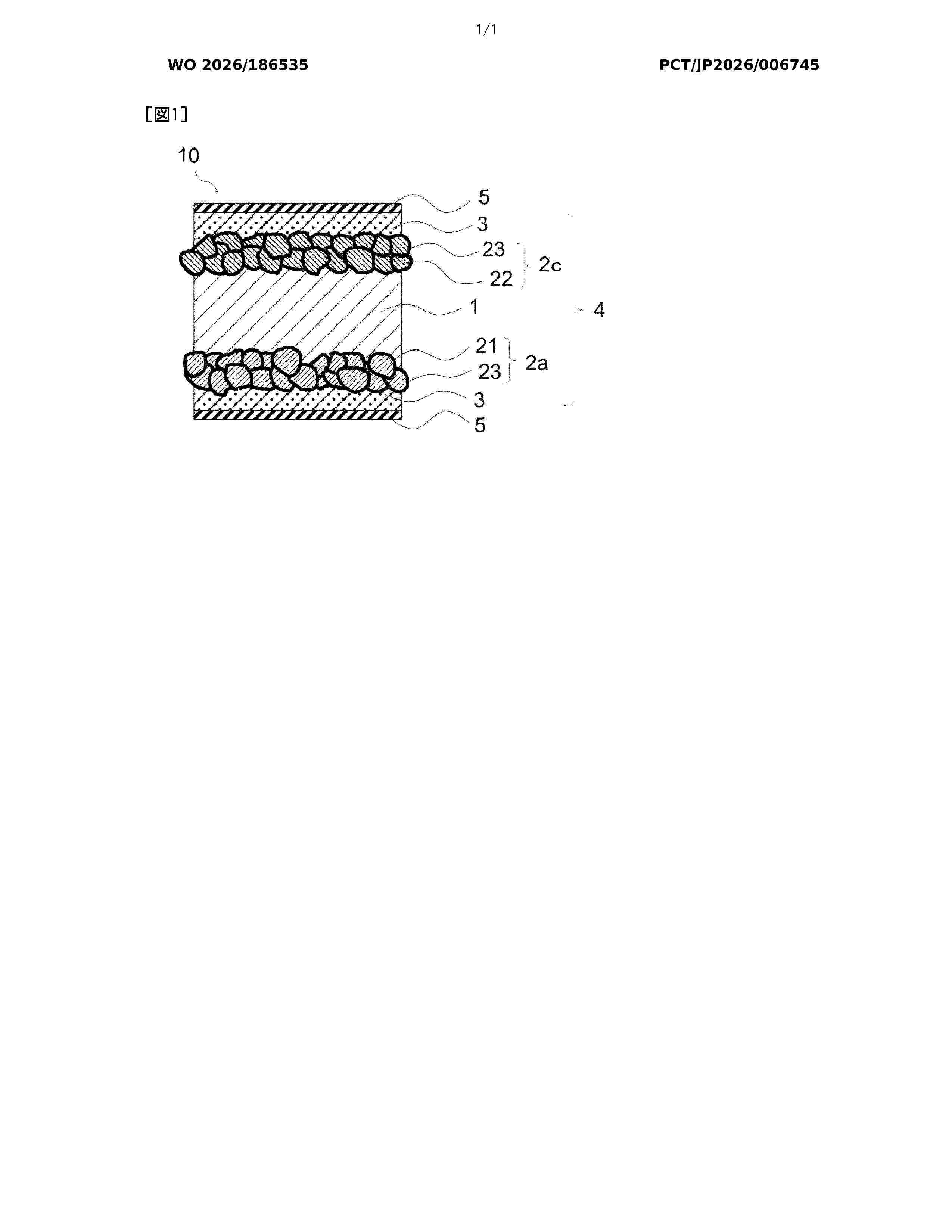
The present invention pertains to an anion conductive film-catalyst layer assembly comprising a porous substrate, an anion conductive film that is disposed at least in pores of the porous substrate and that contains a water-insoluble polymer having an unsubstituted polyethylene-oxy structure, and a catalyst layer that is disposed in contact with at least one surface of the anion conductive film and that contains an oxygen generation catalyst or a hydrogen generation catalyst for use in water electrolysis. The average value (Tave), the maximum value (Tmax), and the minimum value (Tmin) of the thickness of the catalyst layer satisfy formula 1: 1/2Tmax < Tave and formula 2: 2Tmin > Tave. The present invention also pertains to: a method for producing the anion conductive film-catalyst layer assembly; and a water electrolysis cell.
Resumen de: US20260265939A1
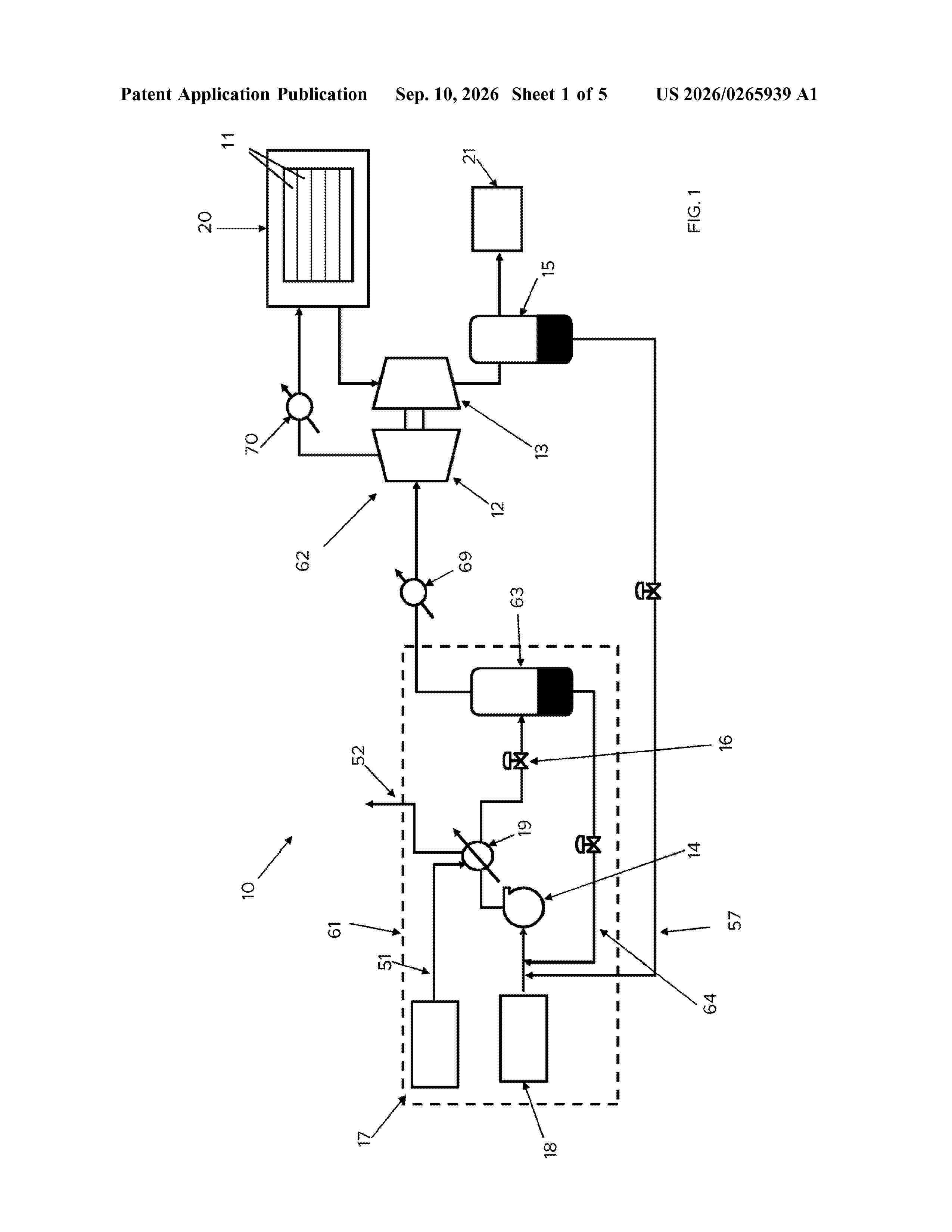
The present invention relates to an electrolyser system (10) comprising at least one electrolyser (20), the electrolyser (20) comprising at least one steam inlet (41) and at least one off-gas outlet (38; 39), and a turbocharger (62) for compressing off-gas from the electrolyser (20). The turbocharger (62) comprises a drive fluid inlet, a drive fluid outlet, a compression fluid inlet, a compressed fluid outlet, a compressor (13) and a turbine (12). The turbine (12) is configured to drive the compressor (13). The drive fluid outlet of the turbocharger (62) is fluidically connected to the at least one steam inlet (41) of the electrolyser (20). The at least one off-gas outlet (38; 39) of the electrolyser (20) is fluidically connected to the compression fluid inlet of the turbocharger (62). The system (10) can further can comprise a steam source fluidically connected to the drive fluid inlet of the turbocharger (62) for powering the turbine (12) using pressurised steam.
Resumen de: US20260265925A1
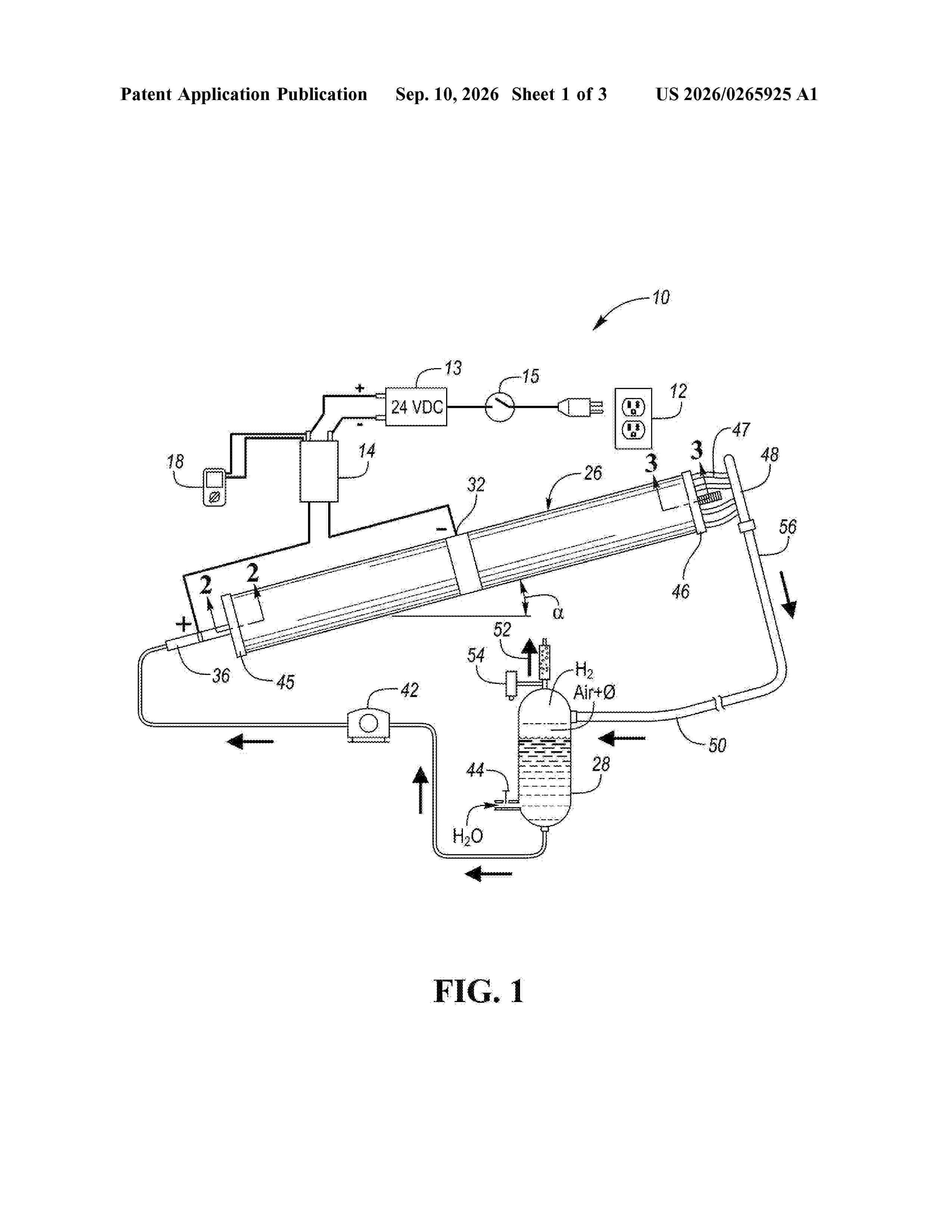
A system and method of making hydrogen from water. A reaction vessel is provided with an outer shell, a central shaft, and concentric inner tubes separated by annular spaces. Water is delivered to the annular spaces by a water pump through an inlet defined in the reaction vessel. The water courses along a tortuous flow path. That path begins at an inner annular space around a central shaft. It ends at an outer annular space. The water emerges from the reaction vessel through an outlet associated with a manifold. A vibratory stimulus is applied to the reaction vessel and water. Water molecules are dissociated into hydrogen molecules and oxygen atoms. These reaction products are delivered through the manifold along an effluent flow path to a receiving pressure vessel before deployment to a sub-assembly for harnessing clean energy.
Resumen de: US20260265940A1
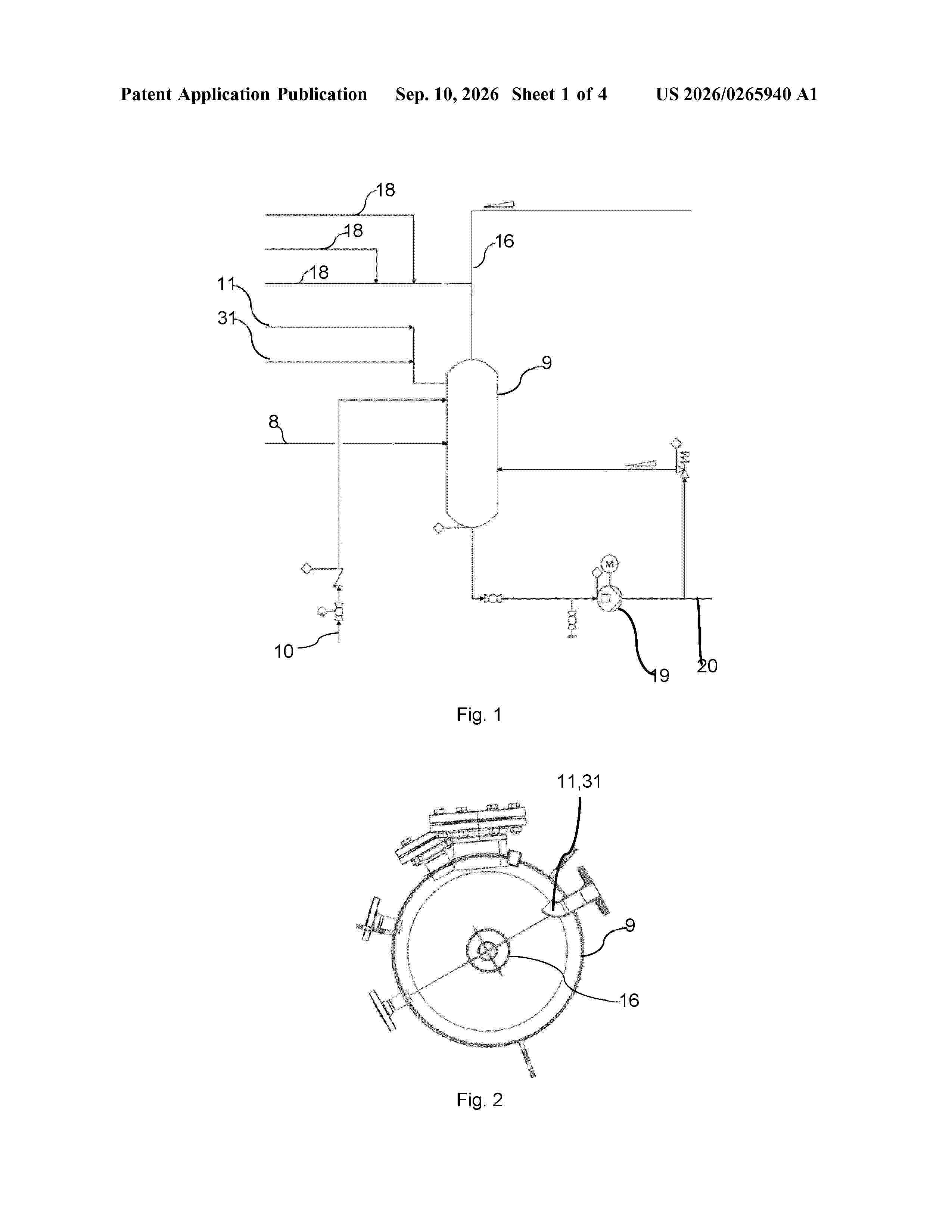
A feedwater preparation system in a water electrolyser is adapted to produce hydrogen and oxygen in one or more pressurised electrolyser stacks using alkaline water and comprises a product gas conditioning system that has a safety valve out-blow material stream pipe which is connected to a feedwater vessel, and/or has a depressurisation stream pipe from a gas cleaning vessel which is connected to the feedwater vessel.
Resumen de: US20260265051A1
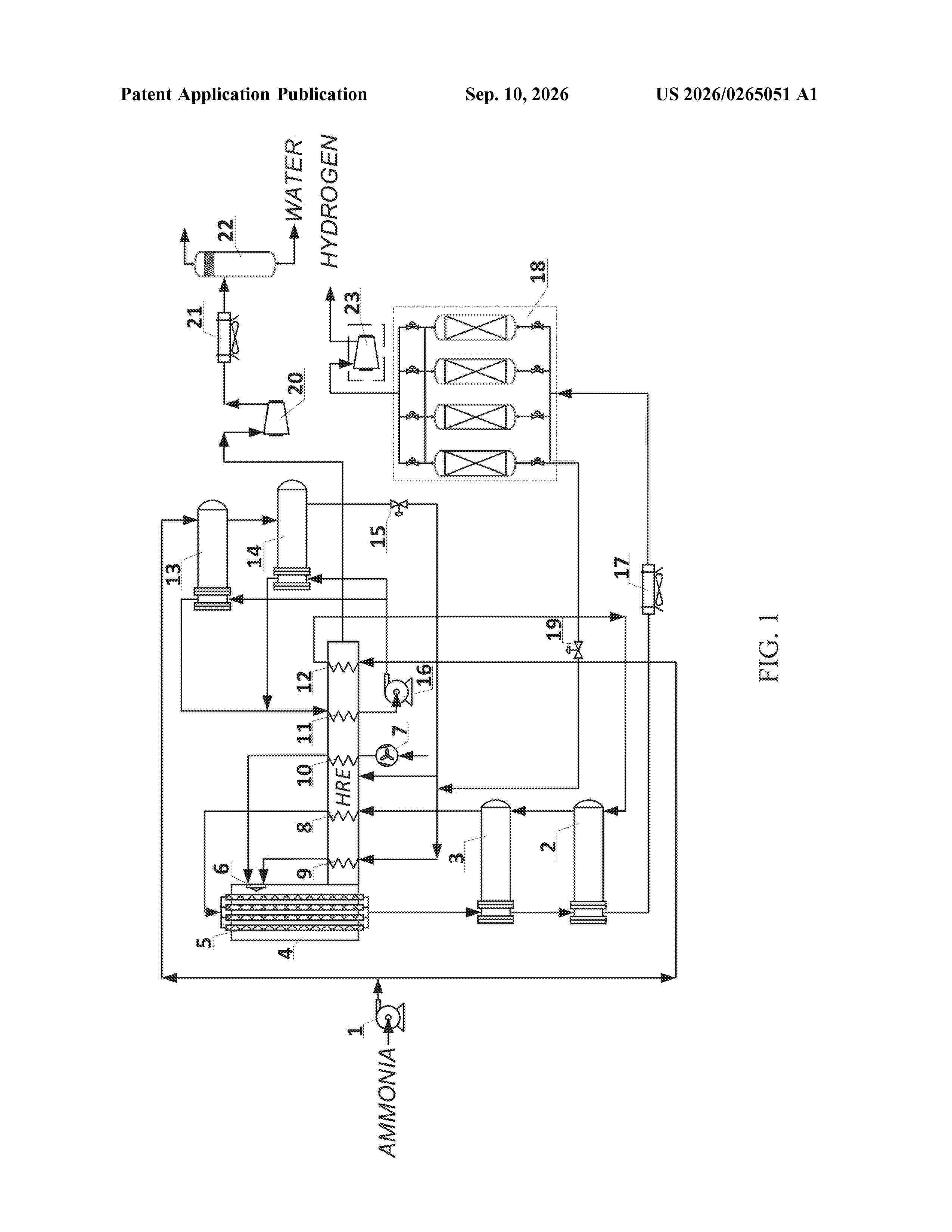
In a method for producing low-carbon hydrogen from ammonia and a plant implementing the method, liquid ammonia feedstock is heated and superheated in a heat-reclaiming module coil and supplied into an ammonia cracking reactor, the resulting nitrogen-hydrogen mixture is cooled in an air cooler, and hydrogen is recovered. The liquid ammonia fuel is heated and evaporated, the gaseous ammonia fuel is superheated and mixed with tail gases resulting from the hydrogen recovery, and the resulting fuel gas, together with hot air, is supplied to the ammonia cracking reactor. The ammonia feedstock and the ammonia fuel are evaporated and superheated in respective recuperative heat exchangers. An outlet for the flue gases of the ammonia cracking reactor is connected to the heat-reclaiming module. Extraction of distilled water from the flue gases as a by-product becomes possible by cooling the exiting flue gases to approx. +60° C. in the heat-reclaiming module.
Resumen de: US20260265934A1
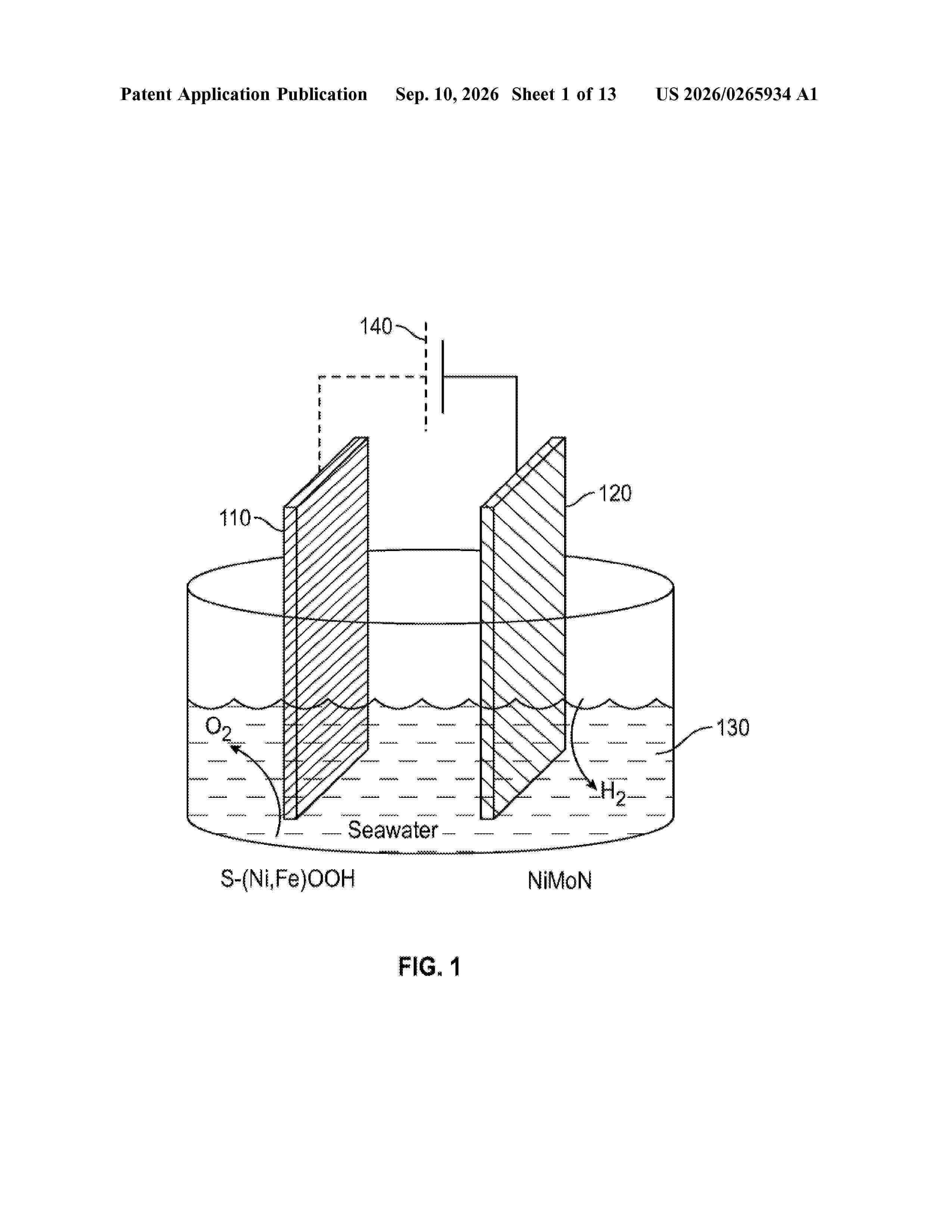
A water electrolyzer includes an anode formed by a sulfur-doped (Ni,Fe)OOH (S—(Ni,Fe)OOH) electrode. The water electrolyzer also includes a cathode formed by NiMoN nanowire arrays supported on Ni foam.
Resumen de: US20260265924A1
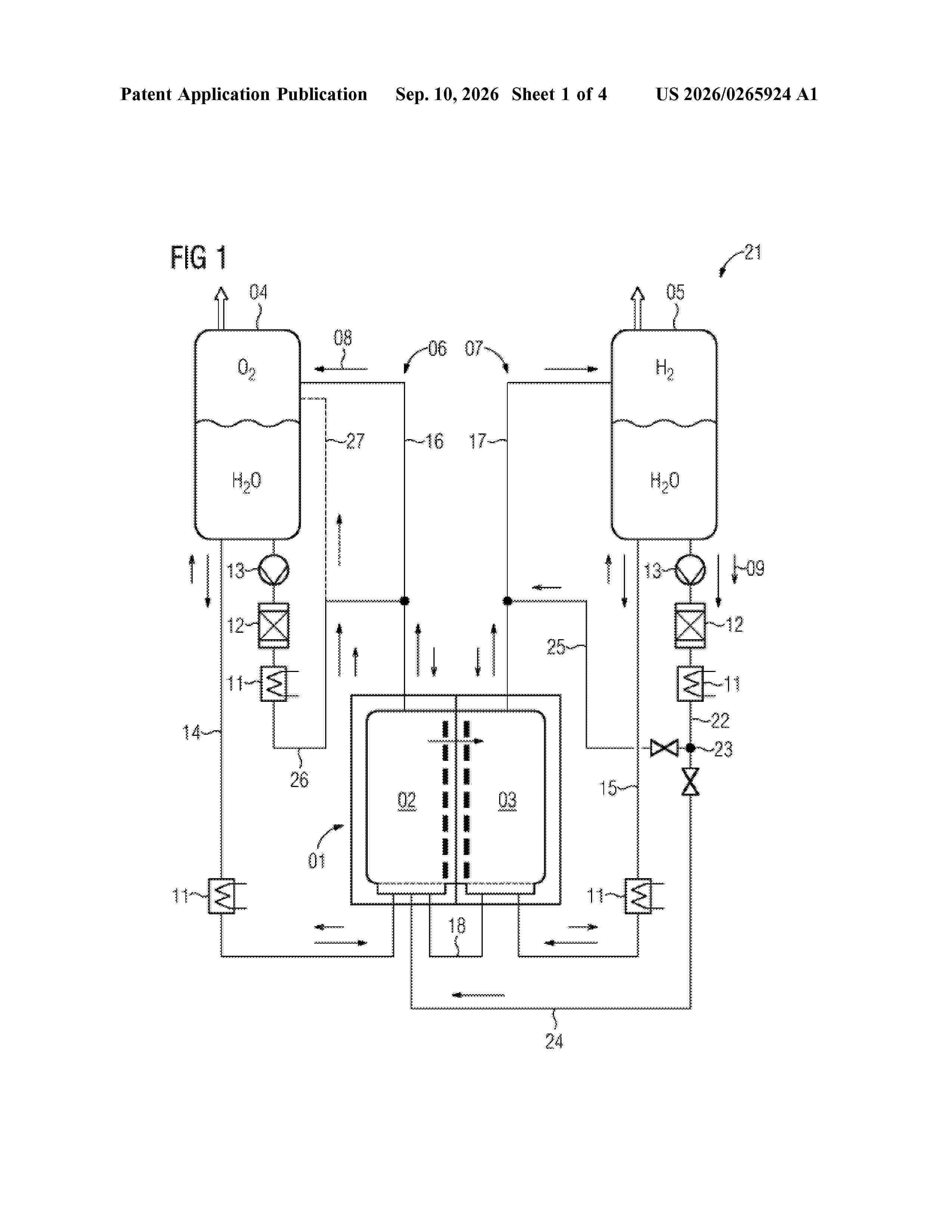
An electrolysis system contains: at least one electrolysis cell; a cathode-side water circuit having a hydrogen separator; an anode-side water circuit having an oxygen separator; an equalization connection which leads, coming from a cathode-side water connection, to the anode-side water circuit via a pump and an ion exchanger via a node point and an operating line; and an idle line which branches off upstream of the control line and leads to the cathode-side gas connection.
Resumen de: US20260265080A1
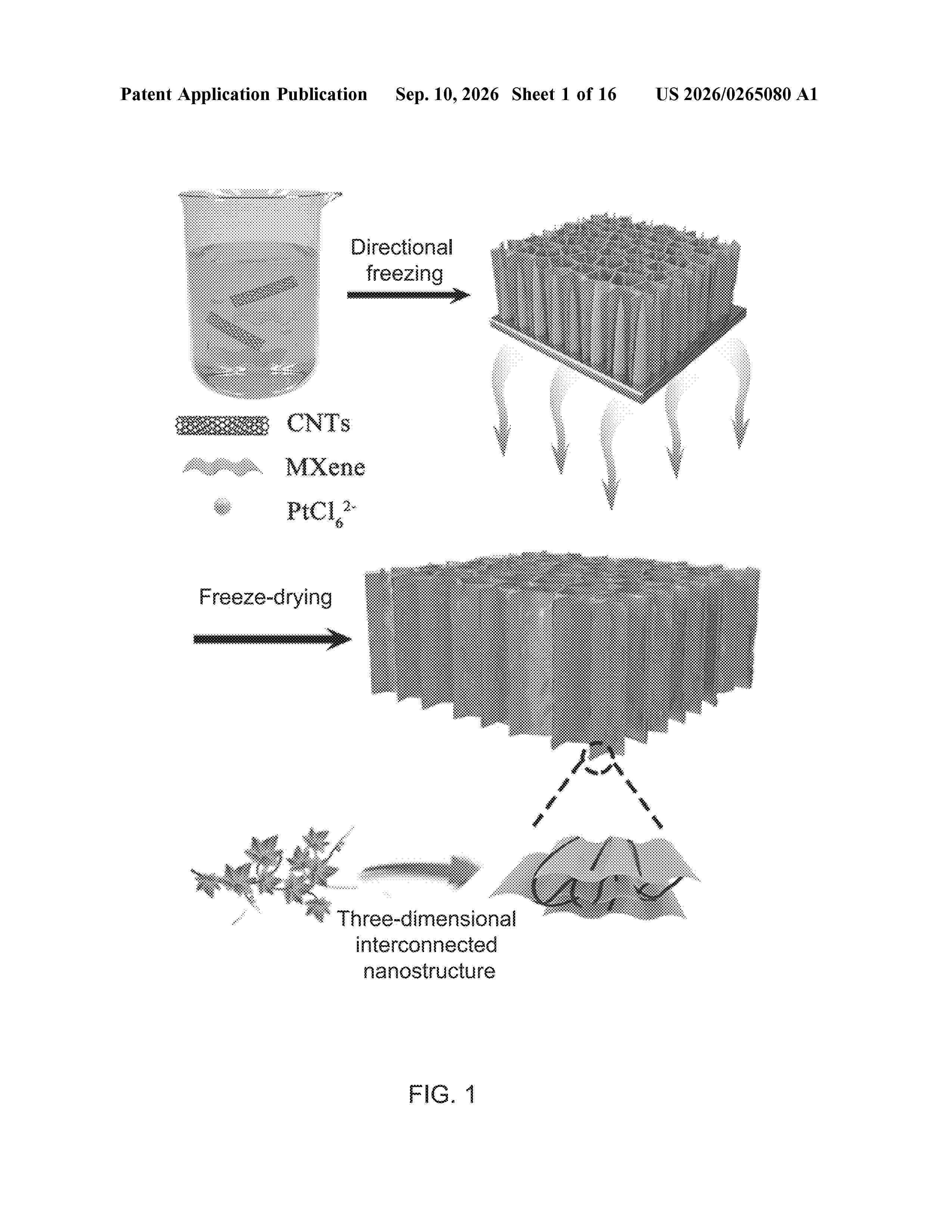
A low Pt-loaded MXene-carbon nanotube aerogel film and its preparation method are provided. The method includes adding an H2PtCl6 solution to a MXene nanosheet colloidal suspension to obtain a Pt@MXene nanosheet suspension, mixing the Pt@MXene nanosheet suspension with a carbon nanotube suspension to obtain a mixed suspension under ultrasonic treatment, and cooling a metal plate in liquid nitrogen in advance, placing the mixed suspension on a surface of the metal plate for rapid freezing, and freeze-drying to obtain a low Pt-loaded MXene-carbon nanotube aerogel film material with a vertical porous structure.
Resumen de: US20260265612A1
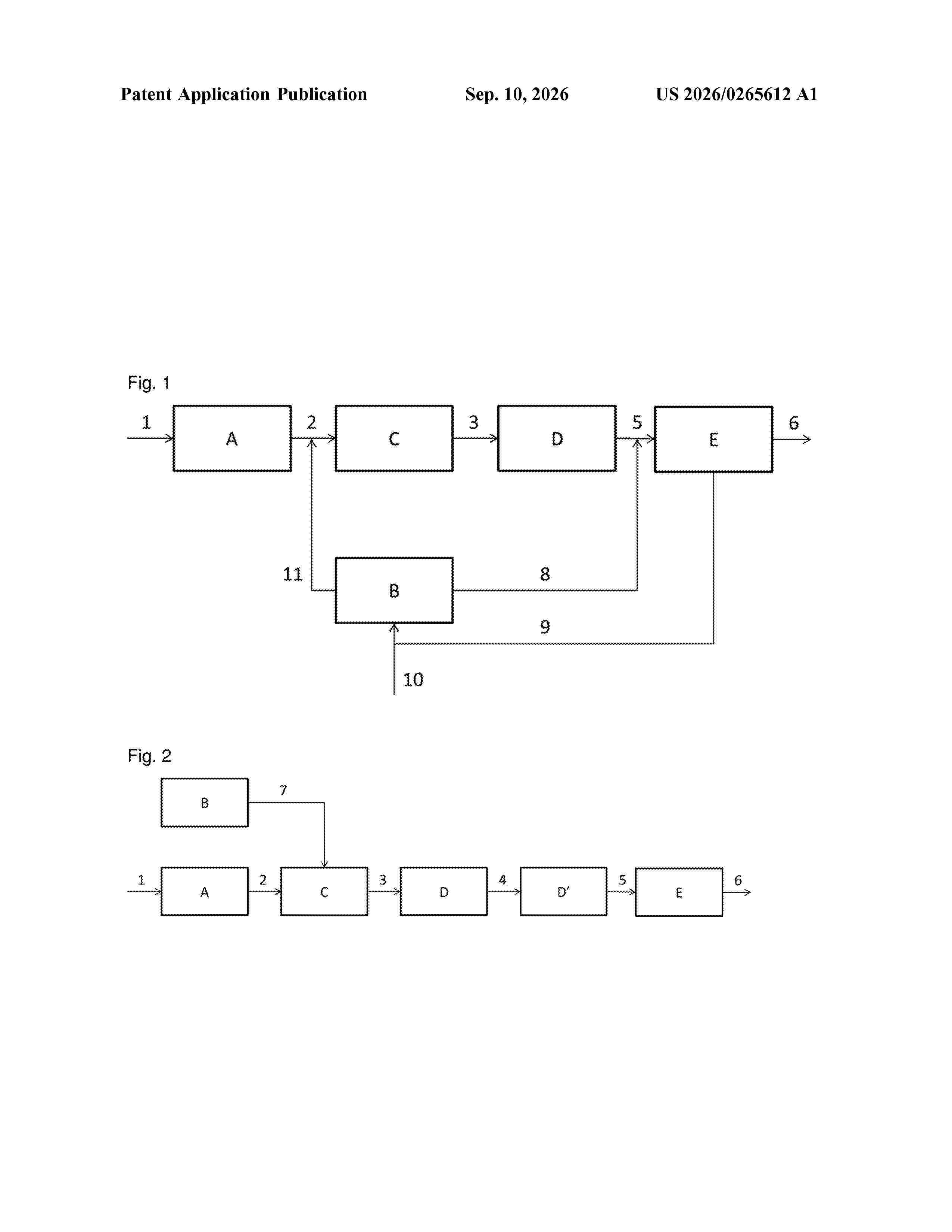
The present invention relates to a process for converting a feedstock comprising at least one biomass fraction into hydrocarbons, said process comprising a step a) of pretreating the feedstock, a step b) of electrolysis of water into oxygen and hydrogen allowing the production of a stream of hydrogen and of a stream of oxygen, in which the water is at least partly obtained from a Fischer-Tropsch synthesis step e), a step c) of gasification of the feedstock pretreated in step a), in the presence of all or part of the oxygen stream obtained from the water electrolysis step b) so as to obtain a gaseous effluent comprising a synthesis gas, an optional step d) of conditioning the gaseous effluent comprising a synthesis gas obtained from step c) and a step e) of Fischer-Tropsch synthesis of the gaseous effluent obtained from step c) or optionally from step d) in the presence of all or part of the hydrogen obtained from the water electrolysis step b) so as to produce a stream comprising synthetic liquid hydrocarbons and at least one gaseous effluent.
Resumen de: US20260265923A1
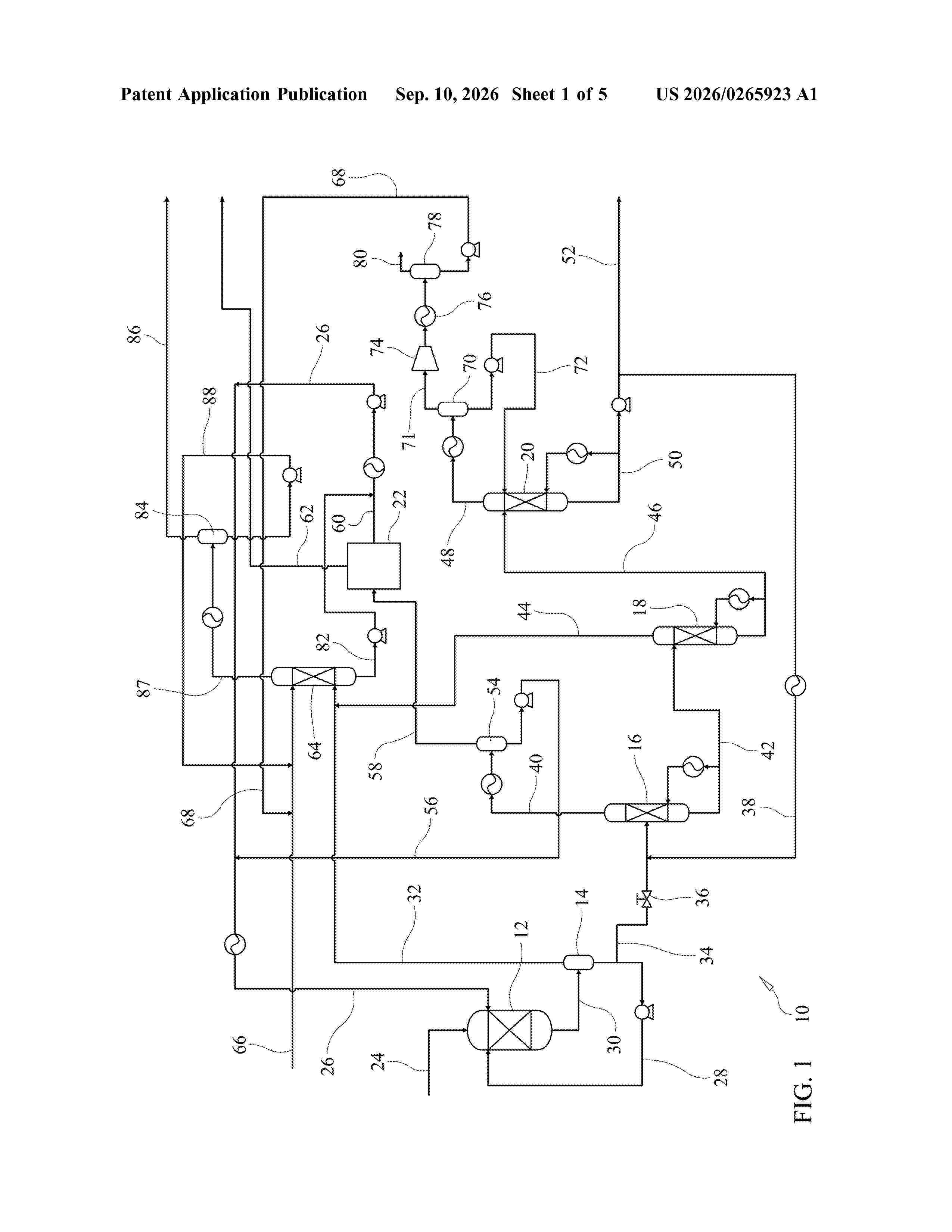
A process for producing hydrogen includes a) providing a starting mixture containing bromine, water and a sulfur containing compound, b) reacting the starting mixture provided in a) so as to produce a reaction mixture effluent comprising sulfuric acid and hydrogen bromide, c) separating the reaction mixture effluent obtained in b) into hydrogen bromide enriched compositions and into sulfuric acid enriched compositions the hydrogen bromide enriched composition contains at most 1,000 ppm of sulfuric acid, c) comprises at least two distillation steps, d) subjecting a portion of the hydrogen bromide enriched composition to an electrolysis so as to obtain hydrogen and a bromine containing composition, the electrolysis cell is operated at an operational temperature of at least 70° C., and e) recycling a portion of the bromine containing composition obtained in d) back to a).
Resumen de: WO2026184298A1
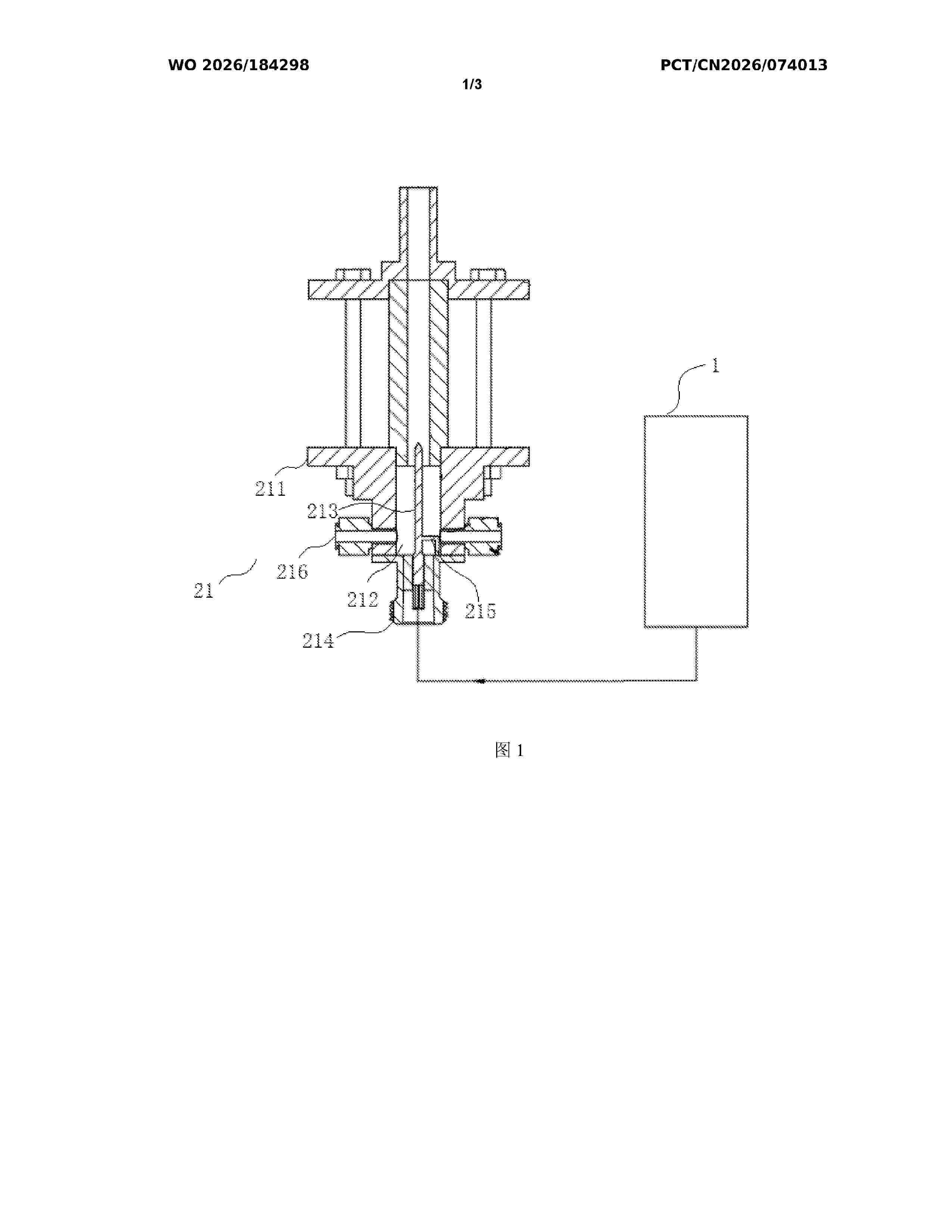
A device and method for hydrogen production via microwave resonant plasma torch-assisted ammonia cracking. The device comprises: a microwave unit (1), configured to generate microwaves; and a reaction unit (2), connected to the microwave unit (1). The reaction unit (2) comprises a resonant torch (21). The resonant torch (21) comprises a housing (211), wherein the housing (211) has a closed end and an open end, a resonant cavity (212) is formed between the closed end and the open end, the outer wall of the housing (211) is provided with a gas inlet communicated with the resonant cavity (212), and the gas inlet is configured to be communicated with an external ammonia gas source. A central electrode (213) passes through the resonant cavity (212). Microwaves are fed from the closed end into the resonant cavity (212) to establish microwave resonance therein, and a plasma region is formed around the tip of the central electrode (213) close to the open end, so that ammonia gas flowing in from the gas inlet undergoes a cracking reaction when passing through the plasma region, so as to generate cracked gas containing hydrogen gas.
Resumen de: US20260269283A1
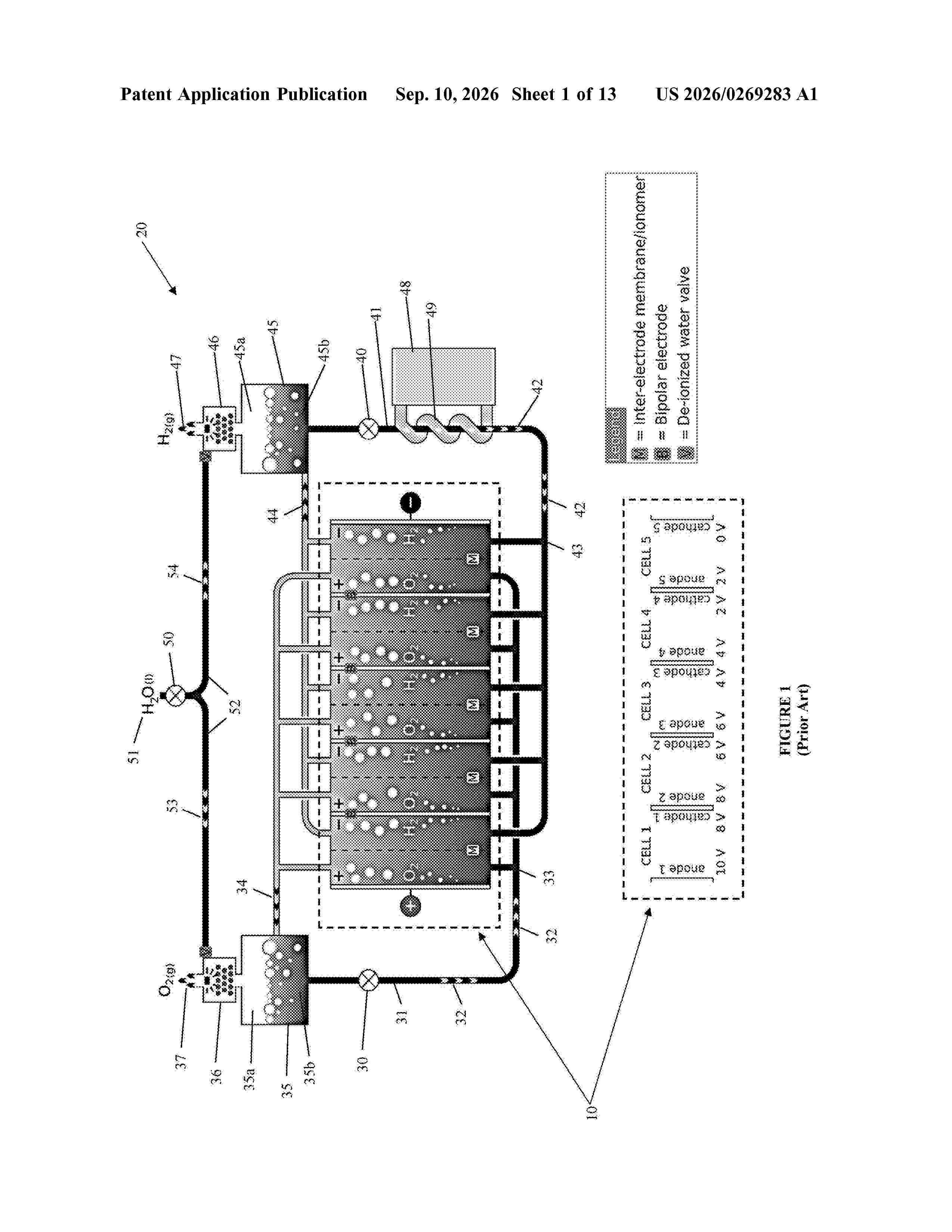
Gas pressure equalisation systems, and method of operation, for an electro-synthetic or electro-energy liquid-gas cell or cell stack. The gas pressure equalisation systems includes a first pressure equalisation tank for partially containing a first liquid and a first gas. The first gas is positioned above a liquid first level. A first gas conduit is provided for the transfer of the first gas between the cell or cell stack and the first pressure equalisation tank. In another aspect, a second pressure equalisation tank may be additionally provided for partially containing a second liquid and a second gas positioned above a liquid second level. A second gas conduit is then provided for the transfer of the second gas between the cell or cell stack and the second pressure equalisation tank.
Resumen de: US20260264059A1
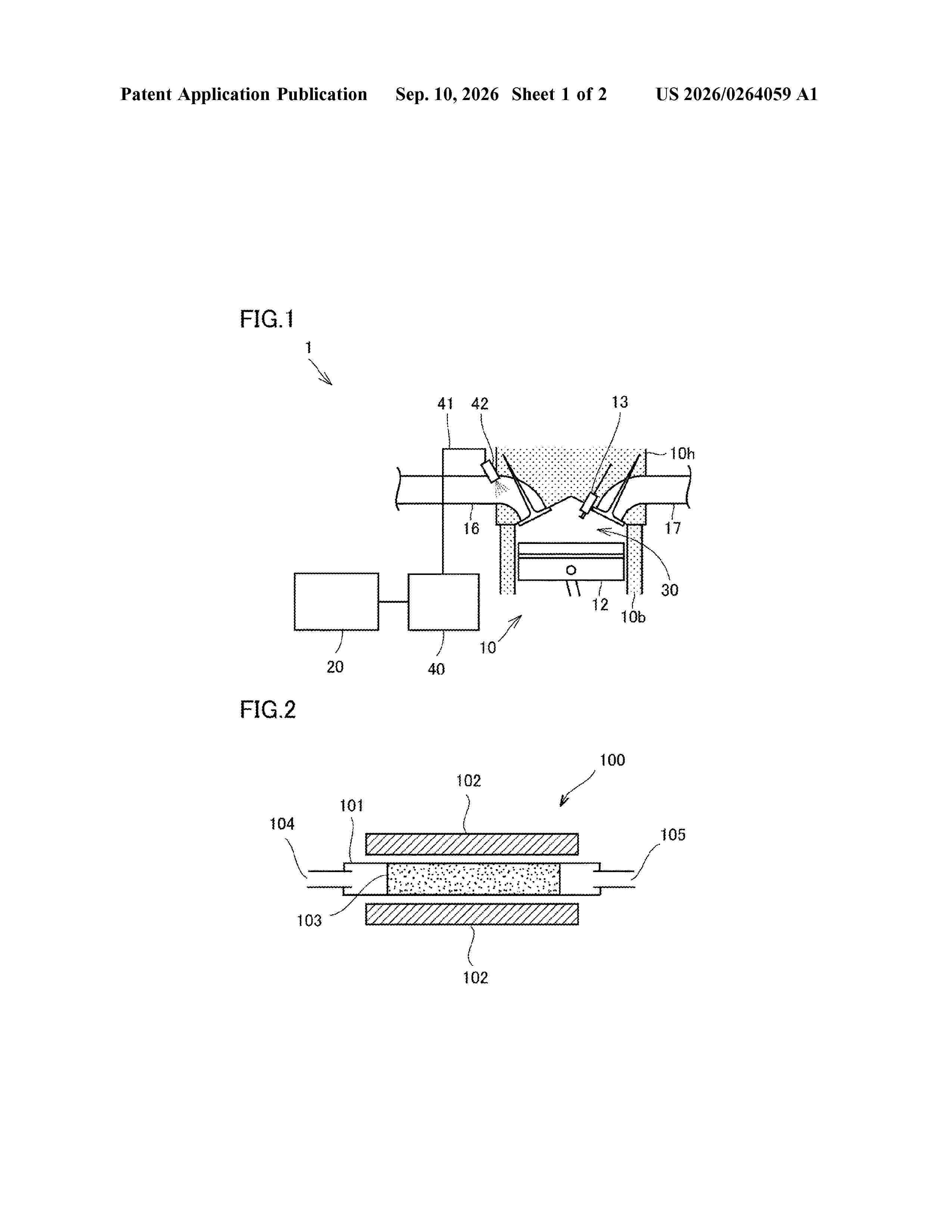
An ammonia decomposition catalyst including a composite oxide forming a perovskite structure with at least barium, zirconium, and ruthenium. Also included is a honeycomb structure including the ammonia decomposition catalyst and an internal combustion engine including the ammonia decomposition catalyst. The ammonia decomposition catalyst exhibits excellent initial activity even at low temperatures and excellent heat resistance in terms of ammonia decomposition activity.
Resumen de: US20260264061A1
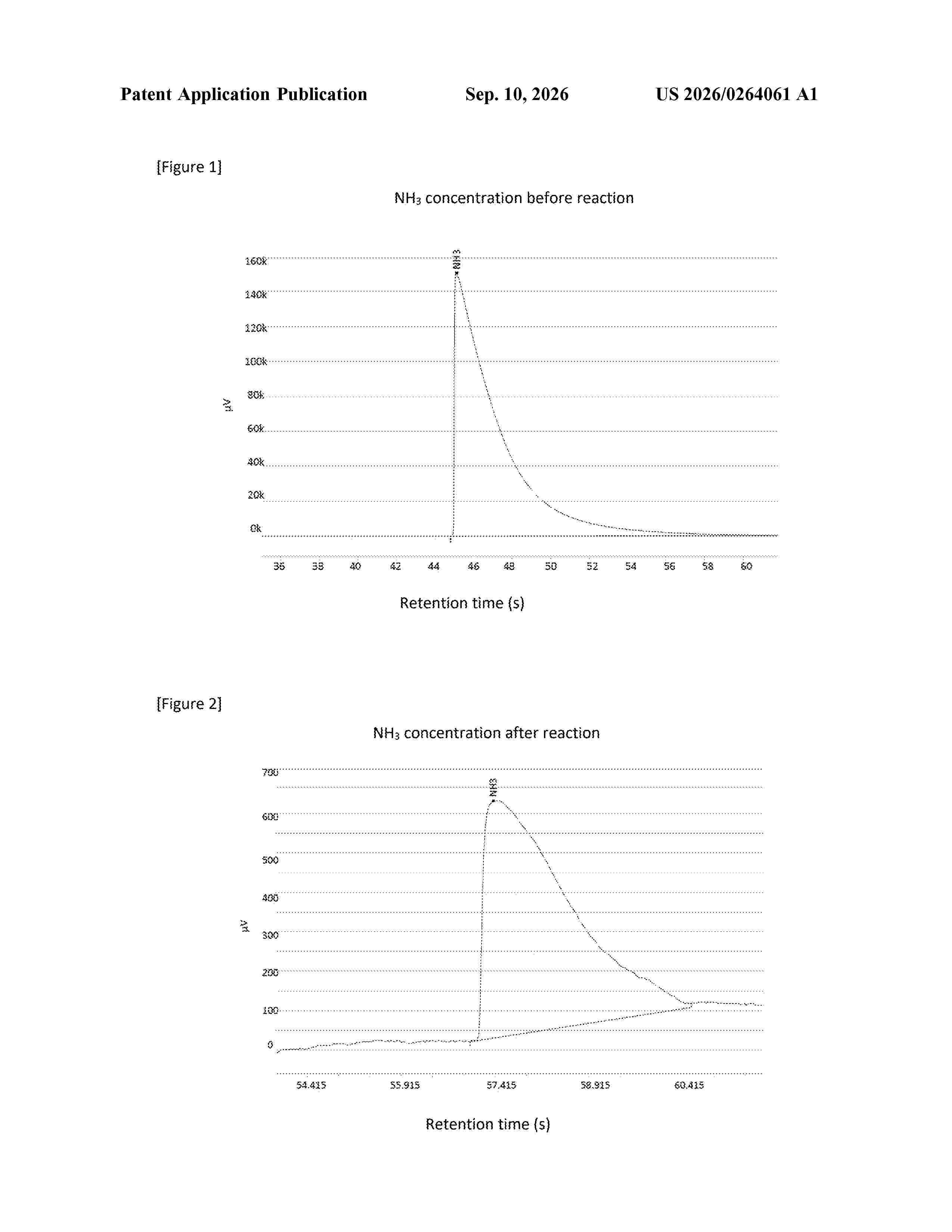
The present invention relates to a process for converting a gas comprising NH3 in the presence of a cold plasma, preferably a plasma generated by dielectric barrier discharge (DBD), and of a catalyst comprising a support comprising alumina, nickel, and at least one promoter comprising iron. The invention also relates to such a catalyst, and to the use thereof for producing high value-added molecules like hydrogen (H2).
Resumen de: US20260265938A1
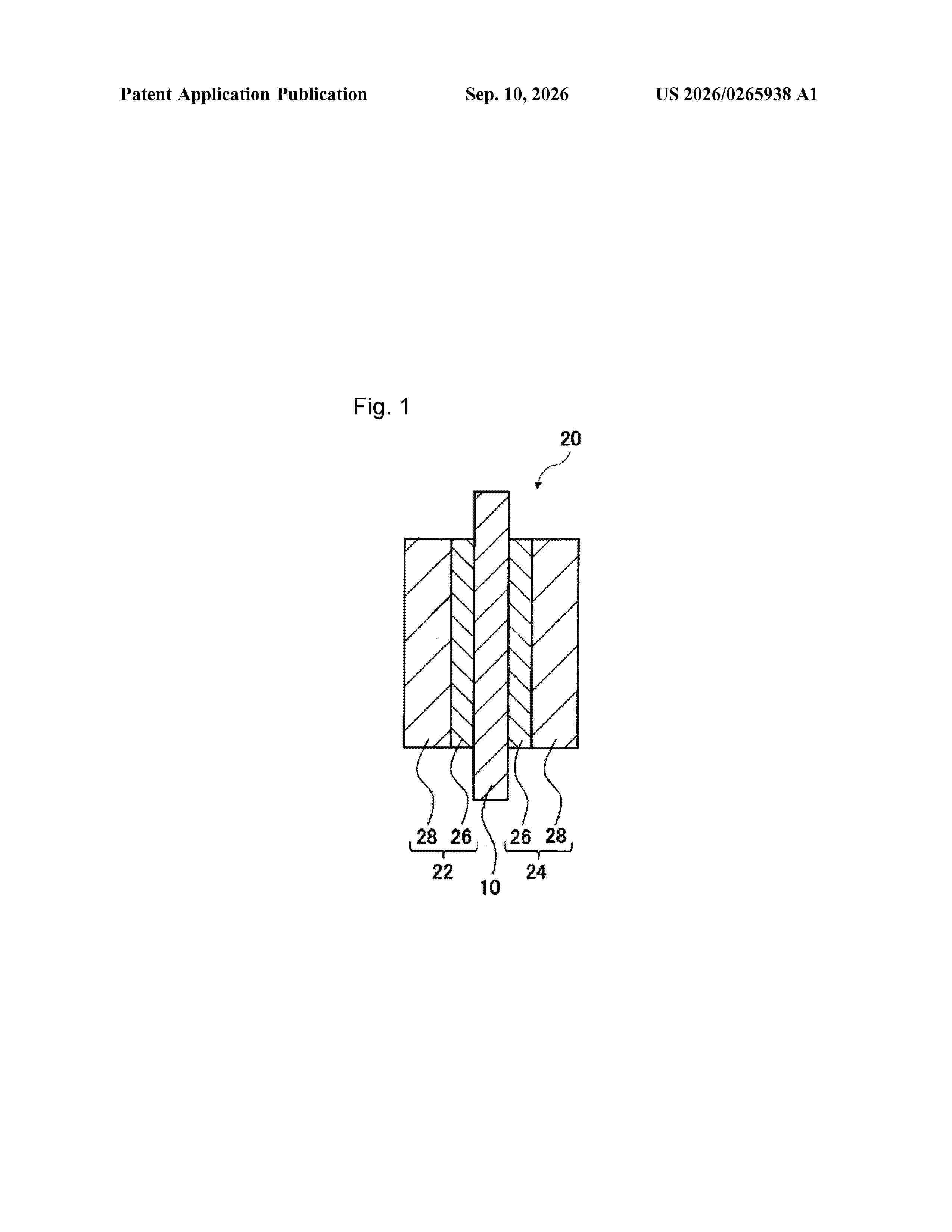
To provide a fluorinated polymer, from which such a polymer membrane can be produced that when a laminate having a polymer membrane that contains a fluorinated polymer having groups convertible to ion exchange groups sandwiched between transfer base materials is subjected to hot pressing and then the transfer base materials are peeled from the laminate, few pinholes are formed in the polymer membrane. To provide an electrolyte membrane using the fluorinated polymer, a membrane electrode assembly and a water electrolyzer. The fluorinated polymer of the present disclosure is a fluorinated polymer having units based on tetrafluoroethylene and having groups convertible to ion exchange groups, wherein no endothermic peak is observed within a range of 300 to 350° C. measured by differential scanning calorimetry.
Nº publicación: WO2026185352A2 10/09/2026
Solicitante:
JOHN COCKERILL HYDROGEN BELGIUM [BE]
JOHN COCKERILL HYDROGEN BELGIUM
Resumen de: WO2026185352A2
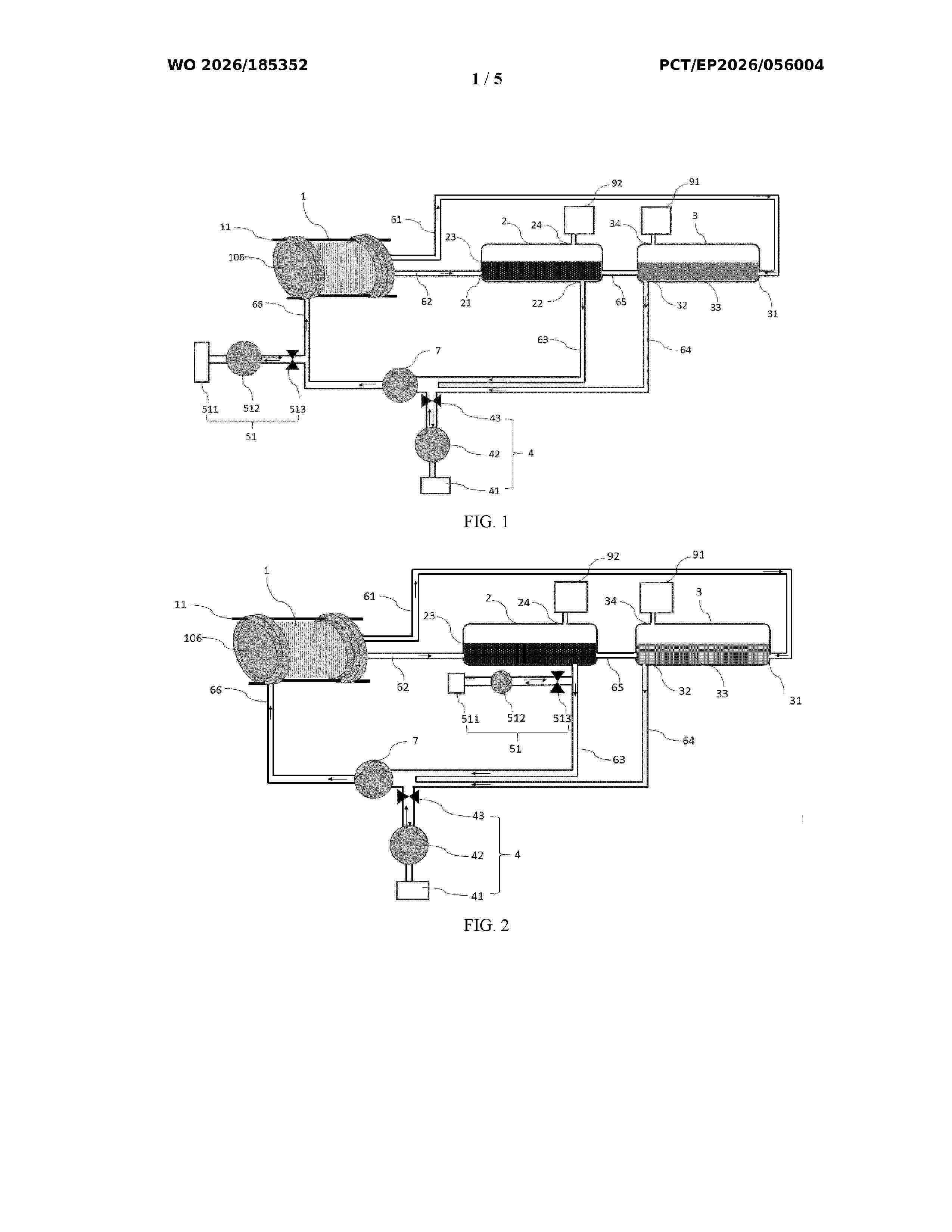
The invention discloses a cleaning agent for pickling, an electrolysis device and a method for pickling. The cleaning agent contains a chelating agent, which may effectively remove metal deposits produced by corrosion on surfaces of components of the electrolysis device, improve pickling efficiency and quality, and thus improve an overall production performance of hydrogen. The electrolysis device according to the invention incorporates a reactor, a hydrogen gas-liquid separator, an oxygen gas-liquid separator and a cleaning component, the cleaning component is connected to the reactor, the hydrogen gas-liquid separator and/or the oxygen gas-liquid separator, and is configured to store the cleaning agent for pickling, and is configured to provide the cleaning agent to the electrolysis device during pickling, such that a pickling operation may be performed efficiently, to improve production efficiency. In the method for pickling according to the invention, a concentration of metal ions in the cleaning agent is monitored, which not only may ensure that the cleaning agent is used in an effective range, but also may end a pickling process in time, thereby avoiding excessive consumption of the cleaning agent, saving a pickling time, while ensuring a pickling effect.
 BOPI
BOPI
 Sede Electrónica