Si deseas distinguir tus productos, servicios o ambos de los de otra empresa, es posible que necesites una marca o nombre comercial. Descubre qué son, en qué consiste su procedimiento de registro y qué implica.

Información sobre los plazos de presentación de solicitudes de transformación de marcas de la Unión Europea en marca nacional española. Más información


Si tienes un nuevo dispositivo, producto o procedimiento que resuelva un problema técnico o tenga una ventaja práctica, existen distintas formas de protegerlo en España y en otros países. Descubre cómo hacerlo.

¿Tu innovación reside en la estética, la ornamentación o la apariencia de tu producto? Protégela mediante un diseño industrial. Descubre qué derechos confiere el registro y cómo realizar la tramitación.

Las indicaciones geográficas protegen el nombre de un producto originario de una zona geográfica, a la cual le debe una determinada calidad, reputación u otra característica. Descubre qué son, en qué consiste su procedimiento de registro y qué beneficios conceden.

Las patentes publicadas en todo el mundo son una valiosa fuente de información científica, técnica y comercial.

Si eres emprendedor/a o una empresa y quieres potenciar y mejorar la rentabilidad de tu negocio protegiendo de forma adecuada los activos intangibles de tu organización, en este espacio encontrarás lo necesario.


 484
resultados
484
resultados
 Última actualización
15/09/2026 [06:53:00]
Última actualización
15/09/2026 [06:53:00]


 Resultados 75 a 100 de 484

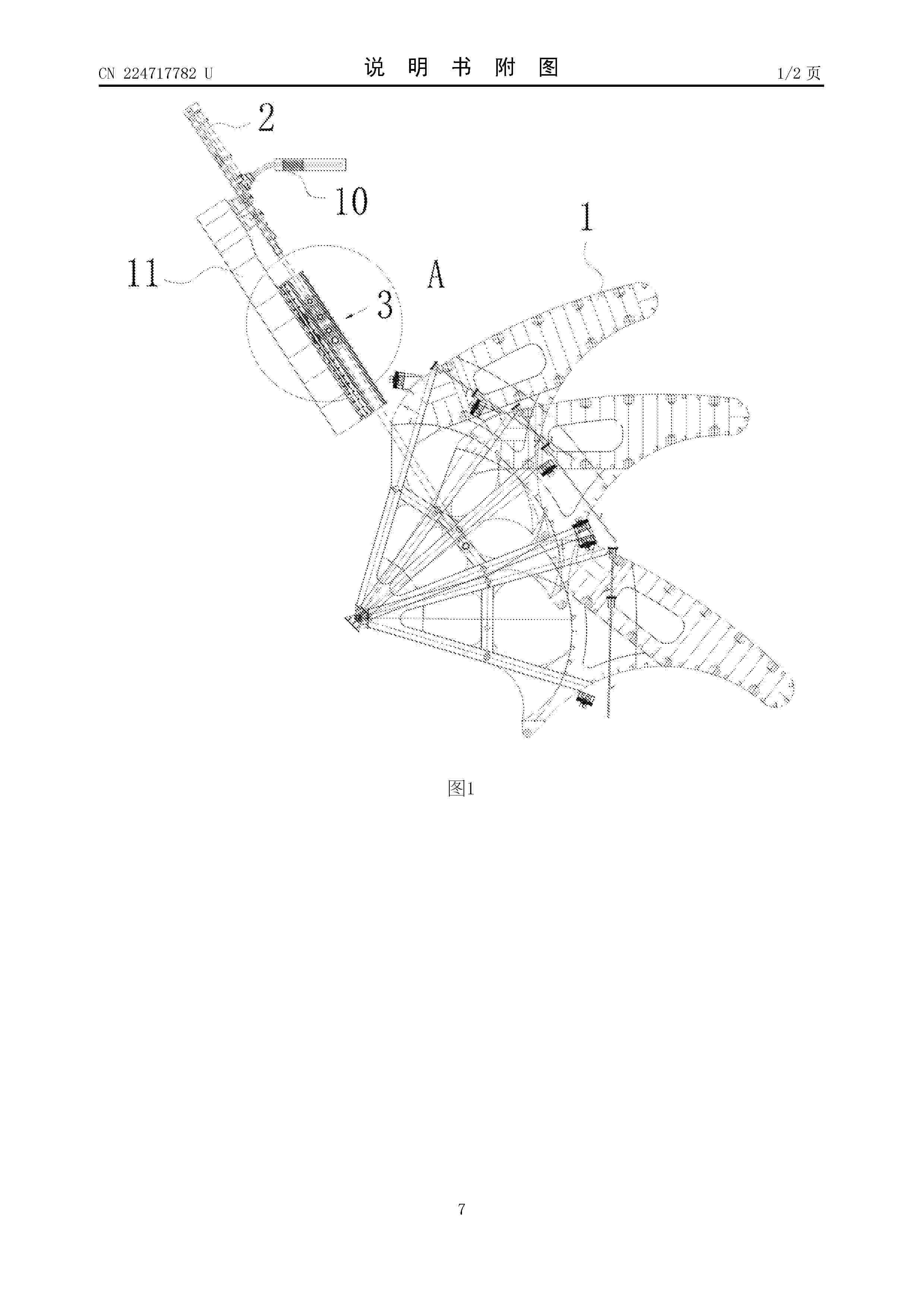
Resumen de: CN224717782U
本实用新型公开了一种波浪能发电板导向保护装置,涉及波浪能发电技术领域,其包括发电板和驱动件,驱动件通过导电保护组件驱动发电板运动;其中,导向保护组件包括保护壳和连接块,连接块滑动设置在保护壳内,连接块能够沿保护壳的长度方向往复滑动,连接块的一端与驱动件的输出端固定连接,连接块的另一端通过连接杆与发电板固定连接。本实用新型可以有效减少驱动件的输出端长度,提高整体的稳定性,同时,还可以避免被海生物附着侵蚀,提高驱动件的使用寿命。

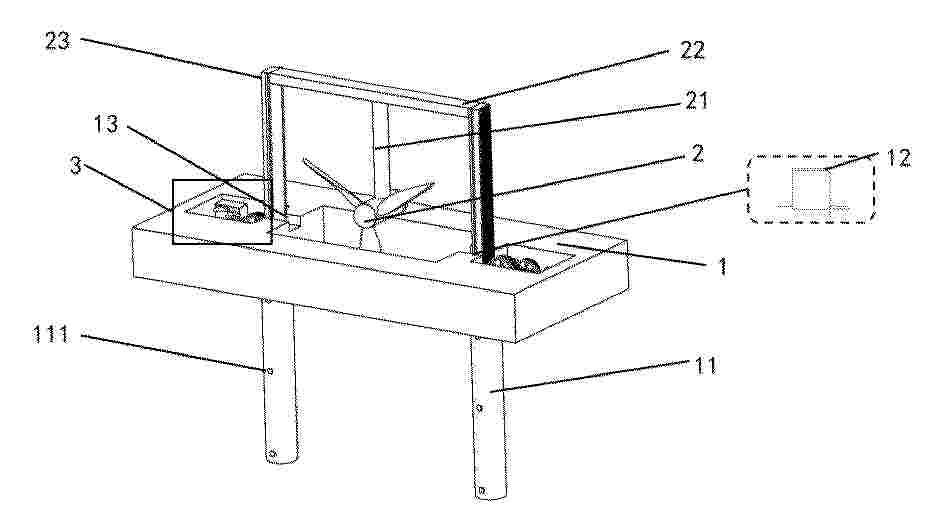
Resumen de: CN122688087A
本发明提出了一种可升降的水平轴潮流能水轮机支撑结构平台,属于潮流能发电领域。一种可升降的水平轴潮流能水轮机支撑结构平台,包括:平台主体,设置于潮流水域上方,其下部通过至少两根立柱固定于海床,在平台中间开一槽口,用于水平轴潮流能水轮机通过;水平轴潮流能水轮机组件,通过传动轨道与平台安装;传动机构,安装在平台主体内部,通过大直齿轮与传动轨道啮合,用于带动水平轴潮流能水轮机上下移动,其中传动轨道在立柱中的滑槽中移动。上述技术方案解决水轮机导轨在升降时面临的海洋生物群落附着问题。
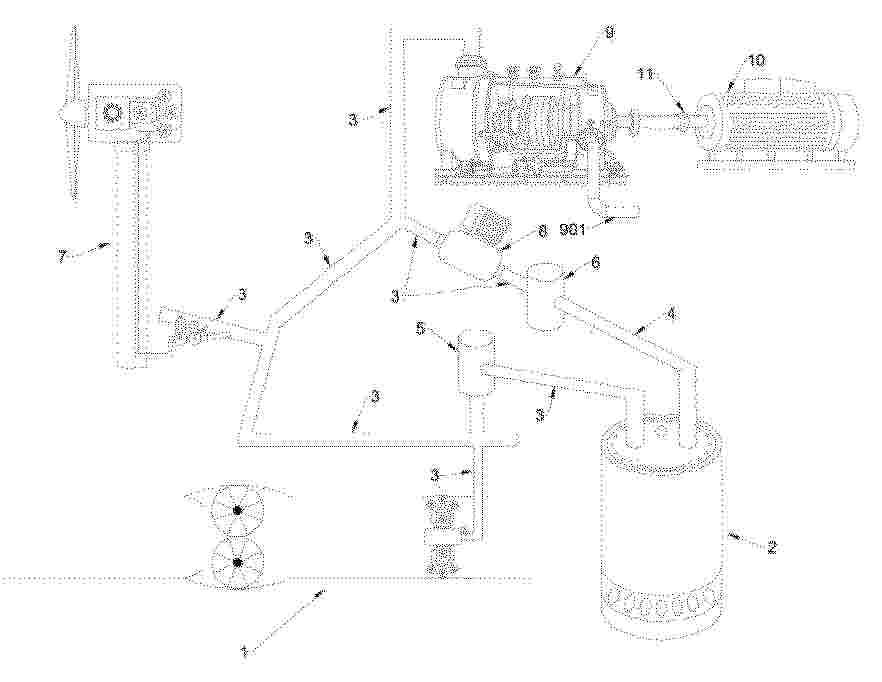
Resumen de: CN122688086A
本发明公开了一种动能收集装置,属于可再生能源动能收集技术领域,包括水流动能收集设备、潮汐动能收集设备、风力气压收集设备、压力管道、真空管道、压力罐、真空罐、增压机、汽轮机与发电机。水流动能收集设备和风力气压收集设备均通过其内置的气压泵将动能转化为压缩空气并接入压力管道;潮汐动能设备设有压力口和真空口,分别连接压力管道与真空管道。三类设备经双管道并联组网;压力罐、真空罐分别用于正压和负压能量的储存和输送,负压气体经增压机增压后汇入压力管路,共同驱动汽轮机带动发电机发电。本发明可整合水流、潮汐、风力多源动能,潮汐涨退双向采集能量,正负压储存和输送,发电输出稳定,适配多种户外能源场景。
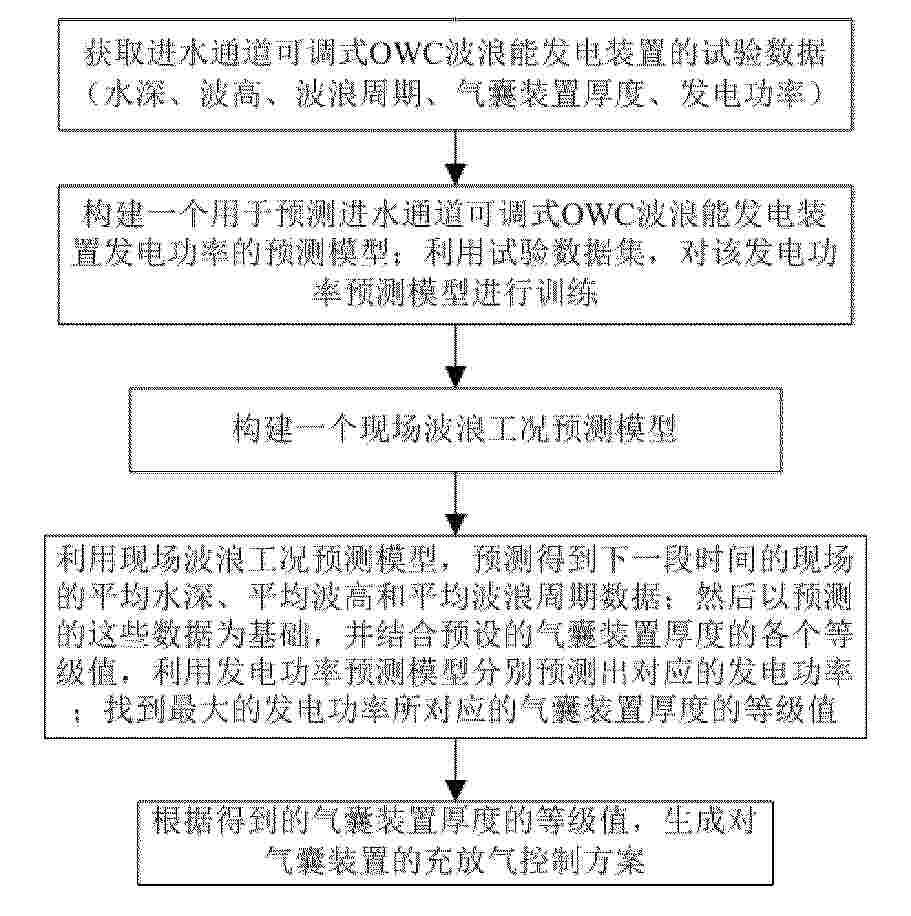
Resumen de: CN122688088A
本发明公开了一种OWC波浪能发电装置发电功率智能优化调控方法,构建了用于预测进水通道可调式OWC波浪能发电装置发电功率的预测模型,发电功率预测模型以水深、波浪的波高、波浪周期和气囊装置厚度为输入参数,预测对应的发电功率;还构建了现场波浪工况预测模型,用以预测下一段时间的现场的平均水深、平均波高和平均波浪周期数据;然后,以现场波浪工况预测模型预测的数据为基础,并结合预设的气囊装置厚度的各个等级值,利用发电功率预测模型分别预测出对应的发电功率;然后找到最大的发电功率所对应的气囊装置厚度的等级值;最后根据气囊装置厚度的等级值,生成对气囊装置的充放气控制方案,使波浪能发电装置发电功率达到最大。
Resumen de: WO2025174249A1
A wave energy converter (100) has a top-section (10) and a column (20) with a turbine section (140) containing a water turbine. The top-section (10) has rotational symmetry about a z-axis and a wave driven displacement pump (110) able to pump water to a design height H over an average sea level into a reservoir (119). A two-axis gimbal (160) connects the top- section (10) with the column (20) such that the top-section becomes tillable relative to the column (20), which is kept vertical during operation. Water leaves the reservoir (119) through the water turbine. An eductor section (130) adds a water flow to the flow from the reservoir (119) due to the Venturi effect. This reduces the need for water from the reservoir (119) required to produce an electrical power P.
Resumen de: US20260258775A1
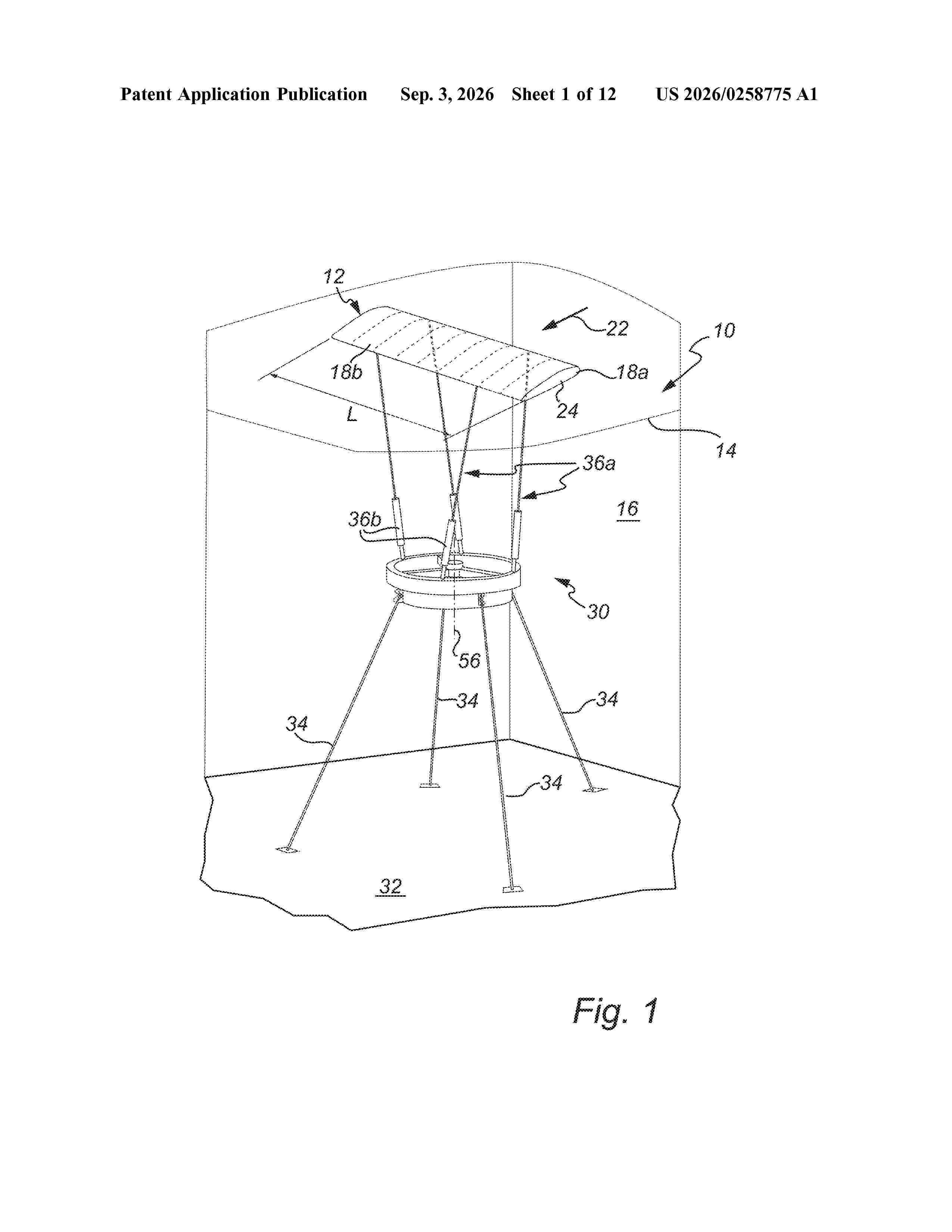
0000 The present invention relates to a wave energy converter, comprising: a buoyant wave collector adapted to float in the surface of water, wherein the wave collector has a leading edge and a trailing edge; a platform adapted to be submerged and positioned lower than the wave collector, wherein the wave collector is adapted to move relative to the platform; an extendable and retractable front attachment connecting a leading portion of the wave collector to the platform; and an extendable and retractable rear attachment connecting a trailing portion of the wave collector to the platform. In at least one configuration the front and rear attachments are configured to control the wave collector so that the wave collector moves with the wave so as to absorb horizontal and vertical energy of the wave.
Resumen de: US20260258776A1
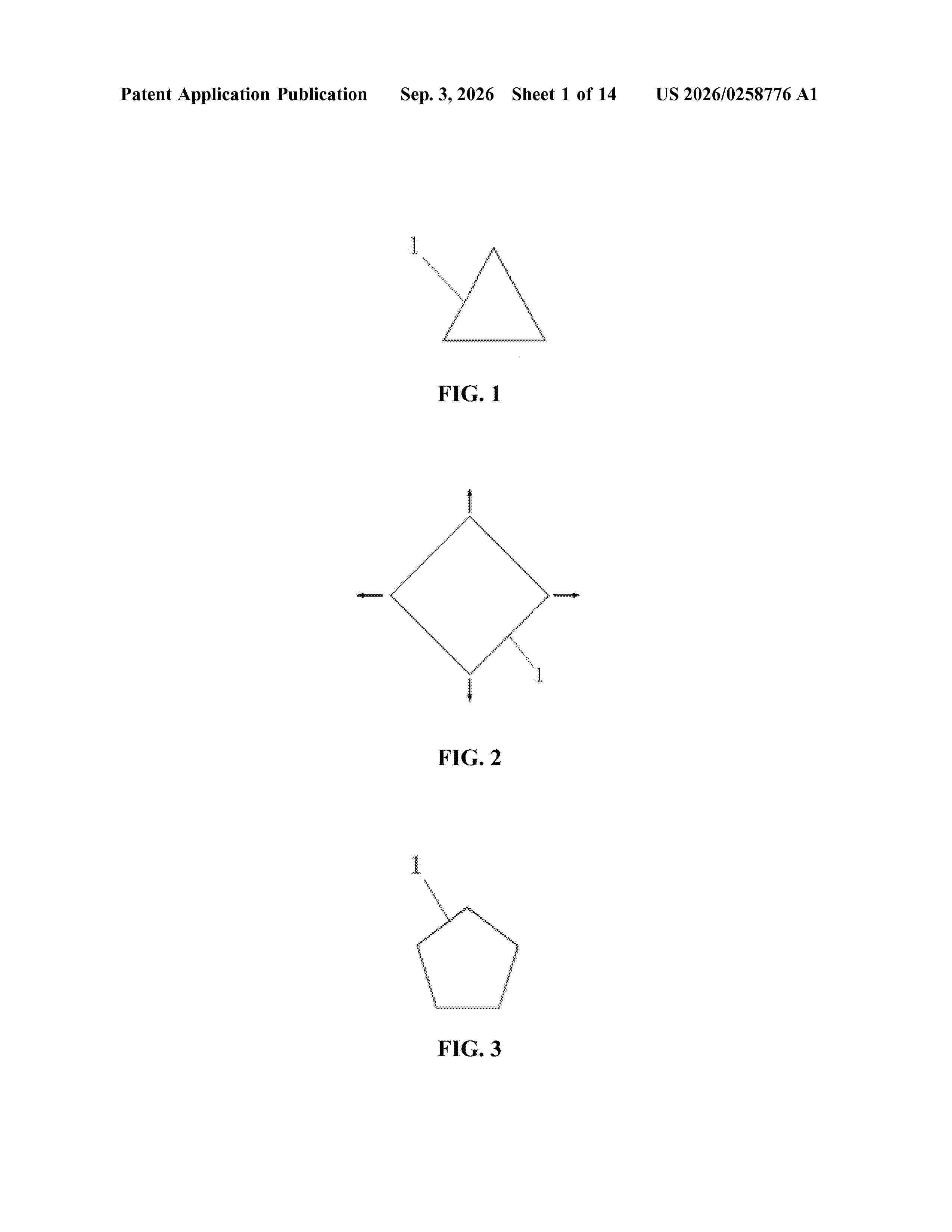
0000 Wave power generation device and sea farm are provided. The wave power generation device includes a flexible mat, a transmission module and an energy conversion module. The flexible mat has at least three vertices, and can be spread by outward tensional forces applied on the vertices. At least one of the vertices is connected with the transmission module. The energy conversion module is connected to the transmission module, to partially convert mechanical energy of the flexible mat produced under an action of wave surge into electrical energy. The flexible mat and the transmission module are cooperated to enable the flexible mat to be sufficiently spread to absorb the wave energy under the action of wave undulation of various frequencies and directions.
Resumen de: US20260258777A1
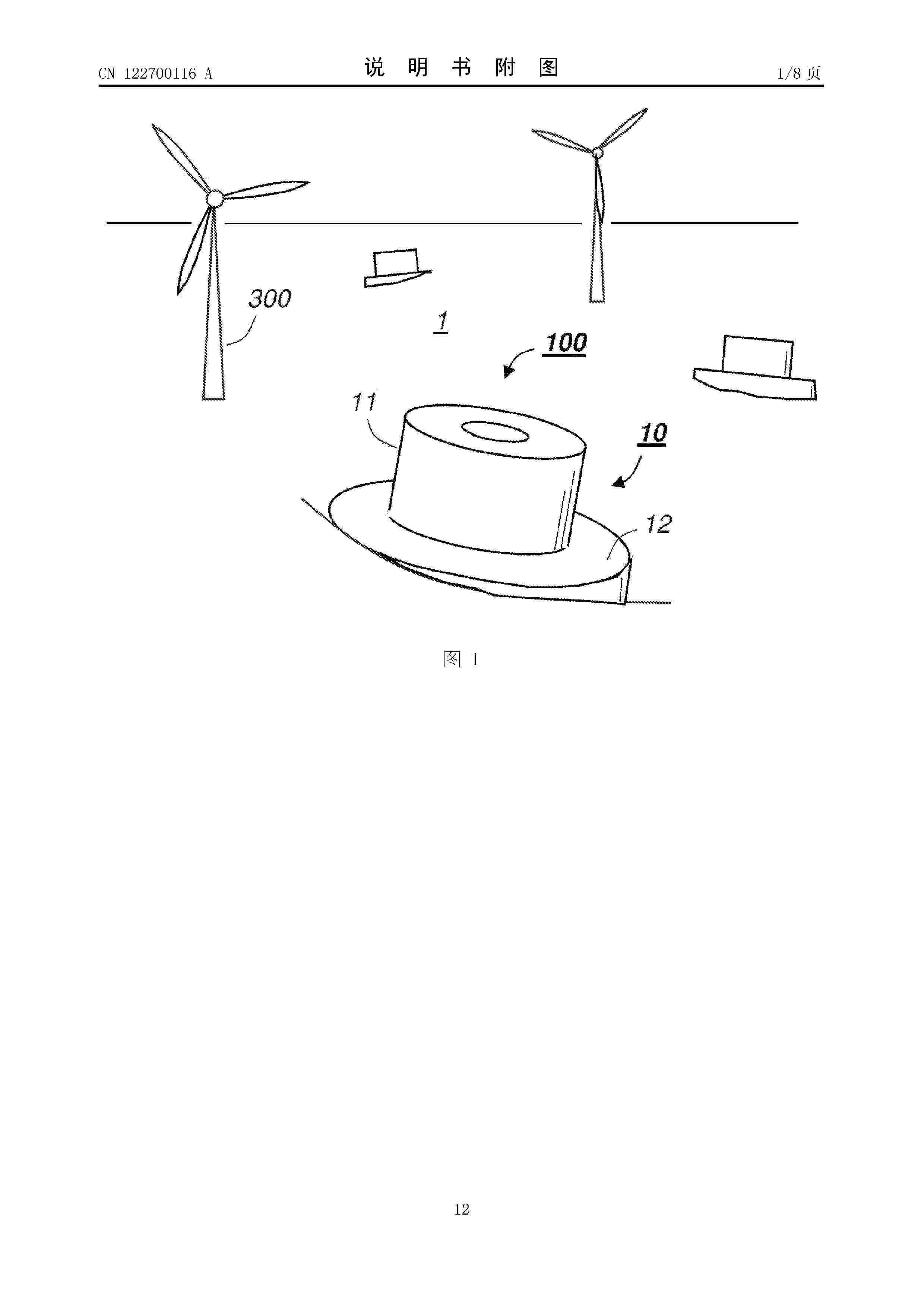
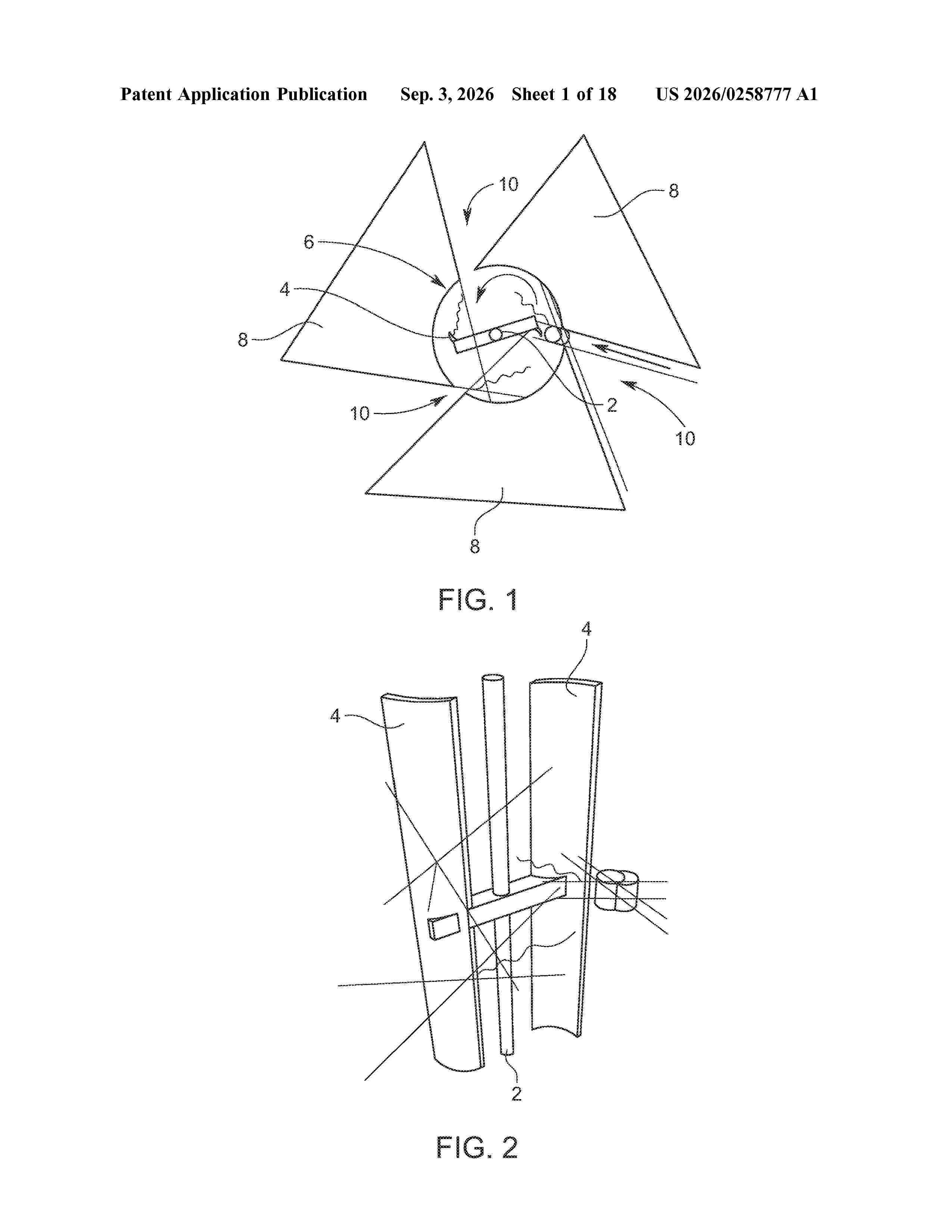
0000 A device for converting omni-directional fluid flow to unidirectional flow that can be provided in a combined breakwater and energy converter system to generate electricity from coastal waters. Concrete stators form part of a barrier of a breakwater, the stators arranged about a central rotation chamber, with adjacent stators forming fluid channels to the chamber, the chamber having a rotator with a central rotatable axle mounted to at least two blades. The channels are funnelled to provide an entrance to the chamber greater in size than the exit into the chamber and the path of the channel exit vector is angled with respect to the central axle, being directed towards the blades. Omnidirectional wave flows can enter the channels and pass into the chamber to be converted into unidirectional flow to effect unidirectional rotation of the axle. 0000 This rotational movement is used for the generation of electricity
Resumen de: WO2025207246A1
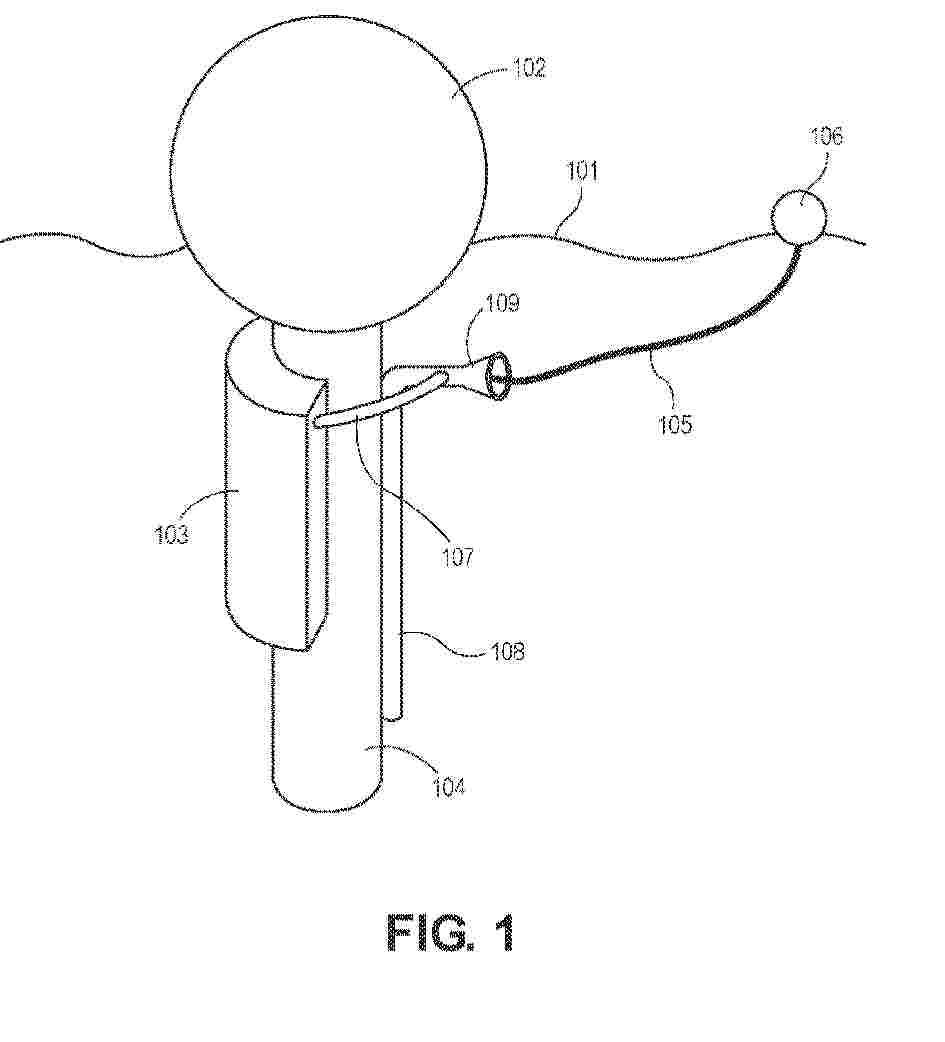
Embodiments disclosed herein include a wave energy converter (WEC) that includes a buoyant chamber, and a tube that depends from the buoyant chamber. In an embodiment, a retractable offtake is coupled to the tube. In an embodiment, the retractable offtake comprises a housing with a receiving portion, where a first opening and a second opening are within the receiving portion. In an embodiment, the retractable offtake further comprises a line with a first end and a second end, where the line is configured to pass through the second opening. In an embodiment, a weight is coupled to the line, and a buoy is coupled to the line proximate to the first end of the line, where the buoy is configured to float in a body of water, and where the weight is coupled to the line so that the line passively retracts into the housing.
Resumen de: US20260257778A1
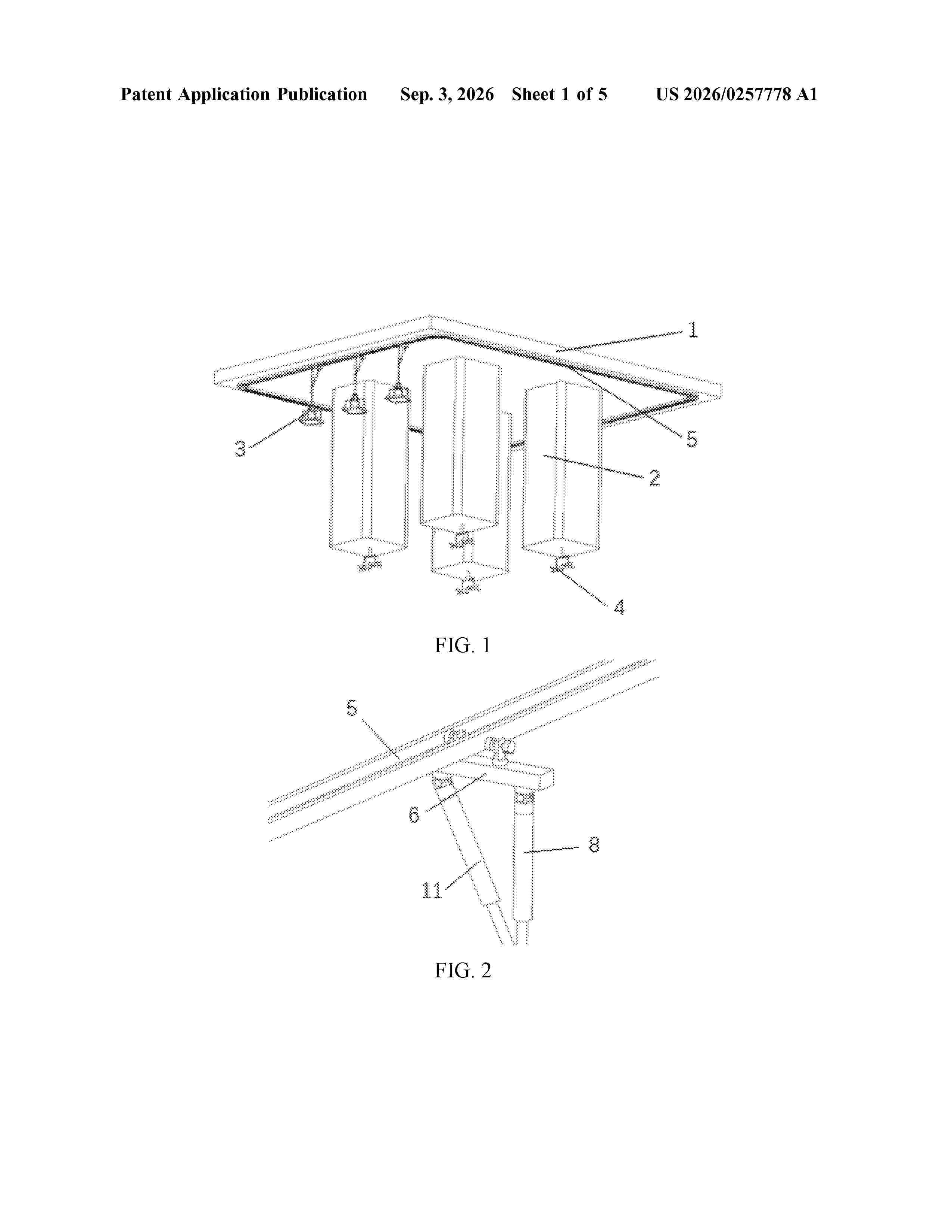
A deep-sea platform energy self-supply device and a control method therefor are disclosed. The device includes a working platform of a deep-sea platform, buoys mounted at a bottom of the working platform, wave energy piezoelectric assemblies disposed at the bottom of the working platform, and ocean current energy piezoelectric assemblies disposed at bottoms of the buoys. The present disclosure directly converts kinetic energy of fluid in the ocean into electric energy by using a wave energy piezoelectric plate and an ocean current energy piezoelectric plate, thereby supplying power to the deep-sea platform and achieving energy self-supply for the deep-sea platform. The device also dissipates kinetic energy of the fluid, such that the amplitude of waves decreases as the kinetic energy of the fluid decreases, thereby achieving a wave-dissipating effect, enhancing operational stability of the working platform, and extending the service life of the working platform.
Resumen de: GB2704366A
A turbine comprises a voluminous shaft 1 with a helical blade 2, which is positioned alongside a voluminous wall 6. Water flowing over the shaped ends 4, 8 of the voluminous wall 6 and shaft 3 accelerates due to the diminishing space it passes through. As this accelerated water flows through the turbine it is contained by the wall 6 as it pushes against the blade 2. The turbines my be arranged in a Vee arrangement (figure 3), or a diamond configuration suitable for reversing tidal flow. Figure 2
Resumen de: EP4800237A1
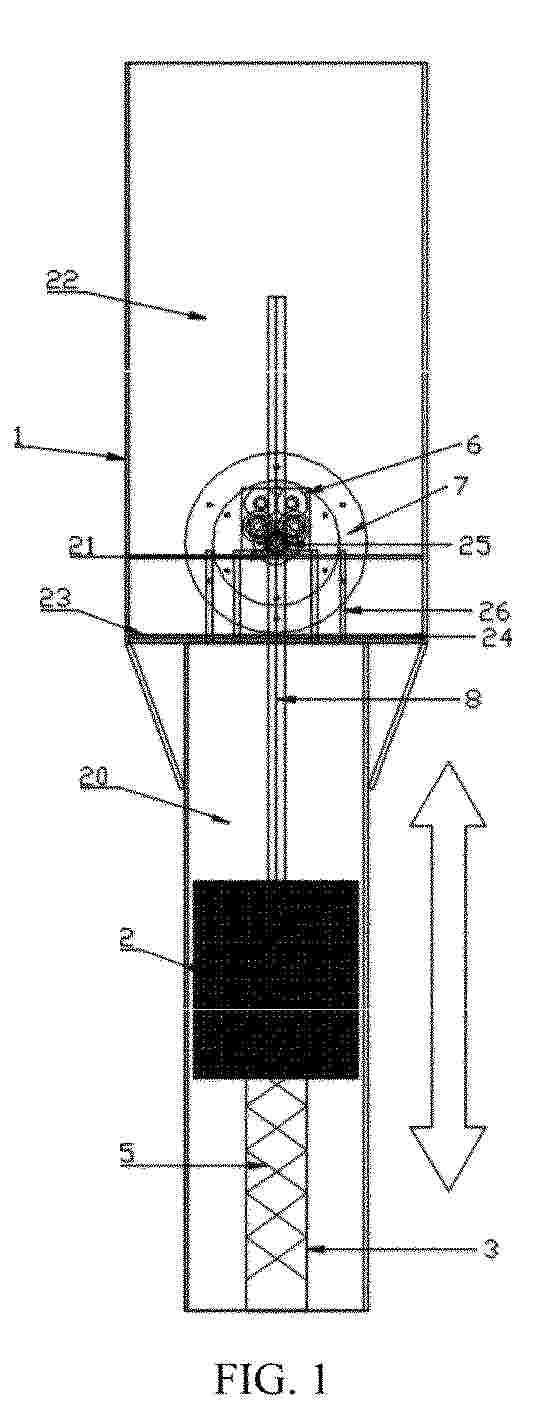
The present invention relates to a split-type inertial kinetic energy oscillation system comprising a housing (1) with an upper chamber (22) and a lower chamber (20), the diameter of the lower chamber (20) is smaller than the diameter of the upper chamber (22); an inertial kinetic energy body (2) sliding in the vertical direction in the lower chamber for oscillating up and down to generate inertial kinetic energy, a suspension support system (3) for supporting the oscillating inertial kinetic energy body (2); a mounting structure (23) in the upper chamber (22), a transmission portion of a transmission mechanism passes through the mounting structure (23) and enters the lower chamber (20) to be connected to the inertial kinetic energy body (2), the transmission mechanism is capable of converting bidirectional reciprocating oscillation kinetic energy of the inertial kinetic energy body (2) into continuous torque outputted in one direction.
Resumen de: WO2025087736A1
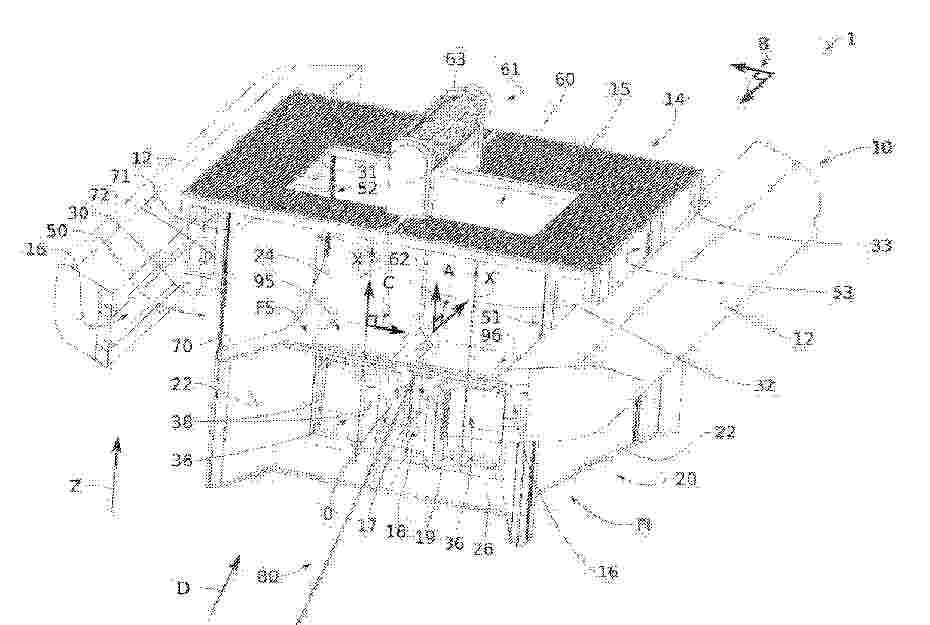
The invention relates to a floating hydroelectric power plant, intended to be partially submerged in a watercourse, comprising a flotation member (10) comprising at least two shells (12) coupled by a frame (14) including a floor (15) extending in a main plane (B), and, for each shell (12), a connecting element (30 to 33) connecting the shell (12) to the floor (15); a channel (20) comprising two turbines (36) mounted counter-rotating along two axes of rotation (X, X'), respectively, together defining a secondary plane (C), and telescopic rails (50, 51), each telescopic rail being located entirely below the main plane (B) and connecting one of the connecting elements of the frame (14) to the channel (20), the telescopic rails being configured to allow the channel (20) to translate in a direction (Z) perpendicular to the main plane (B), so that an upper face (FS) of the channel (20) remains below the main plane (B).
Resumen de: US2025137431A1
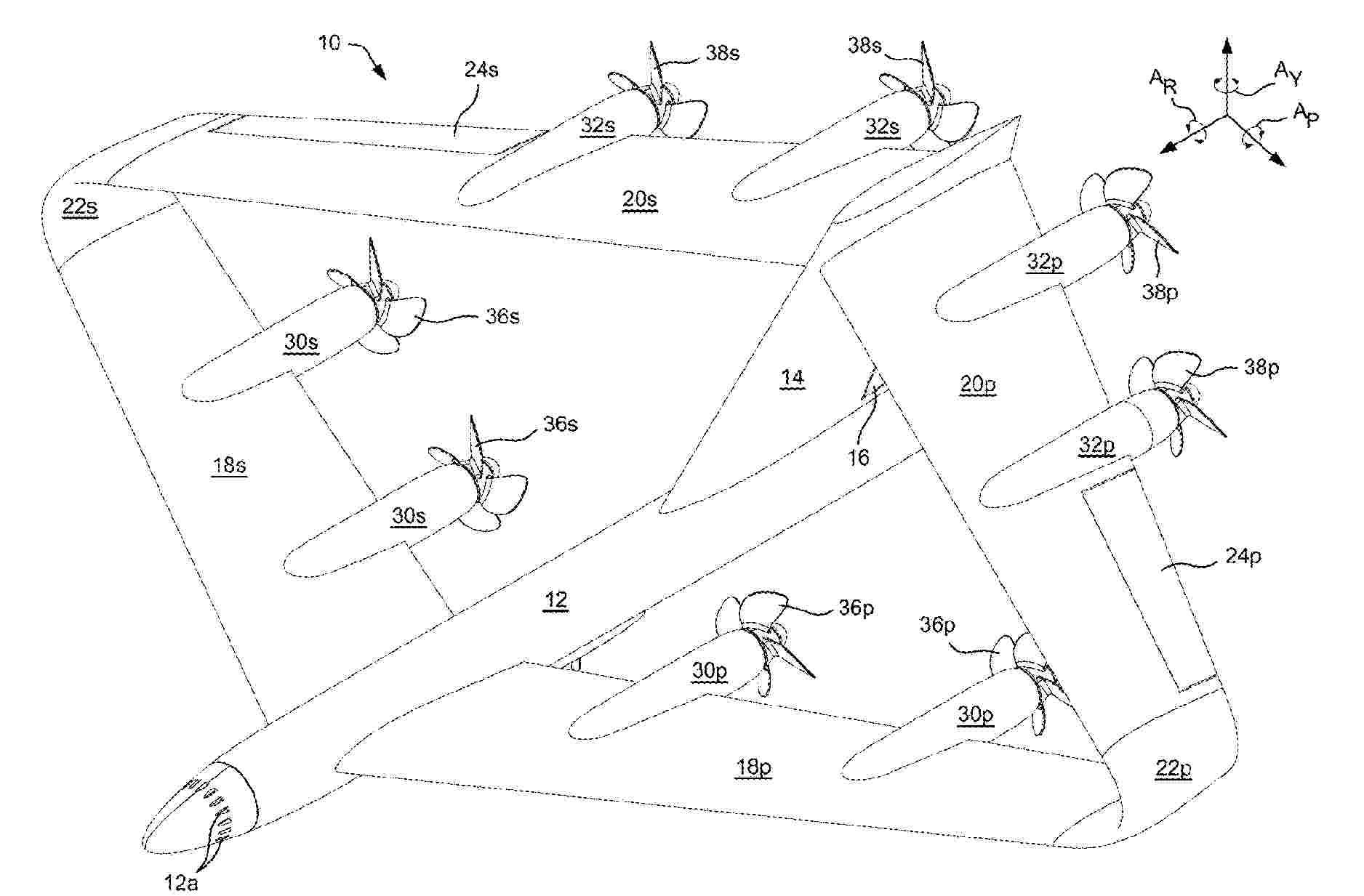
Submersible box-winged vehicle systems generate hydroelectric energy using naturally occurring tidal flows and/or water currents in a body of water. The vehicle systems include a submersible hull, an upright dorsal fin extending from an aft portion of the submersible hull, port and starboard wing assemblies each having respective proximal ends joined to a forward region of the hull an and an upper region of the dorsal fin so as to establish a box wing configuration, and electrical power generation units attached to the port and starboard wings, wherein each of the electrical power generation units include a generator and a marine propeller operatively connected to the generator so as to cause the generator to generate electrical energy in response to the marine propeller turning. The vehicle system when submerged in a body of water thereby allows tidal flows and/or currents associated with the body of water to responsively turn the marine propeller of each of the electrical power units thereby generating electricity by the generator operably associated therewith
Resumen de: EP4799913A2
0001 A computing apparatus that is integrated within a flotation module, the system obtaining the energy required to power its computing operations from waves that travel across the surface of a body of water on which the flotation module sets. Additionally, the self-powered computing apparatus employs novel designs to utilize its close proximity to the body of water and/or to strong ocean winds to significantly lower the cost and complexity of cooling their computing circuits.
Resumen de: CN122670115A
本发明公开了一种基于系泊锚定系统的浮体波浪能发电装置,属于波浪能发电技术领域,包括:浮体主体和系泊锚定组件,浮体主体通过系泊锚定组件锚定至海床,系泊锚定组件包括系泊件和锚固于海床的锚固件,浮体主体内设有干燥舱室,干燥舱室内设有能量转换发电机构;能量转换发电机构包括恒张力储能组件、运动放大转换组件和发电组件;与现有技术相比,本发明具有如下的有益效果:本发明以浮体必备的系泊锚定组件为能量捕获载体,核心部件集成于干燥舱室内,可捕获浮体多自由度运动能量,提升波浪能利用率,并通过恒张力储能组件与运动放大转换组件、发电组件协同,保证发电稳定连续、效率高。
Resumen de: CN122667165A
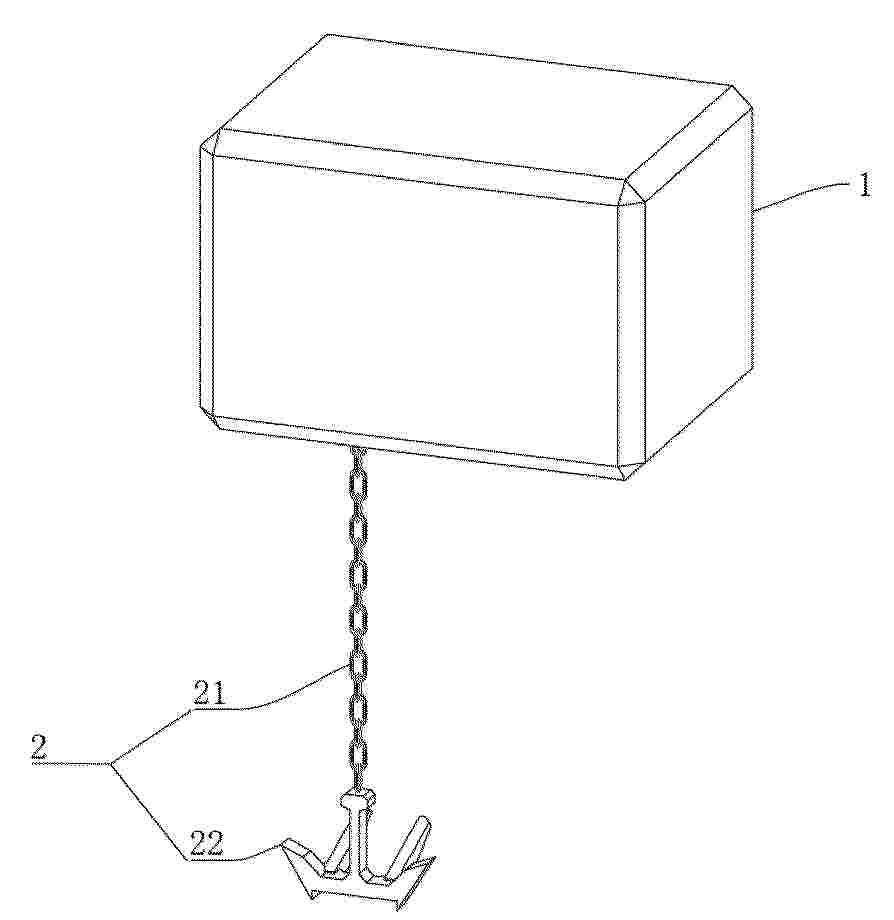
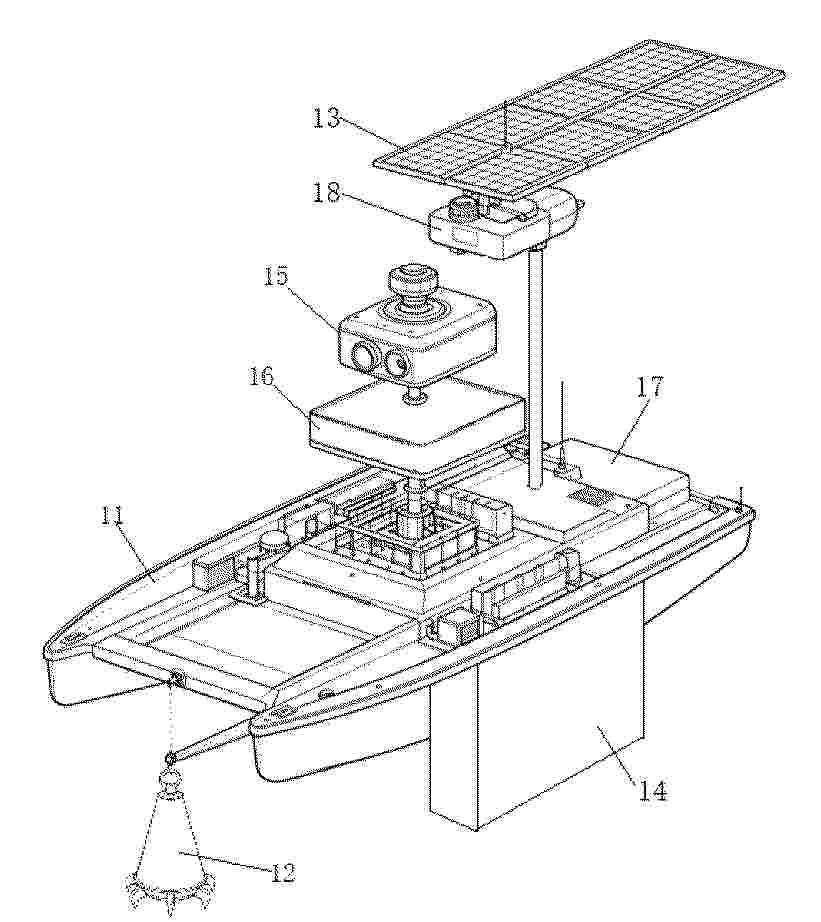
本发明属于海域监测预警设备、无人艇海上监测技术领域,具体涉及一种近海预置式太阳能无人艇海域监测预警台,包括岸基前置预警台主机与预置于海上的传感艇子台,传感艇子台包括双体防侧翻艇身,双体防侧翻艇身上设置有防缠绕重力锚、风光波浪复合发电机构,风光波浪复合发电机构与密封防水锂电池储能舱电性连接,双体防侧翻艇身的甲板上安装有三轴机械防抖云台,三轴机械防抖云台上安装有一体式多源传感密封舱,一体式多源传感密封舱内集成红外热成像相机、可见光摄像机、多普勒水声探测仪、微波人体雷达;双体防侧翻艇身上搭载嵌入式工控机与通信模块,岸基前置预警台主机用于接收通信模块回传的数据。该预警台解决了近海监控盲区问题,实现24小时无人前置值守。
Resumen de: CN122667166A
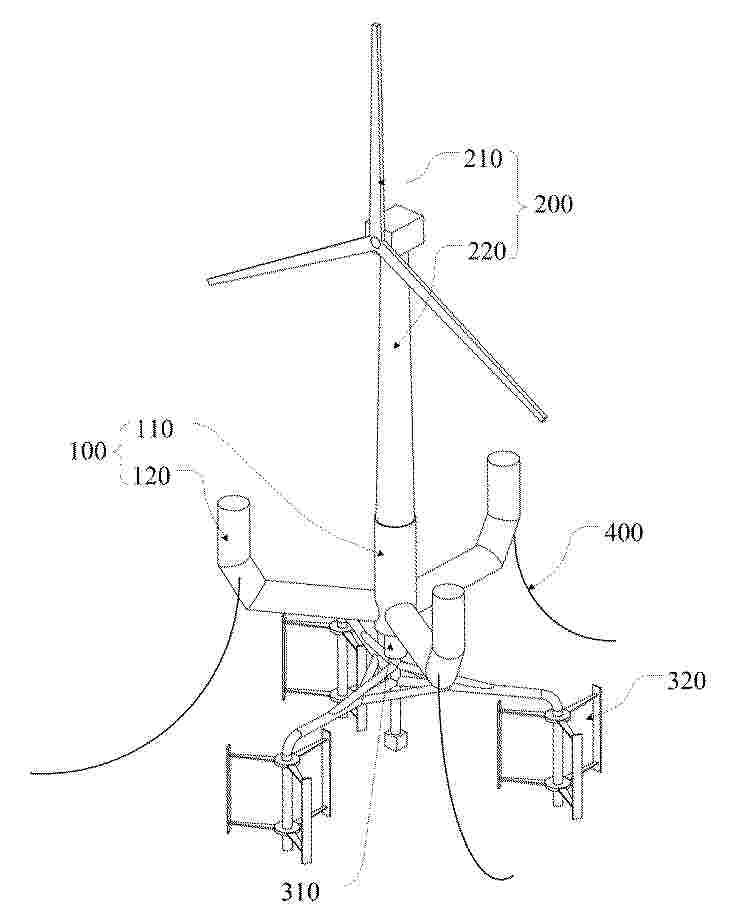
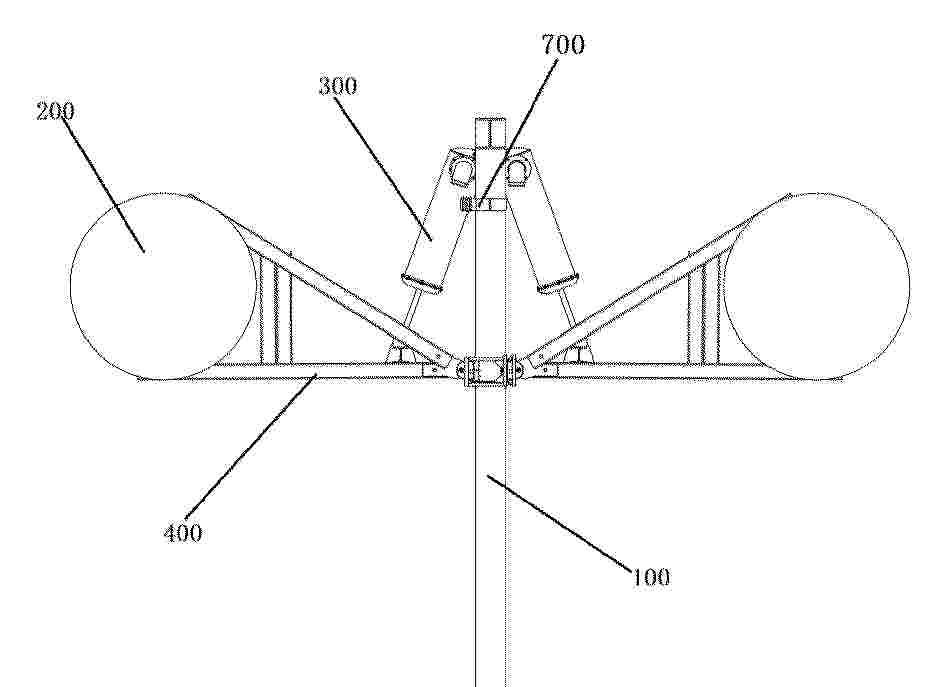
本申请公开了一种集成式漂浮平台及海上发电系统,本申请提供的集成式漂浮平台,包括平台组件,在平台组件的顶端承载有风机组件,平台组件的底端承载有潮流能组件,其中,潮流能组件包括调节装置和水轮机组,调节装置能够连接平台组件和水轮机组,并能够通过调节装置驱动水轮机组进行旋转和升降作业,这样将风机组件和潮流能组件集成于同一个平台组件上,以使平台组件能够同时进行风能和潮流能发电,使得二者能够协同作业,提高了漂浮平台的空间利用率以及发电效率,并通过调节装置驱动水轮机组进行旋转和升降作业,使得水轮机组能够调整保持最佳迎流姿态,以提高水轮机组对潮流的捕获效果,进一步提高发电效率。
Resumen de: CN122667171A
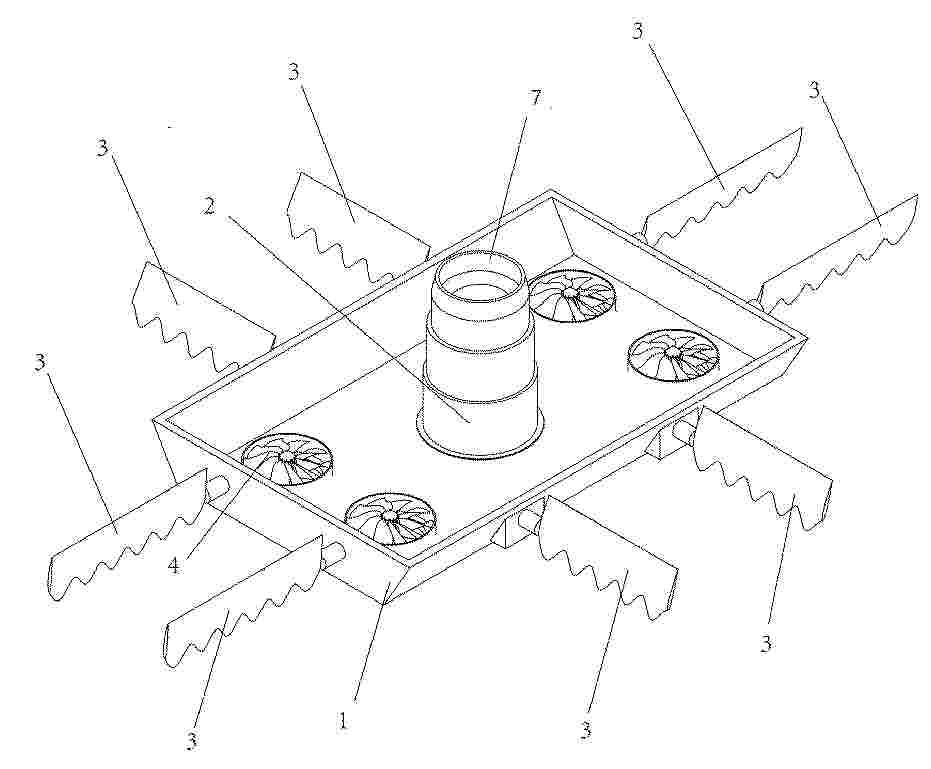
本发明提供了一种远海浮动平台风浪自适应稳定基座及其稳定方法,涉及海洋工程水动力学与海洋可再生能源交叉技术领域。该稳定平台包括:基座浮体;中央导流塔,竖直贯通设置于基座浮体的几何中心;被动消波舵面组,设置于基座浮体四周;垂向涌浪主动平衡模组,嵌设于基座浮体上表面;被动方位自适应系统,设置于基座浮体底部;海流能自持发电模组,集成于被动方位自适应系统下方。本发明采用上述的一种远海浮动平台风浪自适应稳定基座及其稳定方法,拓展了中小型远海浮动平台的作业海况窗口,降低了平台本体的水动力设计约束与运维成本,提高了平台高海况适应能力与恶劣海况下主动平衡自持能力。
Resumen de: BG114415A
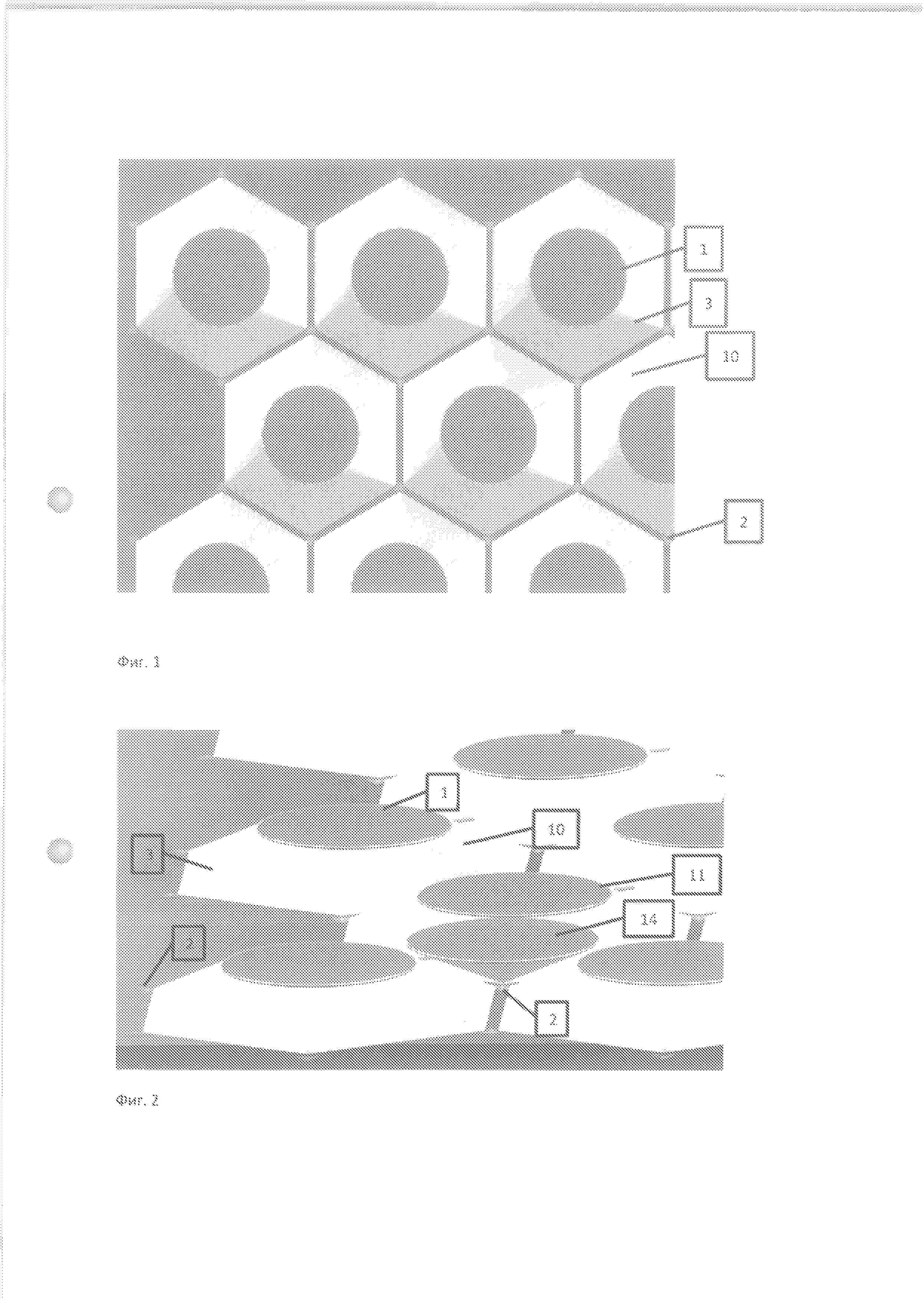
The invention is a hybrid modular floating energy-water system, including multiple floating photovoltaic platforms with shared anchors, configured for two-axis solar tracking and complementary use of wind energy. Each platform includes a floating support structure of a two-layer tubular grid with a peripheral ring with a toothed rack, photovoltaic panels with variable inclination and peripheral carts for rotation around an imaginary vertical axis. The platforms use aerodynamic elements (textile panels, radial pockets, foldable flap elements) to improve the conversion of wind energy. Under some of the platforms are located flexible water chambers, attached to the anchor connections, with variable volume, which collect rainwater and condensate and are connected by flexible sleeves in a system of connected vessels. The anchor system is distributed with shared triangular anchors, serving two or more platforms. Each of the floating platforms is attached to six of the shared anchors. The system can simultaneously function as a modular freshwater reservoir, a rainwater and evaporation collector, a lower basin for freshwater PVPP, and a floating energy infrastructure for coastal, saltwater, and offshore applications.
Resumen de: CN224693490U
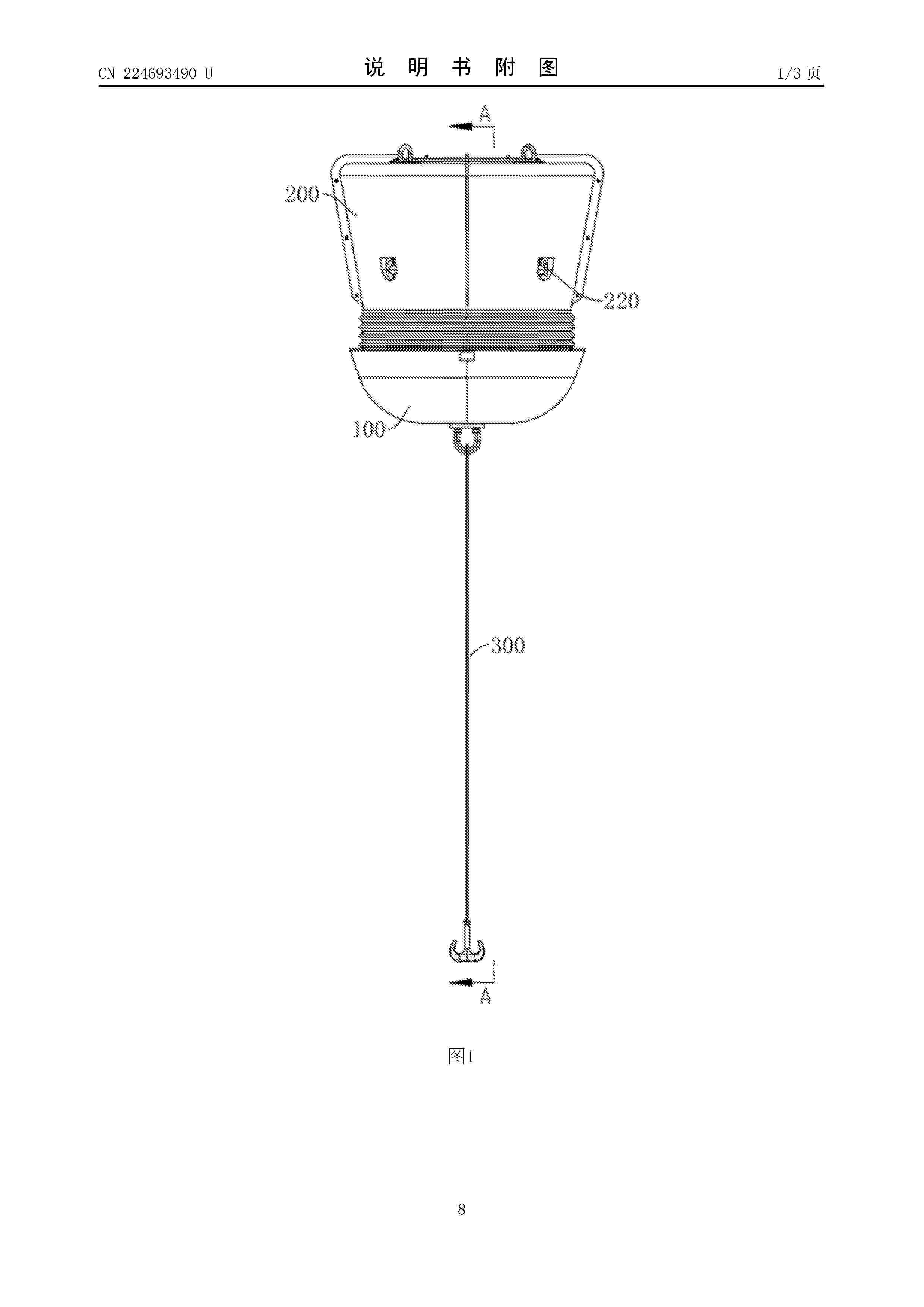
本实用新型涉及一种浪涌发电装置,包括发电部及其顶部设置的浮标本体;所述发电部内的空腔中设有旋转轴;所述旋转轴上止转连接有偏心块;所述偏心块朝向远离旋转轴的方向延伸;所述旋转轴与发电机相连以利用旋转轴的旋转带动发电机发电;所述旋转轴上还连接有用于驱动旋转轴转动的驱动电机。本实用新型的驱动电机能够在小振幅波浪情况下主动驱动旋转轴转动,从而有效的驱动偏心块转动,从而能够更好的使得发电部更易处于不平衡状态,发电部能够在更小的波浪激励下有效实现偏心块的转动,通过驱动电机的作用,克服了偏心块启动困难、在小振幅波浪中容易陷入停滞的使用局限性和缺陷,从而提高了对小振幅波浪的利用率,相应的启动难度也会降低。
Resumen de: CN122646279A
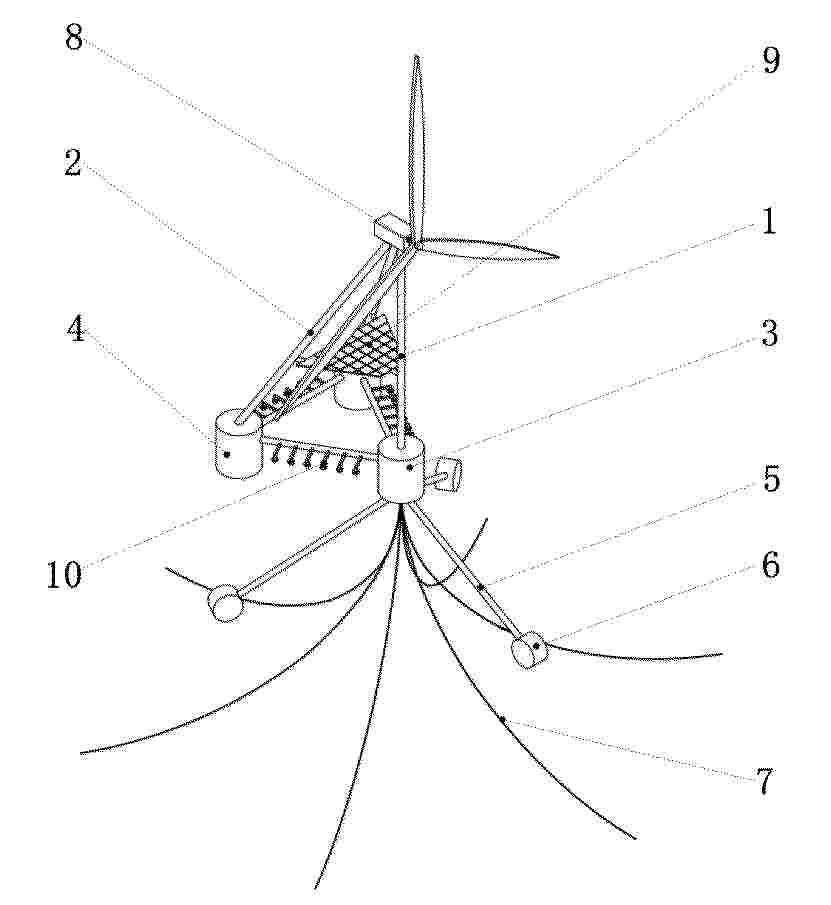
本发明涉及海上可再生能源发电技术领域,提供一种立体结构的漂浮式多能综合发电装置,包括连接支撑结构、浮动结构、爪型支腿结构、系泊系统以及风能发电、太阳能发电和波浪能发电单元,本发明通过空间桁架结构简化上部支撑结构,降低用钢量和建造成本;通过在第一立柱浮体底端设置辐射状爪型支腿及辅助浮体,提升平台的横摇与纵摇稳性;利用桁架结构自身形成的围合空间和浮体间围合区域,容纳太阳能发电单元和波浪能发电单元,实现一体化立体集成设计,进一步降低整体重量和成本;风、光、浪三种能源通过立体化的同步捕获,使装置在白天/夜晚、有风/无风、浪大/浪小等不同海况下均能维持一定的电力输出,提升发电稳定性和综合利用率。
Resumen de: CN122649940A
本申请涉及一种海浪发电装置、方法及应用,包括立杆、浮筒、液压缸;立杆具有预设高度设置在沙地上;浮筒为中空结构设置在立杆的旁侧,且浮筒能够跟着海浪的起伏沿着立杆的高度方向上下移动;液压缸固定设置在设置在立杆上,液压缸的液压杆与浮筒连接,且液压缸上开设有进水口和出水口,在进水口和出水口上均设置有单项阀,其中,浮筒拉着液压杆带着活塞向下移动,海水通过进水口的单向阀进入缸体内,浮筒带着液压杆向上移动推着活塞挤压海水通过出水口的单向阀进入到水轮机。本申请通过以上的设置解决了现有的发电装置整体结构较为复杂,无法保证输出稳定的电能的技术问题。
Resumen de: CN122649359A
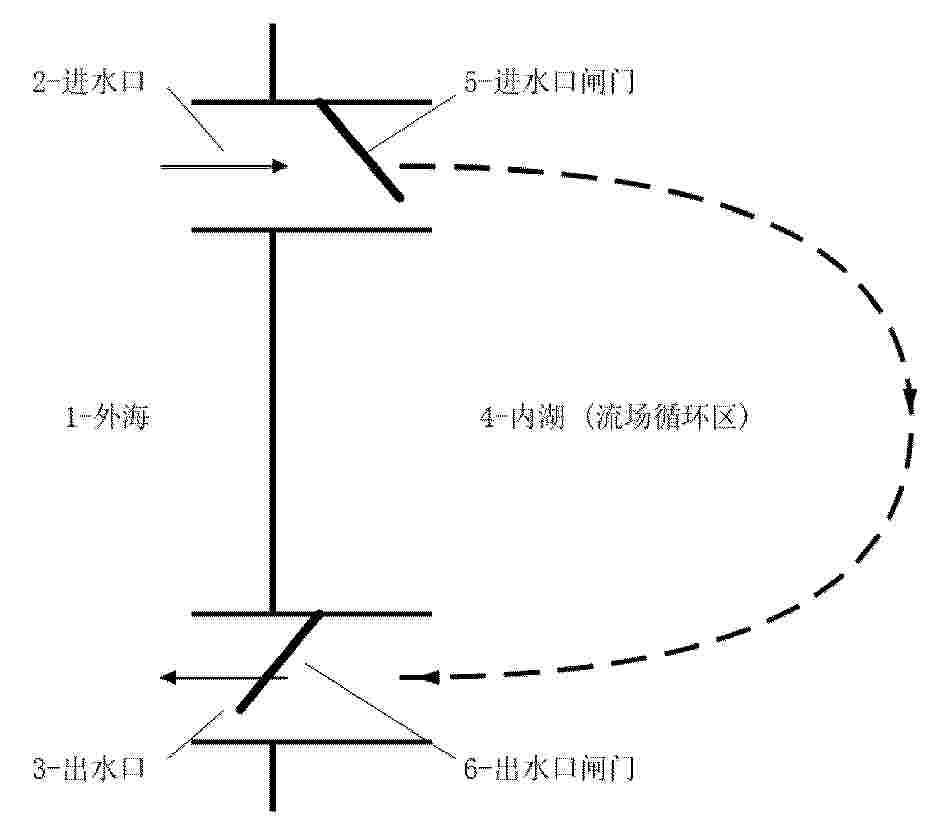
本发明公开了一种利用潮汐压差自驱动的双向调控内湖流场与生态综合治理装置,属于海洋环境与水利机械工程技术领域;本申请的智能闸门系统采用具有特定配重比和自由度的悬挂式单向闸门结构,完全利用潮汐涨落引起的天然水压差实现无电化、机械自适应启闭;内湖流场双向调控循环系统通过对非对称独立进出水口的流道及导流坡设计,将外海潮汐无序紊流转化为内湖局部定向单向流,驱动内湖底层死水层和沉积物的抽换;本发明完全摒弃了传统电控液压闸门,突破了小潮汛“启闭死区”的机械瓶颈,以纯机械自驱动流场重构的方式,根治内湖水体富营养化与藻华滋生,实现零能耗、免维护、低碳化的生态综合治理。
Nº publicación: CN122649936A 28/08/2026
Solicitante:
江苏海事职业技术学院固合工程材料(江苏)有限公司
Resumen de: CN122649936A
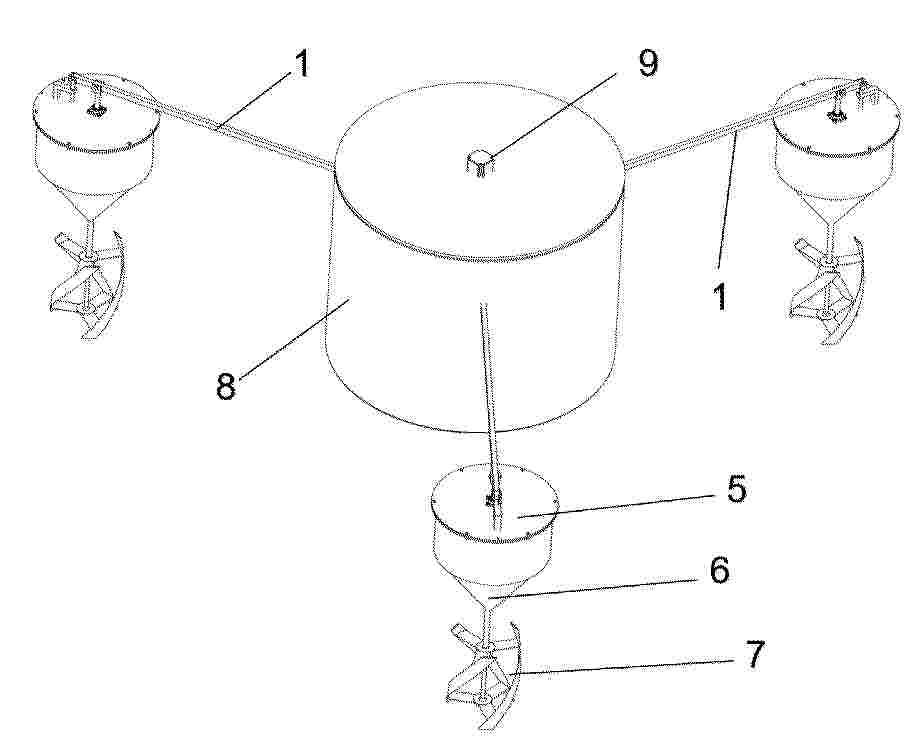
本发明公开了一种考虑浪流耦合作用的海上发电平台,包括:圆柱箱体发电组件、浮子发电组件;所述圆柱箱体发电组件包括:三个发电机、压载舱,三个发电机通过连接杆摆动发电;所述浮子发电组件通过连接杆圆周阵列在圆柱箱体周围;所述浮子发电组件,包括:螺旋叶轮、储能弹簧、振动储能块、棘轮推杆组件、增速组件、发电机、浪流耦合组件以及传动装置;所述棘轮推杆组件收集波浪能使输出轴单向旋转,所述螺旋叶轮收集潮流能使输出轴单向旋转,所述浪流耦合组件将两个单向旋转叠加后耦合输出。本发明将潮流能和波浪能收集耦合叠加输出,使海洋单位面积能量利用率更高,得到更好的经济效益,提高装置稳定性。
 BOPI
BOPI
 Sede Electrónica