Si deseas distinguir tus productos, servicios o ambos de los de otra empresa, es posible que necesites una marca o nombre comercial. Descubre qué son, en qué consiste su procedimiento de registro y qué implica.

Información sobre los plazos de presentación de solicitudes de transformación de marcas de la Unión Europea en marca nacional española. Más información


Si tienes un nuevo dispositivo, producto o procedimiento que resuelva un problema técnico o tenga una ventaja práctica, existen distintas formas de protegerlo en España y en otros países. Descubre cómo hacerlo.

¿Tu innovación reside en la estética, la ornamentación o la apariencia de tu producto? Protégela mediante un diseño industrial. Descubre qué derechos confiere el registro y cómo realizar la tramitación.

Las indicaciones geográficas protegen el nombre de un producto originario de una zona geográfica, a la cual le debe una determinada calidad, reputación u otra característica. Descubre qué son, en qué consiste su procedimiento de registro y qué beneficios conceden.

Las patentes publicadas en todo el mundo son una valiosa fuente de información científica, técnica y comercial.

Si eres emprendedor/a o una empresa y quieres potenciar y mejorar la rentabilidad de tu negocio protegiendo de forma adecuada los activos intangibles de tu organización, en este espacio encontrarás lo necesario.


 228
resultados
228
resultados
 Última actualización
14/07/2026 [08:33:00]
Última actualización
14/07/2026 [08:33:00]


 Resultados 125 a 150 de 228

Resumen de: US20260187508A1
A modular quantum computing system that enables distributed quantum computation across multiple quantum processing units (QPUs) that are remotely connected using a quantum entanglement network is disclosed. In order to execute a quantum circuit across multiple QPUs, any quantum state pertaining to any given multi-qubit gate of the quantum circuit may be teleported between two respective QPUs, such that an overall quantum compute capacity for executing the quantum circuit is expanded. Based on a number of QPUs that are allocated for executing the quantum circuit, buffers of established, pairwise quantum entanglement instances between respective sets of the allocated QPUs may be prepared and subsequently maintained prior to and during execution of the quantum circuit, in order to limit potential latency due to use of a quantum entanglement network within the execution of a given quantum circuit.

Resumen de: WO2026139128A1
This application concerns a computer-implemented method for compiling an input unitary acting on a set of logical qubits to an output quantum circuit operable on a quantum system comprising a plurality of output qubits (1), wherein the output qubits (1) of the quantum system are arranged in accordance with a connectivity mesh (11), wherein nodes (111) of the connectivity mesh (11) represent possible sites for the output qubits (1) of the quantum system and each edge (112) of the connectivity mesh (11) indicates that quantum interactions between the output qubits (1) of the quantum system connected by one of the edges (112) are possible, comprising the following steps: providing the connectivity mesh (11) of the quantum system; assigning an index to each of the logical qubits; extracting a set of target labels (2) from the input unitary, wherein the target labels (2) correspond to a set comprising at least one of the indices of the logical qubits; compiling circuit building blocks (4) implementing a subset of the target labels (2), wherein the circuit building blocks (4) comprise body path gates (41) and/or leg gates (42) acting on the output qubits (1), wherein compiling the circuit building blocks (4) comprises: defining a tree (3) comprising a subset of edges (112) and a subset of nodes (111) of the connectivity mesh (11), wherein the tree (3) comprises a body (31) with at least one body node (1111) representing a site for an output qubit (1), wherein the body (31) comprise
Resumen de: WO2026139470A1
There is provided a method for performing operations in a solid-state qubit processor. A provided (S100) logical qubit, comprising a plurality of data qubits, is extended (S102) and split (S104) to create two or more entangled portions. A first portion is shuttled (S106) in the qubit processor, separating it from a second portion, which may remain in place. During this shuttling process, faults may have occurred, which may have damaged or corrupted the first portion. Accordingly, a likelihood of fault is determined (S108), based upon a measurement operation. Based upon the likelihood of fault, the first portion or the second portion is selected (S110). In some examples, when selecting the first portion, the logical qubit is shuttled, and when selecting the second portion, the shuttling process is reversed and any potential damage or corruption to the first portion is reverted, with the logical qubit returned to its initial state. In this way, the method may provide a "logically reversible" shuttling operation.
Resumen de: US20260187516A1
One or more systems, devices, computer program products and/or computer-implemented methods of use provided herein relate to noise learning of measurements with known state initialization. For example, a system can comprise a memory that can store computer executable components and a processor that can execute the computer executable components stored in the memory. The computer executable components can comprise: an initialization component that can initialize a qubit with a known state to obtain state preparation errors of the qubit; a measurement component that can measure properties of the known state of the qubit; and an execution component that can perform, on a quantum system, cycle benchmarking for measurements on the qubit within a quantum circuit to obtain, by using the properties of the known state, a noise model of the measurements that determines state errors of the qubit from the state preparation errors.
Resumen de: US20260187507A1
Systems/techniques that facilitate artificially intelligent compilation of quantum circuits for quantum computing are provided. In various embodiments, a system can receive a quantum circuit. In various aspects, the system can synthesize, via a reinforcement learning model, the quantum circuit into a sequence of Pauli rotations of form exp(iθP), where P is a multi-qubit tensor product of Pauli matrices, that is supported by a quantum computing architecture with Pauli rotations as a gate set.
Resumen de: WO2026143193A1
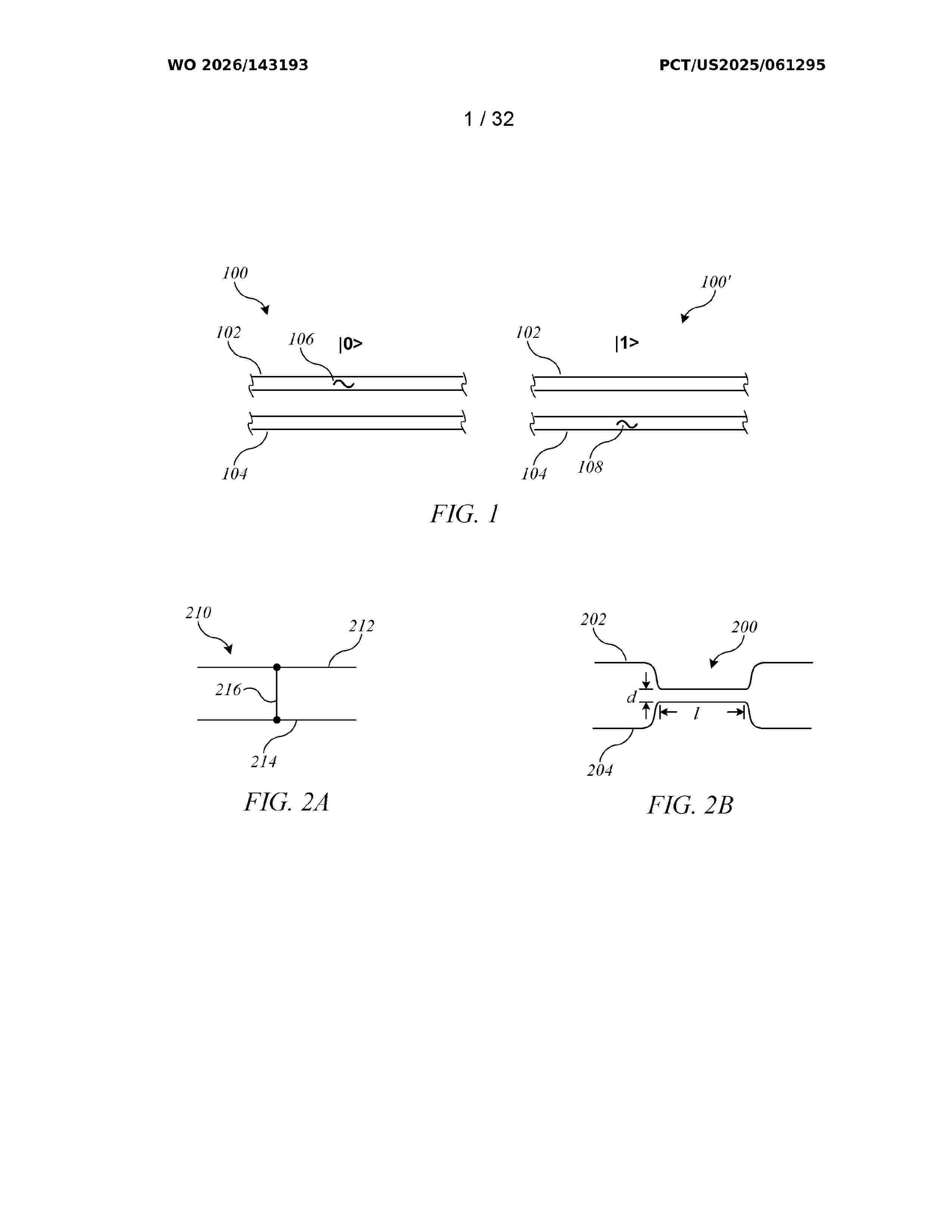
Multi-way fusion circuits using Hadamard interferometers can perform fusion operations on four or more input qubits, each of which may initially be part of a separately-entangled system of qubits. When the fusion operation succeeds, the four or more input qubits are consumed in a projective entangling measurement that also results in creating a single entangled system that includes the remaining qubits of the initial separately-entangled systems.
Resumen de: US20260187506A1
0000 Systems/techniques that facilitate a quantum computational software primitive for general quantum channels are provided. In various embodiments, a system can comprise a processor that executes computer executable components stored in a memory. In various aspects, the computer executable components can comprise an input component that receives a quantum channel circuit. In various embodiments, the computer executable components can further comprise a decomposition component that decomposes one or more quantum channels in the quantum channel circuit into an ensemble of quantum circuits. In various instances, the computer executable components can further comprise an execution component that executes, on a quantum system, the ensemble of quantum circuits. In various embodiments, the computer executable components can further comprise a computation component that determines a probability distribution of the one or more quantum channels based on the executing of the ensemble of quantum circuits.
Resumen de: US20260188536A1
0000 Aspects of the present disclosure relate to a quantum information processing (QIP) system that includes an ion trap inside a vacuum enclosure with a vacuum window. The QIP system includes an imaging objective, located at a first position, configured to focus light emitted through the vacuum window from a trapped ion into a single mode (SM) fiber at a second position. The QIP system includes a first camera, a second camera, a pick-off mirror, and an imaging lens, used in combination to align the imaging objective and the SM fiber in order to minimize (1) an objective tilt angle between an optical axis of the imaging objective and a normal axis to the vacuum window and (2) a fiber tilt angle between an axis of the SM fiber and the optical axis of the imaging objective.
Resumen de: WO2026139942A1
A computational architecture employing self-pruning fractal branch management for achieving supercomputer-class performance on standard hardware and noisy intermediate-scale quantum (NISQ) devices. Unlike conventional parallel computing systems requiring massive hardware resources or genetic algorithms requiring extensive population evolution, this invention utilizes hierarchical fractal doubles—modular computational units organized in self-similar tree structures—with real-time adaptive pruning eliminating non-promising solution branches based on geometric performance metrics computed via √2-scaled fractal analysis. Controlled perturbations (branch shaking) inject stochastic exploration preventing premature convergence while pruning maintains computational efficiency. The system achieves quantum-competitive performance on classical hardware through fractal interference patterns mimicking quantum superposition, and enables NISQ quantum computers to operate effectively despite hardware noise by pruning decoherence-corrupted branches before they contaminate computation. Core innovation: geometric pruning criterion comparing branch trajectory fractal dimension against optimal threshold, triggering instant elimination of branches exhibiting non-productive exploration patterns. Applications include neural architecture search, protein folding simulation, quantum system modeling, combinatorial optimization, and multi-agent coordination—all achieving 10-100× speedup versus c
Resumen de: US20260189306A1
0000 Optical intensity modulation apparatus including: an optical modulator operative to modulate a continuous-wave optical carrier signal at a carrier wavelength to generate at least one sideband on the optical carrier signal; a radio frequency, RF, signal generator operative to provide an RF drive signal to the optical modulator; a first optical waveguide grating having a central reflection wavelength corresponding to a sideband; and optical circulator configured to direct the optical carrier signal and the at least one sideband to the first optical waveguide grating and to direct a reflected optical signal from the first optical waveguide grating towards an output to form an output optical signal. The RF signal generator is operative to switch the drive signal on and off so as to form an intensity modulated output optical signal.
Resumen de: US20260187182A1
An optimizing apparatus includes processing circuitry configured to: acquire an original-problem solution which is a solution satisfying a constraint of a combinatorial optimization problem including a plurality of target factors to be combined; divide the plurality of target factors into a plurality of groups on a basis of the original-problem solution, and generate a subproblem being set for each of the plurality of groups; find a solution to the subproblem generated by the subproblem generating unit; generate a candidate solution to the original problem on a basis of the obtained solution to the subproblem; and determine whether it is possible or not possible to update the original-problem solution on a basis of a result of comparison between the generated candidate solution and the acquired original-problem solution.
Resumen de: WO2026140041A1
This quantum error detection device generates a logical state |+⟩ L, 1 of a first quantum error detection code that is a quantum error detection code representing one logical qubit by n1 physical qubits and is a quantum error detection code having a code distance d1. The quantum error detection device executes a logical Rz rotation gate operation of the first quantum error detection code with respect to the logical state |+⟩ L, 1 of the first quantum error detection code, thereby generating a logical state |+θ⟩ L, 1 of the first quantum error detection code. The quantum error detection device executes a sequence of unitary quantum gate operations with respect to the logical state |+θ⟩ L, 1 of the first quantum error detection code, thereby converting the logical state |+θ⟩ L, 1 of the first quantum error detection code into a second quantum error detection code representing one logical qubit by n2 (n2 > n1) physical qubits. The quantum error detection device acquires an error syndrome of a logical state |+θ⟩ L, 2 of the second quantum error detection code.
Resumen de: DE102024139884A1
Es wird ein Verfahren zur Vorhersage von seltenen Trajektorien (ω) eines dynamischen Systems (1) angegeben, aufweisend die Schritte:- Vorgeben einer Belohnungsfunktion (r) für ein quantenunterstütztes Verstärkungslernen der seltenen Trajektorien (ω),- Optimieren von Parametern (θ) eines parametrisierten Quantenschaltkreises (2), der zur Bestimmung einer Strategie (π) des quantenunterstützten Verstärkungslernens eingerichtet ist, anhand der vorgegebenen Belohnungsfunktion (r),- Generieren der seltenen Trajektorien (ω) anhand der mit dem optimierten parametrisierten Quantenschaltkreis (2) bestimmten Strategie (π).Des Weiteren wird ein Quantencomputer angegeben.
Resumen de: WO2026139269A1
A non-linear superconducting quantum circuit configured to operate in a resonant dissipative mode and a Kerr Hamiltonian mode A non-linear superconducting quantum circuit (1) including a memory mode (3), a buffer mode (5), a SNAIL (7) coupled to both the memory mode (3) and the buffer mode (5), a SNAIL flux line (9) inductively coupled to the SNAIL (7), and a DC SQUIDs flux line (11) inductively coupled to a tunable inductive element (21). The non-linear superconducting quantum circuit (1) is configured to operate in: • a resonant dissipative mode in which the SNAIL flux line (9) causes the SNAIL (7) to implement three-wave mixing between the memory mode (3) and the buffer mode (5), and the DC SQUIDs flux line (11) varies the buffer resonant frequency to be equal to twice the memory resonant frequency, and • a Kerr Hamiltonian mode in which the SNAIL flux line (9) causes the SNAIL (7) to implement four-wave mixing between the memory mode (3) and the buffer mode (5).
Resumen de: US20260190869A1
A non-linear superconducting quantum circuit having a first mode and a second mode is disclosed, wherein the first and second modes have respective resonant frequencies. The circuit is configured such that the resonant frequency of the second mode is substantially 2N times the resonant frequency of the first mode when a predetermined current of a constant intensity is applied to the circuit. The circuit intrinsically performs a resonant 2N-to-1 photon exchange between the first and second modes, with N being a positive integer, and thus improving the circuit. When this circuit receives a predetermined current and when the second mode is driven appropriately, the circuit can stabilize a cat-qubit. In a symmetrical version of this circuit, a flux line has been developed to allow RF coupling to the second mode and not to the first mode, allowing the stabilization to be turned off and quantum measurements to be performed.
Resumen de: US20260189388A1
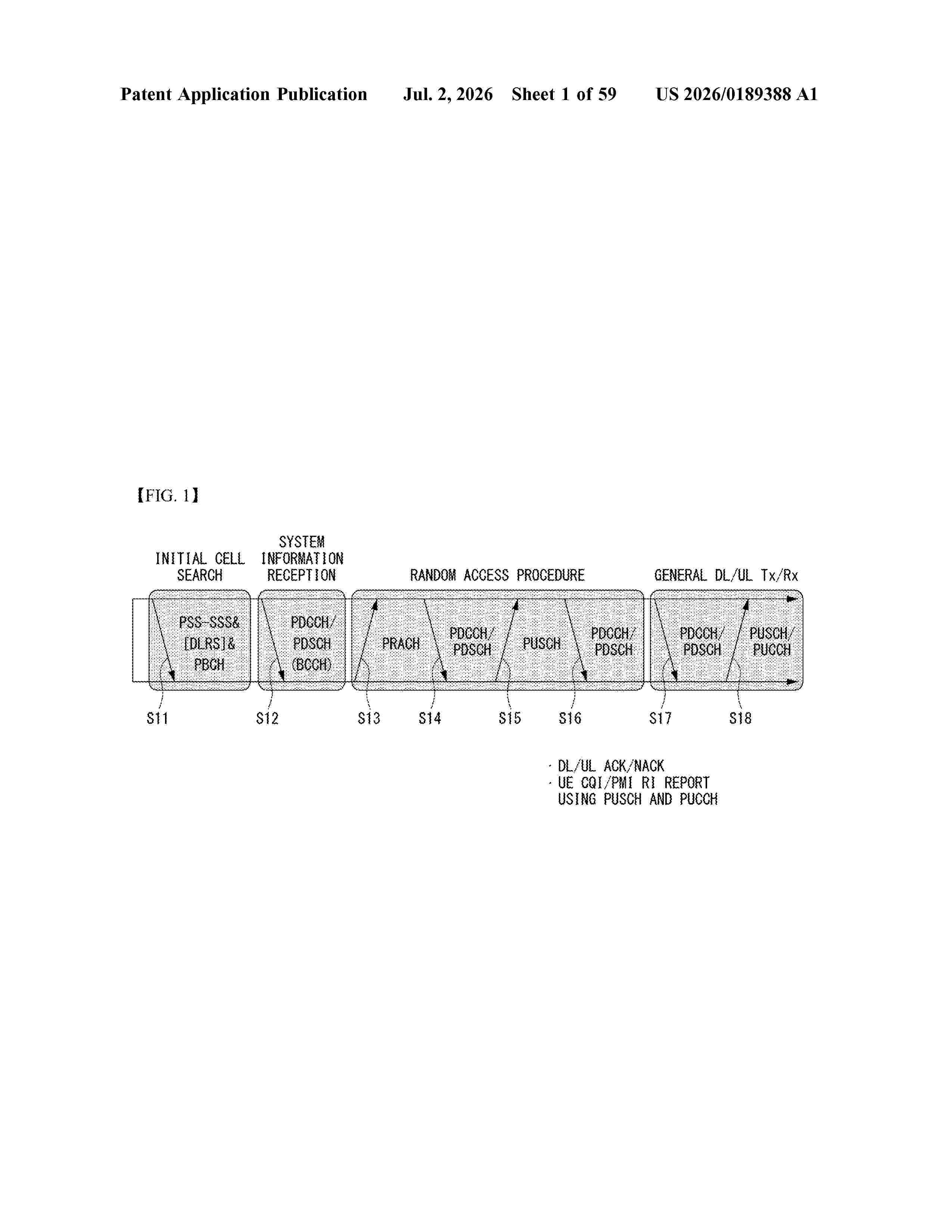
The present disclosure relates to a quantum communication system. Particularly, the present disclosure relates to a device and a method for performing quantum state modulation based on quantum authentication in a quantum communication system.
Resumen de: US20260187179A1
0000 This calculation model is a calculation model that is appliable to an Ising model or QUBO, in which a plurality of choices in a combinatorial optimization problem are assigned to any of possible values of one or more binary variables, and one of the binary variables is fixed on the basis of constraints imposed on the combinatorial optimization problem.
Resumen de: EP4769237A1
0001 There is provided a method of performing a data-data controlled-unitary gate between a first data qubit as control in a first basis (|e0 〉, |e1 〉) and a second data qubit as target, and wherein the unitary gate of the controlled-unitary matrix is defined by a unitary matrix U, the method comprising the following operations: (i) providing the first data qubit in the first basis (|e0 〉, |e<1>〉), the second data qubit, and an ancilla qubit, wherein each data qubit is connected to the ancilla qubit and wherein the first and second data qubits are not directly connected to each other, wherein the first data, second data, and ancilla qubits are all either (A) physical qubits each hosted in a respective physical mode of one or more physical resonators or (B) logical qubits each hosted by a plurality of physical qubits which are configured to perform an error correction code to encode the respective logical qubits; (ii) configuring the ancilla qubit to be able to perform a controlled-unitary gate with either of the first and second data qubits. The method further comprises the following operations: (iii) performing a first one-qubit state teleportation of the first data qubit to the ancilla qubit from the first basis (|e0 〉, |e1 〉) to a second basis (|g0 〉, |g1 〉) by: (a) preparing a two-qubit state entangling the first data qubit and the ancilla qubit, and (b) subsequently performing a measurement-based uncomputation of the first data qubit; (iv) perfo
Resumen de: EP4769238A1
0001 Method of performing a CNOT gate between a control qubit having a control qubit resonance frequency and a target qubit having a target qubit resonance frequency, in which said control qubit and said target qubit are cat qubits hosted respectively in a control resonator and in a target resonator of a superconducting quantum circuit, and are stabilized therein by means of a command circuit arranged for selectively applying radiation to said superconducting quantum circuit, and in which said control resonator and said target resonator are connected via an ancilla resonator coupled to said command circuit for stabilizing a respective ancilla qubit having an ancilla qubit resonance frequency, and wherein said control qubit and said target qubit are not directly connected. Said method comprises the following operations: a) preparing (400, 700) the ancilla qubit in a state eiϕ1Z |+〉 where ϕ 1 is a phase comprised in the range 0; π measured around the Z axis of the ancilla qubit, b) performing a CNOT gate (410, 710) between said control qubit and said ancilla qubit, with the control qubit being the target and the ancilla qubit being the control, c1) performing a S gate (432, 732) on said target qubit, c2) performing a CNOT gate (435, 735) between said target qubit and said ancilla qubit, with the target qubit being the target and the ancilla qubit being the control, c3) performing a conjugate transpose S gate (436, 736) on said target qubit, c4) performing a S gate (438
Resumen de: EP4769239A1
0001 An information processing program for causing a computer to execute a process including: setting first and second functions, for a quantum circuit used when solving a combinatorial optimization problem and including, for each layer, a first partial circuit representing an action of a mixer unitary operator and a second partial circuit representing an action of a cost unitary operator, the first function representing a first variational parameter of the first partial circuit, the second function representing a second variational parameter of the second partial circuit; and calculating a solution to the combinatorial optimization problem by updating a value of a first transformation parameter related to the first function and a value of a second transformation parameter related to the second function so as to optimize an expected value of a cost function corresponding to the combinatorial optimization problem by using the quantum circuit after setting the first function and the second function.
Resumen de: EP4769118A1
Random number generation is crucial in applications such as cryptography, simulations, and statistical sampling. However, traditional methods often rely on algorithmic processes, which may not provide true randomness. An example solution may provide a computer-implemented method including: receiving a data set, a processing time, and a state count; executing one or more simulations of a quantum adiabatic process based on the data set, the processing time, the state count, an energy function, and one or more network structures, the one or more network structures including a representation of one or more initial simulated quantum bits; measuring one or more simulated values based on the one or more evolved simulated quantum bits at the end of each simulation; and outputting one or more output values based on the one or more simulated values, the one or more output values including one or more classical bit.
Resumen de: EP4769246A1
0001 Technologies for closed-loop calibration of pulses to control spin qubits are disclosed. In an illustrative embodiment, calibration circuitry generates a pulse from a pulse generator. The pulse passes through a variable filter controlled by a filter parameter. The pulse is provided to a qubit, and the qubit is measured. Depending on the measured state of the qubit, the filter parameter can be changed. In this manner, the control pulses can be quickly and continuously calibrated. The calibration approach above offers several advantages. It can be implemented by circuitry close to the physical qubit, reducing opportunities for noise, cross-talk, etc. The calibration approach is scalable, as the calibration can be done quickly and continuously on a given qubit, and the same calibration circuitry can be multiplexed to interface with several qubits. The calibration circuitry can be on an integrated circuit, which can be in a cryogenic stage of the quantum computer.
Resumen de: EP4769243A1
0001 A computer-implemented method for training a machine learning model (27) using a training dataset (28) having a set of distributional parameters θ is disclosed. The method comprises selecting (S205) stochastically a subset (28a) from the training dataset (28), calculating a gradient of the subset (28a) by encoding (S210) a cost function representative of the gradient into a quantum circuit, amplifying (S220) the amplitude of the quantum circuit, constructing a likelihood function (S230), and minimising the cost function in a variational quantum circuit to optimise the distributional parameters, extracting the optimised distributional parameters, and entering the optimised distributional parameters into the machine learning model (27).
Resumen de: EP4769978A1
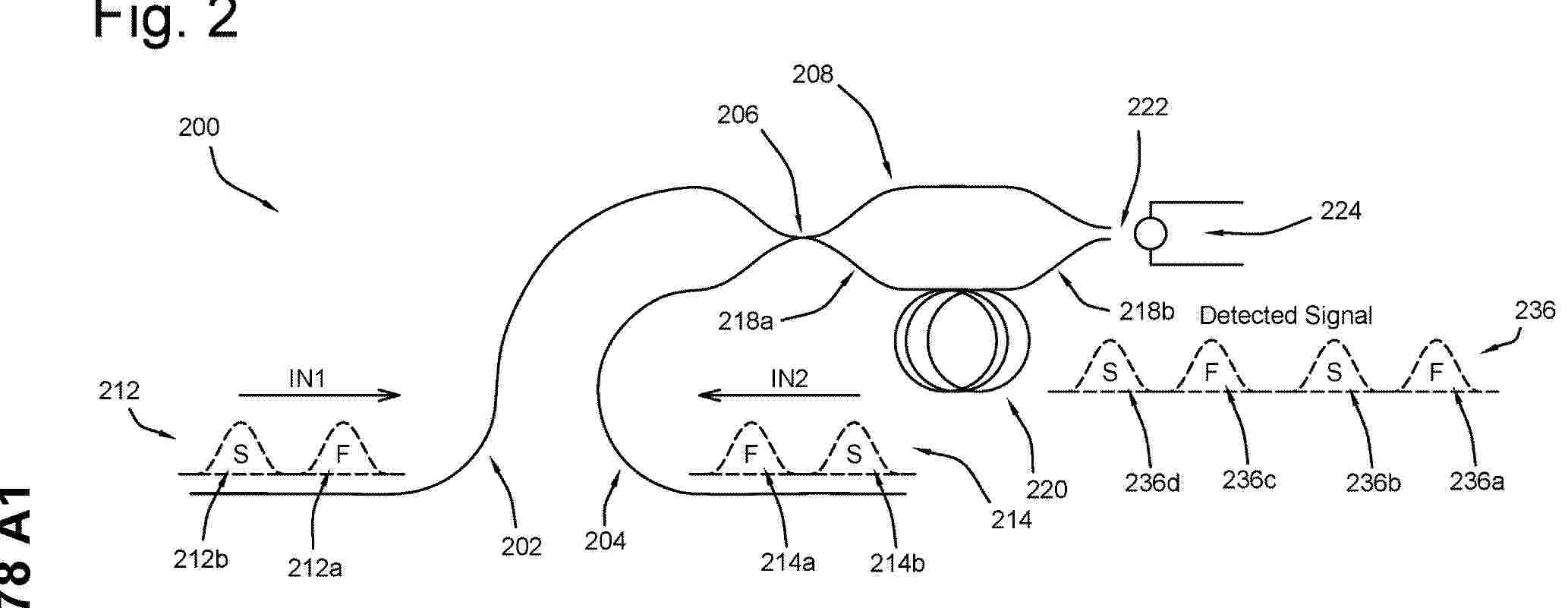
A Bell state measurement device comprising first and second optical input fiber to respectively pass first and second photon comprising a first component and a second component, and a third component and a fourth component, an optical beam splitter configured to receive first and second photon respectively from first and second optical input fiber and to combine first and second photon into third and fourth photon; first and second optical output fiber to receive third and fourth photon, the second optical output fiber comprises a delay line; and a single-photon detector configured to receive third and fourth photon from first optical output fiber, or delayed third photon and delayed fourth photon from second optical output fiber, or third photon from first optical output fiber and delayed fourth photon from second optical output fiber, or fourth photon from first optical output fiber and delayed third photon from second optical output fiber.
Nº publicación: GB2702963A 01/07/2026
Solicitante:
MERCEDES BENZ GROUP AG [DE]
Mercedes-Benz Group AG
Resumen de: GB2702963A
Method of classifying driver gaze, comprising: receiving an image related to a facial of a driver (302,Fig.3); extracting image latent (feature) vectors 404 with a pre-trained Artificial Intelligence (AI) model 402; splitting the latent vectors 404 into portions 406 the size of the portions being based on a number of qubits associated with a quantum computing model 412a; inputting the latent vector portions 408 into the quantum computing model 412a to determine quantum enhanced feature vectors; and aggregating the quantum-enhanced feature vectors to classify driver gaze. The fragmented feature vectors may be appended by a position marker 408. Angle encoding 410 that transforms the feature vectors into a quantum state represented on a Bloch Sphere may be performed on each of the serialized latent vector chunks. Aggregating the quantum-enhanced feature vectors to classify the driver gaze may comprise: determining a centroid feature vector for each quantum-enhanced feature vectors; determining a variance feature vector for each centroid feature vector; and aggregating the quantum-enhanced feature vectors by applying a contrastive loss function on each variance feature vector to classify the driver gaze into predefined zones inside vehicle (310,Fig.3). Figure 4
 BOPI
BOPI
 Sede Electrónica