Si deseas distinguir tus productos, servicios o ambos de los de otra empresa, es posible que necesites una marca o nombre comercial. Descubre qué son, en qué consiste su procedimiento de registro y qué implica.

Información sobre los plazos de presentación de solicitudes de transformación de marcas de la Unión Europea en marca nacional española. Más información


Si tienes un nuevo dispositivo, producto o procedimiento que resuelva un problema técnico o tenga una ventaja práctica, existen distintas formas de protegerlo en España y en otros países. Descubre cómo hacerlo.

¿Tu innovación reside en la estética, la ornamentación o la apariencia de tu producto? Protégela mediante un diseño industrial. Descubre qué derechos confiere el registro y cómo realizar la tramitación.

Las indicaciones geográficas protegen el nombre de un producto originario de una zona geográfica, a la cual le debe una determinada calidad, reputación u otra característica. Descubre qué son, en qué consiste su procedimiento de registro y qué beneficios conceden.

Las patentes publicadas en todo el mundo son una valiosa fuente de información científica, técnica y comercial.

Si eres emprendedor/a o una empresa y quieres potenciar y mejorar la rentabilidad de tu negocio protegiendo de forma adecuada los activos intangibles de tu organización, en este espacio encontrarás lo necesario.


 158
resultados
158
resultados
 Última actualización
22/09/2026 [07:27:00]
Última actualización
22/09/2026 [07:27:00]


 Resultados 75 a 100 de 158

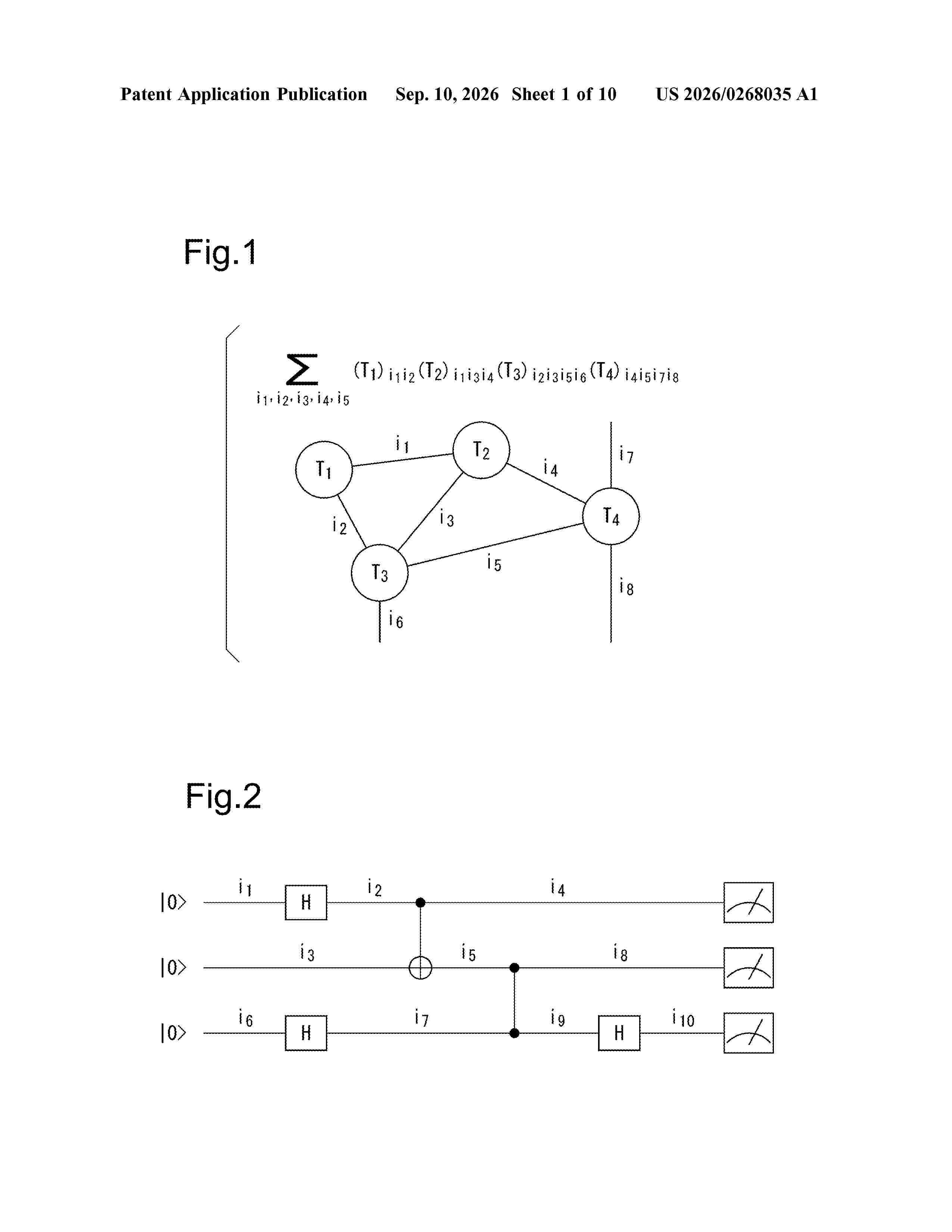
Resumen de: US20260268035A1
A simulation device includes: a tensor contraction calculation unit that performs a contraction calculation in a tensor network corresponding to a quantum gate operation on the basis of the states of qubits in a quantum circuit and information indicating a quantum gate operation to be applied to the qubits; a matrix product state composition unit that composes a matrix product state from the states of the qubits obtained as a result of the contraction calculation by the tensor contraction calculation unit; and a low-rank approximation calculation unit that performs a low-rank approximation for each of a plurality of quantum gate operations lumped together when the matrix product state composition unit composes the matrix product state.

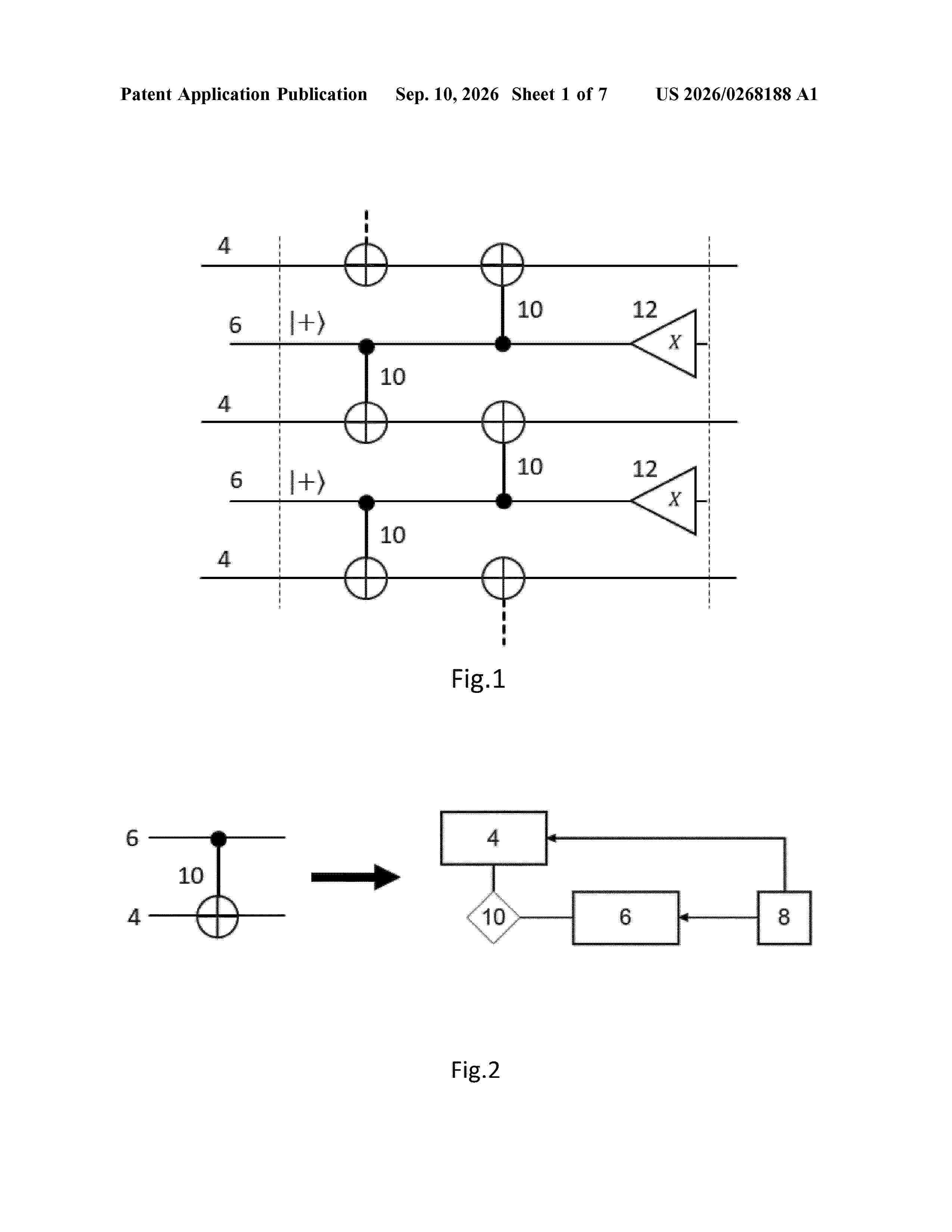
Resumen de: US20260268188A1
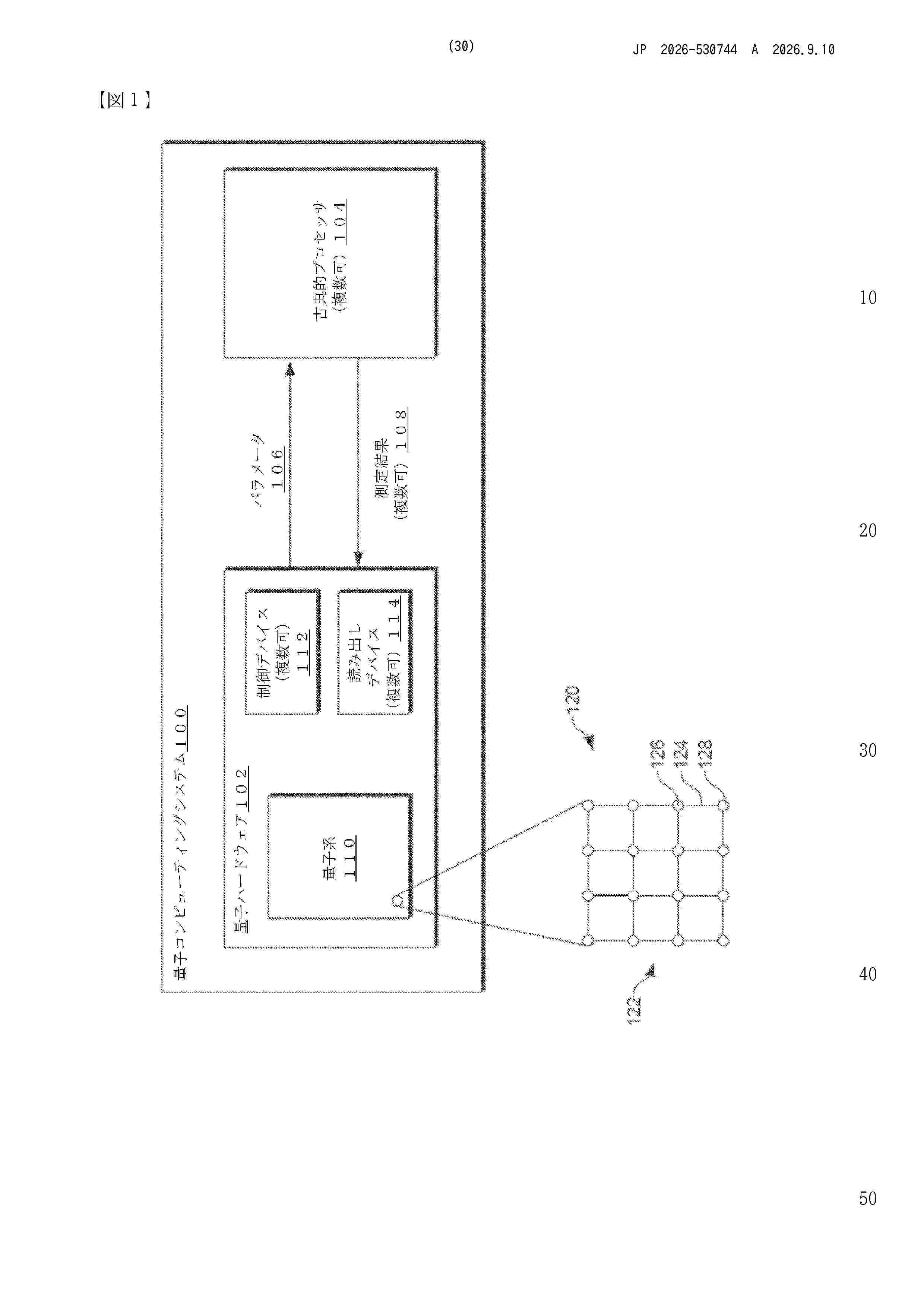
A quantum system for performing a CNOT gate is disclosed, wherein the quantum system comprises a command circuit for providing radiation, a target cat qubit device and a control qubit device, coupled linearly, and wherein the target cat qubit comprises a non-linear element that is an Asymmetrically Threaded Superconducting Quantum Interference Device (ATS) and which serves two purposes: engineering the 2-photon conversion Hamiltonian for cat qubit stabilization and engineering the CNOT Hamiltonian for performing a CNOT gate with the control qubit device. At any point in time, the ATS serves either the role of cat qubit stabilization or the role of CNOT gate.
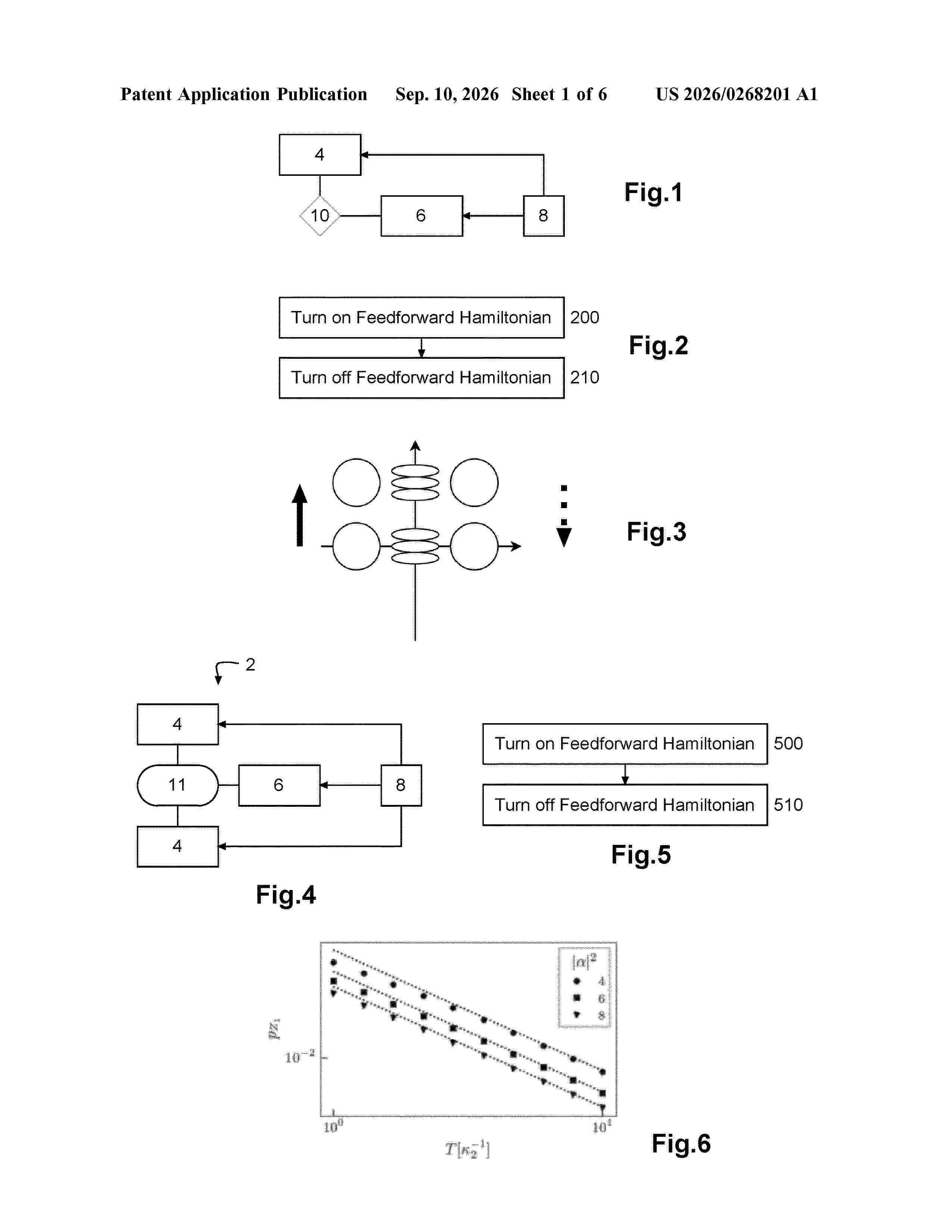
Resumen de: US20260268201A1
A quantum system for performing a quantum gate comprises a command circuit for selectively applying radiation, a number of data resonators equal to or greater than two, each data resonator having a respective resonance frequency and being coupled to the command circuit for stabilizing a respective data cat qubit, and an ancilla resonator having an ancilla resonance frequency coupled to the command circuit for stabilizing an ancilla cat qubit and being non-linearly coupled via the command circuit to the data resonators. The command circuit is arranged to perform a quantum gate by: while stabilizing the ancilla cat qubit, applying a radiation having the ancilla resonance frequency such that the data resonators and the ancilla resonator are substantially simultaneously subject to a Hamiltonian resulting from the radiation, and turning off the radiation after a chosen duration. This principle is extended to perform a quantum correction error code.
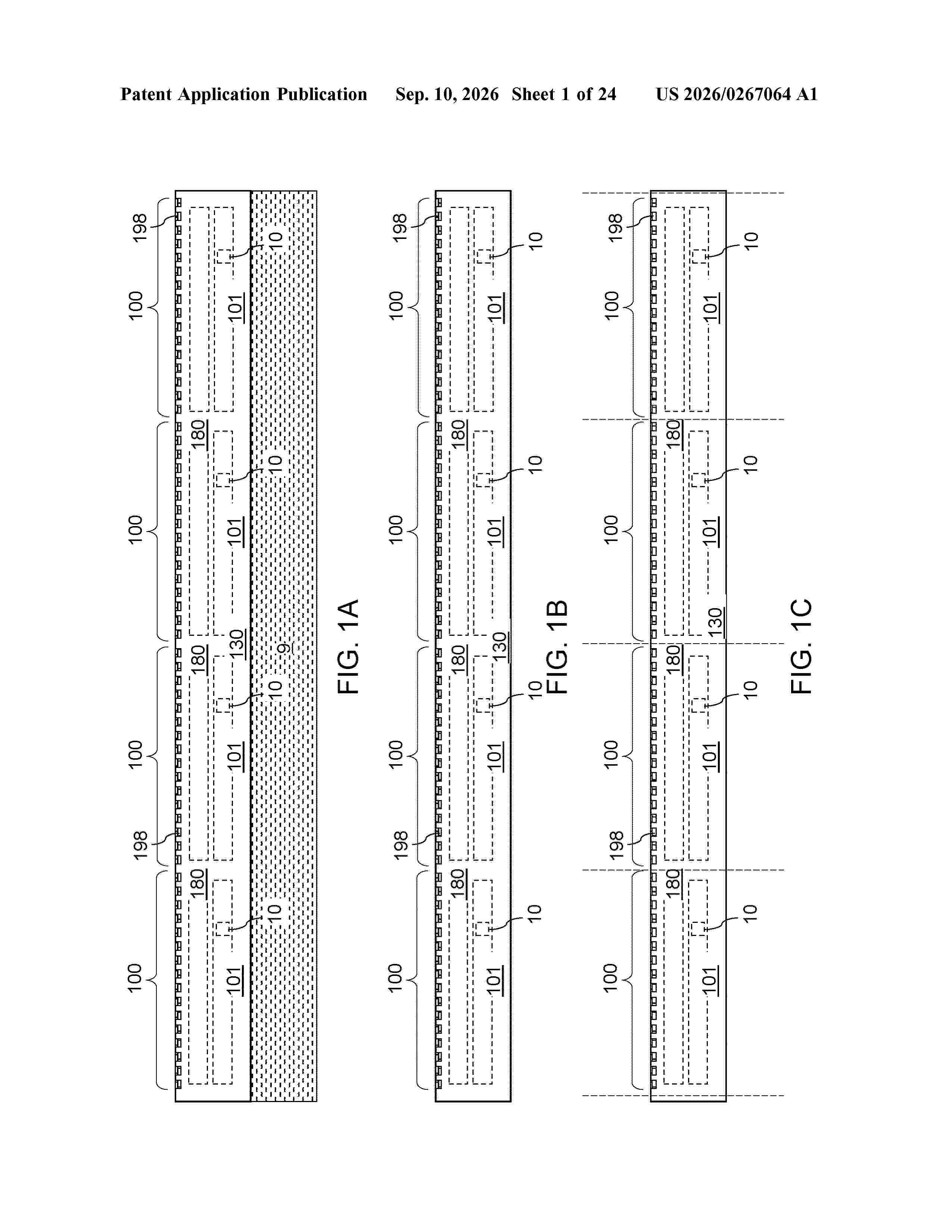
Resumen de: US20260267064A1
0000 A quantum memory device includes: a waveguide configured to spatially confine paths of photons therein; a memory cell that includes a micro-ring resonator (MRR), a frequency tuner, and a quantum memory material portion, wherein the MRR includes a first segment that is parallel to a segment of the waveguide, wherein the frequency tuner is configured to modulate a photon resonance frequency in the MRR by modifying an effective refractive index within, or around, a second segment of the MRR, and wherein the quantum memory material portion includes a quantum memory material having a ground state and an excitation state that stores photons therein and located within or on a third segment of the MRR; and a control circuit configured to modulate the photon resonance wavelength in the MRR during a first step of a photon capture operation to match a predefined wavelength, and to generate captured photons in the MRR.
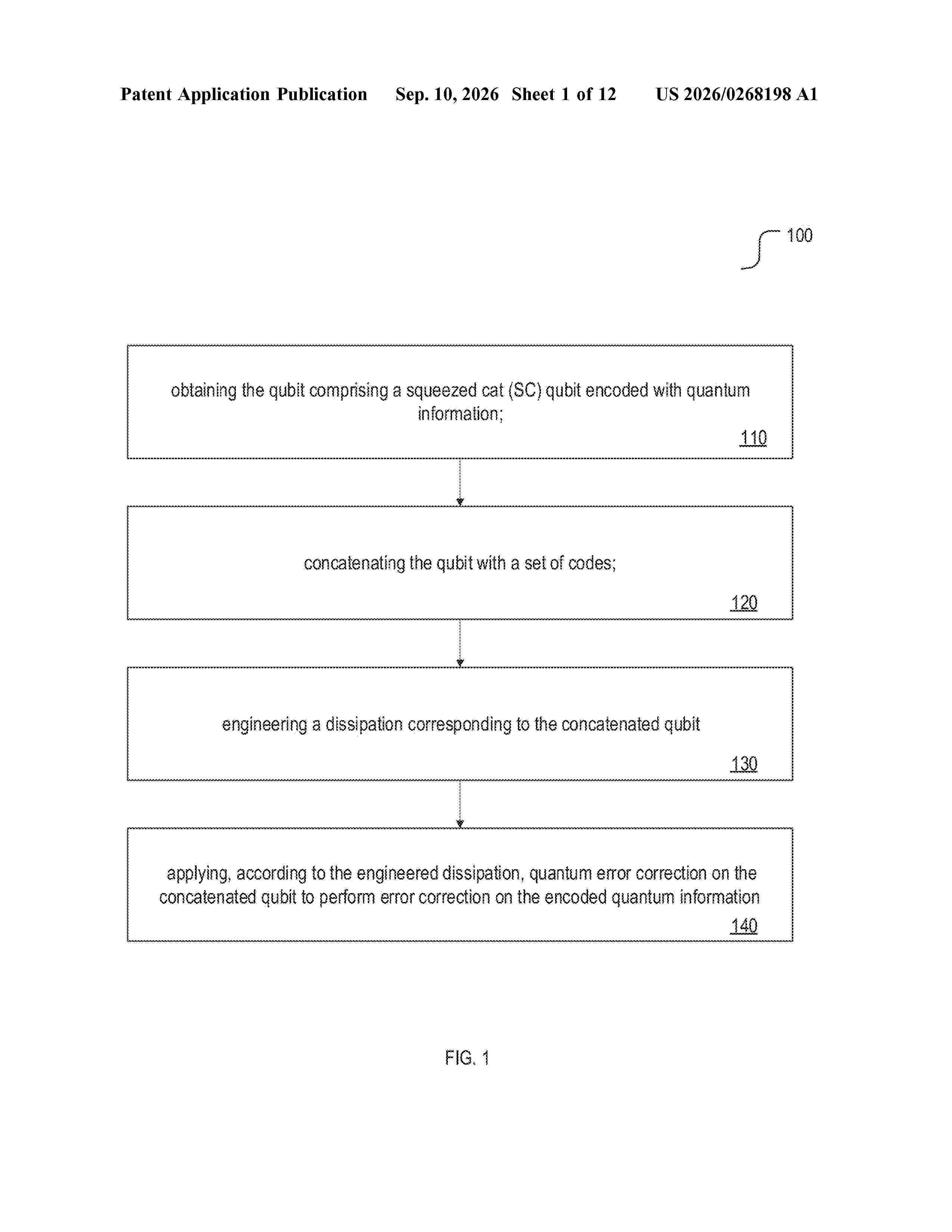
Resumen de: US20260268198A1
0000 The present disclosure describes various methods, systems, and storage medium for performing a quantum operation on a qubit using an autonomous quantum error correction scheme. One method includes obtaining the qubit comprising a squeezed cat (SC) qubit encoded with quantum information; concatenating the qubit with a set of codes; engineering a dissipation corresponding to the concatenated qubit; and applying, according to the engineered dissipation, quantum error correction on the concatenated qubit to perform error correction on the encoded quantum information.
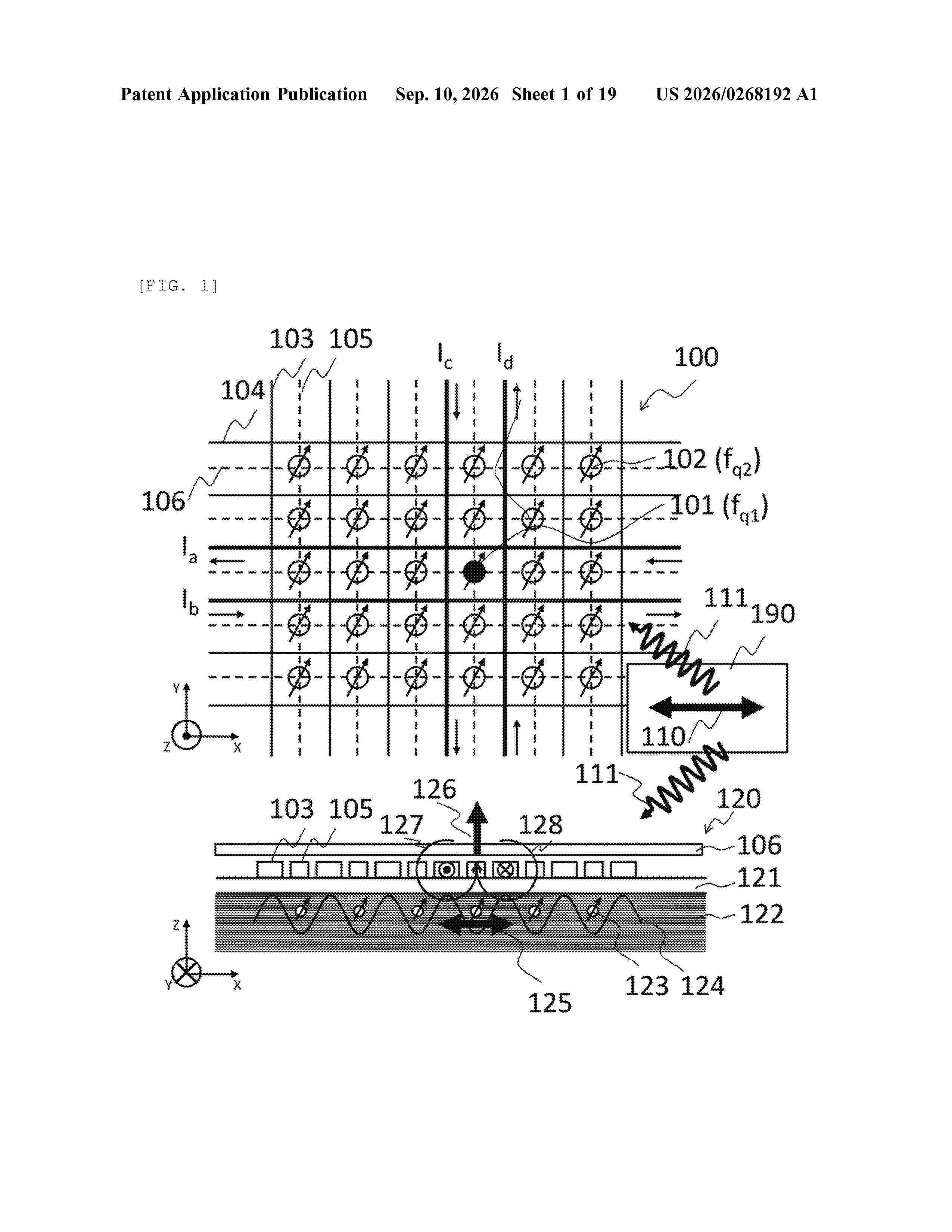
Resumen de: US20260268192A1
In a dynamic resonance frequency changing method, there is a problem in phase tracking, and there is a concern that an error of a single-qubit gate occurs. The solution is a method of controlling a quantum bit that controls a spin state of a quantum bit formed by a charge trapped in a semiconductor device. The method includes: when controlling a spin state of a quantum bit formed by a target charge specified by a first line and a second line formed in the semiconductor device, executing a first step of measuring at least one of a current and a charge amount flowing through the first line and the second line; and executing a second step of controlling at least one of the current and the charge amount flowing through the first line and the second line based on a measurement result of the first step.
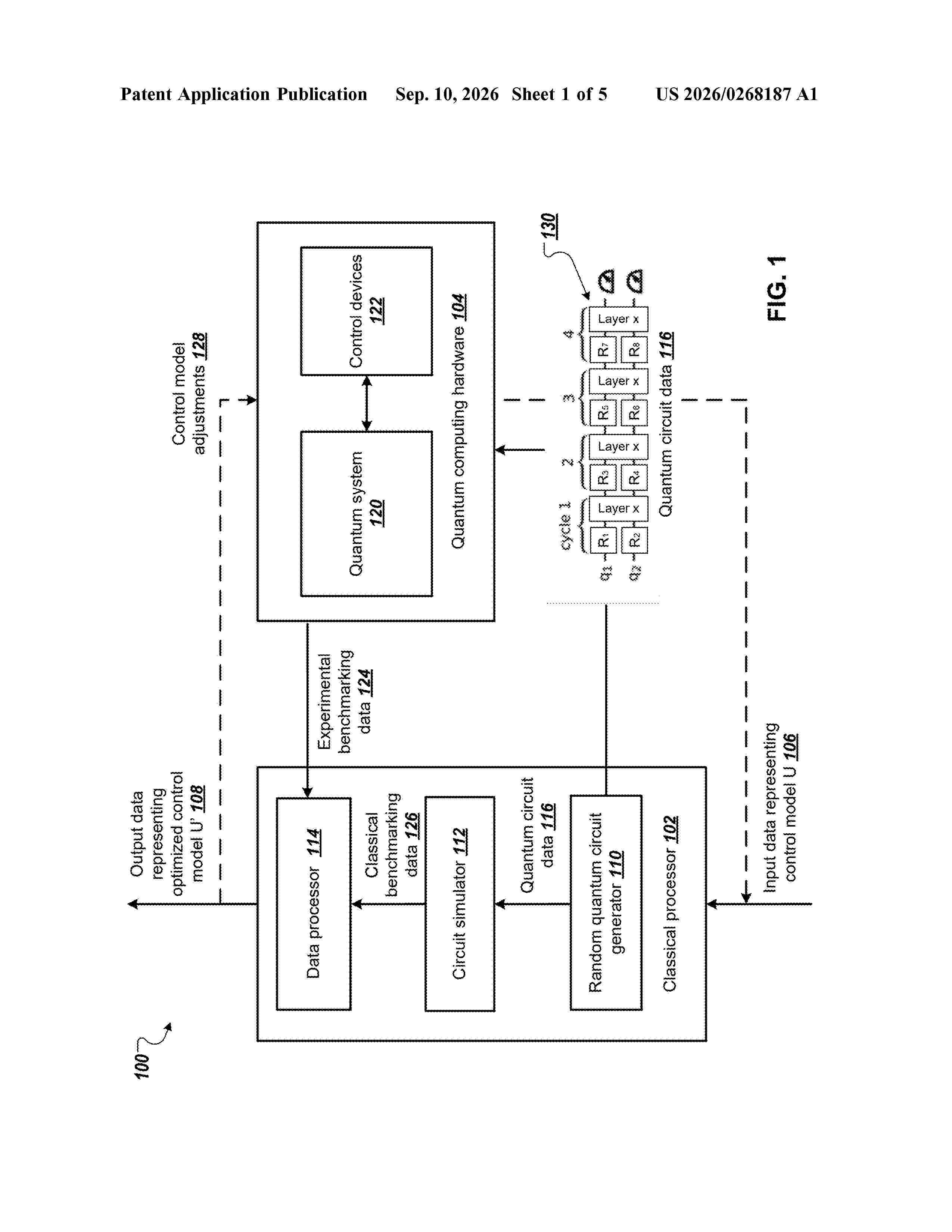
Resumen de: US20260268187A1
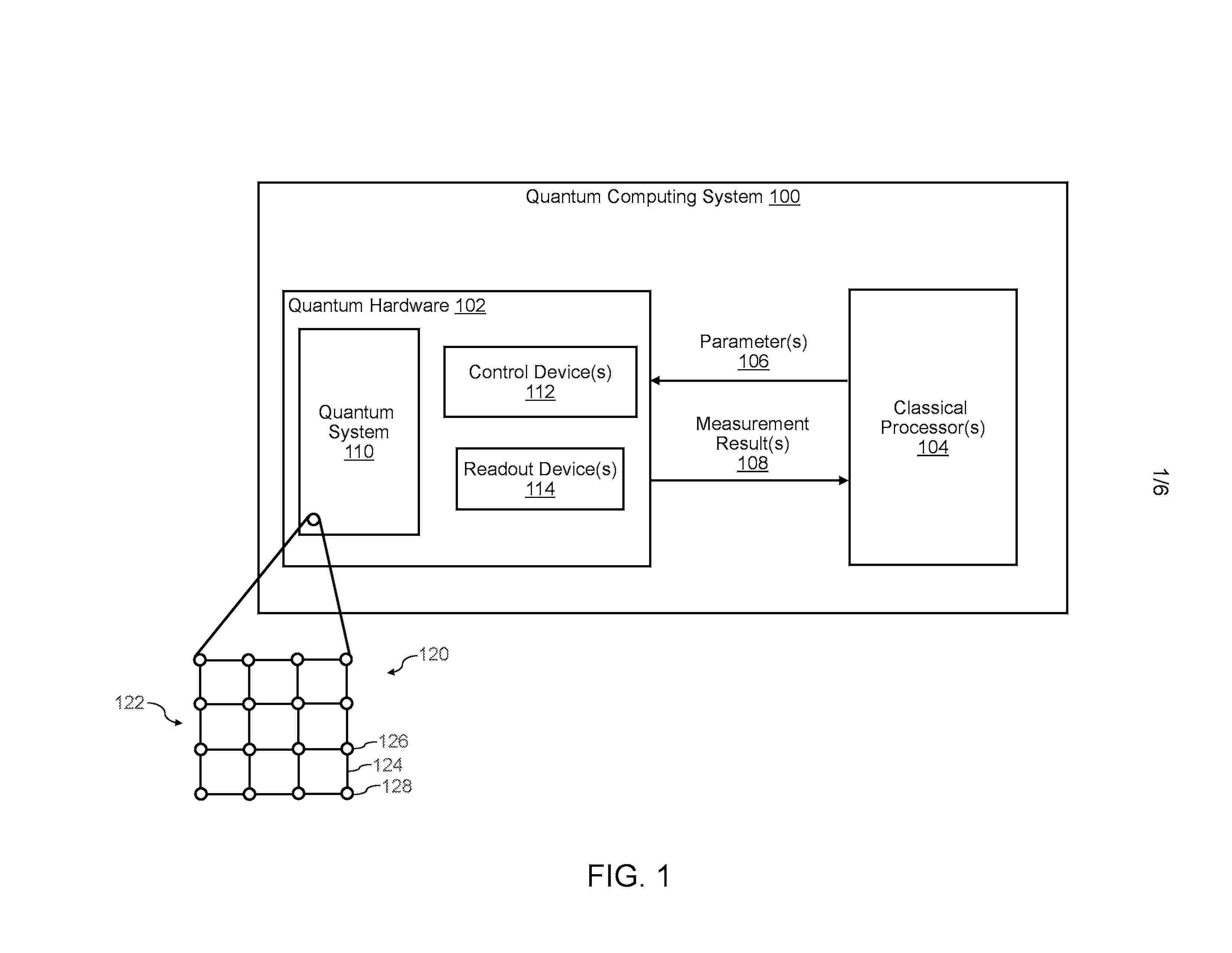
Methods, systems and apparatus for benchmarking quantum computing hardware. In one aspect, a method includes defining an initial circuit configured to operate on an array of qubits, wherein the initial circuit comprises multiple instances of the two-qubit gate, wherein each instance of the two-qubit gate performs a same operation on a respective pair of neighboring qubits in the array; partitioning the initial circuit into multiple layers, wherein instances of the two-qubit gate in a respective layer can be implemented in parallel; for each of the multiple layers: constructing benchmarking circuits for the layer, wherein each benchmarking circuit for the layer comprises one or more cycles of quantum gates, each cycle comprising: the layer of instances of the two-qubit gate, and a plurality of single qubit gates; implementing the constructed benchmarking circuits to obtain experimental benchmarking data; and adjusting control parameters of the control model using the experimental benchmarking data.
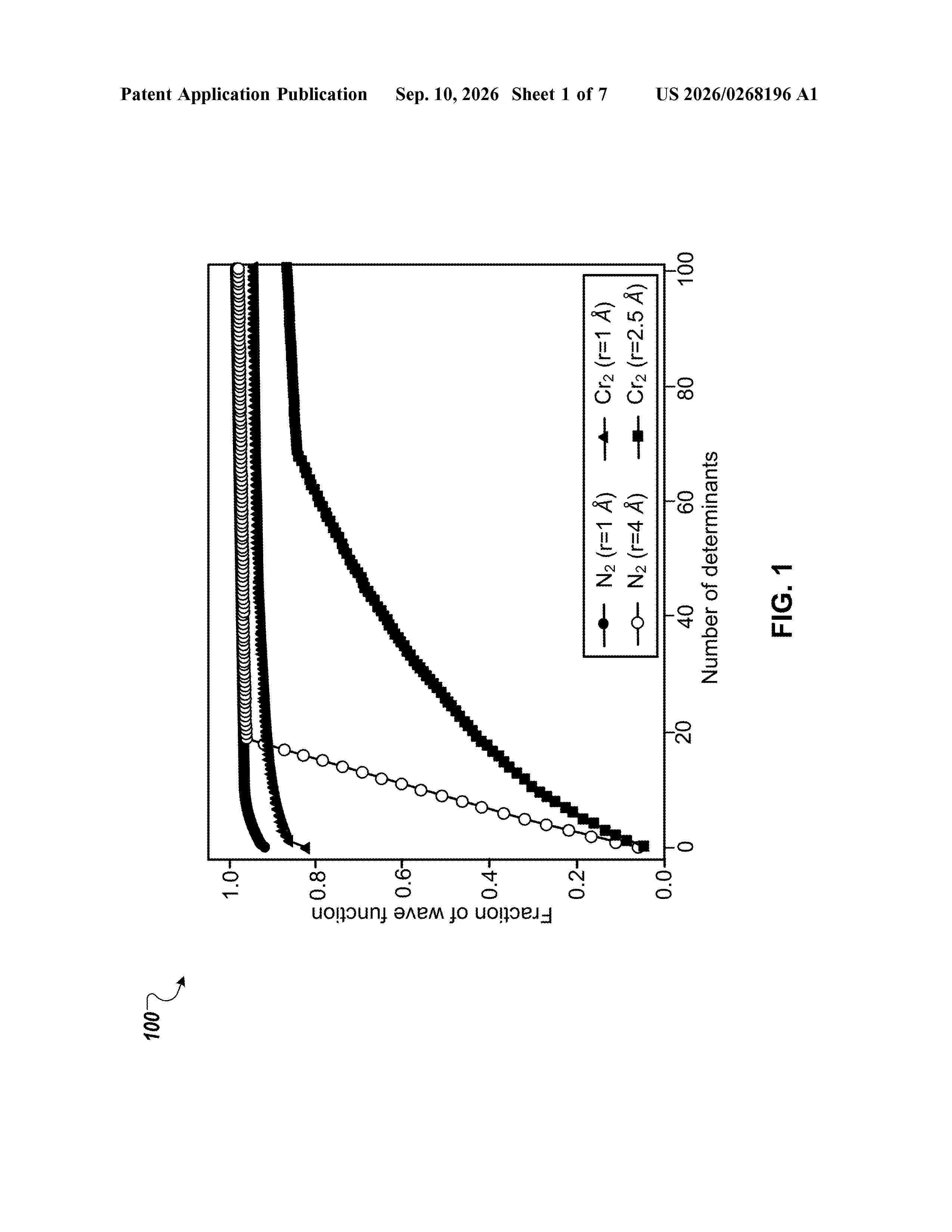
Resumen de: US20260268196A1
0000 Methods, systems and apparatus for preparing arbitrary superposition quantum states of a quantum register on a quantum computer, the quantum state comprising a superposition of L computational basis states. In one aspect, a register of log L qubits is prepared in a weighted sum of register basis states, where each register basis state indexes a corresponding quantum state computational basis state, and the amplitude of each register basis state in the weighted sum of register basis states is equal to the amplitude of the corresponding computational basis state in the superposition of L computational basis states. A unitary transformation that maps the register basis states to the corresponding L computational basis states is then implemented, including, for each index 1 to L, controlling, by the register of log L qubits, transformation of the quantum system register state for the index to the corresponding computational basis state for the index.
Resumen de: US20260268190A1
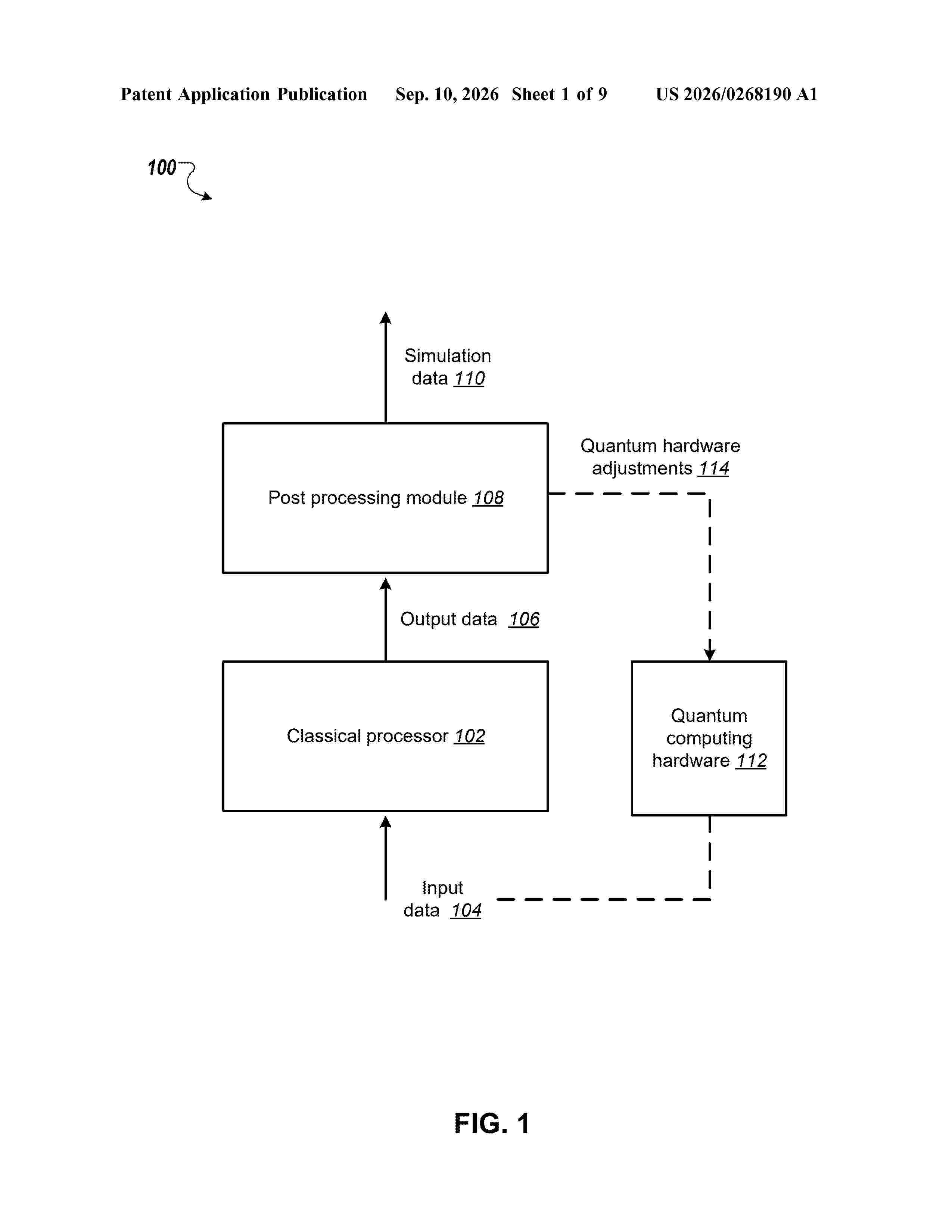
0000 Methods, systems and apparatus for simulating quantum circuits including multiple quantum logic gates. In one aspect, a method includes the actions of representing the multiple quantum logic gates as functions of one or more classical Boolean variables that define a undirected graphical model with each classical Boolean variable representing a vertex in the model and each function of respective classical Boolean variables representing a clique between vertices corresponding to the respective classical Boolean variables; representing the probability of obtaining a particular output bit string from the quantum circuit as a first sum of products of the functions; and calculating the probability of obtaining the particular output bit string from the quantum circuit by directly evaluating the sum of products of the functions. The calculated partition function is used to (i) calibrate, (ii) validate, or (iii) benchmark quantum computing hardware implementing a quantum circuit.
Resumen de: AU2025426849A1
One example aspect of the present disclosure is directed to a method for operating a quantum computing system (QCS) that includes a set of qubits. The method includes generating a set of noisy data by repeatably measuring a noisy observable of a quantum circuit operating on the set of qubits. The set of noisy data and the noisy observable are subject to noise associated with the quantum circuit and each datapoint of the set of noisy data is associated with an eigenvalue of the noisy observable. The noisy data is modeled as a hybrid distribution, which includes a combination of a noiseless distribution and a noise-only distribution. Each datapoint of the set of noisy data is assumed to have a hidden label as coming from either the noiseless distribution or the noise-only distribution. This label is estimated for each datapoint, based on the eigenvalue associated with the datapoint, and a constructed model for any of the hybrid distribution, the noise-only distribution, and the noiseless distribution. This may require additional data to be taken from the QCS to model the noise-only distribution. A target quantity is determined based on either the model for the noiseless distribution or the datapoints combined with their attached labels.
Resumen de: US20260269803A1
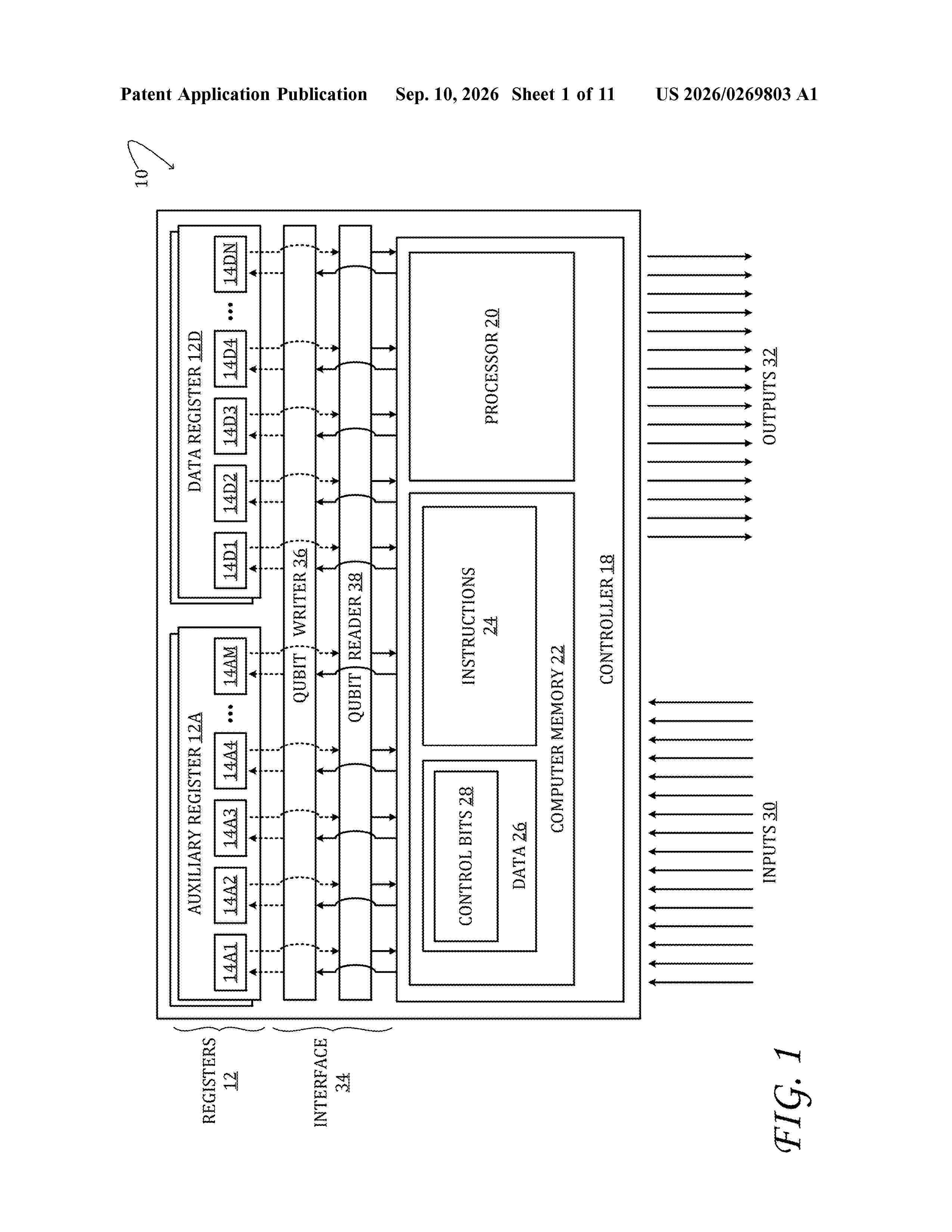
A method for exciting a resonator at an estimated resonance frequency of the resonator comprises: (a) varying a frequency of an input signal applied to the resonator while recording an output signal from the resonator; (b) for each of a series of frequency values of the input signal, computing noise-filtered, complex first and second derivatives of a ratio of the output signal to the input signal; (c) for each of the series of frequency values of the input signal, computing a real part of a dot product of the complex first and second derivatives as vectors projected onto a complex plane; and (d) exciting the resonator an excitation frequency where the real part vanishes.
Resumen de: AU2026200445A1
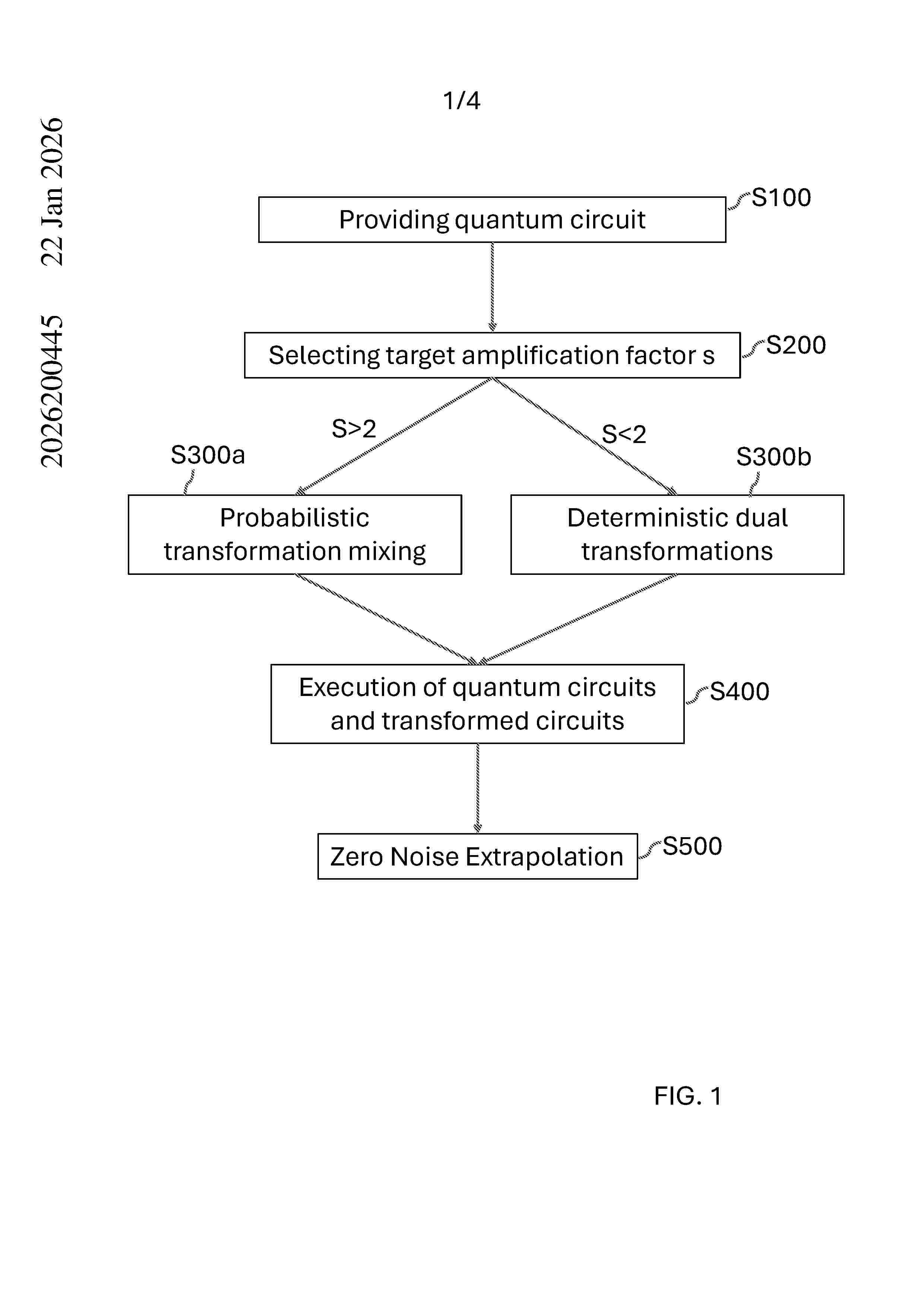
A computer implemented method for error mitigation of a quantum circuit executed on a quantum processor is disclosed. The quantum circuit comprises one or more parameterized quantum gates G(θ), each associated with an error generator having an affine dependence on an absolute value of the gate parameter, including an idle error 5 component and a linear error component. The method comprises selecting a target amplification factor for the linear error component and computing one or more gate transformations that replace a quantum gate with a product of sub gates whose parameters satisfy a parameter preservation criterion. The gate transformations are configured such that the linear error component is amplified by the target amplification 10 factor while the idle error component is amplified by one or more idle amplification factors. The quantum circuit and one or more transformed quantum circuits are executed across multiple runs, noisy and noise amplified expectation values of an observable are collected, and a mitigated expectation value is computed by extrapolation to zero noise. an a n Providing quantum circuit Selecting target amplification factor s Probabilistic transformation mixing Execution of quantum circuits and transformed circuits Deterministic dual transformations Zero Noise Extrapolation S<2S>2 S300a S300b S>2 S300a S300b Probabilistic an a n a b
Resumen de: WO2025235011A2
Systems and methods for evaluating the scalability of quantum systems are provided. In one example, a method may include obtaining benchmark performance data for a candidate quantum system architecture. The benchmark performance data may be descriptive of one or more performance characteristics of the candidate quantum system architecture for a plurality of processor sizes. The method may include obtaining one or more scaling parameters based on the benchmark performance data, including a quantum scaling model relating processor size of the candidate quantum system architecture to the one or more performance characteristics. The method may include determining one or more scaling metrics for the candidate quantum system architecture at a scaled processor size greater than the plurality of processor sizes by the quantum scaling model. The method may include determining one or more control actions for an operational quantum system based on the one or more scaling metrics.
Resumen de: AU2025261035A1
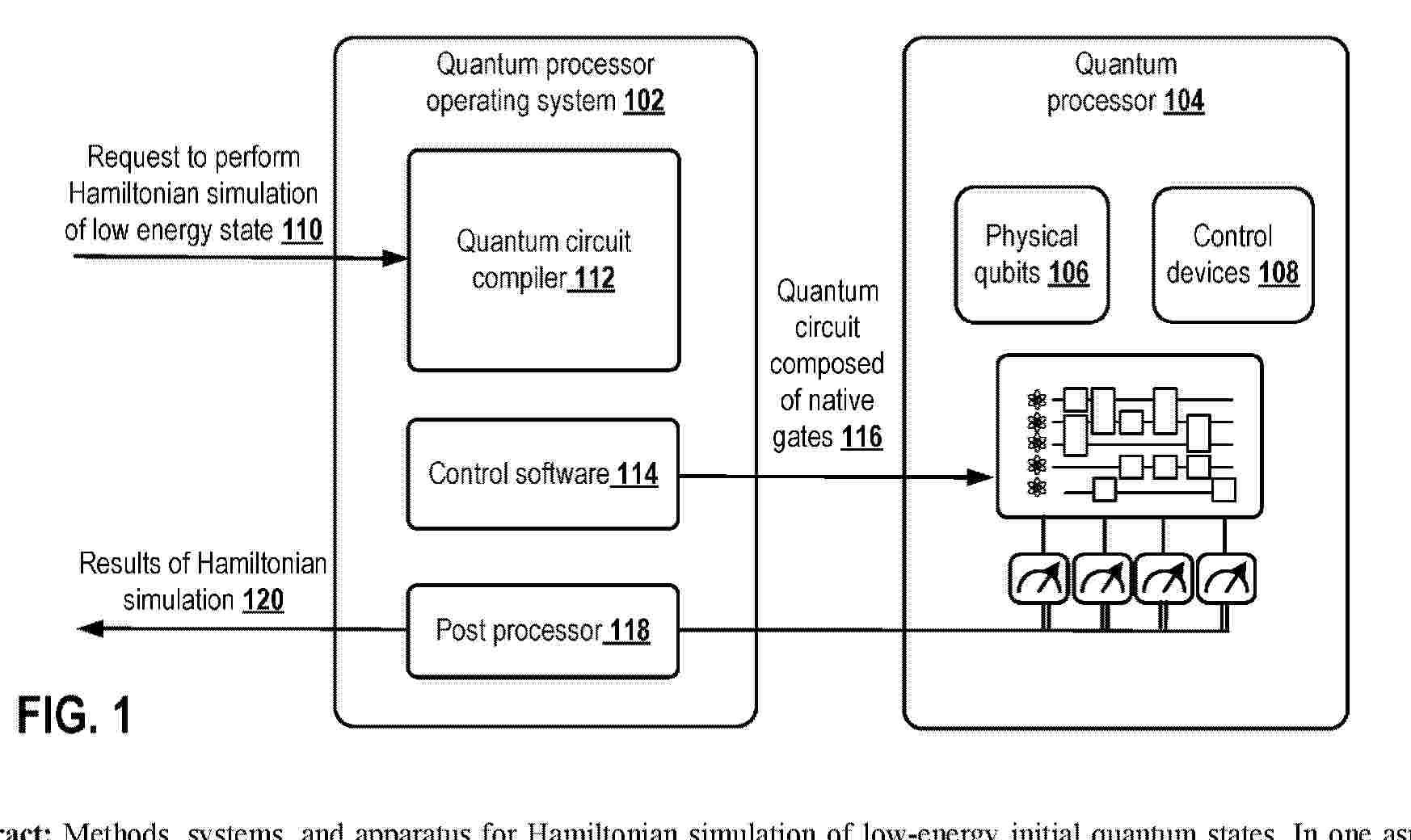
Methods, systems, and apparatus for Hamiltonian simulation of low-energy initial quantum states. In one aspect, a quantum circuit that performs unitary time evolution for a Hamiltonian is determined. The Hamiltonian is mapped to a corresponding gap-amplifiable Hamiltonian with a low energy subspace, the gap-amplifiable Hamiltonian comprising one or more matrices, where each matrix comprises a respective block encoding that is dependent on a parameter λ. An intermediate Hamiltonian is determined, where eigenvalues of the intermediate Hamiltonian are the same as eigenvalues of a square root of the gap-amplifiable Hamiltonian. A block encoding of the intermediate Hamiltonian divided by the square root of λ is determined. A filter is applied to the block encoding to obtain a polynomial approximation of the unitary time evolution operator for the Hamiltonian. The quantum circuit is applied to an initial state that is supported in the low-energy subspace.
Resumen de: AU2025235576A1
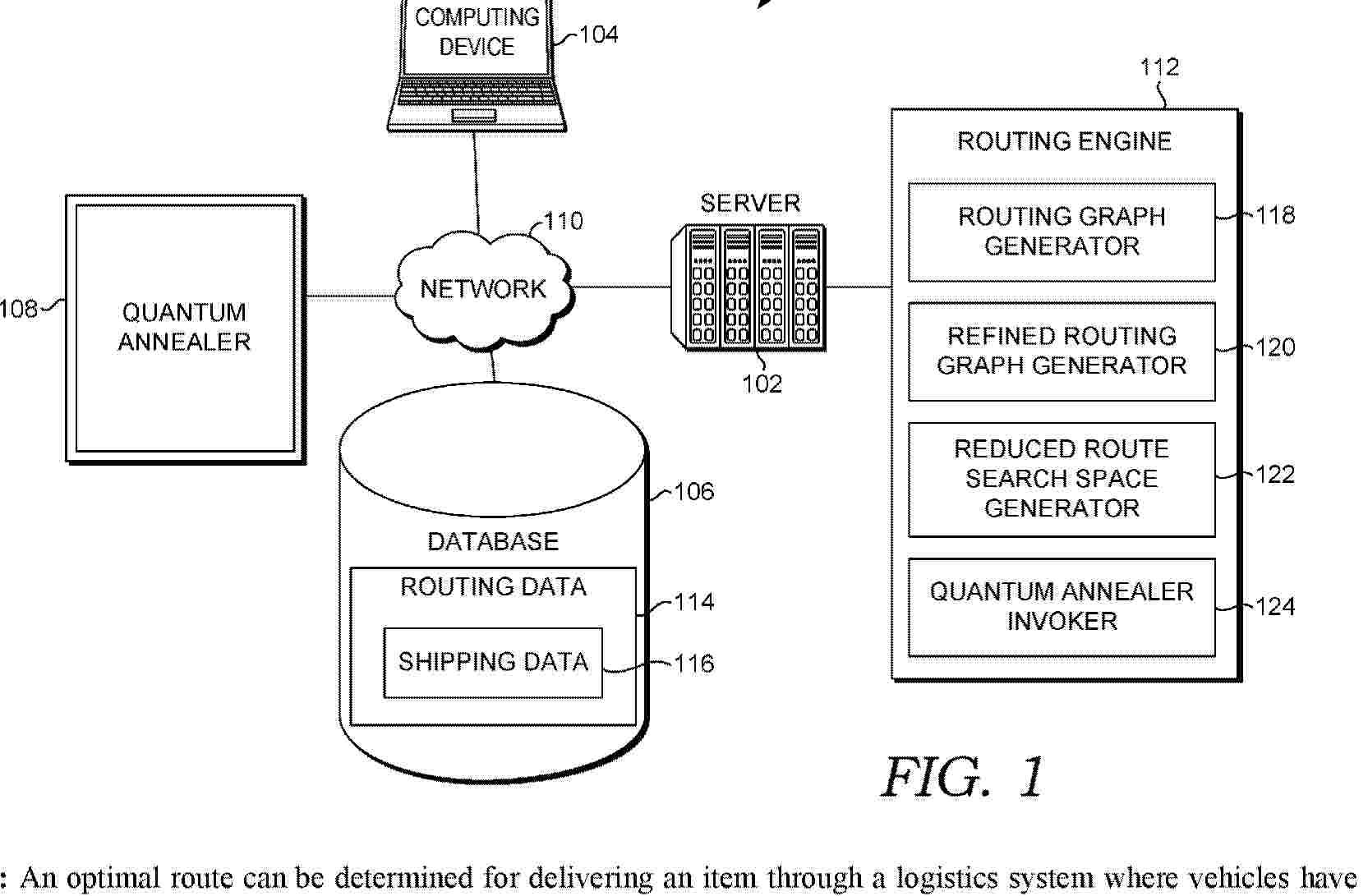
An optimal route can be determined for delivering an item through a logistics system where vehicles have multiple stops when traveling along routes. The optimal route is determined using a hybrid system employing a classical computing device and a quantum annealer. The classical device reduces the search space that allows the quantum annealer to determine a more optimal solution. In an aspect, a routing graph comprising nodes and edges is populated from routes of vehicles, where the nodes identify locations and the edges represent routing data. At least a portion of the nodes and edges is removed to form a refined routing graph. For an origin–destination input, the refined routing graph can be filtered according to a first set of routing constraints to form a reduced route search space. A quantum annealer is invoked according to an objective and a different second set of routing constraints.
Resumen de: US20260268189A1
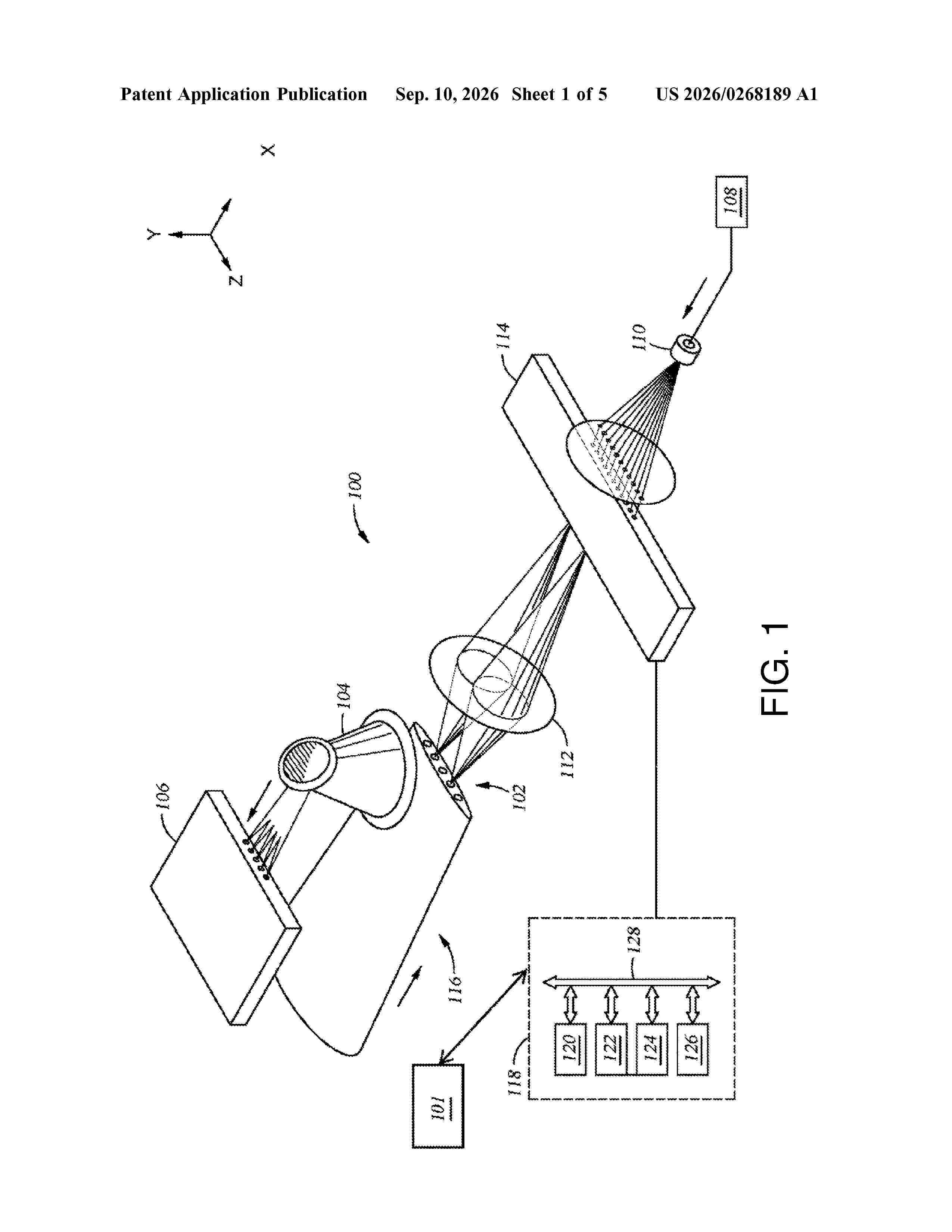
Technologies for simulating and optimizing electromagnetic pulses are disclosed herein. A quantum computing system generates, based on a specification of one or more system parameters, one or more control values, and one or more noise offsets, a controlled environment for a quantum computing system. The quantum computing system simulates, as a function of the control values, one or more pulses within the controlled environment. One or more candidate pulses are identified based on an evaluation of the simulated pulses. A sequence comprising properties of at least one of the candidate pulses is returned.
Resumen de: AU2025214821A1
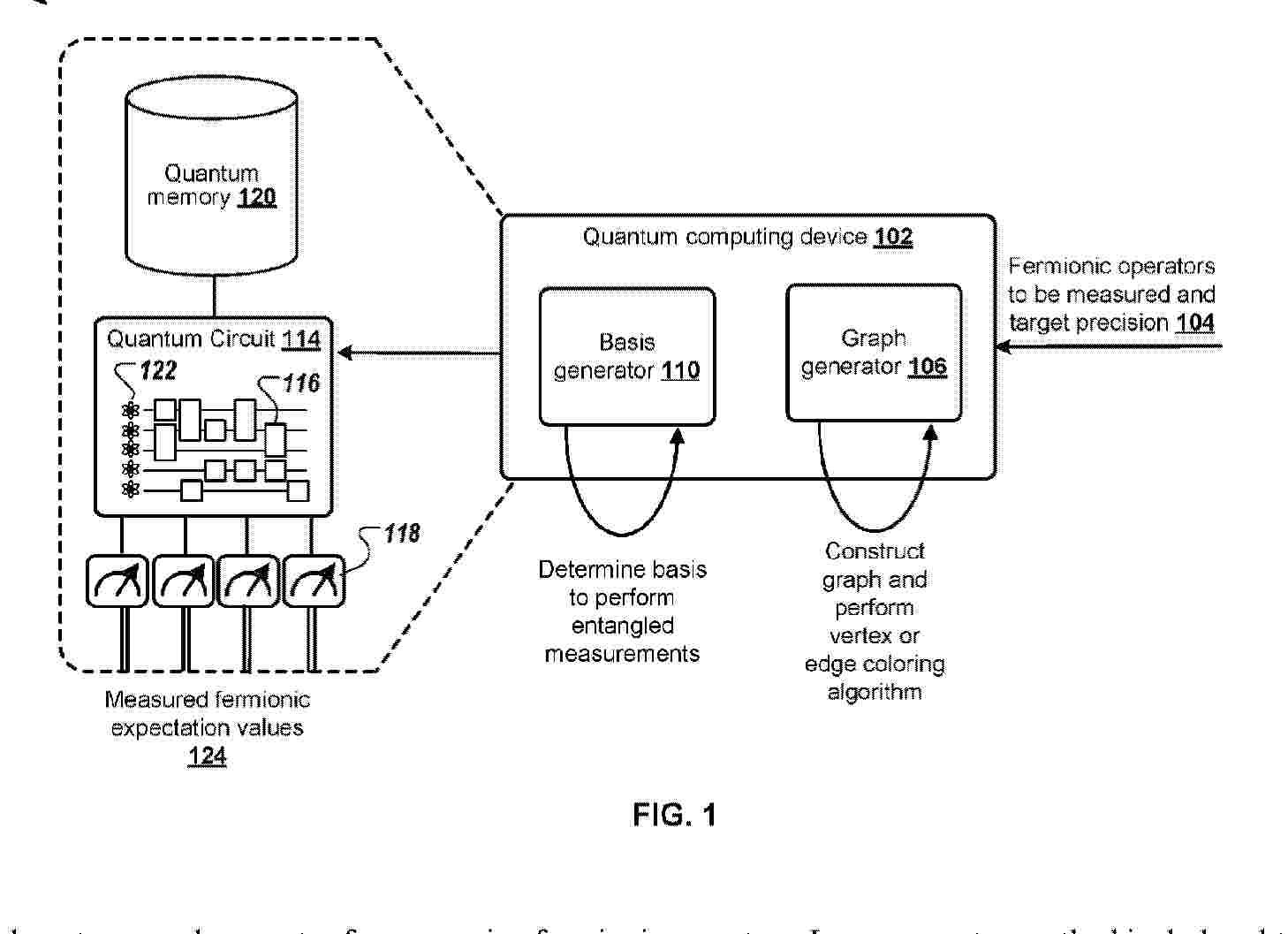
Method, systems, and apparatus for measuring fermionic operators. In one aspect, a method includes obtaining an input comprising k-body Majorana operators, a predefined precision, and copies of a tensor product of a quantum state and the quantum state. For each Majorana operator, a basis to measure the Majorana operator in is determined. The input is processed to obtain expectation values that correspond to the Majorana operators. A graph is constructed by, for each non-zero expectation value, adding a vertex to the graph that represents a Majorana operator that corresponds to the non-zero expectation value and adding edges between vertices in the graph that represent anticommuting Majorana operators. A vertex coloring algorithm is applied to the graph. For a color that corresponds to the Majorana operator, a simultaneous eigenbasis of Majorana operators in the graph with the color is determined. The Majorana operator is measured in the determined basis.
Resumen de: WO2025207138A2
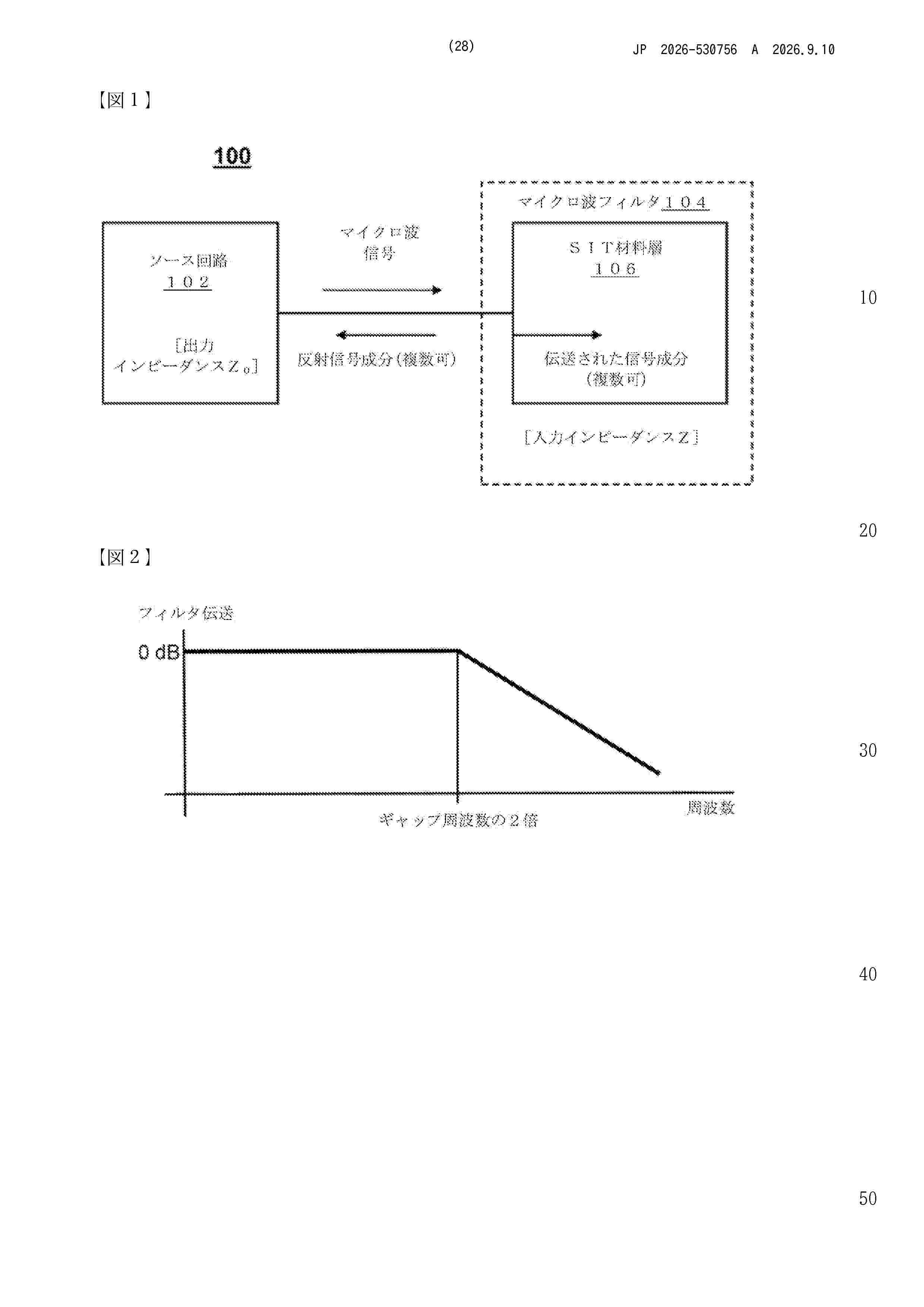
A microwave filter includes a superconductor-to-insulator transition (SIT) layer including a material exhibiting a superconductor-to-insulator transition associated with a superconducting gap frequency. For signals transmitting through the layer, the microwave filter is a low-pass filter in which twice the superconducting gap frequency is a cutoff frequency.
Resumen de: US20260269954A1
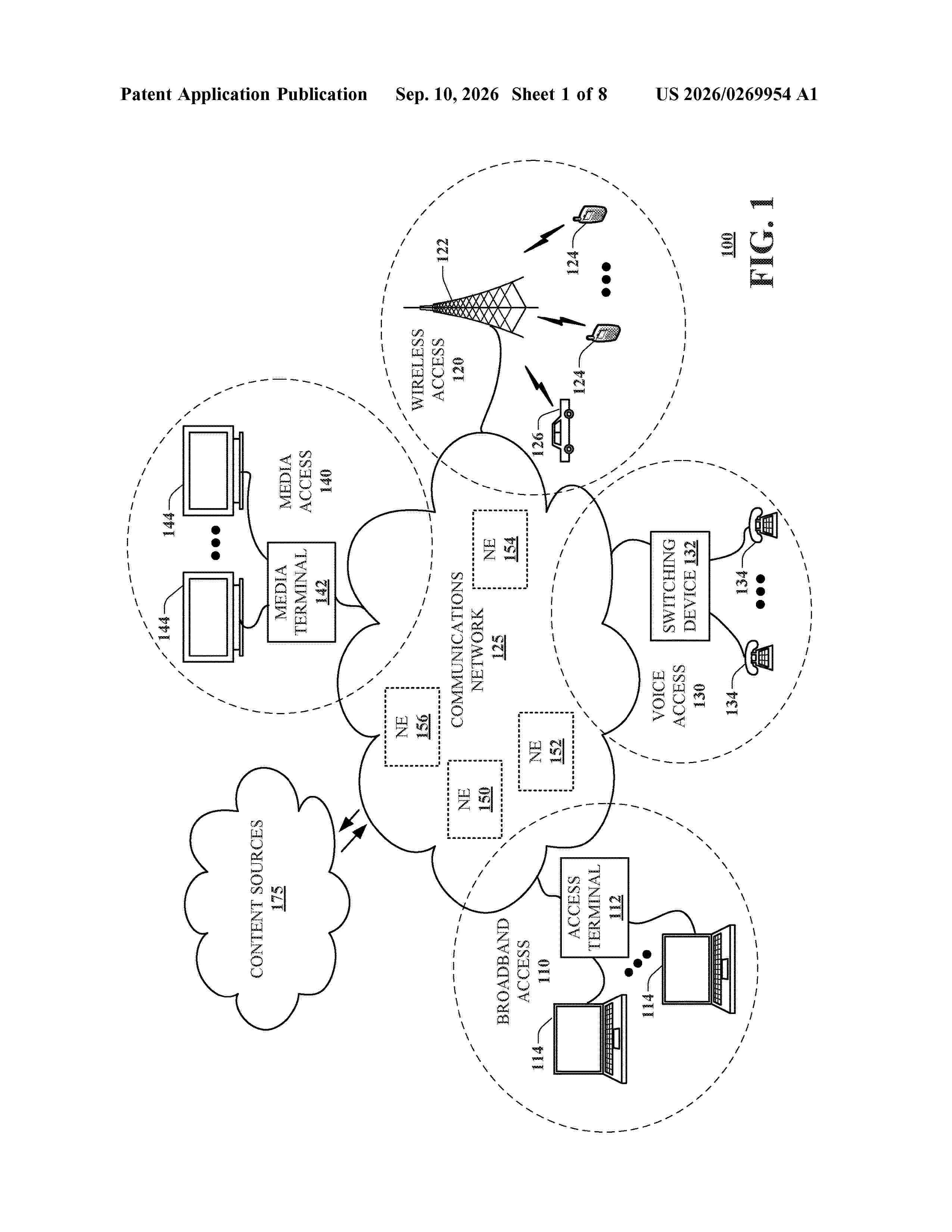
Aspects of the subject disclosure may include, for example, receiving artificial intelligence (AI) analytics from a generative AI system, and based on the AI analytics, causing a software defined network (SDN) controller to identify a signaling path over a quantum signaling network, thereby enabling selection of a determined suitable path for quantum entanglement distribution. Other embodiments are disclosed.
Resumen de: US20260268195A1
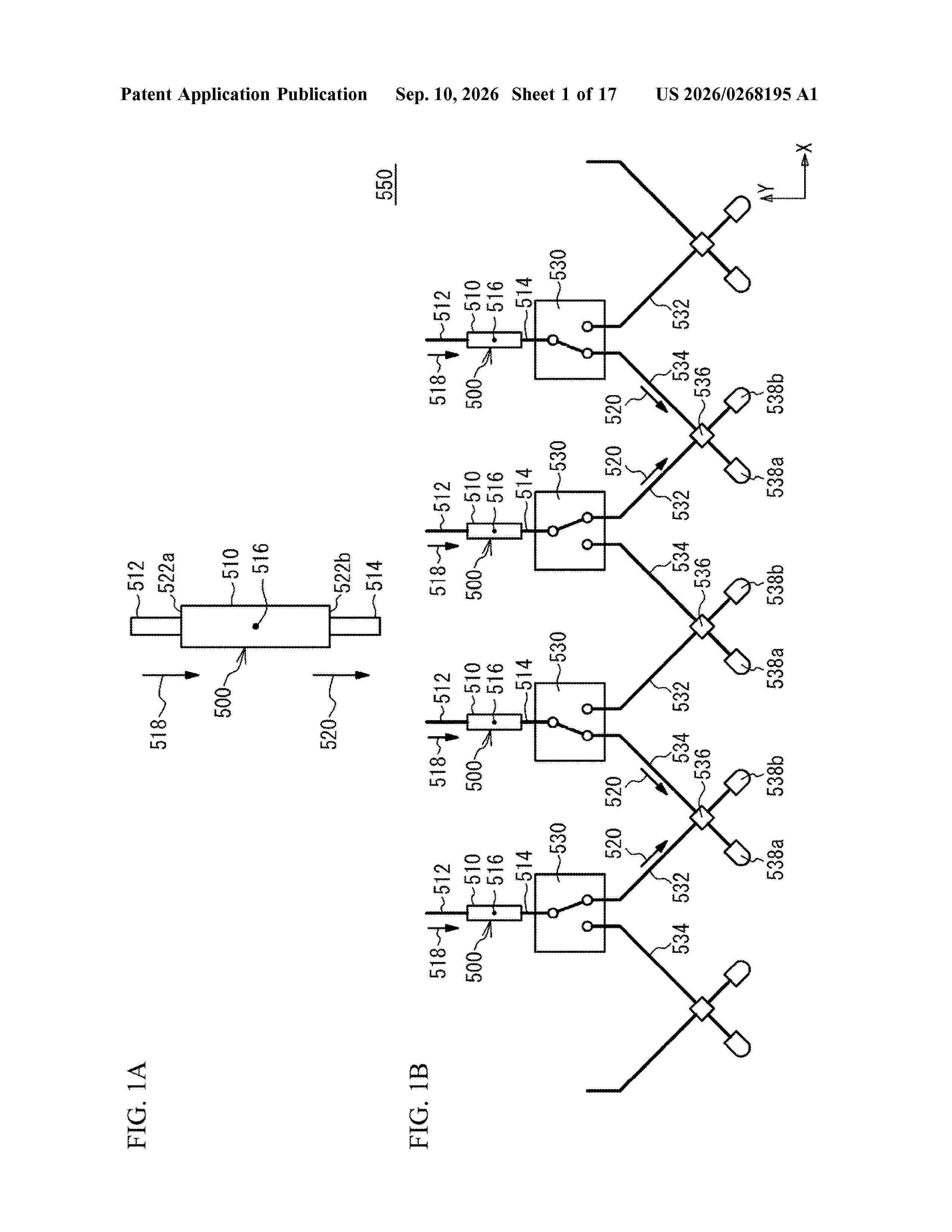
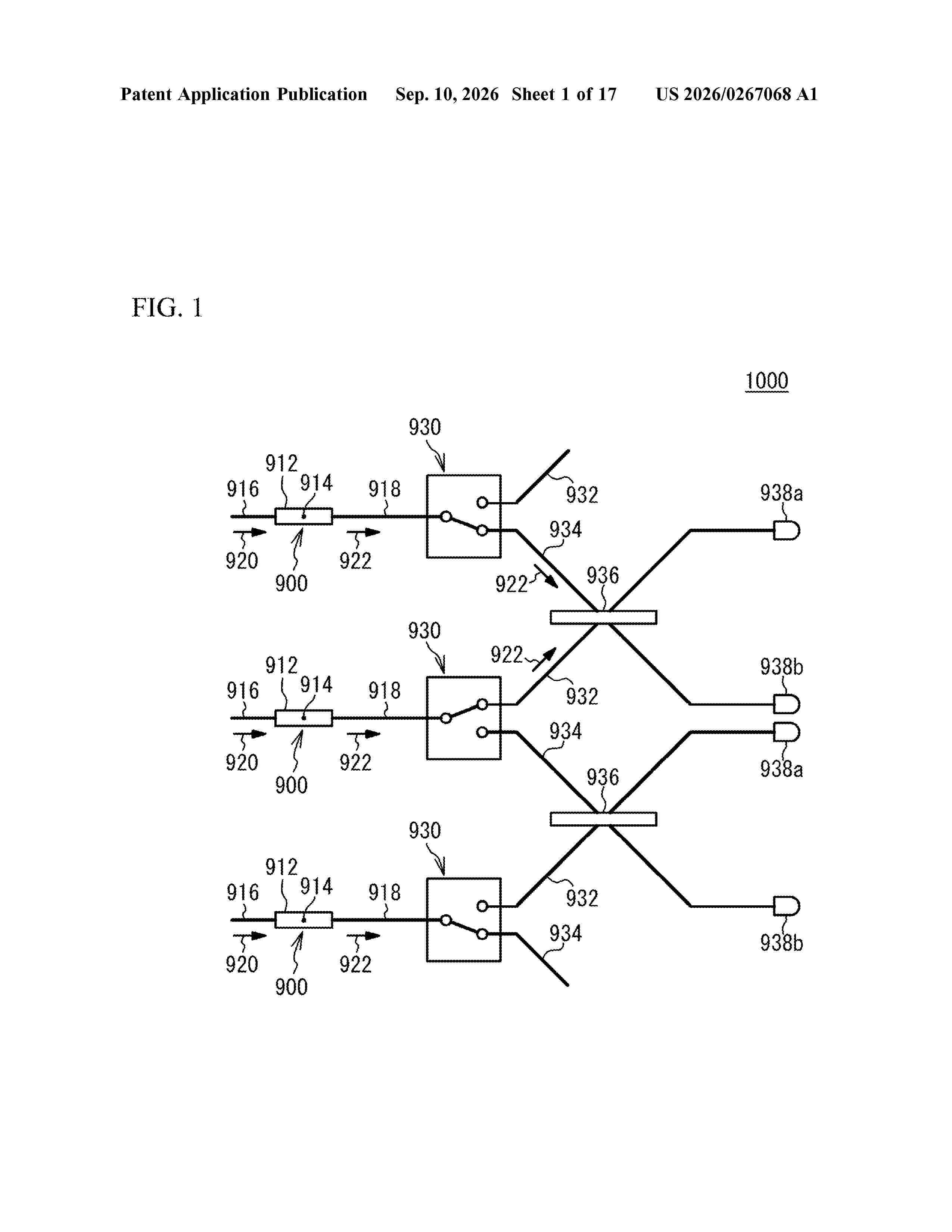
A quantum device includes a quantum bit element that includes a first diamond crystal layer having a first center point and having a shape extending in four directions from the first center point, a second diamond crystal layer having a second center point and having a shape extending in four directions from the second center point, and a color center present in one of the first diamond crystal layer and the second diamond crystal layer, the first diamond crystal layer and the second diamond crystal layer being stacked so that at least parts of the first center point and the second center point overlap each other, a first optical waveguide connected to each of four first ends of the first diamond crystal layer, and a second optical waveguide connected to each of four second ends of the second diamond crystal layer.
Resumen de: US20260267068A1
A quantum device includes a plurality of quantum bit elements each including a diamond crystal layer and a color center, the diamond crystal layer having a central portion and extending portions connected to the central portion and extending in 2n directions (n is an integer of 2 or more) from the central portion, the color center being formed in the central portion, an input optical waveguide that is connected to each of n ends of the extending portions and transmits light introduced into the color center, an output optical waveguide that is connected to each of n ends of the extending portions and transmits a photon emitted from the color center, and a branching element connected to the output optical waveguide of a first quantum bit element of the quantum bit elements and the output optical waveguide of a second quantum bit element of the quantum bit elements.
Resumen de: WO2026187636A2
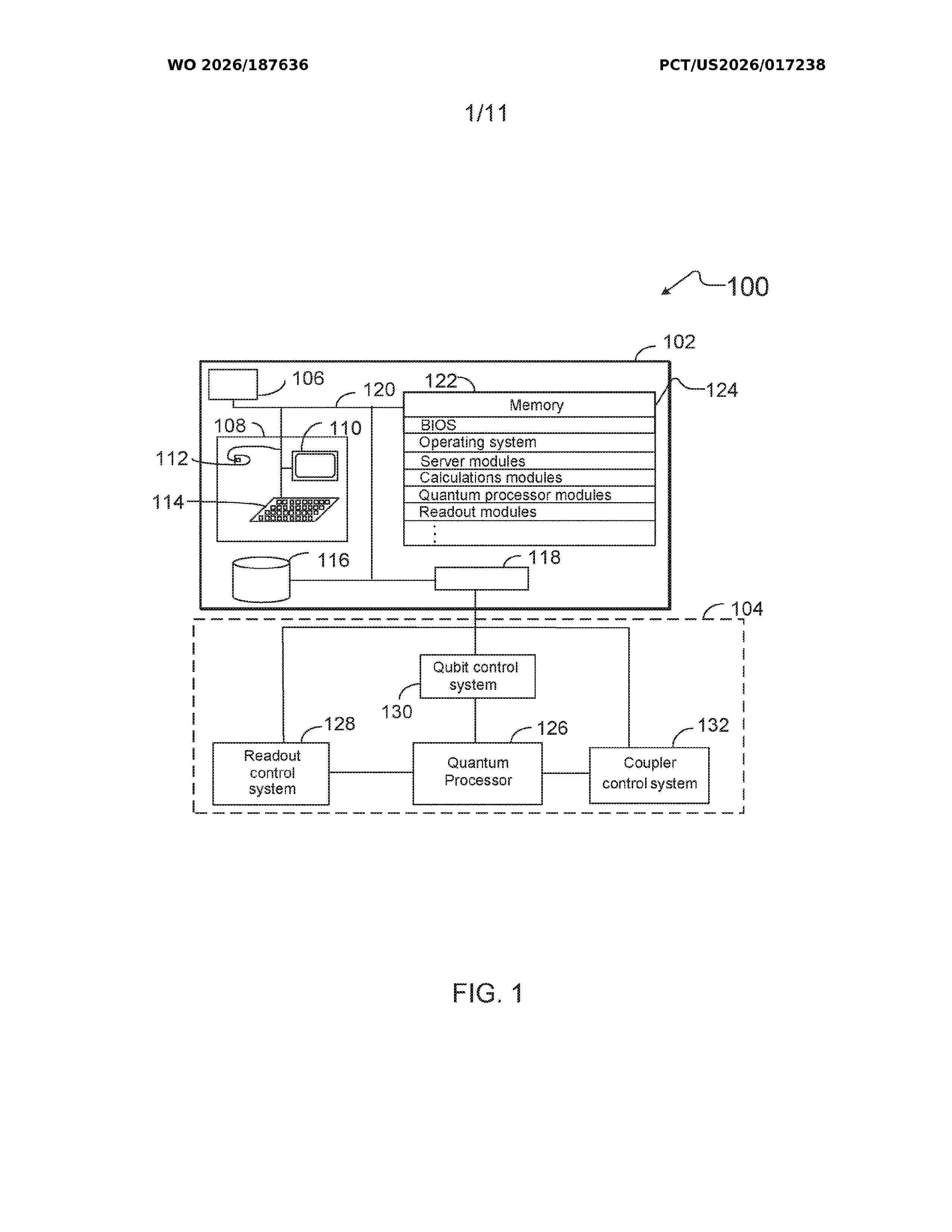
Mid-anneal readout of qubits during can be used to characterize quantum processor dynamics. A method can comprise: initiating a state change of qubits; performing fast quantum annealing of detector rf-SQUIDs coupled thereto during the state change to capture instantaneous qubit states while experiencing observable quantum dynamics; and, reading out the instantaneous states. The detector rf-SQUIDs can be a subset of qubits or quantum flux parametrons, leveraging existing on-chip devices. Instantaneous states can be captured across a range of effective measurement bases through iterative modulation of polar and azimuthal angles by sweeping rf-SQUID body biases and annealing delay times.
Resumen de: US20260268200A1
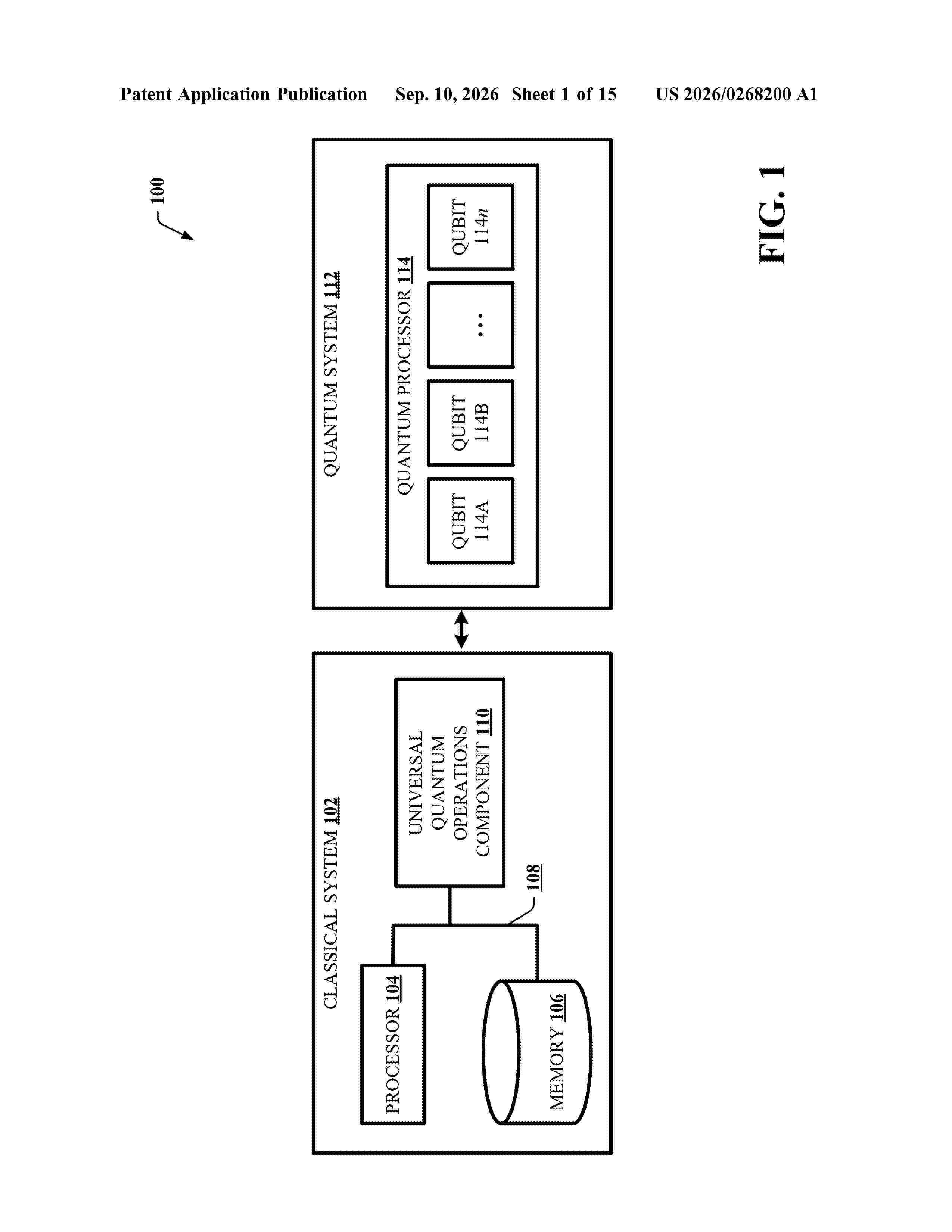
One or more systems, devices, computer program products and/or computer-implemented methods of use provided herein relate to modular fault-tolerant quantum computing. For example, a system can comprise a memory that can store computer executable components and a processor that can execute the computer executable components stored in the memory. The computer executable components can comprise an operation component that performs, on a quantum processor, stabilizer operations on logical qubits encoded in a quantum error correction code. The computer executable components can further comprise an execution component that performs, on the quantum processor, universal quantum operations on the logical qubits using the stabilizer operations, wherein the stabilizer operations consume magic state.
Resumen de: US20260268197A1
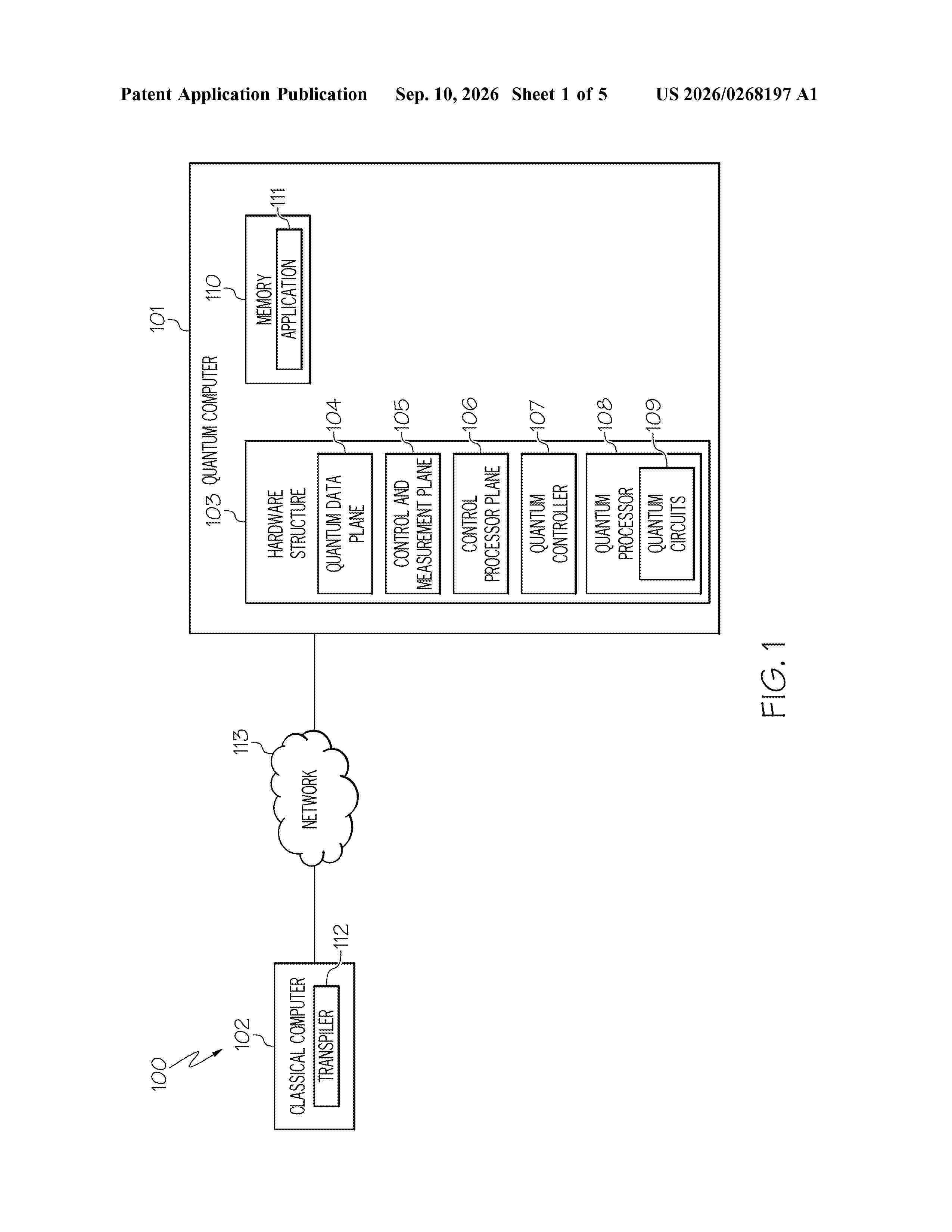
A method, system and computer program product for performing quantum error mitigation. A machine learning model is trained to predict the optimal noise factors and optimal extrapolator to be used in quantum error mitigation based on the quantum circuits, such as the structures of the quantum circuits, and the selections of different quantum hardware (e.g., noise profile of the selected quantum hardware). Based on the received structure of a quantum circuit and the selected quantum hardware, the optimal noise factors and the optimal extrapolator to be used in quantum error mitigation for the received quantum circuit to be run on the selected quantum hardware are identified using the trained machine learning model. Quantum error mitigation is then performed on the quantum circuit, such as the received quantum circuit, after the quantum circuit has been run on the selected quantum hardware using the identified optimal noise factors and optimal extrapolator.
Nº publicación: WO2026187229A1 10/09/2026
Solicitante:
TECHNISCHE UNIV DELFT [NL]
TECHNISCHE UNIVERSITEIT DELFT
Resumen de: WO2026187229A1
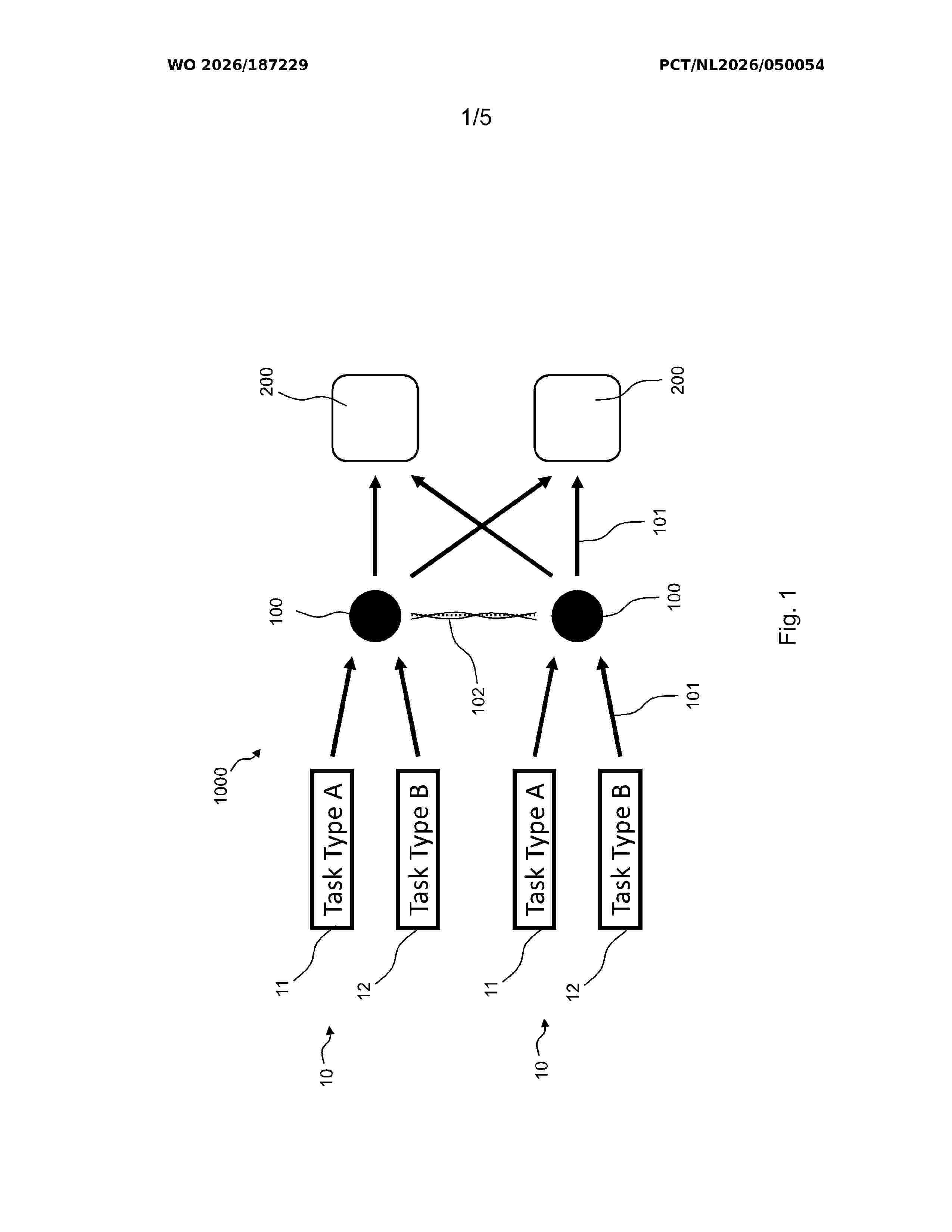
A distributed computational network, a router and a method for computing heterogenous computational tasks therein, the network comprising a plurality of entities, wherein the entities comprise: - at least two servers configured to perform a computational task; - at least two routers configured for routing a computational task towards a server over a classical communication channel, wherein each router is further configured for establishing a quantum communication channel with at least one further router for enabling coordination of routing the computational tasks.
 BOPI
BOPI
 Sede Electrónica