Si deseas distinguir tus productos, servicios o ambos de los de otra empresa, es posible que necesites una marca o nombre comercial. Descubre qué son, en qué consiste su procedimiento de registro y qué implica.

Información sobre los plazos de presentación de solicitudes de transformación de marcas de la Unión Europea en marca nacional española. Más información


Si tienes un nuevo dispositivo, producto o procedimiento que resuelva un problema técnico o tenga una ventaja práctica, existen distintas formas de protegerlo en España y en otros países. Descubre cómo hacerlo.

¿Tu innovación reside en la estética, la ornamentación o la apariencia de tu producto? Protégela mediante un diseño industrial. Descubre qué derechos confiere el registro y cómo realizar la tramitación.

Las indicaciones geográficas protegen el nombre de un producto originario de una zona geográfica, a la cual le debe una determinada calidad, reputación u otra característica. Descubre qué son, en qué consiste su procedimiento de registro y qué beneficios conceden.

Las patentes publicadas en todo el mundo son una valiosa fuente de información científica, técnica y comercial.

Si eres emprendedor/a o una empresa y quieres potenciar y mejorar la rentabilidad de tu negocio protegiendo de forma adecuada los activos intangibles de tu organización, en este espacio encontrarás lo necesario.


 148
resultados
148
resultados
 Última actualización
01/10/2026 [14:41:00]
Última actualización
01/10/2026 [14:41:00]


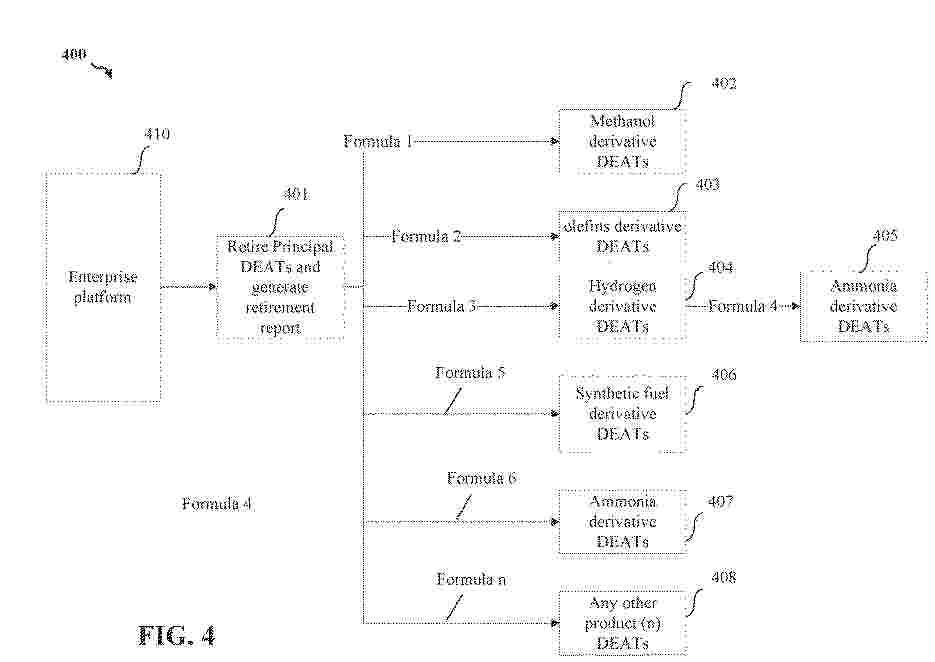
Resumen de: GB2645324A
Systems and methods for quantifying, tracking, and transacting differentiated energy attributes (DEA) tokens using a private blockchain network across the life cycle of feedstock differentiated energy and synthesized products. Differentiated energy attributes verified by a verification entity pursuant to emission standards are digitized as principal and derivative differentiated energy attribute tokens (DEATs) associated with feedstock differentiated energy and synthesized product, respectively. DEATs are published to a feedstock differentiated energy producer's or a synthesized product producer's modified multi-signature wallet governed by the terms and conditions of one or more smart contracts. DEATs may be transacted in a bilateral transaction between a buyer and seller under a transaction smart contract.

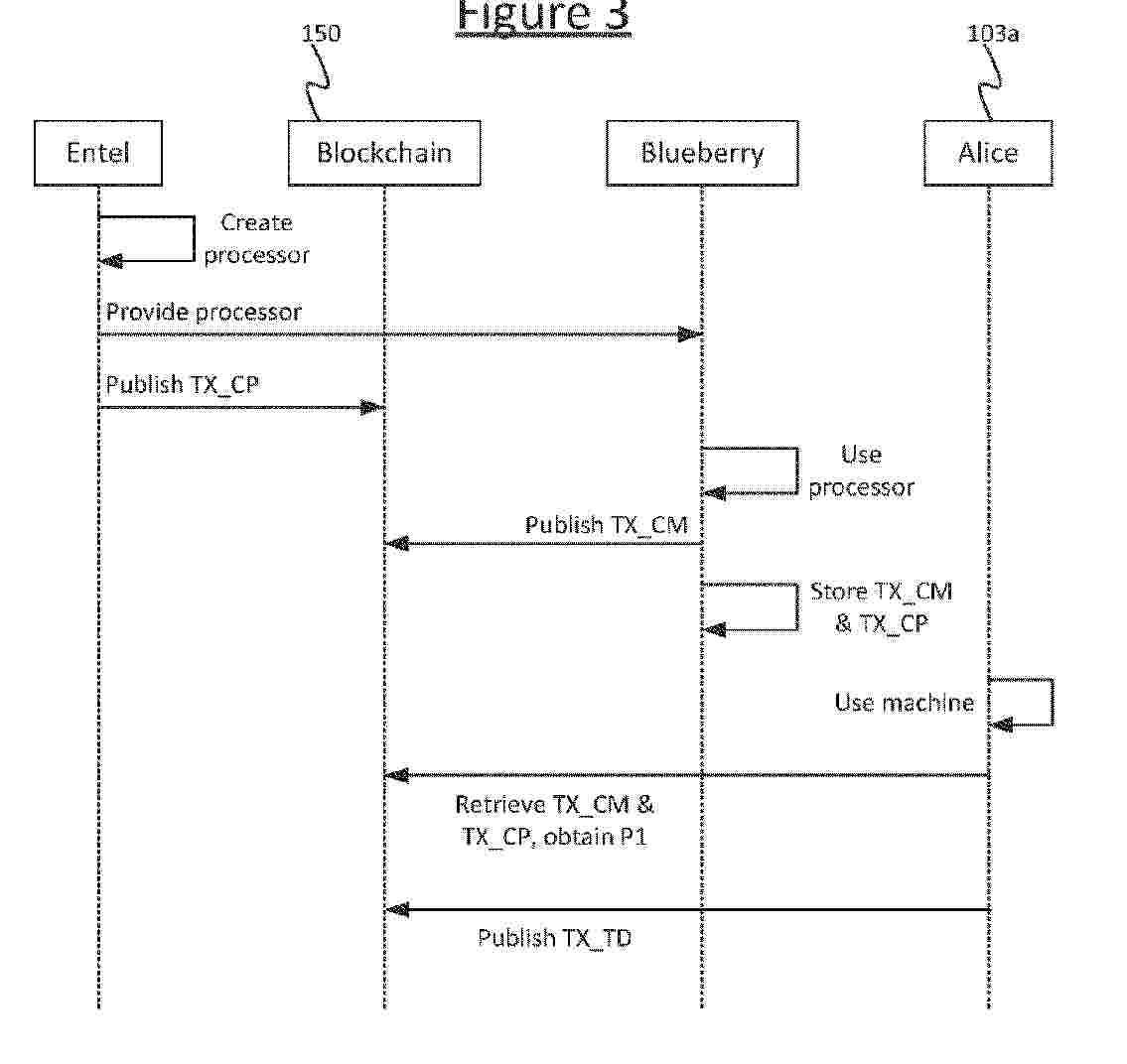
Resumen de: WO2025108650A1
A computer-implemented method of using a computing environment of a computing resource, wherein a blockchain comprises a first blockchain transaction comprising an encryption key, and wherein the method comprises: obtaining the encryption key from the first blockchain transaction; using the encryption key to encrypt data; arranging for a second blockchain transaction to be submitted to one or more nodes of a blockchain network, wherein the second blockchain transaction comprises a commitment of the encrypted data; and supplying the encrypted data to the computing resource for use by the computing environment.
Resumen de: NZ798805A
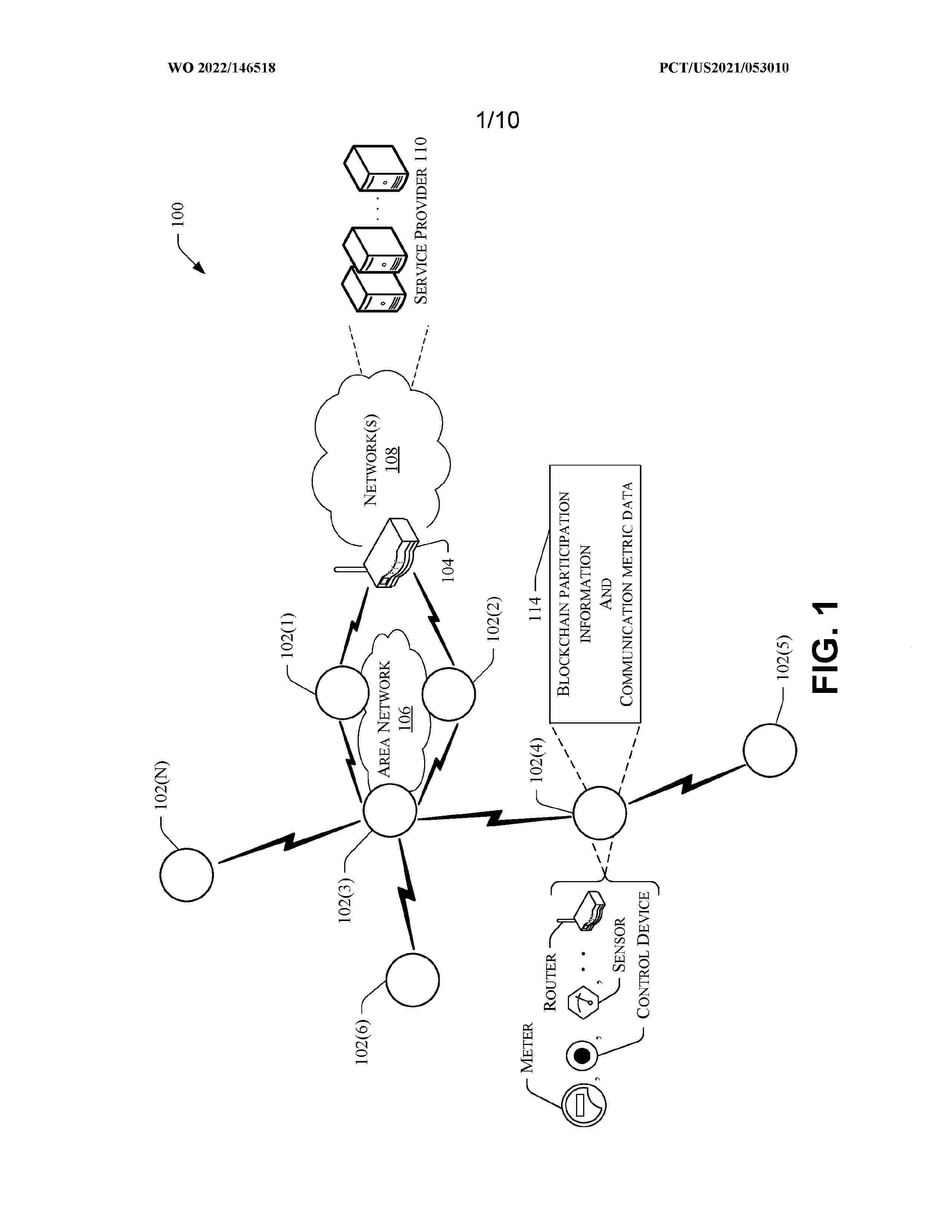
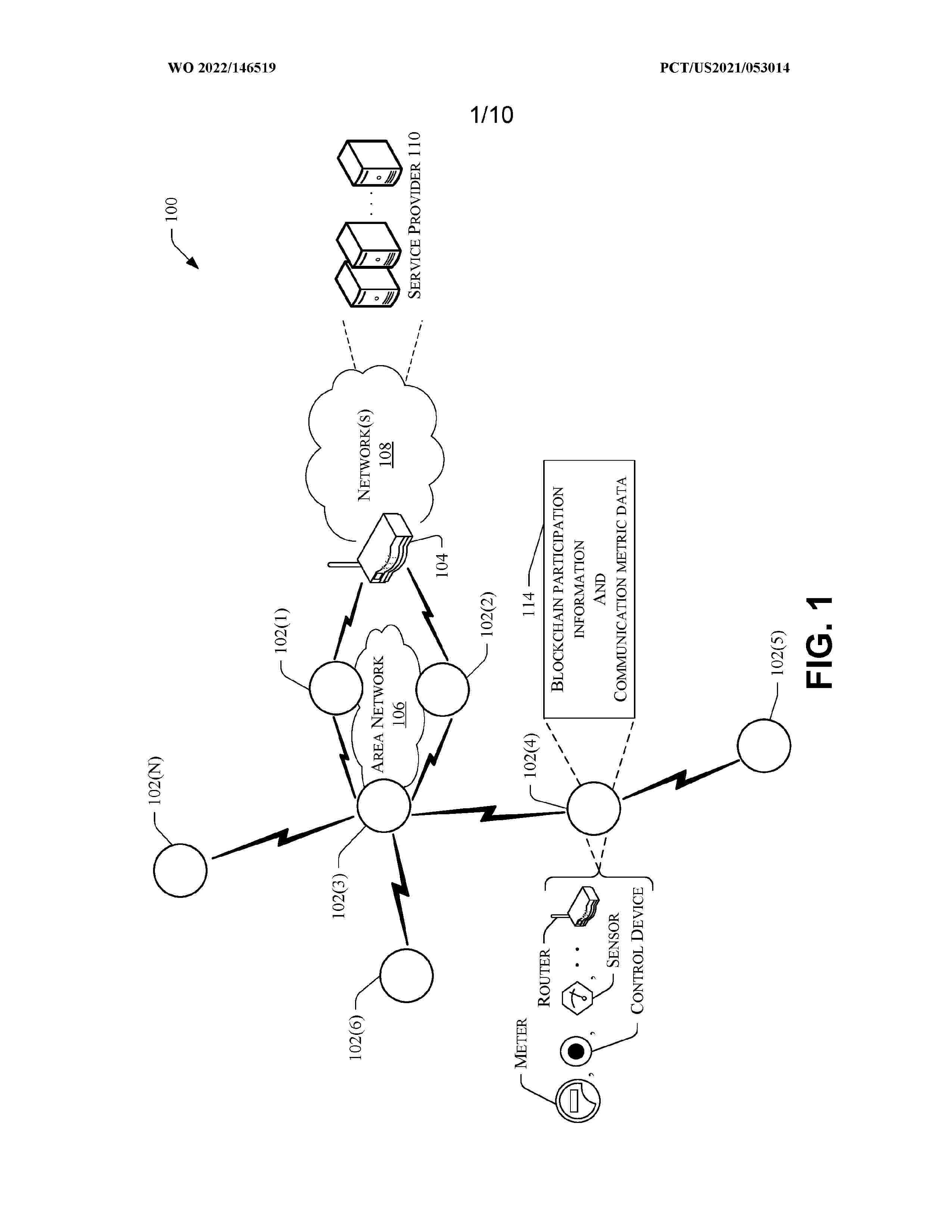
A first device participating in a blockchain receives an indication of an error in the blockchain being maintained by the first device. The first device determines a defective block of the blockchain and receives hash values of the defective block from a plurality of devices. The first device requests a replacement for the defective block from a device whose hash value matches hash values provided by other devices and receives the replacement from a second device. The first device determines a recalculated blockchain that includes the replacement for the defective block and verifies the recalculated blockchain by creating and comparing a hash value of an entire portion of the blockchain.
Resumen de: NZ798788A
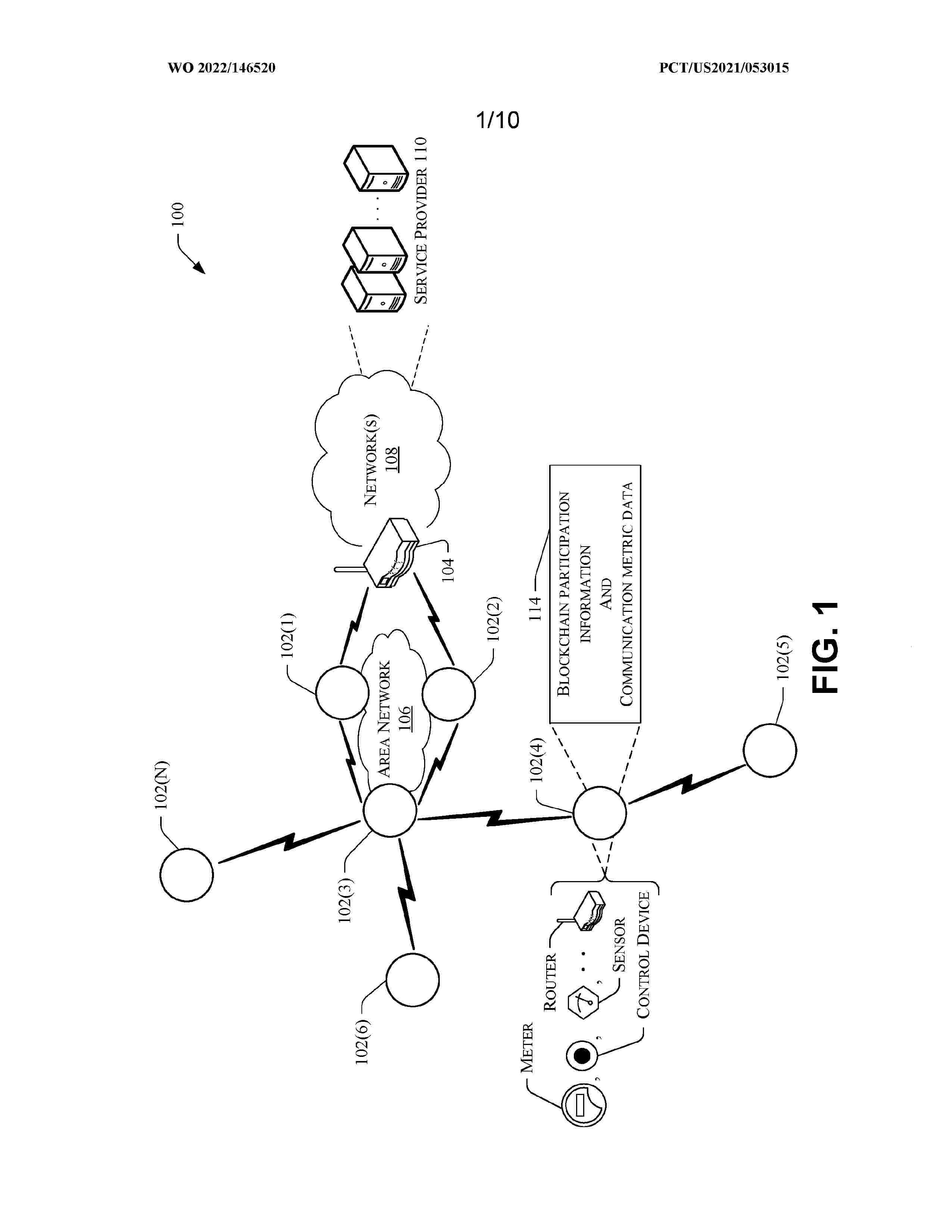
A device selects a plurality of other devices to participate in a blockchain based at least in part on observed behavior of a communication link between the device and each of the other devices. The device, based at least in part on the selecting, participates in the blockchain with at least some of the plurality of other devices.
Resumen de: NZ798802A
Based at least in part on a determination of an amount of remaining storage available in a device being relative to a particular level, a device trims at least a portion of the blockchain from the device including by making storage allocated to the portion of the blockchain available. The device recalculates the blockchain without the portion of the blockchain that has been trimmed from the device. Further, the device sends a message to another device participating in the blockchain, the message including at least the hash for the recalculated blockchain.
Resumen de: US20260292021A1
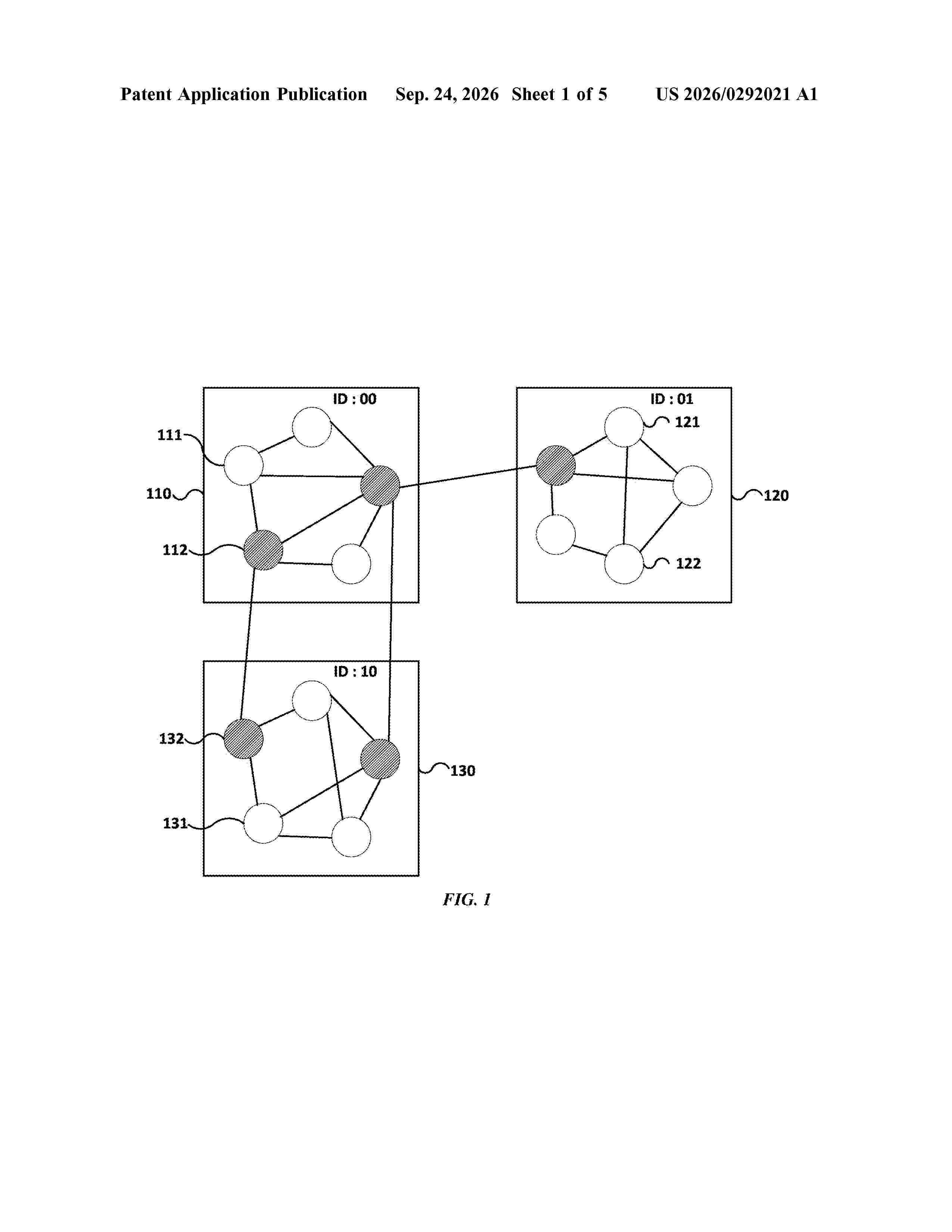
0000 The present disclosure relates to a system and method for changing a shard (working shard) with which an account is affiliated to another shard (working shard) in a blockchain network applying dynamic sharding technique. In the present disclosure, the node is a node affiliated with an origin working shard of a first moving account and communicates with a first home shard-affiliated node of the first moving account and a first destination working shard-affiliated node of the first moving account to perform a working shard change procedure for the first moving account. The node includes a working shard change detection unit that detects whether a working shard of the first moving account is changed, and a working shard change request unit that requests a working shard change for the first moving account to the first destination working shard-affiliated node.
Resumen de: US20260289562A1
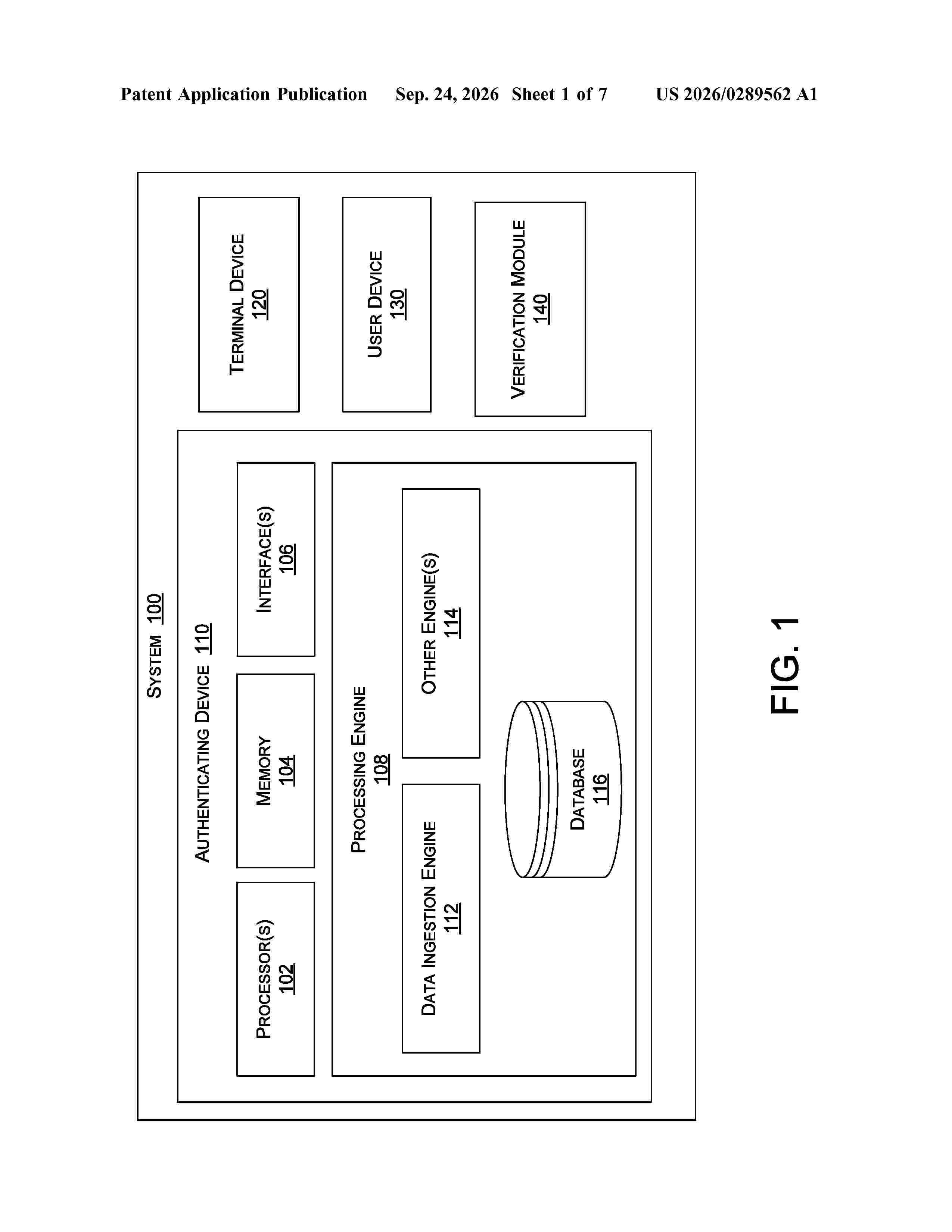
The present disclosure relates to a system and a method for enabling blockchain based transaction authorization. The system includes an authenticating device to receive a request for transaction authorization from a terminal device, where the request includes a plurality of credentials pertaining to transaction information, The authenticating device autonomously generates a first component and a second component of a digital signature, based on the plurality of credentials. The authenticating device encapsulates the second component into one or more discretionary data fields of a data object. The authenticating device generates a digital signature by combining the first component and the encapsulated second component. The authenticating device authorizes and transmits the digital signature to the terminal device to determine a status of a transaction, and receives the status of the transaction from the terminal device.
Resumen de: US20260289551A1
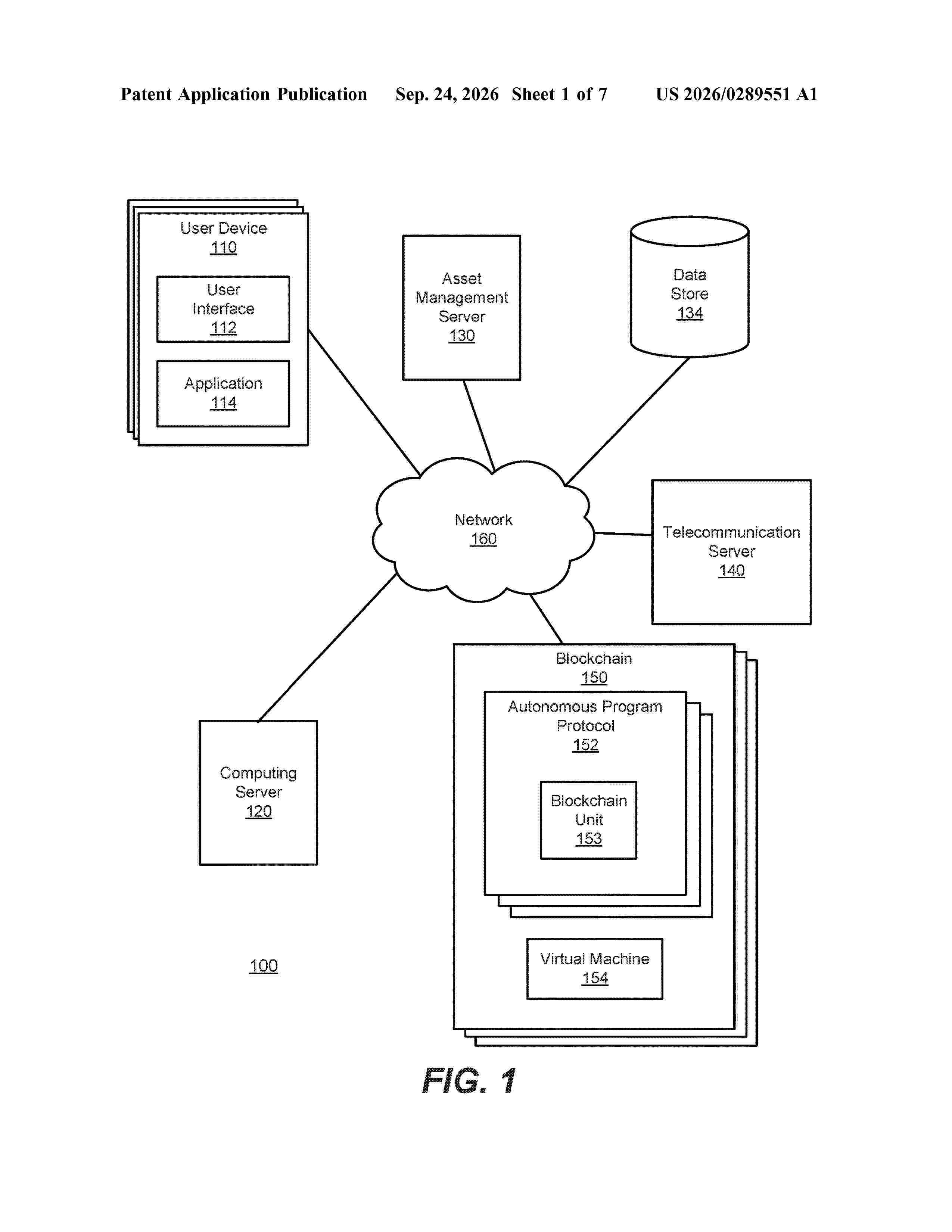
Systems and methods are disclosed for transferring blockchain value to recipients who do not yet control a blockchain address. In response to a request identifying an unregistered phone number and a quantity of blockchain unit, a computing system creates a cryptographic custody associated with a blockchain address that holds the quantity and with a signer of that address. The custody is established by deterministically calculating, from the phone number, the address of an autonomous program protocol and generating corresponding cryptographic signing key material for the signer of the smart account wallet. The system transmits a notification to the phone number containing a URL for access. Upon detecting that a device associated with the phone number has interacted with the URL, the system transmits the signing key material to the device, enabling the device to assume cryptographic control of the autonomous program protocol and access the transferred blockchain unit.
Resumen de: DE102025000996A1
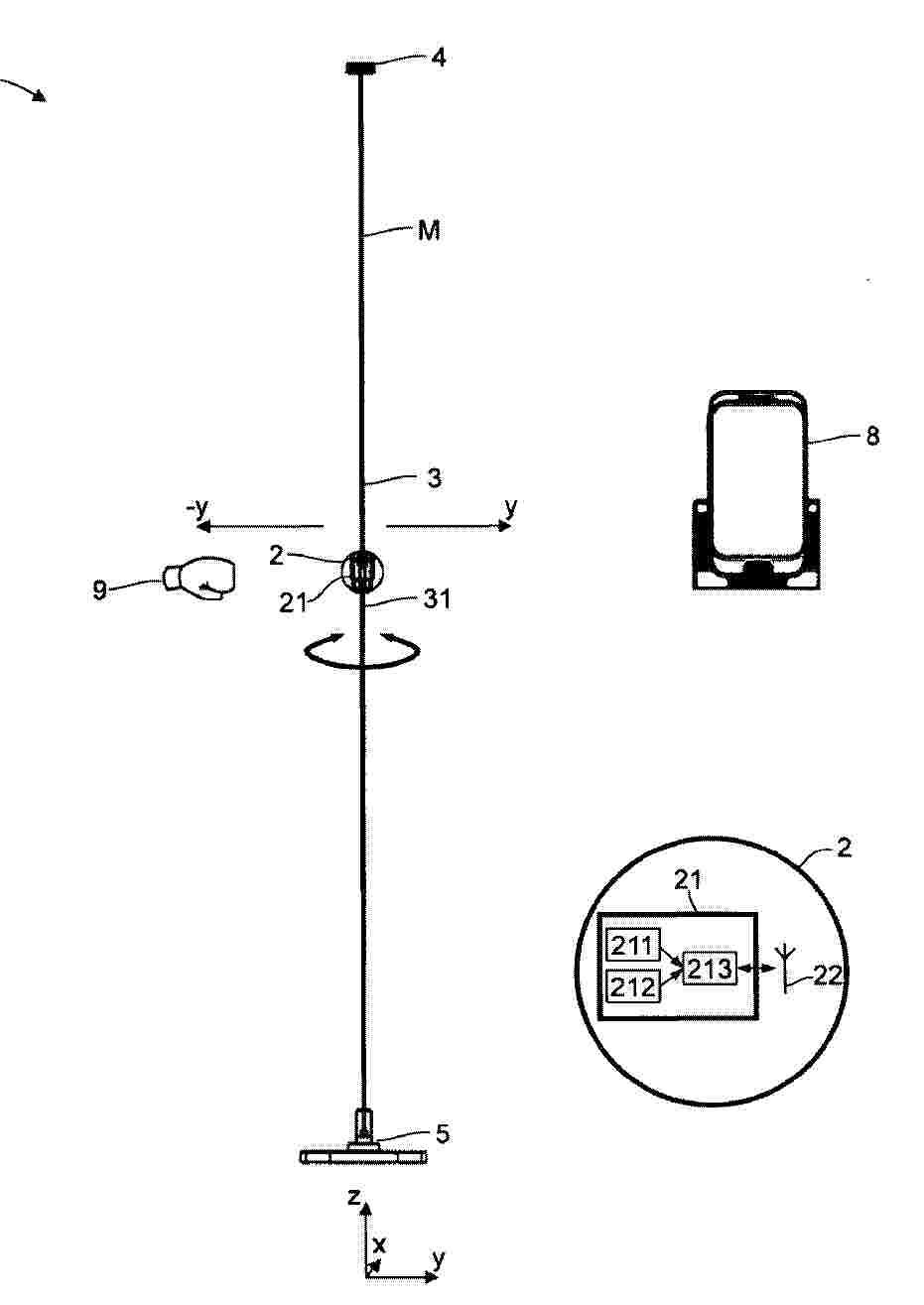
Verfahren zur Erstellung von Non-Fungible Tokens (NFTs) basierend auf Sensordaten einer Sportanordnung, umfassend die Schritte:- Erfassen von Sensordaten aus einer Sportanordnung, wobei die Sportanordnung mindestens eine Messanordnung (21) umfasst, die physische Aktivitäten misst und entsprechende Sensordaten erzeugt;- Aufbereiten der Sensordaten in einer Analyseeinheit (31);- Zusammenführen der analysierten Sensordaten zu einem Datenprofil (34);- Integrieren des Datenprofils (34) in eine Blockchain (40);- Erstellen eines Non-Fungible Tokens (NFT) (41) basierend auf dem integrierten Datenprofil, wobei der NFT ein digitales Abbild der physischen Aktivität darstellt.
Resumen de: US20260289601A1
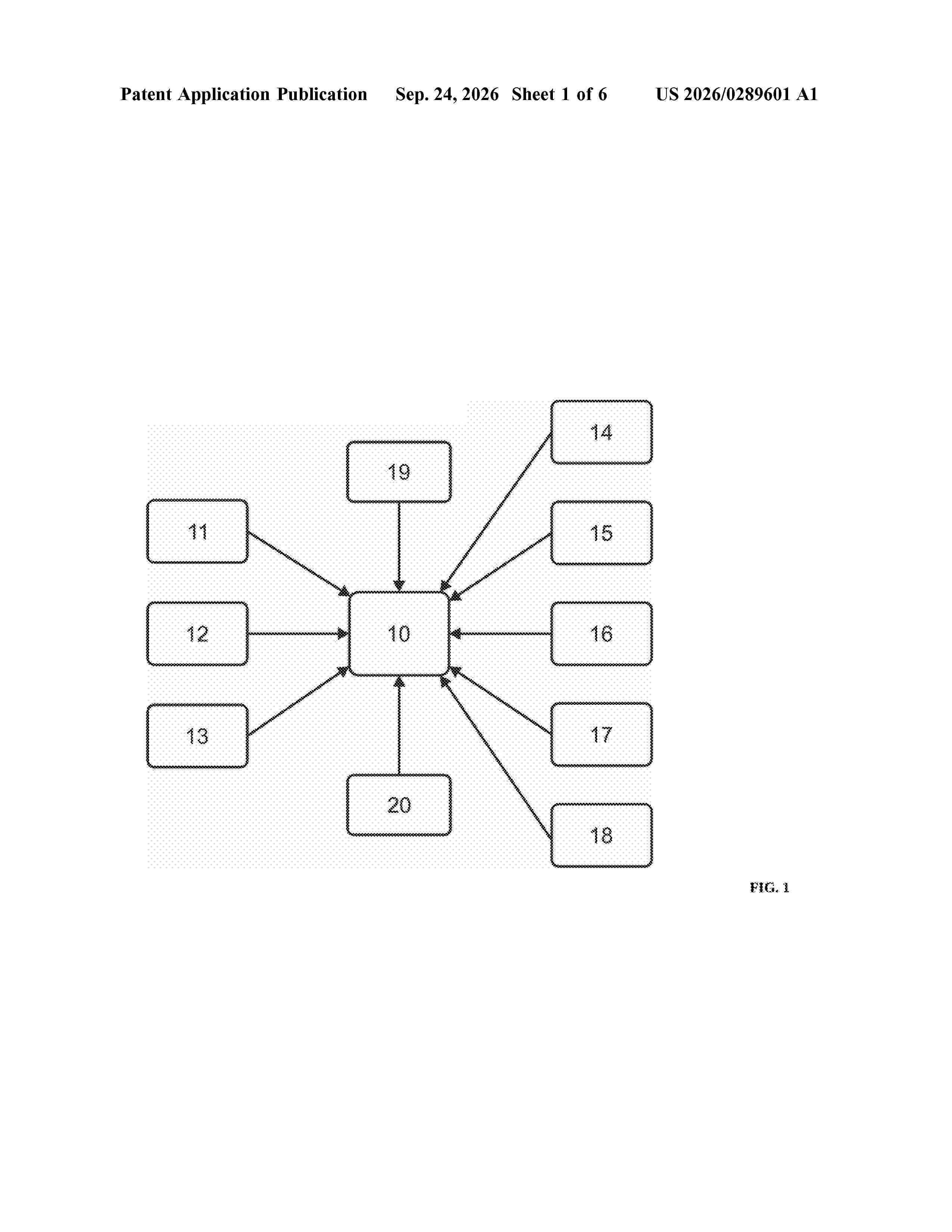
0000 A vault-based lottery system for exclusive music streaming provides controlled platform access while ensuring fair artist compensation. The system generates unique vault codes for users who enter a daily lottery for membership, with machine learning dynamically adjusting lottery odds based on engagement metrics. Superfan members bypass the lottery, gaining immediate access to exclusive artist content, pre-release music, and priority participation in live sessions. The platform implements blockchain technology to authenticate music, verify content ownership, and execute transparent artist compensation through smart contracts at rates significantly higher than traditional streaming services. Artists control release scheduling and can issue lottery bypass passes to dedicated fans. A fan-driven discovery algorithm prioritizes recommendations based on superfan engagement rather than purely algorithmic methods. The integration of machine learning optimization with blockchain verification creates a sustainable ecosystem benefiting both artists and dedicated fans while maintaining content exclusivity.
Resumen de: US20260291735A1
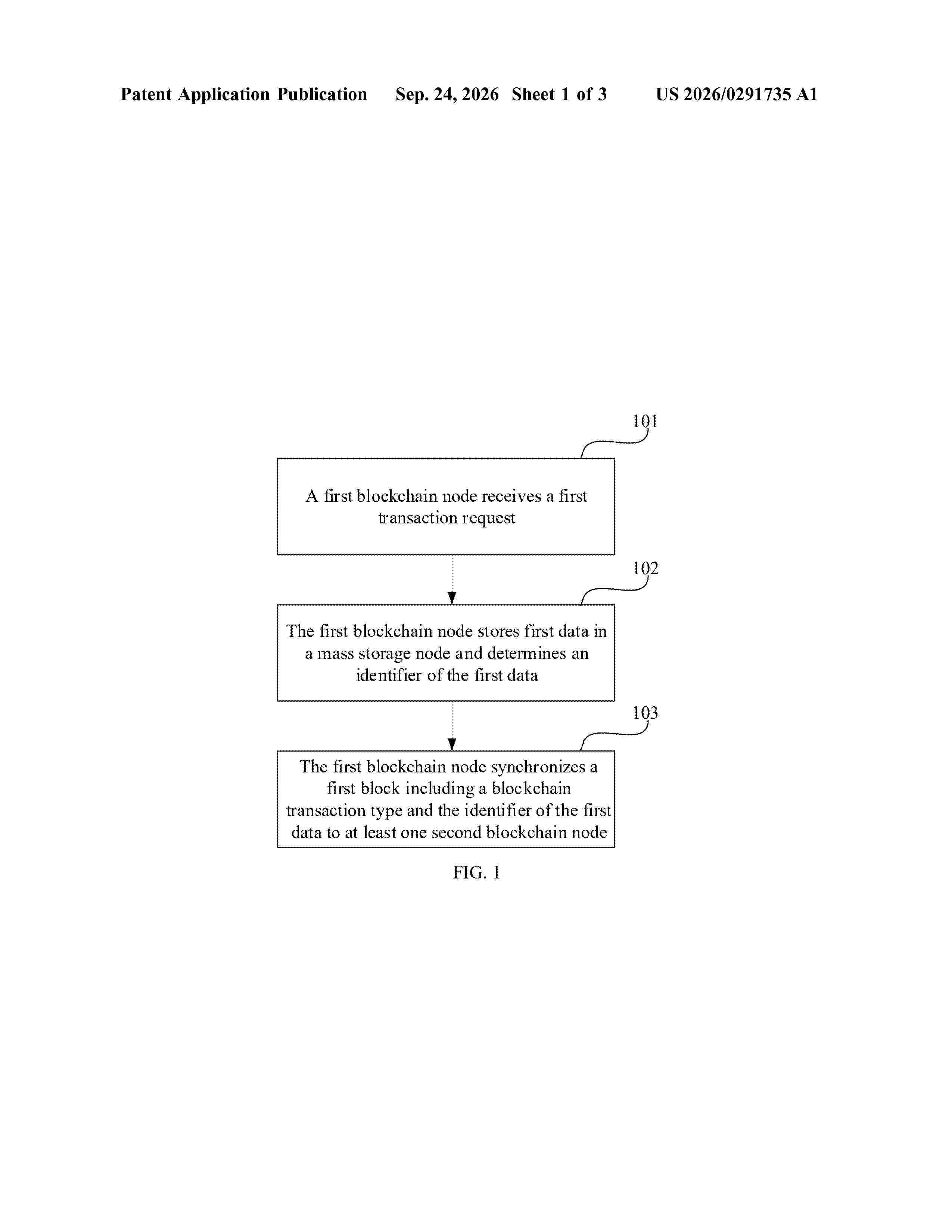
The present disclosure provides a blockchain-based communication method and apparatus. The method includes: a first blockchain node receives a first transaction request, the first transaction request including a blockchain transaction type and first data, and the blockchain transaction type being used for indicating a processing mode for the first data; the first blockchain node stores the first data in a mass storage node, and determines an identifier for the first data; and the first blockchain node synchronizes a first block including the blockchain transaction type and the identifier for the first data to at least one second blockchain node. In the solution, the first block contains the identifier for the first data instead of including the first data, so that the solution reduces data redundancy, reduces the blockchain storage cost, and improves the synchronization speed of blockchain nodes.
Resumen de: US20260289000A1
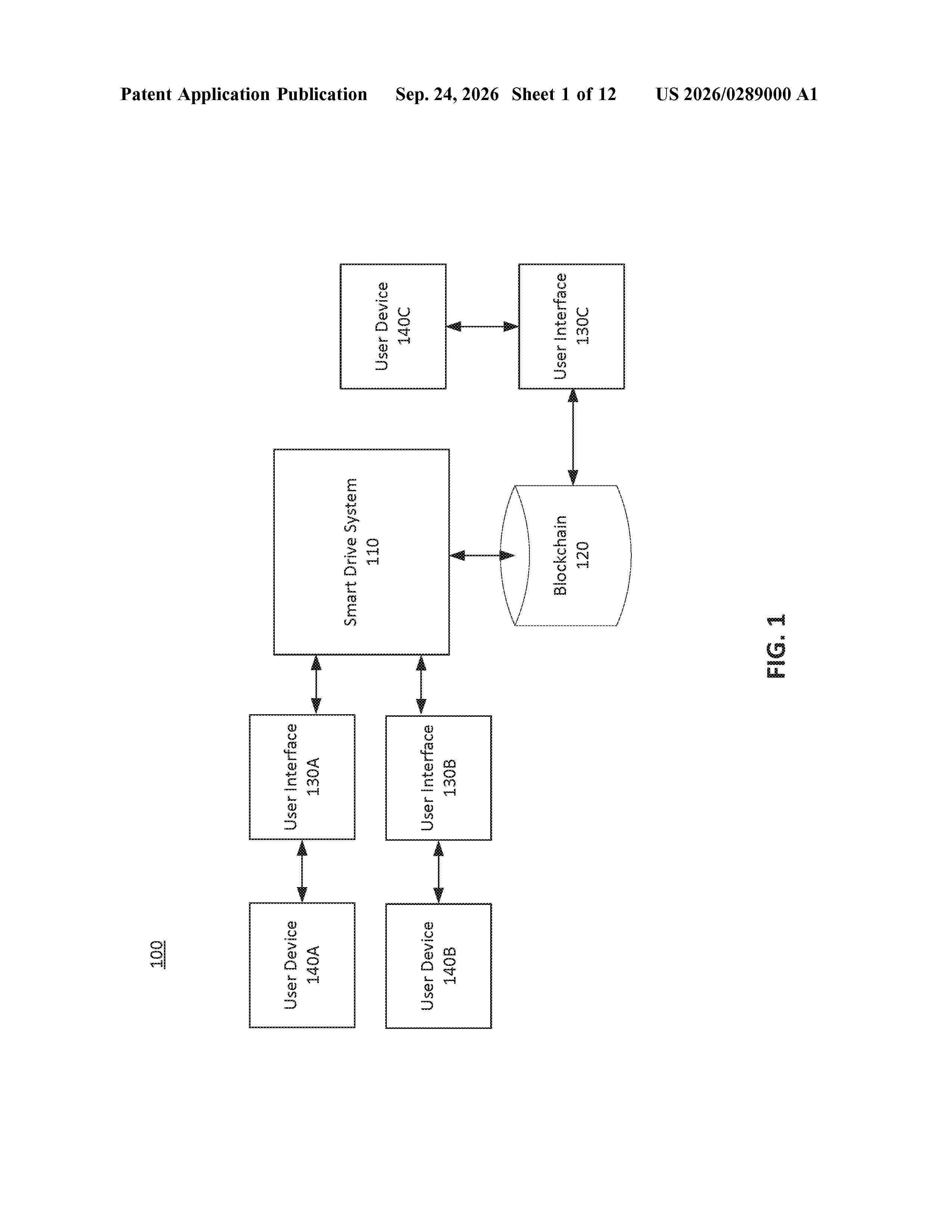
0000 Disclosed herein are system, method, and computer program product for managing documents using blockchain technology and quantum-safe computational architecture. A smart drive system may facilitate the creation of a project data structure encrypted using a quantum-resistant cryptographic scheme and distributed or decentralized key management functionalities. The project data structure may indicate a sequence or flow of documents and/or document types. The smart drive system may also manage groups of documents and generate documents and group tokens to manage access permissions. The smart drive system may protect these data sources from unauthorized access based on the quantum tokens corresponding to the document, document type, and/or group of documents. The smart drive system may facilitate modifications to the document from other parties, which may represent counteroffers or a negotiation process. The smart drive system may also interconnect documents of a project data structure to create documents with pre-filled data and corresponding cryptographic bindings.
Resumen de: US20260289666A1
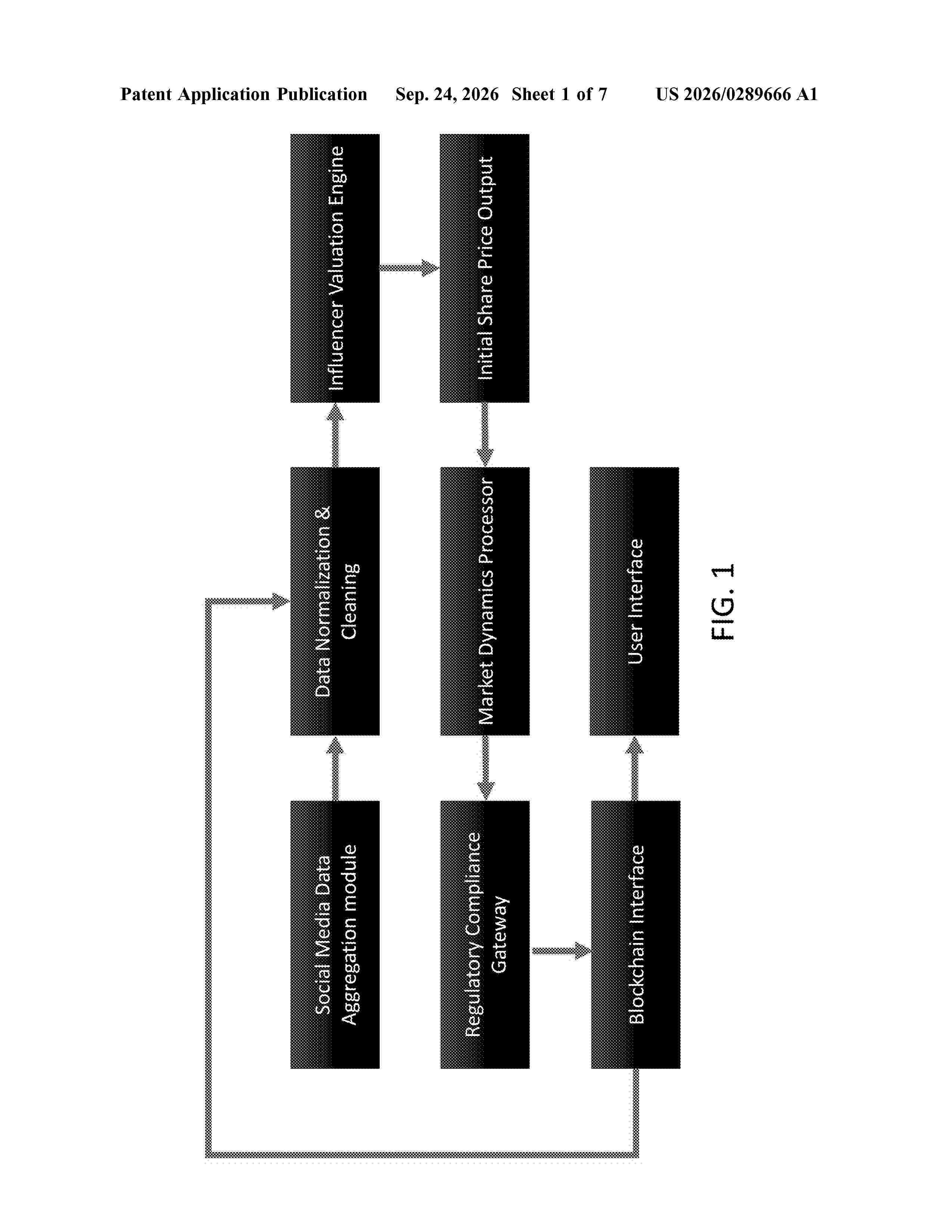
0000 A system and method for creating and managing tradable securities linked to the real-time influence metrics of social media personalities. The system aggregates data from multiple social media platforms, analyzes this data using machine learning algorithms, and generates an influence valuation score. This valuation score, incorporating follower counts, engagement growth rates, and merchandise sales, determines the initial share price for the influencer's security. A market dynamics processor then adjusts the share price based on real-time market activity and overall investor sentiment. To ensure regulatory compliance, a compliance gateway uses natural language processing to interpret securities regulations and automatically generate jurisdiction-specific smart contracts, ensuring adherence to financial regulations. These securities are traded on a blockchain-enabled platform to provide transparent secondary market trading and data immutability. This system enables investors to directly invest in the success of influencers, creating a new asset class while offering influencers alternative monetization strategies.
Resumen de: WO2026193602A1
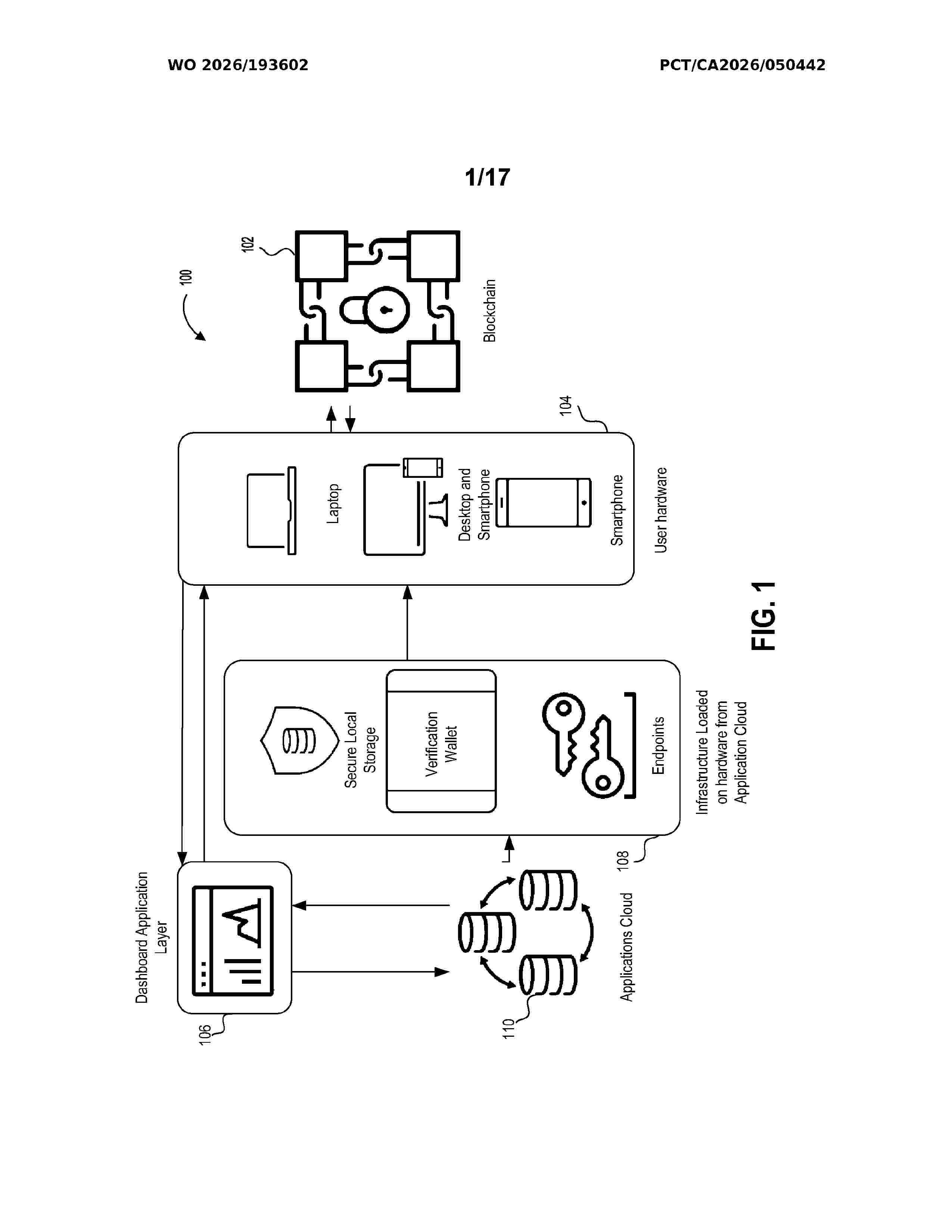
A system and method for identification verification based on consensus data. The method may include detecting a signal representing a data communication request of an application instance associated with a second endpoint device; determining whether a destination identifier associated with the second endpoint device corresponds to a valid identity token based on consensus data of a decentralized network; receiving a signal representing valid identity token data from a node of the decentralized network; and transmitting, to the second endpoint device, response data related to the data communication request of the application instance.
Resumen de: WO2026198711A1
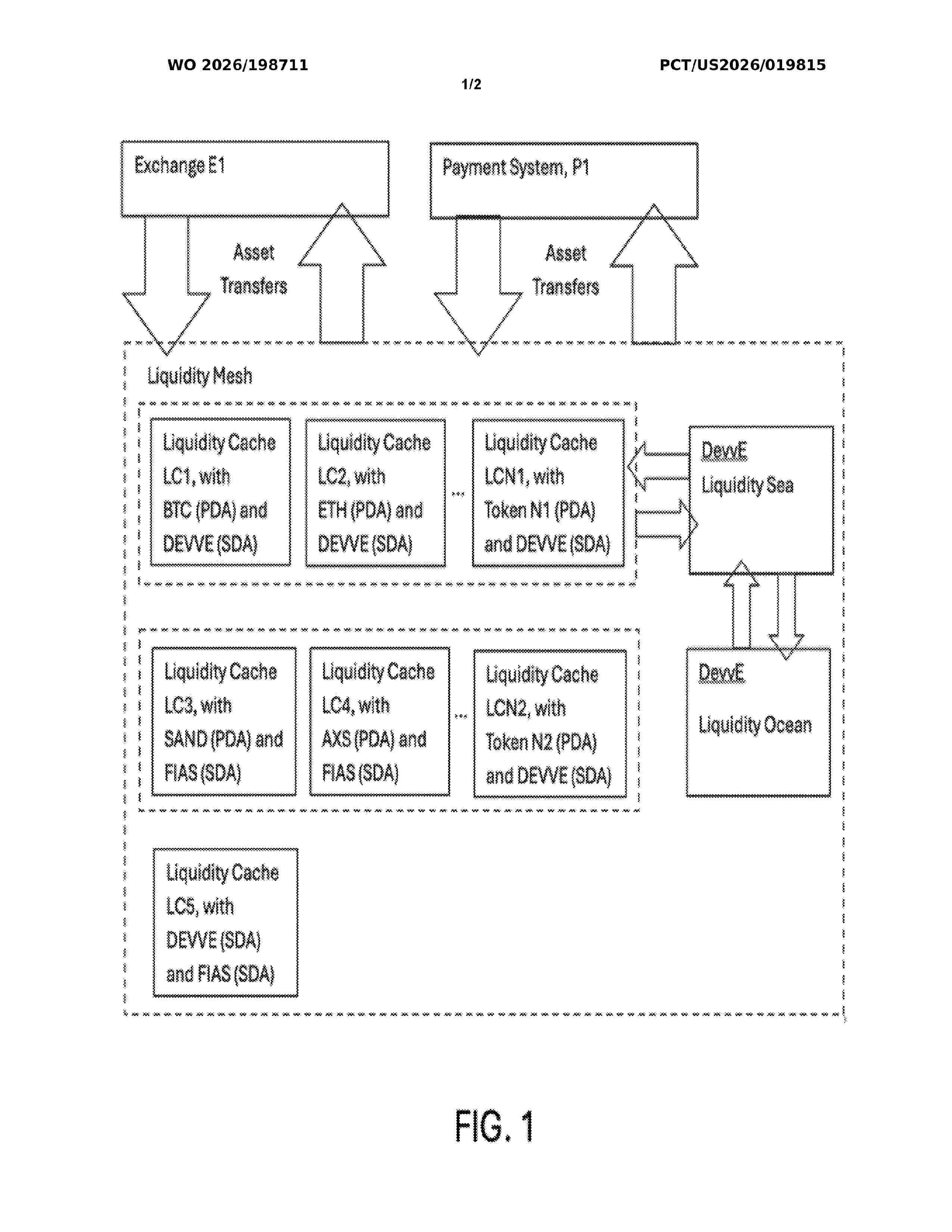
The present invention provides for collections of assets utilized for exchanging digital assets called Liquidity Caches. The ownership of the assets in a Liquidity Cache can be tracked on a blockchain, whether a specific token is held in an LC or subsequently transferred to an individual or entity.
Resumen de: US20260291754A1
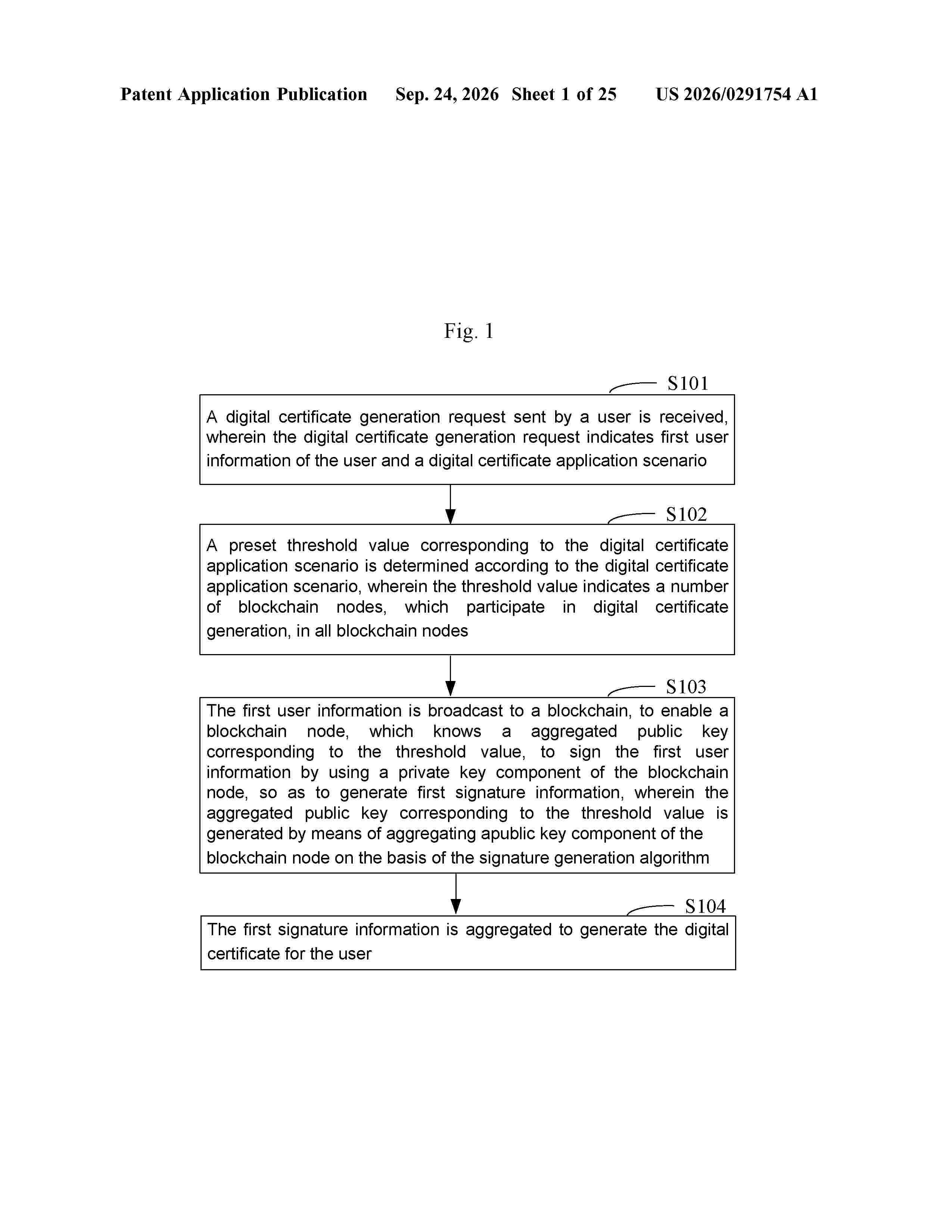
Provided are a method and apparatus for managing a digital certificate. A specific implementation of the method includes: receiving a digital certificate generation request sent by a user; according to a digital certificate application scenario, determining a preset threshold value corresponding to the digital certificate application scenario; broadcasting first user information to a blockchain, to enable a blockchain node, which knows an aggregated public key corresponding to the threshold value, to sign the first user information by using a private key component of the blockchain node, so as to generate first signature information, where the aggregated public key corresponding to the threshold value is generated by means of aggregating public key components of the blockchain node on the basis of a signature generation algorithm; and aggregating the first signature information to generate a digital certificate for the user.
Resumen de: WO2026196164A1
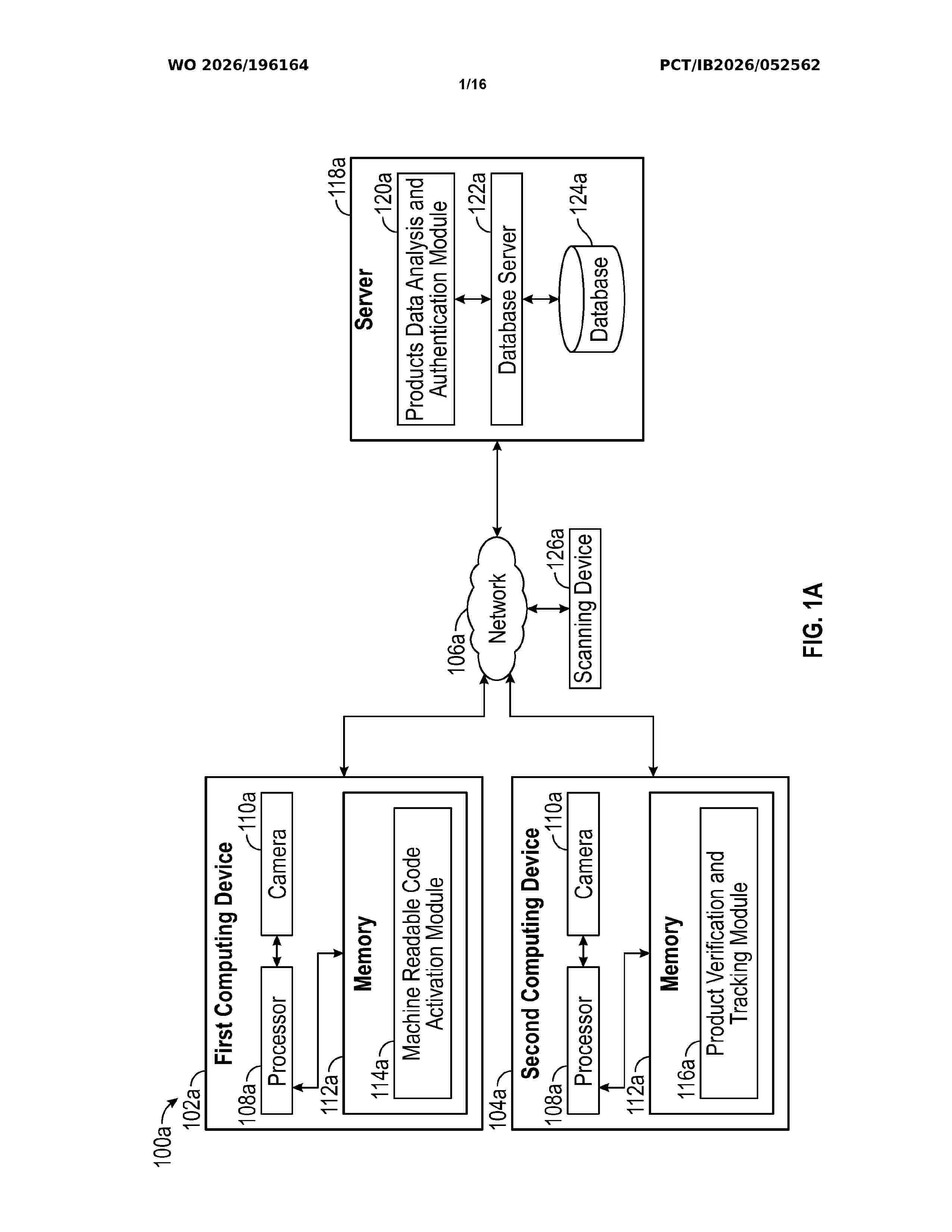
The present invention relates to a system and method for secure product tracking and authentication using preprinted machine-readable codes integrated with geo-fencing, tamper-proof mechanisms, and AI-driven counterfeit detection. The system comprises a machine-readable code activation module that enables manufacturers to request and receive preprinted codes, which are activated only within authorized geo-fenced locations. A product verification and tracking module allows stakeholders to scan and authenticate codes at various checkpoints, ensuring real-time product legitimacy verification. A product data analysis and authentication module utilizes AI- based analytics, heatmap-based sales insights, and blockchain technology to detect counterfeit attempts, enforce trade compliance, and enhance supply chain visibility. The invention further incorporates a dual-layer tamper-proof sticker system and integrates with mobile printers and sealing devices for dynamic machine-readable code generation and validation. The system provides end-to-end traceability, fraud prevention, and regulatory compliance across industries, including pharmaceuticals, food, electronics, and luxury goods.
Resumen de: US20260289664A1
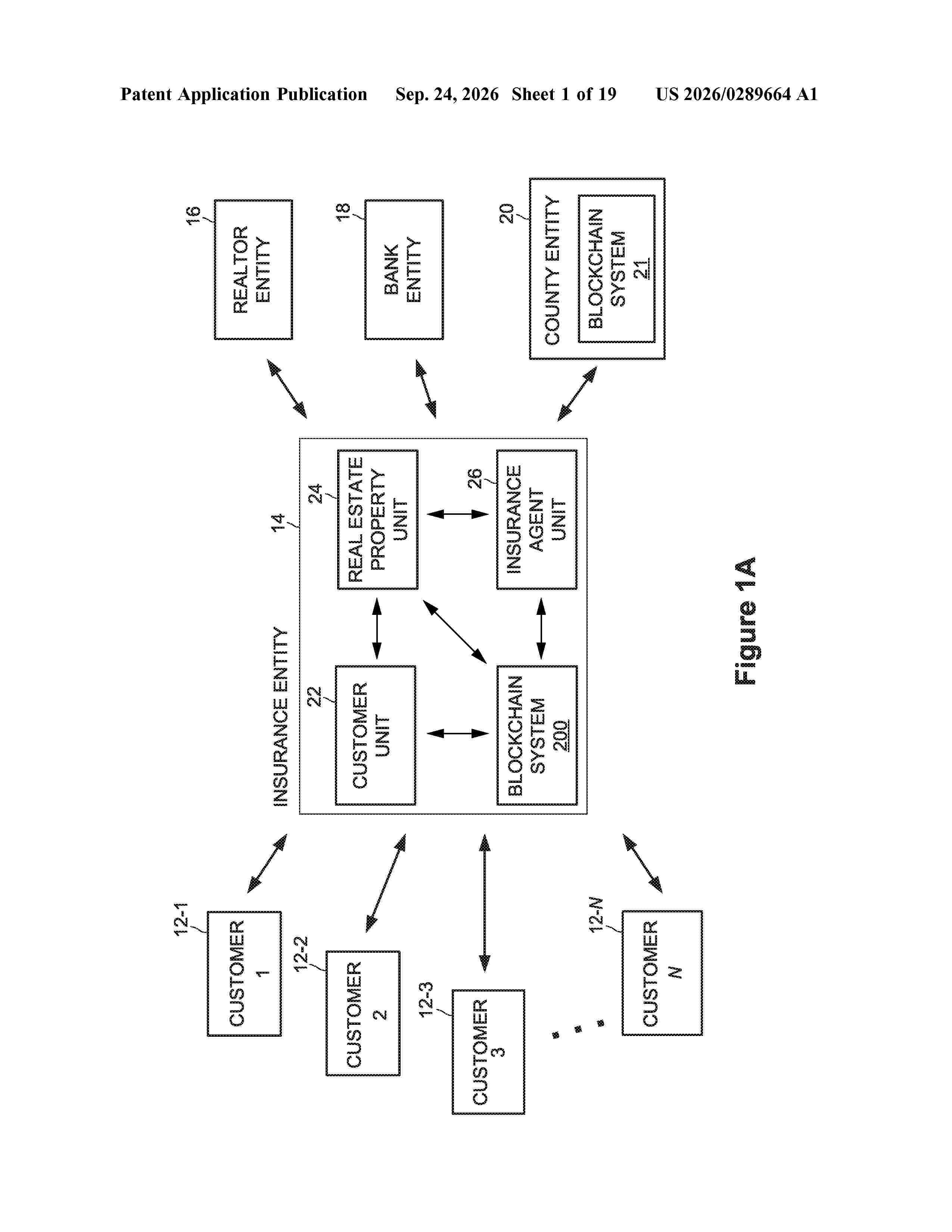
A system and computer-implemented method for approving a dynamic mortgage application using a blockchain. In one aspect, the method may include determining a customer is approved for a mortgage (“mortgage ready”) and determining a real estate property is mortgage ready. The method may include comparing a calculated amount in which the customer is approved for a mortgage loan with a calculated appraisal value of the real estate property, and approving the mortgage application of the customer when the calculated amount the customer is approved for the mortgage loan is equal to, or exceeds, the calculated appraisal value of the real estate property, reducing a processing time and closing time of the mortgage.
Resumen de: US20260289682A1
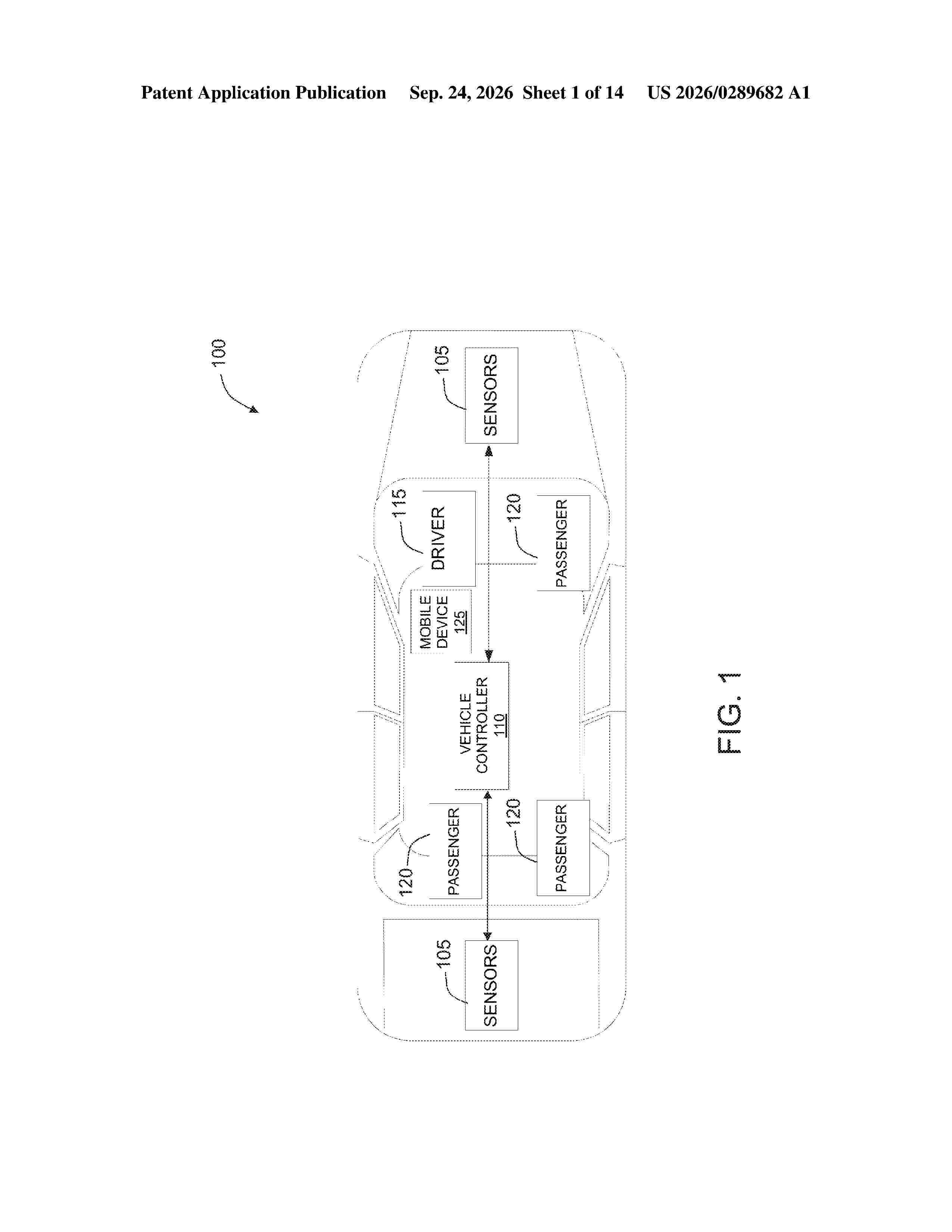
0000 A system for generating and managing usage-based contracts using blockchains configured to (i) store an insurance contract for a currently occurring or upcoming trip, where the insurance contract is to insure the driver, passenger, and/or vehicle during the trip, where the insurance contract includes terms, conditions, or other clauses (e.g., mileage limitations, limitations on autonomous vehicle operation, etc.) and is in a blockchain structure, and where several nodes store copies of the insurance contract in the blockchain structure; (ii) receive, from the driver and/or (autonomous) vehicle, a requested modification of one or more terms, conditions, or other clauses of the insurance contract, (iii) transmit the requested modification to an insurance auction network, (iv) receive a response to the request from the insurance auction network; and (v) store the response in a new block in the insurance contract (e.g., a smart contract) to facilitate providing trip insurance in a transparent manner.
Resumen de: US20260289907A1
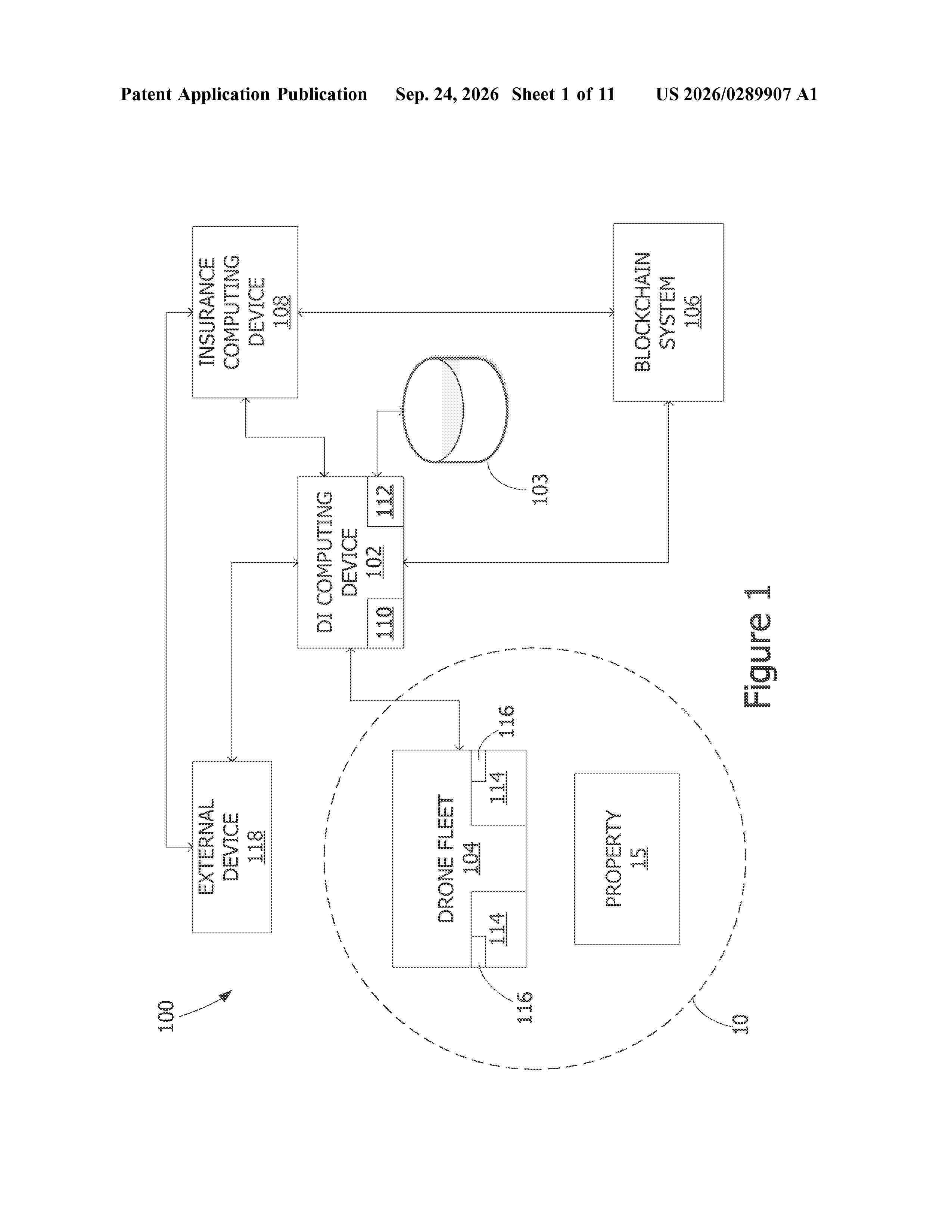
A damage identification (DI) system for identifying property damage may include a drone fleet including several autonomous or semi-autonomous drones communicatively coupled together and a DI computing device. Each drone may collect drone-collected damage data, including image data. The DI computing may assign a geographical region to the drone fleet. The drone fleet may automatically navigate to, and then within, the geographical region to detect potential damage to properties. The DI computing device may further receive drone-collected damage data associated with a property within the geographical region from the drone fleet when the drone fleet determines the property is actually or potentially damaged, generate aggregated damage data associated with the property based at least partially upon the drone-collected damage data, and/or store the aggregated damage data in a blockchain structure associated with the property for damage assessment of the property.
Resumen de: US20260289554A1
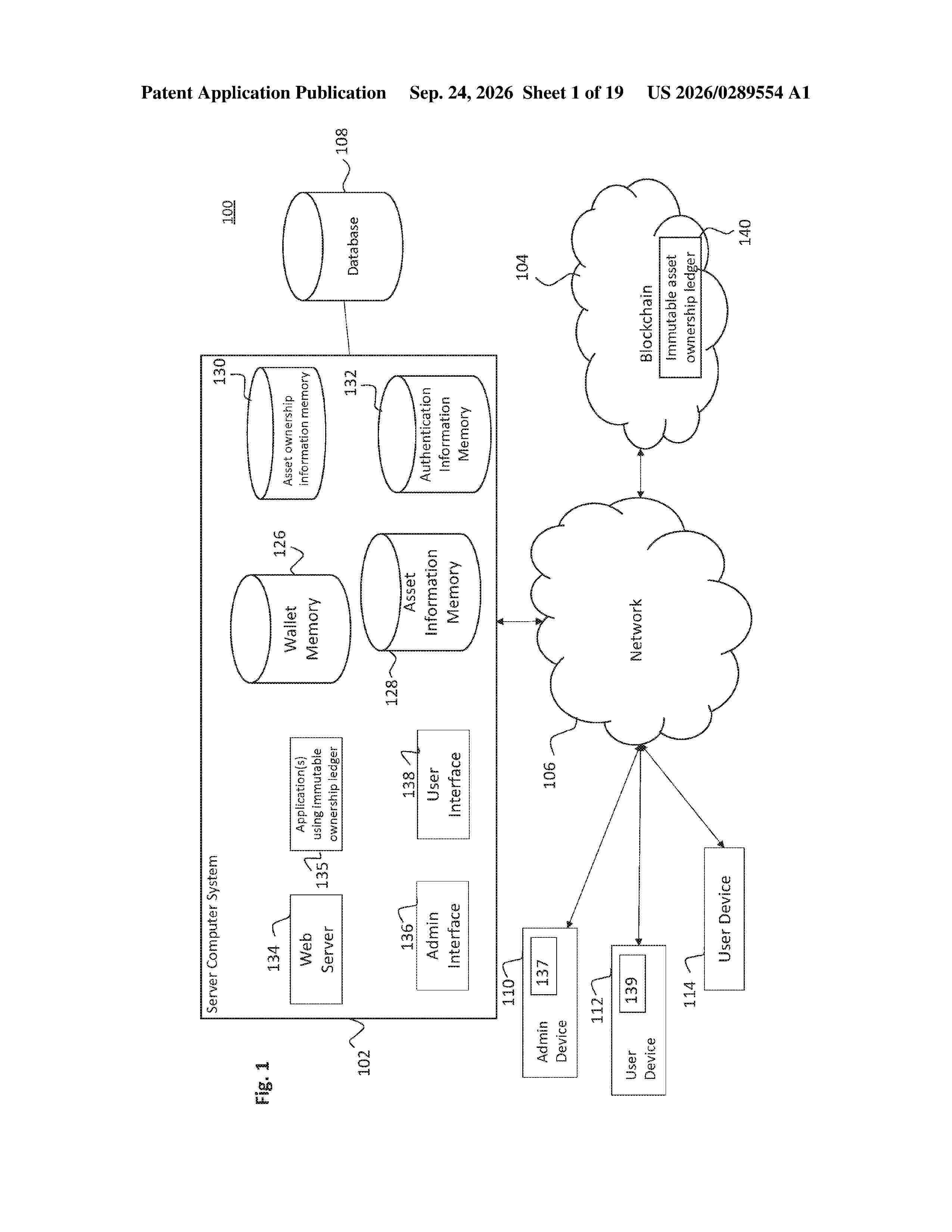
Systems and methods are provided for recording ownership information in a distributed ledger (such as a blockchain), and for performing application processing utilizing the distributed ledger. An example server computer system is configured to: record on a blockchain ownership information of an asset; to configure, for each owner of the asset, a digital wallet associated with a private cryptographic key and at least one blockchain address; using a blockchain address from a digital wallet to access ownership information in the blockchain; perform application processing using the accessed ownership information; and record in the blockchain, updated ownership information or other information associated with the ownership information in accordance with the performed application processing.
Resumen de: US20260291720A1
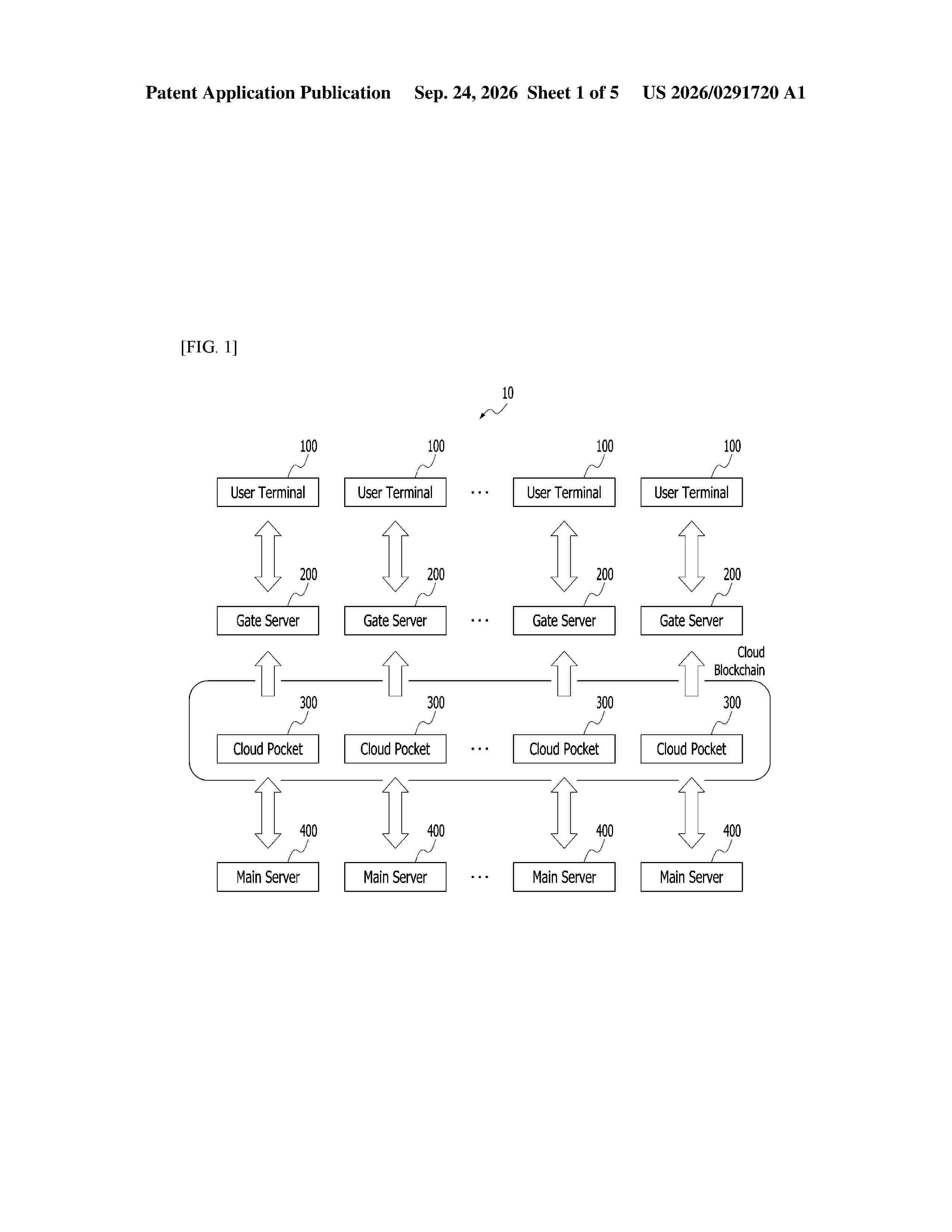
The present disclosure discloses a cloud blockchain system and a method for controlling the same. A user terminal encrypts original data using an authentication key to generate an encrypted block, and registers request information including the encrypted block and a timestamp on a gate server. A cloud pocket accesses the gate server to verify the request information, restores the original data by decrypting the encrypted block, and stores the restored data as a new block in a blockchain or modifies existing data. By configuring the blockchain in a network-connected cloud pocket rather than on a local device, no information is stored on the personal device, and only an encrypted block protocol exists between the user and the cloud pocket. A plurality of cloud pockets are interconnected via a P2P network to enable currency functions through real-time processing.
Resumen de: US20260289560A1
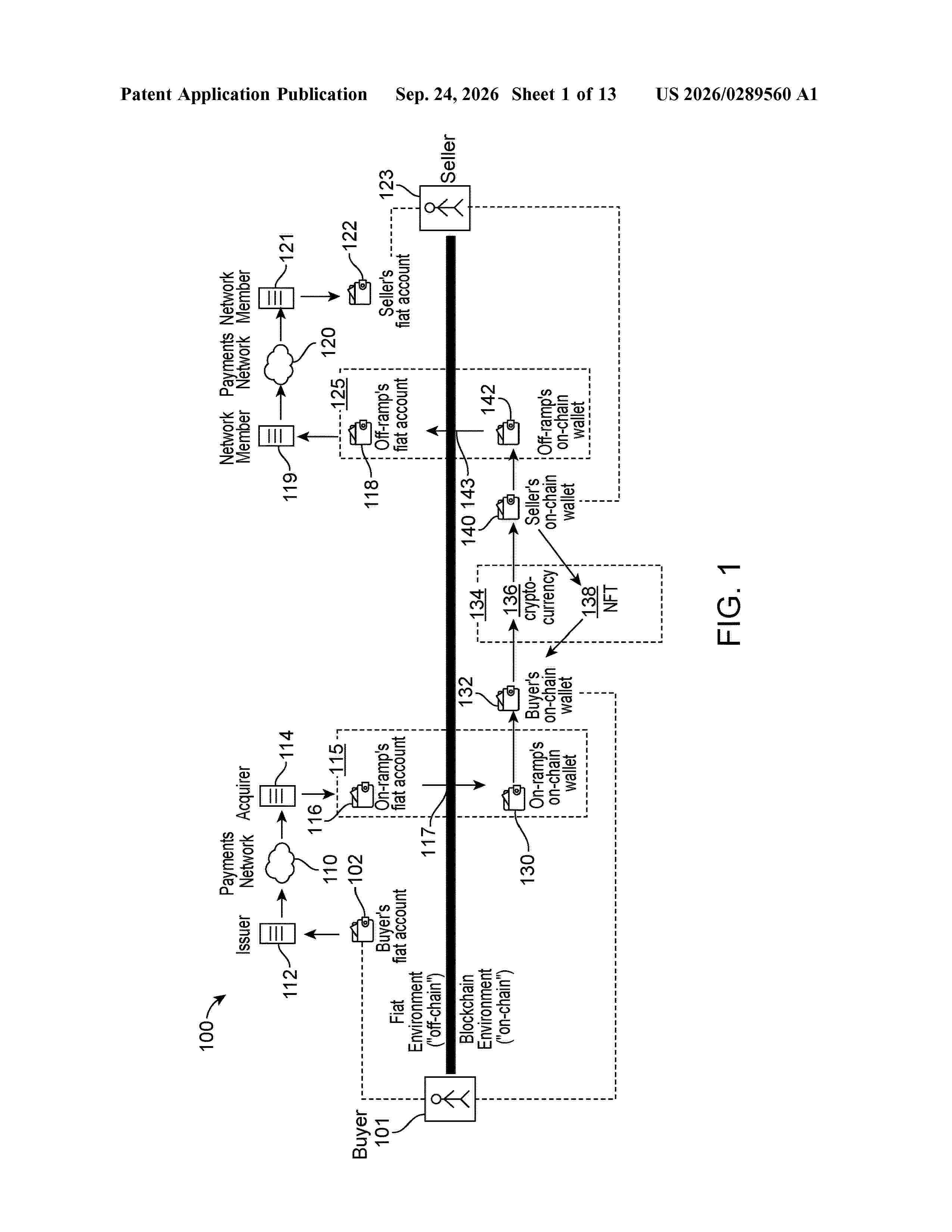
0000 A central service method for transaction integrity for an on-chain order fulfilment with an off-chain payment includes receiving, by a receiving device, at least one dispute-related structured data set associated with the off-chain payment, wherein the dispute-related structured data set includes at least one data element; processing the transaction message with one or more processing devices; storing, in at least one storage environment, one or more of the extracted dispute data element, the dispute extracted metadata element, and the generated dispute metadata element relating to the received dispute-related structured data set, wherein the stored data element indicates a change from a first state to a second state; querying the data storage environment for a present state via code on a blockchain, wherein the code on the blockchain is further configured to automatically execute a method surviving execution when the queried present state matches a predetermined trigger condition.
Resumen de: US20260284538A1
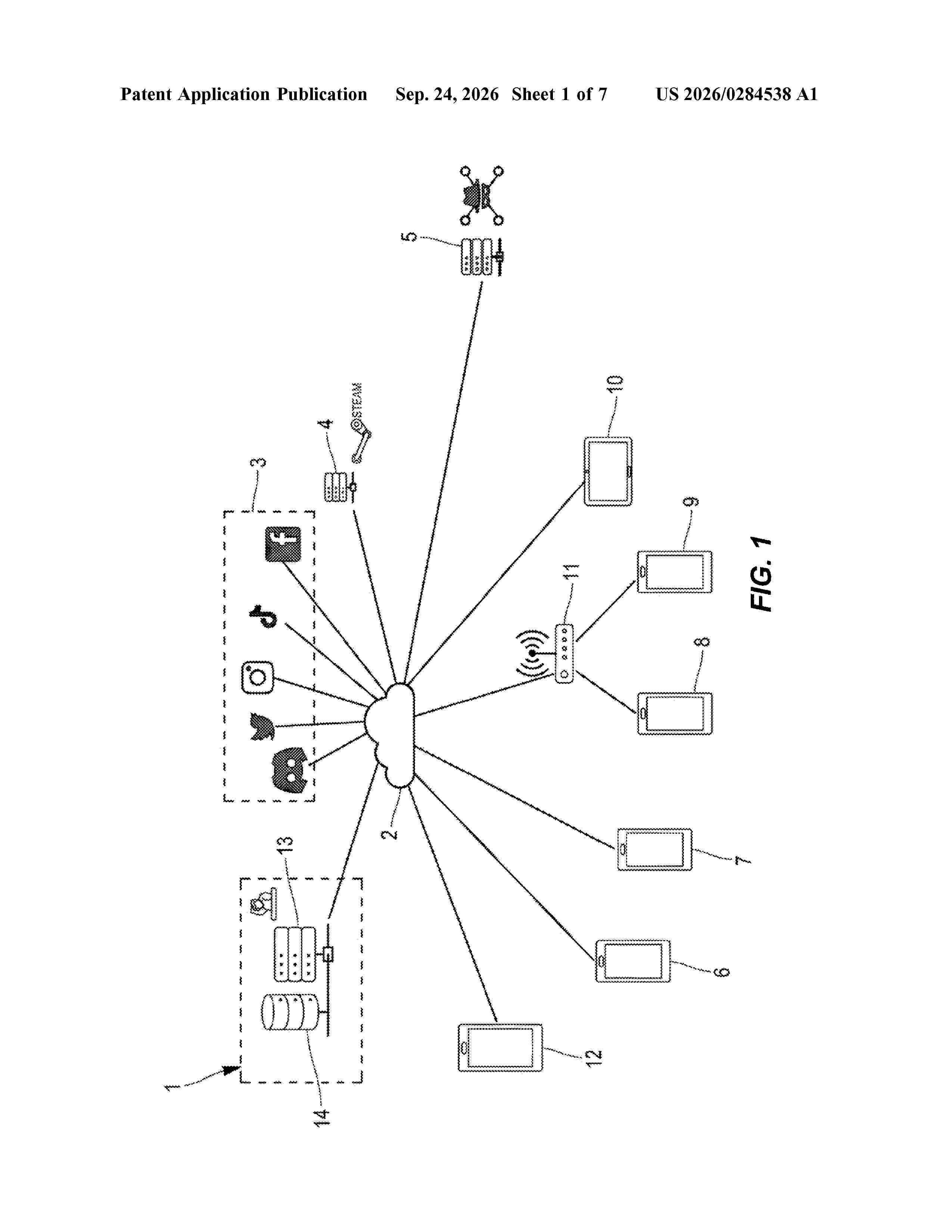
A method for protecting a user of one or more social networks or video games, using a connected device, against risks of cyberbullying, includes carrying out semantic and contextual analysis on accessed or received digital content, employing artificial-intelligence techniques implementing a plurality of brains each dedicated to a particular cyberbullying theme and operating simultaneously, and carrying out processing of the results of the semantic and contextual analysis in order to detect a cyberbullying situation or a toxicity of all or part of the content. If a cyberbullying situation or a toxicity of digital content is detected, the protection method writes, to a blockchain on the Web3, a set of data describing this cyberbullying, and masks the display of the toxic digital content on the screen of the connected device.
Nº publicación: US20260289557A1 24/09/2026
Solicitante:
PAYPAL INC [US]
PayPal, Inc.
Resumen de: US20260289557A1
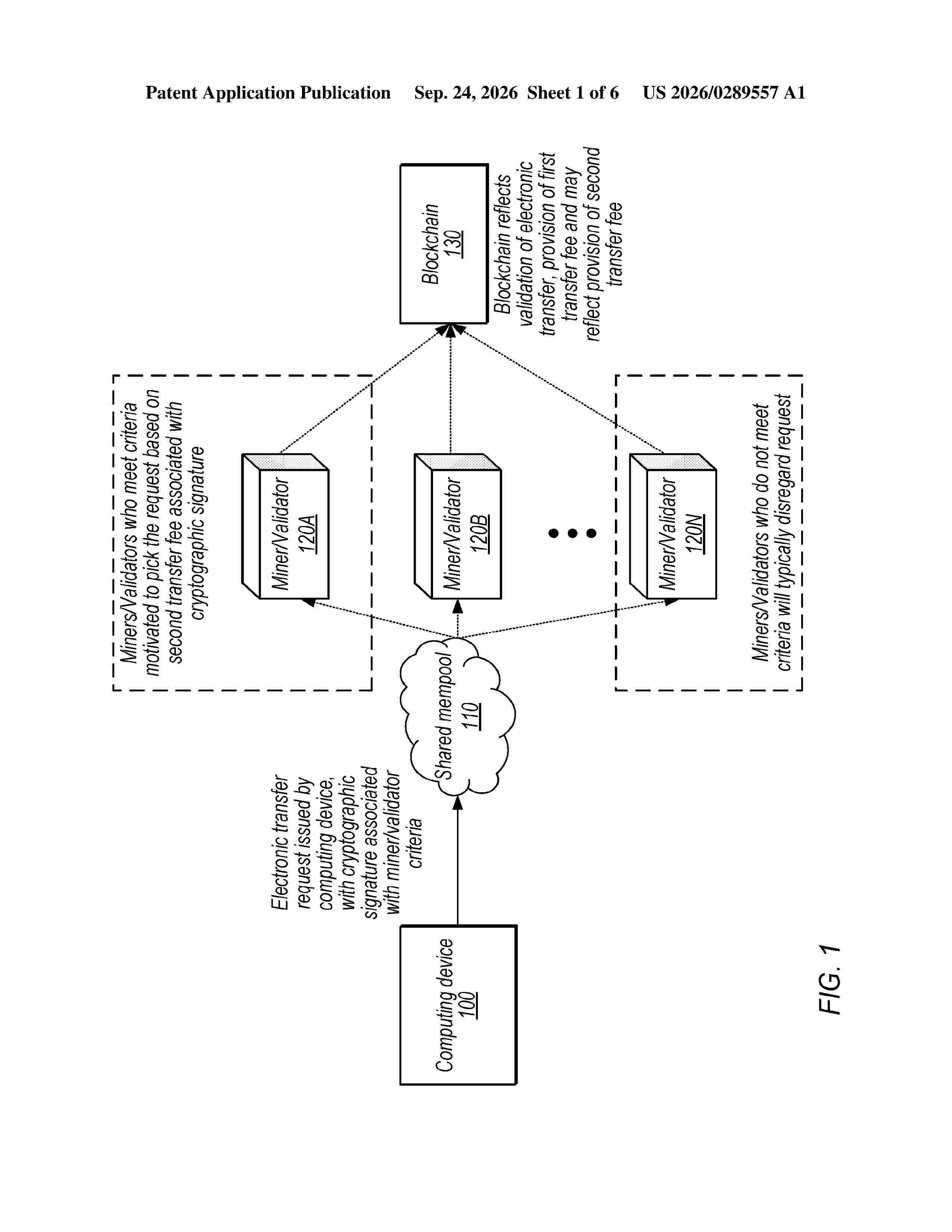
0000 Techniques are disclosed relating to selection of miners/validators in a decentralized cryptographic network. In some embodiments, a request to add a transaction to a blockchain includes a cryptographic signature associated with provision of a reward (e.g., in addition to a transfer fee), to miners/validators who meet a set of one or more criteria. Disclosed techniques may advantageously allow steering of blockchain requests to a desired subset of miners/validators.
 BOPI
BOPI
 Sede Electrónica