Si deseas distinguir tus productos, servicios o ambos de los de otra empresa, es posible que necesites una marca o nombre comercial. Descubre qué son, en qué consiste su procedimiento de registro y qué implica.

Información sobre los plazos de presentación de solicitudes de transformación de marcas de la Unión Europea en marca nacional española. Más información


Si tienes un nuevo dispositivo, producto o procedimiento que resuelva un problema técnico o tenga una ventaja práctica, existen distintas formas de protegerlo en España y en otros países. Descubre cómo hacerlo.

¿Tu innovación reside en la estética, la ornamentación o la apariencia de tu producto? Protégela mediante un diseño industrial. Descubre qué derechos confiere el registro y cómo realizar la tramitación.

Las indicaciones geográficas protegen el nombre de un producto originario de una zona geográfica, a la cual le debe una determinada calidad, reputación u otra característica. Descubre qué son, en qué consiste su procedimiento de registro y qué beneficios conceden.

Las patentes publicadas en todo el mundo son una valiosa fuente de información científica, técnica y comercial.

Si eres emprendedor/a o una empresa y quieres potenciar y mejorar la rentabilidad de tu negocio protegiendo de forma adecuada los activos intangibles de tu organización, en este espacio encontrarás lo necesario.


 1890
resultados
1890
resultados
 Última actualización
30/06/2026 [12:07:00]
Última actualización
30/06/2026 [12:07:00]


 Resultados 1400 a 1425 de 1890

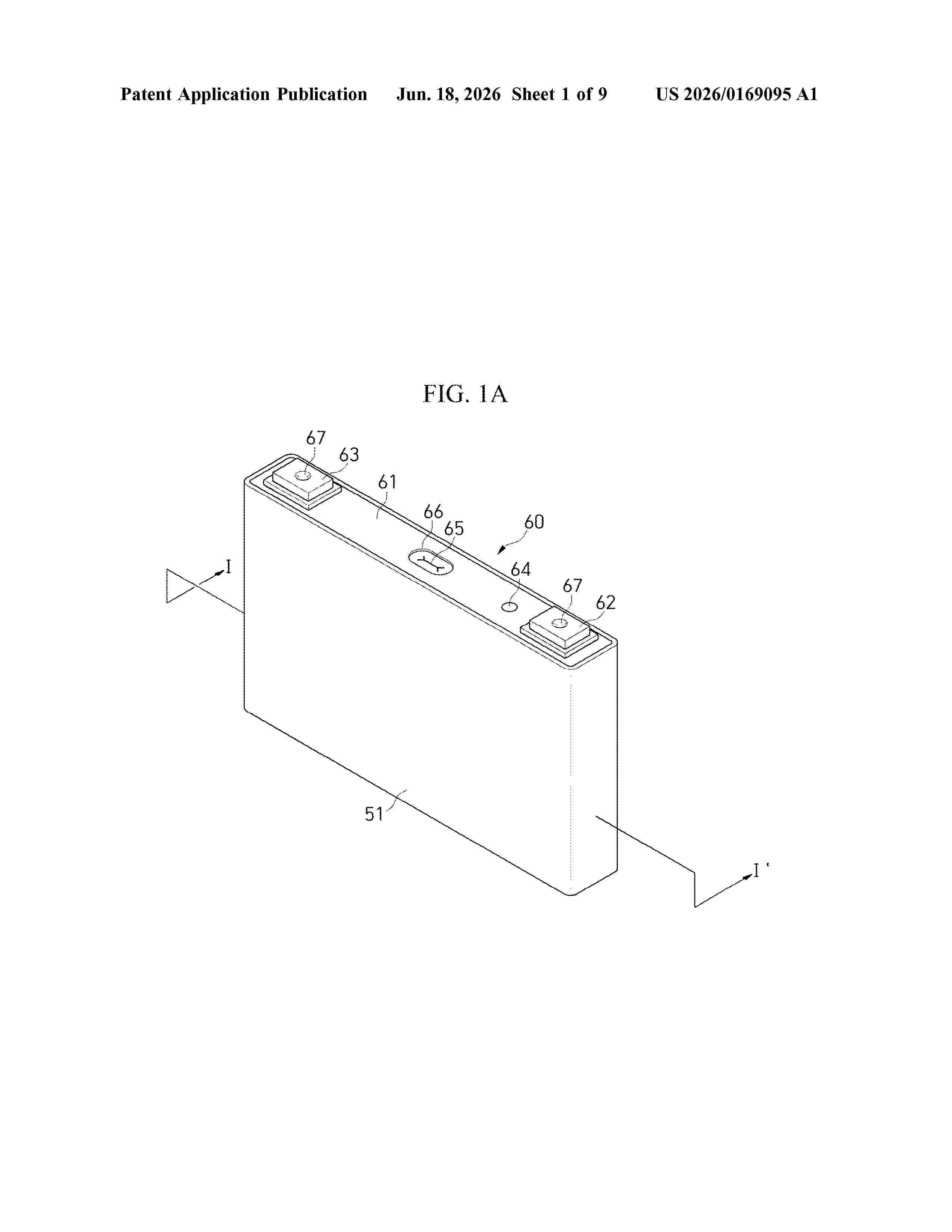
Resumen de: US20260169095A1
Disclosed herein are a method and system for detecting inter-cell short circuits in secondary batteries. The system includes a voltage measurement unit including a probe that comes into contact with a cell of a secondary battery to measure an inter-cell voltage, a short-circuit control unit configured to control an inter-cell short circuit, and an inter-cell short-circuit detection unit configured to measure a first voltage between a first cell and a second cell in the secondary battery, to create a short circuit between the first and second cells, to measure a second voltage between the first and second cells, to eliminate the short circuit between the first and second cells, to measure a third voltage between the first and second cells, and to determine whether a short circuit occurs between the first and second cells by using at least one of the first to third voltages.

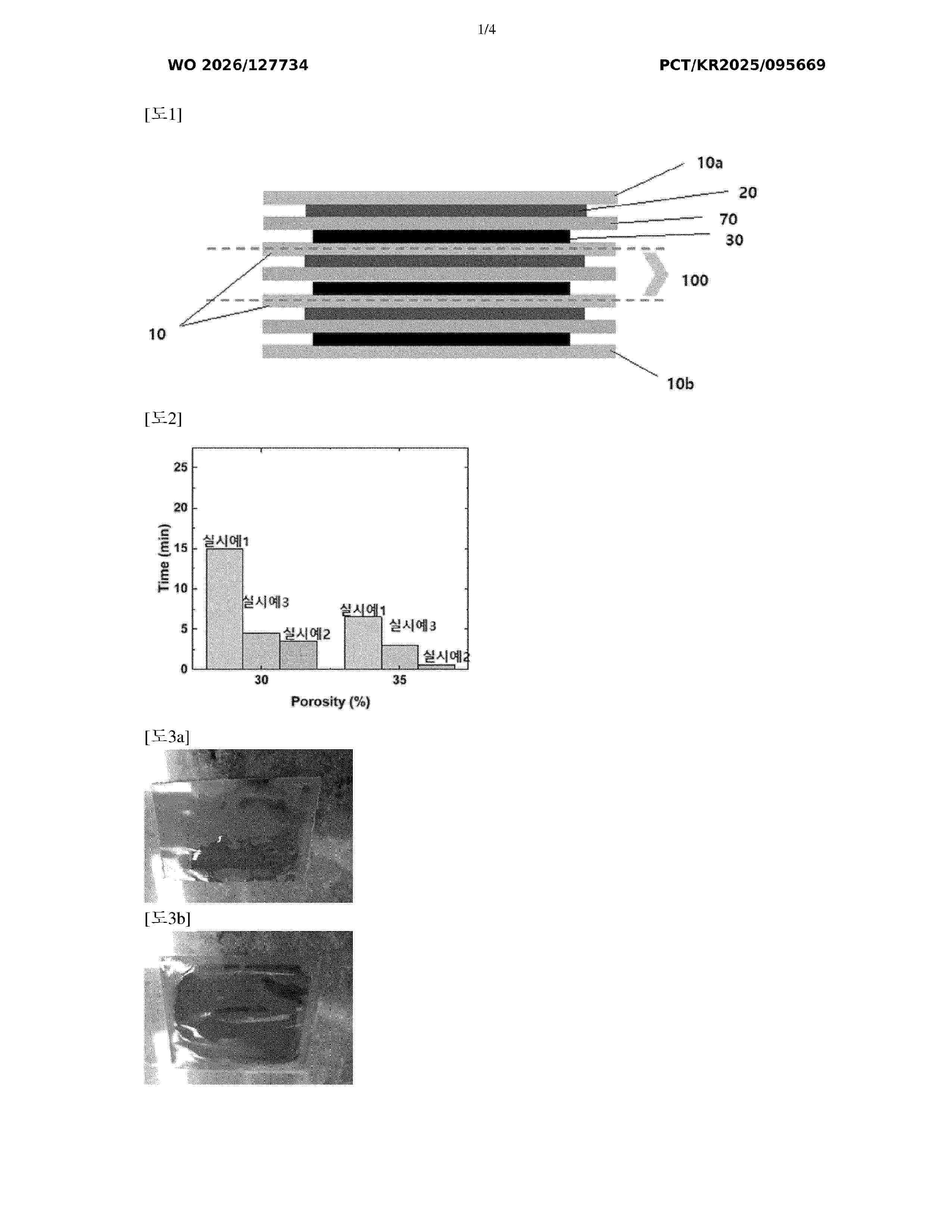
Resumen de: WO2026127734A1
The present invention relates to: a bipolar secondary battery in which volatilization and leakage of an electrolyte are suppressed, and which exhibits excellent conductivity, capacity, and cycle characteristics; and a method for manufacturing same. In the bipolar secondary battery, a plurality of bipolar electrodes each having a negative electrode active material layer and a positive electrode active material layer respectively formed on both surfaces of a metal current collector are stacked, the positive electrode active material layers and the negative electrode active material layers of adjacent bipolar electrodes face each other with a gel electrolyte layer disposed therebetween, and the gel electrolyte layer contains: a matrix including a cross-linked polymer of a polyfunctional (meth)acrylate-based compound; and a non-volatile electrolyte of a predetermined composition impregnated on the matrix.
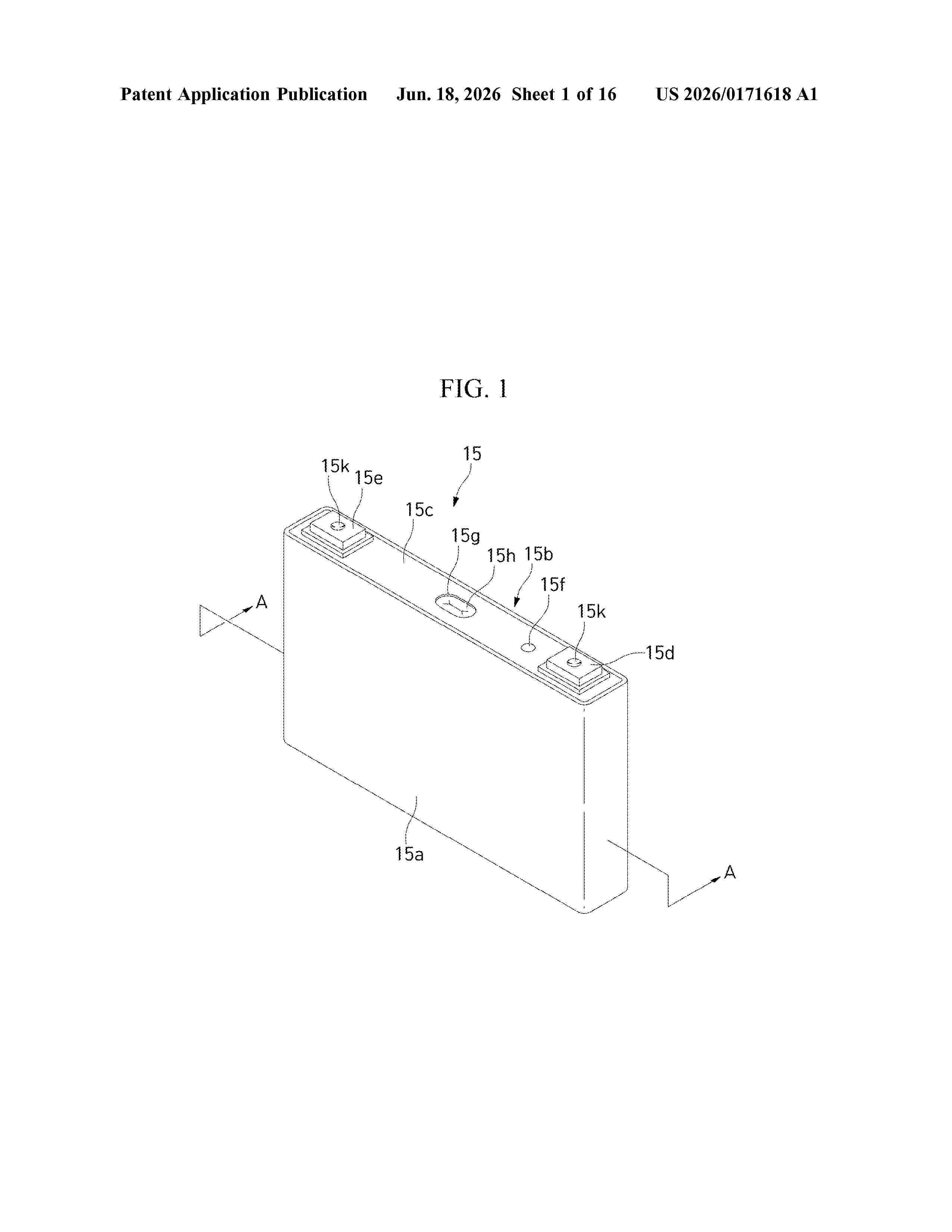
Resumen de: US20260171618A1
0000 The present disclosure provides a secondary battery module having a cell connection unit that maintains the connection between bus bars and circuit boards and battery cells, and thus a process of manufacturing the secondary battery module is simple, and problems such as electrical short and the like due to welding failure of bus bars do not occur, and an apparatus for manufacturing the same. The secondary battery module includes a module main body including a cell housing, which opens upwardly and provides an accommodation space, and a plurality of battery cells arranged in the cell housing, and a cell connection unit including a unit base coupled to an upper portion of the cell housing, a plurality of bus bars that are fitted to the unit base and connected to the battery cell, and circuit boards connected to the bus bars.
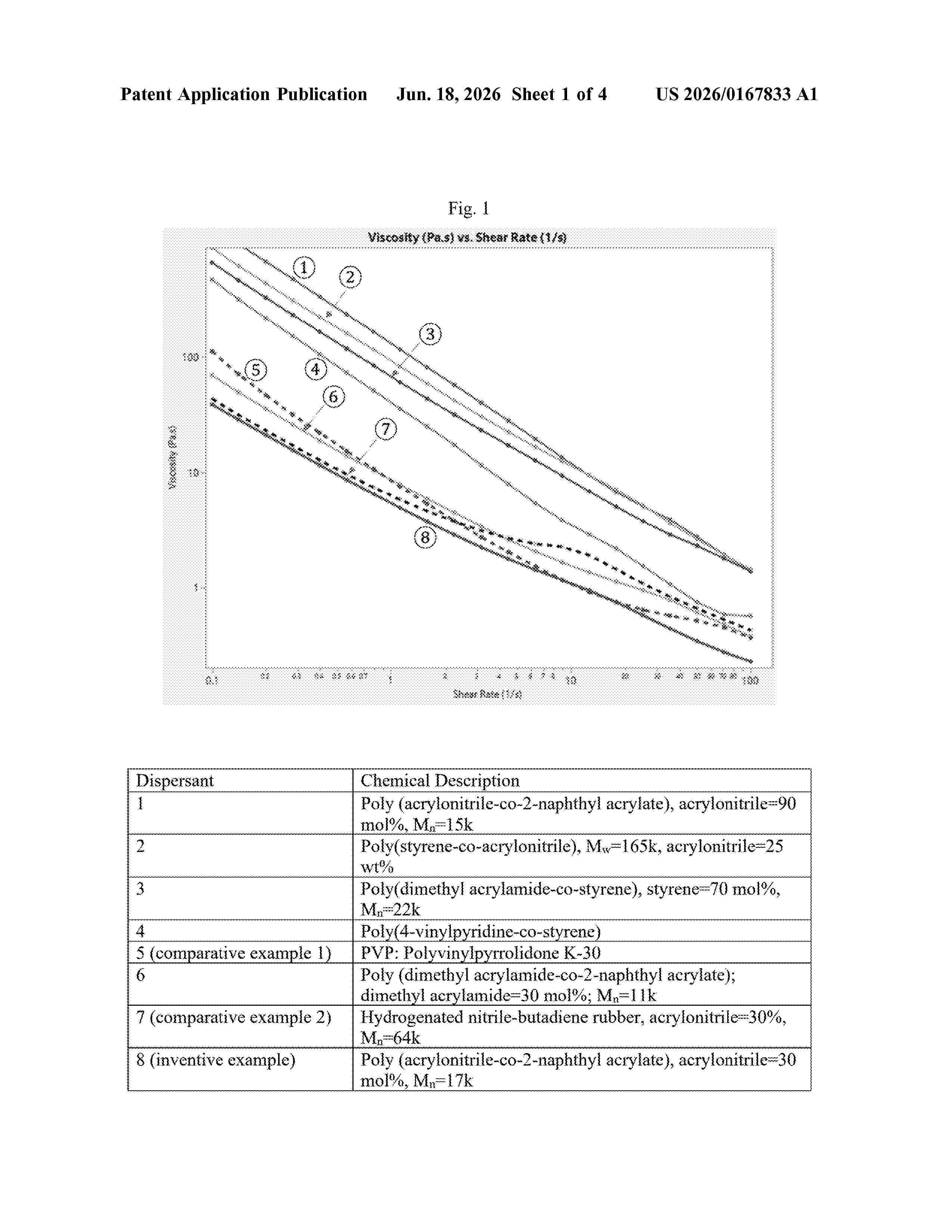
Resumen de: US20260167833A1
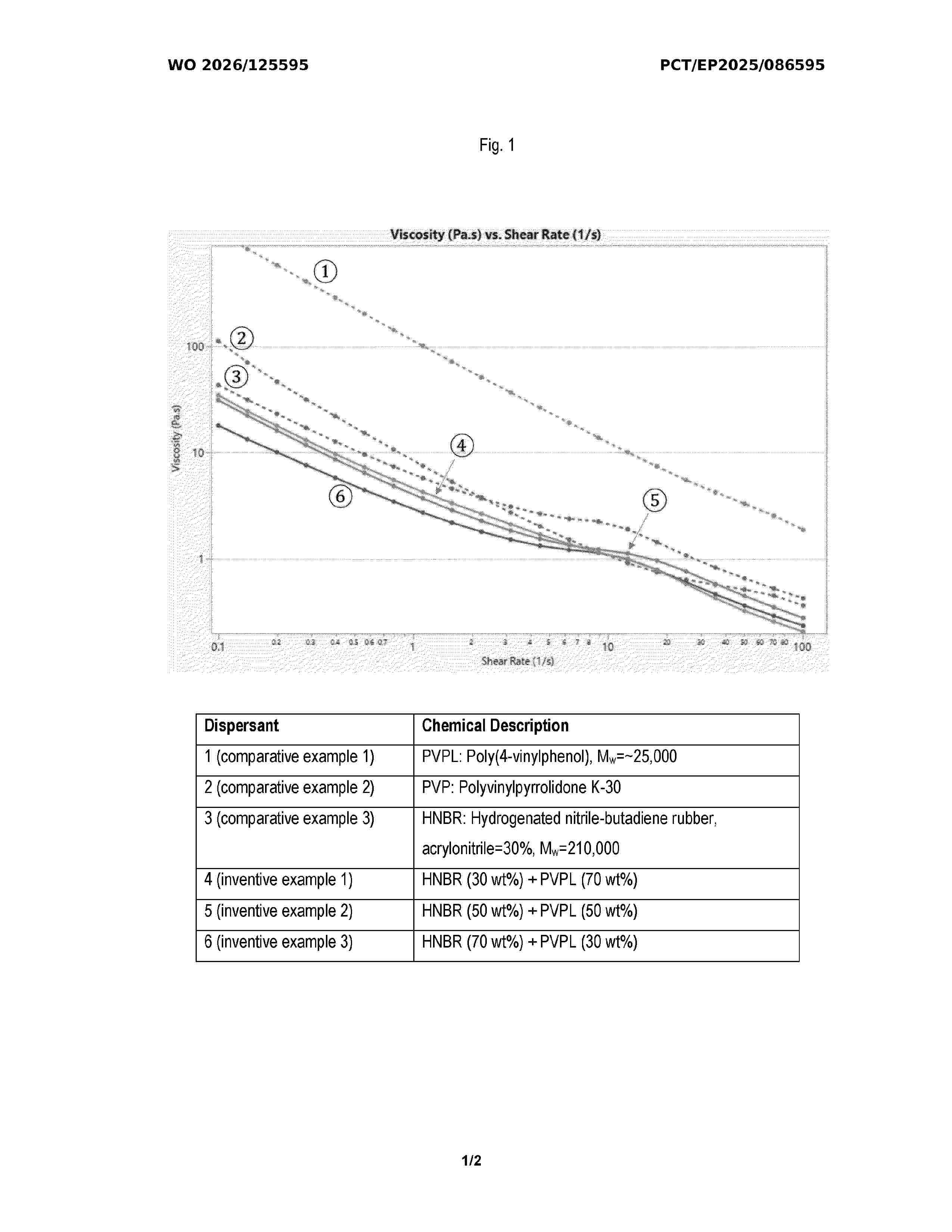
Copolymers having structural units of the residue of a substituted or unsubstituted, unsaturated organic nitrile monomer present in an amount from about 1 wt % to about 55 wt %, based on the total weight of the copolymer; and structural units of the residue of a substituted or unsubstituted, unsaturated, conjugated aromatic monomer selected from a conjugated aromatic ester monomer, a conjugated aromatic ether monomer, a conjugated aromatic amide monomer, a conjugated aromatic alkylene monomer, and combinations thereof, present in an amount from about 45 wt % to about 99 wt %, based on the total weight of the copolymer. Homopolymers and copolymers that are useful as dispersants. Dispersant concentrates, conductive carbon dispersions, electrode slurry compositions, positive electrodes, and electrical storage devices, using the dispersants. The dispersants are used in conductive carbon dispersions and electrode slurry compositions to achieve low viscosity at high solids content.
Resumen de: WO2026125595A1
Polymer blends having an organic nitrile-based copolymer, and a phenol-based polymer or a phenol-based copolymer. The organic nitrile-based copolymer has structural units comprising the residue of a substituted or unsubstituted, unsaturated organic nitrile monomer, and structural units comprising the residue of a substituted or unsubstituted, conjugated diene monomer. The phenol-based polymer has structural units comprising the residue of a substituted or unsubstituted, unsaturated phenolic monomer. The phenol-based copolymer has structural units comprising the residue of a substituted or unsubstituted, unsaturated coupled phenolic resin. The organic nitrile-based copolymer is present in an amount from about 0.5 wt% to about 99.5 wt%, and the phenol-based polymer, or the phenol-based copolymer, is present in an amount from about 0.5 wt% to about 99.5 wt%, based on the total weight of the polymer blend. The polymer blends are effective as synergistic dispersants.
Resumen de: WO2026125216A1
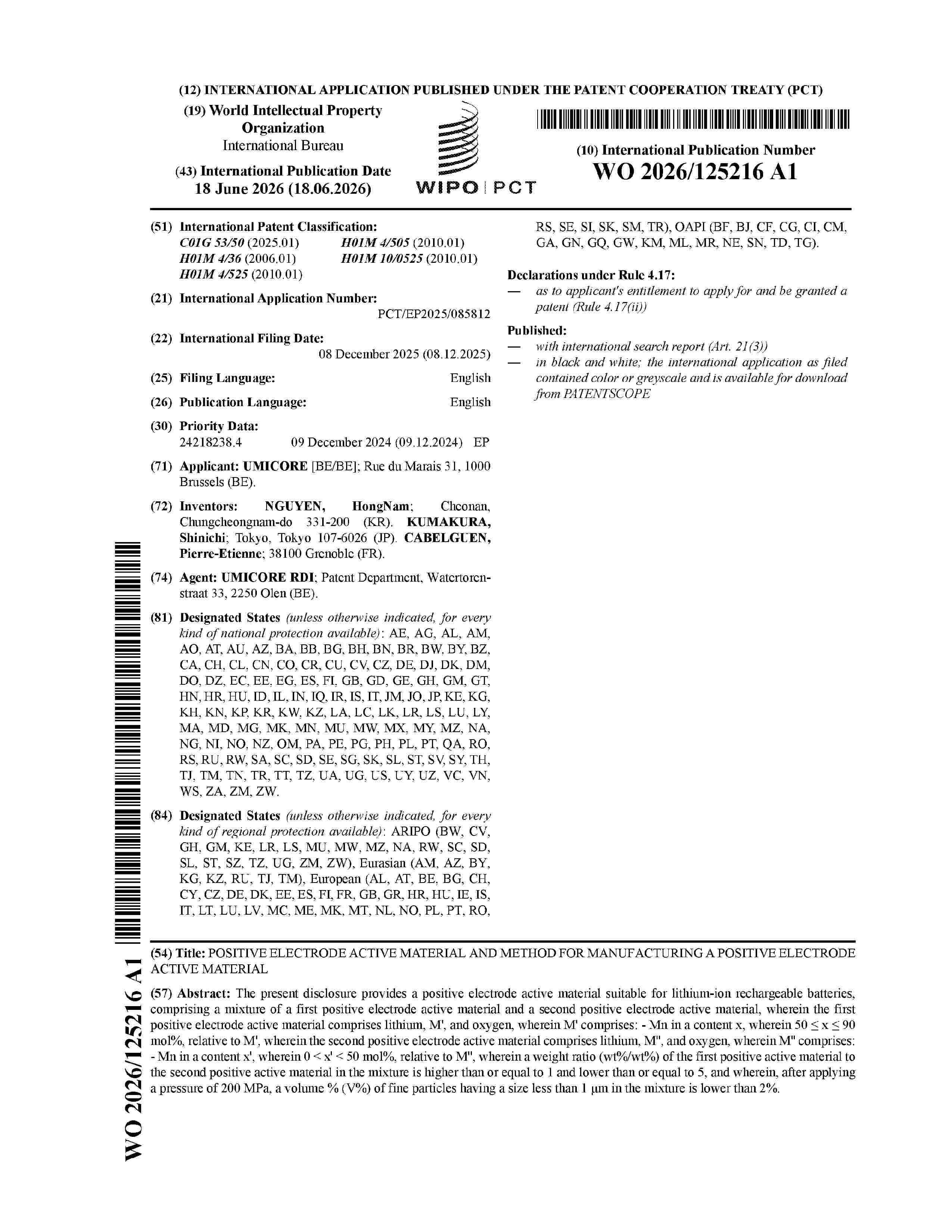
The present disclosure provides a positive electrode active material suitable for lithium-ion rechargeable batteries, comprising a mixture of a first positive electrode active material and a second positive electrode active material, wherein the first positive electrode active material comprises lithium, M', and oxygen, wherein M' comprises: - Mn in a content x, wherein 50 ≤ x ≤ 90 mol%, relative to M', wherein the second positive electrode active material comprises lithium, M'', and oxygen, wherein M'' comprises: - Mn in a content x', wherein 0 < x' < 50 mol%, relative to M'', wherein a weight ratio (wt%/wt%) of the first positive active material to the second positive active material in the mixture is higher than or equal to 1 and lower than or equal to 5, and wherein, after applying a pressure of 200 MPa, a volume % (V%) of fine particles having a size less than 1 μm in the mixture is lower than 2%.
Resumen de: WO2026127495A1
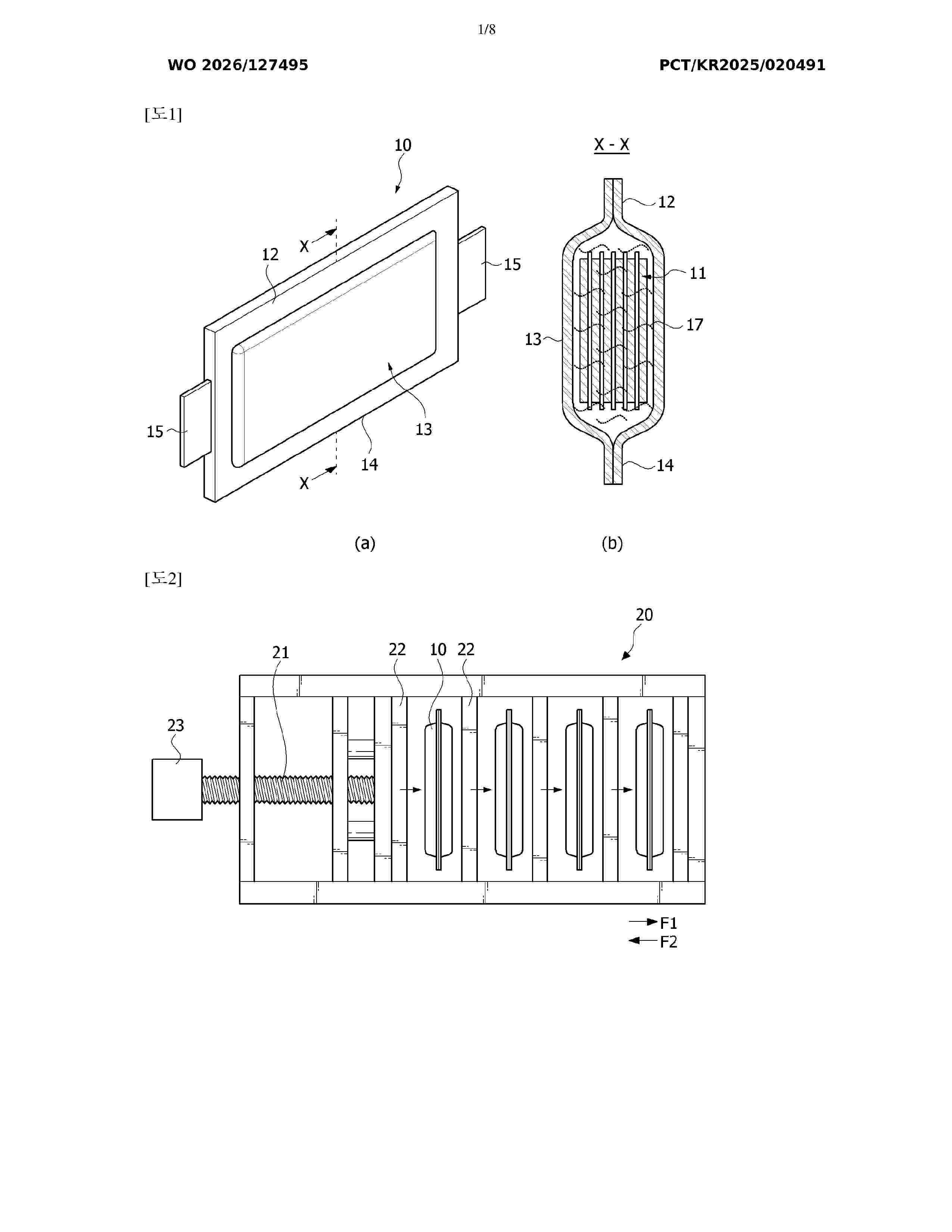
A pressing tray related to an embodiment of the present invention comprises: a main body having a plurality of pressing spaces provided such that battery cells are seated therein; and a plurality of pressing jigs including a pair of partition walls and an airbag, which is mounted between the pair of partition walls and can inflate when injected with air, and provided in the main body such that the pair of partition walls face two battery cells respectively arranged in two adjacent pressing spaces. The pressing jigs are provided to press the facing battery cells as the respective partition walls move when the airbags inflate.
Resumen de: WO2026125987A1
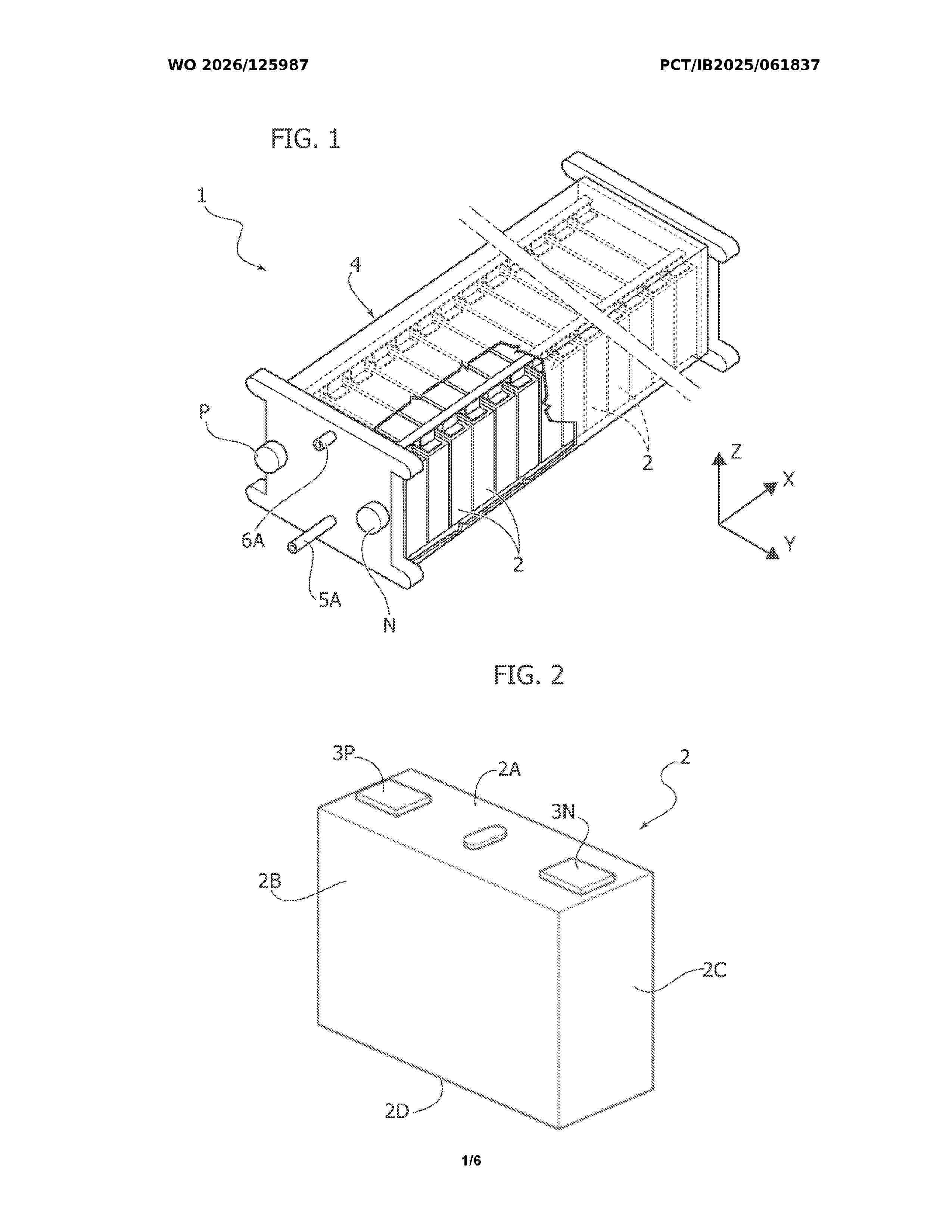
An electric battery unit, for example a battery pack or a single module contained within a battery pack, comprises a housing (4) and a plurality of battery cells (2) within the housing (4), which are configured and arranged to come into direct contact with a flow of a temperature-regulating liquid that passes through the housing (4) for maintaining the battery cells (2) within a determined temperature range. The temperature-regulating liquid flows from an inlet collector chamber (5), which extends below the battery cells (2), through the spaces (7) between the battery cells (2) and up to an outlet collector chamber (6) which extends above the battery cells (2). The inlet collector chamber (5) communicates with the spaces (7) between the battery cells via a plurality of relatively restricted passages (9), which offer the flow of the temperature-regulating liquid sufficient resistance to prevent the temperature-regulating liquid from tending to flow to a greater extent in the spaces that are closer to the inlet and/or the outlet for the temperature-regulating liquid. The restricted passages are apertures (9) formed in a wall (50A) on which the battery cells (2) are supported. This wall (50A) has further apertures for the communication of the inlet collector chamber (5) with tubular columns (51) that rise vertically from the wall (50A), at least in some of the spaces (7) between the cells. The tubular columns (51) each have at least one outlet aperture (52), which can function a
Resumen de: US20260171524A1
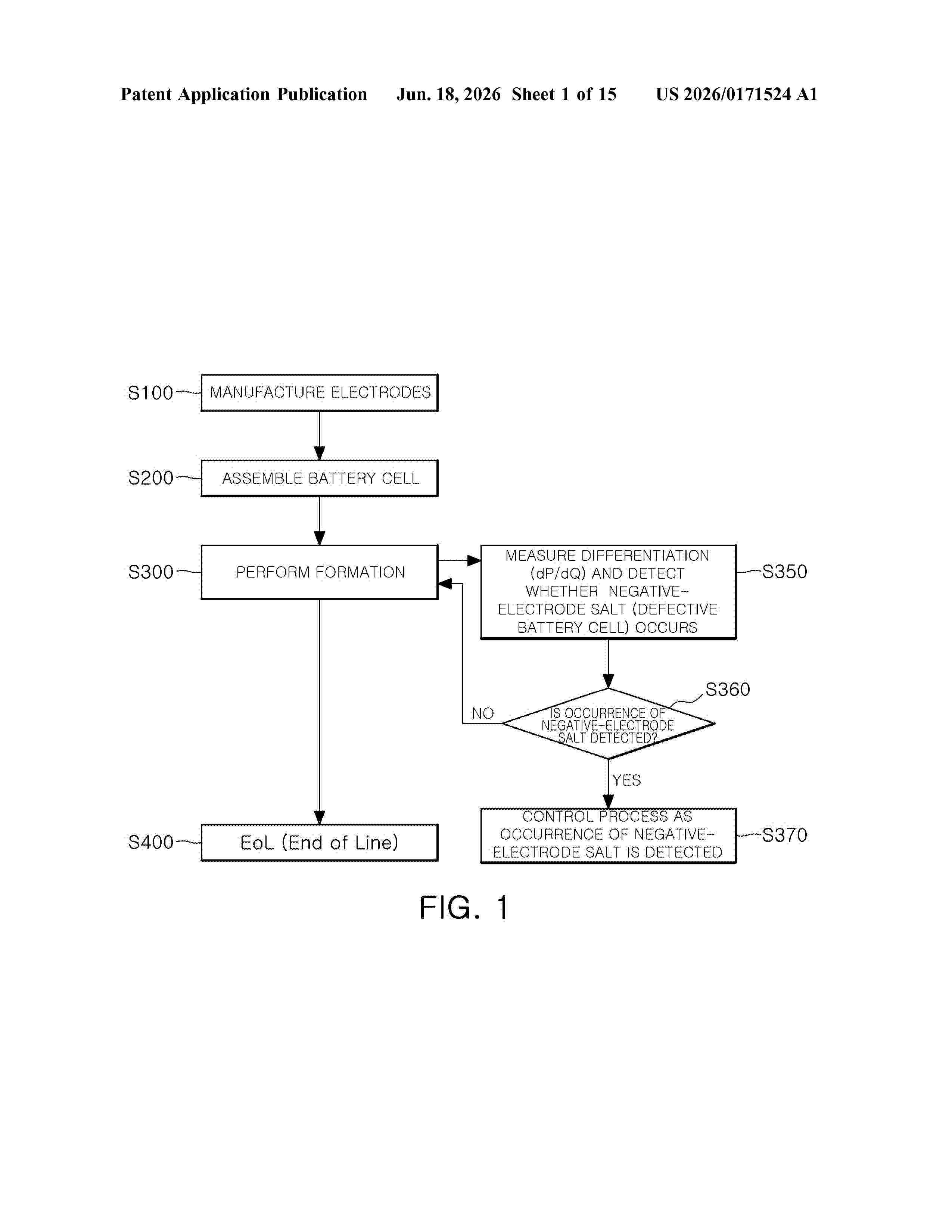
0000 A method for detecting a defect in a battery in a formation process is disclosed. In some implementations, the method includes: charging or discharging at least one battery cell in the formation process; measuring a pressure in the at least one battery cell or a differentiation (dP/dQ) of the pressure with respect to charge when the at least one battery cell is charged or discharged; and generating data on whether the at least one battery cell has a defect based on the differentiation (dP/dQ).
Resumen de: US20260169085A1
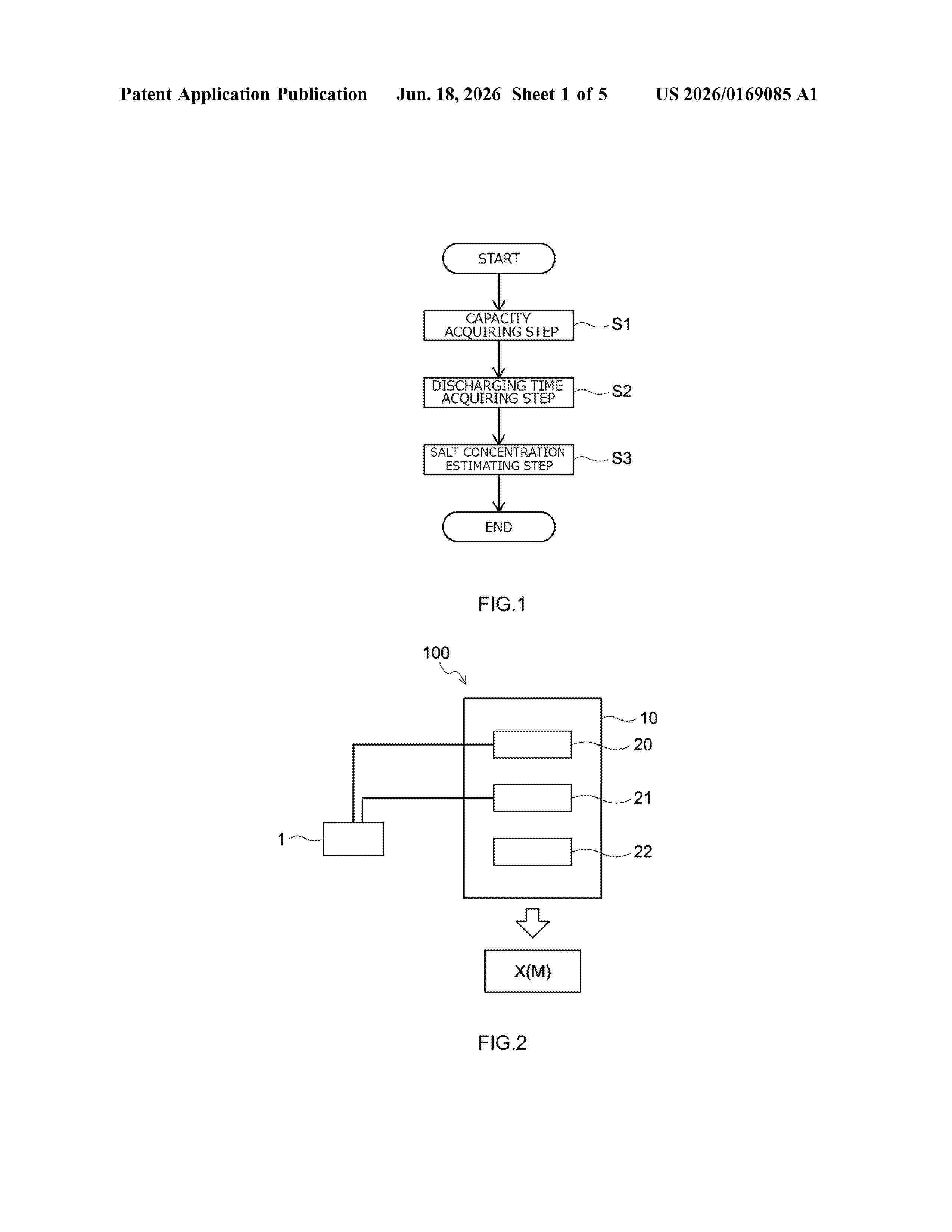
A method of estimating a salt concentration in an electrolyte solution of a secondary battery includes: a capacity acquiring step S1 of acquiring a capacity of a secondary battery that is to be an estimation object; a discharging time acquiring step S2 of acquiring a discharging time when the secondary battery is discharged under a predetermined condition; and a salt concentration estimating step S3 of estimating the salt concentration in the electrolyte solution of the secondary battery based on the acquired capacity of the secondary battery, the acquired discharging time, and a table recording a relationship between the capacity, the discharging time, and the salt concentration in the electrolyte solution of the secondary battery, related to the secondary battery that is to be the estimation object.
Resumen de: US20260171552A1
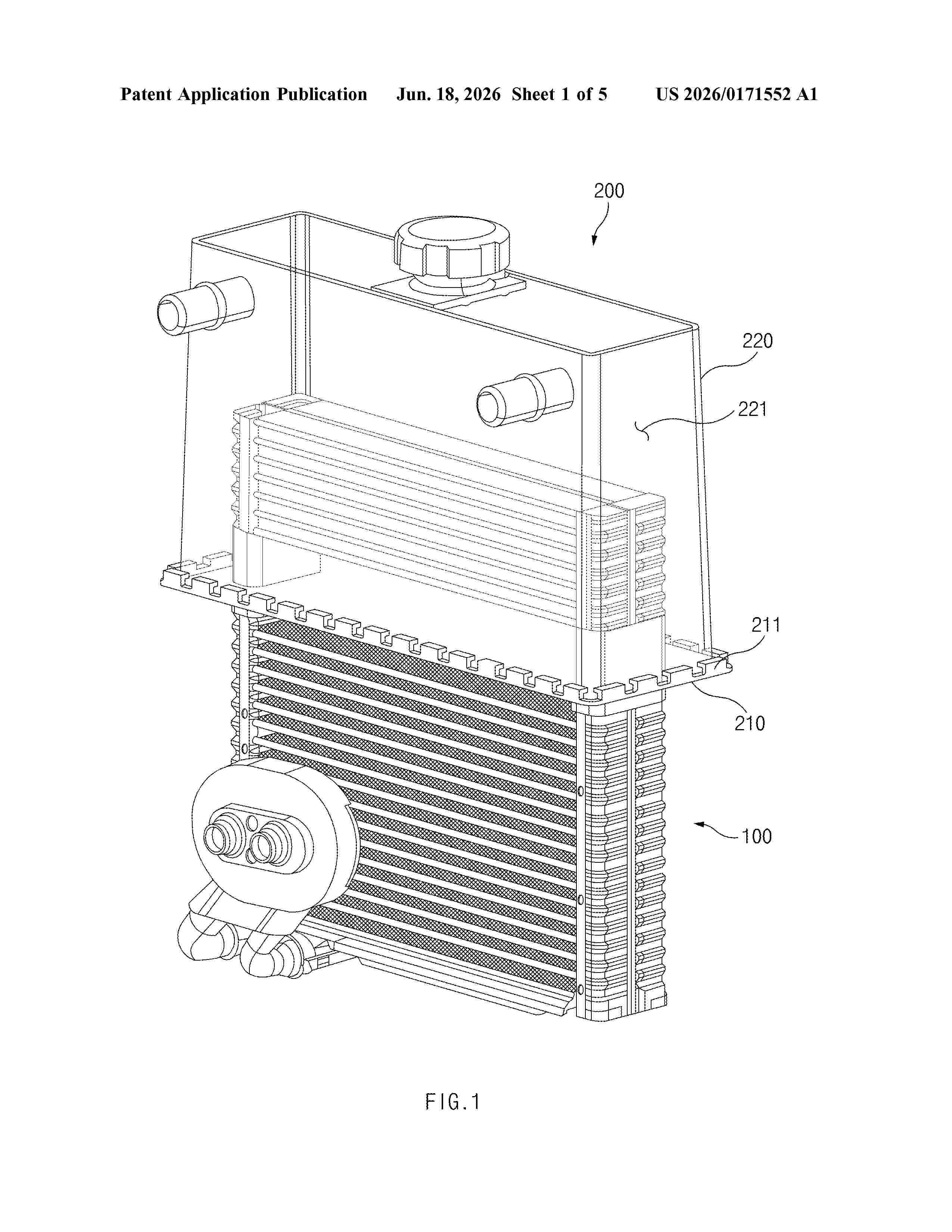
A battery cooling circuit is provided. The battery cooling circuit is configured to cool a battery provided in a vehicle by using an air conditioner system in the vehicle. The battery cooling circuit includes an air-cooled part connected in series to the air conditioner system and configured to cool a refrigerant by allowing the refrigerant to exchange heat with a first cooling fluid in the air conditioner system while flowing. The battery cooling circuit further includes a water-cooled part connected in series to a circuit configured to cool the battery. The water-cooled part is installed to communicate with the air-cooled part to allow the refrigerant to flow therein, configured to be filled with a second cooling fluid in the circuit configured to cool the battery, and configured to cool the second cooling fluid by allowing the second cooling fluid to exchange heat with the refrigerant.
Resumen de: WO2026126978A1
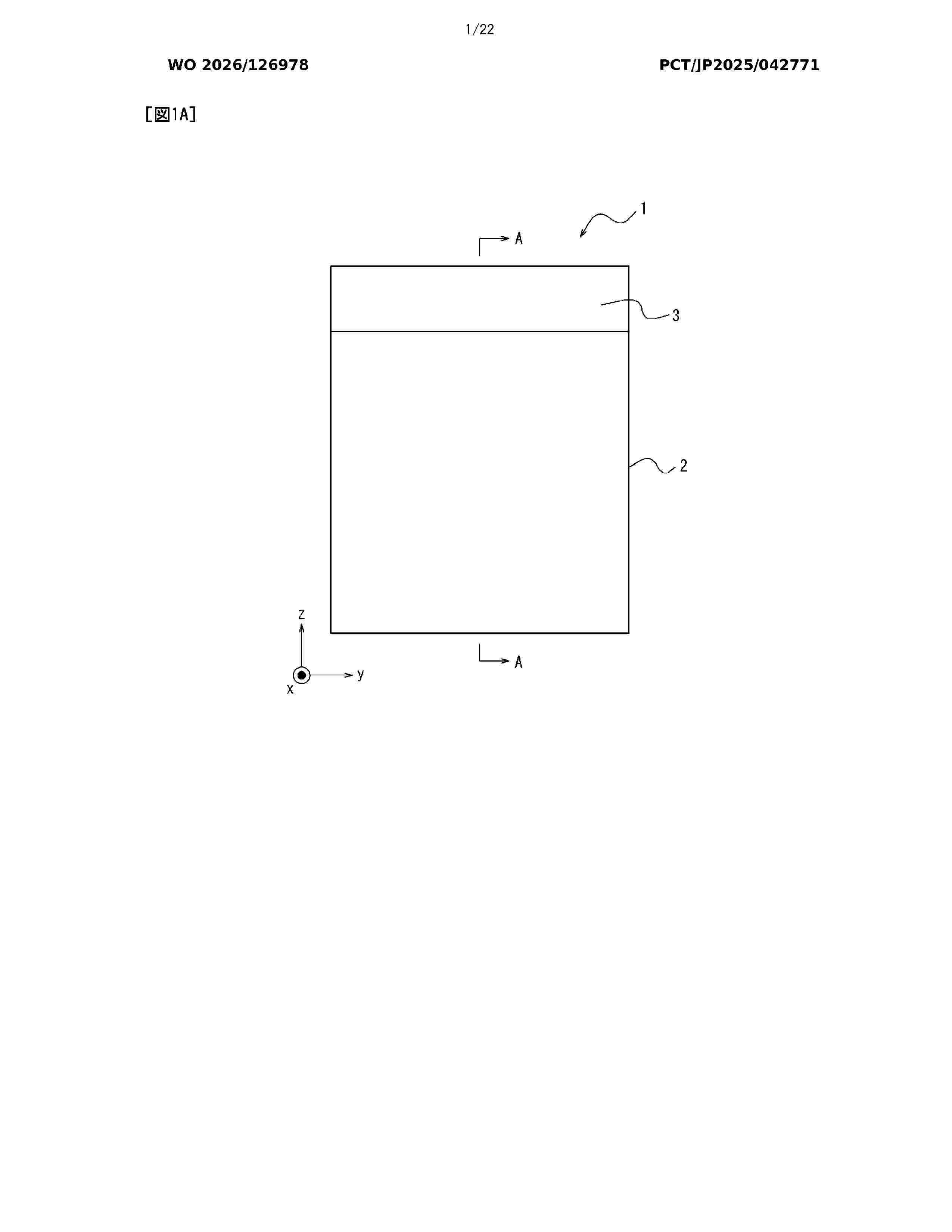
The present disclosure addresses the problem of providing a heat absorber that can absorb the expansion of a battery cell by being sufficiently deformed in accordance with the expansion of the battery cell and has a restoring force for restoring the heat absorber to a shape before deformation. The solution is a heat absorber (1) comprising: a content (4) containing an aqueous solvent; a bag body (2) having a filling section (5) filled with the content (4) and an accommodation section (6) capable of accommodating the content (4) deformed by the application of an external force to the filling section (5); and a restoration member (3) that returns the content (4) accommodated in the accommodation section (6) to the filling section (5), wherein a deformed state in which the content (4) is accommodated in the accommodation section (6) due to the deformation of the filling section (5) caused by the external force, and a normal state in which the content (4) accommodated in the accommodation section (6) is returned into the filling section (5) by the restoration member (3) are reversible.
Resumen de: US20260171621A1
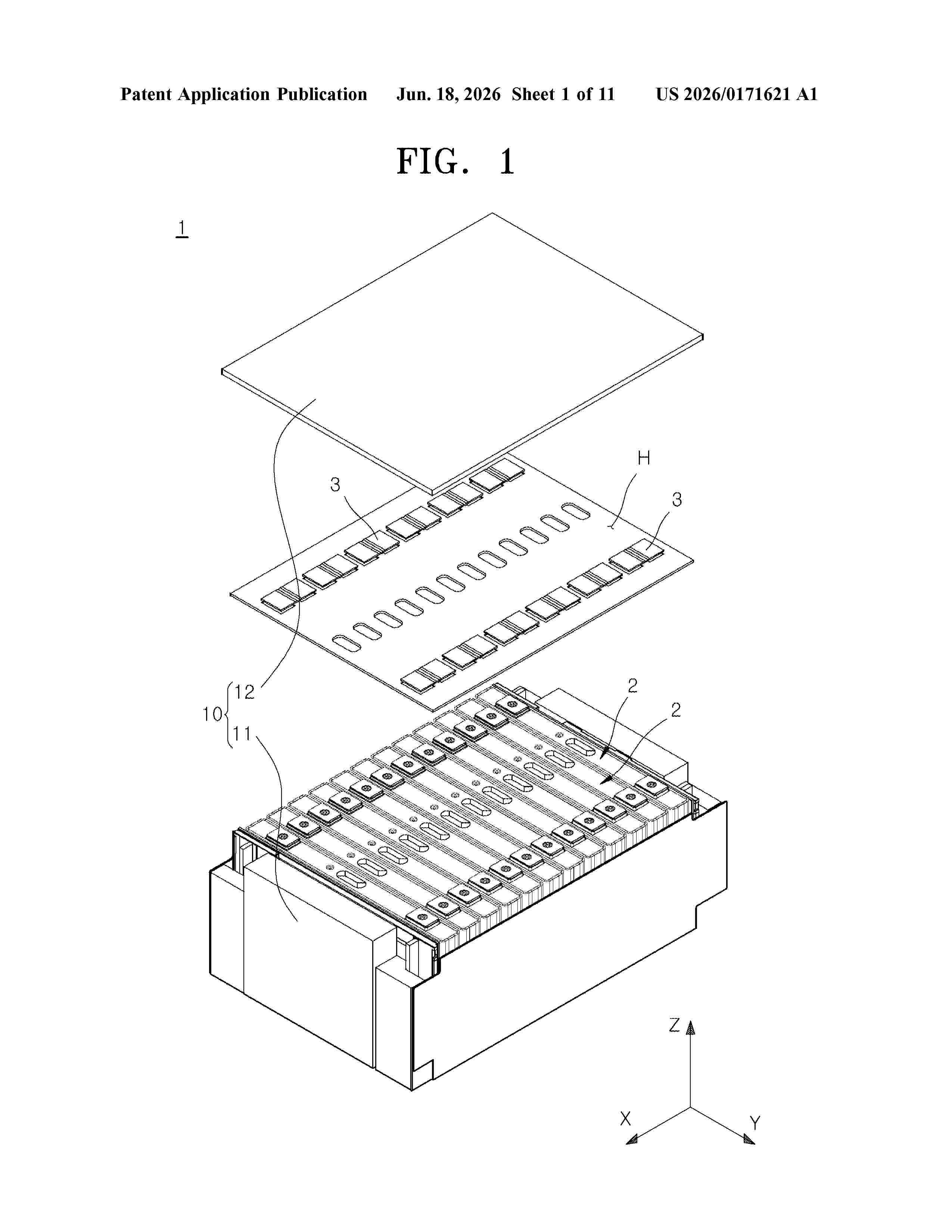
The present disclosure relates to a secondary battery and a battery pack including the secondary battery. The secondary battery includes: a case having one open side, the case including a plurality of walls defining an internal space; an electrode assembly accommodated in the internal space; a cap plate configured to close the one open side of the case; a first terminal disposed on the cap plate; a first plate disposed between one of the plurality of walls and the electrode assembly in the internal space, the first plate including a first current collector connecting portion; and a first current collector including a first terminal connecting portion and a first plate connecting portion, the first terminal connecting portion electrically coupled to the first terminal, the first plate connecting portion electrically connected to the first terminal connecting portion and including a first welding surface facing away from the one of the plurality of walls, the first welding surface welded to the first current collector connecting portion.
Resumen de: WO2026127342A1
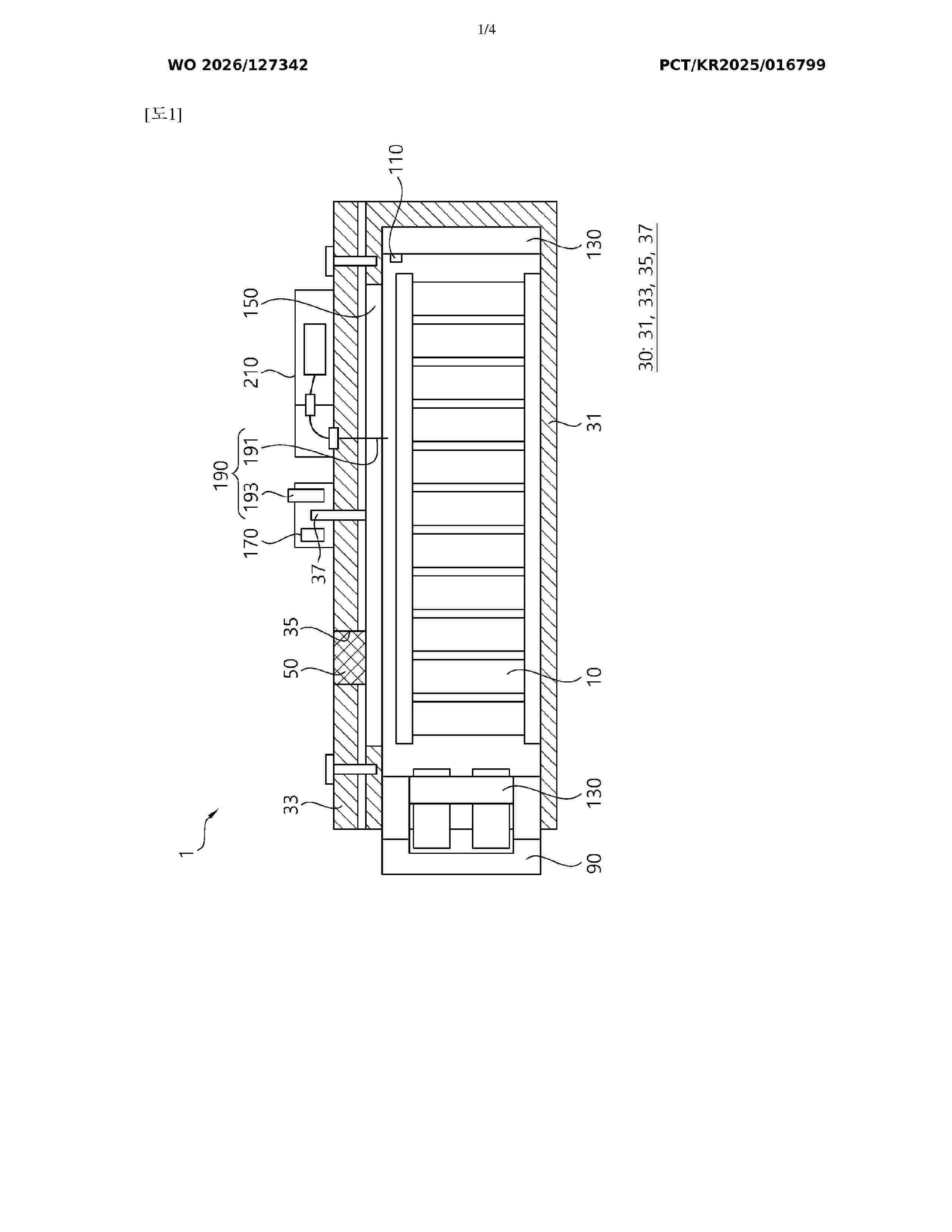
A battery assembly for preventing thermal runaway according to the present invention comprises: a plurality of battery cells; a battery pack which defines an accommodation space for accommodating the plurality of battery cells electrically connected to each other and protects the plurality of battery cells from the outside; a fire-extinguishing coolant filled in the battery pack and including any one of a liquid non-conductive aqueous material and a gel-phase non-conductive aqueous mixture in which a non-conductive aqueous material and a superabsorbent resin are mixed; and a coolant supply unit selectively coupled to and decoupled from the battery pack and configured to supply the non-conductive aqueous material into the battery pack on the basis of the level of the fire-extinguishing coolant filled in the battery pack.
Resumen de: US20260171576A1
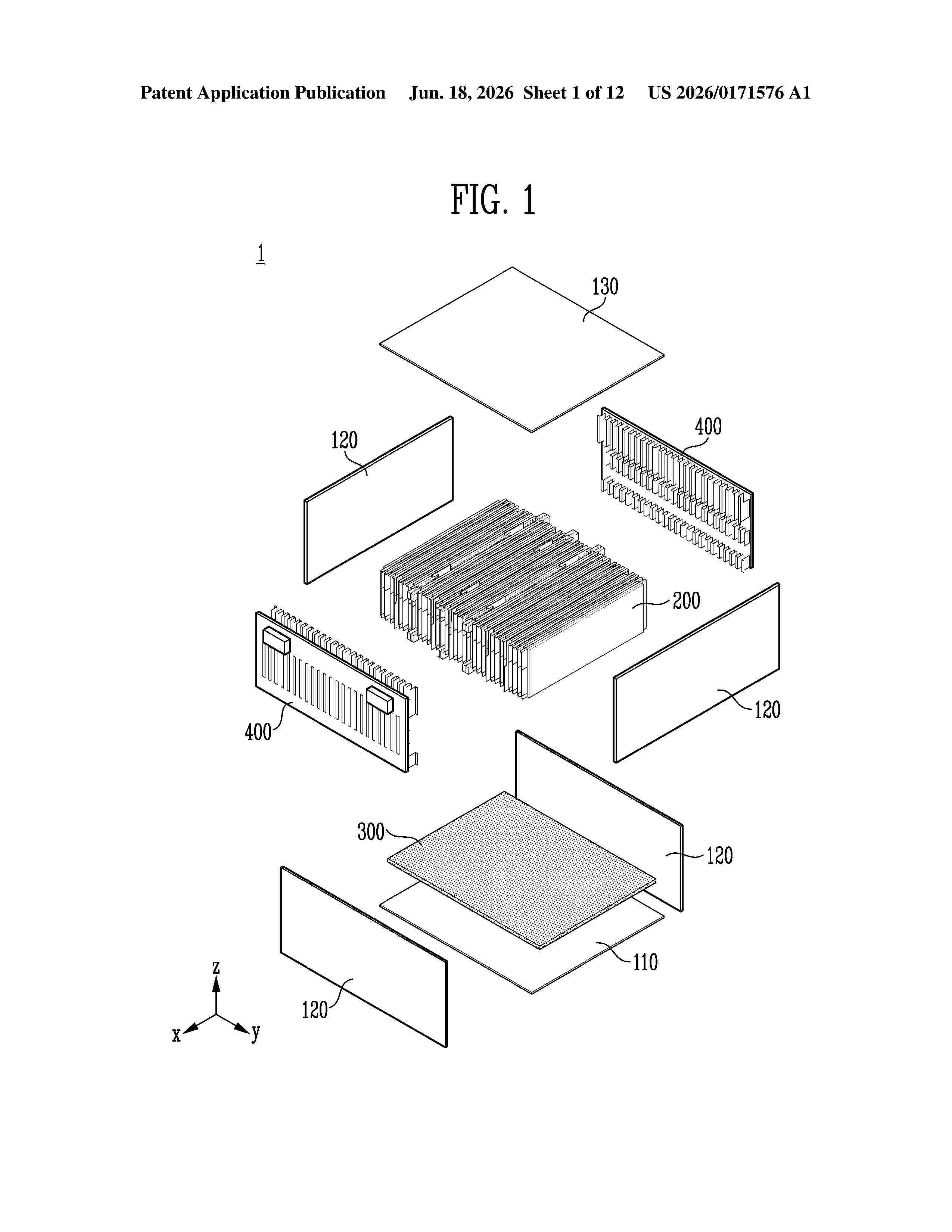
0000 The present disclosure relates to a battery assembly and a method of manufacturing the same. The battery assembly includes a case comprising a lower plate, a side plate connected to the lower plate to form a receiving space together with the lower plate, and an upper plate coupled to the side plate to seal the receiving space; a plurality of battery cells coupled to the lower plate and accommodated in the receiving space; and an adhesive layer disposed between the lower plate and the plurality of battery cells and adhering the lower plate and one surface of each of the plurality of battery cells, wherein the adhesive layer Includes a reinforcement member at least a portion of which is prevented from being deformed in shape by a load applied from the plurality of battery cells.
Resumen de: WO2026127029A1
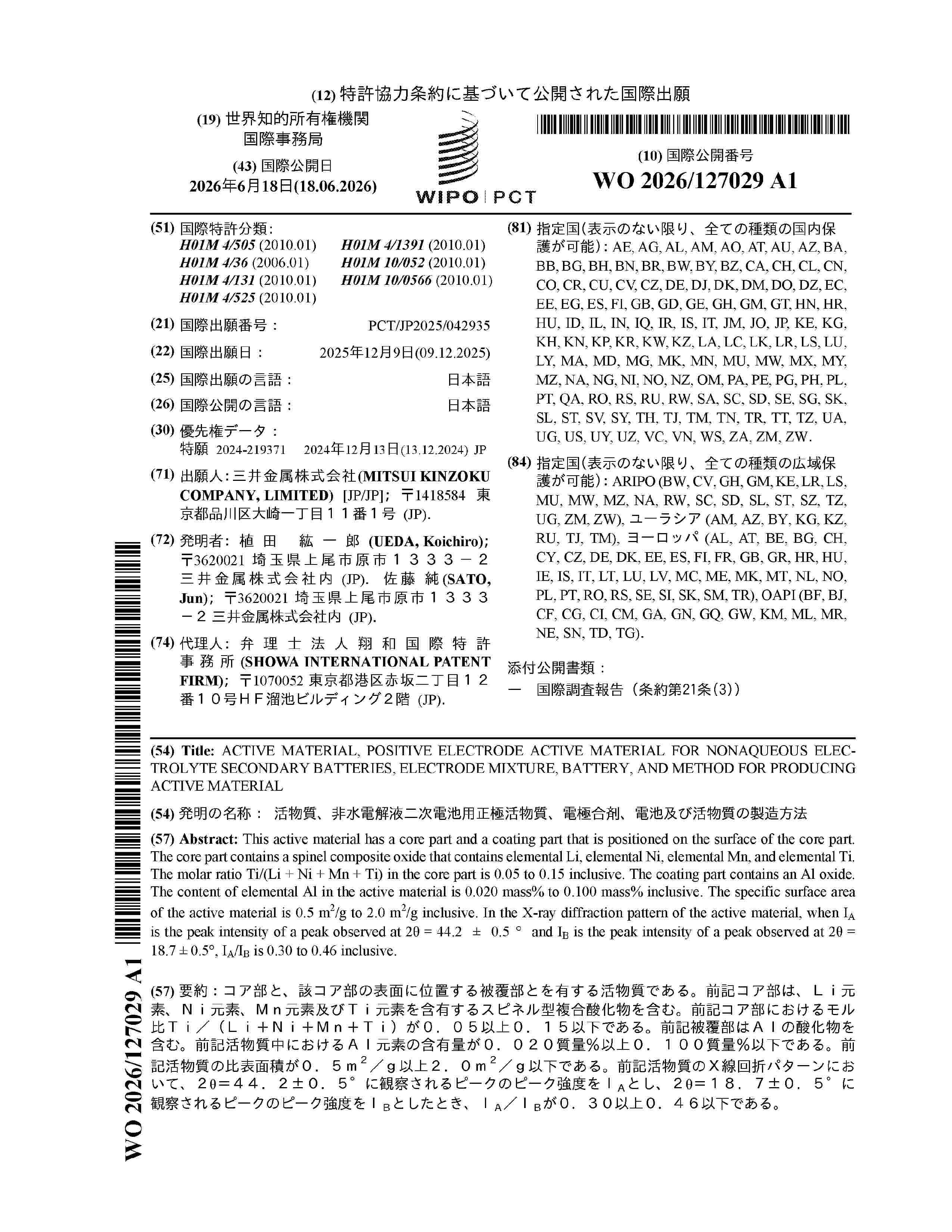
This active material has a core part and a coating part that is positioned on the surface of the core part. The core part contains a spinel composite oxide that contains elemental Li, elemental Ni, elemental Mn, and elemental Ti. The molar ratio Ti/(Li + Ni + Mn + Ti) in the core part is 0.05 to 0.15 inclusive. The coating part contains an Al oxide. The content of elemental Al in the active material is 0.020 mass% to 0.100 mass% inclusive. The specific surface area of the active material is 0.5 m2/g to 2.0 m2/g inclusive. In the X-ray diffraction pattern of the active material, when IA is the peak intensity of a peak observed at 2θ = 44.2 ± 0.5° and IB is the peak intensity of a peak observed at 2θ = 18.7 ± 0.5°, IA/IB is 0.30 to 0.46 inclusive.
Resumen de: WO2026127501A1
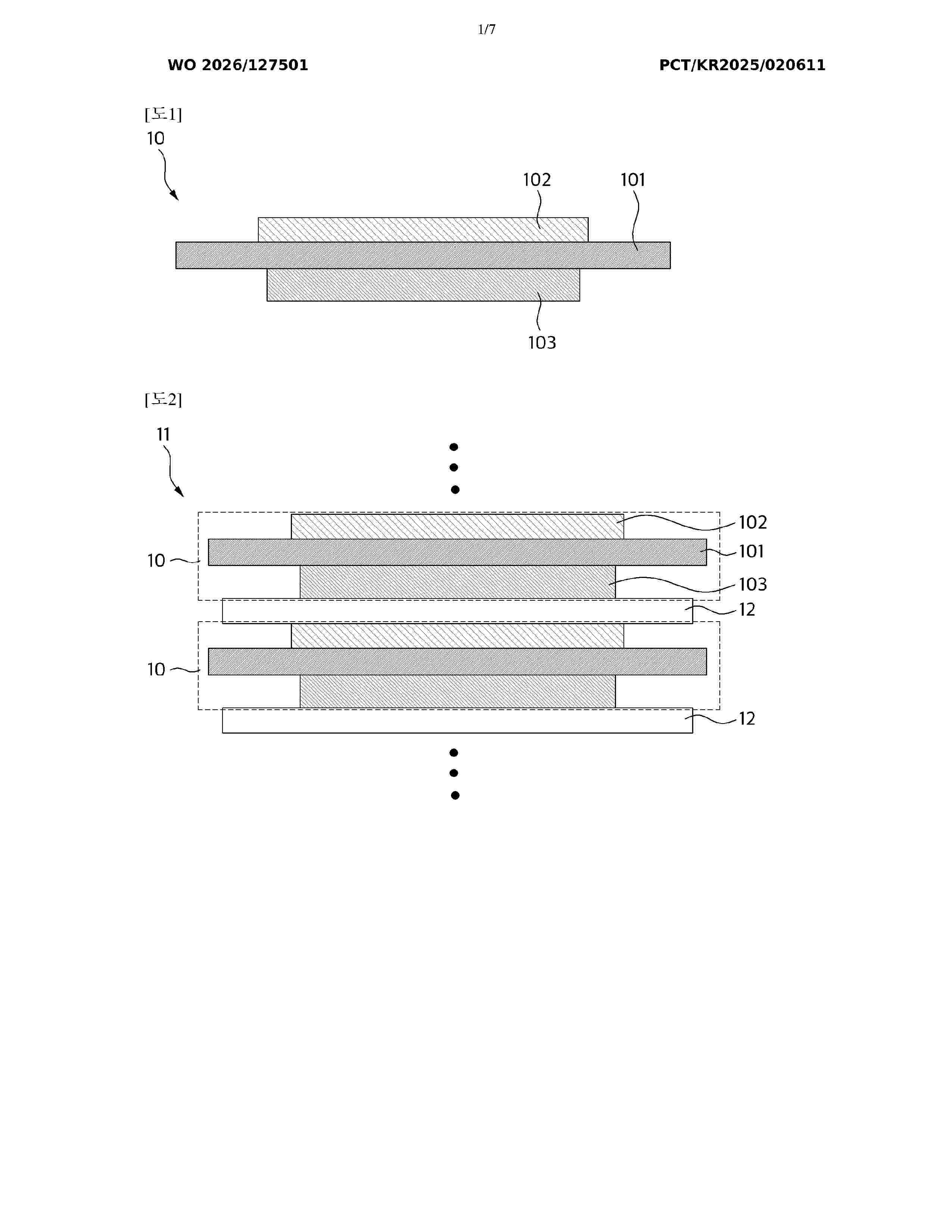
A bipolar secondary battery assembly according to an embodiment of the present invention may comprise: a plurality of bipolar secondary batteries comprising a bipolar stack cell in which a plurality of bipolar unit cells, each having a positive electrode layer formed on one surface of an electrode plate and a negative electrode layer formed on the other surface of the electrode plate, are stacked, wherein the bipolar secondary batteries are stacked in a stacking direction so as to be electrically connected to each other, and at least a portion of the bipolar secondary batteries are spaced apart in the stacking direction; and support pads provided in the gaps between adjacent bipolar secondary batteries among the bipolar secondary batteries to support the bipolar secondary batteries.
Resumen de: WO2026127447A1
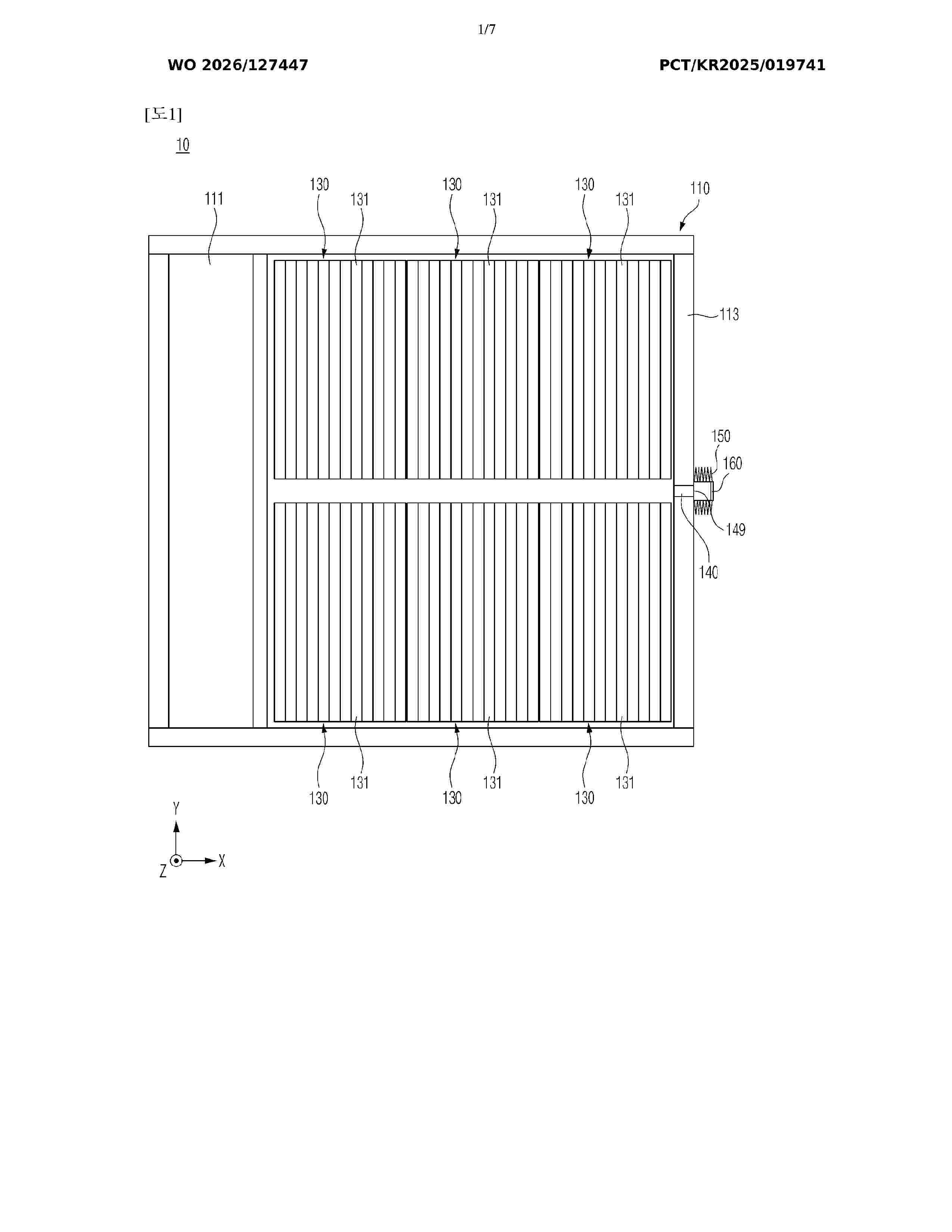
The technical concept of the present invention provides a battery pack comprising: a housing providing an internal space for accommodating battery cells; a venting valve mounted on the housing and configured to discharge gas in the housing; an extensible pipe comprising a flow path configured to allow the gas discharged from the venting valve to flow therethrough; and a plug coupled to an end of the extensible pipe and comprising a vent hole.
Resumen de: WO2026125683A1
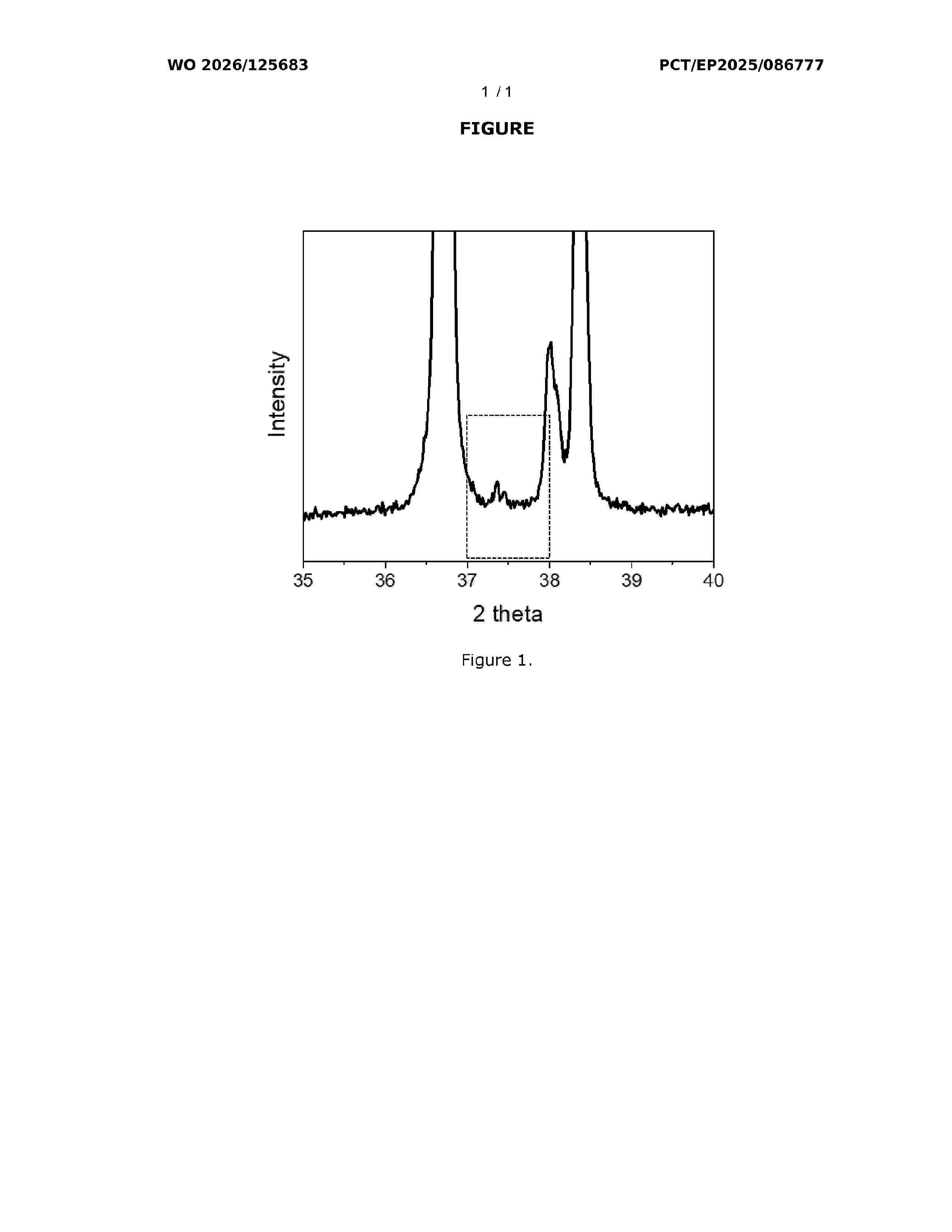
A cathode active material powder compound having a formula: LiaNixMnyCOzCacSdQbBwO2, wherein : - 90.00 at% ≤ a ≤ 110.00 at%, - 70.00 at% < x ≤ 95.00 at%, - 0.0 at% < y ≤ 10.00 at%, - 0.0 at% ≤ z ≤ 15.00 at%, - 0.00 at% < c ≤ 0.75 at%, - 0.040 at% ≤ d ≤ 0.75 at%, - 0.00 at% < w ≤ 0.75 at%, and - 0.00 at% ≤ b ≤ 2.75 at%, with x+y+z+b+c+d+w = 100.00 at% as determined by ICP-OES, wherein Q is at least one element of a list consisting of: Na, Mg, Zr, Nb, W, Si, Ba, Sr, Zn, Cr, V, Y, Sb, Ta, Mo, Ti, wherein the cathode active material powder has a specific surface area of more than 0.50 m2/g and of at most 0.75 m2/g as determined by BET analysis.
Resumen de: US20260171450A1
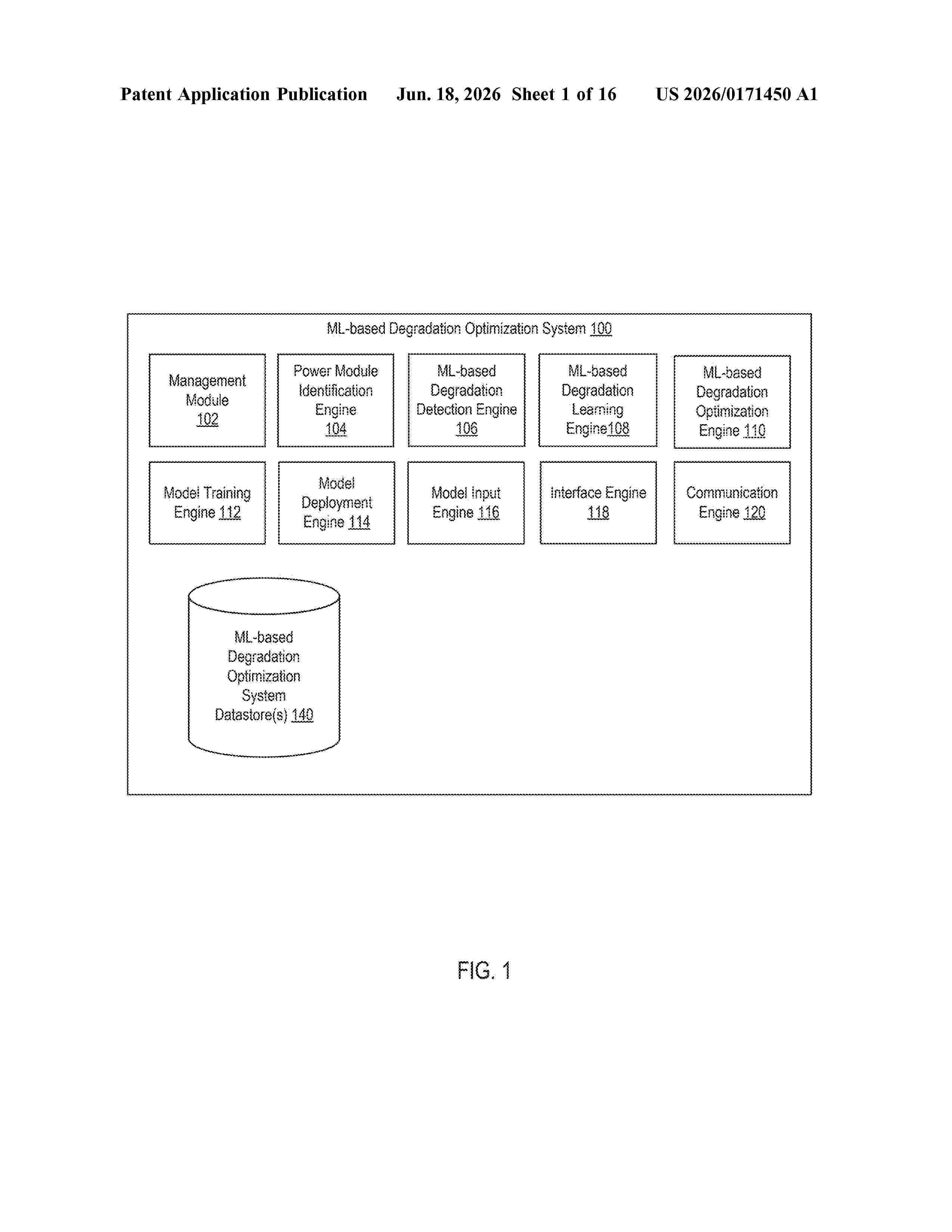
0000 Techniques for machine learning-based degradation optimization are disclosed. In embodiments, a method includes identifying a power module, wherein the power module is controlled with a set of variables; determining, using functional relations of degradation of a degradation machine learning model, optimal set-point values that minimize degradation of the power module while utilizing minimal resources; and reducing a degradation rate of the power module by adjusting one or more of the variables that control the power module based on the determined optimal set-point values.
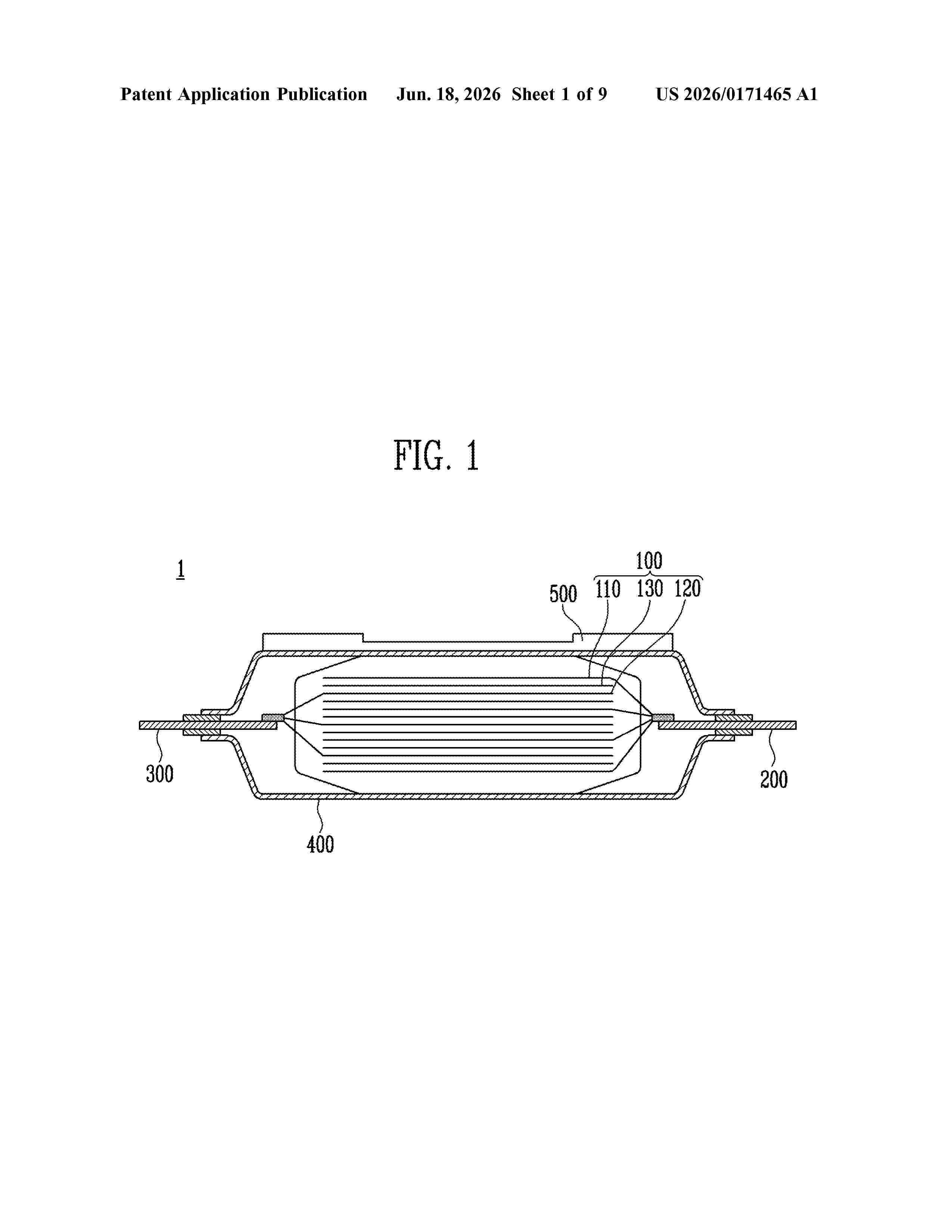
Resumen de: US20260171465A1
0000 The present disclosure relates to a battery cell and a battery assembly including the same. The battery cell may include: an electrode assembly in which a plurality of positive electrodes and a plurality of negative electrodes are alternately stacked with a separator interposed therebetween along a predetermined direction; a positive electrode tab which is electrically connected to the plurality of positive electrodes at one end of a length direction perpendicular to the predetermined direction of the electrode assembly; a negative electrode tab which is electrically connected to the plurality of negative electrodes at the other end of the length direction of the electrode assembly; a pouch which accommodates the electrode assembly therein and exposes at least a portion of the positive electrode tab and at least a portion of the negative electrode tab to an outside; and a pressing pad coupled to one surface of the pouch.
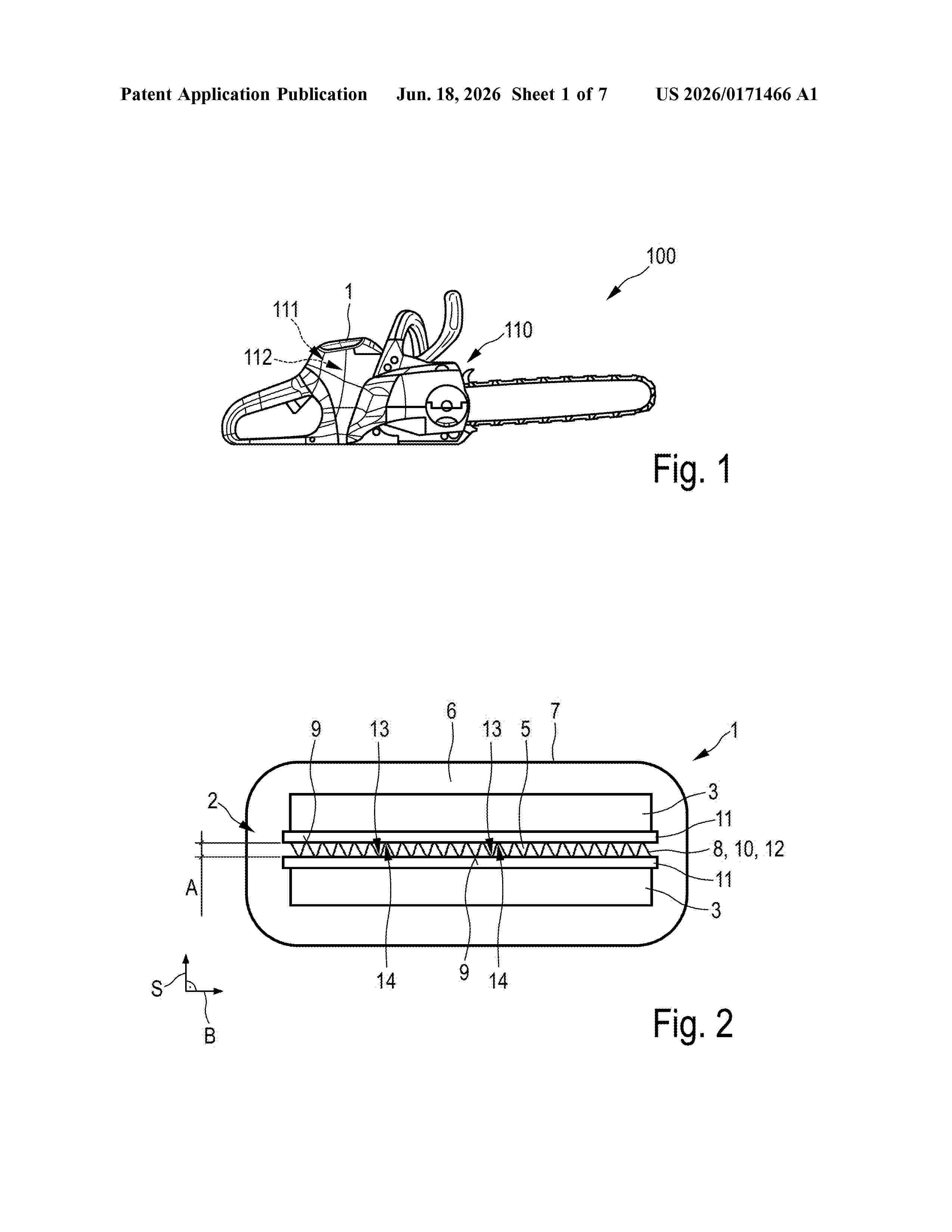
Resumen de: US20260171466A1
0000 A battery pack for a machining system has a cell assembly, a housing interior for holding the cell assembly, and a housing delimiting the housing interior. The cell assembly has a pretensioning device. The pretensioning device is designed to generate a pretensioning force acting on a solid-state battery cell of the cell assembly such that the pretensioning force does not fall below a specified minimum value when the housing expands relative to the cell assembly.
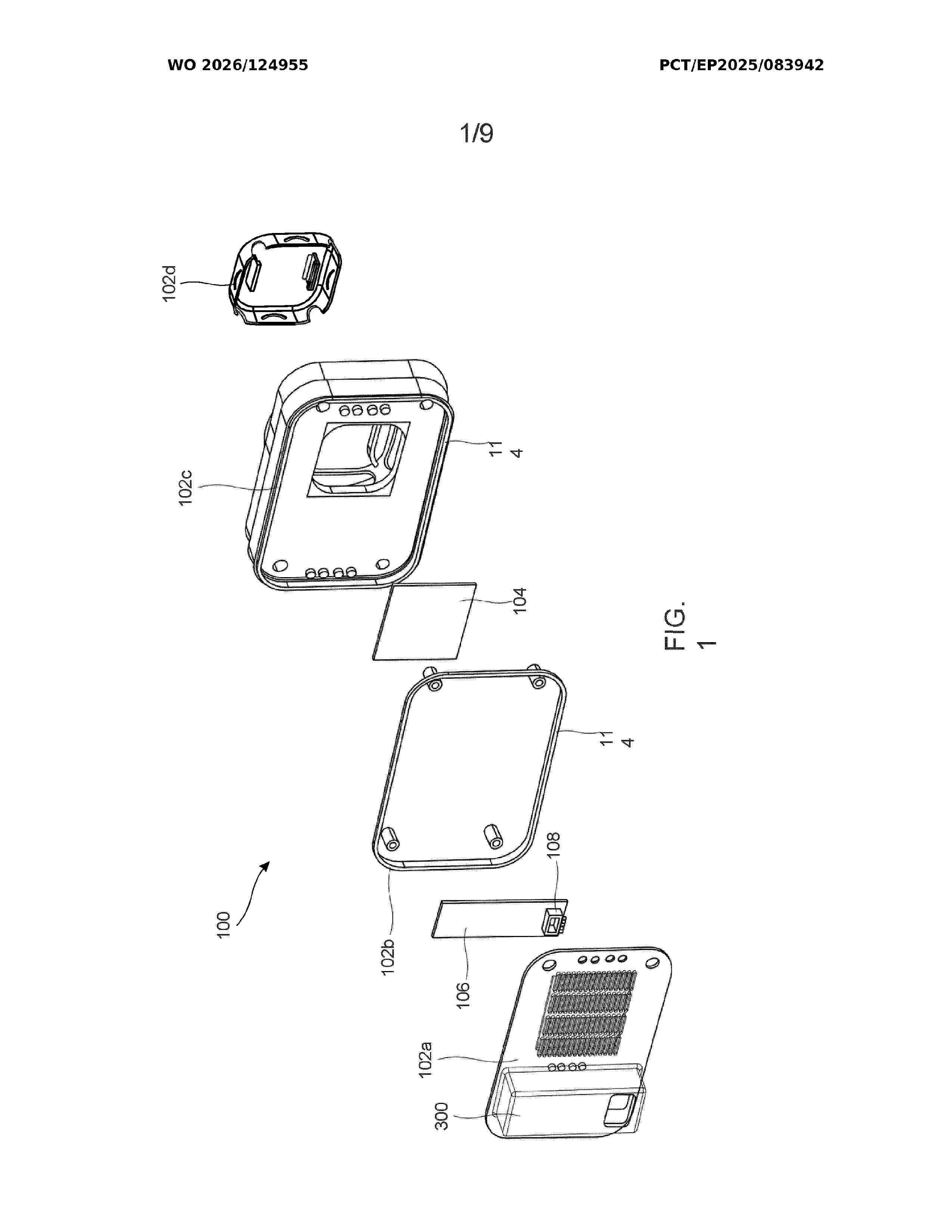
Resumen de: WO2026124955A1
The disclosure relates to a breather or vent cap assembly (100) for an energy storage system (1000), a system (800), and methods thereof. The assembly (100) includes a housing (102) with a permeable membrane (104) for controlled air exchange and water ingress prevention, protected by a grill or mesh structure. A printed circuit board assembly, PCBA, housed within the housing (102) integrates one or more sensors to monitor environmental conditions, detect thermal runaway, and provide early warnings of thermal events. A communication interface (110) transmits sensor data to a monitoring system for real-time analysis and alerts. The assembly (100) combines thermal runaway detection and venting support to ensure safety and reliability of the energy storage system (1000).
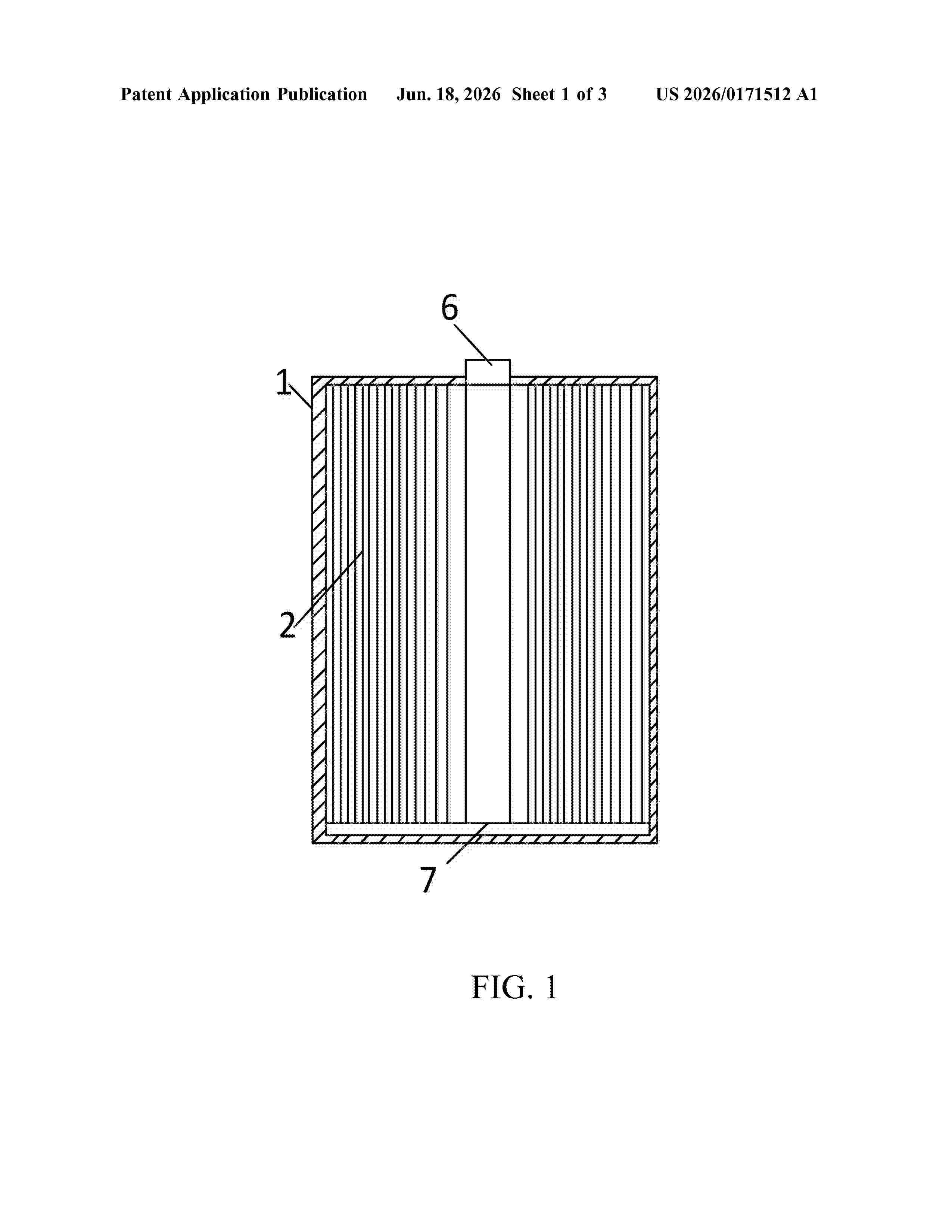
Resumen de: US20260171512A1
A separator and a preparation method thereof are provided. The separator includes: a first isolation layer, configured to contact with a positive electrode sheet of the lithium battery; a third isolation layer, configured to contact with a negative electrode sheet of the lithium battery; and a second isolation layer, provided between the first isolation layer and the third isolation layer; where the first isolation layer includes a ceramic material, the second isolation layer includes a polymer layer material, and the third isolation layer includes a modified polymer composite layer material.
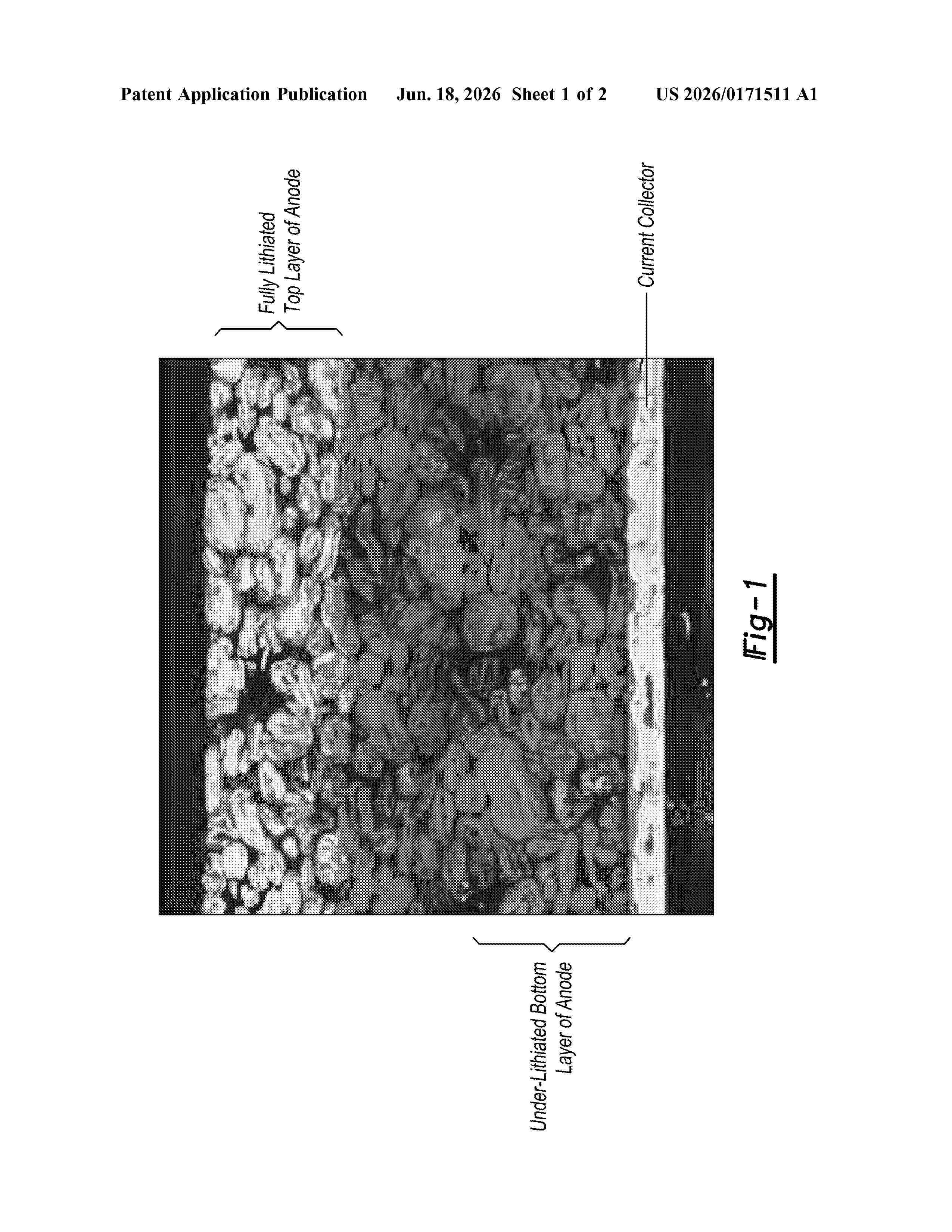
Nº publicación: US20260171511A1 18/06/2026
Solicitante:
FORD GLOBAL TECH LLC [US]
FORD GLOBAL TECHNOLOGIES, LLC
Resumen de: US20260171511A1
0000 A lithium-ion battery cell is presented. The lithium-ion battery cell includes a current collector and an active material layered thereon. The active material layer includes an electrode active material, a conductive agent, and a binder, with a bottom adjacent to the current collector containing a solid electrolyte. The battery cell further includes a liquid electrolyte that permeates the active material layer, increasing ion transport through interaction with the solid electrolyte during cycling.
 BOPI
BOPI
 Sede Electrónica