Si deseas distinguir tus productos, servicios o ambos de los de otra empresa, es posible que necesites una marca o nombre comercial. Descubre qué son, en qué consiste su procedimiento de registro y qué implica.

Información sobre los plazos de presentación de solicitudes de transformación de marcas de la Unión Europea en marca nacional española. Más información


Si tienes un nuevo dispositivo, producto o procedimiento que resuelva un problema técnico o tenga una ventaja práctica, existen distintas formas de protegerlo en España y en otros países. Descubre cómo hacerlo.

¿Tu innovación reside en la estética, la ornamentación o la apariencia de tu producto? Protégela mediante un diseño industrial. Descubre qué derechos confiere el registro y cómo realizar la tramitación.

Las indicaciones geográficas protegen el nombre de un producto originario de una zona geográfica, a la cual le debe una determinada calidad, reputación u otra característica. Descubre qué son, en qué consiste su procedimiento de registro y qué beneficios conceden.

Las patentes publicadas en todo el mundo son una valiosa fuente de información científica, técnica y comercial.

Si eres emprendedor/a o una empresa y quieres potenciar y mejorar la rentabilidad de tu negocio protegiendo de forma adecuada los activos intangibles de tu organización, en este espacio encontrarás lo necesario.


 277
resultados
 Última actualización
31/10/2026 [08:11:00]


 Resultados 250 a 275 de 277

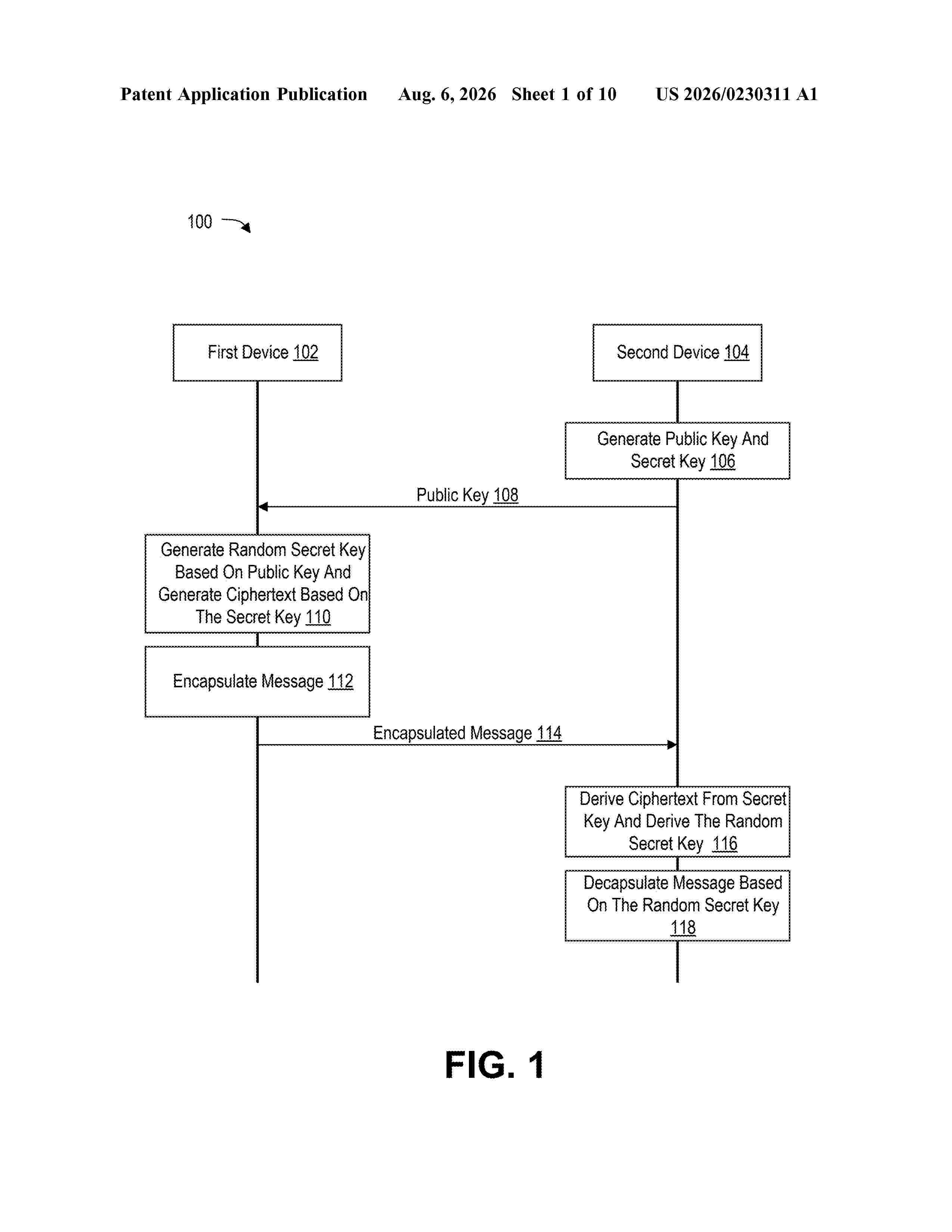
Resumen de: US20260230311A1
Disclosed are systems, apparatuses, processes, and computer-readable media for sharing encrypted entropy. For example, a method includes determining a plurality of second coefficients from a plurality of first coefficients in association with a Numeric Theoric Transform (NTT), wherein each second coefficient of the plurality of second coefficients is generated based on a corresponding first coefficient of the plurality of first coefficients using a shared stage multiplier circuit; and generating an encryption key based on the plurality of second coefficients.

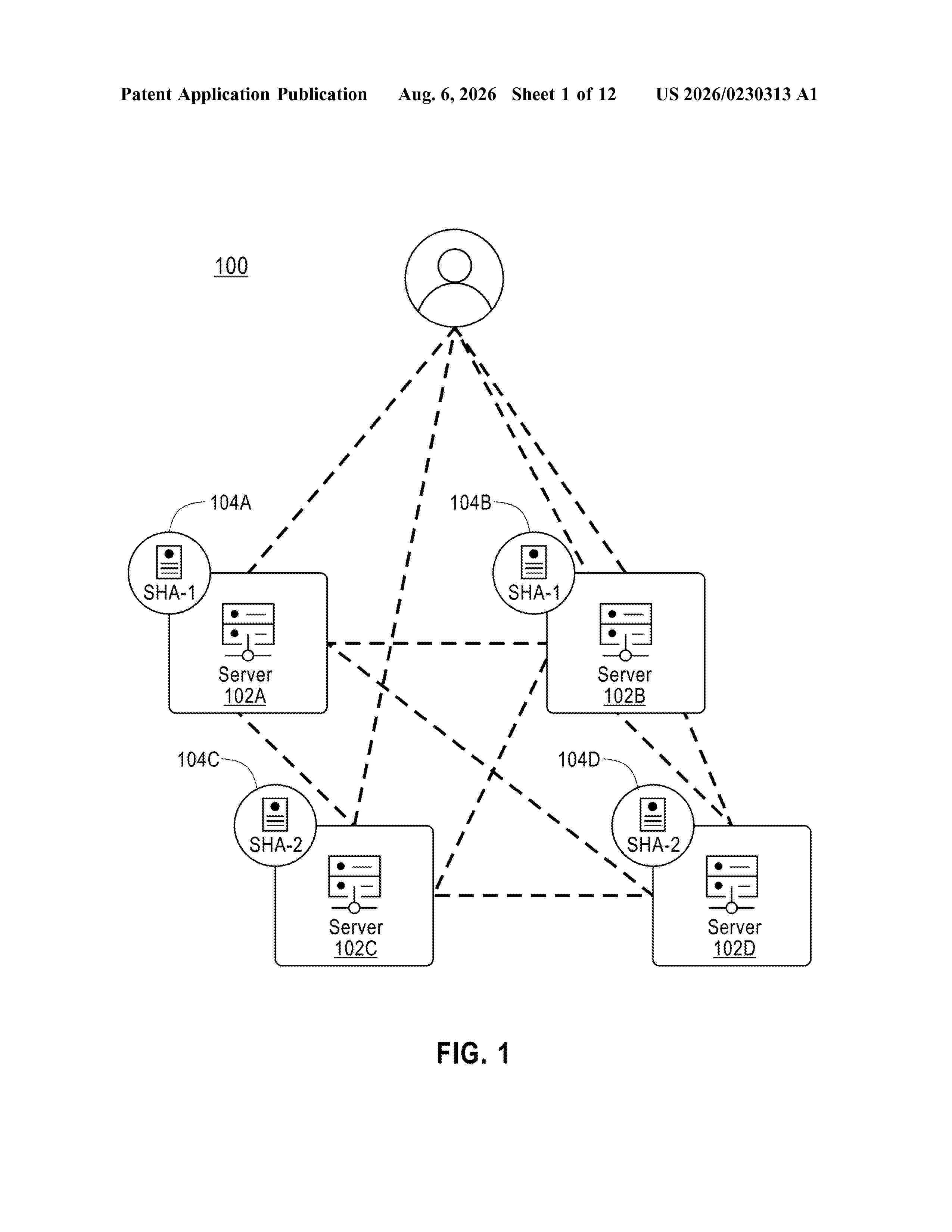
Resumen de: US20260230313A1
A method of cryptographic agility for post-quantum cryptography by swapping a ciphersuite is provided. The method can include performing, by a configuration agent or proxy, cryptography based on a current ciphersuite. The method can further include receiving, by the configuration agent and from a configuration orchestrator, instructions to invoke a protocol to swap the current ciphersuite. The method can further include invoking, by the configuration agent, the protocol to swap the current ciphersuite. The method can further include communicating, by a quantum secure layer (QSL) agent, a next ciphersuite from a set of ciphersuites to a key distribution center (KDC). The next ciphersuite can comprise a post-quantum ciphersuite, such as a next asymmetric or symmetric algorithm, cryptographic random number generator, or cryptographic hash function. The method can further include replacing the current ciphersuite with the next ciphersuite and performing cryptography based on the next ciphersuite.
Resumen de: DE102025103708A1
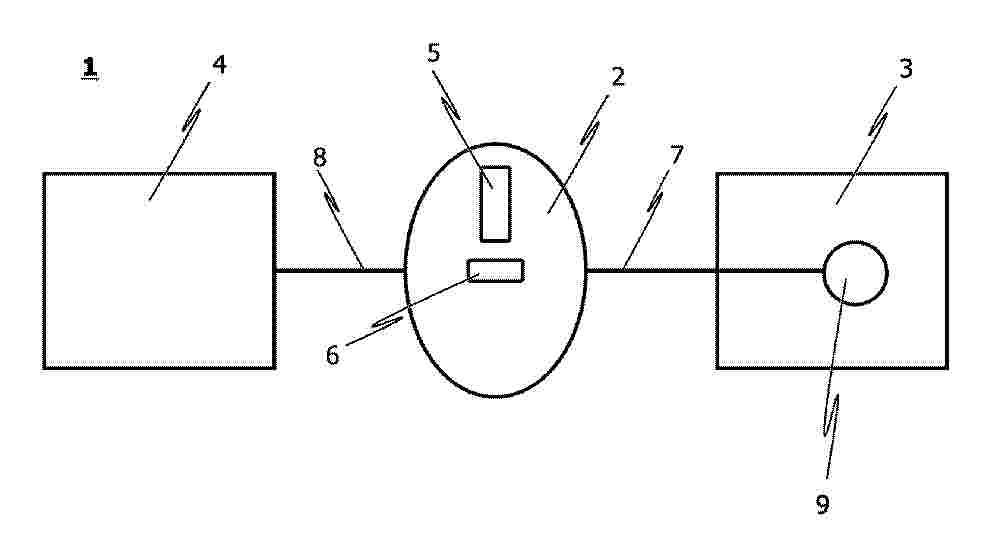
Vorgeschlagen wird System zum Quantenschlüsselaustausch (QKD) (1), umfassend eine verschränkte Photonenquelle (2) zur Erzeugung von polarisationsverschränkten Photonenpaaren, einen ersten Empfänger (3) und einen zweiten Empfänger (4), wobei jedes polarisationsverschränkte Photonenpaar aus einem Signal-Photon und einem Idler-Photon besteht, und wobei der erste Empfänger (3) über einen ersten Kommunikationskanal (7) mit der verschränkten Photonenquelle (2) zur Übertragung der Signal-Photonen oder der Idler-Photonen verbunden ist, wobei der erste Empfänger (3) eine erste Detektionseinheit (7) aufweist, und wobei der zweite Empfänger (4) über einen zweiten Kommunikationskanal (8) mit der verschränkten Photonenquelle (2) zur Übertragung der Idler-Photonen oder der Signal-Photonen verbunden ist, wobei der zweite Empfänger (4) einen Demultiplexer (11) und mindestens eine zweite Detektionseinheiten (10) aufweist, wobei der Demultiplexer (11) die Idler-Photonen oder die Signal-Photonen entsprechend ihrer Wellenlänge auf mindestens zwei Ausgänge des Demultiplexers (11) aufteilt, und wobei nach jedem Ausgang des Demultiplexers jeweils eine Polarisationsabgleicheinheit (12) angeordnet ist.
Resumen de: WO2026164509A1
The invention relates to an improved post-quantum cryptographic system for preserving confidentiality of an agreed secret parameter in a transaction over a data communication network. The system includes a cryptographic unit with a key generation module and a cryptographic module deployed at a sender, a recipient, and a CA on a server. The CA authenticates the transaction by verifying a sender identifier provided by the recipient. The key generation module generates private seeds of at least 128 bits using a TRNG or PRNG and derives partial and final agreed secret parameters from the KAZ-KA Problem, with a trapdoor randomly selected from a public list. The cryptographic module forms the agreed secret parameter y, derives sk = KDF(y), and uses it for symmetric encryption of an electronic or digital message M via a corresponding symmetric cryptosystem.
Resumen de: US20260230827A1
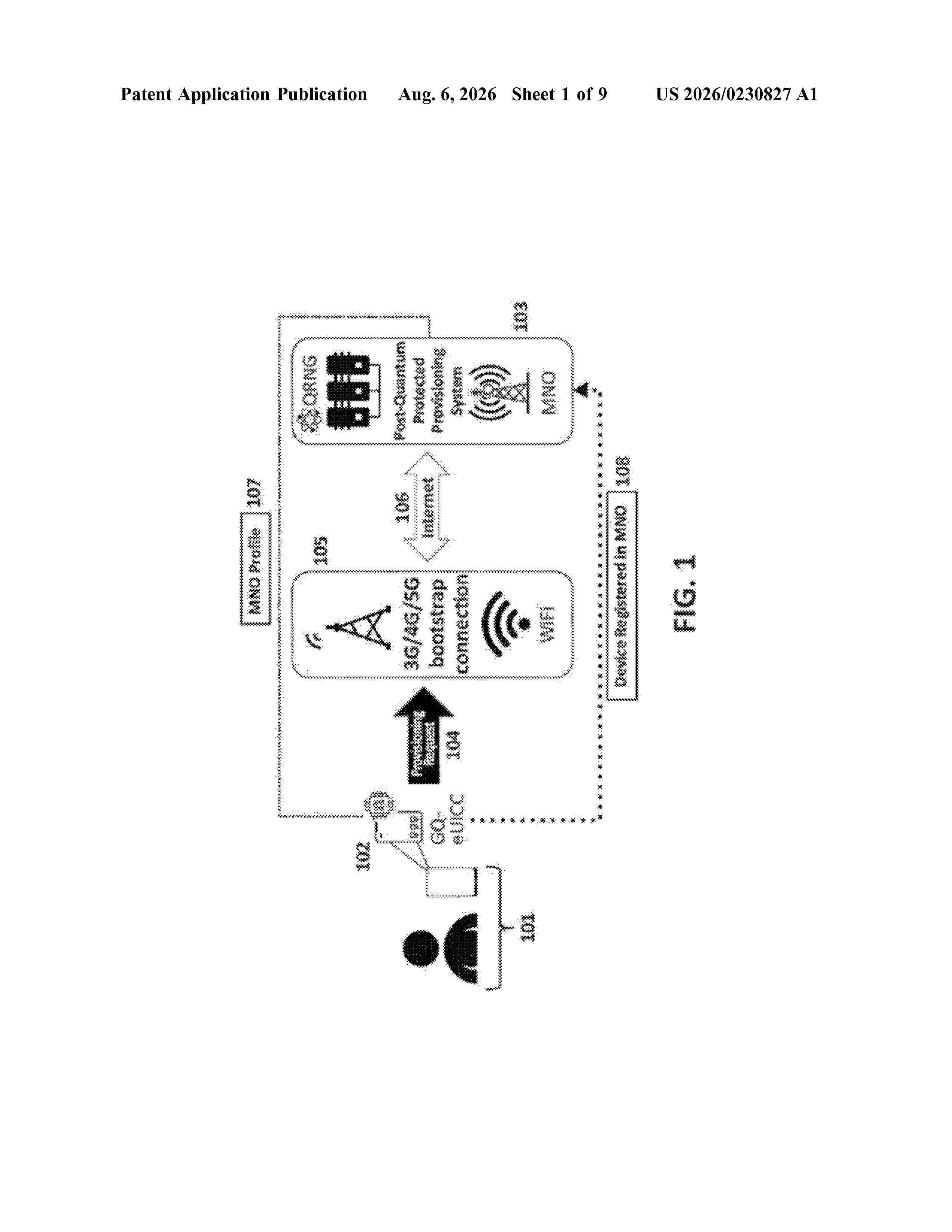
0000 Remote service provisioning method for EUICC cards, to provide secure communication against quantum computing attacks, comprising: providing a GQ-eUICC card comprising a GQ-module, with post-quantum cryptography algorithms, and an eUICC card, generating one or more interfaces in response to connection requests to SM-DP+ and/or SM-DS service subscription servers; establishing session keys by means of post-quantum algorithms; encapsulating all the payload without modifications by means of a QIF tunnel, generated by the post-quantum cryptography algorithms; sending encapsulated communication interfaces to a QDS and/or QDP+ provisioning platform; decapsulating the encapsulated communication interfaces; establishing a connection between the QDS and/or QDP platforms and the SM-DP+ and/or SM-DS subscription servers using an i-ESx tunnel based on symmetric exchange, which encapsulates the original interfaces; establishing through an interface a secure communication between the SM-DP+ and/or SM-DS subscription servers and a service provider; and establishing a secure communication between the service provider and the eUICC.
Resumen de: US20260230303A1
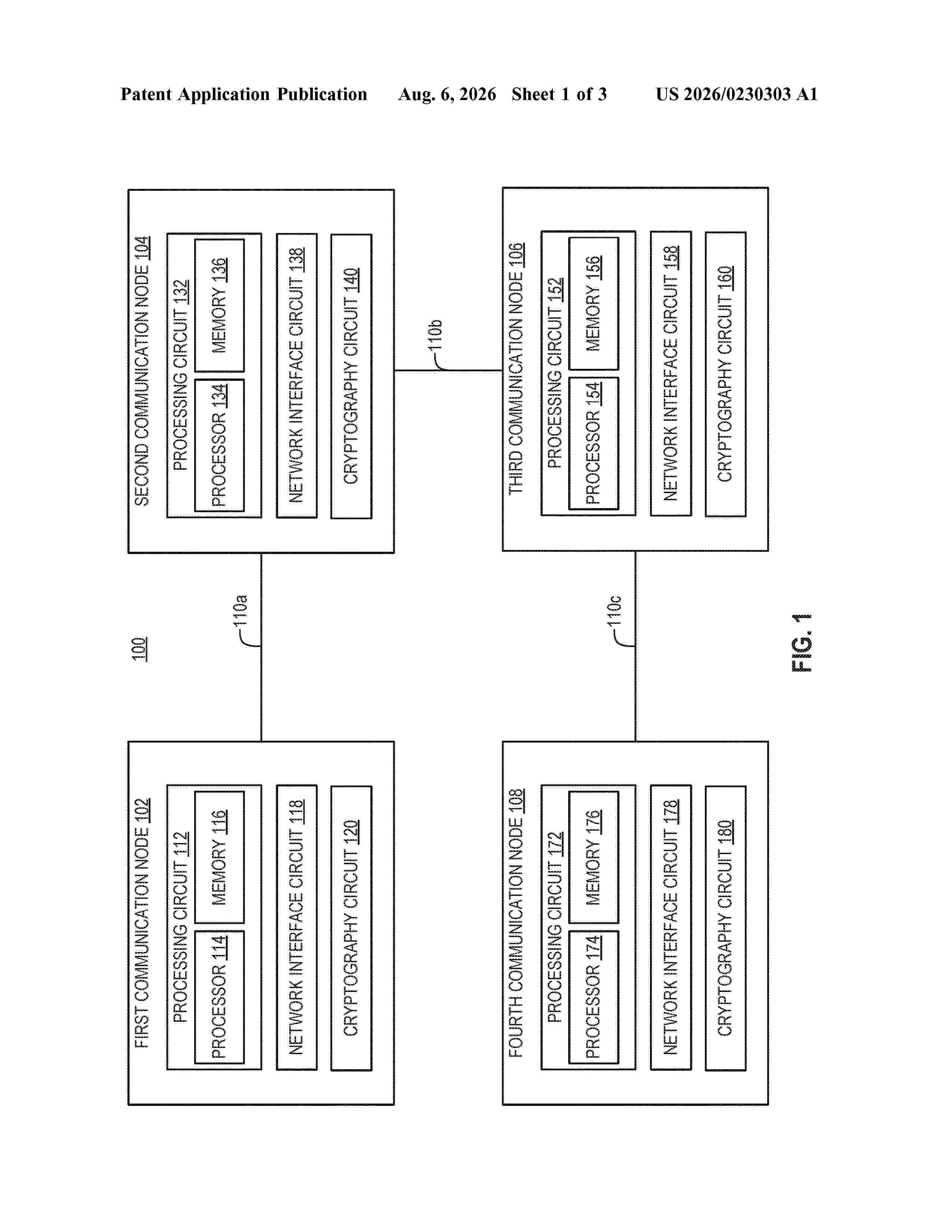
0000 The present disclosure relates to exchanging information between a start node and an end node. Based on the information session keys for a connection comprising the start node, the end node, and at least one intermediate node are established. The session keys include a data encryption session key and a Message Authentication Code (MAC) session key. The data is encrypted using the data encryption session key at the start node. MAC is generated using the MAC session key. The encrypted data is relayed, via the at least one intermediate node, from the start node to the end node without the at least one intermediate node re-encrypting the data.
Resumen de: US20260230340A1
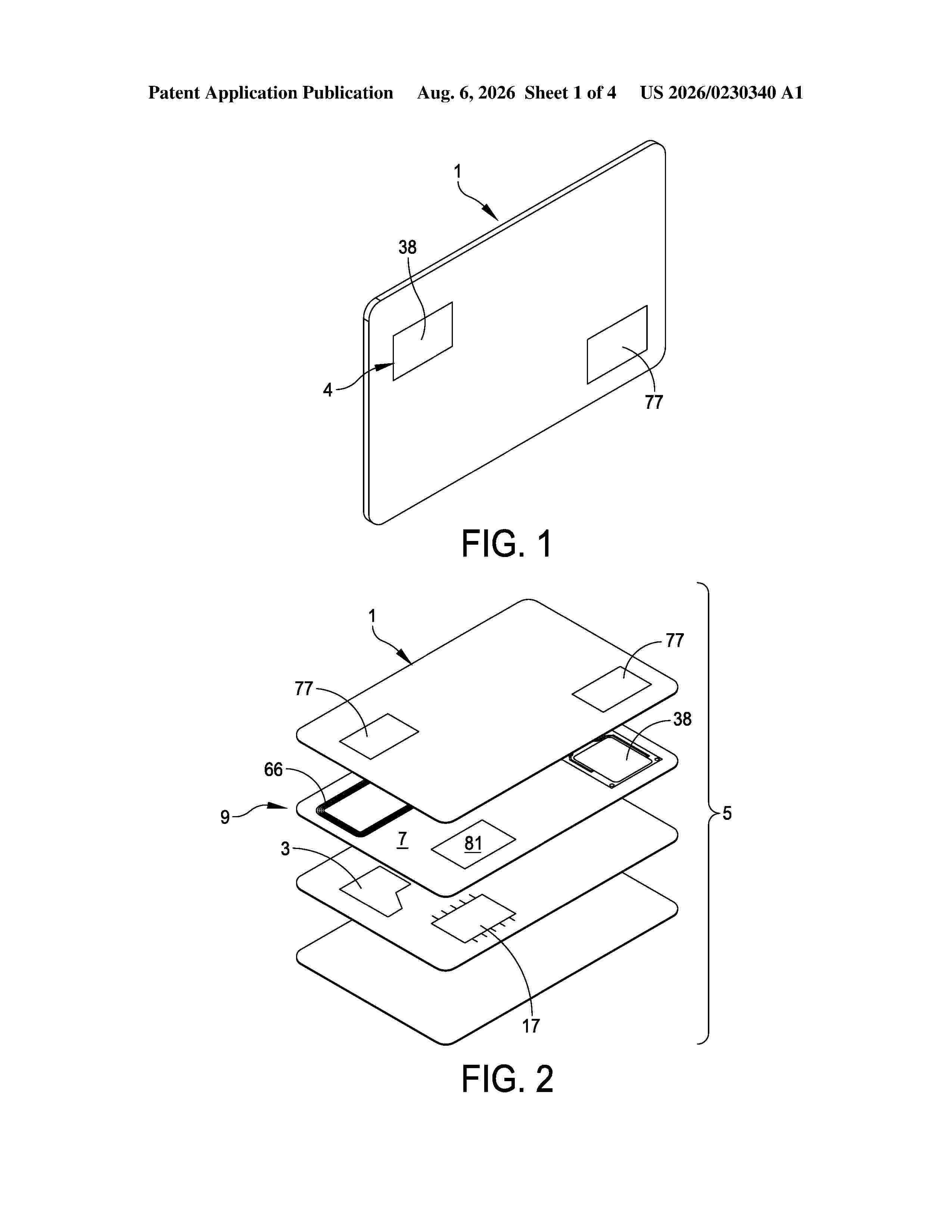
0000 A biometric blockchain system is provided with a card body dimensioned to approximate a standard credit card, a biometric sensor module embedded in the card body and configured to capture fingerprint or facial data, embedded electronics including at least one microcontroller unit, a cryptographic processor, and non-volatile memory, communication interfaces including at least one of near field communication or bluetooth low energy or ultra-wide band, and a power source. The biometric sensor module captures biometric data, the embedded electronics generate a cryptographic key from the biometric data using a biometric key derivation function, and the cryptographic key enables access to a private blockchain ledger for secure interactions among users with compatible cards. The card body comprises a core layer comprising a substrate film, a core sheet comprising a component section with an antenna structure and a system-in-package, and a crosslinked polymer composition disposed on both sides of the substrate film.
Resumen de: AU2025203775A1
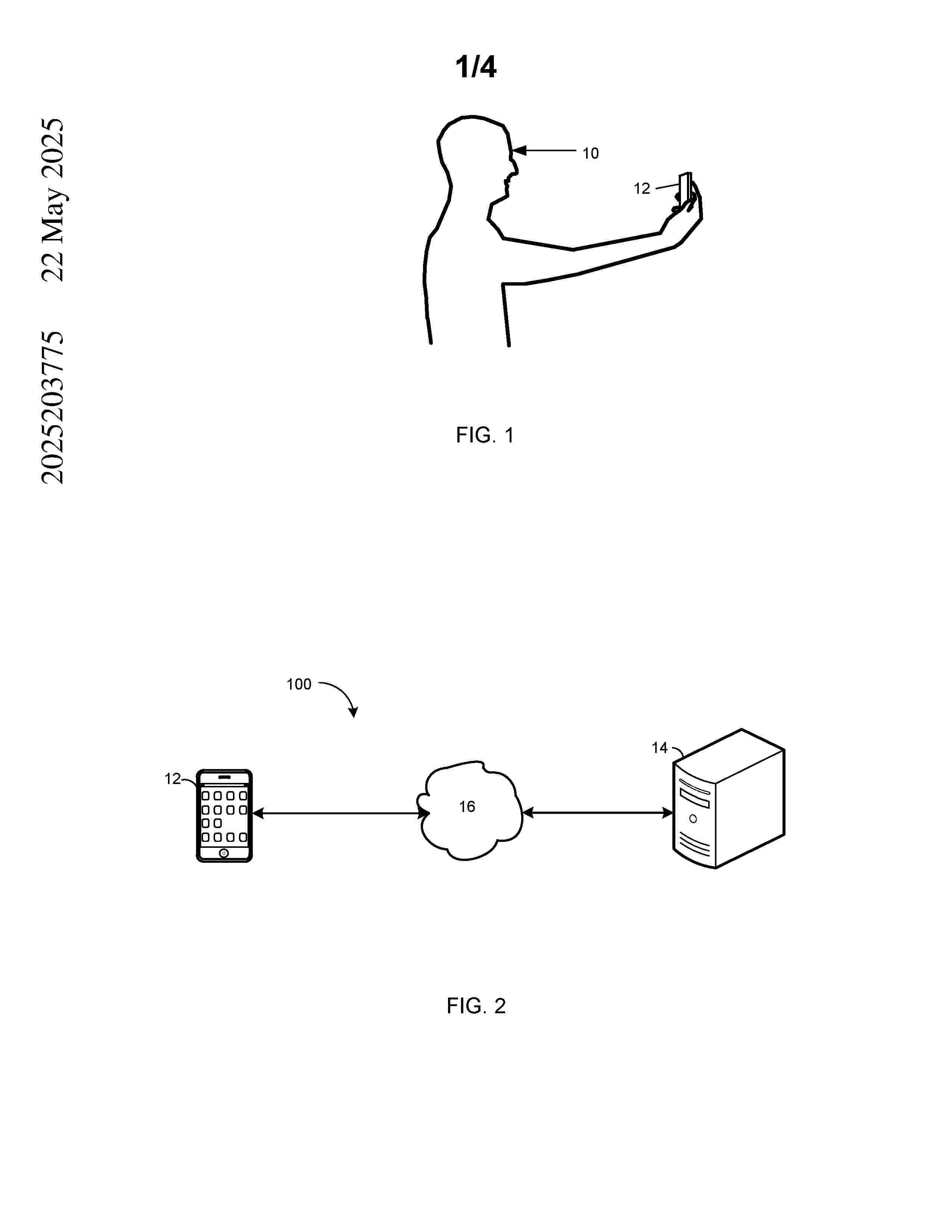
A method for enhancing detection of fraudulent authentication data includes receiving, by an electronic device, data during an authentication transaction, computing a feature vector from the received data, and normalizing the feature vector. The method also includes encoding the normalized feature vector into qubits, expanding, using at least one quantum algorithm, the normalized feature vector into a high-dimensional space, and detecting in the high-dimensional space anomalies indicative of fraud based on the qubits. Furthermore, the method includes calculating, based on the detected anomalies, a confidence score reflecting a likelihood that the received data is genuine and comparing the confidence score against a threshold value. In response to determining the confidence score fails to satisfy the threshold value, the method determines that the received data requires secondary authentication. A method for enhancing detection of fraudulent authentication data includes receiving, by an electronic device, data during an authentication transaction, computing a feature vector from the received data, and normalizing the feature vector. The method also includes encoding the normalized feature vector into qubits, expanding, using at least one quantum algorithm, the normalized feature vector into a high-dimensional space, and detecting in the high-dimensional space anomalies indicative of fraud based on the qubits. Furthermore, the method includes calculating, based on the detected
Resumen de: US20260230315A1
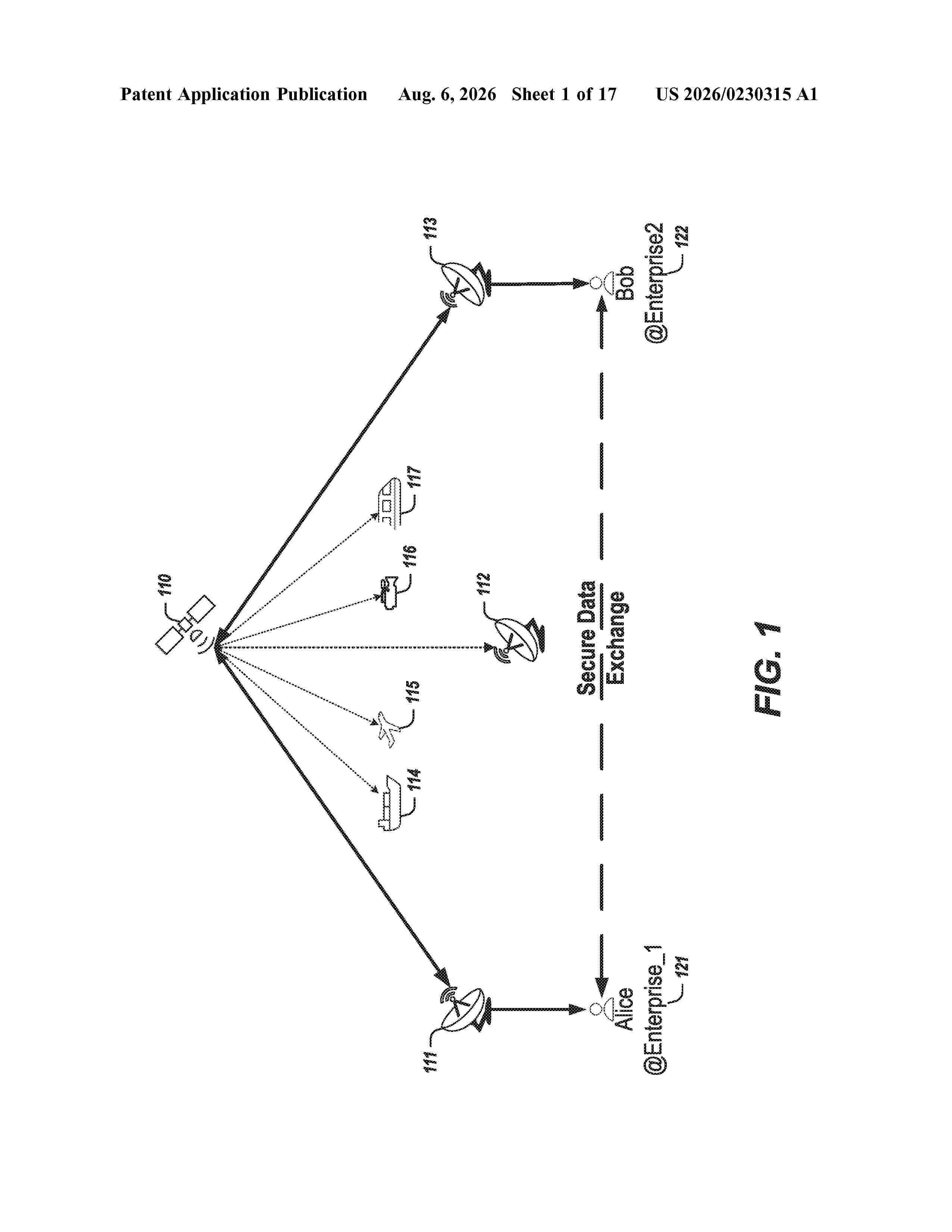
0000 Systems and techniques for secure communications and distribution of random values, produced from at least two satellite entropy sources, are described. These random values may be provided by respective quantum random number generators (QRNGs) at separate satellites, and optionally combined with values from ground-based entropy sources (e.g., QRNGs at terrestrial locations). An example method includes: receiving a first random value and a second random value via at least one satellite communication, where the first random value is generated by a first QRNG at a first satellite, and the second random value is generated by a second QRNG at a second satellite; and generating a cryptographic key based on the first random value and the second random value. The cryptographic key may be produced by a key derivation function that combines the random values, and the cryptographic key may be used to establish a secure communication session.
Resumen de: US20260230316A1
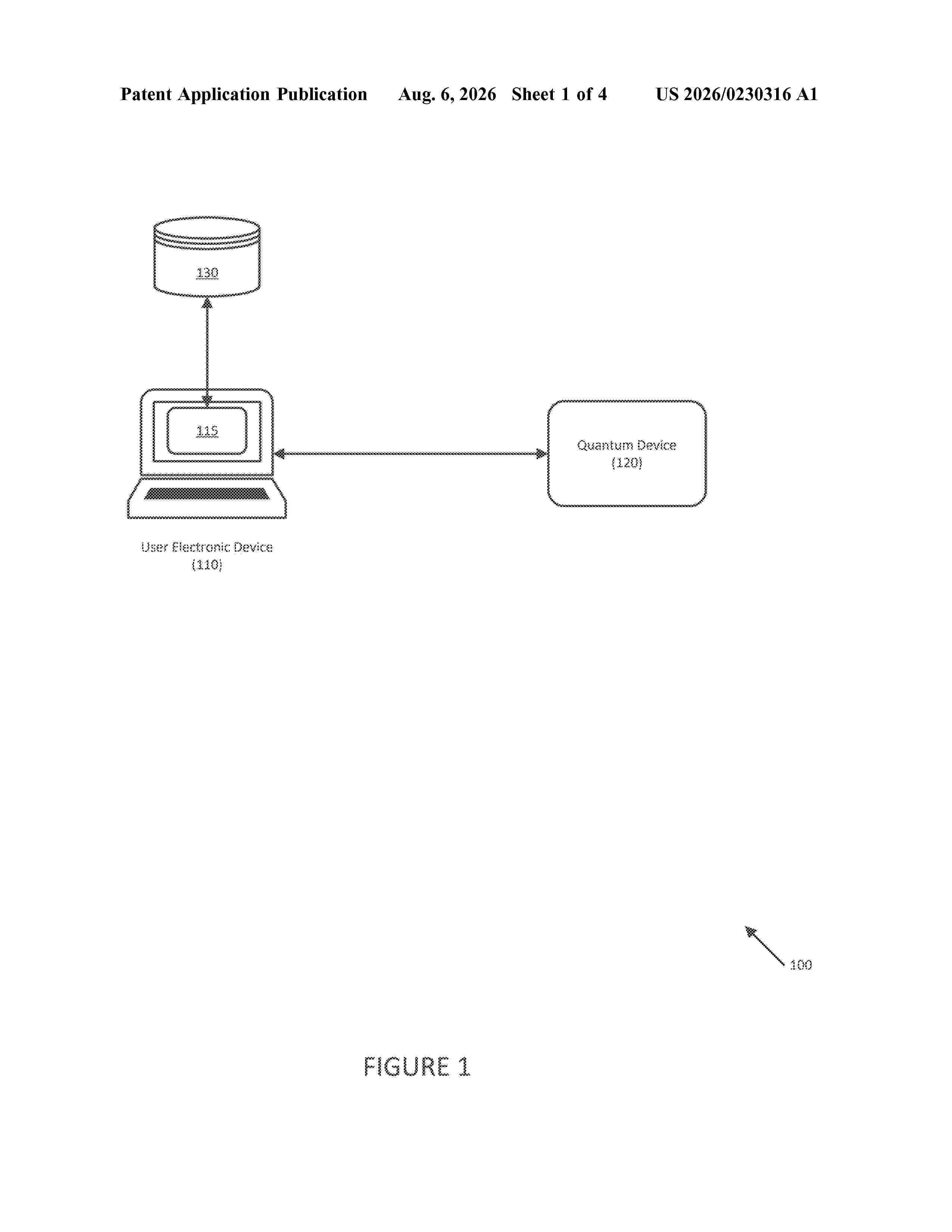
A method may include: selecting a random quantum circuit from a family of random quantum circuits; communicating the selected random quantum circuit to a quantum device, wherein the quantum device applies the selected random circuit to its internal state and measures the internal state to obtain a bit string; calculating a probability that the bit string is a result of the selected random quantum circuit; repeating the communicating, the receiving, and the calculating using the selected random quantum circuit or a new random quantum circuit for a number of rounds; collecting a tuple comprising the random quantum circuit communicated to the quantum device, the bit string received from the quantum device, and the probability; computing a validation value for the tuples; validating the validation value; outputting the bit strings to a quantum-proof randomness extractor, wherein the quantum-proof randomness extractor returns a final bit string; and outputting the final bit string.
Resumen de: US2025112897A1
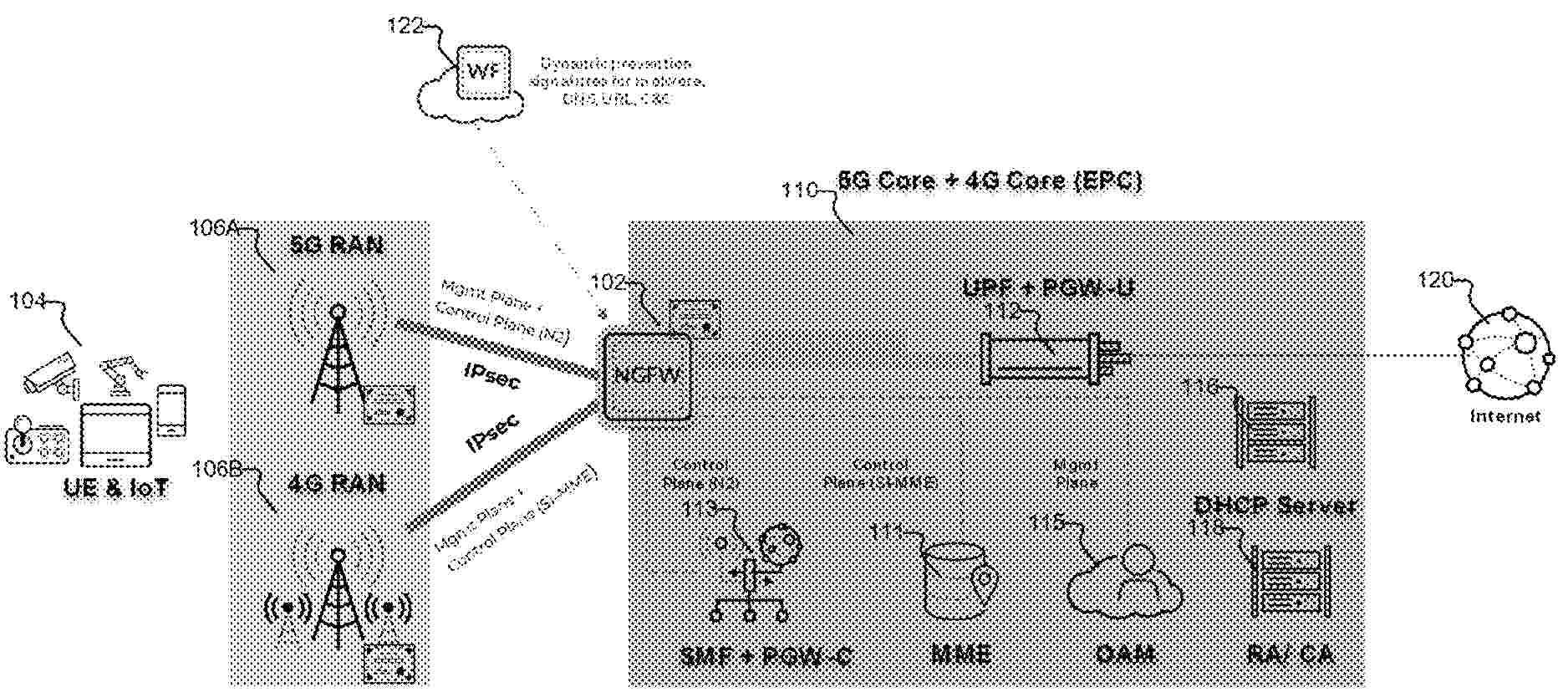
Techniques for applying a quantum ready intelligent security gateway are disclosed. In some embodiments, a system/process/computer program product for applying a quantum ready intelligent security gateway (e.g., a quantum ready intelligent security gateway that supports quantum key distribution (QKD) and/or post-quantum cryptography (PQC) for providing a secure tunnel to the mobile network) includes monitoring network traffic on a mobile network at a security gateway to identify a new session; determining meta information associated with the new session by extracting the meta information from the network traffic via one or more interfaces; and enforcing a security policy on the new session at the security gateway based on the meta information to apply context-based security in the mobile network.
Resumen de: US2025106012A1
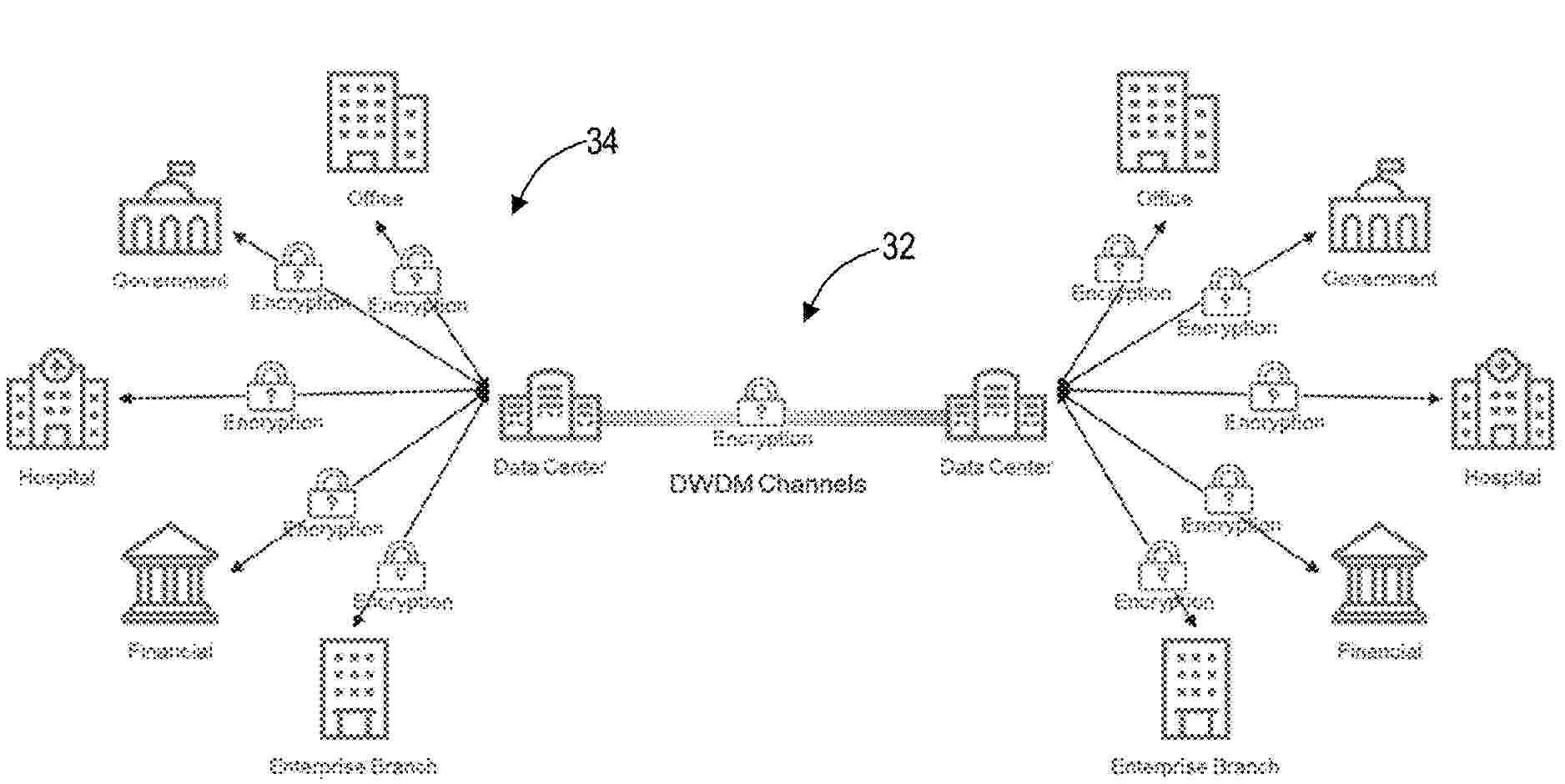
Systems and methods for quantum key distribution in an optical network and quantum-secured optical channels. A node for operation in an optical network includes one or more degrees each connected to a corresponding optical span including one or more fibers; and one or more Quantum-Optical Service modules (QOSM) for each of the one or more degrees, each QOSM supporting Quantum Key Distribution (QKD) for establishing a quantum-secured channel and Optical Service Channel (OSC) functionality over the quantum-secured channel. A line amplifier system for operation in an optical network includes one or more optical amplifiers configured to amplify optical channels over an optical span in the optical network; and a trusted quantum repeater, connected to the optical span, and configured to support QKD for establishing a first quantum-secured channel and a second quantum-secured channel and OSC functionality over the first quantum-secured channel and the second quantum-secured channel.
Resumen de: EP4787148A2
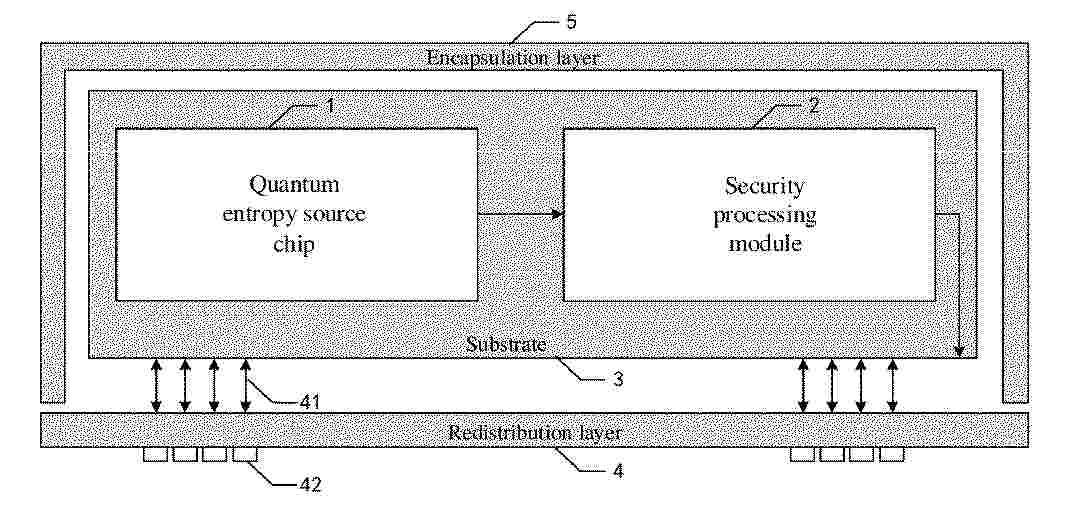
The present disclosure provides a fabrication method, a quantum random number security chip, and a method for generating a quantum key, which mainly relate to the field of quantum random number generation technology. The fabrication method includes: providing a quantum entropy source die and a security processing module on a first surface of a substrate and a second surface of the substrate respectively to form a three-dimensional stacked structure, where a plurality of copper pillars are disposed on the second surface of the substrate; performing a molding process on the first surface of the substrate and the second surface of the substrate to obtain an encapsulation structure encapsulating the substrate, where the plurality of copper pillars have bumps exposed outside the encapsulation structure; and rerouting a substrate pad disposed on the second surface of the substrate to a fan-out region of the substrate by using a wafer-level fan-out method, such that the bumps of the plurality of copper pillars exposed outside the encapsulation structure serve as external pins of the quantum random number security chip, thereby obtaining the quantum random number security chip.
Resumen de: EP4773541A1
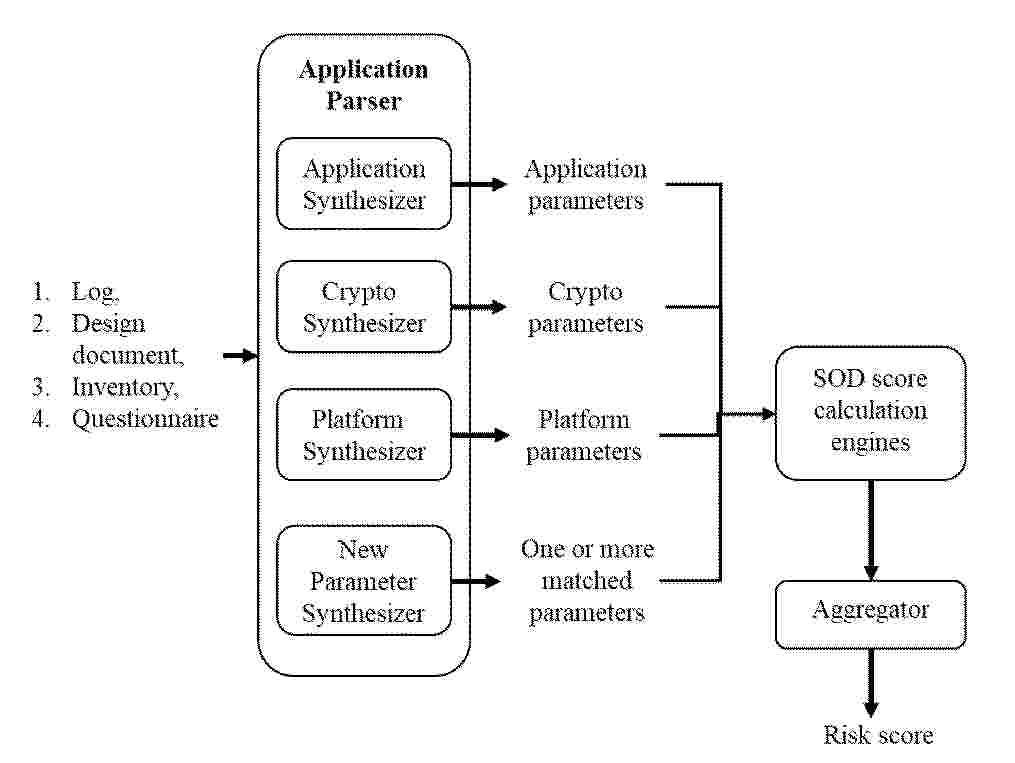
Conventional risk estimation techniques perform dynamic analysis of application or use models which require training data. Present disclosure provides method and system to estimate risk for a software application due to quantum threat by static analysis. A set of records pertaining to the application is received and parsed to obtain application, crypto and platform parameters. In addition, list of quantum vulnerable algorithms, number of Qubits required to break a cryptographic algorithm used by the application and a current Qubit number are also received. Then, value of Quantum Day is determined based on the current Qubit number and the number of Qubits required to break the cryptographic algorithm used by the application. Further, SOD (Severity, Occurrence, Detection) scores are calculated for each parameter, and they are multiplied to determine Risk Priority Number (RPN) for each parameter. Finally, RPNs of all parameters are summed up to estimate overall risk of the application.
Resumen de: EP4787772A1
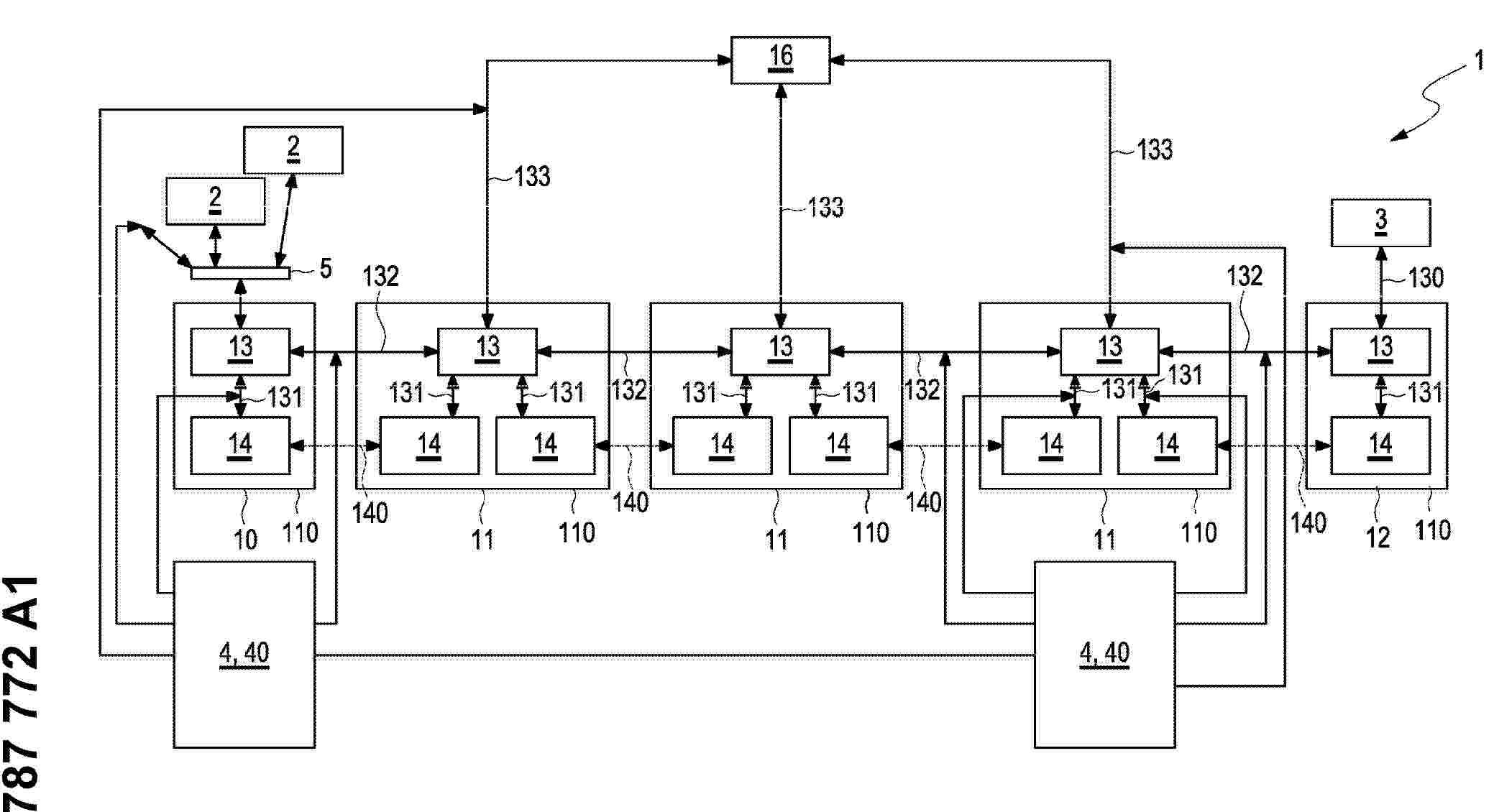
0001 A method for analyzing a quantum key distribution network, QKDN, wherein a QKDN analyzer module measures a key system attribute, KSA, of the QKDN and/or checks a functionality of the QKDN; a QKDN analyzer device for analyzing a QKDN, QKD nodes for a QKDN, a QKDN and a computer program product.
Resumen de: GB2703677A
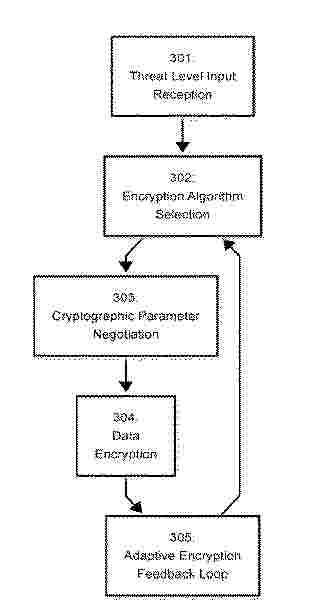
A data transfer request is received and related contextual metadata is retrieved including data sensitivity, required confidentiality duration, and quantum cryptographic threat intelligence. A threat level for the transfer is assessed and a necessary quantum-resistant encryption strength is indicated, based on which an encryption algorithm is selected and applied to balance strength and performance. User-defined consent parameters associated with the data transfer are retrieved, and compliance is observed through routing or transformation (e.g., anonymisation) of the data to control recipients, geographic restrictions, and data usage. System performance and environmental impact is optimised whilst meeting cryptographic and consent requirements. The system dynamically assesses recent algorithm developments and quantum cryptanalysis breakthroughs to select an efficient algorithm that still meets the security requirements of the data. Adjustments may include selecting alternative cryptographic algorithms known for lower energy consumption or reducing the operational frequency of certain resource-intensive tasks. The system can proactively schedule or rate-limit non-critical data transfers during periods of peak computational load to ensure sufficient resources remain available for high-priority communications. Fig. 3
Resumen de: WO2025125334A1
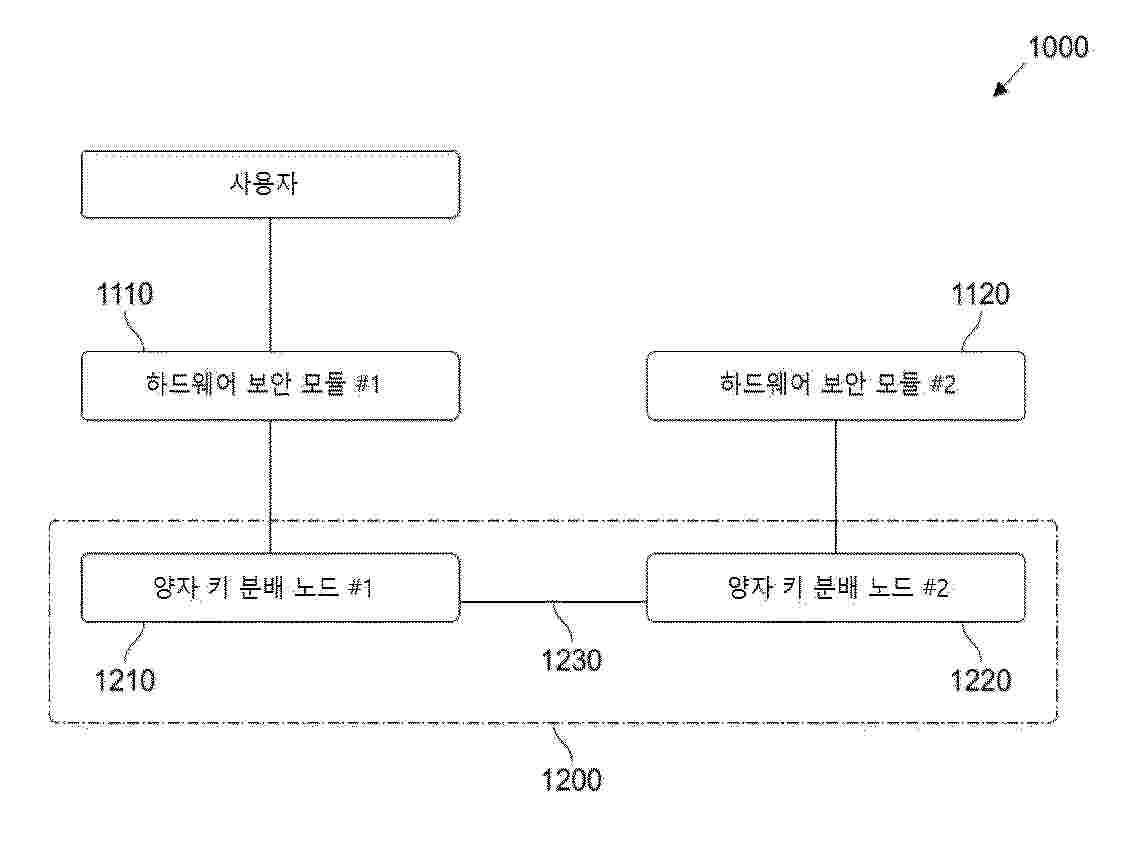
The present invention generally relates to a hardware security system (1000) comprising a first hardware security module (1110), configured to store a secret, a second hardware security module (1120), configured to store the secret, a quantum key distribution network (1200) comprising a first quantum key distribution node (1210), a second quantum key distribution node (1220) and a quantum encrypted channel (1230), wherein the first quantum key distribution node (1210) is connected to the first hardware security module (1110), and wherein the second quantum key distribution node (1220) is connected to the second hardware security module (1120). The invention further relates to method for operating the hardware security system (1000).
Resumen de: CN122513082A
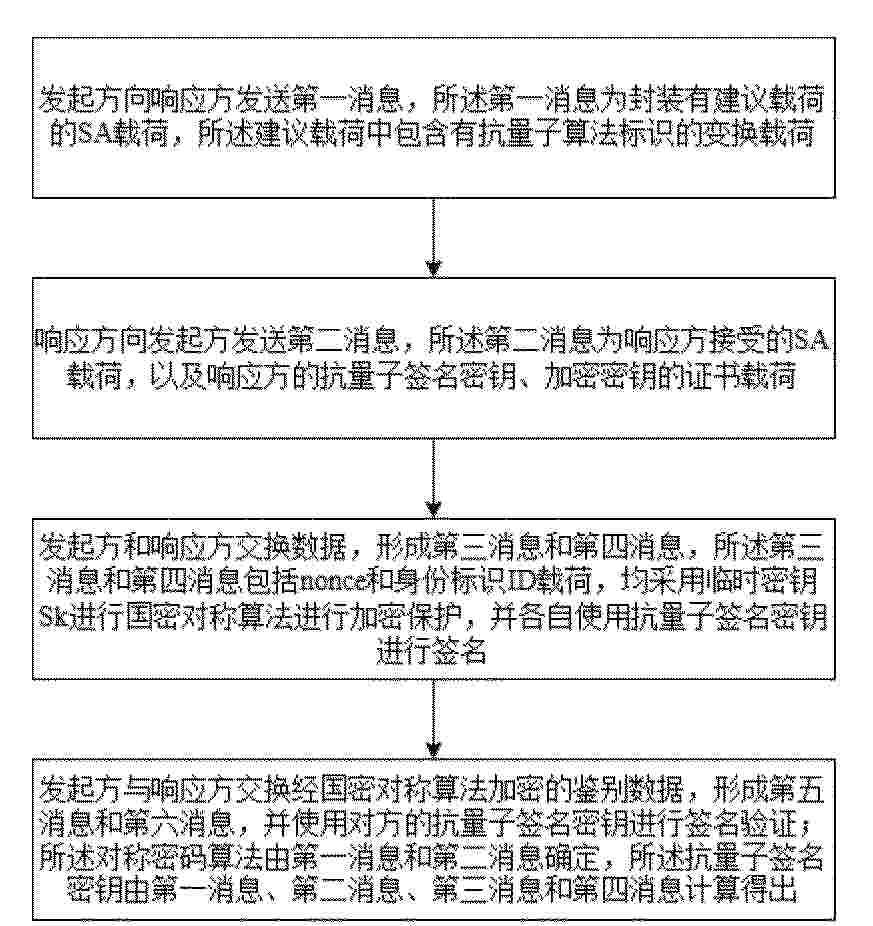
本发明公开了一种基于抗量子算法的国密IPSec协议实现方法及系统,包括:发起方向响应方发送第一消息,第一消息为封装有建议载荷的SA载荷,建议载荷中包含有抗量子算法标识的变换载荷;响应方向发起方发送第二消息,所述第二消息为响应方接受的SA载荷,以及响应方的抗量子签名密钥、加密密钥的证书载荷;发起方和响应方交换数据,形成第三消息和第四消息,所述第三消息和第四消息包括nonce和身份标识ID载荷,均采用临时密钥Sk进行国密对称算法进行加密保护,并各自使用抗量子签名密钥进行签名;发起方与响应方交换经国密对称算法加密的鉴别数据,形成第五消息和第六消息,并使用对方的抗量子签名密钥进行签名验证。提供抵抗量子计算威胁的安全网络通信。
Resumen de: CN122513078A
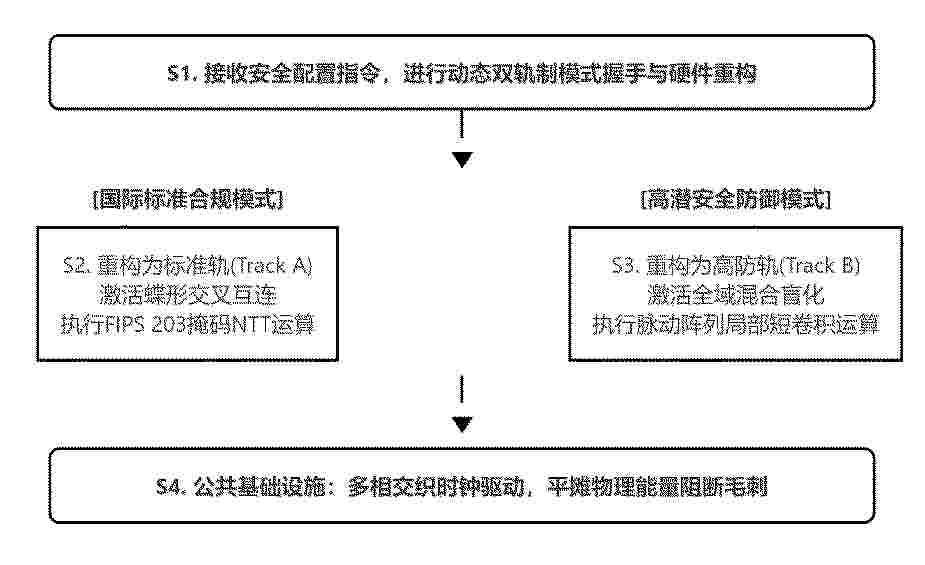
本发明公开了一种兼容国际标准的双轨制可重构后量子密码处理方法、装置及存储介质,处理方法包括:根据上层握手协议指令动态配置可重构计算阵列的标准轨模式或高防轨模式;前者,配置互连网络为全局蝶形交叉拓扑,执行基于素数模的多项式运算;后者,配置互连网络为局部二维网格拓扑,针对模数执行加法‑乘法全域混合盲化并利用多相分解完成局部短卷积运算;两种模式的底层流水线寄存器均由同一扩频多相交织时钟网络提供时序驱动。本发明在晶体管级别复用了底层乘加单元,通过路由重构实现数论变换与脉动阵列的纳秒级切换,并利用扩频多相交织时钟对双轨进行无差别的物理能量平摊防护,克服了标准合规与极限物理防御的技术矛盾。
Resumen de: CN122513022A
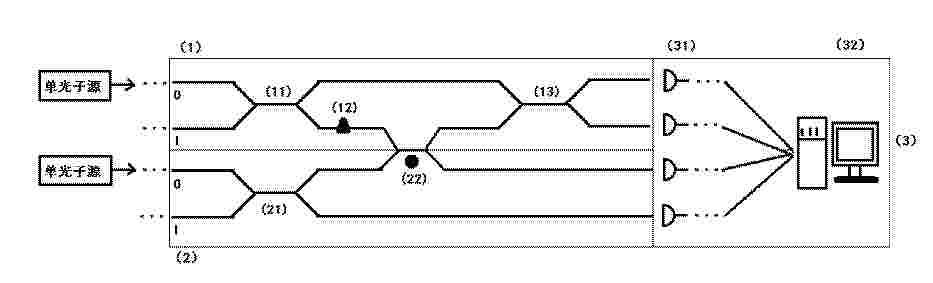
本发明提供一种基于集成光量子芯片的纠缠‑干涉互补性验证装置及方法,装置包括:片上量子比特干涉单元、路径探测器单元和测量单元;片上量子比特干涉单元包括依次分布在目标量子比特的光子传播路径上的第一分束器、相位调制器和第二分束器;路径探测器单元包括依次分布在路径探测器的光子传播路径上的第三分束器和可调耦合器;测量单元包括相互连接的单光子探测器阵列和数据采集与处理模块;其中,片上量子比特干涉单元的输出端和路径探测器单元的输出端分别连接至测量单元的输入端。本发明在集成光量子芯片上验证纠缠与干涉的互补关系,为片上量子计量和信息处理提供了核心器件。
Resumen de: CN122513093A
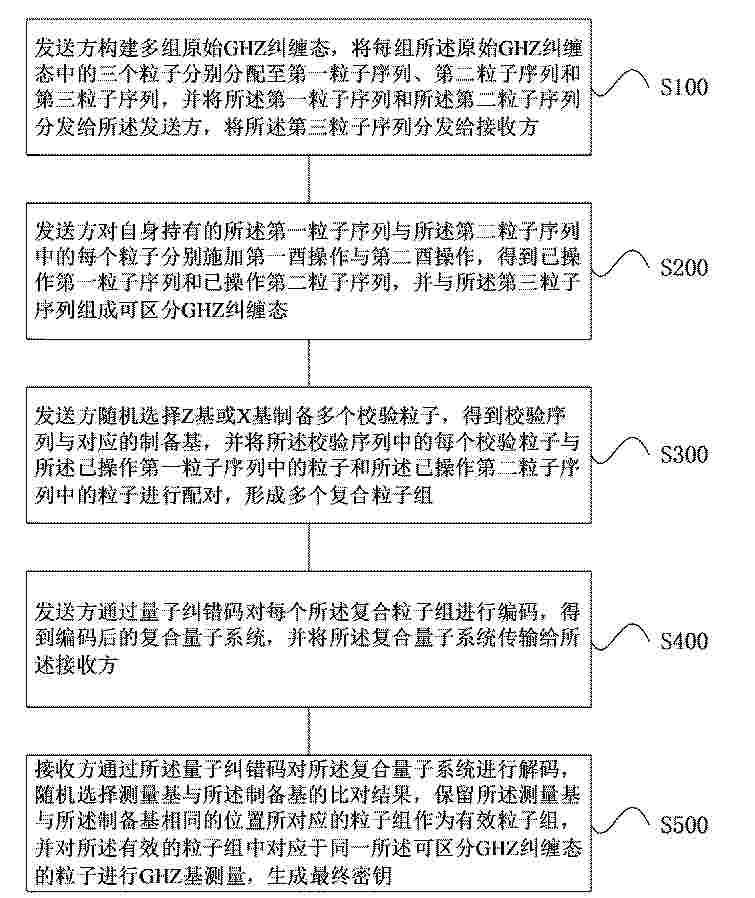
本申请是关于一种基于纠缠态与稳定子码的高效量子密钥生成方法,包括:构建多组原始GHZ纠缠态,将第一粒子序列和第二粒子序列分发给发送方,将第三粒子序列分发给接收方;对第一粒子序列与第二粒子序列中的每个粒子分别施加第一酉操作与第二酉操作,并与第三粒子序列组成可区分GHZ纠缠态;制备多个校验粒子,得到校验序列与对应的制备基,并进行配对,形成多个复合粒子组;通过量子纠错码对每个复合粒子组进行编码,得到复合量子系统;通过量子纠错码对复合量子系统进行解码,保留有效粒子组进行GHZ基测量,生成最终密钥。本申请能够提升密钥生成效率,并且具备单比特纠错能力,抗噪声强,同时窃听检测简捷高效。
Resumen de: CN122513081A
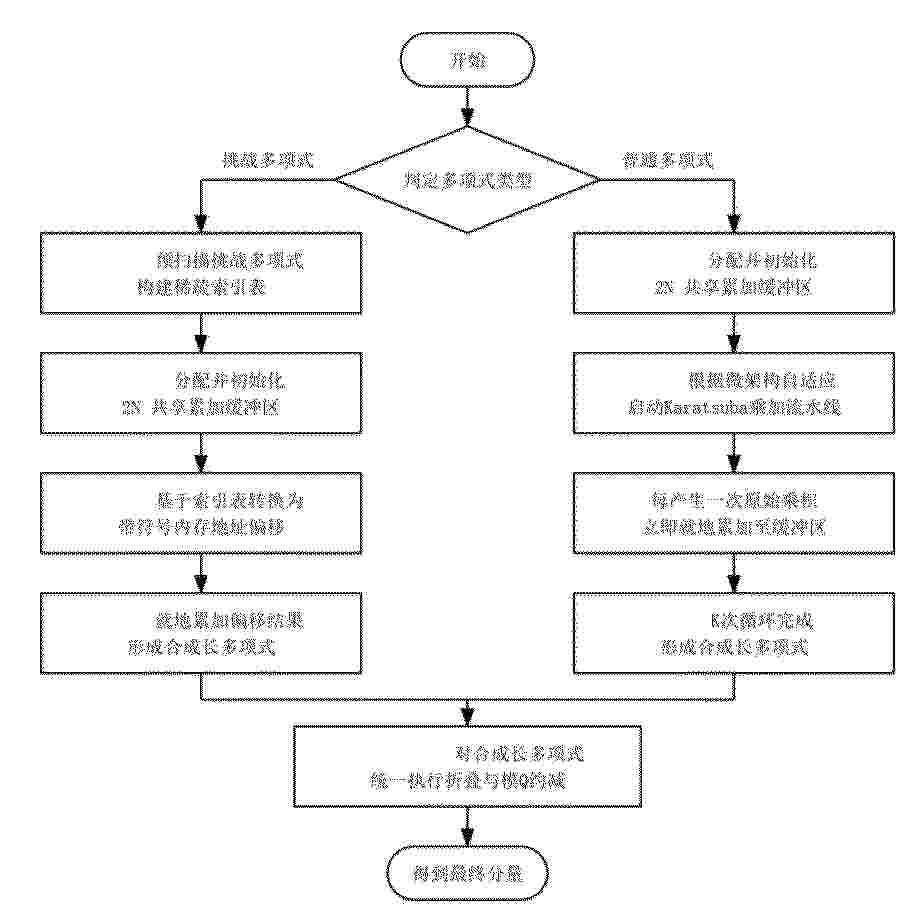
0001 本发明属于后量子密码学与信息安全技术领域,涉及一种基于融合累加与递归分治的格密码多项式运算加速方法、系统及存储介质,包括,获取待运算多项式,对多项式运算类型进行判定,根据判定结果,选择对应的运算方法,生成对应类型的合成长多项式,合成长多项式被连续写入共享累加缓冲区;从共享累加缓冲区读取合成长多项式,进行多项式折叠与模约减,生成多项式运算结果分量,并将多项式运算结果分量输出至下一级存储单元。本发明解决了现有传统矩阵‑向量乘法中,每次子多项式相乘后立即进行模约减和折叠,导致极高的内存读写带宽消耗和冗余算力开销与现有NTT加速方案严格受限特定模数结构,算法敏捷性差的技术问题。
Resumen de: CN122513176A
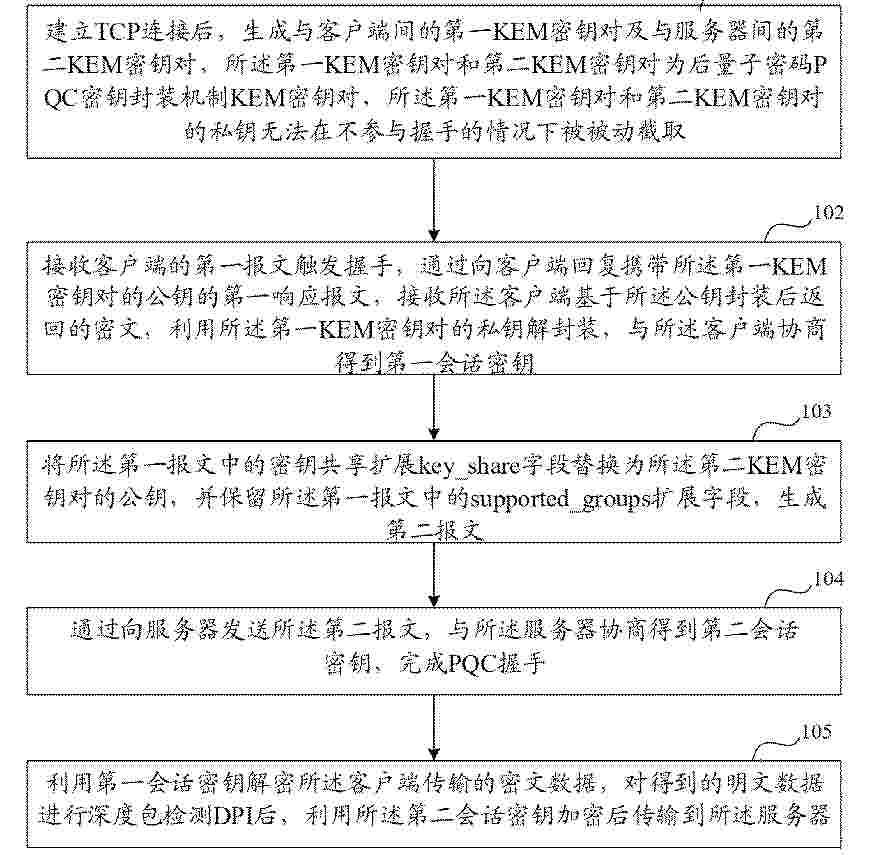
本申请公开了一种SSL/TLS深度检测方法、装置及设备,包括:建立TCP连接后,生成两个PQC密钥封装机制的KEM密钥对;接收客户端的第一报文,回复携带第一KEM密钥对的公钥的第一响应报文,接收客户端基于公钥封装后返回的密文,利用私钥解封装,协商得到第一会话密钥;将第一报文中的密钥共享扩展key_share字段替换为第二KEM密钥对的公钥,并保留第一报文中的supported_groups扩展字段生成第二报文;向服务器发送第二报文协商得到第二会话密钥;利用第一会话密钥解密客户端的密文数据并进行DPI,利用第二会话密钥加密后传输。以此解决SSL检测存在的握手协议不兼容和密钥材料不可提取的问题。
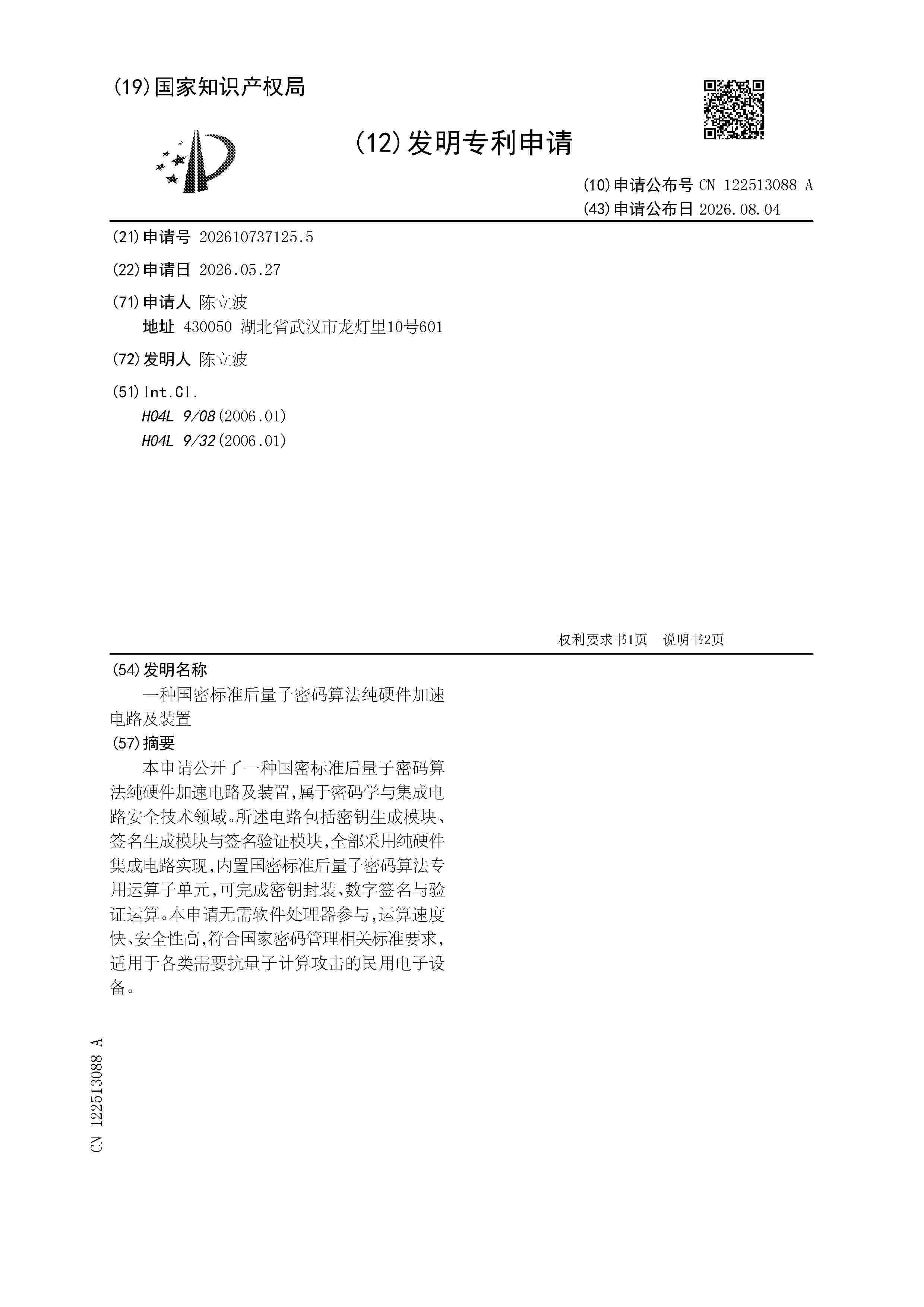
Nº publicación: CN122513088A 04/08/2026
Solicitante:
陈立波
Resumen de: CN122513088A
本申请公开了一种国密标准后量子密码算法纯硬件加速电路及装置,属于密码学与集成电路安全技术领域。所述电路包括密钥生成模块、签名生成模块与签名验证模块,全部采用纯硬件集成电路实现,内置国密标准后量子密码算法专用运算子单元,可完成密钥封装、数字签名与验证运算。本申请无需软件处理器参与,运算速度快、安全性高,符合国家密码管理相关标准要求,适用于各类需要抗量子计算攻击的民用电子设备。
 BOPI
 Sede Electrónica