Si deseas distinguir tus productos, servicios o ambos de los de otra empresa, es posible que necesites una marca o nombre comercial. Descubre qué son, en qué consiste su procedimiento de registro y qué implica.

Información sobre los plazos de presentación de solicitudes de transformación de marcas de la Unión Europea en marca nacional española. Más información


Si tienes un nuevo dispositivo, producto o procedimiento que resuelva un problema técnico o tenga una ventaja práctica, existen distintas formas de protegerlo en España y en otros países. Descubre cómo hacerlo.

¿Tu innovación reside en la estética, la ornamentación o la apariencia de tu producto? Protégela mediante un diseño industrial. Descubre qué derechos confiere el registro y cómo realizar la tramitación.

Las indicaciones geográficas protegen el nombre de un producto originario de una zona geográfica, a la cual le debe una determinada calidad, reputación u otra característica. Descubre qué son, en qué consiste su procedimiento de registro y qué beneficios conceden.

Las patentes publicadas en todo el mundo son una valiosa fuente de información científica, técnica y comercial.

Si eres emprendedor/a o una empresa y quieres potenciar y mejorar la rentabilidad de tu negocio protegiendo de forma adecuada los activos intangibles de tu organización, en este espacio encontrarás lo necesario.


 277
resultados
 Última actualización
31/10/2026 [08:11:00]


Resumen de: US20260342601A1
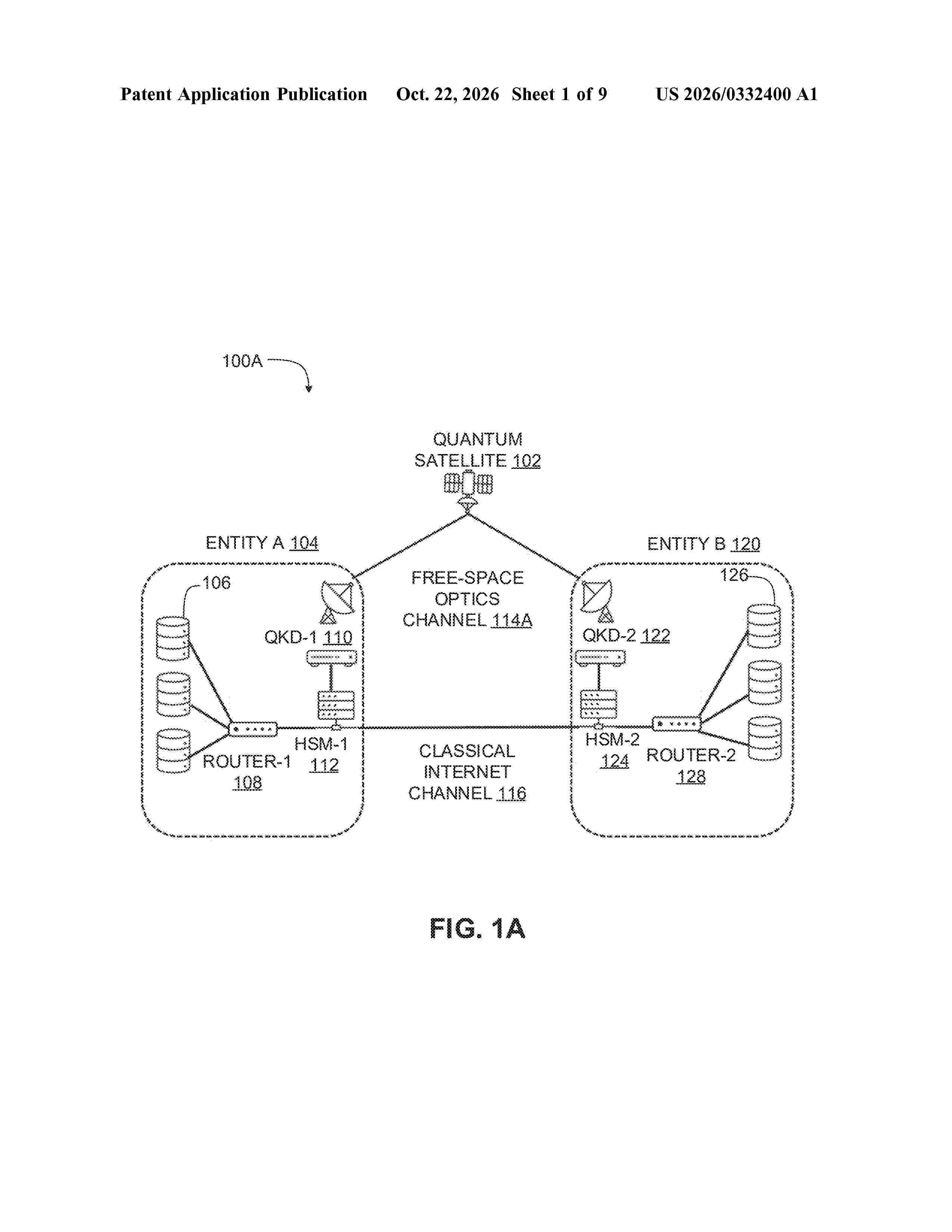
A computer-implemented system for quantum-resistant cryptographic protection of distributed-ledger transaction data. Upon close of a transaction block, a reflection generation engine generates N cryptographic reflections, each comprising a multi-component commitment including content, state, temporal, chain anchor, sibling reflection, and algorithm fingerprint components. Reflections are constructed using a heterogeneous set of cryptographic primitives such that no two reflections share identical primitives, and reflections do not contain recoverable transaction data. Each reflection is distributed to a corresponding vault implemented as a cloud storage service, a custodial storage arrangement, a sovereign data facility, or a smart contract repository, each vault operating under a distinct custody and jurisdictional regime. An anomaly-aware multi-factor authentication gate validates retrieval requests. A three-tier verification module supports existence proof, integrity attestation, and forensic recovery modes.

Resumen de: US20260342591A1
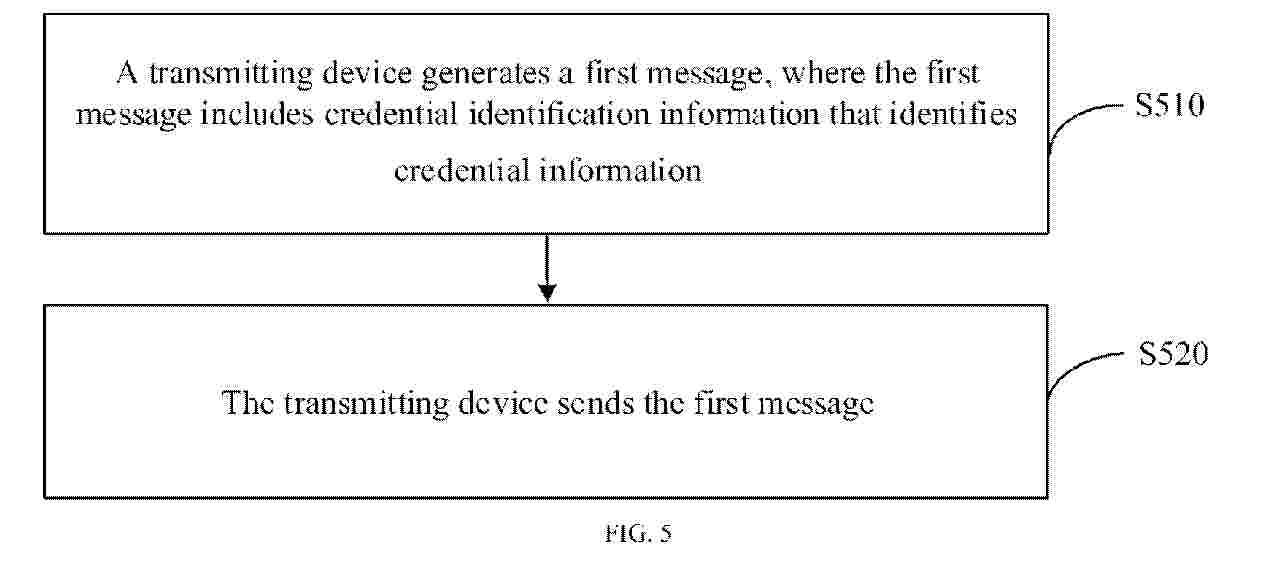
In the present disclosure, a method and an apparatus for post-quantum cryptography communication are presented. The method includes generating a first message, where the first message includes credential identification information that identifies credential information; and sending the first message. In the present application, credential identification information which is used to identify credential information (e.g. certificates or public keys) is transmitted in place of the entire certificate and public key, hence which reduces the size of the message transmitted and also ensures security.
Resumen de: US20260342559A1
Devices, systems, and methods for memory-efficient post-quantum (PQ) cryptography are provided. A method includes generating, by a hardware security module (HSM), a cryptographic seed, storing, by the HSM, the cryptographic seed, receiving, by the HSM and from a cryptographic processor, a request for the cryptographic seed, and responsive to the request, providing, by the HSM and to the cryptographic processor, the cryptographic seed.
Resumen de: US20260342579A1
Embodiments of the present invention provide a system for usage-based seeding of pre-stored hidden authorization codes for high exposure communications initiated using third party devices in limited network connectivity environments. The system is configured to identify initiation of a communication, via a resource distribution device, by a user using a third party device, determine that the communication requires authorization, initiate authorization of the communication initiated by the user by causing an entity application stored on the user device to extract an authentication code stored in a secure vault of the user device, automatically populate the authentication code on the third party device, and determine that the authentication code matches an entity generated authentication code, where the entity generated authentication code is transmitted by the entity associated with the user, determine that the authorization of the communication is successful, and complete the communication initiated by the user, via the user device.
Resumen de: US20260342452A1
Quantum entanglement may be distributed at a high rate over an optical link by sequential emission of spin-entangled optical photon states from different matter based quantum systems into the optical link and execution of a heralded entanglement protocol using the emitted photon states. The quantum systems can be provided by luminescent centers such as T centres, for example. Quantum states of the quantum systems may be transferred to other quantum systems after emission of the photon states. Entanglement swapping may be performed to extend the entanglement to be between quantum systems. The technology has example application in cases where optical fibre links are shared between many nodes and/or where it is desired to extend entanglement to an orbiting satellite, and is particularly useful when optical links are not simultaneously available.
Resumen de: US20260342554A1
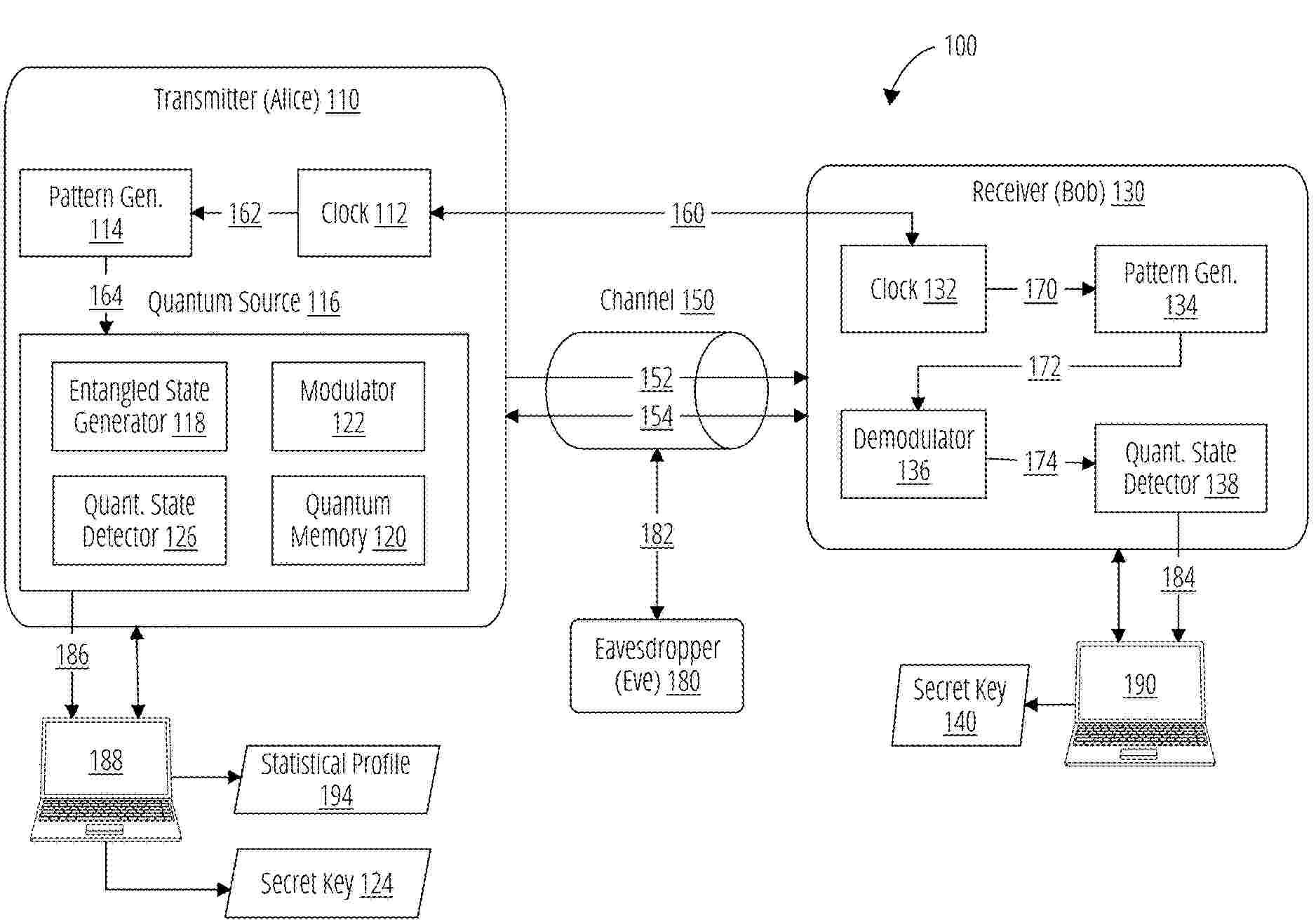
A system and method are provided for providing secure communications using a quantum communications system. A clock (e.g., an atomic clock) at a transmitter is synchronized with a clock at a receiver to coordinate seeds from the clocks to respective pattern generators at the receiver and transmitter. The pattern generators determine quantum state bases for the modulation (transmitter) and demodulation (receiver) of information onto quantum states of a quantum beam that is sent from the transmitter to the receiver. Thus, the modulation bases are known to the transmitter and receiver, but not to an eavesdropper. After demodulating the quantum beam, the receiver detects the quantum states of the demodulated beam to retrieve the information. The information can be a cryptographic key sent securely from the transmitter to the receiver. The quantum states can be qumodes with the information encoded in their quadratures, which are detected using homodyne/heterodyne detection.
Resumen de: US20260342848A1
In one implementation, a device may determine that an operations supply chain for a quantum noise source is a compromised supply chain. The device may discontinue generation of a quantum random number utilizing the compromised supply chain. The device may initiate sourcing of trusted quantum noise from a trusted quantum noise source. The device may cause the trusted quantum noise to be utilized in the generation of a quantum random number.
Resumen de: US20260342551A1
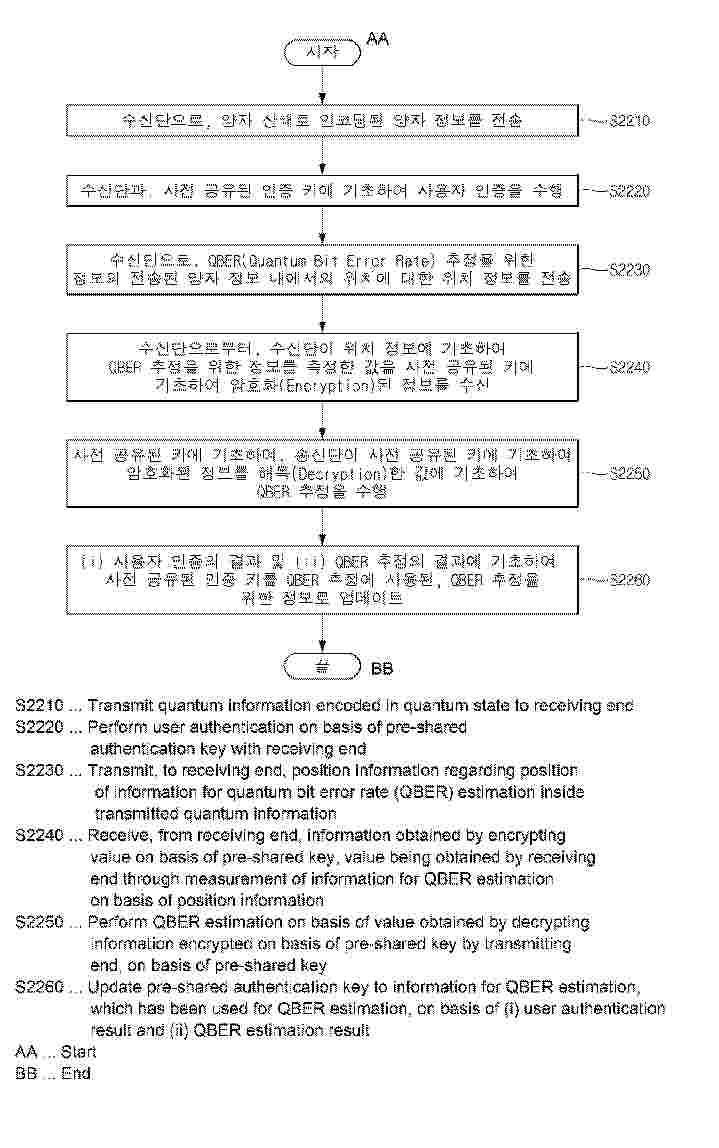
The present disclosure provides a method and a procedure for updating a pre-shared key from a QBER checking sequence used for QBER estimation, the pre-shared key being used in a process of performing user authentication by a transmitting/receiving end in a quantum direct communication system. More particularly, the method comprises the steps of: transmitting quantum information encoded in a quantum state to a receiving end; performing user authentication on the basis of a pre-shared authentication key with the receiving end; transmitting, to the receiving end, position information regarding the position of information for quantum bit error rate (QBER) estimation inside the transmitted quantum information; receiving, from the receiving end, information obtained by encrypting a value on the basis of the pre-shared key, the value being obtained by the receiving end through measurement of the information for QBER estimation on the basis of the position information; performing the QBER estimation on the basis of a value obtained by the transmitting end by decrypting information encrypted on the basis of the pre-shared key, on the basis of the pre-shared key; and updating the pre-shared key to the information for QBER estimation, which has been used for the QBER estimation, on the basis of (i) the user authentication result and (ii) the QBER estimation result.
Resumen de: US20260342553A1
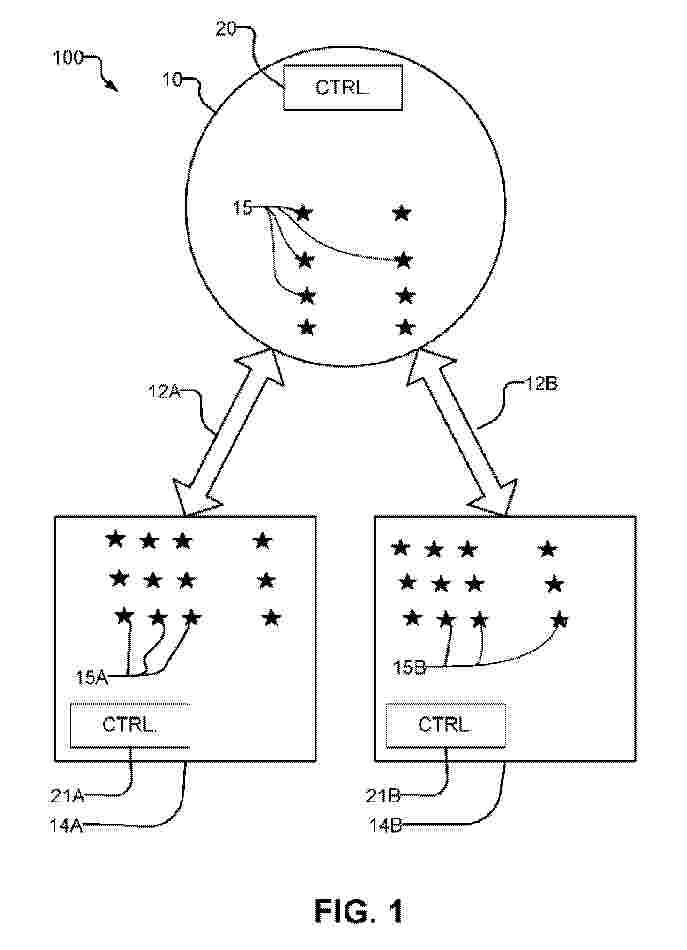
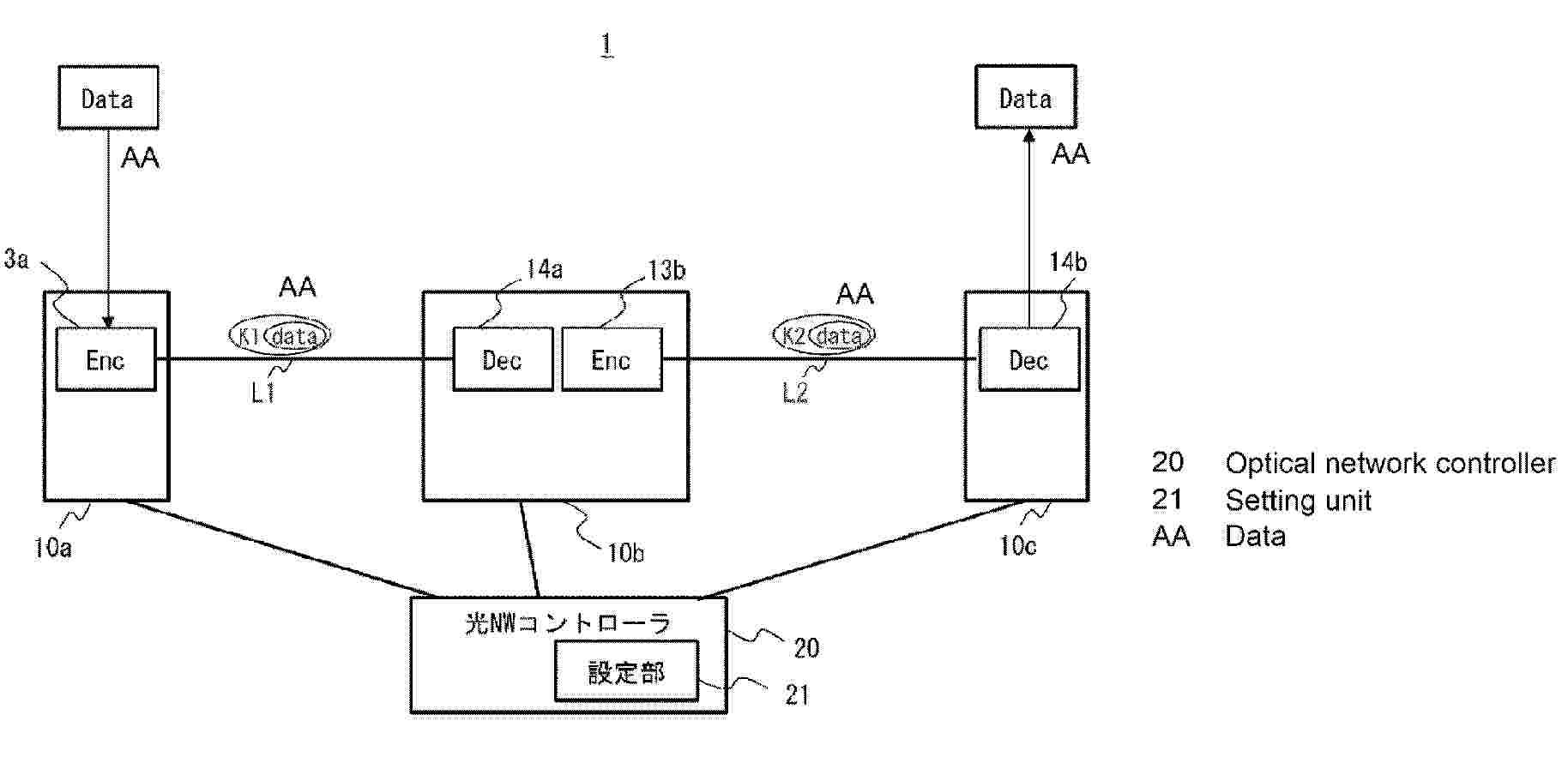
A network system (1) includes a node (10a), a node (10b), a node (10c), and an optical network controller (20). The node (10a) encrypts, by using a key (K1), data to be transmitted to the node (10b). The node (10b) decrypts, by using the key (K1), data received from the node (10a), and encrypts, by using a key (K2), data to be transmitted to the node (10c). The node (10c) decrypts, by using the key (K2), data received from the node (10b). The optical network controller (20) couples an encrypted link (L1) between the node (10a) and the node (10b) to an encrypted link (L2) between the node (10b) and the node (10c) and sets an encrypted communication path from the node (10a) to the node (10c).
Resumen de: US20260342552A1
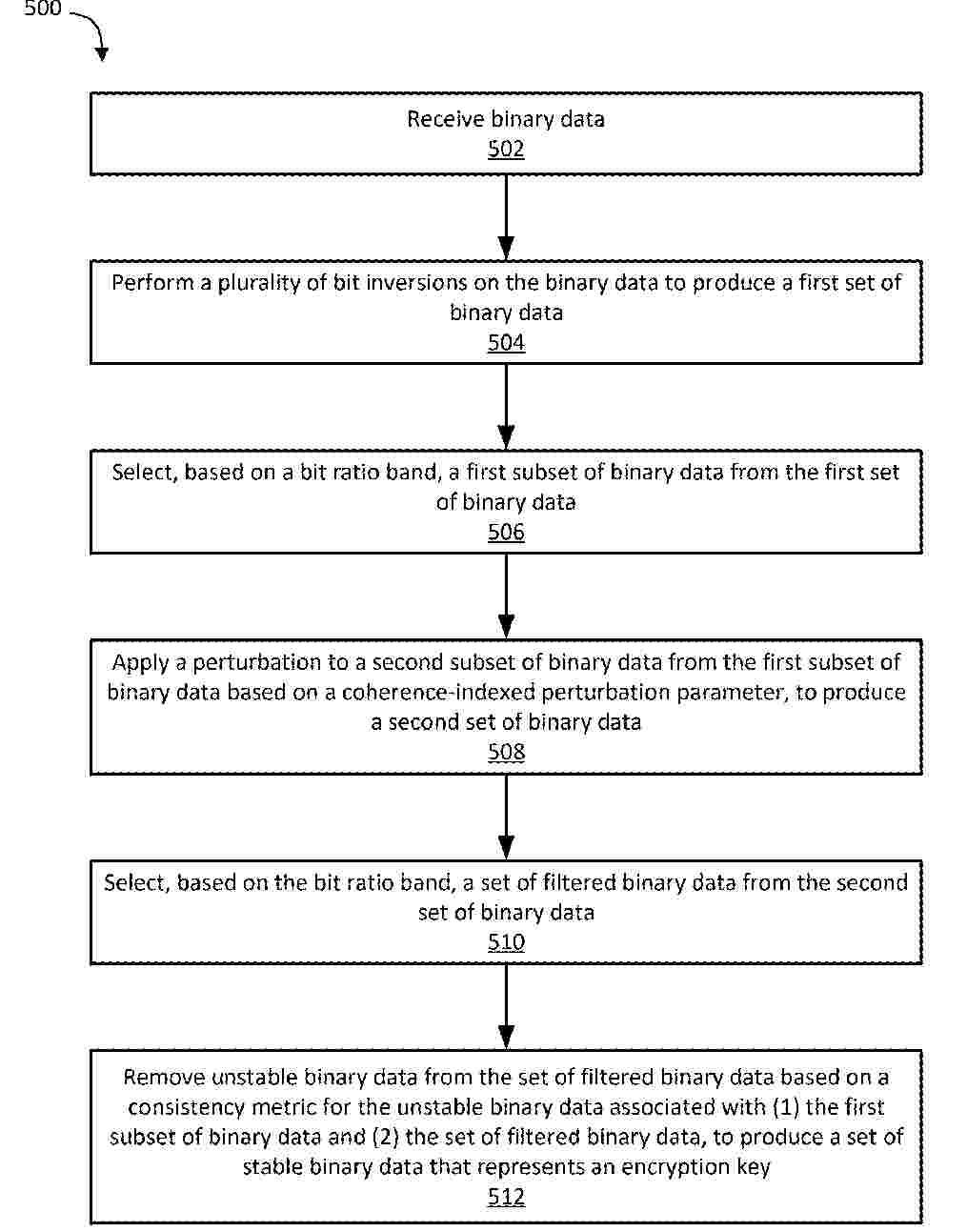
According to an embodiment, a method includes receiving and providing quantum information as input to a quantum logic gate to produce superpositioned information having a plurality of modal states associated with a modal space. Starting with the superpositioned information, a plurality of modal paths associated with the modal space is produced by recursively filtering, for a predefined number of iterations, the superpositioned information based on a coherence behavior to produce intermediate filtered information that is used as input for a next iteration from the predefined number of iterations. Decoherence dynamics is modelled across the predefined number of iterations of the recursive filtering to determine a stability metric for each modal path from the plurality of modal paths. A modal path is selected from the plurality of modal paths based on the stability metric for that modal path, the modal path representing an encryption key.
Resumen de: EP4832533A1
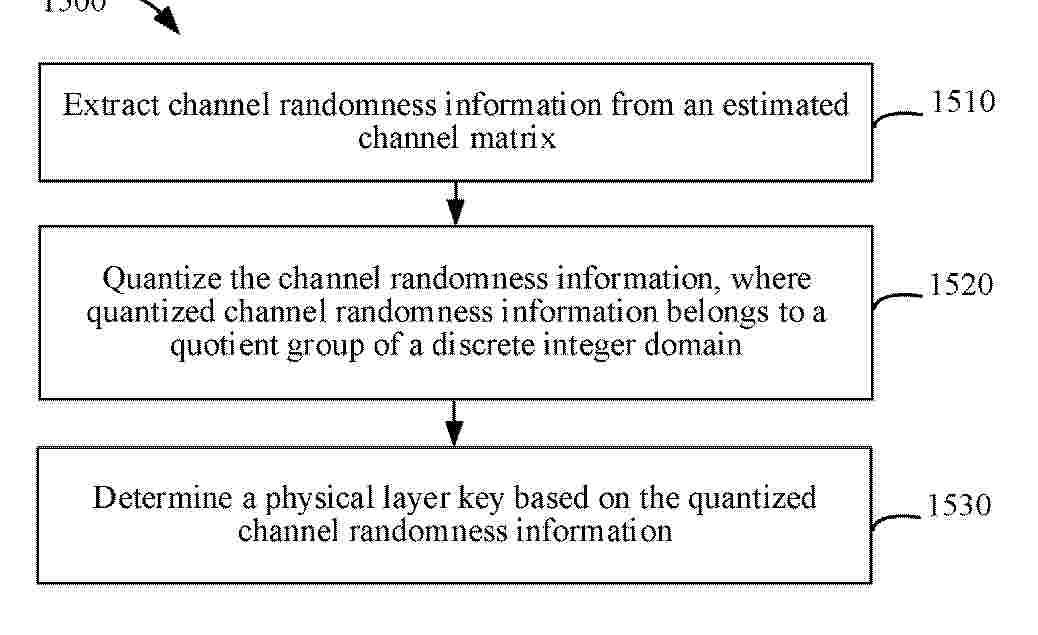
Embodiments of the present disclosure provide a method for determining a key, a communication apparatus, a system, and a storage medium. In this method, the communication apparatus extracts channel randomness information from an estimated channel matrix. Then, the communication apparatus quantizes the channel randomness information, where the quantized channel randomness information belongs to a quotient group of a discrete integer field. Then, the communication apparatus determines a physical layer key based on the quantized channel randomness information. In this way, in embodiments of the present disclosure, when generating a key, the communication apparatus may not need to obtain the empirical distribution of an estimated channel or the related information, thereby reducing computing overhead and processing latency. In addition, the generated key has high quality as it can meet uniform distribution requirements.
Resumen de: EP4832410A1
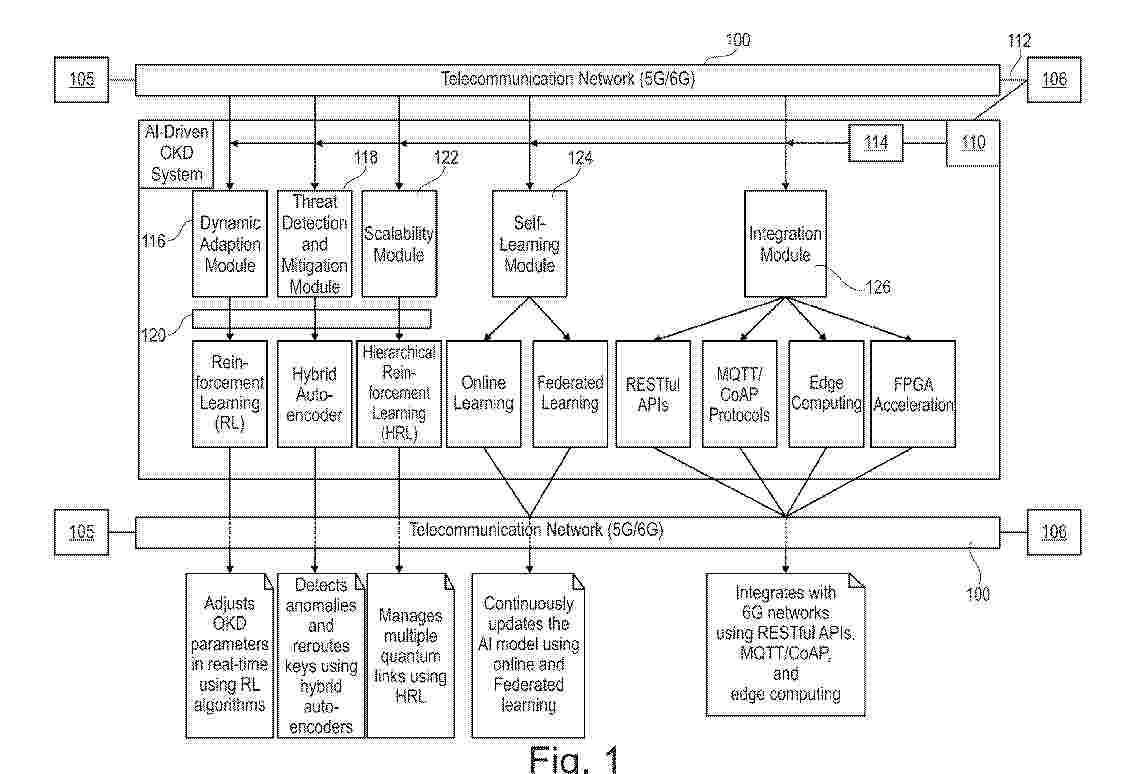
A computer-implemented method for performing quantum key distribution, QKD, in a telecommunication network between a first communication device and a second communication device, the method comprising:(a) measuring or monitoring, by a monitoring entity, quantum link values of a QKD process carried out with a first set of QKD operational parameters;(b) detecting, by an analytics entity, based on the monitored quantum link values, one or more operational conditions selected from: a condition, in particular a degradation, of the quantum link, a threat to the QKD, or a mobility event affecting a QKD communication party;(c) providing, in response to the detected at least one operational condition, at least a subset of the monitored quantum link values to a dynamic-adaptation-module, a threat-detection-module, a rerouting-module, or a hierarchical-control-module one or all of the modules are implemented within an adaptive-QKD node;(d) determining, by one or more of the modules, a second set of QKD operational parameters based on a one or more machine learning models trained on quantum link data and at least a subset of the quantum link values as input;(e) applying, by an operational module configured to interface with QKD hardware, the second set of QKD operational parameters to adjust the QKD process,wherein the second set of QKD operational parameters enables QKD to be maintained or improved.
Resumen de: EP4832411A1
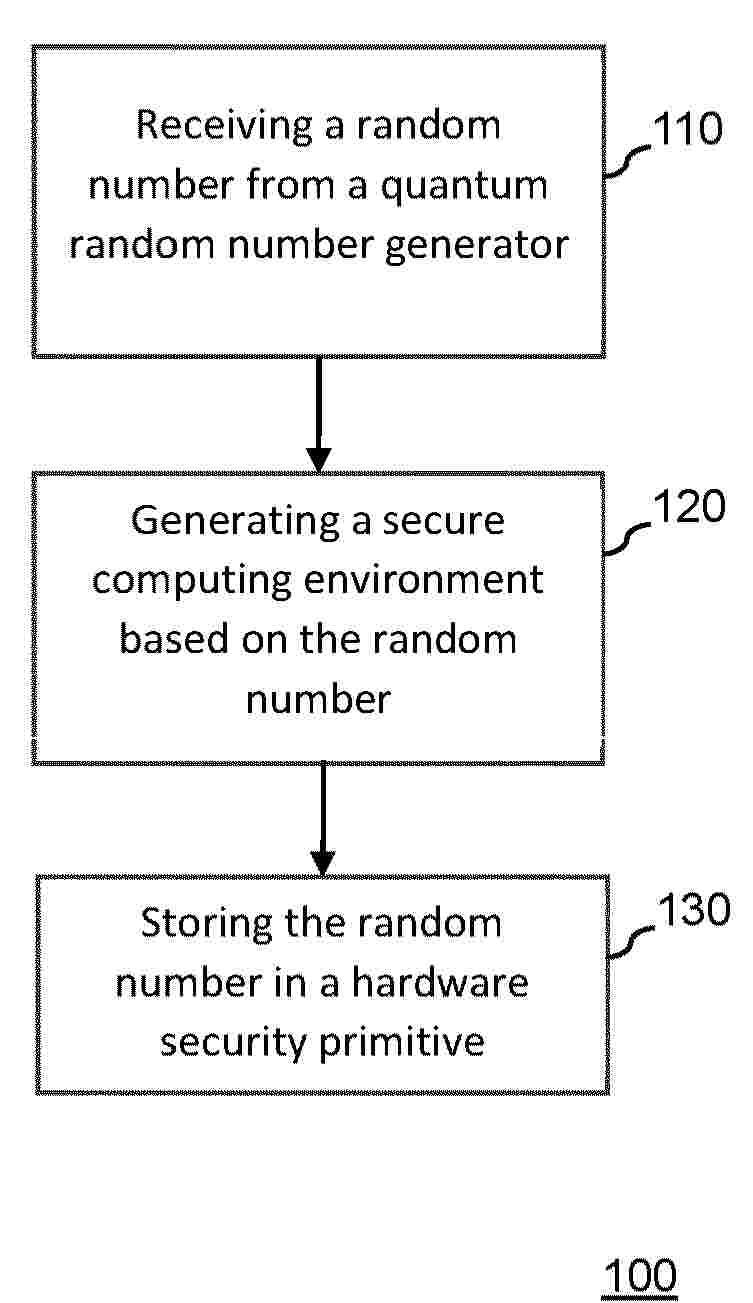
0001 Provided is a method for data encryption. The method includes receiving, from a quantum random number generator, a random number. The method further includes generating a secure computing environment based on the random number. The method further includes storing the random number in a hardware security primitive.
Resumen de: WO2022182371A1
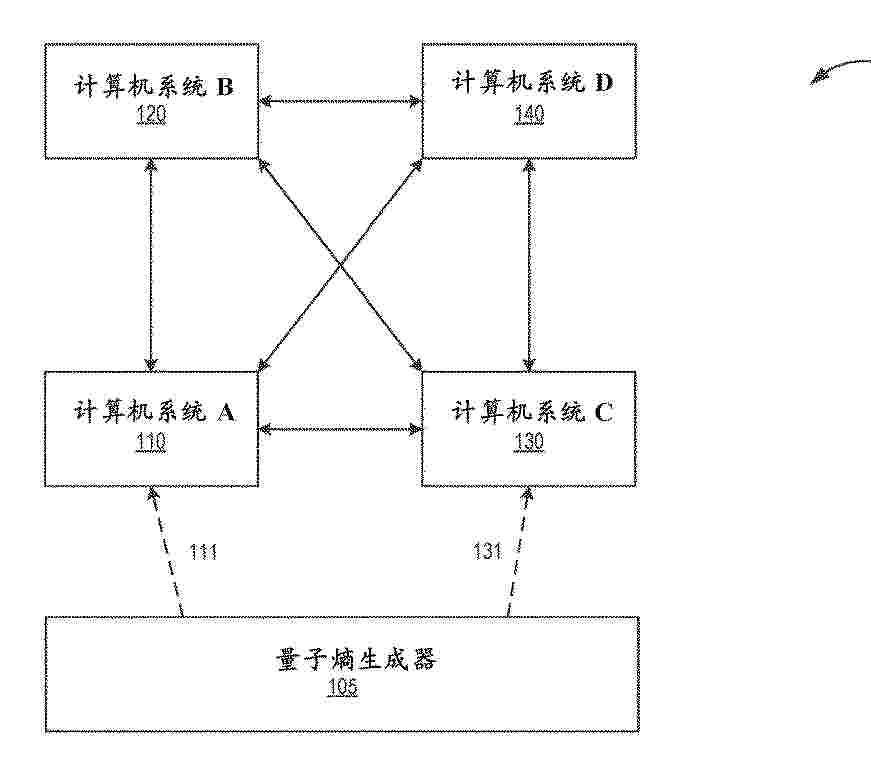
Techniques are disclosed for securely distributing entropy in a distributed environment. The entropy that is distributed may be quantum entropy that is generated by a quantum entropy generator or source. The true random entropy generated by a trusted entropy generator can be communicated securely among computer systems or hosts using secure communication channels that are set up using a portion of the entropy. The distribution techniques enable computer systems and hosts, which would otherwise not have access to such entropy generated by the trusted entropy source, to have access to the entropy.
Resumen de: US20260332398A1
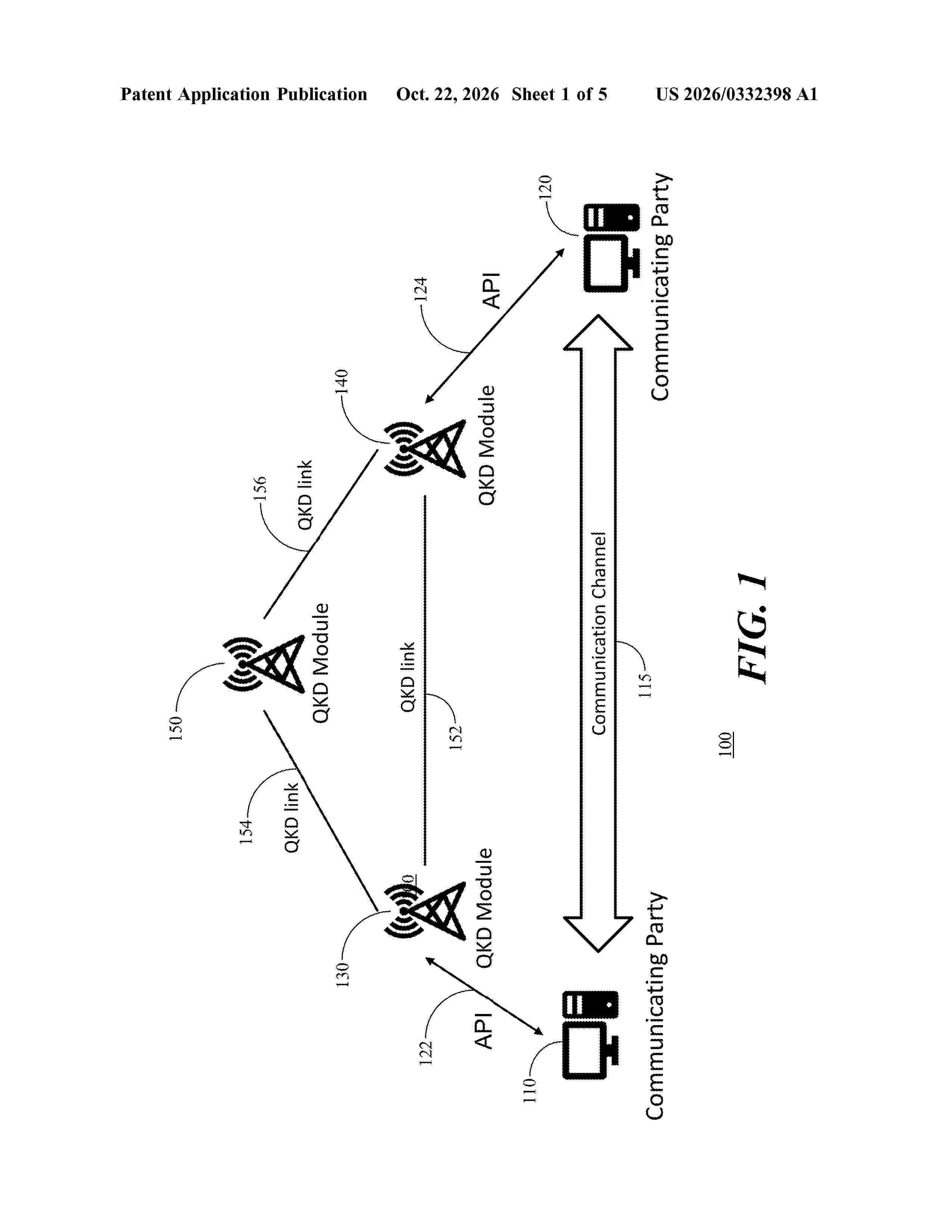
A system and a method for quantum-capable secure user and data authentication are provided. The system includes first and second communication devices and first and second key distribution modules. The first key distribution module is communicatively coupled to the first communication device for secure access thereto and the second key distribution module is communicatively coupled to the second communication device for secure access thereto. The first communication device and the second communication device enable quantum-safe messaging therebetween by lightweight post-quantum cryptographic communication between the first key distribution module and the second key distribution module. Also, the first communication device and the second communication device have established a pre-agreed secret password. In addition, the lightweight post-quantum cryptographic communication includes the first key distribution module and the second key distribution module establishing a shared random therebetween.
Resumen de: AU2026238175A1
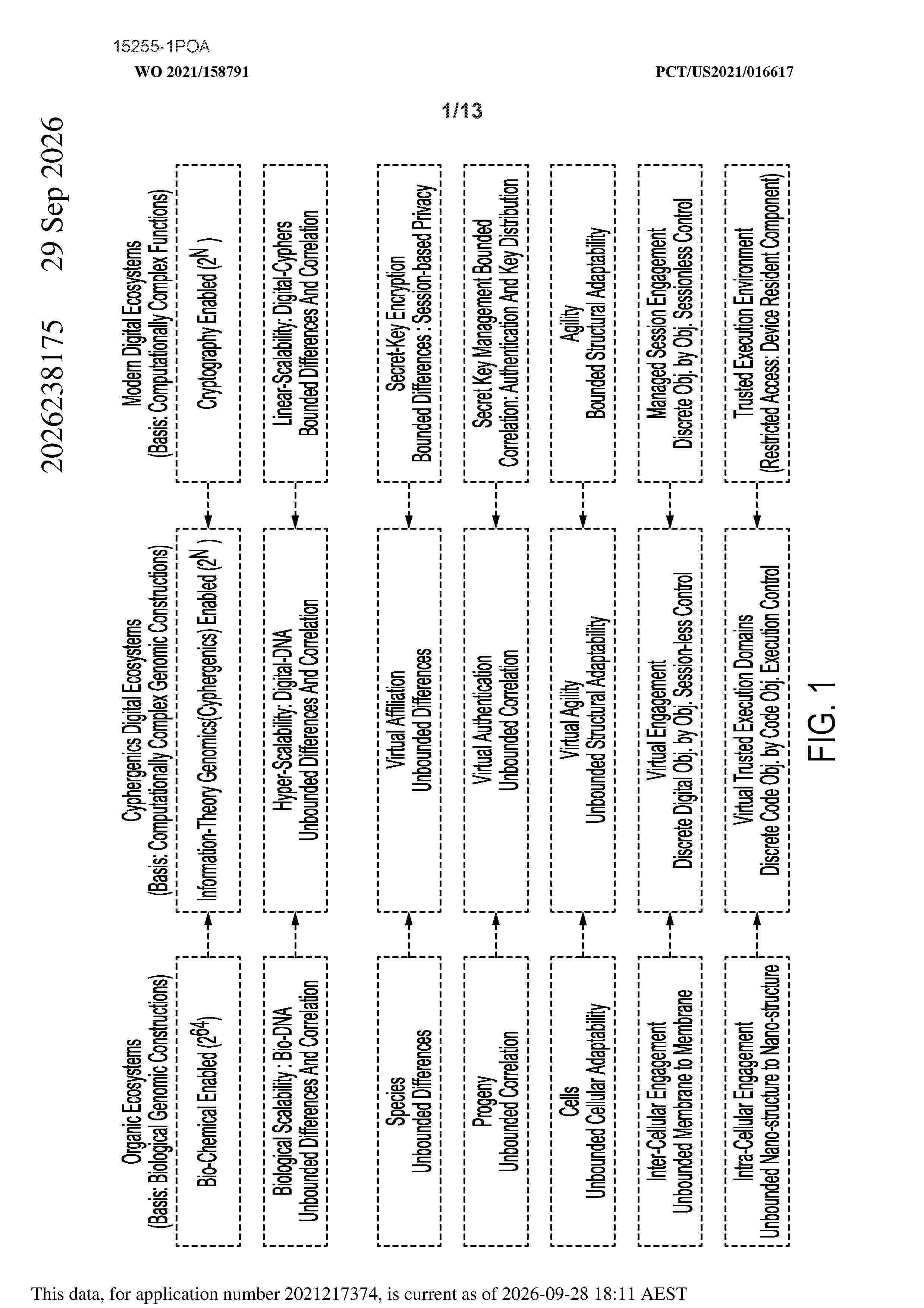
Abstract An ecosystem security platform implemented by a processing system of a computing device enables secure communications within a digital ecosystem. The platform includes a root module that stores device-specific digital objects comprising an eligibility object, a correlation object, and a differentiation object, and selectively modifies the objects using cipher-based, cipherless, or hybrid computational functions. A link module receives a link message from another computing device and decodes encoded instructions using the eligibility object and a modified correlation object. A sequence mapping module extracts a data sequence from a message header portion and processes the sequence using a modified differentiation object to generate a non-repeating transformation vector. A binary transformation module transforms a message payload using the transformation vector, including by XOR operations and/or symmetric encryption, and generates a structured output object containing the transformed payload and original header portion for transmission. The platform thereby provides differentiated, dynamically adaptable, and secure device-to-device communications within the ecosystem. Abstract Organic Ecosystems Cyphergenics Digital Ecosystems Modern Digital Ecosystems (Basis: Biological Genomic Constructions) (Basis: Computationally Complex Genomic Constructions) (Basis: Computationally Complex Functions) Bio-Chemical Enabled (264) Information-Theory Genomics(Cyphergenics) Enabled (2
Resumen de: US20260332402A1
0000 Techniques for encrypting data within a communication network include receiving, at a first module, data packets encrypted using mathematical encryption. A machine-learning model trained to detect cybersecurity threats analyzes the data packets to determine the existence of a cybersecurity threat. In response to determining a threat, encryption is switched from mathematical encryption to quantum encryption. The data packets are encrypted using a quantum encryption key to generate quantum-encrypted data packets. The quantum encryption key is transmitted from the first module to a second module over a quantum key distribution (QKD) channel, and the quantum-encrypted data packets are transmitted from the first module to the second module.
Resumen de: US20260329354A1
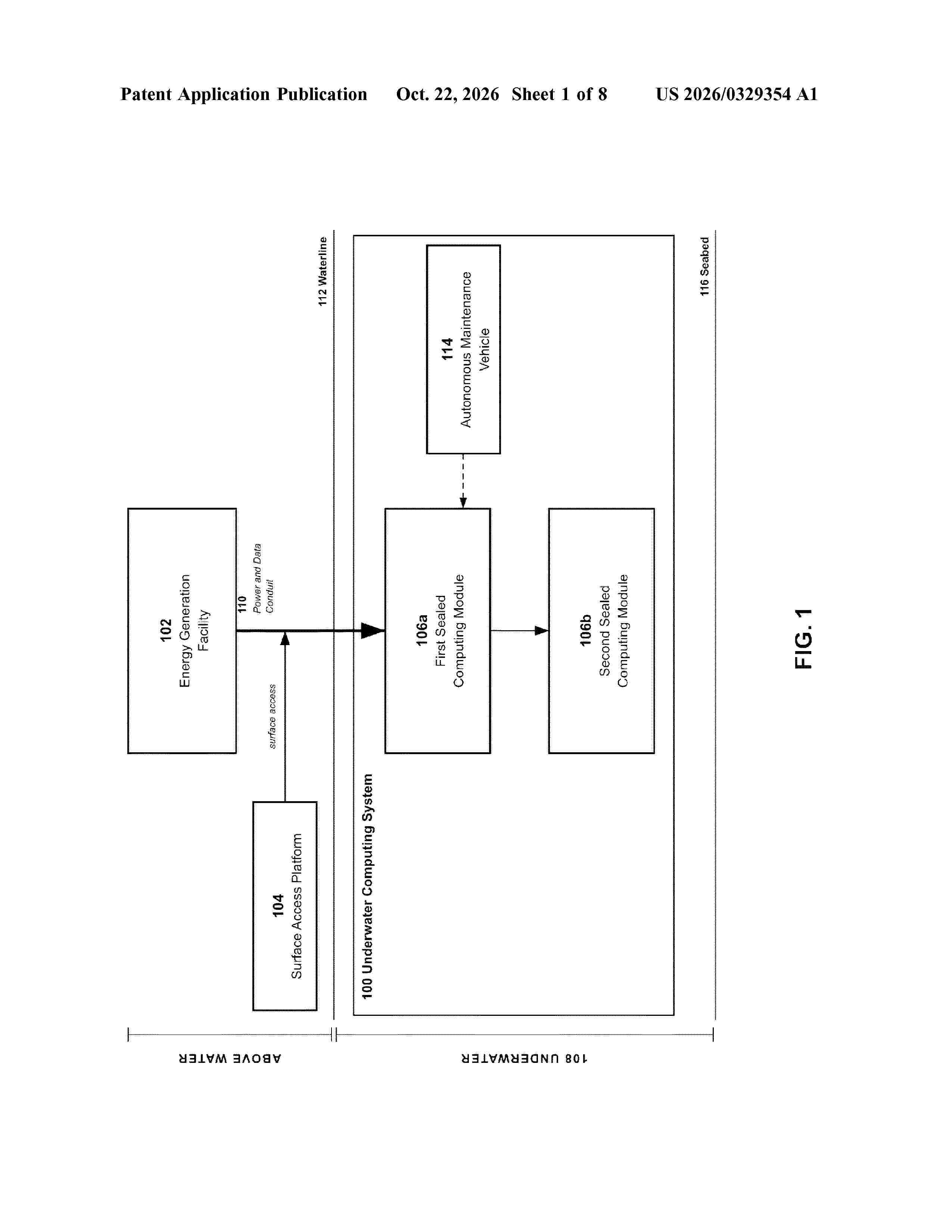
An underwater computing system comprises one or more sealed computing modules configured to operate submerged in a body of water. Each sealed computing module includes a pressure-resistant hull enclosing computing hardware. A wireless energy transfer system delivers electrical energy from an energy generation facility to the sealed computing modules without physical power cables. A buoyancy control system adjusts module depth within the water. A thermal regulation subsystem transfers heat to the surrounding water. A hybrid communication architecture couples the modules to a surface communication hub via a plurality of distinct channels including fiber-optic, power-line, quantum, acoustic, and optical communication. An AI control unit autonomously manages power distribution, thermal regulation, buoyancy adjustment, and workload distribution in real time based on environmental sensor data. A secure closed-loop mode gate selectively restricts communications to authenticated control instructions and health telemetry.
Resumen de: US20260332399A1
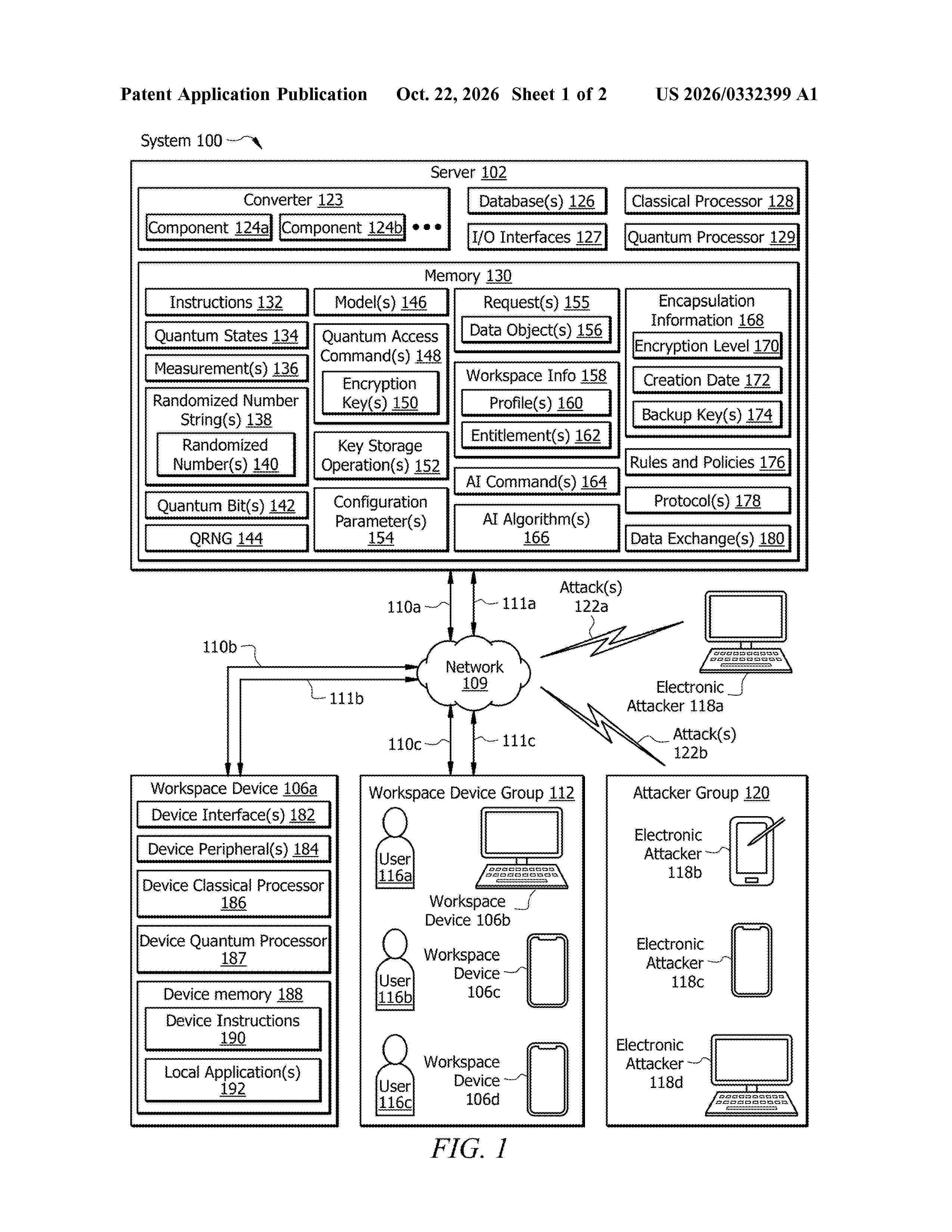
A system comprises at least two devices equipped with one or more quantum processors. The system may be configured to coordinate operations between the one or more quantum processors to establish, control, and/or monitor encryption keys in a network. The encryption keys are concealed through multiple encryption layers as the encryption keys are shared between one or more nodes, devices, and/or network components. The system is configured to develop one or more protocols that may be used to maintain and/or control security of shared encryption keys in the network.
Resumen de: US20260332401A1
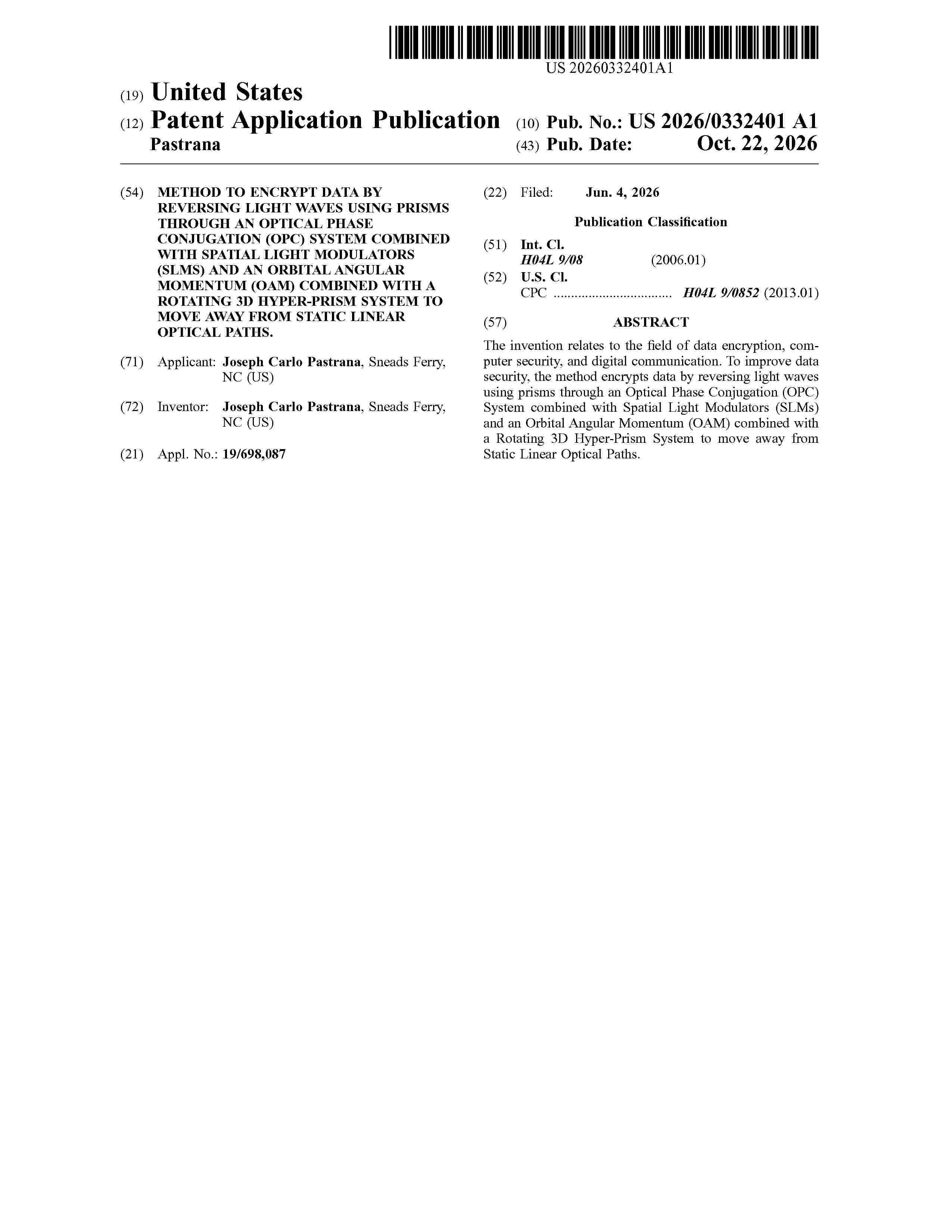
The invention relates to the field of data encryption, computer security, and digital communication. To improve data security, the method encrypts data by reversing light waves using prisms through an Optical Phase Conjugation (OPC) System combined with Spatial Light Modulators (SLMs) and an Orbital Angular Momentum (OAM) combined with a Rotating 3D Hyper-Prism System to move away from Static Linear Optical Paths.
Resumen de: US20260332400A1
0000 Systems and methods for entanglement-cascaded quantum key distribution are disclosed. The processor determines set of communication parameters to be transmitted between quantum transmitter and quantum receiver. The processor generates entangled pair of qubits including first set of qubits and second set of qubits. The processor performs first quantum operation associated with first secret key on second qubits of first set of qubits and second set of qubits. The processor swaps second qubit of quantum transmitter with second qubit of receiver. The processor generates entangled qubit pairs by performing quantum entanglement operation on first qubit of quantum transmitter and second qubit of quantum receiver. The processor determines quantum measurement operation to be applied to entangled qubit pairs. The processor performs second quantum operation and generates measurement result for each of entangled qubit pairs. The processor transmits generated shared classical secret key from quantum transmitter to quantum receiver over secure communication channel.
Resumen de: US20260332699A1
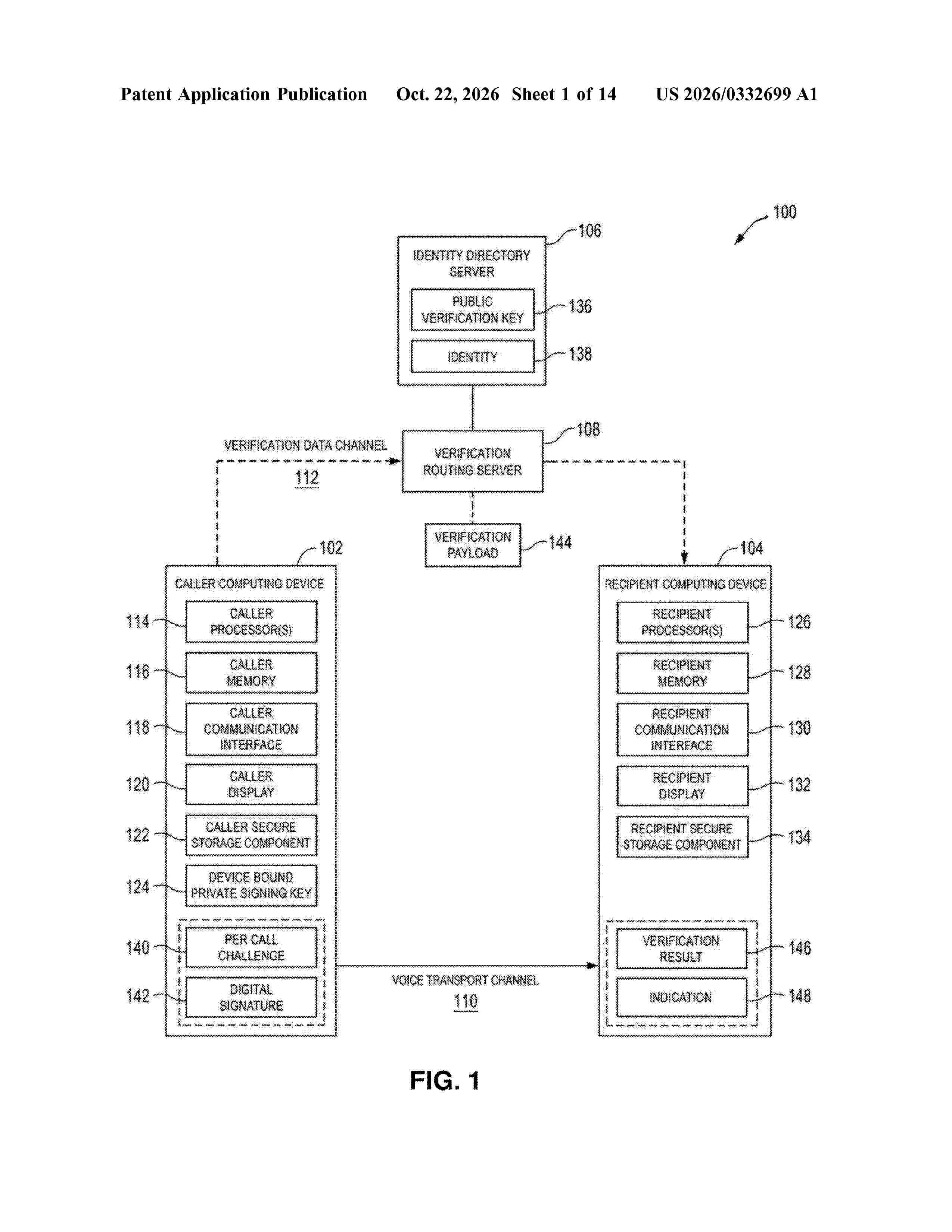
A system and method verify an identity associated with a voice call. A caller computing device generates a per-call challenge associated with a particular instance of the voice call and produces a digital signature over the per-call challenge using a device-bound private signing key associated with the caller computing device. The caller computing device initiates a voice call to a recipient computing device over a voice transport channel and transmits a verification payload to the recipient computing device over a verification data channel separate from the voice transport channel. The verification payload includes the per-call challenge and the digital signature. The recipient computing device obtains a public verification key associated with the identity of a caller and verifies the digital signature using the public verification key to generate a verification result locally at the recipient computing device.
Resumen de: US20260332620A1
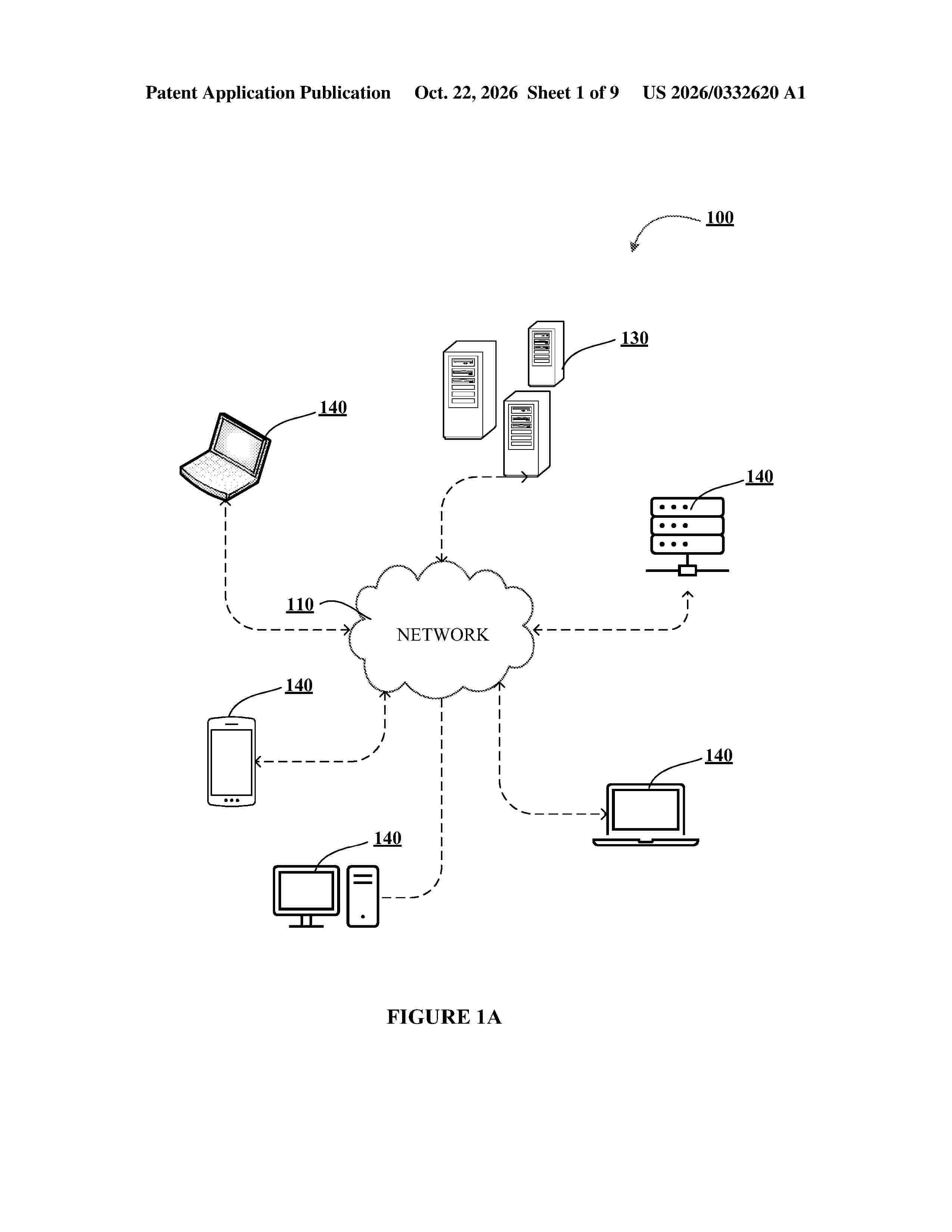
Systems, computer program products, and methods are described herein for securing data by detecting and preventing real-time data leakages in cloud environments. The present disclosure is configured to identify at least one data source; collect, by at least one virtual component, data from the data source(s), wherein the data comprises current user data; monitor, by the at least one virtual component, the data from the data source(s); generate, in an instance after the monitoring of the data, encrypted data by applying an encryption layer to the data; apply the encrypted data to an anomaly detection layer; determine, by the ML model, an anomaly indicator based on whether an anomaly is present in the data based on the current user data; determine, by the AI engine, a prediction for the data; and log, in a distributed ledger, the current user data and the anomaly indicator.
Resumen de: WO2026221522A1
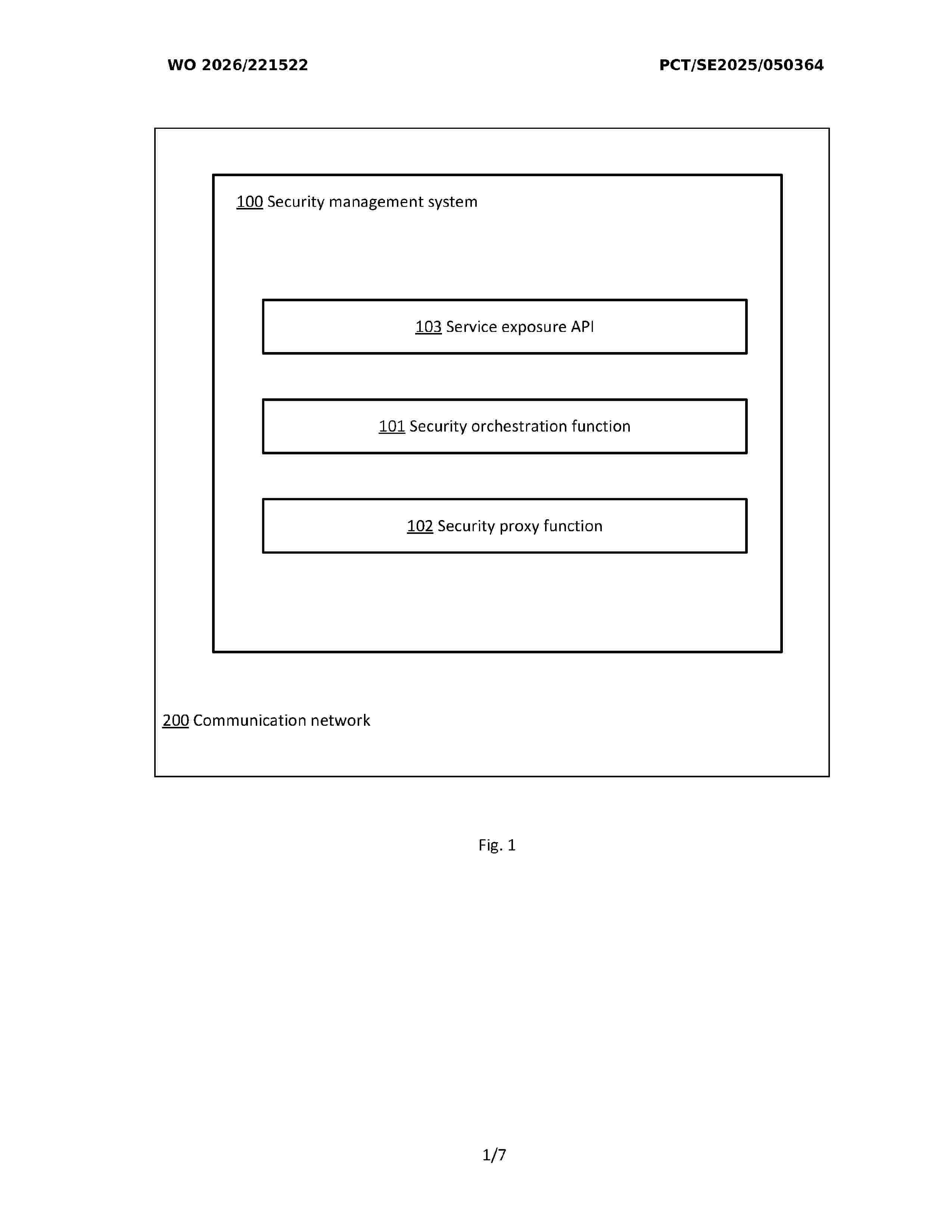
A computer-implemented system (100) for a communications network. The system comprises a security orchestration function (101). The security orchestration function is configured to manage a plurality of security proxy functions (102). The security orchestration function is further configured to interoperate with a network management function and a network security management function. The system comprises the plurality of security proxy functions. The security proxy functions host security capabilities on behalf of network services and/or applications. The system further comprises a service exposure API (103), the service exposure API configured to abstract network capabilities between the security orchestration function and network data consumers.
Nº publicación: EP4827040A1 21/10/2026
Solicitante:
ID QUANTIQUE S A [CH]
ID Quantique S.A.
Resumen de: EP4827040A1
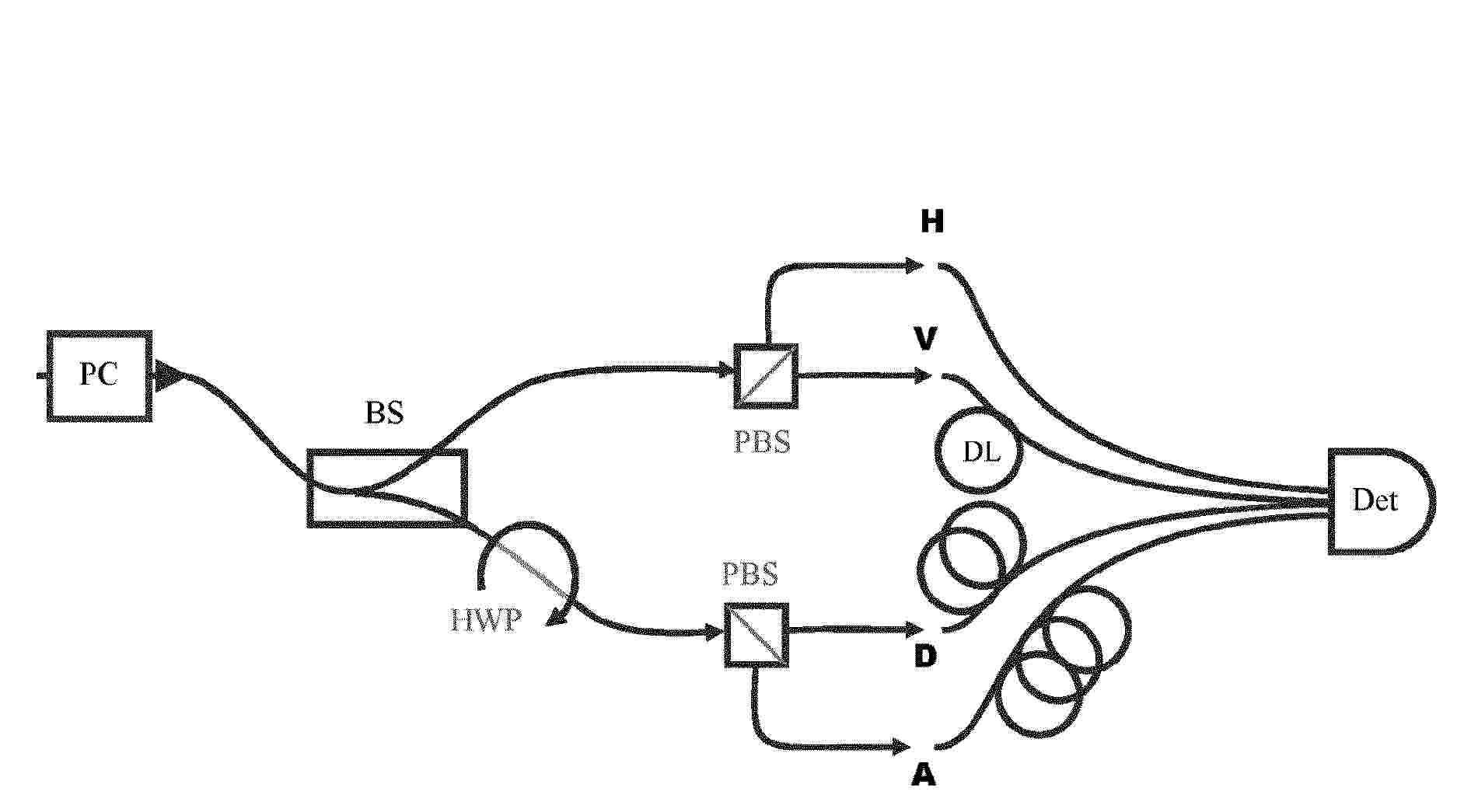
The present invention relates to a quantum key distribution receiver for a discrete variable QKD protocol comprising an optical circuit adapted to receive a signal from an emitter, split it into several states and temporally multiplex the different states at fixed time-differences, a unique single-photon detector adapted to detect said states in specific time-bins at said fixed time-differences, wherein said receiver is adapted to control said unique single-photon detector in gated mode so as to effectively activate the detector to create detection gates at said specific time-bins, the choice of the time-bins corresponding to the choice of the measurement basis of the qubits, and activate the detector to create extra detection gates at additional security time-bins different from said specific time-bins.
 BOPI
 Sede Electrónica